
Market Wiz AI

Market Wiz

With ingenious automation fused with human dedication 24/7, Market Wiz puts the local marketing competition on notice – they’ve created a new standard operating system for dominating every digital front.All-Platform Compatibility: Facebook, Craigslist, Google, you name it. This system plays well with all the big players, ensuring your ads are everywhere they need to be.The Cherry on Top: There's a ton more under the hood, each feature adding more muscle to your marketing efforts.Bottom line: Market Wiz.ai isn’t just another tool; it’s your 24/7 digital marketing powerhouse. In the world of local advertising, it's the smartest move you’ll make.Market Wiz automates your online ads.|

Google Maps Marketing Strategies That Actually Work

ChatGPT Image May 28 2026 08 02 52 PM
Google Maps Marketing Strategies That Actually Work

Google Maps Marketing Strategies That Actually Work

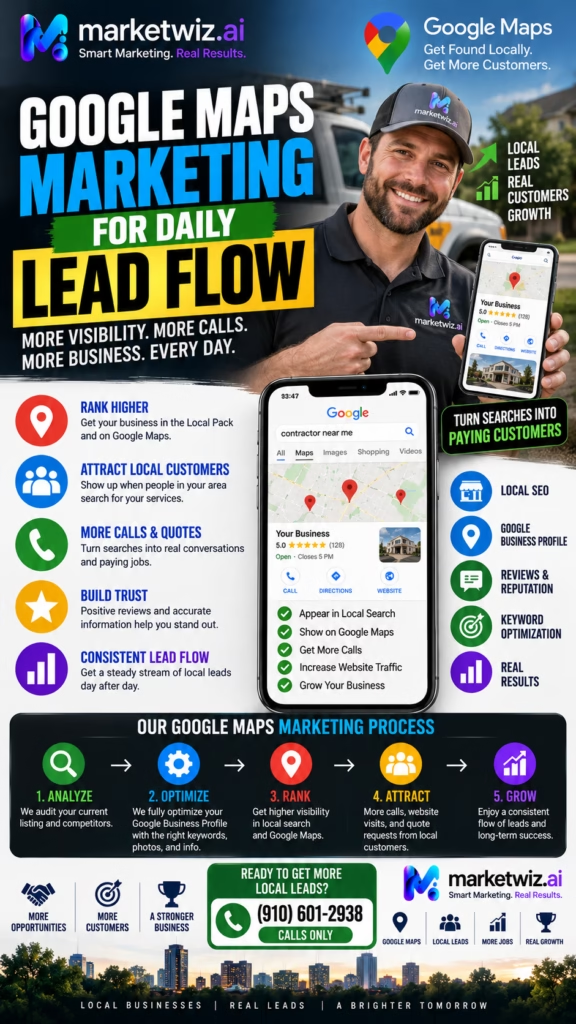
Google Maps Marketing Strategies That Actually Work shows local businesses how to turn Google Maps visibility into more calls, quote requests, website clicks, direction requests, appointments, and paying customers.

Introduction

Google Maps Marketing Strategies That Actually Work starts with one simple truth: local buyers use Google Maps when they are close to taking action. They are looking for a nearby business, checking reviews, comparing photos, reading services, and deciding who deserves the call.

For local businesses, Google Maps is not just a listing. It is a lead generation asset. A strong Google Business Profile can help contractors, service companies, stores, clinics, restaurants, repair providers, mattress stores, HVAC companies, roofers, painters, plumbers, landscapers, and other local businesses get discovered by people who are actively searching nearby.

The best Google Maps marketing strategies focus on visibility, trust, conversion, reviews, local relevance, and fast follow-up.

Many businesses fail on Google Maps because they create a profile and then ignore it. They do not update photos, collect reviews, add services, publish posts, improve their website, track calls, or respond quickly. The businesses that win usually treat their Google Business Profile like a living sales page.

Main idea: Google Maps marketing works when your profile is complete, active, trusted, locally relevant, and designed to convert searchers into leads.

Table of Contents

  • 1) Why Google Maps marketing matters
  • 2) Optimize your Google Business Profile
  • 3) Choose the right categories
  • 4) Add complete services and products
  • 5) Use local keywords naturally
  • 6) Get more high-quality reviews
  • 7) Respond to every review
  • 8) Add better photos and videos
  • 9) Use Google Posts consistently
  • 10) Build strong local website pages
  • 11) Improve local citations
  • 12) Track calls, clicks, and leads
  • 13) Convert leads faster
  • 14) Avoid common mistakes
  • 15) Final thoughts
  • 16) FAQs
  • 17) Extra keywords

1) Why Google Maps Marketing Matters

Google Maps marketing matters because it captures people searching with local intent. When someone searches for “roof repair near me,” “HVAC company near me,” “best mattress store near me,” or “painter in my area,” they are often ready to call, visit, compare, or book.

Google Maps can help generate:

  • Phone calls
  • Website visits
  • Direction requests
  • Quote requests
  • Service appointments
  • Store visits
  • Emergency service leads
  • Local buyer inquiries
  • Review-driven trust
  • High-intent customers

Google Maps is powerful because it reaches customers when they are already searching for a nearby solution.

2) Optimize Your Google Business Profile

Your Google Business Profile is the foundation of your Maps strategy. Every important section should be complete, accurate, and written for both search visibility and customer trust.

Optimize these areas:
Business name
Primary category
Secondary categories
Phone number
Website URL
Business hours
Service areas
Business description
Services
Products
Photos
Reviews
Posts
Questions and answers

A complete profile gives Google more context and gives customers more confidence.

3) Choose the Right Categories

Categories help Google understand what your business does. Your primary category should match your main business as closely as possible. Secondary categories should only be used when they accurately represent real services.

For example, a roofing contractor should not add unrelated categories just to appear in more searches. Accuracy matters because Google wants to match searchers with relevant results.

The right category strategy can improve the quality of your Google Maps visibility.

4) Add Complete Services and Products

Services and products help your profile explain what you actually offer. A service business should list each major service clearly. A store should highlight product categories, popular items, delivery options, financing options, and inventory-related offers.

Examples of services and products to add:

  • AC repair
  • Roof inspection
  • Interior painting
  • Plumbing repair
  • Mattress delivery
  • Furniture financing
  • Appliance repair
  • Landscaping service
  • Emergency service
  • Free estimate options

Clear service and product sections help customers understand what you offer before they contact you.

5) Use Local Keywords Naturally

Local keywords help connect your business with relevant searches. Use city names, service areas, neighborhoods, service terms, product categories, and problem-based phrases naturally in your profile, posts, services, and website content.

Local keyword examples:
HVAC repair in Dallas
Roof inspection in Fort Worth
Mattress delivery in Rochester
Interior painting in Granbury
Plumber near me
Emergency AC repair
Local furniture store
Same-day delivery
Free roofing estimate
Google Maps marketing for local businesses

Do not keyword-stuff. Use keywords in helpful, natural sentences.

6) Get More High-Quality Reviews

Reviews are one of the strongest trust signals on Google Maps. A business with consistent positive reviews usually looks safer and more established than a competitor with few reviews or no recent feedback.

Ways to get more reviews:

  • Ask satisfied customers after the job
  • Send a direct review link by text
  • Add review requests to follow-up emails
  • Use QR codes in-store
  • Train staff to ask politely
  • Ask repeat customers
  • Follow up after delivery
  • Make the process simple

Review growth should be consistent, honest, and connected to real customer experiences.

7) Respond to Every Review

Review responses show future customers that the business is active and professional. Thank happy customers, mention the service naturally, and handle negative reviews calmly.

Review response tips:
Thank the customer
Stay professional
Mention the service naturally
Avoid arguments
Offer to resolve issues offline
Respond consistently
Show future customers that you care

Review responses are not only for the reviewer. They are also for everyone researching your business later.

8) Add Better Photos and Videos

Photos and videos make your profile feel real. They help customers understand your business, your work quality, your team, your products, and your location.

Photo ideas:

  • Exterior business photos
  • Interior photos
  • Team photos
  • Service vehicles
  • Before-and-after work
  • Product photos
  • Completed projects
  • Equipment photos
  • Customer experience photos
  • Short videos

Fresh visuals can improve trust before a customer ever calls.

9) Use Google Posts Consistently

Google Posts help keep your profile active. Use them to promote offers, seasonal reminders, updates, services, events, products, before-and-after projects, and appointment calls-to-action.

Google Post ideas:
Seasonal service reminder
Limited-time offer
New product arrival
Before-and-after project
Review highlight
Emergency service reminder
Financing announcement
Delivery promotion
Appointment booking CTA
Local service update

Consistent posts make your profile feel current and give searchers another reason to act.

10) Build Strong Local Website Pages

Your website supports your Google Maps presence. Service pages and location pages help Google understand what you do and where you do it. These pages should be unique, useful, and written for real customers.

For example, a roofing company may need separate pages for roof repair, storm damage, roof replacement, and each major service city. A mattress store may need pages for mattress delivery, financing, mattress brands, and nearby cities.

Strong website pages can support stronger Google Maps visibility and better lead conversion.

11) Improve Local Citations

Local citations are mentions of your business name, address, phone number, and website across directories and local platforms. Consistency helps reduce confusion and supports local trust.

Check consistency across:

  • Google Business Profile
  • Facebook
  • Yelp
  • Bing Places
  • Apple Maps
  • Local directories
  • Industry directories
  • Chamber listings
  • Website footer
  • Contact page

Consistent business information makes it easier for customers and search engines to trust your local presence.

12) Track Calls, Clicks, and Leads

Tracking helps you understand whether your Google Maps marketing is working. Businesses should track phone calls, website clicks, direction requests, messages, appointments, quotes, and closed customers.

Track these metrics:
Phone calls
Website clicks
Direction requests
Messages
Appointment requests
Quote requests
Profile views
Search terms
Review growth
Closed sales

Tracking turns Google Maps from a visibility tool into a measurable lead generation channel.

13) Convert Leads Faster

Getting found is only the first step. To turn Google Maps traffic into revenue, businesses need fast responses, professional phone handling, clear appointment booking, and consistent follow-up.

Lead conversion tips:

  • Answer calls quickly
  • Use a friendly greeting
  • Ask how the customer found you
  • Confirm the service needed
  • Ask for location
  • Offer the next step
  • Book the appointment
  • Send confirmation
  • Follow up if they do not book
  • Track the source

The fastest business often wins the lead, especially in urgent local service categories.

14) Avoid Common Google Maps Marketing Mistakes

Many businesses lose leads because they have incomplete profiles, weak photos, outdated hours, few reviews, wrong categories, unclear services, no website support, or slow response times.

Common mistakes:
Wrong category
Incomplete profile
Outdated hours
Few reviews
No review response process
Poor photos
No service details
No Google Posts
Weak website pages
No lead tracking
Missed calls
Slow follow-up

Google Maps marketing fails when businesses focus only on ranking but ignore trust and conversion.

15) Final Thoughts

Google Maps Marketing Strategies That Actually Work are not tricks. They are practical steps that make your business easier to find, easier to trust, and easier to contact.

The strongest Google Maps strategies include a complete profile, accurate categories, detailed services, strong reviews, fresh photos, regular posts, local website pages, consistent citations, lead tracking, and fast follow-up.

Final takeaway: To get more leads from Google Maps, build a profile that proves your business is relevant, active, trusted, and ready to help.

16) FAQs

1) What is Google Maps marketing?

Google Maps marketing is the process of optimizing your local presence so your business appears for nearby searches and turns searchers into leads.

2) Do Google Maps marketing strategies actually work?

Yes. They work when the profile is optimized, active, trusted, supported by local SEO, and connected to fast follow-up.

3) How do I get more leads from Google Maps?

Optimize your profile, choose the right categories, add services, get reviews, upload photos, publish posts, improve your website, and respond quickly.

4) What is the most important Google Maps ranking factor?

Important factors include relevance, distance, prominence, profile quality, reviews, categories, and local website signals.

5) Do reviews help Google Maps marketing?

Yes. Reviews build trust and can influence whether people choose your business.

6) Should I respond to reviews?

Yes. Responding to reviews shows professionalism and helps future customers see that your business is active.

7) Do photos help Google Maps leads?

Yes. Better photos can improve trust, engagement, and customer confidence.

8) What photos should I add?

Add exterior photos, interior photos, team photos, product photos, service photos, project photos, and before-and-after photos.

9) Should I use Google Posts?

Yes. Google Posts help keep your profile active and promote offers, updates, services, and calls-to-action.

10) Are business categories important?

Yes. Categories help Google understand what your business does and which searches are relevant.

11) Should I add services to my profile?

Yes. Services help customers understand your offers and provide Google with more business context.

12) Should I add products to my profile?

Yes, if you sell products or product categories. This helps buyers understand what is available.

13) Can my website help Google Maps rankings?

Yes. Strong local service and location pages can support Google Maps visibility and lead conversion.

14) What are local citations?

Local citations are mentions of your business information across directories, platforms, and local websites.

15) How often should I update my Google Business Profile?

Update it regularly with fresh photos, posts, service changes, hours, offers, and review responses.

16) Why am I not getting leads from Google Maps?

Your profile may be incomplete, low on reviews, missing photos, using weak categories, or not converting calls effectively.

17) Can service-area businesses use Google Maps?

Yes. Service-area businesses can generate Google Maps leads when their profile, reviews, service areas, and website are optimized.

18) Can Google Maps help emergency service businesses?

Yes. Emergency plumbers, HVAC companies, roofers, locksmiths, and repair companies can benefit from urgent local searches.

19) Should I use keywords in my profile?

Yes, but naturally. Use relevant service and location keywords without stuffing.

20) What should I track?

Track phone calls, website clicks, direction requests, messages, appointments, quote requests, profile views, and closed sales.

21) Is Google Maps better than paid ads?

Google Maps captures organic local search intent, while paid ads can create additional visibility. Both can work together.

22) How do I improve call conversion?

Answer quickly, ask the right questions, confirm the service need, book the appointment, and follow up.

23) What is the biggest Google Maps mistake?

The biggest mistake is creating a profile and then ignoring it.

24) Can Google Maps generate store visits?

Yes. Retailers, restaurants, showrooms, and local stores can generate direction requests and walk-in traffic.

25) What is the main goal of Google Maps marketing?

The main goal is to turn local search visibility into calls, clicks, direction requests, appointments, and paying customers.

17) Extra Keywords

  1. Google Maps Marketing Strategies That Actually Work
  2. Google Maps marketing
  3. Google Business Profile optimization
  4. Google Maps lead generation
  5. Google Maps leads
  6. local SEO strategy
  7. Google Maps ranking strategy
  8. Google Business Profile leads
  9. local business marketing
  10. Google Maps optimization
  11. Google Maps calls
  12. Google Maps website clicks
  13. Google Maps direction requests
  14. Google reviews strategy
  15. Google Business Profile services
  16. Google Business Profile photos
  17. Google Posts marketing
  18. local pack ranking
  19. service area business SEO
  20. local citation building
  21. Google Maps customer leads
  22. Google Maps appointment leads
  23. Google Maps quote requests
  24. Google Maps local marketing
  25. Google Maps marketing system

© 2026 Your Brand

Google Maps Marketing Strategies That Actually Work Read More »

How to Get More Leads From Google Maps

ChatGPT Image May 28 2026 08 02 45 PM
How to Get More Leads From Google Maps

How to Get More Leads From Google Maps

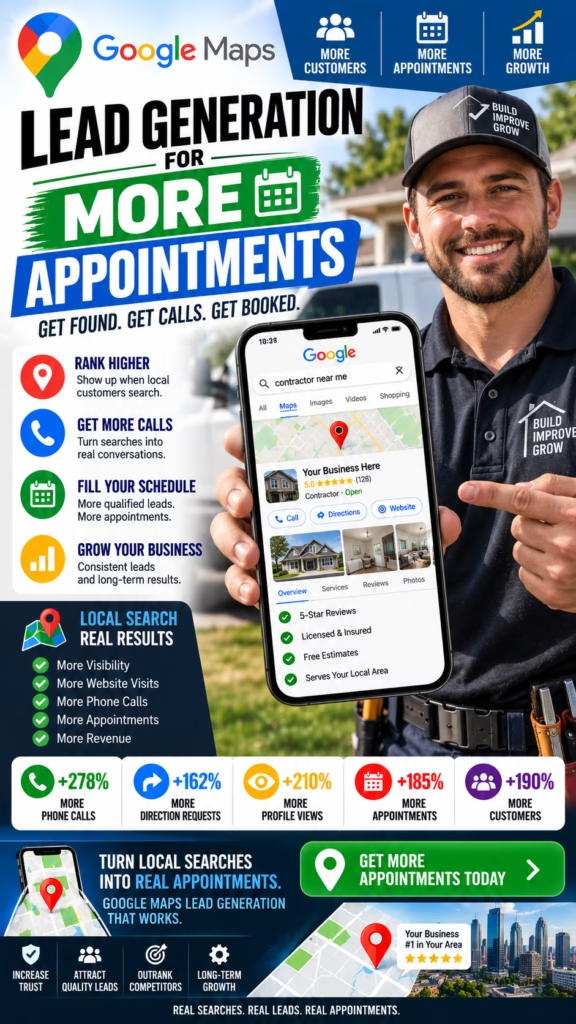
How to Get More Leads From Google Maps explains how local businesses can turn Google Maps visibility into more phone calls, website visits, direction requests, quote requests, appointments, and real customer conversations.

Introduction

How to Get More Leads From Google Maps starts with one simple fact: when people search for a nearby business, service, contractor, store, restaurant, repair company, or professional, Google Maps is often one of the first places they look.

That makes Google Maps one of the most powerful local lead generation channels for businesses that depend on nearby customers. A strong Google Maps presence can help a company show up when buyers search for services like HVAC repair, roofing, painting, plumbing, landscaping, mattresses, furniture, auto repair, restaurants, med spas, dental care, real estate services, and many other local needs.

Google Maps leads come from local search intent. When someone searches nearby, they are often close to calling, visiting, booking, or requesting a quote.

However, simply having a Google Business Profile is not enough. Many businesses are listed on Google Maps but still do not get enough calls because their profile is incomplete, outdated, poorly optimized, low on reviews, missing photos, using weak categories, or not connected to a strong lead response system.

To get more leads from Google Maps, businesses need to improve visibility, trust, relevance, conversion, and follow-up. The goal is not just ranking higher. The goal is turning searchers into real customers.

Main idea: Google Maps lead generation works best when your profile is optimized, trusted, active, locally relevant, and easy to contact.

Table of Contents

  • 1) Why Google Maps matters for local leads
  • 2) How Google Maps leads are generated
  • 3) Optimizing your Google Business Profile
  • 4) Choosing the right business categories
  • 5) Writing a stronger business description
  • 6) Adding services and products
  • 7) Getting more reviews
  • 8) Responding to reviews
  • 9) Adding better photos and videos
  • 10) Using Google Posts
  • 11) Improving local SEO signals
  • 12) Building location and service pages
  • 13) Tracking Google Maps leads
  • 14) Improving call conversion
  • 15) Common Google Maps lead generation mistakes
  • 16) Final thoughts
  • 17) FAQs
  • 18) Extra keywords

1) Why Google Maps Matters for Local Leads

Google Maps matters because it appears when people are searching with local intent. A person searching for “roof repair near me,” “HVAC company near me,” “best mattress store near me,” or “emergency plumber near me” is usually not just browsing casually. They are comparing options and deciding who to contact.

For local businesses, this is extremely valuable. Google Maps can put the business in front of buyers at the exact moment they are looking for help. That makes it different from many forms of advertising that interrupt people before they are ready.

Google Maps can generate:

  • Phone calls
  • Website visits
  • Direction requests
  • Appointment requests
  • Quote requests
  • Store visits
  • Service area inquiries
  • Message conversations
  • Emergency service leads
  • High-intent local customers

Google Maps is powerful because it connects local businesses with customers who are already searching for a solution.

2) How Google Maps Leads Are Generated

Google Maps leads usually happen when a searcher finds your business profile and takes action. That action may be calling, clicking your website, requesting directions, reading reviews, looking at photos, or comparing you with competitors.

The more complete and trustworthy your profile looks, the more likely a searcher is to take the next step. Google Maps lead generation is about increasing both visibility and conversion.

Google Maps lead flow:
Customer searches locally
Your business appears on Google Maps
Customer checks reviews and photos
Customer reads services and description
Customer compares competitors
Customer clicks call, website, directions, or message
Business responds quickly
Lead becomes appointment, visit, quote, or sale

Getting more Google Maps leads requires both ranking visibility and a profile that convinces people to contact you.

3) Optimizing Your Google Business Profile

Your Google Business Profile is the foundation of Google Maps lead generation. If the profile is incomplete, inconsistent, or outdated, it can reduce trust and hurt conversions. Every major section should be completed with accurate, helpful information.

Optimize these profile sections:

  • Business name
  • Primary category
  • Secondary categories
  • Business description
  • Phone number
  • Website URL
  • Hours
  • Service areas
  • Services
  • Products
  • Photos
  • Reviews

A complete profile gives Google more context and gives customers more confidence.

4) Choosing the Right Business Categories

Categories are one of the most important parts of Google Maps optimization. The primary category tells Google what your business is mainly about. Secondary categories help support related services.

For example, an HVAC company may choose an HVAC contractor category, while also using related categories if they accurately match the business. A painting company may use painter as the main category and include related categories only if they truly apply.

Category tips:
Choose the most accurate primary category
Use relevant secondary categories
Do not add unrelated categories
Review competitor categories
Match categories to real services
Update categories if the business changes

The right categories help Google understand which local searches your business should appear for.

5) Writing a Stronger Business Description

The business description should clearly explain who you help, what you offer, where you serve, and why customers should trust you. It should include natural local keywords without sounding stuffed or robotic.

A strong description can mention your services, service areas, experience, customer focus, and main benefits. It should be written for humans first, while still giving Google useful context.

Business description structure:
Who you are
What services you provide
Where you serve
What makes you different
How customers can contact you

A strong description helps both Google and customers understand your business faster.

6) Adding Services and Products

Services and products help your Google Business Profile become more detailed and relevant. Service businesses should list each major service clearly. Product businesses should add important product categories, offers, or inventory highlights.

Service examples:

  • AC repair
  • Roof inspection
  • Interior painting
  • Plumbing repair
  • Mattress delivery
  • Furniture financing
  • Appliance repair
  • Landscaping service
  • Window installation
  • Emergency service

Detailed service and product sections help customers understand exactly what you offer before they call.

7) Getting More Reviews

Reviews are one of the biggest trust signals on Google Maps. A business with more strong reviews often looks safer, more established, and more credible than a competitor with few or poor reviews.

Businesses should build a consistent review request process. Ask satisfied customers after the job is complete, after delivery, after a purchase, or after a successful appointment. The request should be simple and direct.

Ways to get more reviews:

  • Ask after successful service
  • Send a review link by text
  • Add review requests to follow-up emails
  • Train staff to ask politely
  • Use QR codes in-store
  • Ask repeat customers
  • Follow up after delivery
  • Make the process easy

More quality reviews can improve trust and increase the chance that searchers choose your business.

8) Responding to Reviews

Responding to reviews shows customers that the business is active and professional. Positive reviews should receive a warm thank-you. Negative reviews should be handled calmly, respectfully, and with a focus on resolution.

Review response tips:
Thank the customer
Mention the service naturally
Stay professional
Avoid arguments
Respond consistently
Use local context when natural
Show future customers you care

Review responses are not just for the reviewer. They are also for future customers reading your profile.

9) Adding Better Photos and Videos

Photos and videos help customers believe the business is real, active, and trustworthy. Google Maps profiles with strong visuals often feel more credible than profiles with no photos or outdated images.

Photo ideas for Google Maps:

  • Exterior business photos
  • Interior store photos
  • Team photos
  • Service vehicle photos
  • Before-and-after photos
  • Product photos
  • Completed project photos
  • Customer experience photos
  • Equipment photos
  • Short video walkthroughs

Better visuals can increase trust before the customer ever calls.

10) Using Google Posts

Google Posts allow businesses to share updates, offers, announcements, service highlights, seasonal promotions, and calls-to-action directly on the profile. Posts can make the profile feel active and current.

Google Post ideas:
Seasonal service reminder
Limited-time offer
New product arrival
Before-and-after project
Customer review highlight
Emergency service reminder
Financing announcement
Delivery promotion
Appointment booking CTA
Local service update

Google Posts help keep your profile fresh and can guide searchers toward a specific action.

11) Improving Local SEO Signals

Google Maps visibility is influenced by many local SEO signals. Your website, citations, reviews, keywords, location relevance, service area content, backlinks, and overall online consistency can all support better local visibility.

Important local SEO signals include:

  • Consistent name, address, and phone number
  • Relevant website content
  • Local landing pages
  • Quality reviews
  • Accurate categories
  • Local backlinks
  • Directory listings
  • Service area relevance
  • On-page SEO
  • Profile activity

Google Maps lead generation improves when the profile and website support the same local relevance.

12) Building Location and Service Pages

Location and service pages help your website support Google Maps rankings. A roofing company may need pages for roof repair, roof replacement, storm damage, and city-specific service areas. A mattress store may need pages for local delivery, mattress brands, financing, and nearby cities.

These pages should be helpful, unique, and locally relevant. They should not be thin duplicate pages. Each page should answer real customer questions and connect back to the services listed on the Google Business Profile.

Strong local pages help Google understand what you do and where you do it.

13) Tracking Google Maps Leads

Tracking is essential because businesses need to know whether Google Maps is creating real results. Calls, clicks, direction requests, messages, form submissions, and booked jobs should be monitored consistently.

Track these Google Maps lead metrics:

  • Phone calls
  • Website clicks
  • Direction requests
  • Messages
  • Appointment requests
  • Quote requests
  • Search terms
  • Profile views
  • Review growth
  • Closed customers

Lead tracking turns Google Maps from a visibility tool into a measurable revenue channel.

14) Improving Call Conversion

Getting more calls from Google Maps is only part of the goal. The business also needs to answer quickly and convert those calls into appointments, visits, quotes, or sales.

Call conversion tips:
Answer quickly
Use a friendly greeting
Ask how the customer found you
Confirm the service needed
Ask for location
Offer the next step
Book the appointment
Send follow-up confirmation
Track the lead source
Follow up if they do not book

Google Maps leads are most valuable when the business has a strong response system after the call comes in.

15) Common Google Maps Lead Generation Mistakes

Many businesses lose Google Maps leads because their profile is incomplete or inactive. Others rank but fail to convert because their photos are poor, reviews are weak, services are unclear, or phone calls are missed.

Common mistakes include:

  • Wrong business category
  • Incomplete profile
  • Outdated hours
  • Few reviews
  • No review response process
  • Poor photos
  • No service details
  • No Google Posts
  • Weak website pages
  • No lead tracking
  • Missed calls
  • Slow follow-up

Google Maps lead generation fails when businesses focus only on showing up, but not on earning trust and converting the lead.

16) Final Thoughts

How to Get More Leads From Google Maps is about building a complete local visibility and conversion system. The best results come from a fully optimized Google Business Profile, strong categories, clear services, helpful descriptions, quality reviews, better photos, active posts, local SEO support, and fast follow-up.

Google Maps can become one of the strongest lead sources for local businesses when the profile is treated like a living sales asset rather than a one-time listing.

Final takeaway: To get more leads from Google Maps, make your business easier to find, easier to trust, and easier to contact than your competitors.

17) FAQs

1) How do I get more leads from Google Maps?

Optimize your Google Business Profile, choose the right categories, get more reviews, add photos, list services, publish posts, improve local SEO, and respond quickly to calls and messages.

2) What is Google Maps lead generation?

Google Maps lead generation is the process of turning local searches into phone calls, website clicks, directions, messages, appointments, and customers.

3) Does Google Business Profile help get leads?

Yes. A well-optimized Google Business Profile can help local businesses generate more calls, visits, messages, and quote requests.

4) What is the most important part of Google Maps optimization?

The most important parts include accurate categories, complete profile information, strong reviews, local relevance, photos, services, and consistent activity.

5) Do reviews help Google Maps leads?

Yes. Reviews build trust and can influence whether a searcher chooses your business instead of a competitor.

6) How many reviews do I need?

There is no single number, but businesses should aim to consistently earn high-quality reviews and stay competitive with top local competitors.

7) Should I respond to Google reviews?

Yes. Responding to reviews shows professionalism and helps future customers see that the business is active and attentive.

8) Do photos help Google Maps rankings?

Photos can improve profile quality, customer trust, and engagement, which can support better overall Google Maps performance.

9) What photos should I add to my profile?

Add exterior photos, interior photos, team photos, product photos, service photos, before-and-after images, project photos, and vehicle photos.

10) What are Google Posts?

Google Posts are updates businesses can publish on their profile to share offers, announcements, services, products, events, and calls-to-action.

11) Should I add services to my Google profile?

Yes. Adding services helps customers understand what you offer and gives Google more context about your business.

12) Should I add products to my Google profile?

Yes, if you sell products or product categories. Product sections can help customers browse your offers before contacting you.

13) How do categories affect Google Maps leads?

Categories help Google understand what your business does and which searches your profile should appear for.

14) Can a website help Google Maps rankings?

Yes. A strong local website with service pages, location pages, clear contact information, and relevant content can support Google Maps visibility.

15) Do local landing pages help?

Yes. High-quality location and service pages can help connect your business to specific areas and services.

16) What are direction requests?

Direction requests happen when users ask Google Maps to guide them to your business location.

17) How do I track Google Maps calls?

You can track calls through Google Business Profile insights, call tracking tools, CRM records, and asking customers how they found you.

18) Why am I not getting leads from Google Maps?

Your profile may be incomplete, poorly optimized, low on reviews, missing photos, using weak categories, or not converting calls effectively.

19) How often should I update my Google Business Profile?

You should update it regularly with fresh photos, posts, service updates, hours, offers, and review responses.

20) Can service-area businesses get Google Maps leads?

Yes. Service-area businesses can generate leads from Google Maps when their profile, service areas, reviews, website, and local relevance are strong.

21) Is Google Maps better than paid ads?

Google Maps and paid ads serve different roles. Google Maps can capture organic local intent, while paid ads can create additional visibility faster.

22) Can Google Maps help emergency services?

Yes. Businesses like plumbers, HVAC companies, roofers, locksmiths, and repair providers can get urgent leads from Google Maps searches.

23) Should I use keywords in my business description?

Yes, but naturally. Use service and location keywords in a helpful way without keyword stuffing.

24) What is the biggest Google Maps mistake?

The biggest mistake is creating a profile and then ignoring it. Google Maps works best when the profile is optimized, active, trusted, and tracked.

25) What is the main goal of Google Maps marketing?

The main goal is to turn local search visibility into phone calls, website clicks, direction requests, messages, appointments, and paying customers.

18) Extra Keywords

  1. How to Get More Leads From Google Maps
  2. Google Maps lead generation
  3. Google Maps leads
  4. Google Business Profile optimization
  5. Google Maps marketing
  6. local SEO leads
  7. local business lead generation
  8. Google Maps ranking
  9. Google Maps optimization
  10. Google Business Profile leads
  11. local search marketing
  12. Google Maps calls
  13. Google Maps website clicks
  14. Google Maps direction requests
  15. Google reviews for leads
  16. Google Business Profile services
  17. Google Business Profile photos
  18. Google Posts marketing
  19. local pack ranking
  20. local SEO for small business
  21. service area business SEO
  22. Google Maps customer leads
  23. Google Maps appointment leads
  24. Google Maps quote requests
  25. Google Maps local marketing system

© 2026 Your Brand

How to Get More Leads From Google Maps Read More »

How Plumbers Can Get Leads on OfferUp

ChatGPT Image May 27 2026 07 16 10 PM
How Plumbers Can Get Leads on OfferUp

How Plumbers Can Get Leads on OfferUp

How Plumbers Can Get Leads on OfferUp explains how plumbing businesses can use local listings, emergency-service angles, service-specific titles, homeowner-focused descriptions, trust signals, service-area keywords, lead tracking, and fast message follow-up to attract more plumbing jobs.

Introduction

How Plumbers Can Get Leads on OfferUp starts with understanding how local homeowners search for help. When someone has a clogged drain, leaking pipe, broken water heater, running toilet, low water pressure, sewer concern, or urgent plumbing issue, they often want a nearby provider who can respond quickly and clearly.

OfferUp is usually thought of as a local buying and selling app, but plumbing businesses can use it as another visibility channel. A well-built listing can show homeowners that a plumber is local, available, professional, and able to handle specific plumbing problems.

OfferUp works for plumbers when listings focus on urgent needs, local service areas, trust signals, and a clear path to request help.

Instead of posting one broad “plumbing services available” listing, plumbers should create multiple listings around specific problems. One listing can focus on drain cleaning. Another can focus on leak repair. Another can focus on water heater service. Another can focus on emergency plumbing. Another can focus on toilet repair, faucet installation, garbage disposal replacement, or sewer line inspections.

The goal is not just to get random messages. The goal is to attract qualified plumbing leads from people who have a real problem, a real location, and a real need for service.

Main idea: How Plumbers Can Get Leads on OfferUp comes down to clear service listings, local keywords, urgent problem-solving, trust, and fast follow-up.

Table of Contents

  • 1) Why OfferUp can work for plumbers
  • 2) What plumbing leads look like on OfferUp
  • 3) How homeowners decide which plumber to message
  • 4) Building an OfferUp posting strategy for plumbers
  • 5) Writing plumbing listing titles that get clicks
  • 6) Creating service-focused descriptions
  • 7) Local keywords for plumbing leads
  • 8) Trust signals for plumbing businesses
  • 9) Emergency plumbing listing strategy
  • 10) Drain cleaning listing strategy
  • 11) Water heater listing strategy
  • 12) Leak repair listing strategy
  • 13) Toilet and faucet repair listing strategy
  • 14) Commercial plumbing listing strategy
  • 15) Posting rotation for plumbers
  • 16) Reducing low-quality plumbing inquiries
  • 17) Message follow-up that books service calls
  • 18) Tracking OfferUp plumbing leads
  • 19) Common OfferUp mistakes plumbers should avoid
  • 20) Final thoughts
  • 21) FAQs
  • 22) Extra keywords

1) Why OfferUp Can Work for Plumbers

OfferUp can work for plumbers because plumbing is a local, need-based service. Many homeowners do not wait weeks to fix a plumbing issue. They need someone nearby, available, and trustworthy. OfferUp listings can help plumbers appear in front of local users who may already be browsing for home services, repair help, tools, fixtures, appliances, or household solutions.

Plumbing businesses can use listings to highlight common problems, service areas, availability, and easy estimate or service-call requests. The more specific the listing, the more likely it is to match the homeowner’s immediate need.

OfferUp can help plumbers generate:

  • Drain cleaning leads
  • Leak repair requests
  • Water heater service leads
  • Emergency plumbing calls
  • Toilet repair inquiries
  • Faucet installation leads
  • Garbage disposal replacement requests
  • Sewer line inspection inquiries
  • Commercial plumbing leads
  • Local service appointments

OfferUp gives plumbing businesses another way to create local service conversations beyond search ads, referrals, and Google Business Profile traffic.

2) What Plumbing Leads Look Like on OfferUp

Plumbing leads on OfferUp may start as short messages. A homeowner might ask if the plumber can fix a clogged sink, replace a water heater, repair a leak, install a faucet, or come out today. The listing should make it easy for the homeowner to explain the problem.

The best plumbing leads include details such as the city, type of issue, urgency, photos, property type, and preferred appointment time. A strong listing can encourage the homeowner to send those details right away.

Strong plumbing lead signals:
Mentions a specific problem
Shares city or neighborhood
Asks about same-day service
Sends photos of the issue
Asks for estimate or service call
Mentions water heater, drain, leak, toilet, or faucet
Requests appointment availability
Asks for emergency help
Provides property type
Wants a phone call

A better OfferUp plumbing lead is someone with a specific issue, local address area, and clear need for service.

3) How Homeowners Decide Which Plumber to Message

Homeowners usually choose a plumber based on clarity, trust, location, and response speed. Plumbing problems can feel stressful, so the listing should make the business feel reliable and easy to contact.

A homeowner may compare multiple listings before sending a message. The listing with a specific service title, clear description, local area, professional tone, and trust signals is more likely to earn the inquiry.

Homeowners usually evaluate:

  • Type of plumbing service
  • Service area
  • Emergency availability
  • Professionalism
  • Business name
  • Phone or website presence
  • Reviews or reputation signals
  • Response speed
  • Estimate process
  • Ease of booking

The easier the plumber makes the next step, the more likely the homeowner is to reach out.

4) Building an OfferUp Posting Strategy for Plumbers

A plumbing business should create listings around the most common and profitable service categories. One broad listing may not capture all buyer intent. A homeowner with a clogged drain may not click a generic plumbing post, but they may click a listing that says “Drain Cleaning Service Available.”

The best strategy is to build a rotation of service-specific listings. Each listing should focus on one plumbing problem, one service area, and one clear next step.

OfferUp plumbing listing angles:
Emergency plumbing service
Drain cleaning
Water heater repair
Water heater replacement
Leak repair
Toilet repair
Faucet installation
Garbage disposal replacement
Sewer line inspection
Commercial plumbing service
Same-day service availability
Local plumber in specific city

Plumbers get better OfferUp leads when listings match the exact problem homeowners are trying to solve.

5) Writing Plumbing Listing Titles That Get Clicks

The title should clearly name the plumbing problem or service. A vague title like “plumbing available” does not create urgency or trust. A specific title makes the listing easier to understand and more likely to attract qualified messages.

Strong titles should include the service, local angle, and response benefit when possible. Emergency, same-day, estimate, repair, installation, and service-area language can all help the listing feel more relevant.

Weak title:
Plumbing Services

Better title:
Local Plumber Available - Leak Repair & Drain Help

Weak title:
Drain Help

Better title:
Drain Cleaning Service - Same-Day Appointments

Weak title:
Water Heater

Better title:
Water Heater Repair & Replacement Estimates

Weak title:
Toilet Fix

Better title:
Toilet Repair & Faucet Installation Service

Specific plumbing titles attract homeowners who already know what problem they need fixed.

6) Creating Service-Focused Descriptions

The description should help the homeowner understand what the plumber does, where the plumber works, and what information to send. A service-focused description should not be too generic. It should clearly explain the plumbing issue the listing is about.

Descriptions should guide the homeowner toward a service call or estimate. The plumber can ask the lead to send their city, problem type, photos, urgency, and best contact method.

A strong plumbing description should include:

  • Specific plumbing service
  • Common problems handled
  • Service area
  • Same-day or emergency availability if offered
  • Estimate or service-call process
  • Business trust signals
  • What details to message
  • Phone call option
  • Clear next step
  • Professional tone

Service-focused descriptions help turn OfferUp messages into real plumbing appointments.

7) Local Keywords for Plumbing Leads

Local keywords help OfferUp listings connect with homeowners in the right area. Plumbing is location-based, so a business should naturally mention city names, nearby towns, neighborhoods, and service areas.

Local keywords also help qualify the lead. If the listing clearly says which areas are served, fewer messages will come from outside the service zone.

Local plumbing keyword examples:
Local plumber in [City]
Drain cleaning in [City]
Emergency plumber near [City]
Water heater repair in [City]
Leak repair service
Toilet repair near me
Faucet installation service
Same-day plumber available
Serving nearby neighborhoods
Residential plumbing service

Local keywords help plumbers attract leads from homeowners close enough to book a service call.

8) Trust Signals for Plumbing Businesses

Trust is critical for plumbing leads because homeowners are inviting someone into their home and paying for important repairs. OfferUp listings should make the plumbing business look legitimate, local, and professional.

Trust signals may include business name, website, phone number, licensed status if applicable, insured status if applicable, review mentions, years in business, local service area, photos of work, branded vehicle, and professional communication.

Trust signals for plumbers:

  • Business name
  • Website
  • Local phone number
  • Licensed mention if applicable
  • Insured mention if applicable
  • Review mention
  • Years in business
  • Service area
  • Work photos
  • Professional reply process

Trust signals help homeowners choose a real plumbing business instead of a vague listing.

9) Emergency Plumbing Listing Strategy

Emergency plumbing listings should focus on urgency, service area, and fast response. Homeowners searching for emergency help are usually dealing with leaks, backups, broken fixtures, water heater problems, or sudden plumbing failures.

The listing should explain what types of emergency problems are handled and how the homeowner can request help. If same-day or after-hours service is available, that should be stated clearly.

Emergency plumbing listing angles:
Burst pipe help
Urgent leak repair
Clogged drain emergency
Sewer backup help
Water heater failure
Overflowing toilet repair
Same-day plumbing appointment
After-hours plumbing availability
Local emergency plumber
Fast service request

Emergency plumbing listings should make the homeowner feel like help is available quickly and locally.

10) Drain Cleaning Listing Strategy

Drain cleaning is one of the strongest OfferUp listing angles for plumbers because it is a common homeowner problem. People search for help when sinks, showers, tubs, toilets, or main lines are draining slowly or backing up.

A drain cleaning listing should mention common symptoms, service area, appointment availability, and what information to send.

Drain cleaning listing ideas:

  • Kitchen sink drain cleaning
  • Bathroom sink drain cleaning
  • Shower drain cleaning
  • Tub drain clearing
  • Toilet clog help
  • Main line clog inspection
  • Slow drain service
  • Sewer backup help
  • Same-day drain appointments
  • Local drain cleaning service

Drain cleaning posts work because they match a very specific and urgent homeowner problem.

11) Water Heater Listing Strategy

Water heater listings can attract high-value plumbing leads. Homeowners may need repair, replacement, installation, flushing, leak diagnosis, or hot water troubleshooting. These listings should be clear and trust-focused because water heater jobs can be more expensive and more urgent.

The listing should invite homeowners to message with the type of water heater, symptoms, photos, and location.

Water heater listing angles:
No hot water help
Water heater repair
Water heater replacement
Tank water heater installation
Tankless water heater service
Leaking water heater help
Water heater estimate
Same-day water heater service
Hot water troubleshooting
Local water heater plumber

Water heater listings can generate strong plumbing leads because the problem is urgent and often requires professional service.

12) Leak Repair Listing Strategy

Leak repair listings should focus on urgency, damage prevention, and local availability. Homeowners may need help with leaking pipes, under-sink leaks, toilet leaks, water heater leaks, ceiling leaks, outdoor spigots, or hidden plumbing concerns.

Leak repair posts should encourage homeowners to send photos and describe where the leak appears to be coming from.

Leak repair listing details:

  • Under-sink leak repair
  • Pipe leak repair
  • Toilet leak repair
  • Water heater leak help
  • Ceiling leak investigation
  • Outdoor faucet leak repair
  • Emergency leak service
  • Photo-based first look
  • Local service area
  • Fast appointment request

Leak repair listings should speak directly to homeowners who want to prevent water damage quickly.

13) Toilet and Faucet Repair Listing Strategy

Toilet and faucet repair listings can bring smaller but steady plumbing leads. These services are common, easy for homeowners to understand, and often needed quickly. A listing can focus on running toilets, clogged toilets, leaking toilets, faucet replacement, sink fixture installation, or bathroom updates.

These listings should be simple, direct, and appointment-focused.

Toilet and faucet listing angles:
Running toilet repair
Clogged toilet help
Toilet replacement
Leaking toilet repair
Faucet installation
Kitchen faucet replacement
Bathroom faucet replacement
Sink repair
Fixture upgrade
Local plumbing appointment

Small plumbing repair listings can produce consistent leads and introduce homeowners to the business for future work.

14) Commercial Plumbing Listing Strategy

Commercial plumbing listings can target offices, restaurants, retail spaces, apartment buildings, property managers, rental units, warehouses, and small businesses. These leads may be valuable because they can lead to repeat service relationships.

Commercial listings should focus on reliability, scheduling, maintenance, repairs, and fast communication.

Commercial plumbing listing ideas:

  • Restaurant plumbing service
  • Office plumbing repair
  • Retail plumbing service
  • Apartment plumbing repairs
  • Property manager plumbing support
  • Commercial drain cleaning
  • Fixture repair and replacement
  • Restroom plumbing service
  • Maintenance plumbing
  • Local business plumbing support

Commercial plumbing listings should speak to decision-makers who need reliable service and fast response.

15) Posting Rotation for Plumbers

Posting rotation helps plumbers test which services create the best OfferUp leads. Instead of repeating one generic plumbing post, a business can rotate listings by service type, urgency, city, season, and customer need.

This creates more opportunities to match specific homeowner problems. It also helps the plumber see which listings generate the most qualified messages.

Plumbing posting rotation:
Emergency plumbing
Drain cleaning
Leak repair
Water heater repair
Water heater replacement
Toilet repair
Faucet installation
Garbage disposal replacement
Sewer line service
Commercial plumbing
City-specific plumber listing
Same-day appointment listing

Posting rotation helps plumbers find the OfferUp listing angles that create the most booked service calls.

16) Reducing Low-Quality Plumbing Inquiries

Low-quality inquiries often happen when the listing is too broad. If the post only says “plumbing available,” homeowners may send vague questions that are hard to qualify. Clearer listings help create better conversations.

Plumbers can improve lead quality by asking the homeowner to provide location, issue type, photos, urgency, property type, and preferred appointment time.

Ask plumbing leads to send:

  • City or neighborhood
  • Type of plumbing issue
  • Photos or video if possible
  • How urgent the problem is
  • Residential or commercial property
  • When the issue started
  • Whether water is actively leaking
  • Preferred appointment time
  • Best phone number
  • Any previous repair attempts

Important: Better plumbing leads usually come from listings that ask for useful details upfront.

17) Message Follow-Up That Books Service Calls

Fast follow-up is critical for plumbing leads. Homeowners often contact more than one plumber, especially when the problem is urgent. A quick, helpful reply can help win the service call.

A strong response should confirm the problem, ask for location and urgency, request photos if useful, and move toward a call or appointment.

Simple follow-up script:

“Thanks for reaching out. We can help with that plumbing issue. What city are you in, and is this a drain, leak, water heater, toilet, faucet, or another issue? If you can send a photo and let us know how urgent it is, we can help with the next step for service.”

OfferUp plumbing leads convert better when the reply is fast, specific, and service-call focused.

18) Tracking OfferUp Plumbing Leads

Tracking helps plumbing businesses understand which OfferUp listings generate the best leads. Without tracking, it is hard to know whether drain cleaning, emergency plumbing, leak repair, water heaters, or toilet repair listings are performing best.

Each listing should be tracked by title, city, service type, messages, qualified leads, appointments booked, jobs completed, and revenue when possible.

Track these OfferUp plumbing metrics:
Listing title
Service type
City or service area
Date posted
Messages received
Qualified leads
Calls received
Service appointments booked
Jobs completed
Average job value
Best-performing title
Best-performing listing angle

The best OfferUp strategy for plumbers tracks which listings turn into booked jobs, not just messages.

19) Common OfferUp Mistakes Plumbers Should Avoid

Many plumbers struggle on OfferUp because their listings are too vague or too generic. They may not mention specific services, service areas, emergency availability, trust signals, or next steps. They may also respond too slowly to urgent messages.

Most of these mistakes are fixable. A plumber can improve results with better service-specific titles, local keywords, clearer descriptions, stronger trust signals, and faster follow-up.

Common mistakes include:

  • Posting only “plumbing services” with no details
  • Not listing service areas
  • Not creating service-specific listings
  • Ignoring emergency plumbing angles
  • Not mentioning drain cleaning
  • Not promoting water heater service
  • No trust signals
  • No clear service-call process
  • Slow message replies
  • No lead tracking

OfferUp fails for plumbers when listings create attention but do not guide homeowners toward a service appointment.

20) Final Thoughts

How Plumbers Can Get Leads on OfferUp is about creating a local posting system that matches real homeowner problems. Plumbing businesses can use OfferUp listings for emergency service, drain cleaning, leak repair, water heaters, toilet repair, faucet installation, commercial plumbing, and other service categories.

The strongest plumbing OfferUp strategy uses service-specific listings, local keywords, trust signals, fast replies, and lead tracking. Instead of relying on one broad post, plumbers should rotate multiple listings and measure which ones create real calls and booked jobs.

Final takeaway: Plumbers can get leads on OfferUp when listings are specific, local, urgent, trustworthy, and connected to a fast service-call follow-up process.

21) FAQs

1) How can plumbers get leads on OfferUp?

Plumbers can get leads by creating service-specific OfferUp listings for drain cleaning, leak repair, water heaters, emergency plumbing, toilet repair, faucet installation, and local service calls.

2) Can OfferUp work for plumbing businesses?

Yes. OfferUp can work as a local visibility channel when plumbing listings are clear, service-focused, trustworthy, and supported by fast follow-up.

3) What should a plumber post on OfferUp?

A plumber should post listings for common services such as drain cleaning, leak repair, water heater repair, toilet repair, faucet installation, sewer service, and emergency plumbing.

4) What is the best OfferUp title for plumbers?

The best titles are specific, such as “Drain Cleaning Service - Same-Day Appointments” or “Local Plumber Available - Leak Repair & Water Heater Help.”

5) Should plumbers mention emergency service?

Yes, if emergency service is available. Urgent plumbing problems often create high-intent leads.

6) Should plumbers mention same-day appointments?

Yes, if same-day service is available. It gives homeowners a clear reason to message quickly.

7) What local keywords should plumbers use?

Plumbers should use city names, nearby towns, “local plumber,” “drain cleaning,” “leak repair,” “water heater repair,” and “emergency plumber.”

8) How can plumbers reduce weak messages?

Ask leads to send their city, plumbing issue, photos, urgency level, property type, and preferred appointment time.

9) Can OfferUp generate drain cleaning leads?

Yes. Drain cleaning is one of the strongest listing angles because clogged and slow drains are common homeowner problems.

10) Can OfferUp generate water heater leads?

Yes. Water heater repair and replacement listings can attract urgent and higher-value plumbing inquiries.

11) Can OfferUp generate leak repair leads?

Yes. Leak repair listings can attract homeowners who want fast help preventing water damage.

12) Can OfferUp help with toilet repair leads?

Yes. Toilet repair, replacement, and clog-help listings can generate steady local service inquiries.

13) Can commercial plumbers use OfferUp?

Yes. Commercial plumbers can create listings for restaurants, offices, apartments, retail spaces, and property managers.

14) What trust signals should plumbers include?

Business name, website, phone number, licensed or insured mention when applicable, reviews, years in business, service area, and professional communication.

15) Should plumbers include pricing?

Plumbers can include starting-price context when appropriate, but many plumbing jobs require diagnosis before pricing.

16) Should plumbers use photos on OfferUp?

Yes. Photos of work, tools, branded vehicles, water heaters, fixtures, or clean job results can build trust.

17) How fast should plumbers reply to OfferUp messages?

As fast as possible. Plumbing leads are often urgent, and homeowners may contact multiple providers.

18) What should the first reply say?

The first reply should confirm the service, ask for city and issue type, request photos if helpful, and guide the homeowner toward a call or appointment.

19) Should plumbers post multiple OfferUp listings?

Yes. Multiple service-specific listings usually perform better than one generic plumbing post.

20) What is posting rotation for plumbers?

Posting rotation means rotating listings for different services such as emergency plumbing, drain cleaning, leak repair, water heaters, and fixture repair.

21) How should plumbers track OfferUp leads?

Track listing title, service type, city, messages, qualified leads, calls, appointments booked, jobs completed, and revenue.

22) What is the biggest OfferUp mistake plumbers make?

The biggest mistake is posting vague listings without specific services, local keywords, trust signals, or a fast follow-up process.

23) Can OfferUp replace Google Ads for plumbers?

No. OfferUp should support the overall marketing system. Google Ads, Google Business Profile, SEO, referrals, and follow-up still matter.

24) How do plumbers get better-quality OfferUp leads?

Use specific service listings, clear descriptions, local keywords, qualification questions, and fast service-call follow-up.

25) What is the main goal of OfferUp for plumbers?

The main goal is to turn local marketplace visibility into qualified plumbing inquiries, phone calls, service appointments, and booked jobs.

22) Extra Keywords

  1. How Plumbers Can Get Leads on OfferUp
  2. OfferUp for plumbers
  3. OfferUp plumbing leads
  4. plumbing business lead generation
  5. plumber lead generation
  6. local plumbing leads
  7. plumbing contractor marketing
  8. drain cleaning leads
  9. emergency plumbing leads
  10. water heater leads
  11. leak repair leads
  12. toilet repair leads
  13. faucet installation leads
  14. commercial plumbing leads
  15. residential plumbing leads
  16. OfferUp service business marketing
  17. local plumber advertising
  18. plumbing company marketing
  19. OfferUp contractor leads
  20. plumbing appointment leads
  21. same-day plumbing leads
  22. OfferUp local service leads
  23. plumber listing strategy
  24. home service leads
  25. plumbing jobs from OfferUp

© 2026 Your Brand

How Plumbers Can Get Leads on OfferUp Read More »

OfferUp Strategies for Painting Businesses

ChatGPT Image May 27 2026 07 16 04 PM
OfferUp Strategies for Painting Businesses

OfferUp Strategies for Painting Businesses

OfferUp Strategies for Painting Businesses explains how painters can use local listings, before-and-after photos, service-specific titles, quote-focused descriptions, trust signals, location keywords, lead tracking, and fast message follow-up to attract homeowners and businesses looking for painting help.

Introduction

OfferUp Strategies for Painting Businesses can help painting contractors turn local marketplace traffic into real estimate requests, repaint jobs, cabinet painting inquiries, exterior painting leads, and residential project opportunities. Many homeowners browse local marketplaces when they are looking for affordable, nearby, convenient service options. A painting business that knows how to post correctly can use that attention to create more buyer conversations.

OfferUp is not only for used furniture, tools, or household items. Local service businesses can use marketplace-style listings to show proof, explain services, build trust, and invite people to request a quote. For painters, this is especially useful because painting is visual. A strong before-and-after image can immediately show value.

OfferUp works best for painting businesses when each listing shows proof, explains the service clearly, and makes it easy for the homeowner to request an estimate.

Painting leads often come from homeowners who are actively thinking about a change. They may need an interior repaint, exterior refresh, cabinet painting, trim touch-up, rental property repaint, move-in repaint, move-out repaint, deck staining, fence staining, or commercial paint project. The more specific the listing is, the better the lead quality can become.

Instead of posting one generic “painting services available” listing, painting businesses should build a system of targeted OfferUp listings. Each listing should focus on a specific service, city, project type, pain point, or buyer motivation.

Main idea: OfferUp Strategies for Painting Businesses should focus on local trust, visual proof, clear services, and fast quote follow-up.

Table of Contents

  • 1) Why OfferUp can work for painting businesses
  • 2) What painting leads look like on OfferUp
  • 3) How homeowners decide who to message
  • 4) Building an OfferUp posting strategy for painters
  • 5) Writing painting listing titles that get clicks
  • 6) Creating quote-focused descriptions
  • 7) Using before-and-after photos
  • 8) Local keywords for painting leads
  • 9) Trust signals for painting contractors
  • 10) Interior painting listing strategy
  • 11) Exterior painting listing strategy
  • 12) Cabinet painting listing strategy
  • 13) Commercial painting listing strategy
  • 14) Posting rotation for painting businesses
  • 15) Reducing low-quality painting inquiries
  • 16) Message follow-up that books estimates
  • 17) Tracking OfferUp painting leads
  • 18) Common OfferUp mistakes painters should avoid
  • 19) Final thoughts
  • 20) FAQs
  • 21) Extra keywords

1) Why OfferUp Can Work for Painting Businesses

OfferUp can work for painting businesses because it connects local buyers and sellers in a marketplace environment. Many people use marketplace apps when they want a convenient local solution. A homeowner who is browsing for home improvement ideas, furniture, moving help, or renovation-related items may also be interested in painting services.

Painting is highly visual, which makes it a good fit for marketplace listings. A clean before-and-after photo, fresh interior wall, updated cabinet set, or exterior repaint can quickly communicate the value of the service.

OfferUp can help painters generate:

  • Interior painting leads
  • Exterior painting leads
  • Cabinet painting inquiries
  • Rental repaint jobs
  • Move-in repaint requests
  • Move-out repaint requests
  • Deck and fence staining leads
  • Commercial painting inquiries
  • Touch-up project leads
  • Free estimate requests

OfferUp gives painting businesses another local channel for starting conversations with homeowners who may need work done soon.

2) What Painting Leads Look Like on OfferUp

Painting leads on OfferUp may begin with simple questions. A homeowner might ask how much a room costs, whether the business serves their city, how soon the painter can come out, whether cabinets can be painted, or whether exterior painting is available.

The best leads are usually specific. They mention a room, square footage, number of cabinets, exterior surface, timeline, location, or desired color change. A strong listing should encourage buyers to provide useful details when they message.

Strong painting lead signals:
Asks for a free estimate
Mentions room count
Mentions cabinets
Shares city or neighborhood
Asks about availability
Asks about exterior painting
Mentions move-in or move-out timing
Asks about prep work
Requests before-and-after examples
Wants a phone call or appointment

A better OfferUp painting lead is someone who has a real project, a real location, and a clear next step.

3) How Homeowners Decide Who to Message

Homeowners usually decide quickly. They look at the main image, listing title, service description, location, price context, and trust signals. If the listing looks professional and easy to understand, they are more likely to send a message.

Painting contractors should remember that trust is a major part of the decision. Homeowners are letting someone into their home. They want to know the painter is reliable, experienced, and capable of delivering clean work.

Homeowners usually evaluate:

  • Before-and-after photos
  • Type of painting service
  • City or service area
  • Quality of description
  • Professionalism
  • Reviews or reputation signals
  • Response speed
  • Availability
  • Estimate process
  • Ease of booking

The easier the listing makes the project feel, the more likely the homeowner is to reach out.

4) Building an OfferUp Posting Strategy for Painters

A painting business should not rely on one generic listing. A better strategy is to create multiple listings for different services and buyer needs. Each listing should focus on a specific project type or local angle.

For example, one listing can focus on interior painting, another on cabinet painting, another on exterior painting, another on rental repaints, and another on same-week estimates. This allows the painting business to test which services generate the best leads.

OfferUp painting listing angles:
Interior room painting
Whole-home repainting
Exterior house painting
Cabinet painting
Rental property repainting
Move-in repainting
Move-out repainting
Fence staining
Deck staining
Commercial painting
Same-week estimate availability
Local neighborhood painting service

A strong OfferUp strategy for painters uses multiple focused listings instead of one broad service post.

5) Writing Painting Listing Titles That Get Clicks

The title should immediately tell the homeowner what painting service is being offered. Vague titles like “painting available” are easy to ignore. Strong titles mention the service, location, benefit, or estimate option.

Good titles help homeowners self-select. Someone who needs cabinets painted is more likely to click a title about cabinet painting than a generic painting service post.

Weak title:
Painting Services Available

Better title:
Interior Painting Estimates - Local Painter Available

Weak title:
House Painter

Better title:
Exterior House Painting - Free Local Estimate

Weak title:
Cabinet Work

Better title:
Cabinet Painting & Kitchen Refresh Estimates

Weak title:
Paint Help

Better title:
Move-In Repaint Service - Same-Week Estimates

Painting listing titles should be specific enough to match the project the homeowner already has in mind.

6) Creating Quote-Focused Descriptions

OfferUp descriptions should guide the homeowner toward requesting an estimate. A good description explains the service, service area, project types, availability, and what information the homeowner should send.

The description should not sound like a generic ad. It should feel helpful, local, and clear. It should also pre-qualify the buyer by asking for important details such as city, room count, project type, and timeline.

A strong painting description should include:

  • Specific painting service
  • Interior or exterior focus
  • Service area
  • Free estimate option
  • Project examples
  • Availability
  • Prep and cleanup mention
  • Trust signals
  • What details to message
  • Clear next step

Quote-focused descriptions turn OfferUp messages into estimate conversations.

7) Using Before-and-After Photos

Before-and-after photos are one of the strongest assets a painting business can use on OfferUp. They show transformation, quality, and proof. A homeowner can instantly see the difference between old paint and a finished result.

Photos should be clean, bright, and easy to understand. Interior painters can show living rooms, bedrooms, kitchens, hallways, trim, or cabinets. Exterior painters can show siding, brick, doors, shutters, decks, fences, or full home repaints.

Best photo types for painters:
Before-and-after room photos
Freshly painted interior walls
Cabinet painting transformation
Exterior repaint result
Trim and detail work
Front door refresh
Deck or fence staining
Commercial wall repaint
Painter at work
Clean branded estimate graphic

Visual proof helps homeowners trust the painter before they send the first message.

8) Local Keywords for Painting Leads

Local keywords help OfferUp listings connect with nearby homeowners. Painting is a local service, so city names, neighborhoods, nearby towns, and service areas should appear naturally in listings.

Local keywords can also help clarify that the painter is available in the buyer’s area. This can reduce messages from people outside the service zone and improve lead quality.

Useful local painting keywords include:

  • Interior painter near me
  • Local painting contractor
  • House painting in [City]
  • Cabinet painting in [City]
  • Exterior painting service
  • Residential painter
  • Free painting estimate
  • Same-week painting quote
  • Move-in repaint service
  • Serving nearby areas

Local keywords help OfferUp painting listings reach homeowners who are close enough to book.

9) Trust Signals for Painting Contractors

Trust matters because painting is done inside or around someone’s property. Homeowners want to know the painter is professional, reliable, and careful. OfferUp listings should include trust signals that make the business feel legitimate.

Trust signals may include years in business, insured status if applicable, review mentions, real photos, business name, phone number, website, service area, cleanup process, warranty language, and professional communication.

Trust signals for painters:
Business name
Website
Phone number
Years in business
Insured mention if applicable
Review mention
Before-and-after photos
Clean work process
Prep and cleanup included
Local service area
Professional estimate process

Trust signals make it easier for homeowners to choose your painting business over a random listing.

10) Interior Painting Listing Strategy

Interior painting is one of the best services to promote on OfferUp because homeowners often want a quick, visible improvement. Interior listings can focus on room refreshes, full-home repaints, move-in painting, move-out painting, accent walls, trim painting, and color updates.

The listing should explain what rooms are commonly painted and encourage the homeowner to message with room count, location, and timeline.

Interior painting listing ideas:

  • Living room painting
  • Bedroom repainting
  • Kitchen wall painting
  • Hallway painting
  • Trim and baseboard painting
  • Accent wall painting
  • Move-in repainting
  • Rental property repainting
  • Whole-home interior repainting
  • Same-week interior estimates

Interior painting posts should focus on transformation, convenience, and easy estimate scheduling.

11) Exterior Painting Listing Strategy

Exterior painting listings should focus on curb appeal, weathered paint, fading, peeling, trim updates, doors, shutters, siding, fences, decks, and full exterior refreshes. Homeowners often look for exterior painting when a home looks dated or needs protection.

Exterior listings should include service area, surface types, estimate availability, and seasonal timing. Good photos are especially important because curb appeal is visual.

Exterior painting listing ideas:
Full exterior house painting
Siding painting
Trim painting
Front door painting
Shutter painting
Garage door painting
Fence staining
Deck staining
Curb appeal refresh
Seasonal exterior estimates

Exterior painting posts should show curb appeal improvement and invite homeowners to request a local estimate.

12) Cabinet Painting Listing Strategy

Cabinet painting can be a strong OfferUp listing angle because homeowners often want a kitchen refresh without a full remodel. A cabinet painting post should show before-and-after photos, describe the refresh process, and invite homeowners to message with cabinet count or kitchen photos.

Cabinet painting listings should feel premium and transformation-focused. Many homeowners are comparing options, so trust and proof matter.

Cabinet painting listing details:

  • Kitchen cabinet painting
  • Bathroom vanity painting
  • Color change options
  • Before-and-after proof
  • Clean prep process
  • Finish quality mention
  • Estimate availability
  • Message with cabinet photos
  • Local service area
  • Kitchen refresh positioning

Cabinet painting posts work best when they sell the transformation, not just the labor.

13) Commercial Painting Listing Strategy

Commercial painting listings can target offices, retail spaces, rental properties, restaurants, small businesses, warehouses, and property managers. These leads may be more valuable because projects can be larger and repeat business is possible.

Commercial listings should focus on professionalism, scheduling, minimal disruption, clean work, and reliable communication. They should also mention the types of properties served.

Commercial painting listing angles:
Office repainting
Retail space painting
Rental unit repainting
Property manager painting service
Restaurant repainting
Warehouse painting
Apartment turn painting
Commercial touch-ups
Business interior painting
After-hours estimate availability

Commercial painting OfferUp listings should speak to business owners and property managers who need reliable scheduling and clean results.

14) Posting Rotation for Painting Businesses

Posting rotation helps painting businesses test multiple angles and stay visible. Instead of using the same post repeatedly, painters should rotate different services, cities, project types, and seasonal needs.

This helps identify which listings generate the best leads. Interior painting may work better in one season, while exterior painting may work better in another. Cabinet painting may attract homeowners planning a kitchen refresh. Rental repaints may attract landlords and property managers.

Painting posting rotation angles:

  • Interior painting
  • Exterior painting
  • Cabinet painting
  • Move-in repainting
  • Rental repainting
  • Commercial painting
  • Deck staining
  • Fence staining
  • Same-week estimates
  • City-specific painting service

Posting rotation helps painting businesses discover which services and locations produce the strongest OfferUp leads.

15) Reducing Low-Quality Painting Inquiries

Low-quality inquiries often happen when the listing is too vague. If the post does not explain service area, project type, estimate process, or what information to send, homeowners may send short messages that are hard to qualify.

Painting businesses can improve lead quality by asking buyers to send their city, project type, room count, photos, timeline, and best contact method.

Ask leads to send:
City or neighborhood
Interior or exterior project
Room count
Cabinet count
Photos of the area
Desired timeline
Property type
Best time for estimate
Phone number if they want a call
Any special concerns

Important: Better painting leads usually come from listings that explain what details the homeowner should provide.

16) Message Follow-Up That Books Estimates

Fast follow-up is critical. Homeowners may message multiple painters. The business that responds quickly and professionally has a better chance of booking the estimate.

A strong response should thank the person, confirm the service, ask one or two qualifying questions, and move toward an estimate appointment or phone call.

Simple follow-up script:

“Thanks for reaching out. We can help with that painting project. What city are you in, and is this interior, exterior, cabinets, or another type of painting? If you can send a few photos and your ideal timeline, we can help set up the next step for an estimate.”

OfferUp painting leads convert better when the reply is fast, helpful, and estimate-focused.

17) Tracking OfferUp Painting Leads

Tracking helps painting businesses understand which OfferUp listings generate the best results. Without tracking, it is difficult to know whether interior painting, exterior painting, cabinet painting, or commercial painting posts are producing the strongest leads.

Each listing should be tracked by title, city, service type, messages, qualified leads, estimates booked, jobs won, and revenue when possible.

Track these OfferUp painting metrics:
Listing title
Service type
City or service area
Date posted
Messages received
Qualified leads
Estimate requests
Appointments booked
Jobs won
Average job value
Best-performing photos
Best-performing descriptions

The best OfferUp strategy for painters tracks which listings create real estimates and booked jobs.

18) Common OfferUp Mistakes Painters Should Avoid

Many painters struggle on OfferUp because their listings look too generic. They may use weak titles, no before-and-after photos, vague descriptions, no service area, no estimate process, and slow replies. These mistakes make it harder to win homeowner trust.

Most of these problems are easy to fix. Painters can improve results by using stronger visuals, more specific service listings, clearer calls-to-action, trust signals, and faster follow-up.

Common mistakes include:

  • Posting “painting available” with no details
  • Using no before-and-after photos
  • Not listing service areas
  • Not explaining the estimate process
  • Using blurry job photos
  • Not mentioning interior or exterior focus
  • Ignoring cabinet painting opportunities
  • Not asking for project details
  • Responding too slowly
  • Not tracking which posts work

OfferUp fails for painters when listings create attention but do not guide homeowners toward an estimate.

19) Final Thoughts

OfferUp Strategies for Painting Businesses can help painting contractors build another local lead channel by combining visual proof, service-specific listings, local keywords, trust signals, and fast follow-up.

The strongest painting businesses do not post one generic listing and stop. They rotate listings for interior painting, exterior painting, cabinet painting, rental repaints, move-in repaints, commercial painting, deck staining, fence staining, and same-week estimates. They track which listings generate quote requests and turn those leads into booked jobs.

Final takeaway: OfferUp can bring painting leads when listings are visual, specific, local, trustworthy, and built around the estimate process.

20) FAQs

1) What are OfferUp strategies for painting businesses?

They are listing, messaging, photo, keyword, and follow-up strategies designed to help painters generate more local quote requests and painting leads from OfferUp.

2) Can painters get leads from OfferUp?

Yes. Painters can use OfferUp to attract homeowners and businesses looking for interior painting, exterior painting, cabinet painting, and repaint services.

3) What should a painting business post on OfferUp?

Painting businesses should post service-specific listings for interior painting, exterior painting, cabinet painting, rental repaints, commercial painting, deck staining, and free estimates.

4) What photos work best for painting listings?

Before-and-after photos, clean finished project photos, cabinet transformations, exterior repaints, and branded estimate graphics work well.

5) Should painters use before-and-after photos?

Yes. Before-and-after photos are one of the strongest ways to show proof and attract homeowner interest.

6) What should an OfferUp painting title include?

It should include the painting service, local relevance, and a clear benefit such as free estimates or same-week availability.

7) Should painters list pricing on OfferUp?

They can include starting-price context when appropriate, but many painting projects require a custom estimate based on size, prep, and scope.

8) How can painters reduce weak inquiries?

Ask leads to provide city, project type, photos, timeline, room count, or cabinet count before booking an estimate.

9) What local keywords should painters use?

Use city names, nearby towns, service areas, “interior painter,” “exterior painting,” “cabinet painting,” and “free painting estimate.”

10) Can OfferUp help with cabinet painting leads?

Yes. Cabinet painting is a strong visual service that can perform well when listings show transformation photos.

11) Can OfferUp help exterior painters?

Yes. Exterior painting listings can attract homeowners looking for curb appeal, trim updates, siding painting, or full exterior repaints.

12) Can OfferUp help interior painters?

Yes. Interior painting posts can attract room refreshes, move-in repaints, rental repaints, and whole-home repaint projects.

13) Should painters mention free estimates?

Yes, if free estimates are offered. It gives homeowners a simple reason to message.

14) Should painters mention service areas?

Yes. Listing service areas helps attract local leads and reduce messages from outside the business’s coverage area.

15) What trust signals should painters include?

Business name, website, phone number, reviews, years in business, insured status if applicable, photos, and clean work process are useful trust signals.

16) How fast should painters reply to OfferUp messages?

As fast as possible. Homeowners often contact more than one painter, so speed can help book the estimate.

17) What should the first reply say?

The reply should thank the homeowner, confirm the service, ask for location and project details, and guide them toward an estimate.

18) Should painters post multiple listings?

Yes. Multiple service-specific listings usually perform better than one generic painting post.

19) What is posting rotation for painters?

Posting rotation means rotating listings for different services, cities, project types, and seasonal offers.

20) How should painters track OfferUp leads?

Track listing title, service type, messages, qualified leads, estimates booked, jobs won, and revenue when possible.

21) Can commercial painters use OfferUp?

Yes. Commercial painters can post for offices, rentals, retail spaces, restaurants, warehouses, and property managers.

22) What is the biggest OfferUp mistake painters make?

The biggest mistake is posting vague listings without photos, service details, trust signals, or a clear estimate process.

23) Can OfferUp replace a painting company website?

No. OfferUp should support the marketing system, while the website, Google Business Profile, reviews, and follow-up process also build trust.

24) How do painters make OfferUp leads better quality?

Use specific listings, strong photos, local keywords, estimate-focused descriptions, and qualification questions.

25) What is the main goal of OfferUp for painting businesses?

The main goal is to turn local marketplace visibility into qualified estimate requests, phone calls, appointments, and booked painting jobs.

21) Extra Keywords

  1. OfferUp Strategies for Painting Businesses
  2. OfferUp for painters
  3. OfferUp painting leads
  4. painting business lead generation
  5. painting contractor marketing
  6. local painting leads
  7. OfferUp painting contractor leads
  8. residential painting leads
  9. commercial painting leads
  10. interior painting leads
  11. exterior painting leads
  12. cabinet painting leads
  13. house painting leads
  14. OfferUp service business marketing
  15. painting estimate leads
  16. free painting estimate leads
  17. local painter advertising
  18. painting company marketing
  19. OfferUp local service leads
  20. painter listing strategy
  21. painting business OfferUp posts
  22. before and after painting photos
  23. OfferUp contractor marketing
  24. home improvement leads
  25. painting jobs from OfferUp

© 2026 Your Brand

OfferUp Strategies for Painting Businesses Read More »

OfferUp Advertising for Roofing Contractors

ChatGPT Image May 27 2026 07 15 46 PM
OfferUp Advertising for Roofing Contractors

OfferUp Advertising for Roofing Contractors

OfferUp Advertising for Roofing Contractors explains how roofing companies can use OfferUp listings, stronger service titles, roof repair offers, storm damage messaging, local keywords, trust signals, posting rotation, lead tracking, and fast response systems to generate more local messages, calls, inspections, estimate requests, and booked roofing jobs.

Introduction

OfferUp Advertising for Roofing Contractors starts with a practical opportunity: homeowners often need roofing help after storms, leaks, missing shingles, aging roofs, ventilation issues, gutter problems, or visible exterior damage. They may not always start with a long research process. Many want a local contractor who can respond quickly, explain the next step, and provide a trustworthy inspection or estimate.

OfferUp can help roofing contractors create local visibility around those needs. While many people think of OfferUp as a marketplace for products, local service businesses can also use listing-style advertising to promote roof inspections, leak repair, storm damage assessments, shingle replacement, maintenance, gutter-related services, and general roofing estimates.

OfferUp advertising works best for roofing contractors when listings are local, specific, credible, and built around homeowner urgency.

Roofing leads are highly competitive. A homeowner may compare several contractors before booking an inspection. The contractor that appears clear, trustworthy, responsive, and easy to contact has a better chance of starting the conversation. That is why a generic listing like “Roofing Services Available” usually does not perform as well as a specific listing with a clear problem, location, trust signal, and call-to-action.

A stronger system treats OfferUp as one piece of a roofing lead generation strategy. The contractor creates multiple service-specific listings, rotates local angles, uses real photos, explains the offer clearly, tracks messages, and responds quickly when homeowners ask for help.

Main idea: OfferUp Advertising for Roofing Contractors is about turning local listing visibility into roof repair messages, inspection requests, estimate calls, storm damage inquiries, and booked roofing appointments.

Table of Contents

  • 1) Why OfferUp matters for roofing contractors
  • 2) What roofing leads can come from OfferUp
  • 3) How homeowners compare roofing listings
  • 4) Building an OfferUp strategy for roofing
  • 5) Writing stronger roofing listing titles
  • 6) Creating roofing descriptions that convert
  • 7) Using local roofing keywords naturally
  • 8) Creating roofing offers homeowners respond to
  • 9) Trust signals for roofing contractors
  • 10) Photos and visuals for roofing listings
  • 11) Roof repair listings
  • 12) Storm damage inspection listings
  • 13) Roof replacement estimate listings
  • 14) Gutter and exterior protection listings
  • 15) Posting rotation for roofing visibility
  • 16) Lead tracking and fast response
  • 17) Common OfferUp mistakes roofing contractors should avoid
  • 18) Final thoughts
  • 19) FAQs
  • 20) Extra keywords

1) Why OfferUp Matters for Roofing Contractors

OfferUp matters because it is built around local discovery. People browse nearby listings for products, services, home improvement needs, equipment, local deals, and practical solutions. Roofing contractors can use that local attention to promote services that homeowners may need right away.

A homeowner with a leak, damaged shingles, storm concerns, or an aging roof may not need a long sales pitch. They need a trustworthy local company that can explain the process and schedule the next step. A well-written OfferUp listing can make that first contact easier.

OfferUp can help roofing contractors generate:

  • Roof repair messages
  • Leak inspection requests
  • Storm damage inquiries
  • Missing shingle repair leads
  • Roof replacement estimate requests
  • Gutter-related inquiries
  • Emergency roof help conversations
  • Free inspection requests
  • Phone call requests
  • Booked roofing appointments

OfferUp Advertising for Roofing Contractors works because it places local roofing offers in front of homeowners who may already be looking for help.

2) What Roofing Leads Can Come From OfferUp

Roofing leads from OfferUp can come from several homeowner needs. Some are urgent, such as active leaks or storm damage. Others are planned, such as roof replacement estimates, maintenance, inspections, gutter work, or seasonal roof checkups.

Different listing angles can attract different lead types. A storm damage listing may bring in homeowners after bad weather. A roof repair listing may generate smaller job inquiries. A replacement estimate listing may attract higher-ticket projects. A gutter listing may create add-on opportunities.

Roofing lead types from OfferUp:
Roof leak repair requests
Storm damage inspection leads
Missing shingle repair leads
Roof replacement estimate requests
Gutter repair inquiries
Roof maintenance questions
Emergency roof service conversations
Flashing repair inquiries
Ventilation or attic moisture concerns
Free inspection requests

The strongest roofing listings are built around the specific problem the homeowner is already worried about.

3) How Homeowners Compare Roofing Listings

Homeowners compare roofing contractors carefully because roofing work affects home safety, property value, insurance claims, and long-term protection. They look for professionalism, local presence, trust, proof of work, service area, responsiveness, and clear next steps.

If a listing looks vague, anonymous, or low-effort, homeowners may not message. If the listing shows real roofing knowledge, clear service details, local availability, and trust signals, it can create more confidence.

Homeowner decision flow:
Sees roofing listing
Checks service title
Looks for local area
Reads repair or inspection details
Checks trust signals
Reviews photos
Looks for phone or message option
Asks about availability
Contractor responds quickly
Lead becomes inspection or estimate

A strong roofing OfferUp listing makes the homeowner feel comfortable requesting an inspection or estimate.

4) Building an OfferUp Strategy for Roofing

A strong OfferUp roofing strategy should not rely on one generic post. Roofing contractors should create multiple listings based on homeowner needs, weather patterns, seasonal demand, service categories, and local areas. Each listing should be clear enough to attract a specific type of inquiry.

For example, one listing can focus on roof leak repair, another on storm damage inspections, another on roof replacement estimates, another on missing shingles, another on gutter protection, and another on seasonal roof maintenance. This creates more ways for homeowners to find the contractor.

A strong roofing OfferUp strategy includes:

  • Specific roofing service categories
  • City and neighborhood targeting
  • Storm and seasonal angles
  • Repair-focused listings
  • Inspection-focused listings
  • Replacement estimate listings
  • Real project photos
  • Trust signals
  • Posting rotation
  • Lead tracking and follow-up

Roofing contractors get better results when every OfferUp listing has one clear homeowner problem and one clear next step.

5) Writing Stronger Roofing Listing Titles

The title is one of the most important parts of OfferUp advertising. Roofing titles should be specific, local, and problem-focused. A strong title helps homeowners quickly recognize that the listing matches their situation.

Instead of vague titles, roofing contractors should use titles that mention repair, inspection, storm damage, leaks, missing shingles, estimates, or local scheduling. The title should feel direct and helpful.

Weak title:
Roofing Services Available

Stronger title:
Roof Leak Repair - Local Inspection Available

Weak title:
Need Roof Work?

Stronger title:
Storm Damage Roof Inspection - Schedule Local Estimate

Weak title:
Contractor For Hire

Stronger title:
Roof Replacement Estimate - Local Roofing Contractor

Strong roofing titles attract homeowners who already know they need help with a specific roof problem.

6) Creating Roofing Descriptions That Convert

The description should answer the homeowner’s most important questions. What roofing service is offered? What problems can be inspected? What areas are served? Can the company provide an estimate? What makes the contractor trustworthy? How does the homeowner request the next step?

A good roofing description should be clear, professional, and easy to skim. It should not overpromise or sound like a generic ad. It should explain the service and invite the homeowner to message or call for availability.

A converting roofing description should include:

  • Specific roofing service offered
  • Common problems handled
  • Local service area
  • Inspection or estimate details
  • Storm damage language when relevant
  • Repair or replacement options
  • Experience and trust signals
  • Licensed and insured details when accurate
  • Phone or message call-to-action
  • Fast response language when accurate

Roofing descriptions convert better when they make the inspection or estimate process feel simple and safe.

7) Using Local Roofing Keywords Naturally

Local roofing keywords help listings match the way homeowners search and browse. These may include city names, neighborhoods, roof repair, roof leak, storm damage, roofing contractor, roof inspection, shingle repair, roof replacement, gutter repair, flashing repair, and emergency roof service.

The key is to use keywords naturally. The listing should sound like a helpful local service ad, not a spammy keyword block. A sentence like “We provide roof repair and inspection services in Dallas, Fort Worth, Arlington, and nearby areas” is more useful than repeating city names without context.

Useful roofing keyword types include:

  • City names
  • Neighborhoods
  • Roof repair
  • Roof leak repair
  • Storm damage roof inspection
  • Roof replacement estimate
  • Shingle repair
  • Gutter repair
  • Roofing contractor
  • Emergency roof service

Local roofing keywords help OfferUp listings attract homeowners in the contractor’s real service area.

8) Creating Roofing Offers Homeowners Respond To

Roofing offers should match homeowner concerns. After a storm, homeowners may respond to inspection offers. During rainy seasons, leak repair listings may perform better. Before winter or summer, maintenance and replacement estimate listings may create planned project leads.

A strong offer does not need to be complicated. It can be a free inspection, fast estimate, storm damage check, leak assessment, same-week scheduling, or local repair availability. The offer should be clear and believable.

Roofing offer examples:
Free roof inspection available
Roof leak estimate available
Storm damage inspection
Missing shingle repair estimate
Same-week scheduling
Local roof replacement estimate
Gutter and roof checkup
Emergency roof repair availability
Message for inspection availability
Call for local roofing estimate

The best roofing offers make the homeowner feel like asking for help now is the safest next step.

9) Trust Signals for Roofing Contractors

Trust is essential in roofing advertising because homeowners are making decisions about a high-value part of their home. They want to know the contractor is real, experienced, local, professional, and responsive.

Trust signals can include business name, website, phone number, service area, real project photos, Google review mention, years of experience, warranty language, insurance claim familiarity when accurate, and licensed or insured details when true.

Roofing trust signals include:

  • Business name
  • Local phone number
  • Website mention
  • Google review mention
  • Years of roofing experience
  • Licensed and insured note when accurate
  • Real roof project photos
  • Local service area
  • Warranty language when accurate
  • Professional response instructions

Homeowners are more likely to contact roofing contractors when the listing feels credible and easy to verify.

10) Photos and Visuals for Roofing Listings

Photos can make a roofing listing more trustworthy and more clickable. Roofing contractors can use before-and-after roof photos, repair photos, shingle closeups, completed roof projects, crew photos, jobsite images, service vehicles, gutter photos, or clean branded graphics.

Real visuals are especially useful because roofing is visual. Homeowners want proof that the contractor has experience and can identify real problems. Photos should be clear, professional, and relevant to the listing’s specific service angle.

Roofing photo ideas:
Completed roof project
Before-and-after roof image
Roof leak repair photo
Missing shingle closeup
Storm damage example
Crew at jobsite
Roofing truck or service vehicle
Gutter repair photo
Inspection checklist graphic
Clean branded estimate graphic

Real roofing visuals help homeowners believe the company is active, local, and capable.

11) Roof Repair Listings

Roof repair listings should focus on specific problems such as leaks, missing shingles, damaged flashing, loose vents, small storm damage, soft spots, or visible wear. These listings can attract homeowners who are not ready for a full replacement but need immediate help.

The title should be simple and direct. The description should explain that the contractor can inspect the issue, discuss repair options, and provide the next step. The listing should avoid exaggerated claims and stay focused on practical help.

Roof repair listings often work best when they focus on urgent but specific homeowner problems.

12) Storm Damage Inspection Listings

Storm damage listings can be especially useful after wind, hail, heavy rain, or severe weather. Homeowners may not know whether their roof has damage, so an inspection-focused listing can create inquiries from people who want peace of mind.

These listings should mention common storm-related concerns like missing shingles, lifted shingles, granule loss, leaks, flashing damage, gutter damage, and water stains. If the contractor works with insurance-related documentation, it should be described accurately and professionally.

Storm damage listings should be timely, local, and focused on helping homeowners understand the condition of their roof.

13) Roof Replacement Estimate Listings

Roof replacement estimate listings can attract higher-value leads from homeowners with aging roofs, repeated leaks, visible damage, or planned renovation needs. These listings should emphasize evaluation, material options, local experience, and clear estimate scheduling.

The description should help homeowners understand that a replacement estimate is a process, not a pressure tactic. It can mention shingle options, roof age, ventilation, underlayment, warranties when accurate, and scheduling availability.

Replacement listings work best when they position the contractor as helpful, consultative, and easy to schedule.

14) Gutter and Exterior Protection Listings

Gutter and exterior protection listings can create add-on roofing opportunities. Many homeowners dealing with drainage issues, clogged gutters, fascia damage, water overflow, or roof edge concerns may also need roofing advice.

These listings can promote gutter repair, gutter cleaning, gutter guard options, roof edge inspection, water flow checks, and exterior maintenance. They are useful because they attract homeowners who are already thinking about protecting the home from water damage.

Gutter-related OfferUp listings can open the door to broader roofing conversations.

15) Posting Rotation for Roofing Visibility

Posting rotation helps roofing contractors stay visible while testing different homeowner concerns. Instead of repeating one listing, contractors should rotate roof repair, storm damage inspection, roof replacement estimates, shingle repair, leak repair, gutter services, and seasonal roof checkups.

Roofing posting rotation:
Roof leak repair
Storm damage inspection
Missing shingle repair
Roof replacement estimate
Gutter repair
Roof maintenance checkup
Emergency roof service
Flashing repair
Seasonal roof inspection
Insurance-related roof inspection

Posting rotation helps roofing contractors discover which service angles generate the strongest local inquiries.

16) Lead Tracking and Fast Response

OfferUp lead tracking helps roofing contractors understand which listings create messages, calls, inspections, estimates, and booked jobs. Without tracking, it is difficult to know whether roof repair, storm damage, replacement, or gutter listings are producing the best results.

Track these roofing OfferUp metrics:

  • Listing title
  • Service type
  • City or area
  • Date posted
  • Messages received
  • Phone calls
  • Inspection requests
  • Estimate appointments
  • Jobs booked
  • Lead quality notes

Fast response matters because roofing leads are often urgent and homeowners may contact more than one contractor.

17) Common OfferUp Mistakes Roofing Contractors Should Avoid

Common mistakes include using generic titles, posting vague descriptions, failing to mention service area, using no real photos, not including trust signals, responding slowly, and repeating the same listing without a strategy.

Roofing contractors should also avoid making claims they cannot support. Listings should be professional, accurate, and focused on helping homeowners take the next step.

Common roofing OfferUp mistakes:

  • Using vague titles
  • Posting no real project photos
  • Forgetting local service areas
  • Not mentioning inspection or estimate options
  • Using no trust signals
  • Making unclear storm damage claims
  • Repeating duplicate listings
  • Not tracking leads
  • Responding too slowly
  • Failing to guide homeowners to a next step

Roofing OfferUp advertising fails when listings are unclear, untrustworthy, or not connected to a fast response process.

18) Final Thoughts

OfferUp Advertising for Roofing Contractors gives roofing companies another way to reach local homeowners who may need roof repair, storm damage inspections, replacement estimates, gutter support, or seasonal maintenance. The strongest results come from listings that are specific, local, trustworthy, visual, and easy to respond to.

The best roofing OfferUp campaigns use clear titles, helpful descriptions, local roofing keywords, real project photos, trust signals, strong offers, posting rotation, lead tracking, and fast follow-up. When these pieces work together, OfferUp can become a useful local inquiry source for roofing contractors.

Final takeaway: OfferUp works for roofing contractors when listings make the company look clear, local, credible, and ready to help homeowners protect their property.

19) FAQs

1) What is OfferUp advertising for roofing contractors?

It is the process of using OfferUp listings to promote roofing services, roof repair, inspections, storm damage help, estimates, and local roofing appointments.

2) Can roofing contractors get leads from OfferUp?

Yes. Roofing contractors can generate local messages, phone calls, inspection requests, and estimate inquiries when listings are clear and trustworthy.

3) What roofing services can be promoted on OfferUp?

Roof repair, leak repair, storm damage inspections, missing shingle repair, roof replacement estimates, gutter repair, and seasonal inspections can be promoted.

4) What should a roofing OfferUp title include?

It should include the specific roofing service, local intent, problem solved, and a clear reason for the homeowner to respond.

5) Do roofing listings need photos?

Yes. Photos of completed roofs, repairs, storm damage examples, crews, trucks, and branded estimate graphics can improve trust.

6) Should roofing contractors mention service areas?

Yes. Service areas help attract nearby homeowners and reduce unqualified inquiries.

7) Should listings include a phone number?

Yes, when appropriate. A phone number can make it easier for urgent roofing leads to call quickly.

8) What are good roofing keywords for OfferUp?

Roof repair, roof leak repair, storm damage inspection, roofing contractor, roof replacement estimate, shingle repair, gutter repair, and local city names are useful.

9) Can OfferUp help with storm damage roofing leads?

Yes. Storm damage listings can create inquiries after hail, wind, heavy rain, or severe weather events.

10) Can OfferUp promote roof inspections?

Yes. Roof inspection listings can attract homeowners who want to understand roof condition, leaks, storm concerns, or replacement needs.

11) How often should roofing contractors post?

They should post consistently with useful variations based on services, cities, weather patterns, and seasonal needs.

12) Should roofing contractors repeat the same listing?

No. It is better to rotate distinct listings for different services, problems, and homeowner needs.

13) What trust signals should roofing contractors use?

Business name, phone number, website, reviews, experience, service area, real photos, and licensed or insured details when accurate.

14) How fast should roofing contractors respond?

As fast as possible. Roofing buyers may contact multiple contractors, especially during active leaks or storm damage situations.

15) Can OfferUp generate roof repair leads?

Yes. Roof repair listings can attract homeowners dealing with leaks, missing shingles, flashing issues, or visible damage.

16) Can OfferUp generate roof replacement leads?

Yes. Replacement estimate listings can attract homeowners with aging roofs, repeated leaks, or planned home improvement projects.

17) How should roofing contractors track OfferUp leads?

Track listing title, service type, city, messages, calls, inspection requests, estimates, booked jobs, and lead quality notes.

18) What is the biggest OfferUp mistake for roofing contractors?

The biggest mistake is posting vague listings without service details, trust signals, local keywords, photos, or fast follow-up.

19) Can OfferUp work with Google Maps SEO?

Yes. OfferUp can create conversations while Google Maps, reviews, and local SEO build additional trust.

20) Can OfferUp help roofers after storms?

Yes. Timely storm damage inspection listings can help roofers reach homeowners after severe weather.

21) Should roofing listings mention free inspections?

Yes, if the company offers them. Free inspections can increase response from homeowners who are unsure about roof damage.

22) Should roofing contractors promote gutter services?

Yes. Gutter services can create additional homeowner inquiries and open the door to broader roofing conversations.

23) Can OfferUp generate commercial roofing leads?

It may, but OfferUp is often stronger for residential and local homeowner inquiries. Commercial offers should be clearly labeled.

24) What is the main goal of roofing OfferUp advertising?

The goal is to turn local listing visibility into messages, calls, inspection requests, estimates, and booked roofing jobs.

25) Is OfferUp enough by itself for roofing marketing?

Usually no. It works best alongside Google Maps, SEO, reviews, website content, social media, referrals, and strong follow-up.

20) Extra Keywords

  1. OfferUp Advertising for Roofing Contractors
  2. OfferUp roofing advertising
  3. OfferUp roofing leads
  4. roofing lead generation
  5. roof repair leads
  6. storm damage roofing leads
  7. roof inspection leads
  8. roof replacement estimate leads
  9. roofing contractor marketing
  10. local roofing leads
  11. OfferUp contractor advertising
  12. OfferUp service business marketing
  13. roof leak repair advertising
  14. missing shingle repair leads
  15. gutter repair advertising
  16. residential roofing marketing
  17. roofing appointment leads
  18. roofing estimate requests
  19. OfferUp local service ads
  20. OfferUp home improvement leads
  21. OfferUp roofing posting strategy
  22. roofing response strategy
  23. roofing lead tracking
  24. roofing local marketing system
  25. OfferUp storm repair inquiries

© 2026 Your Brand

OfferUp Advertising for Roofing Contractors Read More »

OfferUp Marketing for HVAC Companies

ChatGPT Image May 27 2026 07 15 32 PM
OfferUp Marketing for HVAC Companies

OfferUp Marketing for HVAC Companies

OfferUp Marketing for HVAC Companies explains how heating and cooling businesses can use OfferUp listings, better service titles, local keywords, trust signals, repair and maintenance offers, posting rotation, and fast response systems to generate more messages, calls, estimate requests, and service appointments from nearby homeowners.

Introduction

OfferUp Marketing for HVAC Companies starts with a simple opportunity: local homeowners often look for fast, practical help when their heating or cooling system is not working properly. They may need AC repair, furnace service, thermostat help, seasonal maintenance, ductwork support, indoor air quality solutions, or a quick estimate from a nearby company. OfferUp can help HVAC companies show up in front of local buyers who are already browsing for home services, equipment, repairs, and local solutions.

HVAC lead generation is competitive. Homeowners compare price, speed, trust, reviews, local availability, and professionalism before they contact a company. A basic listing that says “HVAC services available” is usually not enough. A stronger OfferUp strategy uses specific service angles, real photos, helpful descriptions, local keywords, clear calls-to-action, and fast follow-up to turn listing views into conversations.

OfferUp marketing works best for HVAC companies when listings are specific, local, trustworthy, and built around urgent homeowner needs.

The goal is not just to post. The goal is to generate higher-quality local HVAC inquiries. That means every listing should tell the homeowner what service is available, where the company works, why the company is credible, and how to request help quickly.

Main idea: OfferUp Marketing for HVAC Companies turns local listing visibility into real messages, phone calls, estimate requests, maintenance leads, repair leads, and booked appointments.

Table of Contents

  • 1) Why OfferUp matters for HVAC companies
  • 2) What HVAC leads can come from OfferUp
  • 3) How homeowners compare HVAC listings
  • 4) Building an OfferUp strategy for HVAC
  • 5) Writing stronger HVAC listing titles
  • 6) Creating service descriptions that convert
  • 7) Using local HVAC keywords naturally
  • 8) Creating HVAC offers homeowners respond to
  • 9) Trust signals for heating and cooling companies
  • 10) Photos and visuals for HVAC listings
  • 11) AC repair listings
  • 12) Furnace and heating service listings
  • 13) Maintenance and tune-up listings
  • 14) Indoor air quality and comfort listings
  • 15) Posting rotation for HVAC visibility
  • 16) Lead tracking and fast response
  • 17) Common OfferUp mistakes HVAC companies should avoid
  • 18) Final thoughts
  • 19) FAQs
  • 20) Extra keywords

1) Why OfferUp Matters for HVAC Companies

OfferUp matters because it is built around local browsing. People use it to find nearby products, services, home improvement options, equipment, deals, and practical local help. For HVAC companies, that creates an opportunity to appear in front of homeowners who may need help quickly but are not always searching through traditional channels first.

An HVAC company can use OfferUp to promote specific services such as AC repair, furnace repair, seasonal tune-ups, thermostat installation, duct cleaning, mini-split help, maintenance plans, indoor air quality upgrades, and free estimate offers. Each listing can act like a small local landing page designed to create a message or call.

OfferUp can help HVAC companies generate:

  • AC repair messages
  • Heating repair inquiries
  • Seasonal tune-up requests
  • Thermostat installation leads
  • Maintenance plan questions
  • Indoor air quality inquiries
  • Emergency service conversations
  • Free estimate requests
  • Phone call requests
  • Booked service appointments

OfferUp Marketing for HVAC Companies works because it places local service offers in front of nearby homeowners who may be ready to ask for help.

2) What HVAC Leads Can Come From OfferUp

HVAC leads from OfferUp can vary based on the season, weather, location, and listing angle. In summer, AC repair and cooling performance listings may perform best. In winter, furnace repair, heating tune-ups, and no-heat service listings may get more attention. During shoulder seasons, maintenance and efficiency offers can help keep lead flow active.

HVAC lead types from OfferUp:
AC repair requests
Furnace repair requests
Heating tune-up leads
Cooling tune-up leads
Thermostat installation questions
Ductwork inquiries
Mini-split estimate requests
Indoor air quality questions
Maintenance plan leads
Emergency service conversations

The best HVAC listings are built around the exact problem the homeowner is trying to solve.

3) How Homeowners Compare HVAC Listings

Homeowners compare HVAC listings quickly. They look for the service offered, local availability, trust, pricing context, photos, reviews, business details, and response speed. If a listing looks vague or unprofessional, the homeowner may keep scrolling. If it looks clear and credible, they are more likely to message.

Homeowner decision flow:
Sees HVAC listing
Checks service title
Looks for local area
Reads description
Checks trust signals
Looks for phone or message option
Asks about availability
Company responds quickly
Lead becomes estimate or appointment

A strong HVAC OfferUp listing makes the homeowner feel safe asking for help.

4) Building an OfferUp Strategy for HVAC

A strong OfferUp HVAC strategy should not rely on one generic post. The company should build multiple listings around common homeowner needs, seasonal demand, service categories, and local service areas. Each listing should be specific enough to attract the right lead.

A strong HVAC OfferUp strategy includes:

  • Seasonal service categories
  • City and neighborhood targeting
  • Repair-focused listings
  • Maintenance-focused listings
  • Installation-focused listings
  • Trust signals
  • Clear contact instructions
  • Photo standards
  • Posting rotation
  • Lead tracking

HVAC companies get better results when each listing has one clear purpose.

5) Writing Stronger HVAC Listing Titles

The title should immediately communicate the HVAC service and the reason to respond. Strong titles are specific, searchable, local, and practical. They should avoid vague language and focus on the homeowner’s need.

Weak title:
HVAC Services Available

Stronger title:
AC Repair Near You - Same-Week Scheduling

Weak title:
Heating Help

Stronger title:
Furnace Repair & Heating Service - Local Appointments

Weak title:
Home Comfort Services

Stronger title:
HVAC Tune-Up - Heating & Cooling Maintenance

Strong HVAC titles attract homeowners who already know what service they need.

6) Creating Service Descriptions That Convert

The description should answer the homeowner’s most important questions. What service is offered? What areas are served? Is scheduling available? What problems can be inspected? How does the homeowner request help? Why should they trust the company?

A converting HVAC description should include:

  • Specific service offered
  • Common problems handled
  • Service area
  • Scheduling availability
  • Estimate or diagnostic language
  • Experience or trust signals
  • Licensed and insured details when accurate
  • Phone or message CTA
  • Seasonal relevance
  • Fast response promise when accurate

HVAC descriptions convert better when they sound helpful, local, and easy to act on.

7) Using Local HVAC Keywords Naturally

Local keywords help HVAC listings match nearby homeowner searches. These may include city names, neighborhoods, AC repair, furnace repair, HVAC service, heating tune-up, cooling maintenance, thermostat installation, ductwork, mini-split, indoor air quality, and emergency service terms.

Useful HVAC keyword types include:

  • City names
  • Neighborhoods
  • AC repair
  • Furnace repair
  • HVAC service
  • Heating tune-up
  • Cooling maintenance
  • Thermostat installation
  • Ductwork service
  • Indoor air quality

Local HVAC keywords should be used naturally inside helpful listing copy.

8) Creating HVAC Offers Homeowners Respond To

HVAC offers should match the homeowner’s urgency. During hot weather, an AC repair listing may need to emphasize fast scheduling. During cold weather, a heating repair listing may need to focus on restoring comfort. During slower seasons, tune-ups and maintenance offers can create steady demand.

HVAC offer examples:
Free estimate available
Same-week scheduling
AC tune-up appointments
Heating system inspection
Thermostat installation
Maintenance plan options
Indoor air quality consultation
Ductwork inspection
Emergency repair availability
Call or message for scheduling

The best HVAC offers make the next step feel simple and urgent without sounding pushy.

9) Trust Signals for Heating and Cooling Companies

Trust is extremely important in HVAC marketing because homeowners are inviting a company into their home and may be dealing with expensive repairs. OfferUp listings should clearly communicate that the business is legitimate, local, responsive, and professional.

HVAC trust signals include:

  • Business name
  • Local phone number
  • Website mention
  • Google review mention
  • Years of experience
  • Licensed and insured note when accurate
  • Real technician or equipment photos
  • Service area
  • Warranty language when accurate
  • Professional response instructions

Homeowners are more likely to contact an HVAC company when the listing feels credible and easy to verify.

10) Photos and Visuals for HVAC Listings

Photos can make an HVAC listing feel more real. HVAC companies can use branded graphics, technician images, service vehicles, finished installations, thermostat photos, AC unit photos, furnace photos, or before-and-after visuals. The goal is to create trust and relevance.

HVAC photo ideas:
Technician at service call
AC unit photo
Furnace photo
Thermostat installation image
Service vehicle
Before-and-after result
Clean branded offer graphic
Indoor air quality visual
Maintenance checklist graphic
Local team photo

Real HVAC visuals help homeowners believe the company is active, local, and professional.

11) AC Repair Listings

AC repair listings should focus on cooling problems, fast scheduling, diagnostic help, and local service areas. Titles can mention weak airflow, warm air, uneven cooling, thermostat issues, or noisy units. The description should guide homeowners to message or call for availability.

AC repair listings often perform best when weather is hot and homeowners need quick comfort solutions.

12) Furnace and Heating Service Listings

Heating listings should focus on furnace repair, no-heat issues, maintenance, safety, efficiency, and winter comfort. The listing should be clear and practical, especially when homeowners are looking for urgent help during cold weather.

Heating service listings should make the homeowner feel they can get help quickly and safely.

13) Maintenance and Tune-Up Listings

Maintenance listings help HVAC companies generate leads before emergencies happen. These listings can promote seasonal tune-ups, filter checks, system inspections, airflow checks, thermostat testing, and efficiency-focused service.

Maintenance offers are useful for building steady HVAC lead flow outside peak emergency seasons.

14) Indoor Air Quality and Comfort Listings

Indoor air quality listings can promote air purification, humidity control, filter upgrades, ductwork concerns, allergy-related comfort, and cleaner air solutions. These listings can attract homeowners who are not in an emergency but still want better comfort.

Indoor air quality offers can expand HVAC lead generation beyond repair-only demand.

15) Posting Rotation for HVAC Visibility

Posting rotation helps HVAC companies stay visible while testing different service angles. Instead of repeating one listing, companies should rotate AC repair, furnace service, tune-ups, ductwork, thermostats, indoor air quality, and seasonal maintenance offers.

HVAC posting rotation:
AC repair
Furnace repair
Heating tune-up
Cooling tune-up
Thermostat installation
Ductwork inspection
Indoor air quality
Maintenance plan
Emergency service
Seasonal comfort check

16) Lead Tracking and Fast Response

OfferUp lead tracking helps HVAC companies understand which listings create calls, messages, booked appointments, and actual revenue. Track the title, service type, city, date posted, number of messages, appointment requests, and closed jobs.

Fast response matters because HVAC leads are often urgent and homeowners may message more than one company.

17) Common OfferUp Mistakes HVAC Companies Should Avoid

Common mistakes include using generic titles, posting vague descriptions, failing to mention service area, using no photos, not including trust signals, responding slowly, and repeating the same listing without a strategy.

HVAC OfferUp marketing fails when listings are unclear, untrustworthy, or not connected to a fast response system.

18) Final Thoughts

OfferUp Marketing for HVAC Companies gives heating and cooling businesses another way to reach local homeowners who need help with comfort, repairs, maintenance, and system performance. The best results come from specific listings, real local language, trust signals, useful visuals, strong offers, posting rotation, tracking, and fast follow-up.

Final takeaway: OfferUp works for HVAC companies when listings make the business look clear, local, trustworthy, and ready to help.

19) FAQs

1) What is OfferUp marketing for HVAC companies?

It is the process of using OfferUp listings to promote HVAC services, repair offers, maintenance appointments, and local heating and cooling solutions.

2) Can HVAC companies get leads from OfferUp?

Yes. HVAC companies can generate local messages, calls, estimate requests, and appointment inquiries when listings are clear and trustworthy.

3) What HVAC services can be promoted on OfferUp?

AC repair, furnace repair, tune-ups, thermostat installation, ductwork, indoor air quality, maintenance plans, and emergency service offers can be promoted.

4) What should an HVAC OfferUp title include?

It should include the specific service, local intent, availability, and a clear reason for the homeowner to respond.

5) Do HVAC listings need photos?

Yes. Photos of technicians, equipment, vehicles, installations, or branded service graphics can improve trust.

6) Should HVAC companies mention service areas?

Yes. Service areas help attract nearby homeowners and reduce unqualified inquiries.

7) Should listings include a phone number?

Yes, when appropriate. A phone number makes it easier for urgent HVAC leads to call quickly.

8) What are good HVAC keywords for OfferUp?

AC repair, furnace repair, HVAC service, heating tune-up, cooling maintenance, thermostat installation, ductwork, and local city names are useful.

9) Can OfferUp help with emergency HVAC leads?

It can help generate urgent conversations when listings mention fast scheduling or emergency availability when accurate.

10) Can OfferUp promote seasonal tune-ups?

Yes. Seasonal tune-up listings can generate maintenance leads before peak repair seasons.

11) How often should HVAC companies post?

They should post consistently with useful variations based on services, cities, and seasonal needs.

12) Should HVAC companies repeat the same listing?

No. It is better to rotate distinct listings for different services and buyer needs.

13) What trust signals should HVAC companies use?

Business name, phone number, website, reviews, experience, service area, real photos, and licensed or insured details when accurate.

14) How fast should HVAC companies respond?

As fast as possible. HVAC buyers often need urgent help and may contact multiple providers.

15) Can OfferUp generate AC repair leads?

Yes. AC repair listings can perform well during warm weather and cooling emergencies.

16) Can OfferUp generate furnace repair leads?

Yes. Furnace and heating listings can attract homeowners during cold weather and winter service demand.

17) How should HVAC companies track OfferUp leads?

Track listing title, service type, city, messages, calls, appointments, quotes, and closed jobs.

18) What is the biggest OfferUp mistake for HVAC companies?

The biggest mistake is posting vague listings without service details, trust signals, local keywords, or fast follow-up.

19) Can OfferUp work with Google Maps SEO?

Yes. OfferUp can create conversations while Google Maps and reviews build additional trust.

20) Can OfferUp help HVAC companies during slow seasons?

Yes. Maintenance, tune-up, and indoor air quality listings can support lead flow outside peak repair seasons.

21) Should HVAC listings mention free estimates?

Yes, if the company offers them. Free estimates can increase response from homeowners comparing providers.

22) Should HVAC companies promote maintenance plans?

Yes. Maintenance plans can create recurring customer opportunities and seasonal service bookings.

23) Can OfferUp generate commercial HVAC leads?

It may, but OfferUp is often stronger for residential and local service inquiries. Commercial offers should be clearly labeled.

24) What is the main goal of HVAC OfferUp marketing?

The goal is to turn local listing visibility into messages, calls, estimate requests, appointments, and booked HVAC jobs.

25) Is OfferUp enough by itself for HVAC marketing?

Usually no. It works best alongside Google Maps, SEO, reviews, website content, social media, and strong follow-up.

20) Extra Keywords

  1. OfferUp Marketing for HVAC Companies
  2. OfferUp HVAC marketing
  3. HVAC OfferUp leads
  4. OfferUp HVAC advertising
  5. HVAC lead generation
  6. local HVAC leads
  7. AC repair OfferUp listings
  8. furnace repair OfferUp listings
  9. heating and cooling marketing
  10. HVAC service advertising
  11. OfferUp service business marketing
  12. HVAC appointment leads
  13. HVAC estimate requests
  14. HVAC repair leads
  15. HVAC maintenance leads
  16. OfferUp local service leads
  17. OfferUp contractor marketing
  18. HVAC tune-up advertising
  19. thermostat installation leads
  20. indoor air quality leads
  21. ductwork service marketing
  22. HVAC posting strategy
  23. OfferUp lead tracking
  24. HVAC response strategy
  25. HVAC local marketing system

© 2026 Your Brand

OfferUp Marketing for HVAC Companies Read More »

Facebook Marketplace Posting That Brings Results

ChatGPT Image May 26 2026 04 56 05 PM
Facebook Marketplace Posting That Brings Results

Facebook Marketplace Posting That Brings Results

Facebook Marketplace Posting That Brings Results shows business owners how to create stronger listings, improve local visibility, attract better buyer messages, qualify leads, rotate posts, track results, and turn Marketplace activity into real calls, appointments, store visits, delivery requests, and sales opportunities.

Introduction

Facebook Marketplace Posting That Brings Results is not about randomly uploading a product or service and hoping buyers respond. It is about building listings with strategy, clarity, local intent, strong visuals, trust signals, and a follow-up process that turns casual browsing into qualified conversations.

Many business owners post on Facebook Marketplace but never build a real system around it. They may create a few listings, use weak photos, write short descriptions, forget local keywords, respond slowly, or fail to track which posts actually produce leads. The result is inconsistent activity with no clear way to measure success.

Facebook Marketplace posting brings results when every listing is built to attract the right buyer, answer the right questions, and guide the person toward a clear next step.

For local businesses, Marketplace can be more than a place to sell used items. It can become a powerful local visibility channel for furniture stores, mattress stores, appliance sellers, mobile home dealers, trailer companies, contractors, painters, HVAC companies, landscapers, cleaners, remodelers, and other service-based businesses.

When done correctly, Marketplace posting can generate product inquiries, quote requests, service appointments, financing questions, delivery requests, store visits, phone calls, and new customers. The key is treating posting as a lead generation system instead of a one-time listing task.

Main idea: Facebook Marketplace Posting That Brings Results requires clear offers, better listings, consistent rotation, trust-building content, fast replies, and lead tracking.

Table of Contents

  • 1) What results-driven Marketplace posting means
  • 2) Why Facebook Marketplace can work for businesses
  • 3) How buyers decide which posts to message
  • 4) Creating a Marketplace posting strategy
  • 5) Writing titles that attract serious buyers
  • 6) Creating descriptions that qualify leads
  • 7) Using photos that build buyer confidence
  • 8) Adding local keywords for more visibility
  • 9) Building trust inside every listing
  • 10) Posting rotation that keeps listings fresh
  • 11) Product business posting strategy
  • 12) Service business posting strategy
  • 13) Marketplace offers that drive action
  • 14) Reducing weak or low-intent messages
  • 15) Messenger follow-up that turns posts into leads
  • 16) Tracking which Marketplace posts bring results
  • 17) Common posting mistakes to avoid
  • 18) Final thoughts
  • 19) FAQs
  • 20) Extra keywords

1) What Results-Driven Marketplace Posting Means

Results-driven Marketplace posting means creating posts with a business goal in mind. The goal may be to generate more buyer messages, more qualified leads, more appointments, more delivery requests, more quote requests, more store visits, or more sales. The post should be designed around that outcome from the beginning.

A results-driven post does more than describe what is available. It explains the offer, shows the product or service clearly, answers common buyer questions, builds trust, and encourages the person to take a specific next step.

A results-driven Marketplace post should include:

  • A clear product or service focus
  • A specific title
  • Strong main photo
  • Helpful description
  • Local city or service area
  • Price or pricing context
  • Delivery, pickup, or scheduling details
  • Trust signals
  • Clear call-to-action
  • Fast response plan

Marketplace posting brings results when the post is built to create a business outcome, not just visibility.

2) Why Facebook Marketplace Can Work for Businesses

Facebook Marketplace can work for businesses because many users browse with buying intent. They may be looking for a product, service, deal, appointment, delivery option, or nearby seller. This makes Marketplace different from normal social media scrolling because buyers are often closer to taking action.

Businesses can use this intent to create local lead opportunities. A strong Marketplace post can reach people who are already comparing options and looking for something available near them.

Marketplace can create:
Buyer messages
Product questions
Delivery inquiries
Pickup requests
Financing questions
Service estimate requests
Appointment requests
Store visits
Phone calls
Sales conversations

Facebook Marketplace posting works best when the listing matches what local buyers are already trying to find.

3) How Buyers Decide Which Posts to Message

Buyers usually make fast decisions on Marketplace. They look at the image, title, price, distance, seller profile, description, and message option. If the listing feels relevant, clear, and trustworthy, they are more likely to send a message.

If the post looks vague, outdated, low-quality, or confusing, the buyer may skip it. This is why every detail matters. A business post should reduce hesitation and make the next step easy.

Buyers usually evaluate:

  • Main photo
  • Listing title
  • Price or offer
  • Location
  • Description details
  • Seller credibility
  • Delivery or pickup options
  • Response speed
  • Availability
  • Ease of taking action

The best Marketplace posts make buyers feel informed before they message.

4) Creating a Marketplace Posting Strategy

A Marketplace posting strategy starts with knowing what type of lead the business wants. A product business may want delivery inquiries, financing questions, store visits, or inventory requests. A service business may want quote requests, appointment bookings, phone calls, or local job inquiries.

Once the goal is clear, each post should be created around a specific buyer need. Instead of posting one generic listing, businesses can create multiple listing angles that speak to different buyer motivations.

Posting strategy examples:
Delivery-focused post
Financing-focused post
Product-specific post
Service-specific post
City-focused post
Seasonal offer post
Before-and-after post
Urgency-based post
Appointment-focused post
Store visit post

Strategy turns Marketplace posting from random activity into a repeatable lead generation system.

5) Writing Titles That Attract Serious Buyers

The title is one of the first things buyers see. A weak title may attract curiosity, but a strong title attracts intent. Good titles are specific, clear, and connected to what the buyer wants.

For best results, the title should include the product or service, one important qualifier, and a reason to click. This may include size, delivery, financing, location, appointment availability, condition, or service type.

Weak title:
Great Deal Available

Better title:
Queen Mattress Set - Local Delivery Available

Weak title:
Painting Service

Better title:
Interior Painting Estimate - Same-Week Scheduling

Weak title:
Nice Couch

Better title:
Modern Sofa Set - Pickup or Delivery Options

Better titles help serious buyers recognize that the post matches what they need.

6) Creating Descriptions That Qualify Leads

A strong description helps qualify the buyer before they message. It should explain what is being offered, who it is best for, where it is available, what the buyer should know, and what to do next.

Descriptions should be easy to scan. Buyers do not need a confusing wall of text, but they do need enough information to feel confident. Clear descriptions can reduce weak messages and improve lead quality.

A strong Marketplace description should include:

  • Product or service details
  • Main benefits
  • Location or service area
  • Availability
  • Price or price range
  • Delivery or pickup options
  • Financing when available
  • Trust signals
  • Best way to respond
  • Clear next step

Marketplace descriptions bring results when they answer buyer questions before the first message.

7) Using Photos That Build Buyer Confidence

Photos are one of the biggest drivers of Marketplace results. A strong main image can make a buyer stop scrolling. Clear, real, well-lit images can make the post feel more trustworthy and professional.

Product businesses should show the actual item or inventory whenever possible. Service businesses should show finished work, before-and-after results, team photos, vehicles, jobsite examples, or branded visuals that support the offer.

Photo ideas:
Real product image
Multiple product angles
Showroom display
Delivery setup
Before-and-after result
Finished project photo
Team photo
Work vehicle photo
Close-up detail image
Branded offer image

Better photos create better buyer confidence, which can lead to better messages.

8) Adding Local Keywords for More Visibility

Local keywords help Facebook Marketplace posts connect with buyers in the right area. These keywords may include city names, nearby towns, neighborhoods, service areas, delivery phrases, appointment phrases, and product or service terms.

The goal is to make the post relevant to the buyer’s location and intent. Local keywords should be used naturally in the title and description so the post reads professionally.

Useful local keyword examples:

  • Local delivery available
  • Same-week appointments
  • Serving nearby areas
  • Pickup available
  • Free estimate in your area
  • Available in [City]
  • Delivery near [City]
  • Local showroom
  • Service appointments available
  • Message for current availability

Local keywords help Marketplace posts reach buyers who are close enough to become real customers.

9) Building Trust Inside Every Listing

Trust is one of the most important parts of Facebook Marketplace posting that brings results. Buyers want to know they are dealing with a real business, not an unreliable seller. The more trust a listing creates, the easier it is for buyers to move forward.

Trust signals can include the business name, Facebook Page, website, phone number, store location, service area, real photos, delivery details, review mentions, years in business, warranties, guarantees, and professional responses.

Trust signals:
Business name
Website
Facebook Business Page
Local phone number
Store address
Service area
Review mention
Years in business
Real photos
Professional replies

Trust helps turn Marketplace visibility into serious buyer conversations.

10) Posting Rotation That Keeps Listings Fresh

Posting rotation helps businesses stay active and test different buyer angles. Instead of relying on one listing, a business can rotate posts based on products, services, cities, offers, seasons, delivery options, financing, and urgency.

This helps the business learn which posts create the best leads. Some buyers may respond to delivery. Others may respond to financing, local pickup, limited availability, free estimates, or before-and-after proof.

Posting rotation angles include:

  • Product-specific posts
  • Service-specific posts
  • Delivery-focused posts
  • Financing-focused posts
  • City-focused posts
  • Seasonal posts
  • Before-and-after posts
  • Urgency posts
  • Appointment posts
  • Store visit posts

Posting rotation helps businesses discover which Marketplace messages are most likely to become real sales opportunities.

11) Product Business Posting Strategy

Product businesses can use Facebook Marketplace posting to generate buyer interest around inventory, delivery, pickup, financing, and availability. This works especially well for items people want to compare locally before buying.

Examples include mattresses, furniture, appliances, sheds, trailers, equipment, mobile homes, home goods, tools, and other local inventory. The post should make it easy for buyers to understand what is available and how to get it.

Product post checklist:
Product name
Size or specs
Condition
Price or starting price
Availability
Delivery option
Pickup option
Financing option
Location
Message prompt

Product posts bring results when they make buying feel simple, local, and convenient.

12) Service Business Posting Strategy

Service businesses can use Facebook Marketplace posting to generate estimate requests, appointment inquiries, quote requests, and local service leads. The post should focus on a specific service instead of being too broad.

For example, a painting company can post about interior painting, exterior painting, cabinet painting, room refreshes, or same-week estimates. An HVAC company can post about AC repair, heating repair, seasonal tune-ups, or emergency service availability.

Service post checklist:

  • Specific service
  • Local service area
  • Problem solved
  • Before-and-after proof
  • Scheduling availability
  • Free estimate option
  • Trust signals
  • Phone or message CTA
  • Response expectation
  • Next step

Service posts bring results when they make it easy for buyers to request help quickly.

13) Marketplace Offers That Drive Action

The offer is what gives a buyer a reason to respond. A generic post may get ignored, while a clear offer can create urgency and interest. Strong offers are practical, easy to understand, and connected to what the buyer values.

Examples include same-day delivery, financing available, free estimates, same-week appointments, limited inventory, bundle pricing, pickup available, or message for current options.

Offer examples:
Same-day local delivery available
Financing options available
Free estimate this week
Same-week scheduling
Limited quantity available
Local pickup available
Bundle pricing available
Message for current inventory
Call for appointment times
Ask about delivery options

Marketplace offers drive results when they give buyers a clear reason to message now.

14) Reducing Weak or Low-Intent Messages

Weak messages often happen when the post is unclear. If buyers do not know the price, location, availability, delivery option, or service details, they may send vague questions. Better posts help buyers self-qualify before reaching out.

Businesses can reduce low-quality messages by using specific titles, clear descriptions, better photos, price context, local details, and direct calls-to-action.

Ways to reduce weak messages:

  • Use clear titles
  • Add location details
  • Explain the offer
  • Include price context
  • Mention availability
  • Clarify delivery or pickup
  • Add service areas
  • Use trust signals
  • Ask for a specific response
  • Reply with qualification questions

Important: The goal is not just more messages. The goal is better messages from buyers who are more likely to act.

15) Messenger Follow-Up That Turns Posts Into Leads

Marketplace posting only brings results when the follow-up process is strong. Many buyers message multiple sellers. A fast, clear, professional response can be the difference between winning and losing the lead.

The best Messenger replies answer the buyer’s question, confirm interest, ask one qualifying question, and move the conversation toward a call, appointment, quote, delivery, pickup, store visit, or purchase.

Message follow-up workflow:
Reply quickly
Confirm what they are interested in
Answer the question clearly
Ask one qualifying question
Confirm location or timing
Offer next step
Move to call, appointment, quote, visit, pickup, or delivery
Follow up if they go quiet

Marketplace posts generate better results when every message has a follow-up path.

16) Tracking Which Marketplace Posts Bring Results

Tracking helps businesses understand which posts are actually working. Without tracking, it is easy to confuse message volume with success. A post may get many messages but few serious buyers. Another post may get fewer messages but better conversions.

Businesses should track listing titles, post angles, cities, categories, messages, qualified leads, calls, appointments, store visits, delivery requests, and closed sales.

Track these results:

  • Post title
  • Offer angle
  • Category
  • City or service area
  • Date posted
  • Total messages
  • Qualified messages
  • Calls
  • Appointments
  • Delivery requests
  • Store visits
  • Closed sales

Tracking turns Marketplace posting into a measurable marketing system.

17) Common Posting Mistakes to Avoid

Many businesses struggle with Marketplace because their posts are too vague, too repetitive, or too difficult for buyers to understand. Poor photos, weak titles, missing local details, no pricing context, slow replies, and no lead tracking can all hurt results.

The good news is that most posting mistakes can be fixed quickly. Better structure, clearer offers, improved photos, local keywords, trust signals, and faster follow-up can make a major difference.

Common mistakes:
Vague titles
Blurry photos
Generic descriptions
No local keywords
No price context
No delivery details
No service area
No trust signals
No clear call-to-action
Slow replies
No follow-up system
No tracking

Marketplace posting fails when posts create attention but do not guide buyers toward action.

18) Final Thoughts

Facebook Marketplace Posting That Brings Results is about creating a system that helps businesses attract better local buyers, build trust quickly, and turn Marketplace visibility into real sales opportunities.

The strongest Marketplace posting strategies use specific titles, clear descriptions, better photos, local keywords, trust signals, posting rotation, strong offers, fast Messenger replies, and lead tracking. When these pieces work together, Marketplace can become a practical lead generation channel for both product and service businesses.

Final takeaway: Facebook Marketplace posting brings results when listings are clear, local, trustworthy, consistent, and connected to a real follow-up process.

19) FAQs

1) What is Facebook Marketplace posting that brings results?

It is a strategic approach to creating Marketplace posts that generate qualified messages, calls, appointments, store visits, delivery requests, and sales opportunities.

2) Can businesses use Facebook Marketplace for leads?

Yes. Businesses can use Marketplace to generate local buyer inquiries when posts are clear, trustworthy, and supported by fast follow-up.

3) What makes a Marketplace post effective?

An effective post has a clear title, strong photo, helpful description, local keywords, trust signals, and a direct call-to-action.

4) How often should a business post on Marketplace?

Businesses should post consistently and rotate different listing angles based on products, services, cities, offers, and buyer needs.

5) What should I include in a Marketplace title?

Include the product or service, key detail, local relevance, and a reason for the buyer to click or message.

6) What should I include in a Marketplace description?

Include offer details, location, availability, price context, delivery or pickup options, service area, trust signals, and the next step.

7) Do photos matter on Facebook Marketplace?

Yes. Photos are one of the biggest factors in whether a buyer stops scrolling and clicks the post.

8) Should I use local keywords?

Yes. Local keywords help connect the post with buyers in the right city, area, or service zone.

9) Can service businesses post on Marketplace?

Yes. Service businesses can post listings for specific services, free estimates, appointments, seasonal needs, and local service areas.

10) Can product businesses post on Marketplace?

Yes. Product businesses can post inventory, delivery offers, pickup options, financing details, and store visit opportunities.

11) How do I get better leads from Marketplace?

Use clearer posts, better photos, stronger offers, trust signals, local details, and fast follow-up.

12) Why am I getting weak Marketplace messages?

Your post may be too vague, missing key details, attracting the wrong audience, or lacking a clear next step.

13) Should I include pricing?

When appropriate, yes. Pricing or starting-price context helps buyers self-qualify before messaging.

14) Should I mention delivery?

Yes, if delivery is available. Delivery can improve results for large products like mattresses, furniture, appliances, and equipment.

15) Should I mention financing?

Yes, if financing is available. Financing can attract serious buyers who need payment flexibility.

16) What is posting rotation?

Posting rotation means using different post angles instead of repeating the same listing every time.

17) Why is posting rotation important?

It helps test which offers, cities, products, services, and buyer needs produce the best leads.

18) How fast should I reply to Marketplace messages?

As fast as possible. Buyers often contact multiple sellers, so response speed matters.

19) What should my Messenger reply include?

It should answer the question, confirm interest, ask one qualifying question, and offer a clear next step.

20) How do I track Marketplace results?

Track post title, offer angle, messages, qualified leads, calls, appointments, store visits, delivery requests, and sales.

21) Is Marketplace posting better than paid ads?

Marketplace posting and paid ads can both be useful. Marketplace posting is especially helpful for local buyer intent and direct conversations.

22) Can Marketplace posting drive store visits?

Yes. Strong posts can encourage buyers to visit a showroom, store, yard, office, or local pickup location.

23) Can Marketplace posting create appointments?

Yes. Service businesses can use Marketplace posts to generate estimate requests and appointment bookings.

24) What is the biggest Marketplace posting mistake?

The biggest mistake is posting without a strategy, clear offer, trust signals, follow-up process, or result tracking.

25) What is the main goal of Marketplace posting?

The main goal is to turn local Marketplace visibility into qualified buyer conversations and real business results.

20) Extra Keywords

  1. Facebook Marketplace Posting That Brings Results
  2. Facebook Marketplace posting
  3. Marketplace posting strategy
  4. Facebook Marketplace lead generation
  5. Facebook Marketplace business posts
  6. Facebook Marketplace local leads
  7. Facebook Marketplace buyer messages
  8. Facebook Marketplace qualified leads
  9. Marketplace posts for businesses
  10. Facebook Marketplace advertising
  11. Facebook Marketplace product leads
  12. Facebook Marketplace service leads
  13. Facebook Marketplace local advertising
  14. Facebook Marketplace listing optimization
  15. Facebook Marketplace sales leads
  16. Facebook Marketplace Messenger leads
  17. Facebook Marketplace appointment leads
  18. Facebook Marketplace store visits
  19. Facebook Marketplace delivery inquiries
  20. Facebook Marketplace posting rotation
  21. Facebook Marketplace offer strategy
  22. Facebook Marketplace lead tracking
  23. Marketplace posts that generate leads
  24. Marketplace posting for local businesses
  25. Facebook Marketplace marketing system

© 2026 Your Brand

Facebook Marketplace Posting That Brings Results Read More »

Facebook Marketplace Lead Generation for Competitive Niches

ChatGPT Image May 26 2026 04 55 57 PM
Facebook Marketplace Lead Generation for Competitive Niches

Facebook Marketplace Lead Generation for Competitive Niches

Facebook Marketplace Lead Generation for Competitive Niches helps business owners use Marketplace listings, local keywords, better photos, trust signals, lead filtering, offer positioning, posting rotation, and fast Messenger follow-up to stand out in crowded industries and attract more qualified buyer inquiries.

Introduction

Facebook Marketplace Lead Generation for Competitive Niches is becoming one of the most practical ways for local businesses to create buyer conversations in crowded markets. In many industries, customers have too many options. They can compare sellers, service providers, prices, photos, reviews, delivery options, financing, and response speed within minutes. That means a business cannot rely on a simple listing and hope for strong results.

Competitive niches require a stronger Marketplace strategy. A mattress store, furniture seller, mobile home dealer, trailer business, appliance company, painter, HVAC contractor, junk removal company, remodeler, or local service provider may be competing against dozens of other sellers in the same area. The businesses that win are usually the ones that look more trustworthy, communicate more clearly, post more consistently, and respond faster.

Facebook Marketplace lead generation works best in competitive niches when listings are built to attract intent, create trust, and move buyers toward a clear next step.

Marketplace is not only a place to list products. For business owners, it can function like a local lead engine. Each listing can target a specific buyer need, city, service, product category, price point, or urgency angle. When a business builds listings around those buyer needs, Marketplace can produce more useful conversations.

However, the goal should not be random message volume. Competitive niches need qualified leads. A qualified lead is a buyer who understands the offer, fits the location or service area, is interested in the product or service, and is willing to take the next step. That next step may be a phone call, estimate, showroom visit, delivery request, appointment, quote, or purchase.

Main idea: Facebook Marketplace Lead Generation for Competitive Niches is about standing out with better listings, better positioning, and better follow-up.

Table of Contents

  • 1) Why competitive niches need a different Marketplace strategy
  • 2) What makes a niche competitive
  • 3) Why Facebook Marketplace works for local lead generation
  • 4) How buyers choose who to message
  • 5) Building Marketplace listings that stand out
  • 6) Writing better titles for competitive markets
  • 7) Creating descriptions that qualify buyers
  • 8) Using local keywords to win buyer intent
  • 9) Strong photos for crowded categories
  • 10) Trust signals that separate real businesses
  • 11) Offer angles that attract better leads
  • 12) Posting rotation for competitive visibility
  • 13) Marketplace lead generation for product businesses
  • 14) Marketplace lead generation for service businesses
  • 15) How to reduce low-quality messages
  • 16) Messenger follow-up that converts
  • 17) Tracking lead quality by listing
  • 18) Common mistakes in competitive niches
  • 19) Final thoughts
  • 20) FAQs
  • 21) Extra keywords

1) Why Competitive Niches Need a Different Marketplace Strategy

Competitive niches require more than basic posting. When many businesses offer similar products or services, buyers need a reason to choose one listing over another. They may compare photos, prices, availability, delivery options, business credibility, reviews, response time, and how clearly the listing explains the offer.

A weak listing may disappear into the crowd. A strong listing can capture attention because it answers buyer questions quickly. In competitive niches, clarity becomes a major advantage. The buyer should immediately understand what is being offered, where it is available, why it is worth considering, and how to take the next step.

Competitive Marketplace listings need:

  • Clear product or service focus
  • Strong main image
  • Specific title
  • Local keywords
  • Offer clarity
  • Trust signals
  • Delivery or service area details
  • Fast response process
  • Lead tracking
  • Consistent posting rotation

In competitive niches, the business that explains the offer best often earns the better buyer conversation.

2) What Makes a Niche Competitive

A niche becomes competitive when buyers have many similar options. This can happen in product categories like mattresses, furniture, appliances, sheds, trailers, mobile homes, cars, equipment, and home goods. It can also happen in service categories like painting, HVAC, landscaping, cleaning, moving, junk removal, remodeling, pest control, flooring, roofing, and handyman work.

The more similar the listings look, the harder it becomes for buyers to choose. That is why competitive niches need differentiation. A business can stand out with better photos, more specific titles, stronger descriptions, proof of trust, better offers, local relevance, and faster follow-up.

Competitive niche signals:
Many similar listings in the same area
Multiple sellers offering similar prices
Buyers comparing quickly
Low trust between buyer and seller
Frequent price-shopping messages
Many vague listings
Fast-moving inventory
Service providers competing for the same jobs
High buyer hesitation
Need for strong trust signals

A competitive niche is not impossible to win. It simply requires stronger positioning than a basic listing.

3) Why Facebook Marketplace Works for Local Lead Generation

Facebook Marketplace works for local lead generation because many users browse with practical intent. They are often looking for something nearby, affordable, available, deliverable, or easy to schedule. This creates a strong opportunity for local businesses that can present their offer clearly.

Unlike broad social media content, Marketplace listings are closer to buyer search behavior. A person browsing for a mattress, sofa, appliance, trailer, service estimate, or local deal may already be thinking about taking action. That intent can turn into a message, call, appointment, delivery, quote, or store visit.

Marketplace can generate leads such as:

  • Product availability questions
  • Delivery inquiries
  • Financing questions
  • Quote requests
  • Appointment requests
  • Service area questions
  • Store visit interest
  • Pickup scheduling
  • Phone call requests
  • Ready-to-buy messages

Facebook Marketplace Lead Generation for Competitive Niches works because Marketplace connects local offers with people already browsing for solutions.

4) How Buyers Choose Who to Message

Buyers usually make quick decisions on Marketplace. They see the image first, then the title, price, location, distance, seller information, and description. If the listing feels relevant and trustworthy, they may send a message. If it feels confusing, incomplete, or generic, they usually continue scrolling.

In competitive niches, every part of the listing matters. The image should stop the scroll. The title should match buyer intent. The description should answer common questions. The offer should feel practical. The next step should be simple.

Buyer decision path:
Sees the main image
Reads the title
Checks price or offer
Checks distance or location
Scans the description
Looks for trust signals
Checks availability
Sends a message
Waits for response
Chooses the seller who feels easiest to work with

The easier a listing is to understand, the easier it is for a serious buyer to message.

5) Building Marketplace Listings That Stand Out

A standout Marketplace listing is specific, visual, local, and easy to act on. It does not try to appeal to everyone. It is built around a clear buyer need. For example, one listing may target buyers who need same-day delivery. Another may target buyers looking for financing. Another may target a specific city, product size, room type, service need, or appointment window.

Competitive businesses should create listings that feel more helpful than the alternatives. Buyers do not want to decode vague posts. They want to understand what is available and what to do next.

A strong Marketplace listing includes:

  • Specific title
  • High-quality main photo
  • Clear offer
  • Local city or service area
  • Important product or service details
  • Delivery or scheduling options
  • Business credibility
  • Simple call-to-action
  • Fast response plan
  • Lead tracking label

Competitive listings should make the buyer feel like messaging your business is the easiest and safest next step.

6) Writing Better Titles for Competitive Markets

Titles are one of the most important parts of Facebook Marketplace lead generation. In competitive niches, vague titles often attract weak clicks. Strong titles attract buyers who already know what they want.

A good title should include the product or service, a key qualifier, and a reason to click. This could be delivery, financing, size, brand, city, urgency, appointment availability, or a specific use case.

Weak title:
Great Deal Available

Better title:
Queen Mattress Set - Local Delivery Available

Weak title:
Painting Service

Better title:
Interior Painting Estimates - Same-Week Scheduling

Weak title:
Nice Sofa

Better title:
Modern Sofa Set - Pickup or Delivery Options

Weak title:
HVAC Help

Better title:
AC Repair Appointments - Local Service Available

Better titles help serious buyers self-identify before they ever open the listing.

7) Creating Descriptions That Qualify Buyers

The description should filter and guide the buyer. A strong Marketplace description answers the obvious questions before the buyer messages. This improves lead quality because the person already understands the offer, price context, location, availability, delivery options, or scheduling process.

Competitive niches often receive many low-effort messages. Clear descriptions can reduce some of that by making the offer easier to understand. The goal is not to write a long, confusing post. The goal is to provide the details a serious buyer needs.

A qualifying description should include:

  • What is being offered
  • Who it is best for
  • Important features or service details
  • City, pickup area, or service area
  • Price or pricing context
  • Availability
  • Delivery, pickup, or appointment options
  • Trust signals
  • What to message for
  • Next step

A strong description improves lead quality because it educates the buyer before the conversation begins.

8) Using Local Keywords to Win Buyer Intent

Local keywords help Marketplace listings reach buyers in the right area. Competitive niches often depend on location. A buyer may want delivery in a certain city, a contractor in a specific service area, or a store within driving distance. Adding local terms naturally can help the listing match the buyer’s intent.

Local keywords may include city names, nearby towns, neighborhoods, service areas, delivery phrases, pickup phrases, and product or service categories. The key is to use these terms naturally instead of stuffing them into the listing.

Local keyword examples:
Rochester mattress delivery
Fort Worth interior painting
Dallas furniture pickup
Buffalo mattress store
Local appliance delivery
Same-week HVAC service
Nearby sofa delivery
Home painting estimate
Local showroom available
Service available in surrounding areas

Local keywords help competitive Marketplace listings reach buyers who are actually close enough to convert.

9) Strong Photos for Crowded Categories

Photos can make or break Marketplace lead generation. In crowded categories, buyers may see many similar posts. A clear, bright, real image can instantly make a listing feel more trustworthy. A blurry, generic, or low-effort image can make buyers skip the listing entirely.

Product businesses should show actual inventory whenever possible. Service businesses should show completed work, before-and-after images, jobsite proof, clean branded graphics, or real team photos. The goal is to help buyers feel confident before they message.

Photo ideas for competitive niches:

  • Real product photos
  • Multiple angles
  • Before-and-after results
  • Delivery setup
  • Showroom display
  • Finished project photos
  • Team or vehicle photo
  • Close-up detail image
  • Clean branded offer graphic
  • Lifestyle image showing use case

In competitive categories, the main photo often decides whether the buyer even gives the listing a chance.

10) Trust Signals That Separate Real Businesses

Trust is a major advantage in competitive niches. Many buyers worry about scams, poor communication, bad service, hidden costs, or unreliable sellers. A business can stand out by making the listing feel legitimate and professional.

Trust signals can include a business name, website, Facebook Page, phone number, reviews, years in business, store address, local service area, warranty language, delivery details, financing options, and professional Messenger replies.

Trust signal examples:
Business name included
Local phone number
Website listed
Facebook Business Page
Store location
Review mention
Years in business
Real product photos
Delivery details
Warranty or service guarantee
Professional reply script

Trust signals improve lead quality because serious buyers want to work with businesses that feel real, local, and reliable.

11) Offer Angles That Attract Better Leads

In competitive niches, the offer angle matters. A generic listing may only say what the item or service is. A stronger listing explains why the buyer should respond. That reason could be delivery, financing, limited inventory, same-week scheduling, free estimates, bundle pricing, urgent availability, or a city-specific offer.

Each listing should have one primary angle. Trying to say everything at once can make the listing feel cluttered. A focused offer creates a cleaner message and attracts a more specific type of lead.

High-converting offer angles include:

  • Delivery available
  • Financing available
  • Same-day pickup
  • Same-week appointments
  • Free estimate
  • Limited inventory
  • Bundle pricing
  • Local showroom visit
  • Seasonal service availability
  • Message for current options

Better offers create better conversations because buyers understand the reason to act now.

12) Posting Rotation for Competitive Visibility

Posting rotation helps businesses compete without relying on one listing. Instead of posting the same generic offer repeatedly, a business can create multiple listing angles for different buyer needs. This helps test what gets the best leads and prevents the business from looking repetitive.

For example, a mattress store can rotate listings around queen mattresses, king mattresses, same-day delivery, financing, showroom visits, and clearance deals. A painting company can rotate around interior painting, cabinet painting, exterior painting, local estimates, room refreshes, and before-and-after results.

Posting rotation examples:
Product-specific listing
Service-specific listing
Delivery-focused listing
Financing-focused listing
City-focused listing
Seasonal need listing
Before-and-after listing
Urgency listing
Bundle offer listing
Appointment-focused listing

Posting rotation helps competitive businesses learn which angles create the strongest Marketplace leads.

13) Marketplace Lead Generation for Product Businesses

Product businesses can use Facebook Marketplace to create buyer conversations around inventory, delivery, pickup, financing, and availability. This works especially well when the product has strong local demand and buyers want to compare options quickly.

Product listings should not be vague. Buyers want to know what is available, what it costs, where it is located, how they can get it, and whether the business is trustworthy. Strong product listings answer those questions upfront.

Product businesses should include:

  • Product type
  • Brand or model when relevant
  • Size or specifications
  • Condition
  • Price or starting price
  • Inventory availability
  • Delivery details
  • Pickup options
  • Financing options
  • Message prompt

Product businesses win better Marketplace leads when listings make the buying process feel simple and low-risk.

14) Marketplace Lead Generation for Service Businesses

Service businesses can also use Facebook Marketplace for lead generation, especially when listings are built around specific local needs. A service listing should make it clear what problem the business solves, where the business works, and how the buyer can request the next step.

Examples include painting estimates, HVAC appointments, junk removal pickups, appliance repair, cleaning services, landscaping, remodeling, flooring, pest control, and handyman work. The strongest service listings usually include proof, service areas, and a direct appointment or estimate prompt.

Service listing details:
Specific service offered
City or service area
Residential or commercial focus
Before-and-after proof
Scheduling availability
Free estimate option
Phone or message CTA
Common problems solved
Trust signals
Next step instructions

Service businesses get better leads when Marketplace listings feel like a simple path to an estimate, appointment, or phone call.

15) How to Reduce Low-Quality Messages

Low-quality messages are common in competitive niches. Some buyers ask broad questions, compare only on price, or send default messages without reading. While no listing can eliminate all weak messages, better structure can reduce them.

Businesses can reduce poor lead quality by adding clearer descriptions, pricing context, location details, availability, service areas, delivery information, and stronger calls-to-action. This helps buyers self-qualify before they message.

Ways to reduce weak messages:

  • Use specific titles
  • Add price context
  • Mention location
  • Explain delivery or pickup
  • List service areas
  • Use real photos
  • Include availability
  • Add trust signals
  • Ask buyers to message with a specific detail
  • Use saved response scripts

Important: Better Marketplace lead generation is not just about more messages. It is about better-fit conversations.

16) Messenger Follow-Up That Converts

Fast Messenger follow-up is one of the biggest advantages in competitive niches. Buyers often message multiple sellers. The business that replies quickly and clearly has a better chance of keeping the conversation alive.

A strong reply should answer the buyer’s question, confirm interest, ask one qualifying question, and guide the next step. The next step may be calling, booking an appointment, confirming delivery, scheduling pickup, visiting a store, or requesting a quote.

Messenger follow-up workflow:
Reply quickly
Confirm the item or service
Answer the buyer's question
Ask one qualifying question
Confirm location or timing
Offer next step
Move to call, appointment, visit, delivery, or quote
Follow up if the buyer stops responding

Marketplace leads convert faster when the follow-up is fast, clear, and focused on action.

17) Tracking Lead Quality by Listing

Tracking is essential for competitive Marketplace lead generation. Without tracking, a business may think a listing is working because it gets messages, even if those messages do not convert. Better tracking shows which listings create qualified leads, appointments, calls, visits, deliveries, and sales.

Each listing should be tracked by title, offer angle, city, category, date posted, message count, qualified lead count, and conversion outcome. Over time, this data helps the business post more of what works.

Track these Marketplace metrics:

  • Listing title
  • Offer angle
  • Category
  • City or service area
  • Date posted
  • Total messages
  • Qualified messages
  • Calls
  • Appointments
  • Store visits
  • Delivery requests
  • Closed sales

The best Marketplace systems measure lead quality, not just message volume.

18) Common Mistakes in Competitive Niches

Many businesses struggle on Marketplace because they post listings that look the same as everyone else. They use vague titles, weak photos, short descriptions, unclear offers, missing service areas, slow replies, and no tracking. In a competitive niche, these mistakes make it harder to win buyer trust.

Most mistakes are fixable. Businesses can improve results by making listings more specific, using better visuals, explaining the offer clearly, adding trust signals, rotating angles, and responding faster.

Common mistakes:
Vague titles
Blurry photos
No local keywords
No price context
No delivery details
No service area
No trust signals
No clear next step
Slow Messenger replies
No lead tracking
Posting the same listing repeatedly
Chasing message volume instead of lead quality

Competitive Marketplace results usually improve when listings become clearer, more local, more trustworthy, and easier to act on.

19) Final Thoughts

Facebook Marketplace Lead Generation for Competitive Niches is about building a repeatable system, not just posting random listings. Competitive markets require better positioning, stronger photos, clearer titles, local keywords, trust signals, smart offer angles, posting rotation, lead tracking, and fast follow-up.

When these pieces work together, Marketplace can become a practical lead generation channel for local businesses. It can help product businesses create more delivery, pickup, financing, and store visit inquiries. It can help service businesses create more estimate requests, appointments, and quote conversations.

Final takeaway: Competitive niches are won by businesses that make it easiest for buyers to understand the offer, trust the seller, and take the next step.

20) FAQs

1) What is Facebook Marketplace lead generation for competitive niches?

It is the process of using Marketplace listings to attract qualified buyer messages, local inquiries, appointments, calls, and sales opportunities in crowded industries.

2) Can Facebook Marketplace work in competitive markets?

Yes. Marketplace can work well in competitive markets when listings are specific, local, trustworthy, visual, and supported by fast follow-up.

3) What makes a Marketplace niche competitive?

A niche is competitive when many businesses offer similar products or services in the same local area.

4) How do I stand out on Facebook Marketplace?

Use better photos, clearer titles, stronger descriptions, trust signals, local keywords, specific offers, and fast Messenger responses.

5) What types of businesses can use Marketplace lead generation?

Furniture stores, mattress stores, appliance sellers, mobile home dealers, trailer sellers, painters, HVAC companies, landscapers, cleaners, remodelers, and many other local businesses can use it.

6) Are Marketplace leads high quality?

They can be high quality when listings include enough information to attract serious buyers and filter low-intent messages.

7) What should a competitive Marketplace title include?

It should include the product or service, key details, local relevance, and a reason for the buyer to click or message.

8) Why are photos important for Marketplace leads?

Photos are often the first thing buyers notice. Better images can increase trust and improve the quality of buyer interest.

9) Should Marketplace listings include local keywords?

Yes. Local keywords help attract buyers in the right city, service area, or delivery zone.

10) How can service businesses use Facebook Marketplace?

Service businesses can create listings around specific services, free estimates, appointment scheduling, local service areas, and before-and-after proof.

11) How can product businesses use Facebook Marketplace?

Product businesses can promote inventory, delivery, financing, pickup, product details, and store visits.

12) What is posting rotation?

Posting rotation means creating different listing angles for different buyer needs instead of repeating the same listing over and over.

13) Why does posting rotation help competitive niches?

It helps businesses test different offers, cities, products, services, and buyer motivations to find what creates the best leads.

14) What are trust signals on Marketplace?

Trust signals include a business name, website, local phone number, reviews, real photos, store location, delivery details, and professional replies.

15) How fast should I reply to Marketplace messages?

As fast as possible. Buyers often message multiple sellers, so speed can help win the conversation.

16) How do I reduce low-quality Marketplace messages?

Add clearer details, price context, local information, availability, delivery options, service areas, and specific calls-to-action.

17) Should I include pricing in Marketplace listings?

When appropriate, yes. Pricing or starting-price context helps buyers self-qualify before messaging.

18) Should I mention delivery?

Yes, if delivery is available. Delivery can be a strong lead driver for furniture, mattresses, appliances, and large products.

19) Should I mention financing?

Yes, if financing is available. Financing can attract buyers who are serious but need payment flexibility.

20) What should I track from Marketplace leads?

Track listing title, offer angle, city, messages, qualified messages, calls, appointments, delivery requests, visits, and sales.

21) Is Marketplace better for products or services?

It can work for both. Product businesses often get inventory and delivery inquiries, while service businesses can get estimate and appointment requests.

22) Why are my Marketplace leads not converting?

Your listings may be unclear, too generic, missing trust signals, attracting the wrong buyers, or your follow-up may be too slow.

23) Can Marketplace help with local SEO?

Marketplace itself is not a replacement for SEO, but it can support local visibility by creating more local buyer interactions and brand exposure.

24) What is the biggest mistake businesses make on Marketplace?

The biggest mistake is chasing message volume without building listings that qualify buyers and guide them to a next step.

25) What is the main goal of Marketplace lead generation?

The main goal is to turn local Marketplace visibility into qualified messages, calls, appointments, store visits, delivery requests, and sales opportunities.

21) Extra Keywords

  1. Facebook Marketplace Lead Generation for Competitive Niches
  2. Facebook Marketplace lead generation
  3. Marketplace leads for businesses
  4. Facebook Marketplace competitive niches
  5. Marketplace advertising strategy
  6. Facebook Marketplace local leads
  7. Facebook Marketplace business leads
  8. Facebook Marketplace qualified leads
  9. Marketplace posting strategy
  10. Facebook Marketplace lead quality
  11. Facebook Marketplace buyer messages
  12. Facebook Marketplace service leads
  13. Facebook Marketplace product leads
  14. Facebook Marketplace local advertising
  15. Facebook Marketplace listing optimization
  16. Marketplace lead tracking
  17. Facebook Marketplace Messenger leads
  18. Competitive local lead generation
  19. Marketplace leads for service businesses
  20. Marketplace leads for product businesses
  21. Facebook Marketplace sales leads
  22. Facebook Marketplace appointment leads
  23. Facebook Marketplace delivery inquiries
  24. Facebook Marketplace posting rotation
  25. Facebook Marketplace marketing system

© 2026 Your Brand

Facebook Marketplace Lead Generation for Competitive Niches Read More »

Facebook Marketplace Advertising for Better Leads

ChatGPT Image May 26 2026 04 55 34 PM
Facebook Marketplace Advertising for Better Leads

Facebook Marketplace Advertising for Better Leads

Facebook Marketplace Advertising for Better Leads explains how businesses can use Marketplace listings, stronger photos, better titles, local keywords, trust signals, offer clarity, posting rotation, lead tracking, and fast Messenger follow-up to attract more qualified buyer messages, calls, appointments, store visits, and sales opportunities.

Introduction

Facebook Marketplace Advertising for Better Leads starts with one major advantage: Marketplace users often browse with buying intent. They are not only scrolling for entertainment. Many are actively comparing products, services, prices, locations, delivery options, and seller credibility. That intent gives business owners an opportunity to attract stronger, more qualified leads when their listings are built correctly.

Better leads do not come from posting random listings and waiting. They come from clear offers, relevant categories, strong visuals, accurate details, local keywords, professional communication, and fast follow-up. When buyers understand what is being offered and feel safe starting a conversation, the quality of the message improves.

Facebook Marketplace advertising works best for better leads when every listing filters, educates, and guides the buyer toward a clear next step.

Many businesses get weak Marketplace results because their listings attract curiosity instead of intent. Poor photos, vague titles, missing pricing context, unclear pickup or delivery options, weak descriptions, and slow replies can create low-quality conversations. The business may receive messages, but many of them may not become sales opportunities.

A stronger system uses Marketplace listings like local lead magnets. Each listing should attract the right buyer, answer the obvious questions, build trust, and make it easy to move from message to call, appointment, quote, delivery, showroom visit, or purchase.

Main idea: Facebook Marketplace Advertising for Better Leads is about improving lead quality, not just increasing message volume.

Table of Contents

  • 1) Why Facebook Marketplace can generate better leads
  • 2) What better leads actually mean
  • 3) How buyers decide which listings to message
  • 4) Building a Marketplace advertising strategy
  • 5) Writing titles that attract qualified buyers
  • 6) Creating descriptions that pre-qualify leads
  • 7) Using local keywords for buyer intent
  • 8) Creating stronger offers for better responses
  • 9) Trust signals that increase lead quality
  • 10) Photos that improve buyer confidence
  • 11) Marketplace advertising for product businesses
  • 12) Marketplace advertising for service businesses
  • 13) Posting rotation for qualified visibility
  • 14) Reducing low-quality messages
  • 15) Lead tracking and Messenger follow-up
  • 16) Turning Marketplace messages into sales
  • 17) Common mistakes that hurt lead quality
  • 18) Final thoughts
  • 19) FAQs
  • 20) Extra keywords

1) Why Facebook Marketplace Can Generate Better Leads

Facebook Marketplace can generate better leads because users are often already searching for something specific. They may want a mattress, furniture set, appliance, trailer, mobile home, service appointment, local delivery option, repair provider, contractor, or nearby deal. This creates a stronger starting point than many passive marketing channels.

When a business listing appears in front of buyers who already have intent, the conversation can move faster. The buyer may ask about availability, delivery, financing, appointment times, service areas, or price. These questions are signals that the person may be closer to action than someone who only saw a generic feed ad.

Marketplace can help businesses generate better leads such as:

  • Buyers asking about current availability
  • Messages about delivery or pickup
  • Financing questions
  • Appointment requests
  • Quote requests
  • Store visit interest
  • Product-specific inquiries
  • Service-area questions
  • Phone call requests
  • Ready-to-buy conversations

Facebook Marketplace Advertising for Better Leads works because it reaches people who are already browsing with practical buying intent.

2) What Better Leads Actually Mean

Better leads are not just more messages. Better leads are inquiries from people who are more likely to understand the offer, fit the service area, accept the price range, need the product or service, and take the next step. A smaller number of qualified messages can be more valuable than a large number of low-intent conversations.

For a product business, a better lead may ask about delivery, financing, size, condition, or pickup timing. For a service business, a better lead may ask about scheduling, estimates, job details, service areas, or availability. The listing should help attract these stronger conversations.

Better lead signals:
Asks about availability
Mentions a specific product or service
Asks about delivery or pickup
Shares location or service area
Requests appointment times
Asks about financing or payment
Requests a quote
Wants a phone call
Understands the price range
Moves toward a clear next step

Better Marketplace leads are created when the listing gives buyers enough detail to self-qualify before they message.

3) How Buyers Decide Which Listings to Message

Marketplace buyers decide quickly. They usually notice the photo first, then scan the title, price, distance, seller credibility, description, and message options. If the listing looks confusing or low-quality, they keep scrolling. If the listing looks relevant and trustworthy, they are more likely to message.

This means every element should improve confidence. The buyer should understand what is being offered, why it matters, how to get it, where it is located, and what to ask next.

Buyer decision flow:
Buyer sees image
Buyer reads title
Buyer checks price or offer
Buyer checks distance or location
Buyer opens listing
Buyer scans description
Buyer looks for trust signals
Buyer sends a message
Business replies quickly
Lead moves toward sale or appointment

A listing gets better leads when it reduces confusion and gives serious buyers a reason to message.

4) Building a Marketplace Advertising Strategy

A strong Marketplace advertising strategy begins by defining the type of lead the business wants. Not every listing should chase every buyer. A business may want delivery leads, financing leads, quote leads, store visit leads, appointment leads, or product-specific sales conversations.

Once the goal is clear, the business can create listing angles that support that outcome. Each listing should have a clear product or service focus, strong photos, local terms, a practical offer, and a response process.

A better-lead Marketplace strategy includes:

  • Clear lead goal
  • Target product or service category
  • Local city focus
  • Buyer qualification details
  • Strong title variations
  • High-quality photos
  • Offer-specific descriptions
  • Messenger response scripts
  • Lead tracking
  • Follow-up process

Marketplace advertising improves when every listing is built to attract a specific type of buyer conversation.

5) Writing Titles That Attract Qualified Buyers

The title should help the right buyer recognize the offer quickly. Better Marketplace leads often begin with better titles because the title controls who clicks, who understands the offer, and who feels the listing is relevant.

Strong titles should include the product or service, important details, and a buying reason. This may include size, brand, delivery, financing, condition, service area, or appointment availability.

Weak title:
Great Deal Today

Better title:
Queen Mattress Set - Local Delivery Available

Weak title:
Nice Furniture

Better title:
Modern Sofa Set - Pickup or Delivery Options

Weak title:
Home Service Available

Better title:
Interior Painting Estimate - Same-Week Scheduling

Qualified buyers respond to titles that are specific enough to match what they already want.

6) Creating Descriptions That Pre-Qualify Leads

A strong description can improve lead quality by answering common questions before the buyer messages. This helps reduce weak inquiries and creates more useful conversations. The description should explain the offer, details, location, availability, delivery, financing, service area, and next step.

Pre-qualification does not mean making the listing complicated. It means including the details serious buyers need. A clear description helps buyers decide whether the offer fits them.

A pre-qualifying Marketplace description should include:

  • Exact product or service offered
  • Important specifications
  • Location or service area
  • Price or pricing context
  • Condition or availability
  • Delivery or pickup details
  • Financing options when relevant
  • Business trust signals
  • Best way to contact
  • Clear next step

Descriptions generate better leads when they help buyers understand the offer before starting the conversation.

7) Using Local Keywords for Buyer Intent

Local keywords help Marketplace listings connect with buyers who are searching in a specific area. These keywords may include city names, nearby towns, neighborhoods, product categories, service terms, delivery phrases, financing terms, and urgent need phrases.

For better leads, keywords should be used naturally. The goal is to attract buyers who are actually located near the business or within the delivery or service area. A listing that reaches the wrong location may create messages that never convert.

Useful local intent keywords include:

  • City names
  • Nearby towns
  • Neighborhoods
  • Service areas
  • Product category terms
  • Delivery available
  • Local pickup
  • Financing available
  • Same-day availability
  • Appointment scheduling

Local keywords help improve lead quality by attracting buyers who are more likely to be within the business’s real market area.

8) Creating Stronger Offers for Better Responses

The offer determines the quality of the response. A vague offer may attract vague messages. A clear offer attracts buyers who know what they want. Strong Marketplace offers can include delivery, financing, free estimates, limited availability, bundle pricing, showroom pickup, same-week scheduling, or product-specific deals.

Better offers should answer the buyer’s most important concern. If the item is large, delivery matters. If the price is higher, financing matters. If the service is urgent, scheduling matters. If the buyer is comparing options, trust matters.

Better lead offer examples:
Same-day local delivery available
Financing options available
Message for current inventory
Free estimate this week
Limited quantity available
Local pickup available
Bundle pricing available
Same-week appointment scheduling
Ask about current specials
Call or message to check availability

A stronger offer creates stronger intent because the buyer understands the reason to respond now.

9) Trust Signals That Increase Lead Quality

Trust signals help attract more serious buyers. When a listing feels professional and legitimate, buyers are more likely to share details, ask serious questions, and move toward a next step. When a listing feels incomplete or risky, buyers may send low-effort messages or avoid contacting the seller altogether.

Business owners can improve trust with a business name, Facebook Page, website, phone number, store location, service area, real photos, reviews mention, warranty language, delivery details, and professional replies.

Trust signals that support better leads:

  • Business name
  • Facebook Business Page
  • Website mention
  • Local phone number
  • Store or service area
  • Real product photos
  • Review mentions
  • Years in business
  • Delivery or warranty details
  • Professional Messenger responses

Trust improves lead quality because serious buyers want to know they are dealing with a real business.

10) Photos That Improve Buyer Confidence

Photos are one of the fastest ways to improve Marketplace lead quality. Buyers often decide whether to click based on the main image. Clear, real, well-lit images can attract better conversations because they give buyers more confidence before they message.

Product businesses should show real inventory from multiple angles. Service businesses should show finished work, before-and-after results, jobsite examples, branded graphics, or proof of completed projects. The photos should match the offer and avoid looking generic.

Photo ideas for better leads:
Real product image
Multiple product angles
Inventory display
Before-and-after result
Finished project photo
Showroom image
Delivery vehicle
Lifestyle product image
Close-up detail image
Branded offer graphic

Better photos can reduce weak questions because buyers understand the offer before they message.

11) Marketplace Advertising for Product Businesses

Product businesses can use Marketplace advertising to generate better leads by making listings specific and easy to act on. Buyers want to know what is available, how much it costs, where it is located, whether delivery is possible, and how quickly they can get it.

This can work for furniture stores, mattress stores, appliance sellers, mobile home dealers, equipment businesses, trailer sellers, tool sellers, local retailers, clearance inventory, and other product-based businesses.

Product listings should include:

  • Product category
  • Brand or model
  • Size or specifications
  • Condition details
  • Price or starting price
  • Pickup options
  • Delivery details
  • Financing options
  • Availability notes
  • Message prompt

Product businesses get better Marketplace leads when listings answer the buyer’s practical buying questions upfront.

12) Marketplace Advertising for Service Businesses

Service businesses can use Marketplace advertising for better leads by focusing listings on specific services, local availability, estimate requests, and visible proof. The listing should make it easy for a buyer to understand what problem the business solves and how to start the booking process.

Service businesses that may benefit include painters, HVAC companies, appliance repair providers, cleaners, landscapers, movers, junk removal companies, remodelers, flooring companies, pest control providers, and handyman services.

Service listings should include:

  • Specific service offered
  • Local service areas
  • Free estimate option
  • Scheduling availability
  • Before-and-after photos
  • Residential or commercial focus
  • Repair or installation details
  • Seasonal service angle
  • Trust signals
  • Message to book next step

Service businesses attract better leads when the listing makes the quote or appointment process simple.

13) Posting Rotation for Qualified Visibility

Posting rotation helps a business test different lead angles. Instead of posting the same listing repeatedly, the business can create separate listings for different buyer needs. One listing may focus on delivery. Another may focus on financing. Another may focus on a specific product or service. Another may focus on a city or seasonal need.

This improves visibility while helping the business identify which offer generates better conversations. Over time, the business can post more of what works and remove what does not.

Qualified visibility rotation angles:
Product-specific angle
Service-specific angle
Delivery angle
Financing angle
Price angle
City angle
Urgency angle
Seasonal angle
Before-and-after angle
Limited availability angle

Posting rotation helps a business test which Marketplace listings create the highest-quality leads.

14) Reducing Low-Quality Messages

Low-quality messages often happen when a listing is unclear. If buyers do not know the price range, location, availability, delivery options, or service details, they may send short or unqualified messages. A better listing reduces confusion before the conversation starts.

Business owners can reduce weak messages by including more helpful details, using stronger photos, giving clear next steps, and creating titles that match the real offer. This does not eliminate every low-quality inquiry, but it can improve the overall conversation quality.

Important: Better lead quality usually comes from better filtering inside the listing, not just from getting more clicks.

15) Lead Tracking and Messenger Follow-Up

Lead tracking helps business owners understand which Marketplace listings create better leads. Without tracking, it is easy to mistake message volume for marketing success. The business should track which listings create serious questions, appointments, calls, deliveries, store visits, and sales.

Messenger follow-up is also important. Fast replies, saved responses, qualification questions, appointment links, phone call prompts, and organized lead notes can help move buyers from casual interest to action.

Track these Marketplace advertising metrics:

  • Listing title
  • Category
  • Product or service type
  • City or location
  • Date posted
  • Buyer messages
  • Qualified messages
  • Phone calls
  • Appointments booked
  • Delivery requests
  • Store visits
  • Closed sales

The best Marketplace lead systems track quality, not only quantity.

16) Turning Marketplace Messages Into Sales

Generating better leads is only the first step. The business also needs a process for turning messages into sales. That means responding quickly, asking useful questions, confirming availability, offering the next step, and moving serious buyers to a call, appointment, checkout, delivery, or store visit.

Many sales are lost because the reply is too slow or too vague. A strong response should be friendly, clear, and direct. It should answer the buyer’s question and guide them toward action.

Message-to-sale workflow:
Reply quickly
Confirm item or service interest
Answer the buyer's question
Ask one qualifying question
Confirm location or availability
Offer the next step
Move to call, appointment, visit, or delivery
Follow up if the buyer goes quiet

Marketplace leads become sales when the follow-up process is fast, organized, and focused on the next step.

17) Common Mistakes That Hurt Lead Quality

Many Marketplace listings attract poor leads because they are missing key information. Weak photos, unclear titles, vague pricing, no location details, no trust signals, and slow replies can all reduce lead quality. The business may still receive messages, but many may not convert.

Most of these issues are fixable. Better photos, clearer titles, more useful descriptions, local keywords, trust signals, stronger offers, tracking, and faster follow-up can improve both response quality and sales outcomes.

Common lead-quality mistakes to avoid:

  • Using blurry photos
  • Writing vague titles
  • Leaving out price context
  • Not explaining delivery or pickup
  • Forgetting local keywords
  • Using no trust signals
  • Posting repetitive listings
  • Not tracking lead quality
  • Responding too slowly
  • Failing to guide buyers to the next step

Marketplace advertising fails when listings create curiosity but do not guide qualified buyers toward action.

18) Final Thoughts

Facebook Marketplace Advertising for Better Leads is about creating listings that attract the right buyer, answer the right questions, build trust quickly, and move conversations toward a real business outcome.

The strongest Marketplace advertising systems use clear titles, strong photos, helpful descriptions, local keywords, trust signals, specific offers, posting rotation, lead tracking, and fast Messenger follow-up. When these pieces work together, Marketplace can become a practical source of better local leads for product businesses, service businesses, and appointment-based companies.

Final takeaway: Better Facebook Marketplace leads come from listings that are clearer, more trustworthy, more specific, and easier to act on than the alternatives.

19) FAQs

1) What is Facebook Marketplace advertising for better leads?

It is the process of creating Marketplace listings that attract more qualified buyers, better messages, stronger inquiries, and more useful sales conversations.

2) Can Facebook Marketplace generate quality leads?

Yes. Marketplace can generate quality leads when listings are clear, local, photo-driven, trustworthy, and supported by fast follow-up.

3) What makes a Marketplace lead better?

A better lead understands the offer, fits the location or service area, asks specific questions, and is more likely to take the next step.

4) What should a Marketplace title include?

A strong title should include the product or service, important details, location or availability, and a reason for the buyer to message.

5) How do photos affect lead quality?

Clear photos help buyers understand the offer before messaging, which can reduce weak questions and improve conversation quality.

6) Should Marketplace listings include pricing?

When appropriate, yes. Pricing or pricing context can help buyers self-qualify before they message.

7) Should listings mention delivery?

Yes, if delivery is available. Delivery is often a strong qualifier for furniture, mattresses, appliances, and other large products.

8) Should listings mention financing?

Yes, if financing is available. Financing can attract serious buyers who need payment flexibility.

9) What are local keywords for Marketplace advertising?

Local keywords include city names, nearby towns, service areas, product categories, delivery phrases, financing terms, and appointment-related phrases.

10) Can service businesses use Marketplace for leads?

Yes. Service businesses can use Marketplace by creating listings around specific services, estimate requests, local availability, and scheduling.

11) Can product businesses use Marketplace for better leads?

Yes. Product businesses can promote inventory, pricing, delivery, pickup, financing, and availability to attract more qualified buyers.

12) How can I reduce low-quality Marketplace messages?

Use clearer titles, better photos, more complete descriptions, price context, location details, delivery information, and trust signals.

13) What are trust signals in Marketplace listings?

Trust signals include a business name, Facebook Page, website, local phone number, real photos, reviews, store location, and professional replies.

14) How fast should businesses respond to Marketplace messages?

As fast as possible. Fast replies help businesses win conversations before buyers move on to another seller.

15) What should I track from Marketplace ads?

Track listing title, category, city, messages, qualified messages, calls, appointments, delivery requests, visits, and closed sales.

16) Is message volume the same as lead quality?

No. A listing can generate many messages but still produce weak leads. Better lead quality depends on relevance, intent, and conversion potential.

17) Should I use posting rotation?

Yes. Posting rotation helps test different products, services, offers, cities, and buyer needs to find what creates the best leads.

18) Should I repeat the same Marketplace listing?

It is better to create meaningful variations instead of repeating the same listing without a clear reason.

19) Can Marketplace leads become appointments?

Yes. Marketplace messages can become appointments when the listing is clear and the follow-up process guides buyers to scheduling.

20) Can Marketplace leads become store visits?

Yes. Product businesses can use Marketplace to drive store visits by promoting inventory, location, availability, and pickup options.

21) What is the best call-to-action for Marketplace?

A good call-to-action asks buyers to message for availability, request delivery details, book an estimate, schedule a visit, or call for next steps.

22) Why are my Marketplace leads not converting?

Your listing may be unclear, attracting the wrong buyers, missing key details, lacking trust signals, or your response process may be too slow.

23) Should Marketplace be part of a larger marketing system?

Yes. Marketplace works well with a Facebook Page, website, Google Business Profile, reviews, call tracking, CRM, and follow-up process.

24) What is the biggest Marketplace advertising mistake?

The biggest mistake is chasing message volume without qualifying buyers through clear titles, photos, descriptions, offers, and follow-up.

25) What is the main goal of Facebook Marketplace advertising for better leads?

The main goal is to turn Marketplace visibility into qualified buyer messages, calls, appointments, visits, delivery requests, and sales opportunities.

20) Extra Keywords

  1. Facebook Marketplace Advertising for Better Leads
  2. Facebook Marketplace advertising
  3. Facebook Marketplace lead generation
  4. better leads from Facebook Marketplace
  5. Facebook Marketplace business leads
  6. Marketplace advertising strategy
  7. Facebook Marketplace local leads
  8. Facebook Marketplace qualified leads
  9. Facebook Marketplace ads for businesses
  10. Facebook Marketplace posting strategy
  11. Facebook Marketplace lead quality
  12. Facebook Marketplace buyer messages
  13. Facebook Marketplace Messenger leads
  14. Facebook Marketplace product leads
  15. Facebook Marketplace service leads
  16. Facebook Marketplace local advertising
  17. Facebook Marketplace listing optimization
  18. Facebook Marketplace sales leads
  19. Facebook Marketplace appointment leads
  20. Facebook Marketplace delivery inquiries
  21. Facebook Marketplace store visit leads
  22. Facebook Marketplace lead tracking
  23. Facebook Marketplace response strategy
  24. Facebook Marketplace marketing system
  25. Facebook Marketplace better buyer inquiries

© 2026 Your Brand

Facebook Marketplace Advertising for Better Leads Read More »

Facebook Marketplace Marketing for Business Owners

ChatGPT Image May 26 2026 04 55 28 PM
Facebook Marketplace Marketing for Business Owners

Facebook Marketplace Marketing for Business Owners

Facebook Marketplace Marketing for Business Owners explains how local companies can use Marketplace listings, stronger product photos, better titles, local keywords, trust signals, posting rotation, and fast response systems to generate more messages, calls, appointments, store visits, and sales opportunities from nearby buyers.

Introduction

Facebook Marketplace Marketing for Business Owners starts with one important reality: local buyers already use Facebook Marketplace to search for products, deals, services, vehicles, furniture, mattresses, mobile homes, equipment, home improvement offers, rentals, and nearby buying opportunities. That makes Marketplace a practical visibility channel for business owners who want more direct conversations with people in their area.

Unlike a standard social post that may disappear in the feed, a Marketplace listing is built around buyer intent. People open Marketplace because they are looking for something. They compare photos, titles, price points, locations, seller credibility, response speed, and availability. If a business listing is clear, professional, and easy to respond to, it can create real local lead flow.

Facebook Marketplace marketing works best when listings look real, local, trustworthy, and easy to message.

Many business owners underuse Marketplace because they treat it like a casual listing tool instead of a structured marketing channel. They post once, use weak photos, write generic descriptions, skip local keywords, forget trust signals, and respond too slowly. That makes the listing easy to ignore, even if the offer is strong.

A better approach uses Marketplace as part of a local lead generation system. The business creates clear listings, tests different product or service angles, rotates fresh offers, tracks buyer messages, follows up quickly, and uses Facebook conversations to move prospects toward calls, appointments, delivery, store visits, or purchases.

Main idea: Facebook Marketplace Marketing for Business Owners is not just about posting products. It is about turning local buyer attention into measurable messages, calls, visits, bookings, and sales opportunities.

Table of Contents

  • 1) Why Facebook Marketplace matters for business owners
  • 2) What Marketplace marketing can do for a local company
  • 3) How buyers compare Marketplace listings
  • 4) Building a Facebook Marketplace marketing strategy
  • 5) Writing stronger Marketplace titles
  • 6) Creating descriptions that generate messages
  • 7) Using local keywords naturally
  • 8) Creating offers that local buyers respond to
  • 9) Trust signals that improve message quality
  • 10) Photos and visuals for Marketplace success
  • 11) Facebook Marketplace marketing for product businesses
  • 12) Facebook Marketplace marketing for service businesses
  • 13) Posting rotation for more visibility
  • 14) Avoiding low-quality or repetitive listings
  • 15) Lead tracking and Messenger follow-up
  • 16) How Marketplace fits with Facebook Pages and ads
  • 17) Common Facebook Marketplace marketing mistakes
  • 18) Final thoughts
  • 19) FAQs
  • 20) Extra keywords

1) Why Facebook Marketplace Matters for Business Owners

Facebook Marketplace matters because it gives business owners access to buyers who are already searching locally. Instead of waiting for people to discover a brand through a feed post, Marketplace allows companies to appear where people are actively browsing categories, prices, products, and nearby offers.

For many local businesses, Marketplace can support direct conversations. A buyer sees the listing, checks the photos, reads the description, views the location, and sends a message. That message can become a phone call, quote request, delivery order, appointment, showroom visit, or sale.

Facebook Marketplace marketing can help business owners generate:

  • Local buyer messages
  • Phone call requests
  • Product availability questions
  • Delivery inquiries
  • Financing questions
  • Appointment requests
  • Store visit interest
  • Service estimate requests
  • Inventory-specific leads
  • Sales conversations through Messenger

Facebook Marketplace Marketing for Business Owners works because it connects local offers with buyers who are already searching inside a high-attention platform.

2) What Marketplace Marketing Can Do for a Local Company

Marketplace marketing can support many business goals. A mattress store may want more showroom visits. A furniture seller may want delivery inquiries. A mobile home dealer may want appointment leads. A contractor may want estimate requests. An appliance seller may want same-day pickup messages. A local service company may want more conversations with nearby homeowners.

The goal is to match the listing to the buyer’s intent. Marketplace users often want practical answers quickly: Is it available? How much is it? Where is it located? Can it be delivered? Can I finance it? How soon can someone help me? Can I message now?

Facebook Marketplace marketing goals:
Generate buyer messages
Promote local inventory
Book appointments
Drive store visits
Advertise delivery options
Promote financing
Move seasonal offers
Create quote requests
Reach nearby buyers
Test local product demand

The best Marketplace campaigns are built around buyer action, not just listing visibility.

3) How Buyers Compare Marketplace Listings

Marketplace buyers compare listings quickly. They scan the image first, then the title, price, distance, seller profile, description, and response experience. If a listing looks unclear, low-quality, or incomplete, buyers move on. If it looks clean and easy to understand, they are more likely to send a message.

That means every part of a Marketplace listing should reduce hesitation. The buyer should understand what is being offered, where it is located, whether it is available, why the business is credible, and what to ask next.

Buyer comparison flow:
Buyer opens Marketplace
Buyer searches or browses a category
Buyer scans photos
Buyer compares price and distance
Buyer opens relevant listings
Buyer reads description
Buyer checks seller credibility
Buyer sends a message
Business replies quickly
Conversation becomes a sale or appointment

A strong Marketplace listing makes the buyer feel comfortable starting a conversation.

4) Building a Facebook Marketplace Marketing Strategy

A Facebook Marketplace marketing strategy starts with knowing what the business wants to sell, promote, or generate. A business owner should not rely on one generic listing. Instead, the business should build listing categories around the products, services, buyer needs, locations, and offers that matter most.

The strategy should include title templates, photo guidelines, pricing rules, city targets, product categories, message scripts, follow-up timing, lead tracking, and weekly posting rotation. This turns Marketplace from random posting into a repeatable system.

A strong Marketplace marketing strategy includes:

  • Target product or service categories
  • Local city and radius focus
  • Buyer pain points
  • Offer angles
  • Title variations
  • Photo style rules
  • Description templates
  • Messenger response scripts
  • Posting rotation
  • Lead tracking and follow-up

Without a system, Marketplace can feel random. With a system, it becomes a local buyer conversation engine.

5) Writing Stronger Marketplace Titles

The title is one of the most important parts of Facebook Marketplace marketing. It helps buyers understand what the listing is before they click. A strong title should be clear, specific, searchable, and connected to the buyer’s intent.

Business owners should avoid titles that are too vague or too clever. A Marketplace buyer needs clarity fast. Good titles include the product or service, key benefit, size, condition, delivery option, financing option, or local availability when relevant.

Weak title:
Great Deal Available

Stronger title:
Queen Mattress Set - Same-Day Delivery Available

Weak title:
Furniture For Sale

Stronger title:
Modern Sofa Set - Local Delivery Options

Weak title:
Home Service Help

Stronger title:
Interior Painting Estimate - Local Scheduling Available

Strong Marketplace titles help listings show up for the right buyers and make the offer easier to understand.

6) Creating Descriptions That Generate Messages

The description should make the buyer comfortable enough to send a message. It should explain the offer clearly, answer the most common questions, and include a simple next step. The buyer should not have to guess about size, condition, availability, service area, delivery, financing, or contact process.

A strong Marketplace description is direct and easy to skim. It can include bullet-style details, product benefits, service details, location notes, trust signals, and a clear call-to-action.

A lead-focused Marketplace description should include:

  • What is being offered
  • Product or service details
  • Location or service area
  • Condition or availability
  • Delivery or pickup options
  • Financing or payment details when relevant
  • Business trust signals
  • Clear message prompt
  • Phone number when appropriate
  • Simple next step

Marketplace descriptions convert better when they answer the buyer’s first questions before the message begins.

7) Using Local Keywords Naturally

Local keywords help Marketplace listings match buyer searches and make the offer more relevant. Buyers may search by city, product type, neighborhood, brand, size, service, delivery, financing, or problem. Business owners should include these phrases naturally in the title and description.

The goal is not to overload the listing. The goal is to create useful relevance. A phrase like “Available for local delivery in Rochester, Henrietta, Brighton, and surrounding areas” is more helpful than repeating city names without context.

Useful Marketplace keyword types include:

  • City names
  • Nearby towns
  • Neighborhoods
  • Product categories
  • Service categories
  • Brand names
  • Size or model details
  • Delivery terms
  • Financing terms
  • Urgency phrases

Local keywords help Facebook Marketplace marketing reach buyers who are searching with location-based intent.

8) Creating Offers That Local Buyers Respond To

The offer gives the buyer a reason to message. On Marketplace, buyers often respond to clear availability, strong photos, fair pricing, delivery options, financing, limited inventory, bundles, fast scheduling, or simple pickup instructions.

A business owner should match the offer to the buyer’s likely concern. If buyers ask about price, use clear pricing language. If buyers need convenience, mention delivery. If buyers need confidence, include business details. If buyers need speed, mention same-day or same-week availability when accurate.

Marketplace offer examples:
Same-day delivery available
Local pickup available
Financing options available
Message for current inventory
Bundle pricing available
Limited quantity available
Free local estimate
Same-week scheduling
Ask about current specials
Call or message for availability

A strong Marketplace offer makes the buyer feel like messaging now is worth it.

9) Trust Signals That Improve Message Quality

Trust is one of the biggest factors in Facebook Marketplace marketing. Buyers may hesitate if a listing feels anonymous, incomplete, or too good to be true. Business owners can improve lead quality by making listings look real, local, and professional.

Trust signals can include a business name, business page mention, website, local phone number, store address, reviews mention, real photos, branded images, delivery details, warranty language, experience, and a professional Messenger response.

Trust signals that help Marketplace listings:

  • Business name
  • Business Facebook Page
  • Website mention
  • Local phone number
  • Store or service area
  • Real product photos
  • Google review mention
  • Years in business
  • Delivery or warranty details
  • Clear response instructions

Buyers are more likely to send quality messages when the listing feels legitimate and easy to verify.

10) Photos and Visuals for Marketplace Success

Photos are one of the strongest drivers of Facebook Marketplace performance. Buyers often decide whether to click based on the image before reading the title or description. Strong visuals can make a listing feel more valuable, trustworthy, and worth messaging.

Business owners should use bright, clear, real images whenever possible. Product businesses should show the item from multiple angles. Service businesses can use finished project photos, before-and-after images, branded graphics, crew photos, or examples of completed work.

Marketplace photo ideas:
Clean product photo
Multiple product angles
Inventory display
Before-and-after image
Finished project photo
Delivery vehicle photo
Showroom image
Branded offer graphic
Lifestyle product photo
Close-up detail image

On Marketplace, the image often earns the click before the words get a chance to sell.

11) Facebook Marketplace Marketing for Product Businesses

Product businesses are often a strong fit for Facebook Marketplace because buyers can quickly compare photos, prices, location, delivery, and availability. A product listing should make the item easy to understand and easy to ask about.

This can work for furniture stores, mattress stores, appliance sellers, mobile home dealers, equipment sellers, trailer sellers, tool sellers, local retailers, clearance inventory, and other businesses with physical products.

Product business listings should highlight:

  • Current inventory
  • Product size or model
  • Brand details
  • Condition details
  • Price or starting price
  • Pickup options
  • Delivery options
  • Financing availability
  • Bundle deals
  • Message for availability

Product businesses get better Marketplace leads when buyers can quickly understand what is available, how much it costs, and how to get it.

12) Facebook Marketplace Marketing for Service Businesses

Service businesses can also use Facebook Marketplace when listings are framed around specific local problems, offers, estimates, and scheduling. Even though Marketplace is often product-focused, local service listings can work when they feel helpful and direct.

Service businesses that may benefit include painters, HVAC companies, cleaners, landscapers, junk removal companies, remodelers, appliance repair providers, flooring companies, moving companies, pest control providers, and handyman services.

Service business listings should promote:

  • Free estimates
  • Fast scheduling
  • Local service areas
  • Before-and-after results
  • Residential services
  • Commercial services
  • Repairs
  • Installations
  • Seasonal services
  • Message to book a quote

Service businesses generate stronger Marketplace leads when listings clearly connect the buyer’s problem to a simple message-based next step.

13) Posting Rotation for More Visibility

Posting rotation helps business owners test multiple offers and reach different buyer intents. One listing may focus on price. Another may focus on delivery. Another may focus on financing. Another may focus on a specific product category, service, city, or seasonal need.

For example, a mattress store could rotate queen mattresses, king mattresses, same-day delivery, financing, clearance sets, and premium comfort options. A contractor could rotate interior painting, exterior painting, cabinet painting, move-in repainting, rental property work, and free estimates.

Marketplace rotation angles:
Price angle
Delivery angle
Financing angle
Limited inventory angle
City angle
Product category angle
Service category angle
Problem-solution angle
Seasonal angle
Before-and-after angle

Posting rotation helps business owners learn which Marketplace offers create the most useful buyer conversations.

14) Avoiding Low-Quality or Repetitive Listings

Marketplace marketing should be built around useful variation, not copy-paste repetition. Repeating the same listing without meaningful changes can make a business look careless and may reduce buyer trust. Each listing should have a specific purpose and buyer angle.

A better approach is to create distinct listings for different products, services, locations, price points, delivery options, financing offers, or seasonal needs. This gives buyers more relevant entry points and helps the business understand what gets the best response.

Important: Facebook Marketplace marketing performs better when each listing is clear, unique, and useful to a specific buyer need.

15) Lead Tracking and Messenger Follow-Up

Lead tracking is essential because Marketplace can generate many message-based conversations. Without tracking, a business owner may not know which listings create the best leads, which buyers need follow-up, or which offers produce actual sales.

Tracking can be simple. A spreadsheet, CRM, Messenger labels, saved replies, lead notes, call tracking, or daily message review process can help the business stay organized and improve results.

Track these Facebook Marketplace marketing metrics:

  • Listing title
  • Category
  • Product or service type
  • City or location
  • Date posted
  • Buyer messages
  • Phone calls
  • Appointments booked
  • Delivery requests
  • Store visits
  • Closed sales
  • Lead quality notes

Fast Messenger response matters. Many buyers contact multiple sellers, so speed can be the difference between a sale and a missed opportunity.

16) How Marketplace Fits With Facebook Pages and Ads

Facebook Marketplace can work alongside a business’s Facebook Page, organic posts, paid ads, reviews, Messenger workflows, and local brand presence. A buyer may discover a listing on Marketplace, then click into the seller profile or business page to decide whether the company looks legitimate.

This means the Marketplace strategy should match the rest of the business’s Facebook presence. Listings should use consistent branding, clear offers, real photos, professional replies, and contact details that support trust.

Marketplace can work alongside:
Facebook Business Page
Facebook posts
Facebook ads
Messenger follow-up
Review generation
Website visits
Google Business Profile
Instagram content
CRM tracking
Call tracking

Marketplace can create the conversation, while the business page, reviews, and follow-up process help convert the buyer.

17) Common Facebook Marketplace Marketing Mistakes

Many business owners get weak Marketplace results because they post quickly without a strategy. They use poor photos, unclear titles, vague descriptions, no trust signals, inconsistent pricing, slow replies, or duplicate listings with no clear purpose.

Most of these mistakes are fixable. Better visuals, clearer titles, stronger descriptions, local keywords, trust signals, offer testing, and faster Messenger follow-up can improve results.

Common mistakes to avoid:

  • Using blurry or low-quality photos
  • Writing vague titles
  • Leaving out important details
  • Forgetting local keywords
  • Not explaining delivery or pickup
  • Not mentioning availability
  • Using no trust signals
  • Responding too slowly
  • Not tracking conversations
  • Posting repetitive listings without a strategy

Marketplace marketing fails when listings are unclear, untrustworthy, hard to respond to, or poorly followed up.

18) Final Thoughts

Facebook Marketplace Marketing for Business Owners is about more than placing a product online. It is about creating a local marketing system that turns buyer attention into messages, calls, appointments, store visits, delivery orders, and sales opportunities.

The strongest Marketplace campaigns use clear titles, high-quality photos, helpful descriptions, local keywords, trust signals, strong offers, posting rotation, lead tracking, and fast Messenger follow-up. When these pieces work together, Marketplace can become a practical local lead source for businesses that sell products, services, or appointment-based offers.

Final takeaway: Facebook Marketplace marketing works for business owners when every listing makes the offer clearer, more trustworthy, more local, and easier to message than the alternatives.

19) FAQs

1) What is Facebook Marketplace marketing for business owners?

It is the process of using Facebook Marketplace listings to promote local products, services, inventory, appointments, delivery options, and business offers to nearby buyers.

2) Does Facebook Marketplace work for businesses?

Yes. Marketplace can work for businesses when listings are clear, local, professional, photo-driven, and supported by fast Messenger follow-up.

3) What types of businesses can use Facebook Marketplace?

Furniture stores, mattress stores, appliance sellers, mobile home dealers, equipment sellers, contractors, repair companies, service businesses, and local retailers can use Marketplace.

4) What should a Marketplace title include?

A strong title should include the product or service, important details, key benefit, delivery option, availability, or local buying reason.

5) How do I make a Marketplace listing stand out?

Use clear photos, a specific title, local keywords, a helpful description, trust signals, and a simple message-based call-to-action.

6) Are photos important on Facebook Marketplace?

Yes. Photos are often the first thing buyers notice, so clear and real images can strongly improve listing performance.

7) Should businesses include phone numbers in Marketplace listings?

When appropriate, yes. A phone number can help serious buyers move from Messenger to a faster sales conversation.

8) What are local keywords for Marketplace listings?

Local keywords include city names, neighborhoods, product categories, service areas, delivery terms, financing terms, and buyer problem phrases.

9) Should Marketplace listings mention delivery?

Yes, if delivery is available. Delivery can be a strong reason for buyers to message, especially for furniture, mattresses, appliances, and large items.

10) Should Marketplace listings mention financing?

Yes, if financing is available. Financing can help buyers understand their options and start a sales conversation.

11) Can service businesses use Facebook Marketplace?

Yes. Service businesses can use Marketplace when listings focus on clear services, local availability, free estimates, and easy booking steps.

12) Can product businesses use Facebook Marketplace?

Yes. Product businesses can use Marketplace to promote inventory, pricing, delivery, pickup, financing, and availability.

13) How often should a business post on Marketplace?

A business should post consistently while using useful listing variations based on different products, services, cities, offers, and buyer needs.

14) Should I repeat the same Marketplace listing?

It is better to create meaningful variations instead of repeating the same listing without changes.

15) What are trust signals on Facebook Marketplace?

Trust signals include a business name, real photos, local phone number, website, Facebook Page, review mentions, address, delivery details, and professional responses.

16) Why are my Marketplace listings not getting leads?

Your listings may have weak photos, unclear titles, poor descriptions, missing local keywords, no trust signals, bad pricing, or slow responses.

17) How do I track Marketplace leads?

You can track leads with a spreadsheet, CRM, Messenger labels, call logs, saved replies, or daily lead review process.

18) What should I track from Marketplace listings?

Track listing title, category, city, date posted, buyer messages, calls, appointments, delivery requests, store visits, sales, and lead quality.

19) Is Facebook Marketplace good for furniture businesses?

Yes. Furniture businesses can use Marketplace to promote inventory, delivery, local pickup, clearance items, and buyer messages.

20) Is Facebook Marketplace good for mattress stores?

Yes. Mattress stores can use Marketplace to promote mattress sets, delivery, financing, local availability, and store visits.

21) Can Marketplace help generate appointments?

Yes. Marketplace conversations can become appointments when listings are clear and the business follows up quickly.

22) How fast should businesses respond to Marketplace messages?

As fast as possible. Many buyers message multiple sellers, so quick responses can help win the conversation.

23) Should Marketplace be part of a larger marketing system?

Yes. Marketplace can work with a Facebook Page, website, Google Business Profile, reviews, CRM, call tracking, and paid ads.

24) What is the biggest Marketplace marketing mistake?

The biggest mistake is posting unclear listings without strong photos, trust signals, local keywords, tracking, or fast follow-up.

25) What is the main goal of Facebook Marketplace marketing?

The main goal is to turn Marketplace visibility into buyer messages, calls, appointments, store visits, delivery requests, and sales opportunities.

20) Extra Keywords

  1. Facebook Marketplace Marketing for Business Owners
  2. Facebook Marketplace marketing
  3. Facebook Marketplace ads for businesses
  4. Facebook Marketplace local marketing
  5. Facebook Marketplace lead generation
  6. Facebook Marketplace business leads
  7. Facebook Marketplace posting strategy
  8. Facebook Marketplace advertising for small businesses
  9. Facebook Marketplace local leads
  10. Facebook Marketplace direct response listings
  11. Facebook Marketplace service business listings
  12. Facebook Marketplace product business listings
  13. Facebook Marketplace contractor marketing
  14. Facebook Marketplace retailer marketing
  15. Facebook Marketplace listing optimization
  16. Facebook Marketplace local sales strategy
  17. Facebook Marketplace Messenger leads
  18. Facebook Marketplace posting services
  19. Facebook Marketplace listings that generate calls
  20. Facebook Marketplace appointment leads
  21. Facebook Marketplace delivery inquiries
  22. Facebook Marketplace buyer messages
  23. Facebook Marketplace lead tracking
  24. Facebook Marketplace sales opportunities
  25. Facebook Marketplace marketing system

© 2026 Your Brand

Facebook Marketplace Marketing for Business Owners Read More »

Scroll to Top