
Facebook Marketplace Lead Generation for More Appointments
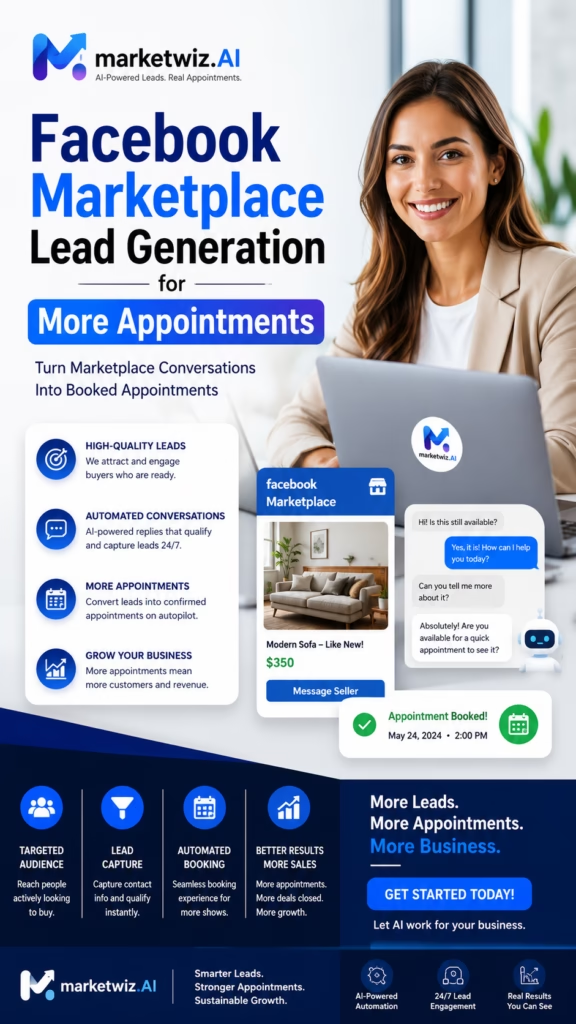
Facebook Marketplace lead generation for more appointments helps local businesses attract qualified customers, respond faster, organize inquiries, identify buyer intent, schedule showroom visits, book consultations, reduce no-shows, improve follow-up, and turn Marketplace conversations into measurable sales opportunities.
Facebook Marketplace lead generation for more appointments is a customer-acquisition strategy designed to move local buyers from product or service discovery into scheduled showroom visits, consultations, estimates, demonstrations, test drives, property showings, pickups, or sales conversations.
Facebook Marketplace can create significant local visibility, but visibility alone does not guarantee revenue. A business may receive dozens of messages without generating a single completed appointment when the listing is unclear, the response is slow, the lead is not qualified, or the scheduling process is difficult.
The most effective Marketplace campaigns are built around a clear conversion path. The customer sees an attractive offer, opens the listing, reviews the details, sends a message, receives a fast response, answers a small number of relevant questions, selects an available appointment time, receives confirmation, and arrives prepared for the next step.
That process may lead to a mattress showroom visit, furniture demonstration, contractor estimate, mobile-home showing, vehicle test drive, equipment inspection, financing consultation, product pickup, delivery review, or in-person sales appointment.
Businesses must follow current Meta Commerce Policies, Marketplace rules, communication consent requirements, privacy laws, product restrictions, industry regulations, and applicable local, state, and federal requirements.
The Appointment Conversion Principle
Every listing, response, qualification question, and follow-up message should make the next step easier, clearer, and more valuable for the customer.
What Is Facebook Marketplace Lead Generation for More Appointments?
Facebook Marketplace lead generation for more appointments combines local Marketplace visibility with a structured process for identifying customer interest and moving qualified prospects toward a scheduled next step.
A complete appointment-generation system may include:
- Clear product or service offers
- High-quality listing images
- Customer-focused titles
- Accurate descriptions
- Direct appointment calls to action
- Fast inquiry acknowledgment
- Lead qualification questions
- Appointment availability
- Calendar scheduling
- Confirmation messages
- Reminder messages
- CRM tracking
- No-show follow-up
- Sales outcome reporting
The Real Goal Is a Completed Appointment
A scheduled appointment is not the final success metric. The customer must arrive, participate in the consultation, evaluate the product or service, and move closer to a purchase.
Businesses should track both scheduled appointments and completed appointments to understand true lead quality.
Why Appointments Matter in Marketplace Lead Generation
Appointments Create Commitment
Selecting a time requires more commitment than sending a general question about price or availability.
Appointments Improve Sales Focus
Staff can prepare the right product, information, proposal, demonstration, or estimate before the customer arrives.
Appointments Organize Workflows
Scheduled conversations help teams manage showrooms, estimators, salespeople, properties, vehicles, and delivery teams.
Appointments Improve Measurement
Businesses can compare inquiries, bookings, show rates, purchases, revenue, gross profit, and ROI.
Appointments Reduce Buyer Friction
A clear booking process tells the customer exactly what happens next.
Appointments Increase Accountability
Every prospect can be assigned to a specific employee, calendar, location, or department.
Types of Appointments Marketplace Can Help Generate
Retail Showroom Visits
Furniture, mattress, appliance, home décor, equipment, and specialty retailers can invite customers to view products, compare options, test features, and speak with a salesperson.
Contractor Estimates
Contractors may schedule phone consultations, photo reviews, measurements, inspections, and on-site estimates for eligible services.
Vehicle Test Drives
Dealers and private sellers may schedule vehicle inspections, test drives, trade-in discussions, financing reviews, and purchase appointments.
Property Showings
Eligible real-estate, mobile-home, rental, and commercial-property marketing may lead to scheduled tours, showings, and application conversations.
Product Demonstrations
Equipment, machinery, technology, furniture, adjustable beds, and other products may require an in-person or virtual demonstration.
Pickup and Delivery Appointments
Customers may schedule product pickup, delivery consultations, installation reviews, or order completion.
Set Clear Marketplace Appointment Goals
Appointment Volume Goals
A business may target 120 Marketplace inquiries, 60 qualified leads, 35 scheduled appointments, 28 completed appointments, and 10 sales during a monthly campaign.
Appointment Quality Goals
- Increase qualified appointment percentage
- Reduce appointments outside the service area
- Reduce appointments for unavailable inventory
- Increase customers with realistic budgets
- Increase customers with defined purchase timing
- Increase decision-makers attending appointments
Revenue Goals
A business may aim to generate $50,000 in appointment-attributed revenue and $18,000 in gross profit from Marketplace-generated customers.
Efficiency Goals
- Reduce response time
- Reduce manual scheduling
- Improve calendar accuracy
- Reduce duplicate appointments
- Reduce missed follow-up
- Improve employee accountability
Define the Ideal Marketplace Appointment Customer
Location
The prospect should be within the business service area, delivery radius, dealership market, showroom region, or property market.
Product or Service Fit
The customer should be interested in a product, service, property, vehicle, or appointment type the business can actually provide.
Timing
A customer planning to purchase, visit, inspect, or begin a project soon may be more valuable than a customer conducting general research.
Budget
Budget expectations should align reasonably with the product, project, financing options, delivery costs, and service level.
Decision Authority
For larger purchases or projects, it may be helpful to confirm whether all decision-makers can attend the appointment.
Choose Offers That Naturally Lead to Appointments
Strong Appointment Offers
- Schedule a showroom visit
- Book a free product demonstration
- Reserve a test-drive time
- Request an in-home estimate
- Schedule a property showing
- Book a financing consultation
- Reserve a pickup appointment
- Schedule a virtual walkthrough
- Book a design consultation
- Request a measurement appointment
Offer a Clear Customer Benefit
Explain what the customer receives during the appointment. They may compare products, receive measurements, review financing, inspect inventory, discuss project options, or receive a written estimate.
Avoid Vague Appointment Offers
“Come see us sometime” is weaker than “Message us to reserve a 30-minute showroom appointment and compare available models.”
Build Facebook Marketplace Listings Around the Appointment
Use a Clear Opening
The first lines should explain the product or service, customer benefit, location, and available next step.
Answer Common Questions
- Is the item available?
- Where is the business located?
- Is delivery available?
- Is financing available?
- What condition is the product in?
- How is pricing determined?
- What happens during the appointment?
- How long does the appointment take?
Explain Why an Appointment Is Helpful
Customers are more likely to schedule when they understand the value of seeing, testing, measuring, comparing, or reviewing the offer with a knowledgeable employee.
Write Appointment-Focused Marketplace Titles
Recommended Title Formula
Product or Service + Main Benefit + Appointment Opportunity
Appointment-Focused Title Examples
- Queen Hybrid Mattress – Schedule a Comfort Test
- Modern Sectional Sofa – Book a Showroom Visit
- Interior Painting Estimate – Appointment Times Available
- Used SUV – Reserve a Test Drive Today
- Two-Bedroom Mobile Home – Schedule a Private Showing
- Commercial Equipment – Book an Inspection
- Adjustable Bed Base – Schedule a Demonstration
- Kitchen Remodeling Consultation – Local Appointments
Keep the Product or Service First
The customer should understand the offer before seeing the appointment language.
Avoid False Urgency
Do not claim that only one appointment remains unless that statement is accurate.
Write Descriptions That Move Customers Toward Booking
Recommended Description Structure
- Product or service summary
- Main customer benefits
- Important details
- Location and service area
- Price or pricing process
- What happens during the appointment
- Available appointment types
- Direct scheduling call to action
Example Appointment Description
Compare several premium mattress comfort levels in person with help from a knowledgeable showroom specialist. Schedule a private appointment to test available models, review delivery options, and discuss approved financing programs. Send a message with your preferred day and time to reserve your visit.
Make the Next Step Simple
Ask for only the information needed to qualify and schedule the prospect.
Use Images That Increase Appointment Interest
Show the Real Experience
Show the showroom, product, property, vehicle, completed project, consultant, sales environment, or demonstration area.
Recommended Image Sequence
- Main product or completed-result image
- Second angle
- Important features
- Showroom or business environment
- Customer experience
- Delivery, installation, or service process
- Additional product options
- Trust-building company image
Use Appointment Text Sparingly
An image may include a simple phrase such as “Appointments Available,” “Schedule a Showing,” or “Reserve a Test Drive,” but the product should remain the main visual focus.
Create Strong Appointment Calls to Action
Effective Calls to Action
- Message us to schedule a visit
- Reserve a test-drive time
- Book a private property showing
- Request an estimate appointment
- Schedule a product demonstration
- Choose a pickup time
- Ask for today’s appointment availability
- Send your ZIP code and preferred day
Use One Primary Action
Avoid asking the customer to call, text, email, visit the website, fill out a form, and book a calendar at the same time.
Reduce Commitment Anxiety
Explain whether the appointment is free, how long it takes, whether there is any obligation, and what the customer should bring.
Respond Faster to Marketplace Appointment Leads
Immediate Acknowledgment
Thank you for your interest. We would be glad to help you schedule a time. Are you looking for a showroom visit, product demonstration, estimate, test drive, or another type of appointment?
Answer the Customer’s Main Question First
If the customer asks about availability, price, location, or delivery, answer that question before moving directly into scheduling.
Use Prepared Responses
- Availability response
- Location response
- Appointment-type response
- Pricing response
- Financing response
- Delivery response
- Estimate response
- Rescheduling response
Qualify Marketplace Leads Before Scheduling
Core Qualification Questions
- Which product or service interests you?
- What city or ZIP code are you in?
- When would you like to purchase or begin?
- Do you need pickup or delivery?
- Are you interested in financing?
- What appointment type do you prefer?
- Which day and time works best?
Keep Qualification Conversational
Ask one or two useful questions at a time instead of sending a long form through the message thread.
Confirm Availability Before Booking
Do not schedule an appointment for unavailable inventory, a closed location, an unavailable employee, or a service the business cannot provide.
Identify High-Intent Marketplace Leads
Strong Buyer-Intent Signals
- Requests a specific appointment date
- Provides a phone number
- Asks about payment options
- Confirms pickup or delivery
- Provides a project address
- Sends product or project photos
- Asks what documents to bring
- Confirms who will attend
Medium-Intent Signals
- Asks detailed product questions
- Requests more photos
- Compares several options
- Asks about future availability
- Discusses a general budget
Low-Intent Signals
- Sends only an automated availability message
- Provides no location or timing
- Ignores basic qualification questions
- Requests unrealistic pricing
Build a Simple Marketplace Appointment Scheduling Process
Step 1: Confirm Fit
Verify the product, service, location, appointment type, and customer timing.
Step 2: Offer Available Times
Provide two or three realistic options from the current business calendar.
Step 3: Collect Contact Information
Collect the information needed to confirm the appointment and handle changes.
Step 4: Record the Appointment
Add the appointment to the calendar and CRM with the lead source, product, service, assigned employee, and customer details.
Step 5: Send Confirmation
Confirm the date, time, location, purpose, employee, and preparation instructions.
Offer Specific Appointment Times
Weak Scheduling Question
Let us know when you might want to come by.
Stronger Scheduling Question
We have an opening Tuesday at 2:30 p.m. or Wednesday at 11:00 a.m. Which appointment works better for you?
Why Specific Times Work
Specific options reduce decision effort, create urgency without pressure, and make it easier for the customer to commit.
Do Not Offer Unverified Availability
Appointment options should reflect real calendars, staff schedules, property access, product availability, and operating hours.
Send Clear Appointment Confirmations
Confirmation Details
- Customer name
- Appointment date
- Appointment time
- Time zone when relevant
- Business or property location
- Product or service
- Assigned employee
- Phone number
- Preparation instructions
- Rescheduling process
Example Confirmation
Your showroom appointment is confirmed for Wednesday at 11:00 a.m. at our Main Street location. A product specialist will have the requested models ready for comparison. Reply to this message if you need to reschedule.
Use Appointment Reminders to Improve Show Rates
Recommended Reminder Timing
| Timing | Purpose | Recommended Information |
|---|---|---|
| Immediately after booking | Confirm appointment | Date, time, location, purpose, and contact details |
| One day before | Reduce forgotten appointments | Appointment reminder and preparation instructions |
| One to two hours before | Confirm near-term attendance | Short reminder, directions, and rescheduling option |
Keep Reminders Helpful
Include directions, parking, documents, photos, measurements, or other preparation details when relevant.
Avoid Excessive Messaging
Too many reminders may frustrate customers. Use only the number needed for the appointment type and sales cycle.
Reduce Marketplace Appointment No-Shows
Qualify Before Scheduling
Unqualified leads are more likely to miss appointments or arrive without realistic expectations.
Explain Appointment Value
Tell the customer what they will see, learn, receive, compare, or complete during the appointment.
Confirm the Location
Make sure the customer understands the exact address, business name, parking process, showroom entrance, property access, or meeting point.
Make Rescheduling Easy
Customers may avoid responding when changing the appointment feels difficult. Provide a simple rescheduling option.
Assign a Real Employee
Including the representative’s name can make the appointment feel more personal and important.
Recover Missed Marketplace Appointments
Use a Professional No-Show Message
We missed you at your scheduled appointment today. We would still be glad to help. We currently have an opening tomorrow at 3:00 p.m. or Friday at 10:30 a.m. Would either time work?
Do Not Use Aggressive Language
Avoid blaming the customer. Transportation, work, family, weather, or scheduling problems may have caused the missed appointment.
Limit Rescheduling Attempts
A small number of professional follow-ups is usually more effective than repeated messages.
Track Marketplace Appointments in a CRM
Recommended Appointment CRM Fields
- Customer name
- Phone number
- Email address
- Marketplace lead source
- Product or service interest
- Customer location
- Appointment type
- Appointment date
- Appointment status
- Assigned employee
- Customer budget
- Purchase timing
- Appointment outcome
- Sales value
- Gross profit
Use Appointment Statuses
- Requested
- Qualified
- Scheduled
- Confirmed
- Completed
- Rescheduled
- Canceled
- No-show
- Converted
- Follow-up required
Track Outcome, Not Just Attendance
Record whether the appointment produced a sale, proposal, application, test drive, second visit, deposit, financing step, or future follow-up.
Use Automation to Support Marketplace Appointment Generation
Tasks Automation May Support
- Immediate inquiry acknowledgment
- Lead notifications
- CRM record creation
- Qualification questions
- Calendar availability
- Appointment confirmations
- Reminder messages
- Employee assignments
- No-show follow-up
- Performance reporting
Keep Human Review
Employees should review inventory, pricing, financing, availability, project scope, property details, vehicle condition, and unusual customer requests.
Use Escalation Rules
Questions involving negotiation, complaints, contracts, financing, technical details, or exceptions should be routed to qualified staff.
Follow Up After Marketplace Appointments
After a Showroom Visit
Send the selected product information, pricing, delivery options, financing details, and next steps.
After a Contractor Estimate
Send the proposal, scope, timeline, material options, and contact information for questions.
After a Property Showing
Send application details, additional property information, financing requirements, or a second-showing option.
After a Test Drive
Send vehicle details, trade-in steps, financing options, inspection information, and availability.
Ask for the Next Commitment
The next step may be a deposit, proposal approval, application, second appointment, financing review, delivery date, or final purchase decision.
Route Marketplace Appointments Across Multiple Locations
Route by Inventory
Send the customer to the location that has the requested product, vehicle, property, model, size, or color.
Route by Geography
Assign leads according to customer ZIP code, service radius, property location, delivery area, or nearest store.
Route by Employee Skill
Financing, commercial, property, technical, contractor, or high-value opportunities may require specialized staff.
Compare Location Performance
Track appointment rates, show rates, conversion, average sale, gross profit, and lead response by location.
Measure Facebook Marketplace Appointment Performance
Lead Metrics
- Total inquiries
- Qualified leads
- Average response time
- Phone-number collection rate
- Customer location
- Product or service interest
Appointment Metrics
- Appointments requested
- Appointments scheduled
- Confirmation rate
- Completed appointment rate
- No-show rate
- Rescheduling rate
- Average time to appointment
Sales Metrics
- Appointment-to-sale conversion
- Average order value
- Average project value
- Total revenue
- Gross profit
- Customer acquisition cost
- Repeat customer rate
- Return on investment
Calculate Appointment Acquisition Cost
Cost per Completed Appointment = Total Marketplace Campaign Cost ÷ Completed Appointments
For example, if a business spends $1,500 on campaign management, tools, creative production, and staff time and generates 50 completed appointments, the estimated cost per completed appointment is $30.
Calculate Appointment-Generated ROI
Appointment ROI = (Gross Profit From Marketplace Appointments − Campaign Cost) ÷ Campaign Cost × 100
Optimize Marketplace Campaigns for More Appointments
Improve the Main Image
Use a clear product, property, vehicle, showroom, completed project, or demonstration image.
Improve the Offer
Give the customer a specific reason to schedule rather than only asking them to contact the business.
Improve Response Speed
Use notifications, assignments, response templates, and accountability to reduce delays.
Improve Qualification
Ask enough questions to protect appointment quality without creating unnecessary friction.
Improve Scheduling
Offer specific appointment times and use a calendar that reflects actual availability.
Improve Confirmation
Send complete directions, expectations, preparation instructions, and rescheduling information.
Improve Follow-Up
Contact customers after the appointment with the information and next step needed to complete the sale.
Common Marketplace Appointment Lead Generation Mistakes
Focusing Only on Message Volume
More messages do not automatically create more qualified appointments or sales.
Using Vague Calls to Action
Customers may not understand whether to visit, call, schedule, request an estimate, or ask for more information.
Responding Too Slowly
A delayed response allows competitors to schedule the customer first.
Scheduling Unqualified Leads
Poor qualification increases no-shows and wastes employee time.
Offering Open-Ended Scheduling
Asking “When are you free?” creates more back-and-forth than offering specific options.
Failing to Confirm
Customers may forget the time, location, employee, or required preparation.
Ignoring Missed Appointments
Some no-shows can still be recovered through professional rescheduling.
Failing to Track Appointment Outcomes
Businesses should know which appointments create sales, revenue, gross profit, and repeat business.
Connect Marketplace Appointment Leads With Other Channels
Google Business Profile
Customers may verify the business location, reviews, photos, hours, directions, phone number, and website through Google Maps.
Business Website
A website may provide expanded product information, services, inventory, financing, reviews, galleries, and online scheduling.
Local SEO
Location and service pages may attract additional appointment leads through Google Search.
Craigslist and OfferUp
Eligible products and offers may gain additional local visibility through other marketplace channels.
Email and SMS
Permission-based communication may support confirmations, reminders, rescheduling, sales follow-up, and customer reactivation.
Social Media and Video
Showroom tours, demonstrations, property walkthroughs, project videos, and product comparisons can increase appointment confidence.
CRM and Automation
Connected systems help assign leads, track appointments, record outcomes, trigger reminders, and measure sales performance.
The Connected Appointment Journey
A customer may discover an offer on Marketplace, verify the business on Google Maps, review details on the website, schedule an appointment, receive reminders, complete a consultation, make a purchase, and later return through customer follow-up.
A 30-Day Facebook Marketplace Appointment Growth Plan
Week 1: Strategy and Offer Development
- Define appointment goals
- Review Marketplace policies
- Choose appointment types
- Define the ideal customer
- Select products or services
- Organize customer questions
- Create CRM appointment fields
- Assign employee responsibilities
Week 2: Listing and Scheduling Setup
- Create appointment-focused titles
- Write detailed descriptions
- Prepare high-quality images
- Create calls to action
- Build response templates
- Create qualification questions
- Set calendar availability
- Create appointment confirmations
Week 3: Lead Management
- Publish compliant Marketplace campaigns
- Monitor inquiries
- Respond quickly
- Qualify customer interest
- Offer specific appointment times
- Record appointments
- Send confirmations
- Send appropriate reminders
Week 4: Sales and Optimization
- Measure scheduled appointments
- Measure completed appointments
- Review no-shows
- Measure sales conversion
- Compare products and offers
- Improve weak listings
- Review employee response speed
- Calculate gross profit and ROI
End-of-Month Outcome
After 30 days, the business should understand which listings, images, offers, responses, qualification questions, appointment times, employees, and follow-up methods generate the strongest completed appointments and sales.
Final Takeaway: Turn Marketplace Conversations Into Completed Appointments
Facebook Marketplace lead generation for more appointments becomes effective when businesses create a clear path from local discovery to a scheduled and completed customer interaction.
The right offer earns attention. A strong image builds interest. A clear title explains the opportunity. An accurate description answers initial questions. A direct call to action invites the next step. A fast response protects the lead. Qualification improves appointment quality. Specific times create commitment. Confirmations and reminders improve attendance. Follow-up moves the customer toward a purchase.
Businesses should measure more than Marketplace messages. Important metrics include qualified leads, appointments scheduled, appointment completion rate, no-show rate, sales conversion, average order value, gross profit, acquisition cost, repeat customers, and return on investment.
Appointment generation becomes more powerful when connected with Google Maps, local SEO, a professional website, reviews, social media, video, Craigslist, OfferUp, email, SMS, CRM organization, scheduling software, and automated follow-up.
When these systems work together, a single Marketplace message can become a showroom visit, consultation, estimate, test drive, showing, purchase, delivery, review, repeat customer, or referral.
Frequently Asked Questions
1. What is Facebook Marketplace lead generation for more appointments?
It is a strategy that turns local Marketplace inquiries into qualified showroom visits, consultations, estimates, demonstrations, test drives, showings, pickups, and sales conversations.
2. Can Facebook Marketplace generate appointments?
Yes. Clear offers, strong photos, fast responses, direct calls to action, and organized scheduling can help generate appointments.
3. What appointment types can Marketplace generate?
Marketplace may generate showroom visits, estimates, property showings, test drives, consultations, demonstrations, pickups, and delivery appointments.
4. How do businesses get more appointments?
Use focused listings, real photos, accurate information, fast responses, qualification questions, specific times, reminders, and follow-up.
5. How quickly should leads receive a response?
Respond as quickly as reasonably possible because local customers may contact several businesses.
6. Should every inquiry become an appointment?
No. Confirm location, timing, budget, product or service fit, and availability before scheduling.
7. What information should be collected before booking?
Collect the customer’s name, contact information, interest, location, timing, delivery needs, and preferred appointment.
8. Can Marketplace leads use an online calendar?
Qualified leads may be directed to approved scheduling tools or booked by staff using current availability.
9. Should businesses offer specific appointment times?
Yes. Two or three specific options usually create less back-and-forth than an open-ended scheduling question.
10. Can reminders reduce no-shows?
Confirmations and appropriate reminders may reduce forgotten appointments and scheduling confusion.
11. What should a confirmation include?
Include the date, time, location, purpose, assigned employee, contact information, preparation, and rescheduling process.
12. Can AI respond to Marketplace leads?
AI may support acknowledgment, qualification, organization, and routing while employees review important details and exceptions.
13. Can automation schedule appointments?
Automation may support scheduling, reminders, calendar updates, CRM records, and employee assignments through compliant workflows.
14. How should Marketplace leads be qualified?
Ask about product or service interest, location, timing, budget, delivery, financing, and preferred next step.
15. What makes a lead high intent?
High-intent prospects often request a time, provide contact details, discuss payment, confirm timing, or share detailed information.
16. Can appointments be tracked in a CRM?
CRM systems can track the source, appointment status, employee, outcome, sale value, gross profit, and follow-up.
17. How should missed appointments be handled?
Send a polite rescheduling message and offer a small number of convenient appointment options.
18. Can Marketplace generate local service appointments?
Eligible businesses may generate consultations, inspections, estimates, and appointments while following current platform rules.
19. Can Marketplace generate showroom appointments?
Retailers may invite customers to compare furniture, mattresses, appliances, equipment, vehicles, and other eligible inventory.
20. Can Marketplace generate property showings?
Eligible property campaigns may generate showings when availability, qualifications, and scheduling are accurate.
21. Can Marketplace generate test-drive appointments?
Vehicle inquiries may lead to test drives, inspections, trade-in reviews, financing discussions, and purchase appointments.
22. How can businesses improve show rates?
Use clear confirmations, reminders, directions, preparation instructions, assigned staff, and easy rescheduling.
23. Should businesses ask for phone numbers?
Phone numbers may help with confirmations and changes, but businesses should explain their purpose and respect customer preferences.
24. Should appointments be scheduled immediately?
When the customer is qualified and ready, scheduling during the initial conversation may improve conversion.
25. What appointment metrics should be tracked?
Track inquiries, qualified leads, bookings, confirmations, completed appointments, no-shows, sales, gross profit, and ROI.
26. Why do leads fail to become appointments?
Common causes include slow replies, vague offers, poor qualification, difficult scheduling, inaccurate information, and weak follow-up.
27. Can businesses follow up after an appointment?
Relevant follow-up may include pricing, proposals, financing, delivery, product alternatives, or next steps.
28. Can multiple locations share Marketplace leads?
Leads may be routed by inventory, ZIP code, store, employee, service area, delivery area, or calendar availability.
29. Should Marketplace be the only appointment source?
No. Combine it with Google Maps, websites, SEO, social media, Craigslist, OfferUp, referrals, email, SMS, and CRM follow-up.
30. What is the main goal of Marketplace appointment generation?
The goal is to turn local visibility into qualified, completed appointments that create sales and long-term customer relationships.
30 Additional SEO Keywords
Use these supporting phrases naturally in appointment landing pages, service pages, local pages, blog posts, internal links, image alt text, social content, and lead-generation campaigns.
Turn More Marketplace Inquiries Into Booked Appointments
MarketWiz.ai helps local businesses connect Facebook Marketplace marketing with AI-assisted customer communication, lead qualification, appointment scheduling, CRM tracking, reminder workflows, Google Maps growth, local SEO, Craigslist, OfferUp, video marketing, follow-up automation, and measurable sales reporting.
This article provides general marketing and appointment-generation information and does not provide legal, financial, tax, privacy, consumer-protection, real-estate, vehicle, contractor, employment, communication-consent, or platform-compliance advice. Businesses should review current Meta Commerce Policies, Facebook Marketplace rules, product and category restrictions, customer communication requirements, data-protection obligations, scheduling practices, and applicable local, state, and federal laws before implementing lead-generation or automated appointment workflows.