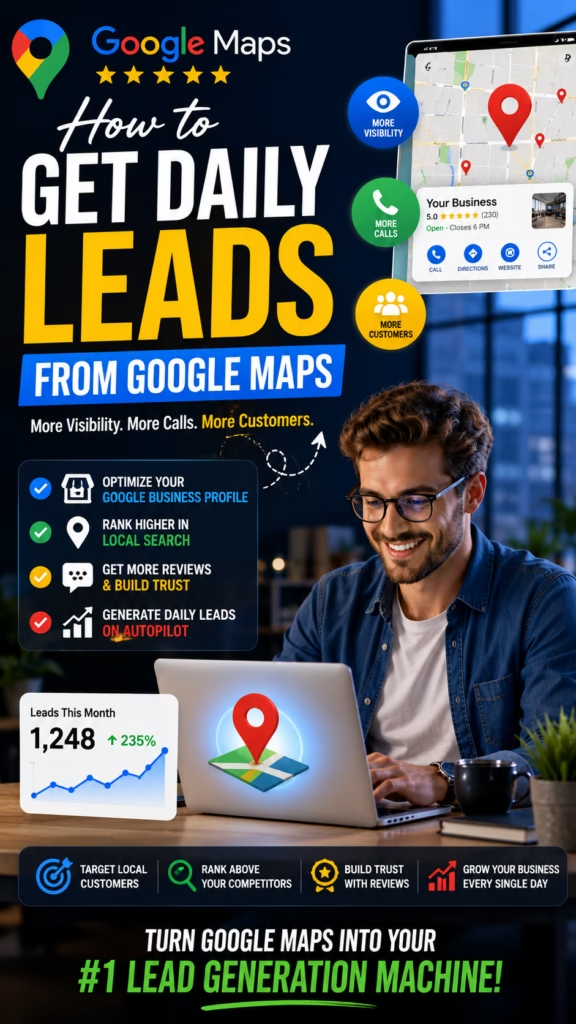
How to Get Daily Leads From Google Maps
Learning how to get daily leads from Google Maps can help local businesses generate more phone calls, website visits, messages, appointments, estimate requests, direction requests, showroom visits, and qualified sales opportunities from nearby customers actively searching for products and services.
Businesses that understand how to get daily leads from Google Maps can create a dependable source of local calls, website visits, messages, bookings, estimates, direction requests, showroom visits, and purchase opportunities.
Google Maps is valuable because it reaches customers who are often searching with immediate local intent. They may need an HVAC contractor, painter, roofer, furniture store, mattress showroom, appliance retailer, auto dealer, attorney, dentist, restaurant, property manager, home-service company, or commercial supplier near their current location.
These customers are not always conducting general research. Many are comparing businesses, checking reviews, viewing photos, confirming hours, evaluating services, requesting directions, and deciding who to contact.
A business that appears professional, trustworthy, relevant, and easy to contact has a stronger opportunity to convert that search into a real lead.
Generating daily leads from Google Maps requires more than creating a basic Google Business Profile. The profile must be complete, accurate, active, supported by a strong website, connected to legitimate reviews, filled with useful images, and paired with a system for answering and tracking new opportunities.
The Google Maps Lead Generation Principle
Strong local visibility attracts attention. Trust earns the click. A clear offer creates the inquiry. Fast follow-up converts the inquiry into an appointment or sale.
What Does Getting Daily Leads From Google Maps Mean?
Daily Google Maps lead generation means consistently receiving customer actions from local search visibility rather than relying only on occasional referrals or unpredictable advertising.
Google Maps Leads May Include
- Phone calls
- Website visits
- Message inquiries
- Appointment requests
- Estimate requests
- Direction requests
- Showroom visits
- Product availability questions
- Financing questions
- Service-area questions
- Online orders
- Form submissions
Lead Volume and Lead Quality Are Different
A profile may receive many calls but still generate poor results if customers are outside the service area, request unavailable services, expect unrealistic pricing, or cannot schedule the next step.
The goal is not only more activity. The goal is more qualified activity that creates revenue.
Understand the Google Maps Customer Journey
Customer Searches
A local customer searches for a product, service, business type, or solution near a location.
Customer Compares
The customer reviews business names, ratings, photos, categories, hours, services, and location.
Customer Verifies
The customer may open the website, read reviews, inspect photos, confirm service areas, and evaluate credibility.
Customer Contacts
The customer calls, messages, submits a form, requests directions, or books an appointment.
Business Responds
Staff answers questions, qualifies the customer, confirms availability, and schedules the next step.
Lead Converts
The customer completes an appointment, estimate, showroom visit, purchase, or service call.
Complete Every Important Google Business Profile Field
An incomplete profile gives customers fewer reasons to trust the business and fewer ways to understand what it offers.
Core Profile Information
- Accurate business name
- Correct address or approved service-area setup
- Primary phone number
- Business website
- Primary category
- Additional relevant categories
- Normal business hours
- Special and holiday hours
- Business description
- Services
- Products when relevant
- Appointment or booking options
- Business attributes
- High-quality photos
Accuracy Comes Before Optimization
Do not add information only because it contains a desirable keyword. Every detail should truthfully represent the actual business.
Avoid Profile Manipulation
Fake locations, keyword-stuffed business names, duplicate profiles, misleading categories, false hours, and inaccurate service areas can create customer confusion and profile risk.
Choose the Most Accurate Business Categories
Primary Category
The primary category should represent the main business activity customers are most likely to search for.
A roofing contractor should generally choose a category that accurately reflects roofing rather than selecting a broader category merely to appear for more searches.
Additional Categories
Additional categories may describe genuine secondary services. They should be relevant, accurate, and supported by the business's website and operations.
Review Categories Periodically
Businesses change over time. Review category selections when services, products, business structure, or location strategy changes.
Add Complete and Specific Service Information
Service listings help customers understand whether the business provides the exact solution they need.
Service Entry Formula
Service Name + Short Benefit + Important Qualification or Location Detail
Example Contractor Services
- Interior house painting
- Exterior house painting
- Commercial painting
- Cabinet refinishing
- Drywall repair
- Pressure washing
- Deck and fence staining
Example Retail Services
- Furniture delivery
- Mattress comfort consultations
- Appliance installation
- Financing assistance
- Product pickup
- Commercial account support
The services listed on the profile should align with the services described on the website.
Write a Strong Google Business Profile Description
Recommended Description Structure
- Explain what the business does
- Identify the primary customer
- Describe the main services or products
- Mention the genuine service area
- Explain the customer benefit
- Add a simple next step
Example Business Description
MarketWiz.ai helps local businesses improve digital visibility, generate qualified leads, automate customer communication, and organize marketing across Google Maps, Facebook Marketplace, Craigslist, OfferUp, social media, video, local SEO, and CRM systems. Our solutions are designed for growth-focused businesses that want more calls, appointments, and measurable sales opportunities.
Avoid Repetitive Keyword Lists
The description should be written for customers. It should sound professional and natural rather than repeating every city and service phrase.
Keep Business Hours and Contact Information Accurate
Why Accurate Hours Matter
Customers may avoid contacting a business that appears closed or become frustrated when listed hours are incorrect.
Update Special Hours
Review holiday hours, seasonal schedules, emergency hours, showroom availability, and temporary closures.
Use a Reliable Phone Number
Calls should reach someone who can answer, qualify, route, or return the inquiry promptly.
Review Website Links
Confirm that profile links open correctly and lead to fast, mobile-friendly pages.
Use Original Photos That Build Trust and Generate Leads
Recommended Photo Types
- Business exterior
- Business interior
- Team members
- Showroom displays
- Completed projects
- Before-and-after work
- Vehicles and equipment
- Products and inventory
- Service process
- Customer experience
Use Real Business Photos
Original photos help customers understand what the company, location, products, team, and work actually look like.
Show the Results Customers Want
Contractors should show completed work. Retailers should show available products and the showroom. Professional services should show the office, team, and customer experience.
Add Photos Consistently
Fresh photos may reflect active operations and give returning customers new information to review.
Build a Consistent and Legitimate Review System
Reviews are one of the most visible trust signals customers examine before contacting a local business.
Ask at the Right Time
Request a review after a completed service, successful delivery, showroom purchase, resolved support issue, or another genuine customer experience.
Make the Process Easy
Provide a direct review link through an approved email, text, receipt, QR code, follow-up page, or customer service workflow.
Do Not Buy or Manufacture Reviews
Fake reviews may damage trust and create platform or legal risk.
Avoid Review Gating
Do not selectively direct only satisfied customers to public reviews while preventing other customers from sharing their experiences.
Respond Professionally to Positive and Negative Reviews
Positive Review Response
Thank you for choosing our team. We appreciate your feedback and are glad you had a positive experience with your project. We look forward to helping again in the future.
Negative Review Response
Thank you for sharing your experience. We take customer concerns seriously and would like the opportunity to review what happened. Please contact our team directly so we can better understand the situation.
Protect Customer Privacy
Avoid sharing private project, payment, medical, legal, contractual, or personal information in public responses.
Use Natural Responses
Responses should sound professional and specific rather than identical across every review.
Publish Useful Google Business Profile Posts
Post Topics
- New products
- New services
- Seasonal reminders
- Completed projects
- Customer education
- Events
- Company updates
- Appointment availability
- Delivery information
- Financing information
Use a Clear Call to Action
Invite the customer to call, visit the website, schedule, request an estimate, view a product, or contact the team.
Keep Posts Customer-Focused
Explain why the information matters and how it helps the customer make a decision.
Add Products, Inventory Categories, and Offers
Product Information May Include
- Product name
- Product category
- Price or price range
- Short description
- Main customer benefit
- Original image
- Website link
Keep Product Information Current
Remove discontinued products and update major changes in pricing, availability, sizes, colors, delivery, or financing.
Use Product Categories Strategically
Furniture stores may organize products by bedroom, living room, dining room, office, outdoor, and mattress categories.
Answer Common Customer Questions Before They Become Objections
Questions Customers Often Ask
- Do you serve my area?
- Do you offer free estimates?
- Do you provide financing?
- Do you have weekend appointments?
- Do you deliver?
- Are you licensed and insured?
- Do you work with commercial customers?
- How soon can you start?
- Do you have a showroom?
- What payment methods do you accept?
Create Website FAQ Content
Detailed answers can also be published on relevant service, product, location, and contact pages.
Strengthen the Website Connected to Google Maps
The Website Should Confirm the Profile
Customers should see the same business name, phone number, address, services, products, locations, hours, and branding.
Mobile Performance Matters
Local customers often visit the website from a phone immediately after viewing the business on Google Maps.
Use Clear Conversion Actions
- Click-to-call phone number
- Estimate request form
- Appointment scheduling
- Product inquiry form
- Directions
- Financing application
- Live chat
- Message request
Build Trust Quickly
Show reviews, testimonials, project examples, team information, licenses, certifications, warranties, service areas, and guarantees when applicable.
Create a Dedicated Page for Every Important Service
A single general services page may not provide enough detail for customers comparing specific solutions.
Service Page Structure
- Clear service title
- Customer problem
- Service solution
- Main benefits
- Process
- Service area
- Project examples
- Frequently asked questions
- Trust signals
- Call to action
Example Contractor Pages
- Interior painting
- Exterior painting
- Commercial painting
- Cabinet refinishing
- Drywall repair
- Deck staining
Create Useful Local Location Pages
Location Page Content
- Services available in the location
- Local project examples
- Neighborhoods served
- Customer testimonials
- Local photos
- Service process
- Contact information
- Frequently asked questions
Avoid Thin City Pages
Changing only the city name across dozens of nearly identical pages creates a poor customer experience.
Use Genuine Local Information
Pages should reflect actual service capability, project history, local knowledge, and customer needs.
Publish Local Content That Attracts Search Demand
Local Content Ideas
- Cost guides
- Service comparisons
- Seasonal maintenance advice
- Local project case studies
- Neighborhood guides
- Product buying guides
- Financing explanations
- Common customer mistakes
- Local regulations and preparation
- Frequently asked questions
Connect Content to Services
Blog posts should naturally link to relevant service, location, product, estimate, and appointment pages.
Use Real Expertise
Include practical details, examples, project observations, and customer questions that demonstrate genuine experience.
Build Accurate Local Citations
Local citations are mentions of business information across directories, associations, industry websites, local platforms, and community resources.
Important Citation Information
- Business name
- Address
- Phone number
- Website
- Business category
- Hours
- Description
Prioritize Relevant Sources
Focus on legitimate directories, industry organizations, local chambers, professional associations, suppliers, community sites, and established business platforms.
Correct Old Information
Outdated phone numbers, locations, names, and websites may confuse customers and create missed opportunities.
Earn Local Links, Mentions, and Community Authority
Potential Local Link Sources
- Chambers of commerce
- Business associations
- Local news publications
- Community organizations
- Suppliers
- Manufacturers
- Professional directories
- Local sponsorships
- Charitable organizations
- Event websites
Create Reasons to Be Mentioned
Publish useful research, guides, case studies, community resources, local project information, or educational content.
Avoid Low-Quality Link Schemes
Focus on genuine relevance, authority, and customer value rather than large quantities of unrelated links.
Understand the Role of Location and Proximity
Google Maps results may vary based on the searcher's location, search wording, business relevance, local competition, and other factors.
You Cannot Control Every Search Location
A business may appear strongly near its location and less prominently farther away.
Improve the Areas You Can Control
- Profile completeness
- Category accuracy
- Service relevance
- Website quality
- Local content
- Review activity
- Business authority
- Lead conversion
Optimize for Genuine Service Areas
Define the Real Service Radius
Consider travel time, employee coverage, delivery limits, scheduling capacity, licensing, pricing, and profitability.
Support Service Areas on the Website
Publish location-specific service information only for areas the business genuinely serves.
Do Not Create Fake Locations
Virtual offices, mailboxes, and locations where the business does not genuinely operate may create policy and customer-trust problems.
Convert Google Maps Visitors Into Qualified Leads
Use a Clear Main Offer
Customers should immediately understand what they can call, schedule, request, purchase, or visit.
Reduce Contact Friction
- Use a visible phone number
- Keep forms short
- Offer appointment options
- Provide accurate directions
- Explain service areas
- State operating hours
- Answer common questions
Create Offer-Specific Landing Pages
A profile link for roofing leads may point to a roofing estimate page rather than a general homepage.
Match the Searcher's Intent
A customer searching for emergency repair, showroom inventory, financing, commercial service, or a free estimate should quickly find the relevant information.
Respond Faster to Google Maps Leads
Answer Calls Professionally
Use a consistent greeting, identify the business, ask what the customer needs, collect contact details, and guide the caller toward the next step.
Return Missed Calls Quickly
Local prospects may call several businesses. A fast callback can protect the opportunity.
Use Lead Qualification Questions
- What service or product do you need?
- What city or ZIP code are you in?
- When do you need help?
- What outcome are you trying to achieve?
- Do you need an estimate or appointment?
- Are all decision-makers available?
Schedule the Next Step
When the lead is qualified, move directly toward an estimate, consultation, showroom visit, delivery, test drive, inspection, or sales appointment.
Track Every Google Maps Lead and Outcome
Recommended CRM Fields
- Customer name
- Phone number
- Email address
- Lead source
- Search or campaign source
- Product or service interest
- Customer location
- Lead status
- Assigned employee
- Appointment date
- Estimate value
- Sale value
- Gross profit
- Follow-up date
Recommended Lead Statuses
- New
- Contacted
- Qualified
- Appointment scheduled
- Estimate sent
- Follow-up required
- Won
- Lost
- Not qualified
Track Revenue, Not Just Clicks
Website visits and phone calls matter, but businesses should also know which leads become appointments, customers, revenue, gross profit, repeat sales, and referrals.
Use AI and Automation to Support Google Maps Lead Generation
Tasks Automation May Support
- Missed-call text responses
- Immediate lead acknowledgment
- Lead notifications
- CRM record creation
- Qualification questions
- Appointment scheduling
- Reminder messages
- Follow-up sequences
- Review requests
- Performance reporting
Keep Human Oversight
Employees should handle pricing, complaints, technical questions, contracts, financing, unusual service requests, and complex customer situations.
Use Automation to Improve Speed
The purpose of automation is to reduce delays and missed opportunities, not to create robotic or misleading interactions.
Manage Google Maps Leads Across Multiple Locations
Use Accurate Location Profiles
Each eligible location should have accurate business information, hours, photos, categories, services, website links, and contact details.
Build Location-Specific Website Pages
Each location page should include genuine information about local products, services, team members, projects, customers, directions, and contact methods.
Route Leads Correctly
Leads may be assigned by customer ZIP code, nearest location, inventory, employee availability, service type, or department.
Compare Location Performance
Track calls, website visits, appointments, sales, response speed, reviews, and lead quality for each location.
Measure Google Maps Lead Generation Performance
Visibility Metrics
- Profile views
- Search appearances
- Map visibility
- Website visibility
- Local keyword performance
Engagement Metrics
- Phone calls
- Website visits
- Messages
- Bookings
- Direction requests
- Photo engagement
Lead Metrics
- Total leads
- Qualified leads
- Average response time
- Appointment rate
- Estimate rate
- Close rate
Revenue Metrics
- Average sale value
- Total attributed revenue
- Gross profit
- Customer acquisition cost
- Customer lifetime value
- Return on investment
Calculate Cost per Qualified Lead
Cost per Qualified Lead = Total Local Marketing Cost ÷ Qualified Google Maps Leads
If a business invests $2,000 in profile management, website improvements, content, review systems, tracking, and staff time and generates 80 qualified leads, the estimated cost per qualified lead is $25.
Calculate Local Marketing ROI
ROI = (Gross Profit From Google Maps Leads − Local Marketing Cost) ÷ Local Marketing Cost × 100
Common Google Maps Lead Generation Mistakes
Leaving the Profile Incomplete
Missing hours, services, photos, website links, categories, and contact information may reduce customer confidence.
Using an Inaccurate Business Name
Adding promotional keywords to the business name can create confusion and profile risk.
Choosing Irrelevant Categories
Categories should describe the real business rather than every type of lead the company wants.
Ignoring Reviews
Failing to request and respond to legitimate reviews may weaken customer trust.
Using Poor-Quality Photos
Dark, blurry, outdated, copied, or unrelated images do not demonstrate the business effectively.
Sending Visitors to a Weak Website
Slow mobile pages, confusing navigation, missing service information, and hidden contact options reduce conversion.
Failing to Answer Calls
Strong map visibility cannot produce sales when new inquiries are ignored.
Failing to Track Outcomes
Businesses should know which Google Maps leads generate appointments, revenue, gross profit, repeat customers, and referrals.
Creating Fake Locations
False addresses and locations may damage customer trust and create profile compliance problems.
A 30-Day Plan to Generate More Google Maps Leads
Week 1: Profile Audit and Foundation
- Review profile ownership and access
- Confirm business name
- Confirm address or service-area setup
- Review phone number and website
- Choose accurate categories
- Update business hours
- Write a strong business description
- Add complete services
Week 2: Trust and Content
- Add original business photos
- Add project and product photos
- Create a review-request process
- Respond to existing reviews
- Publish useful business posts
- Add products when relevant
- Review customer questions
- Update website trust signals
Week 3: Website and Local Authority
- Create or improve service pages
- Create useful location pages
- Improve mobile speed
- Add clear conversion actions
- Review business citations
- Correct outdated listings
- Seek relevant local mentions
- Publish local educational content
Week 4: Lead Conversion and Measurement
- Track phone calls
- Track forms and bookings
- Create CRM lead statuses
- Improve response speed
- Add qualification questions
- Create follow-up workflows
- Measure appointments and sales
- Calculate lead cost and ROI
End-of-Month Outcome
After 30 days, the business should have a more complete profile, stronger customer trust, improved website relevance, better lead tracking, faster follow-up, and a clear understanding of which Google Maps actions create appointments and revenue.
Final Takeaway: Build a Complete Google Maps Lead System
Understanding how to get daily leads from Google Maps means building more than a profile. It requires a connected local marketing system.
Accurate business information creates clarity. Relevant categories and services improve customer understanding. Original photos build trust. Legitimate reviews provide social proof. Business posts and products keep the profile useful. Strong service and location pages support local relevance. Accurate citations and community mentions strengthen the business's online presence.
The final step is conversion. Every call, message, website visit, booking, and direction request should be handled quickly and professionally.
Businesses should track qualified leads, appointments, estimates, sales, average order value, gross profit, acquisition cost, customer lifetime value, and return on investment.
Google Maps becomes even more valuable when connected with local SEO, a professional website, social media, video, email, SMS, Facebook Marketplace, Craigslist, OfferUp, paid advertising, referrals, CRM organization, AI-assisted communication, and automated follow-up.
When the entire system works together, local searches can become daily calls, appointments, customers, reviews, repeat business, and referrals.
Frequently Asked Questions
1. How can a business get daily leads from Google Maps?
Complete and optimize the Google Business Profile, earn legitimate reviews, add original photos, strengthen the website, publish local content, track inquiries, and respond quickly.
2. What is Google Maps lead generation?
It is the process of converting local map visibility into calls, messages, bookings, website visits, direction requests, appointments, and sales.
3. Does a Google Business Profile generate leads?
A complete and trustworthy profile can help nearby customers discover, evaluate, and contact a business.
4. How long does Google Maps lead generation take?
Results vary based on competition, location, profile history, review strength, website quality, local authority, and ongoing optimization.
5. What profile information should be completed?
Add accurate business information, categories, hours, services, products, description, website, phone number, attributes, and original photos.
6. Do reviews help generate Google Maps leads?
Legitimate reviews may increase trust and help customers feel more comfortable contacting the business.
7. How often should a business request reviews?
Use a consistent process after genuine customer experiences while avoiding incentives, fake reviews, and review gating.
8. Should businesses respond to reviews?
Yes. Professional responses demonstrate customer service, attention, and accountability.
9. Do photos help generate leads?
Original photos help customers understand the business, products, services, team, location, and quality of work.
10. How often should photos be added?
Add fresh photos consistently when there are new projects, products, staff, equipment, vehicles, or customer experiences.
11. Do Google Business Profile posts generate leads?
Posts may promote updates, products, services, events, educational content, and clear customer actions.
12. Which business category should be selected?
Choose the category that most accurately represents the main business activity and add only relevant secondary categories.
13. Can service-area businesses get Maps leads?
Eligible service-area businesses can reach customers in the areas they genuinely serve while following profile requirements.
14. Does the website affect Google Maps leads?
A relevant, trustworthy, mobile-friendly website can improve customer confidence and conversion.
15. What website pages help local businesses?
Service pages, location pages, galleries, testimonials, FAQs, contact pages, booking pages, and financing pages may help.
16. What is local SEO?
Local SEO improves visibility for geographically relevant searches across search engines, maps, directories, and local results.
17. What are local citations?
Local citations are online mentions of a business's name, address, phone number, website, or other business information.
18. Does consistent business information matter?
Accurate information reduces confusion and helps customers find and contact the correct business.
19. How should Google Maps leads be tracked?
Track calls, website visits, forms, bookings, messages, appointments, sales, revenue, gross profit, and acquisition cost.
20. Can businesses use call tracking?
Call tracking may support measurement when configured carefully and without creating inconsistent business information.
21. How quickly should Google Maps leads receive a response?
Respond as quickly as reasonably possible because local customers may contact several businesses.
22. What makes a Google Maps lead qualified?
A qualified lead generally matches the service area, product or service, timing, expectations, and next-step requirements.
23. Can AI help manage Google Maps leads?
AI may support acknowledgment, qualification, scheduling, routing, CRM updates, follow-up, and reporting.
24. What should businesses avoid on their profile?
Avoid fake information, keyword stuffing, duplicate profiles, false locations, misleading categories, and fake reviews.
25. Can each business location have a profile?
Eligible operating locations may have separate profiles when each location accurately represents a genuine business location.
26. Do local backlinks help?
Relevant links and mentions from legitimate local and industry sources may support authority and discovery.
27. How important is mobile optimization?
It is highly important because many local customers search, call, request directions, and submit forms from smartphones.
28. Which metrics matter most?
Track profile activity, qualified leads, appointments, close rate, sales, revenue, gross profit, acquisition cost, and ROI.
29. Should Google Maps be the only lead source?
No. Combine it with SEO, websites, social media, paid ads, email, referrals, marketplaces, and CRM follow-up.
30. What is the main goal of Google Maps lead generation?
The goal is to turn consistent local visibility into qualified calls, appointments, customers, revenue, repeat business, and referrals.
30 Additional SEO Keywords
Use these supporting phrases naturally across local service pages, location pages, blog articles, internal links, image alt text, website headings, FAQs, and marketing campaigns.
Turn Google Maps Visibility Into Daily Qualified Leads
MarketWiz.ai helps local businesses improve Google Maps visibility, strengthen local SEO, generate qualified inquiries, organize customer communication, track leads, schedule appointments, request reviews, connect CRM systems, and measure real sales performance.
This article provides general marketing and local lead-generation information and does not provide legal, financial, tax, privacy, consumer-protection, advertising, licensing, platform-compliance, or search-engine ranking advice. Businesses should review current Google Business Profile requirements, applicable advertising rules, review policies, industry regulations, customer communication requirements, and local, state, and federal laws before implementing marketing, tracking, automated communication, or review-generation systems.