

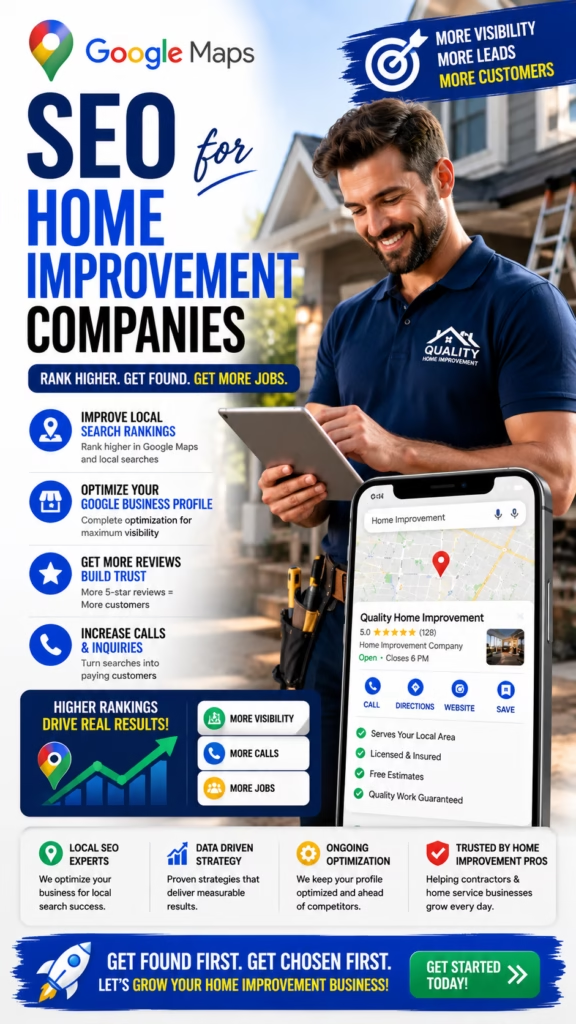
Google Maps SEO for Home Improvement Companies
Google Maps SEO for home improvement companies helps contractors improve local visibility, attract nearby homeowners, generate qualified phone calls, book more estimates, build stronger reviews, showcase completed work, and convert local searches into profitable renovation and repair projects.
Google Maps SEO for home improvement companies is one of the most important local marketing strategies for contractors that want more calls, estimate requests, consultations, showroom visits, project appointments, and qualified homeowner leads.
Home improvement customers often search with immediate intent. A homeowner may need a painter, roofing contractor, flooring company, kitchen remodeler, bathroom renovation specialist, general contractor, window installer, siding company, deck builder, cabinet refinisher, drywall repair company, or handyman near their property.
These searches frequently happen when the homeowner is ready to compare companies, inspect reviews, view project photos, confirm service areas, call for pricing, or schedule an estimate.
The businesses that appear trustworthy, relevant, established, and easy to contact have a stronger chance of winning those opportunities.
Strong Google Maps visibility does not come from adding random keywords or creating fake locations. Sustainable performance depends on accurate business information, relevant categories, detailed services, original project photos, legitimate reviews, useful website pages, local authority, and a reliable lead-response system.
The Contractor Local SEO Principle
Homeowners choose contractors they can find, understand, trust, and contact. Google Maps SEO should strengthen all four parts of that decision.
What Is Google Maps SEO for Home Improvement Companies?
Google Maps SEO for home improvement companies is the process of improving how a contractor appears in map results and local search experiences for relevant home improvement services.
The strategy connects several important assets:
- Google Business Profile
- Business categories
- Service listings
- Business description
- Service-area information
- Project photos
- Customer reviews
- Google Business Profile posts
- Contractor website
- Service pages
- Location pages
- Project galleries
- Local citations
- Local links and mentions
- Lead tracking
- Estimate follow-up
The Real Goal Is More Qualified Projects
Rankings and profile views matter, but they are not the final goal. A contractor should measure whether local visibility generates qualified homeowners, profitable projects, strong close rates, reviews, repeat business, and referrals.
Why Google Maps Matters for Home Improvement Companies
Homeowners Search Locally
Most home improvement projects require a company that can serve a specific property and travel to a defined area.
Projects Have High Purchase Intent
Searches for remodelers, painters, roofers, and contractors often happen close to an estimate or hiring decision.
Trust Is Visible
Reviews, photos, business information, years in business, and website quality help homeowners compare companies.
Calls Can Happen Immediately
Homeowners can call, request directions, visit the website, or schedule an estimate directly from the local search journey.
Project Photos Influence Decisions
Real examples help customers evaluate workmanship, style, materials, scale, and project fit.
Local Visibility Builds Compounding Value
Reviews, content, projects, citations, and website authority can support long-term discovery.
Understand the Homeowner Google Maps Journey
Stage 1: The Homeowner Identifies a Need
The customer may have peeling paint, an outdated kitchen, a leaking roof, damaged drywall, worn flooring, old windows, rotting siding, an unfinished basement, or a bathroom that needs renovation.
Stage 2: The Homeowner Searches
Searches may include:
- Home improvement company near me
- Kitchen remodeler in my city
- Bathroom renovation contractor
- Exterior painters near me
- Roofing contractor near my neighborhood
- Flooring installation company
- Deck builder near me
- Cabinet painting company
Stage 3: The Homeowner Compares
The homeowner evaluates business names, ratings, reviews, project photos, services, location, website quality, years of experience, financing, warranties, and estimate availability.
Stage 4: The Homeowner Contacts
The customer calls, submits a form, sends a message, or requests an estimate.
Stage 5: The Contractor Qualifies
The business confirms the project type, property location, scope, timing, budget expectations, ownership, and estimate availability.
Stage 6: The Project Moves Forward
A qualified lead may become a site visit, proposal, signed agreement, completed project, review, and referral.
Build a Complete Google Business Profile Foundation
Core Contractor Profile Information
- Accurate real-world business name
- Eligible address or service-area setup
- Primary phone number
- Professional website
- Primary business category
- Relevant secondary categories
- Normal business hours
- Special and holiday hours
- Business description
- Complete service listings
- Business attributes
- Original project photos
- Appointment or estimate links when available
Audit the Profile Quarterly
Contractors should review contact details, categories, services, hours, website links, photos, service areas, and profile access regularly.
Do Not Build on Inaccurate Information
False addresses, virtual locations, misleading categories, keyword-stuffed names, and duplicate profiles can create customer confusion and platform risk.
Use the Correct Contractor Business Name
The profile name should match the company's established real-world name as used on signage, branding, legal documents, vehicles, website, and customer-facing materials.
Avoid Keyword-Stuffed Names
A company named “Oak Ridge Renovations” should not change its profile name to “Oak Ridge Renovations Kitchen Bathroom Roofing Painting Contractor Near Me” simply to target more searches.
Build Keyword Relevance Elsewhere
Use service listings, website pages, project content, business descriptions, posts, reviews, and location pages to explain what the company does.
Choose Accurate Home Improvement Business Categories
Possible Primary Categories
- General contractor
- Remodeler
- Kitchen remodeler
- Bathroom remodeler
- Painting contractor
- Roofing contractor
- Flooring contractor
- Siding contractor
- Deck builder
- Window installation service
Select the Main Revenue-Producing Activity
The primary category should describe the business's central service rather than every service it could theoretically perform.
Use Secondary Categories Carefully
Secondary categories may reflect real additional services when the company has the team, licensing, equipment, experience, and website support to provide them.
Add Complete Home Improvement Services
General Remodeling Services
- Whole-home remodeling
- Kitchen remodeling
- Bathroom remodeling
- Basement finishing
- Room additions
- Interior renovations
- Exterior renovations
Painting and Surface Services
- Interior painting
- Exterior painting
- Cabinet painting
- Commercial painting
- Deck staining
- Fence painting
- Pressure washing
Repair and Installation Services
- Drywall repair
- Trim installation
- Door installation
- Window replacement
- Siding installation
- Flooring installation
- Tile installation
Describe Services Naturally
Explain what the service includes, who it is for, and what outcome the homeowner may expect. Avoid repeating the same city and keyword phrase in every service entry.
Write a Strong Home Improvement Business Description
Recommended Description Structure
- State the main service
- Identify the customer type
- List important project categories
- Explain the genuine service area
- Describe the customer benefit
- Invite the homeowner to request an estimate
Example Contractor Description
Oak Ridge Home Improvements provides professional residential remodeling and renovation services for homeowners throughout the local service area. Our team handles kitchen remodeling, bathroom renovations, interior painting, exterior upgrades, flooring, drywall repair, trim work, and complete home improvement projects. We focus on clear communication, dependable scheduling, quality workmanship, and detailed project planning. Contact our team to discuss your property and request an estimate.
Set Genuine Contractor Service Areas
Define the Real Travel Radius
Consider crew availability, project size, travel time, fuel cost, permit requirements, subcontractor access, supplier coverage, scheduling, and profit margins.
Prioritize Profitable Areas
Not every city within driving distance is equally valuable. Focus on areas where the company can respond quickly, price competitively, complete work efficiently, and build strong project density.
Support Service Areas With Website Content
Create useful local pages for communities the company genuinely serves, especially where it has completed projects, customers, testimonials, or local expertise.
Avoid Fake Office Locations
Do not create profiles at virtual offices, mailboxes, employee homes, storage facilities, or properties where the company does not genuinely qualify to operate.
Publish Home Improvement Project Photos That Build Trust
Best Contractor Photo Categories
- Before-and-after transformations
- Finished kitchens
- Finished bathrooms
- Exterior painting projects
- Roof replacements
- Flooring installations
- Deck and fence projects
- Cabinet refinishing
- Drywall repairs
- Trim and molding details
- Branded vehicles
- Crews at work
- Jobsite preparation
- Cleanup and protection
Use Real Work
Original photos show homeowners what the company actually delivers. Stock images may look professional, but they do not prove local project experience.
Show Different Project Stages
Include preparation, demolition, installation, finishing, cleanup, and final results when appropriate.
Photograph Details
Close-up photos of tile lines, trim, cabinet finishes, flooring transitions, paint edges, hardware, and material quality may help demonstrate craftsmanship.
Build a Consistent Contractor Review System
Ask After a Meaningful Milestone
Review requests may be sent after a completed project, final walkthrough, warranty follow-up, successful repair, or another genuine customer experience.
Make Review Requests Easy
Provide a direct review link through an approved follow-up email, text message, invoice, thank-you page, or QR code.
Do Not Pressure Customers
The request should invite honest feedback rather than require a specific rating.
Avoid Fake Reviews and Incentives
Purchased reviews, employee reviews, fabricated customer accounts, and review incentives may damage trust and create policy problems.
Respond Professionally to Contractor Reviews
Positive Review Response
Thank you for trusting our team with your home improvement project. We appreciate your feedback and are glad you were happy with the communication, workmanship, and final result.
Negative Review Response
Thank you for sharing your concerns. We take customer feedback seriously and would like the opportunity to review the project details with you directly. Please contact our office so our team can better understand the situation.
Do Not Argue Publicly
Even when a review appears unfair, the response should remain professional, brief, factual, and respectful.
Protect Customer Information
Do not publish private contract, payment, address, legal, or project information in a public response.
Use Google Business Profile Posts for Home Improvement Marketing
Contractor Post Ideas
- Recently completed kitchen
- Bathroom renovation before-and-after
- Exterior painting season
- Roof inspection reminder
- Deck staining availability
- Cabinet refinishing transformation
- New service announcement
- Project planning tips
- Estimate appointments available
- Commercial renovation capability
Use a Strong Call to Action
Invite homeowners to call, visit the website, request an estimate, review a project gallery, or schedule a consultation.
Connect Posts to Seasonal Demand
Exterior painting, roofing, decks, windows, pressure washing, interior renovations, and weather-related repairs may have different seasonal demand patterns.
Strengthen the Contractor Website Connected to Google Maps
Match the Business Profile
The website should use accurate business details, services, locations, contact information, branding, hours, and project information.
Create a Strong Mobile Experience
Homeowners frequently move from Google Maps to the website on a smartphone. Pages should load quickly and make calling or requesting an estimate easy.
Show Trust Immediately
- Company history
- Licensing information when relevant
- Insurance details when appropriate
- Project gallery
- Customer reviews
- Warranties
- Service areas
- Financing options
- Estimate process
Use Clear Conversion Actions
- Request an estimate
- Schedule a consultation
- Call the contractor
- Upload project photos
- Choose a project type
- Request financing information
Create Detailed Home Improvement Service Pages
Recommended Service Page Structure
- Clear service title
- Homeowner problem
- Contractor solution
- Services included
- Materials and options
- Project process
- Timeline expectations
- Project gallery
- Customer testimonials
- Service-area information
- Frequently asked questions
- Estimate call to action
Important Service Pages
- Kitchen remodeling
- Bathroom remodeling
- Interior painting
- Exterior painting
- Roof replacement
- Flooring installation
- Cabinet refinishing
- Drywall repair
- Deck construction
- Siding installation
- Window replacement
Create Useful Contractor Location Pages
Location Page Elements
- Services available in the city
- Local project examples
- Neighborhoods served
- Common property types
- Local customer testimonials
- Project photos
- Estimate process
- Service-area map or explanation
- Local FAQs
- Contact information
Make Each Page Unique
A useful page should contain genuine local context rather than copying one template and changing only the city name.
Use Real Local Proof
Reference completed projects, property styles, neighborhoods, local challenges, service demand, or customer experiences when accurate.
Publish Detailed Home Improvement Project Pages
Project Page Structure
- Project type
- General location
- Homeowner challenge
- Scope of work
- Materials used
- Project process
- Before photos
- Work-in-progress photos
- After photos
- Final result
- Related services
- Estimate call to action
Protect Customer Privacy
Avoid publishing exact addresses, personal information, security details, contract information, or anything the homeowner has not approved for public use.
Create Local Home Improvement Content
Content Topics
- Kitchen remodeling cost factors
- Bathroom renovation planning
- Best paint types for the local climate
- Roofing materials for regional weather
- Flooring options for local homes
- Seasonal exterior maintenance
- How to prepare for a remodel
- How long common projects take
- Questions to ask a contractor
- Permit and preparation considerations
Connect Content to Conversion
Every article should naturally direct readers toward relevant services, locations, project examples, estimates, or consultations.
Use Real Contractor Expertise
Include practical advice based on project experience, material selection, property conditions, customer questions, and common planning mistakes.
Build Accurate Local Citations for the Contractor
Important Citation Information
- Business name
- Address when applicable
- Phone number
- Website
- Business category
- Hours
- Service description
Useful Citation Sources
- Established business directories
- Contractor associations
- Trade organizations
- Local chambers
- Supplier directories
- Manufacturer directories
- Community business listings
- Professional licensing resources
Correct Outdated Information
Old phone numbers, addresses, business names, websites, and categories can create confusion and missed leads.
Earn Relevant Local Backlinks and Mentions
Potential Link Opportunities
- Supplier websites
- Manufacturer partner pages
- Chamber directories
- Local news coverage
- Neighborhood organizations
- Trade associations
- Community sponsorships
- Charitable projects
- Home improvement publications
- Professional partnerships
Create Link-Worthy Assets
Useful cost guides, project case studies, local maintenance resources, homeowner checklists, and renovation planning guides can earn legitimate mentions.
Avoid Unrelated Link Schemes
Large quantities of low-quality, unrelated links do not build the same credibility as genuine industry and local authority.
Build Contractor Trust Before the Homeowner Calls
Trust Signals Homeowners Evaluate
- Years in business
- Review quality
- Project photos
- Professional website
- Clear service areas
- Licensing and insurance information
- Warranties
- Financing options
- Team photos
- Branded vehicles
- Clear estimate process
Make the Business Easy to Verify
Consistent information across Google Maps, the website, social media, directories, and project materials helps homeowners feel confident that the company is legitimate.
Convert Google Maps Visitors Into Home Improvement Leads
Use a Clear Offer
Tell homeowners whether they can request an estimate, schedule a consultation, send project photos, visit a showroom, or call for availability.
Reduce Form Friction
Initial forms should collect enough information to route the lead without overwhelming the homeowner.
Recommended Initial Form Fields
- Name
- Phone number
- Email address
- Project type
- City or ZIP code
- Desired timeline
- Short project description
- Preferred contact method
Show the Next Step
Explain whether someone will call, schedule a visit, review photos, provide an estimate range, or request more project details.
Qualify Home Improvement Leads Before Scheduling
Core Qualification Questions
- What type of project are you planning?
- Where is the property located?
- Do you own or control the property?
- When would you like the work completed?
- What is the approximate scope?
- Do you have project photos?
- Have you selected materials?
- Are all decision-makers available?
- What is your preferred estimate time?
Avoid Over-Qualifying Too Early
Ask only what is needed to determine fit and schedule the next step. Long, complicated forms may reduce response rates.
Book More Home Improvement Estimate Appointments
Respond Quickly
Homeowners may contact several contractors. Fast acknowledgment helps protect the opportunity.
Offer Specific Times
We have an estimate opening Tuesday at 3:00 p.m. or Thursday at 10:30 a.m. Which option works better for you?
Confirm Appointment Details
- Date and time
- Property location
- Project type
- Assigned estimator
- Estimated appointment length
- Preparation instructions
- Rescheduling process
Reduce No-Shows
Send an immediate confirmation and an appropriate reminder before the appointment.
Use AI and Automation for Contractor Lead Management
Tasks Automation May Support
- Missed-call responses
- Lead acknowledgment
- Project-type collection
- ZIP-code qualification
- Estimate scheduling
- Appointment reminders
- CRM record creation
- Proposal follow-up
- Review requests
- Lead-status reporting
Keep Human Review
Employees should handle project scope, technical questions, pricing, site conditions, contracts, complaints, warranties, licensing, and complex customer situations.
Use Automation to Improve Speed
The purpose is to reduce missed calls, forgotten follow-up, and scheduling delays while preserving professional human oversight.
Track Google Maps Leads, Estimates, and Revenue
Recommended Contractor CRM Fields
- Customer name
- Phone number
- Email address
- Lead source
- Project type
- Property location
- Project timeline
- Estimate appointment
- Assigned estimator
- Proposal value
- Lead status
- Close outcome
- Final contract value
- Gross profit
- Follow-up date
Track the Entire Pipeline
| Stage | Primary Metric | Business Question |
|---|---|---|
| Visibility | Profile views and search exposure | Are homeowners finding the company? |
| Inquiry | Calls, forms, messages, website visits | Are searchers contacting the company? |
| Qualification | Qualified lead rate | Are inquiries inside the service and project criteria? |
| Estimate | Estimate booking and completion rate | Are qualified leads moving to appointments? |
| Proposal | Proposal value and follow-up | Are estimates becoming real opportunities? |
| Sale | Close rate, revenue, and gross profit | Are Google Maps leads generating profitable projects? |
Calculate Cost per Qualified Lead
Cost per Qualified Lead = Total Local SEO Investment ÷ Qualified Google Maps Leads
If a contractor invests $2,400 in profile management, website content, project photography, citation work, CRM tools, and staff time and generates 80 qualified leads, the estimated cost per qualified lead is $30.
Calculate Contractor Local SEO ROI
ROI = (Gross Profit From Google Maps Projects − Local SEO Investment) ÷ Local SEO Investment × 100
Manage Google Maps SEO Across Multiple Contractor Locations
Use Genuine Operating Locations
Each profile should represent a location that genuinely qualifies under current requirements.
Create Location-Specific Assets
- Local phone numbers when appropriate
- Accurate hours
- Location-specific photos
- Local team information
- Local service pages
- Local project examples
- Location-specific lead tracking
Route Leads Correctly
Assign leads based on ZIP code, location, service type, crew availability, estimator coverage, project size, and current schedule.
Common Google Maps SEO Mistakes Home Improvement Companies Make
Using a Keyword-Stuffed Business Name
The profile name should reflect the real business name rather than a list of services and cities.
Creating Fake Locations
Virtual offices, mailboxes, and unstaffed addresses may create profile and trust problems.
Choosing Too Many Irrelevant Categories
Categories should accurately reflect real services.
Using Stock Photos Instead of Real Work
Homeowners want proof of local workmanship and actual project capability.
Ignoring Reviews
Reviews are a major trust factor in home improvement purchasing decisions.
Publishing Thin City Pages
Duplicate pages that only change the city name provide little value to homeowners.
Failing to Answer Calls
Strong visibility cannot produce sales when leads receive no response.
Failing to Track Projects
Contractors should know which leads become estimates, proposals, signed contracts, revenue, gross profit, reviews, and referrals.
A 30-Day Google Maps SEO Plan for Home Improvement Companies
Week 1: Profile and Service Foundation
- Confirm profile ownership
- Review the business name
- Confirm address or service-area setup
- Choose accurate categories
- Update hours
- Write the business description
- Add complete services
- Review estimate links
Week 2: Photos, Reviews, and Trust
- Add original project photos
- Organize before-and-after images
- Add team and vehicle photos
- Create a review-request process
- Respond to existing reviews
- Update contractor credentials
- Publish a Google Business Profile post
- Improve website trust signals
Week 3: Website and Local Authority
- Create detailed service pages
- Create useful location pages
- Publish a local project case study
- Improve mobile speed
- Audit local citations
- Correct outdated listings
- Seek relevant local mentions
- Improve estimate forms
Week 4: Lead Conversion and Measurement
- Track calls and forms
- Create CRM lead stages
- Improve response time
- Create qualification questions
- Offer specific estimate times
- Send appointment reminders
- Track proposals and close rate
- Calculate revenue and ROI
End-of-Month Outcome
After 30 days, the company should have a stronger Google Business Profile, better project proof, improved local website relevance, more organized lead handling, and clearer insight into which Google Maps inquiries become profitable projects.
Final Takeaway: Turn Local Homeowner Searches Into Profitable Projects
Google Maps SEO for home improvement companies works best when every part of the local customer journey supports the same goal.
Accurate business information creates clarity. Relevant categories explain the contractor's specialty. Complete services show project capability. Original photos demonstrate workmanship. Legitimate reviews build trust. A professional website answers homeowner questions. Service and location pages improve relevance. Fast response protects the opportunity. Qualification improves lead quality. Organized estimates move prospects toward proposals and contracts.
Contractors should measure profile activity, calls, website visits, qualified leads, estimate bookings, completed estimates, proposals, close rate, contract value, gross profit, customer acquisition cost, reviews, repeat business, and referrals.
Google Maps becomes even more valuable when connected with local SEO, project content, social media, video marketing, Facebook Marketplace, Craigslist, OfferUp, email, SMS, paid advertising, referral systems, CRM organization, AI-assisted communication, and automated follow-up.
When the system works together, one local search can become an estimate, signed agreement, completed project, five-star review, repeat customer, and neighborhood referral.
Frequently Asked Questions
1. What is Google Maps SEO for home improvement companies?
It is the process of improving local map visibility so nearby homeowners can discover the contractor, review its work, call, request an estimate, or schedule a consultation.
2. Why is Google Maps important for contractors?
It reaches homeowners who are actively searching for local remodeling, painting, roofing, flooring, repair, and renovation companies.
3. Can Google Maps generate home improvement leads?
Yes. A strong profile may generate calls, website visits, messages, estimate requests, and project consultations.
4. How should a contractor optimize its profile?
Complete accurate information, categories, services, hours, photos, reviews, website links, service areas, and estimate options.
5. Which categories should a home improvement company use?
Choose the category that best represents the main service and add only relevant categories for real secondary services.
6. Do project photos help Google Maps SEO?
Original project photos improve trust and help homeowners evaluate workmanship, style, materials, and service quality.
7. How often should contractors add photos?
Add fresh photos consistently as new projects, crews, materials, vehicles, and finished results become available.
8. Do reviews help contractor visibility?
Legitimate reviews may improve trust, engagement, and customer confidence when choosing a contractor.
9. Should contractors respond to reviews?
Yes. Professional responses demonstrate attention, accountability, and customer service.
10. Can service-area contractors use Google Maps SEO?
Eligible service-area businesses can optimize for the genuine locations they serve while following current profile requirements.
11. Should contractors create location pages?
Useful local pages can explain services, projects, neighborhoods, testimonials, and estimate options for genuine service areas.
12. What belongs on a contractor location page?
Add local services, project examples, neighborhoods, property types, reviews, FAQs, and a clear estimate request.
13. Do service pages help local SEO?
Detailed service pages help homeowners understand specific remodeling, painting, roofing, flooring, and repair services.
14. What keywords should contractors target?
Target accurate service and location phrases that reflect genuine customer demand and real service areas.
15. Should keywords be added to the business name?
The profile name should match the established real-world business name rather than a promotional keyword list.
16. Do Google Business Profile posts generate leads?
Posts may promote completed projects, seasonal services, appointment availability, tips, and estimate calls to action.
17. What photos should contractors publish?
Publish before-and-after projects, finished work, crews, vehicles, materials, preparation, cleanup, and craftsmanship details.
18. Does website quality affect Google Maps leads?
A fast, mobile-friendly website with strong services, projects, reviews, and estimate options can improve conversion.
19. What are contractor local citations?
They are online mentions of the company's business information across directories, associations, suppliers, and local platforms.
20. Do local backlinks help contractors?
Relevant mentions from legitimate local and industry sources may support authority and discovery.
21. How quickly should home improvement leads receive a response?
Respond as quickly as reasonably possible because homeowners often contact multiple contractors.
22. How should contractor leads be qualified?
Ask about project type, property location, ownership, timeline, scope, photos, budget expectations, and estimate availability.
23. Can AI help manage home improvement leads?
AI may support acknowledgment, qualification, scheduling, reminders, CRM updates, and follow-up while humans handle scope and pricing.
24. How should Google Maps leads be tracked?
Track calls, forms, qualified leads, estimates, proposals, close rate, revenue, gross profit, and acquisition cost.
25. What makes a contractor lead qualified?
A qualified lead is within the service area, needs a real service, controls the property, has realistic timing, and can take the next step.
26. Can contractor locations have separate profiles?
Eligible operating locations may have separate profiles when each location genuinely qualifies.
27. What should home improvement companies avoid?
Avoid fake locations, keyword stuffing, duplicate profiles, misleading categories, fake reviews, copied photos, and thin city pages.
28. How long does contractor Google Maps SEO take?
Results vary based on competition, profile history, reviews, website quality, local authority, service demand, and ongoing optimization.
29. Should Google Maps be the only contractor lead source?
No. Combine it with local SEO, a professional website, referrals, social media, paid advertising, email, and CRM follow-up.
30. What is the main goal of home improvement Google Maps SEO?
The goal is to turn local homeowner searches into qualified estimates, signed projects, revenue, reviews, repeat business, and referrals.
30 Additional SEO Keywords
Use these supporting phrases naturally across contractor service pages, location pages, project galleries, blog posts, internal links, image alt text, FAQs, and lead-generation campaigns.
Turn Google Maps Searches Into More Home Improvement Projects
MarketWiz.ai helps home improvement companies strengthen Google Maps visibility, improve local SEO, showcase project work, generate qualified homeowner inquiries, organize estimate appointments, automate follow-up, track CRM activity, and measure real project revenue.
This article provides general marketing and local lead-generation information and does not provide legal, financial, tax, privacy, contractor-licensing, advertising, employment, construction, building-code, warranty, insurance, consumer-protection, platform-compliance, or search-engine ranking advice. Home improvement companies should review current Google Business Profile requirements, applicable contractor regulations, licensing rules, review policies, advertising standards, communication-consent requirements, and local, state, and federal laws before implementing marketing, tracking, automated communication, or review-generation systems.













