Market Wiz AI

Market Wiz

With ingenious automation fused with human dedication 24/7, Market Wiz puts the local marketing competition on notice – they’ve created a new standard operating system for dominating every digital front.All-Platform Compatibility: Facebook, Craigslist, Google, you name it. This system plays well with all the big players, ensuring your ads are everywhere they need to be.The Cherry on Top: There's a ton more under the hood, each feature adding more muscle to your marketing efforts.Bottom line: Market Wiz.ai isn’t just another tool; it’s your 24/7 digital marketing powerhouse. In the world of local advertising, it's the smartest move you’ll make.Market Wiz automates your online ads.|

Google Maps Strategies That Increase Customer Calls

ChatGPT Image Apr 30 2026 06 00 31 PM
Google Maps Strategies That Increase Customer Calls

Google Maps Strategies That Increase Customer Calls

Google Maps Strategies That Increase Customer Calls explains how local businesses can improve visibility, strengthen trust, optimize their Google Business Profile, and turn nearby searches into more phone calls, appointments, visits, and leads.

Introduction

Google Maps Strategies That Increase Customer Calls are essential for local businesses that depend on people nearby taking action. When someone searches for a plumber, painter, HVAC company, mattress store, restaurant, landscaper, contractor, dentist, med spa, roofer, real estate agent, or local service provider, Google Maps often becomes one of the fastest paths from search to phone call.

That is why Google Maps is not just a visibility tool. It is a call-generation channel. Customers can search, compare, read reviews, check photos, confirm hours, visit a website, request directions, and tap the call button within seconds. If the business looks trustworthy and relevant, the customer is more likely to call.

Google Maps strategies that increase customer calls focus on visibility, trust, relevance, profile completeness, reviews, and easy contact actions.

Many businesses lose calls because their Google Business Profile is incomplete, outdated, inactive, or poorly optimized. They may have weak photos, missing services, few reviews, wrong categories, inconsistent information, or no clear reason for a customer to choose them. These problems reduce trust and lower the chance of getting the call.

The best Google Maps strategies combine profile optimization, review growth, photo updates, service clarity, local SEO, call tracking, website support, and fast response systems. When these pieces work together, businesses can increase the number of people who find them and the number of searchers who actually call.

Main idea: Businesses increase customer calls from Google Maps by becoming easier to find, easier to trust, easier to understand, and easier to contact.

Table of Contents

  • 1) Why Google Maps drives customer calls
  • 2) How local search intent turns into phone calls
  • 3) Google Business Profile optimization
  • 4) Categories that improve call relevance
  • 5) Service details that answer customer questions
  • 6) Reviews that increase call confidence
  • 7) Photos and videos that build trust before the call
  • 8) Local keywords that attract ready-to-call customers
  • 9) Website support for call conversion
  • 10) Business information accuracy and call trust
  • 11) Posts and offers that create call urgency
  • 12) Response speed after the call
  • 13) Tracking calls from Google Maps
  • 14) Common mistakes that reduce calls
  • 15) Final thoughts
  • 16) FAQs
  • 17) Extra keywords

1) Why Google Maps Drives Customer Calls

Google Maps drives customer calls because it connects local search intent with immediate contact options. A person searching for a nearby business often wants help soon. They may need a quote, appointment, repair, reservation, product, consultation, or visit. Google Maps places the call button directly in front of that customer.

This makes Google Maps different from many other marketing channels. Customers are not always passively scrolling. Many are actively searching for a solution. When a business appears with strong reviews, clear services, good photos, accurate hours, and a working phone number, it has a better chance of earning the call.

Google Maps can increase calls by improving:

  • Local visibility
  • Customer trust
  • Review confidence
  • Service clarity
  • Contact convenience
  • Mobile search conversions
  • Nearby customer awareness
  • Urgent service discovery
  • Appointment requests
  • Lead generation

Google Maps strategies that increase customer calls work because they help businesses appear at the exact moment customers are ready to act.

2) How Local Search Intent Turns Into Phone Calls

Local search intent is powerful because it often shows immediate need. A customer searching β€œemergency plumber near me,” β€œbest mattress store near me,” β€œinterior painter nearby,” β€œHVAC repair open now,” or β€œGoogle Maps SEO agency” may be close to making a decision.

That search can quickly turn into a call if the business profile gives the customer enough confidence. The profile must answer key questions quickly: Does this business offer what I need? Is it nearby? Is it open? Do other customers trust it? Can I call now?

Local search happens
Customer sees Google Maps results
Customer compares reviews, photos, hours, and services
Customer chooses the most trusted option
Customer taps the call button

The more clearly a Google Maps profile matches customer intent, the more likely it is to generate phone calls.

3) Google Business Profile Optimization

The Google Business Profile is the foundation of Google Maps call generation. A complete profile gives customers the information they need before calling. An incomplete profile creates hesitation. If hours are missing, services are unclear, photos are poor, or the phone number looks unreliable, customers may choose a competitor.

Profile optimization should focus on accuracy, clarity, trust, and action. Every section of the profile should help customers understand the business and feel comfortable calling.

A call-focused Google Business Profile should include:

  • Correct business name
  • Accurate phone number
  • Current business hours
  • Website link
  • Strong primary category
  • Relevant secondary categories
  • Complete services or products
  • Clear business description
  • Recent photos and videos
  • Review responses

Businesses increase calls from Google Maps by making their Google Business Profile complete, accurate, trustworthy, and easy to contact.

4) Categories That Improve Call Relevance

Categories help Google understand what the business does and which searches it should appear for. A strong primary category can improve the relevance of the profile. Relevant secondary categories can support additional services without confusing the business identity.

For example, a business that primarily handles HVAC repair should choose a category that reflects HVAC services instead of a vague or unrelated category. A mattress store should use categories that clearly match retail mattress buying intent. A local marketing agency should select categories aligned with marketing, advertising, or internet marketing services.

Better category selection can increase calls by helping the business show up for searches that match what customers actually need.

5) Service Details That Answer Customer Questions

Service details help customers decide whether to call. If a customer needs cabinet painting, emergency AC repair, same-day mattress delivery, roof inspection, drain cleaning, or local SEO services, they want to know quickly whether the business provides that exact service.

Businesses should list core services clearly. Each service should use customer-friendly language. The goal is to remove uncertainty and make the call feel like the obvious next step.

Call-focused service detail example:
Service: Emergency HVAC Repair
Description: Fast local AC and heating repair for nearby homeowners.
CTA: Call now to check availability.

Specific service details increase calls because customers are more likely to contact a business that clearly solves their exact problem.

6) Reviews That Increase Call Confidence

Reviews are one of the biggest drivers of customer confidence on Google Maps. Before calling, customers often compare star ratings, review count, recent reviews, written feedback, and business responses. Strong reviews reduce risk and make the business feel safer to contact.

A business should create a consistent review request process. Happy customers should be encouraged to leave honest feedback after a successful service, purchase, appointment, or visit. The business should also respond to reviews professionally.

Review strategies that support more calls:

  • Ask satisfied customers for reviews
  • Send a simple review link
  • Respond to every positive review
  • Respond calmly to negative reviews
  • Mention services naturally in responses
  • Build reviews consistently over time
  • Use feedback to improve operations

Reviews increase customer calls because they give searchers confidence before they tap the call button.

7) Photos and Videos That Build Trust Before the Call

Photos and videos can influence whether a customer calls. A profile with recent, authentic visuals feels more active and reliable. A profile with no photos, outdated images, or low-quality visuals can create doubt.

Businesses should upload photos that show real work, real products, real people, real locations, and real results. Service businesses can use before-and-after images. Storefronts can show interiors, products, staff, displays, and exterior signage. Local agencies can use team photos, client examples, brand visuals, and office or work environment images.

Photos that help increase calls:

  • Completed project photos
  • Before-and-after images
  • Team photos
  • Storefront exterior photos
  • Product photos
  • Service vehicles
  • Interior business photos
  • Short helpful videos
  • Branded service graphics

Strong visuals help increase calls by making the business feel real, active, professional, and trustworthy.

8) Local Keywords That Attract Ready-to-Call Customers

Local keywords help connect the business with customers who are ready to call. These keywords should appear naturally in the business description, services, posts, website pages, FAQs, and local landing pages. The goal is not keyword stuffing. The goal is clear local relevance.

Businesses should think about how customers search when they need help. They may include service names, city names, neighborhood names, urgency phrases, β€œnear me” searches, and problem-based queries.

Examples of call-focused local keywords:
AC repair near me
Emergency plumber in Dallas
Mattress store in Rochester NY
Interior painter in Fort Worth
Google Maps SEO agency for local businesses
Same-day delivery near me

Local keywords increase call opportunities by helping businesses appear for searches with strong customer intent.

9) Website Support for Call Conversion

A Google Maps profile can generate calls directly, but the website also plays an important role. Many customers click to the website before calling. If the website is slow, confusing, outdated, or missing phone numbers, the business may lose the call.

A call-focused website should clearly display the phone number, services, service areas, trust signals, reviews, photos, FAQs, and strong calls to action. Mobile usability is especially important because many Google Maps searches happen on phones.

Website features that help increase calls:

  • Clickable phone number
  • Strong mobile design
  • Clear service pages
  • City landing pages
  • Customer reviews
  • Fast loading speed
  • Simple quote forms
  • Visible call buttons
  • Trust badges or proof
  • FAQs that answer objections

Google Maps strategies that increase customer calls work better when the website makes calling easy from every page.

10) Business Information Accuracy and Call Trust

Accurate business information is essential for call trust. If customers see conflicting phone numbers, outdated hours, wrong addresses, or inconsistent details across the web, they may hesitate. Google may also struggle to understand which information is correct.

Businesses should keep name, address, phone number, website, hours, service areas, and categories consistent across Google, the website, directories, social profiles, and local listings.

Accurate business information increases calls because customers feel more confident contacting a business that looks reliable and current.

11) Posts and Offers That Create Call Urgency

Google Business Profile posts and offers can encourage customers to call sooner. A post can announce appointment openings, seasonal services, limited-time offers, emergency availability, delivery promotions, new products, or special service windows.

The best posts are clear, short, and action-focused. They should explain the offer, who it is for, where it applies, and what the customer should do next.

Call-focused post formula:
Headline: Local service or offer
Body: Clear benefit and urgency
Trust signal: Experience, reviews, or availability
CTA: Call today to schedule

Posts and offers increase customer calls by giving local searchers a timely reason to contact the business now.

12) Response Speed After the Call

Getting more calls is only valuable if the business answers and follows up quickly. Many local businesses lose leads because calls go unanswered, voicemails are not returned, or staff do not have a strong phone process. Google Maps can create the opportunity, but the business must convert it.

Every business should have a call-handling system. This may include call forwarding, voicemail scripts, missed-call text-back, appointment booking, CRM tracking, and clear staff training. The faster the response, the better the chance of turning a call into revenue.

Call conversion improvements:

  • Answer calls during business hours
  • Use missed-call text-back
  • Return voicemails quickly
  • Train staff on call scripts
  • Track lead sources
  • Confirm appointments by text
  • Follow up with quote requests

Google Maps strategies that increase customer calls should always include a system for answering, tracking, and converting those calls.

13) Tracking Calls From Google Maps

Tracking is necessary because businesses need to know whether Google Maps is producing real results. Calls should be measured along with direction requests, website clicks, messages, bookings, and closed customers.

Businesses can use call tracking, Google Business Profile insights, CRM tags, landing pages, staff intake questions, or lead source reporting. The goal is to understand which searches, services, locations, and profile updates are producing calls.

Important call metrics include:

  • Total calls from Google Maps
  • Missed calls
  • Answered calls
  • Booked appointments
  • Quote requests
  • Closed sales
  • Call time of day
  • Call source
  • Service requested
  • Revenue from Maps leads

Tracking calls helps businesses improve Google Maps strategy based on real customer behavior instead of guessing.

14) Common Mistakes That Reduce Calls

Many businesses do not receive enough calls from Google Maps because their profile does not create confidence. Even if they appear in search results, customers may skip them if the profile looks weak, outdated, or less trustworthy than competitors.

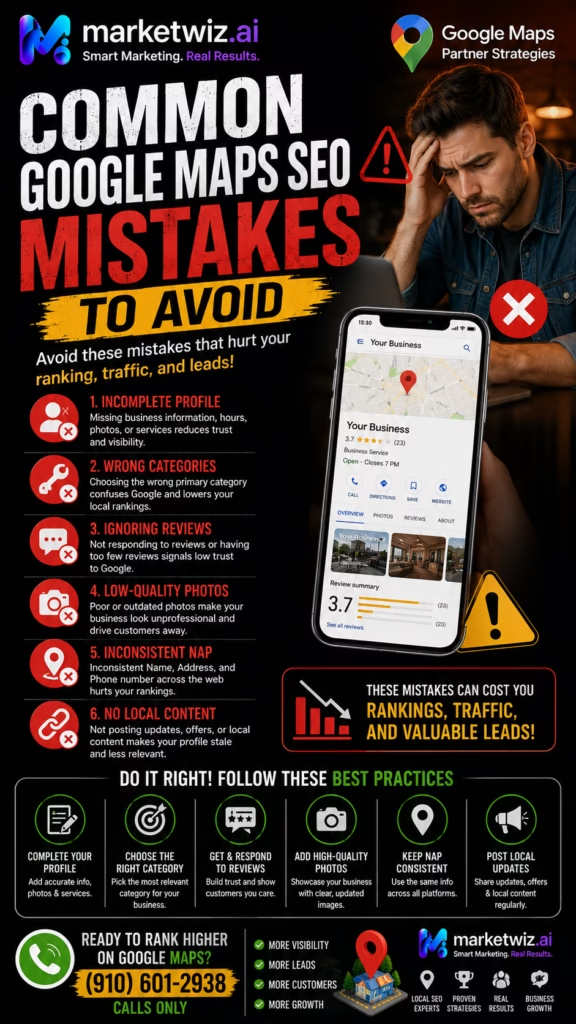
  • Incomplete Google Business Profile
  • Wrong phone number
  • Outdated business hours
  • Poor category selection
  • Missing services
  • Few or weak reviews
  • No review responses
  • Low-quality photos
  • Slow website
  • No clickable phone number on website
  • Inconsistent business information online
  • No call tracking
  • Missed calls with no follow-up

Big mistake: improving Google Maps visibility without improving the call conversion process.

15) Final Thoughts

Google Maps Strategies That Increase Customer Calls come down to one core principle: make the business the easiest and most trustworthy choice for nearby customers. When a customer searches locally, the business must appear relevant, credible, active, and simple to contact.

The strongest strategies include complete profile optimization, accurate categories, clear services, strong reviews, fresh photos, local keywords, website support, consistent business information, timely offers, and fast call response. These pieces work together to turn Google Maps visibility into real phone calls.

Final takeaway: Google Maps strategies increase customer calls when they improve visibility, trust, customer confidence, contact convenience, and follow-up speed.

16) FAQs

1) What are Google Maps strategies that increase customer calls?

They are local SEO and Google Business Profile strategies designed to help businesses appear more often, build trust faster, and encourage nearby customers to call.

2) Why does Google Maps generate phone calls?

Google Maps generates calls because customers often use it when they need nearby services, products, directions, quotes, or appointments.

3) Can Google Business Profile optimization increase calls?

Yes. A complete and optimized profile can increase visibility and make customers more likely to call.

4) Do reviews increase customer calls?

Yes. Reviews build trust and help customers feel more confident before contacting a business.

5) Do photos help generate calls?

Yes. Fresh, real photos make the business feel active, professional, and trustworthy.

6) What profile information matters most for calls?

Phone number, hours, services, categories, reviews, photos, location, and website links all matter.

7) Should businesses use call tracking?

Yes. Call tracking helps businesses understand how many calls come from Google Maps and which leads convert.

8) What categories should businesses choose?

Businesses should choose the most accurate primary category and relevant secondary categories that match their real services.

9) Can service details increase calls?

Yes. Clear service details help customers know whether the business solves their exact problem.

10) How do local keywords help?

Local keywords help the profile and website match customer searches involving services, cities, neighborhoods, and urgent needs.

11) Should the website have a phone number?

Yes. The phone number should be visible, clickable, and easy to find on mobile devices.

12) Can Google Maps help emergency service businesses?

Yes. Emergency service businesses can benefit because many customers search Google Maps when they need immediate help.

13) Can storefronts get more calls from Google Maps?

Yes. Storefronts can receive calls about hours, inventory, directions, appointments, pricing, and availability.

14) Should businesses respond to reviews?

Yes. Review responses show professionalism and can increase customer confidence.

15) Do Google Business Profile posts help calls?

Posts can help by promoting timely offers, service openings, updates, and calls to action.

16) What causes businesses to lose calls from Google Maps?

Wrong information, weak reviews, poor photos, unclear services, missed calls, and slow follow-up can reduce results.

17) How often should businesses update photos?

Businesses should add new photos consistently, especially after projects, product updates, events, or seasonal changes.

18) Is Google Maps SEO a one-time task?

No. It works best when businesses update profiles, collect reviews, post content, and track calls consistently.

19) Can missed-call text-back help?

Yes. Missed-call text-back can help recover leads that would otherwise be lost.

20) Should businesses track booked jobs from Google Maps?

Yes. Tracking booked jobs shows whether calls are turning into real revenue.

21) Can Google Maps calls turn into repeat customers?

Yes. Strong service, follow-up, and customer experience can turn Maps leads into repeat customers.

22) What role does website speed play?

A fast website helps customers quickly find information and call without frustration.

23) Can local offers increase calls?

Yes. Clear offers can create urgency and give customers a reason to call now.

24) Should businesses mention service areas?

Yes. Service areas help customers know whether the business serves their location.

25) What is the main goal of Google Maps call strategy?

The main goal is to turn local search visibility into real phone calls, appointments, visits, leads, and customers.

17) Extra Keywords

  1. Google Maps Strategies That Increase Customer Calls
  2. Google Maps SEO
  3. Google Business Profile optimization
  4. increase customer calls
  5. local SEO calls
  6. Google Maps lead generation
  7. local business phone calls
  8. Google Maps marketing
  9. Google Business Profile calls
  10. local search calls
  11. near me call strategy
  12. Google Maps ranking strategy
  13. local customer leads
  14. call tracking for Google Maps
  15. Google Maps profile optimization
  16. local business visibility
  17. Google reviews strategy
  18. Google Maps conversion optimization
  19. service business calls
  20. storefront phone calls
  21. local map pack SEO
  22. Google Maps customer acquisition
  23. Google Maps call button
  24. local lead conversion
  25. Google Maps customer calls

© 2026 Your Brand

Google Maps Strategies That Increase Customer Calls Read More Β»

Google Maps Optimization for Small Businesses

ChatGPT Image Apr 29 2026 06 25 40 PM
Google Maps Optimization for Small Businesses

Google Maps Optimization for Small Businesses

Google Maps Optimization for Small Businesses explains how small companies can improve local visibility, strengthen their Google Business Profile, earn more reviews, increase calls, and turn nearby searches into real customers.

Introduction

Google Maps Optimization for Small Businesses is one of the most important local marketing strategies for companies that depend on nearby customers. When someone searches for a plumber, painter, mattress store, restaurant, HVAC company, roofer, dentist, landscaper, mechanic, cleaner, or local service provider, Google Maps often influences who gets the call.

For small businesses, this matters because Google Maps can put a local company directly in front of customers at the moment they are ready to act. A person searching β€œnear me” is usually not just browsing. They are comparing options, reading reviews, checking hours, viewing photos, and deciding who to contact.

Google Maps optimization helps small businesses become easier to find, easier to trust, and easier to contact when nearby customers are ready to buy.

A strong Google Maps presence is not created by accident. It requires a complete Google Business Profile, accurate information, strong categories, service details, photos, reviews, local keywords, citation consistency, website support, and ongoing activity. Each piece helps Google understand the business and helps customers feel confident.

Main idea: Google Maps Optimization for Small Businesses improves local discovery, customer trust, search visibility, and lead generation by strengthening the business’s full local presence.

Table of Contents

  • 1) Why Google Maps optimization matters
  • 2) How Google Maps drives local customers
  • 3) Google Business Profile optimization
  • 4) Choosing the right categories
  • 5) Services, products, and business details
  • 6) Reviews and reputation building
  • 7) Photos and visual trust
  • 8) Local keywords and relevance
  • 9) Website support for Maps visibility
  • 10) Citations and information consistency
  • 11) Posts and profile activity
  • 12) Tracking calls, clicks, and leads
  • 13) Common Google Maps mistakes
  • 14) Practical optimization workflow
  • 15) Final thoughts
  • 16) FAQs
  • 17) Extra keywords

1) Why Google Maps Optimization Matters

Google Maps optimization matters because customers often use Maps when they need a nearby business quickly. They may want directions, a phone number, hours, reviews, service details, or photos before making a decision. A small business that appears clearly and confidently in those moments can win more attention.

For small businesses, visibility is everything. If competitors appear above them in Google Maps, those competitors may receive more calls, more direction requests, more website clicks, and more walk-in traffic. Optimization helps level the playing field by improving relevance, trust, and profile quality.

Google Maps optimization can help small businesses increase:

  • Phone calls
  • Website visits
  • Direction requests
  • Quote requests
  • Appointment bookings
  • Store visits
  • Review visibility
  • Local brand awareness
  • Customer trust
  • Lead generation

Small businesses improve Google Maps performance by becoming more relevant, complete, active, and trusted locally.

2) How Google Maps Drives Local Customers

Google Maps drives local customers by connecting search intent with nearby options. A customer can search, compare, call, visit a website, get directions, read reviews, and view photos without leaving the Maps experience. This makes Google Maps one of the most powerful customer decision tools for local businesses.

Customer searches for a nearby service
Google Maps shows local businesses
Customer compares reviews, photos, hours, and location
Customer clicks call, website, directions, or message
Business receives a lead, visit, or booking

Google Maps optimization works because it helps small businesses appear during high-intent local searches.

3) Google Business Profile Optimization

The Google Business Profile is the foundation of Google Maps Optimization for Small Businesses. This profile tells Google and customers what the business does, where it operates, when it is open, how to contact it, and why it is relevant.

A complete profile should include accurate business information, strong categories, service areas, services, products, photos, hours, description, website link, and review responses. Every section should be treated as part of the business’s local marketing system.

A strong Google Business Profile includes:

  • Correct business name
  • Accurate address or service area
  • Current phone number
  • Website link
  • Business hours
  • Primary and secondary categories
  • Services and products
  • Business description
  • Photos and videos
  • Review responses

Small businesses improve Google Maps visibility by making their Google Business Profile complete, accurate, and useful.

4) Choosing the Right Categories

Categories are critical because they help Google understand what the business is. The primary category should match the business’s main service or product. Secondary categories should support additional services without confusing the profile.

A small business should avoid choosing categories that are too broad, inaccurate, or unrelated. The more accurately the category matches customer searches, the better the business can align with relevant local intent.

Correct categories help Google connect small businesses with the right local searches.

5) Services, Products, and Business Details

Services and products help customers understand what the business offers. They also help Google connect the business to relevant search terms. A small business should list its most important services clearly and use customer-friendly wording.

For example, a painting business can list interior painting, exterior painting, cabinet painting, drywall repair, and commercial painting. A mattress store can list mattresses, adjustable bases, delivery, financing, and brand options. A contractor can list repairs, installations, inspections, and estimates.

Service optimization example:
Business type: Local painting company
Primary service: Interior painting
Supporting services: Exterior painting, cabinet painting, drywall repair
Local CTA: Call today for a free estimate

Clear services and products help small businesses appear more relevant to customer searches.

6) Reviews and Reputation Building

Reviews are one of the strongest trust signals for small businesses. Customers often compare star ratings, review quantity, review quality, and owner responses before choosing who to call. A business with strong reviews can stand out even against larger competitors.

Review building should be consistent and ethical. Small businesses should ask satisfied customers for reviews, make the process simple, and respond professionally. Review responses show that the business is active and customer-focused.

A strong review strategy includes:

  • Asking happy customers for reviews
  • Using a simple review link
  • Responding to positive reviews
  • Handling negative reviews professionally
  • Building reviews consistently over time
  • Using feedback to improve service

Reviews help small businesses build trust, increase engagement, and improve local customer confidence.

7) Photos and Visual Trust

Photos help customers feel more comfortable choosing a business. A Google Business Profile with fresh, real photos often looks more active and trustworthy than a profile with no images. Visual trust can influence calls, clicks, and visits.

Small businesses should upload photos of completed work, products, storefronts, team members, service vehicles, interiors, displays, and customer experiences. Real photos usually build more trust than generic stock images.

Useful Google Maps photos include:

  • Storefront photos
  • Team photos
  • Service vehicle photos
  • Before-and-after project photos
  • Product photos
  • Interior photos
  • Work examples
  • Short videos

Photos improve Google Maps optimization by increasing trust, engagement, and profile completeness.

8) Local Keywords and Relevance

Local keywords help Google and customers understand what the business offers and where it serves. These keywords should be used naturally in the business description, services, website pages, posts, and supporting content.

The goal is not to stuff keywords. The goal is to clearly describe services and locations in the same language customers use when searching.

Local keyword examples:
Google Maps optimization for small businesses
HVAC repair in Rochester NY
Painter near Fort Worth TX
Mattress store in Henrietta NY
Emergency plumber near me

Small businesses improve Maps visibility when their profile and website clearly match local customer search intent.

9) Website Support for Maps Visibility

A business website can support Google Maps optimization by reinforcing services, location, trust, and relevance. Google can use website signals to better understand what the business does and where it operates.

Strong local websites include service pages, city pages, contact information, reviews, photos, FAQs, schema markup, and clear calls to action. The website should also be mobile-friendly because many Google Maps users are searching from phones.

Website elements that support Google Maps SEO:

  • Local service pages
  • City landing pages
  • Consistent business information
  • Customer reviews
  • FAQ sections
  • Local schema markup
  • Fast mobile performance
  • Clear phone number and forms

Google Maps optimization works best when the business profile and website support each other.

10) Citations and Information Consistency

Citations are online mentions of a business’s name, address, phone number, and website. These may appear on directories, local platforms, business listings, social profiles, and industry sites.

For small businesses, consistency matters. If the phone number, address, or business name is different across the internet, customers and search engines may become confused. Keeping information consistent helps build trust.

Consistent business information supports local trust and strengthens Google Maps optimization.

11) Posts and Profile Activity

Google Business Profile posts help small businesses keep their profile active. Posts can promote offers, seasonal services, events, new products, announcements, and updates. They can also give customers another reason to call or visit.

Useful post structure:
Headline: Clear offer or update
Body: Short explanation of value
Location: Mention service area
CTA: Call, book, visit, or request quote

Profile activity helps small businesses look current, responsive, and customer-focused.

12) Tracking Calls, Clicks, and Leads

Tracking is important because Google Maps optimization should produce measurable results. Small businesses should track calls, website clicks, direction requests, messages, bookings, and quote requests.

This helps the business understand what is working. If calls increase after new reviews, photos, or service updates, that activity may be worth repeating. Tracking turns Google Maps from a guessing game into a measurable marketing channel.

Important Google Maps metrics include:

  • Phone calls
  • Website clicks
  • Direction requests
  • Messages
  • Profile views
  • Photo views
  • Review growth
  • Booked appointments
  • Closed customers

Small businesses should measure Google Maps success by real customer actions, not just visibility.

13) Common Google Maps Mistakes

Many small businesses underperform on Google Maps because they set up a profile once and then ignore it. Others choose the wrong category, forget to add services, stop asking for reviews, or leave photos outdated.

  • Incomplete Google Business Profile
  • Wrong primary category
  • Missing services or products
  • Outdated hours
  • Few or no photos
  • No review strategy
  • Ignoring customer reviews
  • Inconsistent business information
  • Weak website support
  • No lead tracking

Big mistake: treating Google Maps optimization as a one-time setup instead of an ongoing local marketing system.

14) Practical Optimization Workflow

If a company wants to apply Google Maps Optimization for Small Businesses, it should follow a simple repeatable workflow. This keeps the profile strong, active, and aligned with customer search behavior.

Step 1: Claim or verify the Google Business Profile
Step 2: Confirm name, address, phone, website, and hours
Step 3: Choose the best primary category
Step 4: Add relevant secondary categories
Step 5: Add services and products
Step 6: Write a clear local business description
Step 7: Upload fresh photos and videos
Step 8: Build a review request process
Step 9: Respond to every review professionally
Step 10: Publish updates and offers
Step 11: Improve website local SEO
Step 12: Clean up citations
Step 13: Track calls, clicks, directions, and leads

The best Google Maps optimization strategy combines profile quality, reviews, photos, website SEO, citations, and consistent updates.

15) Final Thoughts

Google Maps Optimization for Small Businesses is about helping local customers find, trust, and contact a business faster. A strong Maps presence can drive calls, website visits, store visits, appointments, and quote requests from people already searching nearby.

Small businesses do not need to be the biggest company in town to win attention. They need a complete profile, strong reviews, clear services, fresh photos, consistent information, local website support, and a reliable follow-up process.

Final takeaway: Google Maps optimization helps small businesses become more visible, more trusted, and more likely to turn local searches into paying customers.

16) FAQs

1) What is Google Maps Optimization for Small Businesses?

It is the process of improving a small business’s Google Maps visibility through profile optimization, reviews, photos, services, local SEO, and customer engagement.

2) Why does Google Maps matter for small businesses?

It helps small businesses appear when nearby customers are searching for services, products, directions, phone numbers, and local providers.

3) Can Google Maps optimization generate leads?

Yes. It can generate calls, website visits, direction requests, appointments, quote requests, and store visits.

4) What is a Google Business Profile?

It is the business listing that appears on Google Search and Google Maps with details like hours, reviews, photos, services, and contact information.

5) Do reviews help Google Maps performance?

Yes. Reviews help build trust and can influence customer decisions and engagement.

6) How often should small businesses ask for reviews?

They should ask consistently after positive customer experiences.

7) Should businesses respond to reviews?

Yes. Responding shows professionalism, activity, and customer care.

8) Do photos help Google Maps optimization?

Yes. Fresh photos can improve trust, engagement, and profile quality.

9) What categories should small businesses choose?

They should choose the most accurate primary category and only use relevant secondary categories.

10) Should businesses list services?

Yes. Services help Google and customers understand what the business offers.

11) Does a website help Google Maps rankings?

A strong local website can support relevance, trust, and conversion.

12) What are citations?

Citations are mentions of a business’s name, address, phone number, and website across online platforms.

13) Why is NAP consistency important?

Consistent name, address, and phone information helps avoid confusion and supports local trust.

14) Should businesses publish Google posts?

Yes. Posts can keep the profile active and promote offers, events, services, and updates.

15) What is the biggest Google Maps mistake?

The biggest mistake is leaving the profile incomplete, inactive, or outdated.

16) Can service-area businesses use Google Maps SEO?

Yes. Service-area businesses can optimize service areas, services, reviews, photos, and website content.

17) Can storefront businesses benefit from Google Maps?

Yes. Storefronts can increase calls, direction requests, website visits, and walk-in traffic.

18) How long does Google Maps optimization take?

Results vary depending on competition, location, reviews, profile strength, website quality, and consistency.

19) What should businesses track?

They should track calls, website clicks, direction requests, messages, profile views, bookings, and leads.

20) Do local keywords matter?

Yes. Local keywords help connect the business to relevant searches involving services and locations.

21) Should businesses update holiday hours?

Yes. Accurate hours improve customer experience and prevent missed opportunities.

22) Can Google Maps help new businesses?

Yes. New businesses can use Google Maps optimization to build local visibility and trust faster.

23) Is Google Maps SEO free?

The profile is free to create, but proper optimization requires time, strategy, content, review building, and ongoing maintenance.

24) Is Google Maps optimization a one-time task?

No. It works best as an ongoing process with regular updates, reviews, photos, and tracking.

25) What is the main goal of Google Maps optimization?

The main goal is to turn local searches into real customer actions such as calls, visits, bookings, and leads.

17) Extra Keywords

  1. Google Maps Optimization for Small Businesses
  2. Google Maps SEO
  3. Google Business Profile optimization
  4. small business local SEO
  5. Google Maps ranking
  6. local search optimization
  7. Google Maps marketing
  8. local business visibility
  9. Google Business Profile SEO
  10. Google Maps lead generation
  11. local SEO for small businesses
  12. Google local rankings
  13. map pack SEO
  14. near me search optimization
  15. Google reviews strategy
  16. business listing optimization
  17. local citation building
  18. NAP consistency
  19. service area SEO
  20. storefront SEO
  21. local customer calls
  22. Google Maps visibility
  23. small business marketing
  24. local lead generation
  25. Google Maps customer acquisition

© 2026 Your Brand

Google Maps Optimization for Small Businesses Read More Β»

Google Maps Ranking Factors Every Business Should Know

ChatGPT Image Apr 28 2026 07 14 09 PM
Google Maps Ranking Factors Every Business Should Know

Google Maps Ranking Factors Every Business Should Know

Google Maps Ranking Factors Every Business Should Know explains the local SEO signals that help businesses improve visibility, earn customer trust, appear in more nearby searches, and turn Google Maps traffic into calls, visits, bookings, and leads.

Introduction

Google Maps Ranking Factors Every Business Should Know are essential for any local company that depends on nearby customers. Whether a business is a contractor, restaurant, dentist, mattress store, HVAC company, painter, plumber, real estate office, landscaper, repair service, or local agency, Google Maps can directly influence how many customers discover and contact that business.

When customers search for services near them, Google Maps often becomes one of the first places they compare options. They look at rankings, reviews, photos, business hours, distance, services, directions, and contact buttons. The businesses that appear higher and look more trustworthy usually have a better chance of winning the call, visit, or appointment.

Google Maps ranking factors help determine which businesses appear when local customers search for nearby products, services, and trusted providers.

Improving Google Maps rankings is not about one magic trick. It is about strengthening multiple signals at the same time. Google considers relevance, distance, and prominence, but businesses can also improve performance through Google Business Profile optimization, accurate categories, service details, reviews, photos, citations, local website content, posts, and customer engagement.

Businesses that understand these ranking factors can build a stronger local presence. They can make their profile easier to understand, easier to trust, and easier for customers to act on. Over time, that can lead to more calls, website clicks, direction requests, messages, store visits, and booked jobs.

Main idea: Google Maps Ranking Factors Every Business Should Know include relevance, distance, prominence, profile completeness, categories, reviews, photos, citations, website signals, posts, and customer engagement.

Table of Contents

  • 1) Why Google Maps ranking factors matter
  • 2) Relevance as a ranking factor
  • 3) Distance as a ranking factor
  • 4) Prominence as a ranking factor
  • 5) Google Business Profile completeness
  • 6) Business categories
  • 7) Services and products
  • 8) Reviews and reputation
  • 9) Photos and videos
  • 10) Website strength
  • 11) Citations and NAP consistency
  • 12) Posts and profile activity
  • 13) Customer engagement signals
  • 14) Common ranking mistakes
  • 15) Final thoughts
  • 16) FAQs
  • 17) Extra keywords

1) Why Google Maps Ranking Factors Matter

Google Maps ranking factors matter because they influence whether a business appears when customers are ready to take action. A customer searching β€œroof repair near me,” β€œbest pizza nearby,” β€œmattress store in Rochester,” β€œpainting company near me,” or β€œlocal SEO agency” is usually showing strong local intent.

When a business appears in Google Maps for these searches, it has a chance to earn a high-value customer action. These actions may include a phone call, direction request, website visit, appointment booking, message, quote request, or store visit.

Strong Google Maps rankings can help businesses increase:

  • Phone calls
  • Direction requests
  • Website clicks
  • Local brand awareness
  • Quote requests
  • Appointment bookings
  • Walk-in visits
  • Customer trust
  • Review visibility
  • Lead generation

Businesses should understand Google Maps ranking factors because local visibility can directly impact customer growth.

2) Relevance as a Ranking Factor

Relevance is one of the most important Google Maps ranking factors every business should know. Relevance means how closely a business matches what the customer is searching for. If someone searches for β€œemergency plumber,” Google wants to show businesses that clearly offer plumbing services, emergency help, and local availability.

Businesses improve relevance by using accurate categories, clear services, useful descriptions, local website content, and specific service pages. The more clearly a business explains what it does, the easier it is for Google and customers to understand when it should appear.

Relevance signals may include:
Primary business category
Secondary categories
Services listed
Business description
Website service pages
Review language
Local landing pages
Customer search intent match

Relevance improves when a business profile and website clearly match the services customers are searching for.

3) Distance as a Ranking Factor

Distance is another major Google Maps ranking factor. Google considers how close a business is to the person searching or to the location included in the search. For example, a search for β€œcoffee shop near me” will usually prioritize businesses close to the searcher.

Businesses cannot fully control distance, but they can make location information clear. Storefront businesses should keep their address accurate. Service-area businesses should define service areas properly. Websites should also make location and service areas easy to understand.

Distance matters because Google Maps is designed to help customers find useful nearby options.

4) Prominence as a Ranking Factor

Prominence refers to how well-known, trusted, and established a business appears online. A business with strong reviews, consistent citations, a credible website, local mentions, strong engagement, and active profiles may appear more prominent than a business with little online presence.

Prominence is built over time. It comes from reputation, visibility, content, authority, customer activity, and trust signals. Businesses can improve prominence by consistently building reviews, maintaining accurate listings, publishing useful content, earning local mentions, and keeping their Google Business Profile active.

Prominence can be supported by:

  • Review quality
  • Review quantity
  • Business reputation
  • Website authority
  • Local citations
  • Customer engagement
  • Brand recognition
  • Local content
  • Consistent profile activity

Prominence helps Google understand which businesses are trusted, active, and worth showing to local searchers.

5) Google Business Profile Completeness

Google Business Profile completeness is one of the most controllable ranking factors. A complete profile gives Google more information about the business and gives customers more reasons to trust it.

A profile should include accurate business information, phone number, website, address or service area, hours, categories, services, products, business description, photos, videos, attributes, and review responses. Incomplete profiles can look inactive or less trustworthy.

A complete Google Business Profile should include:

  • Business name
  • Address or service area
  • Phone number
  • Website link
  • Business hours
  • Primary category
  • Secondary categories
  • Services and products
  • Business description
  • Photos and videos
  • Attributes
  • Review responses

Google Maps Ranking Factors Every Business Should Know include profile completeness because incomplete profiles can weaken visibility and conversion.

6) Business Categories

Business categories are extremely important for Google Maps rankings. The primary category tells Google what the business mainly does. Secondary categories help support additional services, but they should only be used when they are truly relevant.

A business should choose the most accurate primary category possible. A broad or incorrect category can reduce relevance. For example, a company that mainly performs interior and exterior painting should choose a painting-related category instead of a vague home improvement category if a more specific option is available.

Correct categories help Google match the business with the right local searches.

7) Services and Products

Services and products help Google and customers understand what the business offers. A business should list its main services clearly and use customer-friendly language. This helps the profile match more relevant searches.

For service businesses, this may include repairs, installations, maintenance, inspections, estimates, emergency service, cleaning, remodeling, painting, delivery, or consultations. For retailers, this may include brands, product categories, financing, delivery, warranties, or special inventory.

Service optimization example:
Primary category: HVAC contractor
Services: AC repair, furnace repair, maintenance, installation
Location: Serving nearby neighborhoods and cities
CTA: Call for service availability

Detailed services and products help improve relevance and make the profile more useful to customers.

8) Reviews and Reputation

Reviews are one of the most visible Google Maps ranking factors every business should know. Customers often look at star rating, review count, review recency, review content, and owner responses before deciding who to contact.

A strong review profile can increase trust and improve customer engagement. Businesses should ask satisfied customers for reviews, respond professionally, and build reviews consistently over time. Review quality matters more than simply chasing volume.

Review factors that matter:

  • Average star rating
  • Total review count
  • Review recency
  • Review keywords
  • Review detail
  • Owner responses
  • Customer trust
  • Consistency over time

Reviews support Google Maps rankings by building prominence, trust, and customer confidence.

9) Photos and Videos

Photos and videos can help improve profile engagement and trust. A business with fresh visuals often looks more active, real, and credible than a profile with no photos or outdated images.

Businesses should upload photos that show real work, real products, real teams, storefronts, vehicles, completed projects, customer environments, and service results. Visual proof can help customers choose one business over another.

Useful Google Maps photos include:

  • Storefront exterior photos
  • Interior photos
  • Team photos
  • Before-and-after photos
  • Product displays
  • Service vehicles
  • Job site photos
  • Short videos
  • Branded images

Photos and videos help Google Maps profiles attract more attention and earn more customer actions.

10) Website Strength

The business website can support Google Maps rankings by reinforcing local relevance and authority. A strong website explains services, locations, reviews, offers, FAQs, and contact options in more detail than a Google Business Profile alone.

Local service pages, city pages, clear contact information, schema markup, fast mobile performance, and useful content can all support the business’s local presence. A weak or outdated website can make the business look less credible.

Website signals that support Google Maps SEO:

  • Service pages
  • City pages
  • Local keywords
  • Consistent phone number and address
  • Customer reviews
  • FAQ content
  • Schema markup
  • Fast mobile load speed
  • Clear calls to action

Google Maps Ranking Factors Every Business Should Know include website quality because the website helps support trust, relevance, and conversion.

11) Citations and NAP Consistency

Citations are online mentions of a business’s name, address, phone number, and website. NAP consistency means that the business name, address, and phone number are consistent across online platforms.

Consistency matters because conflicting business information can confuse customers and search engines. A business should make sure major directories, social profiles, websites, and local listings use accurate information.

NAP consistency checklist:
Business name matches everywhere
Address is accurate
Phone number is current
Website URL is correct
Hours are updated
Old listings are cleaned up
Duplicate listings are removed or corrected

Clean citations and consistent business information help support local trust and Google Maps visibility.

12) Posts and Profile Activity

Google Business Profile posts and updates can keep a profile active and useful. Businesses can use posts to share offers, announcements, seasonal services, new products, events, appointment openings, and helpful reminders.

Profile activity can make the business look more current. It can also help customers understand what is happening now. A business that posts regularly may appear more engaged than one that has not updated its profile in months.

Good post topics include:

  • Limited-time offers
  • Seasonal service reminders
  • New products
  • Before-and-after projects
  • Company updates
  • Local events
  • Appointment availability
  • Helpful customer tips

Active profiles can build customer confidence and keep Google Maps listings more useful.

13) Customer Engagement Signals

Customer engagement signals show how people interact with a business listing. These signals may include calls, website clicks, direction requests, photo views, messages, bookings, reviews, and other actions.

A business can improve engagement by making the listing more useful. Clear services, strong photos, accurate hours, review responses, easy contact buttons, and compelling offers can all encourage customers to interact.

Customer engagement actions:
Call the business
Click the website
Request directions
View photos
Read reviews
Send a message
Book an appointment
Save the business
Share the listing

Google Maps Ranking Factors Every Business Should Know include engagement because customer actions show that a listing is useful and relevant.

14) Common Ranking Mistakes

Many businesses struggle with Google Maps rankings because they skip the basics. They may have incomplete profiles, wrong categories, few reviews, outdated photos, inconsistent citations, weak websites, or no ongoing activity.

  • Leaving the Google Business Profile incomplete
  • Choosing the wrong category
  • Not listing services or products
  • Ignoring customer reviews
  • Not responding to reviews
  • Using outdated photos
  • Posting inconsistently
  • Having incorrect business hours
  • Using inconsistent phone numbers online
  • Not improving the website
  • Ignoring local keyword content
  • Not tracking calls and leads

Big mistake: treating Google Maps rankings like a one-time setup instead of an ongoing local SEO system.

15) Final Thoughts

Google Maps Ranking Factors Every Business Should Know all connect back to one goal: helping Google and customers understand that a business is relevant, nearby, trustworthy, active, and worth contacting.

The strongest local businesses do not rely on one ranking factor. They build a complete Google Business Profile, choose accurate categories, add services, collect reviews, upload photos, maintain consistent citations, improve their website, publish posts, and track customer engagement.

Over time, these actions can create stronger Google Maps visibility and better local customer results. More visibility can lead to more calls, more direction requests, more website visits, more booked appointments, more walk-ins, and more local leads.

Final takeaway: Google Maps ranking success comes from combining relevance, distance, prominence, profile optimization, reviews, visuals, citations, website SEO, and consistent customer engagement.

16) FAQs

1) What are Google Maps ranking factors?

Google Maps ranking factors are signals that influence how businesses appear in local search results, including relevance, distance, prominence, reviews, categories, photos, citations, website strength, and engagement.

2) Why do Google Maps ranking factors matter?

They matter because they influence whether nearby customers find, trust, and contact a business through Google Maps.

3) What are the three major Google Maps ranking factors?

The three major factors are relevance, distance, and prominence.

4) What does relevance mean in Google Maps SEO?

Relevance means how closely a business matches what the customer is searching for.

5) What does distance mean in Google Maps rankings?

Distance refers to how close a business is to the searcher or to the location included in the search.

6) What does prominence mean?

Prominence refers to how trusted, well-known, established, and credible a business appears online.

7) Do reviews affect Google Maps rankings?

Reviews can support rankings by improving trust, engagement, prominence, and customer confidence.

8) Do photos help Google Maps performance?

Yes. Photos can improve engagement, trust, and profile quality.

9) Are business categories important?

Yes. Categories help Google understand what the business does and which searches it should appear for.

10) Should businesses add services to their profile?

Yes. Services help explain what the business offers and improve local search relevance.

11) Does the website affect Google Maps rankings?

Yes. A strong local website can support relevance, authority, trust, and customer conversion.

12) What is NAP consistency?

NAP consistency means the business name, address, and phone number are accurate and consistent across online listings.

13) Do Google Business Profile posts matter?

Posts can help keep a profile active and communicate offers, updates, events, and services to customers.

14) How often should businesses update photos?

Businesses should upload fresh photos regularly, especially when they complete projects, update products, or change their location.

15) How can businesses get more reviews?

Businesses can ask satisfied customers for reviews, provide a simple review link, and make review requests part of their follow-up process.

16) Should businesses respond to reviews?

Yes. Review responses show professionalism, customer care, and profile activity.

17) What is the biggest Google Maps SEO mistake?

The biggest mistake is creating a profile and then failing to optimize, update, and maintain it.

18) Can service-area businesses rank on Google Maps?

Yes. Service-area businesses can improve visibility by optimizing service areas, categories, services, reviews, website content, and local signals.

19) Can storefront businesses improve Google Maps rankings?

Yes. Storefront businesses can improve rankings with accurate location details, photos, reviews, categories, products, posts, and website support.

20) Are citations still important?

Citations can support trust and consistency, especially when major business listings are accurate and aligned.

21) What customer actions matter on Google Maps?

Important actions include calls, website clicks, direction requests, messages, bookings, review activity, and photo views.

22) How long does it take to improve Google Maps rankings?

Timing varies by competition, location, profile strength, reviews, website quality, and consistency. It usually takes ongoing work.

23) Can local content help Google Maps SEO?

Yes. Local service pages, city pages, FAQs, and helpful website content can support relevance.

24) Should businesses track Google Maps leads?

Yes. Businesses should track calls, direction requests, website clicks, bookings, and customers who mention Google.

25) What is the main lesson from Google Maps Ranking Factors Every Business Should Know?

The main lesson is that Google Maps visibility improves when a business becomes more relevant, trusted, complete, active, and useful to local customers.

17) Extra Keywords

  1. Google Maps Ranking Factors Every Business Should Know
  2. Google Maps ranking factors
  3. Google Maps SEO
  4. Google Business Profile optimization
  5. local SEO ranking factors
  6. Google Maps visibility
  7. map pack SEO
  8. local map rankings
  9. Google local ranking factors
  10. Google Business Profile categories
  11. Google reviews strategy
  12. local citation building
  13. NAP consistency
  14. local search optimization
  15. near me search rankings
  16. Google Maps lead generation
  17. local business SEO
  18. service area SEO
  19. storefront SEO
  20. Google Maps customer engagement
  21. Google profile photos
  22. Google Business Profile posts
  23. local prominence SEO
  24. local relevance SEO
  25. Google Maps marketing

© 2026 Your Brand

Google Maps Ranking Factors Every Business Should Know Read More Β»

How Businesses Improve Google Maps Search Presence

ChatGPT Image Apr 27 2026 06 48 12 PM
How Businesses Improve Google Maps Search Presence

How Businesses Improve Google Maps Search Presence

How Businesses Improve Google Maps Search Presence explains how local companies can increase visibility, strengthen trust, optimize their Google Business Profile, earn better engagement, and turn nearby searches into real calls, visits, bookings, and leads.

Introduction

How Businesses Improve Google Maps Search Presence is one of the most important local marketing topics for companies that depend on nearby customers. When people need a plumber, painter, HVAC company, mattress store, restaurant, dentist, contractor, landscaper, repair service, or local shop, they often begin with Google Search or Google Maps.

That means Google Maps visibility is no longer just a bonus. For many local businesses, it directly affects phone calls, direction requests, website visits, quote requests, appointments, and foot traffic. A business that appears strongly in Google Maps can be discovered at the exact moment a customer is looking for help nearby.

Google Maps search presence helps businesses show up when local customers are actively searching for nearby products, services, and trusted providers.

Improving Google Maps search presence requires more than creating a Google Business Profile. Businesses need accurate information, strong categories, optimized services, consistent photos, real reviews, local keywords, frequent updates, website support, citation consistency, and fast customer engagement. Every piece helps Google and customers understand who the business serves and why it is relevant.

The businesses that win on Google Maps usually do not rely on one trick. They build a complete local presence. They keep their profile active, respond to reviews, update photos, publish useful posts, maintain accurate hours, build location relevance, and make it easy for customers to call or visit.

Main idea: Businesses improve Google Maps search presence by making their local profile more complete, trustworthy, active, relevant, and useful to nearby customers.

Table of Contents

  • 1) Why Google Maps search presence matters
  • 2) How Google Maps influences customer decisions
  • 3) Google Business Profile optimization
  • 4) Choosing the right business categories
  • 5) Service and product optimization
  • 6) Reviews and reputation building
  • 7) Photos, videos, and visual trust
  • 8) Local keywords and search relevance
  • 9) Website support for Google Maps visibility
  • 10) Citations and business information consistency
  • 11) Posts, updates, and profile activity
  • 12) Customer engagement signals
  • 13) Common Google Maps SEO mistakes
  • 14) A practical workflow for improving Maps presence
  • 15) Final thoughts
  • 16) FAQs
  • 17) Extra keywords

1) Why Google Maps Search Presence Matters

Google Maps search presence matters because local customers often use Google Maps when they are close to making a decision. They may be comparing nearby businesses, checking reviews, looking for directions, calling directly, or visiting a website. These actions are high-value because they often come from active local intent.

A customer searching β€œroof repair near me,” β€œbest mattress store near me,” β€œemergency plumber,” β€œpainting company,” or β€œlocal marketing agency” is not casually browsing. They are often looking for a solution. A business that appears in these moments has a better chance of earning the call, visit, or lead.

Google Maps visibility can help businesses increase:

  • Phone calls
  • Direction requests
  • Website visits
  • Appointment bookings
  • Quote requests
  • Store visits
  • Local brand awareness
  • Customer trust
  • Review visibility
  • Lead generation

Businesses improve Google Maps search presence because local visibility can directly influence customer action.

2) How Google Maps Influences Customer Decisions

Google Maps influences customer decisions by showing nearby options, reviews, photos, hours, service details, contact buttons, directions, and website links in one place. Customers can compare businesses quickly without visiting multiple websites.

This makes Google Maps a powerful decision platform. A customer may choose one business over another because it has better reviews, clearer photos, more complete service information, closer proximity, better hours, or a stronger profile. Small details can make a big difference.

Customer searches locally
Google Maps shows nearby businesses
Customer compares reviews, photos, hours, and services
Customer clicks call, directions, website, or message
Business receives lead, visit, or booking

Google Maps search presence matters because customers often use it to compare, trust, and contact local businesses quickly.

3) Google Business Profile Optimization

The Google Business Profile is the foundation of Google Maps search presence. If the profile is incomplete, outdated, or inactive, the business may struggle to compete. A strong profile gives Google and customers clear information about the business.

Optimization should begin with the basics: business name, address, phone number, website, hours, categories, description, services, products, photos, and attributes. Every section should be accurate and complete.

A strong Google Business Profile should include:

  • Accurate business name
  • Correct address or service area
  • Current phone number
  • Website link
  • Accurate business hours
  • Primary and secondary categories
  • Services and products
  • Business description
  • Photos and videos
  • Review responses

Businesses improve Google Maps search presence by making their Google Business Profile complete, accurate, active, and locally relevant.

4) Choosing the Right Business Categories

Categories are one of the most important parts of Google Business Profile optimization. The primary category tells Google what the business mainly does. Secondary categories help explain additional services or business types.

A wrong category can limit visibility. A vague category can confuse Google and customers. A precise category can help the business appear for better searches. For example, a painting company should not choose a broad unrelated category if a more specific painting category is available.

Businesses should choose the category that best matches their main revenue-generating service. Secondary categories should support the business without exaggerating or adding unrelated services.

Strong category selection improves relevance, which is one of the key factors in Google Maps visibility.

5) Service and Product Optimization

Services and products help Google understand what the business offers. They also help customers quickly see whether the business can solve their problem. A business should list its main services clearly and use language customers actually search for.

For service businesses, this may include emergency repair, installation, maintenance, cleaning, painting, remodeling, delivery, consultation, inspection, or estimates. For retailers, this may include product categories, brands, financing, delivery, warranties, or featured items.

Service optimization example:
Main service: Interior painting
Supporting services: Exterior painting, cabinet painting, drywall repair
Local relevance: Serving nearby homeowners in specific cities
CTA: Call for a free estimate

Businesses improve Google Maps search presence when their services and products clearly match what local customers are searching for.

6) Reviews and Reputation Building

Reviews are one of the strongest trust signals in local search. Customers often compare star ratings, review quantity, review quality, and business responses before choosing who to contact. A business with strong reviews can stand out even in a competitive market.

Review building should be consistent and ethical. Businesses should ask satisfied customers for feedback, make the process simple, and respond professionally to reviews. Responses show that the business is active and cares about customers.

A strong review strategy includes:

  • Asking happy customers for reviews
  • Making the review link easy to access
  • Responding to positive reviews
  • Responding calmly to negative reviews
  • Using customer feedback to improve service
  • Building reviews consistently over time

Reviews improve Google Maps search presence by building trust, increasing engagement, and helping customers choose the business with more confidence.

7) Photos, Videos, and Visual Trust

Photos and videos help customers understand the business before contacting it. A profile with fresh, high-quality visuals can feel more trustworthy and active than a profile with no images or outdated photos.

Businesses should upload real photos of projects, products, team members, storefronts, vehicles, completed work, interiors, displays, and customer-facing experiences. Visuals help customers picture what they will receive.

Useful Google Business Profile visuals include:

  • Exterior storefront photos
  • Interior photos
  • Team photos
  • Before-and-after project photos
  • Product displays
  • Service vehicles
  • Short videos
  • Branded graphics
  • Customer experience photos

Photos and videos can improve Google Maps performance because they increase trust, engagement, and profile completeness.

8) Local Keywords and Search Relevance

Local keywords help connect the business to customer searches. These keywords should appear naturally in the business description, services, website content, posts, and landing pages. The goal is not keyword stuffing. The goal is clear relevance.

A business should understand how customers search. They may use phrases like β€œnear me,” city names, service names, emergency terms, brand terms, neighborhood names, or problem-based searches. Content should reflect those real search patterns.

Local keyword examples:
HVAC repair in Rochester NY
Interior painter in Fort Worth TX
Mattress store near Henrietta NY
Google Maps SEO agency for local businesses
Emergency plumber near me

Businesses improve Google Maps search presence when their profile and website clearly match local customer search intent.

9) Website Support for Google Maps Visibility

A business website can support Google Maps visibility by reinforcing location, services, trust, and relevance. Google can connect information from the website with the Google Business Profile. A weak website may limit the business’s local authority.

Strong local websites include service pages, city pages, contact information, reviews, photos, FAQs, schema markup, clear calls to action, and consistent business information. The website should make it easy for customers to call, request a quote, book, or visit.

Website elements that support Google Maps presence:

  • Clear local service pages
  • City or area landing pages
  • Consistent name, address, and phone number
  • Embedded map or location details
  • Customer reviews
  • FAQ sections
  • Local schema markup
  • Fast mobile performance
  • Strong calls to action

Google Maps SEO works best when the Google Business Profile and website support each other with consistent local signals.

10) Citations and Business Information Consistency

Citations are mentions of a business’s name, address, phone number, and website across online directories, platforms, and local listings. Consistent citations can support local trust and help Google understand the legitimacy of a business.

Inconsistent information can create confusion. If one directory has an old phone number, another has a wrong address, and another has different hours, customers and search engines may lose confidence. Businesses should keep their information consistent across major platforms.

Consistent business information helps improve local trust and supports a stronger Google Maps search presence.

11) Posts, Updates, and Profile Activity

Google Business Profile posts and updates can help businesses keep their profile active. Posts can highlight offers, events, service updates, seasonal reminders, product announcements, and company news. Active profiles often feel more trustworthy to customers.

Posts should be clear, local, and action-oriented. A business can use posts to promote free estimates, limited appointment openings, special offers, seasonal services, new products, or important updates.

Useful post structure:
Headline: Clear local offer or update
Body: Short explanation of value
Location: Mention service area if relevant
CTA: Call, book, visit, or request quote

Regular updates help businesses keep their Google Maps presence fresh, active, and customer-focused.

12) Customer Engagement Signals

Customer engagement can influence how useful a business profile appears. Calls, clicks, direction requests, photo views, review activity, and interactions all show that customers are engaging with the business. A profile that earns engagement may perform better over time.

Businesses can improve engagement by making the profile more useful. That means strong photos, clear services, accurate hours, review responses, good offers, website links, and simple contact options.

Important customer actions include:

  • Phone calls
  • Website clicks
  • Direction requests
  • Photo views
  • Review activity
  • Appointment clicks
  • Message interactions
  • Menu or product views

A useful profile earns more engagement, and more engagement can support stronger local visibility.

13) Common Google Maps SEO Mistakes

Many businesses struggle with Google Maps because they do not maintain their profile or connect it to a larger local SEO strategy. They may create a profile once and never update it, or they may ignore reviews, photos, posts, categories, and service details.

  • Leaving the profile incomplete
  • Choosing the wrong business category
  • Using outdated hours
  • Not adding services or products
  • Not collecting reviews consistently
  • Ignoring review responses
  • Uploading few or no photos
  • Using inconsistent business information online
  • Having a weak or outdated website
  • Not tracking calls, clicks, and leads

Big mistake: treating Google Maps as a one-time setup instead of an ongoing local visibility system.

14) A Practical Workflow for Improving Maps Presence

If a business wants to apply How Businesses Improve Google Maps Search Presence in a practical way, it should follow a repeatable workflow that improves profile quality, local relevance, trust, and engagement.

Step 1: Claim or verify the Google Business Profile
Step 2: Confirm business name, address, phone, website, and hours
Step 3: Choose the best primary and secondary categories
Step 4: Add complete services and products
Step 5: Write a clear local business description
Step 6: Upload fresh photos and videos
Step 7: Build a consistent review request process
Step 8: Respond to reviews professionally
Step 9: Publish local posts and updates
Step 10: Improve website local SEO
Step 11: Clean up citations and directory listings
Step 12: Track calls, clicks, directions, and leads

This workflow works because it improves the signals customers and Google use to evaluate the business. It strengthens relevance, trust, activity, and conversion.

Businesses improve Google Maps search presence most effectively when they combine profile optimization, reviews, visuals, website support, citations, and consistent activity.

15) Final Thoughts

How Businesses Improve Google Maps Search Presence comes down to building a complete and trustworthy local presence. Customers use Google Maps to find nearby businesses, compare options, read reviews, view photos, get directions, call, and make decisions quickly.

The businesses that win more visibility usually focus on the fundamentals: accurate information, strong categories, clear services, consistent reviews, fresh photos, helpful posts, local keywords, website support, and fast customer response. Google Maps success is not about one small trick. It is about creating a stronger local footprint over time.

Final takeaway: Businesses improve Google Maps search presence by becoming easier to find, easier to trust, easier to understand, and easier to contact for nearby customers.

16) FAQs

1) How do businesses improve Google Maps search presence?

Businesses improve Google Maps search presence by optimizing their Google Business Profile, adding accurate information, choosing strong categories, collecting reviews, uploading photos, and improving local SEO.

2) Why is Google Maps visibility important?

It helps local businesses appear when nearby customers are actively searching for products, services, directions, calls, and trusted providers.

3) Can Google Maps generate leads?

Yes. Google Maps can generate calls, website visits, direction requests, appointments, quote requests, and walk-in traffic.

4) What is Google Business Profile optimization?

It is the process of improving a business profile with complete details, categories, services, photos, reviews, posts, and accurate contact information.

5) Do reviews help Google Maps rankings?

Reviews can help build trust and engagement, which can support stronger local visibility and better customer decisions.

6) How often should businesses add photos?

Businesses should add fresh photos regularly to show activity, build trust, and keep the profile visually useful.

7) What categories should a business choose?

A business should choose the most accurate primary category for its main service and use secondary categories only when they are truly relevant.

8) Should businesses add services to their profile?

Yes. Services help customers and Google understand what the business offers.

9) Does the website affect Google Maps presence?

Yes. A strong local website can support relevance, authority, service clarity, and customer conversion.

10) What are citations?

Citations are online mentions of a business’s name, address, phone number, and website across directories and local platforms.

11) Why is NAP consistency important?

Consistent name, address, and phone information helps avoid confusion and supports local trust.

12) Should businesses respond to reviews?

Yes. Professional review responses show customers that the business is active, attentive, and customer-focused.

13) Can posts help Google Business Profile performance?

Posts can keep the profile active and help communicate offers, updates, events, and services to customers.

14) What is the biggest Google Maps SEO mistake?

The biggest mistake is leaving the profile incomplete, inactive, or unsupported by reviews, photos, and local SEO.

15) How do local keywords help?

Local keywords help connect the business to searches involving services, locations, neighborhoods, and customer intent.

16) Can service-area businesses rank on Google Maps?

Yes. Service-area businesses can improve visibility by setting accurate service areas, optimizing services, earning reviews, and building local relevance.

17) Should businesses use tracking numbers?

Tracking numbers can be useful, but businesses should make sure their primary business information stays consistent across important listings.

18) How long does Google Maps SEO take?

Results vary by competition, location, profile strength, reviews, website quality, and consistency. It usually requires ongoing work.

19) Do photos influence customer actions?

Yes. Strong photos can increase trust, clicks, calls, and customer confidence.

20) What should businesses track?

Businesses should track calls, direction requests, website clicks, messages, bookings, reviews, and closed customers.

21) Can Google Maps help storefront businesses?

Yes. Storefronts can use Google Maps to increase directions, calls, visits, product discovery, and local awareness.

22) Can Google Maps help contractors?

Yes. Contractors can use Google Maps to show services, reviews, project photos, service areas, and contact options.

23) Should businesses update holiday hours?

Yes. Accurate holiday hours prevent customer frustration and help keep the profile reliable.

24) Is Google Maps SEO a one-time task?

No. It works best as an ongoing process involving updates, reviews, photos, website improvements, and tracking.

25) What is the core principle of improving Google Maps presence?

The core principle is to make the business more relevant, trustworthy, complete, active, and easy for local customers to contact.

17) Extra Keywords

  1. How Businesses Improve Google Maps Search Presence
  2. Google Maps SEO
  3. Google Business Profile optimization
  4. Google Maps ranking
  5. local SEO
  6. local search presence
  7. Google Maps visibility
  8. local business marketing
  9. Google Business Profile services
  10. Google Maps lead generation
  11. local map pack SEO
  12. Google local rankings
  13. local customer search
  14. near me searches
  15. local business profile optimization
  16. Google reviews strategy
  17. local citation building
  18. business listing consistency
  19. Google Maps customer calls
  20. direction requests
  21. local SEO strategy
  22. service area SEO
  23. storefront SEO
  24. local search optimization
  25. Google Maps marketing

© 2026 Your Brand

How Businesses Improve Google Maps Search Presence Read More Β»

Nextdoor Listings That Attract Local Attention

ChatGPT Image Apr 26 2026 08 06 19 PM
Nextdoor Listings That Attract Local Attention

Nextdoor Listings That Attract Local Attention

Nextdoor Listings That Attract Local Attention explains how local businesses can create stronger neighborhood-facing listings that build trust, increase visibility, generate recommendations, and help nearby customers take action.

Introduction

Nextdoor Listings That Attract Local Attention are important because local customers often make decisions based on visibility, trust, convenience, and neighborhood familiarity. When someone needs a painter, plumber, mattress store, landscaper, cleaner, HVAC company, restaurant, real estate agent, or local service provider, they often want a business that feels nearby, reliable, and recommended.

That is where a strong Nextdoor listing can make a major difference. A Nextdoor listing is not just a business profile. It can become a local trust asset. It helps residents understand who the business is, what it offers, where it serves, why it is credible, and how to contact it. When the listing is complete, professional, and locally relevant, it can attract more attention from nearby customers.

Nextdoor listings attract local attention when they combine clear service information, neighborhood relevance, trust signals, photos, recommendations, and a simple call to action.

Many businesses create listings but do not optimize them. They add a name, a short description, and maybe a phone number, then stop. That approach usually does not create strong results. Customers need clarity. They need confidence. They need to quickly understand what the business does and why it is worth contacting.

The best Nextdoor listings are built like local conversion pages. They explain the business clearly, speak to nearby customer needs, show proof, highlight service areas, use friendly language, and make the next step easy. A listing should help a person move from curiosity to action.

Main idea: Nextdoor listings that attract local attention are complete, trustworthy, locally focused, easy to understand, and designed to turn nearby visibility into calls, visits, messages, leads, and bookings.

Table of Contents

  • 1) Why Nextdoor listings matter
  • 2) What makes a listing attract attention
  • 3) The role of neighborhood trust
  • 4) How to write a strong business description
  • 5) Photos and visuals that improve listing performance
  • 6) Service areas and location clarity
  • 7) Recommendations and social proof
  • 8) Offers that get noticed
  • 9) How service businesses can optimize listings
  • 10) How storefronts can optimize listings
  • 11) Why Nextdoor listings and local SEO work together
  • 12) Common listing mistakes
  • 13) A practical optimization workflow
  • 14) Tracking listing performance
  • 15) Final thoughts
  • 16) FAQs
  • 17) Extra keywords

1) Why Nextdoor Listings Matter

Nextdoor listings matter because they give local businesses a way to show up where nearby customers are already paying attention. Unlike broad social platforms, Nextdoor is built around neighborhoods. That makes it useful for businesses that depend on local demand, local trust, and local visibility.

A strong listing can help a business appear more credible when residents are searching, browsing, comparing, asking for recommendations, or checking nearby service options. The listing becomes a digital front door for the neighborhood.

A strong Nextdoor listing can help increase:

  • Neighborhood visibility
  • Local brand awareness
  • Customer trust
  • Phone calls
  • Website visits
  • Direct messages
  • Store visits
  • Service requests
  • Recommendations
  • Booked appointments

Nextdoor listings matter because they help businesses become visible to nearby customers who are more likely to care about local services, local offers, and local reputation.

2) What Makes a Listing Attract Attention

A Nextdoor listing attracts attention when it quickly answers the questions nearby customers already have. What does this business do? Is it local? Does it serve my neighborhood? Can I trust it? What makes it different? How do I contact it?

If a listing answers those questions clearly, it becomes more useful. If it is vague, incomplete, or generic, customers may ignore it. Attention is created through clarity, relevance, and trust.

Strong listing formula:
Clear business name
Specific services
Local service area
Trust signals
Professional photos
Customer recommendations
Simple call to action
Fast contact options

The best Nextdoor listings do not just describe a business. They help nearby customers feel confident enough to take the next step.

3) The Role of Neighborhood Trust

Neighborhood trust is one of the biggest reasons Nextdoor can be powerful for local businesses. People often trust recommendations and local visibility more when they feel connected to the community. A listing that looks active, complete, and recommended can feel more trustworthy than a random ad.

Trust is especially important for home services, healthcare-adjacent services, family services, pet services, contractors, repair companies, and businesses that enter homes or solve urgent problems. Customers want confidence before they call.

Nextdoor listings attract more local attention when they feel credible, neighborhood-friendly, and backed by real customer confidence.

4) How to Write a Strong Business Description

The business description is one of the most important parts of a Nextdoor listing. It should be clear, direct, and locally relevant. A weak description says only what the business is. A strong description explains who the business helps, what problem it solves, where it serves, and why customers should choose it.

The description should avoid vague phrases like β€œbest service in town” without proof. Instead, it should focus on real value: fast response, local service areas, years of experience, family-owned service, same-day availability, free estimates, financing, delivery, emergency help, or specific specialties.

A strong description should include:

  • What the business does
  • Who it serves
  • Which neighborhoods or cities it covers
  • Top services or products
  • Trust-building details
  • What makes the business different
  • A simple call to action

Example structure: We help local homeowners in [city/neighborhood] with [main service]. Our team offers [benefit], [benefit], and [benefit]. Call or message us today for [next step].

5) Photos and Visuals That Improve Listing Performance

Photos can make a Nextdoor listing feel more real and trustworthy. A listing with no visuals may look unfinished. A listing with strong visuals can create confidence quickly. Customers often want to see real work, real products, real staff, real storefronts, or real results.

For service businesses, before-and-after photos can be powerful. For retailers, product displays and store photos can help. For restaurants, food images and interior photos matter. For professional services, branded graphics, team photos, and clean office visuals can support credibility.

Useful listing visuals include:

  • Before-and-after project photos
  • Team photos
  • Storefront images
  • Product photos
  • Service vehicles
  • Local project examples
  • Customer-friendly branded graphics
  • Simple promotional images

Photos help Nextdoor listings attract local attention because they make the business feel visible, active, and real.

6) Service Areas and Location Clarity

Local customers need to know whether a business serves them. A listing should clearly communicate service areas, nearby neighborhoods, cities, ZIP codes, or local regions. This reduces confusion and helps customers decide faster.

For example, a business should not only say β€œwe serve the area.” It should mention specific towns, neighborhoods, or nearby communities. Local detail makes the listing feel more relevant and helps customers recognize that the business is close enough to help.

Location clarity helps convert attention into action because customers are more likely to contact a business when they know it serves their exact area.

7) Recommendations and Social Proof

Recommendations are one of the strongest trust signals on Nextdoor. A listing with recommendations feels more credible because nearby residents can see that others have had positive experiences. Social proof reduces uncertainty and makes a business easier to choose.

Businesses should build a simple process for asking happy customers to recommend them. This should be done naturally and ethically. The goal is to turn real customer satisfaction into visible neighborhood proof.

After a positive job or purchase:
Thank the customer
Ask if they would recommend the business
Send a simple reminder
Make the process easy
Continue delivering great service

Recommendations help Nextdoor listings attract local attention because they turn customer satisfaction into neighborhood-visible trust.

8) Offers That Get Noticed

Offers can make a Nextdoor listing more attractive when they are clear and locally relevant. Nearby customers may respond to free estimates, same-week availability, seasonal specials, new customer discounts, delivery offers, or limited-time local promotions.

The best offers are simple. Customers should immediately understand what the offer is, who it is for, where it applies, and how to claim it. A confusing offer creates friction. A clear offer creates action.

Examples of strong local offers:

  • Free local estimate this week
  • Same-day delivery available nearby
  • Neighborhood-only spring cleanup special
  • New customer service discount
  • Limited appointment openings this month
  • Free consultation for local homeowners

A strong offer gives nearby customers a reason to act now without making the listing feel pushy or spammy.

9) How Service Businesses Can Optimize Listings

Service businesses can benefit heavily from optimized Nextdoor listings because many residents use neighborhood platforms to find trusted local help. Homeowners and renters often ask for recommendations for repair, cleaning, maintenance, landscaping, painting, HVAC, plumbing, roofing, pest control, moving, and other services.

A service business listing should clearly explain the services offered, show proof of work, mention service areas, include contact details, and encourage recommendations. It should also make availability easy to understand.

Service business listing elements:

  • Specific service categories
  • Free estimate or consultation details
  • Before-and-after photos
  • Emergency or same-week availability
  • Neighborhood service areas
  • Customer recommendations
  • Clear phone number or message CTA

Service businesses attract more local attention when their listings clearly show what they do, where they work, and why nearby customers can trust them.

10) How Storefronts Can Optimize Listings

Storefront businesses can use Nextdoor listings to increase local traffic, product awareness, and repeat visits. A strong storefront listing should show location, hours, product categories, photos, local specials, delivery options, and reasons for nearby residents to visit.

For example, a mattress store can highlight same-day delivery, financing, top brands, local service, and showroom availability. A restaurant can highlight specials, menu items, events, and neighborhood favorites. A boutique can highlight new arrivals and gift ideas.

Storefront listings attract local attention when they give nearby residents a clear reason to visit, call, browse, or stop in.

11) Why Nextdoor Listings and Local SEO Work Together

Nextdoor listings and local SEO work well together because both support local discovery. Local SEO helps businesses show up on Google, Google Maps, and search engines. Nextdoor helps businesses show up inside neighborhood conversations and local browsing behavior.

When customers see a business on Nextdoor, they may search for it on Google. When they find a business on Google, they may recognize it from Nextdoor. This creates repeated exposure, which can increase trust.

Nextdoor listing builds neighborhood visibility
Google Maps supports local search discovery
Website explains services in detail
Reviews and recommendations build trust
Customer calls, visits, books, or messages

The strongest local marketing systems combine Nextdoor listings, Google Maps, website SEO, reviews, recommendations, and fast follow-up.

12) Common Listing Mistakes

Many businesses do not get strong results from Nextdoor because their listings are incomplete, vague, inactive, or too generic. A listing should not feel like an afterthought. It should feel like a professional local presence.

  • Using a weak or incomplete business description
  • Leaving contact information missing
  • Not adding service areas
  • Using no photos
  • Posting only aggressive promotions
  • Ignoring recommendations
  • Not responding to messages
  • Using generic non-local copy
  • Not connecting the listing to a website
  • Failing to track leads

Big mistake: treating a Nextdoor listing like a basic directory profile instead of a local trust and lead-generation asset.

13) A Practical Optimization Workflow

If a business wants to create Nextdoor Listings That Attract Local Attention, it should follow a simple optimization workflow. This helps improve clarity, trust, and conversion potential.

Step 1: Claim or create the business listing
Step 2: Add complete business contact information
Step 3: Write a clear local business description
Step 4: Add service areas and neighborhoods served
Step 5: Upload strong photos or visuals
Step 6: List core services or products
Step 7: Add website and booking links
Step 8: Encourage real customer recommendations
Step 9: Share helpful neighborhood updates
Step 10: Track calls, messages, visits, and leads

This workflow works because it makes the listing easier to find, easier to trust, and easier to act on.

A Nextdoor listing performs better when it is complete, local, trustworthy, visual, and connected to a clear customer action.

14) Tracking Listing Performance

Tracking matters because businesses need to know whether their Nextdoor listing is producing real value. A listing may get views, but the real goal is action. Businesses should track calls, messages, website clicks, quote requests, store visits, bookings, and customers who mention Nextdoor.

Simple tracking systems can make a major difference. A business can use a dedicated phone number, unique website landing page, contact form source field, CRM tag, or manual question such as β€œHow did you hear about us?”

Important listing metrics include:

  • Profile views
  • Phone calls
  • Direct messages
  • Website clicks
  • Recommendation growth
  • Offer responses
  • Appointment requests
  • Store visits
  • Booked jobs
  • Closed customers

Nextdoor listing success should be measured by real local customer actions, not just visibility.

15) Final Thoughts

Nextdoor Listings That Attract Local Attention are built with clarity, trust, local relevance, and action in mind. A strong listing helps nearby customers understand what the business does, where it serves, why it is credible, and how to contact it.

The businesses that win local attention are usually the ones that make everything easy for the customer. They use clear descriptions, strong photos, service details, recommendations, offers, and fast response systems. They do not just create a listing. They build a local visibility asset.

Final takeaway: Nextdoor listings attract local attention when they combine a complete profile, neighborhood-focused messaging, professional visuals, recommendations, clear offers, and simple ways for nearby customers to take action.

16) FAQs

1) What are Nextdoor listings that attract local attention?

They are complete, clear, and locally focused business listings designed to help nearby customers understand, trust, and contact a business.

2) Why are Nextdoor listings important for local businesses?

They help businesses become visible to nearby residents who may need local services, products, recommendations, or offers.

3) Can a Nextdoor listing generate leads?

Yes. A strong listing can generate calls, messages, visits, quote requests, and bookings when it is optimized properly.

4) What should a Nextdoor listing include?

It should include business information, services, location, service areas, photos, recommendations, contact options, and a clear call to action.

5) How do photos help a Nextdoor listing?

Photos make the listing feel more real, active, professional, and trustworthy.

6) Are recommendations important on Nextdoor?

Yes. Recommendations are powerful because nearby residents often trust other neighbors’ experiences.

7) What is the biggest mistake with Nextdoor listings?

The biggest mistake is leaving the listing incomplete, generic, or inactive.

8) Should businesses add service areas?

Yes. Clear service areas help nearby customers know whether the business serves their location.

9) Should a Nextdoor listing link to a website?

Yes. A website gives customers more information and helps them request quotes, book appointments, or learn more.

10) What kind of businesses benefit from Nextdoor listings?

Home service companies, retailers, restaurants, wellness providers, real estate professionals, pet services, contractors, and local shops can benefit.

11) Can service businesses use Nextdoor listings?

Yes. Service businesses are a strong fit because many residents look for trusted local help.

12) Can storefront businesses use Nextdoor listings?

Yes. Storefronts can use listings to promote location, hours, specials, products, and reasons to visit.

13) How often should businesses update their listing?

Businesses should update their listing whenever services, hours, photos, offers, or service areas change.

14) Should businesses post offers on Nextdoor?

Yes. Clear local offers can attract attention and encourage nearby customers to act.

15) What makes a listing trustworthy?

Complete information, strong photos, recommendations, clear service details, professional language, and fast response options help build trust.

16) Can Nextdoor listings support local SEO?

Yes. They can support local visibility alongside Google Maps, website SEO, reviews, and other local marketing channels.

17) Should businesses use local keywords in their listing?

Yes. Mentioning services, cities, neighborhoods, and local customer needs can make the listing more relevant.

18) How can businesses get more recommendations?

They can ask happy customers naturally after a positive experience and make the process simple.

19) Should listings sound promotional?

They should be persuasive but not spammy. Helpful, clear, neighborhood-friendly language usually works best.

20) Can Nextdoor listings drive phone calls?

Yes. A strong listing with contact information and clear services can encourage nearby customers to call.

21) Can Nextdoor listings increase store visits?

Yes. Storefront businesses can use listings to promote products, specials, location, and reasons to visit.

22) How should businesses track listing results?

They can track calls, messages, website clicks, form submissions, store visits, and customers who mention Nextdoor.

23) What tone works best for Nextdoor listings?

A friendly, professional, local, and helpful tone works best.

24) Is a Nextdoor listing enough by itself?

It helps, but stronger results usually come from combining the listing with posts, recommendations, offers, local SEO, and fast follow-up.

25) What is the main goal of a Nextdoor listing?

The main goal is to turn nearby local attention into trust, contact, visits, leads, and customers.

17) Extra Keywords

  1. Nextdoor Listings That Attract Local Attention
  2. Nextdoor listings
  3. Nextdoor business listing
  4. Nextdoor marketing
  5. Nextdoor for business
  6. local business listings
  7. neighborhood marketing
  8. local customer attention
  9. Nextdoor lead generation
  10. Nextdoor local advertising
  11. Nextdoor recommendations
  12. local business visibility
  13. small business Nextdoor strategy
  14. local service marketing
  15. home service marketing
  16. local storefront marketing
  17. nearby customer leads
  18. community-based marketing
  19. local trust marketing
  20. local profile optimization
  21. Nextdoor profile optimization
  22. neighborhood customer acquisition
  23. local offers for businesses
  24. word-of-mouth marketing
  25. local attention strategy

© 2026 Your Brand

Nextdoor Listings That Attract Local Attention Read More Β»

How Businesses Use Nextdoor to Reach Nearby Customers

ChatGPT Image Apr 25 2026 06 58 47 PM
How Businesses Use Nextdoor to Reach Nearby Customers

How Businesses Use Nextdoor to Reach Nearby Customers

How Businesses Use Nextdoor to Reach Nearby Customers explains how local companies can build neighborhood trust, increase visibility, generate recommendations, promote services, and connect with people nearby who are more likely to become real customers.

Introduction

How Businesses Use Nextdoor to Reach Nearby Customers is one of the most important local marketing topics for businesses that rely on neighborhood visibility, referrals, repeat customers, word-of-mouth, and nearby service demand. Unlike broad social media platforms where businesses compete for attention across huge audiences, Nextdoor is built around local communities, neighborhoods, and nearby conversations.

That local focus makes Nextdoor valuable for businesses that want to reach customers close to them. A homeowner looking for a painter, a family searching for a local mattress store, a renter asking for a cleaner, or a neighbor recommending a contractor may all create opportunities for local businesses to become visible. When a business shows up in these neighborhood moments, it can build trust faster than it might through cold advertising alone.

Nextdoor helps businesses reach nearby customers by connecting local visibility with neighborhood trust.

For many local businesses, the biggest challenge is not just getting attention. It is getting attention from the right people in the right location. Nextdoor helps solve that because its audience is organized around neighborhoods. This makes the platform especially useful for service businesses, home improvement companies, local retailers, restaurants, real estate professionals, wellness businesses, pet services, and any company that depends on local customers.

The best results come from using Nextdoor as more than a place to post ads. Businesses should use it as a local trust-building system. That means creating a strong business profile, sharing helpful updates, encouraging recommendations, responding professionally, promoting relevant offers, and staying active in a way that feels useful to the neighborhood.

Main idea: Businesses use Nextdoor to reach nearby customers by building local trust, increasing neighborhood visibility, earning recommendations, sharing useful updates, and turning local interest into calls, visits, bookings, and leads.

Table of Contents

  • 1) Why Nextdoor matters for local businesses
  • 2) How neighborhood intent creates customer opportunities
  • 3) Why local trust is powerful on Nextdoor
  • 4) How a strong business profile supports visibility
  • 5) Recommendations and word-of-mouth
  • 6) Local posts and community updates
  • 7) Offers, promotions, and service announcements
  • 8) How service businesses can use Nextdoor
  • 9) How retailers and storefronts can use Nextdoor
  • 10) Why Nextdoor and local SEO work well together
  • 11) Common mistakes businesses make on Nextdoor
  • 12) A practical workflow for reaching nearby customers
  • 13) Tracking results from Nextdoor activity
  • 14) Why consistency matters
  • 15) Final thoughts
  • 16) FAQs
  • 17) Extra keywords

1) Why Nextdoor Matters for Local Businesses

Nextdoor matters for local businesses because it gives companies a way to reach people in nearby neighborhoods where local buying decisions often begin. Many customers do not immediately search national directories or large marketplaces when they need help. They ask neighbors, look for recommendations, scan local posts, or pay attention to businesses mentioned in their area.

This makes Nextdoor especially useful for businesses that depend on trust. A homeowner may feel more comfortable hiring a contractor recommended by someone nearby. A parent may prefer a local service provider that other neighbors recognize. A customer may choose a nearby store because they saw it mentioned in a local discussion. Nextdoor helps businesses become part of those neighborhood-level decisions.

Nextdoor can help businesses increase:

  • Neighborhood visibility
  • Local recommendations
  • Customer trust
  • Service inquiries
  • Phone calls
  • Website visits
  • Store visits
  • Repeat local awareness

Businesses use Nextdoor to reach nearby customers because the platform connects local demand with neighborhood trust.

2) How Neighborhood Intent Creates Customer Opportunities

Neighborhood intent is one of the biggest reasons Nextdoor can be powerful for local marketing. People often use neighborhood platforms when they need something close to home. They may ask for a plumber, search for a landscaper, look for a pet sitter, compare local shops, ask about moving services, or recommend a restaurant. These moments often show practical buying intent.

Unlike general social media scrolling, neighborhood intent is usually connected to real-life needs. A person may need service this week, a repair soon, a quote today, or a place to visit nearby. When businesses are visible during these moments, they can turn local attention into customer action.

Nearby customer has a need
Customer checks neighborhood conversations
Business appears through profile, post, offer, or recommendation
Customer reviews trust signals
Call, visit, message, booking, or inquiry happens

Nextdoor works best when businesses show up where nearby customers are already asking local questions or comparing trusted options.

3) Why Local Trust Is Powerful on Nextdoor

Trust is one of the strongest advantages of Nextdoor marketing. People often trust recommendations from neighbors more than generic ads. When a business is mentioned positively by nearby residents, it can feel more credible, familiar, and safe. That trust can shorten the decision-making process.

For local companies, this matters because customers are often cautious. They want someone reliable, responsive, professional, and close enough to serve them well. A business that earns neighborhood trust can stand out from larger competitors or unknown providers.

Local trust helps businesses turn Nextdoor visibility into real customer opportunities because people are more likely to contact businesses that feel known and recommended.

4) How a Strong Business Profile Supports Visibility

A strong business profile is the foundation of using Nextdoor effectively. If a nearby customer sees a post, recommendation, or offer, they may click into the business profile before taking action. The profile should clearly explain what the business does, where it serves, how to contact it, and why it is worth choosing.

A weak profile creates friction. If the business name is unclear, services are missing, contact information is incomplete, or the page looks inactive, customers may move on. A complete profile makes the business easier to understand and easier to contact.

A strong Nextdoor business profile should include:

  • Clear business name
  • Accurate service area
  • Complete contact information
  • Business category
  • Professional description
  • Photos or visuals
  • Website link
  • Strong service details
  • Customer recommendations when available

A strong profile helps convert Nextdoor visibility into customer action by making the business look credible, local, and easy to contact.

5) Recommendations and Word-of-Mouth

Recommendations are one of the most valuable parts of Nextdoor. When neighbors recommend a business, that recommendation can carry more weight than a normal promotional post. People want to know who others nearby have used, trusted, and liked. This gives businesses a strong reason to build a customer recommendation process.

A business should encourage happy customers to recommend it in a natural and ethical way. The goal is not to spam neighborhoods or force fake engagement. The goal is to turn real customer satisfaction into visible local proof. Over time, this can create a strong word-of-mouth presence.

Recommendations help businesses reach nearby customers because they transform customer satisfaction into neighborhood-visible trust.

6) Local Posts and Community Updates

Local posts can help businesses stay visible without sounding overly promotional. A useful post might explain a seasonal tip, announce a local service window, share a helpful checklist, highlight a neighborhood-relevant offer, or remind residents about a common problem. The best posts feel useful, timely, and local.

For example, an HVAC company might post about preparing systems before summer heat. A painter might share exterior painting timing tips. A mattress store might announce same-day delivery in nearby neighborhoods. A landscaper might discuss spring cleanup. These posts keep the business visible while providing value.

Helpful local post
Relevant neighborhood topic
Clear service connection
Simple call to action
Nearby customer responds or saves business

Businesses use Nextdoor posts best when they combine helpful local information with a clear path for nearby customers to contact them.

7) Offers, Promotions, and Service Announcements

Offers and promotions can work well on Nextdoor when they are specific, local, and easy to understand. Nearby customers may respond to limited-time service discounts, seasonal specials, free estimates, new customer offers, delivery promotions, or neighborhood-only deals. The offer should feel relevant to the local audience.

However, businesses should avoid sounding desperate or overly aggressive. Nextdoor users often respond better to clear, helpful, neighborhood-friendly language. The offer should explain who it is for, what problem it solves, where it is available, and what action the customer should take next.

Good Nextdoor offers give nearby customers a simple reason to act while keeping the tone local, helpful, and trustworthy.

8) How Service Businesses Can Use Nextdoor

Service businesses are a strong fit for Nextdoor because many neighborhood conversations are service-driven. Residents frequently need home repairs, cleaning, landscaping, painting, roofing, HVAC, plumbing, pest control, moving help, handyman work, pet care, and similar local services. These needs are often urgent or practical.

A service business can use Nextdoor to show availability, share helpful advice, promote estimates, highlight completed work, collect recommendations, and stay visible in target neighborhoods. The more local and specific the messaging, the stronger the results can be.

Service businesses can post about:

  • Free estimate availability
  • Seasonal maintenance reminders
  • Before-and-after project examples
  • Neighborhood service areas
  • Emergency or same-week availability
  • Helpful homeowner tips
  • Customer success stories

Nextdoor helps service businesses reach nearby customers by placing their expertise in front of residents who need local help.

9) How Retailers and Storefronts Can Use Nextdoor

Retailers and storefront businesses can use Nextdoor to increase local awareness, promote in-store events, announce product arrivals, share specials, and remind nearby residents why shopping local matters. For storefronts, visibility can lead to direction requests, calls, website visits, and in-person traffic.

A local mattress store, furniture shop, restaurant, boutique, wellness clinic, pet store, or home goods retailer can benefit from neighborhood-level updates. These businesses can use Nextdoor to stay top-of-mind with people who live close enough to visit.

Storefront businesses use Nextdoor to reach nearby customers by turning neighborhood awareness into calls, visits, and local shopping activity.

10) Why Nextdoor and Local SEO Work Well Together

Nextdoor and local SEO work well together because both support local discovery and trust. Local SEO helps businesses appear in search engines and maps. Nextdoor helps businesses become visible inside neighborhood conversations. When used together, they create more ways for nearby customers to find and validate the business.

A customer may first hear about a business on Nextdoor, then search for it on Google. Another customer may find the business on Google Maps, then recognize it later from a neighborhood recommendation. These platforms reinforce each other when the business has consistent branding, service details, photos, reviews, and messaging.

Nextdoor visibility builds neighborhood awareness
Google Maps visibility supports search discovery
Website SEO explains services deeply
Reviews and recommendations build trust
Customer contacts the business

The best local marketing systems often combine Nextdoor, Google Maps, website SEO, reviews, and automated follow-up.

11) Common Mistakes Businesses Make on Nextdoor

Many businesses fail on Nextdoor because they treat it like a generic ad platform. They post the same sales message repeatedly, ignore local tone, fail to complete their profile, or do not respond to customer interest quickly. These mistakes reduce trust and limit results.

Nextdoor is local and community-based. Businesses should communicate in a way that feels neighborhood-friendly. That means being helpful, specific, honest, and responsive. Aggressive posting without value can make a business look disconnected from the community.

  • Posting only sales messages
  • Using generic, non-local copy
  • Ignoring comments or messages
  • Failing to ask happy customers for recommendations
  • Leaving the profile incomplete
  • Using poor-quality images
  • Not tracking calls or leads
  • Posting inconsistently
  • Not connecting Nextdoor activity to a website or booking process

Big mistake: using Nextdoor like a billboard instead of a neighborhood trust platform.

12) A Practical Workflow for Reaching Nearby Customers

If a business wants to apply How Businesses Use Nextdoor to Reach Nearby Customers in a practical way, it should follow a simple workflow that improves visibility, trust, engagement, and response speed.

Step 1: Create or claim the business presence
Step 2: Complete the business profile
Step 3: Add accurate service areas and contact information
Step 4: Upload professional photos or brand visuals
Step 5: Write a clear neighborhood-focused business description
Step 6: Ask satisfied customers for recommendations
Step 7: Post helpful local updates consistently
Step 8: Promote relevant offers or service availability
Step 9: Respond quickly to comments and inquiries
Step 10: Track calls, messages, website clicks, and leads

This workflow works because it treats Nextdoor as both a visibility platform and a trust-building tool. The business becomes easier to find, easier to understand, and easier to contact.

Businesses reach nearby customers on Nextdoor most effectively when they combine profile strength, helpful content, recommendations, and fast follow-up.

13) Tracking Results From Nextdoor Activity

Tracking is important because businesses need to know whether Nextdoor is producing meaningful results. It is not enough to post and hope. Businesses should track calls, messages, website clicks, form submissions, bookings, store visits, and customer conversations that originate from Nextdoor.

Tracking can be simple. A business can use a dedicated phone number, unique landing page, campaign-specific form, CRM tag, or manual lead source question. The point is to understand which posts, offers, neighborhoods, and messages are creating customer activity.

Important Nextdoor metrics include:

  • Profile views
  • Post engagement
  • Comments and replies
  • Direct messages
  • Phone calls
  • Website clicks
  • Offer responses
  • Recommendations
  • Booked appointments
  • Closed customers

Nextdoor results should be measured by real local customer actions, not just post visibility.

14) Why Consistency Matters

Consistency matters because local trust builds over time. A single post may create a lead, but repeated helpful visibility creates familiarity. When nearby customers see a business name multiple times, notice recommendations, and recognize helpful posts, the business becomes more memorable.

This does not mean posting nonstop. It means showing up regularly with useful, local, relevant messages. A steady rhythm of posts, offers, reminders, customer proof, and service updates can keep the business visible without overwhelming the neighborhood.

Businesses use Nextdoor successfully when they treat it as an ongoing local visibility system, not a one-time post.

15) Final Thoughts

How Businesses Use Nextdoor to Reach Nearby Customers comes down to a simple but powerful idea: local customers often trust local conversations. Nextdoor gives businesses a way to become visible inside those conversations, build neighborhood credibility, share useful updates, promote services, and turn nearby attention into real customer action.

The businesses that benefit most are the ones that combine visibility with trust. They do not only post promotions. They complete their profiles, earn recommendations, share helpful local content, respond quickly, and make it easy for customers to call, visit, book, or request a quote.

Final takeaway: Nextdoor helps businesses reach nearby customers by combining neighborhood visibility, local trust, recommendations, service relevance, and consistent customer-focused communication.

16) FAQs

1) How do businesses use Nextdoor to reach nearby customers?

Businesses use Nextdoor by creating a strong local profile, posting helpful neighborhood updates, promoting services, earning recommendations, and responding to nearby customer interest.

2) Why is Nextdoor important for local businesses?

It helps businesses connect with people in nearby neighborhoods who may need local services, products, recommendations, or offers.

3) Can Nextdoor generate leads?

Yes. Nextdoor can generate leads when businesses use it consistently to build trust, share relevant offers, and make it easy for nearby customers to respond.

4) What businesses should use Nextdoor?

Contractors, cleaners, landscapers, painters, HVAC companies, plumbers, roofers, retailers, restaurants, wellness providers, real estate professionals, and other local businesses can benefit.

5) What makes Nextdoor different from other social platforms?

Nextdoor is neighborhood-based, which means businesses can focus on nearby customers instead of broad, less-targeted audiences.

6) Do recommendations matter on Nextdoor?

Yes. Recommendations are powerful because people often trust feedback from neighbors and local residents.

7) Should businesses post offers on Nextdoor?

Yes, but offers should be clear, local, helpful, and relevant to nearby customers.

8) What should a Nextdoor business profile include?

It should include contact information, service areas, business category, website link, photos, description, and clear service details.

9) How often should businesses post on Nextdoor?

Businesses should post consistently, but not spam. Helpful weekly or seasonal updates can work well for many local businesses.

10) Can service businesses use Nextdoor?

Yes. Service businesses are a strong fit because residents often ask neighbors for home services and local help.

11) Can storefront businesses use Nextdoor?

Yes. Storefronts can promote local specials, events, new products, delivery options, and neighborhood offers.

12) What is the biggest mistake on Nextdoor?

The biggest mistake is posting only aggressive ads instead of building neighborhood trust with helpful, local content.

13) How can businesses get more recommendations?

They can ask satisfied customers to recommend them naturally and make the process easy after a positive experience.

14) Should Nextdoor connect to a website?

Yes. A website helps customers learn more, request quotes, book appointments, and verify the business.

15) Can Nextdoor support local SEO?

Yes. Nextdoor can support local awareness while local SEO and Google Maps help customers find the business in search.

16) What should businesses post about?

They can post tips, seasonal reminders, service availability, offers, project examples, community updates, and helpful local information.

17) Should businesses use photos on Nextdoor?

Yes. Photos can make posts and profiles feel more real, professional, and trustworthy.

18) Can Nextdoor help with word-of-mouth?

Yes. Nextdoor can amplify word-of-mouth because neighbors can recommend and discuss local businesses.

19) Is Nextdoor good for new businesses?

Yes. New businesses can use Nextdoor to build early neighborhood awareness and collect local recommendations.

20) How should businesses track Nextdoor results?

They can track calls, messages, website clicks, form submissions, bookings, and customers who mention Nextdoor.

21) Can Nextdoor drive phone calls?

Yes. Strong posts, offers, and recommendations can encourage nearby customers to call directly.

22) Can Nextdoor increase store visits?

Yes. Storefronts can use Nextdoor to promote local deals, events, and reasons for nearby residents to visit.

23) Should businesses reply to comments?

Yes. Quick, professional replies help build trust and turn interest into customer action.

24) Is Nextdoor marketing a one-time task?

No. It works best when businesses stay visible consistently with useful updates and ongoing trust-building.

25) What is the core principle behind using Nextdoor to reach nearby customers?

The core principle is that neighborhood visibility plus local trust can turn nearby residents into real customers.

17) Extra Keywords

  1. How Businesses Use Nextdoor to Reach Nearby Customers
  2. Nextdoor marketing
  3. Nextdoor for business
  4. local business marketing
  5. neighborhood marketing
  6. nearby customers
  7. local customer outreach
  8. Nextdoor lead generation
  9. Nextdoor local advertising
  10. Nextdoor business profile
  11. Nextdoor recommendations
  12. local service business marketing
  13. community-based marketing
  14. neighborhood customer acquisition
  15. local trust marketing
  16. small business Nextdoor strategy
  17. Nextdoor posts for business
  18. Nextdoor offers for businesses
  19. local referrals
  20. word-of-mouth marketing
  21. nearby service leads
  22. local visibility strategy
  23. home service marketing
  24. local storefront marketing
  25. Nextdoor customer traffic

© 2026 Your Brand

How Businesses Use Nextdoor to Reach Nearby Customers Read More Β»

How Google Maps Visibility Increases Customer Traffic

ChatGPT Image Apr 24 2026 07 46 52 PM
How Google Maps Visibility Increases Customer Traffic

How Google Maps Visibility Increases Customer Traffic

How Google Maps Visibility Increases Customer Traffic explains how stronger local map visibility helps businesses attract nearby searchers, increase calls, generate website clicks, drive direction requests, and turn local search attention into real customer action.

Introduction

How Google Maps Visibility Increases Customer Traffic is one of the most important local marketing topics for businesses that depend on calls, visits, appointments, quote requests, and nearby customer activity. When people search for a business, service, product, or location near them, Google Maps often becomes one of the first places they look. That makes Maps visibility a direct path between local search intent and real customer traffic.

Customer traffic does not always begin with a website visit. For many local businesses, it begins when someone sees the company in Google Maps, checks reviews, views photos, compares nearby options, taps to call, asks for directions, or clicks through to the website. Strong Maps visibility can influence all of those actions. The more often a business appears for relevant local searches, the more chances it has to turn searchers into customers.

Google Maps visibility increases customer traffic by placing a business in front of nearby people at the exact moment they are searching for a local solution.

This matters for service businesses, storefronts, contractors, restaurants, clinics, retailers, wellness providers, auto shops, mattress stores, home service companies, and many other local brands. A business that ranks clearly in Google Maps can capture attention from people who are already close to action. A business that is hidden, incomplete, or weak in Maps often loses that traffic to competitors before the customer ever reaches its website.

The key is understanding that visibility and conversion work together. Visibility gets the business seen. Profile quality gets the business chosen. Reviews, photos, categories, services, hours, descriptions, and local relevance all help turn map exposure into real traffic. Businesses that improve both their Maps rankings and profile strength usually create stronger local results.

Main idea: Google Maps visibility increases customer traffic by improving local discovery, profile engagement, calls, direction requests, website clicks, and trust-driven customer actions from nearby searchers.

Table of Contents

  • 1) Why Google Maps visibility matters
  • 2) How local search intent drives customer traffic
  • 3) Why visibility creates more customer opportunities
  • 4) How Google Business Profile strength affects traffic
  • 5) Reviews and trust signals
  • 6) Photos and visual credibility
  • 7) Categories, services, and relevance
  • 8) Calls, clicks, visits, and direction requests
  • 9) Why top map positions get more attention
  • 10) Website SEO and Google Maps visibility working together
  • 11) Common mistakes that reduce traffic
  • 12) A practical workflow for increasing Google Maps traffic
  • 13) Tracking customer traffic from Google Maps
  • 14) Why ongoing optimization matters
  • 15) Final thoughts
  • 16) FAQs
  • 17) Extra keywords

1) Why Google Maps Visibility Matters

Google Maps visibility matters because many local customers make decisions directly from map results. They search for a nearby business, compare a short list of options, and take action quickly. If a business appears clearly in that decision window, it has a chance to earn traffic. If it does not appear, the customer may never know it exists.

This is especially important for local searches with strong intent. Someone searching for a plumber, painter, mattress store, chiropractor, restaurant, auto repair shop, roofer, HVAC company, cleaner, or local retailer is often looking for a real solution, not casual information. Google Maps visibility helps businesses meet those searchers at the moment they are most likely to act.

Google Maps visibility can increase:

  • Profile views
  • Phone calls
  • Website clicks
  • Direction requests
  • Store visits
  • Appointment requests
  • Quote requests

Businesses that improve Google Maps visibility create more opportunities for nearby customers to find, compare, and contact them.

2) How Local Search Intent Drives Customer Traffic

Local search intent is one of the biggest reasons Google Maps visibility is so valuable. When people search locally, they are often closer to action than general website visitors. They may need a service now, want directions to a store, compare nearby options, or look for a business that can solve an immediate problem. This intent makes Maps traffic highly practical.

Instead of trying to interrupt people with ads, Google Maps visibility places the business in front of people already searching. That means the traffic is demand-driven. The searcher has a need, and the business appears as a potential solution. This is why Maps visibility can influence customer traffic so directly.

Local search intent
Business appears in Maps
Customer compares options
Trust signals are reviewed
Call, click, visit, or direction request happens

Google Maps visibility increases customer traffic most effectively when the business appears for searches tied to real local intent.

3) Why Visibility Creates More Customer Opportunities

Visibility creates opportunity because customers can only choose businesses they see. A company may offer excellent service, strong pricing, and great customer care, but if it is not visible in Google Maps, it loses many local opportunities before the decision process even begins. Strong visibility puts the business into the customer’s shortlist.

This matters because local search behavior is fast. Many customers do not study every business in the market. They focus on the visible options. A business that appears prominently has more chances to earn attention, and attention is the first step toward traffic.

Google Maps visibility creates more customer opportunities by increasing the number of nearby searchers who actually see the business during the buying process.

4) How Google Business Profile Strength Affects Traffic

The Google Business Profile plays a major role in turning visibility into traffic. Ranking in Maps helps the business get noticed, but profile strength helps customers decide whether to call, click, visit, or request directions. A strong profile gives customers confidence. A weak profile creates hesitation.

Profile strength includes accurate information, complete services, strong categories, clear hours, quality photos, review strength, and a professional overall presentation. These details help searchers understand what the business does, where it serves, and why it is worth choosing.

Google Maps visibility increases customer traffic more effectively when the Google Business Profile is strong enough to convert search attention into customer action.

5) Reviews and Trust Signals

Reviews are one of the strongest trust signals in Google Maps. When customers compare nearby businesses, they often look at review quality, review count, rating, recency, and business responses. A business with strong reviews can attract more traffic because it feels safer and more proven.

Reviews help reduce uncertainty. A customer may not know the business personally, but seeing positive feedback from others can increase confidence. That confidence can lead to more calls, clicks, direction requests, and visits.

Review signals that influence traffic include:

  • Overall rating
  • Total review count
  • Recent review activity
  • Detailed customer feedback
  • Professional review responses
  • Keywords related to services or products

Strong reviews help turn Google Maps visibility into customer traffic because they make the business easier to trust.

6) Photos and Visual Credibility

Photos help customers evaluate a business quickly. A profile with strong visuals often feels more active, real, and trustworthy than one with poor or missing photos. For service businesses, photos may show completed work, teams, vehicles, equipment, or before-and-after examples. For storefronts, photos may show the building, showroom, products, staff, or customer experience.

Visual credibility matters because local customers often make fast judgments. If the business looks professional and real, customers are more likely to engage. If the profile feels empty or outdated, they may move on to a competitor.

Photos increase the traffic value of Google Maps visibility by making the business feel more credible, active, and worth contacting.

7) Categories, Services, and Relevance

Categories and services help Google and customers understand what the business offers. If these details are weak or inaccurate, the business may appear for fewer relevant searches or fail to convince customers that it is the right fit. Strong categories and complete service information make the business easier to match with local intent.

Relevance is critical because visibility alone is not enough. A business needs to appear for the right searches. A painter needs painting-related visibility. A mattress store needs mattress-related visibility. A contractor needs service-specific visibility. When categories and services align with customer searches, Maps traffic becomes much more valuable.

Better categories
Clear services
Stronger relevance
More qualified visibility
More customer traffic

Weak categories and unclear services can reduce customer traffic because the business may not appear for the searches that matter most.

8) Calls, Clicks, Visits, and Direction Requests

Google Maps visibility can increase several types of customer traffic. For service businesses, the most important actions may be calls, quote requests, and website clicks. For storefronts, direction requests and visits may be just as important. For appointment-based businesses, Maps visibility can support bookings and consultation requests.

This is why Google Maps traffic should not be measured only by website visits. A customer may never visit the website and still call directly from the profile. Another customer may request directions and visit in person. Another may compare reviews, then click to the website before contacting the business. Maps can support many different paths to customer action.

Google Maps visibility increases customer traffic across multiple actions, including calls, website clicks, direction requests, visits, and service inquiries.

9) Why Top Map Positions Get More Attention

Top map positions often get more attention because customers usually compare the most visible businesses first. Local search behavior is compressed. People do not always review every option. They scan the visible results, look for trust signals, and choose from a short list. That makes high Maps visibility extremely valuable.

A business that appears near the top with strong reviews, photos, and relevant services can capture attention before competitors do. This does not mean position is the only factor, but it does mean position can strongly influence the amount of traffic opportunity the business receives.

Top Google Maps visibility increases customer traffic because it puts the business inside the customer’s first comparison set.

10) Website SEO and Google Maps Visibility Working Together

Google Maps visibility and website SEO work best together. Maps helps businesses capture local intent quickly, while the website provides deeper information, stronger brand presentation, service pages, FAQs, proof, and conversion support. Customers often move between the profile and the website before deciding.

A strong website can reinforce the trust created by Google Maps visibility. It can explain services, show locations, answer common questions, display project examples, and provide stronger calls to action. This makes the business more convincing after the customer discovers it in Maps.

The best local traffic systems usually combine Google Maps visibility with strong website SEO so customers can discover the business quickly and validate it deeply.

11) Common Mistakes That Reduce Traffic

Many businesses reduce their own Google Maps traffic by leaving their profile incomplete, outdated, or weak. They may rank occasionally but fail to convert visibility into real action. Others choose poor categories, ignore reviews, use low-quality photos, or fail to clarify services. These mistakes limit the value of Maps visibility.

Common mistakes include:

  • Incomplete Google Business Profile information
  • Weak or inaccurate categories
  • Few reviews or poor review management
  • No recent photos
  • Unclear services or products
  • Outdated hours or contact details
  • No website connection or weak website support
  • Treating Maps optimization like a one-time setup

Big mistake: thinking Google Maps visibility alone is enough when the profile itself is not strong enough to convert searchers into traffic.

12) A Practical Workflow for Increasing Google Maps Traffic

If a business wants to apply How Google Maps Visibility Increases Customer Traffic in a practical way, it helps to follow a workflow that improves both rankings and conversion signals.

Step 1: Claim and verify the Google Business Profile
Step 2: Choose the strongest primary and secondary categories
Step 3: Complete all business information accurately
Step 4: Add services, products, and service areas
Step 5: Upload strong photos regularly
Step 6: Build a consistent review generation process
Step 7: Respond professionally to reviews
Step 8: Improve website support and local SEO
Step 9: Track calls, clicks, directions, and profile activity
Step 10: Keep optimizing over time

This workflow works because it improves both local visibility and customer confidence. The business becomes easier to find and easier to choose.

Google Maps visibility increases customer traffic most consistently when the business improves discovery signals and trust signals together.

13) Tracking Customer Traffic From Google Maps

Tracking is important because businesses need to know whether Google Maps visibility is producing real results. Rankings are helpful, but customer actions matter more. A business should monitor calls, website clicks, direction requests, profile views, messages, bookings, and actual customer conversions.

Tracking also helps reveal which services, locations, and search terms are producing the best traffic. A business may discover that certain categories drive more calls, certain photos improve engagement, or certain areas produce better leads. This information helps improve future optimization.

Important Google Maps traffic metrics include:

  • Profile views
  • Phone calls
  • Website clicks
  • Direction requests
  • Messages or booking actions
  • Review growth
  • Lead quality
  • Customer conversion rate

Google Maps traffic should be measured by real customer actions, not just impressions or rankings.

14) Why Ongoing Optimization Matters

Ongoing optimization matters because local competition does not stand still. Competitors collect reviews, add photos, update services, improve websites, and strengthen their profiles. A business that stops optimizing may lose visibility and traffic over time. Google Maps performance is not usually a one-time achievement. It is an ongoing local marketing process.

Businesses that continue improving their profiles are more likely to maintain strong local visibility. Regular updates, better photos, fresh reviews, accurate service details, and stronger website support all help keep the business competitive. The goal is not only to appear once. The goal is to remain visible and persuasive over time.

Google Maps visibility increases customer traffic most reliably when businesses treat profile optimization as an ongoing growth system.

15) Final Thoughts

How Google Maps Visibility Increases Customer Traffic comes down to a simple but powerful idea: nearby customers need to find the business before they can choose it. Google Maps visibility helps make that happen by placing the business in front of local searchers at the moment they are looking for a solution. That visibility can lead to calls, clicks, direction requests, visits, quote requests, and booked appointments.

The businesses that benefit most do not stop at visibility. They also strengthen the profile itself. Reviews, photos, services, categories, accurate information, website support, and ongoing optimization all help turn search exposure into action. A strong Google Maps presence is not just about ranking. It is about becoming visible, trusted, and easy to choose.

Final takeaway: Google Maps visibility increases customer traffic by improving local discovery, building trust through the Google Business Profile, and turning nearby search intent into real calls, clicks, visits, and customer actions.

16) FAQs

1) How does Google Maps visibility increase customer traffic?

It increases customer traffic by helping nearby searchers find, compare, and contact the business more easily.

2) Why is Google Maps visibility important?

Because many local customers use Maps when they are ready to call, visit, or choose a nearby business.

3) Can Google Maps visibility increase phone calls?

Yes. More visibility can lead to more calls from local searchers with real intent.

4) Can Google Maps visibility increase store visits?

Yes. Strong visibility can increase direction requests and in-person visits for storefront businesses.

5) What improves Google Maps visibility?

Strong categories, complete profile information, reviews, photos, services, and local relevance all help.

6) Why do reviews matter?

Reviews help customers trust the business and feel more comfortable taking action.

7) Do photos help customer traffic?

Yes. Photos make the business feel more real, professional, and worth contacting.

8) Why are categories important?

Categories help Google understand the business and match it with relevant local searches.

9) What is local search intent?

Local search intent means the searcher is looking for a nearby business, service, product, or location.

10) Does Google Maps traffic always go to the website?

No. Some customers call directly, request directions, send messages, or visit without clicking the website.

11) Should businesses track Google Maps traffic?

Yes. Businesses should track calls, clicks, direction requests, profile views, and lead quality.

12) Can weak profile information reduce traffic?

Yes. Incomplete or inaccurate information can reduce trust and lower customer action.

13) Does website SEO help Google Maps traffic?

Yes. A strong website can support trust, service relevance, and conversion after customers find the business.

14) Why do top map positions get more traffic?

Because customers usually compare the most visible local businesses first.

15) Is Google Maps visibility useful for service businesses?

Yes. Service businesses can use Maps visibility to increase calls, quote requests, and appointment opportunities.

16) Is Google Maps visibility useful for storefronts?

Yes. Storefronts can use Maps visibility to increase direction requests, visits, and local awareness.

17) What is the biggest mistake businesses make?

They focus only on appearing in Maps without improving profile trust and conversion signals.

18) How often should a business update its profile?

Regularly. Businesses should keep details accurate, add photos, collect reviews, and improve services over time.

19) Can Google Maps visibility help new businesses?

Yes. It can help new businesses build local discovery and early customer traffic.

20) What weakens Google Maps visibility?

Weak categories, few reviews, poor photos, inaccurate details, and lack of ongoing optimization can weaken visibility.

21) Can customer traffic increase without paid ads?

Yes. Strong Google Maps visibility can increase organic local traffic without paying for every click.

22) Why does profile completeness matter?

Complete profiles give customers more information and fewer reasons to choose a competitor.

23) Do review responses matter?

Yes. Professional responses show that the business is active, responsive, and customer-focused.

24) Is Google Maps optimization a one-time task?

No. It works best as an ongoing process because competitors and local search behavior change over time.

25) What is the core principle behind how Google Maps visibility increases customer traffic?

The core principle is that stronger local visibility creates more opportunities for nearby customers to discover, trust, and choose the business.

17) Extra Keywords

  1. How Google Maps Visibility Increases Customer Traffic
  2. Google Maps visibility
  3. Google Business Profile
  4. local SEO
  5. customer traffic
  6. Google Maps marketing
  7. local business visibility
  8. Google Maps customer traffic
  9. Google Maps local traffic
  10. Google Maps profile views
  11. Google Maps phone calls
  12. Google Maps direction requests
  13. Google Maps website clicks
  14. Google Business Profile optimization
  15. local search traffic
  16. Google Maps ranking strategy
  17. Google Maps lead generation
  18. local customer acquisition
  19. Google Maps reviews
  20. Google Maps photos
  21. Google Maps service visibility
  22. local map pack traffic
  23. Google Maps business growth
  24. local search visibility
  25. Google Maps SEO traffic

© 2026 Your Brand

How Google Maps Visibility Increases Customer Traffic Read More Β»

Google Maps SEO for Contractors and Service Businesses

ChatGPT Image Apr 23 2026 07 19 19 PM
Google Maps SEO for Contractors and Service Businesses

Google Maps SEO for Contractors and Service Businesses

Google Maps SEO for Contractors and Service Businesses explains how contractors, home service companies, and local service providers can improve Google Maps visibility, strengthen Google Business Profile performance, build trust, and generate more calls from nearby customers.

Introduction

Google Maps SEO for Contractors and Service Businesses is one of the most important marketing systems for companies that depend on local calls, quote requests, appointments, and service-area visibility. When people need a contractor or service provider, they often search locally first. They want someone nearby, trustworthy, available, and relevant to the job. That is why visibility in Google Maps can directly influence how many customers contact a business.

For contractors and service businesses, Google Maps is not just a listing. It is often the first impression, comparison point, and action gateway. A potential customer may search for a roofer, painter, HVAC company, plumber, electrician, landscaper, cleaner, mobile detailer, or handyman and immediately compare the top local options. If the business appears prominently and looks credible, the chance of receiving a call increases. If the business is missing, incomplete, outdated, or weak, the customer may never contact it at all.

Google Maps SEO for Contractors and Service Businesses matters because strong local visibility puts a company in front of nearby customers at the exact moment they are searching for help.

The biggest opportunity is that Google Maps combines visibility and trust in one place. Ranking higher helps the business get seen. A stronger Google Business Profile helps the business get chosen. Reviews, photos, categories, services, business information, updates, and local relevance all work together to influence whether a searcher feels comfortable calling. That means contractors should not think only about rank position. They should think about the full path from search to trust to call.

Contractors and service companies that treat Google Maps SEO seriously can create a powerful local lead source. Instead of relying only on referrals, paid ads, door knocking, or social media, the business can show up when people are already looking for the exact service. That search intent is extremely valuable because the customer is often closer to action.

Main idea: Google Maps SEO for Contractors and Service Businesses helps local companies improve rankings, increase visibility, build trust, and convert more nearby searchers into real calls and booked jobs.

Table of Contents

  • 1) Why Google Maps SEO matters for contractors
  • 2) How Google Maps rankings influence service leads
  • 3) Why Google Business Profile optimization is the foundation
  • 4) Categories and service relevance
  • 5) Reviews and reputation signals
  • 6) Photos and proof of real work
  • 7) Service areas, location signals, and local relevance
  • 8) How contractors can improve call conversion
  • 9) Why profile completeness matters
  • 10) Website SEO and Google Maps SEO working together
  • 11) Common mistakes contractors make
  • 12) A practical Google Maps SEO workflow
  • 13) Tracking calls, rankings, and lead quality
  • 14) Why ongoing optimization matters
  • 15) Final thoughts
  • 16) FAQs
  • 17) Extra keywords

1) Why Google Maps SEO Matters for Contractors

Google Maps SEO matters for contractors because contractor customers often search with immediate local intent. Someone with a leaking roof, broken AC, plumbing issue, painting project, electrical problem, or remodeling need usually wants a nearby provider they can contact quickly. Google Maps places local businesses directly in front of those searchers, making it one of the most important visibility channels for contractors and service companies.

Unlike general brand advertising, Maps visibility appears when customers are already looking. That makes the traffic more valuable. The customer is not casually browsing. They are searching for a solution. When a contractor appears near the top of local results with strong trust signals, the business has a better chance of receiving the call before competitors do.

Google Maps SEO can help contractors improve:

  • Local visibility
  • Phone calls
  • Quote requests
  • Profile views
  • Direction requests
  • Neighborhood trust
  • Service-area lead flow

Contractors need Google Maps SEO because many customers choose from the local businesses they see first when searching for help nearby.

2) How Google Maps Rankings Influence Service Leads

Google Maps rankings influence service leads by determining how often a contractor appears in front of high-intent local searchers. The higher and more consistently the business appears for relevant searches, the more opportunities it has to earn calls and quote requests. Visibility creates opportunity, and opportunity creates lead flow.

For service businesses, ranking visibility can make a major difference because customers often make quick decisions. They may compare only a few top options, check reviews, look at photos, and call the business that feels most trustworthy. If a contractor is not visible in that short decision window, it may lose the lead before the customer ever sees the website.

Local search happens
Google Maps results appear
Customer compares contractors
Trust signals are reviewed
Call or quote request happens

A contractor with weak Maps rankings can lose leads even if the business does great work, because customers may never see it during the search.

3) Why Google Business Profile Optimization Is the Foundation

The Google Business Profile is the foundation of Google Maps SEO. It is the main local profile that searchers see when comparing contractors and service businesses. A complete, accurate, and well-optimized profile helps Google understand the business while also helping customers feel confident enough to contact it.

Profile optimization includes choosing the right primary category, adding supporting categories, completing services, keeping business information accurate, adding photos, collecting reviews, and making sure the profile clearly represents what the business does. Contractors often overlook these details, but they can strongly affect both visibility and conversion.

Google Maps SEO for Contractors and Service Businesses starts with a strong Google Business Profile because the profile is where local visibility and customer trust meet.

4) Categories and Service Relevance

Categories help Google understand what the business does. For contractors, category selection can influence whether the business appears for the right types of searches. A painting contractor, roofing contractor, HVAC contractor, plumber, electrician, landscaper, or cleaner needs category alignment that matches the real services customers search for.

Weak categories can reduce relevance. Incorrect categories can create confusion. Strong categories help the profile connect to the right local searches. This matters because ranking for the wrong searches does not produce quality leads. Contractors need visibility for services that match what they actually sell and where they actually work.

Better categories improve Google Maps SEO because they help contractors appear for searches that are more likely to turn into real service calls.

5) Reviews and Reputation Signals

Reviews are one of the most important trust signals in Google Maps SEO for contractors and service businesses. When customers compare local providers, they often look at review count, review quality, review freshness, and how the business responds. A contractor with stronger reviews may win attention even when competitors appear nearby.

Reviews do more than make the profile look good. They reduce hesitation. Customers want proof that other people have hired the business and had a positive experience. For service businesses, this is especially important because customers are often trusting the provider with their home, property, or business location.

Strong reviews help contractors turn Google Maps visibility into calls because they make the business feel safer, more proven, and more credible.

6) Photos and Proof of Real Work

Photos help contractors show proof of real work. They make the profile feel active, authentic, and professional. A contractor with strong project photos, team photos, work vehicles, before-and-after images, equipment, job sites, or finished results can often create a stronger first impression than a business with no visuals or outdated images.

Photos matter because customers want confidence. They want to see that the business is real and capable. For contractors, visual proof can be especially powerful because the work itself is often physical and results-driven. Photos help the customer imagine what the business can do for them.

Useful contractor photo types include:

  • Before-and-after project photos
  • Finished work examples
  • Team and vehicle photos
  • Equipment and job site photos
  • Service-area visuals
  • Professional branding photos

Photos strengthen Google Maps SEO conversion because they make the contractor look active, real, and trustworthy.

7) Service Areas, Location Signals, and Local Relevance

Service areas and local relevance matter because contractors often serve multiple cities, neighborhoods, or counties. A service business may not rely only on one storefront location. It may need visibility across several nearby areas. Google Maps SEO helps support this by aligning the business profile, website, service pages, local content, and overall online presence with the areas the company serves.

Contractors should be clear about where they work. Customers want to know whether the business serves their city or neighborhood. Search engines also need consistent information to understand local relevance. Strong service-area clarity helps connect the business to the right local searches.

Google Maps SEO for Contractors and Service Businesses becomes stronger when the business clearly communicates what it does and where it does it.

8) How Contractors Can Improve Call Conversion

Ranking higher is important, but call conversion matters just as much. A contractor can appear in Google Maps and still lose leads if the profile does not look trustworthy. Call conversion improves when the customer sees strong reviews, clear services, useful photos, accurate hours, a professional business name, and confidence-building details.

The customer should not have to guess whether the contractor is a good fit. The profile should make the next step feel easy. If someone needs a quote, repair, installation, or inspection, the profile should quickly communicate relevance and trust.

Ranking creates visibility
Profile quality creates trust
Trust creates calls
Calls create booked jobs

Contractors should not only ask, β€œHow do we rank higher?” They should also ask, β€œDoes our profile make people want to call?”

9) Why Profile Completeness Matters

Profile completeness matters because incomplete profiles create doubt. Missing services, weak photos, outdated hours, vague descriptions, or poor category choices can make a business seem less active or less professional. Contractors need profiles that feel complete because customers compare options quickly and may skip anything that looks unfinished.

A complete profile helps both search visibility and customer confidence. It gives Google more information about the business and gives customers more reasons to trust the company. For contractors and service businesses, this can directly influence whether local searchers call or choose a competitor.

A complete Google Business Profile helps contractors look more credible and gives nearby customers fewer reasons to hesitate.

10) Website SEO and Google Maps SEO Working Together

Google Maps SEO and website SEO work best together. The Google Business Profile helps the contractor appear in local Maps results, while the website supports deeper trust, service detail, city-specific relevance, and organic search visibility. A strong website can reinforce the profile by showing service pages, project examples, reviews, FAQs, and local content.

Customers often move between Maps and the website before deciding. They may discover the contractor on Google Maps, then click to the website to learn more. Or they may find a service page first, then check the Google Business Profile for reviews and proximity. When both assets are strong, the business creates a better customer journey.

The strongest local contractors usually do not rely on Google Maps SEO or website SEO alone. They build both so visibility and trust support each other.

11) Common Mistakes Contractors Make

Many contractors lose Google Maps leads because they ignore the details that influence visibility and trust. They may claim their profile once, add basic information, and never optimize it again. Others choose weak categories, fail to collect reviews, upload poor photos, or leave services unclear. These mistakes can limit both rankings and call conversion.

Common mistakes include:

  • Using incomplete or inaccurate business information
  • Choosing weak or incorrect categories
  • Not collecting enough reviews
  • Ignoring review responses
  • Using no project photos or outdated photos
  • Leaving services vague or incomplete
  • Not aligning the website with service areas
  • Treating Google Maps SEO like a one-time setup

Big mistake: assuming that simply having a Google Business Profile is enough to generate consistent local service leads.

12) A Practical Google Maps SEO Workflow

If a business wants to apply Google Maps SEO for Contractors and Service Businesses in a practical way, it helps to follow a clear workflow focused on visibility, relevance, and trust.

Step 1: Claim and verify the Google Business Profile
Step 2: Select the strongest primary and secondary categories
Step 3: Complete all services and business details
Step 4: Add high-quality project and team photos
Step 5: Build a consistent review generation process
Step 6: Respond professionally to reviews
Step 7: Align website service pages with local search intent
Step 8: Clarify service areas and local relevance
Step 9: Track calls, rankings, and profile engagement
Step 10: Keep optimizing the profile over time

This workflow works because it improves both the search engine’s understanding of the business and the customer’s confidence in the business.

Contractors get better Google Maps SEO results when they improve visibility signals and customer trust signals together.

13) Tracking Calls, Rankings, and Lead Quality

Tracking matters because contractors need to know whether Google Maps SEO is producing real business results. Rankings are important, but rankings alone do not pay the bills. The business should also track calls, quote requests, profile views, website clicks, direction requests, booked jobs, and lead quality.

Lead quality is especially important. A contractor may get more calls, but the business also needs to know whether those calls match the right services, locations, budgets, and project types. Good tracking helps the business improve not just traffic, but revenue quality.

Contractors should track:

  • Google Maps rankings
  • Phone calls from the profile
  • Website clicks
  • Direction requests
  • Quote requests
  • Booked jobs
  • Lead quality by service and area

Google Maps SEO should be measured by real customer actions, not just visibility metrics.

14) Why Ongoing Optimization Matters

Ongoing optimization matters because local competition changes constantly. Competitors collect reviews, update profiles, add photos, improve websites, and strengthen local relevance. A contractor that stops optimizing may lose visibility over time, even if the profile looked strong at one point.

Google Maps SEO is not a one-time task. It is an ongoing local marketing process. Contractors that continue improving reviews, photos, service details, local content, and profile activity usually build stronger long-term visibility than businesses that only set up a profile and forget it.

Google Maps SEO for Contractors and Service Businesses works best when the business treats profile optimization as an ongoing lead generation system.

15) Final Thoughts

Google Maps SEO for Contractors and Service Businesses is powerful because it connects local companies with customers who are already searching for help nearby. For contractors, this can be one of the most valuable forms of marketing because the searcher often has real intent. They need a service, they want a provider, and they are comparing local options right now.

The contractors that win on Google Maps usually do more than chase rankings. They build complete, trustworthy, locally relevant profiles. They collect reviews, add real photos, clarify services, keep information accurate, align their websites with local search intent, and continuously improve their local presence. That full approach helps turn visibility into calls and calls into booked jobs.

Final takeaway: Google Maps SEO helps contractors and service businesses generate more local leads by improving visibility, trust, relevance, and call conversion in the exact place nearby customers search for service providers.

16) FAQs

1) What is Google Maps SEO for contractors and service businesses?

It is the process of improving a contractor or service company’s visibility in Google Maps and local search results.

2) Why does Google Maps SEO matter for contractors?

Because many customers search locally when they need a contractor, repair, quote, or service appointment.

3) Can Google Maps SEO generate more calls?

Yes. Stronger Maps visibility can increase calls from nearby customers searching for services.

4) What helps contractors rank higher on Google Maps?

Strong categories, reviews, photos, service details, accurate information, and local relevance all help.

5) What is the biggest mistake contractors make?

They often create a Google Business Profile and then leave it incomplete or inactive.

6) Why are reviews important for contractor SEO?

Reviews help build trust and can influence whether local searchers feel comfortable calling.

7) Do photos help Google Maps SEO?

Yes. Photos make the profile feel more active, real, and trustworthy.

8) Why do categories matter?

Categories help Google understand what services the business provides and which searches are relevant.

9) Should contractors list service areas?

Yes. Clear service areas help customers understand where the business works.

10) Does website SEO help Google Maps SEO?

Yes. A strong website can reinforce local relevance, service detail, and trust.

11) Can a contractor rank without a strong website?

Sometimes, but a weak website can limit trust, conversions, and broader organic visibility.

12) What should contractors track?

They should track rankings, calls, website clicks, quote requests, direction requests, and booked jobs.

13) Is Google Maps SEO better than paid ads?

It depends on the goal, but Google Maps SEO can create valuable organic local visibility without paying for every click.

14) How often should contractors update their profile?

Regularly. Businesses should keep information accurate, add photos, collect reviews, and improve services over time.

15) What types of contractors benefit most?

Roofers, painters, plumbers, HVAC companies, electricians, landscapers, cleaners, remodelers, and many other local service providers can benefit.

16) Can Google Maps SEO help new contractors?

Yes. It can help new contractors build local visibility and trust in their service area.

17) Why is profile completeness important?

Complete profiles look more trustworthy and give customers more reasons to contact the business.

18) Do review responses matter?

Yes. Professional review responses can show customers that the business is active and responsive.

19) Can Google Maps SEO help emergency service businesses?

Yes. It can be especially valuable when customers need fast local help.

20) What weakens Google Maps SEO?

Weak categories, few reviews, poor photos, inaccurate details, incomplete services, and lack of ongoing optimization can weaken performance.

21) Should contractors use city pages on their website?

Yes, when done properly. City pages can support local relevance for key service areas.

22) Is Google Maps SEO a one-time setup?

No. It works best as an ongoing process with regular improvements.

23) Does Google Maps SEO help with quote requests?

Yes. Stronger visibility and trust can increase quote requests from local searchers.

24) Why does local intent matter?

Local intent matters because people searching nearby are often closer to hiring a contractor or service provider.

25) What is the core principle behind Google Maps SEO for Contractors and Service Businesses?

The core principle is that better local visibility combined with stronger trust signals creates more opportunities for calls, quote requests, and booked jobs.

17) Extra Keywords

  1. Google Maps SEO for Contractors and Service Businesses
  2. Google Maps SEO
  3. contractor SEO
  4. service business SEO
  5. Google Business Profile optimization
  6. local SEO for contractors
  7. local service leads
  8. Google Maps contractor rankings
  9. contractor lead generation
  10. Google Maps local leads
  11. home service SEO
  12. local contractor marketing
  13. Google Business Profile for contractors
  14. service area SEO
  15. local map pack rankings
  16. Google Maps service business marketing
  17. contractor Google profile optimization
  18. Google Maps calls for contractors
  19. local SEO for service businesses
  20. contractor reputation marketing
  21. Google Maps review strategy
  22. service business lead generation
  23. Google Maps ranking strategy
  24. contractor local visibility
  25. Google Maps SEO for home services

© 2026 Your Brand

Google Maps SEO for Contractors and Service Businesses Read More Β»

Nextdoor Marketing for Service-Based Businesses

ChatGPT Image Apr 22 2026 05 39 02 PM
Nextdoor Marketing for Service-Based Businesses

Nextdoor Marketing for Service-Based Businesses

Nextdoor Marketing for Service-Based Businesses explains how neighborhood visibility, local trust, service relevance, and community familiarity help service companies become more recognized, more credible, and more effective at reaching nearby customers.

Introduction

Nextdoor Marketing for Service-Based Businesses is one of the most practical local marketing strategies for companies that depend on nearby customers, local trust, and neighborhood recognition. Service businesses do not usually grow because random audiences across the internet happen to see their brand. They grow because people in the right neighborhoods remember them, trust them, and feel comfortable reaching out when a real need appears.

That is why local relevance matters so much. A service business can spend heavily on broad exposure and still struggle if the people seeing that message are not in the service area, are not actively local, or do not feel any connection to the brand. Service businesses often win when visibility happens closer to home, closer to local decision-making, and closer to the neighborhoods where trust actually matters. Nextdoor supports that kind of visibility because it is structured around communities, not just broad traffic.

Nextdoor Marketing for Service-Based Businesses works because it puts local visibility inside neighborhood-centered environments where trust, proximity, and community familiarity influence who gets noticed and contacted.

This is especially powerful for businesses where the customer is inviting someone into the home, depending on local expertise, or looking for quick confidence in a nearby provider. Painters, roofers, plumbers, HVAC contractors, electricians, cleaners, landscapers, pest control companies, mobile detailers, movers, and pet service companies all depend heavily on local trust. They do not just need to be seen. They need to feel credible in the exact communities they serve.

Nextdoor helps support this by creating a platform where neighborhood identity shapes how people interpret business visibility. A service provider that appears consistently in a local environment can start to feel more familiar and more established. That difference can matter a lot when a homeowner or resident needs help and wants someone nearby who feels trustworthy.

Main idea: Nextdoor Marketing for Service-Based Businesses helps local service providers connect more effectively by combining neighborhood visibility, local trust, service relevance, and repeated familiarity in the communities they serve.

Table of Contents

  • 1) Why service-based businesses need neighborhood visibility
  • 2) What makes Nextdoor different for service marketing
  • 3) Why local trust matters more for services
  • 4) How community context improves service business credibility
  • 5) Why proximity matters for service leads
  • 6) How Nextdoor supports homeowner confidence
  • 7) Consistency and neighborhood familiarity
  • 8) Why service relevance affects local response
  • 9) Types of service businesses that benefit most
  • 10) Content approaches that feel stronger for local services
  • 11) Common mistakes in Nextdoor marketing for service companies
  • 12) A practical workflow for stronger local service visibility
  • 13) Why long-term presence matters more than one-time promotion
  • 14) Why Nextdoor can strengthen overall local brand positioning
  • 15) Final thoughts
  • 16) FAQs
  • 17) Extra keywords

1) Why Service-Based Businesses Need Neighborhood Visibility

Service-based businesses rely on local attention more than many other business types. They usually serve defined areas, depend on nearby homeowners or residents, and need to be visible where real local demand exists. Broad exposure can create awareness, but neighborhood visibility is often far more valuable because it keeps the brand in front of the exact people most likely to book a service.

That is especially true for businesses tied to household needs, maintenance, improvement, convenience, or recurring local demand. The person looking for a local painter, cleaner, HVAC company, or landscaper is usually not looking for a business across the country. They are looking for a trusted option nearby. That makes local visibility one of the most practical advantages a service business can build.

Neighborhood visibility often helps service businesses improve:

  • Recognition among nearby residents
  • Trust in the service area
  • Relevance of impressions
  • Familiarity before the first contact
  • Likelihood of future inquiries

Service businesses grow faster when the people seeing them are actually part of the neighborhoods they serve.

2) What Makes Nextdoor Different for Service Marketing

Nextdoor is different because it is built around neighborhoods rather than broad digital reach. For service businesses, that creates a more natural fit. Many advertising channels can generate impressions, but not all impressions carry the same weight. An impression inside a neighborhood-based environment often feels more relevant because the surrounding context already signals local life, local needs, and local community attention.

This matters for service businesses because customers often choose based on more than price or convenience. They choose based on comfort. They want to feel that the service provider is real, nearby, and connected to the area. A platform centered around neighborhoods supports that kind of perception more naturally than broader channels do.

Broad platform = wide visibility
Neighborhood platform = local visibility
Wide visibility = more people
Local visibility = better-fit people

The real advantage of Nextdoor for service businesses is not just attention. It is locally relevant attention.

3) Why Local Trust Matters More for Services

Trust matters in every business, but it matters even more for services because the customer is often taking a bigger personal step. They may be allowing someone into their home, relying on a technician’s judgment, trusting a company with their property, or choosing a provider during a stressful moment. That means service businesses often rise or fall based on whether they feel trustworthy before the first interaction even begins.

Nextdoor marketing supports that trust-building process by placing the business in a local community environment where familiarity and neighborhood relevance already matter. A service business that feels present in the area may seem more dependable than one that feels distant or unknown.

Nextdoor Marketing for Service-Based Businesses is especially effective because service decisions are often driven by trust, and trust grows faster when a business feels familiar in the local community.

4) How Community Context Improves Service Business Credibility

Community context can make a service business feel more credible because it changes how the business is perceived. In a neighborhood-oriented setting, visibility feels less random. It feels connected to real local life. That alone can make a service provider seem more grounded and more relevant to the customer’s actual needs.

For service companies, that local framing can be powerful. It helps the business feel closer to the customer, both geographically and psychologically. The business is no longer just another company making noise online. It feels like a provider that belongs in the area and understands the people there.

Community context makes service marketing stronger because local visibility feels more believable when it happens inside a neighborhood setting.

5) Why Proximity Matters for Service Leads

Proximity matters because service customers usually prefer providers who seem nearby, available, and familiar with the local area. A nearby service business often feels faster, easier, and more dependable. That perception can heavily influence who gets contacted first. Even when multiple providers offer similar services, the one that feels more local may gain the edge.

Nextdoor naturally supports that proximity advantage. It keeps service business visibility tied to neighborhoods and nearby communities, which makes the business easier to associate with the local area. That can improve the quality of impressions because more of the people seeing the brand are more likely to become real leads.

Service leads are stronger when visibility happens close to the neighborhoods where the actual service demand exists.

6) How Nextdoor Supports Homeowner Confidence

Many service businesses ultimately depend on homeowner confidence. Whether the service is repair-related, improvement-related, maintenance-related, or convenience-related, the customer usually wants confidence before taking the next step. They want to feel that the business is credible, established, and likely to do the job well.

Nextdoor can help support that confidence because neighborhood familiarity often lowers hesitation. A business that shows up consistently in a local setting may feel more proven than one that appears out of nowhere. This does not replace real business quality, but it can strengthen first impressions in a meaningful way.

Homeowner confidence is often influenced by:

  • Familiarity with the business name
  • Local relevance
  • Repeated exposure in the area
  • Professional presentation
  • Community-based visibility

Nextdoor helps service businesses by making the provider feel more familiar before the customer ever reaches out.

7) Consistency and Neighborhood Familiarity

Service businesses rarely become memorable through one isolated impression. Familiarity usually develops through repeated exposure. That is why consistency matters so much. When a service company appears regularly in a local environment, it starts to feel more established. People may not need the service immediately, but when they eventually do, the business is easier to remember.

Nextdoor supports this process because it allows service businesses to stay visible in neighborhood-centered spaces over time. This repeated local presence can strengthen brand recall and improve the chances that the business comes to mind when a service need appears later.

Nextdoor Marketing for Service-Based Businesses works best when the business becomes familiar through steady neighborhood visibility, not one-time promotion.

8) Why Service Relevance Affects Local Response

Service relevance matters because local customers respond more strongly when the business clearly feels connected to their real-world needs. A service business that sounds useful, timely, and area-specific will usually connect more effectively than one using generic messaging. The customer wants to feel that the provider understands the kind of work, timing, and concerns that matter in that local setting.

That is one reason community-based service marketing performs best when it stays grounded in local practicality. The more the business feels aligned with neighborhood needs, the stronger the connection can become.

Local need
Local relevance
Local familiarity
Local trust
Stronger service response

One reason service businesses underperform locally is that their messaging feels too broad instead of connected to actual neighborhood needs.

9) Types of Service Businesses That Benefit Most

Many service businesses can benefit from Nextdoor marketing, but it is especially useful for providers whose growth depends on local trust, neighborhood relevance, and repeated area visibility. Businesses tied to home services, convenience, maintenance, improvement, and local care often have the most natural fit because their customers are usually nearby and often make decisions based on familiarity.

Examples include painters, roofers, plumbers, HVAC contractors, electricians, house cleaners, landscapers, pest control companies, pet groomers, mobile detailers, handyman services, junk removal companies, movers, appliance repair companies, and many others. These businesses often benefit when local people see them as part of the neighborhood rather than as unknown providers.

The service businesses that benefit most from Nextdoor are usually the ones whose customers care strongly about nearby trust and neighborhood familiarity.

10) Content Approaches That Feel Stronger for Local Services

Service businesses typically connect better when their content feels practical, useful, and relevant to the neighborhood environment. That does not mean every post needs to be highly detailed. It means the overall presence should feel grounded in local service reality. Content that reflects seasonal needs, community awareness, helpful reminders, service relevance, or trust-building information can feel stronger than generic promotion alone.

For example, businesses can benefit from service reminders, local introductions, project updates, neighborhood-oriented helpful tips, seasonal notices, or professional business updates that reinforce credibility. The key is that the content should feel like it belongs in the local community, not like a copy-paste ad designed for everyone.

Content that often feels stronger for local service businesses includes:

  • Seasonal service reminders
  • Helpful local maintenance tips
  • Community-aware business updates
  • Professional introductions
  • Trust-building service information

Service businesses connect better on Nextdoor when their content feels useful, local, and credible rather than broad and generic.

11) Common Mistakes in Nextdoor Marketing for Service Companies

Many service businesses miss the real value of Nextdoor because they approach it like a generic ad channel. They may post without local relevance, appear inconsistently, or focus only on selling instead of building familiarity and trust. That usually weakens results because neighborhood platforms reward relevance and presence more than random bursts of promotion.

Common mistakes include:

  • Using generic messaging with no neighborhood connection
  • Posting inconsistently and disappearing for long periods
  • Ignoring the importance of local trust
  • Failing to present the business professionally
  • Expecting immediate results without building familiarity
  • Treating the platform like a generic ad board
  • Forgetting that service decisions are often emotional and trust-based

Big mistake: trying to force broad advertising habits onto a neighborhood platform instead of building a steady local presence that supports real homeowner confidence.

12) A Practical Workflow for Stronger Local Service Visibility

If a business wants to apply Nextdoor Marketing for Service-Based Businesses in a practical way, it helps to follow a local-first process built around trust and familiarity.

Step 1: Define the exact neighborhoods or service areas that matter most
Step 2: Build a professional and locally relevant business presence
Step 3: Use content that reflects practical neighborhood needs
Step 4: Stay consistent so local recognition can build
Step 5: Focus on trust, not just impressions
Step 6: Reinforce service relevance through useful messaging
Step 7: Keep visibility tied to the communities being served
Step 8: Improve familiarity and credibility together over time

This works because service business growth usually depends on more than attention. It depends on whether the business feels familiar, relevant, and trustworthy when the moment of need appears. That is what this workflow is designed to support.

The strongest Nextdoor results for service businesses usually come from a steady neighborhood visibility strategy built around local trust and repeated familiarity.

13) Why Long-Term Presence Matters More Than One-Time Promotion

Long-term presence matters because service decisions often happen after repeated exposure, not after a single impression. A homeowner may see a company name several times before actually needing the service. Then, when the need appears, the business that feels familiar often has an advantage. This is one of the biggest reasons neighborhood-based visibility can be so valuable for service companies.

Nextdoor supports this by giving businesses a place to remain locally visible over time. That consistency builds recognition. Recognition supports comfort. Comfort supports action. Over time, this can turn a service business from a stranger into a known local option.

Service businesses often gain more value from steady local presence than from isolated promotional spikes because trust and memory usually build gradually.

14) Why Nextdoor Can Strengthen Overall Local Brand Positioning

Nextdoor can strengthen local brand positioning because it helps a service business feel like part of the area it serves. That matters because local branding is often more about familiarity than flash. When residents start to recognize the business as a nearby, credible option, the brand becomes stronger in practical ways. It becomes easier to remember, easier to trust, and easier to recommend.

This local positioning can support more than direct leads. It can help the business feel more established in the market overall. That creates value across multiple touchpoints, not just one immediate inquiry. A service business that is known in the neighborhood often enters more customer conversations before competitors even get the chance.

Nextdoor helps strengthen local brand positioning by making service businesses feel more familiar, more rooted, and more relevant inside the communities they serve.

15) Final Thoughts

Nextdoor Marketing for Service-Based Businesses matters because service businesses grow through trust, relevance, and local familiarity. They do not just need general marketing. They need neighborhood-level visibility that helps nearby residents feel comfortable remembering them, considering them, and eventually contacting them. That is where a neighborhood-centered platform can create meaningful value.

The service businesses that benefit most usually understand that local marketing is not only about getting seen. It is about becoming known. When a company feels present in the community, it becomes easier for local people to trust it. That familiarity can make a major difference in who gets the call, who gets the quote request, and who gets chosen when a local need becomes urgent.

Final takeaway: Nextdoor Marketing for Service-Based Businesses works by combining neighborhood visibility, local trust, repeated familiarity, and service relevance so businesses can build stronger connections with the nearby customers most likely to hire them.

16) FAQs

1) What is Nextdoor marketing for service-based businesses?

It is a local marketing strategy focused on neighborhood visibility, trust, and relevance for service companies that depend on nearby customers.

2) Why is Nextdoor useful for service businesses?

Because it gives service providers visibility in a neighborhood-centered environment where local trust matters.

3) Can Nextdoor marketing help build trust?

Yes. Repeated local visibility can make a service business feel more familiar and more credible.

4) What service businesses benefit most?

Painters, roofers, plumbers, HVAC companies, electricians, cleaners, landscapers, movers, pet services, and many similar local providers can benefit strongly.

5) What is the biggest mistake businesses make?

They often treat Nextdoor like a generic ad platform instead of a neighborhood trust platform.

6) Why does local visibility matter for services?

Because service businesses usually need attention from nearby residents, not broad untargeted audiences.

7) Why is trust more important for services?

Because customers are often inviting a provider into their home or depending on their expertise.

8) Does proximity affect local service leads?

Yes. Businesses that feel nearby often seem more convenient and more trustworthy.

9) Can Nextdoor help homeowner confidence?

Yes. Familiar neighborhood visibility can lower hesitation and improve first impressions.

10) Why is consistency important?

Because familiarity usually grows through repeated exposure over time.

11) What kind of content works best?

Content that feels useful, local, practical, and professional usually works best for service businesses.

12) Why do generic posts underperform?

Because they do not feel connected to real neighborhood needs or service relevance.

13) Is Nextdoor only for direct leads?

No. It also helps support local familiarity and long-term neighborhood brand recognition.

14) Can service businesses use Nextdoor for long-term positioning?

Yes. A steady presence can help the company feel more established in the local market.

15) Why does community context matter?

Because it makes service visibility feel more grounded and more believable to nearby customers.

16) What weakens Nextdoor performance for service companies?

Inconsistency, generic messaging, poor professionalism, and weak local relevance usually weaken results.

17) Should businesses expect instant results?

Usually not. Strong local familiarity often builds over time through consistent presence.

18) Why does neighborhood familiarity matter so much?

Because customers often prefer providers they recognize over unfamiliar local options.

19) Can Nextdoor support word-of-mouth value?

Yes. Familiarity and neighborhood trust can strengthen the conditions that support local recommendations.

20) Is local relevance more important than broad reach?

For many service businesses, yes. Relevant local attention often matters more than total audience size.

21) Can Nextdoor help service brands feel more established?

Yes. A visible and professional neighborhood presence can make the brand seem more rooted in the area.

22) Why does long-term presence matter?

Because many service decisions happen after repeated exposure, not after one isolated ad.

23) What should service businesses focus on most?

They should focus on local trust, service relevance, consistency, and neighborhood familiarity.

24) Why do community-based platforms matter for local services?

Because local service decisions are often shaped by comfort, familiarity, and nearby trust.

25) What is the core principle behind Nextdoor Marketing for Service-Based Businesses?

The core principle is that neighborhood visibility becomes more valuable when it is combined with local trust, repeated familiarity, and clear service relevance.

17) Extra Keywords

  1. Nextdoor Marketing for Service-Based Businesses
  2. Nextdoor marketing
  3. service business marketing
  4. neighborhood marketing
  5. local service leads
  6. local business visibility
  7. community trust marketing
  8. Nextdoor for service companies
  9. local service advertising
  10. neighborhood service promotion
  11. Nextdoor local visibility
  12. service business local trust
  13. community-based service marketing
  14. local homeowner leads
  15. Nextdoor neighborhood awareness
  16. service provider marketing
  17. local contractor marketing
  18. Nextdoor for home services
  19. local service business growth
  20. community familiarity marketing
  21. neighborhood trust building
  22. service company brand awareness
  23. local service customer acquisition
  24. Nextdoor for local businesses
  25. nearby service business marketing

© 2026 Your Brand

Nextdoor Marketing for Service-Based Businesses Read More Β»

Google Maps Rankings vs Website SEO: What Matters More

ChatGPT Image Apr 21 2026 05 43 00 PM
Google Maps Rankings vs Website SEO: What Matters More

Google Maps Rankings vs Website SEO: What Matters More

Google Maps Rankings vs Website SEO: What Matters More explains how map visibility and traditional website SEO each influence local traffic, trust, lead generation, and customer action, and why the strongest local marketing results often come from understanding the role of both.

Introduction

Google Maps Rankings vs Website SEO: What Matters More is one of the most important questions local businesses can ask when deciding where to focus time, budget, and attention. Many business owners hear about local SEO, Google Business Profile optimization, content creation, backlinks, on-page SEO, reviews, and Maps visibility, but they are not always sure which area actually drives more results. That confusion is understandable because both channels influence lead flow in different ways.

At first glance, the question seems simple. If a business wants more visibility, should it focus on showing up in Google Maps or on ranking its website in organic search? The real answer is more nuanced. Google Maps rankings often matter most when the goal is immediate local visibility in front of nearby searchers ready to act. Website SEO often matters more when the goal is broader keyword reach, deeper information, stronger organic authority, and long-term search growth.

Google Maps Rankings vs Website SEO: What Matters More often depends on the type of business, the search intent involved, and whether the priority is immediate local action or broader long-term organic visibility.

For many local businesses, Maps visibility is incredibly powerful because it places the company directly in front of nearby people who are already searching with local intent. A person looking for a plumber, painter, mattress store, roofer, or chiropractor nearby may act quickly based on what appears in the local map pack. In those situations, Google Maps can directly influence calls, visits, and inquiries. The speed of local intent makes Maps especially valuable.

At the same time, website SEO supports a different but equally important part of growth. A well-optimized website can rank for many more topics, answer questions in depth, build authority, improve trust, support conversions, and attract organic traffic beyond the most immediate map-driven searches. A website also gives the business more control over messaging, structure, service detail, content strategy, and long-term brand presence.

Main idea: Google Maps rankings usually matter more for fast local visibility and immediate customer action, while website SEO usually matters more for broader organic reach, deeper trust-building, and long-term search growth.

Table of Contents

  • 1) What Google Maps rankings really do
  • 2) What website SEO really does
  • 3) Why Google Maps often feels more immediate
  • 4) Why website SEO often feels more expansive
  • 5) Local intent and why it changes everything
  • 6) When Google Maps matters more
  • 7) When website SEO matters more
  • 8) Trust, conversion, and the role of each channel
  • 9) Lead quality differences between Maps and SEO
  • 10) Why many businesses should not choose only one
  • 11) Common mistakes when comparing Maps and SEO
  • 12) A practical strategy for balancing both
  • 13) Long-term growth implications
  • 14) Which channel should a business prioritize first?
  • 15) Final thoughts
  • 16) FAQs
  • 17) Extra keywords

1) What Google Maps Rankings Really Do

Google Maps rankings determine how visible a business is inside local map-based results. When people search for nearby products or services, the businesses that appear prominently in Maps often receive the first wave of attention. That is powerful because the local map pack is not just another ranking feature. It is often the first place people look when they want a nearby solution quickly.

Maps rankings matter because they compress decision-making. A local searcher often sees only a few businesses at the top, compares them quickly, and takes action. If a business appears there, it enters the conversation immediately. If it does not, it may lose the chance before the searcher ever explores the website.

Google Maps rankings often improve:

  • Local visibility
  • Profile impressions
  • Call opportunities
  • Direction requests
  • Fast local inquiries

Google Maps rankings are powerful because they place the business into immediate local decisions where customer action often happens fast.

2) What Website SEO Really Does

Website SEO helps a business rank in traditional organic search results. It gives the company the ability to appear for a wider range of keywords, questions, services, problems, and informational queries. A strong website can educate searchers, build trust, show service depth, and create organic visibility far beyond the small set of keywords that trigger the local map pack.

This matters because not every customer journey begins with an immediate local search. Many people research before they act. They compare options, learn about services, explore pricing themes, read FAQs, and evaluate expertise. Website SEO supports this deeper part of the journey by giving the business content and structure that can capture attention earlier and nurture trust longer.

Maps = faster local visibility
Website SEO = broader search visibility
Maps = immediate local intent
Website SEO = deeper organic reach

A business that ignores website SEO often limits its ability to rank for broader questions, support trust with content, and grow organic authority over time.

3) Why Google Maps Often Feels More Immediate

Google Maps often feels more immediate because it captures searchers closer to action. Someone searching with local intent usually wants a nearby business now or soon. They may want to call, visit, compare hours, or find directions. That urgency makes map visibility extremely valuable. The business does not need the customer to explore ten pages of content first. It just needs to be visible and trustworthy in the moment of need.

This is why many local service businesses see Google Maps as the fastest path to leads. A person with a pressing need often uses location-driven search behavior. When the business appears strongly in Maps, it benefits from that urgency directly.

Google Maps often matters more when the customer is already close to making a decision and local relevance is the main factor shaping the search.

4) Why Website SEO Often Feels More Expansive

Website SEO feels more expansive because it supports more than one moment of intent. A strong site can rank for service pages, city pages, educational blog posts, question-based content, comparison content, and long-tail searches. That gives the business more entry points into organic discovery. Instead of appearing only when a user wants a nearby service immediately, the website can support earlier-stage research and a much wider variety of search paths.

That breadth matters for businesses that want to build authority, expand keyword coverage, and create durable organic momentum. Website SEO also allows the business to explain its value in detail, something a map listing cannot do by itself.

Website SEO matters more when a business needs more keyword coverage, more content depth, and more long-term organic search growth than a map listing alone can provide.

5) Local Intent and Why It Changes Everything

Local intent is the real reason this comparison matters. A search with high local intent often behaves differently than a broader organic search. When someone types a service plus a city, neighborhood, or nearby phrase, the search engine often emphasizes local results more strongly. That is where Google Maps can dominate attention.

But not every search has the same intent. Some searches are local and urgent. Others are educational and research-driven. Some are about comparing options. Some are about learning before contacting anyone. Understanding this difference is the key to understanding when Maps matters more and when website SEO matters more.

Google Maps Rankings vs Website SEO: What Matters More often comes down to the kind of intent the customer has at the moment of search.

6) When Google Maps Matters More

Google Maps usually matters more when the business depends heavily on fast local action. Service companies, local retailers, urgent-need providers, and businesses where customers choose quickly often benefit tremendously from strong Maps visibility. When people want a nearby solution, they frequently trust the local results they see first.

Maps may matter more in situations like:

  • Emergency or urgent service needs
  • High local intent searches
  • Phone-call-driven lead generation
  • Store visits and direction requests
  • Fast comparison between nearby providers

For many local businesses, Google Maps matters more when customer action is fast, nearby, and tied directly to local intent.

7) When Website SEO Matters More

Website SEO usually matters more when the business needs search depth, educational reach, and stronger organic content coverage. Businesses that want to rank for many service variations, informational searches, city pages, blog topics, and long-tail queries often need website SEO to expand beyond what a Google Business Profile can do.

Website SEO may matter more in situations like:

  • Longer research-driven customer journeys
  • Competitive informational search spaces
  • Businesses needing authority and content depth
  • Ranking for many services, locations, or questions
  • Long-term organic growth strategy

Website SEO matters more when the business needs to rank across a wider range of topics and support trust through stronger content and site structure.

8) Trust, Conversion, and the Role of Each Channel

Both Google Maps rankings and website SEO influence trust, but they do so differently. Maps builds trust through reviews, photos, categories, proximity, visibility, and listing strength. Website SEO builds trust through deeper explanation, stronger brand presentation, service detail, content quality, and overall site experience.

A business may get discovered in Maps and then confirmed by the website. Or it may get discovered through organic content and then reinforced by a strong Google Business Profile. In many cases, the two channels support each other rather than compete with each other.

Maps trust signals:
Reviews
Photos
Profile completeness
Proximity
Category relevance

Website trust signals:
Service detail
Helpful content
Professional design
Case studies
Brand clarity

Businesses often lose conversions when they invest in only one side of trust and ignore how customers validate businesses across multiple touchpoints.

9) Lead Quality Differences Between Maps and SEO

Lead quality can differ between Google Maps and website SEO depending on the query and the stage of intent. Maps leads are often more immediate. They may be closer to calling or visiting. Website SEO leads can be broader and sometimes earlier in the journey, but they may also be highly qualified when the content aligns tightly with the searcher’s exact needs.

This does not mean one is always better. It means the business should understand what kind of pipeline each channel supports. Maps often captures ready-now local attention. Website SEO often supports broader discovery and longer consideration cycles.

Google Maps often produces faster-action local leads, while website SEO often produces broader organic opportunities across more stages of the buying journey.

10) Why Many Businesses Should Not Choose Only One

One of the biggest mistakes businesses make is assuming they must choose between Google Maps and website SEO. In reality, both often support different parts of the same customer journey. A customer may first see the business in Maps, then visit the website to confirm trust. Another customer may first find a blog post or service page, then check the Maps profile to validate proximity and reviews.

Businesses that invest in both channels usually create stronger overall visibility. They appear in more places, support more types of intent, and build more complete trust across the decision process. That often creates a stronger local marketing system than relying on only one channel alone.

The strongest local search strategies usually combine Google Maps rankings and website SEO so the business can capture both immediate local intent and broader organic opportunity.

11) Common Mistakes When Comparing Maps and SEO

Many businesses frame the comparison the wrong way. They ask which matters more in the abstract without considering industry, intent, competition, urgency, and how customers actually buy. A better question is not just which channel matters more, but which channel matters more first, and how the other channel supports it.

Common mistakes include:

  • Treating Maps and SEO as mutually exclusive
  • Ignoring local intent when evaluating priority
  • Assuming website traffic always converts better
  • Assuming map visibility alone is enough for trust
  • Neglecting content strategy because Maps is performing
  • Neglecting Google Business Profile because the website ranks
  • Thinking rankings matter without considering conversion quality

Big mistake: asking whether Google Maps or website SEO matters more without first asking how customers in that business actually search, compare, and take action.

12) A Practical Strategy for Balancing Both

If a business wants to apply Google Maps Rankings vs Website SEO: What Matters More in a practical way, it helps to build a strategy around both speed and depth.

Step 1: Strengthen Google Business Profile fundamentals
Step 2: Improve reviews, photos, categories, and profile completeness
Step 3: Build or optimize core service pages on the website
Step 4: Improve on-page SEO and local relevance signals
Step 5: Create supporting content for services, cities, and questions
Step 6: Use the website to deepen trust and explain value
Step 7: Use Maps to capture fast local intent
Step 8: Keep both channels improving together over time

This works because Maps and website SEO solve different visibility problems. One creates fast local discovery. The other creates wider organic reach and deeper search authority.

The best balance usually comes from letting Google Maps drive immediate local visibility while the website supports long-term authority, keyword depth, and conversion trust.

13) Long-Term Growth Implications

Long-term growth often depends more heavily on website SEO because the website gives the business an expandable asset. It can hold service pages, location pages, blogs, FAQs, proof elements, and more. That makes it easier to build organic momentum over time. A strong website also creates more resilience because it gives the business more ranking opportunities across many topics.

But this does not reduce the long-term value of Maps. A strong Google Business Profile remains a critical local asset. As long as local intent exists, map visibility will matter. The real growth advantage comes from building both a strong local listing and a strong site so the business is not fragile in either direction.

Website SEO often has greater long-term expansion potential, while Google Maps rankings remain essential for ongoing local visibility and local action.

14) Which Channel Should a Business Prioritize First?

The answer depends on the business model. If the company is highly local, phone-call-driven, and serving customers who make quick local decisions, Google Maps may deserve the first priority. If the company needs broader ranking coverage, content depth, city pages, and authority-building, website SEO may deserve more attention earlier. In most cases, the smartest path is not extreme. It is practical prioritization.

A business can start by strengthening the fastest local wins in Maps while building the website into a more powerful long-term asset. This creates momentum now without sacrificing future growth. That is often the most balanced approach.

Prioritize Google Maps first when:

  • The business relies on local calls
  • Customers search nearby and act quickly
  • Visibility in the map pack drives real revenue

Prioritize website SEO first when:

  • The business needs broader keyword reach
  • Customers research more deeply before acting
  • Content strategy is central to growth

For many local businesses, the smartest answer is to prioritize based on the fastest revenue path while still building both Maps strength and website strength together.

15) Final Thoughts

Google Maps Rankings vs Website SEO: What Matters More does not have one universal answer for every business. Google Maps often matters more when the goal is immediate local visibility, fast customer action, and strong presence in high-intent local search. Website SEO often matters more when the goal is broader keyword coverage, deeper organic reach, stronger authority, and long-term search growth.

The most important insight is that these channels are not enemies. They are partners in a stronger local search strategy. Maps helps the business appear when customers want nearby solutions quickly. Website SEO helps the business rank more broadly, build trust more deeply, and create a larger organic footprint over time. Businesses that understand both usually build stronger lead flow than businesses that force themselves into a false choice.

Final takeaway: Google Maps rankings often matter more for immediate local action, website SEO often matters more for broader long-term organic growth, and the strongest local businesses usually improve both instead of relying on just one.

16) FAQs

1) What is the difference between Google Maps rankings and website SEO?

Google Maps rankings affect visibility in local map results, while website SEO affects visibility in standard organic search results.

2) Which matters more for local businesses?

For many local businesses, Google Maps matters more for fast local action, while website SEO matters more for broader long-term growth.

3) Can a business grow with strong Maps rankings alone?

Yes, in some local categories, but weak website SEO can still limit broader visibility and trust support.

4) Can website SEO make up for weak Google Maps visibility?

Sometimes, but not always, especially when local map results dominate the search experience.

5) What is the biggest mistake businesses make?

They often treat Maps and website SEO like an either-or decision instead of seeing how both support different parts of growth.

6) Why does Google Maps feel faster?

Because it often captures people who are already ready to call, visit, or choose a nearby business quickly.

7) Why does website SEO feel broader?

Because it supports ranking for more keywords, questions, services, and informational content.

8) Does local intent matter in this comparison?

Yes. Local intent is one of the biggest reasons Google Maps can matter more in many service-based searches.

9) When does Google Maps usually matter more?

It usually matters more when customer decisions are fast, local, and tied to nearby search behavior.

10) When does website SEO usually matter more?

It usually matters more when a business needs broader reach, stronger content, and long-term organic authority.

11) Which channel drives more phone calls?

For many local businesses, Google Maps often drives more immediate phone calls because of local intent and fast action behavior.

12) Which channel builds more long-term authority?

Website SEO usually builds more long-term authority because the site can grow with content, service pages, and topical relevance.

13) Can both channels improve trust?

Yes. Maps improves trust with reviews and profile strength, while websites improve trust with content and brand depth.

14) Should small businesses invest in both?

Usually yes, especially if they want both immediate local visibility and durable long-term search growth.

15) Can a Google Business Profile replace a website?

No. A Google Business Profile is powerful, but it cannot replace the depth, control, and SEO reach of a strong website.

16) Can a website replace a Google Business Profile?

No. A website alone may still miss critical local visibility in map-driven searches.

17) Which one should a new business focus on first?

Often Google Maps first for local traction, while building the website for long-term growth at the same time.

18) Why do many businesses need both?

Because customers often discover businesses in one place and validate them in another.

19) Does website SEO help conversion too?

Yes. A strong website can deepen trust, answer questions, and improve conversion once the user visits.

20) Does Google Maps influence store visits?

Yes. Maps visibility often plays a major role in visits, calls, and direction requests.

21) Which channel is better for content marketing?

Website SEO is better for content marketing because the site can rank blogs, FAQs, guides, and service pages.

22) Which channel is better for urgent local searches?

Google Maps is often better for urgent local searches because nearby intent shapes the results strongly.

23) What weakens a business in this comparison?

Weakness usually comes from overinvesting in one side and neglecting the other completely.

24) Is one channel always more important than the other?

No. The answer depends on search intent, business type, and growth goals.

25) What is the core principle behind Google Maps Rankings vs Website SEO: What Matters More?

The core principle is that Google Maps usually captures immediate local intent while website SEO builds broader organic authority, and the best strategy often combines both.

17) Extra Keywords

  1. Google Maps Rankings vs Website SEO: What Matters More
  2. Google Maps rankings
  3. website SEO
  4. local SEO
  5. Google Business Profile
  6. Google Maps vs SEO
  7. local business marketing
  8. Google Maps local visibility
  9. website ranking strategy
  10. Google Maps lead generation
  11. organic search traffic
  12. local search intent
  13. Google Maps business growth
  14. website SEO for local business
  15. Google Maps call leads
  16. local map pack rankings
  17. organic SEO vs local SEO
  18. Google Maps optimization
  19. website authority building
  20. local search marketing strategy
  21. Google Business Profile optimization
  22. local organic traffic
  23. Google Maps customer calls
  24. website SEO long term growth
  25. local business search visibility

© 2026 Your Brand

Google Maps Rankings vs Website SEO: What Matters More Read More Β»

Scroll to Top