

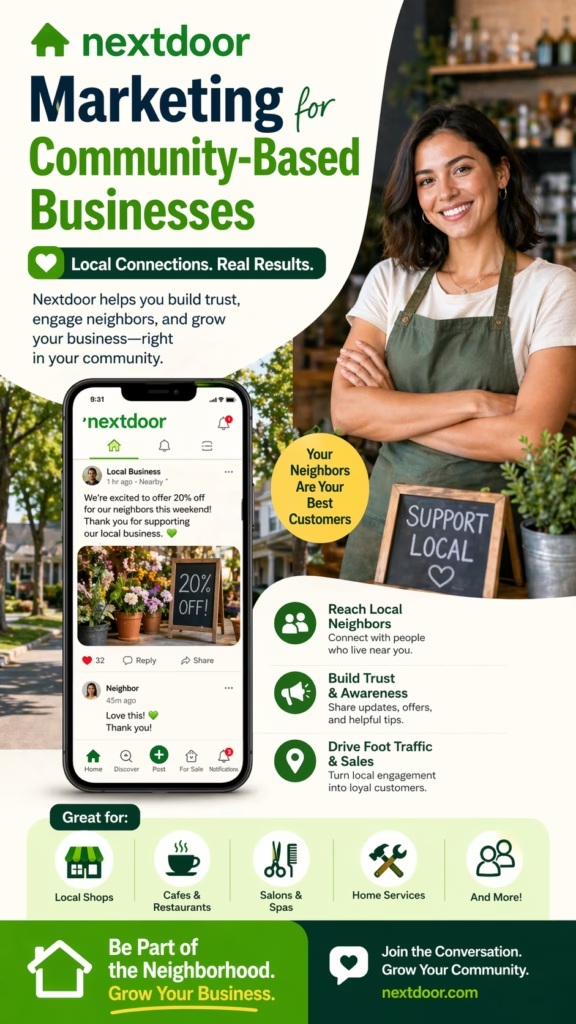
Nextdoor Marketing for Community-Based Businesses
Nextdoor Marketing for Community-Based Businesses explains how neighborhood visibility, local trust, community relevance, and consistent local engagement help businesses become more familiar, more trusted, and more effective at reaching nearby customers.
Introduction
Nextdoor Marketing for Community-Based Businesses is one of the most practical local marketing strategies for companies that depend on trust, neighborhood relevance, and nearby visibility. Many businesses spend too much time thinking about reach in the broadest sense possible, but community-based growth usually comes from something much more specific. It comes from being known, recognized, and trusted in the local areas where real customers live.
That is why neighborhood-centered marketing matters so much. A business that serves real communities needs more than random impressions. It needs attention from people in the area, familiarity with local residents, and a visible presence in the same neighborhoods where decisions are being made. Nextdoor supports that kind of visibility because it is built around community identity rather than broad, generic traffic.
Nextdoor Marketing for Community-Based Businesses works because it places local visibility inside neighborhood-based environments where trust, proximity, and local relevance influence customer attention.
This makes it especially useful for businesses that thrive on word-of-mouth, local reputation, repeat exposure, and geographic trust. Contractors, painters, roofers, cleaners, pet services, mattress stores, wellness providers, real estate professionals, landscapers, movers, and many other community-based businesses often perform best when local people see them as part of the neighborhood, not just another business trying to advertise.
The strength of Nextdoor marketing is not only that it reaches people. It reaches people in a setting where local awareness feels natural. That changes how a business is perceived. Instead of showing up in a random feed, it appears in a local space where neighborhood context matters. That difference can make visibility more meaningful and more likely to build recognition over time.
Main idea: Nextdoor Marketing for Community-Based Businesses helps local brands connect more effectively by combining neighborhood visibility, local trust, and community relevance in one local-focused environment.
Table of Contents
- 1) Why community-based businesses need local visibility
- 2) What makes Nextdoor marketing different
- 3) Why neighborhood context matters in local marketing
- 4) How local trust shapes customer decisions
- 5) Why Nextdoor fits community-based businesses so well
- 6) The value of nearby relevance
- 7) How consistency builds neighborhood familiarity
- 8) Community recognition and local brand strength
- 9) Why Nextdoor supports service businesses effectively
- 10) Why retail and storefront brands benefit too
- 11) Content approaches that feel more local
- 12) Common mistakes in Nextdoor marketing
- 13) A practical workflow for local growth
- 14) Why long-term consistency matters
- 15) Final thoughts
- 16) FAQs
- 17) Extra keywords
1) Why Community-Based Businesses Need Local Visibility
Community-based businesses grow through local recognition. They usually do not need attention from everyone. They need attention from the right people nearby. That means visibility works best when it happens close to the customer, close to the area being served, and close to the actual neighborhood where buying decisions happen. Broad awareness has value, but for local businesses, nearby awareness often matters more.
Nextdoor marketing fits this need because it supports visibility in a local environment instead of a general one. The people seeing the business are far more likely to be relevant to the company’s actual service area. This helps turn impressions into meaningful local awareness instead of wasted attention from people who will never become customers.
Local visibility often helps improve:
- Neighborhood recognition
- Brand familiarity with nearby residents
- Trust through repeated exposure
- Relevance of local impressions
- Potential future customer action
Community-based businesses perform better when the people seeing them are actually part of the communities they want to serve.
2) What Makes Nextdoor Marketing Different
Nextdoor marketing is different because it centers around neighborhoods. Many platforms prioritize entertainment, mass reach, or broad discovery. Nextdoor creates a more local experience. That makes the business visibility feel more grounded in place. When a business appears in a neighborhood-oriented setting, the impression can feel more relevant because the surrounding environment already signals local life and local community.
This difference matters because community-based businesses often rely on trust and recognition more than pure reach. They need to feel familiar and locally established. A platform designed around neighborhoods helps support that type of connection in a more natural way.
Generic visibility = broad reach
Neighborhood visibility = local relevance
Broad reach = more people
Local relevance = better-fit people
The biggest advantage of Nextdoor marketing is not raw reach. It is better local fit.
3) Why Neighborhood Context Matters in Local Marketing
Neighborhood context changes how people interpret business visibility. A business seen inside a local setting often feels more immediate, more credible, and more relevant than a business seen in a generic digital environment. That is because the platform context influences the meaning of the message. In a community-centered setting, even simple visibility can start to feel like local presence.
For community-based businesses, that is powerful. They are not only trying to get attention. They are trying to feel like part of the area. The more a business feels tied to real neighborhood life, the more naturally it can connect with nearby residents.
Nextdoor Marketing for Community-Based Businesses becomes powerful when the business is not just visible locally, but visible inside a neighborhood context that supports trust and familiarity.
4) How Local Trust Shapes Customer Decisions
Local trust shapes decisions because customers usually prefer businesses that feel dependable, familiar, and close to home. This is especially true for home services, health and wellness, personal services, and any category where the customer wants confidence before taking action. Trust is often what separates a business that gets considered from one that gets ignored.
Nextdoor marketing supports this because it helps a business appear where local credibility matters. Repeated neighborhood visibility can strengthen recognition. Recognition can support familiarity. Familiarity can lower hesitation. That makes the business easier to remember and easier to trust when the need appears.
Local trust is one of the strongest drivers of community-based business growth, and neighborhood visibility can play a major role in building it.
5) Why Nextdoor Fits Community-Based Businesses So Well
Community-based businesses usually win through proximity, trust, recognition, and area-specific relevance. Those strengths align naturally with what makes Nextdoor valuable. Instead of pushing a business into a broad audience, Nextdoor helps keep the business connected to nearby communities. That makes the marketing feel more aligned with how local businesses actually grow.
A neighborhood platform helps businesses show up in the same local spaces where residents think about home needs, local shopping, recommendations, services, and community life. That local framing helps support better connection over time.
Nextdoor is especially effective for community-based businesses because both the platform and the business model revolve around local relevance.
6) The Value of Nearby Relevance
Nearby relevance matters because not every impression has equal value. A view from someone in the service area matters more than a view from someone far away. A business that serves real neighborhoods benefits most from being seen by people who actually live nearby and are likely to need local products or services in the future.
Nextdoor marketing helps concentrate visibility in a more locally meaningful way. This improves the quality of exposure. The business is not just being seen. It is being seen by people who are more likely to matter.
Nearby relevance improves local marketing because a local business needs real neighborhood attention, not generic audience size.
7) How Consistency Builds Neighborhood Familiarity
Consistency is one of the most important parts of local marketing. People rarely trust or remember a business after one impression. Familiarity usually grows through repetition. When a business appears consistently in local spaces, it starts to feel more established. That is true even before any direct contact happens.
On Nextdoor, this repeated presence can help a brand feel like part of the neighborhood landscape. Over time, that familiarity can become one of the business’s biggest assets. When local need appears, people are more likely to think of businesses they have seen before.
Nextdoor Marketing for Community-Based Businesses works best when the business is visible often enough to become familiar, not just visible once.
8) Community Recognition and Local Brand Strength
Community recognition is more than awareness. It is the feeling that the business belongs in the local area. That is a powerful form of branding for community-based companies. A local brand becomes stronger when nearby people start to recognize it as part of their everyday environment.
This kind of recognition can support future leads, referrals, visits, and trust. It can also help reduce the friction of first contact because the business no longer feels unfamiliar. Nextdoor supports this by giving businesses repeated opportunities to stay connected to neighborhood attention.
Community recognition often supports:
- Stronger local recall
- More neighborhood familiarity
- Better trust signals
- Higher chance of future contact
- Improved word-of-mouth potential
A strong local brand is often built through repeated community recognition rather than one-time exposure.
9) Why Nextdoor Supports Service Businesses Effectively
Service businesses often depend on trust more than almost any other type of company. People want to know who they are bringing into their homes, who they are hiring, and who they can rely on when something matters. Nextdoor marketing supports this because it helps service providers show up in a local environment where neighborhood context makes trust easier to build.
Painters, roofers, plumbers, HVAC companies, electricians, cleaners, pet services, movers, landscapers, and similar businesses often benefit from being visible inside the communities they serve. It helps them feel closer, more familiar, and more relevant.
Nextdoor helps service businesses by making local trust part of the discovery process instead of leaving the business to rely only on generic advertising.
10) Why Retail and Storefront Brands Benefit Too
Retail and storefront businesses also benefit from local familiarity. Many purchases begin with a simple local question: what is nearby, what feels known, and what feels worth visiting? When a community-based retailer has stronger neighborhood recognition, it becomes easier for local customers to remember that store when a need appears.
Mattress stores, furniture stores, local boutiques, pet supply stores, wellness shops, and similar storefront brands can all benefit from this kind of neighborhood awareness. Nextdoor can help keep the business visible to the people most likely to visit in person.
Retail businesses often grow faster locally when nearby residents already recognize the store as part of the area.
11) Content Approaches That Feel More Local
Businesses usually perform better on neighborhood platforms when their content feels useful, grounded, and community-aware. This does not mean the content has to be casual. It means it should feel relevant to nearby residents rather than overly generic. Community-based businesses connect more effectively when they sound like they understand local needs.
Content can support local connection when it reflects real neighborhood timing, practical value, seasonal relevance, trust-building information, helpful reminders, or business updates that matter to nearby people. The goal is not just to post. The goal is to feel present in a way that fits the local environment.
Local relevance
Useful information
Consistent presence
Professional tone
Neighborhood familiarity
Generic content weakens local connection because it does not feel rooted in the specific communities the business wants to serve.
12) Common Mistakes in Nextdoor Marketing
Many businesses miss the full value of Nextdoor marketing because they approach it with the wrong mindset. They may expect instant results, treat it like a generic ad channel, or fail to stay consistent enough to build recognition. Local marketing usually rewards patience, trust, and relevance more than random bursts of promotion.
Common mistakes include:
- Using generic messaging with no neighborhood relevance
- Posting inconsistently
- Ignoring trust-building opportunities
- Focusing only on impressions instead of local familiarity
- Failing to present the business professionally
- Forgetting that neighborhood context shapes perception
- Expecting broad-platform behavior from a local platform
Big mistake: treating Nextdoor marketing like standard advertising instead of treating it like a long-term neighborhood visibility strategy.
13) A Practical Workflow for Local Growth
If a business wants to apply Nextdoor Marketing for Community-Based Businesses in a practical way, it helps to follow a local-first process.
Step 1: Define the neighborhoods and service areas that matter most
Step 2: Build a professional local presence
Step 3: Use messaging that feels useful and community-relevant
Step 4: Stay consistent so recognition can build over time
Step 5: Focus on trust and familiarity, not just views
Step 6: Align the business with neighborhood needs and timing
Step 7: Reinforce local visibility repeatedly
Step 8: Improve local relevance and brand familiarity together
This works because community-based business growth usually comes from repeated local relevance, not from one-time broad exposure. The business needs to feel known in the area. That is what this process supports.
The strongest Nextdoor marketing results usually come from businesses that treat local visibility as a trust-building system rather than a quick traffic tactic.
14) Why Long-Term Consistency Matters
Long-term consistency matters because neighborhood familiarity compounds. A business that stays visible and locally relevant over time becomes easier to remember. That memory creates value. Even if local residents do not need the business immediately, repeated exposure can make the company the first one they think of later.
This is one of the biggest reasons Nextdoor marketing can be so powerful for community-based businesses. It supports the type of steady local awareness that strengthens trust, improves recognition, and keeps the brand connected to the communities it serves. Over time, that can become a major competitive advantage.
Long-term local visibility builds stronger results because trust and recognition usually grow through repetition, not instant bursts.
15) Final Thoughts
Nextdoor Marketing for Community-Based Businesses is powerful because it aligns with how local business growth really happens. Community-based companies do not just need attention. They need relevant attention from nearby people who are likely to become real customers. They need trust, familiarity, and neighborhood recognition. Nextdoor supports all of those goals by placing business visibility inside a local environment where community relevance matters.
The businesses that benefit most usually understand that local growth is not only about promotion. It is about presence. A business that feels present in the neighborhood becomes easier to remember and easier to trust. That is the deeper value of community-based marketing. It helps the business feel like part of the area rather than just another company trying to sell something.
Final takeaway: Nextdoor Marketing for Community-Based Businesses works by combining neighborhood visibility, local trust, repeated familiarity, and area-specific relevance so businesses can build stronger connections with the communities they serve.
16) FAQs
1) What is Nextdoor marketing for community-based businesses?
It is a local marketing strategy focused on neighborhood visibility, trust, and relevance for businesses that serve nearby communities.
2) Why is Nextdoor useful for local businesses?
Because it provides local exposure in a neighborhood-centered environment where nearby residents matter most.
3) Can Nextdoor marketing help build trust?
Yes. Consistent local visibility can help businesses feel more familiar and more credible.
4) What types of businesses benefit most?
Home services, local retailers, wellness brands, pet services, contractors, and other businesses that depend on nearby customers often benefit strongly.
5) What is the biggest mistake businesses make?
They treat Nextdoor like a generic ad platform instead of a neighborhood trust platform.
6) Why does neighborhood visibility matter so much?
Because nearby awareness is more valuable to local businesses than broad untargeted attention.
7) Does proximity affect marketing quality?
Yes. The closer the audience is to the service area, the more meaningful the visibility becomes.
8) Why is consistency important?
Because local familiarity usually builds through repeated exposure over time.
9) Can service businesses benefit more than others?
Often yes, because service businesses rely heavily on local trust and neighborhood confidence.
10) Can retail stores benefit too?
Yes. Storefront brands gain value when nearby residents recognize them before they are ready to buy.
11) What kind of content works best?
Content that feels useful, local, relevant, and professionally aligned with neighborhood needs tends to work best.
12) Why do generic posts underperform?
Because they do not feel rooted in the actual community the business wants to reach.
13) Is Nextdoor marketing only about direct leads?
No. It also supports familiarity, trust, and long-term local brand recognition.
14) How does community recognition help business growth?
It makes the business easier to remember and easier to trust when a future need appears.
15) Why is local trust so important?
Because many customers prefer businesses that feel dependable and familiar within their area.
16) Does repeated visibility improve local memory?
Yes. Businesses that appear consistently are more likely to stay top of mind.
17) What weakens Nextdoor marketing performance?
Inconsistency, generic messaging, poor relevance, and lack of trust-building usually weaken performance.
18) Is broad reach always better than local reach?
Not for community-based businesses. Local relevance often matters more than total audience size.
19) Why do community-based businesses need neighborhood fit?
Because local customers respond more strongly when the business feels connected to their area.
20) Can Nextdoor support word-of-mouth value?
Yes. Neighborhood familiarity can strengthen the conditions that support recommendations and local credibility.
21) Should businesses expect instant results?
Usually not. Strong local recognition often builds over time through steady presence.
22) What should businesses focus on most?
They should focus on local relevance, trust, consistency, and neighborhood familiarity.
23) Why does community context matter?
Because it changes how business visibility feels and can make local communication more credible.
24) Can Nextdoor make a business feel more established?
Yes. A visible and consistent presence can make a business seem more rooted in the community.
25) What is the core principle behind Nextdoor Marketing for Community-Based Businesses?
The core principle is that neighborhood visibility becomes more valuable when it is combined with local trust, relevance, and repeated familiarity.
17) Extra Keywords
- Nextdoor Marketing for Community-Based Businesses
- Nextdoor marketing
- community-based business marketing
- neighborhood marketing
- local business visibility
- Nextdoor local leads
- community trust marketing
- local neighborhood advertising
- community business promotion
- Nextdoor business strategy
- local customer connection
- neighborhood brand awareness
- local business trust
- community-based local marketing
- Nextdoor for service businesses
- Nextdoor for retail businesses
- local business familiarity
- neighborhood customer engagement
- community-first marketing
- local relevance marketing
- Nextdoor neighborhood visibility
- local business recognition
- community-based lead generation
- local audience marketing strategy
- neighborhood trust building













