

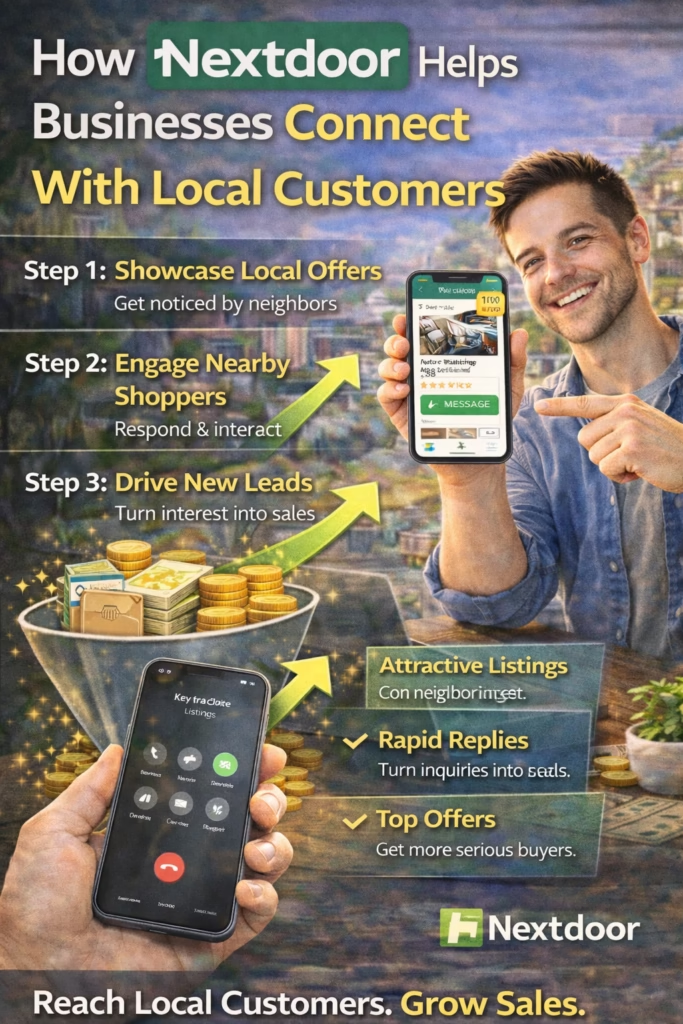
How Nextdoor Helps Businesses Connect With Local Customers
How Nextdoor Helps Businesses Connect With Local Customers explains how businesses can use neighborhood visibility, community trust, local relevance, and consistent engagement to build stronger local recognition and connect with nearby customers more effectively.
Introduction
How Nextdoor Helps Businesses Connect With Local Customers is one of the most important questions local brands can explore when trying to build stronger neighborhood awareness. Many businesses spend time chasing broad reach, but local growth often comes from something much simpler: being visible and trusted in the communities right around them. That is exactly why a neighborhood-focused platform matters. Nextdoor puts businesses closer to the people they actually want to reach.
For many local companies, visibility is not the real problem. The deeper challenge is relevance. A business may advertise in many places, but if the people seeing it are not nearby, not familiar with the area, or not actively looking for local help, that exposure can feel wasted. Nextdoor changes that dynamic by placing businesses inside a community-based environment where location, trust, and neighborhood familiarity shape how people respond.
Nextdoor helps businesses connect with local customers by creating visibility inside neighborhood-driven spaces where proximity, trust, and local relevance influence who gets noticed and remembered.
This matters across countless industries. Home services, painters, roofers, plumbers, mattress stores, cleaners, landscapers, real estate professionals, pet services, moving companies, wellness businesses, and many more depend heavily on local trust. They do not just need impressions. They need recognition from nearby people who are likely to become actual customers. A platform designed around neighborhoods can support that goal far better than broad, untargeted reach alone.
That is why businesses that understand local growth often pay close attention to platforms that mirror real local behavior. People rely on community opinions, nearby recommendations, and familiar neighborhood context when deciding who to call, visit, or hire. Nextdoor supports that behavior by giving businesses a space where local connection can happen more naturally.
Main idea: Nextdoor helps businesses connect with local customers by making local visibility more relevant, more community-centered, and more trust-driven than generic exposure on broader platforms.
Table of Contents
- 1) Why local businesses need neighborhood-based visibility
- 2) What makes Nextdoor different from broader social platforms
- 3) How community context improves local connection
- 4) Why local trust matters so much in customer decisions
- 5) How Nextdoor supports neighborhood awareness
- 6) Why proximity increases marketing relevance
- 7) Recommendations and local credibility
- 8) How consistent presence improves recognition
- 9) Why local businesses benefit from community alignment
- 10) Content types that help businesses feel more local
- 11) How Nextdoor can support service-based businesses
- 12) Why retail and storefront businesses can benefit too
- 13) Common mistakes businesses make on Nextdoor
- 14) A practical workflow for stronger Nextdoor visibility
- 15) Final thoughts
- 16) FAQs
- 17) Extra keywords
1) Why Local Businesses Need Neighborhood-Based Visibility
Local businesses grow differently than national brands do. They do not usually need everyone to know who they are. They need the right nearby people to know who they are. That difference changes everything. A business serving a city, suburb, or neighborhood often benefits most from being seen by residents who are physically close, familiar with the area, and likely to need local services at some point. Neighborhood-based visibility helps make marketing more practical.
That is where Nextdoor becomes valuable. Instead of placing businesses into a broad digital crowd, it allows them to become part of the local conversation. That does not just improve exposure. It improves the quality of attention. Being seen by nearby residents is more meaningful than being seen by random audiences who may never become real customers.
Neighborhood-based visibility often improves:
- Local recognition
- Trust with nearby residents
- Relevance of impressions
- Community familiarity
- Likelihood of future local inquiries
Businesses connect more effectively with local customers when visibility happens in the same communities those customers actually live in.
2) What Makes Nextdoor Different From Broader Social Platforms
What makes Nextdoor different is its local structure. Many platforms are built around entertainment, broad discovery, or personal networking. Nextdoor is built around neighborhoods. That means the environment itself is shaped by geography, local relevance, and community interaction. For businesses, this matters because it changes how attention works. A message seen in a local neighborhood setting often feels more immediate and more personally relevant than one seen in a broad social feed.
Broader platforms can still be useful, but Nextdoor provides a different kind of opportunity. It creates a setting where businesses can feel more locally embedded. Instead of only fighting for attention, they can build recognition in the exact areas they serve. That local framing helps turn marketing from a visibility game into a familiarity game.
Broad platform = wide attention
Neighborhood platform = local attention
Wide attention = more reach
Local attention = more relevance
A business can get plenty of impressions elsewhere and still miss the deeper value of neighborhood-specific trust and local relevance.
3) How Community Context Improves Local Connection
Community context changes how people process information. A recommendation, post, or business presence inside a neighborhood environment does not feel like random advertising in the same way. It feels closer to the real world. That matters because local buying decisions are often emotional as much as practical. People want to feel that a business belongs in the area, understands the community, and is genuinely nearby.
When businesses show up in a neighborhood-focused space, they benefit from that context. They are not just another brand speaking at people. They are participating inside a local environment where nearby homeowners, families, renters, and residents already spend time discussing the area. That naturally strengthens connection.
Nextdoor helps businesses connect with local customers by surrounding business visibility with neighborhood context, which makes local communication feel more relevant and more trusted.
4) Why Local Trust Matters So Much in Customer Decisions
Local trust is one of the biggest drivers of local business growth. People do not only choose based on price or convenience. They also choose based on confidence. They want to know that the business is real, nearby, dependable, and aligned with community expectations. Nextdoor can support that trust because it is rooted in neighborhood visibility and local interaction.
This matters even more in service categories where a business is entering someone’s home, advising a purchase, or solving a stressful problem. In those moments, trust often becomes more important than flashy messaging. A business that feels familiar to the neighborhood starts with an advantage. That familiarity can come from repeated exposure, local relevance, or community recognition.
Nextdoor strengthens local connection because trust is easier to build when a business feels present inside the customer’s own community environment.
5) How Nextdoor Supports Neighborhood Awareness
Neighborhood awareness means more than being recognized once. It means becoming part of the local mental map. When people think about services, stores, or solutions in their area, businesses with consistent local visibility are more likely to come to mind. Nextdoor can help businesses reach that position by keeping them present where neighborhood attention is already focused.
That awareness compounds over time. A single impression may not create action immediately, but repeated local exposure can build familiarity. Then, when a real need appears, the business already feels known. This is one of the most underrated parts of local marketing. Many conversions do not begin with a cold first impression. They begin with repeated recognition.
Nextdoor helps businesses connect with local customers by supporting repeated neighborhood visibility, which often turns into future recognition and stronger response when local need appears.
6) Why Proximity Increases Marketing Relevance
Proximity matters because local customers often prefer businesses that feel close, convenient, and familiar to their immediate area. Even when two businesses offer similar services, the one that feels more local often wins attention. Nextdoor naturally supports that preference because it emphasizes neighborhood structure and nearby residents.
For a business, this means less wasted messaging. Instead of broadcasting to broad audiences, it can stay relevant to people in the service area. That increases the practical value of visibility. More of the people seeing the business are more likely to matter.
Proximity makes marketing more effective because a nearby business usually feels more convenient, more relevant, and more trustworthy to local customers.
7) Recommendations and Local Credibility
Recommendations are powerful because they reduce uncertainty. When people choose a local business, they often want reassurance that someone nearby already knows, trusts, or has heard of that business. Nextdoor is especially valuable in this area because neighborhood-based environments naturally support local word-of-mouth dynamics.
Even when a business is not receiving direct recommendations in every moment, simply existing in a platform where community-driven trust is normal can strengthen how it is perceived. Businesses that maintain a consistent, local, professional presence are often in a better position when community conversations or neighborhood referrals happen.
Businesses connect more strongly on Nextdoor because neighborhood credibility and local recommendations can make a business feel safer to contact or consider.
8) How Consistent Presence Improves Recognition
Consistency matters because local awareness is rarely built in a single moment. People usually need repeated exposure before a business becomes memorable. On a neighborhood platform, this repeated exposure can help a business feel like part of the local landscape rather than a stranger appearing once and disappearing again.
That is why businesses that approach local marketing seriously often focus on consistency rather than random bursts of activity. A steady local presence supports memory. Memory supports recognition. Recognition supports trust. And trust makes future customer action easier.
Consistent presence helps businesses connect with local customers because repeated local exposure makes the brand easier to remember and easier to trust later.
9) Why Local Businesses Benefit From Community Alignment
Community alignment means that a business does not just appear locally. It feels like it belongs locally. That feeling matters because local customers often prefer businesses that understand the area, speak in a relevant way, and feel connected to neighborhood needs. Nextdoor makes this more possible because its structure naturally keeps business visibility grounded in local life.
Businesses that communicate with community relevance tend to perform better than businesses that sound generic. A local audience can sense when messaging feels too broad or disconnected from neighborhood reality. The more aligned a business feels with the local setting, the stronger its connection can become.
Local audience
Local message
Local relevance
Local familiarity
Stronger connection
One reason businesses underperform locally is that their message sounds generic instead of connected to real neighborhood context.
10) Content Types That Help Businesses Feel More Local
Businesses usually connect better on neighborhood-focused platforms when their content feels useful, grounded, and community-aware. That does not mean every message must be informal. It means the content should feel relevant to nearby people rather than written for an anonymous internet audience. A local business often benefits most from content that signals practical value, professional presence, and neighborhood understanding.
Examples of local-feeling content may include helpful service reminders, seasonal neighborhood relevance, local business updates, professional introductions, business milestones, community-oriented announcements, or trust-building information. The common thread is that the content feels tied to real people in a real area.
Content that often feels more local includes:
- Neighborhood-relevant updates
- Seasonal service reminders
- Local introductions and trust-building posts
- Community-focused business announcements
- Educational content tied to local needs
Businesses feel more connected on Nextdoor when their content reflects the real needs, timing, and interests of nearby residents.
11) How Nextdoor Can Support Service-Based Businesses
Service-based businesses often depend on local trust more than almost any other category. When someone needs a painter, cleaner, roofer, electrician, HVAC company, mobile detailer, landscaper, or handyman, they are usually looking for someone nearby who feels credible and accessible. Nextdoor supports this need because it helps place the business inside a local community environment where residents already think in neighborhood terms.
That kind of positioning can make service businesses feel more approachable. The customer is not just seeing a business in an ad feed. They are seeing a business within a familiar local setting. That difference can improve how the business is perceived before any direct contact even happens.
Nextdoor helps service businesses connect with local customers by making local trust and neighborhood familiarity part of the business discovery experience.
12) Why Retail and Storefront Businesses Can Benefit Too
Retail and storefront businesses can benefit from Nextdoor as well because local shopping decisions are often influenced by convenience, familiarity, and neighborhood recognition. A mattress store, furniture store, boutique, wellness shop, pet supply business, or local retailer gains value from being known within the nearby community. Many buying decisions begin with a simple thought: what is close, trusted, and worth visiting?
Nextdoor helps support that awareness. It gives nearby residents more chances to become familiar with the store before they ever walk in. When the need arises, recognition can shorten the path between awareness and action.
Retail businesses connect better with local customers when nearby residents already recognize the store as part of the local area.
13) Common Mistakes Businesses Make on Nextdoor
Many businesses miss the value of Nextdoor because they approach it the wrong way. They may treat it like a generic ad platform, post inconsistently, ignore local tone, or fail to align their presence with community expectations. The result is that the business appears, but it does not actually connect.
Common mistakes include:
- Posting generic content with no local relevance
- Appearing inconsistently and disappearing for long periods
- Ignoring the importance of neighborhood trust
- Using overly broad messaging instead of local language
- Failing to present the business professionally
- Expecting instant results without building recognition
- Treating community presence as purely transactional
Big mistake: trying to force broad marketing tactics onto a neighborhood platform instead of building local familiarity and community trust over time.
14) A Practical Workflow for Stronger Nextdoor Visibility
If a business wants to apply How Nextdoor Helps Businesses Connect With Local Customers in a practical way, it helps to follow a simple local-first workflow.
Step 1: Clarify the exact neighborhoods or service areas that matter most
Step 2: Build a professional and locally relevant business presence
Step 3: Use content that feels useful and community-aware
Step 4: Stay consistent so local recognition can grow
Step 5: Focus on trust, not just impressions
Step 6: Align messaging with real neighborhood needs
Step 7: Reinforce visibility over time instead of expecting one post to do everything
Step 8: Keep improving local familiarity and local relevance together
This works because local connection usually happens through repeated relevance, not random exposure. Businesses that stay visible, credible, and community-aligned tend to build stronger local response over time.
The strongest Nextdoor results usually come from businesses that treat neighborhood visibility as a trust-building system, not just an advertising shortcut.
15) Final Thoughts
How Nextdoor Helps Businesses Connect With Local Customers comes down to one clear principle: local businesses grow more effectively when they become known in the communities they serve. Nextdoor supports that process by creating a setting where neighborhood visibility, local trust, and community relevance matter. Instead of simply being seen, a business can become familiar.
That familiarity is powerful. It helps businesses feel more local, more credible, and more connected to real nearby residents. When customers are choosing who to contact, visit, or recommend, the businesses that feel rooted in the community often have the advantage. That is why neighborhood-based marketing remains so important for long-term local growth.
Final takeaway: Nextdoor helps businesses connect with local customers by combining neighborhood visibility with trust, relevance, and repeated local familiarity, making it easier for nearby residents to notice, remember, and feel comfortable choosing the business.
16) FAQs
1) How does Nextdoor help businesses connect with local customers?
It helps by placing businesses in a neighborhood-focused environment where local visibility and community relevance matter more.
2) Why is Nextdoor useful for local marketing?
Because it centers attention around nearby residents rather than broad, untargeted audiences.
3) Can small businesses build trust on Nextdoor?
Yes. A consistent and professional local presence can help small businesses feel more credible to nearby residents.
4) What makes Nextdoor different from other platforms?
Its neighborhood structure makes local visibility more relevant and community-driven.
5) What is the biggest mistake businesses make on Nextdoor?
They often treat it like a generic ad channel instead of a neighborhood trust platform.
6) Why does neighborhood context matter so much?
Because local customers respond more strongly when a business feels connected to their real community.
7) Does Nextdoor help with local recognition?
Yes. Repeated local visibility can improve neighborhood awareness and familiarity.
8) Why is local trust important for business growth?
Because people often choose nearby businesses they feel confident are real, dependable, and familiar.
9) Can service businesses benefit from Nextdoor?
Yes. Service businesses often rely heavily on local trust and neighborhood familiarity.
10) Can retail businesses benefit too?
Yes. Retail stores can use local recognition to stay top of mind with nearby shoppers.
11) Why is consistency important on Nextdoor?
Because local trust and recognition usually build over repeated exposure, not one-time activity.
12) What kind of content works best?
Content that feels useful, local, professional, and relevant to nearby residents usually works best.
13) Does proximity really affect local response?
Yes. Businesses that feel nearby often seem more convenient and more relevant to local customers.
14) Can Nextdoor support word-of-mouth dynamics?
Yes. Its neighborhood setting naturally aligns with local recommendations and community-driven credibility.
15) Why do generic posts underperform?
Because they do not feel grounded in local reality or neighborhood needs.
16) Is Nextdoor only about direct selling?
No. It can also help businesses build familiarity and trust before any direct action happens.
17) What should businesses focus on most?
They should focus on local relevance, trust, consistency, and professional community presence.
18) Can businesses expect instant results?
Usually not. Local familiarity often builds gradually through repeated exposure and relevance.
19) Why do local platforms sometimes outperform broader ones?
Because they offer more relevant attention from people who actually live nearby.
20) Does neighborhood familiarity influence buying decisions?
Yes. People often choose businesses that feel known and local over unfamiliar options.
21) Can Nextdoor help businesses feel more established?
Yes. A steady local presence can make a business appear more rooted in the community.
22) What weakens a business’s Nextdoor performance?
Inconsistency, generic messaging, weak local relevance, and lack of trust-building usually weaken results.
23) Is local relevance more important than broad reach?
For many local businesses, yes. Relevant local attention often creates more value than broad untargeted exposure.
24) Why do community-based platforms matter for local businesses?
Because they reflect how real local decisions are often made through trust, familiarity, and nearby awareness.
25) What is the core principle behind how Nextdoor helps businesses connect with local customers?
The core principle is that neighborhood visibility becomes more valuable when it is combined with trust, relevance, and community familiarity.
17) Extra Keywords
- How Nextdoor Helps Businesses Connect With Local Customers
- Nextdoor for business
- local business marketing
- neighborhood marketing
- community marketing
- Nextdoor local leads
- local customer trust
- Nextdoor business visibility
- local business awareness
- neighborhood customer connection
- Nextdoor community engagement
- local business recognition
- Nextdoor neighborhood trust
- community-based business marketing
- Nextdoor small business strategy
- local service business marketing
- Nextdoor local audience
- local brand familiarity
- neighborhood advertising strategy
- local relevance marketing
- Nextdoor business growth
- community trust for businesses
- local business community presence
- Nextdoor for neighborhood visibility
- local customer acquisition strategy













