Nextdoor Lead Generation for Solar Companies
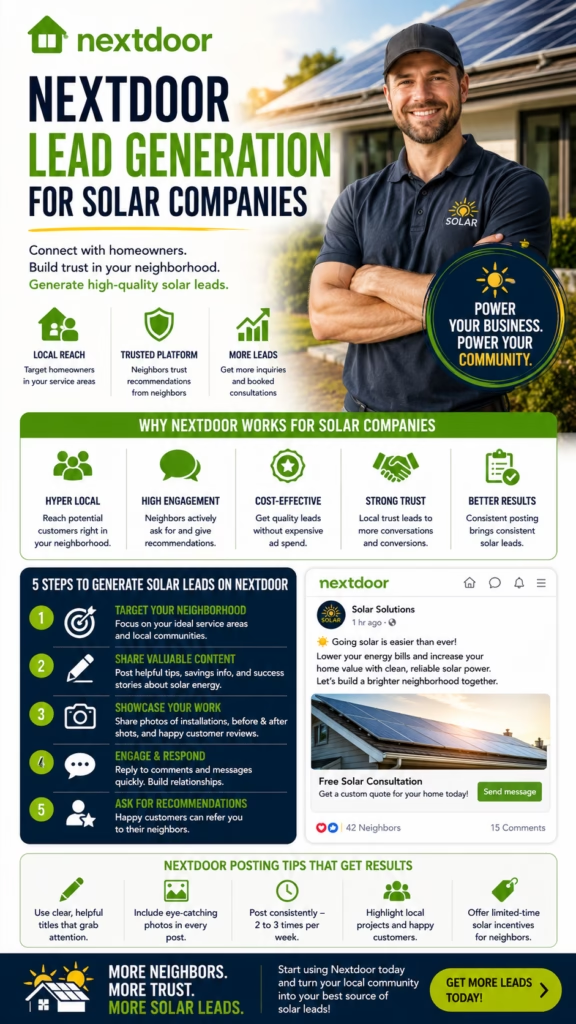
Nextdoor Lead Generation for Solar Companies explains how solar businesses can use neighborhood trust, Business Pages, helpful posts, recommendations, local offers, consultation-focused calls-to-action, homeowner education, lead tracking, and fast follow-up to generate more qualified solar leads.
Introduction
Nextdoor Lead Generation for Solar Companies is powerful because solar is a local trust-based decision. Homeowners rarely choose a solar company from one ad alone. They want to understand cost, savings potential, financing options, installation timelines, equipment quality, roof fit, warranties, local incentives, and whether the company can be trusted.
Nextdoor gives solar companies a neighborhood-focused environment where homeowners ask questions, share recommendations, discuss home improvements, and look for trusted local providers. This makes it a strong channel for building familiarity before a homeowner books a consultation.
Nextdoor lead generation works for solar companies when content educates homeowners, builds trust, and guides interested neighbors toward a clear consultation.
Solar companies should not use Nextdoor only for aggressive sales posts. A better approach is to become a helpful local resource. Posts about solar basics, utility bill questions, roof readiness, battery storage, financing questions, net metering topics, and installation timelines can warm up homeowners before they are ready to request a quote.
Because solar is a higher-consideration purchase, the best Nextdoor strategy combines education, social proof, neighborhood recommendations, local offers, strong Business Page details, and fast follow-up. When these pieces work together, Nextdoor can support a steady flow of local solar conversations.
Main idea: Nextdoor Lead Generation for Solar Companies is about turning neighborhood trust and homeowner education into qualified solar consultations.
Table of Contents
- 1) Why Nextdoor can work for solar companies
- 2) What solar leads look like on Nextdoor
- 3) Why neighborhood trust matters for solar
- 4) Setting up a Nextdoor Business Page for solar
- 5) Building recommendations for solar companies
- 6) Solar education content that attracts homeowners
- 7) Nextdoor posts for solar lead generation
- 8) Local offers and consultation calls-to-action
- 9) Nextdoor Ads for solar companies
- 10) Solar keywords and neighborhood topics
- 11) Trust signals for solar companies
- 12) Roof, battery, and utility-bill content angles
- 13) Safe wording for solar savings and financing
- 14) Lead qualification questions for solar prospects
- 15) Follow-up system for solar consultations
- 16) Tracking Nextdoor solar leads
- 17) Common Nextdoor mistakes solar companies make
- 18) Nextdoor solar lead generation checklist
- 19) Final thoughts
- 20) FAQs
- 21) Extra keywords
1) Why Nextdoor Can Work for Solar Companies
Nextdoor can work for solar companies because solar buyers often rely on local trust. Homeowners want to know whether a solar company is reputable, whether other people nearby had a good experience, and whether solar makes sense for homes in their area.
Nextdoor is designed around neighborhoods, recommendations, local conversations, and nearby businesses. That creates an opportunity for solar companies to educate homeowners, answer common questions, and become familiar in the communities they serve.
Nextdoor can help solar companies generate:
- Solar consultation requests
- Roof solar assessment leads
- Battery storage inquiries
- Utility bill review requests
- Homeowner education conversations
- Referral-based leads
- Local recommendation leads
- Neighborhood awareness
- Financing question leads
- Solar quote requests
Nextdoor gives solar companies a way to build trust before homeowners are ready to request a quote.
2) What Solar Leads Look Like on Nextdoor
Solar leads on Nextdoor may start with questions instead of immediate quote requests. A homeowner may ask whether solar is worth it, how panels affect roof work, whether batteries make sense, how financing works, or whether a neighbor recommends a local installer.
The best solar leads usually include homeownership status, location, average electric bill, roof condition, timeline, and interest level. A strong Nextdoor strategy should guide homeowners toward sharing those details in a consultation.
Strong solar lead signals:
Asks about solar consultation
Mentions high utility bills
Asks about battery storage
Owns a home
Shares city or neighborhood
Asks about roof suitability
Wants to compare solar options
Asks about financing
Mentions timeline
Requests a quote or call
A better Nextdoor solar lead is someone who owns a home, has a real energy question, and is open to a consultation.
3) Why Neighborhood Trust Matters for Solar
Neighborhood trust matters because solar is a major home decision. A homeowner may hesitate if they feel the company is unknown, too aggressive, or unclear. Recommendations from nearby homeowners can make the decision feel safer.
Solar companies can build trust by sharing local installation examples, answering questions honestly, explaining the process clearly, and avoiding exaggerated savings claims.
Trust factors that matter for solar:
- Local recommendations
- Clear Business Page
- Real project photos
- Local service area
- Transparent consultation process
- Licensed or certified team details if applicable
- Equipment and warranty information
- Professional replies
- Educational posts
- No exaggerated claims
Solar lead conversion improves when homeowners feel educated instead of pressured.
4) Setting Up a Nextdoor Business Page for Solar
A Nextdoor Business Page gives a solar company a local profile where homeowners can learn about the business, services, service areas, contact options, and recommendations. A complete page can improve trust before a homeowner starts a conversation.
The page should clearly explain the company’s solar services, consultation process, roof assessment options, battery storage services, financing guidance, and service locations.
Solar Business Page checklist:
Business name
Logo
Service category
Solar services
Battery storage services
Service areas
Phone number
Website
Business hours
Consultation CTA
Project photos
Recommendations
Warranty or equipment info if applicable
A complete Business Page helps a solar company look local, legitimate, and easy to contact.
5) Building Recommendations for Solar Companies
Recommendations can be extremely valuable for solar companies because the service is trust-heavy and often referral-driven. When homeowners see that neighbors had a positive solar experience, they may be more willing to schedule a consultation.
Solar companies should ask satisfied customers for honest recommendations after installation, after inspection milestones, or after a positive consultation experience. The request should be simple, polite, and never forced.
Recommendation-building process:
- Deliver a strong customer experience
- Ask happy customers politely
- Share a direct recommendation link when possible
- Thank customers professionally
- Highlight local success stories
- Respond to questions
- Avoid fake recommendations
- Build trust over time
- Track referral-based leads
- Use recommendations in follow-up conversations
Recommendations help solar companies turn happy customers into neighborhood proof.
6) Solar Education Content That Attracts Homeowners
Solar education content works well because many homeowners are interested but unsure. They may not know if their roof qualifies, whether their utility bill is high enough, how batteries work, what incentives may be available, or how long the installation process takes.
Educational posts can attract homeowners without sounding pushy. The goal is to answer real questions and invite people to request a personalized review.
Solar education topics:
How solar consultations work
What makes a roof solar-ready
Questions to ask before going solar
How battery storage fits into a home
What affects solar savings
How utility bills are reviewed
Solar panel placement basics
Solar installation timeline
Common solar myths
How to compare solar proposals
Solar education builds trust because it helps homeowners understand the decision before booking a consultation.
7) Nextdoor Posts for Solar Lead Generation
Nextdoor posts for solar lead generation should be local, helpful, and easy to act on. A solar company can post homeowner tips, local project examples, consultation availability, battery storage education, utility bill review offers, and answers to common solar questions.
The best posts create conversation without overwhelming the reader. Each post should focus on one topic and one next step.
Solar post ideas for Nextdoor:
- “Is your roof a good fit for solar?”
- “What to know before getting a solar quote”
- “Battery storage basics for homeowners”
- “How a solar consultation works”
- “Questions to ask any solar company”
- “Local solar project spotlight”
- “Utility bill review appointments available”
- “Solar myths homeowners should know”
- “Roof age and solar: what matters?”
- “Neighborhood solar consultation openings”
Nextdoor posts work best when they educate homeowners and invite a low-pressure next step.
8) Local Offers and Consultation Calls-to-Action
Local offers can help solar companies turn interest into action. Instead of using aggressive sales language, solar companies can promote educational offers such as free solar consultations, utility bill reviews, roof-readiness checks, battery storage reviews, or proposal comparisons.
The call-to-action should be simple and clear. Homeowners should know exactly what happens next after they message or click.
Solar CTA examples:
Schedule a free solar consultation
Request a utility bill review
Ask about roof solar readiness
Message for a local solar assessment
Book a battery storage consultation
Compare your current energy costs
Request a no-pressure solar quote
Check available appointment times
Ask how solar may fit your home
Start with a quick homeowner review
Solar offers convert better when they feel educational, local, and low-pressure.
9) Nextdoor Ads for Solar Companies
Nextdoor Ads can help solar companies reach more homeowners in specific neighborhoods or service areas. Paid campaigns should be built around clear lead goals such as consultation requests, quote requests, bill reviews, or battery storage inquiries.
Solar ads should avoid exaggerated promises. The best ad copy uses trust, education, local relevance, and a clear next step.
Nextdoor solar ad elements:
- Clear solar consultation offer
- Local neighborhood targeting
- Simple homeowner-focused headline
- Trust-building image
- Educational copy
- No exaggerated savings claims
- Strong landing page
- Call tracking
- Lead source tracking
- Fast appointment follow-up
Nextdoor Ads for solar companies should focus on trust and consultations, not hype.
10) Solar Keywords and Neighborhood Topics
Solar keywords help organize posts, Business Page content, and offers. On Nextdoor, keywords should still sound natural and helpful. Posts should read like local homeowner education, not keyword-stuffed ads.
Good topics include solar consultation, solar panels, solar battery, home solar, utility bill review, solar quote, roof solar assessment, energy savings review, and local solar installer.
Solar keyword ideas:
Solar consultation
Solar company near me
Local solar installer
Home solar panels
Solar panel installation
Solar battery storage
Utility bill review
Solar quote
Roof solar assessment
Residential solar
Solar financing questions
Solar energy consultation
Solar keywords work best when they support helpful content instead of sounding forced.
11) Trust Signals for Solar Companies
Trust signals are critical for solar companies because homeowners need confidence before scheduling a consultation. A solar company should make it clear who they are, where they operate, what process they use, and what customers can expect.
Trust signals can include local project photos, recommendations, business credentials, warranties, equipment details, service areas, consultation steps, reviews, and professional communication.
Solar trust signals include:
- Business name
- Website
- Local service area
- Customer recommendations
- Project photos
- Equipment information
- Warranty information
- Consultation process
- Licensed or certified details if applicable
- Professional follow-up
Solar trust is built by showing proof, explaining the process, and avoiding pressure-heavy messaging.
12) Roof, Battery, and Utility-Bill Content Angles
Solar companies can generate leads by creating content around the three questions homeowners often care about: Is my roof a good fit? Should I consider battery storage? Could my utility bill make solar worth exploring?
These topics are practical and homeowner-friendly. They also create natural paths into a consultation.
High-interest solar content angles:
Roof age and solar readiness
Shade and panel placement
Battery storage basics
Backup power questions
Utility bill review
Monthly payment questions
Solar proposal comparison
Solar installation timeline
Panel and inverter basics
Maintenance expectations
Solar content converts when it answers the questions homeowners already have before they talk to a sales rep.
13) Safe Wording for Solar Savings and Financing
Solar companies should be careful with savings and financing language. Avoid guaranteed savings, unrealistic claims, or promises that may not apply to every homeowner. Solar outcomes can depend on location, utility rates, roof condition, shade, energy usage, incentives, financing terms, and equipment design.
Safer wording focuses on reviewing options, estimating potential savings, comparing current energy costs, and helping homeowners understand whether solar may make sense for their home.
Safer solar wording examples:
- Review your solar options
- Estimate potential savings
- Compare your current utility costs
- See whether solar may fit your home
- Request a personalized consultation
- Explore available financing options
- Ask about local solar incentives
- Understand roof readiness
- Review battery storage options
- Get a no-pressure solar quote
Important: Solar messaging should be clear, accurate, and personalized instead of promising guaranteed results.
14) Lead Qualification Questions for Solar Prospects
Lead qualification helps solar companies separate casual interest from serious homeowner opportunities. A good follow-up should ask for basic details without overwhelming the prospect.
The goal is to understand whether the person owns the home, where it is located, what their electric bill looks like, whether the roof is suitable, and when they may want to explore installation.
Solar qualification questions:
Do you own the home?
What city or neighborhood are you in?
What is your average monthly electric bill?
How old is your roof?
Is your roof shaded most of the day?
Are you interested in battery storage?
Are you comparing quotes already?
What timeline are you considering?
Would you prefer a call or online consultation?
Can you share a recent utility bill for review?
Good qualification questions help solar companies move interested homeowners toward the right consultation.
15) Follow-Up System for Solar Consultations
Follow-up is where Nextdoor solar leads become appointments. Homeowners may ask questions casually at first, but a clear response can guide them toward a consultation.
The best follow-up should thank the homeowner, answer the question, ask one or two qualifying questions, and offer a simple next step.
Simple solar follow-up script:
“Thanks for reaching out. We can help review whether solar may make sense for your home. What city are you in, and do you own the property? If you have a recent electric bill, we can use that to start a more accurate consultation.”
Nextdoor solar leads convert better when follow-up is fast, helpful, and consultation-focused.
16) Tracking Nextdoor Solar Leads
Tracking helps solar companies understand whether Nextdoor is producing real opportunities. Because solar has a longer buying cycle, the business should track more than clicks or likes. It should track conversations, qualified leads, consultations, proposals, contracts, and referrals.
Lead tracking should include the post, ad, neighborhood, offer, message source, appointment outcome, and close status.
Track these Nextdoor solar metrics:
Business Page views
Post engagement
Recommendations
Messages
Calls
Website clicks
Utility bill review requests
Consultations booked
Qualified homeowner leads
Proposals created
Contracts signed
Referral source
Cost per consultation
Close rate
Revenue by lead source
Solar companies should measure Nextdoor by qualified consultations and closed deals, not only engagement.
17) Common Nextdoor Mistakes Solar Companies Make
Many solar companies underperform on Nextdoor because they sound too aggressive, make broad savings claims, post generic ads, ignore recommendations, leave the Business Page incomplete, or fail to follow up quickly.
Nextdoor works better when solar companies educate, answer questions, build trust, and guide homeowners toward a no-pressure consultation.
Common solar Nextdoor mistakes include:
- Using hype-heavy solar claims
- Making guaranteed savings promises
- Posting generic ads
- Ignoring homeowner questions
- No consultation process explained
- No recommendations strategy
- Incomplete Business Page
- No local project proof
- Slow follow-up
- No lead tracking
Nextdoor fails for solar companies when posts feel like pressure instead of helpful local guidance.
18) Nextdoor Solar Lead Generation Checklist
A simple checklist can help solar companies build a repeatable Nextdoor system. The goal is to make the company visible, trustworthy, educational, and easy to contact.
Nextdoor solar checklist:
Claim Business Page
Complete profile details
Add solar services
Add battery storage if offered
Clarify service areas
Upload real project photos
Ask happy customers for recommendations
Post helpful homeowner education
Test consultation offers
Run local ads carefully
Respond quickly
Ask qualification questions
Track consultations and closed deals
Improve monthly
A consistent Nextdoor system can help solar companies build neighborhood trust and generate more qualified consultations.
19) Final Thoughts
Nextdoor Lead Generation for Solar Companies works because solar is local, trust-based, and education-driven. Homeowners need confidence before they book a consultation, and Nextdoor gives solar companies a way to build that confidence through neighborhood visibility, recommendations, helpful posts, and clear offers.
The strongest solar strategy uses a complete Business Page, customer recommendations, educational posts, local consultation offers, accurate savings language, lead qualification, and fast follow-up. Instead of pushing hard sales messages, solar companies should become a trusted local resource for homeowners exploring energy options.
Final takeaway: Nextdoor can generate solar leads when the company uses local trust, homeowner education, safe wording, clear consultation offers, and organized follow-up.
20) FAQs
1) What is Nextdoor lead generation for solar companies?
It is the process of using Nextdoor Business Pages, posts, recommendations, ads, offers, and follow-up systems to generate local solar consultations and homeowner leads.
2) Can solar companies get leads from Nextdoor?
Yes. Solar companies can use Nextdoor to build neighborhood trust, educate homeowners, and guide interested prospects toward consultations.
3) Why is Nextdoor useful for solar marketing?
Nextdoor is useful because solar decisions often depend on local trust, recommendations, homeowner education, and community confidence.
4) What should solar companies post on Nextdoor?
Solar companies should post educational content, consultation offers, roof-readiness tips, battery storage explainers, project highlights, and utility bill review invitations.
5) Should solar companies use Nextdoor Ads?
Nextdoor Ads can be worth testing when the campaign has a clear service area, consultation offer, landing page, and tracking system.
6) What makes a good solar offer on Nextdoor?
A good offer is educational and low-pressure, such as a free solar consultation, utility bill review, roof-readiness check, or battery storage consultation.
7) Should solar companies make savings claims?
Solar companies should avoid guaranteed savings claims and instead offer personalized reviews based on utility usage, roof fit, incentives, and financing options.
8) What trust signals should solar companies include?
Trust signals include recommendations, project photos, website, service areas, consultation process, equipment details, warranties, and professional communication.
9) Are recommendations important for solar companies?
Yes. Recommendations can help homeowners feel more confident because solar is a major home decision.
10) How can solar companies get more recommendations?
They can deliver a strong customer experience, ask happy customers politely, and make it easy to recommend the business on Nextdoor.
11) What questions should solar companies ask leads?
Ask whether they own the home, where they are located, their average utility bill, roof age, shade level, battery interest, and timeline.
12) Should solar companies mention financing?
Yes, if financing options are available, but the wording should be accurate and avoid misleading promises.
13) Should solar companies mention incentives?
Yes, but incentive information should be accurate, current, and framed as something to review during consultation.
14) What content gets homeowners interested in solar?
Roof readiness, utility bill reviews, battery storage, installation timelines, financing questions, solar myths, and proposal comparisons can all create interest.
15) How fast should solar companies follow up?
As fast as possible. Homeowners may be comparing multiple solar companies, so speed and professionalism matter.
16) What should the first solar follow-up message say?
It should thank the homeowner, answer their question, ask for location and homeownership status, and offer a consultation or bill review.
17) Can Nextdoor replace Google Ads for solar companies?
No. Nextdoor should support a larger marketing system that may include Google Ads, SEO, Google Business Profile, referrals, email, and retargeting.
18) Can Nextdoor help with solar referrals?
Yes. Nextdoor can support referral-style growth through recommendations and local conversations.
19) Should solar companies use project photos?
Yes. Local project photos can make the company feel more real and trustworthy.
20) What is the biggest Nextdoor mistake solar companies make?
The biggest mistake is posting aggressive sales content instead of helpful educational content and trust-building proof.
21) How should solar companies track Nextdoor leads?
Track messages, calls, website clicks, consultations booked, qualified leads, proposals created, contracts signed, and revenue.
22) What is a good CTA for solar companies?
Good CTAs include “Schedule a free solar consultation,” “Request a utility bill review,” or “Ask whether your roof may be solar-ready.”
23) Can battery storage be promoted on Nextdoor?
Yes. Battery storage education can attract homeowners interested in backup power and energy independence.
24) How long does Nextdoor solar marketing take to work?
Results vary by market, offer, trust signals, recommendations, ad budget, follow-up speed, and local demand.
25) What is the main goal of Nextdoor for solar companies?
The main goal is to turn neighborhood visibility and trust into qualified solar consultations, proposals, referrals, and closed installations.
21) Extra Keywords
- Nextdoor Lead Generation for Solar Companies
- Nextdoor solar leads
- solar company marketing
- solar lead generation
- Nextdoor for solar companies
- local solar leads
- solar consultation leads
- solar advertising on Nextdoor
- Nextdoor solar marketing
- solar Business Page Nextdoor
- solar recommendations Nextdoor
- solar consultation marketing
- residential solar leads
- home solar marketing
- solar quote requests
- solar appointment leads
- solar utility bill review leads
- solar battery storage leads
- solar roof assessment leads
- solar homeowner education
- Nextdoor Ads for solar
- solar neighborhood marketing
- local solar installer marketing
- solar referral marketing
- solar lead tracking