
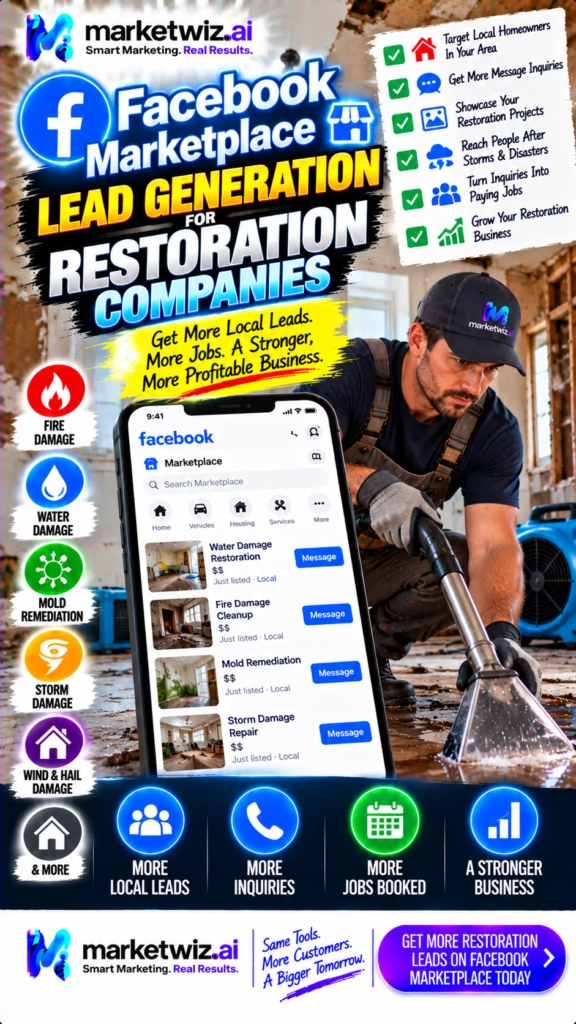
Facebook Marketplace Lead Generation for Restoration Companies
Discover how water damage restoration specialists, fire and smoke restoration contractors, mold remediation businesses, storm recovery companies, and property restoration professionals can build stronger local visibility, attract qualified customer inquiries, and turn Facebook marketing opportunities into booked restoration projects.
Updated October 20261. Why Facebook Marketing Matters for Restoration Companies
Restoration businesses operate in a highly specialized market where customers often need help following water damage, fires, severe weather, or other property incidents. Unlike planned remodeling projects, restoration needs may arise unexpectedly.
Property owners may begin researching local companies after discovering a leak, experiencing a storm, or receiving recommendations from neighbors and property managers. Facebook can contribute to this discovery process by helping businesses establish a recognizable local presence and share useful information.
Facebook Marketplace is often discussed as a local discovery platform, but its ordinary listings are intended primarily for eligible products. Standalone restoration services generally should not be advertised as ordinary Marketplace product listings. Restoration companies should instead use appropriate Facebook Pages, permitted Groups, Meta advertising, and genuinely eligible Marketplace listings only where allowed.
The opportunity is broader than Marketplace alone. Restoration businesses can use Facebook's local audience and communication features to build trust, educate customers, and generate inquiries without misrepresenting services as products.
A strong marketing strategy connects local awareness with a professional response process. That includes accurate business information, authentic restoration photographs, clear explanations of services, and dependable inquiry handling.
2. Understand Restoration Customer Intent Before Creating Campaigns
Restoration prospects do not all have the same needs or urgency. A homeowner with active water intrusion may require a different response from a commercial property manager planning reconstruction after an earlier incident.
Marketing content should reflect these differences instead of using the same message for every restoration category.
Common restoration customer situations include:
- Recent plumbing leaks or appliance-related water damage
- Flooding or water intrusion after severe weather
- Fire and smoke damage cleanup
- Persistent moisture and suspected mold problems
- Storm-related building damage
- Damaged flooring, drywall, or interior finishes
- Commercial property recovery
- Rental property restoration
- Insurance documentation questions
- Reconstruction after mitigation work
A customer experiencing a current emergency may prioritize safety and availability. A property owner comparing reconstruction contractors may care more about qualifications, scope, scheduling, and previous project experience.
Match the Message to the Customer's Situation
Use educational, accurate content that explains the relevant restoration process. Do not manufacture urgency or promise outcomes that depend on site conditions, insurance decisions, or other factors outside the company's control.
3. Identify the Restoration Specialties Your Company Actually Provides
Restoration companies may provide several types of work, but not every company handles every restoration category. Marketing should accurately reflect the business's equipment, training, licenses, staffing, and capabilities.
Water Damage Restoration
Assessment, water extraction, drying, and related restoration work performed by appropriately qualified professionals.
Fire & Smoke Restoration
Cleanup, odor-related work, material assessment, and reconstruction activities within the company's actual capabilities.
Mold Remediation
Qualified remediation work performed under applicable licensing, assessment, containment, and safety requirements.
Storm Damage Recovery
Property stabilization, cleanup, repairs, and restoration work where legally permitted and properly staffed.
Commercial Restoration
Restoration projects for offices, retail properties, multifamily buildings, and other commercial facilities.
Reconstruction
Repair and rebuilding work following mitigation, subject to appropriate trade qualifications and permits.
Separate service pages and content themes can help prospects recognize the specific work a company performs. The goal is clarity, not claiming every restoration specialty to attract more inquiries.
4. Understand Facebook Marketplace Rules for Restoration Advertising
Facebook Marketplace has eligibility requirements that differ from the broader advertising options available through Facebook and Meta.
Ordinary Marketplace product listings generally are not an appropriate location for standalone water damage restoration, fire cleanup, mold remediation, or similar service advertisements.
Restoration companies should:
- Review current Meta Commerce Policies before publishing.
- Use Marketplace only for genuinely eligible items when permitted.
- Avoid disguising restoration services as physical products.
- Use Facebook Pages for business information and educational posts.
- Participate in Groups only where promotional activity is allowed.
- Use compliant Meta advertising when paid campaigns are appropriate.
- Follow applicable advertising and contractor licensing laws.
- Avoid misleading claims about damage, urgency, or insurance coverage.
Important: A restoration company's ability to market on Facebook does not mean every restoration offering qualifies for a Marketplace listing. The channel must match the offering and the platform's current rules.
5. Target Restoration Marketing to Real Local Service Areas
Restoration work is inherently geographic. Dispatch time, crew availability, travel distance, equipment capacity, and local licensing can all affect whether a company can serve a customer effectively.
Businesses should focus marketing on areas where they genuinely operate. A broad service area is useful only when the company can deliver the advertised work throughout that area.
Consider these targeting factors:
- Office and operational locations
- Actual crew dispatch coverage
- Emergency response capabilities
- Commercial versus residential demand
- Local weather and property conditions
- Relevant licensing jurisdictions
- Competition and market demand
- Travel costs and project profitability
- Availability of specialized equipment
- Property management relationships
A restoration company serving several counties can describe those counties accurately on its Facebook Page and website. It should not create fictional locations or imply a local office exists where it does not.
6. Optimize Your Facebook Business Page for Restoration Leads
A professional Facebook Page can serve as a central destination for customers researching a restoration company.
The Page should make it easy to understand what the company does, where it operates, and how customers can contact the business.
Essential Page information includes:
- Correct business name
- Relevant business category
- Accurate phone number
- Verified website address
- Actual business location or service area
- Current operating hours
- Truthful emergency availability
- Clear restoration specialties
- Authentic project photography
- Consistent branding
A Page with outdated contact information or unclear specialties can create unnecessary friction when a customer is already dealing with property damage.
7. Create Restoration Marketing Content That Educates Customers
Restoration companies can use Facebook content to explain their work and help customers understand the restoration process.
Educational content is especially useful because property owners may be unfamiliar with mitigation, moisture monitoring, material removal, cleaning, or reconstruction procedures.
Potential content topics include:
- What happens during a water damage assessment
- Why professional drying may require monitoring
- How restoration projects are documented
- Differences between mitigation and reconstruction
- What property owners should know after smoke damage
- How storm recovery projects are evaluated
- Why mold remediation requires appropriate assessment
- How commercial restoration scheduling works
- Questions to ask a restoration contractor
- How to prepare for a restoration estimate
Content should remain within the company's expertise. Avoid giving unsafe instructions for entering damaged buildings, handling contaminated materials, or performing hazardous cleanup.
8. Write Restoration Marketing Headlines That Communicate Value
A good headline tells the reader what topic the post covers and why the information is relevant.
For restoration marketing, clarity is more important than sensational claims.
Illustrative Facebook content headlines:
- Water Damage in Your Home? Understand the Restoration Process
- Fire & Smoke Damage: What Property Owners Should Know
- How Professional Water Damage Assessments Work
- Storm Damage Recovery: Questions to Ask a Contractor
- Understanding Mold Remediation and Professional Assessment
- Commercial Property Restoration: Planning the Next Steps
- Why Moisture Documentation Matters After Water Damage
- Restoration vs. Reconstruction: Understanding the Difference
These are educational post ideas, not instructions to create prohibited service-only Marketplace listings.
9. Use Authentic Restoration Project Photography
Restoration photographs can demonstrate the type of work a company performs and help customers understand complex project stages.
However, damaged properties may contain private information, hazardous conditions, or sensitive details about homeowners.
Photography best practices include:
- Obtain appropriate permission before publishing.
- Use real photographs of company projects.
- Remove visible personal information.
- Avoid exposing customer addresses or documents.
- Explain what the image actually shows.
- Identify before-and-after photos accurately.
- Avoid exaggerating the severity of damage.
- Do not represent stock or AI images as completed projects.
- Use images that respect affected property owners.
Restoration credibility comes from truthful evidence. Real project photographs, accurate captions, and professional explanations can help customers evaluate a company without misleading claims.
10. Build Facebook Lead Generation Content for Water Damage Restoration
Water damage is a major restoration category, but project requirements vary depending on the water source, affected materials, building conditions, and time since the incident.
A company can publish educational content explaining how its assessment and restoration process works.
Useful water restoration topics include:
- Initial property assessment
- Water extraction procedures
- Moisture measurement
- Drying equipment and monitoring
- Documentation of affected areas
- Material evaluation
- Cleaning and restoration phases
- Reconstruction coordination
- Scheduling and communication
Avoid guaranteeing complete drying within a fixed period without knowing site conditions.
If active electrical hazards, structural instability, or other immediate dangers are present, the customer should follow appropriate emergency safety guidance.
11. Market Fire and Smoke Damage Restoration Professionally
Fire damage can involve structural concerns, soot, smoke residue, odors, water from firefighting, and damage to building materials.
Customers may need help understanding what happens after a property has been released for safe assessment.
Educational content can explain:
- Initial restoration assessment
- Safety-related project limitations
- Smoke and soot evaluation
- Cleaning procedures
- Odor-related restoration work
- Contents handling where offered
- Documentation processes
- Coordination with reconstruction teams
- Estimate preparation
Fire restoration marketing should be respectful and factual. It should never encourage customers to enter unsafe buildings or promise recovery of materials that may not be salvageable.
12. Develop Local Facebook Marketing for Mold Remediation
Mold-related work requires particular care because assessment, remediation, and clearance procedures may be regulated or require specialized qualifications.
Marketing should distinguish between general moisture concerns, professional assessment, and actual remediation work.
Potential mold remediation content includes:
- Why moisture sources matter
- How remediation projects are planned
- Importance of appropriate containment
- Role of qualified assessment professionals
- Material handling considerations
- Post-remediation procedures
- Documentation and project communication
- Relevant licensing requirements
Avoid diagnosing health conditions or guaranteeing health outcomes. Claims about testing, remediation, and clearance should reflect the company's actual qualifications and procedures.
13. Use Responsible Facebook Marketing for Storm Damage Restoration
Storm-related restoration demand can change quickly following wind, hail, flooding, and other severe weather events.
Restoration companies should communicate carefully during these periods, especially when affected communities are dealing with significant disruption.
Responsible storm marketing includes:
- Accurate service availability
- Actual dispatch coverage
- Clear contact information
- Qualified assessment procedures
- Respectful community communication
- Truthful project capabilities
- Appropriate licensing disclosures
- No fabricated damage reports
- No guaranteed insurance outcomes
Businesses should not use misleading fear-based claims or suggest that every property in an affected area has suffered damage.
14. Generate Restoration Leads From Commercial Property Owners
Commercial restoration can involve offices, retail buildings, warehouses, hospitality properties, multifamily housing, and other business facilities.
Decision-makers may include property managers, owners, facility managers, and authorized representatives.
Commercial marketing can highlight:
- Types of properties served
- Actual project capacity
- Documentation procedures
- Coordination with property management
- Scheduling capabilities
- Equipment availability
- Communication workflows
- Relevant commercial project experience
- Qualified reconstruction capabilities
Commercial customers often need clear processes and dependable project communication.
Facebook may help introduce the company, while professional websites, local SEO, and direct business relationships support further evaluation.
15. Highlight Restoration Certifications, Licensing, and Insurance Accurately
Customers often look for evidence that a restoration company has the training and resources required for specialized work.
Relevant qualifications may include training, certifications, licenses, insurance, and documented project experience.
Information to verify before advertising:
- Applicable contractor licenses
- Required mold remediation credentials
- Actual industry certifications
- Insurance status
- Training qualifications
- Relevant professional memberships
- Equipment capabilities
- Permitted project types
A company should not display a certification logo or claim a designation unless the claim is accurate and the use is authorized.
16. Communicate Emergency Restoration Availability Without Misleading Customers
Some restoration companies offer around-the-clock response, while others operate during defined business hours or provide limited after-hours coverage.
Advertising should reflect the company's actual capabilities.
Emergency messaging should clarify:
- Whether calls are answered after hours
- Whether crews are available for dispatch
- Actual service area
- Relevant restoration specialties
- Expected next-step communication
- Any limitations on availability
- When emergency responders are appropriate
A business should not advertise 24/7 dispatch if it cannot reliably provide that level of response.
Accuracy Builds Trust During Urgent Situations
A truthful description of availability is more useful than an unsupported promise of immediate arrival. Life-safety emergencies should be directed to appropriate emergency responders.
17. Use Local Facebook Groups Where Restoration Business Promotion Is Allowed
Community Groups may offer opportunities for restoration companies to contribute useful information and build relationships with local property owners.
However, each Group has its own rules and moderation standards.
Appropriate Group participation may include:
- Answering general restoration questions
- Sharing educational content when permitted
- Explaining professional assessment processes
- Responding to legitimate requests for recommendations
- Providing accurate business contact details where allowed
- Respecting moderators and community guidelines
- Avoiding repeated unsolicited promotional posts
The best approach is to provide useful information without overwhelming community discussions with repetitive advertising.
18. Combine Organic Facebook Marketing With Compliant Paid Advertising
Organic content and paid advertising can serve different roles. Organic posts may help establish familiarity and trust, while paid campaigns can introduce a restoration company to selected audiences subject to Meta's policies.
Paid advertising should use accurate claims and appropriate campaign objectives.
Potential campaign goals include:
- Local brand awareness
- Website visits
- Qualified customer inquiries
- Phone calls where supported
- Educational content engagement
- Commercial restoration awareness
- Customer research and consideration
The business should measure outcomes rather than assuming that higher ad spend automatically creates profitable projects.
19. Improve Restoration Lead Response Times and Customer Communication
Restoration inquiries may be time-sensitive, particularly when active property damage is involved.
A company should establish a dependable process for receiving, reviewing, and responding to messages.
A practical response workflow includes:
- Acknowledge the inquiry promptly.
- Confirm the type of damage.
- Determine the property location.
- Identify immediate safety concerns.
- Explain available next steps.
- Clarify actual assessment availability.
- Record necessary customer information.
- Route urgent inquiries to appropriate staff.
- Follow up when an assessment is appropriate.
Customer communication should avoid giving unqualified technical instructions for dangerous conditions.
20. Qualify Restoration Leads Before Dispatching a Crew
Restoration companies may receive inquiries that range from minor concerns to substantial property damage.
Lead qualification helps determine whether the company is equipped to address the situation and what response may be appropriate.
Useful qualification questions include:
- What type of damage occurred?
- Where is the property located?
- When did the incident occur?
- Is the source of damage still active?
- Are there immediate safety concerns?
- Is the property residential or commercial?
- Has another professional assessed the damage?
- What is the preferred contact method?
Qualification should be efficient and relevant. Customers dealing with urgent damage should not be forced through an unnecessarily complicated process.
21. Use AI-Assisted Lead Handling for Restoration Marketing
AI can help restoration companies organize inquiries and support customer communication through authorized channels.
It can prepare responses, classify inquiries, and help staff identify the appropriate next step.
Potential AI-supported tasks include:
- Drafting responses to common questions
- Collecting basic project information
- Organizing incoming inquiries
- Identifying the restoration category
- Preparing CRM summaries
- Routing messages to appropriate employees
- Creating follow-up reminders
- Summarizing marketing performance
AI should not claim that a crew has been dispatched unless that action has actually occurred.
It should not diagnose structural hazards, guarantee insurance coverage, or replace qualified professionals for urgent or safety-sensitive decisions.
Human oversight is essential. AI-assisted workflows can improve organization, but restoration emergencies require dependable professional judgment and verified operational actions.
22. Track Facebook Restoration Leads With a CRM
A CRM can help restoration businesses manage inquiries from Facebook, Google, referrals, websites, and other marketing sources.
It provides a structured record of customer communication and project progress.
Useful restoration CRM fields include:
- Lead date
- Lead source
- Customer contact information
- Property location
- Damage category
- Incident timing
- Urgency classification
- Assigned employee
- Assessment appointment
- Estimate status
- Project approval status
- Scheduled work
- Completed revenue
- Follow-up tasks
Customer records should be handled securely and retained only as appropriate for business and legal requirements.
23. Explain Insurance Documentation Without Making Unsupported Promises
Some restoration customers need information about documenting damage or coordinating with insurers.
A restoration company can accurately explain the documentation and communication tasks it is qualified and authorized to perform.
Appropriate topics may include:
- Project photographs
- Damage assessment records
- Moisture documentation
- Work scope descriptions
- Estimate preparation
- Customer communication
- Coordination with authorized parties
Contractors should not guarantee claim approval, coverage, payment, or reimbursement.
Insurance coverage decisions depend on policy terms, claim facts, and insurer determinations.
24. Combine Facebook Restoration Marketing With Google Maps SEO
Customers may discover a restoration business through Facebook and then search Google to verify the company. Others may begin with Google Maps and later review the company's social media content.
A coordinated local marketing strategy helps maintain consistent information across these channels.
Important local SEO elements include:
- Accurate Google Business Profile information
- Appropriate business categories
- Actual business location and service area
- Correct phone number and website
- Relevant restoration service descriptions
- Authentic project photographs
- Legitimate customer reviews
- Useful local website pages
- Consistent business information
Google Maps optimization does not guarantee ranking, but accurate and helpful information can support customer discovery and evaluation.
25. Strengthen Restoration Company Credibility With Genuine Reviews
Restoration customers may be evaluating a company under stressful circumstances.
Authentic reviews can help them understand previous customers' experiences.
Review management practices include:
- Request feedback through permitted methods.
- Never fabricate customer testimonials.
- Do not offer prohibited incentives for positive reviews.
- Respond professionally to legitimate feedback.
- Respect customer privacy.
- Use review excerpts only with appropriate permission.
- Avoid editing testimonials to change their meaning.
A restoration company should focus on delivering quality work and maintaining professional communication rather than manipulating review scores.
26. Turn Facebook Restoration Inquiries Into Scheduled Assessments
Lead generation is valuable only when inquiries progress into appropriate business opportunities.
A clear process helps restoration companies manage that progression.
| Stage | Primary Objective | Useful Metric |
|---|---|---|
| Facebook Discovery | Communicate legitimate restoration expertise. | Relevant inquiries |
| Initial Contact | Respond and identify the customer's situation. | Response time |
| Qualification | Confirm location, damage type, and project fit. | Qualified leads |
| Assessment | Arrange an appropriate professional evaluation. | Assessments scheduled |
| Estimate | Present accurate scope and pricing. | Estimates delivered |
| Project Approval | Confirm authorization and scheduling. | Projects booked |
| Completion | Deliver agreed restoration work. | Revenue and margin |
The company should monitor where qualified opportunities stop progressing and improve the relevant stage.
27. Measure Facebook Restoration Lead Generation ROI
Restoration companies should evaluate marketing using completed business outcomes rather than engagement metrics alone.
Important metrics include:
- Marketing spend
- Incoming inquiries
- Qualified restoration leads
- Response time
- Assessments scheduled
- Estimates delivered
- Projects approved
- Completed project revenue
- Average project value
- Gross margin
- Customer acquisition cost
- Lead source attribution
For example, a company spending $400 on a marketing test and generating eight qualified leads would have an illustrative cost per qualified lead of $50.
That calculation does not predict actual campaign performance. The company must also consider whether the leads produce profitable restoration projects.
Focus on Booked Projects and Profitability
The most useful marketing reports connect advertising activity to qualified assessments, approved projects, completed revenue, and sustainable margins.
28. Avoid Common Facebook Marketing Mistakes Restoration Companies Make
A restoration marketing campaign can underperform when the business prioritizes visibility without considering compliance, customer trust, and operations.
Common mistakes include:
- Posting prohibited service-only Marketplace listings
- Misrepresenting services as physical products
- Claiming false emergency availability
- Using fabricated project photographs
- Overstating licensing or certifications
- Making unsupported insurance promises
- Publishing insensitive disaster-related content
- Ignoring Group promotion rules
- Failing to respond to urgent inquiries
- Collecting unnecessary personal information
- Using AI without appropriate oversight
- Not tracking qualified assessments
- Measuring only likes or views
- Ignoring project profitability
A pre-publication review process can help identify these problems before content reaches customers.
29. Scale Restoration Marketing With Better Systems and Team Coordination
As a restoration company grows, it may handle more inquiries, project types, employees, and geographic markets.
Scaling requires clear responsibilities and dependable communication.
Operational improvements may include:
- Centralized service descriptions
- Verified credential records
- Consistent Facebook Page information
- Approved educational content
- Organized project photography
- Clear inquiry routing
- Documented emergency response procedures
- CRM integration
- Assessment scheduling workflows
- Estimate follow-up systems
- Employee training
- Monthly marketing reporting
- Privacy and compliance reviews
The goal is to create a marketing operation that remains accurate and responsive as the company expands.
30. Build a 90-Day Facebook Lead Generation Plan for Restoration Companies
A structured 90-day plan can help restoration businesses improve their Facebook presence, evaluate local customer interest, and connect marketing to measurable projects.
Days 1–30: Establish the Foundation
- Review current Meta policies.
- Audit existing Facebook activity.
- Remove or correct noncompliant listings.
- Verify business Page information.
- Document actual restoration specialties.
- Confirm service areas and availability.
- Review licenses and certifications.
- Organize authentic project photographs.
- Develop educational content topics.
- Create a customer inquiry process.
- Set up CRM lead tracking.
- Establish initial performance benchmarks.
Days 31–60: Improve Lead Quality and Response
- Publish useful educational content.
- Participate in eligible local Groups.
- Review customer questions.
- Improve restoration specialty descriptions.
- Update contact information where needed.
- Refine inquiry qualification.
- Improve response procedures.
- Track assessment appointments.
- Review estimate follow-up.
- Evaluate appropriate paid advertising.
- Monitor customer feedback.
- Review policy compliance.
Days 61–90: Optimize for Booked Projects
- Compare qualified leads by source.
- Measure assessment conversion.
- Track estimates delivered.
- Measure projects booked.
- Calculate acquisition costs.
- Review completed revenue.
- Analyze gross margins.
- Improve underperforming content.
- Coordinate Facebook with Google Maps SEO.
- Review AI-assisted workflows.
- Identify operational bottlenecks.
- Plan the next marketing cycle.
The Restoration Lead Generation Formula
Compliant Facebook marketing + accurate restoration specialties + realistic local targeting + educational content + authentic project evidence + verified qualifications + professional customer responses + lead qualification + assessment scheduling + CRM tracking + Google Maps SEO + booked project measurement = a stronger restoration customer acquisition system.
Build a Restoration Marketing Strategy That Turns Local Visibility Into Qualified Projects
Facebook Marketplace lead generation for restoration companies is best understood as part of a broader Facebook and local customer acquisition strategy.
Restoration businesses can benefit from Facebook's ability to connect local communities, businesses, and property owners. However, that opportunity must be approached with a clear understanding of platform rules.
Ordinary Facebook Marketplace listings generally are not the appropriate channel for advertising standalone restoration services.
A restoration company should not disguise water damage cleanup, mold remediation, fire restoration, or storm recovery work as a product merely to obtain Marketplace visibility.
Instead, businesses should use appropriate Facebook Pages, eligible community Groups, compliant paid advertising, and genuinely eligible Marketplace product listings only where allowed.
This distinction is important because a sustainable marketing strategy depends on accuracy and trust.
Restoration customers often face difficult circumstances. A burst pipe, severe storm, fire, or other property incident can create uncertainty about the next step.
Customers may need to understand whether a company handles their type of damage, operates in their area, and has the qualifications required for the work.
They may also need information about assessments, documentation, scheduling, and reconstruction.
Useful marketing content should address these questions clearly and professionally.
For water damage restoration, that may involve explaining the assessment, extraction, drying, monitoring, and documentation process.
For fire restoration, educational content may describe soot-related work, smoke damage, cleaning procedures, and reconstruction coordination.
For mold remediation, content should emphasize appropriate professional assessment, moisture conditions, qualified remediation, and relevant regulatory requirements.
For storm recovery, marketing should remain respectful, factual, and focused on legitimate availability and capabilities.
Each specialty requires different knowledge, equipment, training, and project procedures.
A restoration company should advertise only the work it actually performs.
Qualifications are an essential part of that communication.
Licensing, insurance, certifications, and professional experience should be represented accurately and updated when circumstances change.
A business should not claim certifications it does not hold or imply that every employee possesses the same qualifications.
The same principle applies to project photographs.
Authentic images can help customers understand the company's experience, but those photographs should be used with appropriate permission.
Property damage can involve sensitive personal circumstances.
Marketing should respect customer privacy and avoid revealing identifying details without authorization.
AI-generated images and stock photography should not be presented as evidence of completed restoration projects.
Customer reviews should also remain genuine.
A business can invite feedback through permitted methods and respond professionally to legitimate customer experiences.
It should not fabricate testimonials or manipulate review content.
Local targeting is another important factor.
Restoration work often depends on whether crews can reach a property, whether equipment is available, and whether the company is authorized to perform the required work.
A business should describe its real service area instead of creating artificial geographic coverage.
Emergency availability should be equally accurate.
Some companies have dependable 24-hour dispatch capabilities. Others operate within defined hours or maintain limited after-hours coverage.
Customers should receive truthful information about the company's actual response arrangements.
A company should never claim that a crew is on the way unless dispatch has been confirmed.
Urgent property situations also require appropriate safety judgment.
Marketing content should not encourage people to enter structurally unsafe buildings, handle hazardous materials, or ignore immediate dangers.
Life-safety emergencies should be directed to appropriate emergency responders.
Once a prospective customer contacts the restoration business, the quality of the response becomes critical.
The company should acknowledge the inquiry, understand the type of damage, confirm the property location, and identify the next appropriate step.
That may involve a professional assessment, additional information, or referral to another qualified resource.
The qualification process should be practical and proportionate to the situation.
A customer dealing with active damage should not have to complete an unnecessarily complicated marketing questionnaire.
At the same time, the business needs enough information to determine whether the requested work matches its capabilities.
This is where organized lead handling can help.
A CRM allows the company to record inquiries, assign employees, track assessments, manage estimates, and document project outcomes.
It can also help the business distinguish between different marketing sources.
Facebook inquiries, Google Maps contacts, website submissions, and referrals can all be tracked within an organized system.
This makes it easier to evaluate which channels contribute to actual restoration projects.
AI can support parts of this workflow.
It may help draft routine responses, organize incoming messages, summarize customer information, and prepare internal follow-up reminders.
AI can also help businesses develop educational content and review marketing performance reports.
However, AI should not replace qualified restoration judgment.
It should not make unsupported safety assessments, guarantee insurance outcomes, or claim operational actions have occurred when they have not.
Human oversight remains important for urgent, technical, and safety-sensitive situations.
Restoration companies should also be careful when discussing insurance.
A contractor may explain the documentation it provides and the role it performs during the restoration process.
But claim approval, coverage, reimbursement, and settlement decisions depend on policy terms and insurer determinations.
Marketing should not guarantee those outcomes.
A professional estimate should explain the actual scope of work, pricing, assumptions, and applicable terms.
Clear communication can help customers make informed decisions without unnecessary confusion or pressure.
Restoration marketing also becomes stronger when Facebook is combined with other local discovery channels.
Google Business Profile optimization can help customers find and evaluate nearby restoration companies.
A professional website can explain specialties, qualifications, and assessment procedures.
Search engine optimization can support visibility for relevant local restoration topics.
Social media can showcase educational content and genuine project experience.
Referrals and professional relationships can provide additional customer acquisition opportunities.
Together, these channels can create a more balanced marketing system than relying on a single platform.
Measurement is essential to understanding whether the strategy works.
Likes, comments, and impressions may help describe content engagement, but they do not establish business profitability.
Restoration companies should track qualified inquiries, assessments, estimates, booked projects, completed revenue, and margins.
They should also review response times, customer communication, and the effectiveness of their follow-up procedures.
A campaign that produces many inquiries but few suitable assessments may need clearer messaging.
A campaign that generates assessments but few approved projects may require a closer review of pricing, scope, or customer fit.
The right improvements depend on actual business data.
Market Wiz AI focuses on helping businesses strengthen organic visibility, local marketing, AI-assisted workflows, and customer acquisition systems.
For restoration companies, the goal is to connect accurate marketing with dependable lead handling and measurable project outcomes.
That starts with understanding what Facebook Marketplace does and does not allow.
It continues with appropriate Facebook marketing channels, clear restoration specialties, authentic project evidence, and professional customer communication.
It becomes more effective through CRM organization, Google Maps SEO, qualified assessments, and consistent performance measurement.
No marketing channel can guarantee a specific number of restoration leads or booked projects.
Results depend on local demand, competition, company capabilities, customer needs, advertising quality, and operational execution.
But restoration businesses that prioritize accuracy, trust, responsiveness, and measurable results can build a stronger foundation for long-term customer acquisition.
The objective is not simply more Facebook activity.
It is more relevant customer connections, better-qualified assessments, more professionally managed projects, and sustainable restoration business growth.
Frequently Asked Questions About Facebook Marketplace Lead Generation for Restoration Companies
1. Can restoration companies advertise on Facebook Marketplace?
Restoration companies can use Facebook for marketing, but standalone restoration services generally are not eligible for ordinary Facebook Marketplace product listings. Businesses should use eligible listings only where permitted and promote restoration services through appropriate Facebook Pages, Groups, and advertising tools.
2. What is Facebook Marketplace lead generation for restoration companies?
It is a marketing strategy that connects restoration businesses with local customers through permitted Marketplace activity and complementary Facebook channels, using accurate information, compliant content, and organized inquiry handling.
3. Can water damage restoration companies generate leads through Facebook?
Yes. Water damage restoration businesses can build local awareness through Facebook Pages, permitted Groups, and eligible paid advertising, while following platform policies and avoiding prohibited service-only Marketplace listings.
4. Can fire damage restoration businesses use Facebook marketing?
Yes. Fire restoration companies can share educational content, genuine project examples, and accurate business information through appropriate Facebook channels.
5. How can mold remediation companies attract local customers?
Mold remediation businesses can publish informative content, explain their qualifications, optimize local search visibility, and use permitted Facebook marketing to reach relevant audiences.
6. Does Facebook Marketplace allow service-only restoration listings?
Ordinary Facebook Marketplace listings are primarily intended for eligible products, and standalone services generally are not allowed. Businesses should check current Commerce Policies and use authorized channels for restoration services.
7. What Facebook channels should restoration companies use?
Useful channels include a Facebook business Page, eligible community Groups, compliant Meta advertising, and Marketplace only for genuinely eligible products where applicable.
8. How important is local targeting for restoration marketing?
Local targeting helps restoration companies focus marketing on areas where they can realistically dispatch crews, assess damage, and perform qualified work.
9. What content works well for water damage restoration marketing?
Useful content includes explanations of restoration processes, authentic project photographs, safety-conscious educational posts, and clear information about assessment procedures and availability.
10. Should restoration companies use before-and-after photos?
Authentic before-and-after photos can demonstrate restoration work when the business has permission to use them and accurately describes the results.
11. How can restoration companies build trust on Facebook?
They can provide accurate credentials, genuine customer feedback, real project evidence, transparent contact information, and professional responses to inquiries.
12. Can restoration companies promote emergency availability?
Yes, through appropriate marketing channels, provided the advertised hours, response capabilities, and emergency availability are accurate.
13. What makes a strong restoration marketing headline?
A strong headline identifies the actual restoration specialty, relevant local context, and useful customer information without exaggerated promises or misleading urgency.
14. How should restoration companies describe insurance claims?
Companies should explain their actual documentation or coordination role without guaranteeing insurance coverage, claim approval, reimbursement, or settlement amounts.
15. Can storm damage restoration companies advertise after severe weather?
Yes, through permitted channels using accurate, respectful messaging that does not exploit emergencies, invent damage, or make misleading claims.
16. What questions should a restoration company ask a new lead?
Useful questions include the property location, type of damage, when the incident occurred, whether the property is safe, and the best way to arrange an appropriate assessment.
17. How fast should restoration companies respond to inquiries?
Restoration companies should respond according to their genuine staffing and advertised availability, prioritizing urgent situations and directing immediate safety emergencies to appropriate emergency responders.
18. Can AI help restoration companies manage Facebook leads?
AI can assist with permitted customer messaging, inquiry organization, lead routing, response drafts, and CRM summaries, with human oversight for urgent, technical, and safety-sensitive situations.
19. Should restoration businesses use a CRM?
Yes. A CRM can help track inquiry sources, damage categories, property locations, assessments, estimates, scheduling, follow-up, and completed restoration projects.
20. How do restoration companies qualify leads?
They can confirm the damage type, property location, approximate timing, immediate safety concerns, and whether the requested work matches their qualifications and service area.
21. Can Google Maps SEO support restoration lead generation?
Yes. Google Business Profile optimization and local SEO can help customers discover and evaluate restoration companies searching for relevant local work.
22. What restoration services should companies feature in marketing?
Companies should feature only services they actually provide, such as water damage restoration, fire cleanup, smoke damage restoration, mold remediation, storm recovery, and related qualified work.
23. How should restoration companies use customer reviews?
Businesses should share authentic reviews with appropriate permission, avoid fabricated testimonials, and follow platform rules governing review solicitation and presentation.
24. What marketing mistakes should restoration companies avoid?
Avoid prohibited service listings, false emergency availability, misleading credentials, fabricated project photos, unsupported insurance promises, insensitive disaster messaging, and poor lead follow-up.
25. Can restoration companies use Facebook Groups for lead generation?
Yes, where group rules permit business promotion. Companies should contribute useful information, avoid spam, and respect local community guidelines.
26. What metrics should restoration companies track?
Important metrics include inquiries, qualified leads, response time, assessments scheduled, estimates delivered, projects booked, completed revenue, acquisition cost, and gross margin.
27. Can restoration companies use Facebook paid advertising?
Yes, subject to Meta advertising policies, applicable laws, truthful claims, and appropriate targeting and creative requirements.
28. How can restoration companies improve conversion rates?
Clear service information, prompt responses, accurate availability, qualified assessments, professional estimates, and organized follow-up can help improve conversion.
29. How long does Facebook restoration marketing take to produce results?
There is no guaranteed timeline. Results depend on local demand, competition, channel eligibility, content quality, advertising spend, response processes, and business capabilities.
30. What is the best Facebook lead generation strategy for restoration companies?
A strong strategy combines policy-compliant Facebook marketing, local targeting, educational content, authentic project evidence, accurate qualifications, responsive lead handling, CRM tracking, Google Maps SEO, and measurement of booked restoration projects.
30 Additional SEO Keywords
These supporting keyword themes expand topical coverage for restoration company marketing, Facebook lead generation, local customer acquisition, and AI-assisted restoration marketing workflows.
Turn Local Restoration Marketing Into More Qualified Customer Opportunities
Market Wiz AI helps restoration companies strengthen local visibility, improve organic marketing, organize customer inquiries, connect Facebook with Google Maps SEO, and use AI-assisted workflows to support qualified assessments, better follow-up, and measurable business growth.
Call MarketWiz.ai: (910) 601-2938