
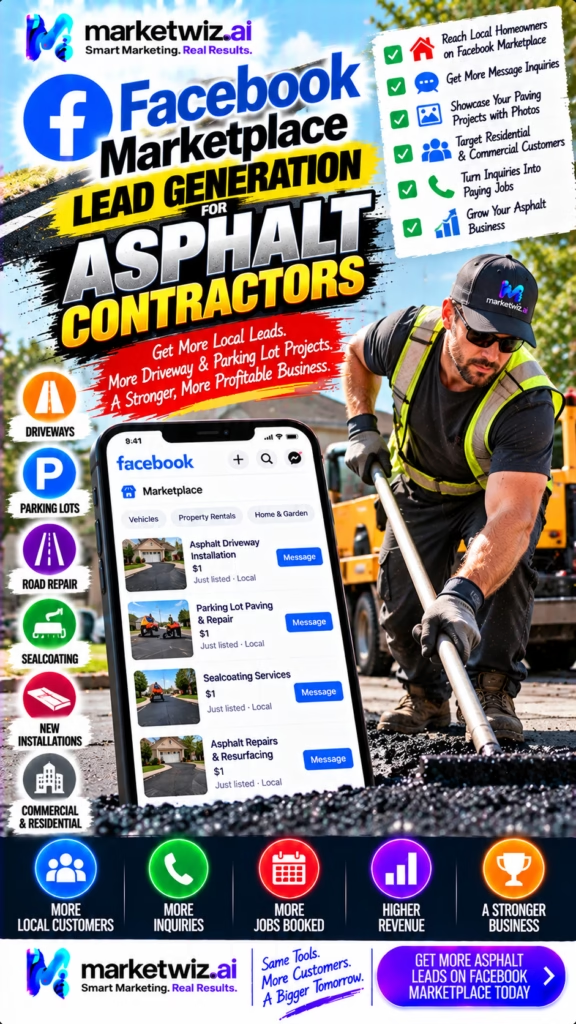
Facebook Marketplace Lead Generation for Asphalt Contractors
Discover how driveway paving companies, asphalt installation contractors, parking lot paving businesses, sealcoating specialists, resurfacing crews, and commercial pavement contractors can improve local visibility, attract qualified project inquiries, and turn Facebook marketing into a stronger customer acquisition system.
Updated October 20261. Why Facebook Marketing Matters for Asphalt Contractors
Asphalt contractors operate in a competitive local market where customers frequently compare multiple companies before approving driveway installations, parking lot projects, pavement repairs, or sealcoating work.
Homeowners may begin looking for a paving contractor after noticing cracks, drainage problems, uneven pavement, or an aging driveway. Commercial property managers may need repairs, resurfacing, or larger parking lot improvements.
Facebook can help asphalt businesses establish local visibility, showcase completed projects, answer common customer questions, and build familiarity with property owners.
Facebook Marketplace is widely associated with local discovery, but ordinary Marketplace listings primarily support eligible products. Standalone paving, driveway installation, asphalt repair, and sealcoating services generally should not be presented as Marketplace product listings.
Instead, asphalt contractors should use appropriate Facebook Pages, permitted local Groups, compliant Meta advertising, and Marketplace only for genuinely eligible products where allowed.
The real opportunity is building a local customer acquisition system. Asphalt contractors can combine Facebook visibility, authentic project examples, accurate service information, responsive messaging, and organized follow-up to turn interested property owners into qualified estimates.
The most effective approach is not simply publishing more promotional posts. It is creating a trustworthy marketing presence that helps customers understand the contractor's capabilities and next steps.
2. Understand What Asphalt Customers Are Actually Searching For
Asphalt customers have different needs depending on their property type, pavement condition, budget, and desired project timeline.
A homeowner considering a new driveway may want to understand installation requirements, preparation, drainage, and pricing.
A commercial property manager may be more concerned with parking availability, work phases, tenant access, and long-term pavement maintenance.
Common asphalt project inquiries include:
- New residential asphalt driveway installation
- Existing driveway replacement
- Driveway resurfacing
- Asphalt patching and pothole repair
- Driveway sealcoating
- Parking lot paving
- Commercial pavement maintenance
- Asphalt crack repair
- Drainage-related pavement concerns
- Private road paving
- Apartment complex pavement projects
- Retail parking lot improvements
Each project type may require different equipment, materials, preparation, and scheduling.
Marketing should therefore explain the specific work a company performs instead of using generic statements that apply to every contractor.
Match the Marketing Message to the Project
Residential driveway content should answer homeowner questions. Commercial paving content should address property operations, project scope, and scheduling. Sealcoating content should explain appropriate maintenance conditions without suggesting that every damaged surface can be corrected with a coating.
3. Identify the Asphalt Services Your Business Should Promote
Not every asphalt contractor offers the same capabilities. Some specialize in residential driveways, while others focus on large commercial projects, maintenance, or specialized pavement repairs.
Marketing should accurately represent the company's actual work, equipment, and qualifications.
Driveway Paving
New asphalt driveways, replacement projects, and residential pavement installations.
Parking Lot Paving
Commercial asphalt installation and parking area improvements for qualifying properties.
Sealcoating
Surface maintenance applications where the pavement condition and project requirements make the treatment appropriate.
Asphalt Repair
Qualified patching, pothole repairs, and related pavement maintenance work.
Asphalt Resurfacing
Overlay and resurfacing projects where the existing pavement structure is suitable.
Commercial Maintenance
Ongoing pavement care, repair planning, and related commercial property work.
A contractor should avoid promoting specialized work it cannot perform safely, legally, or professionally.
Accurate service descriptions improve lead quality because customers can determine whether the company is a suitable fit before requesting an estimate.
4. Understand Facebook Marketplace Rules Before Advertising Asphalt Work
Facebook Marketplace and Facebook's broader business marketing features are not interchangeable.
Ordinary Marketplace listings generally are intended for eligible goods rather than standalone contractor services.
That means a driveway paving company should not create a misleading product listing simply to advertise asphalt installation or sealcoating labor.
Important compliance practices include:
- Review current Meta Commerce Policies.
- Use Marketplace only for eligible products where permitted.
- Do not disguise contractor labor as a physical item.
- Use a Facebook business Page for asphalt company information.
- Participate in Groups only when business promotion is permitted.
- Use compliant Meta advertising for suitable campaigns.
- Represent project prices and availability accurately.
- Follow applicable contractor licensing and advertising requirements.
- Avoid duplicate, misleading, or spam-like promotional activity.
Important distinction: Asphalt contractors can market their businesses on Facebook, but that does not mean every paving service qualifies for an ordinary Facebook Marketplace listing.
A compliant strategy protects the company's marketing presence while supporting sustainable local customer acquisition.
5. Build an Asphalt Lead Generation Strategy Around Your Real Service Area
Asphalt paving is a location-dependent business. Travel distance, material delivery, crew scheduling, equipment transport, weather, and project size all influence profitability.
A company may serve several cities or counties, but it should only advertise locations where it can realistically perform the work.
Factors to consider when defining local markets:
- Actual operating location
- Crew travel distance
- Asphalt plant access
- Equipment transportation costs
- Residential versus commercial project demand
- Minimum project requirements
- Seasonal paving conditions
- Competitor coverage
- Scheduling availability
- Local permit and licensing requirements
For example, a contractor serving a metropolitan area and its surrounding communities can create location-specific content that accurately describes its coverage.
The business should not create fictional offices or imply that crews are based in cities where it has no actual presence.
A realistic service area helps reduce unqualified inquiries and unnecessary travel expenses.
6. Optimize Your Facebook Business Page for Paving Leads
A Facebook business Page can serve as a central location for customers researching an asphalt contractor.
Before contacting a paving company, a property owner may review its photographs, services, customer feedback, contact information, and recent activity.
Essential Facebook Page information includes:
- Correct business name
- Relevant business category
- Accurate phone number
- Current website address
- Actual service area
- Operating hours
- Residential and commercial specialties
- Authentic project photographs
- Consistent company branding
- Clear inquiry instructions
A complete Page helps potential customers understand what the business offers.
The company should regularly review its contact details, hours, and project information to prevent outdated information from creating missed opportunities.
7. Create Asphalt Marketing Content That Helps Property Owners
Educational content gives asphalt contractors an opportunity to demonstrate expertise without relying exclusively on promotional language.
Many property owners are unfamiliar with the differences between asphalt replacement, resurfacing, patching, and sealcoating.
Clear explanations can help customers ask better questions and understand why an on-site evaluation may be necessary.
Useful asphalt content topics include:
- How asphalt driveway installation works
- When driveway replacement may be necessary
- Differences between sealcoating and resurfacing
- Common causes of asphalt cracking
- Why pavement drainage matters
- How contractors prepare an asphalt base
- What affects driveway paving estimates
- How commercial parking lot projects are scheduled
- Why weather affects asphalt work
- Questions to ask before hiring a paving contractor
The purpose is to build informed customer interest.
Contractors should avoid universal claims about how long pavement will last because performance depends on site conditions, traffic, drainage, materials, maintenance, and installation quality.
8. Write Asphalt Marketing Headlines That Attract Relevant Customers
A strong Facebook headline should make the topic and customer benefit clear.
Asphalt marketing headlines should identify the specific project type and avoid unsupported promises.
Examples of educational Facebook post headlines:
- Thinking About a New Asphalt Driveway? Start Here
- Driveway Paving: What Homeowners Should Know
- Asphalt Resurfacing vs. Replacement Explained
- Parking Lot Paving Considerations for Property Managers
- Understanding Asphalt Crack Repair
- How Sealcoating Fits Into Pavement Maintenance
- What Affects the Cost of a New Asphalt Driveway?
- Commercial Asphalt Projects: Planning Around Business Access
- Why Proper Drainage Matters for Asphalt Pavement
- Questions to Ask Before Scheduling a Paving Estimate
These are content ideas for appropriate Facebook marketing channels, not directions to publish service-only Marketplace product listings.
9. Use Real Asphalt Project Photos to Build Customer Confidence
Asphalt is a visual trade. Customers can often recognize the difference between damaged pavement, an active paving project, and a finished asphalt surface.
Authentic project photographs can help demonstrate a contractor's experience.
Useful asphalt photography includes:
- Completed residential driveways
- Parking lot paving projects
- Surface preparation
- Base installation stages
- Asphalt placement
- Compaction equipment
- Repair work
- Resurfacing projects
- Sealcoating applications
- Clearly labeled before-and-after comparisons
Photographs should accurately represent work performed by the business.
A contractor should not use another company's project images or represent AI-generated visuals as real completed jobs.
Authentic work builds credibility. Use genuine project photographs with appropriate permission, clear descriptions, and realistic explanations of the work performed.
10. Generate More Qualified Residential Driveway Paving Inquiries
Residential driveway paving can be an important market for asphalt contractors.
Homeowners may seek installation, replacement, repairs, or maintenance depending on the condition of the existing surface.
Effective marketing should help homeowners understand the project process and the factors that affect an estimate.
Useful residential driveway topics include:
- New driveway installation
- Existing pavement removal
- Subgrade preparation
- Aggregate base considerations
- Drainage planning
- Asphalt placement
- Compaction
- Driveway dimensions
- Site access
- Project scheduling
A contractor can explain that pricing depends on actual measurements, existing conditions, materials, and scope of work.
This helps reduce unrealistic expectations and encourages customers to request an appropriate estimate.
11. Market Commercial Asphalt Paving to Property Decision-Makers
Commercial asphalt projects often involve different requirements from residential driveways.
Property managers, facility operators, business owners, and authorized representatives may need parking lot installation, repair, resurfacing, or maintenance.
Marketing should emphasize actual commercial project capabilities.
Important commercial considerations include:
- Parking lot size
- Traffic patterns
- Tenant and customer access
- Work scheduling
- Project phases
- Equipment capacity
- Site preparation
- Drainage
- Permits and specifications
- Commercial estimate procedures
Commercial decision-makers often appreciate clear communication about scheduling and operational disruption.
A contractor should not claim large-project capabilities without the necessary staffing and equipment.
12. Develop a Facebook Marketing Strategy for Asphalt Sealcoating
Sealcoating is commonly discussed as part of pavement maintenance.
However, it is not a substitute for structural pavement repairs or full replacement when underlying conditions require more substantial work.
Marketing should explain the appropriate purpose of sealcoating.
Useful sealcoating content includes:
- What sealcoating is designed to do
- When an existing surface may be suitable
- Surface preparation requirements
- Crack repair considerations
- Weather and application conditions
- Driveway access planning
- Commercial pavement maintenance
- Questions about drying and reopening
Application timing and performance depend on the product used, weather, pavement condition, and manufacturer requirements.
Avoid promising identical results for every property.
13. Promote Asphalt Repair and Pothole Work Accurately
Asphalt repairs can involve different methods depending on the extent of deterioration and the underlying pavement condition.
Some projects may involve localized patching, while others may require more substantial reconstruction.
Potential repair content topics include:
- Common causes of potholes
- Surface cracking
- Localized asphalt deterioration
- Drainage-related damage
- Repair assessment procedures
- Commercial parking lot repairs
- Residential driveway repairs
- Maintenance planning
Marketing should not suggest that every pothole or crack can be permanently corrected with the same repair method.
Professional assessment helps determine the appropriate scope.
14. Explain Asphalt Resurfacing and Replacement to Potential Customers
Property owners may use resurfacing and replacement interchangeably, even though the work can differ significantly.
A resurfacing project generally involves placing new asphalt over a suitable existing surface, while replacement may require removing and rebuilding more of the pavement structure.
The correct approach depends on actual site conditions.
Marketing content can explain:
- Existing pavement evaluation
- Structural condition
- Drainage issues
- Surface deterioration
- Preparation requirements
- Overlay suitability
- Replacement considerations
- Project scope and estimates
Avoid presenting resurfacing as the right solution for every deteriorated driveway or parking lot.
15. Plan Asphalt Marketing Around Weather and Seasonal Demand
Asphalt paving schedules can be influenced by weather, ground conditions, material availability, and local seasonal patterns.
Marketing should reflect realistic operating conditions rather than promising work that cannot be performed under current circumstances.
Seasonal planning considerations:
- Local paving season
- Temperature requirements
- Rain forecasts
- Ground conditions
- Material availability
- Equipment maintenance
- Existing project backlog
- Commercial scheduling windows
- Customer planning periods
During periods when installation is not practical, contractors may focus on educational content, future project planning, and appropriate estimate scheduling.
Availability should always be described accurately.
16. Explain Asphalt Project Pricing Without Misleading Customers
Customers often want a price before arranging an estimate.
However, asphalt projects can vary substantially based on size, preparation, materials, and existing conditions.
Factors that may affect an estimate include:
- Project dimensions
- Existing pavement removal
- Subgrade condition
- Aggregate base requirements
- Drainage
- Asphalt thickness and specifications
- Site accessibility
- Equipment requirements
- Material transportation
- Local labor and material costs
- Permits
- Project scheduling
A business may publish accurate starting prices when appropriate, but should clearly explain the assumptions and limitations.
An estimate should reflect the actual proposed work rather than an unsupported universal price.
17. Use Local Facebook Groups to Build Asphalt Contractor Awareness
Local Facebook Groups may provide opportunities to connect with homeowners and community members.
Some Groups allow contractor recommendations or business promotion, while others prohibit commercial advertising.
Appropriate participation includes:
- Respecting Group rules
- Answering legitimate paving questions
- Sharing educational content when permitted
- Providing accurate contact information where allowed
- Responding to genuine recommendation requests
- Avoiding repetitive promotional posts
- Respecting moderators
- Maintaining professional communication
Helpful participation can support community trust.
Spam-like posting may damage the company's reputation and create platform problems.
18. Combine Organic Facebook Marketing With Paid Asphalt Advertising
Organic Facebook content can help build familiarity, while compliant paid advertising may extend the company's reach to relevant audiences.
A contractor should select campaign objectives that align with real business goals.
Potential paid campaign goals include:
- Local business awareness
- Website traffic
- Customer inquiries
- Phone calls where supported
- Driveway paving interest
- Commercial paving awareness
- Educational content engagement
Campaign performance should be evaluated using qualified estimates and booked projects, not impressions alone.
Paid advertising is optional. A company can also prioritize organic content, local SEO, referrals, and professional relationships.
19. Improve Facebook Lead Response for Asphalt Contractors
A property owner requesting a paving estimate may contact multiple companies.
A dependable response process helps prevent legitimate inquiries from being overlooked.
A practical inquiry workflow:
Acknowledge the Inquiry
Respond professionally and confirm that the request has been received.
Identify the Project Type
Determine whether the customer needs installation, repair, resurfacing, sealcoating, or another offered service.
Confirm the Property Location
Check whether the property falls within the contractor's actual service area.
Gather Relevant Project Details
Ask about approximate dimensions, pavement condition, and desired timeline.
Arrange the Next Step
Explain the company's real estimate and scheduling process.
Responses should remain clear and avoid making pricing or scheduling promises that have not been confirmed.
20. Qualify Asphalt Leads Before Scheduling an Estimate
Not every asphalt inquiry will be a suitable project for every contractor.
A residential driveway specialist may not be equipped for a large commercial parking lot installation.
Similarly, a company focused on commercial work may have minimum project requirements.
Useful lead qualification questions:
- Where is the property located?
- Is the project residential or commercial?
- What type of asphalt work is needed?
- Is there existing pavement?
- What are the approximate dimensions?
- Are there known drainage issues?
- What is the desired timeline?
- Who is authorized to approve the work?
- What is the preferred contact method?
The goal is to identify qualified opportunities without making the customer experience unnecessarily difficult.
21. Use AI-Assisted Lead Management for Asphalt Marketing
AI can support asphalt contractors by helping organize incoming inquiries and prepare routine customer communications.
It may be useful for businesses handling multiple Facebook messages, website inquiries, and estimate requests.
Potential AI-supported tasks include:
- Drafting common responses
- Collecting basic project information
- Identifying residential or commercial inquiries
- Organizing lead records
- Preparing CRM summaries
- Creating follow-up reminders
- Routing messages to staff
- Summarizing marketing performance
AI should not invent project prices, claim that an estimate has been scheduled without confirmation, or promise a crew will arrive at a specific time unless verified.
Use AI to support the workflow, not replace professional estimating. Actual asphalt pricing and project recommendations depend on qualified evaluation, site conditions, and confirmed scope.
22. Track Asphalt Leads and Estimates With a CRM
A CRM can help paving contractors organize customer inquiries and monitor projects through the sales process.
Useful CRM fields include:
- Lead date
- Customer name
- Contact information
- Lead source
- Property location
- Project type
- Approximate project dimensions
- Residential or commercial classification
- Assigned estimator
- Estimate appointment
- Proposal status
- Follow-up date
- Project approval
- Scheduled installation
- Completed revenue
- Project margin
Organized records help contractors identify which marketing sources produce qualified work.
Customer information should be managed securely and used appropriately.
23. Combine Facebook Asphalt Marketing With Google Maps SEO
A potential paving customer may discover a contractor on Facebook and then search Google to verify the business.
Others may begin with Google Maps and later review Facebook photographs or project updates.
Consistent business information across both channels supports customer confidence.
Important local SEO elements include:
- Accurate Google Business Profile
- Relevant business categories
- Correct phone number
- Verified website
- Actual service area
- Authentic project photographs
- Legitimate customer reviews
- Clear paving service descriptions
- Useful location-specific website content
- Consistent business details
Google Maps SEO does not guarantee a particular ranking.
However, accurate business information and helpful content can support local customer discovery and evaluation.
24. Build Asphalt Contractor Credibility Through Genuine Reviews
Asphalt customers often evaluate multiple contractors before selecting a company.
Authentic reviews may provide useful information about communication, professionalism, project execution, and customer experience.
Good review practices include:
- Requesting genuine feedback through permitted methods
- Avoiding fabricated testimonials
- Following review platform rules
- Responding professionally
- Respecting customer privacy
- Using review excerpts accurately
- Not manipulating ratings
A contractor's reputation is built through actual customer experiences, not manufactured review activity.
25. Convert Asphalt Facebook Inquiries Into Booked Paving Jobs
Generating inquiries is only one part of asphalt marketing.
The business also needs a process for qualifying projects, scheduling estimates, presenting proposals, and following up.
| Sales Stage | Primary Objective | Useful Metric |
|---|---|---|
| Facebook Discovery | Build relevant local awareness. | Customer inquiries |
| Initial Response | Understand the customer's request. | Response time |
| Qualification | Confirm project fit and location. | Qualified leads |
| Estimate Scheduling | Arrange appropriate evaluation. | Appointments booked |
| Proposal | Present accurate scope and pricing. | Estimates delivered |
| Project Approval | Confirm customer authorization. | Jobs booked |
| Project Completion | Deliver agreed paving work. | Revenue and margin |
A contractor should review where qualified inquiries stop progressing.
The next improvement may involve response times, estimate scheduling, proposal clarity, or follow-up procedures.
26. Measure Asphalt Marketing ROI Using Real Business Outcomes
Social media engagement does not automatically translate into profitable paving projects.
Asphalt contractors should connect marketing activity to qualified estimates and completed jobs.
Important performance metrics:
- Marketing spend
- Incoming inquiries
- Qualified leads
- Estimate appointments
- Proposals delivered
- Jobs booked
- Average project value
- Completed revenue
- Gross margin
- Customer acquisition cost
- Lead source performance
- Follow-up conversion
For example, if a hypothetical campaign costs $600 and generates 12 qualified leads, the illustrative cost per qualified lead would be $50.
That example does not predict actual campaign results or profitability.
The company must also measure whether those leads become completed, profitable projects.
Measure Profitable Jobs, Not Just Message Volume
A useful asphalt marketing report connects inquiries to estimates, proposals, approved projects, completed revenue, and sustainable project margins.
27. Avoid Common Facebook Marketing Mistakes Asphalt Contractors Make
Marketing problems often arise when a company focuses on posting volume instead of accuracy, customer fit, and operational follow-through.
Common mistakes include:
- Publishing prohibited service-only Marketplace listings
- Misrepresenting paving work as a physical product
- Using another contractor's photographs
- Advertising unrealistic universal prices
- Promising unsupported warranties
- Claiming service areas the company cannot cover
- Ignoring weather and scheduling limitations
- Posting repeatedly in Groups against their rules
- Failing to answer customer inquiries
- Providing vague estimates
- Neglecting follow-up
- Using AI without oversight
- Tracking only impressions or likes
- Ignoring project margins
A professional marketing review process can help prevent these issues.
28. Scale Asphalt Contractor Marketing With Better Systems
Asphalt businesses grow, they may serve more markets, operate additional crews, and manage a larger volume of estimates.
Marketing systems should become more organized as the business expands.
Useful scaling improvements include:
- Consistent company information
- Clear service descriptions
- Approved marketing content
- Organized project photographs
- Defined lead response responsibilities
- Centralized CRM tracking
- Estimator scheduling procedures
- Proposal follow-up workflows
- Project capacity planning
- Seasonal marketing calendars
- Local SEO coordination
- Monthly performance reporting
- Compliance reviews
A scalable system helps the business maintain accurate customer communication as inquiry volume increases.
29. Build a 90-Day Facebook Lead Generation Plan for Asphalt Contractors
A structured 90-day plan can help asphalt contractors improve local visibility, organize customer inquiries, and measure booked projects.
Days 1–30: Establish the Foundation
- Review Meta Commerce Policies.
- Audit existing Facebook activity.
- Correct noncompliant listings.
- Optimize the Facebook business Page.
- Verify contact information.
- Confirm actual service areas.
- Document paving specialties.
- Organize authentic project photos.
- Develop educational content.
- Create lead qualification questions.
- Set up CRM tracking.
- Establish initial performance metrics.
Days 31–60: Improve Customer Acquisition
- Publish useful paving content.
- Participate in permitted local Groups.
- Review incoming customer questions.
- Improve driveway paving information.
- Develop commercial paving content.
- Refine estimate scheduling.
- Improve message response procedures.
- Evaluate compliant paid advertising.
- Update Google Business Profile information.
- Monitor genuine customer feedback.
- Track qualified estimates.
- Review marketing compliance.
Days 61–90: Optimize for Booked Projects
- Compare qualified leads by source.
- Measure estimate appointments.
- Track proposals delivered.
- Review project approval rates.
- Calculate acquisition costs.
- Measure completed revenue.
- Review gross margins.
- Improve underperforming content.
- Refine local targeting.
- Review AI-assisted workflows.
- Identify scheduling bottlenecks.
- Plan the next marketing cycle.
The Asphalt Contractor Lead Generation Formula
Compliant Facebook marketing + accurate local targeting + authentic paving photographs + useful customer education + clear service descriptions + responsive communication + qualified estimates + CRM tracking + Google Maps SEO + professional follow-up + profitability measurement = a stronger asphalt contractor customer acquisition system.
30. Prepare Your Asphalt Business for Long-Term Local Marketing Growth
Long-term asphalt marketing requires more than a short burst of Facebook activity.
A company needs consistent business information, realistic customer expectations, and dependable project communication.
It should also adapt its marketing to seasonal conditions, changes in demand, and actual operational capacity.
Long-term priorities include:
- Maintaining accurate business information
- Publishing genuine project examples
- Developing useful paving education
- Strengthening local search visibility
- Improving customer response
- Tracking estimate conversion
- Managing seasonal demand
- Building professional relationships
- Reviewing customer feedback
- Maintaining platform compliance
- Evaluating AI-assisted workflows
- Measuring profitable growth
The goal is to build a reliable marketing operation that supports the company's actual paving capabilities.
A business that communicates clearly, responds professionally, and delivers quality work has a stronger foundation for sustainable customer relationships.
Build an Asphalt Contractor Marketing System That Converts Local Interest Into Real Paving Projects
Facebook Marketplace lead generation for asphalt contractors is best approached as part of a broader Facebook and local customer acquisition strategy.
Facebook can help paving companies connect with local homeowners, commercial property managers, and other potential customers.
It provides opportunities to share project photographs, explain asphalt services, answer common questions, and establish a recognizable local presence.
However, a successful strategy begins with understanding platform rules.
Ordinary Facebook Marketplace listings generally are not designed for standalone contractor services.
Asphalt paving, driveway installation, sealcoating, resurfacing, and repair work should not be disguised as physical products simply to obtain Marketplace exposure.
Instead, asphalt businesses should use appropriate Facebook Pages, permitted community Groups, compliant advertising, and Marketplace only for genuinely eligible products where allowed.
This approach supports long-term marketing rather than relying on misleading shortcuts.
For asphalt contractors, local relevance is essential.
Paving work depends on equipment availability, material access, crew scheduling, weather conditions, and travel distance.
A contractor should market only within areas where it can realistically perform the advertised work.
Accurate service areas help customers determine whether a company is a suitable option.
They also help reduce unqualified inquiries and unnecessary estimating expenses.
The next priority is explaining the company's actual specialties.
Some asphalt contractors focus on residential driveway installation.
Others specialize in commercial parking lots, asphalt maintenance, sealcoating, resurfacing, or repairs.
A company may offer several of these services, but marketing should reflect its genuine capabilities.
Clear descriptions help potential customers understand the type of work the contractor performs.
Residential customers may want information about driveway replacement, site preparation, drainage, and project costs.
Commercial customers may need information about parking lot access, project phases, equipment capacity, and scheduling.
Sealcoating customers may want to know whether their existing pavement is suitable for treatment.
Repair customers may need an assessment of surface deterioration and underlying pavement conditions.
Marketing content should reflect these differences.
Generic promises are less useful than specific, accurate explanations.
For example, a homeowner considering a new asphalt driveway may benefit from understanding why preparation and drainage are important.
A property manager planning parking lot improvements may benefit from information about traffic access and phased work.
A customer considering sealcoating may need to understand that a coating cannot correct every structural pavement problem.
Educational content helps customers approach these projects with more realistic expectations.
Authentic photography also plays an important role.
Asphalt projects are visually recognizable, making real project photographs useful marketing assets.
Completed driveways, parking lots, repair projects, and preparation stages can help demonstrate a contractor's experience.
However, photographs should accurately represent work performed by the company.
A contractor should not publish another business's work as its own.
It should not present stock photography or AI-generated images as genuine completed projects.
Before-and-after images should be labeled accurately and used with appropriate permission.
Truthful project evidence supports customer confidence.
Pricing communication is another important part of asphalt lead generation.
Customers often want to know how much a driveway or parking lot project will cost.
But asphalt pricing can depend on many variables.
Project dimensions, existing pavement, subgrade conditions, drainage, materials, thickness requirements, access, and local costs may all affect the final estimate.
A contractor should avoid advertising a universal price that does not reflect actual project requirements.
When starting prices are used, the assumptions should be explained clearly.
A professional estimate should describe the proposed work, scope, materials, and applicable terms.
The goal is to help customers understand what they are buying.
Seasonality also matters in asphalt marketing.
Weather, ground conditions, material availability, and regional paving seasons can influence when work can be performed.
Contractors should advertise scheduling availability accurately.
A company should not promise immediate installation when weather or operational conditions make that unrealistic.
During slower periods, educational content and future project planning may remain useful.
This allows the company to maintain customer awareness without making unsupported scheduling claims.
Once an inquiry arrives, the quality of customer communication becomes critical.
A homeowner or property manager may contact several contractors before selecting a company.
An organized response process helps ensure that legitimate opportunities are not overlooked.
The business should acknowledge the inquiry, confirm the project type, check the property location, and gather relevant details.
Approximate dimensions, existing pavement conditions, and desired timing may help determine the next step.
However, the qualification process should remain practical.
Customers should not be required to answer unnecessary questions before receiving basic information about the estimate process.
For suitable projects, the next step may involve an on-site evaluation, measurement, or professional estimate.
A contractor should explain that process clearly.
It should also avoid promising specific pricing or appointment times without confirmation.
CRM systems can support this workflow.
A CRM allows the business to organize incoming inquiries, record project information, assign estimators, track appointments, and monitor proposal status.
It can also support follow-up and project scheduling.
When a business receives leads from several marketing channels, centralized tracking becomes particularly valuable.
Facebook inquiries, Google Maps contacts, website submissions, and referrals can be organized within a consistent process.
This helps the company evaluate which sources generate qualified opportunities.
AI can support parts of this lead management system.
It may help draft routine responses, organize messages, summarize project information, and prepare follow-up reminders.
AI can also assist with educational content planning and marketing report summaries.
However, AI should not replace professional estimating or site evaluation.
It should not invent project prices, claim appointments are confirmed when they are not, or promise unverified crew availability.
Human oversight helps maintain accuracy and professional customer communication.
Facebook marketing also becomes more useful when coordinated with Google Maps SEO.
A customer who sees an asphalt contractor on Facebook may search Google to verify the business.
Another customer may discover the company through Google Maps and then review its Facebook content.
Consistent contact information, accurate service descriptions, genuine reviews, and authentic project photographs can support that evaluation.
Google Business Profile optimization should reflect the company's real location and service area.
Businesses should not create fictional locations to appear in additional markets.
Local website content can provide more detailed explanations of paving specialties, project processes, and estimate procedures.
Together, these channels can support a more complete customer research experience.
Customer reviews are another important consideration.
A genuine review may help a property owner understand a previous customer's experience with communication, workmanship, and project management.
Contractors should encourage legitimate feedback through permitted methods.
They should not fabricate testimonials, manipulate ratings, or misrepresent customer comments.
Professional responses to feedback can also demonstrate how the company communicates with customers.
Marketing measurement should focus on meaningful business results.
Social media likes and views may indicate engagement, but they do not establish whether a campaign is profitable.
An asphalt contractor should track qualified inquiries, estimate appointments, proposals, approved jobs, completed revenue, and gross margins.
These metrics provide a more useful picture of customer acquisition.
A campaign that generates many inquiries but few suitable estimates may need clearer targeting or messaging.
A campaign that generates estimates but few approved projects may require a review of customer fit, proposal clarity, pricing, or follow-up.
A campaign that produces revenue but weak margins may need better project qualification or cost analysis.
The appropriate improvement depends on the company's actual data.
Long-term growth also requires operational capacity.
A business should not generate more project commitments than its crews, equipment, and scheduling can support.
Marketing and operations should remain coordinated.
Accurate availability helps maintain customer trust and reduces unnecessary scheduling problems.
As the company expands, standardized lead handling, CRM tracking, content review, and reporting can help maintain consistency.
Market Wiz AI focuses on helping local businesses improve organic visibility, customer acquisition, AI-assisted workflows, and marketing organization.
For asphalt contractors, that means connecting accurate Facebook marketing with local SEO, qualified inquiries, professional estimates, and measurable project outcomes.
The objective is not simply to post more often.
It is to reach relevant property owners, communicate real paving capabilities, and create a dependable process for turning interest into qualified project opportunities.
No marketing strategy can guarantee a specific number of leads, estimates, or booked paving jobs.
Results depend on local demand, competition, seasonality, company capabilities, customer needs, marketing quality, and execution.
But asphalt contractors that prioritize compliance, authentic work, clear communication, organized follow-up, and measurable profitability can build a stronger foundation for sustainable growth.
A successful local marketing system connects visibility with customer trust, professional estimating, quality work, and long-term business performance.
That is the foundation of effective Facebook lead generation for asphalt contractors.
Frequently Asked Questions About Facebook Marketplace Lead Generation for Asphalt Contractors
1. Can asphalt contractors advertise on Facebook Marketplace?
Asphalt contractors can market their businesses on Facebook, but standalone paving and sealcoating services generally are not eligible for ordinary Marketplace product listings. Use appropriate Facebook Pages, permitted Groups, and compliant advertising, reserving Marketplace listings for genuinely eligible products.
2. What is Facebook Marketplace lead generation for asphalt contractors?
It is a local marketing approach that combines permitted Marketplace activity, Facebook business content, community engagement, and customer inquiry systems to attract paving and asphalt project opportunities.
3. Can driveway paving companies generate leads through Facebook?
Yes. Driveway paving businesses can build awareness through Facebook Pages, allowed community posts, and compliant paid advertising supported by accurate project information.
4. Does Facebook Marketplace allow asphalt paving service listings?
Standalone services generally are not permitted as ordinary Marketplace product listings. Contractors should review current Meta Commerce Policies and use authorized channels for promoting paving work.
5. What asphalt services should contractors promote?
Contractors should promote only work they actually provide, such as driveway paving, parking lot installation, asphalt repair, resurfacing, sealcoating, patching, or commercial pavement maintenance.
6. How can asphalt contractors target local customers?
They can focus content and permitted advertising on genuine service areas, use accurate city references, and tailor messaging to homeowners, property managers, and commercial decision-makers.
7. What photos work best for asphalt marketing?
Authentic completed project photographs, clearly labeled before-and-after images, and relevant equipment or process photos can help demonstrate the company's work.
8. Can sealcoating contractors use Facebook to find customers?
Yes. Sealcoating companies can publish educational content, share genuine projects, and promote through appropriate Facebook channels while following platform rules.
9. How should asphalt companies market parking lot paving?
They should emphasize commercial capabilities, project planning, property access coordination, accurate estimates, and authentic examples of completed parking lot work.
10. Should asphalt contractors advertise prices on Facebook?
Prices can be useful when accurate and appropriately qualified, but paving estimates often depend on measurements, site preparation, materials, drainage, and project scope.
11. What makes a good Facebook headline for paving companies?
A good headline identifies the paving specialty and customer benefit using clear, accurate language without misleading promises or exaggerated urgency.
12. How important are customer reviews for asphalt contractors?
Authentic customer reviews can help prospective clients evaluate workmanship, communication, reliability, and the overall project experience.
13. Can asphalt contractors use Facebook Groups?
Yes, when Group rules permit business participation or promotion. Contractors should provide helpful information and avoid repetitive spam.
14. What should an asphalt contractor ask a new lead?
Useful questions include the property location, project type, approximate dimensions, existing pavement condition, desired timeline, and preferred contact information.
15. How can asphalt companies improve response times?
They can establish message routing, assign staff responsibilities, use approved response templates, and track inquiries through a CRM.
16. Can AI help asphalt contractors manage Facebook inquiries?
AI can assist with permitted customer messaging, basic project qualification, CRM summaries, follow-up reminders, and lead organization under human oversight.
17. Should asphalt contractors use a CRM?
Yes. A CRM can organize inquiries, property details, estimates, appointments, project status, and follow-up activity.
18. Can Google Maps SEO support asphalt lead generation?
Yes. An accurate Google Business Profile, genuine reviews, relevant service information, and local website content can support customer discovery and evaluation.
19. What is the difference between residential and commercial asphalt marketing?
Residential marketing often focuses on driveways and homeowner concerns, while commercial marketing emphasizes parking lots, operational access, larger project scopes, and property management coordination.
20. How can asphalt contractors market resurfacing projects?
They can explain when resurfacing may be appropriate, share real project examples, and clarify that site evaluation determines the recommended work.
21. How can asphalt companies generate more driveway paving leads?
Clear local marketing, authentic project examples, responsive communication, accurate estimates, reviews, and consistent follow-up can help attract and convert qualified driveway inquiries.
22. What mistakes should asphalt contractors avoid on Facebook?
Avoid prohibited service listings, fabricated project photos, false pricing, misleading warranties, inaccurate service areas, excessive Group posting, and slow lead responses.
23. Can asphalt contractors use paid Facebook advertising?
Yes, subject to Meta advertising policies, applicable laws, truthful claims, and appropriate campaign settings.
24. How should asphalt contractors handle estimate requests?
They should collect relevant project information, arrange an appropriate evaluation, explain scope and pricing assumptions, and follow up professionally.
25. How can paving companies market seasonal work?
They can plan content around realistic local paving conditions, project scheduling, weather considerations, and the company's actual availability.
26. What metrics should asphalt contractors track?
Track inquiries, qualified leads, estimates scheduled, proposals delivered, jobs booked, revenue, acquisition costs, and project margins.
27. How do asphalt contractors improve lead conversion?
They can improve response speed, clarify project requirements, show authentic work, provide professional estimates, and maintain consistent follow-up.
28. Can Facebook marketing help asphalt contractors get commercial projects?
Yes. Facebook can support commercial awareness and introductions, especially when combined with professional networking, local SEO, and direct relationships with property decision-makers.
29. How long does asphalt Facebook marketing take to work?
There is no guaranteed timeline. Results depend on local demand, seasonality, competition, content quality, channel eligibility, responsiveness, and marketing investment.
30. What is the best Facebook lead generation strategy for asphalt contractors?
A strong strategy combines compliant Facebook marketing, accurate local targeting, authentic project photography, useful paving information, prompt inquiry handling, CRM tracking, Google Maps SEO, and measurement of profitable booked projects.
30 Additional SEO Keywords
These supporting keyword themes expand topical coverage for asphalt contractor marketing, driveway paving leads, commercial asphalt advertising, local Facebook marketing, and AI-assisted paving business growth.
Turn Local Asphalt Marketing Into More Qualified Paving Opportunities
Market Wiz AI helps asphalt contractors strengthen local visibility, improve organic marketing, organize customer inquiries, connect Facebook with Google Maps SEO, and use AI-assisted workflows to support qualified estimates, better follow-up, and measurable business growth.
Call MarketWiz.ai: (910) 601-2938