
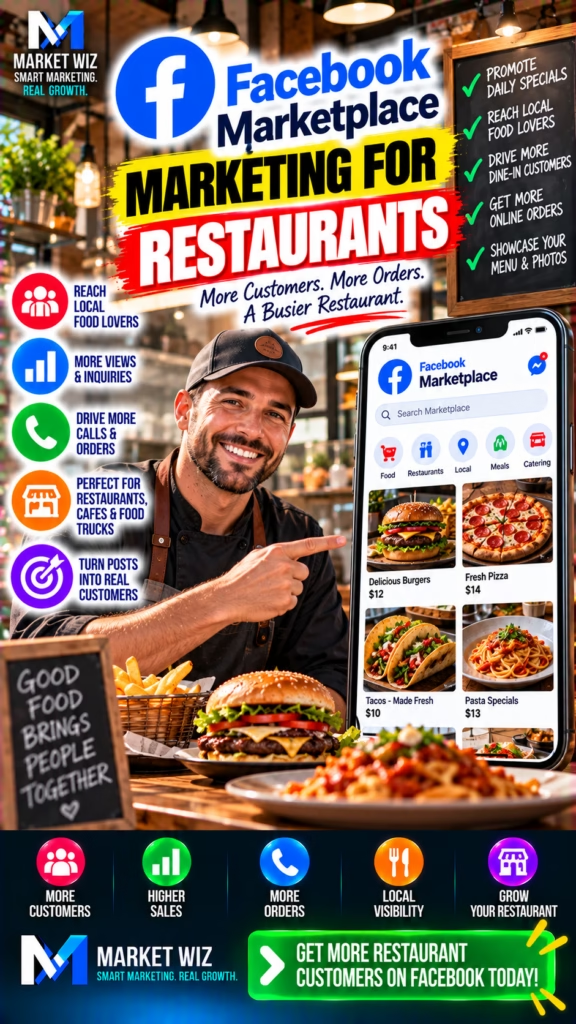
Facebook Marketplace Marketing for Restaurants
Discover how restaurants can build stronger local visibility, attract nearby diners, generate catering inquiries, showcase menu highlights, and use Facebook's marketing ecosystem effectively—while understanding the important rules that govern Facebook Marketplace listings.
Restaurant Marketing in the Facebook Marketplace Era
Restaurants compete for attention in one of the most location-dependent industries in the economy. A customer choosing lunch, dinner, takeout, or catering usually wants a nearby business that offers appealing food, convenient ordering, reliable information, and a positive dining experience.
Facebook is one of several places where customers may encounter restaurants while browsing local community updates, following businesses, viewing short videos, and interacting with friends.
This creates opportunities for restaurant owners to build awareness and communicate with nearby customers.
However, there is an important distinction between Facebook Marketplace and the broader collection of Facebook business marketing features.
Marketplace is primarily designed for eligible product listings. It is not a general-purpose restaurant advertising directory, and businesses should not assume that prepared meals, catering services, restaurant delivery, or other food-related offerings are permitted as Marketplace listings.
Meta's commerce rules can restrict food, regulated products, services, and other categories. Restaurant owners must verify the current policies and their account eligibility before creating any Marketplace listing.
A restaurant should never disguise a catering service or meal promotion as an unrelated physical product to bypass platform restrictions.
Important distinction: Facebook Marketplace marketing for restaurants should begin with eligibility and compliance. Most everyday restaurant promotion is better suited to Facebook Pages, permitted Facebook Groups, Instagram, restaurant websites, Google Maps, and appropriate paid advertising—not ordinary Marketplace listings.
That distinction does not make Facebook irrelevant to restaurant growth. It simply means restaurants need to use the correct features for the correct marketing goals.
A restaurant can showcase new menu items on its Page, promote permitted community events, publish authentic food videos, communicate with customers, and connect social media traffic with online ordering or reservation systems.
Restaurants with eligible physical products may also evaluate whether any Marketplace opportunities exist under the current rules. Examples might include permitted restaurant equipment or other eligible non-food merchandise, subject to the applicable policies.
The strongest strategy combines accurate local information, engaging content, practical customer communication, and measurable business outcomes.
This comprehensive guide explains thirty essential restaurant marketing strategies and how they fit into Facebook's broader ecosystem.
1. Understand Facebook Marketplace Rules Before Advertising a Restaurant
The first step in restaurant Marketplace marketing is understanding what the platform allows.
Facebook Marketplace is not interchangeable with a Facebook business Page. A business Page is designed to represent a company, share updates, and communicate with customers through available features.
Marketplace focuses on eligible listings for specific items.
Restaurant owners should be particularly careful because food products and services may be restricted under Meta's commerce policies.
A restaurant advertising a dinner special, prepared meal, or catering package should not assume that the offer belongs in Marketplace.
Instead, the business can publish appropriate promotions through its Page, website, permitted community Groups, or other approved channels.
Restaurant Marketing Compliance Checklist
- Review current Meta Commerce Policies before listing products.
- Verify whether the restaurant account can access the relevant selling features.
- Check whether the exact product category is eligible.
- Do not list prohibited food products or services.
- Do not use misleading categories or placeholder merchandise.
- Follow applicable local food safety and advertising requirements.
- Keep prices, product details, and availability accurate.
Policies and feature availability can change. A compliant marketing strategy requires periodic review rather than relying on assumptions from previous campaigns.
2. Use the Full Facebook Marketing Ecosystem Instead of Relying on Marketplace Alone
A restaurant's marketing needs extend beyond the capabilities of a product listing.
Restaurants need to communicate menus, dining hours, reservation availability, takeout options, special events, and customer experiences.
Facebook provides several different environments where appropriate restaurant content may appear.
Facebook Business Page
Share restaurant updates, food photographs, business information, and relevant promotions.
Facebook Groups
Participate in local community discussions and permitted promotional opportunities.
Facebook Reels
Showcase authentic cooking, food preparation, and restaurant atmosphere through short videos.
Facebook Marketplace
Consider only genuinely eligible physical products and permitted listing activity.
These channels serve different purposes.
A restaurant promoting a weekend brunch special should generally use its business Page or other suitable promotional features.
A restaurant seeking catering clients can direct potential customers to a dedicated catering page.
A restaurant selling eligible surplus equipment may evaluate Marketplace if the specific item and seller account satisfy current requirements.
Using the correct channel reduces the risk of policy violations and improves the relevance of the marketing message.
3. Identify the Restaurant's Most Valuable Local Audience
Restaurant marketing becomes more effective when the business understands which customers it is trying to reach.
A neighborhood breakfast restaurant may depend heavily on nearby residents and commuters.
A downtown lunch restaurant may attract office employees, visitors, and customers attending local appointments.
A family restaurant may appeal to households searching for convenient group dining.
A restaurant with private dining facilities may attract event planners and business groups.
Each audience has different priorities.
Some customers value speed. Others prioritize menu variety, atmosphere, dietary information, price, or reservation convenience.
Businesses should identify their most profitable customer segments before creating a content calendar.
Create separate messaging themes for everyday dining, takeout, catering, private events, and other actual offerings. Connect each theme to the appropriate customer need and use a marketing channel that permits the promotion.
4. Build a Professional Facebook Business Page for the Restaurant
A complete Facebook business Page provides a foundation for the restaurant's social media presence.
Customers may visit the Page after discovering a photograph, video, recommendation, or local community discussion.
If the Page contains outdated hours or an incomplete address, customers may struggle to plan their visit.
The restaurant should display its correct business name, physical location, phone number, website, and available dining information.
The Page should also include authentic photographs and clear information about the restaurant's cuisine and dining experience.
Essential Restaurant Page Information
- Official restaurant name and correct location
- Current business hours and holiday updates
- Accurate contact number
- Menu or official menu link
- Website and available ordering links
- Reservation information where applicable
- Takeout and delivery details
- Authentic food and restaurant photographs
A professional Page does not guarantee customer growth, but it reduces uncertainty and gives potential diners a reliable place to find information.
5. Use Authentic Food Photography to Attract Restaurant Customers
Food photography is one of the most important creative elements in restaurant marketing.
Customers frequently evaluate meals visually before deciding what to order.
A clear photograph can communicate portion presentation, ingredients, preparation style, and the overall appeal of a dish.
However, photographs should accurately represent what the restaurant actually serves.
Artificially enhanced images that substantially misrepresent portion sizes, ingredients, or presentation can create disappointed customers.
Restaurants should prioritize well-lit photographs of real menu items.
Signature Dishes
Show the restaurant's actual best-known menu items with accurate presentation.
Dining Atmosphere
Help customers understand the real environment before visiting.
Food Preparation
Share appropriate behind-the-scenes content that highlights genuine preparation.
Seasonal Specials
Photograph real limited-time offerings with clear availability information.
Consistent, authentic photography can make a restaurant's social presence more useful and recognizable.
6. Promote Daily Specials Through Appropriate Facebook Features
Daily specials give restaurants a practical reason to communicate with existing and prospective customers.
A lunch special may appeal to nearby workers.
A weekend brunch menu may attract families and groups.
A seasonal dish may interest customers looking for something different.
Facebook Page posts can communicate these promotions when the information is accurate and the content complies with applicable rules.
The restaurant should clearly explain what is included, the actual price, the applicable date, and any material conditions.
Weekend Brunch at a Local Restaurant
Enjoy our weekend brunch menu featuring freshly prepared breakfast favorites. Available Saturday and Sunday during posted brunch hours. View the current menu and reservation details on our official website.
This example is intended for an appropriate restaurant Page or other permitted promotional channel, not as a Marketplace listing.
Restaurants should avoid posting offers that are no longer available or creating urgency based on false claims.
7. Reach Nearby Diners Through Relevant Facebook Groups
Local Facebook Groups can be useful for restaurants because they bring together people who share a geographic area or community interest.
A neighborhood discussion Group may include residents seeking restaurant recommendations.
A community events Group may provide opportunities to share relevant event information.
A local business Group may connect restaurants with organizations planning meetings or catered lunches.
However, each Group has its own rules.
Some allow business promotions. Others restrict them or require administrator approval.
Restaurants should respect those requirements and avoid repetitive unsolicited posts.
Helpful participation often creates a better impression than posting the same advertisement in every community discussion.
Businesses can answer relevant questions, provide accurate information, and share permitted updates when they contribute to the Group's purpose.
8. Generate Catering Leads Through Facebook and Local Search
Catering can represent a different customer acquisition opportunity from everyday restaurant dining.
A catering customer may be organizing an office lunch, family gathering, wedding-related event, or community function.
They may need information about guest counts, menus, minimum orders, delivery arrangements, and advance booking requirements.
Because catering is a service, restaurants should not assume it is eligible for Marketplace listings.
Instead, they can use appropriate Facebook business content, their website, local search optimization, and permitted community outreach.
Information a Catering Landing Page Should Include
- Types of events served
- Available catering packages
- Menu options and applicable dietary information
- Minimum and maximum guest counts where relevant
- Service area and delivery arrangements
- Advance notice requirements
- Transparent pricing or quotation process
- Clear inquiry instructions
The objective is to make it easy for qualified customers to determine whether the restaurant can meet their event needs.
9. Use Facebook Marketing to Increase Takeout Awareness
Takeout customers often prioritize convenience.
They may want a familiar meal without spending time dining inside the restaurant.
Facebook content can remind nearby customers that takeout is available and explain how to place an order.
A useful takeout promotion includes accurate menu information, current hours, ordering instructions, and any relevant pickup details.
Restaurants should direct customers to an official ordering channel or another legitimate ordering method.
They should avoid implying that an unavailable dish can be ordered immediately.
Takeout marketing can also benefit from content highlighting packaging, pickup organization, and popular menu categories.
The goal is to reduce uncertainty about the ordering process.
10. Promote Restaurant Delivery Without Misleading Customers
Delivery marketing should begin with accurate information about where the restaurant actually delivers.
Some restaurants manage their own delivery.
Others use third-party delivery platforms.
Some offer delivery only during particular hours.
A Facebook promotion should reflect the actual arrangement.
If delivery fees, minimum orders, or geographic limitations apply, customers should be able to find those details before placing an order.
Delivery marketing principle: Make the ordering process clear. Promote real delivery availability through suitable business channels rather than using ineligible Marketplace listings to advertise a delivery service.
11. Use Facebook Reels to Showcase Food and Restaurant Atmosphere
Short-form video provides restaurants with an opportunity to show experiences that still photography cannot fully communicate.
A video might feature a chef plating a signature dish.
It might show fresh ingredients being prepared.
It might introduce the dining room or outdoor seating area.
It might highlight a seasonal menu addition.
The most useful videos are accurate, concise, and visually clear.
Restaurants do not need to make exaggerated claims or use unrelated footage to create compelling content.
Restaurant Reel Ideas
- A short introduction to a signature menu item
- Behind-the-scenes preparation of an actual dish
- A dining room walkthrough
- A chef explaining a seasonal special
- A real takeout order being prepared
- A preview of an upcoming permitted restaurant event
Each video should help viewers understand something genuine about the restaurant.
12. Use Facebook Stories for Timely Restaurant Updates
Stories can be useful for information that is relevant for a short period.
A restaurant may want to highlight today's soup, announce a temporary schedule adjustment, or share a brief look at current dining activity.
Because this information can change quickly, accuracy matters.
Restaurants should verify that a special is available before publishing it.
They should avoid announcing reservations or seating availability that has not been confirmed.
Stories can complement permanent Page content, but important business information should also remain accessible through reliable channels such as the restaurant website and business profile.
13. Turn the Restaurant Menu Into an Organic Marketing Asset
A restaurant menu contains valuable information about what makes the business relevant to customers.
Instead of promoting every menu item in the same way, restaurants can organize their marketing around customer needs.
A family may want a convenient dinner.
An office worker may be looking for a quick lunch.
A couple may want a restaurant for an evening out.
An event planner may need group dining options.
Restaurants can develop content around their actual menu categories and dining experiences.
For example, a restaurant with a legitimate vegetarian menu can explain its available choices.
A restaurant with gluten-free options should communicate accurate ingredient and preparation information without making unsupported safety guarantees.
A restaurant offering family meals can show what is included and how customers can order.
Clear menu marketing attracts customers whose preferences match the actual offering.
14. Combine Facebook Restaurant Marketing With Google Maps SEO
Facebook can support discovery through social content and community engagement.
Google Maps serves a different but complementary purpose.
Customers searching for restaurants nearby may use Google Search or Maps to compare dining options.
A restaurant's Google Business Profile can provide information such as location, hours, photographs, menu links, and customer reviews.
Maintaining an accurate profile helps customers make informed decisions.
Restaurants should select appropriate categories, keep their information current, and follow Google's business representation policies.
Facebook Marketing
Build awareness, share restaurant experiences, and communicate with community audiences.
Google Maps SEO
Support discovery when customers search for nearby dining options.
Restaurant Website
Provide menus, location details, reservation information, and ordering options.
Customer Reviews
Help prospective diners evaluate real customer experiences.
These channels can work together to create a more complete local customer journey.
15. Build Restaurant Trust Through Authentic Customer Reviews
Reviews can influence how prospective diners evaluate restaurants.
Customers may read reviews to understand food quality, service experiences, atmosphere, and consistency.
Restaurants should encourage genuine feedback without manipulating ratings.
They should not offer prohibited incentives in exchange for positive reviews.
They should not selectively pressure only satisfied customers to leave public feedback when doing so violates platform rules.
A professional response to a review can demonstrate that the restaurant takes customer experiences seriously.
Positive reviews can be acknowledged with appreciation.
Negative reviews can be addressed respectfully without disclosing private customer information.
Authentic feedback is more useful than manufactured praise.
16. Promote Restaurant Events Through Appropriate Facebook Features
Restaurant events can provide reasons for customers to visit beyond their regular dining habits.
Examples may include a special tasting menu, live entertainment where permitted, a community fundraiser, or a seasonal celebration.
Facebook Page and event features can help communicate accurate information about these activities.
The restaurant should explain the date, time, location, availability, and reservation requirements.
If an event requires a ticket or advance purchase, the terms should be clear.
Businesses should follow applicable laws, venue rules, and platform advertising policies.
Event promotions should not be disguised as ordinary Marketplace product listings.
17. Reach Local Office Workers and Lunch Customers
Restaurants near offices, industrial areas, medical facilities, and business districts may benefit from lunch-focused marketing.
Customers in these environments often have limited time.
They may value convenient pickup, predictable ordering, group meals, or straightforward lunch menus.
Restaurants can communicate these advantages through their websites, business Pages, and legitimate local partnerships.
A restaurant offering office catering can publish accurate package information and inquiry instructions.
A restaurant offering quick takeout can explain how customers can order ahead.
The marketing message should match the restaurant's actual capabilities.
18. Market Family Dining Experiences to Nearby Households
Family dining decisions may involve menu variety, seating arrangements, pricing, and convenience.
Restaurants that genuinely offer family-oriented options can communicate those details through appropriate social media content.
A family meal promotion should clearly identify what is included.
A restaurant with available high chairs or other amenities can explain those features accurately.
A restaurant offering group seating should avoid promising space that has not been confirmed.
Useful content helps families determine whether the restaurant fits their needs before making the trip.
19. Use Community-Focused Marketing for Small-Town Restaurants
Small-town restaurants often rely on repeat customers, local reputation, and community relationships.
Facebook can provide a convenient way to share relevant business updates with nearby residents.
A restaurant may announce a seasonal menu.
It may highlight participation in a local event.
It may share accurate changes to operating hours.
It may introduce a new dish or feature an existing favorite.
Community marketing works best when it is genuine.
Restaurants should avoid overwhelming local Groups with repetitive advertisements.
They should also maintain accurate Google Maps and website information so customers from surrounding communities can find the business.
20. Differentiate the Restaurant From Nearby Competitors
Restaurant marketing should explain what customers can actually expect from the business.
A restaurant may specialize in a particular cuisine.
It may offer a distinctive dining atmosphere.
It may be known for a specific signature dish.
It may provide convenient takeout or group dining.
The marketing message should highlight genuine differences rather than unsupported claims of being the best restaurant in the area.
Identify three authentic reasons customers choose the restaurant. Use those differentiators consistently in social content, website copy, photographs, and local business information.
21. Convert Restaurant Social Engagement Into Meaningful Customer Actions
Likes, comments, and video views can indicate interest, but they are not the same as restaurant revenue.
A restaurant may receive substantial engagement without generating measurable orders.
Marketing content should make the next step clear.
For a dining promotion, the next step may be reviewing the menu.
For an event, it may be checking reservation availability.
For catering, it may be requesting a quote.
For takeout, it may be visiting the official ordering page.
The restaurant should measure these actions when practical rather than evaluating performance solely through social engagement metrics.
22. Improve Restaurant Lead Response and Customer Communication
Restaurant customers often ask time-sensitive questions.
They may want to confirm opening hours.
They may need information about menu availability.
They may ask whether reservations are required.
They may want to discuss catering for a particular date.
Clear and timely communication can improve the customer experience.
Restaurants should assign responsibility for responding to inquiries and ensure staff have access to current information.
When a question requires confirmation, staff should verify the answer rather than guessing.
Businesses should also avoid promising reservations, event capacity, or delivery arrangements before confirming availability.
23. Use AI to Support Restaurant Marketing and Lead Management
AI can help restaurant teams organize content and reduce repetitive administrative work.
For example, AI tools can assist with drafting social media captions based on verified menu information.
They can help plan a content calendar.
They can organize frequently asked questions.
They can summarize catering inquiries for internal follow-up.
They can help prepare website content about the restaurant's actual offerings.
However, AI-generated content requires review.
Restaurants should verify all prices, ingredients, operating hours, menu availability, promotional conditions, and customer-facing claims.
AI should not invent menu items or claim that reservations have been confirmed when they have not.
Any automated communication or account activity must comply with applicable platform rules and laws.
AI marketing principle: Use AI to improve organization, content quality, and response preparation. Keep restaurant information accurate, protect customer data, and maintain human oversight for commitments and sensitive requests.
24. Track Catering Leads and Restaurant Marketing Opportunities With a CRM
A restaurant receiving catering inquiries needs a reliable way to manage them.
Without organized tracking, a potential customer may request information and never receive a useful follow-up.
A simple CRM or spreadsheet can help the restaurant track relevant business inquiries.
| Lead Field | Purpose |
|---|---|
| Inquiry Date | Record when the customer contacted the restaurant. |
| Marketing Source | Identify Facebook, Google, website, or another channel. |
| Event Type | Understand the catering or private dining request. |
| Requested Date | Determine when the event is planned. |
| Estimated Guest Count | Evaluate the restaurant's ability to accommodate the request. |
| Contact Details | Store appropriate customer-provided information. |
| Lead Status | Track inquiry, quotation, follow-up, and booking stages. |
| Booking Value | Measure confirmed business revenue. |
The restaurant should collect only the information needed for legitimate business purposes and handle it responsibly.
25. Measure Restaurant Marketing by Orders, Reservations, and Revenue
Restaurant owners need meaningful measurements to evaluate marketing investments.
A post with many views may increase awareness, but the business should also consider whether it generates actual customer activity.
Useful measurements may include attributed website visits, reservation inquiries, completed reservations, catering leads, confirmed events, online orders, and revenue.
Different restaurant campaigns should use different success metrics.
A catering campaign should be evaluated by qualified event inquiries and confirmed bookings.
A takeout promotion may be evaluated by attributable orders.
A restaurant awareness campaign may initially focus on relevant local reach and subsequent customer actions.
Illustrative example: A restaurant receives 50 catering inquiries, qualifies 15, and confirms five bookings. The inquiry-to-booking rate is 10%. These figures are hypothetical and are not performance claims. The restaurant should also evaluate booking revenue, operating costs, and profit.
26. Build a Consistent Restaurant Social Media Content Calendar
A content calendar helps restaurants avoid repetitive posts and maintain a useful mix of information.
Rather than publishing the same promotion every day, restaurants can rotate among genuine menu highlights, customer information, staff introductions, dining experiences, and timely updates.
The schedule should match the restaurant's resources.
A small restaurant may prefer fewer high-quality posts.
A larger restaurant group may have staff dedicated to daily content.
| Day | Content Theme | Marketing Purpose |
|---|---|---|
| Monday | Signature Dish | Introduce a popular menu item. |
| Tuesday | Behind-the-Scenes Video | Show authentic food preparation. |
| Wednesday | Lunch or Takeout Information | Communicate convenient ordering options. |
| Thursday | Restaurant Atmosphere | Help customers understand the dining experience. |
| Friday | Weekend Menu Highlight | Share current menu information. |
| Saturday | Community or Event Update | Communicate relevant local activity. |
| Sunday | Upcoming Week Preview | Share verified schedules and menu updates. |
This calendar is an example, not a required posting frequency. Restaurants should adapt it to actual customer demand and available content.
27. Strengthen Restaurant Website SEO Alongside Facebook Marketing
A restaurant website can serve as the central destination for important customer information.
Social platforms may introduce customers to the restaurant, but the website can provide a more complete explanation of the menu, location, dining options, and ordering process.
Search engine optimization helps make that information accessible to customers searching online.
Restaurants should use clear page titles, descriptive headings, accurate business information, and mobile-friendly design.
Useful website pages may include the menu, contact information, catering, private dining, and restaurant location.
Businesses should avoid creating misleading location pages for areas where they do not genuinely operate.
A coordinated strategy can connect Facebook content with relevant website pages, helping customers find the information they need.
28. Avoid Common Facebook Marketing Mistakes Restaurants Make
Restaurant marketing problems often begin with inaccurate information or inappropriate channel selection.
A restaurant may publish a promotion after the special has sold out.
It may leave outdated hours on its business Page.
It may use photographs that do not represent the actual dish.
It may overlook customer inquiries.
It may attempt to promote catering through Marketplace even though service listings are restricted.
Common Mistakes to Avoid
- Using Marketplace for ineligible food or service offers
- Publishing inaccurate menus or prices
- Posting outdated operating hours
- Using misleading or unrelated food photographs
- Ignoring legitimate customer questions
- Publishing repetitive promotions without useful information
- Failing to provide ordering or reservation instructions
- Making unsupported claims about food ingredients or dietary suitability
- Measuring only likes and views
- Failing to track confirmed catering opportunities
Avoiding these mistakes can improve marketing quality and reduce customer confusion.
29. A Step-by-Step Facebook Marketing Workflow for Restaurants
Verify Platform Eligibility
Review current Meta policies and distinguish eligible Marketplace products from restaurant meals, catering, and other services.
Audit the Restaurant's Online Information
Confirm that Facebook, Google, and website details accurately reflect the business.
Identify Priority Customer Segments
Separate everyday dining, takeout, catering, and event marketing according to the restaurant's actual offerings.
Prepare Authentic Content
Photograph real dishes, record useful videos, and verify promotional information.
Select Appropriate Channels
Use Facebook Pages, permitted Groups, Instagram, Google Maps, and the restaurant website for relevant marketing activities.
Publish Consistently
Follow a sustainable content schedule that emphasizes useful information rather than repetitive advertising.
Respond to Customer Inquiries
Maintain accurate menu, reservation, ordering, and catering information for staff handling messages.
Organize Qualified Leads
Track relevant catering and private dining opportunities using a CRM or structured spreadsheet.
Measure Business Outcomes
Evaluate attributed orders, reservations, confirmed bookings, revenue, and marketing costs.
Improve the Strategy
Use actual performance data to refine content, channel selection, and customer communication.
30. Turn Restaurant Social Marketing Into a Long-Term Customer Acquisition System
Restaurant marketing works best when it becomes a consistent business process rather than a series of disconnected promotions.
A restaurant may begin by improving its Facebook Page.
It may update its menu links, photographs, contact information, and operating hours.
It may develop a content schedule based on actual menu offerings and customer interests.
It may begin publishing short videos showing food preparation and the dining environment.
It may participate in permitted community discussions.
It may strengthen its Google Business Profile and restaurant website.
Each improvement helps customers understand the business more clearly.
The restaurant should then connect marketing activity to useful customer actions.
Customers interested in dining should find current hours and location information.
Customers interested in takeout should find accurate ordering instructions.
Customers interested in catering should find relevant menu packages and a straightforward inquiry process.
Customers considering a private event should understand what information the restaurant needs before providing a quotation.
The next stage is communication.
Restaurants should have a practical process for responding to questions.
Staff should know where to find current menu information.
They should understand reservation procedures.
They should be able to explain genuine takeout and delivery options.
They should know how to handle catering inquiries.
If a request requires confirmation, they should verify the information before making a commitment.
This process can reduce confusion and improve the customer experience.
The restaurant should also measure outcomes.
Which content themes generate relevant interest?
Which channels produce reservation inquiries?
Which campaigns lead to attributable orders?
Which catering inquiries become confirmed bookings?
Which marketing activities justify their cost?
These questions help the business focus on results rather than activity alone.
A restaurant may discover that short videos generate useful local awareness.
It may find that Google Maps produces customers actively searching for nearby dining.
It may determine that community relationships generate valuable catering opportunities.
It may learn that certain menu highlights produce more meaningful website visits.
The business can use these observations to improve its marketing allocation.
AI can support this process by organizing content plans, assisting with accurate copy, and helping teams manage permitted customer communication.
However, the restaurant should maintain oversight and ensure all information reflects real operations.
Marketplace eligibility remains an important boundary.
The restaurant should not assume that ordinary meals, prepared food, catering packages, or delivery services can be advertised as Marketplace listings.
If the business has a genuinely eligible physical product, it can evaluate the relevant rules before creating a listing.
For everyday restaurant promotion, the more appropriate strategy is to use business Pages, permitted Groups, social content, local SEO, and other compliant marketing channels.
The long-term objective is straightforward: help nearby customers discover the restaurant, understand its offerings, communicate efficiently, and make informed purchasing decisions.
That objective can support more sustainable growth than relying on repetitive promotional posts or a single advertising platform.
30 FAQs About Facebook Marketplace Marketing for Restaurants
1. Can restaurants advertise on Facebook Marketplace?
Restaurants can market through Facebook's business features, but ordinary restaurant meals, food services, and catering offers should not be assumed eligible for Marketplace listings. Sellers must check current Meta Commerce Policies, product eligibility, and account requirements.
2. Is Facebook Marketplace good for restaurant marketing?
Facebook Marketplace may provide limited opportunities for eligible restaurant-related physical products, while Facebook Pages, Groups, Instagram, and Google Business Profile are generally more appropriate for promoting meals, dining, and catering.
3. Can restaurants list prepared meals on Facebook Marketplace?
Restaurants should not assume prepared meals are permitted Marketplace products. Food and other regulated categories can face restrictions, and current Meta policies and applicable food laws must be reviewed before listing.
4. Can restaurants advertise catering on Facebook Marketplace?
Catering is a service, and Marketplace generally restricts service listings. Restaurants should promote catering through appropriate Facebook Page features, permitted Groups, their websites, and local search channels.
5. What is the best Facebook marketing strategy for restaurants?
A strong restaurant Facebook strategy combines an accurate business Page, authentic food photography, useful local content, responsive messaging, compliant promotions, and tracking of reservations, orders, and catering inquiries.
6. How can restaurants attract local customers on Facebook?
Restaurants can publish location-relevant content, maintain accurate hours and menus, participate appropriately in local Groups, showcase real food, and make reservations or ordering easy.
7. Can restaurants promote daily specials through Facebook?
Yes. Restaurants can promote accurate daily specials through appropriate Facebook Page posts and other permitted features, while ensuring availability, prices, and promotional terms are clear.
8. Does Facebook Marketplace allow restaurant services?
Marketplace generally restricts service listings. Restaurants should not disguise dining, delivery, or catering services as physical product listings to bypass those restrictions.
9. How can restaurants generate catering leads?
Restaurants can create dedicated catering pages, publish menu packages, use local search optimization, participate in permitted community promotions, and respond promptly to qualified event inquiries.
10. Are Facebook Groups useful for restaurant advertising?
Local Facebook Groups can help restaurants connect with communities when promotional posts are allowed by group administrators and comply with Meta rules.
11. Can Facebook marketing increase restaurant reservations?
Facebook marketing may increase awareness and reservation inquiries when posts contain accurate restaurant information and convenient booking options, but results are not guaranteed.
12. What restaurant photos perform best on Facebook?
Clear, authentic images of actual menu items, dining spaces, staff, and restaurant experiences can help customers evaluate the business.
13. Should restaurants use Facebook Reels?
Reels can help restaurants showcase food preparation, menu highlights, and atmosphere through short videos, provided the content accurately represents the business.
14. How often should restaurants post on Facebook?
Restaurants should choose a sustainable schedule based on available content, customer activity, and measured engagement rather than assuming a fixed posting frequency guarantees results.
15. Can restaurants market without paid Facebook ads?
Yes. Organic Page content, community engagement, customer referrals, local SEO, and useful restaurant information can support discovery without paid Meta advertising.
16. How does Google Maps SEO help restaurants?
Google Maps SEO helps restaurants maintain an accurate and useful local business presence through their Google Business Profile, including hours, categories, menus, photographs, and reviews.
17. Can AI help restaurant social media marketing?
AI can assist with content planning, caption drafting, review organization, and permitted customer communication, but restaurants should verify all prices, menu items, hours, and claims.
18. What should a restaurant Facebook Page include?
A restaurant Page should include its correct name, address, phone number, hours, menu information, website, suitable photographs, and available contact or reservation options.
19. How can restaurants promote takeout orders?
Restaurants can highlight takeout availability through appropriate Page posts, menu links, websites, and permitted local promotions with accurate ordering instructions.
20. Can restaurants promote delivery on Facebook?
Yes. Restaurants can communicate legitimate delivery availability through suitable Facebook business features and other compliant channels, with accurate areas, fees, and ordering information.
21. How can restaurants reach nearby office workers?
Restaurants can promote lunch menus, group ordering, and catering through local business relationships, search visibility, and appropriate social media content.
22. Is Facebook marketing useful for small-town restaurants?
Facebook marketing can help small-town restaurants communicate with nearby communities, showcase specials, and promote events through suitable Pages and Groups.
23. How do restaurants measure Facebook marketing success?
Restaurants can track website visits, reservation inquiries, attributed orders, catering leads, completed bookings, and revenue while distinguishing engagement metrics from actual sales.
24. Can restaurants use Facebook to promote events?
Restaurants can use appropriate Facebook Page and event features to share accurate information about permitted events, dates, schedules, and reservation requirements.
25. What are common restaurant Facebook marketing mistakes?
Common mistakes include outdated menus, misleading food photographs, inaccurate hours, unclear promotions, slow responses, excessive repetitive posts, and using Marketplace for ineligible offers.
26. Should restaurants use Instagram with Facebook?
Instagram and Facebook can complement each other by showcasing food, restaurant atmosphere, local promotions, and customer experiences across different content formats.
27. Can restaurant reviews improve local marketing?
Authentic customer reviews can help prospective diners evaluate a restaurant. Businesses should request reviews without prohibited incentives and respond professionally.
28. How can restaurants improve response times?
Restaurants can assign message responsibilities, maintain current menus and hours, prepare accurate responses, and use permitted messaging tools to help customers efficiently.
29. Can Facebook Marketplace replace restaurant advertising?
Marketplace is not a general replacement for restaurant advertising because meals and services may be restricted. Restaurants should prioritize eligible business marketing features, local search, and appropriate social channels.
30. How can Market Wiz AI help restaurant marketing?
Market Wiz AI offers organic marketing support including Google Maps SEO, social media content, website SEO, and AI-assisted lead management. Any Marketplace activity must involve eligible products and comply with current platform policies.
30 Additional SEO Keywords for Restaurant Facebook Marketing
These search phrases provide opportunities for supporting articles, location-specific restaurant marketing guides, catering content, and educational resources about organic customer acquisition.
Build a Smarter Restaurant Marketing Strategy With Facebook, Google Maps, and Organic SEO
Facebook offers restaurants meaningful opportunities to communicate with local customers, showcase genuine dining experiences, and promote their businesses through appropriate marketing features.
However, the distinction between Facebook Marketplace and Facebook's broader business ecosystem is essential.
Marketplace is not a general-purpose restaurant directory.
It is not a substitute for a restaurant's menu.
It is not automatically an appropriate place to advertise prepared meals.
It is not automatically an appropriate place to advertise catering.
It is not a channel where businesses should disguise services as physical products.
Restaurants must evaluate current product restrictions, account eligibility, and applicable commerce policies before using Marketplace.
For most everyday restaurant marketing activities, a business Page, permitted community Groups, short-form videos, local search, and the restaurant website provide a more suitable foundation.
The opportunity begins with accurate information.
A customer searching for a restaurant should be able to identify its location.
They should be able to confirm operating hours.
They should be able to review the current menu.
They should be able to understand available dining arrangements.
They should be able to find appropriate reservation or ordering instructions.
When that information is incomplete, the customer may choose another restaurant.
When it is accurate and accessible, the business creates a more convenient customer experience.
A complete Facebook Page can help communicate this information.
An optimized Google Business Profile can support discovery through local search.
A useful website can provide additional details about menus, catering, private dining, and ordering.
Together, these channels can help customers move from discovery to action.
The restaurant should also invest in authentic visual content.
Food is a highly visual part of the dining experience.
Customers may want to see how a signature dish is presented.
They may want to understand the restaurant's atmosphere.
They may be interested in the preparation process.
They may want to see the seating environment before planning a visit.
Authentic photographs and short videos can communicate these details.
The key is accuracy.
A photograph should represent a real dish.
A menu description should reflect actual ingredients.
A promotional price should be correct.
A seasonal special should be available during the advertised period.
A video should not imply that an unrelated restaurant or kitchen belongs to the business.
Accurate content helps customers make informed decisions and supports long-term trust.
Restaurants should also organize their marketing around different customer needs.
An everyday diner may be looking for lunch.
A family may be searching for a convenient dinner.
A visitor may need a restaurant near a particular location.
An office manager may need catering for a meeting.
An event planner may be looking for private dining.
Each customer has a different reason to contact the restaurant.
A single generic advertisement may not answer all of these needs.
Restaurants can create useful content for each audience while maintaining a consistent brand identity.
Lunch marketing can emphasize accurate menu and ordering information.
Dinner marketing can showcase the real dining experience.
Catering content can explain package options, event requirements, and inquiry procedures.
Private dining content can provide capacity information and booking details.
Takeout marketing can simplify the ordering process.
These activities should use appropriate promotional channels.
A business Page may be suitable for menu announcements.
A restaurant website may be appropriate for detailed catering information.
Google Maps can help nearby customers find the business.
Permitted Facebook Groups may provide opportunities for community engagement.
Instagram and Reels can support visual storytelling.
The marketing strategy should use each channel according to its purpose.
This approach is more sustainable than attempting to force every restaurant promotion into Marketplace.
It also allows the business to measure different outcomes.
For example, a restaurant may use a short video to introduce a new menu item.
The video may lead customers to visit the restaurant Page.
Some may review the menu.
Others may visit the website.
Some may place an order or make a reservation.
The restaurant should evaluate the actions it can reliably attribute to the campaign.
Social engagement is useful context, but it is not a substitute for revenue measurement.
A catering inquiry may be more valuable than many casual social media interactions.
A confirmed private dining booking may justify a targeted marketing effort.
An attributable takeout order may provide evidence that a promotion reached a relevant customer.
The restaurant should identify the outcomes that matter to its business model.
A simple CRM can help organize higher-value inquiries.
Catering leads can be tracked from initial contact through quotation and confirmed booking.
Private event requests can be organized by date, guest count, and availability.
Customer information should be handled responsibly.
The objective is to provide reliable follow-up and improve business operations.
AI can assist with these workflows.
It can help draft content based on verified information.
It can organize common customer questions.
It can support internal planning.
It can help teams prepare responses and summarize relevant inquiries.
However, restaurants should maintain human oversight.
AI should not invent menu prices.
It should not promise unavailable reservations.
It should not make unsupported dietary or allergen claims.
It should not confirm catering availability without verification.
It should not be used to bypass platform rules.
Responsible AI-assisted marketing depends on accurate business information and appropriate controls.
Another important part of long-term growth is consistency.
Restaurant hours should match across the website, Facebook Page, and Google Business Profile.
Menus should reflect current offerings.
Ordering links should work.
Reservation instructions should be clear.
Contact details should remain current.
Customers should not encounter contradictory information depending on which platform they visit.
Maintaining this consistency can reduce unnecessary customer questions and improve the overall experience.
The restaurant should also evaluate local competition realistically.
Nearby restaurants may serve similar food.
They may compete for the same lunch customers.
They may offer overlapping catering options.
They may attract customers from similar neighborhoods.
A restaurant does not need to make unsupported claims about competitors to differentiate itself.
It can explain its genuine strengths.
These may include a distinctive menu, a particular cuisine, convenient ordering, a specific atmosphere, or actual event capabilities.
Authentic differentiation is more useful than generic promotional language.
Businesses should also remain realistic about results.
No Facebook marketing strategy guarantees full dining rooms.
No social media schedule guarantees increased reservations.
No local SEO strategy guarantees a particular Google Maps ranking.
No AI tool can eliminate competition or customer uncertainty.
Marketing performance depends on the restaurant's location, demand, pricing, food quality, customer experience, competition, operations, and many other factors.
The practical objective is to improve the business's ability to reach relevant customers and help them make informed decisions.
An organic-first approach can support that objective without requiring every customer interaction to begin with paid advertising.
Useful social content can introduce the restaurant.
Accurate local business information can support search discovery.
Authentic reviews can help customers evaluate experiences.
A clear website can explain menus and booking options.
Organized communication can help turn inquiries into appropriate next steps.
Together, these activities form a more complete restaurant marketing system.
Paid advertising may still be useful when it supports a defined business goal and produces worthwhile results.
However, restaurants can evaluate their existing organic opportunities before deciding how much to invest in additional promotion.
The best approach is not simply to publish more content.
It is to publish more useful content.
It is not simply to attract more messages.
It is to help suitable customers find the information they need.
It is not simply to collect catering inquiries.
It is to identify legitimate opportunities and manage them reliably.
It is not simply to increase visibility.
It is to connect visibility with measurable restaurant outcomes.
Facebook Marketplace marketing for restaurants therefore requires a broader understanding of the platform.
Marketplace itself may have limited applications because of product and service restrictions.
But Facebook's wider marketing ecosystem can support restaurant awareness, local engagement, customer communication, and appropriate promotions.
When combined with Google Maps SEO, website optimization, authentic content, and organized lead management, these channels can help restaurants build a more effective customer acquisition process.
The foundation remains straightforward: accurate information, genuine customer value, responsible marketing, and consistent execution.
Restaurants that focus on those principles are better positioned to evaluate which marketing activities contribute to sustainable business growth.
Grow Your Restaurant With Smarter Organic Marketing
Market Wiz AI helps businesses strengthen local visibility through Google Maps SEO, AI-assisted social media marketing, website optimization, organic customer acquisition, and organized lead management. Build a coordinated restaurant marketing strategy that connects nearby customers with your actual menus, dining experiences, catering opportunities, and business information.
Get Started With Market Wiz AI© Market Wiz AI. Facebook, Facebook Marketplace, Instagram, Messenger, and Meta are trademarks or products of Meta Platforms, Inc. Market Wiz AI is not affiliated with or endorsed by Meta unless expressly stated. Google Maps and Google Business Profile are products of Google LLC. Marketplace is not a general restaurant advertising platform. Food, prepared meals, catering services, and other restaurant offerings may be restricted or ineligible under Meta Commerce Policies. Sellers must verify current eligibility and comply with applicable platform policies, food regulations, and advertising laws. Listing visibility, local search rankings, restaurant reservations, orders, catering inquiries, sales, and revenue are not guaranteed. Results depend on market demand, competition, location, operations, pricing, customer experience, and marketing execution.