Facebook Marketplace Advertising for Contractors
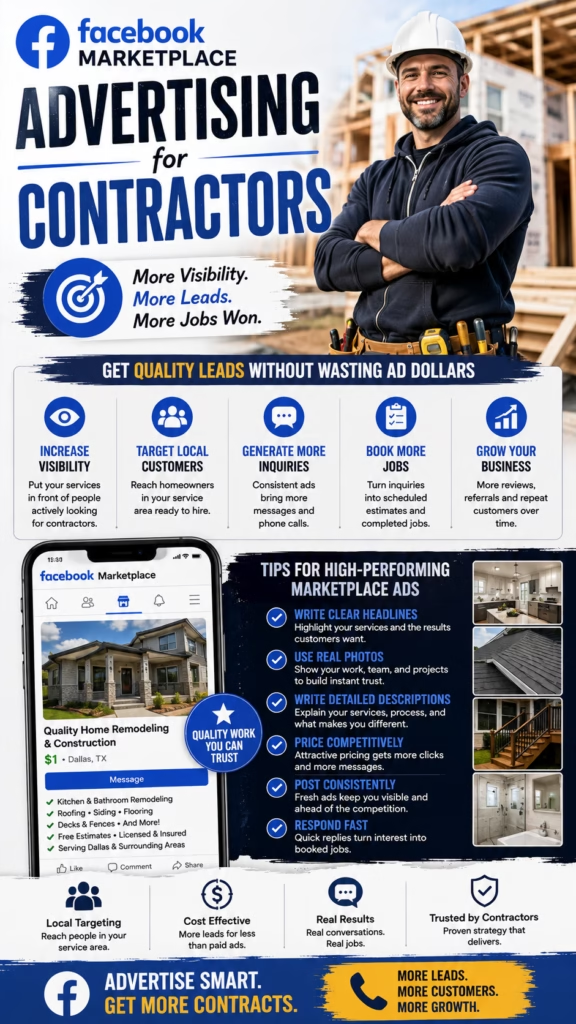
Facebook Marketplace advertising for contractors can create another source of local customer visibility when contractors, dealers, suppliers, and home-improvement businesses use legitimate physical-product listings instead of trying to disguise service-only advertising as items for sale. Flooring materials, fencing materials, doors, cabinets, fixtures, building supplies, equipment, siding products, hardware, and other eligible physical inventory can create buyer conversations that may lead to product sales and longer-term customer relationships. Strong performance requires accurate pricing, genuine product information, strong images, real local targeting, fast responses, buyer qualification, CRM attribution, follow-up, and measurable profitability.
Contractors often think about Facebook Marketplace as a place to advertise services.
That approach can create problems when the platform is being used for physical items rather than service-only listings.
A stronger contractor strategy begins with something tangible.
A flooring company may sell luxury vinyl plank.
A fencing company may sell fence panels, posts, or gates.
A remodeling company may sell cabinets, doors, fixtures, or other materials.
A siding business may sell physical siding products.
A roofing supply business may sell eligible roofing materials.
A building supplier may sell trim, hardware, panels, or construction materials.
An equipment company may sell machinery or tools.
Those physical products can create legitimate buyer intent.
Once a buyer asks about the material, the business has a real sales conversation.
The buyer may need one box.
They may need enough material for an entire room.
They may be a homeowner.
They may be a property investor.
They may be a landlord.
They may be another contractor.
They may be a commercial buyer purchasing in volume.
The key is starting with a truthful physical-product offer.
Then the business can build a proper customer-acquisition process around that buyer interest.
The Contractor Marketplace Formula
Genuine Physical Product + Accurate Price + Strong Images + Verified Specifications + Local Relevance + Fast Buyer Response + Quantity Qualification + CRM Attribution + Follow-Up + Customer Conversion = Stronger Contractor Marketplace Advertising
The Facebook Marketplace Opportunity for Contractors
Local Product Demand
Homeowners and contractors regularly shop locally for materials, fixtures, equipment, and improvement products.
High Purchase Intent
A customer asking about quantity, pickup, measurements, or material price may already have an active project.
Project-Level Opportunities
Material buyers may have larger renovation or construction needs beyond the initial product purchase.
Commercial Buyer Potential
Contractors, investors, landlords, and property managers may purchase materials repeatedly.
Repeat Customer Potential
A successful first transaction can create future product or project opportunities.
Measurable Customer Acquisition
Product inquiries can be connected with purchases, customers, revenue, gross profit, and future work.
Use a Product-First Marketplace Strategy
Contractors can improve Marketplace positioning by asking a simple question:
What physical product can the customer actually buy?
Flooring Materials
Luxury vinyl plank, laminate, engineered hardwood, tile, underlayment, trim, or other eligible flooring products may create direct product demand.
Fencing Materials
Panels, posts, rails, gates, and hardware can create real buyer intent.
Doors and Windows
Physical doors, windows, hardware, or related inventory can be marketed around accurate dimensions and specifications.
Cabinets
Cabinet boxes, vanities, doors, hardware, or complete sets can create higher-value buyer conversations.
Building Materials
Panels, siding, trim, fixtures, lumber products, hardware, or other eligible building goods can support local product marketing.
Equipment
Tools, machinery, trailers, generators, or other eligible equipment may fit some contractor businesses.
Make the Physical Product the Hero
The Marketplace listing should make it immediately obvious what physical item the customer can purchase, how it is priced, and what important specifications apply.
Do Not Disguise Contractor Services as Physical Products
A service-only advertisement should not be turned into a fake product listing simply to gain Marketplace visibility.
Avoid Fake $1 Listings
If a contractor is not actually selling something for $1, that price creates the wrong expectation.
Avoid Fake Product Photos
A picture of a completed roof does not automatically make roofing labor a physical product listing.
Avoid Service-Only Headlines
Titles such as “Roof Repair Service” or “House Painting Service” may not fit a product-first Marketplace strategy.
Use Genuine Materials Instead
Contractors who genuinely sell physical materials can build listings around those products.
Keep Additional Services Separate
If installation or other assistance is separately available and can be discussed appropriately, keep the product itself central to the listing.
Choose the Right Contractor Products to Promote
Not every physical product deserves equal marketing attention.
Products With Clear Local Demand
Start with materials people already search for.
Products With Understandable Pricing
The buyer should quickly understand what one unit costs.
Products With Strong Visual Appeal
Flooring, cabinets, fencing, doors, fixtures, and similar products often perform well visually.
Products With Useful Specifications
Dimensions, thickness, material, finish, color, capacity, and package size can create meaningful buyer intent.
Products With Healthy Margins
Lead generation should ultimately support profitable customer acquisition.
Products With Repeat Purchase Potential
Contractors, landlords, and property investors may return for additional materials.
Target Genuine Local Markets
Contractors and building-material sellers depend heavily on geography.
Pickup Radius
Consider how far a customer will realistically travel to obtain materials.
Warehouse Location
Accurate warehouse or store geography can improve buyer qualification.
Delivery Area
Only claim delivery where it is genuinely available.
Project Geography
If a material inquiry develops into a broader project discussion, location can determine whether the project fits.
Multi-Location Dealers
Each location can track its own Marketplace customer acquisition.
Local Relevance Improves Buyer Quality
A nearby customer who understands where the material is located is more likely to progress toward a pickup, store visit, delivery discussion, or purchase.
Write Better Facebook Marketplace Titles for Contractor Products
Lead With the Physical Product
Make the item obvious.
Add an Important Specification
Material type, dimensions, thickness, finish, model, style, or quantity can improve relevance.
Add Accurate Pricing Context
Per square foot, per panel, per piece, per box, per bundle, or per unit should be clear where applicable.
Add Local Context When Useful
A real city or market can help buyers understand pickup geography.
Avoid Service-Only Language
Keep the listing focused on the actual item being sold.
Contractor Marketplace Title Formula
[Physical Product] + [Verified Specification] + [Accurate Unit Price or Genuine Local Context]
Write Contractor Marketplace Descriptions That Pre-Qualify Buyers
Explain Exactly What Is Sold
Buyers should know whether they are purchasing one piece, one panel, one box, one bundle, one square foot, or another unit.
Explain Material Type
Vinyl, wood, steel, aluminum, composite, laminate, engineered wood, or other materials should be represented accurately.
Explain Dimensions
Building materials are often size-sensitive.
Explain Condition
New, used, surplus, open-box, or another condition should be accurate.
Explain Quantity
Bulk buyers need to understand available volume.
Explain Pickup or Delivery
Use only real logistics options.
Explain the Next Step
Buyers should know what information to provide when they inquire.
Use Accurate Product Pricing in Contractor Marketplace Listings
Contractor materials often use specialized pricing units.
Per Square Foot
Flooring, tile, and some building materials may use square-foot pricing.
Per Panel
Fencing, siding, or panel-based materials may use per-panel pricing.
Per Box
Flooring, tile, fixtures, fasteners, or other packaged goods may be priced by the box.
Per Piece
Doors, posts, hardware, cabinets, and similar products may have individual prices.
Per Bundle
Some materials are sold in bundles or lots.
Starting Prices
If products genuinely begin at a certain amount, make clear which item or category that price applies to.
Never Make the Buyer Guess What the Price Means
Clear pricing units improve lead quality because customers can estimate project material costs before contacting the seller.
Use Strong Product Images for Contractor Marketplace Advertising
Show the Physical Material
Buyers should clearly see what is being sold.
Show Texture
Flooring, siding, cabinetry, fencing, and decorative materials benefit from close-up detail.
Show Packaging
Boxes, bundles, labels, or product displays can reinforce that the listing is for a physical item.
Show Scale
Doors, fence panels, cabinets, equipment, and building components should be photographed with useful proportion.
Show Multiple Angles
Buyers may need front, side, back, edge, and detail views.
Do Not Misrepresent Condition
Damage, wear, surplus condition, or imperfections should not be intentionally hidden.
Include Useful Contractor Product Specifications
Flooring
- Material category
- Price per square foot
- Thickness where verified
- Plank dimensions where verified
- Finish or color
- Package quantity
Fencing
- Panel dimensions
- Material
- Color or finish
- Post dimensions
- Gate size where applicable
- Quantity available when verified
Doors
- Height
- Width
- Material
- Interior or exterior use
- Finish
- Hardware included where verified
Equipment
- Brand
- Model
- Capacity
- Power requirements
- Condition
- Included attachments
Keep Contractor Marketplace Inventory Current
Remove Sold Items
Do not keep generating leads for unavailable material.
Update Quantity
Customers may need enough material to complete an entire project.
Update Price
Material pricing can change and listings should stay aligned with actual selling terms.
Update Colors and Variants
Do not advertise finishes or models that are unavailable.
Track Warehouse Location
Multi-location businesses should know where each product is physically located.
Inventory Accuracy Protects Contractor Lead Quality
A customer who needs 600 square feet of flooring should not discover after a long conversation that only 120 square feet remains.
Respond Quickly to Contractor Marketplace Leads
Know the Listing
Preserve the exact product context.
Confirm Availability
Verify current stock before promising anything.
Confirm Price
Make sure the buyer understands the correct pricing unit.
Ask Quantity
Quantity can immediately determine whether the available inventory fits.
Ask Location
Determine whether pickup or delivery geography makes sense.
Advance the Buyer
Move qualified customers toward the next real transaction step.
Use a Better First Response for Contractor Marketplace Leads
Step 1: Answer
Address the buyer's question directly.
Step 2: Confirm Product
Make sure both sides are discussing the same item.
Step 3: Confirm Price and Availability
Prevent unnecessary misunderstandings.
Step 4: Ask Quantity
Determine whether inventory and buyer needs align.
Step 5: Advance
Give the buyer a clear next step.
Contractor Marketplace Response Formula
Answer → Confirm Product → Confirm Price and Availability → Ask Quantity → Advance
Qualify Contractor Marketplace Buyers Efficiently
Exact Product
Identify which material, model, finish, or size they need.
Quantity
Determine project volume.
Location
Confirm where the material is needed.
Timing
Find out whether they need it immediately or later.
Measurements
Some buyers need help determining material quantity from project dimensions.
Buyer Type
Homeowner, landlord, investor, contractor, builder, and property manager buyers can have different needs.
Ask About Project Location
Location matters even when the listing begins as a product sale.
Pickup Planning
Buyers need to know whether travel is practical.
Delivery Planning
Delivery may depend on distance and quantity where genuinely offered.
Future Project Opportunity
If the buyer independently asks about installation or a larger project, location can determine whether the business can serve them.
Commercial Accounts
Larger buyers may have multiple project locations.
Qualify Material Quantity
Single Item
Some buyers need one door, gate, fixture, cabinet, or tool.
Room-Sized Quantity
Flooring and other materials may require project-specific square footage.
Whole-House Quantity
Larger renovations can create substantial product sales.
Commercial Quantity
Builders or property managers may need bulk materials.
Repeat Quantity
Contractors may become recurring material customers.
Ask for Measurements When They Affect the Product Sale
Flooring
Room dimensions help estimate square footage.
Doors
Width and height are critical.
Windows
Opening dimensions matter.
Fencing
Linear footage can influence panel and post quantity.
Cabinets
Wall dimensions and layout can affect configuration.
Avoid Overpromising
Measurements supplied by a customer may still require confirmation before a final complex order or project.
Ask About Purchase Timing
Immediate Purchase
High-intent buyers may be ready for pickup quickly.
Upcoming Project
Buyers may be collecting materials for a project starting soon.
Future Renovation
Some shoppers are still planning.
Commercial Procurement
Larger buyers may have purchasing timelines or approval processes.
Inventory Reservation
Never promise reserved inventory unless the business actually has a confirmed reservation process.
Handle Installation Language Carefully
Contractors naturally want product buyers to know that installation may also be available.
The safest positioning is to keep the physical product clearly primary.
Product First
The listing should focus on what the buyer is purchasing.
Installation Separately Available
If appropriate, installation can be described as a separate option rather than pretending labor is included in the product price.
Do Not Hide Labor in Material Pricing
Be clear about what the posted product price includes.
Do Not Invent Installation Availability
Crew scheduling should be confirmed before promises are made.
Follow Licensing Requirements
Any installation work should comply with applicable contractor, trade, permit, and licensing requirements.
Facebook Marketplace Advertising for Flooring Contractors
Flooring is one of the clearest examples of a product-first contractor strategy.
Luxury Vinyl Plank
Show realistic plank texture, physical cartons, accurate per-square-foot pricing, and verified specifications.
Laminate Flooring
Use real product images and clearly state the pricing unit.
Engineered Hardwood
Highlight authentic color and grain while using only confirmed product facts.
Commercial Flooring
Commercial buyers may need larger quantities and technical specifications.
Installation
Where separately available, keep installation secondary to the material listing.
Flooring Listing Formula
Physical Flooring Product + Genuine Per-Square-Foot Price + Product Category + Verified Specifications + Local Pickup Information + Buyer Qualification
Facebook Marketplace Advertising for Fencing Contractors
Fence Panels
State material, dimensions, style, and individual or package price.
Fence Posts
Explain size and material clearly.
Gates
Width, height, material, hardware, and condition may matter.
Hardware
Hinges, latches, brackets, caps, and other products can support accessory sales.
Quantity Qualification
Linear footage can help establish approximate material volume.
Installation
Keep the material listing separate from any additional installation discussion.
Facebook Marketplace Advertising for Roofing Businesses
Roofing Materials
Genuine eligible material inventory can be marketed when accurately described.
Underlayment
Package dimensions and coverage should only be stated when verified.
Metal Panels
Dimensions, gauge, finish, or color should be factual.
Flashing and Accessories
Physical components may create additional buyer demand.
Avoid Service-Only Roof Repair Listings
Keep the Marketplace offer focused on a legitimate physical product when using a product category.
Facebook Marketplace Advertising for Siding Contractors
Vinyl Siding
Show color, profile, panel length, package information, and verified pricing.
Fiber Cement Products
Use accurate material and size information.
Trim Components
Corners, channels, soffit, fascia, and related pieces may support larger orders.
Quantity
Buyers may need enough material for a section of a home or full exterior.
Installation
If separately offered, installation should remain additional to the physical product listing.
Facebook Marketplace Advertising for Remodeling Contractors
Cabinets
Physical cabinet inventory can generate high-value renovation buyers.
Vanities
Dimensions, finish, countertop inclusion, and hardware should be explained.
Doors
Interior and exterior door products can attract homeowners in active renovation projects.
Fixtures
Eligible physical fixtures can create buyer demand.
Trim and Millwork
Physical decorative products may attract remodeling customers.
Project Opportunity
A product buyer may later independently request additional help with their renovation.
Facebook Marketplace Advertising for Door and Window Sellers
Use Exact Dimensions
Size is one of the most important buying criteria.
Identify Material
Steel, fiberglass, wood, vinyl, aluminum, or another material should be clear.
Identify Configuration
Slab, prehung, single, double, sliding, or another configuration may matter.
Show Condition
New, surplus, open-box, or used should be represented accurately.
Show Hardware
Clearly explain what is included.
Facebook Marketplace Advertising for Cabinet Businesses
Cabinet Type
Base, wall, pantry, vanity, or another cabinet type should be clear.
Dimensions
Buyers need exact size information.
Finish
Color, stain, paint, or wood finish can heavily influence demand.
Construction
Only use verified construction details.
Individual Versus Set Pricing
Explain whether the buyer is purchasing one cabinet or a package.
Project Measurements
Larger kitchen projects may require more detailed planning.
Facebook Marketplace Advertising for Contractor Equipment
Brand
Include genuine manufacturer information.
Model
Exact model details can improve search relevance.
Condition
Used equipment should be represented truthfully.
Hours or Usage
Use only confirmed operating-hour information.
Attachments
Clearly state what is included.
Pickup Requirements
Heavy equipment may require trailers, loading, or transportation planning.
Use Marketplace Product Leads to Attract Commercial Buyers
Some of the most valuable contractor-related buyers are other businesses.
Contractors
They may purchase materials repeatedly.
Property Managers
Multi-property customers can create repeat demand.
Investors
Renovation investors may purchase larger quantities.
Builders
Construction businesses may need project-volume inventory.
Landlords
Rental property owners may purchase materials across multiple units.
Track Account Value
One commercial Marketplace buyer may eventually represent substantially more revenue than the first product purchase suggests.
Connect Contractor Marketplace Leads to CRM
- Buyer name
- Marketplace source
- Listing ID
- Product category
- Specific product
- Quantity requested
- Customer ZIP code
- Project location where relevant
- Measurements where relevant
- Purchase timing
- Pickup or delivery requirement
- Product-sale status
- Additional project opportunity
- Follow-up status
- Revenue
- Repeat-customer status
Suggested Contractor Marketplace Pipeline
- New Marketplace inquiry
- Product confirmed
- Price confirmed
- Quantity qualified
- Location qualified
- Buyer ready
- Pickup, store visit, or delivery step
- Product sold
- Additional customer opportunity
- Repeat buyer
- Future follow-up
- Lost
Route Contractor Marketplace Leads Properly
Retail Counter
Small material purchases may go directly to retail staff.
Warehouse
Larger inventory questions may require stock confirmation.
Commercial Sales
Bulk orders can be routed to a specialist.
Project Estimator
If a buyer independently requests a broader contractor project, the opportunity can be routed appropriately.
Territory Manager
Multi-market contractors may need geographic routing.
Build a Marketplace Follow-Up System for Contractor Buyers
Material Availability Follow-Up
Reconnect with serious buyers when they are planning quantities.
Project-Timing Follow-Up
Some buyers may not need the material immediately.
Commercial Quantity Follow-Up
Larger purchases may require approval or coordination.
Comparable Product Follow-Up
If the original item becomes unavailable, verified alternatives may be discussed where appropriate.
Repeat Buyer Follow-Up
Contractors and property managers may return frequently.
Keep Follow-Up Relevant
Avoid excessive or unrelated outreach.
Use AI for Contractor Marketplace Leads Without Inventing Details
Listing Drafting
AI can organize verified product details into strong listing copy.
Title Generation
AI can create variations based on genuine product information.
Buyer Intake
AI can ask quantity, location, dimensions, timing, and product requirements.
Lead Summaries
Salespeople can receive organized opportunity information.
CRM Entry
Product and buyer data can be structured automatically.
Follow-Up Assistance
AI can support approved follow-up workflows.
Never Let AI Invent Contractor Product Claims
AI should not fabricate product availability, pricing, quantity, dimensions, brands, specifications, material ratings, warranties, financing, discounts, reviews, delivery, installation availability, licensing, or any other customer-facing fact.
Test Contractor Marketplace Listings Based on Customer Outcomes
Test Product Categories
Compare flooring, fencing, cabinets, doors, materials, equipment, and other real inventory.
Test Title Structure
Determine which factual title styles create stronger inquiries.
Test Images
Compare showroom-style images, product close-ups, packaging, and authentic inventory photography.
Test Description Depth
Stronger details may improve buyer qualification.
Test Local Markets
Customer demand may vary significantly by city.
Measure Sales
Do not judge the winning listing only by messages.
The Best Contractor Listing Produces Better Buyers
A listing generating fewer inquiries can still outperform another listing when it produces more product sales, larger quantities, higher-value customers, and stronger gross profit.
Turn Marketplace Product Buyers Into Long-Term Contractor Customers
A product transaction can be the beginning of a larger customer relationship.
Homeowners
A material buyer may have future renovation needs.
Landlords
One product purchase may lead to future unit turnovers.
Property Managers
Multi-property accounts can produce repeat material demand.
Contractors
Another contractor may become a recurring wholesale-style customer.
Investors
Property investors may need materials repeatedly across multiple projects.
Track Customer Lifetime Value
The first Marketplace sale may represent only part of the customer's total future value.
Track the Right Facebook Marketplace Metrics for Contractors
Valid Product Inquiries
How many genuine buyers contacted the business?
Qualified Buyers
How many matched product, quantity, geography, timing, and pricing?
Product Sales
How many qualified buyers purchased?
Average Order Value
What was the typical product transaction?
Additional Customer Opportunities
How many buyers later created a broader customer relationship?
Repeat Buyer Rate
How many customers came back?
| Metric | What It Shows |
|---|---|
| Valid Marketplace inquiries | Real local buyer demand |
| Qualified buyer rate | Product and targeting quality |
| Purchase conversion | How many qualified buyers become customers |
| Average order value | Revenue quality per transaction |
| Repeat buyer rate | Long-term customer value |
| CAC | Cost to acquire a Marketplace customer |
| Gross profit and ROI | Overall economic value |
Measure Facebook Marketplace Customer Acquisition Cost for Contractors
Contractor Marketplace CAC = Attributable Marketplace Marketing and Lead-Handling Cost ÷ New Customers Attributed to Marketplace
Include Creative Production
Product photography and listing preparation may have cost.
Include Listing Management
Staff or software used to organize campaigns may be included.
Include Lead-Handling Labor
Buyer conversations require time.
Use Real Customers
Messages are not acquisitions.
Compare by Product Category
Flooring may have different economics from fencing, doors, or equipment.
Compare by Local Market
Some cities may generate substantially stronger customer value.
Measure Facebook Marketplace ROI for Contractor Advertising
Qualified Buyer Rate
Qualified Buyer Rate = Qualified Marketplace Buyers ÷ Valid Marketplace Inquiries × 100
Purchase Conversion Rate
Purchase Conversion = Marketplace Customers ÷ Qualified Marketplace Buyers × 100
Repeat Buyer Rate
Repeat Buyer Rate = Repeat Marketplace Customers ÷ Total Marketplace Customers × 100
Customer Acquisition Cost
Marketplace CAC = Marketplace Acquisition Cost ÷ New Marketplace Customers
Marketplace ROI
ROI = (Gross Profit From Marketplace Customers − Marketplace Marketing Cost) ÷ Marketplace Marketing Cost × 100
Measure Future Customer Value
If a material buyer later becomes a repeat buyer or project customer, the business should consider that additional value when evaluating the channel.
Common Facebook Marketplace Advertising Mistakes Contractors Should Avoid
Advertising Services as Fake Products
Keep the listing centered on genuine physical goods.
Using Fake $0 or $1 Prices
Use real product pricing.
Using Project Photos Instead of Product Photos
Finished-job images can support context, but the actual material being sold should remain clear.
Failing to Explain Pricing Units
Buyers need to know whether the amount is per square foot, panel, box, piece, or bundle.
Leaving Sold Inventory Active
Outdated listings waste time.
Inventing Availability
Stock claims should be verified.
Inventing Discounts
Clearance, sale, percentage-off, and limited-time claims should be factual.
Inventing Warranties
Only include warranty information that actually applies.
Slow Response
Buyers may purchase materials elsewhere.
Not Asking Quantity
Quantity is one of the most important contractor-material qualification questions.
Not Tracking Listing Source
Without attribution, contractors cannot identify which products create customers.
Measuring Messages Instead of Revenue
Buyer inquiries are only the beginning.
A 30-Day Facebook Marketplace Advertising Plan for Contractors
Week 1: Build the Product Foundation
- Identify genuine physical products
- Remove service-only offers from the product strategy
- Verify current pricing
- Verify pricing units
- Verify inventory
- Verify product specifications
- Verify product condition
- Identify real pickup locations
- Document real delivery areas where applicable
- Organize authentic product images
Week 2: Improve Marketplace Listings
- Create product-first titles
- Add verified specifications
- Clarify per-unit pricing
- Improve product descriptions
- Add multiple product images
- Use genuine local context
- Clarify pickup
- Clarify delivery where available
- Create internal listing IDs
- Remove outdated inventory
Week 3: Improve Buyer Conversion
- Create first-response workflows
- Confirm product availability
- Confirm pricing unit
- Ask quantity
- Ask project ZIP code where relevant
- Ask measurements where relevant
- Ask purchase timing
- Connect qualified leads to CRM
- Route commercial buyers properly
- Create reasonable follow-up workflows
Week 4: Measure Customer Acquisition
- Track valid inquiries
- Track qualified buyer rate
- Track response time
- Track product sales
- Track average order value
- Track commercial buyers
- Track repeat customers
- Track additional customer opportunities
- Calculate Marketplace CAC
- Calculate gross profit
- Calculate Marketplace ROI
End-of-Month Outcome
After 30 days, the contractor should have clearer physical-product Marketplace listings, accurate pricing, better product images, stronger local targeting, faster buyer responses, improved quantity qualification, stronger CRM attribution, clearer customer conversion data, and a better understanding of which physical products generate profitable Marketplace customers.
Final Takeaway: Contractors Should Use Marketplace to Sell Real Products and Build Real Customer Relationships
Effective Facebook Marketplace advertising for contractors begins with accuracy.
The customer should immediately understand what is being sold.
They should understand the physical product.
They should understand the price.
They should understand the pricing unit.
They should understand important specifications.
They should understand where the product is located.
They should understand whether pickup or delivery is genuinely available.
That clarity creates better buyer intent.
Contractors should resist the temptation to turn Marketplace into a disguised service-ad channel.
A physical-product strategy is cleaner.
It is easier for buyers to understand.
It gives the listing a legitimate product focus.
And it can still create meaningful customer relationships.
Consider flooring.
A homeowner sees a luxury vinyl plank listing.
They like the color.
They see an accurate starting price of a verified product.
They ask how much material is available.
The business asks how many square feet they need.
The buyer says 900 square feet.
That is no longer a random Marketplace message.
It is a qualified material opportunity.
The business can confirm inventory.
It can explain the real price.
It can confirm pickup.
It can move the buyer toward a purchase.
If the buyer independently asks whether installation is available, that can become a separate discussion.
The physical product remains the foundation of the Marketplace listing.
The same concept can apply to fencing.
A customer may inquire about fence panels.
The seller can ask how many linear feet they are covering.
That can reveal panel quantity.
It can reveal post quantity.
It can reveal gate needs.
It can produce a larger product order.
The same concept can apply to cabinets.
A buyer may begin with one vanity.
Another may need an entire kitchen.
The same concept can apply to doors.
One homeowner may need a single interior door.
An investor may need twenty doors across several units.
That is why qualification matters.
Ask which product they want.
Ask how much they need.
Ask where the project is located.
Ask when they need the material.
Ask for measurements when they affect fit.
Those questions turn casual Marketplace activity into structured customer acquisition.
Response speed matters too.
Buyers may be looking at multiple local sellers.
They may contact three flooring stores.
They may contact several fencing suppliers.
They may compare cabinet sellers.
They may compare door inventory.
The seller who answers quickly and accurately has a better opportunity to keep the conversation moving.
Accuracy remains essential.
Do not say a product is in stock unless inventory is confirmed.
Do not invent discounts.
Do not invent warranties.
Do not invent financing.
Do not invent delivery options.
Do not invent thickness.
Do not invent product ratings.
Do not invent brands.
Do not invent quantity.
Do not invent installation availability.
Every meaningful fact should come from real business information.
CRM attribution can then make Marketplace measurable.
Each lead can be connected to a listing.
Each listing can be connected to a product.
Each product can be connected to a category.
Each buyer can be connected to quantity.
Each customer can be connected to revenue.
Each repeat customer can be connected to future value.
That data helps answer better questions.
Which flooring listings generate the most customers?
Which fencing products produce the largest average orders?
Which local markets produce the strongest purchase conversion?
Which cabinet listings attract serious renovation buyers?
Which products generate repeat contractor customers?
Which listings create many messages but little revenue?
Those insights allow contractors to improve Marketplace campaigns systematically.
AI can support the process.
AI can help structure titles.
It can help organize descriptions.
It can help answer approved product questions.
It can ask quantity.
It can ask location.
It can ask project timing.
It can summarize buyer conversations.
It can create CRM records.
It can route commercial buyers.
It can support follow-up.
But AI should never become a source of fabricated product information.
Verified data should remain the source of truth.
Finally, contractors should measure customer economics.
Count valid Marketplace inquiries.
Count qualified buyers.
Measure response time.
Measure purchase conversion.
Measure average order value.
Measure repeat customer rate.
Measure customer acquisition cost.
Measure gross profit.
Measure ROI.
Then compare those results by product category.
Compare flooring with fencing.
Compare doors with cabinets.
Compare one local market with another.
Compare one title structure with another.
Compare one product image style with another.
Keep what produces strong customers.
Improve what produces weak leads.
Remove outdated offers.
Keep inventory accurate.
Keep customer communication fast.
Keep Marketplace focused on real physical products.
When product listings, local targeting, accurate pricing, buyer qualification, CRM tracking, follow-up, repeat-customer development, and profitability measurement work together, Facebook Marketplace can become a useful part of a contractor's broader customer-acquisition strategy.
Frequently Asked Questions
1. Can contractors advertise on Facebook Marketplace?
Contractors can use Marketplace for eligible physical products and materials when listings comply with current platform rules and accurately represent what is being sold.
2. What is Facebook Marketplace advertising for contractors?
It uses legitimate physical-product listings, local visibility, accurate pricing, buyer response, qualification, CRM tracking, follow-up, and conversion measurement to support customer acquisition.
3. Can contractors advertise services as products?
Contractors should not disguise service-only offers as physical items. Marketplace listings should accurately represent the product being sold.
4. What physical products can contractors promote?
Depending on eligibility, examples can include genuine flooring materials, fencing products, doors, cabinets, fixtures, hardware, building materials, siding products, or equipment actually sold by the business.
5. Should contractor Marketplace listings include real prices?
Yes. Prices should accurately represent the product and unit being sold.
6. Can installation be mentioned in a Marketplace product listing?
When appropriate, separately available installation can remain secondary to the genuine physical product that is the primary Marketplace offer.
7. Do Marketplace images matter for contractors?
Yes. Product-focused images help buyers understand material, texture, dimensions, condition, packaging, and finish.
8. What should a contractor Marketplace title include?
Use the genuine product name, an important verified specification, and accurate price or local context when helpful.
9. How can contractors get better Marketplace leads?
Use legitimate physical products, real prices, useful specifications, strong images, genuine local targeting, current inventory, and fast responses.
10. Should contractors include product specifications?
Yes. Dimensions, material, finish, quantity, model, thickness, or other verified details can help buyers self-qualify.
11. Does local targeting matter?
Yes. Genuine local targeting helps connect products with buyers who can realistically purchase, pick up, or receive them.
12. How quickly should contractors respond to Marketplace leads?
As promptly as practical because buyers may be comparing several local product listings.
13. What should the first response include?
Answer the buyer, confirm the product, verify price and availability, ask quantity, and provide the next appropriate step.
14. Should contractor Marketplace leads be qualified?
Yes. Product, quantity, geography, measurements, timing, and purchase readiness are useful qualification factors.
15. Should Marketplace leads go into a contractor CRM?
Yes. CRM tracking connects the original listing with product sales, additional customer opportunities, revenue, and repeat business.
16. Can Marketplace product leads become project leads?
A buyer may independently have additional project needs. Any additional service discussion should remain accurate and comply with applicable requirements.
17. Can AI help contractors manage Marketplace leads?
AI can support approved product questions, qualification, lead summaries, routing, CRM organization, and follow-up.
18. Can AI write contractor Marketplace listings?
AI can organize verified product details into better copy without inventing material customer-facing facts.
19. Should contractors use fake starting prices?
No. Buyers should see pricing that accurately represents the item or material unit being sold.
20. Should contractors follow up with Marketplace buyers?
Qualified buyers can receive reasonable follow-up when they expressed genuine interest but have not completed the transaction.
21. Can flooring contractors use Facebook Marketplace?
Flooring businesses can market eligible physical flooring materials using genuine prices, units, specifications, images, and local information.
22. Can fencing contractors use Facebook Marketplace?
Businesses selling physical fence panels, posts, gates, or hardware may use eligible product listings where permitted.
23. Can remodeling contractors use Facebook Marketplace?
Remodelers with genuine physical inventory such as cabinets, doors, fixtures, flooring, or other eligible materials can market those products accurately.
24. Can roofing businesses use Facebook Marketplace?
Roofing companies with genuine eligible physical materials may market those products while avoiding service-only misrepresentation.
25. What Marketplace metrics should contractors track?
Track valid inquiries, qualified buyers, response time, product sales, average order value, repeat customers, CAC, gross profit, and ROI.
26. How should contractors measure Marketplace lead quality?
Measure product fit, quantity, geography, price alignment, purchase timing, and progression toward a real transaction.
27. Can Facebook Marketplace contractor results be guaranteed?
No. Results depend on demand, competition, pricing, product quality, inventory, geography, response speed, and sales execution.
28. Should contractors track Marketplace results by product category?
Yes. Category-level tracking can reveal which materials generate stronger buyers, customer value, and profitability.
29. What is the biggest Marketplace mistake contractors make?
Treating Marketplace as a disguised service-ad channel instead of accurately marketing eligible physical products and measuring customer outcomes.
30. What is the goal of Facebook Marketplace advertising for contractors?
The goal is to turn legitimate product visibility into qualified buyers, completed product transactions, repeat customers, additional opportunities, revenue, and measurable customer acquisition.
30 Additional SEO Keywords
Use these phrases naturally across Facebook Marketplace contractor marketing guides, product pages, lead-generation resources, FAQs, case studies, and internal links.
Build a Stronger Facebook Marketplace Customer-Acquisition System
MarketWiz.ai helps businesses organize Facebook Marketplace campaigns, improve product-focused titles and descriptions, structure genuine product data, qualify buyer inquiries, connect CRM workflows, improve follow-up, and measure customers, repeat purchases, revenue, customer acquisition cost, gross profit, and return on investment.
This article provides general Facebook Marketplace marketing, contractor advertising, product-listing, lead-generation, CRM, automation, customer-acquisition, and business information and does not provide legal, licensing, construction, building-code, tax, financial, consumer-protection, privacy, insurance, warranty, employment, safety, regulatory, or platform advice. Facebook Marketplace eligibility, categories, commerce requirements, interfaces, product restrictions, seller requirements, and policies can change. Contractors and businesses should review current Meta and Facebook Marketplace requirements and all applicable laws before implementing campaigns. Marketplace listings should represent legitimate eligible physical products and use accurate prices, quantities, locations, availability, specifications, condition, images, pickup information, delivery options, brands, warranties, discounts, financing information, and other material customer-facing facts. Contractors should not disguise service-only offers as products, use fake placeholder prices, fabricate product inventory, invent discounts, misrepresent availability, or make unsupported licensing, warranty, performance, or promotional claims. Installation or other contractor work should comply with all applicable licensing, trade, permit, building-code, insurance, and professional requirements. Facebook Marketplace inquiry volume, product sales, contractor opportunities, customer acquisition, revenue, customer acquisition cost, gross profit, and ROI cannot be guaranteed and depend on local demand, competition, product quality, inventory, pricing, geography, listing quality, platform activity, response speed, customer qualification, follow-up, sales execution, and other business factors.