
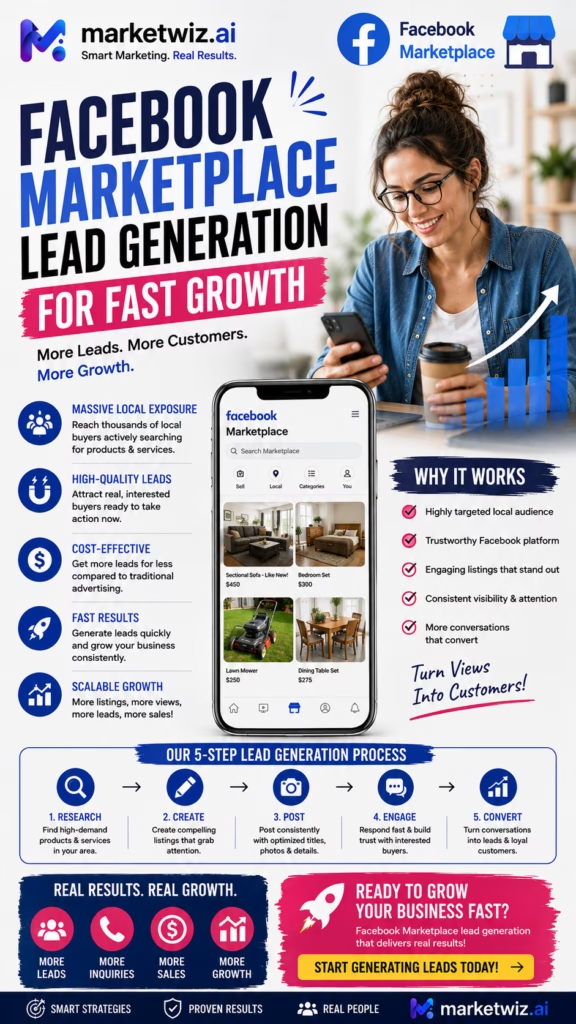
Facebook Marketplace Lead Generation for Fast Growth
Facebook Marketplace lead generation for fast growth requires more than publishing listings and waiting for messages. Businesses that want stronger customer acquisition need a complete system built around legitimate eligible products, accurate pricing, strong images, useful specifications, genuine local visibility, fast buyer responses, lead qualification, CRM attribution, follow-up, automation, purchase conversion, repeat-customer development, and measurable profitability. Fast growth does not come from chasing the highest possible message count. It comes from turning more of the right Marketplace buyers into real customers.
Fast business growth does not come from collecting more messages.
It comes from creating more customers.
That distinction is especially important on Facebook Marketplace.
A business can generate dozens of buyer inquiries and still produce weak sales.
It can publish many listings and still have poor customer acquisition.
It can receive high message volume from buyers who do not understand the price.
It can attract people who live outside the practical buying area.
It can generate questions about products that are no longer available.
It can spend hours responding to low-intent shoppers.
None of those outcomes automatically produce fast growth.
A stronger approach starts with product quality.
The business needs something real to sell.
The product needs genuine buyer demand.
The price needs to be accurate.
The images need to help buyers understand the item.
The description needs to answer important questions.
The specifications need to help buyers decide whether the product fits.
The location information needs to be genuine.
The inventory needs to be current.
Then the lead-conversion system begins.
Buyers need prompt responses.
Serious buyers need qualification.
High-intent opportunities need prioritization.
Leads need CRM attribution.
Qualified buyers need follow-up.
Completed purchases need to be tracked.
Repeat purchases need to be connected to the original customer source.
Revenue needs to be measured.
Gross profit needs to be measured.
Customer acquisition cost needs to be measured.
That is what turns Facebook Marketplace from a collection of listings into a customer-growth system.
The Marketplace Fast-Growth Formula
Strong Physical Product + Accurate Price + Better Images + Useful Specifications + Genuine Local Targeting + Fast Response + Buyer Qualification + CRM Attribution + Follow-Up + Purchase Conversion + Repeat Customers = Faster Marketplace Growth
What Fast Facebook Marketplace Growth Really Means
Fast growth should be defined by customer outcomes rather than activity alone.
More Qualified Leads
The business attracts buyers who genuinely fit the product, location, price, and purchase requirements.
Faster Response
Buyer questions receive prompt attention before the opportunity cools.
Higher Conversion
A greater percentage of qualified Marketplace inquiries become customers.
Higher Order Value
Better qualification can uncover larger quantities and stronger purchase opportunities.
Repeat Customer Growth
Some Marketplace buyers return for future products or larger purchases.
Better Acquisition Economics
Customer acquisition cost and gross profit improve as the system becomes more efficient.
Fast Growth Is Not the Same as Reckless Growth
Businesses should scale what produces qualified customers, healthy margins, accurate customer expectations, and operationally manageable demand.
Start With Strong Physical Products
Marketplace lead generation begins before the listing is written.
It begins with product selection.
High-Demand Products
Products with existing buyer demand naturally provide a stronger foundation.
Visually Appealing Products
Furniture, flooring, appliances, equipment, building materials, home goods, and similar physical items can benefit from strong visual presentation.
Products With Clear Pricing
Buyers should quickly understand what the product costs.
Products With Useful Specifications
Size, model, material, condition, finish, quantity, capacity, or other verified specifications can improve lead quality.
Products With Adequate Inventory
Strong demand creates little value if the product cannot actually be fulfilled.
Products With Healthy Gross Profit
Fast growth should still be economically sustainable.
Understand Facebook Marketplace Buyer Intent
Not every Marketplace message represents the same opportunity.
Immediate Buyer
This customer may ask when they can pick up the product.
Quantity Buyer
This buyer may need multiple units, boxes, pieces, panels, or bundles.
Specification Buyer
They may need a specific model, dimension, finish, or material.
Price Comparison Buyer
They may be comparing similar Marketplace offers.
Future Buyer
They may be planning a purchase for a later date.
Commercial Buyer
A contractor, landlord, property manager, investor, or business may need repeated or larger orders.
Understanding these different forms of buyer intent allows the business to prioritize conversations more effectively.
Keep Marketplace Listings Accurate and Appropriate
Fast growth should not come at the expense of listing accuracy.
Use Genuine Physical Products
The listing should clearly represent the actual eligible item being sold.
Do Not Disguise Services as Products
Service-only advertising should not be misrepresented as physical inventory.
Use Real Pricing
Avoid fake placeholder prices that do not represent what the buyer can purchase.
Use Accurate Product Details
Brands, models, dimensions, condition, quantity, materials, warranties, and other customer-facing facts should be verified.
Review Current Marketplace Requirements
Categories, commerce rules, product eligibility, interfaces, and seller requirements can change.
Target Genuine Local Buyers for Faster Marketplace Growth
Geography can be one of the strongest qualification factors on Marketplace.
Pickup Customers
Buyers should realistically be able to reach the product location.
Store Customers
Retail businesses can use Marketplace to generate store traffic from nearby shoppers.
Warehouse Customers
Bulk product sellers may attract local contractors and commercial buyers.
Delivery Customers
Delivery areas should only be stated when genuinely available.
Multi-Location Businesses
Leads can be routed toward the closest location with appropriate inventory.
Local Lead Quality Can Matter More Than Total Reach
A nearby buyer ready to purchase today may be substantially more valuable than several distant inquiries that are unlikely to complete a transaction.
Write Better Facebook Marketplace Titles
Lead With the Product
Make the physical item obvious.
Add an Important Specification
Size, material, model, style, finish, condition, or quantity can improve relevance.
Add Accurate Pricing Context
Clarify whether the price is per unit, piece, box, square foot, bundle, or another measure.
Add Genuine Local Context
Real city or regional references can improve pickup relevance where useful.
Avoid Empty Clickbait
More clicks are not valuable if the wrong buyers respond.
Marketplace Fast-Growth Title Formula
[Physical Product] + [Verified Specification] + [Accurate Price or Genuine Local Context]
Write Marketplace Descriptions That Generate Better Leads
Explain the Product
Buyers should know exactly what they are considering.
Explain the Selling Unit
Clarify whether pricing is per piece, box, bundle, square foot, or complete item.
Explain Condition
New, used, refurbished, open-box, surplus, or another condition should be accurate.
Explain Specifications
Give the buyer the important decision-making details.
Explain Location
Help buyers determine whether pickup or a store visit is practical.
Explain Availability
Do not imply that products are available when stock has not been confirmed.
Explain the Next Step
Buyers should understand what information to provide or how to move forward.
Use Accurate Pricing to Improve Marketplace Lead Quality
Price is both a sales tool and a qualification tool.
Use the Real Product Price
Buyers should know what the advertised amount actually purchases.
Clarify Pricing Units
A $2.50 price means very different things if it represents one piece, one square foot, or one box.
Clarify Starting Prices
If a category genuinely begins at a certain price, clearly explain which item the starting price represents.
Clarify Bulk Pricing
If larger quantities receive different legitimate pricing, explain the terms accurately.
Avoid Unsupported Promotions
Do not invent discounts, clearance pricing, limited-time deals, or percentage-off claims.
Accurate Price Information Can Increase Conversion Quality
Buyers who understand the true price before messaging are more likely to enter the conversation with realistic expectations.
Use Better Product Images to Generate More Marketplace Leads
Make the Product the Hero
The item should dominate the visual.
Show Multiple Angles
Help buyers inspect important areas before contacting the seller.
Show Texture and Finish
Flooring, furniture, cabinets, building materials, and decorative products can benefit from close-up details.
Show Condition Accurately
Used products should not be photographed or edited to hide meaningful defects.
Show Packaging Where Useful
Boxes, cartons, bundles, labels, or product samples can reinforce what is actually being sold.
Use Mobile-Readable Text
When graphics contain product names or pricing, make sure the wording remains clear on smaller screens.
Include Useful Specifications to Pre-Qualify Marketplace Buyers
Dimensions
Furniture, appliances, doors, equipment, cabinets, and many building materials are size-sensitive.
Material
Wood, steel, vinyl, laminate, engineered hardwood, aluminum, composite, fabric, or another material may influence buying decisions.
Model
Appliances and equipment often depend on exact model information.
Condition
Buyers should understand whether the item is new, used, open-box, or another condition.
Quantity
Product availability matters for project and bulk buyers.
Color or Finish
Visual categories often depend heavily on appearance.
Keep Marketplace Inventory Current
Remove Sold Products
Outdated listings create wasted buyer conversations.
Update Quantity
A project buyer may need substantially more than one unit.
Update Price
Product pricing should reflect actual current selling terms.
Update Variants
Colors, styles, sizes, and models should remain accurate.
Track Location
Multi-location businesses should know where each item is physically available.
Fast Growth Requires Operational Accuracy
A campaign that creates buyer demand faster than the business can verify or fulfill inventory can produce frustration instead of growth.
Respond to Facebook Marketplace Leads Quickly
A buyer may contact several sellers within minutes.
Know the Product
Preserve the exact listing context.
Answer the Question
Respond to what the buyer actually asked.
Confirm Availability
Verify stock before moving further.
Confirm Price
Make sure the buyer understands the pricing unit.
Ask a Qualification Question
Quantity, location, timing, or measurements can help determine buyer fit.
Give the Next Step
Move the buyer toward pickup, store visit, quantity confirmation, or another appropriate purchase action.
Use a Better Marketplace First-Response Formula
Answer
Address the buyer's immediate question.
Confirm
Confirm product, price, or availability.
Qualify
Ask one useful buyer question.
Advance
Give the buyer a clear next step.
Fast-Growth Response Formula
Answer → Confirm → Qualify → Advance
Qualify Facebook Marketplace Buyers Efficiently
Fast growth becomes easier when sales time is focused on stronger opportunities.
Product Fit
Does the item match what the buyer needs?
Quantity
How much does the buyer want?
Location
Can the buyer realistically complete the transaction?
Timing
Are they buying today, this week, or later?
Specifications
Do size, material, finish, model, or performance requirements match?
Purchase Readiness
Is the prospect moving toward a real buying decision?
Ask About Quantity to Find Higher-Value Marketplace Leads
Single-Unit Buyers
Some customers want one product and can purchase quickly.
Multi-Unit Buyers
Quantity can increase order value.
Project Buyers
Flooring, fencing, materials, cabinets, and similar categories can involve larger project quantities.
Commercial Buyers
Contractors or businesses may need bulk quantities.
Repeat Buyers
Certain buyers may return frequently for additional inventory.
One Quantity Question Can Change the Value of the Lead
A buyer asking about one flooring plank sample and a buyer needing 2,000 square feet of material are very different opportunities.
Ask About Buyer Location
Pickup Distance
Determine whether the trip is realistic.
Store Location
Multi-location businesses can route buyers toward a convenient store.
Delivery Geography
Only discuss delivery options the business genuinely offers.
Commercial Buyers
Larger orders may justify a broader geographic range depending on logistics.
Market Attribution
Buyer ZIP codes can reveal which areas generate stronger customers.
Ask About Purchase Timing
Today
Immediate buyers deserve quick attention.
This Week
Near-term buyers can enter active sales follow-up.
Upcoming Project
A buyer may need materials when construction or renovation begins.
Future Purchase
Long-term buyers can be treated differently from immediate opportunities.
Commercial Procurement
Business customers may have approval or purchasing timelines.
Ask About Measurements When Product Fit Depends on Size
Flooring
Square footage can help estimate material quantity.
Furniture
Buyers should verify that the product fits the intended space.
Appliances
Width, depth, and height can be critical.
Doors and Windows
Size compatibility is essential.
Building Materials
Project dimensions can influence quantity requirements.
Prioritize Marketplace Leads by Purchase Intent
High-Intent Buyer
Asking about pickup, quantity, exact price, or availability.
Qualified Comparison Buyer
Comparing products or specifications but showing genuine purchase interest.
Future Buyer
Has a legitimate need but a longer timeline.
Low-Fit Buyer
Geography, price, quantity, or specifications do not align.
Commercial Opportunity
Larger quantities or repeat purchasing potential may justify immediate escalation.
Fast Growth Requires Smart Prioritization
High-intent and high-value buyers should not wait behind conversations that have little realistic chance of converting.
Use Internal Listing IDs to Track Marketplace Lead Sources
Identify the Product
Give each product listing an internal reference.
Identify the Market
Track where the lead originated.
Identify the Category
Compare different product categories.
Identify the Buyer
Preserve the original listing with the lead record.
Identify the Sale
Revenue can then be connected with the listing that generated the customer.
Connect Facebook Marketplace Leads to CRM
CRM attribution converts scattered Marketplace conversations into measurable customer data.
- Customer name
- Contact information where voluntarily provided
- Marketplace source
- Listing ID
- Product category
- Specific product
- Quantity requested
- Buyer location
- Purchase timing
- Important measurements
- Qualification status
- Follow-up status
- Purchase status
- Order value
- Repeat-customer status
CRM Tracking Makes Fast Growth Measurable
Without source attribution, a business may see higher revenue while still not knowing which Marketplace products, listings, or markets actually created the growth.
Route Marketplace Leads Properly
Retail Location
Store-based buyers can be routed toward the correct location.
Product Specialist
Technical product questions may require specialist knowledge.
Warehouse
Larger quantities may require inventory confirmation.
Commercial Sales
Bulk or repeat buyer opportunities can move to the appropriate team.
Manager Review
Higher-value opportunities may deserve faster escalation.
Build a Facebook Marketplace Follow-Up System
Many qualified buyers do not complete the transaction during the first conversation.
Product Follow-Up
Reconnect with serious buyers who requested information.
Quantity Follow-Up
Larger orders may require inventory planning.
Future-Timing Follow-Up
Buyers may need the product closer to a project date.
Alternative-Product Follow-Up
If the original item is unavailable, verified alternatives may be discussed when relevant.
Commercial Follow-Up
Larger buyers may require several conversations.
Reasonable Frequency
Follow-up should remain useful and relevant rather than excessive.
Automate Repetitive Marketplace Lead Work
Lead Capture
Organize qualified buyer information into structured records.
Lead Routing
Send opportunities to the correct store, salesperson, or department.
CRM Entry
Preserve source, product, and buyer details.
Inventory Checks
Connect customer communication with verified inventory sources where possible.
Follow-Up Reminders
Prevent serious buyers from being forgotten.
Performance Reporting
Summarize leads, customers, order value, acquisition cost, and ROI.
Use AI to Accelerate Marketplace Lead Generation Without Inventing Facts
Listing Drafting
AI can organize verified product information into clearer titles and descriptions.
Buyer Intake
AI can collect quantity, location, timing, measurements, and product requirements.
Common Questions
Approved answers can reduce repetitive sales work.
Lead Summaries
Salespeople can receive concise buyer information.
CRM Organization
Lead data can be structured consistently.
Follow-Up Support
AI can assist with approved follow-up workflows.
AI Should Never Fabricate Marketplace Selling Points
Do not invent prices, inventory, availability, product dimensions, brands, models, warranties, discounts, financing, customer reviews, delivery options, specifications, product condition, quantity, or other material customer-facing facts.
Test Marketplace Listings Using Real Customer Outcomes
Test Product Categories
Compare genuine products based on qualified demand.
Test Title Formats
Determine which factual structures generate stronger buyer intent.
Test Product Images
Compare accurate image styles and angles.
Test Description Detail
More useful information can reduce repetitive questions.
Test Local Markets
Different areas may have significantly different customer economics.
Measure Purchases
The listing with the most messages is not automatically the best listing.
Optimize for Customers, Not Conversations
A listing generating fewer inquiries can outperform another listing when it produces more qualified buyers, more completed transactions, larger orders, or stronger gross profit.
Facebook Marketplace Fast Growth for Retail Businesses
Promote Specific Products
Individual product offers usually create clearer buying intent than generic store advertisements.
Use Real Prices
Let customers qualify themselves before visiting.
Drive Store Visits
Local Marketplace interest may produce offline purchases.
Track Product-to-Store Conversion
Know which listings create real in-store customers.
Identify Repeat Shoppers
A first Marketplace purchase can lead to future retail business.
Facebook Marketplace Fast Growth for Flooring Sellers
Lead With Physical Flooring Materials
Luxury vinyl, laminate, engineered hardwood, and other legitimate material products can create strong local demand.
Use Genuine Per-Square-Foot Pricing
Buyers should clearly understand material cost.
Show Planks and Cartons
Product-focused visuals reinforce the physical item.
Ask Square Footage
One measurement can reveal order size.
Qualify Project Timing
Buyers may need material immediately or later in a renovation.
Keep Installation Secondary
Where separately available, installation should not replace the physical product as the primary Marketplace offer.
Facebook Marketplace Fast Growth for Furniture Sellers
Use Strong Lifestyle Images
Show the furniture clearly while keeping the product visually dominant.
List Dimensions
Buyers need to know whether the item fits.
List Material
Wood, fabric, leather, metal, and other materials affect buying decisions.
Show Condition
Used furniture should be represented accurately.
Explain Pickup Logistics
Large items may require appropriate transportation.
Facebook Marketplace Fast Growth for Appliance Sellers
Use Brand and Model
Specific product identification improves buyer confidence.
List Dimensions
Fit is critical for refrigerators, washers, dryers, ranges, and other appliances.
Show Condition
New, used, scratch-and-dent, open-box, or refurbished should be represented accurately.
Show Verified Features
Do not invent technical capabilities.
Track Category Conversion
Different appliance categories may produce different customer acquisition economics.
Facebook Marketplace Fast Growth for Building Material Sellers
Use Product-First Listings
Doors, fence panels, cabinets, flooring, siding, hardware, fixtures, and other physical products can be promoted clearly.
Clarify Pricing Units
Per panel, box, piece, bundle, or square foot should be obvious.
Ask Quantity
Construction buyers may need project-level volume.
Ask Project Location
Location can influence pickup or delivery logistics.
Track Commercial Accounts
Contractors and property managers can become repeat buyers.
Facebook Marketplace Fast Growth for Equipment Sellers
Use Brand and Model
Equipment buyers often shop by exact specifications.
Show Condition
Realistic photography builds trust.
Show Attachments
Clarify what is included.
Use Verified Capacity Information
Technical ratings should be accurate.
Qualify Buyer Logistics
Heavy equipment may require transport or loading arrangements.
Attract Commercial Marketplace Buyers
Some of the strongest Marketplace leads may represent business customers.
Contractors
May purchase building materials repeatedly.
Property Managers
May need products across several properties.
Landlords
Rental turnover can create repeat demand.
Investors
Renovation projects can involve larger orders.
Small Businesses
Commercial product needs may create recurring purchasing relationships.
Track Account Lifetime Value
The initial Marketplace purchase may be only the beginning of a larger customer relationship.
Turn Marketplace Buyers Into Repeat Customers
Fast growth becomes more sustainable when customers purchase more than once.
Track the First Purchase
Know which Marketplace listing created the relationship.
Track Future Purchases
Repeat sales reveal true customer value.
Identify Complementary Products
Relevant additional products can increase customer value.
Improve Customer Experience
Accurate listings and organized communication can increase trust.
Measure Lifetime Value
The initial Marketplace transaction may represent only a fraction of future revenue.
Scale Facebook Marketplace Lead Generation Without Losing Quality
Scaling should happen after the underlying system works.
Standardize Product Data
Maintain accurate price, inventory, specifications, and images.
Standardize Lead Response
Buyers should receive consistently useful answers.
Standardize Qualification
Quantity, geography, timing, and product needs should be collected consistently.
Standardize CRM Attribution
Every lead should retain its source.
Standardize Reporting
Compare products, markets, listings, customers, and ROI.
Scale Proven Categories
Invest more operational attention in products and markets that produce strong customer economics.
Track the Right Facebook Marketplace Growth Metrics
Valid Inquiries
How many real buyers contacted the business?
Qualified Leads
How many matched product, price, location, timing, and other buying requirements?
Response Time
How quickly were buyers helped?
Purchase Conversion
How many qualified leads became customers?
Average Order Value
How much revenue did the typical Marketplace customer generate?
Repeat Customer Rate
How many customers purchased again?
| Metric | What It Reveals |
|---|---|
| Valid inquiries | Real top-of-funnel buyer interest |
| Qualified lead rate | Listing and targeting quality |
| Response time | Speed of sales execution |
| Purchase conversion | Lead-to-customer effectiveness |
| Average order value | Revenue quality of Marketplace customers |
| Repeat customer rate | Long-term channel value |
| CAC and ROI | Customer-acquisition efficiency and profitability |
Measure Facebook Marketplace Customer Acquisition Cost
Marketplace CAC = Total Attributable Marketplace Marketing and Lead-Handling Cost ÷ New Marketplace Customers
Include Listing Production
Product photography, listing preparation, and creative work can have cost.
Include Management Cost
Staff or software resources used to manage campaigns may be included.
Include Lead-Handling Cost
Sales conversations consume time.
Use Customers, Not Messages
Messages are an intermediate step.
Compare CAC by Product
Some products may acquire customers more efficiently.
Compare CAC by Market
Local customer economics may differ significantly.
Measure Facebook Marketplace ROI for Fast Growth
Qualified Lead Rate
Qualified Lead Rate = Qualified Marketplace Leads ÷ Valid Marketplace Inquiries × 100
Purchase Conversion Rate
Purchase Conversion = New Marketplace Customers ÷ Qualified Marketplace Leads × 100
Repeat Customer Rate
Repeat Customer Rate = Repeat Marketplace Customers ÷ Total Marketplace Customers × 100
Customer Acquisition Cost
Marketplace CAC = Marketplace Acquisition Cost ÷ New Marketplace Customers
Marketplace ROI
ROI = (Gross Profit From Marketplace Customers − Marketplace Marketing Cost) ÷ Marketplace Marketing Cost × 100
Measure Growth Over Time
Fast growth should show improving customer volume, purchase conversion, average order value, repeat business, gross profit, or acquisition efficiency—not merely an increase in listing activity.
Common Facebook Marketplace Lead-Generation Mistakes That Slow Growth
Listing Weak Products
Poor demand cannot always be fixed by better marketing.
Using Fake $0 or $1 Prices
Misleading pricing creates poor customer expectations.
Disguising Services as Products
Listings should accurately represent the physical item being sold.
Using Weak Product Images
Buyers need visual confidence.
Using Thin Descriptions
Missing information creates repetitive questions.
Ignoring Specifications
Buyers cannot determine whether the product fits.
Leaving Sold Products Active
Outdated listings create wasted conversations.
Responding Too Slowly
Buyers may move to another seller.
Not Asking Quantity
High-value opportunities may go unnoticed.
Not Qualifying Location
Distant buyers may have low conversion probability.
Not Following Up
Qualified buyers can disappear after the first message.
Not Tracking Listing Source
The business cannot identify which products create customers.
Measuring Messages Instead of Sales
Message volume alone can create a false impression of success.
Scaling Before the System Works
More activity amplifies weak processes as easily as strong ones.
A 30-Day Facebook Marketplace Lead-Generation Plan for Fast Growth
Week 1: Build the Foundation
- Identify genuine physical products
- Prioritize products with strong demand
- Verify current prices
- Verify pricing units
- Verify inventory
- Verify product specifications
- Verify product condition
- Review local markets
- Organize accurate product images
- Document current customer conversion
Week 2: Improve Marketplace Listings
- Create product-first titles
- Add accurate pricing
- Clarify quantity and units
- Add useful specifications
- Improve product descriptions
- Improve product photography
- Add genuine local context
- Remove unavailable products
- Create internal listing IDs
- Create one reliable inventory source
Week 3: Accelerate Lead Conversion
- Create fast-response workflows
- Preserve listing context
- Confirm product availability
- Ask quantity
- Ask buyer location
- Ask purchase timing
- Ask measurements where relevant
- Prioritize high-intent buyers
- Connect qualified leads to CRM
- Create follow-up workflows
Week 4: Scale What Produces Customers
- Track valid inquiries
- Track qualified lead rate
- Track response time
- Track purchase conversion
- Track average order value
- Track repeat customers
- Compare products
- Compare local markets
- Calculate Marketplace CAC
- Calculate gross profit
- Calculate Marketplace ROI
- Scale proven product categories
End-of-Month Outcome
After 30 days, the business should have stronger Marketplace product listings, more accurate pricing, better images, stronger local relevance, faster buyer responses, improved qualification, better CRM attribution, stronger purchase conversion, clearer repeat-customer tracking, and a better understanding of which products and markets can support faster profitable growth.
Final Takeaway: Fast Marketplace Growth Comes From Faster Customer Conversion
Effective Facebook Marketplace lead generation for fast growth should not revolve around how many listings a business can publish.
It should revolve around how efficiently those listings create customers.
Listing volume can create visibility.
Visibility can create messages.
But messages are not the finish line.
The finish line is a completed transaction.
And for many businesses, the real finish line is a profitable customer relationship that continues beyond the first transaction.
That is why product selection matters first.
Businesses should identify physical products customers genuinely want.
Products should have clear pricing.
Products should have current inventory.
Products should have useful specifications.
Products should have strong visual presentation.
Those fundamentals create a better starting point than trying to force weak products into a high-volume posting strategy.
Once the right product is selected, listing quality becomes the next growth lever.
The title should immediately explain what is being sold.
The price should be clear.
The pricing unit should be clear.
The dimensions should be clear where relevant.
The material should be clear.
The condition should be clear.
The quantity should be clear.
The pickup area should be clear.
The images should help the buyer decide.
Better listing information creates better self-qualification.
That means fewer unnecessary questions.
It means fewer buyers surprised by price.
It means fewer buyers discovering the product does not fit.
It means more inquiries from people who already understand what they are considering.
Response speed then becomes critical.
Marketplace buyers can move quickly.
They may look at several sellers in one session.
They may ask the same question to multiple businesses.
They may purchase from the first seller who confirms what they need.
That makes the first response part of the marketing strategy.
Answer the buyer.
Confirm the product.
Confirm availability.
Confirm the price.
Then qualify.
Ask quantity.
Ask location.
Ask timing.
Ask measurements where relevant.
Those questions help distinguish casual browsing from real purchase intent.
Quantity is especially important.
A customer asking about one box of flooring may be a small transaction.
A customer needing 1,800 square feet may represent a substantial order.
A buyer asking about one fence panel may be replacing a damaged section.
A property manager asking for forty panels may represent a larger commercial opportunity.
A customer asking about one chair may be a simple retail buyer.
A business asking for twenty chairs may represent a commercial account.
One qualification question can change how the business prioritizes the lead.
That is why lead scoring matters.
High-intent buyers should receive fast attention.
High-value buyers should receive appropriate escalation.
Future buyers can enter follow-up.
Low-fit leads can be handled efficiently.
This protects sales capacity while improving conversion.
CRM attribution makes the system scalable.
Each lead can retain the original Marketplace listing.
The product can be recorded.
The market can be recorded.
The buyer's requested quantity can be recorded.
Their location can be recorded.
Their timing can be recorded.
Their purchase status can be recorded.
Their order value can be recorded.
Future purchases can be recorded.
That creates valuable customer-acquisition data.
The business can identify which Marketplace products generate the highest qualified lead rate.
It can identify which products produce the highest purchase conversion.
It can identify which categories create larger orders.
It can identify which cities produce better customers.
It can identify which listings produce many messages but weak sales.
It can identify which customers purchase again.
Those insights allow the business to grow faster because marketing decisions are based on customer outcomes rather than assumptions.
Automation can support that growth.
Repetitive lead entry can be standardized.
Routing can be standardized.
Follow-up reminders can be standardized.
Performance reporting can be standardized.
AI can add another layer of efficiency.
AI can help organize verified product information.
It can help draft listing titles.
It can help structure descriptions.
It can answer approved questions.
It can collect buyer quantity.
It can collect location.
It can collect timing.
It can create conversation summaries.
It can create CRM records.
It can support follow-up.
But automation should never come at the expense of accuracy.
Do not invent pricing.
Do not invent inventory.
Do not invent availability.
Do not invent discounts.
Do not invent warranties.
Do not invent product specifications.
Do not invent financing.
Do not invent reviews.
Do not invent delivery.
Do not invent condition.
Fast growth based on inaccurate information is not sustainable growth.
Finally, businesses need to measure what is happening financially.
Measure valid inquiries.
Measure qualified leads.
Measure response time.
Measure purchase conversion.
Measure average order value.
Measure repeat customers.
Measure customer acquisition cost.
Measure gross profit.
Measure Marketplace ROI.
Then scale the products and markets that produce the strongest customer economics.
That is how Marketplace can support faster business growth.
Better products create stronger interest.
Better listings create better qualification.
Faster responses protect the opportunity.
Better qualification identifies stronger buyers.
Better routing improves sales execution.
Better follow-up prevents qualified leads from disappearing.
Better CRM attribution creates measurable data.
Better conversion creates customers.
Repeat customers compound growth.
And disciplined measurement tells the business where to scale next.
Frequently Asked Questions
1. What is Facebook Marketplace lead generation?
Facebook Marketplace lead generation uses legitimate eligible product listings, local visibility, accurate pricing, fast response, buyer qualification, CRM tracking, and follow-up to create customer opportunities.
2. Can Facebook Marketplace help businesses grow faster?
Marketplace can support faster growth when strong products, good listing quality, accurate inventory, fast response, and effective conversion systems work together.
3. What creates high-quality Marketplace leads?
Product fit, realistic pricing, geography, quantity, timing, specifications, and genuine purchase intent are important lead-quality factors.
4. Should businesses list physical products on Facebook Marketplace?
Businesses should accurately list eligible physical products where permitted and follow current Marketplace requirements.
5. Should services be disguised as Marketplace products?
No. Service-only offers should not be misrepresented as physical items.
6. Should Marketplace listings use real prices?
Yes. Accurate prices improve buyer expectations and qualification.
7. How important are Marketplace product images?
Very important. Product-focused images help buyers evaluate appearance, condition, scale, texture, finish, and other details.
8. What should a Facebook Marketplace title include?
A strong title can include the real product, an important verified specification, and accurate pricing or local context when useful.
9. How can businesses generate Marketplace leads faster?
Improve product selection, listing clarity, images, pricing, local relevance, inventory accuracy, response speed, qualification, and follow-up.
10. Does local targeting improve Marketplace lead generation?
Yes. Genuine local targeting can improve the percentage of buyers who can realistically complete the transaction.
11. How quickly should businesses respond to Marketplace leads?
As promptly as practical because buyers may be comparing several sellers simultaneously.
12. What should a Marketplace first response include?
Answer the question, confirm product and availability, clarify price, ask one useful qualification question, and provide the next step.
13. Should Marketplace leads be qualified?
Yes. Qualification helps distinguish serious buyers from poor-fit or low-intent inquiries.
14. What questions should businesses ask Marketplace buyers?
Ask product, quantity, location, timing, relevant specifications, measurements where useful, and purchase readiness.
15. Should Marketplace leads be added to a CRM?
Yes. CRM attribution connects buyer inquiries with listings, products, follow-up, purchases, revenue, and repeat-customer activity.
16. What is Marketplace listing attribution?
Listing attribution identifies which specific product listing and local market generated each lead and customer.
17. Can AI help with Facebook Marketplace lead generation?
AI can support approved listing drafting, lead intake, qualification, summaries, CRM organization, routing, and follow-up.
18. Can AI write Marketplace listings?
Yes, using verified information. AI should not invent material product or promotional claims.
19. Can AI qualify Facebook Marketplace leads?
AI can collect approved information such as quantity, location, timing, product needs, and measurements.
20. Should businesses follow up with Marketplace buyers?
Qualified buyers can receive reasonable follow-up when they expressed genuine purchase interest but did not complete the transaction.
21. How can businesses reduce low-quality Marketplace leads?
Use clearer pricing, useful specifications, accurate inventory, strong images, local information, and detailed descriptions.
22. Should businesses use fake $0 or $1 prices?
No. Pricing should accurately represent the product or selling unit.
23. Can Marketplace leads become repeat customers?
Yes. Businesses can track future purchases to measure longer-term customer value.
24. Should businesses keep Marketplace inventory updated?
Yes. Sold or unavailable products should be updated or removed.
25. What Marketplace metrics should businesses track?
Track valid inquiries, qualified leads, response time, purchases, average order value, repeat customers, CAC, gross profit, and ROI.
26. How is Marketplace customer acquisition cost calculated?
Divide attributable Marketplace marketing and lead-handling cost by the number of new customers attributed to Marketplace.
27. Can Facebook Marketplace lead growth be guaranteed?
No. Buyer demand, competition, pricing, inventory, product quality, local markets, response speed, and sales execution all influence results.
28. Should Marketplace performance be measured by messages or sales?
Sales, customer value, and profitability are generally more meaningful than raw message volume alone.
29. What is the biggest Marketplace lead-generation mistake?
Focusing on listing volume instead of genuine products, buyer qualification, response speed, CRM attribution, customer conversion, and profitability.
30. What is the goal of Facebook Marketplace lead generation for fast growth?
The goal is to turn legitimate Marketplace visibility into qualified buyers, completed transactions, repeat customers, revenue, gross profit, and scalable customer acquisition.
30 Additional SEO Keywords
Use these supporting phrases naturally across Facebook Marketplace lead-generation guides, marketing pages, product resources, FAQs, case studies, and internal links.
Build a Faster Facebook Marketplace Lead-Generation System
MarketWiz.ai helps businesses organize Facebook Marketplace campaigns, improve product-focused titles and descriptions, structure genuine product data, qualify buyer inquiries, connect CRM workflows, improve follow-up, and measure customers, repeat purchases, revenue, customer acquisition cost, gross profit, and return on investment.
This article provides general Facebook Marketplace marketing, product-listing, lead-generation, CRM, automation, customer-acquisition, conversion, and business information and does not provide legal, tax, financial, privacy, consumer-protection, licensing, regulatory, commerce, or platform advice. Facebook Marketplace eligibility, commerce requirements, listing limits, product categories, seller requirements, interfaces, and policies can change. Businesses should review current Meta and Facebook Marketplace requirements and all applicable laws before implementing campaigns. Marketplace listings should represent legitimate eligible products and use accurate prices, quantities, locations, inventory, availability, specifications, dimensions, condition, images, pickup information, delivery options, brands, models, warranties, financing information, discounts, reviews, and other material customer-facing facts. Businesses should not disguise service-only offers as products, use misleading placeholder prices, fabricate inventory, invent product differences, misrepresent condition, or create unsupported promotional claims. Facebook Marketplace inquiry volume, qualified leads, purchases, repeat customers, customer acquisition, revenue, gross profit, customer acquisition cost, and ROI cannot be guaranteed and depend on buyer demand, competition, product quality, pricing, inventory, geography, listing quality, platform activity, response speed, qualification, follow-up, sales execution, operational capacity, and other business factors.