
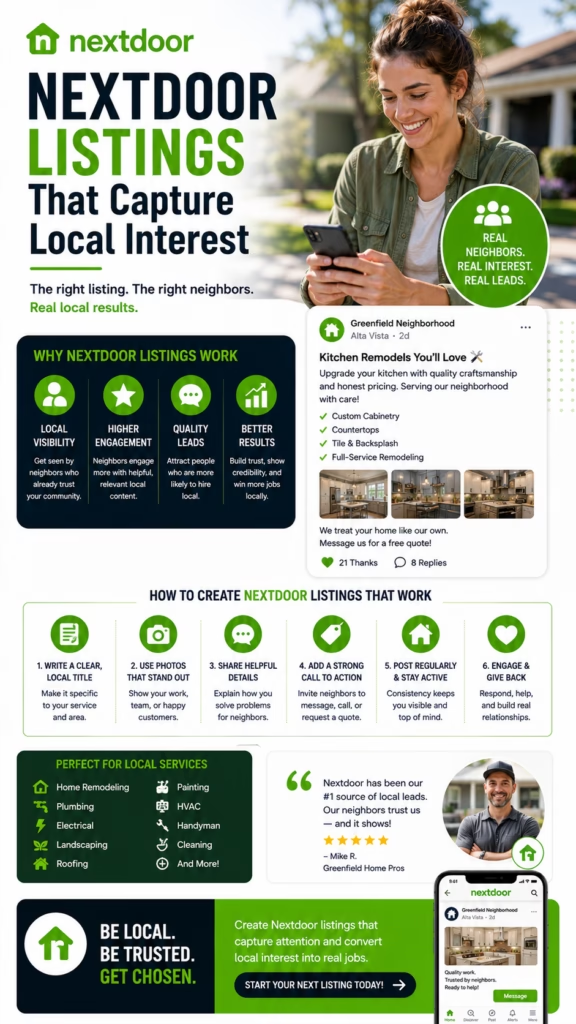
Nextdoor Listings That Capture Local Interest
Nextdoor Listings That Capture Local Interest explains how businesses can create local listings, posts, offers, and neighborhood content that attract nearby customers, build trust, earn recommendations, and turn local attention into calls, messages, quote requests, bookings, and leads.
Introduction
Nextdoor Listings That Capture Local Interest are built around one important idea: local customers respond to businesses that feel relevant, trustworthy, nearby, and easy to contact. Nextdoor is different from broad social media because it is organized around neighborhoods, local conversations, community recommendations, and nearby needs.
When people use Nextdoor, they often look for businesses they can trust. They may need a contractor, home service provider, landscaper, painter, roofer, plumber, HVAC company, cleaner, repair technician, local store, wellness provider, restaurant, or neighborhood service. A strong listing can help a business stand out before a customer searches somewhere else.
Nextdoor listings capture local interest when they combine neighborhood relevance, clear offers, trust signals, photos, and a simple next step.
A listing should do more than exist. It should clearly explain what the business offers, who it helps, where it serves, why neighbors can trust it, and how people can take action. The best listings feel local, useful, and specific instead of generic or overly sales-focused.
For businesses, Nextdoor can support awareness, lead generation, reputation, referrals, and customer conversations. But success depends on having a system. A business needs a complete page, strong service descriptions, real photos, helpful posts, recommendations, offers, fast replies, lead tracking, and follow-up.
Main idea: Nextdoor Listings That Capture Local Interest turn nearby attention into trust, conversations, quote requests, appointments, and customers.
Table of Contents
- 1) Why Nextdoor listings matter
- 2) How local customers use Nextdoor
- 3) Building a complete business listing
- 4) Writing listing titles and headlines
- 5) Clear descriptions that create interest
- 6) Photos that build trust
- 7) Recommendations and neighborhood proof
- 8) Offers that encourage local action
- 9) Local posts that support listings
- 10) Targeting neighborhoods and service areas
- 11) Calls to action and message conversion
- 12) Tracking listing performance
- 13) Follow-up after local inquiries
- 14) Common mistakes that reduce interest
- 15) Final thoughts
- 16) FAQs
- 17) Extra keywords
1) Why Nextdoor Listings Matter
Nextdoor listings matter because they help businesses appear in a local environment where trust is already important. People on Nextdoor often want practical recommendations from nearby residents. They are not only scrolling for entertainment. Many are looking for solutions in their neighborhood.
A strong listing can help a business become visible when local customers are comparing options. It can introduce the company, show what it offers, highlight proof, and make it easy to start a conversation.
Nextdoor listings can help businesses generate:
- Local awareness
- Messages from nearby customers
- Phone calls
- Quote requests
- Appointment bookings
- Neighborhood recommendations
- Referral opportunities
- Store visits
- Service inquiries
- Community trust
Nextdoor Listings That Capture Local Interest help businesses turn neighborhood visibility into real customer conversations.
2) How Local Customers Use Nextdoor
Local customers use Nextdoor to ask questions, search for providers, read recommendations, discover offers, compare businesses, and learn what neighbors are using. This makes it a strong platform for businesses that depend on local trust.
A homeowner may ask for a painter. A resident may look for a cleaner. A family may need a landscaper. A property owner may need repairs. A customer may want a local business with strong neighborhood reputation. A strong listing helps the business show up in these moments.
Local customer has a need
Customer searches or asks neighbors on Nextdoor
Business listing or post appears
Customer checks photos, services, recommendations, and offer
Customer messages, calls, books, or requests more information
Nextdoor interest often begins with local trust and turns into action when the listing makes the next step easy.
3) Building a Complete Business Listing
A complete business listing is the foundation of Nextdoor marketing. If the listing is missing important information, customers may hesitate. If it is clear, useful, and professional, it can support trust and lead generation.
The listing should include accurate contact details, business description, service category, service area, website link, photos, recommendations, and a simple call to action. It should quickly answer the question: “Can this business help me?”
A complete Nextdoor listing should include:
- Business name
- Service or business category
- Phone number
- Website link
- Service area or location
- Clear business description
- Service details
- Photos or visuals
- Customer recommendations
- Clear next step
Complete listings capture more local interest because they reduce confusion and build confidence.
4) Writing Listing Titles and Headlines
Titles and headlines help people quickly understand what the listing is about. A strong title should be specific, local, and benefit-focused. It should not feel vague or overly promotional.
A good headline can mention the service, customer problem, local area, seasonal need, or offer. The goal is to create enough interest for the customer to read more.
Headline examples:
Local Painting Estimates Available This Week
Reliable Lawn Care for Nearby Homeowners
Roof Repair Help After Recent Storms
Move-In Cleaning for Local Homes
Neighborhood HVAC Maintenance Openings
Nextdoor listings capture more attention when the headline clearly matches a local need.
5) Clear Descriptions That Create Interest
The description should explain what the business does, who it helps, where it serves, and why people should contact it. It should be specific enough to qualify interest but simple enough to read quickly.
Businesses should avoid generic descriptions such as “we do it all.” Instead, they should list real services, customer benefits, service areas, experience, availability, and a clear next step.
Description formula:
What the business offers
Who the service is for
Where the business serves
Main benefits or trust points
How to request help
Clear descriptions help turn local curiosity into real inquiries.
6) Photos That Build Trust
Photos help customers believe the business is real, active, and professional. A listing with no photos can feel incomplete. A listing with clear, real photos can create trust quickly.
Businesses can use photos of completed work, products, team members, storefronts, service vehicles, before-and-after results, job sites, equipment, or customer-approved projects. The best photos support the offer and show proof.
Useful photos for Nextdoor listings include:
- Completed project photos
- Before-and-after photos
- Team photos
- Storefront photos
- Service vehicle photos
- Product photos
- Equipment photos
- Work-in-progress photos
- Customer experience photos
Photos help local customers trust the listing before they send a message or call.
7) Recommendations and Neighborhood Proof
Recommendations are one of the strongest ways to capture local interest on Nextdoor. A recommendation from a nearby resident can feel more credible than a standard advertisement because it comes from local experience.
Businesses should encourage satisfied customers to recommend them when appropriate. Recommendations can help new prospects feel more comfortable reaching out.
Recommendations can help show:
- Local trust
- Service quality
- Customer satisfaction
- Reliability
- Professionalism
- Good communication
- Project success
- Neighborhood credibility
Neighborhood proof makes Nextdoor listings more believable and more likely to generate inquiries.
8) Offers That Encourage Local Action
Offers give nearby customers a reason to take action. A good offer should be simple, relevant, and easy to understand. It should not feel confusing or unrealistic.
Depending on the business, offers may include free estimates, local discounts, seasonal checks, appointment openings, product availability, consultations, delivery options, financing, or limited service windows.
Offer ideas for Nextdoor listings:
- Free estimate
- Neighborhood discount
- Seasonal service check
- Limited appointment openings
- Free consultation
- Local delivery option
- First-time customer offer
- Project planning call
Clear offers help turn local interest into calls, messages, bookings, and quote requests.
9) Local Posts That Support Listings
Posts can support Nextdoor listings by keeping the business active and visible. A business can use posts to share helpful tips, seasonal reminders, before-and-after results, local updates, service availability, offers, and success stories.
Posts should support the listing, not replace it. A complete listing gives customers a place to learn more, while posts create ongoing reasons to notice and engage with the business.
Post structure:
Local hook
Helpful tip or problem
Service or solution
Proof or photo
Simple call to action
Local posts help Nextdoor listings stay visible and relevant over time.
10) Targeting Neighborhoods and Service Areas
Nextdoor listings perform better when businesses understand which neighborhoods are most likely to respond. Different areas have different needs, budgets, property types, service demand, and customer behavior.
A business should focus on areas where it can serve customers efficiently and profitably. This may include nearby neighborhoods, high-demand communities, service-area towns, or areas where the company already has customers.
Neighborhood targeting should consider:
- Service area fit
- Distance from business
- Local demand
- Customer type
- Average job value
- Property type
- Competition level
- Past customer locations
Nextdoor listings capture more useful interest when they are aligned with the right local areas.
11) Calls to Action and Message Conversion
A listing should make the next step obvious. If customers are interested but do not know what to do next, the business may lose the lead. A good call to action tells the customer exactly how to respond.
Examples include “message us for availability,” “call for a free estimate,” “request a quote,” “book your appointment,” “ask about local openings,” or “send photos for a quick review.”
CTA examples:
Message us for local availability
Call for a free estimate
Request a quote today
Send project photos for review
Book your appointment
Ask about neighborhood openings
Strong calls to action help convert listing views into customer inquiries.
12) Tracking Listing Performance
Tracking helps businesses understand whether Nextdoor listings are producing results. Without tracking, it is difficult to know which listing, post, offer, service, or neighborhood created the inquiry.
Businesses should track messages, calls, quote requests, appointments, neighborhoods, customer questions, lead status, and final outcome. This helps improve future listings and offers.
Nextdoor listing metrics to track:
- Messages received
- Phone calls
- Quote requests
- Appointment bookings
- Neighborhood source
- Post or listing source
- Offer responses
- Lead quality
- Closed customers
- Revenue outcome
Tracking turns Nextdoor listings from guesswork into a measurable local lead channel.
13) Follow-Up After Local Inquiries
Follow-up is important because many local customers do not book immediately. They may ask questions, compare options, wait for timing, discuss with a family member, or need more information. A strong follow-up system helps keep the business in the conversation.
Businesses can use saved replies, appointment reminders, quote follow-up, missed call text-back, CRM notes, and customer nurture messages to improve conversion.
Follow-up workflow:
Customer sends inquiry
Business responds quickly
Lead details are saved
Next step is offered
Follow-up reminder is created
Lead is booked, nurtured, or closed
Nextdoor listings capture more value when every inquiry receives fast response and consistent follow-up.
14) Common Mistakes That Reduce Interest
Many businesses fail to capture local interest because their listings are incomplete, generic, or unclear. Some businesses post without photos. Others fail to show recommendations. Some respond too slowly or do not track leads.
- Incomplete business listing
- Generic descriptions
- No clear service details
- No local relevance
- No photos
- No recommendations
- No offer
- No clear call to action
- Slow responses
- No lead tracking
- No follow-up system
- Posting without a neighborhood strategy
Big mistake: treating a Nextdoor listing like a basic profile instead of a local trust and lead generation asset.
15) Final Thoughts
Nextdoor Listings That Capture Local Interest are clear, local, visual, trustworthy, and action-focused. They help nearby customers understand what the business offers and why it is worth contacting.
Businesses that succeed on Nextdoor do more than create a listing. They support it with recommendations, helpful posts, strong photos, clear offers, fast replies, tracking, and follow-up. This turns local attention into measurable customer opportunities.
Final takeaway: Nextdoor listings capture local interest when they make nearby customers feel informed, confident, and ready to take the next step.
16) FAQs
1) What are Nextdoor listings that capture local interest?
They are listings, posts, offers, and business page elements designed to attract nearby customers and encourage local inquiries.
2) Why are Nextdoor listings useful?
They help businesses appear where nearby residents ask for recommendations, compare services, and discover local offers.
3) Can Nextdoor listings generate leads?
Yes. They can generate messages, calls, quote requests, bookings, referrals, appointment requests, and customer conversations.
4) What makes a Nextdoor listing effective?
An effective listing is clear, local, visual, trustworthy, specific, helpful, and includes a simple call to action.
5) What should a Nextdoor listing include?
It should include business details, service information, photos, recommendations, contact options, service area, and next steps.
6) Do photos matter on Nextdoor?
Yes. Photos help customers trust the business and understand what it offers.
7) Do recommendations help listings perform better?
Yes. Recommendations provide neighborhood proof and make the business feel more credible.
8) What should businesses post on Nextdoor?
Businesses should post helpful tips, local updates, offers, project photos, seasonal reminders, and service availability.
9) What offers work well on Nextdoor?
Free estimates, local discounts, consultations, seasonal checks, appointment openings, and first-time customer offers can work well.
10) How should businesses write listing descriptions?
Descriptions should explain what the business offers, who it helps, where it serves, why it is trusted, and how to respond.
11) What are good calls to action?
Good calls to action include message us, call for an estimate, request a quote, book an appointment, or ask about availability.
12) Should businesses track Nextdoor listing results?
Yes. Tracking helps identify which listings, posts, offers, and neighborhoods generate inquiries.
13) What should businesses track?
Businesses should track messages, calls, quote requests, appointment bookings, neighborhood source, offer response, and closed customers.
14) How fast should businesses respond?
Businesses should respond as quickly as possible because local customers may contact multiple providers.
15) Can Nextdoor listings help service businesses?
Yes. Service businesses can use listings to attract local customers who need help nearby.
16) Can Nextdoor listings help home improvement companies?
Yes. Home improvement companies can show project photos, recommendations, offers, and service areas to generate leads.
17) Can retailers use Nextdoor listings?
Yes. Retailers can promote products, local availability, offers, pickup options, and store visits.
18) Should listings be updated regularly?
Yes. Regular updates help keep listings accurate, active, and relevant.
19) What is the biggest listing mistake?
The biggest mistake is creating a generic or incomplete listing with no photos, recommendations, offer, CTA, or follow-up system.
20) How do listings build trust?
Listings build trust through clear information, photos, recommendations, local relevance, and fast responses.
21) Can Nextdoor listings create referrals?
Yes. Strong listings and recommendations can encourage neighborhood referrals.
22) What makes a listing feel local?
A listing feels local when it mentions service areas, neighborhood needs, local offers, nearby availability, or community proof.
23) Should businesses use saved replies?
Yes. Saved replies help businesses respond quickly and consistently.
24) What is the goal of a Nextdoor listing?
The goal is to turn local attention into trust, messages, calls, quote requests, bookings, and customers.
25) Is Nextdoor listing optimization a one-time task?
No. It works best with regular updates, posts, recommendations, tracking, and follow-up.
17) Extra Keywords
- Nextdoor Listings That Capture Local Interest
- Nextdoor listings
- Nextdoor marketing
- local listings
- neighborhood marketing
- local lead generation
- Nextdoor business page
- local customer interest
- Nextdoor lead generation
- Nextdoor recommendations
- local business listings
- local service listings
- Nextdoor local posts
- Nextdoor offers
- neighborhood lead generation
- local customer acquisition
- Nextdoor listing optimization
- local service marketing
- Nextdoor for local businesses
- home service listings
- contractor listings
- local business visibility
- Nextdoor message leads
- neighborhood trust marketing
- local inquiry generation













