
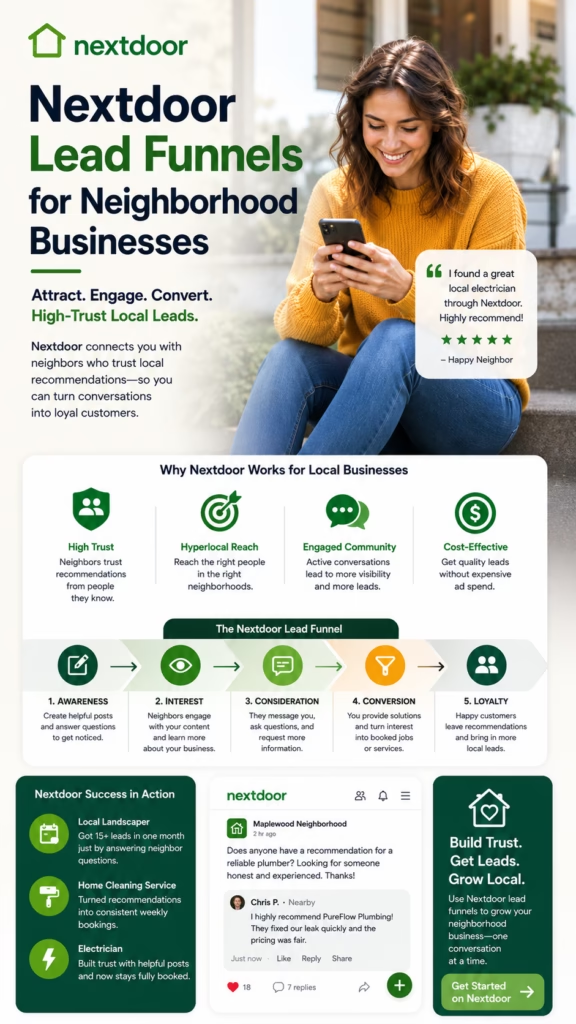
Nextdoor Lead Funnels for Neighborhood Businesses
Nextdoor Lead Funnels for Neighborhood Businesses explains how local companies can move nearby residents from neighborhood awareness to trust, then into calls, messages, quote requests, appointments, visits, bookings, and customers.
Introduction
Nextdoor Lead Funnels for Neighborhood Businesses are valuable because local customers often need trust before they take action. A nearby resident may need a plumber, painter, HVAC company, cleaner, landscaper, roofer, pet service, restaurant, mattress store, wellness provider, real estate professional, or local shop. Before calling, they usually want to know the business is credible, nearby, and recommended.
Nextdoor gives neighborhood businesses a way to build that trust through local visibility, recommendations, helpful posts, service-area messaging, and community engagement. But visibility alone is not enough. Businesses need a funnel that guides residents from first impression to customer action.
Nextdoor lead funnels for neighborhood businesses turn local attention into trust, and trust into measurable customer inquiries.
A strong Nextdoor funnel starts with a complete profile, then adds helpful content, customer recommendations, local proof, relevant offers, clear calls to action, fast responses, and lead tracking. Each step moves the resident closer to contacting the business.
The best Nextdoor strategies are not random. They are structured. Instead of posting occasionally and hoping for leads, businesses build a repeatable system that creates awareness, earns trust, captures inquiries, and follows up quickly.
Main idea: Nextdoor lead funnels help neighborhood businesses convert local visibility into calls, messages, quote requests, store visits, appointments, and booked customers.
Table of Contents
- 1) Why neighborhood businesses need lead funnels
- 2) How a Nextdoor lead funnel works
- 3) Building the trust foundation
- 4) Profile optimization for lead conversion
- 5) Recommendations as funnel fuel
- 6) Helpful posts that create awareness
- 7) Offers that convert attention into inquiries
- 8) Service-area clarity and local relevance
- 9) Visual proof that supports conversion
- 10) Calls to action inside the funnel
- 11) Response systems and follow-up
- 12) Connecting Nextdoor with website and Google Maps
- 13) Tracking funnel performance
- 14) Common funnel mistakes
- 15) Final thoughts
- 16) FAQs
- 17) Extra keywords
1) Why Neighborhood Businesses Need Lead Funnels
Neighborhood businesses need lead funnels because attention does not automatically become revenue. A resident may see a post, notice a recommendation, or visit a profile, but the business still needs to guide that person toward a clear action.
A funnel creates a path. It helps residents move from awareness to trust, from trust to inquiry, and from inquiry to customer. Without a funnel, businesses may get views and engagement but miss the lead.
A Nextdoor lead funnel can help generate:
- Direct messages
- Phone calls
- Quote requests
- Appointment bookings
- Store visits
- Website clicks
- Recommendation-based leads
- Service inquiries
- Repeat local awareness
- Booked jobs
Nextdoor lead funnels for neighborhood businesses are important because they turn local visibility into structured customer acquisition.
2) How a Nextdoor Lead Funnel Works
A Nextdoor lead funnel works by creating a sequence of trust-building steps. First, the resident becomes aware of the business. Then the resident sees proof, recommendations, or helpful content. Then the resident receives a clear reason to inquire. Finally, the business responds quickly and moves the lead forward.
This funnel does not need to be complicated. It simply needs to be intentional.
Awareness: Resident sees post, profile, or recommendation
Trust: Resident sees proof, helpful content, or local credibility
Inquiry: Resident messages, calls, clicks, or requests a quote
Follow-up: Business responds quickly and guides next step
Conversion: Appointment, visit, booking, or sale happens
The best Nextdoor funnels make it easy for residents to move from neighborhood interest to customer action.
3) Building the Trust Foundation
Trust is the foundation of every Nextdoor lead funnel. Residents are more likely to contact businesses that feel familiar, recommended, helpful, and local. Without trust, even strong offers may not convert.
Businesses can build trust through recommendations, profile completeness, real photos, helpful posts, clear service areas, professional replies, and consistent neighborhood presence.
Trust-building elements include:
- Customer recommendations
- Complete business profile
- Clear service details
- Real project photos
- Helpful local content
- Professional responses
- Visible service area
- Consistent posting
Nextdoor lead funnels convert better when trust is created before the customer is asked to take action.
4) Profile Optimization for Lead Conversion
The business profile is a key conversion point in the funnel. When residents click the profile, they should quickly understand what the business does, where it serves, and how to contact it. The profile should act like a local landing page.
An incomplete profile can break the funnel. A complete profile can move the resident closer to calling, messaging, booking, or visiting.
A lead-focused Nextdoor profile should include:
- Clear business name
- Accurate contact information
- Website link
- Service areas
- Business category
- Service description
- Photos or proof
- Recommendations
- Simple call to action
Profile optimization helps turn Nextdoor traffic into inquiries by removing confusion and building confidence.
5) Recommendations as Funnel Fuel
Recommendations are one of the strongest parts of a Nextdoor lead funnel. They create social proof from people nearby. When residents see that others in the area recommend a business, the business feels more credible.
Businesses should ask satisfied customers to recommend them naturally after positive experiences. This turns completed jobs, visits, or purchases into future lead-generation assets.
Customer has positive experience
Business asks for recommendation
Recommendation appears locally
Resident sees neighborhood proof
Resident contacts the business
Recommendations fuel Nextdoor lead funnels because they turn customer satisfaction into visible neighborhood trust.
6) Helpful Posts That Create Awareness
Helpful posts create the top of the funnel. They help nearby residents notice the business before they are ready to buy. A post can share a seasonal tip, service reminder, project example, local offer, common problem warning, product update, or neighborhood-specific advice.
Helpful posts build familiarity. When residents see useful content repeatedly, they are more likely to remember the business when they need help.
Helpful post ideas include:
- Seasonal maintenance tips
- Before-and-after examples
- Local availability updates
- Free estimate reminders
- Product arrival updates
- Service-area announcements
- Customer success stories
- Neighborhood-specific offers
Helpful posts fill the funnel with local awareness while positioning the business as useful and trustworthy.
7) Offers That Convert Attention Into Inquiries
Offers help convert attention into inquiries. Once a resident knows and trusts the business, a clear offer can create the reason to act. The offer should be local, simple, and easy to respond to.
Examples include free estimates, same-week appointments, neighborhood specials, seasonal offers, delivery promotions, consultation openings, or limited availability.
Offer formula:
Clear service or product
Local relevance
Simple benefit
Timing or availability
Call/message CTA
Offers make Nextdoor lead funnels more effective by giving residents a specific reason to contact the business.
8) Service-Area Clarity and Local Relevance
Service-area clarity improves funnel quality because it tells residents whether the business serves them. A vague profile or post may attract unqualified inquiries or create hesitation. Specific cities, neighborhoods, or service zones help residents decide faster.
Local relevance also makes posts feel more personal. A resident is more likely to respond when they recognize their area in the message.
Nextdoor lead funnels for neighborhood businesses perform better when the service area is clear and locally relevant.
9) Visual Proof That Supports Conversion
Visual proof helps residents trust the business before contacting it. Photos can show completed work, products, team members, storefronts, service vehicles, before-and-after results, and local project examples.
Visuals reduce hesitation because they show real evidence. A business that proves its work visually often feels more credible than one that only describes it.
Strong visual proof includes:
- Before-and-after photos
- Completed project images
- Team photos
- Storefront photos
- Product images
- Service vehicle photos
- Offer graphics
- Local work examples
Visual proof supports Nextdoor funnel conversion by making the business feel real, active, and trustworthy.
10) Calls to Action Inside the Funnel
Calls to action tell residents what to do next. Every funnel needs a next step. A resident may be interested, but if the business does not clearly invite action, the lead may be lost.
Calls to action should match the business type. A service company may ask for quote requests. A storefront may invite visits. A wellness provider may invite consultations. A retailer may ask customers to message for availability.
CTA examples:
Message us for a free local estimate.
Call today to check availability.
Ask about same-week appointments.
Visit us nearby this week.
Send a message for current pricing.
Book your neighborhood service appointment.
Clear CTAs help Nextdoor lead funnels move residents from interest to inquiry.
11) Response Systems and Follow-Up
Response systems are critical because a lead can go cold quickly. A resident who messages a business may also contact competitors. Fast, clear, helpful replies can make the difference between a lost inquiry and a booked customer.
Businesses should use saved replies, CRM tracking, missed-message follow-up, appointment links, phone call scripts, and reminder messages. Every inquiry should move toward a clear next step.
A strong follow-up system includes:
- Fast initial response
- Helpful answer
- Lead qualification
- Clear next step
- Quote or appointment scheduling
- Reminder messages
- CRM tracking
- Closed lead reporting
Nextdoor lead funnels become more profitable when every inquiry is followed up quickly and professionally.
12) Connecting Nextdoor With Website and Google Maps
Nextdoor works better when connected to a larger local marketing system. A resident may discover the business on Nextdoor, then check Google Maps for reviews, photos, directions, and hours. They may also visit the website to learn more or request a quote.
Businesses should keep branding, service details, phone numbers, offers, and service areas consistent across Nextdoor, Google Maps, the website, and social media.
Nextdoor builds local awareness and trust
Google Maps verifies reviews, hours, and location
Website explains services and captures leads
Follow-up system converts inquiries
Customer becomes booked job or sale
Nextdoor lead funnels become stronger when they connect to Google Maps, website SEO, reviews, and CRM follow-up.
13) Tracking Funnel Performance
Tracking helps businesses understand which parts of the Nextdoor funnel are working. Views and comments are useful, but the real goal is leads, quote requests, appointments, visits, bookings, and revenue.
Businesses can track leads with dedicated phone numbers, website landing pages, CRM tags, lead source questions, appointment notes, and closed-sale reports.
Important funnel metrics include:
- Profile views
- Post engagement
- Recommendations
- Direct messages
- Phone calls
- Website clicks
- Quote requests
- Appointments booked
- Store visits
- Closed customers
Tracking helps neighborhood businesses improve Nextdoor lead funnels based on real customer behavior.
14) Common Funnel Mistakes
Many businesses use Nextdoor without a real funnel. They post randomly, fail to complete the profile, ignore recommendations, use weak CTAs, or respond too slowly. These mistakes reduce conversion.
- Incomplete business profile
- No recommendation strategy
- Posting only promotions
- No helpful content
- No service-area clarity
- Weak or missing photos
- No clear call to action
- Slow response to messages
- No CRM or lead tracking
- No website or Google Maps connection
- Inconsistent posting
- No offer strategy
Big mistake: treating Nextdoor like a posting board instead of a structured lead funnel.
15) Final Thoughts
Nextdoor Lead Funnels for Neighborhood Businesses work because local customers often need trust before they take action. A funnel helps businesses build that trust, create visibility, capture inquiries, and follow up quickly.
The strongest funnel includes a complete profile, helpful posts, real recommendations, strong visuals, clear offers, service-area clarity, calls to action, fast response, website support, Google Maps connection, and performance tracking.
Final takeaway: Nextdoor lead funnels help neighborhood businesses turn local awareness into trust, and trust into calls, messages, quote requests, visits, appointments, bookings, and customers.
16) FAQs
1) What are Nextdoor lead funnels for neighborhood businesses?
They are systems that move nearby residents from awareness to trust, then into inquiries, quote requests, appointments, visits, bookings, or purchases.
2) Can Nextdoor generate business leads?
Yes. Nextdoor can generate leads through profiles, posts, recommendations, offers, and fast follow-up.
3) What businesses can use Nextdoor lead funnels?
Home services, retailers, restaurants, wellness providers, pet services, real estate professionals, and local storefronts can use them.
4) Why do recommendations matter?
Recommendations create local proof and make nearby residents more comfortable contacting the business.
5) What should a Nextdoor profile include?
It should include contact information, service areas, business description, photos, website link, recommendations, and a CTA.
6) What is the first step in a Nextdoor funnel?
The first step is awareness through posts, recommendations, profile visibility, or local engagement.
7) What kind of posts work in a funnel?
Helpful tips, service reminders, project examples, local offers, customer stories, and availability updates work well.
8) Should businesses use offers?
Yes. Offers help turn trust and attention into inquiries.
9) Why is service-area clarity important?
It helps residents know whether the business serves their location and improves lead quality.
10) Do photos help Nextdoor funnels?
Yes. Photos create proof and make the business feel more real and trustworthy.
11) What is a good Nextdoor CTA?
A good CTA is direct, such as “Message us for a free estimate” or “Call today to check availability.”
12) How important is response speed?
Response speed is very important because interested residents may contact multiple businesses.
13) Should Nextdoor connect to a website?
Yes. A website helps customers learn more, verify the business, and request quotes or appointments.
14) Should Nextdoor connect to Google Maps?
Yes. Google Maps helps residents verify reviews, hours, location, photos, and contact details.
15) How should businesses track Nextdoor leads?
They can track messages, calls, website clicks, quote requests, appointments, visits, and closed customers.
16) What is the biggest funnel mistake?
The biggest mistake is posting randomly without profile optimization, trust-building content, CTAs, and follow-up.
17) Can home service businesses use Nextdoor funnels?
Yes. Home services are a strong fit because residents often ask neighbors for trusted providers.
18) Can storefronts use Nextdoor funnels?
Yes. Storefronts can use funnels to drive product questions, calls, visits, and repeat local awareness.
19) How often should businesses post?
Businesses should post consistently without spamming. Weekly or seasonal posts can work well.
20) Should posts be helpful or promotional?
The strongest posts are usually helpful first, with a natural CTA or offer included.
21) Can Nextdoor funnels improve lead quality?
Yes. Trust-building content and recommendations can attract more qualified residents.
22) Should businesses use a CRM?
Yes. A CRM or tracking sheet helps manage inquiries, follow-ups, appointments, and closed leads.
23) Can Nextdoor support local SEO?
Yes. Nextdoor can support local awareness alongside Google Maps, website SEO, reviews, and social media.
24) Is a Nextdoor lead funnel a one-time setup?
No. It works best as an ongoing system with posts, recommendations, offers, responses, and tracking.
25) What is the main goal of a Nextdoor lead funnel?
The main goal is to turn neighborhood visibility into trust, inquiries, appointments, visits, bookings, and customers.
17) Extra Keywords
- Nextdoor Lead Funnels for Neighborhood Businesses
- Nextdoor lead funnels
- Nextdoor lead generation
- neighborhood business marketing
- local customer acquisition
- Nextdoor marketing
- Nextdoor for business
- local service leads
- neighborhood leads
- Nextdoor recommendations
- local trust marketing
- community-based marketing
- neighborhood customer leads
- local quote requests
- Nextdoor customer inquiries
- service-area marketing
- home service lead funnel
- storefront lead funnel
- local business funnel
- Nextdoor profile optimization
- neighborhood visibility strategy
- local recommendation marketing
- Nextdoor customer acquisition
- local funnel strategy
- neighborhood business growth













