
Multi-Platform Marketing That Drives Consistent Leads
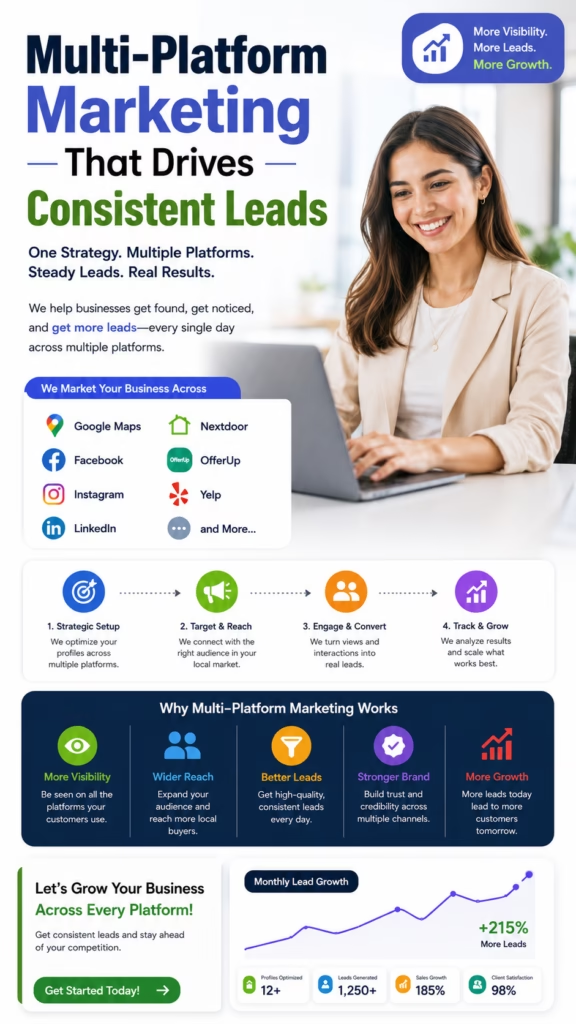
Multi-Platform Marketing That Drives Consistent Leads explains how businesses can combine local search, Google Maps, marketplaces, community platforms, social media, automation, and follow-up systems to create a steady flow of customer inquiries.
Introduction
Multi-Platform Marketing That Drives Consistent Leads is important because customers do not discover businesses in only one place anymore. A local customer may find a company on Google Maps, see a listing on Facebook Marketplace, ask neighbors on Nextdoor, browse Craigslist, click an OfferUp post, watch a short-form video, or visit a website before making a decision.
That means businesses that rely on only one channel often struggle with inconsistent results. One week Google Maps may produce calls. Another week marketplace listings may generate messages. Another week a social post may create awareness. A multi-platform strategy connects these channels into a stronger lead generation system.
Multi-platform marketing drives consistent leads by creating repeated visibility across the places customers already search, browse, compare, and ask for recommendations.
The goal is not to post everywhere randomly. The goal is to create a coordinated system. Each platform should have a purpose. Google Maps captures high-intent local searches. Marketplaces create buyer conversations. Nextdoor builds neighborhood trust. Social media creates awareness. Websites convert interest. Automation and follow-up prevent leads from slipping away.
When these channels work together, businesses create more opportunities for customers to find them and more chances to convert attention into calls, messages, quote requests, appointments, store visits, and booked jobs.
Main idea: Multi-platform marketing creates consistent leads by combining visibility, trust, offers, content, automation, and fast response across multiple customer discovery channels.
Table of Contents
- 1) Why multi-platform marketing matters
- 2) How customers move across platforms
- 3) Google Maps for high-intent local leads
- 4) Local SEO and website conversion
- 5) Facebook Marketplace for buyer inquiries
- 6) Craigslist and classified lead generation
- 7) OfferUp for local marketplace traffic
- 8) Nextdoor for neighborhood trust
- 9) Social media for awareness and retargeting
- 10) Automation and posting systems
- 11) Lead response and follow-up workflows
- 12) Tracking leads by platform
- 13) Building a weekly multi-platform plan
- 14) Common mistakes that reduce consistency
- 15) Final thoughts
- 16) FAQs
- 17) Extra keywords
1) Why Multi-Platform Marketing Matters
Multi-platform marketing matters because customers behave differently across channels. Some customers search on Google when they need something immediately. Others browse marketplaces for deals. Others ask neighbors for trusted recommendations. Others discover brands through short-form videos or social posts.
A business that only focuses on one channel can miss many potential customers. A business that appears across multiple relevant platforms increases its chances of being seen, remembered, trusted, and contacted.
Multi-platform marketing can help businesses increase:
- Local visibility
- Phone calls
- Website visits
- Marketplace messages
- Quote requests
- Appointments
- Store visits
- Neighborhood recommendations
- Brand trust
- Lead consistency
Multi-platform marketing that drives consistent leads works because it reduces dependence on one single traffic source.
2) How Customers Move Across Platforms
Customers often move across several platforms before taking action. A person may first see a business on Facebook Marketplace, then search the business on Google, then read reviews, then visit the website, then call. Another customer may ask for recommendations on Nextdoor and later check Google Maps before booking.
This customer journey is not always linear. Businesses need a presence across the discovery path so customers see consistent information and feel more confident.
Customer sees offer on marketplace
Customer searches business on Google
Customer checks reviews and website
Customer compares options
Customer calls, messages, books, or visits
Consistent multi-platform visibility helps customers trust the business before they take action.
3) Google Maps for High-Intent Local Leads
Google Maps is one of the strongest platforms for high-intent local leads because customers often use it when they are ready to act. They may search for nearby services, compare reviews, check hours, request directions, or tap the call button.
Businesses should optimize their Google Business Profile with accurate information, strong categories, clear services, photos, reviews, posts, and website links. This makes the profile more useful and trustworthy.
Google Maps can generate:
- Phone calls
- Direction requests
- Website clicks
- Store visits
- Quote requests
- Appointment bookings
- Review-driven leads
Google Maps supports multi-platform marketing by capturing customers who are actively searching for nearby solutions.
4) Local SEO and Website Conversion
Local SEO helps businesses show up in search results beyond Maps. A strong website can explain services, locations, pricing, reviews, FAQs, and customer benefits in more detail. It also gives customers a place to convert through phone calls, forms, booking links, or quote requests.
The website should support every platform. Marketplace listings, social media profiles, Nextdoor posts, and Google Maps profiles can all point customers back to a strong website or landing page.
Platform traffic
Website visit
Service or offer page
Trust signals and reviews
Call, quote request, booking, or purchase
A website turns multi-platform attention into deeper trust and measurable customer action.
5) Facebook Marketplace for Buyer Inquiries
Facebook Marketplace can generate strong buyer inquiries for products, local offers, mobile homes, furniture, mattresses, appliances, vehicles, property opportunities, and certain services. Marketplace users often browse with buying intent and may message quickly when an offer looks clear.
Businesses should use strong photos, clear titles, honest descriptions, local keywords, and fast replies. Listings should be written for conversion, not just visibility.
Facebook Marketplace works well for:
- Furniture
- Mattresses
- Mobile homes
- Appliances
- Vehicles
- Local deals
- Property offers
- Service promotions
Facebook Marketplace supports consistent leads by turning local browsing into direct buyer messages.
6) Craigslist and Classified Lead Generation
Craigslist and classified platforms can still create local leads when listings are clear, specific, and properly categorized. These platforms often work well for services, housing, furniture, local deals, used items, jobs, and community-based offers.
Businesses should use clean titles, detailed descriptions, realistic pricing, local contact options, and varied post formats. Classified posting should be consistent but not spammy.
Classified listing strategy:
Clear title
Specific local details
Helpful description
Trust-building information
Contact method
Follow-up process
Classified platforms can add another lead source when businesses use clean, compliant, local listing strategies.
7) OfferUp for Local Marketplace Traffic
OfferUp can help businesses capture local marketplace traffic from buyers who are browsing nearby deals. Strong OfferUp listings use clear photos, simple titles, fair pricing, location clarity, and message-focused calls to action.
OfferUp works best when businesses respond quickly. A buyer may message multiple sellers at the same time, so speed and clarity can make a major difference.
OfferUp lead elements include:
- Strong first photo
- Searchable title
- Clear price
- Location detail
- Helpful description
- Availability note
- Message CTA
- Fast response
OfferUp supports multi-platform lead generation by creating another path for nearby buyers to start conversations.
8) Nextdoor for Neighborhood Trust
Nextdoor is powerful for neighborhood trust because residents often use it to ask for recommendations, discuss local services, and discover nearby businesses. For home services, retailers, restaurants, wellness businesses, and local providers, Nextdoor can create community-based visibility.
Businesses should build complete profiles, ask satisfied customers for recommendations, post helpful local content, promote relevant offers, and respond quickly to resident questions.
Neighbor has a need
Neighbor asks or browses Nextdoor
Business appears through post or recommendation
Trust builds
Customer messages, calls, or visits
Nextdoor strengthens multi-platform marketing by adding neighborhood credibility and recommendation-based visibility.
9) Social Media for Awareness and Retargeting
Social media platforms like Facebook, Instagram, TikTok, and YouTube Shorts can build awareness and trust. They may not always generate immediate leads, but they help customers recognize the brand, understand the offer, and see proof over time.
Short-form videos, testimonials, before-and-after content, educational posts, promotions, and behind-the-scenes content can all support lead generation. Social content should connect back to offers, websites, booking links, or message CTAs.
Useful social media content includes:
- Short-form videos
- Before-and-after posts
- Customer testimonials
- Educational tips
- Offer announcements
- Behind-the-scenes content
- Local proof posts
- Service explanations
Social media supports consistent leads by keeping the business visible and familiar before customers are ready to act.
10) Automation and Posting Systems
Automation helps businesses manage multiple platforms without becoming overwhelmed. A business can use templates, content calendars, AI-assisted listing variations, saved replies, scheduling tools, lead routing, and CRM workflows to stay consistent.
Automation should improve quality, not create spam. Each platform should still receive content that feels natural and relevant to that audience.
Offer or campaign created
Platform-specific content generated
Posts and listings scheduled or organized
Responses routed into follow-up system
Leads tracked by source
Results reviewed weekly
Automation helps multi-platform marketing drive consistent leads by keeping visibility and follow-up organized.
11) Lead Response and Follow-Up Workflows
Leads are only valuable if the business responds quickly. A marketplace message, Google call, website form, Nextdoor inquiry, or social media DM can lose value if it sits unanswered. Fast response is one of the simplest ways to improve lead conversion.
Businesses should use saved replies, missed-call text-back, appointment links, CRM reminders, email follow-up, and lead source tracking. Every lead should move toward a clear next step.
A strong follow-up workflow includes:
- Fast initial response
- Lead qualification
- Clear next step
- Appointment or quote scheduling
- Reminder messages
- CRM tracking
- Follow-up after no response
- Closed-sale reporting
Multi-platform marketing becomes more consistent when every lead source connects to a fast follow-up system.
12) Tracking Leads by Platform
Tracking leads by platform helps businesses understand which channels are producing results. Without tracking, a business may not know whether leads are coming from Google Maps, Facebook Marketplace, Craigslist, OfferUp, Nextdoor, social media, or the website.
Businesses can track leads using CRM tags, spreadsheets, call tracking, form source fields, unique landing pages, and simple customer intake questions.
Track these platform metrics:
- Calls
- Messages
- Website clicks
- Quote requests
- Appointments
- Store visits
- Booked jobs
- Closed sales
- Lead source
- Cost or time invested
Tracking helps businesses improve lead consistency by showing which platforms deserve more attention.
13) Building a Weekly Multi-Platform Plan
A weekly plan keeps multi-platform marketing organized. Instead of posting randomly, businesses should decide which offers, platforms, content types, and follow-up actions will be used each week.
The plan should include Google Maps updates, marketplace listings, social posts, Nextdoor engagement, website content, and lead follow-up review. Consistency matters more than random bursts of activity.
Weekly plan example:
Monday: Google Business Profile post
Tuesday: Marketplace listing batch
Wednesday: Social video or customer proof post
Thursday: Nextdoor post or recommendation request
Friday: Lead tracking and follow-up review
Weekend: Refresh top-performing offers
A weekly multi-platform plan helps businesses create predictable visibility and more consistent leads.
14) Common Mistakes That Reduce Consistency
Many businesses fail with multi-platform marketing because they post randomly, use weak offers, ignore platform differences, or fail to follow up. More platforms do not automatically mean more leads. The system must be organized.
- Posting without a clear offer
- Using the same copy on every platform
- Ignoring Google Maps optimization
- Weak marketplace photos
- No Nextdoor trust strategy
- No social proof content
- Slow response to messages
- No lead tracking
- No CRM or follow-up system
- Inconsistent posting schedule
- Not testing titles and offers
- Focusing on views instead of leads
Big mistake: using multiple platforms without connecting them to a clear lead generation and follow-up system.
15) Final Thoughts
Multi-Platform Marketing That Drives Consistent Leads works because customers discover businesses in many different places. A strong strategy meets customers across search, maps, marketplaces, community platforms, social media, and websites while keeping messaging clear and follow-up fast.
The strongest systems combine Google Maps for local intent, marketplace listings for buyer conversations, Nextdoor for neighborhood trust, social media for awareness, websites for conversion, automation for consistency, and CRM workflows for lead tracking.
Final takeaway: Multi-platform marketing drives consistent leads when businesses combine visibility, trust, platform-specific content, automation, fast response, and clear lead tracking.
16) FAQs
1) What is multi-platform marketing that drives consistent leads?
It is a strategy that uses several marketing channels together to create steady customer inquiries, calls, messages, bookings, and sales opportunities.
2) Why is multi-platform marketing important?
It matters because customers discover businesses across search, maps, marketplaces, social media, websites, and community platforms.
3) Can multi-platform marketing generate consistent leads?
Yes. It can generate consistent leads when channels are connected with clear offers, good content, fast follow-up, and tracking.
4) Which platforms should local businesses use?
Google Maps, websites, Facebook Marketplace, Craigslist, OfferUp, Nextdoor, Facebook, Instagram, TikTok, and YouTube Shorts can all help.
5) Why is Google Maps important?
Google Maps captures customers who are actively searching for nearby services, products, directions, calls, and appointments.
6) Why are marketplaces useful?
Marketplaces can generate buyer messages from people browsing local products, deals, services, and offers.
7) Why is Nextdoor useful?
Nextdoor helps build neighborhood trust, recommendations, and local service inquiries.
8) Does social media generate leads?
Yes. Social media can build awareness, trust, retargeting value, and direct inquiries when paired with strong calls to action.
9) Should every platform use the same content?
No. Each platform should have content adapted to its format, audience, and conversion style.
10) What is the biggest multi-platform mistake?
The biggest mistake is posting randomly without a clear offer, response system, or lead tracking process.
11) Can automation help?
Yes. Automation can help with templates, scheduling, listing variations, saved replies, lead routing, and tracking.
12) Should businesses track leads by platform?
Yes. Tracking shows which platforms produce calls, messages, bookings, and sales.
13) What should businesses track?
Businesses should track calls, messages, website clicks, quote requests, appointments, booked jobs, and closed sales.
14) How does a website support multi-platform marketing?
A website gives customers deeper information and helps convert traffic from other platforms into leads.
15) Can multi-platform marketing help service businesses?
Yes. Service businesses can use multiple platforms to increase quote requests, calls, appointments, and booked jobs.
16) Can multi-platform marketing help retailers?
Yes. Retailers can use Google Maps, marketplaces, social media, and websites to drive product inquiries and store visits.
17) How often should businesses post?
Posting frequency depends on the platform, but consistency is more important than random bursts.
18) Should businesses use video?
Yes. Short-form video can help build awareness, trust, and engagement across social platforms.
19) How do businesses improve lead consistency?
They improve consistency by using multiple channels, strong offers, regular posting, fast follow-up, and performance tracking.
20) Should businesses use CRM tools?
Yes. CRM tools help organize leads, follow-ups, appointments, and closed sales by platform.
21) Can local SEO work with marketplaces?
Yes. Local SEO captures search demand while marketplaces capture local browsing and buyer messages.
22) What role do reviews play?
Reviews build trust and help customers choose the business after discovering it on any platform.
23) What role does follow-up play?
Follow-up is critical because leads can be lost quickly if messages, calls, or forms are not answered fast.
24) Is multi-platform marketing expensive?
It can be affordable when businesses use organic listings, local SEO, automation, and structured posting systems.
25) What is the main goal of multi-platform marketing?
The main goal is to create consistent visibility and turn that visibility into steady leads and customers.
17) Extra Keywords
- Multi-Platform Marketing That Drives Consistent Leads
- multi-platform marketing
- local lead generation
- Google Maps marketing
- Facebook Marketplace marketing
- Craigslist marketing
- OfferUp marketing
- Nextdoor marketing
- local SEO strategy
- marketplace lead generation
- multi-channel lead generation
- local customer acquisition
- automated marketing system
- local business marketing
- Google Business Profile optimization
- marketplace posting automation
- community marketing
- social media lead generation
- local service leads
- storefront lead generation
- website conversion strategy
- lead tracking system
- CRM follow-up workflow
- consistent lead generation
- multi-platform local marketing