
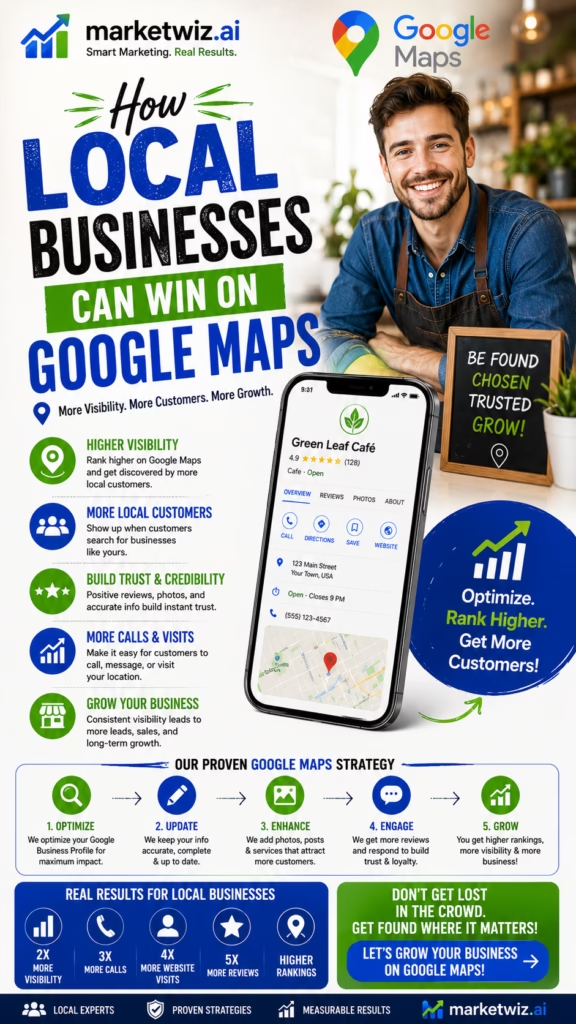
How Local Businesses Can Win on Google Maps
Learning how local businesses can win on Google Maps requires more than changing a few fields inside a Google Business Profile. Strong local visibility is built through accurate business information, relevant categories, genuine reviews, current photos, useful service and product information, strong website SEO, legitimate local citations, authoritative links, useful location content, fast lead response, CRM tracking, and measurable customer conversion. The real goal is not simply to rank higher. It is to make the business easier for nearby customers to discover, trust, contact, visit, and choose.
For many local businesses, the customer journey begins before a person ever reaches the company website.
It begins on Google Maps.
A homeowner searching for a plumber may compare nearby companies directly in local results.
Someone looking for a dentist may examine reviews, office photos, hours, and location before making a call.
A shopper searching for a furniture store, flooring retailer, appliance dealer, mattress store, or other local business may use Google Maps to decide which location to visit.
A business owner searching for a local commercial service provider may follow the same process.
That makes Google Maps much more than a navigation tool.
It can function as a customer-discovery engine.
The businesses that perform well are often the ones that create the strongest combination of relevance, trust, prominence, convenience, and customer conversion.
Winning therefore requires more than simply having a Google Business Profile.
The profile must accurately communicate what the business does.
Reviews should reinforce real customer satisfaction.
Photos should demonstrate the real company, products, team, location, or work.
The website should support the profile with detailed service information and geographic relevance.
Citations and links should strengthen broader local authority.
And once the phone rings, somebody needs to answer it.
The Google Maps Winning Formula
Accurate Business Profile + Strong Local Relevance + Genuine Reviews + Better Photos + Strong Website SEO + Local Citations + Legitimate Authority + Fast Lead Response + CRM Tracking + Customer Conversion = Sustainable Google Maps Growth
Why Google Maps Matters So Much for Local Businesses
Local Purchase Intent
Many Maps searches come from people actively looking for a nearby business, service, product, appointment, or solution.
Instant Comparison
Customers can compare businesses, reviews, locations, photos, and contact options quickly.
Direct Calls
Customers may call directly from local search without navigating multiple website pages.
Website Traffic
Searchers can move from the Business Profile to service, product, booking, quote, or contact pages.
Physical Visits
Retail stores, restaurants, offices, showrooms, and other eligible locations can attract nearby customers.
Measurable Revenue
Calls, leads, appointments, visits, and customers can be connected back to local search.
Understand the Different Types of Local Customer Intent
Immediate Need Searches
Emergency plumbing, towing, HVAC repair, locksmith work, appliance repair, or other urgent services can create extremely high-intent local searches.
Research Searches
Customers may compare dentists, contractors, med spas, flooring stores, furniture retailers, attorneys, accountants, or other businesses over several days or weeks.
Product Searches
Shoppers may be looking for mattresses, flooring, furniture, appliances, building materials, equipment, or specialty inventory nearby.
Appointment Searches
Medical, dental, wellness, professional, automotive, and personal-service businesses often depend on scheduled appointments.
Location Searches
Some customers already know the company name and simply need directions, hours, reviews, or contact information.
Category Searches
Searches such as “roofing contractor near me,” “best mattress store nearby,” or “electrician in my area” may introduce completely new customers to a business.
Understand the Core Fundamentals Behind Google Maps Rankings
Local rankings are influenced by many signals rather than one simple trick.
Relevance
Google attempts to determine how closely a business matches the searcher's request.
Distance
The physical relationship between the searcher and the business can influence local results.
Prominence
Reputation, reviews, website authority, links, citations, brand recognition, and other signals can influence how prominent a business appears.
Focus on the Variables You Can Influence
A local business cannot control where every customer searches from, but it can improve profile accuracy, relevance, website quality, reviews, local authority, customer experience, and conversion.
Optimize the Google Business Profile Completely
A Business Profile should make it easy for both Google and customers to understand the company.
Business Name
Use the legitimate business name.
Business Category
Select the category that most accurately describes the primary business.
Secondary Categories
Add relevant categories that represent genuine additional services or products.
Address or Service Area
Represent the actual business model accurately.
Phone Number
Use a working number that customers can reach.
Website
Link customers to a strong website destination.
Hours
Keep normal and holiday hours current.
Services or Products
Add genuine offerings where supported by the profile.
Photos
Show the real business, location, work, team, or inventory.
Use Accurate Business Information Instead of Ranking Tricks
One of the most important principles in local SEO is accuracy.
Do Not Keyword-Stuff the Business Name
Adding extra city and service keywords that are not part of the legitimate business name can create policy risk.
Do Not Create Fake Locations
Businesses should represent real locations and legitimate service areas.
Do Not Invent Services
Every service or product mentioned should actually be offered.
Do Not Use Fake Customer Proof
Reviews, project photos, claims, awards, credentials, and testimonials should represent reality.
Choose Google Business Profile Categories Strategically and Accurately
Select the Best Primary Category
The primary category should describe the main business activity.
Add Relevant Secondary Categories
Additional categories can communicate important secondary services.
Avoid Category Overload
Adding irrelevant categories simply to target more searches can reduce clarity.
Review Categories Regularly
Available options can change over time.
Optimize Products and Services for Better Local Relevance
Local businesses should clearly communicate what customers can actually buy.
Service Businesses
Contractors, dentists, med spas, accountants, attorneys, repair businesses, and similar companies can list genuine core services.
Retail Businesses
Furniture, flooring, mattress, appliance, automotive, and other retailers can explain important product categories where supported.
Use Customer-Friendly Language
Service names should be understandable rather than filled with internal company jargon.
Keep Offerings Current
Remove discontinued services and add legitimate new ones.
Write a Better Google Business Profile Description
Explain What the Business Does
Start with the primary services or products.
Explain Who the Business Serves
Residential, commercial, consumer, B2B, or another relevant customer segment can be mentioned naturally.
Explain Geographic Coverage
Mention legitimate primary markets where useful.
Explain Real Differentiators
Experience, specialization, product selection, certifications, scheduling, unique processes, or other genuine distinctions can strengthen the description.
Keep Business Hours Accurate Everywhere Customers Look
Regular Business Hours
Customers should know when the business is available.
Holiday Hours
Update special schedules so customers do not arrive or call when the business is unavailable.
Appointment-Only Operations
Represent appointment requirements accurately.
Website Consistency
Major public sources should not unnecessarily contradict the Business Profile.
Use Strong Photos to Help Local Customers Choose the Business
Photos can make an abstract business feel tangible.
Exterior Photos
Physical businesses can help customers recognize the building.
Interior Photos
Show stores, offices, showrooms, waiting areas, restaurants, gyms, or other customer-facing spaces.
Team Photos
Introduce real employees and staff.
Project Photos
Contractors can demonstrate completed work.
Product Photos
Retail businesses can show legitimate inventory.
Before-and-After Photos
Home-service, beauty, repair, remodeling, and other visual industries can demonstrate transformations where appropriate.
Use Real Visual Proof
Current photos help customers understand what they can realistically expect from the business.
Build Genuine Google Reviews Consistently
Reputation can strongly influence which local business a customer chooses.
Ask Real Customers
Invite satisfied customers to leave honest feedback.
Make the Process Easy
Provide a simple review path.
Ask Consistently
Ongoing authentic review generation can create a more natural reputation profile than occasional bursts.
Never Buy Fake Reviews
Manipulated feedback can create platform, reputation, and regulatory risks.
Respond to Google Reviews Like a Professional Local Business
Positive Reviews
Thank the customer naturally.
Negative Reviews
Stay calm and avoid emotional public arguments.
Do Not Reveal Private Information
Public review responses should respect customer privacy.
Use Feedback to Improve Operations
Repeated issues may reveal opportunities to improve sales, service, communication, scheduling, fulfillment, or customer support.
Strengthen the Website Behind the Google Business Profile
A Business Profile should connect to a website that reinforces the same business story.
Clear Service or Product Information
Customers should quickly understand what is offered.
Clear Geographic Coverage
Explain where the business operates.
Strong Trust Signals
Genuine reviews, credentials, case studies, project examples, team information, and business details can help.
Easy Contact Options
Phone numbers, forms, booking, directions, and store details should be easy to find.
Build Dedicated Pages for Important Services
One generic homepage cannot always explain every major service well.
Create One Strong Page Per Major Service
Explain the customer need, solution, process, service area, FAQs, and next step.
Add Real Expertise
Describe actual processes, considerations, materials, requirements, and customer questions.
Add Internal Links
Connect related services naturally.
Add Conversion Paths
Every service page should give interested customers a practical next step.
Build Strong Product and Category Pages for Local Retail Businesses
Describe the Product Category
Explain what customers can expect to find.
Use Genuine Product Details
Brands, materials, sizes, specifications, and other real product information can improve relevance.
Show Local Availability Carefully
Inventory claims should remain accurate.
Make Store Contact Easy
Product shoppers should be able to call, visit, or inquire quickly.
Create Useful Location Pages That Actually Help Local Customers
Location pages should do more than change the city name in a template.
Explain Services in the Market
Clarify what the business genuinely provides there.
Add Local Projects or Customers
Real experience creates geographic context.
Add Local FAQs
Customer questions may differ by market.
Add Local Contact or Store Details
Physical locations should provide accurate information.
Avoid Thin Duplicate Pages
Hundreds of nearly identical city pages do not automatically create strong local authority.
Build Accurate Local Citations Across the Web
Citations can reinforce the existence and consistency of a local business.
Major Business Directories
Keep core information accurate on reputable services.
Industry Directories
Relevant trade and professional platforms can support industry context.
Local Organizations
Chambers, associations, business groups, and community organizations may create useful local references.
Quality Matters
A smaller number of reputable accurate citations can be more useful than thousands of low-quality directory submissions.
Improve Business Information Consistency
Business Name
Use the legitimate identity consistently.
Address
Physical-location information should remain accurate.
Phone Number
Remove outdated or disconnected numbers from important sources.
Website
Point customers to the correct site.
Hours
Keep major public sources reasonably aligned.
Earn Legitimate Local Backlinks and Brand Mentions
Local Partnerships
Genuine business relationships can create natural links.
Associations
Industry and professional organizations can reinforce business legitimacy.
Community Involvement
Sponsorships, events, charities, and community activity can create local visibility and mentions.
Useful Content
Strong local guides and research can attract references naturally.
Avoid Manipulative Link Schemes
Low-quality bulk links can create unnecessary SEO risk.
Create Helpful Local Content Around Real Customer Questions
Local content should make the business website more useful—not simply add more pages.
- Local service cost factors
- Product comparison guides
- Maintenance advice
- Buying guides
- Neighborhood or market considerations
- Seasonal advice
- Frequently asked customer questions
- Project walkthroughs
- Local case studies
- Industry-specific educational resources
Publish Local Projects and Case Studies
Real work provides natural evidence of local experience.
Explain the Customer Need
Describe the problem or goal.
Explain the Solution
Explain what the business actually provided.
Show Real Photos
Project-based businesses can demonstrate results visually.
Add Geographic Context
Mention the general city or market without exposing private customer information.
Connect Relevant Services
Link case studies back to the applicable service pages.
Strengthen Service-Area Relevance Without Fake Locations
Focus on Real Markets
Build around cities and towns the business truly serves.
Add Real Local Evidence
Projects, customers, testimonials, service descriptions, and local partnerships can provide geographic proof.
Use Useful Location Pages
Important markets can have detailed pages when sufficient unique information exists.
Avoid Fake Offices
Creating deceptive locations simply to expand map coverage can create serious problems.
Understand Why Google Maps Rankings Change by Location
Businesses sometimes assume they have one universal Maps ranking.
Local results can vary significantly by search location.
Neighborhood-Level Variation
A business may appear strongly near one side of a city and less prominently farther away.
Metro-Level Variation
Rankings can differ between suburbs and nearby towns.
Search Intent Variation
The same business may perform differently for different services.
Track Geographic Visibility
One manual search does not provide a complete picture.
Improve the Mobile Experience for Local Customers
Many Google Maps interactions happen on mobile devices.
Clickable Phone Numbers
Customers should be able to call immediately.
Simple Forms
Avoid asking for unnecessary information before the first conversation.
Readable Pages
Text should be easy to read on a phone.
Visible Calls to Action
Quote, booking, phone, directions, purchase, or visit options should be easy to find.
Improve Website Speed to Support Local Conversion
Compress Images
Large galleries can slow mobile performance.
Reduce Unnecessary Scripts
Bloated code can create poor customer experience.
Use Reliable Hosting
Server performance matters.
Monitor Core Pages
Service, product, location, booking, and contact pages should remain fast and functional.
Turn Google Maps Visibility Into More Qualified Phone Calls
Use a Working Phone Number
Customers should reach someone capable of helping.
Answer Promptly
High-intent local customers may call several competitors.
Qualify Efficiently
Determine need, location, timing, product or service interest, and logical next step.
Track Call Source
Appropriate attribution helps reveal which marketing channels generate customers.
Turn Google Maps Website Traffic Into Leads
Match the Search Intent
The page should clearly address the service or product the customer searched for.
Build Trust
Reviews, photos, projects, credentials, product details, team information, and genuine business details can reduce uncertainty.
Use Clear Calls to Action
Request quote, call, schedule, visit, buy, or another relevant next step.
Track Form Submissions
Know whether local traffic becomes qualified opportunities.
Turn Google Maps Visibility Into Store and Location Visits
Retailers and physical locations can use Maps visibility to generate foot traffic.
Accurate Address
Customers need reliable directions.
Accurate Hours
Do not send customers to a closed location.
Strong Exterior Photos
Help visitors recognize the location.
Show What Is Available
Retailers can use photos and website pages to explain genuine product categories.
Track Customer Source
Ask new customers how they found the business when appropriate.
Improve Lead Response to Capture More Google Maps Opportunities
Ranking well does not guarantee sales.
Answer Calls
Missed calls can represent customers ready to act.
Respond to Forms Quickly
Customers can continue searching while waiting.
Schedule Qualified Customers
Move prospects toward the appropriate appointment, consultation, estimate, or store visit.
Follow Up
High-consideration purchases may require multiple contacts.
Google Maps Creates Opportunity—Operations Convert It
Local SEO can generate visibility and leads, but response speed, customer service, sales execution, pricing, scheduling, and follow-up determine how much revenue those leads ultimately create.
Use AI to Improve Local Lead Handling
AI can support repetitive customer-intake and follow-up tasks when connected to accurate business information.
- Answer approved common questions
- Identify service or product interest
- Collect customer location
- Collect appointment preference
- Qualify basic lead intent
- Route customers to the correct team
- Schedule appointments where appropriate
- Create CRM records
- Send approved follow-up
- Escalate complex inquiries to humans
AI Should Reinforce Accuracy
Automated systems should not invent business hours, availability, pricing, discounts, warranties, credentials, inventory, service areas, or other customer-facing information.
Connect Google Maps Leads With CRM
Organic local visibility becomes easier to value when leads are connected to real outcomes.
- Customer name
- Phone number
- Email when provided
- Service or product interest
- Customer location
- Lead source
- Appointment status
- Quote or proposal status
- Store visit status
- Customer status
- Revenue
- Gross profit where measurable
Suggested Pipeline
- New Google Maps lead
- Contacted
- Qualified
- Appointment or visit scheduled
- Quote, estimate, or consultation completed
- Decision pending
- Customer acquired
- Completed
- Future follow-up
- Lost
Track Google Maps Performance With Metrics That Matter
Visibility Metrics
- Local search visibility
- Business Profile interactions
- Website clicks
- Calls
- Direction or location interactions where relevant
- Search visibility across priority geographic areas
Lead Metrics
- Valid local leads
- Qualified lead rate
- Response time
- Appointments
- Quotes or estimates
- Store visits where relevant
Customer Metrics
- New customers
- Close rate
- Average order or project value
- Gross profit
- Repeat customer value
- Customer acquisition cost
Measure Google Maps ROI Instead of Only Rankings
Qualified Lead Rate
Qualified Lead Rate = Qualified Local Leads ÷ Total Valid Local Leads × 100
Appointment or Visit Rate
Conversion Step Rate = Appointments or Qualified Visits ÷ Qualified Local Leads × 100
Customer Conversion Rate
Customer Conversion Rate = New Customers ÷ Qualified Local Leads × 100
Customer Acquisition Cost
Organic Local CAC = Total Local SEO and Google Maps Management Cost ÷ New Organic Local Customers
Google Maps SEO ROI
ROI = (Gross Profit From Organic Local Customers − Local SEO Cost) ÷ Local SEO Cost × 100
| Metric | What It Tells the Business |
|---|---|
| Local visibility | Whether more relevant searchers can discover the business |
| Calls and website visits | Whether visibility generates customer action |
| Qualified leads | Whether local SEO attracts realistic buyers |
| Appointments or visits | Whether leads move deeper into the customer journey |
| Customers | Whether Google Maps creates actual business |
| Gross profit and ROI | Whether local SEO contributes profitable growth |
Common Mistakes That Keep Local Businesses From Winning on Google Maps
Keyword Stuffing the Business Name
Use accurate business information.
Using Fake Locations
Represent genuine locations and service areas.
Choosing Irrelevant Categories
Categories should reflect actual products and services.
Buying Fake Reviews
Build genuine customer feedback instead.
Ignoring Review Responses
Reputation management matters.
Ignoring Photos
Strong visuals can help customers evaluate the business.
Using Thin Location Pages
Local content should provide real value.
Ignoring the Website
Google Business Profile should be supported by strong service, product, and location content.
Ignoring Calls and Forms
Rankings cannot compensate for weak customer response.
Tracking Rankings Instead of Customers
The most valuable measurement is whether local visibility creates profitable business.
A 30-Day Google Maps Plan for Local Businesses
Week 1: Audit the Local Foundation
- Verify Google Business Profile ownership
- Review business-name accuracy
- Review primary category
- Review secondary categories
- Verify phone number
- Verify website
- Verify address or service area
- Verify business hours
- Audit reviews
- Audit major citations
- Document current local visibility
Week 2: Improve Profile and Website Relevance
- Improve service information
- Improve product information where relevant
- Improve Business Profile description
- Add current business photos
- Improve major service pages
- Improve major product pages
- Improve priority location pages
- Improve internal website links
- Improve mobile conversion paths
Week 3: Build Reputation and Local Authority
- Create a genuine review-request workflow
- Respond to existing reviews
- Correct citation inconsistencies
- Create local case studies
- Publish helpful local content
- Build legitimate community relationships
- Pursue relevant industry links
- Improve business and project photography
Week 4: Improve Conversion and Measurement
- Track Google Maps calls
- Track website forms
- Track appointments
- Track store visits where applicable
- Measure response time
- Track qualified lead rate
- Track customers acquired
- Track average customer value
- Calculate customer acquisition cost
- Calculate organic local SEO ROI
End-of-Month Outcome
After 30 days, the business should have a more complete Google Business Profile, stronger local service relevance, better photos, improved review workflows, cleaner citations, stronger website support, better lead tracking, faster response, and clearer visibility into which Google Maps activities create real customers and revenue.
Final Takeaway: Winning on Google Maps Means Winning More Local Customers
Understanding how local businesses can win on Google Maps begins with changing the definition of success.
Success is not simply ranking number one for one keyword from one location.
Local results change by geography, search intent, competition, customer location, and Google's systems.
A stronger goal is to build durable local visibility across the searches that matter most to the business.
That begins with accurate business information.
The company name should be genuine.
The categories should match the actual business.
Services and products should reflect real offerings.
Hours should remain current.
Photos should represent the real location, team, inventory, products, or completed work.
Reviews should come from actual customers.
Review responses should reinforce professionalism.
Citations should keep business information accurate across important sources.
The website should reinforce service relevance, geographic relevance, expertise, trust, and conversion.
Service pages should answer customer questions.
Product pages should help shoppers understand what the business sells.
Location pages should provide genuine local value.
Case studies and projects should show actual experience.
Legitimate local links and brand mentions should strengthen authority.
All of those elements create the local search foundation.
But Google Maps does not create business value until customers take action.
Someone needs to answer the phone.
Website forms need fast responses.
Appointments need to be scheduled.
Store visitors need a good experience.
Qualified prospects need follow-up.
CRM tracking should connect the original local-search opportunity with the final customer.
That allows the company to stop evaluating Google Maps only through rankings.
It can instead measure qualified leads, appointments, store visits, close rate, average customer value, gross profit, customer acquisition cost, and ROI.
Those numbers reveal whether the local SEO strategy is actually helping the business grow.
The businesses that win long term are not simply the ones that discover a temporary optimization trick.
They are the businesses that consistently provide accurate information, strong customer experiences, genuine reputation, useful website content, credible local authority, fast response, and measurable conversion.
When those systems work together, Google Maps can become one of the most valuable customer-acquisition channels available to a local business.
Frequently Asked Questions
1. How can local businesses win on Google Maps?
By combining accurate profile information, relevant categories, strong website SEO, genuine reviews, current photos, citations, local authority, fast customer response, and conversion tracking.
2. Why is Google Maps important for local businesses?
It helps nearby customers discover, compare, contact, and visit businesses.
3. What is Google Business Profile optimization?
It is the process of keeping Business Profile information complete, accurate, useful, and representative of the real company.
4. Do Google Business Profile categories matter?
Yes. Categories help communicate what the business actually does.
5. Do Google reviews help local businesses?
Genuine reviews can strengthen customer trust and contribute to local prominence.
6. Should businesses respond to Google reviews?
Yes. Professional responses can reinforce reputation and customer engagement.
7. Do photos help Google Maps visibility?
Relevant current photos can help customers better evaluate the business.
8. Should businesses regularly add photos?
Yes. New legitimate photos can keep the profile current and useful.
9. Does a website help Google Maps SEO?
A strong website can reinforce service relevance, geographic context, authority, trust, and customer conversion.
10. Should local businesses create service pages?
Yes. Detailed pages can help customers and search engines understand major services.
11. Should businesses create location pages?
Yes when the pages provide meaningful unique information about genuine service areas or locations.
12. Do citations help local SEO?
Accurate reputable citations can support broader local-search consistency.
13. What is NAP consistency?
NAP generally refers to the business name, address, and phone number.
14. Do backlinks help Google Maps SEO?
Legitimate relevant links can support broader website authority and local prominence.
15. Can service-area businesses win on Google Maps?
Eligible service-area businesses can strengthen local visibility using accurate profile settings, website content, reviews, projects, and genuine local authority.
16. Should businesses create fake locations?
No. Businesses should use legitimate locations and service areas.
17. How important is proximity in Google Maps?
Proximity can significantly influence local search results and can cause rankings to vary across a market.
18. Can Google Maps generate phone calls?
Yes. Customers can call directly from local search and Business Profiles.
19. Can Google Maps generate website leads?
Yes. Local searchers can visit the website and submit forms, book appointments, request quotes, or make purchases.
20. Can Google Maps generate store visits?
Yes. Physical businesses can attract nearby customers searching for products and services.
21. How quickly should businesses respond to Google Maps leads?
As promptly as practical because high-intent customers may contact multiple local businesses.
22. Can AI help handle Google Maps leads?
Yes. AI can support approved intake, qualification, scheduling, routing, follow-up, and CRM organization.
23. Should Google Maps leads go into a CRM?
Yes. CRM tracking helps connect local-search inquiries with customers, revenue, and follow-up.
24. Should businesses track Google Maps calls?
Yes. Call attribution helps reveal the value of local visibility.
25. Can Google Maps rankings be guaranteed?
No. Local rankings depend on many variables and can differ by location and search intent.
26. How long does Google Maps SEO take?
Timing varies by competition, profile history, website quality, reviews, citations, links, location, and existing authority.
27. Should businesses optimize Google Maps continuously?
Yes. Business information, reviews, photos, content, competitors, and customer behavior change over time.
28. What is the biggest Google Maps SEO mistake?
Focusing only on rankings while ignoring customer trust, profile accuracy, website quality, lead response, and conversion.
29. How should Google Maps success be measured?
Measure visibility, calls, qualified leads, appointments, visits, customers, revenue, gross profit, customer acquisition cost, and ROI.
30. What is the goal of winning on Google Maps?
The goal is to become easier for relevant local customers to discover, trust, contact, visit, and choose, then convert that visibility into measurable growth.
30 Additional SEO Keywords
Use these supporting phrases naturally across Google Maps guides, Google Business Profile content, local SEO pages, service pages, location pages, FAQs, case studies, and internal links.
Turn Google Maps Visibility Into Qualified Local Customers and Measurable Growth
MarketWiz.ai helps local businesses strengthen Google Business Profile optimization, improve service and location relevance, organize review workflows, improve local website SEO, strengthen citations, build local content, track calls and leads, connect CRM workflows, improve customer response, and measure appointments, customers, revenue, gross profit, customer acquisition cost, and return on investment.
This article provides general Google Maps SEO, Google Business Profile, local marketing, website, reputation-management, lead-generation, CRM, and business information and does not provide legal, tax, financial, privacy, advertising, consumer-protection, intellectual-property, licensing, platform, or regulatory advice. Google Business Profile features, categories, verification requirements, policies, interfaces, eligibility requirements, and local-ranking systems can change. Businesses should provide accurate information and follow current Google requirements and applicable laws. Google Maps rankings, impressions, calls, website visits, appointments, store visits, leads, customers, revenue, and SEO results cannot be guaranteed and depend on relevance, distance, prominence, competition, reviews, website quality, citations, links, reputation, customer behavior, lead response, sales execution, and Google's systems.