

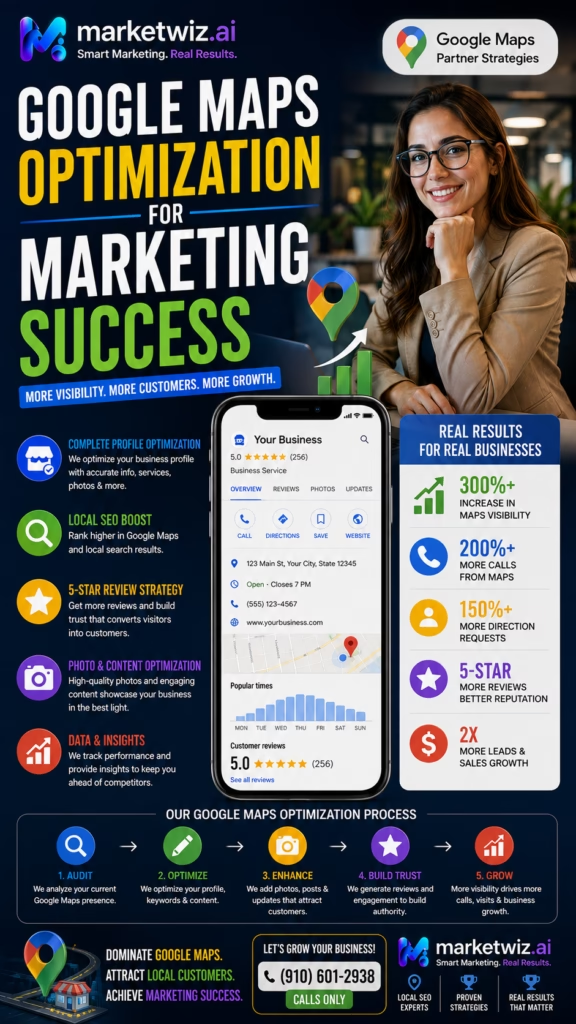
Google Maps Optimization for Marketing Success
Google Maps optimization has become one of the most important local marketing strategies for businesses that depend on nearby customers. A properly optimized Google Business Profile can improve local visibility, increase customer trust, generate phone calls, attract website visitors, support lead generation, and create a stronger foundation for long-term marketing growth.
For many local businesses, some of the most valuable prospects are already searching on Google. They are looking for a nearby contractor, store, service provider, medical practice, restaurant, warehouse, professional firm, repair company, or another local solution. Google Maps optimization helps businesses compete for those high-intent searches and turn local visibility into real marketing opportunities.
This is what makes Google Maps different from many traditional forms of advertising. Instead of interrupting someone who may or may not need your service, local search can place your business in front of customers who have already expressed interest through their search behavior.
A customer searching for “HVAC repair near me,” “flooring company in Dallas,” “commercial warehouse space Atlanta,” “roofing contractor nearby,” or “best plumber near me” is signaling a specific need. When your business appears prominently and presents a strong profile, the path from discovery to contact can be extremely short.
However, successful Google Maps marketing requires much more than simply creating a Google Business Profile. Businesses must improve relevance, strengthen reputation, maintain accurate information, support the profile with a quality website, build useful local content, track customer actions, and create a reliable process for converting search visibility into leads and revenue.
1. What Is Google Maps Optimization?
Google Maps optimization is the process of improving the information, relevance, prominence, reputation, supporting website signals, and overall customer experience associated with a business's local Google presence.
The objective is to help eligible businesses appear more effectively when people search for relevant products, services, or business categories within a particular geographic area.
Google Maps optimization can include:
- Google Business Profile optimization,
- accurate business information,
- appropriate business categories,
- service and product information,
- review management,
- photo optimization,
- local keyword research,
- website optimization,
- location-focused content,
- local citations,
- conversion improvements,
- lead tracking,
- competitive analysis.
Each component helps create a clearer and more trustworthy representation of the business for both customers and Google's local search ecosystem.
2. Why Google Maps Matters for Marketing Success
Local search frequently happens close to a buying decision. Consumers may already know what they need and simply want to determine which nearby business deserves their call, visit, appointment, or purchase.
That creates a powerful marketing environment.
Customers Have Intent
Many local searchers are actively looking for a provider instead of passively consuming content.
Geography Is Built In
Google Maps connects search activity with location, making it especially valuable for businesses serving defined geographic markets.
Trust Signals Are Visible
Reviews, photos, business information, services, and website links help prospects evaluate companies quickly.
Action Is Easy
Customers may be able to call, request directions, visit a website, or learn more directly from the profile.
This combination of intent, location, trust, and convenient action explains why Google Maps can become an important component of a broader local marketing strategy.
3. Optimize the Google Business Profile First
Your Google Business Profile is the foundation of Google Maps optimization. If the profile contains incomplete, inaccurate, outdated, or confusing information, every other part of the strategy becomes more difficult.
Businesses should review the entire profile from a customer's perspective.
Ask questions such as:
- Is the business name accurate?
- Is the phone number correct?
- Does the website link work?
- Are business hours current?
- Is the primary category appropriate?
- Are relevant secondary categories included?
- Are legitimate services clearly described?
- Are photos recent and useful?
- Does the profile explain what the company actually does?
A strong profile should remove uncertainty. Customers should quickly understand the business and know what action to take next.
Maintain Accurate Business Information
Business information should reflect real-world operations. Name, phone number, location information, hours, website, service areas, and other identifying details should remain current.
Businesses that have changed phone numbers, websites, locations, ownership, or operating hours should pay particular attention to outdated information across the web.
4. Choose the Right Business Categories
Business categories are one of the clearest ways to communicate what a company does. Google provides a large category system, and businesses should select categories that accurately match their primary and meaningful secondary activities.
The primary category deserves special attention because it should represent the central nature of the business.
Examples might include:
- HVAC contractor,
- flooring store,
- roofing contractor,
- appliance repair service,
- real estate agency,
- moving company,
- pest control service,
- auto repair shop,
- commercial real estate agency.
Additional categories can be useful when they represent genuine additional services, but selecting unrelated categories simply to reach more searches can make the business profile less accurate.
5. Research Local Keywords and Customer Intent
Google Maps optimization should be informed by how real customers search.
Keyword research helps businesses understand which services, products, problems, locations, and buying signals appear within their market.
Service-Based Search Terms
These describe the service the customer wants.
- air conditioning repair
- roof replacement
- commercial painting
- floor installation
- moving services
- appliance repair
- pest control
Geographic Search Terms
Customers frequently add cities, neighborhoods, counties, or other locations.
- Dallas flooring company
- Charlotte HVAC contractor
- Raleigh warehouse space
- Houston commercial roofer
- Wilmington painting company
Near-Me Searches
Searches such as “plumber near me,” “car repair near me,” or “best flooring store near me” communicate a strong local intent without explicitly naming a city.
Problem-Based Searches
Customers may search for the problem rather than the service.
- AC not cooling
- dryer not heating
- roof leaking
- furnace making noise
- floor water damage
- lights flickering
Understanding these patterns helps businesses develop better website pages, service descriptions, FAQs, educational content, and overall marketing strategy.
6. Build a Strong Review Strategy
Reviews are one of the most visible trust signals on a Google Business Profile. Potential customers frequently compare ratings, review volume, review recency, review detail, and business responses before deciding whom to contact.
A company with an active profile containing legitimate customer experiences may appear more established than a competitor with little public feedback.
Request Reviews Consistently
Instead of occasionally remembering to request reviews, businesses can create a repeatable process tied to real customer interactions.
Examples include requesting feedback after:
- a completed service call,
- a successful installation,
- a purchase,
- a finished project,
- a positive customer-service interaction.
The objective is to build an authentic reputation over time.
Respond to Reviews Professionally
Responses can influence future customers as much as the original review itself. Professional responses show that the company pays attention to customer experiences.
Positive reviews may receive a brief appreciative response. Negative reviews should be handled calmly, factually, and professionally.
7. Improve Visual Trust With High-Quality Photos
Photos help customers understand the business before contacting it. This can be particularly valuable in industries where customers want proof of quality, inventory, facilities, equipment, or completed work.
Useful photo categories may include:
- completed projects,
- before-and-after images,
- employees,
- business vehicles,
- equipment,
- storefronts,
- office interiors,
- showrooms,
- products,
- commercial facilities,
- warehouses,
- work in progress.
A roofer can show completed roofs. A flooring company can show installed floors. A warehouse business can display interior space, loading areas, building exteriors, and parking. A moving company can show trucks, teams, and equipment.
Authentic business photos often provide more credibility than generic stock images.
8. Add Clear Services and Products
Customers should not have to leave your profile simply to determine whether you provide the service they need.
Businesses should review the available service and product fields and add accurate information where appropriate.
For example, an HVAC company might list:
- AC repair,
- AC replacement,
- heating repair,
- furnace installation,
- maintenance,
- commercial HVAC.
A flooring business could list:
- luxury vinyl plank,
- laminate flooring,
- engineered hardwood,
- commercial flooring,
- flooring materials,
- floor installation where applicable.
Clear information can improve customer confidence and reduce unqualified inquiries.
9. Strengthen the Website Behind the Profile
Google Maps optimization should not stop with the Google Business Profile. A strong website can reinforce local relevance, provide detailed information, and convert customers who want to research the business before calling.
The website should explain:
- what services are offered,
- where the business operates,
- who the business serves,
- why customers should choose the company,
- how to contact the business.
Create Dedicated Service Pages
Major services often deserve dedicated pages containing real information about the service, customer problems, process, benefits, FAQs, and local relevance.
This provides a better experience than attempting to explain every service on a single generic page.
Improve Conversion Paths
Website visitors coming from Google Maps may already be highly interested. Make the next step obvious.
Depending on the business, that could mean:
- calling,
- requesting a quote,
- booking an appointment,
- viewing available inventory,
- requesting more information.
10. Build Useful Location Pages
Businesses serving several legitimate geographic markets may benefit from dedicated location pages.
However, location pages should provide genuine value.
Simply copying the same page dozens of times and replacing one city name with another creates weak content and a poor customer experience.
A strong location page might discuss:
- services offered in that area,
- specific customer needs,
- local project examples,
- neighborhoods or communities served,
- relevant climate or property considerations,
- local FAQs,
- service availability.
The page should feel intentionally written for the location.
11. Improve Local Citations and Business Data
Local citations are online references to a business's identifying information. Depending on the source, this information might include business name, address, phone number, website, categories, and operating information.
Important citation sources vary by industry and geography.
Businesses should prioritize legitimate, relevant sources rather than attempting to create hundreds of low-value directory listings.
Consistency can be especially important when correcting outdated information from previous addresses, phone numbers, websites, or ownership changes.
12. Publish Helpful Local Content
A business website can support Google Maps marketing by publishing information that answers real customer questions.
For example:
- An HVAC company could explain common cooling problems during summer.
- A flooring company could compare flooring materials for local homes.
- A roofer could explain signs of storm damage.
- A moving company could publish a local moving checklist.
- A pest control company could explain seasonal pest activity.
- A commercial real estate company could discuss warehouse leasing considerations.
Helpful content strengthens the website while giving prospective customers additional reasons to trust the business.
13. Use Google Business Profile Updates Strategically
Google Business Profile updates can help businesses communicate recent and relevant information.
Potential topics include:
- completed projects,
- new services,
- seasonal reminders,
- business announcements,
- special offers where appropriate,
- educational tips,
- new products,
- inventory highlights,
- frequently asked questions.
Profile activity should have a purpose. Posting simply to create activity is less valuable than publishing information that can actually help a prospective customer.
14. Optimize the Profile for Customer Conversion
Google Maps visibility is valuable only when customers take action.
Businesses therefore need to think beyond rankings and evaluate how the profile converts.
| Optimization Area | Customer Question | Marketing Goal |
|---|---|---|
| Business categories | Do they provide what I need? | Improve relevance |
| Reviews | Can I trust this business? | Increase confidence |
| Photos | What does their work look like? | Reduce uncertainty |
| Services | Do they handle my specific problem? | Improve qualification |
| Website | Where can I learn more? | Support conversion |
| Phone information | How do I reach them? | Generate inquiries |
The best-performing profile is not necessarily the one with the most information. It is the one that gives customers the right information at the right time.
15. Improve Lead Response After the Click or Call
Local marketing does not end when someone contacts the business.
Many prospects contact several companies within the same search session. Slow responses, unanswered calls, confusing voicemail systems, forgotten website inquiries, and weak follow-up can cause otherwise excellent Google Maps marketing to fail.
Businesses should define:
- who receives new leads,
- how quickly inquiries are answered,
- how missed calls are handled,
- what qualifying questions are asked,
- how estimates are scheduled,
- how follow-up is performed,
- how sales outcomes are recorded.
Marketing success requires coordination between search visibility and sales operations.
16. Track Google Maps Marketing Performance
Optimization decisions should be based on actual business outcomes whenever possible.
Useful measurement areas can include:
- profile visibility,
- search activity,
- website clicks,
- phone calls,
- direction requests,
- website conversions,
- qualified leads,
- appointments,
- quotes,
- closed customers,
- revenue.
Google Business Profile reporting can provide useful visibility and interaction data, while website analytics, CRM systems, and call tracking can add greater depth.
Measure More Than Rankings
A business might improve from position seven to position three for an important search, but that change has limited value if phone calls and qualified opportunities remain unchanged.
Marketing measurement should ultimately connect optimization activity to actual customer acquisition.
17. Use AI to Scale Google Maps Marketing
Artificial intelligence can improve efficiency across many parts of a local marketing workflow.
AI does not replace the need for a legitimate business, quality customer service, or accurate information. Instead, it can help businesses process information and execute repetitive marketing tasks more efficiently.
AI for Keyword Research
AI can organize search topics by service, location, customer problem, commercial intent, and content opportunity.
AI for Content Planning
Businesses can use AI to generate ideas for service pages, local landing pages, FAQs, blog topics, Google Business Profile posts, and customer education.
AI for Review Management
AI can help prepare professional review-response drafts that staff can evaluate and edit before publishing.
AI for Reporting
AI can summarize local marketing data, identify trends, compare locations, highlight changes, and help teams prioritize optimization opportunities.
AI for Lead Management
AI-powered systems can help organize leads, classify inquiries, route prospects, update CRM records, and support appropriate follow-up workflows.
18. Analyze Google Maps Competitors
Local optimization happens within a competitive environment.
A company can have a complete profile and still struggle because several competitors have stronger reputation, better websites, more established local authority, or more relevant geographic positioning.
A competitive analysis can review:
- primary categories,
- secondary categories,
- review counts,
- rating patterns,
- review recency,
- photo quality,
- service coverage,
- website depth,
- location pages,
- brand prominence,
- local content,
- customer experience.
The objective is not to copy competitors. It is to understand why customers may choose them and determine where your business can offer a stronger experience.
19. Optimize Google Maps for Multiple Locations
Multi-location businesses need both central consistency and local customization.
Every legitimate location should accurately represent its own:
- address,
- phone routing,
- operating hours,
- services,
- photos,
- reviews,
- local website destination,
- market-specific information.
Performance should also be measured by location.
A company may discover that one market produces strong lead volume while another location has good visibility but weak conversion. That difference should influence marketing decisions.
20. Optimize Service-Area Businesses Correctly
Contractors, repair companies, cleaning businesses, landscapers, movers, pest-control companies, mobile service providers, and many other businesses travel to customers instead of operating like traditional storefronts.
Eligible service-area businesses can use Google Business Profile while following Google's current rules regarding eligibility, address display, and service areas.
Businesses should accurately represent where they operate.
Creating fake offices or misleading locations merely to target additional cities can create unnecessary risk and undermine long-term marketing stability.
21. Google Maps Optimization Mistakes to Avoid
Keyword Stuffing the Business Name
The business name should accurately represent the real-world business instead of being altered simply to include additional keywords.
Creating Fake Locations
Profiles should correspond with legitimate businesses and locations that meet Google's current eligibility requirements.
Buying Fake Reviews
Fake reviews can damage customer trust and create platform risk. Reputation should be built from legitimate customer experiences.
Ignoring Profile Information
Incorrect hours, old phone numbers, broken links, outdated services, or incomplete information can reduce both trust and conversions.
Using Low-Quality Photos
Poor or irrelevant images can weaken the professional impression of the business.
Creating Duplicate Local Pages
Hundreds of nearly identical location pages do not create a strong customer experience. Build useful local content instead.
Tracking Rankings Only
Ranking reports do not tell you whether customers are calling, booking, buying, or generating revenue.
22. Industries That Benefit From Google Maps Optimization
Home Services
HVAC, plumbing, roofing, electrical, flooring, painting, remodeling, landscaping, cleaning, pest control, and other contractors.
Automotive
Auto repair shops, dealerships, tire stores, body shops, detailing businesses, and specialty automotive providers.
Retail
Furniture stores, appliance stores, flooring retailers, home improvement businesses, and specialty stores.
Professional Services
Attorneys, accountants, consultants, real estate companies, financial professionals, and related providers.
Healthcare
Medical offices, dentists, chiropractic practices, physical therapy offices, and other eligible healthcare businesses.
Commercial Services
Warehousing, commercial real estate, industrial contractors, business services, commercial maintenance, and B2B providers.
23. Google Maps Optimization vs. Paid Advertising
Local SEO and paid advertising can complement each other.
| Marketing Area | Google Maps Optimization | Paid Advertising |
|---|---|---|
| Traffic Source | Organic local discovery | Purchased exposure |
| Speed | Usually builds over time | Can begin quickly |
| Long-Term Value | Can build durable visibility | Usually depends on continued spending |
| Main Assets | Profile, reputation, website, local authority | Campaigns, audiences, creative, bidding |
| Primary Goal | Capture existing local demand organically | Create additional targeted traffic and demand |
A business seeking faster growth may use paid advertising while simultaneously developing a stronger organic Google Maps presence.
24. Connect Google Maps With Social Marketing
Customer journeys are rarely limited to one platform.
Someone may first discover a company through Facebook, Instagram, TikTok, YouTube, Craigslist, Facebook Marketplace, or another marketing channel. Later, that person may search the business name on Google to verify reviews, hours, location, website, reputation, or services.
That makes Google Maps an important trust layer within a wider marketing ecosystem.
Social marketing can create awareness while Google Maps captures branded and service-related search demand.
25. Connect Google Maps Leads to a CRM
A centralized lead management system can reveal what happens after someone discovers the business.
Useful CRM information may include:
- lead source,
- customer name,
- phone number,
- email address,
- service requested,
- location,
- appointment status,
- estimate status,
- follow-up history,
- sales outcome,
- revenue.
Over time, this allows businesses to compare Google Maps with other lead sources and understand which channels produce actual customers.
26. The Google Maps Optimization Framework
Audit the Existing Local Presence
Review the Google Business Profile, website, reviews, categories, photos, services, citations, analytics, and lead handling process.
Research Customer Search Behavior
Identify important services, customer problems, high-intent search terms, geographic patterns, and competitive opportunities.
Improve Profile Accuracy
Correct business information, hours, contact details, categories, services, attributes, and other profile fields.
Strengthen Trust Signals
Build a legitimate review process, improve photography, provide useful service information, and maintain a professional profile.
Strengthen the Website
Improve service pages, local pages, conversion paths, mobile usability, internal linking, customer education, and local relevance.
Improve Local Business Data
Correct outdated information and maintain accurate citations across legitimate online sources.
Publish Helpful Content
Create local articles, FAQs, service explanations, project highlights, and educational resources addressing real customer needs.
Track Customer Actions
Measure calls, website activity, direction requests, leads, appointments, quotes, customers, and revenue.
Improve Lead Conversion
Reduce missed calls, slow responses, unclear next steps, and other friction between the search and the sale.
Repeat What Works
Use performance data to expand the services, locations, content, and processes producing the strongest results.
27. Measure Marketing Success Correctly
One of the biggest mistakes in local SEO is assuming that higher rankings automatically equal marketing success.
Rankings are useful diagnostic information, but business outcomes matter more.
| Stage | Marketing Question | Possible Metric |
|---|---|---|
| Visibility | Are people finding us? | Search exposure and Maps visibility |
| Engagement | Are they interacting? | Calls, website visits, directions |
| Lead Generation | Are they contacting us? | Inbound inquiries |
| Qualification | Are they good prospects? | Qualified lead rate |
| Sales | Are they becoming customers? | Closed deals |
| Revenue | Is marketing profitable? | Revenue and acquisition cost |
This approach gives businesses a more accurate view of whether Google Maps optimization is supporting actual growth.
28. A 90-Day Google Maps Optimization Plan
Days 1–30: Audit and Foundation
- Review Google Business Profile information.
- Verify primary and secondary categories.
- Audit business hours and phone information.
- Review photos.
- Audit reviews and review responses.
- Evaluate services and products.
- Analyze important local competitors.
- Audit the website.
- Review local citations.
- Confirm analytics and lead tracking.
Days 31–60: Content and Authority
- Improve important service pages.
- Create useful location pages where appropriate.
- Publish new project photos.
- Implement a review request workflow.
- Correct inaccurate citations.
- Create local educational content.
- Publish useful profile updates.
- Improve contact and conversion paths.
Days 61–90: Measurement and Growth
- Review profile performance.
- Analyze call volume and lead quality.
- Compare results by service.
- Compare results by location.
- Review competitor changes.
- Improve underperforming pages.
- Expand successful content topics.
- Automate reporting workflows.
- Improve lead follow-up.
- Allocate more resources toward proven opportunities.
29. The Future of Google Maps Marketing
Local search continues to change as Google integrates richer business information, visual content, AI-powered search experiences, personalized results, and new discovery interfaces.
Businesses should therefore think beyond traditional “rank tracking.”
The future of local marketing will increasingly reward companies capable of maintaining:
- accurate structured business information,
- strong customer reputation,
- high-quality visual content,
- helpful websites,
- relevant local information,
- efficient lead handling,
- clear measurement systems.
AI will likely continue making local marketing operations more scalable. Businesses can use automation to analyze data, organize marketing tasks, create content drafts, track leads, manage repetitive workflows, and identify opportunities faster.
However, technology cannot compensate for a poor customer experience. Businesses that combine better technology with strong operations, real customer satisfaction, and credible local authority will be better positioned for long-term success.
30. Final Thoughts: Turn Google Maps Into a Marketing Asset
Google Maps optimization is one of the most practical ways for local businesses to connect with customers who are already searching for what they offer.
The opportunity extends far beyond rankings.
A well-optimized local presence can improve discoverability, strengthen trust, increase calls, attract website visitors, generate qualified inquiries, support branded searches, and reinforce every other marketing channel a business uses.
The strongest strategy combines:
- accurate Google Business Profile information,
- appropriate categories,
- clear services,
- legitimate customer reviews,
- high-quality photos,
- strong website content,
- useful location pages,
- accurate citations,
- local keyword research,
- conversion optimization,
- fast lead response,
- CRM tracking,
- continuous performance analysis.
Businesses that treat Google Maps as a complete marketing and customer-acquisition channel rather than a static online listing can create a stronger competitive position in their local market.
The goal is simple:
Be visible when customers search. Build trust when they compare. Make contact easy when they are ready. Track what happens afterward. Improve the system continuously.
That is how Google Maps optimization becomes a foundation for sustainable marketing success.
Frequently Asked Questions About Google Maps Optimization
1. What is Google Maps optimization?
Google Maps optimization is the process of improving a business's local Google presence through accurate profile information, relevant categories, reviews, photos, website support, citations, local content, and other legitimate optimization methods.
2. Why is Google Maps optimization important for marketing?
It helps businesses reach consumers who are actively searching for nearby products, services, or providers, making local search an important source of customer acquisition.
3. What is Google Business Profile optimization?
It involves improving and maintaining the information customers see across Google Search and Google Maps, including categories, services, hours, photos, reviews, contact information, and other business details.
4. Does Google Maps SEO generate leads?
Improved local visibility can generate phone calls, website visits, appointments, direction requests, and other customer actions when the business appears for relevant searches.
5. How can a business rank higher on Google Maps?
Businesses can improve their overall local presence by strengthening relevance, prominence, profile accuracy, reputation, website quality, and other local search signals while following Google's guidelines.
6. Are reviews important for Google Maps?
Reviews can influence customer trust and contribute to the overall prominence of a business. Companies should focus on legitimate customer feedback rather than artificial review tactics.
7. Do photos improve Google Business Profile performance?
Useful photos can improve profile quality by helping customers understand the business, services, products, facilities, employees, and completed work.
8. Should I add keywords to my profile?
Business information should naturally describe legitimate services and products. Businesses should avoid keyword stuffing or altering official identifying information for ranking purposes.
9. Does my website affect Google Maps marketing?
A strong website can support local relevance, provide deeper service information, educate customers, and convert visitors coming from the Google Business Profile.
10. What are local citations?
Local citations are references to business information across legitimate directories, industry websites, local sources, and other online platforms.
11. How important are Google Business Profile categories?
Categories help define what type of business you operate and what searches may be relevant. Select categories that accurately represent real services.
12. Can service-area businesses optimize Google Maps?
Eligible service-area businesses can optimize Google Business Profiles while following Google's current rules regarding business eligibility, service areas, and address visibility.
13. What is the Google local pack?
The local pack is a group of local business results that Google may display prominently for searches with geographic or local intent.
14. Why is local keyword research important?
It helps businesses understand the language customers use when searching for local services, products, problems, and providers.
15. Should a business create city pages?
Location pages can be useful when they represent legitimate markets and contain helpful local information. Avoid mass-producing duplicate pages solely to target city names.
16. Can Google Maps optimization increase calls?
Improved visibility, stronger trust signals, and accurate contact information can increase opportunities for potential customers to call the business.
17. Can AI improve Google Maps optimization?
AI can assist with keyword research, reporting, content ideas, review response drafting, performance analysis, CRM organization, and appropriate lead follow-up workflows.
18. How often should a Google Business Profile be updated?
Core business information should remain accurate continuously. Photos, services, hours, posts, products, and other profile content should be updated whenever meaningful changes occur.
19. Do Google Business Profile posts matter?
Profile updates can provide useful current information about services, products, projects, company news, offers, and educational topics.
20. How should businesses respond to negative reviews?
Respond professionally and respectfully. Avoid public arguments and focus on clarifying facts or resolving legitimate customer concerns.
21. Does proximity affect Google Maps rankings?
Geographic distance can influence local results because Google considers how relevant a business is to the searcher's location and query.
22. Can anyone guarantee first place on Google Maps?
No legitimate provider can guarantee a permanent number-one Maps ranking because results depend on competition, relevance, location, prominence, query context, and Google's systems.
23. Why is my business not visible on Google Maps?
Possible reasons include weak relevance, inaccurate information, incorrect categories, limited reputation, strong competitors, geographic limitations, poor website support, or profile compliance issues.
24. Can multi-location businesses use this strategy?
Yes. Legitimate locations can be optimized individually while maintaining accurate location-specific information, local content, reputation, and performance tracking.
25. How do I measure Google Maps performance?
Combine Google Business Profile performance information with website analytics, call tracking, CRM attribution, appointments, sales outcomes, and revenue whenever possible.
26. Is Google Maps SEO better than paid advertising?
They serve different purposes. Organic local optimization can build longer-term visibility while paid advertising can generate faster targeted exposure. Many businesses benefit from using both.
27. Can social media help Google Maps marketing?
Social media can build awareness that later leads customers to search the business on Google, where reviews, location information, and the website help influence the decision.
28. Should Google Maps leads go into a CRM?
CRM tracking can help businesses measure lead sources, response times, appointment rates, sales outcomes, and revenue generated from local search.
29. Which industries benefit most from Google Maps optimization?
Contractors, home-service companies, retail stores, automotive businesses, professional services, healthcare providers, restaurants, real estate businesses, commercial services, and many other local companies can benefit.
30. What is the best long-term Google Maps optimization strategy?
Maintain accurate business information, build legitimate reputation, publish useful photos and content, strengthen the website, improve local relevance, track leads, optimize conversions, and continuously analyze performance.
30 Additional SEO Keywords
These additional terms can support future content planning, internal linking, service pages, FAQ expansion, local SEO articles, Google Business Profile content, and broader topical authority around Google Maps optimization:
Build a Stronger Local Marketing Engine
MarketWiz.ai combines AI-powered local marketing, Google Maps visibility strategies, lead generation, automation, and customer acquisition systems designed to help businesses create more opportunities and turn local search demand into measurable growth.
Call MarketWiz.ai: (910) 601-2938












