
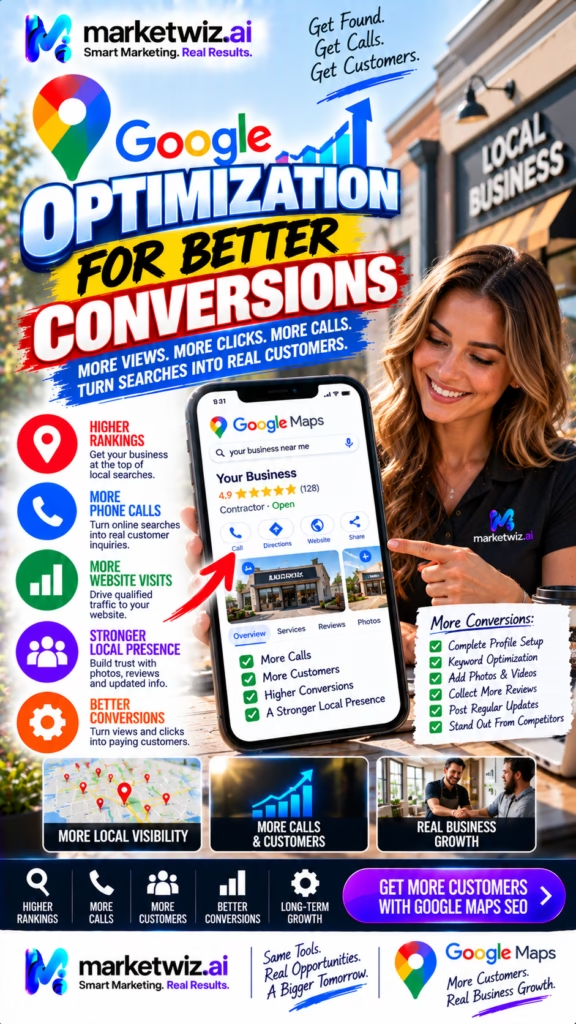
Google Maps Optimization for Better Conversions
Google Maps visibility is valuable, but visibility alone does not grow a business. The real opportunity begins when nearby searchers become phone calls, website visitors, appointments, estimate requests, bookings, qualified leads, and paying customers. This guide explains how to build a Google Maps optimization strategy around conversions instead of rankings alone.
Updated September 20261. Understand the Difference Between Google Maps Visibility and Conversions
Google Maps optimization often begins with a simple objective: improve local visibility. Businesses want to appear when nearby customers search for the products or services they provide. That visibility matters because a company that cannot be discovered has fewer opportunities to win the customer.
But visibility is only the beginning of the customer journey. Appearing in a local result does not automatically mean the customer will call, click, schedule, visit, request an estimate, or make a purchase.
The prospect still has to evaluate the business. They may look at the company name, reviews, photographs, hours, services, website, location, reputation, responsiveness, and overall presentation before deciding what to do next.
Google Maps optimization should not stop at rankings. The stronger objective is to create a local search presence that helps the right customer discover the business, trust what they see, and take a valuable next action.
This changes the optimization strategy. Instead of asking only how to improve rankings, businesses should also ask what prevents interested searchers from becoming customers.
2. Define What a Google Maps Conversion Means for Your Business
A conversion is not identical for every company. A roofing contractor may want estimate requests. A restaurant may want reservations or visits. A dentist may want appointments. A retailer may want customers to get directions and visit the store.
Before optimizing the customer journey, determine which actions actually create business value.
Phone Conversions
Calls from prospects who need information, estimates, appointments, scheduling, availability, or immediate help.
Website Conversions
Forms, quote requests, appointment requests, purchases, bookings, or other valuable actions after a local search click.
Physical Visits
Customers who discover the business locally and then travel to the store, office, restaurant, showroom, clinic, or other physical location.
Qualified Leads
Prospects who meet the company's geographic, project, service, budget, scheduling, or other legitimate qualification requirements.
Once the conversion is defined, the business can optimize Google Maps, landing pages, calls, forms, CRM workflows, and reporting around the same outcome.
3. Optimize Around High-Intent Local Search Behavior
Not every local search represents the same level of buying intent. Some people are researching. Others are comparing options. Some are ready to call immediately.
A conversion-focused local SEO strategy pays close attention to the searches most closely connected with the company's real products and services.
High-value local search themes may include:
- Specific service + city
- Specific product + city
- Business category + city
- Repair-related searches
- Installation searches
- Replacement searches
- Appointment searches
- Emergency or urgent searches where applicable
- Near me searches
- Local purchase-intent searches
- Brand comparison searches
- Problem-specific local searches
The objective is not to chase every keyword. It is to become more relevant to the searches that can realistically produce valuable customers.
4. Make Google Business Profile Information Conversion-Ready
Customers often make decisions directly from local search results. That means inaccurate or incomplete information can create conversion problems before the prospect ever reaches the website.
Business information should be reviewed from the customer's perspective. Could a first-time prospect quickly understand what the business is, where it operates, when it is available, and how to take the next step?
Review important customer-facing information such as:
- Business name
- Address or applicable service-area information
- Phone number
- Website destination
- Operating hours
- Special hours
- Business categories
- Products or services
- Relevant attributes
- Customer-facing business details
Think Like a New Customer
Someone seeing the business for the first time should not have to guess whether the company serves their area, provides the service they need, or is currently available.
5. Choose Categories That Match What Customers Actually Need
Business categories help describe the nature of the company. A conversion strategy should therefore begin with accurate categorization rather than attempting to make the business appear relevant to unrelated searches.
The primary category should represent the core business accurately. Appropriate additional categories can reflect other legitimate parts of the business when relevant.
Accurate categorization supports a cleaner customer journey because people who discover the company are more likely to be searching for something it genuinely provides.
Better lead quality starts with better relevance. More visibility is not necessarily more valuable if the business is being discovered by people who need something completely different.
6. Clearly Explain the Products and Services Customers Can Buy
Customers should not have to search through several websites to determine whether a business provides the solution they need.
Where appropriate, businesses should accurately communicate their core products and services through their local presence and connected website.
A contractor might separate repair, replacement, installation, inspection, and maintenance. A medical practice might explain its major appointment types. A retailer may highlight important product categories.
Clear service information can improve:
- Customer understanding
- Search relevance
- Lead quality
- Website engagement
- Call quality
- Sales conversations
- Customer confidence
Clarity is especially important when a business has several divisions or offers a wide range of services.
7. Turn Authentic Google Reviews Into Conversion Assets
Reviews are not merely numbers attached to a business profile. They are customer experiences that prospective buyers may use to evaluate whether the business deserves further consideration.
A prospect may look for evidence that the company has handled situations similar to theirs. They may also pay attention to professionalism, communication, reliability, quality, responsiveness, and how the company handles problems.
Review Quality Matters Alongside Review Quantity
A useful review profile gives prospects real context about customer experiences. Businesses should focus on earning authentic feedback from genuine customers rather than treating reviews as a vanity metric.
A consistent process for requesting honest customer feedback can help the business maintain a current reputation without relying on occasional bursts of reviews.
8. Use Review Responses to Build Additional Customer Confidence
Future customers may read both the review and the business response. Professional responses can therefore become part of the conversion experience.
Positive reviews can be acknowledged naturally. Critical feedback can be addressed professionally without turning the response into an argument.
Strong review responses generally aim to be:
- Professional
- Relevant to the customer's feedback
- Concise
- Respectful
- Consistent with the brand
- Helpful to future readers
Generic copy-and-paste responses can feel mechanical. A little context can make the interaction more useful while still keeping response management efficient.
9. Use Authentic Photos to Reduce Customer Uncertainty
Customers want to understand what they are dealing with before they make contact. Photographs can help answer questions that text alone cannot.
The best image strategy depends on the business model.
Local Businesses
Show the storefront, office, entrance, interior, team, signage, parking, environment, or other useful physical details.
Home-Service Companies
Show completed projects, technicians, vehicles, equipment, installations, repairs, and examples of professional work.
Authentic imagery can help customers feel that the business is established, active, and transparent. It can also make the transition from online discovery to real-world interaction feel more familiar.
10. Send Google Maps Visitors to the Right Website Experience
A local search click should not lead to a confusing website experience. The destination page should continue the same customer journey that began in Google Maps.
If someone searches for a specific local service, clicks the business, and then reaches a generic website page with little information about that service, conversion momentum can disappear.
A conversion-focused destination should make it easy to understand:
- What the company provides
- Who it serves
- Where it operates
- Why customers choose it
- How to contact the business
- What happens next
Multi-location businesses can often improve relevance by connecting appropriate profiles with useful location-specific pages rather than sending every visitor to the same generic homepage.
11. Build Local Landing Pages That Continue the Conversion Journey
A local landing page should do more than repeat a city name throughout the page. Its job is to help a prospect make a decision.
The page can explain the local business, available products or services, geographic coverage, customer questions, trust signals, and the appropriate next step.
Useful local landing page elements can include:
- Clear local headline
- Primary product or service information
- Accurate service area
- Phone number
- Contact or appointment option
- Authentic photographs
- Customer reviews or testimonials
- Frequently asked questions
- Business hours
- Directions where appropriate
- Local project examples
- Clear expectations about the next step
12. Optimize the Mobile Experience for Local Search Customers
Local customer journeys frequently happen on smartphones. Someone may search while sitting in a car, standing inside a property, comparing businesses at home, or dealing with an urgent problem.
A mobile website that is slow, difficult to navigate, or overloaded with unnecessary elements can create friction immediately after a high-intent search.
Every unnecessary mobile step can become a conversion obstacle. Make important information and customer actions easy to find without forcing visitors through a complicated website experience.
Businesses should test the entire journey on actual mobile devices rather than assuming a desktop website automatically provides an effective mobile experience.
13. Improve Website Speed After the Google Maps Click
A prospect who has already demonstrated local intent should not be forced to wait for an unnecessarily heavy website.
Large images, excessive scripts, poorly configured plugins, unnecessary animations, third-party widgets, and other technical issues can make a page feel slow.
The objective is not merely to chase a technical score. The practical goal is to create a website that feels fast and usable to real customers.
Review:
- Mobile load experience
- Image sizes
- Script usage
- Hosting performance
- Page complexity
- Navigation speed
- Form usability
- Layout stability
14. Make Phone Calls Easy for High-Intent Local Prospects
For many contractors, home-service companies, professional services, clinics, automotive businesses, and other local companies, the phone remains a major conversion channel.
The correct number should be easy to locate, and the business should have a process for handling incoming calls professionally.
Generating more calls without improving call handling can simply move the conversion problem from marketing into operations.
Optimize the Entire Call Path
Local visibility creates the opportunity. Clear contact information makes calling easy. Strong call handling, qualification, scheduling, and follow-up determine how much of that opportunity becomes revenue.
15. Reduce Friction in Local Lead Forms
Forms can be useful for customers who prefer not to call, but an overly complicated form can discourage prospects before the business ever receives the opportunity.
Ask for the information necessary to begin the next step. Additional qualification can often happen after initial contact when appropriate.
Potential initial fields may include:
- Name
- Phone number
- Email where necessary
- Location or ZIP code
- Service needed
- Short project or problem description
The ideal form depends on the business. High-value B2B projects may require more information than a simple residential appointment request.
16. Strengthen Trust Signals Throughout the Local Customer Journey
Customers often compare several businesses quickly. Trust signals can help them understand whether a company appears established, professional, and appropriate for the job.
Trust should come from real information rather than exaggerated marketing claims.
Depending on the business, useful trust signals may include:
- Authentic customer reviews
- Years in business
- Relevant licensing information
- Insurance information where appropriate
- Professional certifications
- Real project photographs
- Team information
- Clear policies
- Accurate contact information
- Professional website design
- Industry associations
- Local community involvement
17. Keep Business Hours Accurate to Protect Conversions
Incorrect hours create one of the simplest forms of conversion friction. A customer may call when nobody is available, arrive at a closed location, or assume the business is unavailable when it is actually open.
Businesses should maintain normal operating hours as well as relevant holiday or special hours.
Multi-location companies need an especially reliable process because one outdated location can create a poor customer experience even if every other profile is correct.
18. Improve Response Speed After a Google Maps Lead Arrives
Conversion optimization does not end when a prospect submits a form or makes initial contact. The lead still needs to be handled.
High-intent customers may contact several businesses. An organized response system helps prevent opportunities from sitting unnoticed in an inbox or spreadsheet.
19. Improve Google Maps Lead Quality With Better Qualification
More inquiries are not always better. A business can receive a large volume of calls while generating relatively few customers if the people contacting it are outside the service area or need products the company does not offer.
Strong profile information and website content can perform some qualification before the prospect ever contacts the company.
Useful qualification information can include:
- Service areas
- Primary services
- Types of customers served
- Project categories
- Business hours
- Appointment requirements
- Relevant pricing context when appropriate
- Important service limitations
The goal is not to make the website difficult. It is to help the right customer recognize that the business is a strong match.
20. Track Google Maps Leads Inside a CRM
Businesses cannot improve conversion performance reliably if they lose track of what happens after the inquiry.
A CRM or structured lead management system can connect marketing activity with sales outcomes.
| Lead Stage | What to Track |
|---|---|
| New Inquiry | Source, customer information, requested product or service |
| Qualified | Location, need, timing, project fit, other relevant criteria |
| Appointment | Scheduled date, salesperson, technician, or location |
| Estimate / Proposal | Opportunity value and next follow-up step |
| Closed | Revenue and customer acquisition outcome |
| Lost | Reason when known and whether future follow-up is appropriate |
This allows local SEO decisions to be based on customer quality and business outcomes instead of traffic alone.
21. Build Follow-Up Into the Google Maps Conversion System
Not every prospect converts during the first conversation. Some customers need time to compare options, discuss a project internally, confirm a budget, check a schedule, or wait for the right moment.
A structured follow-up system helps the business stay organized without depending entirely on individual memory.
Follow-up can include:
- Call reminders
- Email follow-up
- Text follow-up where appropriate and permitted
- Estimate reminders
- Appointment reminders
- Longer-term sales follow-up
- CRM task assignments
The timing and channel should match the customer's expectations and the business's applicable communication requirements.
22. Track Google Maps Performance Beyond Profile Views
Visibility metrics can help businesses understand discovery, but they do not tell the entire story.
Conversion-focused reporting asks what happened after discovery.
Useful measurements may include:
- Local search visibility
- Website visits
- Calls
- Forms
- Appointment requests
- Bookings
- Direction requests
- Qualified leads
- Estimates
- Sales opportunities
- Closed customers
- Revenue
Measure the Funnel, Not Just the Top
Local visibility is useful because it creates opportunities. Conversion reporting reveals how effectively those opportunities move through the customer journey.
23. Measure Conversion Rates at Each Stage
A business can receive strong local visibility and still have a weak overall result because the conversion problem occurs later in the funnel.
Breaking performance into stages helps identify where opportunities are being lost.
| Stage | Conversion Question |
|---|---|
| Discovery → Contact | Are local searchers taking meaningful customer actions? |
| Contact → Qualified Lead | Are inquiries relevant to the business? |
| Qualified Lead → Appointment | Is the team effectively moving prospects forward? |
| Appointment → Proposal | Are legitimate opportunities receiving the right sales process? |
| Proposal → Customer | How effectively are qualified opportunities becoming revenue? |
This prevents marketing teams from trying to solve every revenue problem by generating more traffic.
24. Track Local Rankings Across the Real Customer Market
Local search visibility can change based on where the search takes place. Checking a ranking from one location can therefore provide an incomplete picture.
Geographic rank tracking can help businesses understand where visibility is strongest and where it becomes weaker across legitimate target markets.
That information can be compared with lead data. A company may discover that certain neighborhoods produce strong visibility but poor lead quality, while other areas produce fewer impressions but more valuable customers.
The objective is not to dominate a map for appearance alone. Geographic visibility becomes more useful when it is connected with real customer demand and measurable business outcomes.
25. Analyze Why Local Competitors May Convert Better
Competitor analysis should go beyond determining which business appears above another business in local results.
A competitor may convert more customers because its profile and website answer customer questions more effectively.
Review legitimate competitive differences such as:
- Profile completeness
- Review quality and recency
- Review responses
- Authentic photographs
- Website usability
- Mobile experience
- Service clarity
- Local landing pages
- Trust signals
- Contact options
- Scheduling experience
- Local content
The purpose is not to copy competitors. It is to identify customer expectations and areas where the business's own experience can improve.
26. Improve Google Maps Conversions Across Multiple Locations
Multi-location businesses need to optimize individual customer journeys rather than assuming one national website experience is enough for every market.
Each legitimate location may have different hours, reviews, photographs, contact information, staff, local competitors, customer demand, and conversion performance.
A scalable multi-location conversion system can include:
- Accurate location profiles
- Dedicated location pages
- Location-level phone routing
- Location-specific review management
- Local photographs
- Market-specific rank tracking
- Lead routing rules
- Location-level CRM attribution
- Conversion reporting by market
This makes it possible to identify which locations are producing strong results and which require additional optimization.
27. Use AI to Support Google Maps Conversion Optimization
AI can help businesses process large amounts of marketing and customer data faster, particularly when local marketing spans multiple services, markets, locations, and lead sources.
AI can assist with:
- Local keyword organization
- Review sentiment analysis
- Customer question analysis
- Content planning
- Lead classification
- CRM routing
- Follow-up workflows
- Location-level reporting
- Conversion trend analysis
- Identifying underperforming markets
Automation should support accurate business operations rather than replace quality control. Incorrect information automated at scale can create a larger problem instead of a better marketing system.
Use AI Where Repetition Is High and Judgment Is Structured
Let automation organize data, identify patterns, classify opportunities, and accelerate routine workflows while keeping important business information and customer-facing decisions under appropriate oversight.
28. Connect Google Maps With a Multi-Channel Lead Generation Strategy
Customers rarely experience marketing as separate channels. A person may first encounter a company through social media, Craigslist, Facebook Marketplace, a referral, a vehicle, an advertisement, or another source and then search the company on Google before making contact.
This makes Google Maps part of a larger trust and conversion system.
Depending on the business, the broader strategy can include:
- Google Maps optimization
- Organic local SEO
- Website SEO
- Facebook Marketplace
- Craigslist
- Social media marketing
- Paid search
- Paid social
- Email marketing
- Referral marketing
- CRM automation
- AI lead management
A strong Google presence can reinforce confidence when prospects research the company after discovering it through another marketing channel.
29. Avoid Common Google Maps Conversion Mistakes
Businesses can spend months improving local visibility while overlooking basic conversion problems that prevent searchers from becoming customers.
Common mistakes include:
- Focusing entirely on rankings
- Using inaccurate business information
- Allowing hours to become outdated
- Using the wrong phone number
- Sending traffic to weak website pages
- Having a poor mobile experience
- Using slow landing pages
- Providing unclear service information
- Ignoring customer reviews
- Using weak or outdated photographs
- Creating overly complicated forms
- Responding slowly to leads
- Failing to follow up
- Not tracking qualified leads
- Measuring views without measuring sales outcomes
- Failing to route multi-location leads correctly
- Ignoring lost-lead reasons
- Chasing irrelevant keywords
- Ignoring customer intent
- Failing to connect local SEO with the sales process
Conversion optimization often improves when the business views the entire journey as one connected system rather than treating Google Maps as an isolated marketing asset.
30. Follow a 90-Day Google Maps Conversion Optimization Plan
Businesses can make Google Maps optimization more manageable by improving the system in phases.
Days 1–30: Audit Visibility and Conversion Foundations
- Verify core business information
- Review Google Business Profile categories
- Audit products and services
- Check operating hours
- Review customer photographs
- Analyze review quality and recency
- Review the website destination
- Test mobile usability
- Test phone and form conversion paths
- Establish lead and conversion baselines
Days 31–60: Improve the Customer Journey
- Strengthen local landing pages
- Clarify products and services
- Add authentic business photographs
- Improve review request processes
- Respond professionally to reviews
- Improve mobile page speed
- Simplify contact forms
- Improve call handling
- Connect inquiries to a CRM
- Build structured lead follow-up
Days 61–90: Measure and Optimize Business Outcomes
- Track geographic visibility
- Measure website actions
- Measure calls
- Measure qualified leads
- Measure appointments or bookings
- Track estimates or proposals
- Measure closed customers
- Review lead quality by keyword or market
- Identify conversion bottlenecks
- Scale the improvements producing meaningful results
The Google Maps conversion formula: relevant local visibility + accurate business information + authentic reviews + strong photographs + useful local landing pages + fast mobile experience + clear customer actions + rapid lead handling + organized follow-up + CRM attribution + conversion reporting + continuous optimization.
Turn Google Maps Visibility Into Measurable Customer Growth
Google Maps optimization becomes much more valuable when businesses stop treating rankings as the final objective.
Rankings create visibility. Visibility creates opportunities. The customer experience determines how many of those opportunities become real business.
That experience begins before a prospect ever reaches the company website. The customer sees the business name, category, location, hours, reviews, photographs, services, and other information directly inside the local search environment.
Every one of those elements can influence whether the prospect continues. Accurate information reduces uncertainty. Authentic reviews provide customer context. Strong photographs make the company easier to understand. Clear services help people determine whether the business can solve their problem.
The website then needs to continue the journey rather than interrupt it. A person who searches for a local service should arrive at a page that makes sense for that intent. They should not have to hunt through complicated navigation to determine what the company does or how to make contact.
Mobile performance matters because many local customer journeys happen on smartphones. Slow pages, tiny buttons, confusing navigation, excessive popups, or difficult forms can create friction at the exact moment a prospect is considering contacting the company.
Conversion optimization also extends beyond the website. A phone call is not a completed sale. A submitted form is not automatically a qualified customer. Businesses still need systems for answering, qualifying, routing, scheduling, estimating, following up, and closing opportunities.
This is why CRM integration is so important. Without tracking the sales outcome, a business may know that Google produced activity but remain unsure whether that activity generated meaningful revenue.
A structured CRM process can show which inquiries became qualified leads, which became appointments, which received proposals, which became customers, and which were lost.
Those outcomes can then improve the marketing strategy. If a keyword produces many inquiries but few qualified leads, the business may need to adjust its targeting or content. If another market produces fewer leads but a much stronger customer rate, that market may deserve additional attention.
Geographic rank tracking adds another layer of insight. Local visibility can change throughout a service area, so businesses should avoid assuming that one ranking check represents the entire market.
Multi-location companies face the same challenge at a larger scale. Each location needs accurate information, appropriate landing pages, customer reviews, local photography, correct lead routing, and location-level reporting.
AI and automation can help manage that complexity. They can organize keyword research, analyze reviews, classify leads, identify trends, support reporting, and improve follow-up workflows.
But automation should support a strong strategy rather than compensate for inaccurate information or a poor customer experience.
The strongest Google Maps conversion systems therefore connect marketing, customer experience, sales operations, and reporting.
Local SEO brings the business into the customer's consideration. Strong profile information builds clarity. Reviews and photographs strengthen trust. The website provides additional information. Calls and forms create opportunities. CRM workflows organize those opportunities. Follow-up moves qualified prospects forward. Reporting reveals what actually generates customers.
When these pieces work together, Google Maps becomes more than a visibility channel. It becomes part of a measurable customer acquisition engine that can help a local business turn nearby search demand into calls, appointments, qualified leads, sales opportunities, and long-term growth.
Frequently Asked Questions About Google Maps Optimization for Better Conversions
1. What is Google Maps optimization?
Google Maps optimization is the process of improving a business's local search presence, business information, website connections, reputation, local relevance, and customer experience so nearby prospects can more easily discover and evaluate the business.
2. How can Google Maps optimization improve conversions?
Optimization can improve conversions by making important business information easier to understand, strengthening customer confidence, improving local visibility, and creating clearer paths from discovery to calls, website visits, appointments, bookings, or other valuable actions.
3. What is a Google Maps conversion?
A Google Maps conversion can be a meaningful customer action such as a phone call, website visit, appointment, form submission, booking, direction request, estimate request, purchase, or qualified lead depending on the business.
4. Does ranking higher automatically mean more conversions?
Not necessarily. Visibility creates opportunity, but customers still evaluate factors such as relevance, reviews, business information, photographs, website quality, availability, trust, and the ease of taking the next step.
5. Do Google reviews help conversions?
Authentic reviews can help prospective customers understand previous customer experiences and may increase confidence when they are comparing local businesses.
6. Should businesses respond to Google reviews?
Professional responses can demonstrate that a business pays attention to customer feedback and can provide useful context to future customers.
7. Do photos help Google Maps conversions?
Authentic photographs can help customers understand the business, location, team, products, services, equipment, or completed work and can reduce uncertainty before they contact or visit.
8. Should a Google Business Profile link to a local landing page?
The website destination should provide an accurate and useful experience for the customer. For multi-location businesses, a relevant location page can often provide stronger local context than a generic homepage.
9. How important is mobile optimization for Google Maps leads?
Mobile usability is important because local customers frequently move from search results to websites and contact actions on smartphones. Slow or confusing mobile experiences can create conversion friction.
10. What business information should be accurate on Google Maps?
Important information can include the business name, address or applicable service-area information, phone number, website, hours, categories, products or services, and other customer-facing details.
11. How do local landing pages improve conversions?
Local landing pages can provide additional information about the business, location, services, customer questions, trust signals, photographs, and clear next steps after a prospect discovers the company in local search.
12. Should local businesses display their phone number prominently?
Businesses that depend on phone leads generally benefit from making their correct phone number easy to find and use throughout the customer journey.
13. Can business hours affect conversions?
Accurate hours help customers know when a business is available. Incorrect hours can create frustration, missed calls, unnecessary trips, and lost opportunities.
14. Should Google Maps SEO focus only on rankings?
No. Rankings and visibility are useful measurements, but businesses should also evaluate customer actions, qualified leads, appointments, sales, and revenue where those outcomes can be measured.
15. Can Google Maps optimization generate phone calls?
A strong local search presence can help nearby prospects discover a business and make it easier for interested customers to call when phone contact is appropriate.
16. Can Google Maps optimization generate appointments?
Businesses that use appointments can build a customer journey that connects local discovery with clear scheduling or contact options.
17. Why do some Google Maps profiles get views but few leads?
Possible reasons include weak customer intent, poor profile information, limited trust signals, unclear services, weak photographs, low review confidence, an ineffective website, slow response times, or unnecessary conversion friction.
18. How can a business improve Google Maps lead quality?
Businesses can improve lead quality by accurately explaining what they offer, targeting relevant local search intent, clarifying service areas, improving website content, and creating clear qualification and response processes.
19. Does website speed matter for Google Maps conversions?
Website performance can influence customer experience after a visitor clicks from a local search result. Slow or difficult websites can create friction before a prospect completes a valuable action.
20. Should businesses track Google Maps leads in a CRM?
A CRM can help businesses organize leads, document follow-up, measure outcomes, and better understand which marketing channels contribute to qualified opportunities and customers.
21. Can AI help improve Google Maps conversions?
AI can assist with keyword research, review analysis, lead classification, reporting, customer follow-up workflows, content planning, and identifying conversion opportunities when used with accurate business information and human oversight.
22. How quickly should businesses respond to local leads?
Businesses should create a response process appropriate to their industry and customer expectations. High-intent prospects may contact multiple businesses, so unnecessary delays can reduce opportunities.
23. Should businesses track calls from local search?
Businesses that rely heavily on phone leads can benefit from measuring call activity and connecting calls with lead quality, appointments, sales, or other meaningful outcomes where practical.
24. What local SEO metrics matter most for conversions?
Useful metrics can include visibility, calls, website visits, forms, bookings, appointments, qualified leads, conversion rates, closed customers, and revenue depending on the business model.
25. Can service pages help Google Maps conversions?
Useful service pages can give prospects additional information about the specific solution they need and create a stronger transition from local discovery to contacting the business.
26. Can Google Maps SEO work with paid advertising?
Organic local search optimization and paid advertising can support different parts of customer acquisition and can be used together as part of a diversified marketing strategy.
27. How can multi-location businesses improve Google Maps conversions?
Multi-location businesses can maintain accurate location information, build useful location pages, manage reviews, improve lead routing, track performance by market, and create clear conversion paths for each legitimate location.
28. How long does Google Maps optimization take?
There is no universal timeline. Results depend on the market, competition, existing visibility, website quality, reputation, business history, optimization needs, and other factors.
29. What is the biggest Google Maps conversion mistake?
A major mistake is focusing entirely on visibility while ignoring what happens after the customer discovers the business. Ranking without a strong conversion path can leave valuable opportunities unrealized.
30. Is Google Maps optimization worth it for local businesses?
For businesses that depend on customers within specific geographic markets, Google Maps optimization can be an important part of a broader local customer acquisition strategy.
30 Additional SEO Keywords
These supporting keyword themes expand the article around Google Maps optimization, local conversion improvement, Google Business Profile optimization, local lead generation, customer acquisition, call generation, website conversions, and local SEO performance.
Turn Local Search Visibility Into More Customer Opportunities
Market Wiz AI helps local businesses strengthen Google Maps visibility, improve local SEO, generate customer opportunities, automate lead management, and connect local marketing with conversion-focused systems built for measurable growth.
Call MarketWiz.ai: (910) 601-2938












