

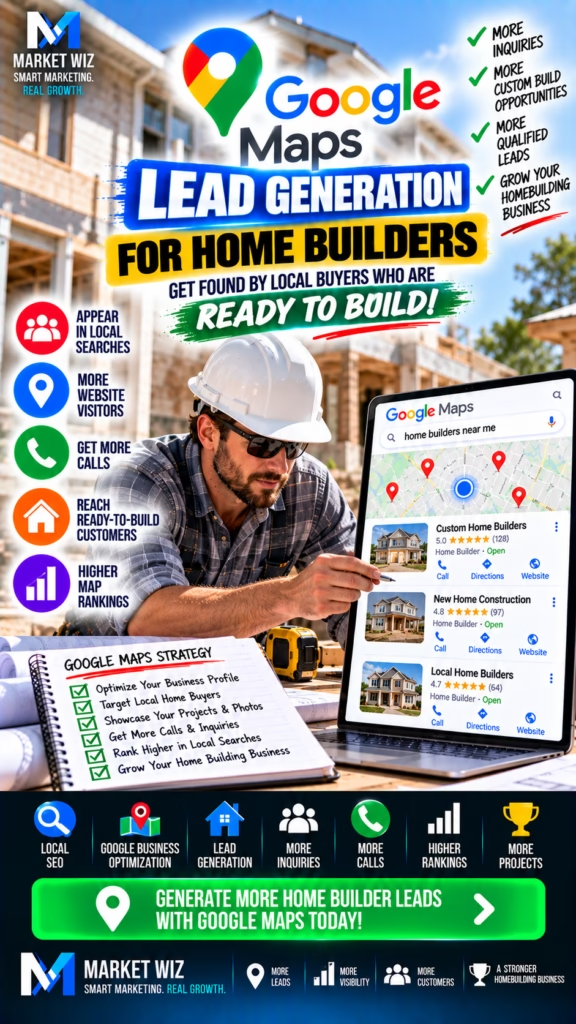
Google Maps Lead Generation for Home Builders
Google Maps can help home builders connect with prospective clients who are actively researching custom homes, new construction, design-build companies, and local construction professionals. A stronger strategy combines Google Business Profile optimization, local SEO, project portfolios, authentic reviews, website content, rapid lead response, qualification, CRM tracking, AI automation, and follow-up to turn local visibility into qualified home building opportunities.
Why Google Maps Lead Generation Matters for Home Builders
Choosing a home builder can be one of the largest purchasing decisions a customer makes. Prospective clients may spend weeks or months researching construction companies, reviewing portfolios, reading customer feedback, comparing building processes, evaluating locations, and deciding which builders deserve a conversation.
Google Maps can become an important part of that research process. When prospective clients search for home builders in their area, local search results can introduce them to companies they may not have previously known.
That creates an opportunity for home builders to become visible during a high-value customer journey.
The goal is not simply to appear on Google Maps. The stronger objective is to turn relevant local visibility into qualified conversations with prospective clients who match the builder's project types, geographic coverage, construction capabilities, and sales process.
Understand How Prospective Home Building Clients Search
A customer planning a new home may perform many searches before contacting a builder.
Early searches may be broad. The customer may research the cost of building a home, different construction methods, floor plans, land considerations, architectural styles, timelines, financing, or local building requirements.
As the project becomes more serious, searches can become more commercial and location-specific.
Prospective clients may begin researching custom home builders, new home builders, luxury builders, design-build companies, construction companies, and builders serving specific communities.
Local search can capture high-intent research
Google Maps can become particularly important when the customer moves from general education toward identifying actual companies to contact.
Build a Strong Google Business Profile for Your Home Building Company
A Google Business Profile can become one of the first detailed impressions a prospective client has of a home builder.
The profile should accurately communicate the real company.
Builders should periodically review their customer-facing business name, contact information, website, hours, appropriate categories, and other supported profile details.
Accuracy builds the foundation
Home builders should avoid altering business information solely to target additional keywords or markets.
The profile should represent legitimate business operations and remain consistent with applicable Google guidelines.
Choose Categories That Accurately Describe the Builder
Google Business Profile categories help customers and search systems understand the nature of the company.
A home builder should select the most relevant available categories based on the work the company actually performs.
Additional categories should remain relevant rather than being added simply to expand keyword coverage.
Align the entire online presence
The profile, website, portfolio, customer reviews, project photos, and marketing content should consistently reflect the builder's real capabilities.
Build a Home Builder Local Keyword Strategy
Prospective clients do not all search using the same terminology.
Some customers know exactly what they want. Others are still learning how to describe the type of builder or construction process they need.
Keyword research can help uncover these differences.
Home Builder Searches
Customers may search directly for home builders, residential builders, construction companies, or related local businesses.
Custom Home Searches
Prospects planning individualized projects may research custom home builders, custom construction, or custom house building companies.
New Construction Searches
Customers may search for new home construction, new construction builders, or companies building homes in a particular market.
Luxury Home Searches
High-end prospects may research luxury home builders, premium custom builders, or companies experienced with complex residential projects.
Location Searches
Prospective clients often combine builder-related terminology with a city, county, community, neighborhood, or regional name.
Project-Specific Searches
Customers may search around architectural styles, land development, design-build projects, additions, major renovations, or other relevant capabilities.
Target the Markets Where You Actually Build Homes
Geographic targeting should reflect operational reality.
Home construction requires coordination with customers, land, subcontractors, suppliers, permitting processes, inspections, project management, and numerous other location-dependent factors.
Generating inquiries from areas the company cannot efficiently serve may create administrative work without producing profitable projects.
Define profitable construction territories
Builders should identify cities, counties, communities, and regions where they are prepared to pursue projects.
Local SEO can then be organized around those legitimate markets.
Connect Google Maps to a High-Quality Home Builder Website
A prospective client who discovers a builder on Google Maps may visit the website before calling.
The website should answer the questions that naturally follow local discovery.
What does the company build? Where does it build? What does its work look like? What is the process? What kinds of projects are a good fit? How does a prospective client start a conversation?
Make the website part of the sales process
A builder's website should do more than display a company name and contact form.
It should help prospective clients understand the company's capabilities before speaking with the sales team.
Create Dedicated Pages for Important Construction Capabilities
Home builders with multiple project types may benefit from dedicated website pages for their most important offerings.
This gives customers more relevant information than a single generic construction page can provide.
Possible page topics may include:
- Custom home construction
- New home construction
- Luxury home building
- Design-build projects
- Residential construction
- Major home additions
- Whole-home renovation when offered
- Specific architectural or construction specialties
Pages should reflect the builder's actual services rather than being created solely for keyword coverage.
Create Useful Location Pages for Home Building Markets
A builder operating across multiple legitimate markets may create website content that explains its work in those areas.
Useful location pages can discuss project types, construction capabilities, geographic coverage, local project experience, customer considerations, and other information relevant to people building homes in that market.
Make every location page genuinely useful
Replacing one city name with another across nearly identical pages creates little customer value.
Local content should provide meaningful information for prospective clients in that specific market.
Use Completed Home Projects as Marketing Assets
Home building is highly visual.
Prospective customers want to see what a company has built.
Completed projects can become valuable marketing assets across the builder's website, Google Business Profile, social media, sales presentations, video content, and other customer-facing channels.
Build detailed project portfolios
A project portfolio can include approved exterior photography, kitchens, bathrooms, living areas, architectural details, construction progress, outdoor spaces, craftsmanship details, and other relevant features.
When appropriate and approved, project descriptions can explain the type of home, project goals, notable design elements, and builder capabilities demonstrated by the work.
Use Authentic Construction Photos on Google
Authentic images can help distinguish a real home building company from a generic online listing.
Builders can maintain an organized library of approved project photography that accurately represents their work.
Useful visual categories may include:
- Completed home exteriors
- Interior finishes
- Kitchens
- Bathrooms
- Living spaces
- Construction progress
- Framing and structural stages
- Custom details
- Outdoor living areas
- Team and jobsite imagery when appropriate
Build an Authentic Review Strategy for Your Home Building Company
Building a home requires significant trust between the customer and construction company.
Prospective clients may read reviews carefully because they want to understand how previous customers experienced communication, scheduling, project management, craftsmanship, problem-solving, and the overall construction process.
Builders can create a consistent process for requesting honest reviews from eligible customers.
Focus on authentic customer experiences
Fake reviews, manipulated feedback, or deceptive reputation tactics can create significant long-term risk.
A sustainable reputation strategy should be built around real customer experiences.
Respond Professionally to Home Builder Reviews
Review responses can influence prospective clients who are researching the company.
A professional response demonstrates that the builder is attentive to customer feedback.
Positive reviews can receive concise appreciation. Critical reviews should be handled calmly and without exposing private project or customer information.
Remember the future customer
The response is not only communication with the reviewer. It may also be read by future prospects evaluating whether they want to trust the builder with a major project.
Create Educational Content for Future Home Building Clients
The home building journey creates a large number of customer questions.
Builders can answer these questions through useful website content, videos, FAQs, project guides, checklists, and educational articles.
Useful content topics may include:
- How the custom home building process works
- What to consider before buying land
- How to prepare for an initial builder consultation
- What affects home construction timelines
- Questions to ask a home builder
- How design-build projects work
- How selections fit into the construction process
- Common planning considerations before construction begins
- How project communication is handled
- What prospective clients should prepare before requesting an estimate or consultation
Turn Google Maps Visibility Into Qualified Home Builder Calls
Local visibility has limited value if the builder cannot convert interest into conversations.
Prospective clients should have a clear way to contact the company and understand what happens next.
Depending on the builder's process, the first step may be a phone conversation, consultation request, discovery call, project form, or another appropriate interaction.
Google Maps should connect directly to the builder's sales process. The objective is to move relevant prospects from search visibility into a structured conversation where the company can determine whether the project is a good mutual fit.
Respond Quickly to New Home Building Leads
Prospective clients may contact several builders while researching a project.
Slow response can allow a qualified opportunity to begin a serious conversation with another company first.
Builders should create clear internal processes for incoming calls, website forms, emails, messages, and other inquiries.
Define who owns every new opportunity
The company should know who receives the inquiry, who responds, what information is collected, how the lead is recorded, and what happens after the initial conversation.
Qualify Home Building Leads Efficiently
Home building inquiries can vary dramatically in relevance and readiness.
A structured qualification process can help the company identify opportunities that align with its project requirements.
Qualification information may include:
- Prospective client's name
- Phone number
- Email address
- Desired project location
- Type of home or project
- Whether land has already been acquired
- Desired construction timeframe
- Approximate project scope
- Design or architectural status
- Relevant budget considerations
- Decision-making process
- Financing or readiness considerations when appropriate
- Preferred consultation availability
Move Qualified Leads Toward Home Building Consultations
Once an inquiry appears relevant, the next step should be clear.
Depending on the company's sales process, this may involve a phone consultation, office meeting, virtual meeting, land discussion, site visit, design consultation, or another appropriate discovery step.
Make the handoff organized
Relevant information collected during qualification should move with the lead so the sales team does not need to restart the entire conversation.
This can create a more professional experience for both the customer and the builder.
Track Google Maps Home Builder Leads in a CRM
Home construction has a longer sales cycle than many local business transactions.
A prospect who contacts the company today may not sign a construction agreement immediately.
CRM tracking can help prevent valuable long-term opportunities from disappearing.
Useful CRM fields can include:
- Lead date
- Prospect name
- Phone
- Project location
- Lead source
- Project type
- Land status
- Project timeframe
- Qualification status
- Consultation date
- Proposal status
- Follow-up status
- Opportunity stage
- Estimated project value
- Signed project status
Build Long-Term Follow-Up for Home Builder Leads
Home building decisions often take time.
Prospective customers may still be purchasing land, selling another home, arranging financing, working with an architect, discussing the project with family members, or refining their plans.
A lead that is not ready today may still become an excellent customer later.
Use CRM stages to create appropriate follow-up
Builders can organize prospects based on readiness and project stage rather than treating every inquiry the same.
Follow-up can remain helpful and relevant instead of becoming generic repeated sales messaging.
Use AI Automation to Improve Home Builder Lead Management
Construction companies are busy operating projects.
Owners, project managers, estimators, salespeople, and office staff may be balancing customer communication with jobsite responsibilities, vendor coordination, subcontractors, schedules, permits, purchasing, and numerous other tasks.
AI automation can support repetitive parts of lead management.
AI can assist with:
- Initial lead acknowledgment
- Basic project information collection
- Lead routing
- Internal notifications
- CRM updates
- Consultation scheduling workflows
- Follow-up reminders
- Lead re-engagement
- Sales pipeline organization
Important technical, contractual, financial, construction, and project-specific decisions should remain under appropriate qualified human oversight.
Use Short-Form Video to Showcase Home Building Expertise
Video can give prospective clients a more immersive view of the builder's work.
A short video can show a completed kitchen, walk through a new home, highlight construction progress, explain a building detail, or answer a common customer question.
These videos can support visibility across social platforms while also creating content that can be embedded on website pages when appropriate.
Turn every project into a content opportunity
With proper customer permission and internal processes, builders can capture useful content throughout the construction lifecycle rather than waiting until the home is completely finished.
Build a Multi-Channel Lead Generation System for Home Builders
Google Maps can become a strong local discovery channel, but a home builder does not need to depend on one source of prospects.
Multiple channels can work together across the long home-buying and construction decision cycle.
Google Maps
Capture prospective clients researching builders and construction companies in local markets.
Organic SEO
Build website visibility for construction services, project types, customer questions, and location-based searches.
Social Media
Showcase projects and maintain awareness before customers begin actively comparing builders.
Video Marketing
Use project tours, construction progress, educational clips, and completed-home content to demonstrate capabilities.
AI Automation
Support faster lead response, qualification, CRM updates, scheduling, and follow-up workflows.
CRM Follow-Up
Stay organized throughout longer project planning and decision-making cycles.
Measure Google Maps Lead Generation With Business Metrics
Home builders should avoid evaluating local SEO using rankings alone.
A stronger reporting framework follows the prospect through the sales pipeline.
| Stage | Metric | What It Helps Measure |
|---|---|---|
| Visibility | Local search presence | Whether prospective clients can discover the builder |
| Engagement | Profile and website activity | Whether prospects investigate the company after discovery |
| Lead | Calls and inquiries | Whether visibility creates customer conversations |
| Qualification | Qualified project leads | Whether inquiries match the builder's target projects |
| Consultation | Scheduled meetings | Whether qualified prospects advance in the sales process |
| Opportunity | Active project opportunities | Whether consultations develop into serious potential projects |
| Sale | Signed projects | Whether lead generation creates customers |
| Revenue | Attributed project value | The financial impact of the customer acquisition system |
Prioritize Qualified Home Building Leads Over Raw Lead Volume
Home builders typically do not need thousands of random inquiries.
A relatively small number of qualified projects can represent significant business value.
This makes lead quality especially important.
Measure what happens after the inquiry
Builders can monitor the percentage of inquiries that become qualified leads, consultations, serious project opportunities, proposals, and signed projects.
This creates a clearer picture of whether Google Maps marketing is attracting the right prospective customers.
Scale Home Builder Google Maps Marketing Across Multiple Markets
Some builders operate across several cities, counties, communities, or development areas.
Multi-market expansion requires organization.
The company should identify legitimate geographic coverage and build useful marketing around those markets without creating misleading location signals.
Standardize what can be standardized
Builders can standardize content processes, project photography, review workflows, lead response, qualification, CRM tracking, follow-up, reporting, and performance measurement.
Local market information should remain accurate and specific to the real business.
Common Google Maps Lead Generation Mistakes Home Builders Should Avoid
Local marketing can underperform when visibility is disconnected from trust, conversion, and sales operations.
Common mistakes include:
- Inaccurate Google Business Profile information
- Using misleading business locations
- Selecting irrelevant categories
- Using low-quality or generic imagery
- Failing to showcase completed projects
- Having an outdated website
- Providing too little information about the building process
- Creating thin duplicated location pages
- Ignoring customer reviews
- Using fake or manipulated reviews
- Responding slowly to project inquiries
- Failing to qualify leads
- Failing to track prospects in a CRM
- Giving up on prospects with longer planning timelines
- Measuring rankings without measuring project opportunities
Build a Repeatable Google Maps Lead Generation System
Home builders can create a structured process that connects local search visibility with the sales pipeline.
Define Your Ideal Projects
Identify the home types, project sizes, geographic markets, and customer profiles that align with the company's construction model.
Define Your Construction Territory
Focus local marketing on legitimate markets where the company can effectively manage projects.
Optimize Google Business Profile
Maintain accurate information, appropriate categories, authentic project media, and customer-facing details.
Strengthen the Builder Website
Create useful pages for major construction capabilities, projects, locations, customer questions, and the building process.
Build Project and Review Assets
Consistently collect approved project photography and authentic customer feedback.
Respond to Leads Quickly
Create reliable workflows so new project inquiries reach the correct person without unnecessary delay.
Qualify Prospective Projects
Collect enough information to understand whether the customer, project, location, and timeline fit the builder's requirements.
Track the Opportunity
Use CRM stages to follow prospects from initial inquiry through consultation, proposal, follow-up, and signed project.
Measure Project Revenue
Connect marketing activity with serious opportunities and signed projects whenever practical.
Turn Google Maps Into a Long-Term Home Builder Growth Channel
A strong home builder develops valuable marketing assets with every completed project.
New project photos can strengthen the portfolio. Customer feedback can strengthen reputation. Construction questions can inspire educational content. New communities can create local content opportunities. Videos can demonstrate craftsmanship and process.
Over time, these assets can create a deeper digital presence.
The strongest Google Maps strategy connects discovery to project acquisition. Local visibility creates awareness. Project photos demonstrate capability. Reviews support trust. Website content answers questions. Fast response creates conversations. Qualification identifies strong opportunities. CRM follow-up keeps longer-term prospects organized. Measurement shows which marketing activities contribute to signed projects.
30 FAQs About Google Maps Lead Generation for Home Builders
1. What is Google Maps lead generation for home builders?
Google Maps lead generation for home builders is a local marketing strategy designed to help prospective customers discover a builder through Google Maps and local search, evaluate the company, and move toward a call, consultation, project inquiry, or other qualified sales opportunity.
2. Can Google Maps generate leads for home builders?
Google Maps can contribute to lead generation when prospective customers search for home builders, custom home construction, new home construction, and related local building needs.
3. Why is Google Maps important for home builders?
Google Maps can place a home builder in front of prospective customers during local research while also providing access to reviews, photos, business information, website links, and contact options.
4. What is Google Business Profile optimization for home builders?
Google Business Profile optimization for home builders involves maintaining accurate business information, appropriate categories, authentic project photos, customer reviews, current contact details, and other supported information that accurately represents the company.
5. Can custom home builders benefit from Google Maps SEO?
Custom home builders can benefit from local search visibility because prospective clients often research builders by location, project type, reputation, portfolio, and customer reviews.
6. Should home builders add project photos to Google?
Authentic project photos can help prospective customers understand a builder's work, design style, project quality, construction capabilities, and completed homes.
7. Do reviews matter for home builder marketing?
Authentic reviews can help prospective clients evaluate communication, professionalism, project experience, and overall customer satisfaction before contacting a home builder.
8. Should home builders respond to Google reviews?
Professional review responses can demonstrate that the builder pays attention to customer feedback and communicates actively with clients.
9. Does a home builder website help Google Maps lead generation?
A strong website can support the customer journey by explaining building services, project types, locations, processes, portfolios, frequently asked questions, and contact options.
10. Should home builders create location pages?
Useful location pages can support customers in legitimate markets the builder serves when those pages provide accurate and meaningful local information.
11. Should home builders create pages for different construction services?
Dedicated pages can help explain custom home construction, new home building, design-build capabilities, additions, renovations, or other legitimate offerings provided by the company.
12. What keywords can home builders target?
Keyword research can include terms related to home builders, custom homes, new construction, specific project types, geographic markets, communities, design-build needs, and other searches relevant to the company's actual offerings.
13. Can Google Maps generate phone calls for home builders?
Local search visibility can contribute to phone calls when prospective clients find a relevant builder and have access to clear and accurate contact information.
14. Can Google Maps generate home building consultations?
Qualified prospects who discover a builder through local search may move toward consultations, discovery calls, site discussions, or other appropriate project-planning conversations.
15. How quickly should home builders respond to Google leads?
Home builders should generally respond as promptly as practical because prospective clients may research and contact multiple construction companies.
16. How should home builders qualify local leads?
Qualification can include project location, desired home type, construction timeframe, land status, project scope, decision-making process, budget considerations, and other information relevant to the builder's sales process.
17. Should home builder leads go into a CRM?
CRM tracking can help home builders organize inquiries, consultations, project details, follow-up activity, proposals, opportunities, and sales outcomes.
18. Can AI help home builders respond to leads?
AI can support initial response, information collection, lead routing, appointment workflows, CRM updates, notifications, and follow-up while important project decisions remain under appropriate human oversight.
19. Can Google Maps SEO help luxury home builders?
Luxury and custom home builders can use local search marketing to improve discovery among prospective clients researching builders within the markets they legitimately serve.
20. Can Google Maps help design-build companies?
Design-build companies can use local visibility and detailed website content to explain integrated design and construction capabilities to prospective customers.
21. What metrics should home builders track?
Useful metrics can include calls, website inquiries, qualified leads, consultations, site visits, proposals, project opportunities, conversion rates, customer acquisition costs, signed projects, and attributed revenue.
22. Is ranking number one the only goal?
No. Rankings can support visibility, but home builders should also evaluate lead quality, consultations, project opportunities, signed contracts, and revenue.
23. Can social media support home builder Google Maps marketing?
Social media can complement local search by showcasing construction progress, completed homes, design details, educational content, and other approved project material.
24. Can video help home builder lead generation?
Video can help prospective clients see completed homes, construction progress, design details, company expertise, and explanations of the building process.
25. How can home builders improve lead quality?
Lead quality can be improved by clearly communicating project types, geographic coverage, building processes, customer expectations, and other qualification information before and during the initial conversation.
26. Can a home builder target multiple cities?
A builder can develop marketing for multiple legitimate service markets using accurate geographic information, useful local content, and eligible business profiles where applicable.
27. What are common Google Maps marketing mistakes for builders?
Common mistakes include inaccurate business information, misleading locations, weak project content, poor review management, outdated websites, slow lead response, weak qualification, and failure to track project opportunities.
28. How important is follow-up for home builder leads?
Follow-up can be especially important because home construction decisions may involve longer research, financing, land acquisition, design, planning, and decision-making timelines.
29. Can Google Maps work with other home builder marketing channels?
Google Maps can work alongside website SEO, social media, video, paid advertising, referral marketing, email, CRM automation, project content, and other customer acquisition channels.
30. What is the goal of Google Maps lead generation for home builders?
The goal is to turn relevant local visibility into qualified conversations with prospective home building clients and ultimately into consultations, project opportunities, signed projects, and measurable business growth.
30 Additional SEO Keywords
These keyword themes can support home builder website content, Google Business Profile strategy, local landing pages, project pages, blog content, video topics, and broader customer acquisition campaigns.
Turn Google Maps Visibility Into Qualified Home Building Opportunities
Google Maps can become much more than an online listing for a home builder.
It can become an important entry point into the company's customer acquisition system.
Prospective clients searching for a home builder are often making a major financial and lifestyle decision.
They may spend substantial time researching companies before making direct contact.
Local visibility gives the builder an opportunity to enter that research process.
The Google Business Profile can provide an initial snapshot of the company.
Customers may see the business name, category, reviews, project photography, hours, website, phone number, and other available information.
That information should accurately represent the builder.
Accuracy is the foundation of sustainable local marketing.
Business information should remain current.
Categories should reflect real construction capabilities.
Geographic information should represent legitimate operations.
Photos should show authentic projects whenever appropriate.
Reviews should come from real customer experiences.
These elements help prospective clients evaluate whether the builder deserves further consideration.
Project photography can be particularly powerful in home building marketing.
Customers want to see what a company can create.
A portfolio of completed homes can communicate architectural style, craftsmanship, finish quality, design capabilities, project diversity, and attention to detail.
Construction progress photography can provide additional depth.
It can show foundations, framing, exterior work, interior progress, custom details, and other stages that demonstrate the work behind the finished product.
These images can support Google Business Profile, website portfolios, social media, short-form video, sales presentations, and other marketing channels.
One project can therefore create numerous long-term marketing assets.
Reviews create another layer of trust.
Building a home involves a much deeper customer relationship than many ordinary purchases.
Prospective clients may want to know whether previous customers felt informed, respected, supported, and satisfied throughout the project.
Authentic reviews can provide perspective on those experiences.
Builders can develop a consistent process for requesting honest feedback from eligible customers.
They can also respond professionally to feedback.
Every response should be written with future customers in mind.
The builder's website becomes the next major component of the customer journey.
A prospect who discovers the company through Google Maps may visit the website looking for more information.
The website should make that research easy.
Customers should be able to understand what the company builds, where it operates, what its completed work looks like, how its process works, and how to begin a conversation.
Dedicated construction pages can help organize the builder's capabilities.
Custom homes, luxury homes, design-build work, new construction, additions, major renovations, or other legitimate offerings may require different explanations.
These pages can also align more closely with specific customer search intent.
Location content can support legitimate geographic markets.
Builders should focus on areas where they are prepared to operate effectively.
Home construction depends heavily on geography.
Project management, subcontractor networks, suppliers, permitting, inspections, travel, logistics, and customer communication can all be affected by location.
The most useful lead is not simply someone interested in building a home.
It is someone whose location, project, timeline, expectations, and other important criteria align with the builder's business model.
That is why qualification should be integrated into lead generation.
A new inquiry can be evaluated based on project location, home type, land status, construction timeframe, project scope, decision-making readiness, and other company-specific criteria.
This helps protect the sales team's time.
It also allows qualified customers to move more efficiently toward the correct next step.
For many builders, that next step will be a consultation.
The consultation may take place by phone, video, in an office, at a site, or through another structured process.
Information collected during qualification should follow the prospect into that conversation.
Customers should not need to repeatedly explain the same basic project details to multiple people inside the company.
This is where CRM organization becomes valuable.
A CRM can create a structured record for every serious opportunity.
The builder can track the source of the lead, contact information, project location, project type, timeframe, consultation status, proposal activity, follow-up, estimated value, and final outcome.
This is especially important because home building sales cycles can be long.
Some prospects may be ready to move quickly.
Others may still be acquiring land.
Some may be developing plans.
Some may be arranging financing.
Others may be planning a future relocation or waiting for another property to sell.
A prospect who is not ready today should not automatically disappear from the sales pipeline.
Appropriate follow-up can keep the relationship active.
The company can segment prospects based on readiness and project stage.
Someone actively preparing to build should receive different communication from someone considering a project several years in the future.
AI automation can support these workflows.
It can help acknowledge new inquiries, collect basic information, update CRM records, notify salespeople, support scheduling, create follow-up tasks, and maintain organized lead stages.
This can be particularly valuable for construction companies where team members spend substantial time away from desks.
Automation should support the sales team rather than replace qualified judgment.
Home construction involves complex decisions.
Pricing, engineering, contracts, design, site conditions, financing, schedules, building codes, permits, and other important issues require appropriate professional oversight.
The marketing system should therefore automate repetitive workflow tasks while routing important conversations to qualified people.
Social media can strengthen the overall customer acquisition strategy.
A prospective customer may discover a builder on Instagram or Facebook months before actively searching Google.
Project videos and construction updates can build familiarity over time.
Later, when the prospect searches for a builder, they may recognize the company name.
That recognition can strengthen the connection between social visibility and Google Maps discovery.
Short-form video can be particularly useful for builders because construction naturally creates visual stories.
A project can be documented from an empty lot through foundation, framing, mechanical stages, interior finishes, landscaping, and final completion.
Each stage can become useful customer-facing content when appropriate.
Educational videos can also answer common questions.
The builder can explain its process, discuss planning considerations, answer frequently asked questions, or highlight design and construction decisions.
This content can help prospective customers become more informed before they enter the sales process.
Google Maps should therefore be viewed as one component of a larger marketing ecosystem.
Website SEO can capture broader search demand.
Social media can create ongoing awareness.
Video can demonstrate projects and expertise.
Referral marketing can leverage satisfied customers and professional relationships.
Paid advertising can create additional reach when appropriate.
CRM automation can keep prospects organized across channels.
Google Maps can capture local search demand when prospective customers are actively researching builders.
The strongest system connects these activities.
A prospect may watch a project video.
Weeks later, that person may search Google for a home builder.
They may recognize the company, inspect its Google profile, read reviews, view project photos, and visit the website.
They may then call or submit an inquiry.
The lead can enter the CRM, complete qualification, schedule a consultation, receive follow-up, and eventually become a serious project opportunity.
That customer journey involves multiple marketing channels but one connected sales process.
Measurement should reflect that reality.
Rankings are useful information.
Profile activity is useful information.
Website traffic is useful information.
But home builders should eventually ask deeper business questions.
How many inquiries were generated?
How many were legitimate home building prospects?
How many matched the company's geographic territory?
How many scheduled consultations?
How many became serious opportunities?
How many moved into proposal or pre-construction stages?
How many ultimately became signed projects?
What was the potential and realized project value?
These questions connect marketing performance with the economics of the construction company.
They also create better optimization decisions.
The builder may discover that one market produces a higher percentage of qualified projects.
One project category may produce stronger opportunities than another.
Certain website pages may consistently create consultations.
Particular project photos or content topics may attract stronger customer engagement.
That information can guide future marketing investments.
Instead of guessing what customers want, the company can use real customer acquisition data.
Google Maps lead generation also improves as the builder accumulates digital assets.
Every completed home can add new photography.
Every satisfied customer can potentially provide authentic feedback.
Every consultation can reveal new customer questions.
Every market can reveal new search patterns.
Every sales opportunity can provide better qualification data.
Every signed project can help the company understand which marketing activities are producing meaningful value.
Over time, this creates a compounding marketing system.
The website becomes deeper.
The project portfolio becomes stronger.
The review profile becomes more established.
The CRM becomes more informative.
The sales team becomes better at qualification.
Follow-up becomes more organized.
Marketing decisions become more data-driven.
That is the larger opportunity behind Google Maps lead generation for home builders.
The objective is not simply to create another online listing.
The objective is to build a local customer acquisition system capable of turning search visibility into qualified project opportunities.
Google Maps creates discovery.
Authentic project content demonstrates capability.
Customer reviews support trust.
Website content answers questions.
Fast response creates conversations.
Qualification protects the sales team's time.
Consultations move strong prospects forward.
CRM tracking organizes long sales cycles.
Follow-up keeps future opportunities alive.
AI automation supports repetitive workflow.
Revenue tracking connects marketing to real business outcomes.
When these components work together, Google Maps can become a much more valuable part of a home builder's long-term growth strategy.
Generate More Qualified Home Building Opportunities
Market Wiz AI helps home builders connect Google Maps optimization, local SEO, website visibility, project content, social marketing, AI-powered lead response, CRM workflows, appointment generation, follow-up, automation, and performance tracking into a more organized customer acquisition system.
Get Started With Market Wiz AI© Market Wiz AI. Google, Google Maps, and Google Business Profile are trademarks of Google LLC. Market Wiz AI is not affiliated with or endorsed by Google unless expressly stated. Google Business Profile guidelines, eligibility requirements, ranking systems, features, and availability may change over time.














Combine Google Maps With Home Builder Social Media Marketing
Home construction provides a steady stream of visual content.
Builders can use social media to document projects, demonstrate craftsmanship, explain construction processes, and keep the company visible before prospective customers are ready to search for a builder.
Content can include: