
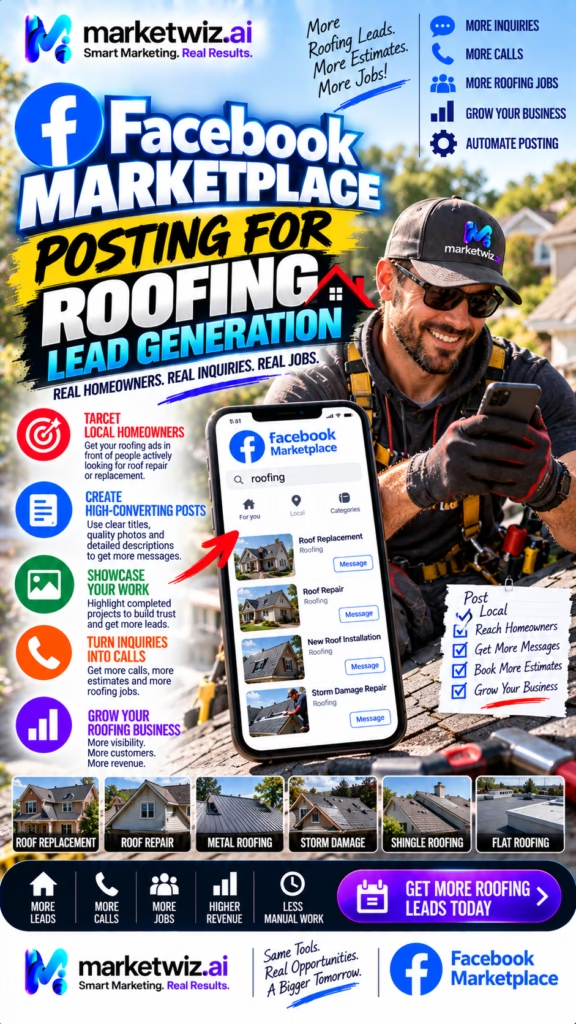
Facebook Marketplace Posting for Roofing Lead Generation
Roofing companies compete for customers at the exact moment property owners are researching repairs, replacement options, materials, storm-related concerns, inspections, and major exterior improvements. Facebook Marketplace can contribute to that discovery process when contractors use eligible listings, accurate local targeting, strong visual presentation, fast lead response, qualification, CRM tracking, and a broader multi-channel roofing marketing strategy.
Updated September 20261. Understand Facebook Marketplace's Role in Roofing Lead Generation
Facebook Marketplace is fundamentally a local commerce environment. People browse it to discover products, compare options, evaluate prices, communicate with sellers, and find opportunities in their surrounding area.
That local discovery behavior is what can make Marketplace relevant to a roofing company's broader marketing strategy. The goal should not be to force every roofing promotion into Marketplace regardless of eligibility. The goal is to understand what can legitimately be listed, create accurate listings, and build a process that can turn appropriate customer conversations into measurable opportunities.
Start with platform compliance. Facebook Marketplace rules, eligible categories, commerce policies, and listing requirements can change. Roofing businesses should verify current requirements before publishing or scaling any Marketplace campaign.
2. Build Roofing Marketing Around Customer Intent
Roofing customers do not all begin with the same problem. Some are reacting to something urgent. Others are researching a future improvement. Some know exactly what they want, while others are still trying to understand the condition of their roof.
Repair Intent
The property owner has noticed a leak, missing material, visible damage, or another roofing concern.
Replacement Intent
The customer believes the roof may need replacement and is beginning to compare options, materials, contractors, and costs.
Product Intent
The shopper may be researching roofing materials, components, accessories, or other eligible products connected to a roofing project.
Research Intent
The property owner is gathering information before deciding whether to inspect, repair, replace, or upgrade the roof.
Understanding intent helps the company create more relevant marketing and handle incoming conversations more effectively.
3. Confirm Marketplace Eligibility Before Creating Roofing Listings
Roofing companies should not assume that every type of roofing promotion belongs on Facebook Marketplace. Marketplace commerce rules determine what can be listed, and those rules should guide the campaign structure.
Before creating listings, review current platform requirements and determine whether the actual item or offer is eligible. Do not disguise an ineligible promotion as a product listing simply to gain visibility.
Keep every listing accurate
- Use an appropriate category
- Describe the actual item or offer
- Use accurate pricing
- Use legitimate locations
- Use relevant images
- Avoid misleading placeholders
- Avoid unsupported claims
- Follow current Marketplace commerce requirements
Long-term lead generation is more sustainable when the campaign is built around legitimate use of the platform.
4. Define the Roofing Company's Real Local Territory
Roofing is geographically dependent. A contractor may technically be capable of driving several hours for a project, but that does not automatically make distant leads profitable.
Local campaign planning should reflect where the company can efficiently inspect properties, prepare estimates, deploy crews, manage production, and provide customer support.
Evaluate each roofing market by:
- Actual coverage area
- Travel time
- Property density
- Estimator capacity
- Sales representative coverage
- Crew availability
- Average project size
- Residential versus commercial demand
- Roofing material demand
- Seasonal and weather patterns
Better geographic discipline can improve lead quality and protect operational margins.
5. Identify the Roofing Customer Segments Worth Targeting
A roofing company may work with multiple types of property owners. The best marketing system recognizes those differences instead of treating every prospect identically.
Potential audiences include:
- Homeowners
- Rental property owners
- Landlords
- Real estate investors
- Property managers
- Home builders
- General contractors
- Commercial property owners
- Home buyers
- Home sellers
The information that matters to a homeowner with a leaking shingle roof may be completely different from the information required by a commercial property manager evaluating a larger roof system.
6. Build a Focused Facebook Marketplace Listing Strategy
Strong Marketplace activity begins with a clear understanding of what each listing represents. Avoid creating vague listings that attempt to communicate every capability of the roofing company at once.
Eligible listings should be organized around a specific item, offer, or customer context so the title, price, images, description, and resulting conversation remain aligned.
Specificity Improves the Customer Experience
When a listing has a clear purpose, customers can understand it faster. That can also make incoming conversations easier to classify and route inside the roofing company's sales process.
7. Write Marketplace Titles That Are Clear and Specific
A Facebook Marketplace title has limited space to communicate what the listing is about. Clarity should come before cleverness.
The strongest title accurately names or describes the eligible item or offer rather than stuffing the title with repetitive roofing keywords.
Good title principles include:
- Describe what is actually being listed
- Use recognizable customer language
- Keep wording readable
- Avoid excessive capitalization
- Avoid unsupported superlatives
- Avoid unrelated keywords
- Match the title to the images and description
A customer should understand the listing without needing to decode the title.
8. Write Marketplace Descriptions That Answer Customer Questions
Once a shopper opens the listing, the description should provide enough information to determine whether further conversation makes sense.
Depending on the eligible listing, useful information can include:
- What is being offered
- Relevant product specifications
- Material details
- Condition where applicable
- Accurate price information
- Location
- Availability
- Important limitations
- Relevant roofing context
- The appropriate next step
The description should be useful to a real customer rather than written exclusively for search visibility.
9. Use High-Quality Roofing Images to Earn Attention
Facebook Marketplace is highly visual. A roofing company competing against many local listings needs images that are clear, relevant, realistic, and easy to understand on a mobile screen.
Depending on the listing, imagery may include:
- The actual eligible product
- Roofing materials
- Relevant product details
- Real project photography where appropriate
- Completed roofing work used as supporting context
- Close-up material or installation details
Avoid images that misrepresent what is being offered. Customers should not have to guess whether the image and listing refer to the same thing.
10. Design Roofing Marketplace Content for Mobile Shoppers
Much of the Facebook experience occurs on mobile devices. That means roofing listings should be understandable without requiring the customer to study a dense block of text.
For stronger mobile readability:
- Lead with the most important information
- Use short paragraphs
- Keep titles concise
- Use clear primary images
- Place important specifications early
- Make pricing easy to understand
- Avoid unnecessary filler
Think like a local shopper. The listing should make sense within seconds on a phone screen before the customer decides whether to continue reading or start a conversation.
11. Use Accurate Marketplace Pricing
Pricing can strongly affect both attention and lead quality. An inaccurate price may create more clicks while simultaneously creating worse conversations.
Any displayed price should represent the actual eligible item or offer. Avoid artificial placeholder prices designed solely to attract clicks.
Roofing projects themselves can vary dramatically because of roof size, pitch, material, tear-off requirements, decking condition, flashing, ventilation, access, labor, and many other variables. Do not imply that a project-specific price applies universally when it does not.
12. Localize Roofing Marketing Without Creating False Locations
Local relevance is important, but location information should remain accurate. Roofing companies should not create the impression that they have offices, inventory, crews, or physical locations where they do not.
Instead, build the campaign around real service coverage and legitimate operating areas.
Local relevance can come from:
- Actual market coverage
- Relevant property types
- Regional roofing materials
- Local climate considerations
- Real customer needs
- Accurate pickup or availability information where applicable
13. Recognize Roof Repair Intent Inside Marketplace Conversations
Even when the eligible Marketplace listing itself is product-focused, the resulting conversation can reveal broader customer needs.
A customer may mention a leak, missing shingles, aging roofing, storm damage, or another property concern while asking questions.
When that happens, the roofing company can determine whether the prospect should be moved into its normal lead qualification and appointment process, provided communication remains accurate and appropriate.
Possible repair signals include:
- Active water intrusion
- Missing roofing material
- Visible deterioration
- Wind-related concerns
- Damage around flashing or penetrations
- Repeated roof problems
14. Identify Roof Replacement Opportunities
Replacement prospects often have higher project values but longer decision cycles. They may spend more time researching contractors, materials, warranties, financing options, reviews, and project timing.
Replacement intent may appear when a customer mentions:
- An older roof
- Recurring leaks
- Widespread wear
- Major renovation plans
- Property sale preparation
- Material upgrades
- Repeated repair costs
- Significant weather-related concerns
These conversations should be routed differently from basic product questions or minor repair inquiries.
15. Handle Storm-Related Roofing Demand Responsibly
Severe weather can cause a rapid increase in roofing questions. Customers may be concerned about hail, wind, falling debris, heavy rain, or visible changes to the roof.
Contractors should avoid diagnosing damage before inspection and should not guarantee insurance coverage, claim approval, reimbursement amounts, or other outcomes outside their control.
A better approach is to gather the customer's information, understand the concern, and move the prospect toward the appropriate evaluation process.
16. Build a Fast Marketplace Lead Response System
A strong listing can still produce weak business results if customer conversations sit unanswered.
Roofing companies need a repeatable process for monitoring incoming inquiries, answering basic questions, identifying customer intent, collecting relevant information, and routing qualified opportunities.
17. Qualify Facebook Marketplace Roofing Leads Efficiently
Not every Marketplace conversation will become a roofing customer. A simple qualification process helps the business identify which conversations deserve additional sales attention.
Useful qualification details can include:
- Customer name
- Property location
- Primary roofing concern
- Repair versus replacement interest
- Roof age if known
- Roofing material if known
- Residential or commercial property
- Approximate project timing
- Decision-making role
- Preferred next step
Keep qualification conversational. The goal is to determine fit, not create a long interrogation before the customer can receive help.
18. Put Qualified Marketplace Roofing Leads Into a CRM
Marketplace conversations should not remain isolated inside an inbox after they become legitimate roofing opportunities.
Moving qualified prospects into a CRM allows the company to track what happens after initial contact.
Useful CRM fields include:
- Lead date
- Customer name
- Phone number
- Email when available
- Property location
- Lead source
- Marketplace campaign or listing
- Roofing need
- Appointment date
- Inspection status
- Estimate status
- Follow-up status
- Project value
- Closed revenue
19. Create a Roofing Follow-Up Process After Marketplace Contact
Many roofing customers do not make a decision during the first conversation. Replacement projects in particular can require additional research, estimates, household discussions, financing decisions, material selection, or scheduling considerations.
A structured follow-up process helps prevent qualified opportunities from disappearing simply because the customer was not ready immediately.
Follow-up may address:
- Inspection scheduling
- Estimate questions
- Scope clarification
- Material options
- Project timing
- Warranty questions
- Proposal status
- Next steps
20. Measure Marketplace Roofing Lead Quality
Marketplace activity should not be evaluated only by the number of messages generated. A large number of conversations can look impressive while producing very little roofing revenue.
Measure Business Outcomes
Track relevant conversations, qualified leads, phone calls, appointments, inspections, estimates, proposals, completed projects, average project value, revenue, and gross profit where available.
This allows the contractor to distinguish between activity and actual customer acquisition.
21. Compare Facebook Marketplace Roofing Results by Market
Roofing performance can differ dramatically between cities and surrounding areas. Property values, roof age, housing density, weather exposure, competition, customer behavior, and project economics can all affect results.
| Metric | What It Reveals |
|---|---|
| Relevant Conversations | Whether the local activity attracts roofing-related interest |
| Qualified Leads | How many conversations become legitimate opportunities |
| Appointments | How effectively leads advance into the sales process |
| Estimates | The number of real project opportunities created |
| Close Rate | How efficiently estimates become customers |
| Revenue | The business value connected to each market |
22. Improve Marketplace Lead-to-Customer Conversion
When Marketplace activity creates conversations but very few roofing customers, investigate the entire lead journey.
Review:
- Listing relevance
- Customer intent
- Geographic fit
- Response time
- Message quality
- Lead qualification
- Phone handoff
- Appointment scheduling
- Inspection process
- Estimate turnaround
- Sales follow-up
- Customer trust
The problem may not be the listing itself. Conversion can break down at any stage between first contact and signed roofing project.
23. Test Marketplace Roofing Content Systematically
Testing can help identify which eligible listings, visuals, markets, and customer contexts produce stronger results.
Avoid changing every variable simultaneously. Controlled comparisons provide better information.
Variables worth evaluating include:
- Primary image
- Title wording
- Description structure
- Product presentation
- Price presentation
- Market
- Customer segment
- Listing category where applicable
- Response process
Evaluate the entire funnel instead of choosing a winner based only on clicks or messages.
24. Adapt Roofing Marketing to Seasonal Demand
Roofing demand changes throughout the year. Weather, construction cycles, regional climate, property sales, maintenance patterns, and storms can all affect what customers are thinking about.
Seasonal customer interests may include:
- Leak concerns
- Storm-related roof evaluations
- Roof replacement planning
- Material purchasing
- Home improvement projects
- New construction
- Rental property maintenance
- Commercial property planning
Broader roofing marketing should adjust to legitimate customer demand while every Marketplace listing continues to represent its actual eligible item or offer accurately.
25. Combine Facebook Marketplace Visibility With Google Maps
Roofing customers frequently research companies across multiple channels. Someone may first encounter the business through Facebook and then search the company name on Google before making a decision.
That means Marketplace discovery and Google Maps visibility can support one another even though they serve different parts of the customer journey.
A strong Google presence can reinforce:
- Business identity
- Location information
- Phone information
- Customer reviews
- Roofing project photos
- Business hours
- Website access
- Overall customer confidence
26. Support Marketplace Discovery With Roofing SEO
Facebook Marketplace should not have to carry the entire customer acquisition strategy. Roofing SEO can capture prospects who begin their research through search engines rather than social platforms.
Roofing SEO can target legitimate searches involving:
- Roof repair
- Roof replacement
- Roof installation
- Roof inspections
- Shingle roofing
- Metal roofing
- Commercial roofing
- Flat roofing
- Storm-related roofing questions
- Local roofing contractors
This gives the roofing business another path to reach high-intent customers and reduces dependence on a single platform.
27. Use AI to Improve Marketplace Roofing Lead Management
AI can support the operational side of lead generation by helping the roofing company organize customer conversations and reduce repetitive administrative work.
AI-supported workflows can include:
- Classifying incoming conversations
- Identifying repair versus replacement intent
- Summarizing customer messages
- Preparing CRM records
- Routing qualified leads
- Organizing follow-up tasks
- Flagging unanswered opportunities
- Analyzing common customer questions
- Preparing performance reports
- Comparing results across markets
Keep customer-facing information grounded in verified data. AI should not invent roofing prices, inspection findings, warranties, project schedules, insurance outcomes, material specifications, or other important details.
28. Build a Multi-Channel Roofing Lead Generation Engine
The strongest roofing marketing strategy creates multiple paths for customers to discover and evaluate the company.
Facebook Marketplace
Provides an additional local commerce and discovery environment when used with eligible listings and current platform requirements.
Google Maps
Helps capture local search intent and gives prospects access to reviews, photos, business information, and directions.
Roofing SEO
Builds organic visibility for roof repair, replacement, installation, inspections, and other relevant searches.
CRM & AI
Organizes lead response, qualification, appointments, estimates, follow-up, attribution, and performance measurement.
A broader system can also include referrals, repeat customers, social media, websites, direct outreach, paid advertising, property relationships, and other relevant channels.
29. Avoid Common Facebook Marketplace Roofing Mistakes
Poor campaign practices can reduce customer trust, weaken lead quality, and create unnecessary platform risk.
Common mistakes include:
- Ignoring current Marketplace rules
- Trying to disguise ineligible promotions as products
- Using misleading prices
- Using inaccurate locations
- Using irrelevant images
- Writing vague titles
- Stuffing listings with unrelated keywords
- Making unsupported roofing claims
- Creating false urgency
- Responding slowly to legitimate inquiries
- Failing to qualify leads
- Leaving qualified leads inside the inbox
- Failing to track appointments and estimates
- Weak sales follow-up
- Measuring success only through message volume
30. Follow a 90-Day Facebook Marketplace Roofing Growth Plan
A structured rollout gives the roofing company time to establish compliant campaigns, evaluate customer response, improve lead management, and determine whether Marketplace contributes meaningful business opportunities.
Days 1–30: Build the Foundation
- Review current Marketplace commerce requirements
- Determine what eligible items or offers can be listed
- Define the real roofing service territory
- Identify priority customer segments
- Collect accurate listing information
- Prepare high-quality images
- Write clear titles and descriptions
- Set up lead-source tracking
- Create CRM fields
- Establish a response workflow
Days 31–60: Improve Lead Quality
- Review incoming conversation quality
- Identify common roofing questions
- Improve lead qualification
- Compare markets
- Evaluate image performance
- Improve response speed
- Track phone handoffs
- Track appointments
- Track inspections and estimates
- Build consistent follow-up
Days 61–90: Optimize for Revenue
- Identify the markets producing qualified opportunities
- Measure appointment rates
- Measure estimate rates
- Track closed roofing projects
- Calculate average project value
- Compare revenue by source
- Reduce low-quality activity
- Strengthen Google Maps visibility
- Strengthen roofing SEO
- Improve CRM and AI workflows
The roofing Marketplace growth formula: current platform compliance + accurate eligible listing + real local market + strong image + clear title + useful description + accurate price + prompt response + lead qualification + CRM tracking + follow-up + revenue attribution.
Turn Facebook Marketplace Activity Into a Measurable Roofing Lead System
Facebook Marketplace posting for roofing lead generation should begin with a simple principle: use the platform accurately and build the business process around the customer conversations that follow.
Marketplace is a local commerce environment, and roofing companies should verify current commerce requirements before deciding what belongs there. Eligible listings should accurately represent the actual item or offer rather than disguising unrelated promotions as products.
Once that foundation is established, presentation becomes important. Clear titles help customers understand what they are viewing. Accurate descriptions answer basic questions. Strong images earn attention. Legitimate locations improve geographic relevance. Accurate pricing prevents unnecessary confusion.
The next major opportunity occurs inside the customer conversation. Marketplace shoppers may begin with a question about a product or listing and reveal a broader roofing need during the discussion.
They may mention an active leak, an aging roof, missing shingles, storm concerns, a planned renovation, or interest in a complete roof replacement. A roofing company with a defined lead process can recognize those signals and move appropriate prospects into its normal qualification and sales workflow.
Response speed matters because customers can communicate with multiple companies. A prompt and useful reply can keep the conversation moving while the prospect is actively researching options.
Qualified leads should then move beyond the Marketplace inbox. The company can record them in a CRM, track property location and roofing need, schedule the appropriate next step, manage estimates, organize follow-up, and measure the final outcome.
This measurement is essential. Message volume alone does not tell a roofing contractor whether Marketplace is creating value. The more important numbers are qualified leads, calls, appointments, inspections, estimates, proposals, completed roofing projects, average project value, revenue, and profitability.
AI can strengthen the operational side of the system by classifying conversations, summarizing lead information, preparing CRM records, routing opportunities, identifying follow-up needs, and helping management understand campaign performance.
AI should remain connected to verified information. Roofing prices, inspection findings, warranties, schedules, material details, and other important customer information should not be invented automatically.
Marketplace can also become more valuable when it works alongside other channels. Customers who discover a roofing business through Facebook may later search the company on Google, examine its Google Business Profile, read reviews, look through project photographs, visit its website, and search for additional roofing information.
That is why Google Maps optimization, local SEO, a strong website, reputation development, social media, referrals, CRM systems, and structured follow-up can all strengthen the overall customer acquisition engine.
The objective is not simply to create more Marketplace listings. The objective is to build a reliable system that turns legitimate local visibility into conversations, turns the right conversations into qualified roofing opportunities, and turns those opportunities into measurable business growth.
Frequently Asked Questions About Facebook Marketplace Posting for Roofing Lead Generation
1. Can Facebook Marketplace help roofing companies generate leads?
Facebook Marketplace can be evaluated as an additional local discovery channel for roofing companies when eligible listings accurately represent what is being offered and follow current platform requirements.
2. What roofing leads can Facebook Marketplace generate?
Depending on the market and eligible listing strategy, roofing companies may receive local inquiries related to roofing products, projects, replacement needs, repairs, inspections, storm-related concerns, or other relevant customer needs.
3. Can roofers use Facebook Marketplace for roof repair leads?
Roofing companies should review current Marketplace commerce rules before posting. Where a listing is eligible, customer conversations can sometimes reveal repair-related needs that can then be handled through the company's normal sales process.
4. Can Facebook Marketplace generate roof replacement opportunities?
Local Marketplace visibility can contribute to customer discovery and conversations that may develop into roof replacement opportunities when listings are accurate, relevant, and compliant with current platform requirements.
5. How should roofing companies choose Marketplace locations?
Roofing companies should focus on legitimate markets they actually cover and can support operationally, considering drive time, estimator availability, crew capacity, project density, and customer demand.
6. What images should roofing Marketplace listings use?
Use clear and authentic images that accurately represent the eligible item or offer in the listing. Supporting roofing marketing assets can also use genuine project photos where appropriate.
7. How important is the Facebook Marketplace title?
The title is important because it helps customers quickly understand what the listing contains. Titles should be clear, accurate, specific, and aligned with the actual eligible item or offer.
8. Should roofers include prices in Marketplace listings?
Any listed price should accurately represent the item or offer being advertised. Roofing project costs vary substantially, so contractors should avoid using misleading placeholder pricing.
9. How quickly should roofing companies respond to Marketplace inquiries?
Prompt responses can help keep legitimate prospects engaged, especially when they are actively researching roofing options or communicating with multiple companies.
10. Should Facebook Marketplace roofing leads go into a CRM?
Qualified prospects can be tracked in a CRM so the roofing company can record lead source, property location, roofing need, appointment status, estimate status, follow-up, project value, and revenue.
11. How should roofing companies qualify Marketplace leads?
Qualification can include property location, roofing need, project type, approximate timing, decision-making role, roof age if known, and the appropriate next step.
12. Can small roofing companies use Facebook Marketplace?
Smaller roofing businesses can evaluate Marketplace as part of a broader local marketing strategy while focusing on the markets they can realistically cover and following current commerce policies.
13. Can Facebook Marketplace help roofing companies enter new markets?
Marketplace can contribute to local visibility when a roofing company expands into a market it can genuinely serve, although results should be evaluated alongside qualified leads, project economics, and operational capacity.
14. Should roofers use the same Marketplace listing in every city?
Listings should accurately reflect the eligible item or offer and legitimate location. Broader marketing campaigns can be adapted to local property types, customer needs, weather patterns, and market conditions.
15. Can Facebook Marketplace help after severe weather?
Severe weather can increase local roofing demand, but contractors should avoid unsupported claims about property damage or insurance outcomes and should follow current Marketplace requirements.
16. What makes a roofing Marketplace image effective?
Effective images are clear, realistic, relevant, properly framed, and accurately represent the item or offer. Misleading stock-style imagery or unrelated visuals can reduce customer trust.
17. How can roofers improve Marketplace lead quality?
Improve accuracy and specificity around the listing, location, customer need, pricing context, business identity, and next step, then qualify prospects efficiently after they make contact.
18. Can AI help manage Facebook Marketplace roofing leads?
AI can support lead classification, conversation summaries, CRM preparation, routing, follow-up organization, reporting, and campaign analysis using verified business information.
19. Can Facebook Marketplace work with Google Maps for roofing companies?
Yes. Customers who encounter a roofing business through social or marketplace discovery may later search for the company on Google, examine its Business Profile, read reviews, view photos, and visit its website.
20. Can Facebook Marketplace work with roofing SEO?
Marketplace can be one discovery channel while roofing SEO builds organic visibility for relevant local searches involving roof repair, replacement, installation, inspections, materials, and related topics.
21. What metrics should roofing companies track from Marketplace?
Track relevant inquiries, qualified leads, calls, appointments, inspections, estimates, proposals, closed projects, average project value, revenue, response time, and performance by market.
22. Why do roofing Marketplace conversations fail to become customers?
Possible causes include low-intent inquiries, geographic mismatch, slow response, weak qualification, unclear expectations, poor follow-up, lack of trust, or a weak sales process.
23. Should roofers track phone calls generated from Marketplace?
Attribution can help roofing companies determine which marketing campaigns and markets contribute to qualified calls, inspections, estimates, projects, and revenue.
24. How can roofing contractors improve Facebook Marketplace response rates?
Clear eligible listings, useful images, accurate pricing, legitimate local targeting, recognizable business information, and prompt professional communication can improve the quality of customer interactions.
25. Can multi-location roofing companies use Facebook Marketplace?
Multi-location companies can evaluate eligible Marketplace activity by market while keeping location, listing, contact, and business information accurate.
26. What Facebook Marketplace mistakes should roofers avoid?
Avoid inaccurate categories, misleading pricing, false locations, unsupported claims, irrelevant imagery, poor lead tracking, weak follow-up, and listings that do not comply with current Marketplace commerce requirements.
27. Should Facebook Marketplace be a roofing company's only lead source?
A diversified roofing marketing system can include Google Maps, local SEO, referrals, websites, social media, repeat customers, property relationships, paid advertising, and other appropriate acquisition channels.
28. How do roofers measure Facebook Marketplace ROI?
Connect Marketplace-attributed activity with qualified opportunities, inspections, estimates, completed projects, revenue, and gross profit where available rather than evaluating performance only through views or messages.
29. Can Marketplace leads become high-value roofing projects?
Lead value varies. Some conversations may remain low intent while others can develop into meaningful roofing opportunities, which is why qualification and revenue attribution are important.
30. What is a strong Facebook Marketplace strategy for roofing lead generation?
A strong strategy starts with current platform compliance, accurate eligible listings, legitimate local targeting, clear visuals and information, prompt response, lead qualification, CRM tracking, follow-up, and measurement of real roofing business outcomes.
30 Additional SEO Keywords
These supporting search themes expand the article around Facebook Marketplace roofing marketing, local roofing lead generation, roof repair and replacement opportunities, Google Maps, local SEO, AI, CRM tracking, and contractor growth.
Build a Stronger Local Lead Engine for Your Roofing Company
Market Wiz AI helps businesses build stronger local customer acquisition systems through Facebook Marketplace marketing, Craigslist marketing, Google Maps optimization, local SEO, AI-powered lead generation, social marketing, CRM workflows, and conversion-focused automation.
Call MarketWiz.ai: (910) 601-2938