
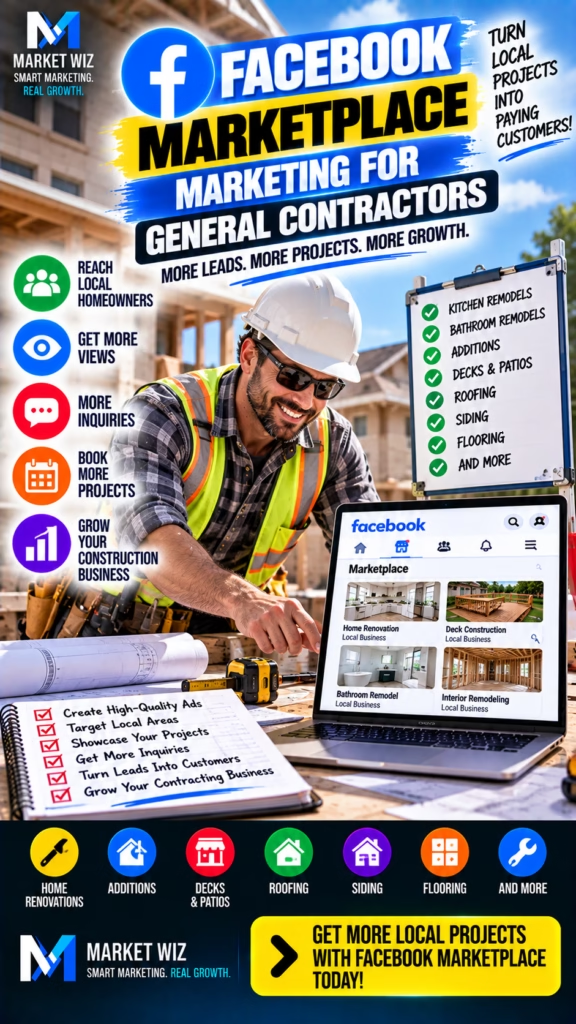
Facebook Marketplace Marketing for General Contractors
General contractors compete for homeowners who are researching renovations, additions, remodeling projects, property improvements, and other construction work. A strategic Facebook marketing system can help contractors showcase real projects, strengthen local visibility, start more homeowner conversations, respond to leads faster, and create a repeatable pipeline of consultations, estimates, and project opportunities.
Why Facebook Marketing Matters for General Contractors
General contracting is an intensely local and trust-driven business. Homeowners are not simply purchasing a product from a shelf. They may be inviting a contractor into their home, investing thousands or tens of thousands of dollars, making structural changes to a property, and trusting a company to complete work that can affect the value and usability of the property for years.
That means contractor marketing must do more than generate impressions. It needs to create visibility, credibility, familiarity, and a clear path from initial interest to a qualified project conversation.
Facebook can contribute to this process because homeowners already use the platform to discover local companies, browse visual content, ask community members for recommendations, view completed projects, and interact with businesses.
Facebook Marketplace may also provide relevant visibility opportunities depending on the contractor's legitimate offerings, current platform eligibility, listing categories, and Meta's current commerce policies.
The strongest contractor strategy is not simply posting more often. It is creating a connected system that turns local Facebook visibility into qualified conversations, estimate opportunities, CRM records, follow-up activity, and measurable project revenue.
Understand Facebook Marketplace's Role in Contractor Marketing
Facebook Marketplace should be understood as one potential component of a broader Facebook and local marketing strategy rather than the contractor's entire marketing system.
Platform eligibility, available categories, commerce policies, and permitted listing types can change. Contractors should always use Marketplace in ways that comply with current Meta requirements.
At the same time, the broader Facebook ecosystem gives general contractors several ways to increase local visibility.
Facebook can support contractor discovery
Homeowners may encounter a contractor through project photos, Facebook Page content, videos, community discussions, local Groups where promotional participation is permitted, shared recommendations, or other appropriate Facebook activity.
The objective is to create legitimate opportunities for homeowners to discover the contractor while researching a project.
Understand the General Contractor Customer Journey
Home improvement customers rarely make major construction decisions immediately after seeing one piece of marketing.
A homeowner might first notice a kitchen transformation, bathroom renovation, home addition, finished basement, deck, flooring project, or whole-home remodel. That visual example creates awareness.
The homeowner may then research the company.
They might visit the contractor's Facebook Page, search the business on Google, inspect reviews, browse the website, compare completed projects, ask about availability, and contact multiple contractors.
Marketing needs to support every stage
General contractor marketing becomes stronger when each stage of this customer journey is intentionally supported rather than treating every lead as an isolated message.
Define the Ideal General Contracting Customer
Broad visibility does not automatically produce valuable projects. Contractors need inquiries from property owners whose needs align with the company's project types, geographic coverage, schedule, pricing, capabilities, and business model.
An established remodeling contractor may want larger kitchen, bathroom, addition, and whole-home renovation opportunities. Another general contractor may specialize in decks, basement finishing, flooring, exterior renovations, rental property improvements, or light commercial construction.
Marketing should reflect the projects the company actually wants.
Define project fit before increasing lead volume
Contractors can consider project category, property type, location, approximate scope, desired timeline, operational capacity, and other legitimate qualification criteria.
This helps prevent a marketing system from filling the sales pipeline with projects the company does not want or cannot perform.
Build Contractor Marketing Around Real Service Areas
General contracting is geographically constrained. Travel time, permitting requirements, labor logistics, material delivery, subcontractor availability, inspection requirements, and project management all become more difficult when work is located too far outside the contractor's normal operating territory.
Marketing should therefore reflect real service areas.
Use local context naturally
Contractors can create content around cities, neighborhoods, counties, and communities they legitimately serve.
A completed project can become especially useful local marketing content when the location can be referenced appropriately without exposing private customer information.
Local relevance improves marketing efficiency. Generating ten strong inquiries inside a contractor's operating area can be far more valuable than generating fifty inquiries from locations the company cannot realistically serve.
Build Facebook Marketing Around Specific Contractor Projects
General contractors often perform several different categories of work. Each category represents a different customer need and can become its own marketing theme.
Kitchen Remodeling
Show cabinetry, countertops, flooring, islands, lighting, layouts, finishes, and complete kitchen transformations.
Bathroom Remodeling
Feature tile, showers, vanities, fixtures, flooring, lighting, storage, and completed bathroom renovations.
Home Additions
Document additional bedrooms, expanded living spaces, offices, family rooms, garages, and other legitimate additions.
Basement Finishing
Show how unfinished or outdated lower levels become usable living, recreation, office, or entertainment spaces.
Decks & Outdoor Projects
Highlight deck construction, outdoor living areas, pergolas, porches, and other appropriate exterior improvements.
Whole-Home Renovations
Demonstrate the contractor's ability to coordinate multiple trades and transform several areas of a property.
Project-specific marketing helps homeowners immediately connect the contractor with the type of improvement they are considering.
Make Visual Content the Center of General Contractor Marketing
Construction and remodeling are naturally visual industries.
Homeowners want to see finished spaces. They want to understand the transformation. They want evidence that a contractor has completed projects similar to the one they are considering.
This makes project photography one of the most valuable marketing assets a general contractor can build.
Document projects systematically
Instead of taking random photos whenever someone remembers, create a repeatable process for documenting appropriate projects.
- Before construction begins
- During demolition
- During framing or structural work
- During mechanical or utility stages where appropriate
- During drywall and finishing
- During cabinetry or fixture installation
- During flooring installation
- During final finishing
- After project completion
Contractors should obtain appropriate customer permission before using project imagery in marketing and should avoid exposing private or sensitive customer information.
Use Before-and-After Transformations to Demonstrate Results
Before-and-after content can communicate contractor value faster than lengthy promotional claims.
A homeowner can immediately understand the difference between an outdated room and the completed renovation.
This type of visual proof can be especially useful for kitchens, bathrooms, basements, flooring, decks, exterior improvements, and whole-home renovations.
Explain what changed
Do not rely only on images. Supporting copy can explain the project scope, major improvements, materials, design objectives, and construction challenges when appropriate.
This transforms a basic photo into educational marketing content.
Build a Searchable Contractor Project Content Library
Contractors often complete excellent projects but fail to preserve the marketing value of that work.
Images remain scattered across employee phones, text messages, cloud folders, subcontractor devices, and social media accounts.
A centralized project content library makes marketing more scalable.
Organize content by useful categories
- Project type
- City or service area
- Before photos
- Progress photos
- Completed project photos
- Vertical video
- Customer-approved testimonials
- Materials used
- Project description
- Website portfolio assets
One organized library can support Facebook, Instagram, short-form video, Google Business Profile updates, website portfolios, local SEO, proposals, and sales conversations.
Write Contractor Headlines That Capture Local Attention
Contractor marketing headlines should make the subject of the content immediately understandable.
Homeowners should not have to decode vague language to determine whether a post is about a kitchen renovation, bathroom upgrade, deck, addition, basement, or another project.
Use the project and local context
Useful headline concepts can naturally combine the project category, customer need, transformation, or relevant service area.
The objective is not keyword stuffing. It is helping the right homeowner recognize relevant content quickly.
Write Contractor Descriptions That Educate Homeowners
Strong contractor copy helps homeowners understand what the company does and whether the contractor may fit their project.
Descriptions can explain the project category, typical scope, relevant craftsmanship, geographic coverage, and appropriate next step.
Focus on homeowner questions
Customers may want to know whether the contractor handles complete renovations, coordinates multiple trades, works in their city, manages permits where required, offers consultations, handles design coordination, or works with specific project types.
Accurate educational content can answer many of these questions before the first conversation.
Use Facebook Content to Build Trust Before the Estimate
Homeowners frequently evaluate contractors before contacting them.
They may look at project photos, comments, reviews, company history, employee images, website quality, Google presence, and overall professionalism.
Contractors should therefore view their Facebook presence as part of the pre-sales experience.
Trust is built before the estimator arrives. A consistent collection of real project examples, accurate business information, authentic reviews, and professional communication can help prospects feel more comfortable beginning a conversation.
Turn the Facebook Page Into a General Contractor Portfolio
A contractor's Facebook Page should help a prospective homeowner understand what the company actually builds and remodels.
Instead of publishing only generic promotional graphics, contractors can create an ongoing stream of project-focused content.
Useful Facebook Page content includes:
- Before-and-after renovations
- Completed kitchen projects
- Bathroom transformations
- Home additions
- Basement finishing
- Deck and exterior projects
- Construction progress updates
- Material education
- Homeowner planning tips
- Customer-approved reviews
- Team and company updates
- Short project videos
Use Local Facebook Groups Where Business Content Is Allowed
Community Facebook Groups can be useful because homeowners frequently ask neighbors for contractor recommendations.
However, every Group has its own rules. Some permit promotional content on certain days, some allow recommendations but not direct advertising, and others prohibit business promotion entirely.
Contractors should respect those rules.
Contribute useful local content
When permitted, contractors can share completed projects, answer relevant questions, provide educational information, and participate professionally in community conversations.
Use Short-Form Video for General Contractor Marketing
Short-form video can transform ordinary project documentation into engaging marketing.
A 20- to 30-second vertical video can show the original space, construction progress, craftsmanship details, and final result.
Contractor video concepts include:
- Kitchen before-and-after reveals
- Bathroom renovation transformations
- Deck construction progress
- Basement finishing walkthroughs
- Home addition progress
- Flooring transformations
- Cabinet installation
- Tile installation details
- Project completion walkthroughs
- Homeowner education videos
These assets can support Facebook, Instagram, YouTube Shorts, TikTok, website content, and other appropriate channels.
Create a Simple Lead Capture Process for General Contractors
Contractor marketing becomes far more valuable when every serious inquiry enters an organized sales process.
The contractor should determine what information is needed to decide whether a project deserves a sales conversation.
Useful initial lead information may include:
- Customer name
- Phone number
- Email address
- Project location
- Project category
- Property type
- Desired timeline
- Brief project description
- Preferred consultation time
The exact process should reflect the contractor's business model and should not create unnecessary friction for prospective customers.
Respond Quickly to General Contractor Leads
Homeowners frequently contact several contractors when beginning a remodeling or construction project.
Slow response can allow another contractor to establish the relationship first.
A defined response process helps prevent leads from sitting unanswered while owners, estimators, and project managers are working in the field.
Create clear internal responsibility
Someone should know who receives the inquiry, who makes first contact, what qualification information is needed, how appointments are scheduled, and how the lead is recorded.
Qualify General Contractor Leads Before Sending an Estimator
Estimates require time. Depending on the project, a contractor may need to drive to the property, inspect existing conditions, take measurements, discuss goals, research materials, consult subcontractors, and prepare pricing.
Qualification helps protect that time.
Useful qualification questions can cover:
- What type of project are you planning?
- Where is the property located?
- What areas of the property are involved?
- What changes are you hoping to make?
- When would you like the project completed?
- Have plans or designs already been created?
- Are there known structural or property issues?
- Who will participate in the project decision?
Contractors can adapt qualification questions to their own business while avoiding assumptions about a customer's financial status or other sensitive characteristics.
Use AI and Automation to Improve Contractor Lead Response
Contractors are often difficult to reach during the workday because they are managing crews, inspecting projects, meeting homeowners, ordering materials, coordinating subcontractors, or traveling between jobs.
AI and automation can support the administrative side of lead management.
Appropriate automation can help with:
- New lead notifications
- Initial response workflows
- Basic information collection
- Lead routing
- CRM record creation
- Appointment reminders
- Internal task creation
- Follow-up reminders
- Lead status tracking
Important construction advice, technical decisions, contracts, estimates, scope commitments, licensing matters, and project promises should remain under qualified human oversight.
Turn Qualified Facebook Leads Into Contractor Consultations
The objective of contractor lead generation is not simply receiving messages.
It is moving qualified homeowners toward a meaningful sales event.
Depending on the company, that event might be a discovery call, on-site consultation, estimate appointment, showroom visit, design consultation, or another appropriate step.
Make the next step easy to understand
Once a lead is qualified, explain what happens next, who will contact the homeowner, what information they should prepare, and when the consultation will occur.
Track General Contractor Leads Inside a CRM
Contractor leads should not live only in Facebook messages, text threads, email inboxes, handwritten notes, or an estimator's memory.
A CRM creates a central record of the opportunity.
Useful contractor CRM fields include:
- Lead date
- Customer name
- Phone
- Project address or general location
- Project category
- Lead source
- Qualification status
- Consultation date
- Estimate status
- Follow-up date
- Sales stage
- Project value
- Closed or lost status
Build Follow-Up Into the Contractor Sales Process
Many remodeling projects have long decision cycles.
Homeowners may need time to review an estimate, compare options, coordinate financing, make design decisions, speak with family members, or adjust the project scope.
Contractors who fail to follow up can lose opportunities they already invested time and money to create.
Track follow-up stages
The CRM can identify prospects awaiting consultations, estimates, revisions, decisions, scheduling, or other next steps.
Follow-up should be relevant to the customer's actual project and communication preferences rather than repetitive generic messaging.
Combine Facebook Marketing With Google Maps Visibility
Facebook can create awareness, but homeowners frequently verify a contractor through Google.
They may search the company name, inspect the Google Business Profile, read reviews, view project images, confirm hours, visit the website, or request directions.
This makes Google Maps optimization an important companion to Facebook marketing.
Keep contractor information consistent
Business name, phone information, website, geographic details, business categories, hours, and other core information should remain accurate across major customer touchpoints.
Use Local SEO to Capture General Contractor Searches
Some homeowners begin their contractor search directly on Google.
They may search for a general contractor, remodeling contractor, kitchen remodeler, bathroom remodeler, home addition contractor, deck builder, basement remodeling company, or another specific project category in their area.
Local SEO can help the contractor build organic visibility around these searches.
Create useful project and location content
Contractors can build website content around real project categories, frequently asked homeowner questions, completed work, relevant service areas, planning considerations, and other topics that accurately reflect the company.
Use Customer Reviews to Strengthen Contractor Trust
Reviews are especially important for general contractors because the customer relationship may last weeks or months.
Prospects want confidence that the company communicates well, coordinates the project professionally, respects the property, and delivers work consistent with expectations.
Authentic customer reviews can help prospective customers evaluate these factors.
Never manufacture social proof
Contractors should seek genuine feedback from actual customers and should not create fake reviews, misleading testimonials, or unsupported claims about project results.
Measure General Contractor Marketing From Lead to Revenue
Contractor marketing should be evaluated based on business outcomes, not only impressions, likes, clicks, or message counts.
| Stage | Metric | What It Reveals |
|---|---|---|
| Visibility | Reach and content activity | Whether the contractor is consistently appearing in relevant local channels. |
| Inquiry | New leads | Whether marketing is creating homeowner conversations. |
| Qualification | Qualified projects | Whether inquiries match the contractor's project criteria. |
| Consultation | Appointments | Whether qualified leads progress into meaningful sales activity. |
| Estimate | Estimates issued | How many opportunities reach formal proposal stages. |
| Conversion | Projects won | Whether the sales process converts opportunities into customers. |
| Revenue | Closed project value | The measurable business value attributed to marketing. |
Optimize Contractor Marketing Using Real Project Data
Once leads are tracked properly, contractors can make marketing decisions using real sales information.
The company can compare which project categories generate the most inquiries, which geographic areas produce qualified customers, which marketing assets create consultations, and which lead sources contribute to profitable projects.
Identify high-value project categories
A contractor may discover that kitchen remodels generate fewer leads than small repair requests but produce substantially more revenue. Another company may find that decks, basements, bathrooms, additions, or rental property renovations create the strongest opportunities.
Marketing can then be adjusted around the work the business actually wants to win.
Common Facebook Marketing Mistakes General Contractors Make
Contractors can create significant amounts of content without creating a reliable lead generation system.
Common mistakes include:
- Posting generic stock photos instead of real projects
- Failing to document completed work
- Using poor-quality project photography
- Publishing vague descriptions
- Failing to define geographic coverage
- Responding slowly to new inquiries
- Sending estimators to poorly qualified leads
- Failing to track lead sources
- Failing to follow up after estimates
- Ignoring Google Maps and local SEO
- Publishing unsupported claims
- Using customer project images without appropriate permission
- Relying entirely on one marketing platform
- Ignoring current Facebook or Marketplace rules
Build a Complete Facebook Lead Generation System for General Contractors
The most effective contractor marketing systems connect visibility, content, lead response, qualification, consultations, estimates, follow-up, CRM tracking, and revenue measurement.
Define Target Projects
Identify the construction and remodeling categories the company wants to grow.
Define Geographic Coverage
Focus marketing on cities and communities the contractor can realistically serve.
Document Real Projects
Build an organized library of customer-approved before, progress, and completed project content.
Distribute Local Content
Use appropriate Facebook surfaces, social media, Google Business Profile content, the website, and other relevant channels.
Capture New Inquiries
Create a defined process so homeowner interest reaches the correct person or system.
Respond and Qualify
Engage the homeowner promptly and collect enough project information to determine fit.
Schedule the Next Step
Move qualified opportunities into consultations, site visits, estimate appointments, or other appropriate sales stages.
Track Every Opportunity
Use CRM workflows to monitor appointments, estimates, follow-up, project status, and revenue.
Measure and Optimize
Use real project data to improve content, geographic targeting, lead qualification, follow-up, and marketing investment.
Turn Facebook Visibility Into Long-Term General Contractor Growth
Sustainable contractor marketing is not built around one post, one platform, or one temporary campaign.
It is built by repeatedly documenting quality work, increasing local visibility, responding to customers professionally, tracking sales opportunities, building reviews, strengthening search visibility, and improving the process over time.
Each completed project can contribute to future growth.
A completed kitchen can produce portfolio images, short-form videos, website content, social media posts, Google Business Profile updates, educational content, and an authentic customer review.
Those assets can help generate the next opportunity.
The contractor marketing flywheel is simple: win appropriate projects, deliver strong work, document the results, create useful local content, generate new conversations, track those opportunities, and turn successful projects into new marketing assets.
30 FAQs About Facebook Marketplace Marketing for General Contractors
1. What is Facebook Marketplace marketing for general contractors?
Facebook Marketplace marketing for general contractors refers to using appropriate Facebook and Marketplace visibility opportunities as part of a broader strategy for reaching local homeowners, showcasing relevant projects or eligible offerings, generating inquiries, and creating sales opportunities while following current platform policies.
2. Can Facebook Marketplace help general contractors generate leads?
Facebook Marketplace and related Facebook visibility can contribute to local discovery and customer inquiries when used appropriately, although results depend on market demand, offer quality, response speed, reputation, platform eligibility, and the overall marketing system.
3. Why is Facebook useful for general contractor marketing?
Facebook provides a visual and locally connected environment where contractors can build awareness through project photos, videos, business content, community visibility, and appropriate customer interactions.
4. What should general contractors post on Facebook?
Useful contractor content can include completed projects, before-and-after transformations, renovation progress, educational content, material comparisons, customer-approved project stories, company updates, and other accurate examples of the contractor's work.
5. Should general contractors use before-and-after photos?
Before-and-after photos can be valuable because they visually demonstrate the transformation created by a remodeling or construction project when the contractor has permission to use the images.
6. Can general contractors market multiple project types?
Yes. General contractors can organize broader marketing around the legitimate project categories they actually perform, such as kitchens, bathrooms, additions, renovations, flooring, decks, basements, and other appropriate work.
7. How important is local targeting for general contractors?
Local targeting is important because most general contractors operate within defined service areas and need inquiries from property owners they can realistically serve.
8. Should contractor marketing mention specific cities?
Accurate geographic references can help potential customers understand where a contractor operates and can strengthen locally relevant marketing when used naturally.
9. How can contractors improve Facebook lead quality?
Contractors can improve lead quality by clearly describing project types, accurately representing service areas, showcasing relevant work, explaining the consultation process, and asking useful qualification questions.
10. What information should contractors collect from new leads?
Useful information may include the customer's name, location, project type, property details, approximate timeline, project goals, contact information, and other details necessary to determine whether the opportunity fits the contractor.
11. How quickly should general contractors respond to Facebook leads?
Prompt response is generally beneficial because homeowners may contact multiple contractors while researching a project.
12. Can AI help general contractors manage Facebook leads?
AI and automation can assist with appropriate initial responses, lead routing, information collection, CRM updates, reminders, and follow-up while important estimates, technical decisions, contracts, and project commitments remain under qualified human oversight.
13. Should general contractors use a CRM?
A CRM can help contractors organize inquiries, contact information, project details, appointments, estimates, follow-up, sales stages, and closed project revenue.
14. Can Facebook Groups help general contractors?
Relevant local Facebook Groups may provide community visibility when group rules allow business or promotional content and the contractor participates appropriately.
15. Should general contractors create short-form videos?
Short-form videos can showcase project transformations, construction progress, craftsmanship, materials, educational tips, and completed spaces in an engaging visual format.
16. Can one contractor project create multiple marketing assets?
Yes. One completed project can potentially support before-and-after content, progress photos, short videos, website portfolio content, social posts, Google Business Profile updates, educational content, and other marketing assets.
17. How can reviews help general contractor marketing?
Authentic customer reviews can provide useful social proof and help prospective customers evaluate communication, professionalism, workmanship, and the overall customer experience.
18. Can Facebook marketing work with Google Maps?
Yes. Facebook can create awareness while Google Maps and a Google Business Profile can help prospects research the contractor, review business information, view customer feedback, and take additional action.
19. Should general contractors invest in local SEO?
Local SEO can help contractors build visibility for relevant searches related to their project categories and geographic markets.
20. What contractor marketing metrics should be tracked?
Contractors can track inquiries, qualified leads, calls, consultations, estimate appointments, estimates issued, follow-up activity, projects won, conversion rates, project values, and attributed revenue.
21. How should contractors follow up with Facebook leads?
Follow-up should be organized around the homeowner's actual project, timing, prior conversation, estimate status, and communication preferences.
22. Can Facebook help generate remodeling leads?
Facebook visibility can contribute to remodeling inquiries by helping homeowners discover project examples, contractor information, educational content, and relevant local offers.
23. Can Facebook help generate kitchen remodeling leads?
Kitchen transformations are highly visual and can perform well as contractor marketing content because homeowners can quickly understand the scope and finished result.
24. Can Facebook help generate bathroom remodeling leads?
Bathroom renovation content can help demonstrate craftsmanship, design changes, fixture upgrades, tile work, layout improvements, and completed remodeling results.
25. What are common Facebook marketing mistakes for general contractors?
Common mistakes include poor project photos, vague geographic targeting, slow lead response, weak qualification, inconsistent follow-up, lack of CRM tracking, unsupported claims, and failure to follow current platform policies.
26. Can contractors automate lead notifications?
Automation can be used to route new lead information to appropriate staff through CRM alerts, email notifications, workflow systems, and other approved tools.
27. How can general contractors convert more inquiries into estimates?
Contractors can improve conversion by responding promptly, qualifying the project, building trust with relevant examples, clearly explaining the next step, scheduling efficiently, and maintaining organized follow-up.
28. Is Facebook Marketplace enough for a general contractor?
Contractors generally benefit from a diversified strategy that can include Facebook, Google Maps, local SEO, a professional website, reviews, social media, referrals, CRM follow-up, and other appropriate marketing channels.
29. How can general contractors scale local marketing?
Contractors can scale by standardizing project content, geographic targeting, lead response, qualification, CRM tracking, estimate follow-up, review generation, reporting, and multi-channel marketing processes.
30. What is the main goal of Facebook Marketplace marketing for general contractors?
The main goal is to turn relevant local visibility into qualified homeowner conversations, consultations, estimates, and measurable project opportunities as part of a broader contractor marketing system.
30 Additional SEO Keywords for General Contractor Marketing
These keyword themes can support contractor blog content, local landing pages, Facebook marketing, project portfolio content, Google Maps optimization, local SEO, and broader customer acquisition campaigns.
Build a Stronger General Contractor Marketing System With Facebook
Facebook Marketplace marketing for general contractors is most useful when it is viewed as one component of a larger local customer acquisition strategy.
General contractors operate in a business where trust, visibility, timing, reputation, and project fit all matter.
A homeowner planning a major renovation may research contractors for days, weeks, or even months before making a decision.
During that process, the homeowner may encounter the company through Facebook, local community conversations, Google Maps, organic search, social media, referrals, reviews, short-form videos, website content, or completed project examples.
Contractors should therefore avoid thinking about Facebook as an isolated source of messages.
Instead, Facebook visibility can become the beginning of a structured customer journey.
That journey starts with the projects the contractor actually wants.
A company that wants more kitchen remodeling projects should create a strong collection of kitchen transformations. A contractor focused on bathrooms should document tile, showers, vanities, fixtures, flooring, and completed bathroom spaces. A company pursuing additions should demonstrate its ability to coordinate larger projects involving multiple construction stages and trades.
The same principle applies to basements, decks, flooring, exterior improvements, whole-home renovations, and other legitimate project categories.
Project documentation becomes the foundation of the marketing system.
Before photographs establish the original condition. Progress images demonstrate the construction process. Finished photographs show the transformation. Short videos create engaging visual stories. Project descriptions explain the work. Authentic customer feedback can provide additional social proof.
One successful project can therefore produce a large library of reusable marketing assets.
Those assets can support Facebook content, Instagram, short-form video, Google Business Profile updates, website portfolios, local SEO pages, sales presentations, and other marketing channels.
Geographic relevance strengthens the system further.
General contractors typically operate inside defined territories. Marketing should focus on homeowners within those realistic service areas rather than generating attention from locations the company cannot efficiently serve.
Accurate local content can also help prospects recognize that the contractor actively works in their broader community.
Once marketing creates an inquiry, response speed becomes critical.
Homeowners may contact several contractors while researching a renovation. A lead that remains unanswered for hours or days can become another company's opportunity.
Contractors should have a defined system for receiving new inquiries, making first contact, collecting project information, determining project fit, and moving qualified prospects toward the next step.
AI and automation can support this process.
Appropriate automation can help notify staff about new leads, collect basic project information, create CRM records, route opportunities, schedule reminders, and keep follow-up tasks organized.
Technology should support rather than replace professional contractor judgment.
Technical recommendations, structural decisions, code considerations, estimates, project scopes, contracts, schedules, and construction commitments require qualified human oversight.
Qualification is equally important.
General contractors can spend significant time preparing estimates. Sending an estimator to every unqualified inquiry can create unnecessary operational costs.
A structured qualification process helps determine whether the project type, location, timing, property, and requested work align with the contractor's capabilities.
Qualified prospects can then move toward consultations, site visits, estimate appointments, design discussions, or other appropriate sales stages.
Every meaningful opportunity should be tracked.
A CRM can connect the initial Facebook inquiry with the consultation, estimate, follow-up process, project decision, and eventual revenue.
This allows the contractor to understand whether marketing is creating real business value rather than simply generating digital activity.
Follow-up can also improve the value of existing leads.
Remodeling decisions are rarely instant. Homeowners may need time to compare estimates, choose materials, coordinate financing, modify plans, or decide when they are ready to begin construction.
An organized CRM helps the contractor remain aware of these opportunities without relying on memory.
Facebook should also connect with the contractor's broader digital presence.
Google Maps can help prospective customers verify the business and review authentic customer feedback.
Local SEO can help the contractor appear when homeowners actively search for project-specific companies.
A professional website can provide detailed project portfolios, company information, service areas, frequently asked questions, and additional trust signals.
Social media can continuously demonstrate craftsmanship and company activity.
Short-form video can show transformations in a format that is easy for homeowners to consume and share.
Together, these channels create multiple opportunities for the same homeowner to discover and evaluate the company.
Measurement completes the system.
Contractors should know which marketing sources create inquiries, which inquiries become qualified projects, which leads schedule consultations, which consultations receive estimates, which estimates close, and how much project revenue results.
That information allows the company to improve marketing based on real business outcomes.
If kitchen remodeling produces strong project values and high-quality customers, more marketing resources can be directed toward kitchen content.
If one geographic area consistently produces better projects, the contractor can strengthen visibility there.
If leads are being lost because response is slow, automation and staffing processes can be improved.
If many estimates are issued but few projects close, the company can evaluate its sales and follow-up process rather than simply generating more leads.
This is how contractor marketing becomes a business system rather than a collection of disconnected posts.
Facebook Marketplace and the broader Facebook ecosystem can contribute valuable local visibility when used appropriately and in accordance with current platform requirements.
But the long-term competitive advantage comes from connecting that visibility with real project proof, local targeting, professional customer response, qualification, CRM tracking, estimate follow-up, Google Maps, local SEO, social content, reviews, automation, and revenue measurement.
General contractors already create the raw material for powerful marketing every time they complete a quality project.
The opportunity is to capture that work, organize it, distribute it, and connect the resulting customer interest to a disciplined sales process.
When that happens consistently, each completed project can help create visibility for the next project.
That creates a repeatable growth cycle: complete strong work, document the results, build local visibility, generate homeowner conversations, qualify the right opportunities, schedule consultations, issue estimates, follow up professionally, win projects, and turn those new projects into the next generation of marketing assets.
That is the larger opportunity behind Facebook Marketplace marketing for general contractors: not simply more online activity, but a more organized system for turning local visibility into measurable construction and remodeling opportunities.
Generate More Local Opportunities for Your General Contracting Company
Market Wiz AI helps established businesses build multi-channel local marketing systems that connect Facebook visibility, lead generation, customer response, Google Maps, SEO, social media, AI automation, CRM workflows, follow-up, and performance tracking.
Get Started With Market Wiz AI© Market Wiz AI. Facebook and Facebook Marketplace are trademarks of Meta Platforms, Inc. Market Wiz AI is not affiliated with or endorsed by Meta Platforms, Inc. Platform eligibility, commerce policies, listing requirements, categories, advertising requirements, features, and availability may change over time.