

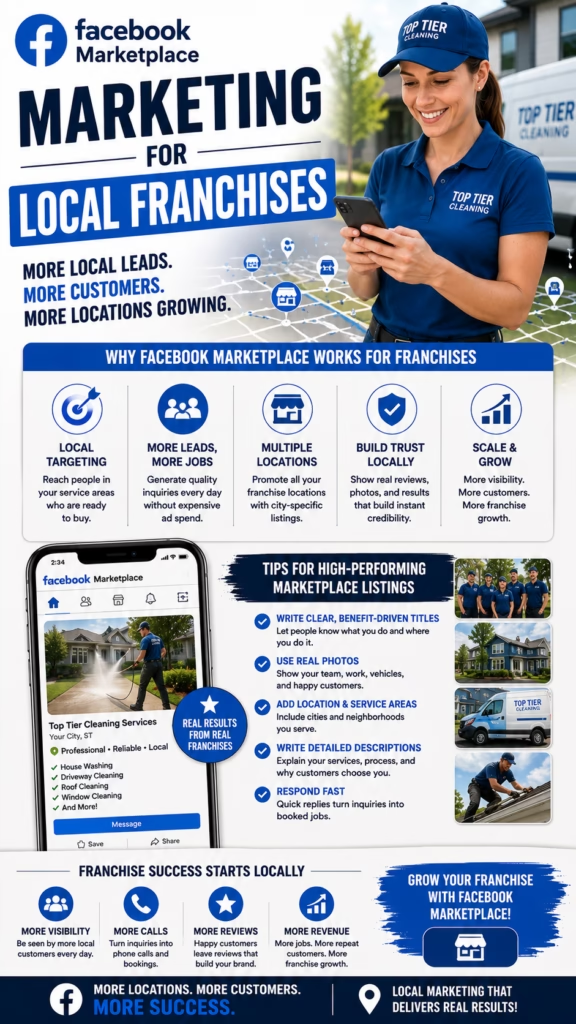
Facebook Marketplace Marketing for Local Franchises
Facebook Marketplace marketing for local franchises can create another layer of local visibility for franchise locations that sell eligible physical products, inventory, home goods, materials, equipment, retail items, or other Marketplace-appropriate products. The opportunity is especially interesting for franchise systems because they already combine a recognizable brand with local operators, local customers, local inventory, and territory-specific demand. A strong strategy connects brand consistency with local accuracy, product-specific listings, genuine pricing, clear images, geographic relevance, fast customer response, lead qualification, CRM attribution, store-level reporting, and measurable revenue.
Local franchises sit in a unique position between national brand recognition and neighborhood-level customer demand.
That combination can create a strong local marketing opportunity.
The franchise brand may already have logos.
Brand colors.
Product standards.
Approved messaging.
Operational systems.
Pricing guidance.
Customer-service standards.
And national awareness.
But individual franchise locations still need local customers.
They need shoppers in their city.
In their ZIP codes.
In nearby neighborhoods.
In surrounding suburbs.
In the franchise territory they actually serve.
Facebook Marketplace can potentially add another local discovery channel when a franchise location has eligible physical products or inventory that fit the available listing format.
The strategy should remain product-focused.
A furniture franchise can promote physical furniture.
A mattress franchise can promote mattresses.
A flooring retailer can promote physical flooring materials.
A home-goods franchise can promote eligible products.
An equipment dealer can promote genuine inventory.
A building-material franchise can promote physical materials.
The common element is the physical item.
That matters because strong Marketplace marketing begins with what the local shopper can actually buy.
The product needs a real title.
Real photos.
Real price information.
Real local availability.
Real franchise-location information.
The customer should not have to guess what is being offered.
That sounds simple.
Yet multi-location businesses often make Marketplace unnecessarily complicated.
They reuse national copy that does not match local inventory.
They list prices that do not apply at every franchise location.
They use generic images instead of actual products.
They route leads to the wrong location.
They do not know which store generated the inquiry.
They fail to track whether the lead eventually purchased.
Then the franchise cannot measure the channel correctly.
A stronger system connects the brand, the product, the location, the lead, and the sale.
The Local Franchise Marketplace Growth Formula
Brand Consistency + Real Local Inventory + Product-Specific Listings + Accurate Pricing + Genuine Photos + Local Relevance + Fast Response + Correct Store Routing + Lead Qualification + Follow-Up + CRM Tracking = Better Local Franchise Customer Acquisition
Why Facebook Marketplace Can Work for Local Franchises
Local Shopping Intent
Marketplace users are often looking for products available nearby rather than simply consuming general social content.
Physical Inventory
Many franchise businesses already sell products that can be represented visually and locally.
Brand Recognition
A familiar franchise brand can add trust when local product information is accurate.
Location-Level Targeting
Individual franchises can build marketing around the products and geographic markets they actually serve.
Product-Specific Campaigns
Different products can attract different customer segments and purchase intent.
Measurable Store-Level Results
Leads can be connected to franchise locations, store visits, purchases, and customer revenue.
The Local Franchise Advantage
Independent businesses often have strong local knowledge.
National brands often have strong brand recognition.
A well-run franchise can have both.
National Brand Strength
Customers may already recognize the company name.
Local Ownership or Management
Individual locations understand nearby customers, neighborhoods, and local buying patterns.
Local Inventory
The franchise can market products available within the actual territory.
Local Customer Service
Buyers can often call, visit, or purchase from a nearby location.
Repeat Purchase Potential
A Marketplace customer can become a repeat local customer beyond the original listing.
Cross-Channel Recognition
A customer may see the franchise on Marketplace, then recognize the brand on Google Maps, social media, signage, or the company website.
Balance Franchise Brand Standards With Local Marketing
Franchise marketing works best when local flexibility operates inside approved brand guidelines.
Keep Brand Identity Consistent
Logos, brand naming, colors, and core messaging should follow franchise standards.
Keep Local Information Accurate
The location, product, price, and availability should reflect the actual local franchise.
Separate Corporate Messaging From Local Offers
National brand messaging may not always describe a specific local product accurately.
Use Approved Product Language
Product names, specifications, warranties, and claims should remain accurate and approved.
Give Franchisees Clear Boundaries
Local teams should know what can be changed and what should remain standardized.
Consistency Does Not Mean Identical Listings
A strong franchise system can keep brand standards consistent while allowing each location to advertise the products, prices, inventory, and local details that are genuinely relevant to its own customers.
Use a Product-First Facebook Marketplace Strategy
Marketplace marketing should start with the item being offered.
Lead With the Product
The customer should immediately understand what is available.
Use Real Product Attributes
Size, material, style, color, condition, model, category, or other relevant details can improve clarity.
Use Genuine Pricing
Customers should not be attracted with misleading placeholders.
Show the Product Clearly
The primary image should make the physical item easy to evaluate.
Keep Service Messaging Secondary
Where a product listing format is used, the physical product should remain the main offer.
Localize the Product Offer
Make it clear which franchise location or local market the item relates to.
Build Marketplace Listings Around Real Inventory
Current Products
Promote items genuinely available or appropriately represented.
Popular Categories
Franchise locations can identify which products generate the strongest local demand.
High-Margin Products
Marketing effort can be prioritized toward economically valuable categories.
Clearance Inventory
Genuine clearance products may create compelling local offers.
Seasonal Inventory
Local demand may change throughout the year.
Store-Specific Inventory
Do not imply that every franchise location has identical stock if that is not true.
Write Better Facebook Marketplace Titles
Put the Product First
Customers should know exactly what the listing contains.
Use Important Product Details
Relevant material, size, style, brand, or category information can improve usefulness.
Use Local Context Carefully
Location language should be accurate and helpful.
Avoid Excessive Capitalization
Clean titles generally feel more professional.
Avoid Keyword Stuffing
Repetitive title language can reduce readability.
Avoid Fake Urgency
Do not create artificial scarcity unless the claim is real.
Avoid Unsupported Claims
“Best,” “lowest,” “number one,” and similar claims should only be used when defensible.
Write Better Marketplace Descriptions for Franchise Locations
Explain the Product Clearly
Give the customer useful information without forcing them to ask basic questions.
State Important Specifications
Include factual dimensions, material, style, condition, model information, or other relevant attributes.
State the Real Price
Pricing should match the advertised item or approved offer.
State the Local Market
Help customers understand where the item is available.
Identify the Franchise Location
Where appropriate, make the local business identity clear.
Use Approved Brand Messaging
Keep local listings consistent with franchise standards.
Use One Clear Next Step
Give the customer a simple path toward the store, product inquiry, purchase, or other appropriate next step.
Use Better Product Photos
Show the Actual Product
Genuine inventory photography can improve trust.
Use Multiple Angles
Buyers may want to see front, side, detail, texture, packaging, or size context.
Keep the Product Prominent
Avoid clutter that makes the item difficult to identify.
Use Consistent Lighting
Clear images can help standardize franchise-level quality.
Use Branding Carefully
The product should remain visually dominant rather than turning the listing into a generic corporate advertisement.
Avoid Misleading Images
Do not present images as current inventory when they represent something else.
Build a Franchise-Wide Image Standard
Franchise systems can improve Marketplace quality by giving each location a simple photography guide covering lighting, framing, product prominence, dimensions, background cleanliness, logo use, and approved text overlays where appropriate.
Use Accurate Pricing in Marketplace Listings
Pricing is one of the fastest ways to either build or lose customer trust.
Use Real Item Prices
If the listing represents a specific physical item, show the real price where appropriate.
Use Genuine Starting Prices
A “starting at” price should correspond to a real available product or approved offer.
Avoid Placeholder Pricing
Fake $0 or $1 pricing can create confusion and poor customer expectations.
Account for Local Differences
Pricing may vary by franchise territory.
Keep Pricing Updated
Old offers can damage customer confidence.
Make Discounts Real
Sale pricing should reflect a genuine promotion.
Use Accurate Local Franchise Information
Correct City
The listing should reflect the market where the franchise actually operates.
Correct Store
Leads should not be routed to an unrelated franchise location.
Correct Territory
Local marketing should respect franchise-area responsibilities where applicable.
Correct Contact Information
Customers should reach the location responsible for the listing.
Correct Pickup or Purchase Information
Do not imply a customer can buy from a particular site if that is not accurate.
Correct Inventory Location
The advertised product should correspond to the appropriate location.
Handle Product Availability Carefully
Do Not Promise Stock You Cannot Confirm
Availability can change.
Update Sold or Unavailable Items
Old listings can frustrate customers.
Use Appropriate Availability Language
Avoid absolute claims when inventory is changing rapidly.
Coordinate With Store Systems
Local teams should have a practical way to verify products.
Separate Corporate Catalog From Local Inventory
A product appearing on the franchise website does not necessarily mean every location has it in stock.
Promote Genuine Franchise Specials
Local Sales
Promote only actual location-approved offers.
National Franchise Promotions
Confirm that the local franchise participates before advertising.
Bundle Offers
Product bundles should be clearly explained.
Limited-Time Promotions
Dates should be accurate.
Discount Claims
Percentage and dollar savings should have a genuine basis.
Terms and Conditions
Important limitations should not be hidden.
Use Marketplace for Genuine Clearance Inventory
Discontinued Products
Local buyers may respond strongly when the offer is accurately represented.
Floor Models
Condition should be clearly described.
Overstock
Genuine excess inventory can create useful local promotions.
Seasonal Closeouts
Local locations may need to move remaining seasonal inventory.
Open-Box Products
Clearly state condition.
Never Fabricate Clearance
A permanent fake sale is not a strong long-term marketing strategy.
Build Seasonal Marketplace Campaigns
Spring
Home, outdoor, storage, building, and improvement categories may change in demand.
Summer
Outdoor-living and project-related inventory may receive greater attention in some markets.
Fall
Home preparation, storage, furniture, and seasonal product demand can shift.
Winter
Indoor products and local shopping behavior may become more important.
Holiday Periods
Genuine retail promotions can be aligned with broader franchise campaigns.
Local Climate Differences
Seasonal campaigns should reflect each territory rather than assuming identical demand nationwide.
Support New Franchise Locations With Local Marketplace Visibility
A new franchise location needs local awareness quickly.
Show Real Local Inventory
Give nearby customers a reason to discover the location.
Use Accurate Local Branding
Make the specific franchise store clear.
Promote Genuine Opening Offers
Only advertise actual approved promotions.
Coordinate With Google Maps
Customers discovering products may later search for the location.
Coordinate With Social Media
Local pages can support broader opening awareness.
Track Early Customer Sources
Learn whether Marketplace contributes to the launch.
Manage Marketplace Marketing Across Multiple Franchise Locations
Create a Standard Operating Framework
Define how listings are created, reviewed, updated, and measured.
Assign Local Responsibility
Each location needs clear ownership of inventory accuracy and customer response.
Centralize Brand Assets
Provide approved logos, image templates, product descriptions, and brand standards.
Localize Pricing
Do not assume every store has identical offers.
Localize Inventory
Product availability can vary.
Centralize Reporting
Headquarters or regional leadership should be able to compare franchise performance.
Respect Franchise Territories and Local Boundaries
Multi-location systems can create unnecessary internal competition when territory rules are unclear.
Define Local Markets
Know which ZIP codes or areas belong to each location where applicable.
Avoid Confusing Customers
Nearby locations should not appear to contradict one another.
Route Leads Correctly
Customer inquiries should reach the responsible franchise.
Coordinate Border Areas
Adjacent territories may need clear routing rules.
Track Cross-Territory Leads
Data can reveal whether certain areas require operational adjustments.
Respond to Facebook Marketplace Leads Quickly
Local shoppers may be comparing several sellers at the same time.
Confirm the Product
Make sure the customer is asking about the correct item.
Confirm the Location
Determine which franchise should handle the inquiry.
Confirm Availability
Avoid promising inventory without verification.
Confirm Price
Make sure the customer receives current information.
Answer Useful Questions
Product dimensions, material, style, condition, or other factual details may help advance the sale.
Create the Next Step
Move the shopper toward the correct store, purchase process, or other appropriate customer action.
Qualify Marketplace Leads Without Creating Friction
Product Interest
Confirm what the customer actually wants.
Location
Determine whether the lead belongs to the local franchise.
Quantity
Some shoppers may need one item while others need several.
Timing
Determine whether the buyer is ready now or still comparing.
Product Fit
Make sure the advertised item matches the customer's needs.
Purchase Path
Determine whether the next step is a store visit, call, order, or other approved transaction process.
Qualification Should Improve the Customer Experience
The goal is not to interrogate a Marketplace shopper. The goal is to understand enough about the product, location, quantity, and timing to route the customer correctly and help them move toward a purchase.
Route Marketplace Leads to the Correct Franchise Location
Use Location-Based Assignment
Route by customer geography where appropriate.
Use Product Availability
The closest location may not always have the advertised item.
Use Territory Rules
Respect established franchise boundaries.
Use CRM Assignment
Automatically or manually assign leads to the correct local team.
Track Reassigned Leads
Frequent routing problems may reveal gaps in local listing management.
Turn Marketplace Inquiries Into Local Store Visits
Confirm the Item
Customers are more likely to visit when they know what they expect to see.
Confirm the Location
Make sure they go to the correct franchise store.
Confirm Hours Through Approved Channels
Do not rely on outdated information.
Make the Visit Worthwhile
Avoid inviting customers for products that are unavailable.
Track Walk-In Source
Ask or record whether Marketplace contributed to the visit.
Move Marketplace Leads Toward Purchases
Keep Product Information Consistent
The in-store experience should match the listing.
Keep Pricing Consistent
Unexpected price differences can reduce trust.
Clarify Options
Related sizes, colors, models, or quantities can support the purchase without misleading the customer.
Track Conversion
Record whether the Marketplace inquiry became a sale.
Track Basket Value
A Marketplace customer may purchase more than the original item.
Track Repeat Business
The first Marketplace purchase can create a longer customer relationship.
Build a Marketplace Lead Follow-Up System
Some shoppers purchase immediately.
Others need time.
Follow Up on High-Intent Leads
Customers asking detailed questions may still be comparing options.
Follow Up on Store Visits
Where appropriate, an organized sales process can help customers who did not buy immediately.
Follow Up on Larger Purchases
High-ticket products may have a longer decision cycle.
Respect Customer Preferences
Follow-up should be appropriate and not become repetitive unwanted contact.
Record Outcomes
Knowing why customers did or did not buy can improve future listings.
Track Facebook Marketplace Leads in CRM
- Lead name
- Phone number where provided
- Email where provided
- Marketplace source
- Listing reference
- Product category
- Product name
- Advertised price
- Franchise location
- Customer city or ZIP
- Quantity requested
- Purchase timing
- Qualification status
- Store-visit status
- Purchase status
- Sale amount
- Repeat-customer status
Suggested Marketplace Franchise Pipeline
- New Marketplace inquiry
- Responded
- Qualified
- Correct location assigned
- Product confirmed
- Store visit or purchase step scheduled
- Follow-up
- Purchased
- Lost
- Repeat opportunity
Track Marketplace Results by Franchise Location
Inquiry Volume
Which stores generate the most Marketplace interest?
Qualified Lead Rate
Which locations attract the strongest customer fit?
Response Speed
Which local teams handle inquiries most consistently?
Store Visits
Which locations turn digital inquiries into physical traffic?
Purchase Conversion
Which stores convert Marketplace leads best?
Revenue
Which locations create measurable Marketplace-attributed sales?
Track Marketplace Results by Product
High-Response Products
Identify products that attract attention.
High-Conversion Products
Responses matter less if buyers do not purchase.
High-Value Products
Some categories may create substantially more revenue.
Clearance Products
Measure whether Marketplace helps move aging inventory.
Seasonal Products
Compare demand across different periods.
Cross-Sell Products
Track whether one advertised item leads to additional purchases.
Track Real Franchise Marketing Outcomes
Listing Inquiries
How much interest does each listing generate?
Qualified Leads
How many inquiries represent realistic local buyers?
Store Visits
How many Marketplace leads enter the physical location?
Purchases
How many inquiries become customers?
Average Order Value
How valuable are Marketplace customers?
Revenue by Location
Which franchise locations produce measurable sales?
Revenue by Product
Which listings generate the strongest economic return?
| Metric | Why It Matters |
|---|---|
| Marketplace inquiries | Measures initial listing interest |
| Qualified leads | Measures local buyer fit |
| Store visits | Measures online-to-offline conversion |
| Purchases | Measures true customer conversion |
| Average order value | Shows economic quality of customers |
| Location revenue | Measures store-level business impact |
| Marketing return | Measures whether Marketplace contributes profitable growth |
Improve Marketplace Lead Quality Instead of Chasing More Messages
Use Specific Products
Broad franchise advertising can generate less focused interest than a real product listing.
Use Accurate Prices
Price transparency can reduce unrealistic inquiries.
Use Clear Photos
Customers should know what they are considering.
Use Real Local Information
Avoid leads from the wrong territory.
Use Complete Descriptions
Answer common questions before the customer contacts the store.
Keep Inventory Current
Outdated listings create poor customer experiences.
Better Buyers Beat More Messages
A local franchise benefits more from shoppers who understand the product, price, location, and purchase process than from a large volume of vague inquiries that never become store visits or sales.
Build a Strong Marketplace Listing Library
Franchise locations often have enough physical products to create a diverse library without relying on repetitive generic listings.
Core Product Listings
Promote high-demand inventory.
Premium Product Listings
Highlight higher-value categories.
Entry-Level Product Listings
Reach price-conscious buyers with genuine lower-priced items.
Seasonal Listings
Rotate product focus as local demand changes.
Clearance Listings
Move genuine aging inventory.
Location-Specific Listings
Highlight products actually relevant to a particular store.
New Arrival Listings
Promote genuine new products.
Feature-Focused Listings
Emphasize factual product benefits such as size, material, color, or category.
Create Approved Franchise Marketplace Assets
Product Photography Guide
Give stores a simple standard for images.
Title Formula
Define how franchise locations should structure listing titles.
Description Framework
Provide approved sections for product information, store information, and customer action.
Pricing Rules
Explain how local stores should represent price differences.
Promotion Rules
Clarify which offers require corporate approval.
Branding Rules
Define appropriate logo, color, and franchise-name use.
Compliance Review
Periodically review listings for accuracy and consistency.
Localize Marketplace Listings Without Weakening the Franchise Brand
Use the Local City
Accurate local wording can make a listing more relevant.
Use Real Local Inventory
This is one of the strongest forms of localization.
Use Local Pricing
Reflect the actual offer available at the store.
Use Location-Specific Photos
Local inventory can build confidence.
Use Approved Local Messaging
Franchisees can sound local without inventing new brand claims.
Keep Core Identity Consistent
Local customization should not make each location look like a completely different company.
Use Automation Carefully in Franchise Marketplace Marketing
Automation can improve internal marketing operations when used responsibly.
Lead Routing
Route inquiries to the correct store or CRM pipeline.
Follow-Up Reminders
Help local teams remember qualified prospects.
Inventory Reporting
Connect marketing teams with product availability information where possible.
Performance Dashboards
Compare stores, products, and campaigns.
Content Organization
Maintain approved photos, titles, descriptions, and local variations.
CRM Attribution
Automatically tag Marketplace leads when operationally possible.
Automation Should Improve Operations, Not Create Spam
Franchise systems should not use automation to create deceptive listings, fabricate inventory, misrepresent locations, flood categories with low-value duplicates, or attempt to bypass platform restrictions. The best automation supports accuracy, routing, reporting, and customer follow-up.
Connect Facebook Marketplace With Other Franchise Marketing Channels
Google Maps
Customers may search for the location after discovering a product.
Organic SEO
Franchise location pages can support local search visibility.
Facebook Pages
Brand and local content can reinforce customer recognition.
Visual product content can support awareness.
Existing customers can receive approved promotions where appropriate.
Local Partnerships
Franchise locations may build additional customer sources through community relationships.
CRM
Central tracking helps compare all channels fairly.
Connect Marketplace Marketing With Google Maps
Marketplace discovery can create branded search behavior.
A shopper sees a product.
Then searches the franchise name.
Then checks the nearest location.
Then views hours, reviews, directions, photos, or website information.
Keep Business Information Consistent
Location names, phone numbers, and local identity should not conflict across channels.
Use Strong Local Photos
Store and product imagery can reinforce credibility.
Track Branded Search Growth
Broader local marketing can increase awareness beyond direct Marketplace leads.
Strengthen Each Franchise Location
Marketplace should support the larger local digital footprint.
Common Facebook Marketplace Mistakes Local Franchises Should Avoid
Advertising the Franchise Instead of the Product
Marketplace shoppers usually need a clear physical item to evaluate.
Using Fake $0 or $1 Pricing
Misleading price placeholders can damage trust.
Using National Prices Locally Without Verification
Local franchise offers may differ.
Listing Products That Are Not Available
Customers should not arrive expecting inventory that does not exist.
Using Generic Stock Images as Local Inventory
Avoid implying a product is physically available when the image does not represent local inventory.
Creating False Locations
Listings should reflect real franchise operations.
Ignoring Territory Boundaries
Internal location conflicts can create customer confusion.
Using Unauthorized Brand Messaging
Local creativity should remain inside franchise standards.
Inventing Discounts
Promotional claims should be genuine.
Inventing Warranties
Warranty language should match actual terms.
Inventing Availability
Inventory can change quickly.
Using Keyword-Stuffed Titles
Clear customer language is stronger.
Responding Too Slowly
Local buyers may move to another seller.
Routing Leads to the Wrong Store
This damages customer experience and franchise reporting.
Failing to Track Marketplace Leads
Without attribution, headquarters cannot evaluate the channel.
Measuring Messages Instead of Sales
Customer revenue matters more than raw inquiry volume.
Creating Excessive Duplicate Listings
Build useful product-specific marketing rather than repetitive low-value content.
Ignoring Current Platform Requirements
Marketplace listing formats, eligibility, categories, and policies can change.
A 30-Day Facebook Marketplace Plan for Local Franchises
Week 1: Build the Foundation
- Identify eligible physical products to promote
- Identify the highest-priority product categories
- Define each franchise location's geographic market
- Review location-specific pricing
- Review actual inventory
- Collect genuine product photos
- Review franchise brand standards
- Review promotion approval rules
- Define lead-routing rules
- Define Marketplace CRM attribution
Week 2: Build the Listing Library
- Create high-demand product listings
- Create premium product listings
- Create entry-level product listings
- Create seasonal product listings
- Create genuine clearance listings
- Create local title variations
- Add accurate pricing
- Add real product photos
- Add franchise-location information
- Add one clear customer next step
Week 3: Improve Lead Handling
- Create a Marketplace response workflow
- Confirm the product
- Confirm local availability
- Confirm customer location
- Route the lead to the correct store
- Record product interest
- Record customer timing
- Track store visits
- Create follow-up reminders
- Track Marketplace as the source
Week 4: Measure and Improve
- Compare inquiries by franchise location
- Compare qualified lead rate
- Compare store visits
- Compare purchases
- Compare average order value
- Compare revenue by location
- Compare revenue by product
- Identify weak listing titles
- Identify weak product categories
- Identify inventory mismatches
- Identify slow-response locations
- Improve future listings based on customer outcomes
End-of-Month Outcome
After 30 days, the franchise system should have a stronger local Marketplace framework, better product-focused listings, clearer location routing, more accurate pricing and inventory information, improved lead handling, stronger CRM attribution, and a clearer understanding of which products and franchise locations produce meaningful customer revenue.
Final Takeaway: Marketplace Should Strengthen the Local Franchise Customer Engine
The strongest franchise systems understand that national branding and local marketing are not opposites.
They support one another.
Corporate branding creates familiarity.
Local marketing creates relevance.
Marketplace can potentially sit between those two strengths.
A shopper may already recognize the franchise name.
But they still need a specific reason to engage.
A product.
A price.
A local location.
A useful photo.
A clear description.
A reason to visit or purchase.
This is why product-first marketing matters.
A generic franchise ad can feel like ordinary brand advertising.
A strong Marketplace listing feels transactional.
The customer sees something they may actually want to buy.
That changes the psychology.
The listing should answer basic questions.
What is it?
What does it look like?
What does it cost?
Where is it?
Which franchise location has it?
What should I do next?
If those questions are answered clearly, the listing becomes more useful.
Images are especially important.
Customers want to see the product.
Not merely the logo.
Not merely the storefront.
Not merely a graphic advertisement.
Show the item.
Show the size.
Show the material.
Show the finish.
Show different angles.
Show details that help the buyer evaluate it.
Franchise systems can standardize that process.
Give every local store the same image-quality framework.
Clean background.
Good lighting.
Clear product prominence.
Approved branding.
Mobile-readable presentation.
Accurate product details.
That improves consistency without forcing every listing to be identical.
Pricing needs the same discipline.
Franchise systems sometimes assume national consistency where none actually exists.
Local costs can differ.
Inventory can differ.
Promotions can differ.
State or regional pricing can differ.
Store participation can differ.
Therefore the Marketplace listing should match the local truth.
If a product costs $399 at one store, do not automatically assume every franchise location offers the same price.
If a promotion applies only to selected locations, say so accurately.
If inventory is limited, do not imply unlimited availability.
Accurate information creates trust.
Accurate information also improves lead quality.
Customers who know the real price are more qualified.
Customers who know the real location are more qualified.
Customers who understand the product are more qualified.
Customers who know what is actually available are more qualified.
This reduces unnecessary messages.
Franchise location accuracy is especially important.
Imagine a customer discovers a product from one franchise.
They ask a question.
The lead gets routed to another location.
That store does not have the product.
The second store sends them back.
Now the customer has experienced friction before making a purchase.
Better routing solves that problem.
Every Marketplace inquiry should carry useful source information.
Which listing generated the lead?
Which product?
Which local franchise?
Which city?
Which customer?
What happened next?
Did they visit?
Did they buy?
What did they spend?
Did they purchase only the advertised product?
Did they buy additional items?
Did they become a repeat customer?
CRM tracking can answer those questions.
Without tracking, Marketplace may appear better or worse than it really is.
One location may receive twenty inquiries.
Another may receive eight.
The first location may close one customer.
The second may close five.
Response count alone would tell the wrong story.
Track revenue.
Track conversion.
Track average order value.
Track product performance.
Track location performance.
Track lead quality.
This is especially useful for franchise leadership.
Headquarters can compare stores.
Regional managers can compare territories.
Franchisees can compare product categories.
Marketing teams can identify high-performing listing formats.
Operations can identify inventory mismatches.
Sales teams can identify slow follow-up.
Marketplace becomes a source of business intelligence, not just messages.
Multi-location management therefore needs structure.
Define who creates listings.
Define who approves them.
Define who updates inventory.
Define who responds.
Define who routes leads.
Define who tracks conversions.
Define who reviews results.
Clear responsibility prevents chaos.
Franchise territories also deserve attention.
Nearby franchise locations should not unnecessarily compete with one another in ways that confuse customers.
If territories are defined, local marketing should respect them.
If customers cross territory boundaries naturally, establish routing rules.
If two stores share a metro area, coordinate product listings where appropriate.
The goal is customer clarity.
Not internal conflict.
Lead response is another major performance lever.
Marketplace shoppers often compare options quickly.
They see a product.
Ask whether it is available.
Ask about price.
Ask about size.
Ask about color.
Ask where the store is.
If the business answers clearly, the conversation can advance.
If the business responds late, another seller may already have captured the customer.
That means franchise marketing is not only a content problem.
It is an operational problem.
The listing creates the opportunity.
The local team must convert it.
Response scripts can help.
So can product FAQs.
So can inventory access.
So can clear store-routing rules.
So can CRM notifications.
So can follow-up reminders.
The simpler the customer journey, the stronger the potential conversion.
Larger purchases may need follow-up.
A customer buying a relatively expensive item may not decide immediately.
They may compare multiple stores.
They may compare brands.
They may compare product specifications.
They may need to measure their space.
They may need to speak with someone else in the household.
They may need to return later.
A professional follow-up process can recover some of those opportunities.
But follow-up should remain respectful.
Do not turn one Marketplace inquiry into unwanted repeated contact.
Quality follow-up is useful.
Spam is not.
Clearance inventory is another potential use case.
Local franchise stores often have physical items they want to move.
Floor models.
Overstock.
Discontinued styles.
Seasonal closeouts.
Open-box merchandise.
These products can benefit from local discovery.
But transparency matters.
State the condition.
State the real price.
State the location.
Use actual photos.
Do not label normal inventory as clearance just to create urgency.
Seasonal marketing can also be localized.
A franchise in Florida may have different seasonal demand than one in Minnesota.
A franchise in Dallas may promote different outdoor products than one in Rochester.
Climate matters.
Housing patterns matter.
Local events matter.
Customer preferences matter.
Franchise marketing should use national brand strength without pretending every local market behaves the same way.
New franchise locations can especially benefit from coordinated local discovery.
A grand opening creates a temporary attention opportunity.
Marketplace can support that opportunity through genuine eligible products.
Google Maps can support location discovery.
Local Facebook content can support awareness.
Instagram can support product visibility.
Email can support existing customer relationships.
Local partnerships can support community awareness.
The channels work better together.
Marketplace should therefore not be treated as an isolated tactic.
It should connect to the full customer acquisition system.
Google Maps captures local search intent.
Marketplace captures product discovery.
Social media supports familiarity.
SEO supports research.
Referrals support trust.
CRM supports follow-up.
Reporting supports improvement.
The franchise benefits when all of those signals are measured together.
Automation can make this easier.
Not by flooding Marketplace with repetitive listings.
Not by creating fake inventory.
Not by inventing locations.
Not by bypassing platform restrictions.
Useful automation happens behind the scenes.
Lead routing.
CRM tagging.
Reporting.
Follow-up reminders.
Inventory synchronization.
Approved-content libraries.
Performance dashboards.
Franchise-location comparisons.
Those systems can make Marketplace operations far more scalable.
Brand governance remains important.
One local franchise should not invent a new warranty.
Another should not invent a discount.
Another should not publish a price that conflicts with corporate rules.
Another should not make unsupported product claims.
Another should not use logos incorrectly.
Strong systems prevent those inconsistencies.
Give franchisees approved tools.
Approved image templates.
Approved copy frameworks.
Approved brand rules.
Approved pricing instructions.
Approved promotion standards.
Then allow the location to insert truthful local information.
Product.
Price.
Store.
Inventory.
Local market.
That creates scalable localization.
Avoid the common shortcuts.
Do not use fake $1 prices.
Do not use fake $0 prices.
Do not fabricate clearance discounts.
Do not advertise inventory that is not available.
Do not pretend every franchise location has the same stock.
Do not use misleading photos.
Do not create fake store locations.
Do not route customers carelessly.
Do not ignore messages.
Do not measure success by messages alone.
Build a stronger system.
Better products.
Better titles.
Better descriptions.
Better photography.
Better price accuracy.
Better store routing.
Better lead response.
Better follow-up.
Better CRM tracking.
Better location reporting.
Better product reporting.
Better revenue attribution.
That is how Facebook Marketplace marketing can become a useful part of a larger local franchise customer acquisition system.
Frequently Asked Questions
1. Can local franchises use Facebook Marketplace for marketing?
Local franchise locations may use Marketplace where appropriate for eligible physical products and inventory that fit current listing formats and platform requirements.
2. Why can Marketplace be useful for franchise locations?
Marketplace can connect nearby shoppers with local products, giving franchise locations another potential source of customer discovery and inquiries.
3. Should every franchise location use identical listings?
Brand standards can remain consistent, but local listings should accurately reflect actual products, prices, inventory, and location information.
4. Should franchise Marketplace listings focus on physical products?
Where the listing format is designed around products, the physical item should remain the primary offer.
5. What makes a strong Marketplace listing title?
A strong title clearly describes the product and useful factual details without excessive capitalization, keyword stuffing, or misleading claims.
6. Should Marketplace listings include local information?
Yes. Accurate geographic information helps buyers understand which franchise location the product relates to.
7. Should franchise listings use real product photos?
Genuine product photography can improve clarity, trust, and buyer confidence.
8. Can local franchise locations use branded images?
Yes, when branding follows franchise and platform requirements and the actual physical product remains clear.
9. Should franchises use accurate Marketplace prices?
Yes. Real prices or genuine supported starting prices create better customer expectations than misleading placeholders.
10. Should every franchise location use the same price?
Only when pricing is genuinely standardized. Otherwise each listing should reflect the correct local offer.
11. Can franchises create separate listings for different products?
Yes. Product-specific listings can make customer intent clearer and improve measurement.
12. Should every location reuse the exact same description?
Core franchise messaging can be standardized while local product, price, availability, and store information remain accurate to the individual location.
13. How can franchises improve Marketplace lead quality?
Use specific products, real prices, strong photos, accurate local information, clear descriptions, fast responses, and basic qualification.
14. How quickly should franchise locations respond?
As promptly as operationally practical because shoppers may compare several nearby sellers.
15. Should Marketplace leads be tracked in CRM?
Yes. CRM attribution can connect inquiries with stores, products, visits, purchases, and revenue.
16. Should Marketplace results be tracked by franchise location?
Yes. Different stores can produce different lead volume, response times, conversion rates, and customer value.
17. Should Marketplace results be tracked by product?
Yes. Product-level attribution helps identify which inventory categories produce the strongest local results.
18. Can Marketplace support a franchise grand opening?
Genuine eligible local products can support discovery for a newly opened location alongside other launch marketing channels.
19. Can Marketplace support seasonal franchise promotions?
Yes, when listings represent genuine products, prices, availability, and approved promotional claims.
20. Can franchise stores advertise clearance inventory?
Genuine clearance products can be promoted when condition, price, inventory, and discount claims are accurate.
21. Should Marketplace listings mention warranties?
Only when the warranty genuinely applies and the description accurately reflects its terms.
22. Should listings mention financing?
Financing claims should be accurate, approved, properly disclosed, and consistent with applicable requirements.
23. Can franchises automate Marketplace marketing?
Automation can support internal lead routing, CRM attribution, reporting, follow-up reminders, and content organization when used responsibly.
24. Should franchise headquarters control Marketplace marketing?
Many franchise systems benefit from centralized brand standards combined with local responsibility for inventory, pricing, location accuracy, and customer response.
25. What Marketplace metrics should franchises track?
Track inquiries, qualified leads, store visits, purchases, average order value, location revenue, product revenue, and marketing return.
26. Can Marketplace replace paid Facebook advertising?
They serve different functions. A diversified local marketing strategy can reduce dependence on a single channel.
27. Can Marketplace complement Google Maps marketing?
Yes. Marketplace can support product discovery while Google Maps helps customers find and evaluate local franchise locations.
28. What Marketplace mistakes should franchises avoid?
Avoid misleading prices, false inventory, fake discounts, incorrect locations, weak photos, outdated listings, poor lead routing, inconsistent brand claims, and weak measurement.
29. How long does Marketplace marketing take to work for a franchise?
Results vary by market, product, price, local competition, inventory, listing quality, seasonality, customer demand, and response speed.
30. What is the goal of Facebook Marketplace marketing for local franchises?
The goal is to turn local product visibility into qualified shoppers, store visits, purchases, revenue, and measurable franchise growth while preserving accurate local information and brand consistency.
30 Additional SEO Keywords
Use these supporting phrases naturally across franchise marketing articles, Facebook Marketplace guides, local business pages, product marketing resources, FAQs, case studies, and relevant internal links.
Build a Stronger Local Marketing System Across Your Franchise Locations
MarketWiz.ai helps local businesses and multi-location brands strengthen customer acquisition through automated advertising, local marketing, lead capture, follow-up, CRM integration, and measurable reporting designed to turn more local opportunities into real customers.
This article provides general information about Facebook Marketplace marketing, franchise marketing, local advertising, retail marketing, lead generation, CRM tracking, customer follow-up, product listings, multi-location marketing, and customer acquisition. It does not provide legal, tax, financial, franchise-law, advertising-law, trademark, intellectual-property, privacy, consumer-protection, lending, financing, regulatory, compliance, or platform advice. Facebook Marketplace listing formats, categories, eligibility rules, geographic availability, account features, advertising options, prohibited content rules, and platform requirements can change. Franchise systems and individual franchise locations should review current Meta and Facebook requirements, franchise agreements, brand standards, territory restrictions, pricing rules, promotion requirements, applicable laws, and local business obligations before publishing listings. Business names, franchise locations, store addresses, phone numbers, product descriptions, inventory, prices, availability, discounts, warranties, financing claims, photos, product conditions, sizes, specifications, brands, promotions, and customer-facing information should remain accurate. Franchisees should not fabricate products, inventory, reviews, discounts, warranties, locations, prices, availability, brand relationships, product specifications, or promotional claims. Stock or generated imagery should not be presented as actual local inventory when it is not. Automation should not be used to flood Marketplace with deceptive, repetitive, or low-value listings, fabricate identities or locations, or attempt to bypass applicable platform restrictions. Marketplace inquiries, store visits, purchases, customer revenue, lead volume, conversion rates, and ROI cannot be guaranteed and may vary based on franchise category, local market demand, competition, pricing, inventory, seasonality, brand recognition, listing quality, customer response, store operations, lead routing, follow-up, product availability, sales execution, and many other factors.














Connect Marketplace Listings With Franchise Social Content
Reuse Product Photography
Strong images can support Facebook and Instagram content.
Feature New Products
Genuine inventory arrivals create useful local social posts.
Highlight Customer Use Cases
Show how products fit real customer needs without inventing testimonials.
Promote Genuine Local Events
Store openings, product showcases, and local promotions can support awareness.
Keep Offers Consistent
Pricing and promotions should match across customer touchpoints where applicable.