

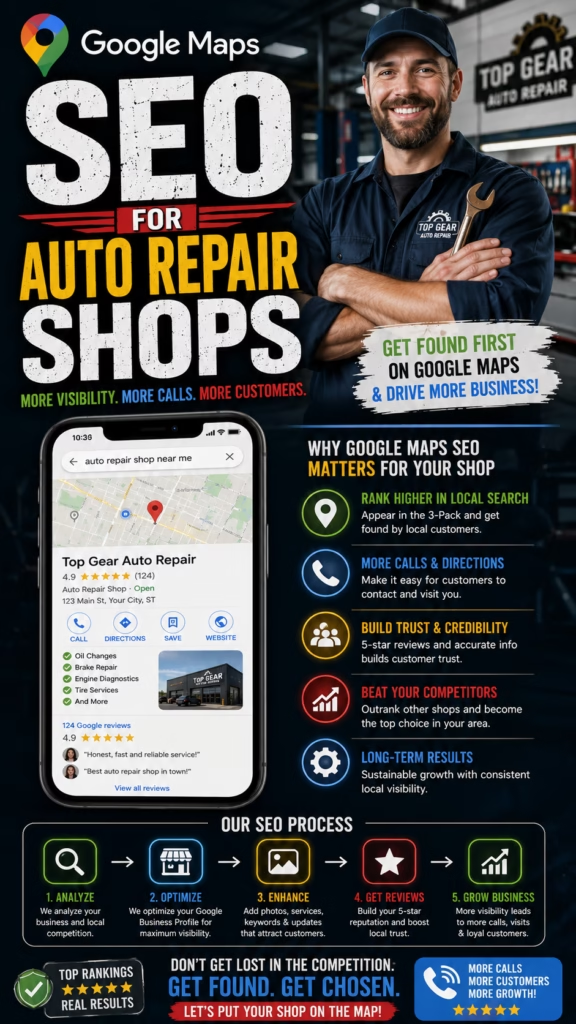
Google Maps SEO for Auto Repair Shops
Google Maps SEO for Auto Repair Shops helps mechanics, automotive service centers, tire shops, brake specialists, diagnostic technicians, and local repair businesses improve visibility, attract nearby drivers, generate service appointments, and turn local searches into long-term customers.
Introduction
Google Maps SEO for Auto Repair Shops is one of the most important local marketing strategies for automotive businesses. When a vehicle will not start, a warning light appears, brakes begin making noise, a tire loses pressure, or an engine starts overheating, drivers often search for nearby help immediately.
Google frequently displays map-based results before many traditional website listings. An optimized Google Business Profile can therefore become the first place a customer sees the shop’s name, rating, phone number, hours, location, repair services, photos, and appointment options.
Google Maps SEO puts auto repair shops in front of nearby drivers at the moment they are actively searching for service.
Strong local visibility requires more than creating a basic business listing. Auto repair shops need accurate categories, complete service information, real shop photos, consistent customer reviews, useful service pages, local keyword relevance, correct contact details, and a fast appointment process.
Repair shops can optimize for oil changes, brake repair, engine diagnostics, check-engine-light service, suspension repair, tire replacement, battery service, transmission work, air-conditioning repair, wheel alignment, preventive maintenance, and other services they genuinely provide.
The strongest strategy connects the Google Business Profile with the shop website, service pages, location pages, review process, local citations, appointment forms, call tracking, customer follow-up, and repeat-maintenance system.
Main idea: Google Maps SEO for Auto Repair Shops works when Google and local drivers can clearly understand where the shop is located, which repairs it performs, why customers trust it, and how quickly an appointment can be scheduled.
Table of Contents
- 1) Why Google Maps matters for auto repair shops
- 2) Understanding automotive search intent
- 3) Setting up the Google Business Profile correctly
- 4) Choosing the best primary category
- 5) Adding relevant secondary categories
- 6) Optimizing the shop name, address, and phone
- 7) Writing a strong auto repair description
- 8) Adding repair services to the profile
- 9) Using professional shop photos
- 10) Generating more customer reviews
- 11) Responding to automotive reviews
- 12) Publishing Google Business Profile posts
- 13) Building auto repair service pages
- 14) Creating local landing pages
- 15) Optimizing the auto repair website
- 16) Using local automotive keywords naturally
- 17) Building local citations and authority
- 18) Improving calls and appointment conversion
- 19) Google Maps SEO for brake repair
- 20) Google Maps SEO for engine diagnostics
- 21) Google Maps SEO for oil changes
- 22) Google Maps SEO for tire and alignment services
- 23) Google Maps SEO for emergency repair searches
- 24) Tracking auto repair SEO performance
- 25) Common Google Maps SEO mistakes
- 26) Trust and compliance reminders
- 27) Final thoughts
- 28) FAQs
- 29) Extra keywords
1) Why Google Maps Matters for Auto Repair Shops
Google Maps matters because automotive repair is highly local and often urgent. Drivers typically prefer a shop near their home, job, current location, or regular commute.
Common auto repair searches:
auto repair near me
mechanic near me
brake repair near me
oil change near me
check engine light repair
car diagnostic shop near me
tire shop near me
wheel alignment near me
battery replacement near me
auto air conditioning repair
These searches usually come from people with a real vehicle need. The customer may be ready to call immediately, compare ratings, request directions, or schedule an appointment.
Google Maps visibility can generate:
- Phone calls
- Appointment requests
- Website visits
- Direction requests
- Diagnostic inquiries
- Maintenance appointments
- Tire and brake leads
- Towing-related referrals
- Repeat service customers
- Fleet maintenance opportunities
A well-optimized profile can help an independent auto repair shop compete with dealerships and national chains by emphasizing convenience, local trust, personalized service, and strong customer reviews.
Google Maps connects nearby drivers with repair shops when vehicle problems create immediate demand.
2) Understanding Automotive Search Intent
Auto repair searches can reflect different levels of urgency and customer knowledge. Some drivers know exactly which service they need, while others only understand the symptom.
Common automotive search-intent categories:
- General repair searches
- Symptom-based searches
- Service-specific searches
- Emergency repair searches
- Maintenance searches
- Price and estimate searches
- Brand-specific repair searches
- Review and reputation searches
- Appointment availability searches
- Location and direction searches
A driver searching “brake repair near me” already understands the likely service. A driver searching “car grinding when stopping” is focused on the symptom. Both searches may lead to the same shop, but the content required to attract them is different.
The Google Business Profile should explain the full range of services, while the website should include deeper pages for specific repairs and symptoms.
Strong automotive SEO connects customer symptoms, repair services, local relevance, and appointment availability.
3) Setting Up the Google Business Profile Correctly
The Google Business Profile should accurately represent the real automotive business, shop location, customer hours, phone number, website, and available services.
Auto repair profile setup checklist:
- Accurate shop name
- Correct primary category
- Relevant secondary categories
- Current street address
- Active phone number
- Correct website
- Appointment or estimate link
- Accurate business hours
- Complete shop description
- Detailed service list
- Real shop photos
- Accurate accessibility information
The address should represent the legitimate shop where customers bring vehicles. Avoid using virtual offices, unrelated addresses, or locations that do not operate as real repair facilities.
Hours should reflect when customers can call, drop off vehicles, or receive service. Holiday and seasonal hours should be updated.
An accurate Google Business Profile creates the foundation for every other local SEO improvement.
4) Choosing the Best Primary Category
The primary category helps Google understand the shop’s main business. It should represent the service that best describes the operation as a whole.
Possible automotive category considerations:
Auto repair shop
Mechanic
Tire shop
Brake shop
Transmission shop
Auto electrical service
Oil change service
Wheel alignment service
Auto air conditioning service
Car inspection station
A general repair facility may choose a broader auto repair category, while a specialist may choose a more focused category. The selection should reflect the actual primary source of customer work.
Do not select a category only because it appears easier to rank. An inaccurate category can create irrelevant leads and customer confusion.
The best primary category is the one that most accurately describes the shop’s central automotive service.
5) Adding Relevant Secondary Categories
Secondary categories can help represent additional automotive services, but each category should match real shop capabilities.
Secondary category decisions may depend on whether the shop provides:
- Brake service
- Tire replacement
- Wheel alignment
- Transmission repair
- Electrical diagnosis
- Oil changes
- Vehicle inspections
- Air-conditioning repair
- Diesel repair
- Fleet maintenance
Adding every available automotive category does not automatically improve rankings. Excessive categories can make the business identity less focused.
Categories should align with the profile service list, website content, technician capabilities, equipment, and actual customer work.
Secondary categories should expand accurate relevance without overstating what the shop provides.
6) Optimizing the Shop Name, Address, and Phone
The shop name should match the real-world business name used on signage, invoices, the website, and customer communications.
Adding unnecessary keywords or city names to the business name can create inconsistency and reduce trust.
Business information best practices:
- Use the real shop name
- Verify the street address
- Include the correct suite or unit
- Use a monitored phone number
- Keep website links current
- Use consistent business information
- Remove duplicate profiles
- Update old directory listings
- Maintain accurate hours
- Test appointment links regularly
The phone number should connect customers to someone who can answer basic questions, confirm services, and schedule appointments.
Accurate contact information prevents urgent repair leads from reaching the wrong shop or a disconnected number.
7) Writing a Strong Auto Repair Description
The business description should explain the shop’s core services, customer types, location, experience, and appointment process.
Auto repair description structure:
Shop identity
Primary repair services
Vehicle types serviced
Local market
Diagnostic approach
Maintenance options
Customer experience
Appointment or estimate process
A shop might explain that it provides diagnostics, brake service, oil changes, suspension repair, battery replacement, tire service, and preventive maintenance for local drivers.
Avoid unsupported statements such as being the best mechanic in every city or guaranteeing the lowest price.
Use direct and practical language that drivers can understand.
A strong description helps customers quickly determine whether the shop handles their vehicle problem.
8) Adding Repair Services to the Profile
The service section helps Google and customers understand the complete range of work performed by the shop.
Auto repair services may include:
- Engine diagnostics
- Check-engine-light service
- Brake repair
- Oil changes
- Battery replacement
- Alternator repair
- Starter replacement
- Suspension repair
- Wheel alignment
- Tire service
- Transmission service
- Air-conditioning repair
- Cooling system repair
- Preventive maintenance
- Vehicle inspections
Service descriptions can explain the general purpose of the service, common warning signs, and whether an inspection or diagnostic appointment is required.
The profile should match the website. If transmission repair is listed, the website should provide a useful page explaining the service and appointment process.
A complete service list improves relevance for drivers searching for specific repairs.
9) Using Professional Shop Photos
Photos help customers evaluate cleanliness, professionalism, equipment, location, and shop credibility.
Auto repair photo ideas:
- Exterior shop signage
- Service bays
- Waiting area
- Diagnostic equipment
- Vehicle lifts
- Professional technicians
- Branded uniforms
- Shop tools
- Tire equipment
- Completed repair work
- Customer parking
- Fleet service areas
Images should be current, clear, and representative of the real business. Avoid using only stock photos of vehicles or mechanics.
Protect customer privacy by avoiding visible license plates, paperwork, addresses, vehicle identification numbers, and personal belongings.
Real shop photos help drivers feel more comfortable before bringing in their vehicle.
10) Generating More Customer Reviews
Reviews are especially important in automotive repair because many customers worry about trust, pricing, diagnosis, communication, and repair quality.
Good times to request a review:
- After a successful repair
- After resolving an urgent vehicle problem
- After routine maintenance
- After positive customer feedback
- After a clear diagnostic experience
- After helping a repeat customer
- After a fleet service appointment
- After resolving a customer concern
Review requests should be simple and neutral. Do not pressure customers to leave only positive feedback or offer misleading incentives.
Strong reviews often mention honesty, communication, speed, fair estimates, repair quality, professionalism, and convenience.
Consistent review growth helps auto repair shops build the trust needed to convert local searches into appointments.
11) Responding to Automotive Reviews
Review responses show prospective customers how the shop communicates and handles feedback.
Positive review response example:
Thank you for trusting our shop with your vehicle. We appreciate your feedback and are glad our team could help with the repair and keep you informed throughout the process.
Responses should sound natural rather than copied. When appropriate, mention the general service category without exposing private customer or vehicle details.
Negative reviews should be addressed calmly. Avoid arguing publicly. Acknowledge the concern and invite the customer to contact the shop directly.
Professional review responses help future customers evaluate the shop’s communication and accountability.
12) Publishing Google Business Profile Posts
Google Business Profile posts can keep the listing active and communicate timely repair information.
Auto repair Google post ideas:
- Brake inspection reminders
- Oil change availability
- Check-engine-light appointments
- Battery testing reminders
- Seasonal tire service
- Air-conditioning repair
- Winter vehicle preparation
- Road-trip inspections
- Technician introductions
- New equipment updates
- Maintenance tips
- Fleet service availability
Each post should focus on one topic and include a clear action such as calling the shop, booking an inspection, or visiting a service page.
Posts should not create fear or claim that every symptom requires the most expensive repair.
Consistent Google posts help auto repair shops stay relevant to seasonal and service-specific searches.
13) Building Auto Repair Service Pages
Individual service pages help the website rank for specific automotive needs and give customers more information before they call.
Useful auto repair service pages:
Brake repair
Oil changes
Engine diagnostics
Check-engine-light service
Battery replacement
Alternator repair
Starter repair
Suspension service
Wheel alignment
Tire replacement
Transmission service
Air-conditioning repair
Cooling system repair
Preventive maintenance
Vehicle inspections
Each page should explain warning signs, the general diagnostic process, service benefits, appointment options, and local availability.
Avoid thin pages that contain only a few sentences and a city name. Useful pages answer real customer questions.
Strong service pages help Google connect specific repair searches with the shop’s actual capabilities.
14) Creating Local Landing Pages
Location pages can improve relevance for nearby cities and communities that the auto repair shop genuinely serves.
A useful automotive location page can include:
- City-specific introduction
- Driving or location context
- Repair services available
- Shop hours
- Appointment information
- Real shop photos
- Customer reviews
- Towing or drop-off details
- Common local questions
- Clear call to action
Each page should contain original information. Copying one location page and changing only the city name creates weak content.
The page should help a local driver understand why the shop is a convenient option and how to schedule service.
Strong location pages support Google Maps SEO by confirming which nearby communities the shop serves.
15) Optimizing the Auto Repair Website
The website should make it easy for drivers to understand services, trust the shop, and request an appointment.
Important auto repair website elements:
- Clear service pages
- Local landing pages
- Visible phone number
- Appointment request form
- Mobile-friendly design
- Fast page speed
- Real shop photos
- Customer reviews
- Shop hours
- Location and directions
- Vehicle and service information
- Strong internal links
The homepage should quickly explain the shop’s primary services, location, hours, and next step.
Forms should remain simple. Drivers should not be required to complete a long questionnaire before asking for an appointment.
A strong website turns Google Maps visibility into phone calls, estimates, and repair appointments.
16) Using Local Automotive Keywords Naturally
Local keywords should help Google and drivers understand the service and location.
Local automotive keyword examples:
auto repair in [city]
mechanic near [community]
brake repair in [city]
oil change near [area]
engine diagnostics in [city]
tire shop near [community]
wheel alignment in [city]
local automotive repair shop
Use related phrases naturally throughout service pages, location pages, headings, image descriptions, and body content.
Avoid repeating the same phrase excessively or adding long lists of cities that do not improve the customer experience.
Natural local keywords improve automotive relevance without making the website sound artificial.
17) Building Local Citations and Authority
Local citations are online references to the shop’s name, address, phone number, and website.
Potential citation and authority sources:
- Local business directories
- Automotive directories
- Chamber of commerce listings
- Community organizations
- Parts supplier directories
- Insurance or warranty networks
- Towing company partners
- Fleet management partners
- Local news publications
- Industry associations
Focus on accurate and relevant listings rather than creating hundreds of low-quality directory entries.
Partnerships with towing companies, body shops, tire dealers, dealerships, rental companies, and fleet operators can also support local authority and referrals.
Consistent citations reinforce that the repair shop is an established local automotive business.
18) Improving Calls and Appointment Conversion
Strong rankings only create value when the shop converts inquiries into scheduled service.
Useful automotive lead questions:
- What is the vehicle year?
- What is the make and model?
- What symptoms are occurring?
- Are any warning lights visible?
- Is the vehicle safe to drive?
- When did the problem begin?
- Has another shop inspected it?
- What service is requested?
- When is the preferred appointment?
- What is the best callback number?
Simple auto repair response:
Thanks for contacting us. What is the year, make, and model of the vehicle, and what symptoms or warning lights are you experiencing? We can review appointment availability and explain the next step.
Staff should avoid guaranteeing a diagnosis or final price before the vehicle is inspected.
Google Maps generates the repair lead, but a fast and organized appointment process creates the customer.
19) Google Maps SEO for Brake Repair
Brake-related searches often involve urgent symptoms and strong appointment intent.
Brake repair content topics:
- Squeaking brakes
- Grinding noises
- Brake pedal vibration
- Soft brake pedal
- Vehicle pulling while braking
- Brake warning lights
- Brake pad replacement
- Rotor inspection
- Brake fluid service
- Complete brake inspection
Brake service pages should encourage professional inspection without claiming that every noise requires the same repair.
Google posts can promote brake inspections before road trips, winter weather, or heavy travel seasons.
Brake repair SEO performs best when symptom-based content leads to a clear inspection appointment.
20) Google Maps SEO for Engine Diagnostics
Engine diagnostic searches may involve warning lights, poor performance, stalling, unusual noises, reduced fuel economy, or starting problems.
Engine diagnostic content topics:
Check engine light
Vehicle stalling
Rough idle
Loss of power
Poor fuel economy
Hard starting
Unusual engine noise
Warning light diagnosis
Computer diagnostic testing
Performance concerns
Diagnostic pages should explain that warning codes provide information but do not always identify the final repair by themselves.
Do not guarantee a diagnosis based only on a customer description or code.
Engine diagnostic SEO builds trust when the shop explains why professional testing is necessary.
21) Google Maps SEO for Oil Changes
Oil changes are a high-volume service that can introduce customers to the shop and create long-term maintenance relationships.
Oil change content can address:
- Conventional oil service
- Synthetic oil changes
- Oil filter replacement
- Maintenance intervals
- Fluid checks
- Basic vehicle inspections
- Appointment availability
- Vehicle-specific oil requirements
- Fleet oil changes
- Maintenance reminders
Pricing should clearly explain whether taxes, oil capacity, filter type, or specialty oil may affect the final amount.
Oil change customers can become future brake, tire, battery, and maintenance customers when the experience is professional.
Oil change SEO can support both immediate appointments and long-term customer retention.
22) Google Maps SEO for Tire and Alignment Services
Tire and alignment searches often involve wear, vibration, pulling, low pressure, punctures, or seasonal replacement.
Tire and alignment topics:
- Tire replacement
- Flat tire repair
- Tire rotation
- Wheel balancing
- Wheel alignment
- Uneven tire wear
- Vehicle pulling
- Steering wheel vibration
- Seasonal tire changes
- Tire pressure concerns
Pages should explain which tire brands, sizes, and services are available. Inventory information should remain current.
Photos of alignment equipment, tire machines, shop bays, and actual tire work can strengthen credibility.
Tire and alignment SEO works when local visibility is supported by clear inventory, equipment, and appointment information.
23) Google Maps SEO for Emergency Repair Searches
Some drivers search while stranded, overheating, unable to start the vehicle, or experiencing a serious warning light.
Urgent automotive searches:
car will not start near me
mechanic open now
battery replacement near me
car overheating help
check engine light flashing
brakes grinding near me
emergency auto repair
towing to repair shop
same-day mechanic appointment
auto repair open today
The profile should maintain accurate hours and phone information. If towing, same-day service, or emergency appointments are not available, do not imply otherwise.
Safety-related content should encourage customers not to drive when there is a credible risk of damage or injury.
Urgent repair marketing must remain accurate because customers may make immediate safety decisions based on the information.
24) Tracking Auto Repair SEO Performance
Tracking helps repair shops determine whether local visibility is producing qualified calls, appointments, and profitable repair work.
Useful auto repair SEO metrics:
- Google profile views
- Phone calls
- Website visits
- Appointment-link clicks
- Direction requests
- Estimate forms
- Qualified inquiries
- Appointments booked
- Repair orders
- Average repair value
- Repeat customers
- Revenue by service category
Compare performance by service, location, search term, landing page, call source, and appointment type.
High profile views with few appointments may indicate weak reviews, incomplete services, poor photos, unclear hours, or an ineffective phone process.
The best Google Maps strategy is measured by repair appointments, customer retention, profitable work, and lifetime customer value.
25) Common Google Maps SEO Mistakes
Common auto repair optimization mistakes include:
- Using the wrong business category
- Adding keywords to the shop name
- Using outdated phone numbers
- Publishing incorrect hours
- Leaving services incomplete
- Using stock photos only
- Ignoring customer reviews
- Creating duplicate city pages
- Keyword stuffing
- Using misleading prices
- Slow phone response
- No lead tracking
Another mistake is focusing only on ranking while ignoring the actual customer experience. A high-ranking shop can still lose customers through unanswered calls, weak reviews, poor photos, or unclear appointment information.
Shops should also avoid claiming they provide services, certifications, warranties, or emergency availability that they do not actually offer.
Google Maps SEO fails when visibility increases but trust, communication, and appointment conversion remain weak.
26) Trust and Compliance Reminders
Auto repair marketing should follow current platform policies and applicable requirements involving pricing, warranties, estimates, financing, certifications, inspections, environmental services, customer privacy, and consumer protection.
Trust and compliance reminders:
- Use accurate business information
- Describe repair services honestly
- Explain diagnostic fees clearly
- Avoid guaranteed diagnoses
- Use accurate warranty language
- Represent certifications correctly
- Protect customer and vehicle information
- Use authorized photos
- Follow applicable repair requirements
- Use accurate financing disclosures
- Keep hours and availability current
- Review current platform policies
Diagnostic information should not be presented as a guaranteed repair conclusion before the vehicle has been properly inspected.
Photos and responses should not expose license plates, vehicle identification numbers, addresses, invoices, or private customer details.
Trustworthy auto repair marketing begins when the online promise matches the real diagnosis, estimate, repair, and customer experience.
27) Final Thoughts
Google Maps SEO for Auto Repair Shops can help local mechanics and automotive service centers improve visibility, attract nearby drivers, generate more appointments, and build stronger long-term customer relationships.
The strongest strategy begins with an accurate Google Business Profile, correct categories, complete repair services, real shop photos, consistent customer reviews, professional review responses, strong service pages, local landing pages, accurate citations, and a clear appointment process.
Auto repair shops should create useful content around brakes, oil changes, engine diagnostics, tires, wheel alignments, batteries, suspension, air conditioning, transmissions, cooling systems, maintenance, and urgent vehicle symptoms.
Google Maps SEO should support a broader marketing system that may also include referral partnerships, direct mail, social media, email reminders, fleet outreach, maintenance campaigns, and customer retention.
Most importantly, local visibility must be supported by reliable communication. Fast phone response, accurate estimates, transparent diagnostics, professional service, and organized follow-up determine whether a Google Maps lead becomes a loyal customer.
Final takeaway: Google Maps helps auto repair shops grow when the profile, website, service pages, reviews, photos, local authority, and appointment process work together to turn nearby vehicle problems into trusted repair relationships.
28) FAQs
1) What is Google Maps SEO for auto repair shops?
It is the process of improving an auto repair shop’s Google Business Profile, website, services, reviews, photos, local pages, citations, and customer response process to increase visibility in nearby searches.
2) Why is Google Maps important for mechanics?
Drivers often search Google Maps when they need a nearby mechanic, repair appointment, inspection, diagnostic service, or urgent automotive help.
3) What primary category should an auto repair shop use?
The shop should use the category that most accurately represents its main business, such as auto repair shop, mechanic, tire shop, or another relevant specialty.
4) Should auto repair shops add secondary categories?
Yes, but only for real services such as brake repair, tires, alignment, oil changes, transmission work, or air-conditioning service.
5) What information should the profile include?
It should include the shop name, address, phone, website, appointment link, hours, categories, description, services, photos, and accessibility details.
6) Are Google reviews important for auto repair shops?
Yes. Reviews help drivers evaluate honesty, communication, repair quality, pricing clarity, speed, and professionalism.
7) How can repair shops get more reviews?
They can request honest feedback after successful repairs, maintenance appointments, positive customer comments, or resolved concerns.
8) Should auto repair shops respond to reviews?
Yes. Professional responses show that the shop values feedback and communicates responsibly.
9) Are shop photos important?
Yes. Real photos of the facility, technicians, service bays, tools, equipment, waiting area, and signage build trust.
10) What repair services should be listed?
List the services genuinely provided, including diagnostics, brakes, oil changes, batteries, suspension, tires, alignments, transmissions, air conditioning, and maintenance.
11) Should auto repair shops publish Google posts?
Yes. Posts can highlight maintenance reminders, repair appointments, seasonal service, technician updates, and automotive education.
12) Should every repair service have a webpage?
Major services should have useful dedicated pages that explain warning signs, the repair process, local availability, and appointment options.
13) Should shops create city landing pages?
Yes, when the shop genuinely serves those communities and can provide original, helpful information for local drivers.
14) What local keywords should auto repair shops use?
Use natural phrases combining repair services and locations, such as brake repair in a city, mechanic near a community, or local engine diagnostics.
15) Can Google Maps generate brake repair leads?
Yes. Brake service pages, symptom-based content, reviews, and accurate profile information can attract qualified local drivers.
16) Can engine diagnostic services rank locally?
Yes. The profile and website should clearly explain check-engine-light service, diagnostic testing, symptoms, and appointment availability.
17) Can oil change services benefit from local SEO?
Yes. Oil changes can generate high-volume appointments and introduce customers to the shop’s other maintenance and repair services.
18) Can tire shops use Google Maps SEO?
Yes. Tire replacement, flat repair, rotation, balancing, and alignment services can all be optimized for local searches.
19) What should an auto repair appointment form ask?
It can ask for the vehicle year, make, model, symptoms, warning lights, requested service, preferred appointment time, and contact information.
20) How quickly should auto repair shops respond to leads?
They should respond as quickly as possible because drivers may contact several nearby repair shops.
21) Should repair shops provide prices online?
They can provide accurate starting prices or common service prices when appropriate, while explaining that vehicle type, parts, labor, and diagnosis can affect final cost.
22) What should auto repair shops track?
Track profile views, calls, website visits, appointment clicks, direction requests, qualified leads, repair orders, repeat customers, and revenue.
23) Why does a shop get profile views but few calls?
The profile may have weak reviews, incomplete services, outdated information, poor photos, unclear hours, or a confusing next step.
24) What is the biggest auto repair Google Maps mistake?
The biggest mistake is focusing only on rankings while ignoring customer trust, accurate information, phone response, estimates, and appointment conversion.
25) What is the best Google Maps SEO tip for auto repair shops?
Build a complete and trustworthy profile supported by strong service pages, real photos, consistent reviews, accurate contact information, and fast appointment follow-up.
25) Extra Keywords
- Google Maps SEO for Auto Repair Shops
- auto repair local SEO
- Google Business Profile for mechanics
- automotive repair marketing
- local mechanic leads
- auto shop Google Maps ranking
- car repair SEO
- mechanic Google Maps optimization
- auto repair lead generation
- local automotive marketing
- brake repair local SEO
- engine diagnostic SEO
- oil change local SEO
- tire shop Google Maps SEO
- wheel alignment local SEO
- transmission repair local SEO
- auto air conditioning SEO
- automotive service pages
- auto repair location pages
- auto repair review strategy
- mechanic website optimization
- auto repair appointment leads
- automotive customer acquisition
- local auto shop marketing
- auto repair business growth













