How to Make Craigslist Ads Stand Out
How to Make Craigslist Ads Stand Out
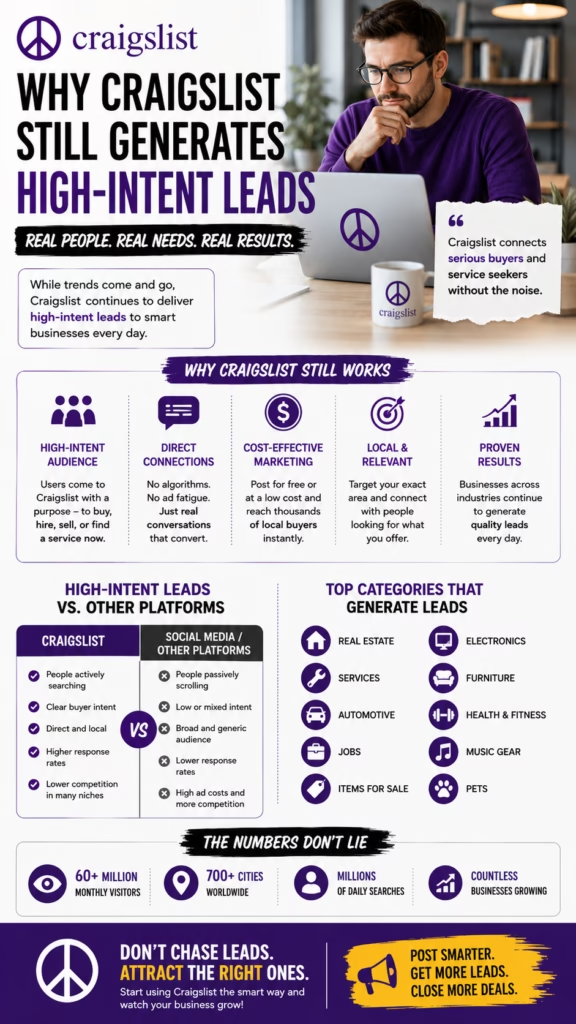
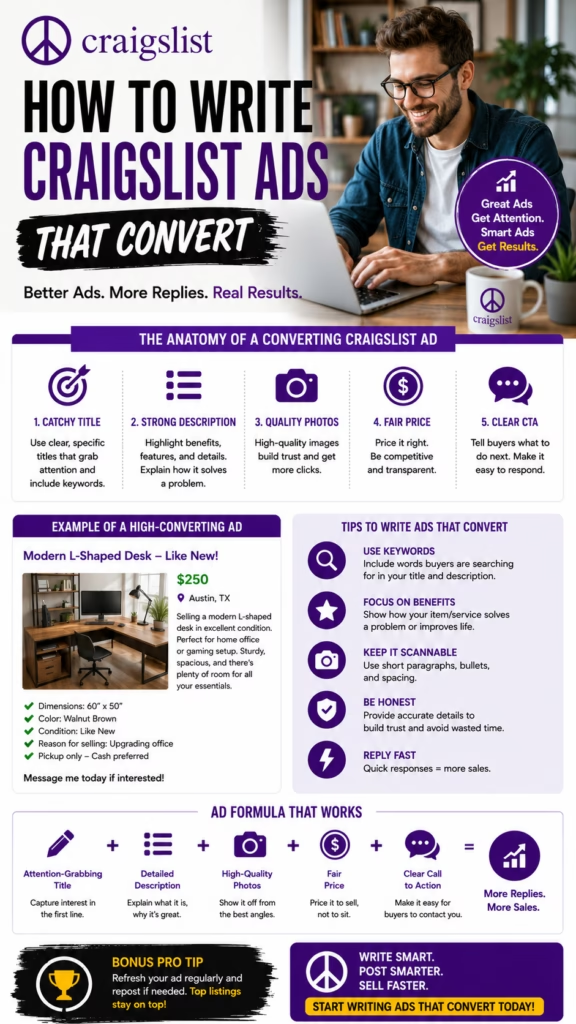
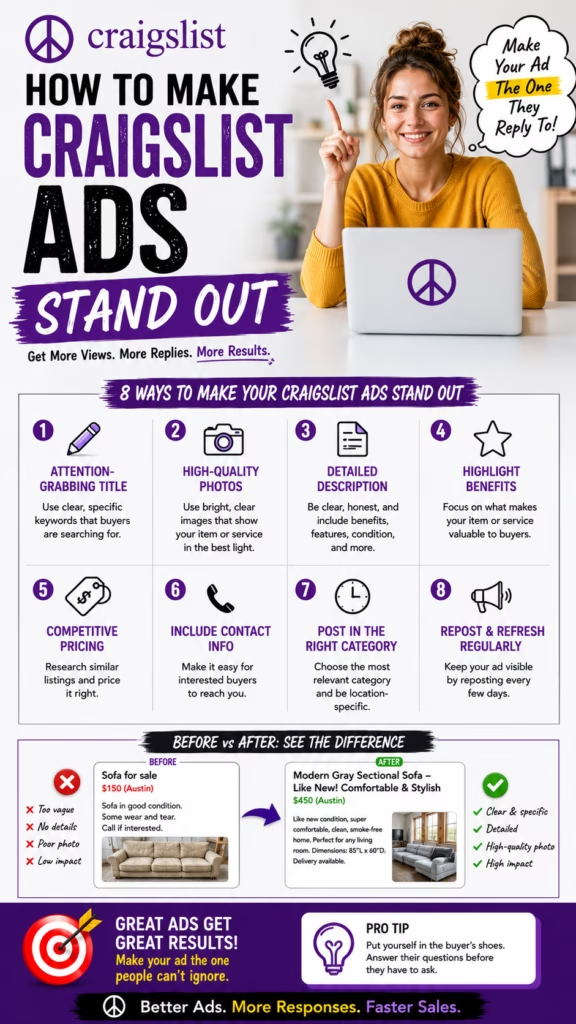
How to Make Craigslist Ads Stand Out explains how to build Craigslist listings that look more trustworthy, get more attention, attract better local buyers, and turn views into serious leads.
Introduction
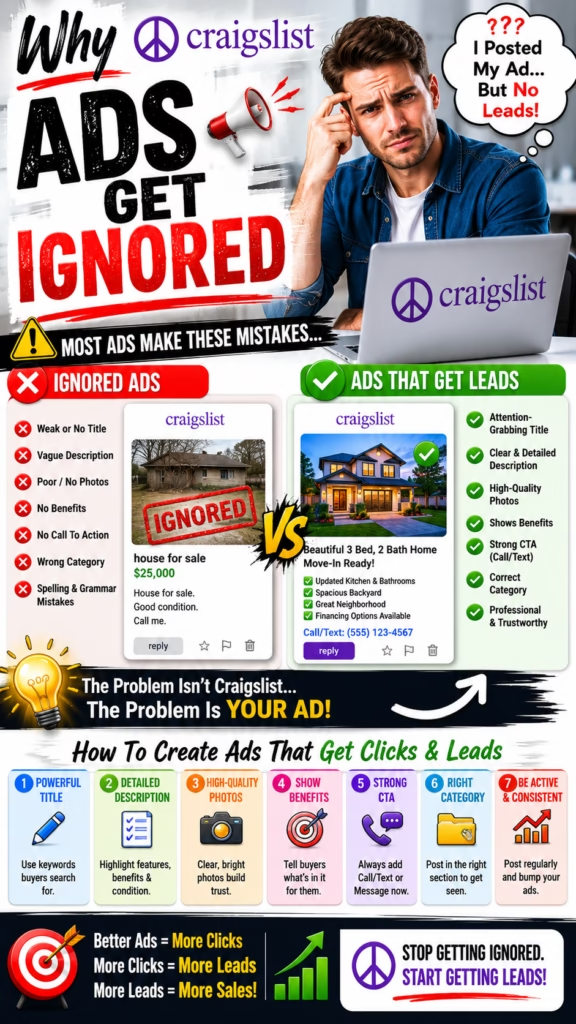
How to Make Craigslist Ads Stand Out starts with one simple truth: most Craigslist ads look the same. They use weak titles, short descriptions, poor photos, missing details, unclear pricing, and no reason for the buyer to trust the seller.
That creates a major opportunity. When your Craigslist ad is clearer, more helpful, more local, and easier to respond to, it can immediately separate itself from the average listing. Standing out does not mean being flashy. It means being specific, trustworthy, organized, and focused on what the buyer actually wants.
A Craigslist ad stands out when the title gets attention, the photos build trust, the description answers questions, and the call to action makes the next step simple.
Whether you are promoting a local service, rental, used item, vehicle, home improvement offer, business service, real estate listing, or local product, Craigslist still rewards clear communication. Buyers are scanning quickly. They need to understand what you offer, where you are located, what it costs, why it is valuable, and how to contact you.
Main idea: The best Craigslist ads stand out by being clear, local, specific, trustworthy, and easy to respond to.
Table of Contents
- 1) Why most Craigslist ads fail to stand out
- 2) What makes a Craigslist ad noticeable
- 3) How buyers scan Craigslist listings
- 4) Writing Craigslist titles that get clicks
- 5) Using photos that create trust
- 6) Writing descriptions that keep buyers interested
- 7) Using local keywords naturally
- 8) Making pricing clear and attractive
- 9) Adding trust signals to your ad
- 10) Formatting your ad for easy reading
- 11) Creating stronger calls to action
- 12) Standing out in service categories
- 13) Standing out in product listings
- 14) Standing out in real estate and rental ads
- 15) Testing different Craigslist ad angles
- 16) Avoiding spammy ad language
- 17) Improving lead quality
- 18) Following up with Craigslist leads
- 19) Common Craigslist ad mistakes
- 20) Final thoughts
- 21) FAQs
- 22) Extra keywords
1) Why Most Craigslist Ads Fail to Stand Out
Most Craigslist ads fail because they are rushed. The seller posts a basic title, uploads one or two weak photos, writes a short description, and expects buyers to figure out the rest. That approach usually creates low-quality clicks, vague messages, and fewer serious leads.
Craigslist buyers want fast answers. They want to know what is being offered, where it is, what condition it is in, what the price is, and whether the seller seems legitimate. If an ad does not answer those questions, buyers often move on.
Common reasons Craigslist ads blend in:
- Generic titles
- Blurry or dark photos
- No local details
- Weak descriptions
- No pricing context
- No trust signals
- No clear next step
- Too much hype
- Not enough useful information
- Slow lead follow-up
To stand out, your Craigslist ad must look more useful than the listings around it.
2) What Makes a Craigslist Ad Noticeable
A noticeable Craigslist ad is not just louder. It is better organized. It gives the buyer the information they need before they have to ask. It uses a title that is specific, photos that feel real, and a description that makes the offer easy to understand.
The best ads are usually simple but complete. They do not feel like spam. They feel like a real seller or business took the time to explain the offer properly.
A standout Craigslist ad usually includes:
A specific title
Clear photos
Accurate pricing
Local keywords
Important details
Trust signals
Simple formatting
Helpful description
Strong call to action
Fast response process
Standing out on Craigslist comes from clarity, not confusion.
3) How Buyers Scan Craigslist Listings
Buyers do not read every ad carefully at first. They scan. The first things they notice are the title, price, location, and photo. If those elements are strong enough, they click. If the ad feels vague or suspicious, they keep scrolling.
Once they click, they look for proof. They want details, photos, availability, condition, service area, features, and contact instructions. Your ad should make the buyer feel like messaging you is worth their time.
Buyers usually scan for:
- What the offer is
- Where it is located
- How much it costs
- Whether photos look real
- Whether details are complete
- Whether the seller seems trustworthy
- Whether the ad feels current
- Whether the next step is easy
Your ad should answer buyer questions before they become objections.
4) Writing Craigslist Titles That Get Clicks
The title is one of the most important parts of a Craigslist ad. A weak title can make a strong offer invisible. A strong title tells the buyer exactly what the listing is and why they should click.
Good Craigslist titles use clear words, buyer intent, location when helpful, and specific details. Avoid vague phrases like “great deal,” “must see,” or “best around” unless the title also explains what is actually being offered.
Weak title:
Great Service Available

Better title:
Local Junk Removal Help - Same Week Openings

Weak title:
Nice Couch

Better title:
Clean Gray Sectional Sofa - Good Condition - Local Pickup

Weak title:
Painting Work

Better title:
Interior Painting Help for Homes & Apartments

Weak title:
Rental Available

Better title:
2 Bedroom Rental Near Downtown - Updated Kitchen
A strong Craigslist title should be specific enough to attract the right buyer before they even open the ad.
5) Using Photos That Create Trust
Photos can make or break a Craigslist ad. Real, clear photos make the ad feel legitimate. Poor photos create doubt. If the buyer cannot see what they are getting, they are less likely to take the next step.
Use bright, honest, high-quality photos that show the item, service, result, property, vehicle, or product clearly. If you offer a service, use photos of completed work, tools, team members, before-and-after examples, or branded visuals that explain what you do.
Strong Craigslist photo ideas:
- Main product photo
- Close-up detail photo
- Before-and-after photo
- Service result photo
- Clean room or property photo
- Vehicle exterior and interior photos
- Team or work process photo
- Branded graphic with offer details
- Photo showing size or scale
- Photo showing condition honestly
Real photos build buyer confidence faster than long sales copy.
6) Writing Descriptions That Keep Buyers Interested
The description should expand on the title and photos. It should explain the offer clearly, answer common questions, and move the buyer toward contacting you. A strong description is not just longer. It is more useful.
Start with the most important benefit. Then explain key details, location, availability, price, condition, included features, and next steps. Use short paragraphs or simple bullet points so the buyer can scan quickly.
Simple Craigslist description structure:
Opening benefit
What is included
Important details
Location or service area
Pricing information
Availability
Trust signals
What to message
Clear next step
The best Craigslist descriptions make the buyer feel informed before they contact you.
7) Using Local Keywords Naturally
Local keywords help your Craigslist ad feel relevant to nearby buyers. They also help people understand whether your offer is available in their area. This is especially important for services, rentals, delivery, vehicles, home improvement, and local products.
Do not stuff city names randomly. Use local keywords naturally inside the title and description. Mention the main city, nearby areas, pickup location, service area, delivery zone, or neighborhood when it helps the buyer.
Useful local keyword phrases:
- serving [City] and nearby areas
- available near [City]
- local pickup in [City]
- delivery available around [City]
- same-week openings in [City]
- located near [Neighborhood]
- help available throughout [County]
- local service for homeowners in [City]
Local keywords help the right nearby buyers recognize that your ad is relevant to them.
8) Making Pricing Clear and Attractive
Pricing matters because buyers use price to decide whether an ad is worth clicking. If pricing is unclear, buyers may assume the worst or send vague messages. Clear pricing creates better conversations.
Depending on the offer, you can use exact pricing, starting pricing, package pricing, quote-based pricing, or “price varies by project” language. The key is to be honest and helpful.
Pricing examples:
$250 firm
Starting at $99
Free estimate available
Price depends on project size
Delivery available for an additional fee
Bundle price available
Discount for multiple items
Same-day quote available
Do not use misleading pricing just to get clicks. It usually creates low-quality leads and buyer frustration.
9) Adding Trust Signals to Your Ad
Trust signals help buyers feel safer contacting you. Craigslist can feel risky to some users, so your ad should show that you are real, reliable, and easy to communicate with.
Trust signals can include years of experience, local service area, photos of real work, reviews, business name, simple policies, included details, clean formatting, and fast response language.
Trust signals to include:
- Business name
- Years of experience
- Local service area
- Real photos
- Customer-friendly process
- Clear availability
- Warranty or guarantee if offered
- Licensed or insured if true
- Fast response promise
- Professional contact instructions
Trust signals reduce hesitation and help serious buyers feel comfortable reaching out.
10) Formatting Your Ad for Easy Reading
Formatting is one of the easiest ways to make a Craigslist ad stand out. Many ads look like messy blocks of text. A clean layout immediately feels more professional and easier to read.
Use short paragraphs, simple spacing, and organized sections. Make important details easy to find. Avoid huge walls of text, excessive symbols, all caps, or spam-style formatting.
Clean Craigslist ad format:
Short opening sentence
Main details
Bullet points
Location
Price
Availability
Contact instructions
Simple closing CTA
Readable ads get more attention because buyers can understand them faster.
11) Creating Stronger Calls to Action
A call to action tells the buyer what to do next. Without a clear CTA, buyers may click away or send a vague message. A strong CTA makes the response simple.
Good CTAs ask the buyer to send the information you need to help them. This improves lead quality and saves time.
Craigslist CTA examples:
- Message with your city and preferred time.
- Send your project details for a quick quote.
- Reply with pickup or delivery preference.
- Message today to check availability.
- Send your name, location, and what you need done.
- Ask about current openings this week.
The easier your CTA is, the more likely buyers are to respond with useful information.
12) Standing Out in Service Categories
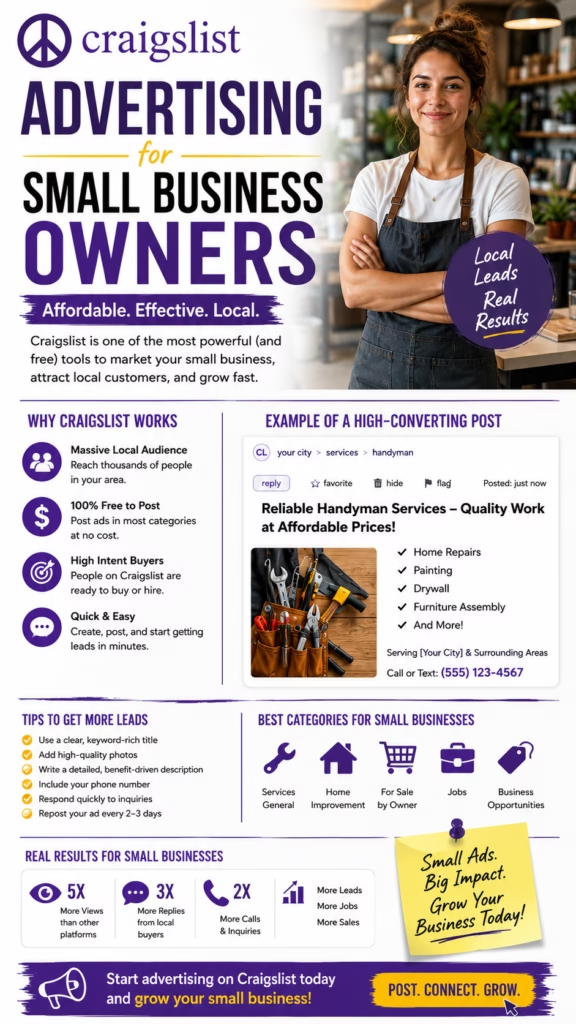
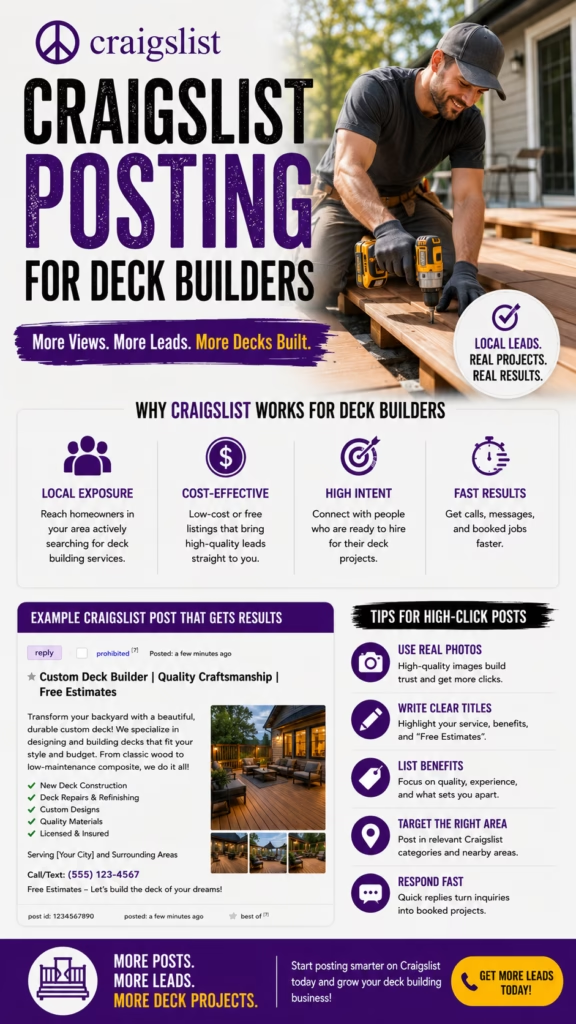
Service ads need to be specific because buyers usually have a problem they want solved. Instead of saying “services available,” explain the exact service, location, benefit, and how to get started.
For local services, include project types, service areas, availability, and what the buyer should send for a quote. Strong service ads feel helpful, not pushy.
Service ad angles:
Same-week openings
Free estimate available
Local family-owned business
Before-and-after results
Fast project turnaround
Specialized service
Seasonal service
Emergency availability
Affordable local help
Premium professional work
Service ads stand out when they solve one clear problem for one clear local buyer.
13) Standing Out in Product Listings
Product listings should focus on condition, features, price, photos, pickup details, and why the item is worth buying. Buyers want to know what they are getting and whether the seller is easy to work with.
Include size, brand, model, age, condition, included accessories, pickup location, delivery options, and any flaws. Honest details can actually increase trust.
Product ad details to include:
- Brand or model
- Condition
- Size or dimensions
- Color
- Included items
- Pickup location
- Delivery option
- Price
- Reason for selling if helpful
- Best contact method
Product listings stand out when they remove uncertainty.
14) Standing Out in Real Estate and Rental Ads
Real estate and rental ads need strong details because buyers and renters compare multiple listings quickly. A standout ad should clearly describe the property, location, price, features, availability, and next step.
Use real photos, accurate property details, neighborhood information, move-in availability, and simple contact instructions. Avoid vague descriptions that make the listing feel incomplete.
Real estate and rental details:
Bedrooms and bathrooms
Monthly price
Location
Square footage
Parking
Pet policy
Utilities
Move-in date
Updated features
Application or showing instructions
Rental and real estate ads stand out when they answer the questions buyers or renters already have.
15) Testing Different Craigslist Ad Angles
One ad is rarely enough to know what works best. Testing different angles helps you learn which title, photo, price, description, or CTA gets the strongest response.
Do not change everything at once if you want useful feedback. Test one major element at a time when possible.
Craigslist ad elements to test:
- Title wording
- Main photo
- Price positioning
- Opening sentence
- Local keyword
- CTA
- Category
- Posting time
- Offer angle
- Description length
Testing helps you turn Craigslist posting into a repeatable lead-generation system.
16) Avoiding Spammy Ad Language
Spammy language can make a Craigslist ad look low quality. Buyers are cautious. If your ad feels exaggerated, copied, or too aggressive, it can reduce trust.
Use natural language. Be specific. Avoid excessive punctuation, all caps, unrealistic claims, keyword stuffing, and repeated phrases.
Avoid:
BEST DEAL EVER!!!
CALL NOW NOW NOW
Guaranteed cheapest
Too many emojis
Repeated city keywords
Misleading prices
Overhyped claims
Copied descriptions
Unclear contact instructions
Professional and natural language usually performs better than aggressive hype.
17) Improving Lead Quality
Standing out is not only about getting more messages. It is about getting better messages. A strong Craigslist ad should filter out poor-fit buyers and encourage serious buyers to respond with useful details.
You can improve lead quality by explaining pricing, location, availability, requirements, and what information the buyer should send.
Ask leads to include:
- Name
- City or neighborhood
- Project or item interest
- Timeline
- Budget if relevant
- Pickup or delivery preference
- Best contact method
- Photos if needed for quotes
Clear ads attract clearer messages.
18) Following Up With Craigslist Leads
Fast follow-up matters. Craigslist buyers often contact multiple sellers or businesses. If you respond slowly, the buyer may already be gone.
Your first reply should be friendly, direct, and helpful. Confirm availability, answer the question, and guide the buyer to the next step.
Simple Craigslist follow-up script:
“Thanks for reaching out. Yes, this is available. What city are you located in, and are you looking for pickup, delivery, or more details first?”
The best Craigslist ad can still lose leads if the follow-up is slow or unclear.
19) Common Craigslist Ad Mistakes
Many Craigslist ads underperform because they do not give buyers enough confidence. The offer may be good, but the ad does not explain it clearly enough.
Fixing the basics can often improve results quickly. Better titles, better photos, clearer descriptions, and faster replies can make a major difference.
Common mistakes include:
- Using vague titles
- Posting low-quality photos
- Leaving out the location
- Hiding the price
- Writing one-line descriptions
- Using spammy formatting
- Not adding trust signals
- Not including a CTA
- Not testing variations
- Responding too slowly
Most Craigslist ad problems are clarity problems.
20) Final Thoughts
How to Make Craigslist Ads Stand Out comes down to making the buyer’s decision easier. Your ad should quickly explain what you offer, why it matters, where it is available, what it costs, and how to contact you.
The strongest Craigslist ads use specific titles, real photos, clear descriptions, local keywords, honest pricing, trust signals, clean formatting, strong calls to action, testing, and fast follow-up.
Final takeaway: A Craigslist ad stands out when it feels clear, real, local, trustworthy, and easy to respond to.
21) FAQs
1) How do I make Craigslist ads stand out?
Use a specific title, clear photos, helpful description, local keywords, honest pricing, trust signals, and a simple call to action.
2) What makes a Craigslist ad get more clicks?
Strong titles, relevant photos, clear pricing, and local details usually help Craigslist ads get more clicks.
3) Are photos important on Craigslist?
Yes. Photos are one of the biggest trust signals and can strongly influence whether buyers click or message.
4) What should I put in a Craigslist title?
Include the product, service, location, key benefit, condition, or feature that makes the listing relevant.
5) Should Craigslist ads include prices?
Yes. Clear pricing helps buyers understand the offer and improves lead quality.
6) How long should a Craigslist ad description be?
It should be long enough to answer key buyer questions but formatted so it is easy to scan.
7) Should I use keywords in Craigslist ads?
Yes. Use natural keywords that describe the product, service, location, and buyer need.
8) What are local keywords?
Local keywords are city, neighborhood, county, or service-area phrases that help nearby buyers understand where the offer is available.
9) How do I make a service ad stand out?
Focus on one clear service, show proof, include service areas, explain pricing, and tell buyers what to send for a quote.
10) How do I make a product listing stand out?
Use clear photos, include condition details, list features, explain pickup or delivery options, and price it clearly.
11) Should I use all caps in Craigslist ads?
No. Excessive all caps can make the ad look spammy.
12) How can I make my ad look more trustworthy?
Use real photos, clear details, business information, service area, reviews if available, and honest pricing.
13) What is the best Craigslist call to action?
A good call to action asks the buyer to message with specific information, such as location, timeline, or pickup preference.
14) How often should I test Craigslist ads?
You should test different titles, photos, descriptions, pricing, and CTAs regularly to see what performs best.
15) Why are my Craigslist ads not getting messages?
Your title, photos, pricing, description, category, or CTA may not be clear enough to attract buyers.
16) How do I get better leads from Craigslist?
Add clear details, pricing context, location, qualification questions, and a direct next step.
17) Should I include my business name?
Yes, if it helps build trust and makes the ad feel more professional.
18) Can Craigslist work for local services?
Yes. Craigslist can work well for local services when ads are clear, specific, and properly targeted.
19) Can Craigslist work for rentals?
Yes. Rental ads can perform well when they include photos, price, location, features, availability, and contact instructions.
20) What should I avoid in Craigslist ads?
Avoid vague titles, poor photos, misleading pricing, keyword stuffing, spammy claims, and unclear contact instructions.
21) How fast should I reply to Craigslist leads?
As fast as possible. Buyers often contact multiple sellers.
22) Should I mention delivery options?
Yes, if delivery is available. Delivery can make a listing more attractive.
23) Should I include flaws or limitations?
Yes. Honest details can build trust and reduce wasted messages.
24) Can better formatting improve Craigslist results?
Yes. Clean formatting makes the ad easier to read and can make it feel more professional.
25) What is the main goal of a standout Craigslist ad?
The main goal is to attract the right buyer, build trust quickly, and make the next step easy.
22) Extra Keywords
- How to Make Craigslist Ads Stand Out
- Craigslist ads that stand out
- Craigslist advertising tips
- Craigslist ad writing
- Craigslist marketing
- Craigslist posting strategy
- local Craigslist ads
- Craigslist ad optimization
- Craigslist lead generation
- Craigslist ad titles
- Craigslist ad descriptions
- Craigslist ad photos
- Craigslist service ads
- Craigslist product listings
- Craigslist rental ads
- Craigslist real estate ads
- Craigslist local marketing
- Craigslist business advertising
- Craigslist ad examples
- Craigslist buyer leads
- Craigslist listing tips
- Craigslist SEO tips
- Craigslist ad formatting
- Craigslist trust signals
- Craigslist marketing strategy