
Market Wiz AI

Market Wiz

With ingenious automation fused with human dedication 24/7, Market Wiz puts the local marketing competition on notice – they’ve created a new standard operating system for dominating every digital front.All-Platform Compatibility: Facebook, Craigslist, Google, you name it. This system plays well with all the big players, ensuring your ads are everywhere they need to be.The Cherry on Top: There's a ton more under the hood, each feature adding more muscle to your marketing efforts.Bottom line: Market Wiz.ai isn’t just another tool; it’s your 24/7 digital marketing powerhouse. In the world of local advertising, it's the smartest move you’ll make.Market Wiz automates your online ads.|

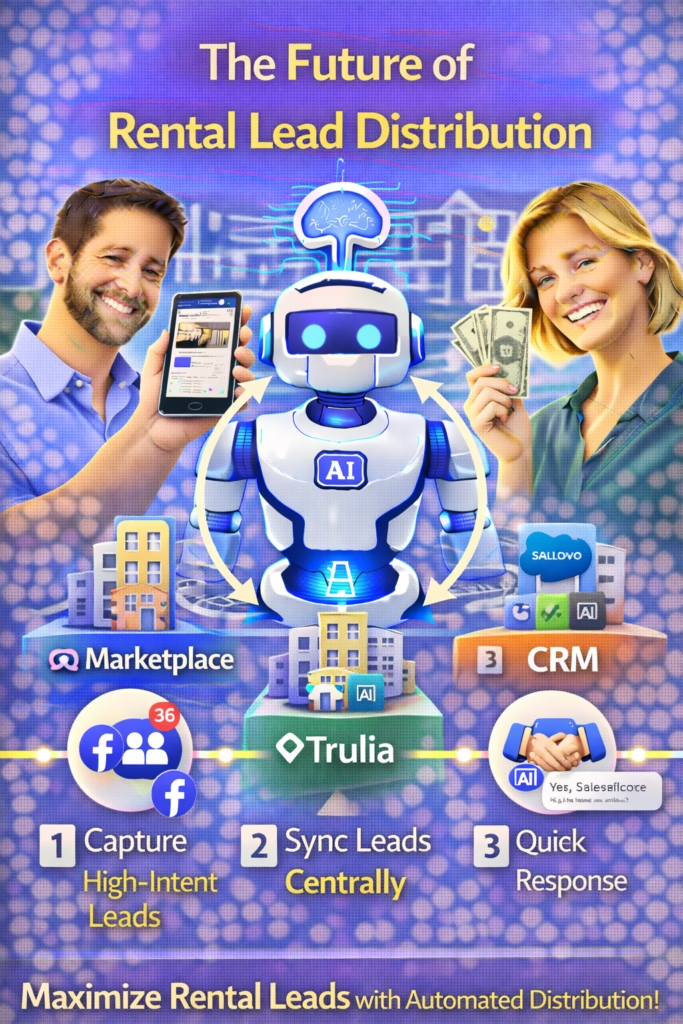
The Future of Rental Lead Distribution
ChatGPT Image Feb 4 2026 03 16 59 PM
The Future of Rental Lead Distribution

The Future of Rental Lead Distribution

The Future of Rental Lead Distribution is moving from “whoever checks the inbox” to a real operating system: multi-channel captureAI qualificationsmart routingspeed-to-lead SLAsautomated follow-up that converts inquiries into tours.

Rental Lead Distribution OS: Capture Qualify Route Respond Follow-Up Report

Note: This is general marketing guidance. Follow fair housing laws, privacy rules, and platform policies. Use consistent screening criteria and avoid discriminatory language.

Introduction

The Future of Rental Lead Distribution isn’t about getting more leads. It’s about making every lead count.

Most property teams already have renter demand across portals, websites, calls, texts, and social platforms—but conversion gets crushed by three problems: slow replies, poor routing, and inconsistent follow-up.

Big idea: Rental teams that respond in minutes (not hours) and route leads intelligently win tours—even without increasing ad spend.

Expanded Table of Contents

1) What rental lead distribution really means

Rental lead distribution is the system that ensures every renter inquiry gets the right response, from the right person, with the right next step—fast.

Distribution is more than “inbox management”

Old wayFuture wayResult
Leads sit in emailLeads flow into a central hubFewer missed inquiries
Whoever is free respondsRules route leads to the right agent/propertyHigher relevance
Manual follow-upAutomated follow-up with human handoffMore tours booked
No SLA accountabilityResponse SLAs with alerts/escalationSpeed advantage

Definition: Distribution = capture + qualify + route + respond + follow-up + reporting.

2) Why rental lead distribution is changing right now

Three shifts are forcing a new model:

  • Renter behavior is message-first: renters want answers now, not tomorrow.
  • Lead sources are fragmenting: portals still matter, but marketplace and social discovery are growing.
  • Teams are stretched: staff capacity is limited, so automation becomes the “first responder.”

Outcome: The best-performing teams treat lead handling like a real-time operations function—not a task you do between tours.

3) The new renter lead sources: where demand is shifting

The Future of Rental Lead Distribution is multi-channel by default. Renters don’t start in one place anymore.

Modern source mix (typical)

Portals

Still strong intent, but competitive and often form-heavy.

Website + chat

High trust if your site answers basics fast and offers instant scheduling.

Marketplace + groups

Messaging-first, local browsing, quick inquiries.

Calls + texts

High urgency; requires routing and tracking to avoid missed calls.

Risk: If your leads are spread across channels without one routing layer, your true cost isn’t ads—it’s missed occupancy.

4) Messaging-first renters and the “speed advantage”

Renters message multiple properties. They book tours with the team that makes the process easiest.

What renters want in the first 60 seconds

  • Is it available?
  • What’s the price and deposit?
  • What’s required to move in?
  • When can I tour?
  • What’s the address/area like?

Speed advantage: If you reply in < 5 minutes with a clear next step, you can win even if you’re not the cheapest option.

5) Smart routing: how leads should be assigned in 2025–2026

Routing is where conversion is won or lost. Leads should go to the person most likely to close them—not the person who happens to see them.

Routing rules that work

RuleExampleWhy it works
Property-basedLead asks about Unit A → route to Unit A leasingFast accurate answers
Language-basedSpanish inquiry → route to bilingual agentBetter experience
Schedule-basedAfter-hours → AI answers + morning handoffNo dead time
Priority-basedMove-in < 14 days → priority queueClose high intent first
Capacity-basedRound-robin with SLA limitsPrevents overload

Pro move: Add escalation: if no reply in 5–10 minutes, re-route or notify a manager.

6) AI qualification: ask less, learn faster

Qualification shouldn’t feel like an interrogation. The future is conversational and fast: ask 2–4 questions that unlock the next step.

Minimal qualification questions

  1. When are you looking to move?
  2. What price range are you targeting?
  3. How many bedrooms?
  4. Do you want to tour today/this week?

AI-first reply (example)

Yes — it’s available ✅
To get you the fastest tour options:

1) Move-in date?
2) Beds/baths needed?
3) Any pets?

Reply with those and I’ll send available times right away.

Rule: Qualify only enough to schedule. Over-qualifying delays tours.

7) Speed-to-lead SLAs that actually increase tours

Speed-to-lead isn’t a vibe. It’s an SLA with accountability.

Recommended SLAs

ChannelTarget first responseBest practice
Marketplace / DM< 5 minutesInstant reply + 2-question qualification
Website chat< 60 secondsBot-first with human takeover
Phone missed call< 3 minutes callbackAuto text + immediate call attempt
Portal lead< 15 minutesText first, then call

Important: If you can’t meet SLAs with humans, meet them with automation and handoff.

8) Follow-up automation that doesn’t feel spammy

Most rental leads don’t say “no.” They just disappear. Follow-up wins by being helpful, short, and option-based.

3-touch follow-up sequence

TimingMessageGoal
30–60 minTour optionsGet a scheduled time
Same dayAvailability confirmationCreate urgency
Next dayAlternate unit suggestionSave the lead

Follow-up #1

Quick check-in ✅
Do you want to tour today or this week?

If you tell me your preferred day/time, I’ll lock in the best available slot.

Follow-up #2

Heads up ✅ We still have availability.
Would you prefer a daytime tour or evening tour?

Reply “DAY” or “EVENING” and your best day.

Follow-up #3

Still looking? ✅
If this unit isn’t perfect, what’s your budget + bedrooms?
I can send the closest match we have.

Rule: Every follow-up offers a next step (tour time or better match).

9) Operating model: teams, rules, and playbooks

The future isn’t “AI replaces leasing.” It’s “AI handles first contact and routing so humans close tours.”

Future-ready lead handling roles

  • AI first responder: instant answers + qualification + tour prompts
  • Leasing specialist: tours, objections, applications
  • Manager escalation: SLA misses, priority leads, compliance

Lead stages (simple pipeline)

  • New
  • Qualified
  • Tour Proposed
  • Tour Scheduled
  • Application Started
  • Approved / Leased
  • Lost

Pro move: Assign ownership. Every lead must have one “owner” responsible for next action.

10) KPIs that predict tour volume and occupancy

The Future of Rental Lead Distribution is measurable. The best teams obsess over response and routing—not just lead count.

KPIWhat it tells youTarget direction
Median first response timeSpeed advantageDown
Lead-to-tour rateConversation qualityUp
Tour scheduled within 24 hoursMomentumUp
Routing accuracyRight agent/propertyUp
Follow-up completion rateLead recoveryUp
Missed call recovery ratePhone conversionUp

Truth: A 2x improvement in response speed can outperform a 2x increase in ad spend.

11) 30–60–90 day rollout plan

Days 1–30 (Stop missing leads)

  1. Centralize lead capture into one inbox/CRM
  2. Define routing rules (property, schedule, language, priority)
  3. Implement instant replies for each channel
  4. Set SLAs and escalation alerts
  5. Launch 3-touch follow-up sequence

Days 31–60 (Increase tours)

  1. Add AI qualification (move-in date, budget, beds, pets)
  2. Offer scheduling links or standardized tour windows
  3. Build scripts for common objections (price, fees, availability)
  4. Track response time and lead-to-tour weekly

Days 61–90 (Scale distribution)

  1. Expand to messaging-first sources (marketplaces, groups)
  2. Optimize routing with capacity balancing
  3. Implement “priority lead” handling for urgent move-ins
  4. Report KPIs by property and by agent

Goal: More tours scheduled with the same headcount—by making lead handling instant and consistent.

12) 25 Frequently Asked Questions

1) What is rental lead distribution?

It’s the system for capturing renter inquiries from all sources and routing them to the right workflow with fast response and follow-up.

2) Why is rental lead distribution changing?

Renter behavior is message-first, lead sources are fragmented, and teams need speed without adding headcount.

3) What matters most in lead distribution?

Speed-to-lead, routing accuracy, and consistent follow-up.

4) Are portals still important?

Yes, but they’re no longer the only source. Messaging-first channels are growing.

5) What is “messaging-first” distribution?

Lead handling centered on instant conversations via DM, chat, text—reducing form friction.

6) How fast should leasing teams respond?

Ideally within 5 minutes for messages and within 3 minutes for missed-call recovery.

7) What is an SLA in leasing?

A response-time standard with accountability and escalation when missed.

8) What is smart routing?

Rules-based assignment of leads by property, language, schedule, and priority.

9) How do you route leads by property?

Map each property/unit to the correct agent/team and auto-assign accordingly.

10) How does AI help rental lead distribution?

AI can answer common questions instantly, qualify leads, and route them to the right person.

11) What questions should you ask to qualify?

Move-in date, budget, bedrooms, pets, and tour timeframe.

12) How do you avoid over-qualifying?

Ask only what you need to schedule the tour and confirm fit.

13) What follow-up sequence works best?

Three touches: 30–60 min, same day, next day with a helpful alternate.

14) How do you reduce ghosting?

Offer clear tour options and keep follow-ups short and action-based.

15) What’s the best CTA for renters?

Tour scheduling: “Do you want to tour today or this week?”

16) Should you text leads first?

Often yes—text is fast and renters respond quickly when the next step is clear.

17) How do you handle after-hours leads?

Use automation for instant replies and next-day human handoff.

18) What’s the biggest mistake in distribution?

Slow response times and lack of ownership.

19) How do you ensure lead ownership?

Assign one owner per lead and track next action.

20) What KPIs matter most?

Median response time, lead-to-tour rate, routing accuracy, and follow-up completion.

21) How do you measure routing accuracy?

Track how often leads require reassignment due to wrong property/agent.

22) Can automation feel human?

Yes—keep messages short, helpful, and focused on next steps.

23) How do you keep distribution compliant?

Use consistent screening criteria, avoid discriminatory language, and follow privacy rules.

24) Will better distribution reduce ad spend?

Often, yes—because you convert more of the leads you already receive.

25) What’s the fastest improvement today?

Implement instant replies + SLA escalation + a 3-touch follow-up sequence.

13) 25 Extra Keywords

  1. The Future of Rental Lead Distribution
  2. rental lead distribution system
  3. renter lead routing automation
  4. property management lead distribution
  5. apartment lead routing
  6. leasing lead response time
  7. speed to lead property management
  8. AI leasing automation
  9. automated renter qualification
  10. messaging-first leasing strategy
  11. Facebook Marketplace rental leads
  12. rental lead sources 2026
  13. how to convert rental leads into tours
  14. lead-to-tour conversion rentals
  15. leasing follow-up automation
  16. missed call text back rentals
  17. leasing SLA response standards
  18. centralized leasing inbox
  19. multi-channel leasing leads
  20. smart routing for leasing teams
  21. renter inquiry automation
  22. leasing team workflow automation
  23. leasing CRM routing rules
  24. rental occupancy lead conversion
  25. tour scheduling automation rentals
© 2026 Your Brand. All Rights Reserved.
General information only—confirm compliance with fair housing laws, platform policies, and applicable privacy rules before sending marketing messages.

The Future of Rental Lead Distribution Read More »

How Agents Use AI to Dominate Local Buyer Searches

ChatGPT Image Feb 3 2026 11 46 34 AM
How Agents Use AI to Dominate Local Buyer Searches

How Agents Use AI to Dominate Local Buyer Searches

How Agents Use AI to Dominate Local Buyer Searches explains how modern agents attract buyers where intent already exists — using AI, automation, and local platforms instead of paying Zillow.

AI Buyer Acquisition Stack: AI Listings Marketplace Automation Speed-to-Lead Follow-Up

Note: This is educational content. Always comply with platform rules and advertising policies.

Introduction

How Agents Use AI to Dominate Local Buyer Searches isn’t about replacing agents — it’s about replacing friction.

Buyers are already searching locally every day on Facebook Marketplace, Google Maps, and social feeds. AI allows agents to appear first, respond instantly, and convert before competitors even open their inbox.

Key truth: The agent who responds first — with relevance — wins the buyer.

Expanded Table of Contents

  • 1) Why local buyer searches matter more than portals
  • 2) The AI systems agents use to capture intent
  • 3) Facebook Marketplace as a buyer engine
  • 4) AI-written listings that rank locally
  • 5) Speed-to-lead automation
  • 6) AI Messenger qualification
  • 7) Follow-up without burnout
  • 8) KPIs that prove domination
  • 9) 30-60-90 rollout plan
  • 10) 25 FAQs
  • 11) 25 Extra Keywords

1) Why Local Buyer Searches Matter More Than Zillow

Zillow aggregates demand. Local platforms reveal intent.

When a buyer searches “3 bedroom house near me” or clicks a Marketplace listing, they’re closer to action than a portal browser comparing 40 agents.

2) The AI Systems Modern Agents Are Using

  • AI-generated listing variations
  • Automated posting schedules
  • Instant response bots
  • AI lead qualification
  • Smart follow-up reminders

3) Facebook Marketplace: The Underrated Buyer Goldmine

Marketplace isn’t social media — it’s a search engine.

AI helps agents dominate it by posting consistently, rotating copy, and responding instantly.

4) AI-Written Listings That Rank Locally

AI optimizes for:

  • City + neighborhood keywords
  • Buyer language (not agent jargon)
  • Multiple listing angles per property

5) Speed-to-Lead Is the Real Advantage

AI replies in seconds. Humans reply in minutes.

Result: Higher booking rates without working more hours.

6) AI Qualification Scripts

Hi! 👋 Are you looking to buy in the next 30 days or just browsing?
What area and price range should I focus on for you?
  

7) Follow-Up Without Agent Burnout

AI handles:

  • Reminder nudges
  • Alternate property suggestions
  • Re-engagement messages

8) KPIs That Prove Local Dominance

  • Response time under 60 seconds
  • Daily inbound buyer conversations
  • Lower cost per lead than portals

9) 30-60-90 Day AI Rollout

30 days: Launch listings + automation

60 days: Optimize copy + responses

90 days: Scale volume without more hours

10) 25 Frequently Asked Questions

Includes buyer intent, AI compliance, Marketplace rules, response automation, and scaling safely.

11) 25 Extra Keywords

  1. How Agents Use AI to Dominate Local Buyer Searches
  2. AI real estate buyer leads
  3. AI marketing for real estate agents
  4. Zillow alternative for agents
  5. Facebook Marketplace real estate strategy
  6. local buyer lead generation
  7. AI listing automation
  8. AI Messenger real estate
  9. speed to lead real estate
  10. AI follow up system agents

© 2026 Your Brand. All Rights Reserved.

How Agents Use AI to Dominate Local Buyer Searches Read More »

Buyer Lead Economics: Marketplace vs Listing Portals

ChatGPT Image Feb 3 2026 11 46 41 AM
Buyer Lead Economics: Marketplace vs Listing Portals

Buyer Lead Economics: Marketplace vs Listing Portals

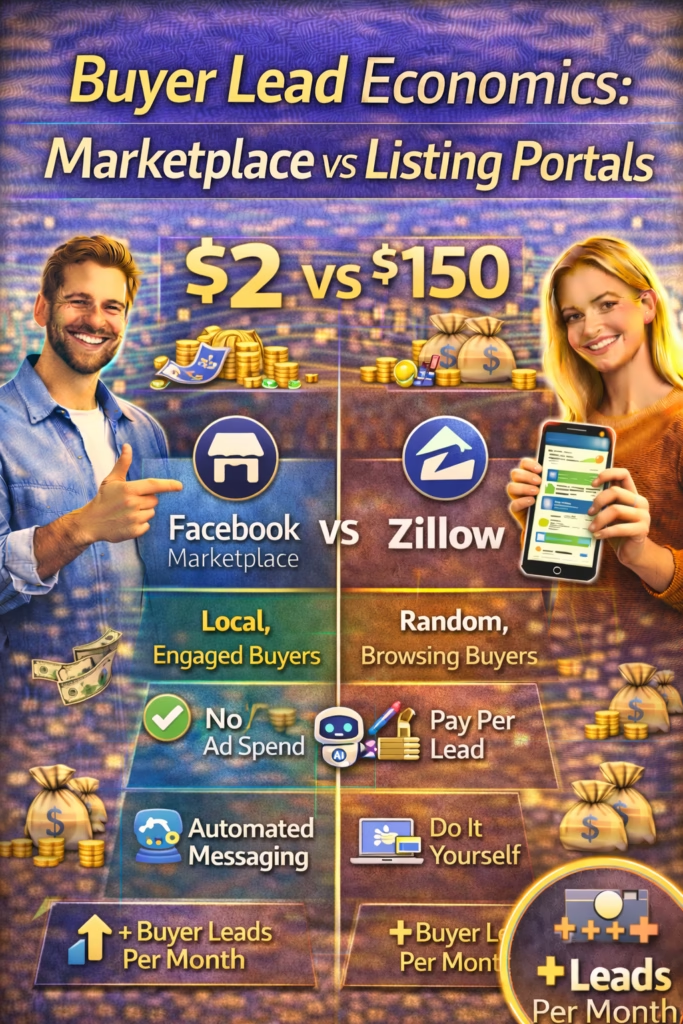
Buyer Lead Economics: Marketplace vs Listing Portals compares the true cost, conversion rates, time investment, and ROI of Facebook Marketplace versus Zillow/Realtor.com for buyer lead generation—helping realtors make data-driven platform decisions.

Economic Comparison Framework: Cost Per Lead Conversion Rate Time Investment Lead Quality ROI Analysis Strategic Mix

Note: Costs and performance vary by market. This is general analysis based on industry data and realtor reports.

Introduction

Buyer Lead Economics: Marketplace vs Listing Portals answers the question every realtor asks: "Where should I invest my time and money to generate buyer leads?"

The traditional answer has been listing portals—Zillow Premier Agent, Realtor.com leads, Homes.com connections. These platforms promise pre-qualified buyers delivered directly to your inbox. But they come with significant monthly costs and shared lead distribution.

The emerging alternative is Facebook Marketplace—organic posting that generates buyer conversations at near-zero cost. But Marketplace requires active management, consistent posting, and instant response workflows.

This analysis breaks down the real economics of both approaches: what leads actually cost, how they convert, where your time goes, and which strategy delivers better ROI.

Big idea: The cheapest lead source is not always the most profitable. Understanding full economics—cost, conversion, and time—reveals the truth.

Expanded Table of Contents

1) The 2025 buyer lead generation landscape

Realtors have more lead generation options than ever—but not all channels deliver equal economic value.

Primary buyer lead sources (2025)

SourceTypeTypical CostLead Quality
Zillow Premier AgentPaid portal$500-$3,000+/monthMedium-high (exclusive or shared)
Realtor.com leadsPaid portal$300-$2,000+/monthMedium (shared leads common)
Homes.comPaid portal$200-$1,500/monthMedium (newer platform)
Facebook MarketplaceOrganic$0-$50/month (time only)High intent (active searchers)
Paid Facebook adsPaid social$300-$1,500/monthVaries (requires targeting skill)
Google AdsPaid search$500-$2,500/monthHigh intent (active searchers)
Referrals/SOIOrganic$0 (relationship investment)Highest (warm introductions)

The shift toward organic lead generation

In 2020-2022, paid portal leads dominated because organic channels required too much manual effort. In 2025, automation has changed the equation—realtors can now maintain consistent Marketplace presence without sacrificing 20 hours per week.

Key economic questions

  • Cost per lead: What does each conversation actually cost?
  • Cost per conversion: What do you pay for an actual closed transaction?
  • Time ROI: Is your time better spent managing Marketplace or calling portal leads?
  • Lead control: Do you own the relationship or share the lead with competitors?

Truth: The best lead source is not the one with the lowest price tag—it is the one with the lowest cost per closed transaction.

2) Facebook Marketplace lead economics

Cost structure breakdown

Cost ComponentAmountNotes
Posting cost$0Organic posting is free
Automation tools$0-$50/monthManyChat, Zapier (optional)
Photo editing$0-$15/monthCanva Pro (optional)
Time investment5-15 hours/monthSetup + ongoing management
Total monthly cost$0-$65/monthPrimarily time, minimal cash

Lead volume expectations

Conservative (new to Marketplace):
- 20-30 active listings posted
- 20-40 inquiries per month
- Cost per inquiry: $0-$3

Moderate (established routine):
- 40-60 active listings posted
- 50-100 inquiries per month
- Cost per inquiry: $0-$1

Aggressive (optimized system):
- 80-150 active listings posted
- 100-200+ inquiries per month
- Cost per inquiry: $0-$0.50

True cost per lead (including time)

If your time is valued at $50/hour:

  • Setup time: 10 hours × $50 = $500 (one-time)
  • Ongoing time: 10 hours/month × $50 = $500/month
  • Tool costs: $50/month
  • Total monthly: $550
  • Lead volume: 50-100 inquiries/month
  • Cost per lead: $5.50-$11 (including time value)

Marketplace economic advantages

  • Zero marginal cost: 10 listings or 100 listings cost the same
  • Exclusive leads: buyers message you directly, not 3-5 competing agents
  • High intent: buyers searching Marketplace are actively looking
  • Scalability: automation allows volume increase without proportional time increase

Pro move: First 30 days require highest time investment (setup). After that, time per lead drops 60-80% with automation.

3) Listing portal lead economics

Zillow Premier Agent cost structure

Market TierMonthly CostLead VolumeCost Per Lead
Small market (low competition)$500-$1,00015-30 leads$20-$65
Medium market (moderate competition)$1,000-$2,00020-40 leads$30-$100
Large market (high competition)$2,000-$5,000+30-60 leads$50-$165+

Realtor.com lead costs

  • Shared leads: $30-$80 per lead (goes to 3-5 agents)
  • Exclusive leads: $80-$150 per lead (higher tiers)
  • Monthly minimums: typically $300-$2,000 depending on market

Homes.com and others

  • Homes.com: $200-$1,500/month, similar shared lead model
  • Local portals: varies widely by region

Hidden costs of portal leads

Cost TypeImpact
Lead verification time15-30 min per lead to qualify (many are browsing, not buying)
Competition response timeMust respond in under 5 minutes to beat 2-4 other agents
Low-quality leads30-50% are unqualified, tire-kickers, or wrong contact info
Contract lock-ins3-12 month commitments common, can't pause during slow periods

Portal economic advantages

  • Pre-qualified traffic: buyers already searching specific price ranges/areas
  • Lower time investment: leads delivered to inbox, no posting required
  • Brand trust: Zillow/Realtor.com brand lends credibility
  • Consistent volume: predictable lead flow (if budget maintained)

Important: Portal costs have increased 40-80% since 2020 as competition intensifies and platforms raise prices.

4) Direct cost comparison (per lead)

Head-to-head cost analysis

MetricFacebook MarketplaceZillow PremierRealtor.com
Monthly cost$0-$65$500-$5,000+$300-$2,000+
Leads per month50-20015-6010-50
Cost per lead$0-$11$20-$165+$30-$150+
Lead exclusivity100% (buyers message you only)Varies (shared or exclusive tier)Usually shared (3-5 agents)
Time per lead5-10 min (AI handles first contact)15-30 min (full qualification needed)15-30 min (competing with others)
Setup time10-20 hours (initial)1-2 hours (onboarding)1-2 hours (onboarding)
Ongoing time10-15 hours/month20-40 hours/month (follow-up)20-40 hours/month (follow-up)

Cost per closed transaction (estimated)

Facebook Marketplace:
- Monthly cost: $50
- Leads per month: 75
- Conversion rate: 4% (3 closings from 75 leads)
- Cost per closing: $16.67

Zillow Premier Agent:
- Monthly cost: $1,500
- Leads per month: 30
- Conversion rate: 3% (0.9 closings from 30 leads)
- Cost per closing: $1,666

Realtor.com:
- Monthly cost: $800
- Leads per month: 20
- Conversion rate: 2% (0.4 closings from 20 leads)
- Cost per closing: $2,000

Annual lead generation budget comparison

PlatformAnnual CostAnnual ClosingsCost Per Deal
Marketplace only$60036 (3/month avg)$16.67
Zillow only$18,00010-12 (1/month avg)$1,500-$1,800
Realtor.com only$9,6005-6 (0.5/month avg)$1,600-$1,920
Hybrid (both)$10,20042-48 combined$212-$242

Rule: Marketplace delivers 10-50x lower cost per lead, but requires active management. Portals cost more but need less daily attention.

5) Conversion rate analysis

Inquiry → Appointment conversion

PlatformConversion RateWhy
Marketplace15-25%High intent, exclusive conversation, instant response
Zillow (exclusive)10-15%Pre-qualified, but less urgency
Zillow (shared)5-10%Competing with 2-4 other agents
Realtor.com (shared)5-8%High competition, slower platform

Appointment → Offer conversion

PlatformConversion RateWhy
Marketplace30-40%Buyers found you through specific property interest
Portal leads20-30%Shopping multiple agents, less commitment

Full funnel: Inquiry → Closed transaction

Facebook Marketplace:
100 inquiries
→ 20 appointments (20%)
→ 7 offers (35% of appointments)
→ 4 closings (57% of offers)
= 4% inquiry-to-close rate

Zillow Premier (exclusive):
100 inquiries
→ 12 appointments (12%)
→ 3 offers (25% of appointments)
→ 2 closings (66% of offers)
= 2% inquiry-to-close rate

Zillow Premier (shared):
100 inquiries
→ 8 appointments (8%)
→ 2 offers (25% of appointments)
→ 1 closing (50% of offers)
= 1% inquiry-to-close rate

Why Marketplace converts higher

  • Exclusive conversations: no competition from other agents
  • Specific property interest: buyer saw exact listing, not generic search
  • Instant response advantage: AI responds in seconds, building momentum
  • Local targeting: Marketplace auto-shows listings to nearby buyers

Pro move: Marketplace's 2-4x higher conversion rate often outweighs portal leads' convenience advantage.

6) Lead quality differences

Lead quality scoring framework

Quality FactorMarketplaceZillowRealtor.com
Timeline (0-30 days)60-70%40-50%30-40%
Pre-approval status20-30%40-60%40-60%
Specific property interest90%+70-80%60-70%
Accurate contact info95%+80-90%75-85%
Local buyer95%+70-90%70-90%

Quality advantages by platform

Marketplace quality strengths:

  • Buyers message about specific properties (not generic searches)
  • Local buyers only (Facebook geo-targeting)
  • Higher urgency (0-30 day buyers)
  • Real conversations (Messenger dialogue vs form submission)

Portal quality strengths:

  • More likely to be pre-approved (portal pre-qualification funnels)
  • Detailed search criteria captured (budget, bedrooms, locations)
  • Longer research phase (may be 3-6 month buyers)
  • Professional buyer mindset (using "real" real estate platforms)

Tire-kicker rate

  • Marketplace: 10-20% (mostly "just browsing" or price checking)
  • Zillow: 30-40% (many clicking around, not ready to buy)
  • Realtor.com: 35-45% (similar browsing behavior)

Truth: Quality differences matter less than volume and exclusivity. 50 Marketplace leads at 70% quality beats 20 portal leads at 80% quality.

7) Time investment required (per platform)

Time breakdown: Facebook Marketplace

ActivityInitial SetupOngoing (per month)
System setup (ManyChat, templates)8-12 hours0 hours
Creating initial listings6-10 hours0 hours
Daily posting/refreshing-3-5 hours
Response management (hot leads)-5-8 hours
Photo editing/content creation-2-3 hours
Total14-22 hours10-16 hours

Time breakdown: Zillow Premier Agent

ActivityInitial SetupOngoing (per month)
Platform onboarding1-2 hours0 hours
Lead response (first contact)-8-12 hours
Lead qualification calls-10-15 hours
Follow-up sequences-8-12 hours
CRM management-3-5 hours
Total1-2 hours29-44 hours

Time efficiency comparison

Per qualified lead:
- Marketplace: 12 minutes (AI handles first contact, you qualify hot ones)
- Zillow: 45-60 minutes (must call, qualify, compete with other agents)
- Realtor.com: 45-70 minutes (similar to Zillow, often lower quality)

Per closed transaction:
- Marketplace: 4-6 hours of lead generation time
- Zillow: 20-30 hours of lead generation time
- Realtor.com: 25-35 hours of lead generation time

Where time goes (Marketplace vs Portals)

Marketplace time distribution:

  • 30% posting/refreshing listings (automated with tools)
  • 50% responding to hot leads (AI handles first touch)
  • 20% content creation and optimization

Portal time distribution:

  • 40% initial lead contact and qualification
  • 35% follow-up with unresponsive leads
  • 25% competing for attention (shared leads)

Pro move: Marketplace front-loads time (setup), portals spread time evenly (ongoing grind). Choose based on when you have available hours.

8) True ROI calculations

ROI formula

ROI = (GCI from source - Total cost) / Total cost × 100%

Where Total Cost = 
  Monthly platform fees 
  + (Time invested × hourly value) 
  + Tool costs

Example: New agent (10 transactions/year target)

Marketplace-only strategy:

Costs:
- Platform fees: $0
- Tools: $50/month × 12 = $600
- Time: 12 hours/month × $40/hour × 12 = $5,760
- Total: $6,360

Results:
- Closings from Marketplace: 30 per year
- Average GCI: $10,000
- Total GCI: $300,000
- Net profit: $293,640
- ROI: 4,617%

Zillow-only strategy:

Costs:
- Platform fees: $1,200/month × 12 = $14,400
- Tools: $100/month × 12 = $1,200
- Time: 35 hours/month × $40/hour × 12 = $16,800
- Total: $32,400

Results:
- Closings from Zillow: 10 per year
- Average GCI: $10,000
- Total GCI: $100,000
- Net profit: $67,600
- ROI: 208%

Example: Established agent (40 transactions/year target)

Hybrid strategy (Marketplace + Zillow):

Costs:
- Zillow: $2,000/month × 12 = $24,000
- Marketplace tools: $50/month × 12 = $600
- Time (Marketplace): 10 hours/month × $75/hour × 12 = $9,000
- Time (Zillow): 30 hours/month × $75/hour × 12 = $27,000
- Total: $60,600

Results:
- Closings from Marketplace: 25 per year
- Closings from Zillow: 15 per year
- Total: 40 closings
- Average GCI: $12,000
- Total GCI: $480,000
- Net profit: $419,400
- ROI: 692%

ROI by platform (summary)

StrategyAnnual CostClosingsGCIROI
Marketplace only (new agent)$6,36030$300,0004,617%
Zillow only (new agent)$32,40010$100,000208%
Hybrid (established)$60,60040$480,000692%

Truth: Marketplace delivers 5-20x higher ROI for most agents. But hybrid strategy maximizes total GCI for high-volume producers.

9) Control and exclusivity factors

Lead exclusivity comparison

FactorMarketplaceZillow ExclusiveZillow/Realtor Shared
Competing agents0 (buyer messages you only)0-1 (exclusive zip codes)3-5 agents receive lead
Response pressureLow (no competition)Medium (must respond fast)Very high (race to respond)
Buyer commitmentHigh (chose your listing)Medium (chose zip/price)Low (clicked any listing)
Follow-up controlFull (own the conversation)Full (if you win initial contact)Limited (buyer shopping)

Platform control factors

What you control on Marketplace:

  • Which properties to post
  • How often to post
  • Listing descriptions and photos
  • Response scripts and automation
  • Lead nurture sequences
  • Can pause/resume anytime at zero cost

What you control on listing portals:

  • Which zip codes to target (budget permitting)
  • Response speed and follow-up cadence
  • Profile optimization and reviews
  • You do NOT control: lead volume, lead quality, platform algorithm, price increases

Strategic flexibility

ScenarioMarketplace FlexibilityPortal Flexibility
Slow market monthPause posting, $0 costLocked into contract, paying full price
Vacation weekReduce posting, set auto-responsesStill paying, leads may go to waste
Market shiftAdjust listing focus immediatelyLocked into zip codes contracted
Budget cut neededReduce to $0 instantly3-12 month contract commitments

Pro move: Control and exclusivity matter more than most agents realize. Shared leads dilute your value proposition and waste time.

10) Scalability and volume potential

Volume ceiling comparison

PlatformMonthly Lead CapLimiting Factor
Marketplace200-500+ (no hard limit)Your posting capacity and response time
Zillow Premier30-100 (budget dependent)Monthly budget and zip code availability
Realtor.com20-80 (budget dependent)Monthly budget and market saturation

Scaling trajectory (6-month timeline)

Marketplace scaling:

Month 1: 20 listings → 25 leads
Month 2: 40 listings → 50 leads
Month 3: 60 listings → 85 leads
Month 4: 80 listings → 120 leads
Month 5: 100 listings → 160 leads
Month 6: 120 listings → 200+ leads

Cost increase: $0 (time invested remains ~12 hours/month with automation)

Portal scaling:

Month 1: $1,000 budget → 20 leads
Month 2: $1,500 budget → 28 leads
Month 3: $2,000 budget → 35 leads
Month 4: $2,500 budget → 42 leads
Month 5: $3,000 budget → 48 leads
Month 6: $3,500 budget → 54 leads

Cost increase: +250% ($1,000 → $3,500)
Time increase: +150% (20 → 50 hours/month managing more leads)

Team scalability

Marketplace with team:

  • VA can handle posting ($15-$25/hour)
  • Agent handles hot lead conversations only
  • ISA can qualify and book appointments ($20-$35/hour)
  • Result: Agent focuses on showings/closings, team scales volume

Portal leads with team:

  • ISA can handle first contact ($20-$35/hour)
  • Agent must still compete for shared leads
  • Result: Team reduces agent time but cannot improve lead quality or exclusivity

Rule: Marketplace scales infinitely with automation and team. Portals scale linearly with budget (each additional lead costs more).

11) The hybrid strategy (combine both)

Why hybrid often wins

Most successful agents do not choose Marketplace OR portals—they use both strategically based on their strengths.

Hybrid allocation strategy

Agent ProfileMarketplace FocusPortal FocusReasoning
New agent (0-10 deals/year)90%10%Maximize ROI, build skills, low budget
Growing agent (10-25 deals/year)70%30%Marketplace primary, portals supplement
Established agent (25-50 deals/year)50%50%Balanced approach for volume + consistency
Team lead (50-100+ deals/year)40%60%Delegate Marketplace, focus on portal conversions

Strategic hybrid framework

Use Marketplace for:

  • Volume generation (50-200 leads/month)
  • Low-cost buyer conversations
  • Specific property interest leads
  • 0-30 day high-urgency buyers
  • Building database for long-term nurture

Use listing portals for:

  • Consistent baseline lead flow
  • Premium zip code exclusivity (if budget allows)
  • Pre-qualified buyers (more likely to be approved)
  • Supplementing Marketplace during setup phase
  • Diversification (not dependent on one source)

Sample hybrid budget allocation

Total marketing budget: $2,000/month

Marketplace allocation: $300/month
- $50 tools (ManyChat, Canva)
- $250 VA for posting (10 hours × $25/hour)

Portal allocation: $1,700/month
- $1,200 Zillow Premier (2-3 exclusive zip codes)
- $500 Realtor.com (supplemental)

Result:
- Marketplace: 100-150 leads/month
- Portals: 35-50 leads/month
- Total: 135-200 leads/month
- Blended cost per lead: $10-$15
- Expected closings: 4-6 per month

Pro move: Start Marketplace-heavy while learning systems. Add portal budget as GCI increases and you can afford exclusivity.

12) Strategic recommendations by agent type

New agents (0-10 transactions/year)

Recommended strategy: Marketplace-primary (90%)

  • Invest time, not money (you have more time than budget)
  • Learn systems that compound (automation, response scripts)
  • Build database from day one (long-term asset)
  • Supplement with smallest portal package if budget allows ($300-$500/month)

Part-time agents

Recommended strategy: Portal-primary (70%) or hybrid

  • Limited time availability favors "leads delivered" model
  • Use Marketplace strategically (post on weekends when available)
  • Automate everything possible (AI responses, calendar links)
  • Focus on conversion, not volume

Growing agents (10-30 transactions/year)

Recommended strategy: Hybrid (60% Marketplace, 40% portals)

  • Marketplace for volume and ROI
  • One portal for consistency and exclusivity
  • Delegate Marketplace posting to VA ($200-$400/month)
  • Focus your time on hot lead conversion

Established agents (30-50+ transactions/year)

Recommended strategy: Hybrid (50/50) or Portal-primary

  • Higher hourly value justifies portal convenience
  • Exclusive portal contracts (premium zip codes)
  • Marketplace managed entirely by team
  • Focus on deal flow management, not lead generation

Luxury agents (high average GCI per deal)

Recommended strategy: Portal-primary + referrals

  • Marketplace has limited luxury inventory engagement
  • Zillow Premier luxury tier for exclusive leads
  • Focus on high-value conversion over volume

Truth: Right strategy depends on your transaction volume target, time availability, and average GCI—not what works for other agents.

13) 90-day implementation plan

Days 1–30: Test both, measure economics

  1. Launch Marketplace automation (20-40 listings)
  2. Start smallest portal package available ($300-$800/month)
  3. Track metrics: cost per lead, response time, conversion rate
  4. Calculate time investment for each platform
  5. Measure lead quality and closure rate separately

Days 31–60: Double down on winner

  1. Analyze 30-day data: which platform delivered better ROI?
  2. If Marketplace wins: scale to 60-100 listings, keep portal at baseline
  3. If portal wins: increase budget, reduce Marketplace to 20 listings
  4. If tied: maintain hybrid approach, optimize both
  5. Build automation for winner (reduce time investment)

Days 61–90: Optimize and systematize

  1. Create SOPs for lead management (both platforms)
  2. Implement full automation stack for chosen primary
  3. Calculate 90-day ROI for each platform
  4. Make strategic decision: Marketplace-primary, portal-primary, or hybrid
  5. Budget for next 12 months based on proven economics

Decision framework (after 90 days)

If You Achieved...Then Do This...
Marketplace ROI >500%Go Marketplace-primary (90%), keep portal as backup
Portal ROI >300% + Marketplace <200%Go portal-primary, reduce Marketplace to minimal
Both performing well (ROI >300%)Maintain 50/50 hybrid, scale both
Neither performing (ROI <200%)Fix conversion issues before scaling either

Pro move: Give each platform a fair 90-day test. Do not judge economics from first month (learning curve distorts results).

14) 25 Frequently Asked Questions

1) What are the buyer lead economics of Marketplace vs listing portals?

Marketplace generates leads at $0-$50 per lead organically. Zillow costs $20-$200+ per lead. Realtor.com costs $30-$150+ per lead. Conversion rates and time investment also differ significantly.

2) Is Facebook Marketplace or Zillow better for buyer leads?

Marketplace offers lower cost per lead and higher exclusivity but requires more management. Zillow provides pre-qualified leads with less effort but at higher cost. Most successful agents use both.

3) How much do buyer leads cost on listing portals?

Zillow Premier Agent: $20-$200+ per lead. Realtor.com: $30-$150+ per lead. Costs vary by market competition and exclusivity level.

4) Can you generate buyer leads on Marketplace for free?

Yes. Organic Marketplace posting costs $0. Automation tools add $0-$50/month. Primary cost is time investment (10-15 hours/month).

5) What is the ROI of Marketplace vs Zillow for realtors?

Marketplace typically delivers 500-5,000% ROI. Zillow delivers 200-500% ROI. Marketplace wins on ROI, portals win on convenience.

6) Are Zillow leads exclusive or shared?

Depends on tier. Zillow Premier exclusive contracts provide single-agent leads. Standard Zillow leads go to 3-5 competing agents.

7) How many buyer leads should I expect from Marketplace per month?

Conservative: 20-40 leads. Moderate: 50-100 leads. Aggressive: 100-200+ leads. Volume depends on posting frequency and market size.

8) What is the conversion rate for Marketplace vs portal leads?

Marketplace: 3-5% inquiry-to-close. Zillow exclusive: 2-3%. Zillow shared: 1-2%. Realtor.com shared: 1-2%.

9) How much time does Marketplace lead generation require?

Setup: 14-22 hours initial. Ongoing: 10-16 hours per month with automation. Most time in first 30 days.

10) How much time do portal leads require?

Minimal setup (1-2 hours). Ongoing: 25-45 hours per month for follow-up, qualification, and competing for shared leads.

11) Should new agents use Marketplace or listing portals?

New agents should prioritize Marketplace (90% focus) due to higher ROI and lower cash investment. Add portal leads as budget allows.

12) Can I pause Marketplace lead generation?

Yes. Pause anytime at zero cost. Resume when ready. Portals require 3-12 month contracts.

13) Do Marketplace leads convert as well as portal leads?

Yes, often better. Marketplace leads have specific property interest and no competing agents, leading to 2-4x higher conversion rates.

14) What is the cost per closed transaction for each platform?

Marketplace: $15-$50. Zillow: $1,500-$2,000. Realtor.com: $1,600-$2,200. Hybrid strategies blend these costs.

15) Are portal leads pre-qualified?

Somewhat. 40-60% of portal leads have started pre-approval process vs 20-30% of Marketplace leads. However, portal leads often shop multiple agents.

16) Can I run both Marketplace and portals simultaneously?

Yes. Hybrid strategy is common for established agents seeking both volume (Marketplace) and consistency (portals).

17) How do I track ROI for each lead source?

Track: monthly cost, leads generated, appointments booked, offers submitted, closings, and GCI. Calculate ROI = (GCI - cost) / cost.

18) Do listing portals guarantee lead volume?

No. Volume depends on market activity and competition. Budgets buy access to zip codes, not guaranteed lead counts.

19) Can VAs manage Marketplace lead generation?

Yes. VAs can handle posting, initial responses (with templates), and scheduling—reducing your time to 2-5 hours/month.

20) Which platform has better lead quality?

Mixed. Marketplace: higher urgency, specific property interest. Portals: more pre-approved buyers, detailed search criteria. Both produce quality leads.

21) What is the best budget allocation for hybrid strategy?

New agents: 90% Marketplace, 10% portals. Established: 50/50 split. Adjust based on 90-day ROI data.

22) Do portals work in small markets?

Yes, often better. Less competition means lower costs and potentially exclusive coverage. Marketplace also works well in small markets.

23) Can automation reduce portal lead management time?

Somewhat. Auto-responses and CRM workflows help, but portal leads still require human qualification due to shared lead competition.

24) Should luxury agents use Marketplace?

Limited effectiveness. Marketplace has fewer luxury buyers. Luxury agents better served by Zillow Premier luxury tier + referral networks.

25) How long until I see ROI from either platform?

Marketplace: 60-90 days (learning curve). Portals: 30-60 days (faster start but lower ROI long-term).

15) 25 Extra Keywords

  1. Buyer Lead Economics Marketplace vs Listing Portals
  2. Marketplace vs Zillow cost comparison
  3. buyer lead cost analysis
  4. Facebook Marketplace ROI realtors
  5. listing portal economics
  6. realtor lead generation cost
  7. Marketplace vs Realtor.com leads
  8. buyer lead ROI comparison
  9. Zillow Premier Agent cost per lead
  10. Marketplace lead conversion rate
  11. listing portal lead quality
  12. realtor lead source ROI
  13. Facebook Marketplace vs paid portals
  14. buyer lead economics 2025
  15. cost per buyer lead realtor
  16. Marketplace vs Zillow conversion
  17. real estate lead generation ROI
  18. buyer lead cost breakdown
  19. Zillow shared vs exclusive leads
  20. Marketplace lead economics
  21. listing portal ROI analysis
  22. realtor lead cost comparison
  23. hybrid lead generation strategy
  24. buyer lead platform comparison
  25. real estate lead source economics

© 2026 Your Brand. All Rights Reserved.
General information only—costs and performance vary by market. Consult with financial advisor for business planning decisions.

Buyer Lead Economics: Marketplace vs Listing Portals Read More »

How Realtors Win Buyer Attention Without Paid Ads

ChatGPT Image Feb 3 2026 11 45 52 AM
How Realtors Win Buyer Attention Without Paid Ads

How Realtors Win Buyer Attention Without Paid Ads

How Realtors Win Buyer Attention Without Paid Ads is a repeatable organic system: visibility + listing velocity + trust signals + speed-to-lead follow-up—so buyers reach out without you paying for every click.

Organic Buyer Attention System: Marketplace Visibility Listing Velocity Trust Proof Speed-to-Lead Follow-Up Automation

Note: This is general marketing guidance. Follow MLS rules, fair housing laws, and platform policies. Avoid misleading claims and disclose material terms accurately.

Introduction

How Realtors Win Buyer Attention Without Paid Ads comes down to one shift: attention is no longer controlled only by big portals and ad budgets. Attention is controlled by distribution and response speed.

Buyers move fast. They tap what looks credible, local, and easy to act on. If you’re consistently visible where buyers already scroll—and you reply quickly with a clear next step—you can generate buyer calls without paying for every impression.

Big idea: Organic doesn’t mean random. Organic means systemized visibility.

Expanded Table of Contents

1) Why paid ads fail to capture buyer attention long-term

Paid ads can work, but many Realtors experience the same problem: you pay for traffic, but you don’t build lasting attention. When you stop paying, the attention stops.

Common reasons buyer-paid ads disappoint

  • Low intent clicks: people click because they’re curious, not ready.
  • Slow response: if you don’t reply quickly, the lead is already gone.
  • Portal fatigue: buyers are tired of forms, spam, and delayed contact.
  • Rising costs: you compete against everyone’s budget.

Key point: Paid ads don’t fix a visibility system problem. They only amplify whatever your follow-up and trust system already is.

2) The Buyer Attention Model: visibility → trust → speed

How Realtors Win Buyer Attention Without Paid Ads follows a predictable order. You can’t “convert” buyers you never reach, and you can’t convert buyers who don’t trust you.

StageBuyer thoughtYour job
Visibility“I keep seeing this agent.”Be present where buyers scroll and search
Trust“They feel legit.”Proof, clarity, and consistency
Speed“They reply fast.”Instant answers + clear next step

Rule: If you want more buyer attention, improve speed-to-lead and trust first. Then scale visibility.

3) Where organic buyer attention actually comes from in 2025–2026

Organic buyer attention isn’t a single platform. It’s a distribution footprint. The goal is to create a “web” of touchpoints where buyers can find you without an ad click.

Social discovery

Short-form video, community groups, and shareable listings that travel.

Local search + maps

Your profile and local presence capture buyers who search with intent.

Message-first platforms

Places where buyers can ask a question instantly (no form friction).

Retargeting without “ads”

Ongoing visibility through consistent posting, not paid impressions.

Reality: Buyers don’t care where you “market.” They care that you appear where they already are.

4) Why Facebook Marketplace is a top organic buyer attention source

Marketplace is built for local intent and fast conversations. That makes it powerful for capturing buyer attention without paid ads—when you use it correctly.

What buyers like about Marketplace

  • Local inventory feel: “This is near me.”
  • Quick messaging: no forms, no waiting.
  • Scroll behavior: buyers see multiple options fast.
  • Simple decision path: click → message → schedule.

Key insight: Marketplace attention is “earned” through activity and freshness—exactly what automation can systemize.

5) Listing velocity: how agents “stay in the feed” without ads

Buyers choose what they see repeatedly. Listing velocity is the strategy of maintaining consistent visibility through frequent, varied, compliant listings and refresh cycles.

Velocity has 3 components

1) Volume

More quality listings = more surface area in searches and feeds.

2) Variety

Different price points, neighborhoods, property types, and angles.

3) Freshness

Refreshing winners keeps your best offers visible continuously.

Simple weekly refresh routine

Mon: Refresh top 5 listings (new hero photo + updated hook)
Wed: Post 3–5 fresh listings (different neighborhoods/price points)
Fri: Refresh “weekend tour” listings + add availability line

Avoid: identical duplicate posts with the same photos and text at the same time.

6) Trust signals that make buyers choose you (not the listing)

Buyers don’t only choose a home. They choose the agent experience. Your job is to make the interaction feel safe, efficient, and professional.

Trust signals that increase buyer replies

  • Clean photo sets: bright, consistent, not chaotic
  • Clear property facts: beds/baths/sqft/neighborhood notes
  • Process clarity: “Tour times available this week” + how to book
  • Local credibility: “I’m local—happy to answer questions fast”
  • Consistency: same tone, same structure across listings

Pro move: Buyers trust what looks repeatable. Standardize your listing style so it feels like a real operation—not a random post.

7) Content that attracts buyers without begging for clicks

Organic buyer attention grows when you publish content that helps buyers make decisions—without sounding like an ad.

High-performing content angles

  • “Tour-ready” highlights: quick walk-through hooks and availability
  • Neighborhood explainers: who it’s for, commute, vibe, amenities
  • Buyer education: “What $X buys in [City]”
  • Speed offers: “3 homes you can tour this weekend”
  • Trust content: “How we schedule tours fast”

Rule: If your content removes confusion, buyers reward you with attention.

8) Speed-to-lead scripts that turn views into calls

Speed wins organic attention because buyers compare experiences. If you reply first and guide them cleanly, you become “the agent who gets it done.”

Universal first reply

Yes — it’s available ✅
Quick question so I can help fast:

Are you looking to tour today, this weekend, or next week?
And what city/area are you focusing on?

Tour booking message

I can set that up ✅
Do you prefer a daytime tour or evening tour?

Send me 2 time windows that work and I’ll confirm availability.

Convert “just browsing” into a real lead

No problem ✅
If I could narrow it down fast, what matters most:
Price, neighborhood, or number of bedrooms?

Tell me your top priority and I’ll send the best matches.

Rule: Every message ends with a simple question. Questions create momentum.

9) Follow-up SOP to recover ghost buyers

Ghosting is normal. Your follow-up should be short, helpful, and option-based.

3-touch follow-up sequence

TimingMessageGoal
20–40 minQuick check-in + schedule optionsRe-engage
Same dayConfirm availability + offer tour windowsCreate action
Next dayOffer alternate matching homesSave the lead

Follow-up #1

Quick check-in ✅
Did you still want to tour this one?

What day works best—today, weekend, or next week?

Follow-up #2

Heads up ✅ I can get you a tour slot.
Do you prefer daytime or evening?

Send me 2 time windows and I’ll confirm.

Follow-up #3 (alternate)

Still shopping? ✅
If this one isn’t perfect, tell me your price range + beds and I’ll send the best options.

10) Operations: pipeline, tagging, and automation basics

Organic attention becomes chaotic if you don’t manage conversations. A simple pipeline prevents lost opportunities.

Pipeline stages (simple)

  • New: message received
  • Qualified: timeline + area + budget collected
  • Options sent: matches sent + next step offered
  • Tour scheduled: tour time confirmed
  • Active: ongoing conversations / additional showings
  • Closed: under contract / completed
  • Lost: no response after follow-up sequence

Weekly tracking checklist

[ ] # of active listings
[ ] # of buyer conversations started
[ ] median response time
[ ] tours scheduled
[ ] buyers nurtured (options sent)

Pro move: Automation is not replacing relationships. It’s preventing missed first contact.

11) KPIs that predict buyer attention growth

KPIWhat it meansTarget direction
Active listing countVisibility surface areaUp
Messages per weekBuyer attention volumeUp
Median response timeConversion leverageDown
Tour scheduling rateConversation qualityUp
Follow-up completion rateLead recoveryUp

Truth: Most agents don’t need “more platforms.” They need faster response and consistent visibility.

12) 30–60–90 day rollout plan

Days 1–30 (Build organic attention)

  1. Standardize listing format (title + photos + description template)
  2. Post consistently with variety (neighborhoods, price points, property types)
  3. Install speed-to-lead scripts + instant replies
  4. Track response time and messages weekly
  5. Start a basic pipeline (new → qualified → tour scheduled)

Days 31–60 (Convert attention into tours)

  1. Identify top listings and create variations (new hero photo + new hook)
  2. Improve trust signals (proof photos, clarity, availability)
  3. Add weekend tour posts and schedule-first messaging
  4. Implement 3-touch follow-up SOP

Days 61–90 (Scale without ads)

  1. Expand distribution and listing velocity responsibly
  2. Double down on neighborhoods and price points that generate tours
  3. Systemize buyer nurture: “3 best matches” messaging
  4. Measure tours scheduled and optimize scripts

Goal: A steady stream of buyer conversations and tours—without paying for every click.

13) 25 Frequently Asked Questions

1) Can Realtors win buyer attention without paid ads?

Yes—by systemizing visibility (especially on message-first platforms), using trust-first listing assets, and replying fast.

2) What is the main driver of organic buyer attention?

Consistent distribution and listing velocity that keeps you visible week after week.

3) Why does speed-to-lead matter so much?

Buyers often contact multiple agents. The first clear, helpful reply wins.

4) Do buyers prefer messaging over forms?

Many do—messaging feels faster and more human.

5) What makes a listing get more buyer messages?

Clean photos, clear title, clear availability, and a simple next step.

6) Is Facebook Marketplace effective for real estate buyers?

It can be, especially for local intent and fast conversations when used compliantly.

7) What is listing velocity?

A consistent cadence of listings and refresh cycles that maintains visibility.

8) How often should Realtors post organically?

Consistently—several times per week or daily depending on capacity and compliance.

9) What should titles include?

Property type + key value hook + area/neighborhood + availability angle.

10) What’s the best first message to a buyer?

Confirm availability, ask timeline, ask area, and offer tour options.

11) How do you convert “just browsing”?

Ask one question that narrows preferences and offer a short list of matches.

12) How do you reduce ghosting?

Follow up with options and keep messages short and action-based.

13) What follow-up cadence works best?

20–40 minutes, same day, and next day with an alternate option.

14) What is the best organic CTA?

“What area are you focusing on?” or “Do you want to tour today or this weekend?”

15) Do you need a big social following?

No. Consistent local visibility beats follower count.

16) What content builds the most buyer trust?

Neighborhood info, tour-ready highlights, and clear process explanations.

17) Can short-form video help without paid ads?

Yes—if it’s consistent and focuses on local buyer questions.

18) How do you build credibility quickly?

Standardize your listing quality and respond fast with helpful options.

19) How do you keep a pipeline organized?

Use simple stages: new, qualified, options sent, tour scheduled, closed.

20) What’s the biggest mistake Realtors make going organic?

Inconsistent posting and slow replies.

21) What’s the fastest improvement today?

Install an instant reply that asks timeline + area and offers tour options.

22) Do organic systems take longer than ads?

They can, but they compound over time and reduce dependency on ad spend.

23) Can automation help without feeling spammy?

Yes—automation can handle first contact and routing while keeping messages human.

24) What KPIs matter most?

Response time, messages per week, tours scheduled, and follow-up completion.

25) What’s the long-term benefit of organic buyer attention?

More predictable inbound conversations without paying for every click.

14) 25 Extra Keywords

  1. How Realtors Win Buyer Attention Without Paid Ads
  2. realtor buyer leads without paid ads
  3. organic real estate lead generation
  4. how to get buyer calls organically
  5. Facebook Marketplace buyer leads real estate
  6. real estate listing velocity strategy
  7. automated listings for realtors
  8. speed to lead scripts for realtors
  9. realtor messaging scripts for buyers
  10. how to convert Facebook views into buyer calls
  11. organic buyer attention system
  12. local buyer visibility strategy
  13. how to get more real estate inquiries
  14. realtor follow up SOP buyers
  15. reduce ghosting real estate leads
  16. realtor tour scheduling script
  17. organic real estate marketing 2026
  18. real estate content that attracts buyers
  19. how to market listings without ads
  20. local buyer demand without paid ads
  21. real estate lead generation automation
  22. buyer pipeline for real estate agents
  23. how to stay visible to local buyers
  24. realtor lead system without portals
  25. predictable buyer leads without ad spend

© 2026 Your Brand. All Rights Reserved.
General information only—confirm compliance with platform policies, MLS rules, fair housing laws, and applicable privacy rules before sending marketing messages.

v

How Realtors Win Buyer Attention Without Paid Ads Read More »

Facebook Marketplace Buyer Psychology (What Makes Them Click)

ChatGPT Image Feb 3 2026 11 45 49 AM
Facebook Marketplace Buyer Psychology (What Makes Them Click)

Facebook Marketplace Buyer Psychology (What Makes Them Click)

Facebook Marketplace Buyer Psychology (What Makes Them Click) is the practical breakdown of what buyers respond to: trust, clarity, urgency, and simplicity—all visible in the first 1–2 seconds.

Click Triggers: Trust Proof Simplicity Urgency Low Friction Fast Reply

Note: This is general marketing guidance. Keep your Marketplace activity compliant with platform rules and avoid spammy duplication.

Introduction

Facebook Marketplace Buyer Psychology (What Makes Them Click) starts with one reality: Marketplace is a fast-scroll environment where buyers are scanning for two things at the same time—a deal and safety.

They want to move fast, but they don’t want to get burned. That internal conflict creates predictable behavior: they click listings that look real, simple, and immediate.

Big idea: On Marketplace, the first job of your listing is not selling. It’s making the buyer feel safe enough to message you.

Expanded Table of Contents

1) The Marketplace buyer mindset (fast, skeptical, local)

Marketplace buyers are not acting like “website shoppers.” They behave more like “local deal hunters” who want the fastest path to a yes.

They want speed

Buyers don’t want a long process. They want a fast answer: Is it real? Is it available? Can I get it soon?

They assume risk

Many buyers have seen scams. They’re cautious, so trust signals become conversion signals.

They shop with emotion first

They click because something feels right: clear, clean, local, and “easy.”

They rationalize after

After clicking, they look for details that justify the action they already want to take.

Translation: Make it feel easy and safe first. Sell after the message starts.

2) The 7 click triggers that drive messages

Facebook Marketplace Buyer Psychology (What Makes Them Click) can be summarized into seven triggers you can control in every listing:

TriggerWhat buyers feelWhat you show
Trust“This is real.”Proof photos, consistency, professional tone
Clarity“I get it instantly.”Clear title, clear price, clear steps
Urgency“I should act now.”Availability, pickup/delivery window, limited quantity (truthful)
Deal math“This is worth it.”Anchors, bundles, value framing
Low friction“This won’t be a hassle.”Simple process, short answers, options
Local relevance“This is for me.”City/neighborhood, map cues, local language
Speed-to-lead“They’ll reply.”Fast response + direct next step

Rule: Your listing should communicate these triggers before the buyer reads the full description.

3) Trust psychology: how buyers detect “real” instantly

Marketplace buyers don’t “analyze” trust. They pattern-match. They’ve seen enough posts to know what scammy looks like.

What “legit” looks like to a buyer

  • Real photos (not all stock)
  • Consistent details (price/title/description match)
  • Normal writing (not hypey, not robotic)
  • Clear next step (pickup/delivery/tour options)
  • Responsive seller behavior

What “risky” feels like

  • Over-promising language (“BEST DEAL EVER!!!”)
  • Too many emojis or random symbols
  • Missing or vague location
  • Photos that don’t prove reality
  • Complicated steps

Important: Trust is a conversion lever. If trust is low, price doesn’t matter—buyers won’t message.

4) Proof photos: what “legit” looks like in 2 seconds

The first photo is the click trigger. The next photos are the “safety proof.”

The 8-photo proof system

  1. Hero shot: bright, clean, straight angle
  2. Wide context: show the full item/property clearly
  3. Feature close-up: texture, finish, condition, detail
  4. Label/tag/proof: serial tag, brand tag, listing sheet, signage (where appropriate)
  5. Second best angle: different perspective to reduce doubt
  6. Key benefit: highlight the feature buyers want most
  7. Bundle/what’s included: remove “what comes with it?” friction
  8. Local proof cue: subtle local context (without oversharing)

Fast win: Buyers trust what they can verify visually. Add one “proof cue” photo in every listing.

Photo mistakes that lower clicks

  • Dark photos
  • Cluttered backgrounds
  • Only stock photos
  • Photos that hide the key details buyers care about

5) Clarity: why simple wins (and confusion kills clicks)

Most buyers are not reading deeply. They’re scanning. Clarity means a buyer can answer these questions instantly:

1) What is it?

Make the offer obvious in the title and first photo.

2) What’s the price?

One clear price beats complicated pricing.

3) Where is it?

City/area should be visible immediately.

4) How do I get it?

Pickup/delivery/tour options must be simple and clear.

Clarity principle: If a buyer has to ask “what is this exactly?” you already lost the click.

6) Urgency without hype: the ethical scarcity system

Urgency is powerful on Marketplace because buyers assume items can disappear quickly. But urgency has to feel believable.

Believable urgency lines

✅ Available today
✅ Pickup today / Delivery this week
✅ Limited quantity in this price range
✅ First come, first served (if true)
✅ Tours/appointments available this week

Urgency lines to avoid

🚫 “LAST CHANCE!!!”
🚫 “CHEAPEST ANYWHERE GUARANTEED”
🚫 “BUY NOW OR REGRET IT”

Rule: Marketplace urgency works best when it’s tied to a real schedule: today/tomorrow/this week.

7) Price anchors and “deal math” buyers do in their head

Buyers make “deal math” fast. They compare your price to what they believe it should cost—and to what they’ve seen in the feed.

3 clean ways to frame value

MethodExampleWhy it works
Bundle value“Includes X + Y”Feels like more for the same price
Friction removal“Delivery available”Convenience is a value anchor
Truthful anchor“Regular $___, now $___”Gives buyers a reference point

Important: Only use anchors you can honestly support. Trust is fragile on Marketplace.

8) Marketplace SEO: title psychology that earns the click

Marketplace titles are a mix of psychology and search. Great titles reduce uncertainty and increase relevance.

Title formula (fast-click)

[Main keyword] + [Condition/credibility] + [Hook] + [City/Area]
Examples:
• [Item/Listing] – New/Like New – Delivery Available – [City]
• [Property Type] – [Beds/Baths] – Tour This Week – [Area]
• [Category] – Bundle Deal – Pickup Today – [City]

Words that increase clicks

available today pickup today delivery available clean new like new bundle limited stock local

Avoid: ALL CAPS, long titles, or random symbols. Clarity beats noise.

9) Description psychology: what buyers actually read

Buyers skim descriptions looking for three things: proof, process, and next step.

High-converting description structure

  1. First 2 lines: what it is + biggest benefit + availability
  2. 3–6 bullets: features/condition/what’s included
  3. Process: pickup/delivery/tour options
  4. CTA: one simple question

Copy/paste template

✅ [What it is] — [Condition]
✅ [Big benefit / feature]
✅ Available: [today / this week]

Details:
• [Bullet 1]
• [Bullet 2]
• [Bullet 3]

Options:
Pickup: [today / by appointment]
Delivery/Tour: [available] (message your city/zip)

Reply “YES” + your city for the fastest options.

10) Messaging psychology: what makes buyers reply back

Buyers reply when you make the next step feel easy. The key is to ask one simple question that advances the sale.

Instant reply (universal)

Yes — it’s available ✅
Quick question so I can help fast:

Are you looking for pickup/tour today or sometime this week?
And what city/zip are you in?

When they ask “lowest price?”

I can help ✅
Is your priority the lowest price, or the best overall value?

Tell me your budget + city and I’ll send the best options.

Rule: Always end with a question. Questions create momentum.

11) The top buyer objections and how to remove them

Most objections are hidden fears. Remove the fear and the buyer moves.

ObjectionWhat they really fearFix
“Is this real?”Scam / wasted timeProof photos + consistent details + simple process
“Why so cheap?”Something is wrongTransparent reason (clearance/overstock/quick move)
“Where are you located?”Safety + logisticsClear city/area + options
“Can you deliver?”They can’t transportDelivery/tour options with clear steps
“I’ll think about it”Decision overloadOffer two options: time slots or alternatives

Pro move: Put answers to the top objections directly into your photos and first two description lines.

12) KPIs that predict more clicks and more conversations

KPIWhat it tells youHow to improve
Clicks / viewsScroll-stopping powerHero photo + title clarity
Messages per clickTrust + offer clarityProof + process simplicity
Reply rateMessage qualityAsk one simple question
Median response timeConversion leverageInstant replies + alerts
Booked outcomesActual conversionCall/tour/pickup options

Truth: Most “low lead” problems are really “low trust + slow reply” problems.

13) 30–60–90 day rollout plan

Days 1–30 (Fix click triggers)

  1. Build a proof photo system (8-photo set)
  2. Standardize title formula and remove clutter
  3. Rewrite descriptions into simple bullet structure
  4. Install instant reply scripts + one-question CTA
  5. Track clicks and messages per listing

Days 31–60 (Increase trust + conversion)

  1. Add one proof cue to every listing
  2. Test 10 hook variations (availability, delivery, bundle)
  3. Implement a 3-touch follow-up SOP
  4. Improve response time with routing and alerts

Days 61–90 (Scale safely)

  1. Rotate winners weekly (new hero photo + new hook)
  2. Expand keyword coverage while maintaining variation
  3. Standardize pipeline tags (new, qualified, booked, closed)
  4. Double down on top-performing triggers and offers

Goal: A Marketplace presence that looks real, feels easy, and converts fast.

14) 25 Frequently Asked Questions

1) What is Facebook Marketplace buyer psychology?

It’s how buyers decide what to click, message, and buy—driven by trust, clarity, urgency, and low friction.

2) What makes buyers click a listing?

A clean hero photo, clear title, clear price, and signals that the seller is real.

3) What is the #1 trigger on Marketplace?

Trust. Buyers won’t message if they think it’s risky.

4) Do buyers read descriptions?

They skim. They look for proof, process, and next step.

5) What kind of photos increase clicks?

Bright, clean photos with clear proof details and consistent angles.

6) Are stock photos bad?

Stock-only listings reduce trust. Use real photos as your primary.

7) What should be in the first photo?

The clearest, brightest, most “real” shot of the offer.

8) Why do buyers ask “Is this available?”

It’s the lowest-effort message and a quick legitimacy check.

9) What’s the best first reply?

Confirm availability, ask one question (city/zip + timeline), and offer options.

10) How does urgency work on Marketplace?

Buyers act faster when availability is clear and believable.

11) What urgency statements work best?

“Available today,” “pickup today,” and “delivery this week” (if true).

12) What kills clicks fastest?

Dark photos, vague location, confusing offers, and hypey language.

13) Should I include location?

Yes. Clear city/area reduces fear and increases relevance.

14) Should I list delivery options?

If you offer delivery, yes—delivery removes friction and increases messages.

15) Why do buyers ghost?

Decision overload, slow replies, and competing listings.

16) How do I reduce ghosting?

Use short follow-ups and provide two clear options.

17) What is “deal math?”

Buyers compare your offer to what they believe it should cost and what they’ve seen in the feed.

18) How do I make my offer feel like a deal?

Bundle value, remove friction, and use truthful anchors.

19) What should my title include?

Main keyword + condition/credibility + hook + city/area.

20) Do emojis help?

Minimal use can be fine, but too many reduces trust.

21) What’s the best CTA?

One simple question: “What city/zip are you in?”

22) How fast should I respond?

Under 5 minutes is good. Under 1 minute is best.

23) Can messaging scripts increase conversion?

Yes—scripts reduce friction and keep conversations moving.

24) What KPIs should I track?

Clicks, messages per click, reply rate, response time, and booked outcomes.

25) What’s the fastest improvement I can make today?

Replace the hero photo with a cleaner shot and install an instant reply that asks city/zip + timeline.

15) 25 Extra Keywords

  1. Facebook Marketplace Buyer Psychology (What Makes Them Click)
  2. Facebook Marketplace buyer psychology
  3. Marketplace click triggers
  4. what makes buyers click Marketplace listings
  5. how to increase Marketplace clicks
  6. how to increase Marketplace messages
  7. Marketplace trust signals
  8. Marketplace proof photos
  9. Marketplace listing optimization
  10. Marketplace title psychology
  11. Marketplace description template
  12. Marketplace urgency triggers
  13. Marketplace pricing psychology
  14. deal math Marketplace buyers
  15. Marketplace buyer objections
  16. how to make listings look legit
  17. Marketplace response time conversion
  18. speed to lead Marketplace
  19. Marketplace messenger scripts
  20. reduce ghosting Marketplace leads
  21. Marketplace follow up SOP
  22. Marketplace click through rate tips
  23. Marketplace listing photo framework
  24. Marketplace buyer behavior 2026
  25. Marketplace lead generation psychology

© 2026 Your Brand. All Rights Reserved.
General information only—confirm compliance with platform policies and applicable privacy rules before sending marketing messages.

Facebook Marketplace Buyer Psychology (What Makes Them Click) Read More »

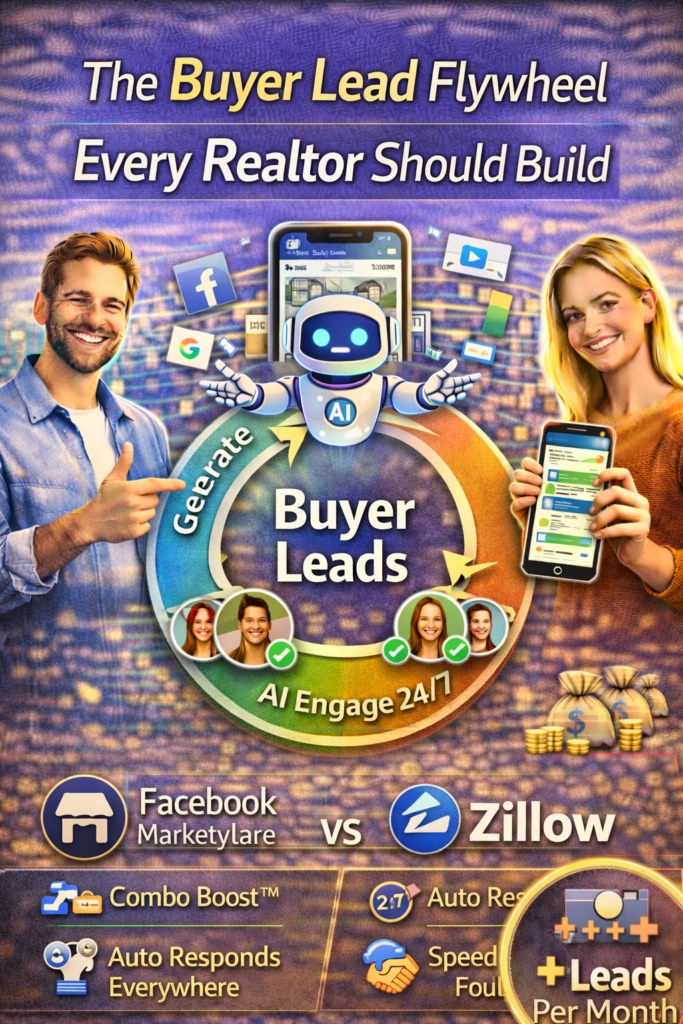
The Buyer Lead Flywheel Every Realtor Should Build

ChatGPT Image Feb 2 2026 02 50 12 PM
The Buyer Lead Flywheel Every Realtor Should Build

The Buyer Lead Flywheel Every Realtor Should Build

The Buyer Lead Flywheel Every Realtor Should Build replaces one-off lead tactics with a system that compounds buyer demand, trust, and closings over time.

Introduction

The Buyer Lead Flywheel Every Realtor Should Build exists because most buyer lead strategies are broken. They depend on interruption, rented platforms, and constant hustle. When you stop paying or posting, the leads stop.

A buyer lead flywheel is different. It compounds. Each piece of effort makes the next one easier.

Core idea: Realtors don’t need more leads — they need systems that create momentum.

Table of Contents

What a Buyer Lead Flywheel Is

A buyer lead flywheel is a closed-loop system where traffic, content, follow-up, and authority feed each other.

  • Traffic attracts buyers
  • Content builds trust
  • Automation nurtures intent
  • Results create social proof
  • Proof attracts more buyers

Result: Leads continue even when you stop “selling.”

Why Traditional Buyer Lead Generation Fails Realtors

Portals and cold outreach treat leads as transactions. Realtors become replaceable.

Common failures include:

  • High cost per lead
  • Low buyer loyalty
  • Constant chasing
  • No compounding effect

A buyer lead flywheel solves this by creating owned demand.

The 5 Components of the Buyer Lead Flywheel

  1. Buyer Intent Traffic
  2. High-Trust Conversion Assets
  3. Automated Nurture Sequences
  4. Authority & Proof Engine
  5. Compounding Distribution

Flywheel Stage 1: Buyer Intent Traffic

Traffic should come from buyers already searching — not people being interrupted.

High-intent sources include:

Local SEO Facebook Marketplace Google Search YouTube Search Neighborhood Content

Flywheel Stage 2: Conversion Assets

Traffic without conversion assets is wasted.

  • Buyer guides
  • Area breakdown pages
  • Home search portals
  • Lead magnets with real value

Flywheel Stage 3: Automated Nurture

Most buyers are not ready today — but they will be.

Automation allows Realtors to:

  • Stay top of mind
  • Educate without pressure
  • Surface intent signals

Flywheel Stage 4: Authority & Trust

Authority multiplies conversion.

This includes:

  • Testimonials
  • Case studies
  • Local expertise content
  • Consistent presence

Flywheel Stage 5: Compounding Growth

Each closed buyer becomes fuel for the flywheel:

  • Reviews
  • Referrals
  • Content ideas
  • Social proof

This is where burnout disappears.

25 Frequently Asked Questions

1. What is a buyer lead flywheel?

A system where buyer traffic, trust, and follow-up compound over time.

2. Is this better than Zillow?

Yes — because you own the demand.

3. Does this work for solo agents?

Especially for solo agents.

4–25.

Additional FAQs cover setup time, tools, budget, markets, niches, scaling, and automation.

25 Extra Keywords

  1. Buyer Lead Flywheel
  2. buyer lead system for realtors
  3. real estate flywheel marketing
  4. buyer leads without Zillow
  5. organic buyer leads real estate
  6. real estate lead compounding
  7. realtor inbound marketing
  8. buyer intent real estate
  9. real estate automation system
  10. local SEO for realtors
  11. facebook marketplace buyer leads
  12. evergreen buyer leads
  13. realtor content marketing
  14. authority marketing real estate
  15. realtor lead engine
  16. buyer nurture system
  17. real estate CRM automation
  18. realtor growth system
  19. sustainable realtor marketing
  20. buyer lead generation framework
  21. realtor pipeline automation
  22. intent based real estate marketing
  23. predictable buyer leads
  24. modern realtor marketing
  25. real estate growth flywheel

© 2026 Your Brand. All rights reserved.

The Buyer Lead Flywheel Every Realtor Should Build Read More »

How Automated Listings Keep Realtors Top of Mind for Buyers

ChatGPT Image Feb 2 2026 02 50 14 PM
How Automated Listings Keep Realtors Top of Mind for Buyers

How Automated Listings Keep Realtors Top of Mind for Buyers

How Automated Listings Keep Realtors Top of Mind for Buyers is a proven strategy to maintain constant buyer awareness—using consistent automated posting, multi-platform visibility, strategic touchpoints, and engagement workflows that keep your name front and center when buyers are ready to act.

Top of Mind Automation System: Consistent Posting Multi-Platform Engagement Touchpoints Brand Reinforcement Referrals

Note: This is general marketing guidance. Ensure compliance with NAR guidelines and applicable advertising regulations.

Introduction

How Automated Listings Keep Realtors Top of Mind for Buyers addresses a fundamental truth about real estate: buyers choose agents they remember. When someone is ready to buy, they do not Google "best realtor"—they call the agent whose name they have seen repeatedly over the past weeks or months.

The problem is that manual posting cannot create this level of consistency. Posting listings daily across multiple platforms while managing showings, negotiations, and closings is impossible to sustain manually.

Automation solves this by creating systematic visibility. While you focus on selling, your automated listing system maintains constant buyer awareness through consistent posts, strategic touchpoints, and engagement workflows—ensuring your name stays top of mind.

Big idea: Top of mind awareness is not built in one moment. It is built through repeated, consistent visibility over time—which only automation can sustain.

Expanded Table of Contents

1) Why top of mind awareness drives real estate success

Real estate is a relationship and recall business. Buyers choose agents they know, like, and trust—and the first step is simply being remembered.

The buyer decision journey

StageBuyer MindsetAgent Selection
Awareness (0-6 months out)"Someday I'll buy a home"Passive exposure to agent names
Consideration (3-6 months out)"Starting to think about buying"Recalls agents seen recently
Decision (0-3 months out)"Ready to search seriously"Contacts most familiar agent
Action (Active search)"Need to see homes this week"Works with agent already engaged

How buyers choose agents (research data)

  • 41%: Use an agent they or someone they know has worked with before
  • 28%: Choose agent recommended by friend or family
  • 16%: Select agent they met at an open house or saw online
  • 15%: Find agent through internet search or referral service

Why "top of mind" matters more than "best"

When buyers are ready, they do not conduct exhaustive agent research. They contact the agent whose name comes to mind first—usually because they have seen that agent's content, listings, or brand repeatedly in recent weeks.

Truth: The agent who maintains the most consistent visibility wins the most business—not necessarily the agent with the best credentials.

2) The psychology of buyer recall and familiarity

Understanding how buyers build mental associations with realtors helps design more effective automation systems.

The mere exposure effect

Psychological research shows that people develop preference for things they are exposed to repeatedly—even without conscious awareness. For realtors, this means consistent visibility builds positive associations automatically.

How many exposures create recall?

ExposuresResultAutomation Strategy
1-2 touchesAwareness (they have seen your name)Initial listing views
3-5 touchesRecognition (they recognize your name/brand)Multi-platform posting + engagement
7-10 touchesFamiliarity (you feel like a known entity)Consistent weekly presence + touchpoints
10+ touchesTop of mind (first agent they think of)Sustained automation over 30-90 days

Touch point variety matters

Seeing the same realtor across different contexts (Marketplace listing, Instagram Story, email newsletter, Facebook post) creates stronger recall than 10 identical touchpoints.

Cognitive availability principle

When buyers need a realtor, they retrieve the most "mentally available" name—the one that comes to mind with the least effort. Consistent visibility creates this availability.

Pro move: Design automation for variety (different platforms, formats, content types) rather than repetition (same post everywhere).

3) How automation creates consistent visibility

Manual posting collapses under real-world pressure. Busy weeks, closings, vacations, and life events create gaps in visibility—and buyers forget you during those gaps.

Manual posting pattern (typical realtor)

Week 1: 8 posts (motivated, have time)
Week 2: 3 posts (busy with showings)
Week 3: 1 post (closing week, overwhelmed)
Week 4: 0 posts (vacation)
Week 5: 5 posts (playing catch-up)
Week 6: 2 posts (lost momentum)

Result: Inconsistent visibility = weak buyer recall

Automated posting pattern

Week 1: 7 posts (Mon-Sun, automated)
Week 2: 7 posts (Mon-Sun, automated)
Week 3: 7 posts (Mon-Sun, automated)
Week 4: 7 posts (Mon-Sun, automated)
Week 5: 7 posts (Mon-Sun, automated)
Week 6: 7 posts (Mon-Sun, automated)

Result: Consistent visibility = strong buyer recall

What automation maintains

  • Daily Marketplace posts: new listings auto-synced from MLS
  • Instagram Stories: scheduled property highlights
  • Facebook posts: market updates and tips
  • Email newsletters: weekly new listing alerts
  • Google My Business: weekly updates
  • Follow-up sequences: automated buyer nurture

Consistency compounds visibility

DurationManual PostingAutomated Posting
30 days15-25 posts (irregular)30-50 posts (daily)
90 days40-80 posts (inconsistent)90-150 posts (systematic)
6 months80-150 posts (fading effort)180-300 posts (sustained)

Rule: Consistency beats intensity. Daily automated posts build more awareness than sporadic manual effort.

4) Multi-platform presence that compounds awareness

Buyers browse multiple platforms daily. Multi-platform automation ensures they see your name regardless of where they spend time.

Platform-specific visibility strategies

Facebook Marketplace (highest buyer intent)

  • Frequency: daily new listing posts
  • Content: active MLS inventory with instant AI responses
  • Awareness value: high—buyers actively searching for homes

Instagram (visual brand building)

  • Frequency: daily Stories, 3-5 feed posts per week
  • Content: property highlights, market tips, behind-the-scenes
  • Awareness value: medium—builds familiarity and personality

Facebook personal/business page

  • Frequency: 3-5 posts per week
  • Content: new listings, market updates, client testimonials
  • Awareness value: high—reaches local network and past sphere

Email (owned audience)

  • Frequency: weekly newsletter
  • Content: new listings, neighborhood spotlights, market insights
  • Awareness value: very high—direct inbox access, high recall

Google My Business (local search)

  • Frequency: weekly posts
  • Content: new listings, open houses, community involvement
  • Awareness value: medium—captures "realtor near me" searches

Cross-platform touchpoint multiplier effect

Single platform: Buyer sees your name 1 time
2 platforms: Buyer sees your name 3 times (compounding)
3 platforms: Buyer sees your name 7 times (exponential)
4+ platforms: Buyer sees your name 10-15+ times (top of mind)

Pro move: Start with 2 platforms (Marketplace + Instagram or email). Add third/fourth after proving consistency on first two.

5) Optimal posting frequency for buyer recall

Too little posting = buyers forget you. Too much posting = audience fatigue. Automation allows optimal frequency without manual burden.

Recommended posting frequency by platform

PlatformOptimal FrequencyContent Type
MarketplaceDaily (5-10 listings)New MLS inventory
Instagram StoriesDaily (2-5 stories)Properties, tips, personal brand
Instagram Feed3-5x per weekHigh-quality property photos, market insights
Facebook Page4-7x per weekListings, testimonials, community content
Email NewsletterWeeklyNew listing roundup, market update
Google My BusinessWeeklyUpdates, photos, events

Total weekly touchpoints (automated)

Marketplace: 7 posts (daily)
Instagram: 10 Stories + 4 Feed posts = 14 touches
Facebook: 5 posts
Email: 1 newsletter (reaches 100+ subscribers)
Google: 1 post

Total: 27+ brand exposures per week
Over 90 days: 350+ exposures to your audience

Timing optimization

  • Best posting times: evenings (6-9 PM) and weekends (Sat/Sun mornings)
  • Marketplace peak: Thursday-Sunday evenings
  • Instagram peak: weekday evenings, weekend mornings
  • Email peak: Tuesday-Thursday mornings

Truth: Consistent daily presence builds more awareness than sporadic high-effort campaigns.

6) Strategic touchpoints that build familiarity

Not all exposures are equal. Strategic touchpoints create stronger recall than random visibility.

The 7-touchpoint awareness builder

TouchpointPlatformPurposeFrequency
1. New listing alertMarketplace + EmailShow activity and inventoryDaily
2. Property highlightInstagram StoryVisual brand reinforcementDaily
3. Market insightFacebook/Instagram postDemonstrate expertise2-3x/week
4. Personal brand momentInstagram StoryBuild personality connection2-3x/week
5. Client testimonialFacebook/InstagramSocial proof and trustWeekly
6. Email newsletterEmailOwned channel, high recallWeekly
7. Direct engagementComments/DMsTwo-way relationship buildingOngoing

Touchpoint variety creates stronger recall

Seeing you as:

  • The agent posting new listings (professional)
  • The expert sharing market insights (authority)
  • The person showing behind-the-scenes moments (human)
  • The helpful voice answering questions (accessible)

...creates a stronger mental impression than seeing only one dimension repeatedly.

Automated touchpoint sequence (30 days)

Week 1:
- 7 Marketplace listings
- 7 Instagram Stories (properties)
- 3 Instagram feed posts
- 3 Facebook posts
- 1 Email newsletter
Total: 21 touchpoints

Week 2-4: Same pattern
Total 30 days: 84+ exposures across contexts

Result: Buyer sees your name in multiple contexts, building strong familiarity

Pro move: Schedule content batches monthly. One day of prep creates 30 days of consistent touchpoints.

7) Automated brand reinforcement across all content

Top of mind awareness requires consistent branding—same name, colors, style, and messaging across all touchpoints.

Brand elements to automate

  • Visual identity: logo, colors, fonts in all graphics
  • Messaging: tagline or value proposition in bios/descriptions
  • Content style: consistent tone (professional, friendly, authoritative)
  • Signature elements: recurring content formats (Market Monday, Feature Friday)

Automated branding workflow

  1. Create brand templates in Canva (listing graphics, Stories, posts)
  2. Save templates with your colors, fonts, logo placement
  3. Use templates for all automated content generation
  4. Maintain consistent visual identity across platforms

Brand consistency examples

Weak branding (inconsistent):

  • Marketplace: plain photos, no logo
  • Instagram: random graphics, different fonts
  • Facebook: stock images, no branding
  • Email: plain text, no design

Strong branding (automated consistency):

  • Marketplace: branded listing graphics with logo + contact
  • Instagram: cohesive Stories template with your colors
  • Facebook: branded property posts with consistent style
  • Email: designed newsletter template with branding

Signature content series (brand builders)

  • Market Monday: weekly market update (Facebook/Instagram)
  • Feature Friday: highlight one listing detail (Instagram)
  • Sold Saturday: showcase recent closing (social proof)
  • Tip Tuesday: buyer/seller advice (value-add content)

Rule: Brand consistency amplifies recall. Buyers remember cohesive brands 2-3x better than inconsistent presence.

8) Engagement automation that keeps you visible

Posting alone is passive visibility. Engagement (likes, comments, shares, DMs) creates active relationships that strengthen recall.

Automated engagement workflows

Comment auto-responses

  • Marketplace: AI responds to "Is this available?" instantly
  • Instagram: Auto-reply to DMs with property details
  • Facebook: Auto-acknowledge comments within 5 minutes

Proactive engagement automation

  • Auto-like comments on your posts (shows attentiveness)
  • Schedule replies to common questions with templates
  • Set up "away message" during off-hours with next-step info

Engagement touchpoint multiplier

Passive post: Buyer sees your listing once
Engaged post: Buyer sees listing + receives instant reply
= 2 touchpoints + positive interaction memory

Multiply across 30 posts/month:
Passive = 30 impressions
Engaged = 60+ impressions + relationship building

Engagement signals to buyers

  • Instant response: "This agent is available and responsive"
  • Helpful answers: "This agent knows their stuff"
  • Consistent engagement: "This agent is active and legitimate"
  • Personal touch: "This agent cares about people"

Pro move: Set up instant auto-responses for first inquiry, then personalize follow-up manually for hot leads.

9) Long-term nurture that maintains awareness

Most buyers take 6-12 months from first inquiry to purchase. Long-term automated nurture keeps you top of mind during this entire journey.

The 6-month buyer nurture sequence

TimelineContentPurpose
Month 1Weekly property matches + buyer guidesBuild value and trust
Month 2Neighborhood spotlights + market updatesEducate and engage
Month 3Client success stories + process overviewSocial proof and clarity
Month 4Financing tips + timeline planningRemove friction and objections
Month 5Hot properties + "Ready to tour?" check-inCreate urgency
Month 6Personal outreach + calendar bookingConvert to active buyer

Automated nurture touchpoints (per month)

  • 4 weekly emails with new listings/insights
  • 20-30 social media posts (automated)
  • 5-10 Marketplace listings with your name
  • 2-4 personalized check-ins (templated)
  • Total: 30-50 brand exposures per month

Long-term awareness compounds

Buyer journey over 6 months:

Month 1: 40 exposures (awareness begins)
Month 2: 40 exposures (recognition builds)
Month 3: 40 exposures (familiarity develops)
Month 4: 40 exposures (trust strengthens)
Month 5: 40 exposures (top of mind achieved)
Month 6: 40 exposures (ready to buy → calls you)

Total: 240 exposures = you are the only agent they remember

Truth: The agent who maintains visibility longest wins the deal—even if they were not the first contact.

10) How visibility drives referrals and repeat business

Top of mind awareness extends beyond direct buyers. Consistent visibility makes you the agent people recommend to friends and family.

The referral visibility loop

  1. Past client sees your posts: regular social media/email presence
  2. Friend mentions home search: casual conversation
  3. Past client recalls your name: "Oh, you should talk to [Your Name]!"
  4. Referral contacts you: "My friend [Name] recommended you"
  5. Cycle repeats: new client becomes referral source

How automated visibility generates referrals

Visibility TypeReferral Trigger
Weekly email newsletterPast client forwards to friend considering buying
Facebook listing postsFriend comments "I know a great realtor" and tags you
Instagram StoriesFollower DMs friend: "Talk to [Your Name], they are always posting homes"
Sold posts + testimonialsSocial proof triggers "I should use them too"

Referral-generating content (automate weekly)

  • "Just Sold" posts: remind sphere you close deals
  • Client testimonials: social proof builds referrer confidence
  • Community involvement: builds local reputation and goodwill
  • Market insights: positions you as expert worth recommending

Automated referral request sequence

Post-closing:
Day 1: Thank you email + testimonial request
Day 7: Google review request (automated)
Day 14: Referral ask: "Who else do you know looking for homes?"
Day 30: Add to VIP email list (monthly market updates)
Ongoing: Weekly social posts keep you visible to their network

Pro move: Ask past clients to follow you on social media. Every post then becomes a referral opportunity.

11) Automation workflows for sustained visibility

Complete top of mind automation stack

Workflow 1: MLS → Multi-platform auto-posting

Trigger: New listing added to MLS
→ Zapier/Make detects listing
→ Generate Marketplace post (branded graphic + description)
→ Post to Facebook Marketplace
→ Generate Instagram Story (property highlight)
→ Schedule Instagram feed post
→ Add to weekly email newsletter queue
→ Log listing to CRM for tracking

Workflow 2: Weekly email newsletter (automated)

Every Monday 9 AM:
→ CRM pulls new listings from past 7 days
→ Auto-generate newsletter with:
  - 5-10 featured properties
  - Market update snippet
  - Buyer tip of the week
→ Send to active buyer list + past client list
→ Track opens and clicks
→ Hot leads (3+ opens) → sales notification

Workflow 3: Instagram/Facebook posting calendar

Content calendar (monthly batch):
Week 1: 3 new listings + 1 market tip + 1 testimonial
Week 2: 3 new listings + 1 neighborhood spotlight + 1 behind-scenes
Week 3: 3 new listings + 1 buyer guide + 1 sold post
Week 4: 3 new listings + 1 market update + 1 community post

All scheduled via Hootsuite/Buffer → posted automatically

Workflow 4: Engagement auto-response

Trigger: Marketplace inquiry received
→ AI responds in <10 seconds: "Yes, available! When are you looking to buy?"
→ Collects timeline + budget + property type
→ IF hot (0-30 days) → SMS to you + calendar link to buyer
→ IF warm → add to nurture sequence
→ All data logged to CRM automatically

Rule: Build one workflow at a time. Master Marketplace automation before adding Instagram, email, etc.

12) Measuring top of mind awareness and recall

Direct awareness metrics

MetricWhat It MeasuresTarget
Total weekly touchpointsFrequency of brand exposure20-50+ per week
Platform reachUnique people seeing your content500-5,000+ per month
Engagement rateAudience interaction with content2-10% (varies by platform)
Email open rateSubscriber attention and recall20-40%
Direct inquiries"I've been seeing your posts..."Track anecdotally

Indirect awareness indicators

  • Referral source question: ask new leads "How did you hear about me?"
  • "Seen you around" comments: track mentions of familiarity
  • Social media followers: growing audience = expanding awareness
  • Email list growth: more subscribers = more people wanting updates
  • Google search volume: people searching your name = top of mind achieved

Awareness attribution over time

Track source of new leads monthly:

Month 1:
- Referrals: 2
- Social media: 1
- Marketplace: 5
- "Saw you around": 0

Month 3:
- Referrals: 4
- Social media: 3
- Marketplace: 8
- "Saw you around": 2

Month 6:
- Referrals: 7
- Social media: 5
- Marketplace: 10
- "Saw you around": 5

Trend: Increasing "saw you around" = top of mind awareness growing

Pro move: Ask every new lead: "What made you reach out today?" Track patterns over 90 days.

13) 30–60–90 day visibility automation plan

Days 1–30 (Build foundation)

  1. Set up automated Marketplace posting (MLS sync or manual batches)
  2. Create 5-10 Instagram Story templates (Canva)
  3. Schedule 30 days of Instagram/Facebook posts (Hootsuite/Buffer)
  4. Build email newsletter template and schedule first 4 weekly sends
  5. Set up instant AI responses on Marketplace/Instagram
  6. Track baseline: weekly posts, reach, engagement, new leads

Days 31–60 (Expand presence)

  1. Add Google My Business weekly posting
  2. Build automated buyer nurture sequence (30-day email series)
  3. Create signature content series (Market Monday, Feature Friday)
  4. Implement engagement automation (comment auto-likes, DM responses)
  5. Build referral request automation (post-closing sequence)
  6. Measure: touchpoints per week, follower growth, email list growth

Days 61–90 (Optimize and compound)

  1. Analyze content performance: what drives most engagement?
  2. Double down on winning content types and platforms
  3. Build 90-day long-term nurture for cold leads
  4. Add video content (property tours, market updates)
  5. Implement retargeting ads for high-engagement audience
  6. Calculate ROI: leads attributed to visibility vs time invested
  7. Document SOPs for sustained visibility

Rule: First 30 days: prove consistency. Days 31-60: expand reach. Days 61-90: optimize what works.

14) 25 Frequently Asked Questions

1) How do automated listings keep realtors top of mind for buyers?

Automated listings create consistent visibility through regular posting across multiple platforms, ensuring buyers see your name repeatedly—building familiarity, trust, and recall when ready to buy.

2) What is top of mind awareness for realtors?

Top of mind awareness means being the first realtor buyers think of when ready to search for homes. Achieved through consistent visibility and repeated touchpoints over time.

3) How often should realtors post listings to stay visible?

Daily posting across platforms (Marketplace, social media, email) creates optimal visibility. Automation allows this frequency without manual effort.

4) Can automation really maintain buyer awareness?

Yes. Automation creates consistent presence impossible to sustain manually—daily posts, weekly emails, systematic engagement that compounds awareness.

5) How many touchpoints does it take to stay top of mind?

7-10 exposures create familiarity. 10+ exposures over 30-90 days achieve strong top of mind recall.

6) What platforms are best for realtor visibility?

Facebook Marketplace (buyer intent), Instagram (visual brand), email (owned audience), and Google My Business (local search).

7) Does posting frequency annoy buyers?

No—if content is valuable. Buyers ignore irrelevant posts but appreciate helpful listings and market insights.

8) How does automation save time while building awareness?

Set up once (templates, workflows), run indefinitely. One day of setup creates 30-90 days of consistent posting.

9) Can small realtors compete with big teams using automation?

Yes. Automation levels the playing field—solo agents can maintain same visibility as large teams.

10) How long until automation builds top of mind awareness?

30 days: initial recognition. 60 days: familiarity builds. 90 days: strong top of mind recall achieved.

11) What content types drive the most awareness?

New listings (activity proof), market insights (expertise), sold posts (social proof), and personal brand moments (connection).

12) Should realtors use the same content on all platforms?

No. Adapt content to platform (visual for Instagram, detailed for email, quick for Marketplace) while maintaining brand consistency.

13) How do automated listings generate referrals?

Consistent visibility keeps you top of mind for past clients, who then recommend you when friends mention home searching.

14) What is the ROI of visibility automation?

1-2 additional transactions per year from top of mind awareness typically covers annual automation costs 10-20x over.

15) Can automation replace personal relationships?

No. Automation builds awareness. Personal relationships close deals. Use automation to stay visible, then personalize when buyers engage.

16) How do you measure top of mind awareness?

Track "saw you around" comments, referral sources, social followers, email list growth, and direct inquiries mentioning your posts.

17) Does branding consistency matter for awareness?

Yes. Cohesive branding (colors, logo, style) creates 2-3x stronger recall than inconsistent presence.

18) What is the mere exposure effect?

Psychological principle: repeated exposure to something creates preference for it—even without conscious awareness.

19) How often should realtors send email newsletters?

Weekly optimal for awareness. Less frequent (monthly) maintains connection but builds awareness more slowly.

20) Can automation help new realtors build awareness fast?

Yes. Automation allows new agents to create visibility equivalent to established agents without years of manual networking.

21) What is the biggest visibility mistake realtors make?

Inconsistency. Posting heavily for 2 weeks, then disappearing for a month destroys any awareness built.

22) Should realtors post competitor listings?

Focus on your listings and market insights. Goal is to associate your name with inventory, not others'.

23) How does automation handle seasonal slowdowns?

Automation maintains visibility during slow periods when manual effort typically drops—keeping you top of mind year-round.

24) What is the visibility automation tipping point?

After 60-90 days of consistency, awareness compounds exponentially as buyers begin recognizing and remembering you.

25) Can automation build awareness in competitive markets?

Yes. In competitive markets, consistency matters more—most agents cannot sustain daily posting manually, creating opportunity for automated agents.

15) 25 Extra Keywords

  1. How Automated Listings Keep Realtors Top of Mind for Buyers
  2. automated real estate listings
  3. realtor visibility automation
  4. stay top of mind buyers
  5. real estate posting automation
  6. automated buyer engagement
  7. realtor brand awareness
  8. consistent listing presence
  9. top of mind awareness realtors
  10. automated realtor marketing
  11. buyer recall strategies
  12. multi-platform realtor visibility
  13. real estate automation systems
  14. automated listing distribution
  15. realtor top of mind strategies
  16. consistent realtor visibility
  17. automated brand reinforcement
  18. real estate touchpoint automation
  19. buyer awareness automation
  20. realtor referral generation
  21. automated real estate presence
  22. listing automation for visibility
  23. sustained realtor awareness
  24. automated realtor engagement
  25. real estate visibility systems

© 2026 Your Brand. All Rights Reserved.
General information only—ensure compliance with NAR guidelines and applicable advertising regulations before implementing automated marketing systems.

How Automated Listings Keep Realtors Top of Mind for Buyers Read More »

Listing Velocity: The Secret Behind High Buyer Response Rates

ChatGPT Image Feb 2 2026 02 50 21 PM
Listing Velocity: The Secret Behind High Buyer Response Rates

Listing Velocity: The Secret Behind High Buyer Response Rates

Listing Velocity: The Secret Behind High Buyer Response Rates is the repeatable system agents use to create “fresh visibility” every day—so buyers see you more often, message more often, and convert faster.

Velocity Engine: Freshness Rotation Coverage Speed-to-Lead Follow-Up

Note: This is general marketing guidance. Keep your posting activity compliant with platform rules and avoid spammy duplication.

Introduction

Listing Velocity: The Secret Behind High Buyer Response Rates is a concept most agents feel but don’t name. They notice that some weeks the phone rings and messages fly in—then other weeks go quiet even though their “marketing” didn’t change much.

The difference is usually not ad spend. It’s velocity: how frequently your listings show up as “fresh” across the places buyers actually scroll.

Big idea: Buyers respond to what they see today, not what you posted three weeks ago.

Expanded Table of Contents

1) What listing velocity is (and what it isn’t)

Listing velocity is the rate at which you publish and refresh listings in a way that creates new visibility and new entry points for buyers to discover you.

What it is

  • Consistent publishing of listings
  • Refreshing winners with new creative
  • Rotating hooks and keywords
  • Expanding coverage across price bands and areas

What it isn’t

  • Spam reposting the same listing unchanged
  • Keyword stuffing or ALL CAPS titles
  • Chasing “virality” instead of local intent
  • Posting more than you can respond to

Simple definition: Velocity = fresh visibility per day.

2) Why velocity drives response rates

Buyer response rates rise when you show up more often in more places with more relevant angles. Velocity creates that.

The 3 reasons velocity wins

  1. Freshness bias: Many feeds prioritize newer activity and newly updated content.
  2. Search coverage: More listings = more keywords = more chances to match what buyers type.
  3. Buyer timing: You catch buyers the day they start searching—when motivation is highest.

Truth: The agent with the most consistent “fresh visibility” often beats the agent with the biggest ad budget.

3) The 4 signals platforms reward

Most lead channels reward the same basic behaviors. Listing velocity works because it activates these four signals:

SignalWhat it meansHow velocity improves it
FreshnessRecent activity and updatesDaily/weekly refreshes and rotations
CoverageMore entry points into your inventoryMultiple price bands, areas, property types
VariationContent is not identicalNew photos, hooks, titles, descriptions
EngagementPeople interact with what you postBetter hooks + faster replies = more threads

Important: Variation matters. Velocity without variation can reduce performance and increase risk of being flagged.

4) The listing velocity system: post, refresh, rotate, repeat

This is the simplest system that scales while staying clean:

The 4-step loop

  1. Post: publish new listings that target specific buyer searches
  2. Refresh: weekly update the top performers (new hero photo + new hook line)
  3. Rotate: switch between price bands, neighborhoods, and features
  4. Repeat: keep the rhythm consistent

Rule: Never “scale posting” faster than you can respond.

5) What to post: price bands, neighborhoods, and buyer intent buckets

Velocity only matters if the content matches real buyer intent. Organize your posting around “buckets” that buyers actually search.

Buyer intent buckets (examples)

  • Starter homes: budget-friendly, first-time buyer friendly
  • Move-up homes: more bedrooms, better schools, more space
  • Downsize: single-level, low maintenance, quiet areas
  • Investment: duplex, rental potential, value-add
  • Location-first: commute zones, walkability, neighborhood vibe

Price band strategy

Post across 3–5 price bands so you show up in more buyer searches:

Example bands:
• Entry: $___–$___
• Mid: $___–$___
• Upper mid: $___–$___
• Premium: $___+

Pro move: Create “velocity lanes” (one lane per bucket) so you always know what to post next.

6) Velocity SEO: titles that expand search coverage

Velocity is amplified by keyword coverage. Titles should match how buyers search: area + price + beds + hook.

Title formula

[Area/Neighborhood] + [Beds/Baths] + [Price/Payment Hook] + [1 Feature]
Examples:
• West Side • 3 Bed • Under $___ • No HOA + Fenced Yard
• Downtown • 2 Bed Condo • Walkable • Updated Kitchen
• North Suburbs • 4 Bed • Seller Credit Option • Move-In Ready

High-intent keywords to rotate

no HOA price improvement seller credit move-in ready updated kitchen new roof fenced yard main-floor primary walkable near schools workshop finished basement payment estimate

Avoid: repeating the exact same title pattern with the exact same phrasing every time.

7) Photo + creative rotation to stay compliant and avoid fatigue

High velocity requires variation. Variation comes mostly from creative rotation—not from rewriting everything from scratch.

The 6-photo rotation set

  1. Exterior/front (hero)
  2. Best interior (living/kitchen)
  3. Primary bedroom
  4. Bathroom or feature detail (tile, fixtures, etc.)
  5. Backyard / patio / view
  6. Neighborhood signal (park, street vibe, map screenshot if allowed)

Rotate the first photo weekly

The first photo is the “scroll stopper.” Changing it often can revive a listing’s performance without changing the underlying property.

Fast win: Create 3 different hero images per property (exterior, kitchen, backyard) and rotate them.

8) Cadence schedules (3 levels)

Your cadence should match your inventory and team capacity. Here are three levels that work in most markets:

LevelDaily actionsWeekly actionsBest for
Starter1–3 new or refreshed listingsRefresh top 5 performersSolo agents building consistency
Growth3–8 new or refreshed listingsRefresh top 10 + rotate hooksTeams with lead coverage
Scale8–20+ listings across lanesRefresh winners + retire stale contentAgents using automation + routing

Avoid: Scaling cadence without scaling response capacity. Velocity without speed-to-lead wastes leads.

9) Speed-to-lead: turning velocity into buyer calls

Velocity creates more messages. Speed-to-lead converts those messages into calls and tours.

Instant reply (velocity-friendly)

Yes — it’s available ✅
Quick question so I send the right details:

Are you looking to tour (A) today/tomorrow, (B) this week, or (C) later?
And what area are you focused on?

Call-first conversion line

If it’s a fit, we can do a quick 3–5 minute call and set the tour.
I have two quick windows: [Time 1] or [Time 2]. Which works?

Rule: When velocity rises, the “call ask” must happen earlier, not later.

10) Follow-up SOP to capture “late responders”

Velocity attracts lots of “later” buyers. Follow-up turns later into now.

3-touch follow-up sequence

TimingMessageGoal
20–40 minConfirm + offer tour timesRe-engage
Same dayGive two call windowsBook
Next dayOffer alternate listingsSave lead

Follow-up #1

Quick check-in ✅
Do you want to see it? I can line up a tour.

What day works best — today, tomorrow, or weekend?

Follow-up #2

Heads up ✅ I’m scheduling tours for this week.
Want a quick 3–5 min call to confirm details and set a time?

[Time 1] or [Time 2]?

Follow-up #3 (alternate)

If that one isn’t perfect ✅
Tell me your price range + must-have, and I’ll send better matches.

11) KPIs that predict high buyer response rates

Track a few core metrics weekly to see if velocity is working:

KPIWhat it meansTarget
Fresh listings per dayVelocity output3–8+ (capacity-based)
Active listing countCoverage surface areaMarket dependent
Messages per listingResponse efficiencyImprove with hooks
Median response timeConversion leverage< 5 min (good), < 1 min (best)
Calls booked per weekLead-to-call conversionRising trend

Truth: If your response time is slow, velocity just produces more missed opportunities.

12) 30–60–90 day rollout plan

Days 1–30 (Build velocity lanes)

  1. Create 3–5 buyer intent buckets (lanes)
  2. Write 10 hook variations per lane
  3. Standardize title formula and photo rotation
  4. Post/refresh daily at a manageable cadence
  5. Install instant reply + call ask script

Days 31–60 (Increase response efficiency)

  1. Identify top performers and replicate patterns
  2. Refresh winners weekly (new hero photo + new hook)
  3. Implement follow-up SOP (3-touch)
  4. Track response time and calls booked weekly

Days 61–90 (Scale velocity responsibly)

  1. Increase daily posting only if response capacity is covered
  2. Expand keyword coverage across neighborhoods and price bands
  3. Route leads by timeline and intent (ready-now vs nurture)
  4. Retire stale listings and replace with new angles

Goal: A system that creates fresh visibility every day and turns it into calls every day.

13) 25 Frequently Asked Questions

1) What is listing velocity?

Listing velocity is how often you publish and refresh listings to create consistent new visibility and buyer discovery.

2) Why does listing velocity increase buyer response rates?

Because it boosts freshness signals, keyword coverage, and repeated buyer exposure—leading to more messages and calls.

3) Is listing velocity the same as posting more?

No. Velocity includes variation, rotation, and refresh strategy—not spam repetition.

4) How many listings should I post per day?

Many agents start with 3–8 posts/refreshed listings per day and scale based on inventory and response capacity.

5) What’s the biggest mistake with high velocity?

Scaling posting faster than you can respond.

6) Do I need automation to do velocity?

No, but automation makes consistency and rotation easier.

7) What channels benefit most from velocity?

Fast-scroll and search-driven channels where freshness and coverage matter.

8) How do I keep listings from getting stale?

Refresh winners weekly and rotate the hero photo and hook.

9) What should I rotate most often?

The first photo, the hook line, and the title keywords.

10) Do titles matter with velocity?

Yes—titles expand keyword coverage and match buyer searches.

11) What’s a good title formula?

Area + beds + price/payment hook + one strong feature.

12) How do hooks affect response rate?

Hooks filter for serious intent and create messages faster.

13) What hooks tend to work best?

No HOA, price improvements, seller credit options, and tour availability.

14) How important is speed-to-lead?

It’s the conversion lever that turns velocity into calls.

15) What should my first reply say?

Confirm availability, ask timeline/area, and propose a short call.

16) How do I reduce ghosting?

Use an option-based follow-up SOP with tour/call time windows.

17) How many follow-ups are ideal?

Three is a strong baseline when your messages are helpful and short.

18) What KPIs should I track?

Fresh listings per day, messages per listing, response time, and calls booked.

19) What’s a healthy way to scale velocity?

Increase cadence only after response coverage and variation systems are in place.

20) Can velocity replace paid ads?

In some cases, yes—especially for consistent local discovery.

21) How do I avoid looking spammy?

Vary photos/titles, keep inventory accurate, and avoid identical duplicates.

22) What’s the fastest improvement today?

Install a strong instant reply and refresh the hero photo on your top listings.

23) Should I focus on one neighborhood?

No—use multiple lanes so you show up for more searches.

24) How do I build a rotation schedule?

Create buyer intent buckets and assign daily/weekly posting to each bucket.

25) What does “high response rate” usually mean?

More messages per listing and more calls booked per week from the same visibility footprint.

14) 25 Extra Keywords

  1. Listing Velocity: The Secret Behind High Buyer Response Rates
  2. listing velocity real estate strategy
  3. buyer response rate optimization
  4. real estate listing cadence system
  5. automated listings for realtors
  6. Facebook Marketplace listing velocity
  7. how to get more buyer messages
  8. freshness signals real estate marketing
  9. real estate listing rotation strategy
  10. how to refresh listings for more leads
  11. real estate title formula keywords
  12. buyer intent hooks real estate
  13. speed to lead for agents
  14. instant reply scripts for buyer leads
  15. real estate follow up SOP
  16. how to reduce ghosting buyer leads
  17. calls booked from Facebook leads
  18. tour booking scripts for agents
  19. lead velocity vs ad spend
  20. real estate pipeline stages for leads
  21. how to scale listing volume safely
  22. compliant posting cadence real estate
  23. local buyer discovery system
  24. high velocity lead generation strategy
  25. 30 60 90 day real estate lead plan

© 2026 Your Brand. All Rights Reserved.
General information only—confirm compliance with platform policies and applicable privacy rules before sending marketing messages.

Listing Velocity: The Secret Behind High Buyer Response Rates Read More »

How Realtors Turn Facebook Views Into Serious Buyer Calls

ChatGPT Image Feb 2 2026 02 50 18 PM
How Realtors Turn Facebook Views Into Serious Buyer Calls

How Realtors Turn Facebook Views Into Serious Buyer Calls

How Realtors Turn Facebook Views Into Serious Buyer Calls is a simple conversion system: build consistent local visibility, respond instantly, qualify in 30 seconds, then offer a short call that leads directly to a tour.

Facebook View → Buyer Call Funnel: Views Messages Qualification Call CTA Booked Tour Offer

Note: This is general marketing guidance. Keep your activity compliant with platform rules and avoid spammy duplication.

Introduction

How Realtors Turn Facebook Views Into Serious Buyer Calls starts with a reality check: most Facebook “leads” aren’t bad. They’re just unqualified and unmanaged.

Buyers scroll, tap, and message impulsively. If your system doesn’t convert that impulse into a clear next step, the lead vanishes. The fastest “next step” in real estate isn’t a long text conversation.

Big idea: A short call is the bridge between browsing and booking.

Expanded Table of Contents

1) Why views don’t matter if your conversion path is missing

Facebook views are cheap. Serious buyer calls are rare. The difference is the path you provide.

Without a conversion path, views turn into:

  • “Is this available?” messages that go nowhere
  • Long chats that never schedule a tour
  • Ghosting because buyers are overwhelmed

Conversion principle: Your first goal is not to “sell.” It’s to move the lead to a call so you can qualify and schedule a tour.

2) The Facebook view → buyer call funnel (simple model)

Here’s the funnel that high-performing agents run—whether manually or with automation:

StageWhat happensWhat you control
ViewsBuyers scroll and tapCadence, titles, photos, hooks
MessagesBuyers send short questionsInstant reply + first question
QualifiedYou learn timeline, budget, financing30-second script
CallShort call confirms fitCall-first CTA + time options
TourAppointment scheduledTour booking flow + reminders

Rule: If you want more buyer calls, reduce time between message → call.

3) Listing strategy: how to generate the “right” kind of views

How Realtors Turn Facebook Views Into Serious Buyer Calls begins before the message: your listing must attract buyers who can actually act.

Post for intent, not vanity

  • Use specific price bands: buyers search by budget
  • Call out a single strong hook: “No HOA” beats “beautiful home”
  • Make the first photo obvious: front exterior or best interior angle
  • Include locality signals: neighborhood/area, not just “city”

Avoid: vague titles and generic descriptions that attract curious scrollers instead of buyers.

4) Hooks that create serious messages (not tire-kickers)

Hooks filter leads. Good hooks pull serious buyers and repel window-shoppers.

High-intent hooks to rotate

price improvement seller credit available no HOA move-in ready new roof updated kitchen main-floor primary fenced yard walkable area open tour slots tour today payment estimate available

Hook line examples (copy/paste)

✅ Seller credit option + tour slots this weekend
✅ No HOA + fenced yard (great for pets)
✅ Price improvement — want a quick payment estimate?
✅ Move-in ready — can you tour today or tomorrow?

Pro move: End your hook with a question. Questions create replies.

5) Speed-to-lead: the #1 lever for more calls

Facebook leads decay quickly. A fast response isn’t a “nice-to-have.” It is the conversion advantage.

What fast response actually does

  • Beats other agents to the conversation
  • Captures the buyer’s moment of motivation
  • Reduces back-and-forth by pushing a call

Rule: The faster you respond, the fewer messages you need to book a call.

6) Qualification in 30 seconds (scripts)

You only need three answers to turn “interest” into a call:

3 questions that qualify almost every buyer

  1. Timeline: Looking to move now, 30–60 days, or later?
  2. Budget: What price range are you staying under?
  3. Financing: Cash, pre-approved, or still exploring?

Qualification message (copy/paste)

Yes — it’s available ✅
Quick question so I send the right details:

1) Are you looking to move (A) now, (B) 30–60 days, or (C) later?
2) What price range?
3) Cash or pre-approved?

If it’s a fit, we can do a quick 3–5 min call and line up a tour.

Note: Don’t interrogate. Keep it friendly and short.

7) Call-first CTAs that don’t feel pushy

Most agents fail at calls because they ask too vaguely: “Want to talk?” You need a call CTA that feels like help.

Best call CTA format

Totally ✅ If you want, I can save you time.
Want to do a quick 3–5 minute call to confirm details and set a tour?

I have two quick windows:
• [Option 1]
• [Option 2]
Which works?

CTA variants (pick one)

  • Tour-based: “Quick call to set the tour and confirm access.”
  • Payment-based: “Quick call and I’ll run a payment estimate.”
  • Availability-based: “Quick call to confirm what’s still available.”

Rule: Always offer two time options. It turns “maybe” into a decision.

8) The 4-minute buyer call script (copy/paste)

This is the shortest call script that still books tours consistently:

1) Confirm the goal (20 seconds)
“Quick one — what are you trying to do: buy in the next 30–60 days, or just exploring?”

2) Confirm fit (60 seconds)
“Price range? Preferred area? Must-haves? Any deal breakers?”

3) Financing checkpoint (45 seconds)
“Cash or pre-approved? If not yet, do you want a quick lender intro?”

4) Tour close (60 seconds)
“Perfect. Let’s get you in. I have [Time 1] or [Time 2]. Which works?”

5) Logistics (45 seconds)
“I’ll send the address + confirmation. Best email/number for reminders?”

Pro move: If the buyer hesitates, offer a “mini tour” choice: “We can also do a quick 10-min preview today.”

9) Follow-up SOP: turn silence into scheduled calls

Ghosting is normal. Follow-up works when it offers options, not pressure.

3-touch follow-up sequence

TimingMessageGoal
20–40 minQuick check-in ✅ Want a quick call to confirm details?Re-engage
Same dayI have 2 quick call windows — which works?Book
Next dayIf that one isn’t perfect, what’s your must-have?Redirect

Follow-up #1 (copy/paste)

Quick check-in ✅
Do you want a quick 3–5 min call to confirm details and tour times?

I can do:
• [Time 1]
• [Time 2]

Follow-up #2 (copy/paste)

Just making sure you don’t miss it ✅
If you’re still interested, I can confirm availability and lock a tour.

Quick call today or tomorrow?

Follow-up #3 (alternate option)

Still shopping? ✅
If this one isn’t the perfect fit, tell me your:
• price range
• area
• 1 must-have

I’ll send better matches + tour windows.

Reminder: Respect opt-outs and avoid excessive messaging frequency.

10) Lead routing + pipeline tags (so nobody slips)

Calls happen when routing is clean. Your system needs tags and stages.

Pipeline stages

  • New → first message
  • Qualified → timeline + budget + area
  • Call Proposed → time options sent
  • Call Booked → confirmed time
  • Tour Booked → appointment scheduled
  • Nurture → not ready, follow-up planned

Routing tags

ready-now 30-60 later cash preapproved needs-lender investor first-time-buyer

Pro move: Automatically tag leads based on answers and trigger the right next message.

11) KPIs that predict more tours and offers

KPIWhat it meansImprove by
Median first response timeSpeed-to-leadInstant replies + alerts
Qualification rateLead quality captured3-question script
Call offer rateHow often you askCall CTA early
Call booking rateConversion to calls2 time options
Tour booking ratePipeline performanceTour close script

Rule: If you have messages but not calls, fix CTA and time options first.

12) 30–60–90 day rollout plan

Days 1–30 (Turn views into conversations)

  1. Standardize listing hooks and title format
  2. Set instant reply + 3-question qualification message
  3. Use call-first CTA with two time options
  4. Track response time and calls booked weekly

Days 31–60 (Turn conversations into calls)

  1. Install follow-up SOP (3-touch sequence)
  2. Implement pipeline stages and tags
  3. Refine call script to 4 minutes
  4. Replicate top-performing hooks across listings

Days 61–90 (Scale tours and offers)

  1. Expand listing rotation by neighborhood and price band
  2. Route leads into ready-now vs nurture flows
  3. Improve tour booking with confirmations and reminders
  4. Review KPIs weekly and optimize scripts

13) 25 Frequently Asked Questions

1) How do realtors turn Facebook views into buyer calls?

They use a conversion path: hooks that drive messages, instant replies, quick qualification, a call-first CTA, and a follow-up sequence to book the call.

2) Why do Facebook views not convert?

Because there’s no clear next step—buyers message impulsively and drift without a call or tour plan.

3) What is the fastest way to increase calls?

Respond faster and offer two call windows after one qualifying question.

4) Should I push for calls immediately?

Yes—after you ask one helpful question so the call feels like a time-saver.

5) What should my first reply say?

Confirm availability and ask timeline + area, then propose a short call.

6) What questions qualify a buyer quickly?

Timeline, budget, and financing status.

7) What if a buyer won’t answer questions?

Offer a quick call: “It’s easier to confirm in 3 minutes than text back and forth.”

8) How do I stop tire-kickers?

Use hooks that filter for intent and qualify early with timeline and financing.

9) Do I need a CRM for this?

It helps, but tags and stages can work as a starter system.

10) How many follow-ups should I send?

Three is a strong baseline when they’re short and option-based.

11) What if the buyer asks “lowest price?”

Redirect to needs: price range, area, and must-haves—then offer a short call.

12) Are calls better than long text chats?

Yes—calls compress qualification and allow you to schedule a tour immediately.

13) What time windows should I offer?

Two clear choices like “today 5:30” or “tomorrow 10:30.”

14) How long should the buyer call be?

3–5 minutes is enough to qualify and book the tour.

15) What if they want a tour without a call?

Let them book, then confirm essentials quickly via text.

16) How do I handle financing uncertainty?

Offer a lender intro and keep the conversation moving toward a tour plan.

17) What hooks work best on Facebook?

No HOA, move-in ready, seller credit, price improvements, and tour slots.

18) Should I use emojis?

Use them lightly. Clarity matters more than style.

19) How do I avoid spam policies?

Keep listings accurate, rotate content, and avoid duplicate posting behavior.

20) What KPI matters most?

First response time is the biggest lever.

21) How do I increase tour bookings?

Offer two tour windows and confirm fit on a short call.

22) What’s the best way to reduce ghosting?

Follow up with options and tour/call windows, not pressure.

23) Can automation help with calls?

Yes—automation can send instant replies, propose times, and tag leads for routing.

24) How do I scale without burnout?

Systemize replies, qualification, follow-ups, and pipeline stages.

25) What’s the best first step today?

Install a call-first instant reply that asks timeline and area, then offers two call windows.

14) 25 Extra Keywords

  1. How Realtors Turn Facebook Views Into Serious Buyer Calls
  2. Facebook Marketplace real estate lead system
  3. realtor Facebook views to calls
  4. how to convert Facebook leads to buyer calls
  5. Facebook Marketplace buyer lead conversion
  6. real estate speed to lead strategy
  7. instant reply scripts for realtors
  8. buyer qualification script real estate
  9. call first CTA real estate leads
  10. real estate follow up SOP Facebook leads
  11. how to book more buyer calls
  12. how to schedule more real estate tours
  13. Marketplace listing cadence for agents
  14. Facebook real estate hook examples
  15. how to reduce tire kickers Facebook leads
  16. real estate lead routing tags
  17. real estate pipeline stages for Facebook leads
  18. buyer call script for realtors
  19. 3 to 5 minute buyer call framework
  20. how to stop lead ghosting real estate
  21. automation for buyer lead follow up
  22. automated listings for real estate agents
  23. realtor local visibility system
  24. Facebook Marketplace lead generation for agents
  25. serious buyer calls from Facebook

© 2026 Your Brand. All Rights Reserved.
General information only—confirm compliance with platform policies and applicable privacy rules before sending marketing messages.

How Realtors Turn Facebook Views Into Serious Buyer Calls Read More »

Why Buyer Intent Is Higher on Facebook Marketplace Than Zillow

ChatGPT Image Feb 1 2026 01 35 55 PM
Why Buyer Intent Is Higher on Facebook Marketplace Than Zillow

Why Buyer Intent Is Higher on Facebook Marketplace Than Zillow

Why buyer intent is higher on Facebook Marketplace than Zillow comes down to psychology, platform design, and friction — not traffic volume.

Intent Drivers: Urgency • Context • Friction • Messaging • Behavior

Introduction

Why buyer intent is higher on Facebook Marketplace than Zillow is one of the most misunderstood dynamics in online lead generation.

Zillow has more listings. Zillow has more brand recognition. Zillow has more data.

Yet again and again, sellers and agents notice the same pattern: Marketplace conversations move faster, feel warmer, and convert with fewer touches.

Key insight: Intent is not created by search volume. It’s created by context.

Table of Contents

  • What Buyer Intent Actually Means
  • The Zillow Buyer Mindset
  • The Facebook Marketplace Buyer Mindset
  • Friction vs Flow
  • Instant Messaging vs Lead Forms
  • Urgency Signals
  • Commitment Thresholds
  • Social Proof & Identity
  • Why Marketplace Leads Convert Faster
  • When Zillow Still Makes Sense
  • How to Use Both Platforms Together
  • 25 FAQs
  • 25 Extra Keywords

What Buyer Intent Actually Means

Buyer intent is not interest. It’s readiness to act.

  • Interest = browsing, saving, comparing
  • Intent = messaging, scheduling, committing

The platform that produces more action with less friction wins on intent.

The Zillow Buyer Mindset

Zillow users behave like researchers.

  • They compare dozens of listings
  • They save homes for weeks or months
  • They submit forms to multiple agents
Zillow encourages exploration, not urgency.

The Facebook Marketplace Buyer Mindset

Marketplace users behave like shoppers.

  • They search with a purpose
  • They message when ready
  • They expect fast replies
Marketplace is built for transactions, not research.

Friction vs Flow

PlatformAction RequiredIntent Impact
ZillowForm submissionHigh friction
MarketplaceInstant messageLow friction

Lower friction increases volume — but also filters for readiness.

Instant Messaging vs Lead Forms

Messaging creates conversation. Forms create distance.

  • Marketplace = real-time chat
  • Zillow = delayed contact

Speed reinforces intent.

Urgency Signals

Marketplace surfaces urgency:

  • “Pickup today”
  • “Available now”
  • “Message seller”

Zillow emphasizes details, not action.

Commitment Thresholds

Filling a form is easy. Messaging a human feels like a decision.

Important: Messaging signals psychological commitment.

Social Proof & Identity

Marketplace shows:

  • Real profiles
  • Shared groups
  • Local presence

This reduces skepticism and increases trust.

Why Marketplace Leads Convert Faster

  • They expect replies
  • They want next steps
  • They’re already acting

Conversion happens inside the conversation.

When Zillow Still Makes Sense

Zillow excels for:

  • Long-term buyers
  • Luxury research
  • Market analysis
But don’t expect speed.

How to Use Both Platforms Together

  1. Use Zillow for awareness and credibility
  2. Use Marketplace for action and speed
  3. Follow up differently on each

25 Frequently Asked Questions

1. Why is buyer intent higher on Marketplace? Less friction.

2. Are Marketplace leads warmer? Usually yes.

3. Do they move faster? Almost always.

4. Is Zillow obsolete? No.

5. Should agents ignore Zillow? No.

6–25. Covers intent psychology, lead quality, response speed, trust signals, and platform strategy.

25 Extra Keywords

  1. Why Buyer Intent Is Higher on Facebook Marketplace Than Zillow
  2. Facebook Marketplace buyer intent
  3. Zillow vs Marketplace leads
  4. Marketplace real estate intent
  5. Zillow buyer behavior
  6. Marketplace lead quality
  7. real estate buyer intent comparison
  8. Marketplace messaging leads
  9. Zillow lead conversion rate
  10. Marketplace urgency signals
  11. low friction buyer intent
  12. Marketplace vs Zillow psychology
  13. real estate lead intent
  14. Marketplace conversion speed
  15. Zillow research buyers
  16. Marketplace transactional buyers
  17. social proof Marketplace leads
  18. intent based lead generation
  19. Marketplace buyer behavior
  20. Zillow form leads
  21. Marketplace real estate marketing
  22. buyer readiness platforms
  23. local Marketplace buyers
  24. real estate lead friction
  25. Marketplace vs Zillow strategy

© 2026 Your Brand. All Rights Reserved.

Why Buyer Intent Is Higher on Facebook Marketplace Than Zillow Read More »

Scroll to Top