
AI Marketing for Moving Companies
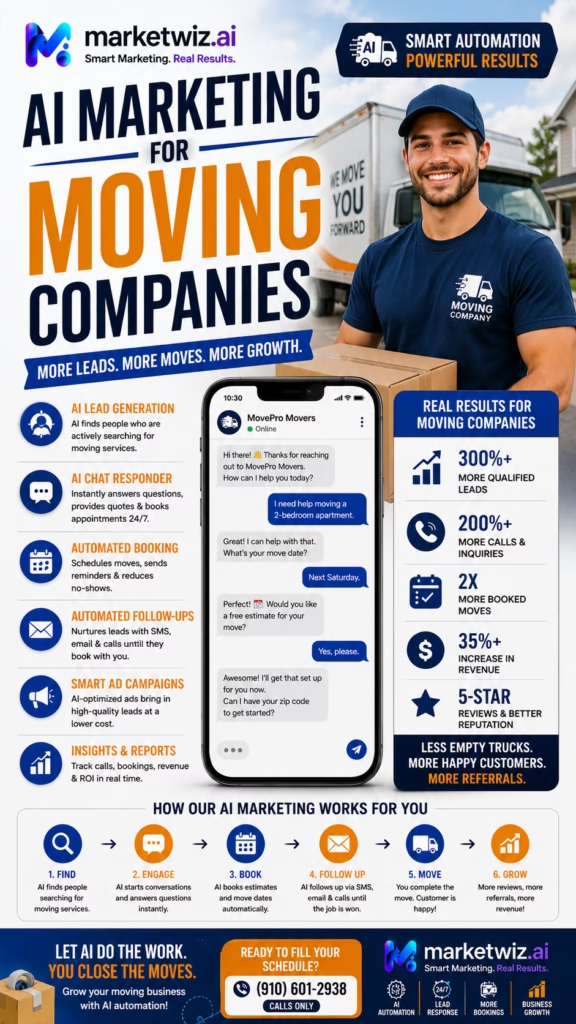
AI marketing for moving companies can help local and long-distance movers improve visibility, respond faster, book more estimates, recover missed calls, organize quote follow-up, and build a more measurable customer-acquisition system.
AI marketing for moving companies works best when it makes the prospect journey faster, clearer, and easier without replacing the professionals responsible for estimates, scheduling, contracts, move planning, and service delivery.
Core moving-company growth principle: Use AI to improve marketing speed, communication, scheduling, CRM organization, and follow-up while keeping final pricing, service terms, liability or valuation coverage, scheduling commitments, and move decisions under qualified human control.
Introduction
AI marketing for moving companies can help local and long-distance movers attract more qualified prospects, respond faster to quote requests, organize estimates, improve follow-up, strengthen local visibility, and turn marketing activity into measurable booked moves.
Moving customers often compare several companies quickly. They may evaluate reviews, pricing expectations, availability, service areas, packing options, storage, insurance or valuation coverage, scheduling flexibility, and responsiveness before deciding who to contact.
This guide explains how moving companies can use AI across local SEO, Google Business Profile, paid advertising, social media, lead response, qualification, estimate scheduling, CRM workflows, quote follow-up, reviews, referrals, retention, analytics, and campaign optimization while maintaining accuracy, transparency, and human oversight.
What AI Marketing Means for Moving Companies
AI marketing for moving companies is the practical use of artificial intelligence to improve customer acquisition, communication, lead handling, follow-up, and marketing decision-making.
Useful applications include keyword research, ad analysis, lead routing, quote scheduling, CRM automation, review analysis, missed-call follow-up, customer segmentation, content planning, and campaign reporting.
The objective is not to automate every customer interaction. The objective is to reduce delays, improve relevance, organize opportunities, and help qualified prospects reach the next step faster.
Why Moving Company Marketing Is Competitive
Moving is a high-intent local service where customers may contact several providers within minutes.
Customers often compare reviews, licensing information, availability, pricing transparency, packing services, storage options, professionalism, response speed, and reputation before booking.
AI can help movers identify which services, markets, lead sources, and messages generate the strongest qualified opportunities.
Set Clear Moving Company Marketing Goals
Every AI workflow should begin with a measurable business goal.
Common goals include more quote requests, more booked moves, faster lead response, fewer missed calls, stronger Google Maps visibility, higher close rates, more repeat customers, and better review volume.
Clear goals make it easier to determine whether AI is producing useful business outcomes instead of simply generating more activity.
Map the Moving Customer Journey
A typical moving customer journey may include Google search, Maps comparison, website visit, phone call or form submission, qualification, estimate, quote review, booking, move preparation, moving day, review, and referral.
Identify where prospects wait too long, abandon forms, fail to schedule estimates, stop responding after a quote, or become confused about services and pricing.
AI can then be applied to the stages where speed, communication, and follow-up matter most.
Use AI to Understand High-Intent Moving Leads
AI can help analyze lead source, move type, origin and destination, estimated move size, timing, quote outcome, and booking history to identify high-intent customer patterns.
Useful segments may include local residential moves, long-distance moves, apartment moves, office moves, senior moves, packing-service leads, storage prospects, and repeat customers.
These insights can improve targeting, routing, messaging, and lead prioritization.
Build Better Moving Lead Segments
Not every moving lead should receive the same message.
A local apartment move, interstate relocation, office move, and full-service packing customer have different priorities.
AI-assisted segmentation can organize prospects by move type, location, timeline, property size, packing needs, storage needs, and buying stage.
Use AI to Improve Moving Company Local SEO
AI can help organize keyword clusters, service pages, city pages, FAQs, internal links, title tags, and meta descriptions.
Moving companies can build useful content around local movers, long-distance movers, apartment moving, office moving, packing services, storage, labor-only moving, and specialty moving.
Content should remain useful, original, location-specific, and factually accurate.
Improve Google Business Profile Marketing
Google Business Profile is often one of the most important discovery channels for moving companies.
AI can help generate post ideas, summarize review themes, organize service descriptions, and identify recurring customer questions.
Hours, service areas, phone numbers, categories, services, photos, and booking information should always be verified before publishing.
Use AI to Analyze Moving Company Reviews
Reviews can reveal what customers value most, such as punctuality, communication, care with belongings, professionalism, speed, pricing transparency, and problem resolution.
AI can summarize recurring positive and negative themes across review history.
These insights can improve marketing copy, crew training, sales scripts, FAQs, and customer experience.
Use AI to Improve Moving Advertising
AI can help analyze ad creative, keywords, service categories, lead quality, quote volume, booking rate, and revenue.
Campaigns can be tested around local moving, long-distance moving, apartment moving, office moving, packing, storage, and seasonal relocation demand.
Do not optimize only for the cheapest click or lead. Compare cost per qualified quote, booked move, gross profit, and revenue.
Optimize Moving Landing Pages
AI can review landing pages for unclear headlines, weak trust signals, missing service details, poor calls to action, and form friction.
Strong moving landing pages usually explain the service, service area, estimate process, what is included, trust signals, reviews, and next step.
Use real conversion data to validate any changes.
Reduce Moving Quote Form Friction
Long forms can reduce conversion, especially when prospects are comparing several movers.
Collect only the information necessary to route the inquiry, such as name, phone, move date, origin, destination, move type, property size, and major service needs.
Additional inventory and access details can be collected later during the estimate process.
Improve Lead Response Speed
Moving customers often contact multiple companies quickly, so response speed can significantly influence who gets the quote opportunity.
AI can acknowledge inquiries, classify move type, route leads, create CRM records, and trigger follow-up tasks.
Automated responses should avoid guaranteeing final pricing, availability, transit times, or service terms before the move details are reviewed.
Use AI Chat for Common Moving Questions
AI chat can answer routine questions about service areas, hours, moving categories, packing options, storage, estimate scheduling, and general process.
The chatbot should use verified company information and should not invent rates, licensing details, insurance terms, availability, or policies.
Complex pricing, liability, specialty-item, or interstate questions should move to qualified staff.
Use AI to Support Phone Workflows
Many moving leads begin by phone.
AI can assist with call summaries, missed-call follow-up, routing, quote notes, and next-action reminders.
Businesses should follow applicable consent and privacy requirements before recording or transcribing customer calls.
Use AI to Qualify Moving Leads
AI can help collect origin, destination, move date, home size, stairs, elevators, packing needs, storage needs, specialty items, and preferred estimate time.
Qualification should remain simple enough that serious prospects can move forward quickly.
Final pricing, inventory scope, crew requirements, truck requirements, valuation terms, and scheduling commitments should remain under qualified human review.
Use AI to Increase Estimate Bookings
AI-assisted scheduling can help prospects choose estimate times or consultation windows without repeated back-and-forth.
Scheduling workflows should confirm contact details, move date, locations, move type, and any major access considerations.
Large commercial, long-distance, specialty, or complex moves may require staff review before final confirmation.
Automate Missed-Call Follow-Up
Missed calls can represent lost revenue because moving customers often continue calling competitors.
AI can trigger fast follow-up, summarize voicemail or call context where appropriate, and create a callback task.
Fast recovery workflows can help capture leads that would otherwise disappear.
Connect AI With the Moving Company CRM
A moving CRM should track lead source, customer contact details, move date, origin, destination, move type, estimate status, sales owner, booking status, next action, and outcome.
AI can summarize notes, categorize leads, flag overdue follow-up, and surface opportunities that need attention.
Automation should include safeguards against duplicate records, incorrect statuses, and accidental loss of important move details.
Improve Moving Quote Follow-Up
Many moving opportunities are lost after a quote is delivered and the prospect delays a decision.
AI can flag open quotes and trigger appropriate follow-up that answers questions, clarifies services, confirms availability, or reviews next steps.
Follow-up should remain useful and should not rely on false urgency or misleading pricing.
Build Local Moving Lead Workflows
Local moving leads often convert quickly when the company responds fast and provides a clear estimate process.
AI can help categorize move size, neighborhood, move date, building type, and service needs.
Final pricing should remain based on verified company policies, move details, access conditions, labor requirements, and applicable rules.
Build Long-Distance Moving Lead Workflows
Long-distance moves often involve more detailed quoting, scheduling, inventory, transit, and regulatory considerations.
AI can help organize customer information, estimate appointments, follow-up, and internal handoffs.
Interstate licensing, valuation coverage, pickup and delivery expectations, and contractual terms should be represented accurately and reviewed by qualified staff.
Use AI for Commercial Moving Leads
Commercial moving often involves longer sales cycles, larger scopes, project coordination, building access, equipment, and multiple decision-makers.
AI can help organize account research, site notes, proposal follow-up, project timelines, and CRM tasks.
High-value commercial opportunities should still receive direct human attention.
Use AI to Market Packing and Add-On Services
Packing, unpacking, storage, labor-only help, and specialty moving services can increase average job value when they are relevant to the customer's move.
AI can help identify prospects who may benefit from these services based on move type and customer needs.
Pricing, availability, materials, and included services should always be represented accurately.
Build Seasonal Moving Campaigns
Moving demand can change with school calendars, lease cycles, home sales, weather, college schedules, and peak summer periods.
AI can help movers plan campaigns before seasonal demand increases.
Seasonal marketing works best when it aligns with actual scheduling capacity and available crews.
Use AI to Improve Customer Retention
Moving is not always a high-frequency service, but past customers can still generate referrals, repeat moves, storage needs, commercial opportunities, and household-related services.
AI can help organize follow-up, review requests, referral communication, and future move reminders where appropriate.
Retention messaging should remain relevant and appropriately timed.
Use AI to Support Referral Growth
Satisfied moving customers can generate valuable local referrals.
AI can help identify completed moves that are appropriate for review or referral follow-up.
Referral requests should be polite, timely, and based on a completed customer experience.
Use AI to Analyze Moving Lead Data
AI can help managers interpret performance across move types, ZIP codes, campaigns, sales representatives, and time periods.
Useful questions include which services close at the highest rate, which markets produce the strongest average move value, where leads are lost, and which channels generate the best booked-job revenue.
Important conclusions should be validated against the underlying data.
Track Moving Company Marketing Metrics
Useful metrics include lead volume, qualified-lead rate, response time, quote booking rate, estimate completion rate, quote acceptance rate, average move value, acquisition cost, referral rate, and revenue by source.
Track performance by move type and geographic market so budgets can be allocated intelligently.
Clicks and impressions provide context, but booked moves and profitable revenue matter more.
Build an AI-Assisted Testing Program
AI can generate ideas for ad headlines, landing-page copy, quote prompts, missed-call follow-up, review requests, and email sequences.
Test one meaningful variable at a time when possible and define the success metric before launch.
Document winning and losing tests so the company builds a reliable moving marketing playbook.
Maintain Trust and Pricing Transparency
Moving company marketing should protect customer trust.
AI should never fabricate reviews, licenses, insurance coverage, pricing, discounts, availability, transit times, guarantees, or service terms.
Final quotes, liability or valuation terms, contract details, scheduling commitments, and regulatory requirements should remain under qualified human control.
Common AI Marketing Mistakes for Moving Companies
Common mistakes include automating inaccurate information, measuring cheap leads instead of booked moves, using generic follow-up for every prospect, and failing to respond quickly.
Another mistake is allowing AI to provide guaranteed pricing, availability, or service terms before move details are reviewed.
The strongest AI systems improve speed, organization, and consistency while keeping important moving decisions with experienced professionals.
A 30-Day AI Marketing Plan for Moving Companies
During the first week, map the lead journey, review response times, identify high-value move categories, and audit local visibility.
During the second week, implement one or two focused workflows such as missed-call follow-up, estimate scheduling, CRM summarization, or review analysis.
During the third week, review quote and booking data. During the fourth week, compare lead quality, average move value, close rate, and revenue, then expand only the workflows that create measurable value.
Conclusion
AI marketing for moving companies can become a valuable growth system when it is connected to local visibility, fast response, estimate scheduling, quote follow-up, referrals, and accurate reporting.
The highest-value use cases help movers respond faster and market more consistently without replacing the estimators, coordinators, drivers, and crews customers rely on.
Start with one meaningful bottleneck, use verified company information, track real booked-move revenue, and expand only the workflows that improve customer experience and business performance.
Frequently Asked Questions
What is AI marketing for moving companies?
It is the use of artificial intelligence to improve local marketing, lead response, quote scheduling, CRM workflows, follow-up, reviews, referrals, and reporting for moving businesses.
How can AI help moving companies get more leads?
AI can support local SEO, Google Business Profile content, paid advertising, social media, lead response, estimate scheduling, and follow-up.
Can AI improve moving lead response time?
Yes. AI can acknowledge inquiries, classify move type, route leads, create CRM records, and trigger follow-up quickly.
Can AI schedule moving estimates?
Yes. AI-assisted scheduling can help prospects choose estimate or consultation times and reduce manual back-and-forth.
Can AI provide moving prices?
AI should not guarantee final pricing without verified move details, inventory, access conditions, labor requirements, service terms, and company pricing.
Can AI improve moving company SEO?
AI can help with keyword research, service-page planning, city content, FAQs, internal links, titles, and meta descriptions.
Can AI improve Google Business Profile marketing for movers?
Yes. AI can help generate posts, summarize review themes, organize services, and identify common customer questions.
Can AI improve moving company advertising?
Yes. AI can help analyze keywords, creative, move types, lead quality, quote volume, bookings, and revenue.
Can AI help movers with social media?
Yes. AI can help create moving tips, packing content, crew highlights, customer stories, and seasonal relocation posts.
Can AI reduce missed calls for moving companies?
Yes. AI can support missed-call alerts, follow-up tasks, call summaries, and callback workflows so fewer inquiries are lost.
Can AI qualify moving leads?
Yes. AI can help collect origin, destination, move date, home size, access conditions, packing needs, storage needs, and preferred estimate time.
Can AI improve moving quote follow-up?
Yes. AI can flag open quotes and support follow-up that answers questions, clarifies services, and reviews next steps.
Can AI help moving companies with CRM automation?
Yes. AI can summarize notes, categorize leads, flag overdue follow-up, and maintain quote and booking workflows.
Can AI analyze moving company reviews?
Yes. AI can summarize review themes to identify strengths, complaints, trust factors, and customer expectations.
Can AI help movers get more reviews?
AI can help identify completed moves and trigger polite review requests at appropriate times.
Can AI support moving referrals?
Yes. AI can help organize follow-up with satisfied customers and identify appropriate times to request referrals.
Can AI help with local moving leads?
Yes. AI can support local SEO, ads, lead routing, estimate scheduling, and follow-up for local moving services.
Can AI help with long-distance moving leads?
Yes. AI can help organize customer details, estimate workflows, follow-up, and sales handoffs for long-distance moves.
Can AI help with commercial moving leads?
Yes. AI can support account research, proposal follow-up, project notes, and CRM organization for commercial opportunities.
Can AI help market packing services?
Yes. AI can help identify prospects who may benefit from packing, unpacking, storage, or labor-only services.
Can AI help with storage leads?
Yes. AI can help segment moving prospects who may need storage and route them to accurate service information.
What metrics should moving companies track?
Track qualified leads, response time, estimate bookings, quote acceptance, average move value, acquisition cost, referrals, and revenue.
Should moving companies optimize for cheap leads?
Not necessarily. Cost per qualified quote, booked move, gross profit, and revenue are usually more useful metrics.
Can AI help small moving companies?
Yes. Small movers can benefit from focused automation in lead response, missed calls, scheduling, CRM updates, and follow-up.
Can AI improve customer retention?
Yes. AI can help organize review requests, referral follow-up, repeat-move reminders, storage communication, and future customer outreach.
Can AI help with seasonal moving campaigns?
Yes. AI can help plan campaigns around summer demand, lease cycles, school calendars, college moves, and home-sale seasons.
What is the biggest AI mistake for moving companies?
A major mistake is allowing automation to provide inaccurate pricing, availability, licensing, insurance, or service details without professional review.
How can moving companies keep AI accurate?
Use verified company information, human review, clear escalation rules, good CRM data, and regular audits of automated workflows.
How quickly can AI improve moving company marketing?
Operational improvements such as faster routing and missed-call recovery can happen quickly, while reliable booking and revenue gains require testing and enough data.
What is the main goal of AI marketing for moving companies?
The main goal is to create a faster, more organized, trustworthy, and measurable path from local prospect to quote, booked move, satisfied customer, and referral.
30 Additional SEO Keywords
Use these related phrases naturally in supporting articles, service pages, location pages, internal links, image alt text, and future moving-company content.
Build a Smarter Moving Company Marketing System
MarketWiz.ai helps moving companies connect AI marketing, local visibility, lead response, estimate scheduling, CRM automation, missed-call recovery, quote follow-up, and referral growth into a more measurable system.
Request a MarketWiz.ai Strategy ReviewMarketing and moving results vary by service area, move type, crew capacity, seasonality, pricing, sales process, campaign quality, licensing, and implementation. AI-generated content and automated workflows should be reviewed for accuracy before use.










Use AI for Moving Company Social Media
AI can help create content around moving tips, packing checklists, before-and-after truck loads, crew highlights, moving-day preparation, customer stories, and seasonal relocation advice.
Social media should build familiarity and trust rather than only publish promotions.
Track calls, messages, website visits, quote requests, and booked moves generated from social activity.