

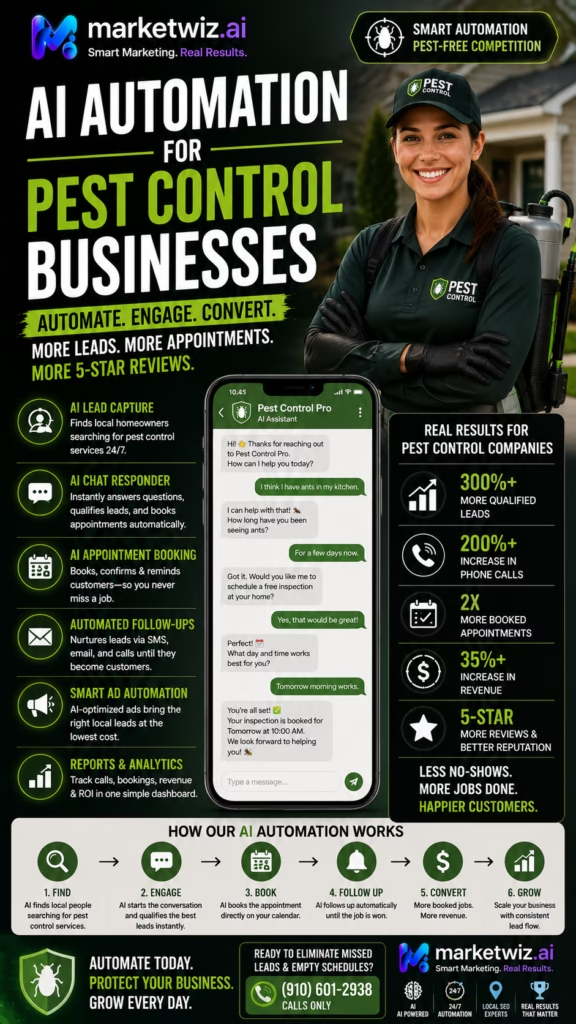
AI Automation for Pest Control Businesses
AI automation for pest control businesses can help local service companies improve visibility, respond faster, book more appointments, recover missed calls, grow recurring plans, and build a more measurable customer-acquisition system.
AI automation for pest control businesses works best when it makes the customer journey faster, clearer, and easier without replacing trained professionals responsible for pest identification, treatment decisions, pesticide use, safety, and compliance.
Core pest control automation principle: Use AI to improve marketing speed, communication, scheduling, CRM organization, and follow-up while keeping treatment recommendations, pesticide selection, application, safety guidance, and regulated decisions under qualified human control.
Introduction
AI automation for pest control businesses can help local service companies attract more qualified customers, respond faster to urgent inquiries, organize inspections and treatments, improve follow-up, strengthen local visibility, and turn marketing activity into measurable service revenue.
Pest control customers often search when they are dealing with an immediate problem such as ants, roaches, rodents, termites, mosquitoes, spiders, bed bugs, fleas, wasps, or wildlife concerns. That urgency makes response speed, trust, scheduling, and clear communication especially important.
This guide explains how pest control companies can use AI across local SEO, Google Business Profile, paid advertising, social media, lead response, qualification, appointment scheduling, CRM workflows, missed-call follow-up, reviews, recurring-service retention, analytics, and campaign optimization while keeping treatment recommendations, chemical decisions, safety, and regulated work under qualified human control.
What AI Automation Means for Pest Control Businesses
AI automation for pest control businesses is the practical use of artificial intelligence to improve repetitive marketing, sales, communication, customer-service, and operational workflows.
Useful applications include lead routing, missed-call recovery, appointment reminders, CRM updates, local content planning, review analysis, customer segmentation, treatment follow-up, recurring-service reminders, and reporting.
The goal is not to remove people from the customer experience. The goal is to make the business faster, more consistent, and easier for customers and staff to work with.
Set Clear Pest Control Automation Goals
Every AI workflow should begin with a measurable objective such as faster response time, more booked inspections, more recurring service agreements, fewer missed calls, higher review volume, stronger local visibility, or improved retention.
Campaign goals should reflect technician capacity, service area, treatment schedules, seasonality, and the types of pests the company actually handles.
Clear goals make it easier to measure whether AI is producing real business value instead of simply adding more software.
Map the Pest Control Customer Journey
A typical pest control journey may include Google search, Maps comparison, website visit, phone call or form submission, qualification, inspection or treatment booking, service delivery, follow-up, review, recurring service, and referral.
Identify where prospects wait too long, fail to book, miss appointments, stop responding, or become confused about pricing, treatment expectations, preparation, or follow-up.
AI can then be applied to the stages where speed, organization, and communication matter most.
Use AI to Improve Pest Control Lead Generation
AI can help analyze which pest categories, neighborhoods, seasons, keywords, campaigns, and lead sources produce the strongest opportunities.
Marketing teams can use these insights to create more relevant content and advertising around termite control, rodent control, ant control, mosquito control, bed bug treatment, cockroach control, wildlife removal, and recurring pest plans.
The goal is not simply more inquiries. The goal is more customers who fit the company's service area, pest categories, scheduling capacity, and recurring-service model.
Use AI to Improve Local SEO
AI can help organize keyword clusters, service pages, city pages, FAQs, internal links, title tags, and meta descriptions.
Pest control companies can build useful content around specific pests, seasonal issues, inspection questions, treatment expectations, prevention, and local service areas.
Content should remain useful, original, local, and factually accurate.
Improve Google Business Profile Marketing
Google Business Profile is often one of the most important discovery channels for pest control companies.
AI can help generate post ideas, summarize review themes, organize service descriptions, and identify common customer questions.
Hours, service areas, phone numbers, categories, services, photos, and appointment information should always be verified before publishing.
Use AI to Analyze Pest Control Reviews
Reviews can reveal what customers value most, such as responsiveness, professionalism, punctuality, communication, effectiveness, cleanliness, and follow-up.
AI can summarize recurring positive and negative themes across review history.
These insights can improve marketing copy, technician training, booking scripts, FAQs, and customer experience.
Use AI to Improve Pest Control Advertising
AI can help analyze ad creative, keywords, pest categories, lead quality, call volume, booked inspections, and recurring-customer performance.
Campaigns can be tested around termites, rodents, mosquitoes, bed bugs, ants, roaches, seasonal pest pressure, and recurring service plans.
Do not optimize only for the cheapest click or lead. Compare cost per qualified appointment, completed treatment, recurring agreement, and revenue.
Optimize Pest Control Landing Pages
AI can review landing pages for unclear headlines, weak trust signals, missing pest-specific details, poor calls to action, and form friction.
Strong landing pages usually explain the pest problem, service area, inspection or treatment process, trust signals, reviews, and next step.
Use real conversion data to validate changes.
Reduce Pest Control Lead Form Friction
Long forms can reduce conversion when a customer needs help quickly.
Collect only the information necessary to route the lead, such as name, phone, ZIP code, pest type, property type, urgency, and preferred appointment time.
Additional information can be collected during the phone call or inspection.
Improve Lead Response Speed
Pest control customers often contact multiple companies in a short period of time.
AI can acknowledge inquiries, categorize pest type, route leads, create CRM records, and trigger follow-up tasks quickly.
Automated responses should avoid guaranteeing treatment outcomes, exact pricing, chemical recommendations, or safety claims before qualified review.
Use AI Chat for Common Pest Control Questions
AI chat can answer routine questions about service areas, hours, appointment availability, pest categories, general preparation, and scheduling.
The chatbot should use verified company information and should not provide unsupported pesticide, chemical, medical, or safety advice.
Complex treatment or exposure questions should move to qualified staff.
Use AI to Support Phone Workflows
Many pest control leads begin by phone.
AI can assist with call summaries, missed-call follow-up, routing, appointment notes, and next-action reminders.
Businesses should follow applicable consent and privacy requirements before recording or transcribing customer calls.
Use AI to Qualify Pest Control Leads
AI can help collect pest type, property type, location, urgency, visible activity, prior treatment history, and preferred appointment window.
Qualification should remain simple enough that urgent customers can move forward quickly.
Actual identification, treatment scope, pesticide selection, application method, safety guidance, and pricing should remain under qualified professional control.
Use AI to Increase Appointment Bookings
AI-assisted scheduling can help customers choose available inspection or treatment windows without repeated back-and-forth.
Scheduling workflows should confirm contact information, service address, pest concern, property type, appointment window, and preparation instructions when appropriate.
Complex infestations, commercial properties, or regulated work may still require staff review before final confirmation.
Automate Missed-Call Follow-Up
Missed calls can represent lost revenue because urgent pest-control customers often move quickly to the next company.
AI can trigger fast follow-up, summarize voicemail or call context where appropriate, and create a callback task.
Fast recovery workflows can help capture opportunities that would otherwise disappear.
Connect AI With the Pest Control CRM
A pest control CRM should track lead source, customer contact information, service address, pest type, appointment status, technician, treatment history, recurring-plan status, next action, and outcome.
AI can summarize notes, categorize leads, flag stale opportunities, and surface customers who need follow-up.
Automation should include safeguards against duplicate records, incorrect statuses, and accidental loss of customer information.
Build Termite Lead Workflows
Termite leads may involve inspections, active infestations, preventive treatments, real-estate transactions, or long-term protection plans.
AI can help route inquiries, organize appointment scheduling, and collect relevant property details.
Inspection findings, treatment recommendations, chemical selection, warranties, and structural claims should remain under qualified professional review.
Build Rodent Control Lead Workflows
Rodent inquiries can involve noises, droppings, entry points, visible activity, or recurring problems.
AI can help organize symptom details, route urgent cases, and schedule inspections.
Final exclusion plans, trapping strategies, baiting decisions, and safety recommendations should be handled by trained professionals.
Build Mosquito Control Lead Workflows
Mosquito control is often seasonal and can benefit from recurring-service marketing.
AI can help segment customers by location, service history, season, and renewal timing.
Automated systems should avoid making unsupported public-health or outcome claims.
Build Bed Bug Lead Workflows
Bed bug inquiries can be urgent and sensitive.
AI can help route leads quickly, collect basic information, and schedule inspections or consultations.
Treatment recommendations, preparation instructions, heat or chemical decisions, and safety guidance should come from qualified professionals and verified company protocols.
Use AI for Commercial Pest Control Leads
Commercial pest control often involves longer sales cycles, compliance requirements, recurring service, documentation, and multiple decision-makers.
AI can help organize account research, property notes, proposal follow-up, service schedules, and contract renewal reminders.
High-value commercial opportunities should still receive direct human attention.
Use AI to Market to Property Managers
Property managers may need recurring pest control across apartments, rentals, commercial properties, common areas, and turnover units.
AI can help organize outreach, property records, follow-up schedules, and account notes.
Messaging should focus on communication, scheduling, documentation, responsiveness, and consistent service delivery.
Use AI to Grow Recurring Pest Control Plans
Recurring service plans can create predictable revenue and stronger customer retention.
AI can help identify one-time customers who may be appropriate for ongoing service, organize renewal reminders, and segment customers by treatment history.
Recurring-plan terms, frequency, pricing, and included services should always be represented accurately.
Use AI to Improve Customer Retention
AI can help organize follow-up after service, recurring reminders, maintenance communication, seasonal outreach, and future inspection opportunities.
Past customers can become valuable repeat customers and referral sources.
Retention messaging should remain relevant, helpful, and appropriately timed.
Use AI to Support Referral Growth
Satisfied pest control customers can generate strong local referrals.
AI can help identify completed service calls that are appropriate for review or referral follow-up.
Referral requests should be polite, timely, and based on a completed customer experience.
Use AI to Analyze Pest Control Lead Data
AI can help managers interpret performance across pest categories, ZIP codes, campaigns, technicians, and time periods.
Useful questions include which pest services close at the highest rate, which neighborhoods produce the strongest recurring-customer value, where leads are lost, and which channels generate the highest retention.
Important conclusions should be validated against the underlying data.
Track Pest Control Marketing Metrics
Useful metrics include lead volume, qualified-lead rate, response time, booked appointment rate, show rate, completed service rate, recurring-plan conversion, average ticket, acquisition cost, retention, and revenue by source.
Track results by pest category and geographic market so budgets can be allocated intelligently.
Clicks and impressions provide context, but booked treatments, recurring agreements, and revenue matter more.
Build an AI-Assisted Testing Program
AI can generate ideas for ad headlines, pest-specific landing pages, appointment prompts, missed-call follow-up, review requests, and recurring-plan offers.
Test one meaningful variable at a time when possible and define the success metric before launch.
Document winning and losing tests so the company builds a reliable pest control marketing playbook.
Maintain Trust, Safety, and Compliance
Pest control marketing should protect customer trust and respect applicable pesticide, safety, licensing, and advertising requirements.
AI should never fabricate reviews, licenses, certifications, pricing, warranties, treatment outcomes, chemical claims, or safety guarantees.
Treatment recommendations, pesticide selection, application, safety instructions, and regulated decisions should remain under qualified human control.
Common AI Automation Mistakes for Pest Control Businesses
Common mistakes include automating inaccurate information, measuring cheap leads instead of booked service, using generic follow-up for every pest type, and failing to respond quickly.
Another mistake is allowing AI to provide unsupported chemical guidance, treatment promises, or safety claims.
The strongest AI systems improve speed, organization, and consistency while keeping technical and regulated decisions with experienced professionals.
A 30-Day AI Automation Plan for Pest Control Companies
During the first week, map the lead journey, review response times, identify high-value pest categories, and audit local visibility.
During the second week, implement one or two focused workflows such as missed-call follow-up, appointment scheduling, CRM summarization, review analysis, or recurring-plan reminders.
During the third week, review booking and completed-service data. During the fourth week, compare lead quality, recurring conversion, average ticket, and revenue, then expand only the workflows that create measurable value.
Conclusion
AI automation for pest control businesses can become a valuable growth system when it is connected to local visibility, fast response, scheduling, missed-call recovery, recurring service, follow-up, reviews, and accurate reporting.
The highest-value use cases help pest control companies respond faster and operate more consistently without replacing the trained professionals customers rely on for inspection, treatment, safety, and compliance.
Start with one meaningful bottleneck, use verified company information, track real service revenue, and expand only the workflows that improve customer experience and business performance.
Frequently Asked Questions
What is AI automation for pest control businesses?
It is the use of artificial intelligence to improve lead generation, response speed, scheduling, CRM workflows, follow-up, reviews, recurring-service retention, and reporting for pest control companies.
How can AI help pest control companies get more leads?
AI can support local SEO, Google Business Profile content, paid advertising, social media, lead response, appointment scheduling, and follow-up.
Can AI improve pest control lead response time?
Yes. AI can acknowledge inquiries, classify pest type, route leads, create CRM records, and trigger follow-up quickly.
Can AI schedule pest control appointments?
Yes. AI-assisted scheduling can help customers choose available inspection or treatment windows and reduce manual back-and-forth.
Can AI identify pests?
AI can help organize customer descriptions, but actual pest identification and treatment decisions should be handled by qualified professionals.
Can AI recommend pesticides or chemicals?
AI marketing systems should not replace qualified professionals for pesticide selection, application methods, safety instructions, or regulated treatment decisions.
Can AI improve pest control SEO?
AI can help with keyword research, service-page planning, city content, FAQs, internal links, titles, and meta descriptions.
Can AI improve Google Business Profile marketing?
Yes. AI can help generate posts, summarize review themes, organize services, and identify common customer questions.
Can AI improve pest control advertising?
Yes. AI can help analyze keywords, creative, pest categories, lead quality, appointments, recurring-plan conversion, and revenue.
Can AI help pest control companies with social media?
Yes. AI can help create prevention tips, seasonal content, pest education, technician spotlights, and local service posts.
Can AI reduce missed calls?
Yes. AI can support missed-call alerts, follow-up tasks, call summaries, and callback workflows so fewer inquiries are lost.
Can AI qualify pest control leads?
Yes. AI can help collect pest type, property type, location, urgency, prior treatment history, and preferred appointment time.
Can AI provide pest control pricing?
AI should not guarantee final pricing without verified service details, property conditions, treatment requirements, and company pricing.
Can AI help with CRM automation?
Yes. AI can summarize notes, categorize leads, flag overdue follow-up, and maintain appointment, treatment, and recurring-service records.
Can AI analyze pest control reviews?
Yes. AI can summarize review themes to identify strengths, complaints, trust factors, and customer expectations.
Can AI help pest control companies get more reviews?
AI can help identify completed service calls and trigger polite review requests at appropriate times.
Can AI support referrals?
Yes. AI can help organize follow-up with satisfied customers and identify appropriate times to request referrals.
Can AI help with termite leads?
Yes. AI can support routing, scheduling, and information collection for termite inspections and treatment inquiries.
Can AI help with rodent control leads?
Yes. AI can help categorize rodent inquiries, collect symptom details, and schedule inspections.
Can AI help with mosquito control leads?
Yes. AI can support seasonal campaigns, recurring-plan marketing, lead routing, and renewal reminders.
Can AI help with bed bug leads?
Yes. AI can help route inquiries quickly and schedule inspections, while treatment and safety decisions remain with qualified professionals.
Can AI help with commercial pest control leads?
Yes. AI can support account research, proposal follow-up, service schedules, documentation, and renewal workflows for commercial accounts.
Can AI help market to property managers?
Yes. AI can support outreach, recurring follow-up, property records, and account organization for property-management customers.
Can AI grow recurring pest control plans?
Yes. AI can help identify one-time customers who may be appropriate for recurring service and organize renewal reminders.
What metrics should pest control companies track?
Track qualified leads, response time, booked appointments, completed service, recurring-plan conversion, average ticket, acquisition cost, retention, and revenue.
Should pest control companies optimize for cheap leads?
Not necessarily. Cost per booked service, completed treatment, recurring agreement, gross profit, and revenue are often more valuable metrics.
Can AI help small pest control businesses?
Yes. Small companies can benefit from focused automation in lead response, missed calls, scheduling, CRM updates, and follow-up.
What is the biggest AI mistake for pest control companies?
A major mistake is allowing automation to provide inaccurate chemical guidance, treatment claims, safety advice, or pricing without professional review.
How can pest control companies keep AI accurate?
Use verified company information, human review, clear escalation rules, good CRM data, and regular audits of automated workflows.
What is the main goal of AI automation for pest control businesses?
The main goal is to create a faster, more organized, trustworthy, and measurable path from local inquiry to booked service, recurring customer, repeat business, and referral.
30 Additional SEO Keywords
Use these related phrases naturally in supporting articles, service pages, location pages, internal links, image alt text, and future pest control content.
Build a Smarter Pest Control Automation System
MarketWiz.ai helps pest control businesses connect AI marketing, local visibility, lead response, scheduling, CRM automation, missed-call recovery, recurring-service workflows, and customer follow-up into a more measurable growth system.
Request a MarketWiz.ai Strategy ReviewMarketing and pest control results vary by service area, pest category, technician capacity, seasonality, pricing, campaign quality, licensing, and implementation. AI-generated content and automated workflows should be reviewed for accuracy, safety, and compliance before use.














Use AI for Pest Control Social Media
AI can help create content around prevention tips, seasonal pest activity, common myths, technician spotlights, service explanations, and local pest alerts.
Social media should build trust and local recognition rather than only publish promotions.
Track calls, messages, profile visits, website traffic, and booked appointments generated from social activity.