
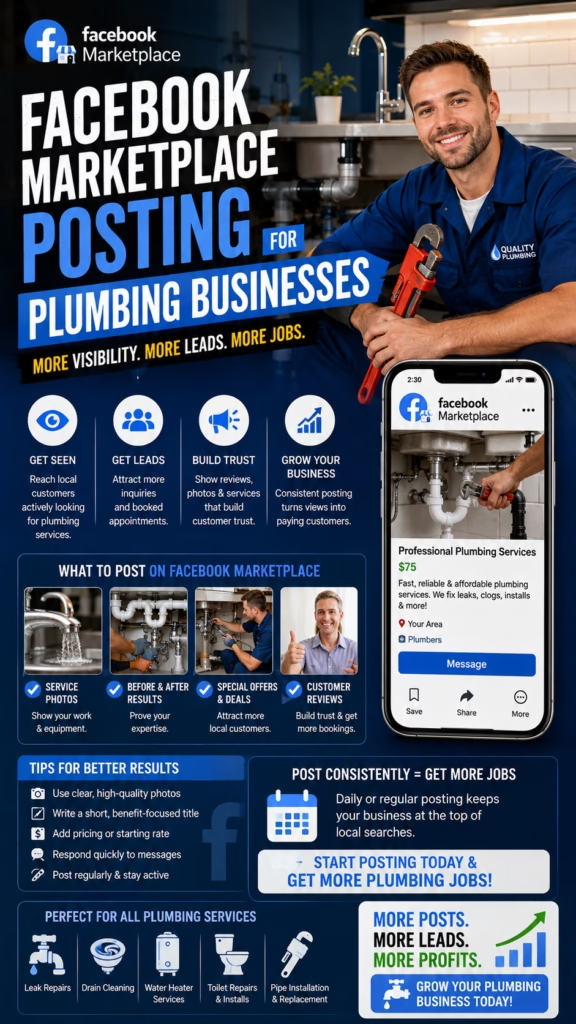
Facebook Marketplace Posting for Plumbing Businesses
A complete guide to building local visibility, creating stronger Marketplace listings, managing plumbing inquiries, improving response workflows, and turning Facebook Marketplace activity into measurable customer opportunities.
Plumbing businesses compete in one of the most locally driven service industries in the market. Customers may need help with leaking pipes, faucets, toilets, water heaters, drains, fixtures, remodeling projects, replacement products, or emergency plumbing problems. Facebook Marketplace can create another opportunity for plumbing businesses to reach people already browsing locally.
A strong Facebook Marketplace posting strategy for plumbing businesses should not be built around random ad volume. It should connect legitimate listings, relevant products or eligible offers, clear descriptions, strong visual presentation, prompt customer response, lead management, and measurable follow-up.
The goal is not simply to publish more listings. The goal is to create a repeatable system that increases local exposure and turns that exposure into qualified conversations and customer opportunities.
What Is Facebook Marketplace Posting for Plumbing Businesses?
Facebook Marketplace posting for plumbing businesses is the process of using Marketplace listings as part of a broader local marketing strategy. Depending on the business model and current platform rules, listings may feature legitimate physical plumbing products, fixtures, equipment, materials, or other eligible offers that can attract nearby buyers.
Marketplace should be treated as its own environment. People browse it differently than they search Google. They may not enter a highly specific emergency plumbing keyword. Instead, they may discover an item, product, renovation-related offer, or local business presence while browsing.
Marketplace is discovery-driven
Google Search tends to capture explicit intent. Marketplace frequently creates discovery. That difference matters.
A homeowner may search Google specifically for “water heater replacement near me,” while another homeowner may encounter a Marketplace listing for a legitimate water heater, vanity, sink, faucet, or fixture while planning a renovation.
Both customers can become commercially valuable, but the message and listing strategy should match the platform.
Why Facebook Marketplace Can Matter for Plumbing Companies
Plumbing companies often rely heavily on Google, referrals, repeat customers, paid search, and local SEO. Marketplace can add another layer of local exposure.
Local Reach
Marketplace is geographically oriented, making it useful for reaching nearby users who may be researching home improvement products or related needs.
Visual Discovery
Strong product, fixture, installation, and project imagery can help a plumbing listing attract attention during browsing.
Conversation Opportunities
Interested users can initiate conversations, giving the plumbing business an opportunity to qualify legitimate demand.
Channel Diversification
Marketplace can reduce overdependence on any single lead source when combined with search, SEO, referrals, and other local channels.
Additional visibility can matter in competitive markets
In large cities, plumbers may compete against dozens or hundreds of companies across Google Ads, Local Services Ads, organic search, and map results.
An additional legitimate customer acquisition channel can help increase the number of opportunities entering the pipeline.
Understanding Plumbing Customer Intent
Plumbing customers have different levels of urgency. Understanding those differences helps determine what Marketplace can realistically contribute.
Emergency plumbing intent
Emergency customers may be dealing with:
- burst pipes;
- severe leaks;
- overflowing toilets;
- sewer backups;
- water heater failures;
- major drain blockages;
- no running water.
These customers often need immediate help and may rely more heavily on direct search and phone-based channels.
Planned project intent
Marketplace can be particularly relevant when customers are planning:
- bathroom renovations;
- kitchen upgrades;
- fixture replacements;
- water heater upgrades;
- vanity installations;
- faucet replacements;
- sink installations;
- property renovations.
These customers may browse products and ideas before deciding which company will handle the installation or larger project.
Facebook Marketplace Policy and Compliance
Marketplace marketing must begin with compliance. Facebook can change commerce rules, listing eligibility, categories, and enforcement practices over time, so plumbing businesses should verify current platform requirements before posting.
Accurately represent what is being offered
Listing titles, photos, descriptions, prices, condition, location, and product information should accurately represent the offer.
Misleading listings may attract clicks temporarily, but they create poor lead quality, customer frustration, and unnecessary platform risk.
Avoid artificial placeholder pricing
A legitimate physical product should use a real price when a fixed price is available. Artificial $0 or $1 pricing designed solely to attract clicks can confuse customers and create a poor Marketplace experience.
Avoid unsupported service-only listings
Plumbing businesses should carefully review current rules related to services. A strategy built around legitimate physical products or other eligible listing types may be more appropriate than attempting to force unsupported service-only advertisements into Marketplace.
Building a Plumbing Marketplace Listing Strategy
Strong Marketplace campaigns are structured around distinct listing concepts rather than endless copies of one ad.
Create legitimate listing categories
Depending on actual inventory and business operations, a plumbing company might organize Marketplace activity around physical items such as:
- water heaters;
- bathroom vanities;
- sinks;
- faucets;
- toilets;
- shower fixtures;
- plumbing hardware;
- pipe materials;
- replacement fixtures;
- related home improvement products.
The specific categories should always reflect what the business actually sells or legitimately offers.
Build listing variation around real differences
Variation should come from actual product types, sizes, finishes, specifications, use cases, locations, images, and inventory differences rather than artificial wording changes.
This improves relevance while preventing the campaign from looking like repetitive spam.
Writing Better Marketplace Titles
The title is one of the first elements a Marketplace user sees. It should communicate the actual product or offer quickly.
Lead with the product
Instead of a vague title such as “Great Plumbing Deal,” use a title that accurately identifies the item.
Examples of natural title structures include:
- 50-Gallon Electric Water Heater;
- Modern Bathroom Vanity With Sink;
- Brushed Nickel Kitchen Faucet;
- Dual-Flush Bathroom Toilet;
- Stainless Steel Kitchen Sink;
- Bathroom Shower Fixture Set.
Add important specifications when useful
Size, material, fuel type, finish, capacity, model, or other specifications can improve relevance when they genuinely matter to the buyer.
Avoid title stuffing
Titles overloaded with repeated cities, phone numbers, promotional claims, and unrelated keywords are harder to read and can reduce trust.
Writing Plumbing Marketplace Descriptions
The description should answer the buyer's practical questions.
Start with a clear summary
Explain exactly what the listing represents. If it is a physical product, identify the product and important specifications immediately.
Include useful details
Depending on the product, useful information might include:
- size;
- capacity;
- material;
- finish;
- fuel or power type;
- condition;
- included components;
- pickup or availability information;
- installation availability if separately offered and permitted.
Keep claims accurate
Avoid inventing warranties, discounts, product specifications, inventory quantities, manufacturer claims, or availability information.
Marketplace descriptions are more effective when customers can trust that every detail is real.
Photos and Creative Strategy
Marketplace is highly visual. Strong imagery can dramatically change how much attention a plumbing-related listing receives.
Use real product photos when possible
Real photos provide confidence that the item exists and accurately show condition, size, finish, and appearance.
Show plumbing products in context
A bathroom vanity shown in a realistic bathroom setting can help a buyer understand how the product might look after installation.
Likewise, a faucet, sink, toilet, water heater, or fixture can be photographed in a clean installation environment when that imagery truthfully represents the offer.
Use multiple angles
A strong image set may include:
- front view;
- side view;
- close-up details;
- hardware;
- labels or specifications;
- installed example;
- packaging where relevant.
Before-and-after project images
Plumbing companies can also use authentic project photography in broader marketing. Before-and-after bathroom, fixture, water heater, and renovation images can demonstrate credibility when used appropriately.
Pricing and Offer Presentation
Pricing strongly affects Marketplace user behavior because many shoppers compare listings quickly.
Use real product pricing
If a product costs $349, listing it at $1 to attract clicks creates a poor user experience. Accurate prices generally lead to more qualified conversations.
Separate product pricing from installation
When applicable and permitted, a listing can clearly distinguish between the physical product price and separately available installation.
This reduces confusion and helps customers understand exactly what the listed amount includes.
Do not invent discounts
Promotional language such as “50% off,” “today only,” or “clearance” should only be used when the promotion is genuine.
Location and Service-Area Strategy
Plumbing businesses are local by nature, so Marketplace location strategy should reflect where the company genuinely operates.
Use accurate listing locations
Locations should not be manipulated simply to appear in markets where the product or business is not actually available.
Prioritize profitable markets
If the company serves a metropolitan area with several cities, prioritize markets based on:
- population;
- customer value;
- travel time;
- existing demand;
- competition;
- technician capacity;
- average project profitability.
Do not chase geography that the business cannot service
More inquiries are not useful if technicians cannot reasonably reach the customer or if the travel cost destroys profitability.
Physical Plumbing Products That Can Support Marketplace Marketing
A product-oriented Marketplace strategy can be especially relevant for plumbing companies that sell or supply physical fixtures and equipment.
Water heaters
Water heaters are high-interest plumbing products because replacement is often necessary rather than optional. Listings should accurately state capacity, fuel type, condition, and other relevant specifications.
Bathroom vanities
Vanities can attract homeowners planning renovations. Dimensions, finish, countertop details, included sink, and condition are valuable listing details.
Faucets
Kitchen and bathroom faucets can work well visually. Finish, configuration, mounting type, and included components should be clearly described.
Sinks
Stainless steel, farmhouse, undermount, drop-in, vanity, and utility sinks can appeal to different customer segments.
Toilets
Buyers may compare bowl style, flushing configuration, dimensions, condition, color, and included parts.
Fixtures and hardware
Shower fixtures, valves, trim kits, drains, and other legitimate physical plumbing products may support additional listing variety.
Responding to Marketplace Plumbing Leads
Lead response is where Marketplace marketing either becomes valuable or gets wasted.
Respond quickly
Marketplace buyers frequently contact more than one seller. A fast response can improve the chance that the conversation continues.
Answer the original question first
If the buyer asks whether a product is available, answer that question clearly before forcing the conversation into an unrelated sales script.
Qualify naturally
Once the buyer's question has been answered, the business can determine:
- what product or plumbing need they have;
- where they are located;
- their project timeline;
- whether installation is relevant;
- whether a larger plumbing project exists;
- what the next appropriate step should be.
Do not over-automate the conversation
Automated responses should still sound relevant to the customer's actual question. Repetitive scripted replies can reduce trust and lead quality.
Automation and Plumbing Marketplace Lead Management
Marketplace activity becomes harder to manage as listing volume, geographic coverage, and inbound conversations increase.
Automation can help businesses create a more organized response workflow.
Useful automation functions
- inquiry monitoring;
- response alerts;
- lead qualification;
- conversation routing;
- CRM entry;
- follow-up reminders;
- appointment notifications;
- lead source tracking.
Keep humans involved in high-value conversations
Plumbing jobs can involve pricing, property conditions, emergency situations, code requirements, technical questions, and scheduling details. Complex conversations may need escalation to a real employee.
Marketplace CRM Integration for Plumbing Businesses
Marketplace leads become more valuable when they do not remain trapped in scattered inbox conversations.
Capture core lead information
A plumbing CRM record may include:
- lead name;
- Marketplace source;
- listing name;
- location;
- phone number when voluntarily provided;
- email when voluntarily provided;
- plumbing need;
- appointment date;
- lead status;
- estimated job value;
- closed revenue.
Track the listing that generated the conversation
If every Marketplace lead is simply labeled “Facebook,” the business loses valuable information.
Track which product, creative, market, title, or listing generated the inquiry so future posting decisions can be based on real data.
Tracking Facebook Marketplace Performance
Marketplace posting should be measured like any other marketing channel.
Listing-level metrics
- views;
- saves when available;
- inquiries;
- qualified inquiries;
- response rate;
- response time.
Lead-level metrics
- qualified conversations;
- phone calls;
- appointments;
- estimate requests;
- jobs booked;
- revenue.
Calculate inquiry quality
Ten serious buyers can be more valuable than one hundred low-intent messages. Evaluate the percentage of Marketplace conversations that become legitimate plumbing opportunities.
Measure revenue by listing theme
A plumbing company may discover that water heater listings generate more high-value opportunities than faucet listings, or that renovation-related products create more installation conversations.
Those insights can guide future posting priorities.
Common Facebook Marketplace Mistakes Plumbing Businesses Should Avoid
1. Posting misleading service ads
Listings should represent genuine eligible offers rather than disguising a prohibited or unsupported service advertisement as an unrelated product.
2. Using fake $0 or $1 pricing
Placeholder prices reduce trust and can attract low-quality conversations.
3. Copying the exact same listing repeatedly
Repetitive listings create a poor user experience and may make the account look spammy.
4. Using inaccurate locations
Do not imply that a product or business is in a city where it is not genuinely available.
5. Using unrelated photos
Images should accurately represent the listed item or relevant offer.
6. Inventing availability
Do not advertise products as available if inventory is unknown.
7. Inventing discounts
Fake urgency can damage trust and create unnecessary compliance risk.
8. Responding too slowly
Leads frequently go to the business that answers first and handles the conversation professionally.
9. Failing to track lead source
Without attribution, a plumbing company cannot identify which listings actually generate revenue.
10. Treating Marketplace as the entire marketing strategy
Marketplace should generally complement other acquisition channels rather than replace the company's complete local marketing system.
Scaling Facebook Marketplace Posting for Plumbing Businesses
Scaling should occur after a plumbing business identifies listing concepts that generate legitimate demand.
Start with a controlled test
Test a manageable group of listings across a limited number of product categories and markets.
Identify winners
Look for listings that consistently create:
- strong view volume;
- qualified messages;
- installation conversations;
- phone calls;
- appointments;
- revenue.
Expand real listing variation
Scale with legitimate differences in products, sizes, finishes, photos, inventory, markets, and use cases.
Improve response capacity before increasing volume
There is little value in generating 100 additional inquiries if nobody can respond promptly.
Build operational limits
A scalable Marketplace system should account for:
- account health;
- listing quality;
- platform rules;
- response capacity;
- service area;
- technician scheduling;
- inventory accuracy;
- lead follow-up capacity.
Combining Marketplace With Other Plumbing Marketing Channels
Plumbing companies usually perform best when customer acquisition is diversified.
| Channel | Primary Strength | Best Role |
|---|---|---|
| Facebook Marketplace | Local discovery and product-oriented browsing | Additional local visibility and conversation generation |
| Google Maps SEO | High-intent local searches | Organic customer acquisition |
| Google Ads | Immediate search visibility | Paid high-intent lead generation |
| Social Media | Awareness and trust | Brand visibility and project proof |
| Referrals | High trust | Repeat and relationship-driven business |
| Email / CRM Follow-Up | Lead nurturing | Converting existing opportunities |
Marketplace plus Google Maps
Marketplace can expose a homeowner to the business before they search for the company directly. A strong Google Business Profile can then reinforce credibility when the customer researches the brand.
Marketplace plus project content
Plumbing companies can use photos and videos from real installations on social media, websites, profiles, and sales materials, creating more value from every completed project.
Marketplace plus CRM automation
Capturing inquiries into an organized follow-up system can prevent leads from disappearing after the initial message.
Using Plumbing Projects to Create Better Marketplace Marketing Assets
Every completed plumbing project can create marketing material.
Document the starting condition
With appropriate permission, capture the problem before work begins.
Document the installation
Clean progress photos can demonstrate professionalism and expertise.
Document the finished result
Finished fixtures, vanities, sinks, water heaters, or remodeled spaces can become valuable trust assets.
Reuse assets across channels
One project can support:
- website galleries;
- Google Business Profile photos;
- Facebook Page posts;
- Instagram posts;
- short-form videos;
- Marketplace supporting imagery;
- sales presentations;
- case studies.
Improving Plumbing Marketplace Lead Quality
More messages are not automatically better. The campaign should gradually improve the percentage of conversations that become legitimate business opportunities.
Use specific titles
Specific titles discourage irrelevant buyers and attract people interested in the actual item.
Use transparent pricing
Real pricing filters out users whose expectations are far below the actual cost.
Clarify location
Clear geographic information reduces conversations from people too far outside the service territory.
Describe what is included
Buyers should understand whether the listing includes only the product, specific components, delivery, or another clearly defined element.
Ask focused qualification questions
After answering the customer's original inquiry, one or two relevant questions can reveal whether a broader plumbing opportunity exists.
Marketplace Posting for Water Heater Leads
Water heaters can be one of the more commercially interesting plumbing product categories because replacement can lead to a larger transaction.
Include the capacity
Customers may compare 40-gallon, 50-gallon, and other capacities.
Identify fuel or power type
Clearly distinguish electric, natural gas, propane, heat pump, tankless, or other relevant models.
State product condition
New, used, open-box, or other condition descriptions should be accurate.
Explain installation separately
If installation is genuinely available and can be mentioned under current platform rules, make clear whether it is included or separately priced.
Marketplace Posting for Bathroom Renovation Opportunities
Bathroom remodeling can create natural overlap between plumbing products and larger service opportunities.
Vanities
A homeowner shopping for a vanity may also need sink connections, faucet installation, drain relocation, shutoff valves, or a more extensive bathroom renovation.
Faucets
Faucet shoppers may need installation or may be updating several fixtures simultaneously.
Toilets
A toilet replacement conversation can reveal flooring, flange, drain, or renovation needs.
Shower fixtures
Shower hardware may be part of a larger renovation involving valves, supply lines, waterproofing coordination, and fixture replacement.
This is why a product-oriented Marketplace strategy can sometimes create broader project conversations without misrepresenting the original listing.
Building Trust Before Asking for the Sale
Marketplace users may be unfamiliar with the plumbing company. Trust must be established quickly.
Use professional images
Clean, accurate photography communicates that the business takes the listing seriously.
Write clearly
Poor grammar, exaggerated promises, and confusing descriptions can make a legitimate company look suspicious.
Respond professionally
The first message can influence whether the buyer views the business as trustworthy.
Maintain consistent branding
Business names, websites, social profiles, Google listings, and customer reviews should support the same legitimate company identity.
Building a Repeatable Plumbing Marketplace Growth System
Phase 1: Identify eligible listing opportunities
- review current Marketplace rules;
- identify legitimate physical products;
- confirm real pricing;
- organize product information;
- collect authentic photos;
- define service areas.
Phase 2: Build quality listing templates
- write accurate titles;
- write clear descriptions;
- standardize product specifications;
- define image requirements;
- create compliant contact workflows.
Phase 3: Launch controlled testing
- post a manageable number of listings;
- test different product categories;
- measure view and inquiry volume;
- identify qualified lead patterns;
- monitor account health.
Phase 4: Improve lead response
- monitor inboxes consistently;
- answer questions quickly;
- qualify legitimate opportunities;
- route high-value leads;
- create structured follow-up.
Phase 5: Connect leads to CRM
- capture lead source;
- capture listing source;
- track appointments;
- track estimates;
- track closed jobs;
- track revenue.
Phase 6: Scale proven listings
Increase activity around legitimate listing types that consistently generate qualified conversations and profitable customer outcomes.
Facebook Marketplace Posting Checklist for Plumbing Businesses
- Review current Marketplace commerce rules.
- Identify legitimate physical products or eligible offers.
- Use accurate product names.
- Use real pricing.
- Verify product condition.
- Confirm inventory before advertising availability.
- Use real product photos whenever possible.
- Use several useful image angles.
- Write concise, descriptive titles.
- Write accurate descriptions.
- Include important specifications.
- Use accurate locations.
- Avoid fake city targeting.
- Avoid misleading service listings.
- Avoid duplicate spam.
- Avoid fake discounts.
- Monitor messages regularly.
- Respond quickly.
- Answer the customer's question first.
- Qualify naturally.
- Track the source listing.
- Capture qualified leads.
- Integrate leads into a CRM where practical.
- Track appointments.
- Track booked work.
- Track revenue.
- Measure response time.
- Compare listing performance.
- Scale proven categories.
- Continue optimizing the process.
Final Thoughts on Facebook Marketplace Posting for Plumbing Businesses
Facebook Marketplace can give plumbing companies another way to create local visibility, especially when the business has legitimate products, fixtures, equipment, or other eligible listing opportunities.
The strongest approach does not depend on flooding the platform with repetitive ads. It combines:
- policy-compliant listings;
- real products and offers;
- accurate prices;
- authentic photography;
- clear descriptions;
- local relevance;
- fast customer response;
- organized lead qualification;
- CRM tracking;
- multi-channel follow-up.
When those elements work together, Facebook Marketplace can become more than an occasional posting channel. It can become one component of a broader plumbing customer acquisition system that helps the company generate more local conversations, uncover new project opportunities, and build a more diversified marketing pipeline.
Frequently Asked Questions About Facebook Marketplace Posting for Plumbing Businesses
1. What is Facebook Marketplace posting for plumbing businesses?
It is a local marketing strategy that uses eligible Marketplace listings to create visibility for genuine plumbing-related products or other permitted offers and generate potential customer conversations.
2. Can plumbing businesses use Facebook Marketplace for lead generation?
Yes, when Marketplace is used in a way that complies with current platform policies. Qualified inquiries generated by legitimate listings can sometimes develop into product sales or broader plumbing opportunities.
3. Why can Marketplace be useful for plumbers?
Marketplace creates another source of local discovery and can expose plumbing-related products or offers to nearby people browsing home improvement categories.
4. Should plumbers post service-only Marketplace listings?
Plumbing companies should check current Marketplace rules and avoid unsupported service-only listings. Listings should represent eligible products or offers accurately.
5. What makes a strong plumbing Marketplace listing?
A strong listing combines a clear title, accurate price, real images, useful specifications, honest description, correct location, and prompt customer response.
6. How important are photos?
Photos are extremely important because Marketplace is visual. Genuine product and project images can improve credibility and help users understand exactly what is being offered.
7. How many Marketplace listings should a plumbing company post?
There is no universal number. Posting volume should stay compliant, relevant, and manageable. Quality listings and fast lead response are more important than maximizing raw volume.
8. Should the same plumbing listing be posted repeatedly?
Excessive duplicates can create a poor user experience. Genuine variation should come from actual differences in products, specifications, imagery, inventory, or markets.
9. What keywords should plumbers use in Marketplace titles?
Use natural terms that accurately describe the item, such as water heater, bathroom vanity, faucet, sink, toilet, plumbing fixture, or other legitimate product terms.
10. Can plumbing companies post in multiple cities?
Listings should accurately represent where products or offers are genuinely available. Businesses should not use false locations simply to expand reach.
11. How quickly should plumbers respond to Marketplace leads?
As quickly as practical. Marketplace users may contact several sellers, so fast professional responses can improve conversion.
12. Can automation help respond to plumbing Marketplace inquiries?
Automation can assist with notifications, routing, lead organization, and follow-up, provided communication remains accurate and implementation follows platform requirements.
13. Should plumbers use real prices?
Yes. When a product has a known price, accurate pricing helps create more qualified inquiries and avoids misleading users.
14. What plumbing products can work well on Marketplace?
Depending on genuine inventory, examples can include water heaters, vanities, sinks, faucets, toilets, fixtures, plumbing hardware, and other physical home improvement products.
15. Can installation be mentioned?
If the listing represents a genuine physical product and installation is separately available, it may be described clearly when permitted by current Marketplace policies.
16. Can Facebook Marketplace replace Google Ads for plumbers?
Marketplace is usually better used as an additional acquisition channel. Search advertising and local SEO often capture customers with more explicit emergency or service intent.
17. Does Marketplace work for emergency plumbing?
Marketplace may contribute to local awareness, but emergency plumbing customers frequently rely more on immediate search and phone-based channels.
18. What should plumbing companies track?
Track listing views, inquiries, qualified leads, response time, phone calls, appointments, jobs booked, conversion rate, and revenue whenever possible.
19. Why do some listings outperform others?
Performance can differ because of product demand, price, images, title quality, competition, geography, timing, listing quality, account history, and Marketplace distribution.
20. Should plumbers use stock photos?
Real product imagery is generally preferable because it more accurately represents the actual item and can increase customer confidence.
21. Can plumbing businesses use before-and-after photos?
Authentic project photos can support credibility and broader marketing when used appropriately and when they do not misrepresent the Marketplace listing itself.
22. What makes a Marketplace description convert?
Clear product information, honest pricing, useful specifications, location details, condition, and a straightforward explanation of what is included can improve inquiry quality.
23. Should plumbing listings include phone numbers?
Businesses should use contact methods permitted under current Marketplace rules and avoid adding contact information in ways that conflict with platform requirements.
24. Can plumbers also post in Facebook groups?
Relevant local groups can provide additional visibility when the group's own rules permit commercial or promotional posts.
25. How can plumbing businesses avoid appearing spammy?
Use legitimate products, real prices, accurate locations, useful descriptions, varied authentic listings, and sensible posting frequency.
26. Can Marketplace leads be added to a CRM?
Yes. Qualified inquiries can be organized in a CRM using compliant integrations, workflow automation, or manual entry so the business can track follow-up and revenue.
27. What is the best Marketplace strategy for a plumbing business?
Use compliant product-oriented listings, real photos, accurate pricing, strong descriptions, fast response, lead tracking, CRM organization, and disciplined testing.
28. How should plumbers follow up with Marketplace leads?
Follow-up should be timely, helpful, and related to the customer's original inquiry. Qualified prospects can then be guided toward the appropriate sales or scheduling step.
29. Does Marketplace work for established plumbing companies?
Yes. Established companies can use Marketplace to diversify their local marketing and create another source of customer discovery.
30. What is the main goal of Marketplace posting for plumbers?
The main goal is to create legitimate local visibility that produces qualified conversations and contributes to a measurable, diversified plumbing customer acquisition system.
30 Additional SEO Keywords
Turn Facebook Marketplace Activity Into More Plumbing Opportunities
Build a stronger local customer acquisition system with AI-powered Marketplace posting, faster lead response, CRM integration, and automated follow-up designed to help your plumbing business capture more qualified opportunities.
Schedule a MarketWiz.ai Demo