

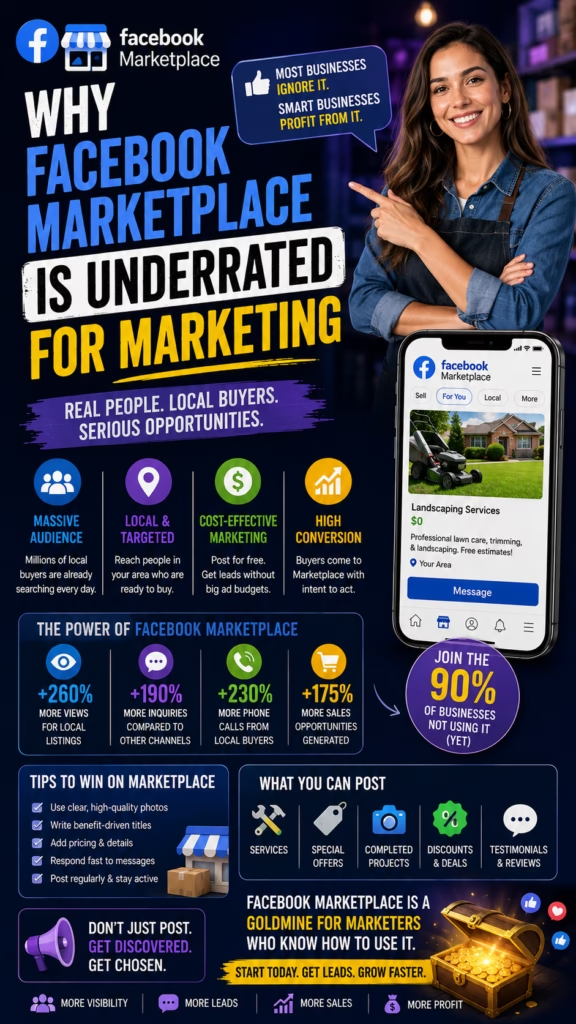
Why Facebook Marketplace Is Underrated for Marketing
Facebook Marketplace is often treated as a simple peer-to-peer selling platform, yet for the right businesses it can become an overlooked source of local discovery, customer conversations, product visibility, and measurable lead generation.
Facebook Marketplace is one of those platforms that millions of consumers recognize immediately, yet many businesses still do not consider it a serious marketing channel. They think of Marketplace as the place where people sell used couches, old electronics, lawn equipment, or unwanted household items.
That perception explains exactly why Facebook Marketplace is underrated for marketing. Businesses frequently dedicate significant resources to Google Ads, Facebook Ads, Instagram, SEO, direct mail, email marketing, and other channels while barely evaluating the local discovery opportunities Marketplace may provide.
Marketplace should not replace those channels. It should be evaluated as another layer of customer acquisition. For businesses with legitimate physical products, appropriate inventory, locally relevant offers, or eligible listings, Marketplace can potentially create additional exposure without requiring the same marketing approach used in traditional paid advertising.
Why Facebook Marketplace Is Underrated
The primary reason Marketplace is underrated is simple: businesses often classify platforms according to their original purpose rather than how customers actually use them.
Instagram started primarily as a photo-sharing platform but became a major business marketing channel. YouTube began primarily as a video-sharing website but evolved into one of the world's largest discovery engines. TikTok was once dismissed by many businesses as entertainment for younger users before becoming an important commerce and advertising channel.
Facebook Marketplace can be viewed through the same lens. It is primarily a commerce and listing environment, but that does not mean businesses cannot derive marketing value from it when their products and activity are appropriate for the platform.
Businesses underestimate discovery marketing
Many marketers focus almost entirely on explicit search demand. They want someone to type a keyword such as “appliance store near me,” “office furniture,” “flooring for sale,” or “used truck dealership.”
Marketplace introduces another dynamic: discovery.
A consumer may not begin the day intending to purchase a dining room set, refrigerator, flooring package, shed, trailer, or commercial equipment. They may simply browse Marketplace and encounter something that creates interest.
That moment can create a new customer opportunity that would never have existed through traditional search alone.
Businesses assume Marketplace is only for individuals
The peer-to-peer reputation of Marketplace causes many companies to ignore it completely. That creates potential whitespace for businesses capable of presenting legitimate products professionally.
A professional listing can stand out when compared with poorly lit photos, vague descriptions, missing specifications, and unclear pricing.
Businesses overlook conversations as a marketing asset
Marketplace can create direct conversations between interested users and sellers. Those conversations can become highly valuable when handled professionally.
Instead of forcing every prospect through a website form, a Marketplace conversation can reveal the buyer's needs naturally.
Local Discovery
Marketplace frequently surfaces products within the user's surrounding geographic market, creating local exposure.
Visual Shopping
Buyers can rapidly compare products, styles, prices, and sellers through images and short listing summaries.
Direct Conversation
Interested users can begin a conversation immediately, creating an opportunity for qualification and sales follow-up.
Additional Reach
Marketplace can complement search, social media, local SEO, paid ads, and referrals rather than competing with them.
How Marketplace User Behavior Is Different
Marketplace marketing becomes easier to understand once businesses stop treating the platform like Google Search.
Search marketing begins with a query
On Google, the customer frequently enters a specific need:
- used refrigerator near me;
- commercial warehouse space;
- living room furniture store;
- flooring near me;
- pickup truck for sale;
- storage building near me.
The search itself indicates intent.
Marketplace can begin with browsing
Marketplace users may start with a broad category, scroll through nearby listings, change their radius, inspect several products, save items, or message sellers.
This makes the first photo, title, price, and location extremely important. A listing may receive only a brief moment to create enough interest for the customer to click.
Marketplace shoppers often compare aggressively
A user may open several similar listings within minutes. Businesses are not only competing on product quality. They are competing on presentation.
Two businesses selling comparable products can generate dramatically different response rates if one uses better photos, clearer pricing, more useful descriptions, and faster communication.
Facebook Marketplace as a Local Discovery Engine
One of Marketplace's most interesting qualities for businesses is the combination of product discovery and geography.
Many local companies spend significant money attempting to reach nearby consumers. Marketplace already exists inside a local browsing environment.
Location naturally matters
A person looking for furniture, appliances, flooring, vehicles, equipment, storage solutions, or home improvement products often prefers nearby options because transportation and delivery matter.
The same logic can apply to commercial products. A business buyer shopping for office furniture, warehouse equipment, commercial appliances, storage units, or work vehicles may prioritize local availability.
Marketplace can create brand exposure without a traditional ad
A customer may encounter a company's listing even if they have never heard of the brand.
That initial product interaction can lead the customer to investigate the company elsewhere. They may visit the business website, search the company on Google, inspect reviews, view social profiles, or eventually call.
In this way, Marketplace can influence the customer journey even when it is not the final conversion point.
Understanding Marketplace Buyer Intent
Not every Marketplace user has the same level of intent. Businesses should understand where conversations sit in the buying journey.
Immediate purchase intent
Some shoppers know exactly what they need and are ready to transact.
Examples might include:
- a refrigerator needed after an appliance failure;
- a replacement mattress;
- a work truck;
- a specific size of flooring;
- a dining table;
- a storage container;
- commercial shelving.
Comparison intent
Other users are evaluating price, appearance, size, brand, and condition. They may contact multiple sellers before deciding.
Exploratory intent
Some users are browsing without a firm purchase plan. A compelling listing may create demand rather than simply capture existing demand.
Project-based intent
Marketplace products can sometimes reveal larger projects. Someone browsing flooring may be renovating an entire house. Someone searching for office furniture may be opening a business location. Someone looking at storage containers may need multiple units.
The initial product inquiry can therefore be the beginning of a higher-value business relationship.
Which Businesses Can Benefit From Facebook Marketplace?
Marketplace is not automatically appropriate for every company. It tends to be more relevant when the business offers tangible, visually understandable products or eligible offers with local demand.
Furniture and mattress businesses
Furniture is naturally suited to Marketplace because shoppers can quickly evaluate:
- style;
- color;
- dimensions;
- material;
- condition;
- price;
- location.
Sofas, mattresses, dining sets, bedroom furniture, office furniture, and other categories can generate strong visual interest.
Appliance retailers
Refrigerators, washers, dryers, ranges, freezers, dishwashers, and related appliances have clear buyer intent and strong local delivery considerations.
Flooring businesses
Flooring products such as LVP, laminate, engineered hardwood, tile, and commercial materials can fit Marketplace when listings represent genuine physical products and pricing accurately.
Vehicle dealers
Cars, trucks, vans, commercial vehicles, recreational vehicles, and related inventory are naturally visual and frequently compared locally.
Storage and building products
Sheds, storage structures, shipping containers, portable buildings, carports, trailers, and similar products may create opportunities where Marketplace rules and product eligibility permit.
Commercial and B2B sellers
Businesses sometimes overlook Marketplace for commercial buyers, yet companies may search for:
- office desks;
- conference tables;
- restaurant equipment;
- warehouse shelving;
- commercial appliances;
- work vehicles;
- storage containers;
- construction materials;
- industrial equipment.
Marketplace can therefore generate both consumer and business inquiries depending on the product category.
Building Better Facebook Marketplace Listings
Marketplace success starts with listing quality. Businesses should resist the temptation to treat listings like traditional display advertisements.
Sell the product first
Marketplace shoppers usually want to know:
- what is it?
- what does it look like?
- how much does it cost?
- where is it?
- what condition is it in?
- what specifications matter?
- is it genuinely available?
A listing should answer those questions before turning into a broader company advertisement.
Build variation around actual inventory
If a furniture store has ten sofa models, each model can create legitimate listing variation. If a flooring business has multiple product lines, the variation should reflect genuine products, colors, materials, sizes, or price differences.
Real variation performs a useful business function. Artificial variation created simply to duplicate the same listing does not.
Writing Better Facebook Marketplace Titles
Marketplace titles should be easy to understand at a glance.
Use the product name first
Compare:
Weak: AMAZING DEAL — MUST SEE TODAY!
Stronger: Gray Sectional Sofa With Chaise
The second title immediately tells the shopper what the item is.
Add useful specifications
Depending on the product, titles may naturally include:
- size;
- capacity;
- color;
- material;
- brand;
- model;
- year;
- quantity.
Avoid keyword stuffing
A Marketplace title should not look like an SEO keyword list. Repeating city names, promotional phrases, phone numbers, and unrelated search terms makes listings harder to scan.
Writing Marketplace Descriptions That Create Better Leads
A strong description reduces unnecessary questions while increasing buyer confidence.
Explain exactly what is being sold
Start with a straightforward product summary.
Include specifications buyers care about
Specifications can include dimensions, capacity, materials, finish, model, compatibility, condition, included components, quantity, or other relevant details.
Explain the condition accurately
If an item is new, used, refurbished, open-box, floor model, or otherwise categorized, describe it truthfully.
State what the price includes
Customers should understand whether the listing price covers:
- one item;
- a complete set;
- a specific quantity;
- delivery;
- pickup only;
- additional accessories.
Avoid exaggerated promises
Claims such as “lowest price anywhere,” “guaranteed best,” “today only,” or “last one available” should only be used when they are genuinely accurate.
Why Marketplace Image Strategy Matters So Much
Marketplace is primarily a visual interface. That makes imagery one of the strongest variables a business can control.
The first image must earn the click
Users may scroll quickly through dozens of listings. The primary image needs to communicate the product clearly without requiring additional explanation.
Real product photography builds trust
Authentic photos show that the product actually exists. They can also reveal size, color, condition, texture, packaging, and important details.
Use clean backgrounds
Clutter can make products difficult to evaluate. Whenever practical, use clean, bright environments that keep attention on the item.
Show multiple angles
Useful images can include:
- front view;
- side view;
- rear view;
- detail view;
- labels;
- dimensions;
- installed examples;
- packaging.
Use lifestyle imagery carefully
Showing furniture in a finished living room or flooring in a completed home can help customers imagine the product in use. However, imagery should not misrepresent what is actually included in the listing.
Why Transparent Pricing Improves Marketplace Marketing
Pricing plays a particularly visible role on Marketplace. Users frequently compare multiple listings side by side.
Real prices improve lead quality
Artificial $0 or $1 listings may generate curiosity, but curiosity is not the same as buying intent.
Transparent pricing helps filter customers before they message.
Show starting prices only when accurate
If a product category genuinely starts at a certain amount, that can be useful information. The description should explain what product or configuration corresponds to the stated price.
Do not hide major cost components
If delivery, installation, shipping, assembly, tax, accessories, or other items are not included, make that distinction clear when relevant.
The Geographic Advantage of Facebook Marketplace
Local businesses frequently spend money creating geographic targeting through advertising platforms. Marketplace already contains a strong location component.
Consumers often prefer nearby sellers
Proximity can reduce delivery costs, transportation complexity, scheduling problems, and uncertainty.
Businesses should prioritize profitable markets
A company serving several cities should think beyond population.
Important market variables include:
- customer demand;
- average order value;
- delivery expense;
- sales capacity;
- inventory availability;
- travel distance;
- competition;
- customer demographics.
Do not misrepresent listing locations
Geographic expansion should remain accurate. A company should not create fake location signals simply to appear in areas it cannot genuinely serve.
Why Marketplace Lead Response Is a Competitive Advantage
Marketplace leads frequently behave differently than website leads. Users may initiate several conversations rapidly and then continue with whoever responds best.
Speed matters
A fast answer keeps the customer's attention while purchase intent is still active.
Answer the question before selling
If someone asks, “Is this still available?” the business should provide a useful answer instead of immediately sending a long promotional script.
Move naturally into qualification
After resolving the original question, businesses can gather information such as:
- quantity needed;
- preferred size;
- delivery location;
- desired timeline;
- product type;
- budget range where appropriate;
- whether additional products are needed.
Recognize high-value opportunities
A single Marketplace question can reveal a much larger opportunity.
Someone asking about one office desk may actually be furnishing an entire office. Someone asking about one pallet of flooring may be renovating several rental properties. Someone looking at a single storage container may need multiple units.
Strong lead handling identifies these opportunities without pressuring the customer.
Why Automation Can Make Marketplace More Valuable
Marketplace becomes operationally challenging when a business manages many listings, products, locations, and conversations.
Automation can reduce the administrative burden.
Listing organization
Businesses can maintain structured product information so titles, descriptions, pricing, inventory data, and images are easier to manage consistently.
Lead monitoring
Automated alerts can help teams notice new inquiries quickly.
Initial qualification
Structured workflows can identify the product, location, quantity, timeline, and other important information before a lead reaches a salesperson.
Lead routing
A furniture lead can go to a furniture salesperson. A commercial buyer can go to a B2B representative. A delivery-related inquiry can go to the proper operations team.
Follow-up
Leads that do not purchase immediately can be organized for appropriate follow-up instead of disappearing in an inbox.
Why Marketplace CRM Integration Matters
Marketplace conversations can become difficult to measure when they remain isolated from the company's primary sales system.
Create a lead record
Qualified leads can be associated with:
- customer name;
- Marketplace source;
- original listing;
- product interest;
- location;
- contact information when provided;
- conversation status;
- appointment status;
- sales value;
- revenue.
Track the actual listing source
Marketing analytics become much stronger when a business knows exactly which listing produced a customer.
Instead of simply labeling a lead “Facebook,” track whether it originated from:
- a specific sofa;
- a refrigerator model;
- a flooring product;
- a storage unit;
- a vehicle;
- a commercial product;
- a specific geographic market.
Measure downstream sales
A listing with fewer inquiries may actually produce more profit if its customers have higher average transaction values.
CRM integration helps reveal these differences.
How to Track Facebook Marketplace Marketing Performance
Businesses should evaluate Marketplace like any other acquisition channel.
Track listing visibility
Where available, monitor:
- views;
- saves;
- inquiries;
- listing engagement;
- response activity.
Track lead quality
Measure:
- qualified conversations;
- phone numbers captured;
- calls;
- appointments;
- store visits;
- quote requests;
- sales opportunities.
Track revenue
Ultimately, the most important question is whether Marketplace activity produces profitable customers.
Useful metrics can include:
- sales generated;
- revenue generated;
- average order value;
- gross profit;
- close rate;
- repeat purchases;
- customer acquisition cost.
Track product category performance
A furniture store may discover that bedroom sets outperform recliners. An appliance retailer may discover that washers and dryers generate more qualified inquiries than microwaves. A flooring company may discover that LVP generates more leads than other materials.
That information should shape future Marketplace effort.
Why Marketplace Can Have a Different Economics Model Than Paid Ads
Paid advertising generally involves a direct media cost. Businesses pay for impressions, clicks, leads, or some other advertising objective.
Marketplace organic listing strategies can operate differently depending on the product, account, location, and current platform rules.
This creates an important distinction.
| Factor | Facebook Marketplace | Traditional Paid Advertising |
|---|---|---|
| Primary Format | Product or eligible offer listing | Paid advertisement |
| User Behavior | Browsing and product discovery | Feed consumption, search, or targeting |
| Creative | Product-focused imagery | Brand or campaign-focused creative |
| Conversation | Can begin directly from listing interest | Often routed through landing pages or lead forms |
| Optimization Focus | Listing quality, product, price, geography, response | Audience, creative, bidding, conversion funnel |
These channels should not necessarily compete for the same role. A business can use paid ads for predictable scale while using Marketplace to create additional organic or commerce-driven opportunities where appropriate.
Why Facebook Marketplace Can Help Small Businesses Compete
Smaller businesses may struggle to match the advertising budgets of major national brands.
Marketplace can potentially create another route to visibility where the quality of the listing matters significantly.
Local inventory can be an advantage
A customer who needs a product quickly may prefer something available nearby rather than ordering from a national retailer.
Personalized responses can be an advantage
Small businesses can sometimes respond more personally and flexibly than large organizations with rigid customer support systems.
Specialized products can stand out
Unique inventory, local products, custom options, commercial equipment, or niche products may face less direct Marketplace competition than broad commodity categories.
Common Facebook Marketplace Marketing Mistakes
1. Treating Marketplace like a spam channel
High posting volume does not compensate for poor listing quality.
2. Using fake prices
Misleading $0 or $1 pricing can reduce trust and generate unqualified inquiries.
3. Using inaccurate locations
Businesses should represent where products are genuinely available.
4. Using misleading product photos
Images should represent the actual item or clearly explain when an image is illustrative.
5. Creating repetitive duplicate listings
Real variation based on inventory is more sustainable than repeatedly cloning the exact same listing.
6. Writing vague titles
Titles should immediately identify the product.
7. Writing overly promotional descriptions
Marketplace shoppers usually want useful product information before corporate marketing language.
8. Responding slowly
Buyers may contact several sellers and move forward with whoever responds first.
9. Failing to qualify conversations
Businesses should distinguish casual questions from genuine sales opportunities.
10. Failing to track revenue
Views and messages are secondary metrics. The business should eventually understand whether Marketplace contributes to sales and profit.
How to Scale Facebook Marketplace Marketing
Scaling Marketplace should begin only after the business understands what works.
Phase 1: Test
Start with a controlled set of legitimate listings.
Test several:
- product categories;
- price points;
- creative styles;
- markets;
- title structures;
- product specifications.
Phase 2: Measure
Determine which listings produce the strongest ratio of qualified conversations to total views.
Phase 3: Improve response capacity
Before doubling listing volume, ensure the business can handle the additional conversations.
Phase 4: Expand proven product categories
Add additional legitimate variations of products already producing good outcomes.
Phase 5: Expand geography carefully
Test new legitimate markets only when delivery, inventory, operations, and sales teams can support them.
Phase 6: Connect Marketplace with automation
Larger campaigns need systems for:
- listing organization;
- lead monitoring;
- inquiry routing;
- qualification;
- CRM capture;
- follow-up;
- performance reporting.
Facebook Marketplace Works Best as Part of a Multi-Channel Strategy
Marketplace becomes more valuable when integrated with other customer acquisition channels.
Marketplace + Google Maps
Marketplace creates discovery while Google Maps helps customers validate the business through ratings, reviews, location information, photos, and local search visibility.
Marketplace + SEO
A user who discovers a product on Marketplace may later search the company name or related product category on Google.
Marketplace + Facebook Page
Brand content, customer projects, new inventory, educational posts, and reviews can strengthen credibility around Marketplace activity.
Marketplace + Instagram
High-quality product photography and short-form video can support both platforms.
Marketplace + CRM
CRM integration turns isolated messages into trackable opportunities.
Marketplace + retargeting
Broader marketing campaigns can continue building awareness among users who later encounter the business through multiple online touchpoints.
| Channel | Main Strength | Marketplace Relationship |
|---|---|---|
| Google Maps | Local high-intent discovery | Supports business trust and validation |
| SEO | Long-term search visibility | Captures later research after Marketplace discovery |
| Facebook Ads | Paid targeting and scale | Adds structured paid reach |
| Visual branding | Reuses strong product content | |
| Lead nurturing | Supports follow-up after lead capture | |
| CRM | Sales organization | Tracks Marketplace inquiries through revenue |
Marketplace Marketing and the Customer Journey
Marketplace may influence customers at several stages.
Stage 1: Discovery
The user encounters a product while browsing.
Stage 2: Interest
The user clicks the listing and inspects photos, pricing, specifications, and seller information.
Stage 3: Conversation
The user asks a question about availability, size, delivery, price, condition, or another detail.
Stage 4: Qualification
The business determines what the customer actually needs.
Stage 5: Research
The customer may search the company, read reviews, visit the website, or compare competitors.
Stage 6: Conversion
The customer purchases, schedules a visit, requests a quote, or moves into another sales step.
Stage 7: Future value
The initial Marketplace customer may eventually create:
- repeat purchases;
- upsells;
- referrals;
- reviews;
- commercial opportunities;
- future projects.
Why Marketplace Can Be Powerful for High-Visual Products
Marketplace naturally favors products customers can understand visually.
Furniture
Style, color, texture, size, and room appearance can all be communicated through imagery.
Vehicles
Exterior condition, interior, wheels, features, and overall appearance are easy to demonstrate visually.
Flooring
Color, grain, texture, plank dimensions, and installed examples can help buyers evaluate options.
Appliances
Finish, configuration, controls, size, and condition are easy to present in a Marketplace gallery.
Home improvement products
Sheds, carports, storage products, fixtures, building materials, cabinets, doors, and other visible products can often be evaluated quickly.
Why Marketplace Can Help Businesses Discover Hidden Demand
One of the most useful outcomes of Marketplace testing is learning what consumers actually respond to.
A company may assume that its premium product is the strongest marketing offer while Marketplace engagement reveals significantly higher interest in an entry-level product.
That information can influence:
- inventory purchasing;
- website merchandising;
- paid ad campaigns;
- email promotions;
- sales scripts;
- pricing strategy;
- product bundles.
Marketplace can therefore become a source of market intelligence, not merely a place to post inventory.
Marketplace Marketing for Multi-Location Businesses
Multi-location companies can use Marketplace data to understand geographic demand differences.
One market may respond strongly to a certain product while another market favors a completely different category.
Track performance by market
Compare:
- views per listing;
- messages per listing;
- qualified lead rate;
- sales conversion rate;
- average order value;
- delivery costs;
- profitability.
Localize inventory strategy
Marketplace performance can reveal where certain products should be promoted more heavily.
Facebook Marketplace for Business-to-Business Marketing
B2B Marketplace opportunities receive less attention than consumer opportunities, but certain industries can generate business buyers.
Commercial furniture
New offices, restaurants, medical practices, schools, and other organizations may need desks, chairs, tables, shelving, or storage.
Commercial equipment
Businesses may browse restaurant equipment, tools, industrial products, appliances, storage systems, or construction equipment.
Commercial vehicles
Contractors, delivery businesses, property managers, and small companies may need vans, trucks, trailers, or fleet vehicles.
Building and storage products
Companies may need portable buildings, containers, shelving, commercial flooring, storage units, and related infrastructure.
The business opportunity can therefore be much larger than the initial Marketplace listing price.
Marketplace Posting Should Focus on Quality, Not Just Volume
It can be tempting to believe that more listings always equal more leads. That is not necessarily true.
Ten strong listings can outperform fifty weak ones when they offer:
- better inventory;
- better images;
- clearer titles;
- real pricing;
- accurate descriptions;
- better geographic relevance;
- faster responses.
Volume should be used to expand a proven system rather than compensate for a poor one.
Using Marketplace Conversations to Improve Sales Training
Marketplace conversations can reveal what buyers repeatedly ask before purchasing.
Common questions might include:
- Is this available?
- Do you deliver?
- What are the dimensions?
- Do you have another color?
- Can you install it?
- Is there a warranty?
- Can I see it today?
- Do you have multiple units?
- What is your lowest price?
Businesses can use this information to improve product pages, FAQs, salesperson training, email follow-up, and future listings.
How AI Can Improve Marketplace Marketing Operations
AI can help businesses organize Marketplace workflows without changing the fundamental principles of good marketing.
Listing drafting
AI can transform structured product information into consistent titles and descriptions that employees can review before publishing.
Response assistance
AI can help draft relevant responses based on the customer's actual inquiry.
Lead qualification
AI-supported systems can identify high-intent conversations and route them appropriately.
CRM enrichment
Conversation details can be organized into structured fields such as product, location, quantity, timeline, and customer intent.
Performance analysis
AI can help businesses compare large groups of listings and identify patterns in titles, products, pricing, markets, and lead quality.
Marketplace Compliance Should Be Part of the Marketing Strategy
Businesses should not separate compliance from performance. A sustainable system needs both.
Use legitimate products
Listings should correspond to genuine inventory or permitted offers.
Represent prices accurately
Do not invent placeholder numbers purely to attract clicks.
Use accurate locations
Geographic details should reflect where the item or seller genuinely operates.
Do not invent product claims
Warranties, discounts, availability, specifications, certifications, and condition should be truthful.
Monitor policy changes
Platform rules can evolve. Businesses should review current Marketplace policies and adapt strategies when necessary.
The Future of Facebook Marketplace Marketing
Commerce and social discovery are becoming increasingly connected. Consumers frequently discover products on one platform, research the company elsewhere, compare reviews, communicate through messaging, and eventually purchase through another channel.
Marketplace sits directly inside that fragmented customer journey.
Expect faster lead expectations
Consumers increasingly expect quick responses to digital inquiries. Businesses that automate notification and routing may have an advantage.
Expect more integration between marketing and CRM
Businesses will increasingly need to connect Marketplace conversations with sales pipelines and revenue reporting.
Expect content quality to matter more
As more businesses experiment with Marketplace, professional images, accurate product data, responsive communication, and strong reputation will become even more important.
Expect AI to reduce administrative work
AI can help businesses handle repetitive listing management, inquiry categorization, lead routing, follow-up, and analytics while employees focus on high-value sales conversations.
Facebook Marketplace Marketing Checklist
- Review current Marketplace policies.
- Identify eligible products or offers.
- Organize inventory data.
- Use genuine product pricing.
- Verify product condition.
- Use accurate listing locations.
- Use clear primary photos.
- Add multiple useful image angles.
- Write descriptive titles.
- Include useful product specifications.
- Explain exactly what the price includes.
- Avoid fake discounts.
- Avoid artificial $0 or $1 pricing.
- Avoid irrelevant keyword stuffing.
- Avoid misleading location targeting.
- Avoid excessive duplicate listings.
- Monitor incoming inquiries.
- Respond quickly.
- Answer the customer's initial question first.
- Qualify naturally.
- Identify larger sales opportunities.
- Route qualified leads appropriately.
- Add qualified leads to a CRM.
- Track the originating listing.
- Track qualified conversation rate.
- Track appointments and calls.
- Track sales and revenue.
- Compare performance by product.
- Compare performance by market.
- Scale only after identifying profitable patterns.
Final Thoughts: Why Facebook Marketplace Deserves More Attention
Facebook Marketplace is underrated because many businesses still view it through a narrow lens. They see a classified marketplace instead of a potentially useful local discovery environment.
The opportunity becomes more apparent when Marketplace is evaluated as part of the entire customer acquisition system.
Marketplace can potentially contribute:
- local visibility;
- product discovery;
- customer conversations;
- lead generation;
- market intelligence;
- business buyer opportunities;
- brand discovery;
- sales pipeline growth.
The businesses most likely to benefit are those that combine Marketplace with accurate product listings, strong visual content, transparent pricing, legitimate geographic coverage, fast responses, CRM organization, and disciplined performance measurement.
Marketplace should not be viewed as a shortcut or a replacement for every other marketing strategy. It should be viewed as another potential customer acquisition layer.
When companies connect Marketplace with Google Maps, SEO, social media, paid advertising, CRM follow-up, and AI-powered lead management, a simple product listing can become the beginning of a much larger customer journey.
Frequently Asked Questions About Facebook Marketplace Marketing
1. Why is Facebook Marketplace underrated for marketing?
Many businesses still associate Marketplace primarily with peer-to-peer used-item sales and overlook its potential for local product discovery, customer conversations, and qualified lead generation.
2. Can businesses use Facebook Marketplace for marketing?
Businesses can incorporate Marketplace into their marketing when listings accurately represent eligible products or offers and comply with current platform requirements.
3. How is Marketplace different from Facebook Ads?
Marketplace is a product-oriented browsing environment, while Facebook Ads are paid placements distributed through Meta's advertising system. The customer behavior and optimization strategy can therefore be very different.
4. Is Facebook Marketplace useful for local businesses?
Yes. Marketplace can be particularly relevant to businesses whose products are purchased, delivered, inspected, or picked up locally.
5. Can Facebook Marketplace generate leads?
Marketplace listings can generate inquiries that become qualified sales opportunities when the product, listing quality, location, and response process align with customer demand.
6. Which businesses can benefit from Marketplace?
Businesses selling furniture, mattresses, appliances, flooring, vehicles, equipment, home improvement products, storage products, commercial items, and other eligible physical goods may find Marketplace useful.
7. Why do many businesses overlook Marketplace?
Marketplace is often perceived as a consumer resale platform rather than a customer acquisition channel, so many businesses never test it systematically.
8. Is Facebook Marketplace free for businesses?
Availability, listing options, fees, and eligibility can depend on the account, product type, location, and current Facebook policies. Businesses should verify current requirements before building a campaign.
9. How important are Marketplace images?
Images are one of the most important listing elements because users often decide whether to click based largely on the primary photo.
10. What makes a strong Marketplace title?
A strong title clearly describes the actual product and includes useful specifications when appropriate without excessive promotional wording or keyword stuffing.
11. Should businesses use real prices?
Accurate pricing can improve customer trust and lead quality by helping buyers understand the real cost before initiating a conversation.
12. Can Marketplace work for expensive products?
Yes. High-ticket products can attract interest when listings provide excellent photography, clear specifications, credible seller information, and professional follow-up.
13. How quickly should Marketplace inquiries be answered?
Businesses should respond as quickly as practical because buyers frequently contact several sellers and may move forward with the first company that provides useful information.
14. Can Marketplace responses be automated?
Compliant tools and workflows can help businesses monitor, route, organize, and follow up on Marketplace inquiries while maintaining accurate and relevant communication.
15. Can Marketplace leads go into a CRM?
Yes. Qualified Marketplace leads can be entered into a CRM so sales teams can track conversations, follow-up, appointments, sales, and revenue.
16. Does Marketplace work in smaller cities?
Marketplace can work in smaller cities when there is sufficient local demand and the business offers products relevant to the local customer base.
17. Should businesses post across multiple locations?
Businesses can prioritize multiple legitimate markets when products and operations genuinely serve those locations, but listing geography should remain accurate.
18. What Marketplace metrics should businesses track?
Track views, inquiries, qualified conversations, response time, appointments, calls, purchases, average transaction value, conversion rate, and revenue when possible.
19. Why do Marketplace listing views vary?
Visibility can differ based on demand, product category, title, image quality, price, location, competition, timing, account history, and Marketplace distribution.
20. Should businesses duplicate the same listing repeatedly?
Businesses should prioritize legitimate inventory variation rather than excessive duplication of identical listings.
21. Can Facebook Marketplace support Google Maps SEO?
Marketplace can introduce customers to a business while Google Maps can help customers verify reviews, reputation, location, and local credibility during later research.
22. Can Marketplace support social media marketing?
Yes. Product images, inventory updates, videos, and customer projects can often support Marketplace, Facebook, Instagram, and other channels simultaneously.
23. Can Marketplace generate B2B customers?
Certain categories can attract business buyers, including office furniture, commercial equipment, work vehicles, storage solutions, industrial products, and building materials.
24. What is the biggest Marketplace marketing mistake?
Treating Marketplace as a volume-spam channel instead of a genuine commerce environment can reduce lead quality, customer trust, and long-term sustainability.
25. Can AI improve Marketplace marketing?
AI can assist with listing drafts, product organization, inquiry classification, lead qualification, CRM routing, follow-up, and performance analysis when implemented appropriately.
26. Should Marketplace be the only marketing channel?
Marketplace is generally more valuable when combined with Google Maps, SEO, advertising, social media, referrals, CRM follow-up, and other customer acquisition channels.
27. How can businesses improve Marketplace lead quality?
Better titles, transparent pricing, accurate descriptions, strong images, correct geographic information, and clear product specifications can help attract more relevant buyers.
28. How should a business scale Marketplace marketing?
Start with controlled testing, identify high-performing products and markets, improve lead response capacity, and expand only proven listing categories.
29. Is Facebook Marketplace worth testing?
Businesses with eligible physical products and strong local demand may find Marketplace worth testing as another source of visibility, conversations, and potential sales.
30. What is the best Facebook Marketplace marketing strategy?
The strongest approach combines compliant products, accurate prices, high-quality images, clear descriptions, relevant local targeting, fast lead response, CRM integration, analytics, and coordination with other marketing channels.
30 Additional SEO Keywords
Turn Facebook Marketplace Into a Smarter Lead Generation Channel
Build a stronger Marketplace customer acquisition system with AI-powered posting workflows, faster lead response, CRM integration, follow-up automation, and local marketing strategies designed to turn more Marketplace conversations into real business opportunities.
Schedule a MarketWiz.ai Demo












