

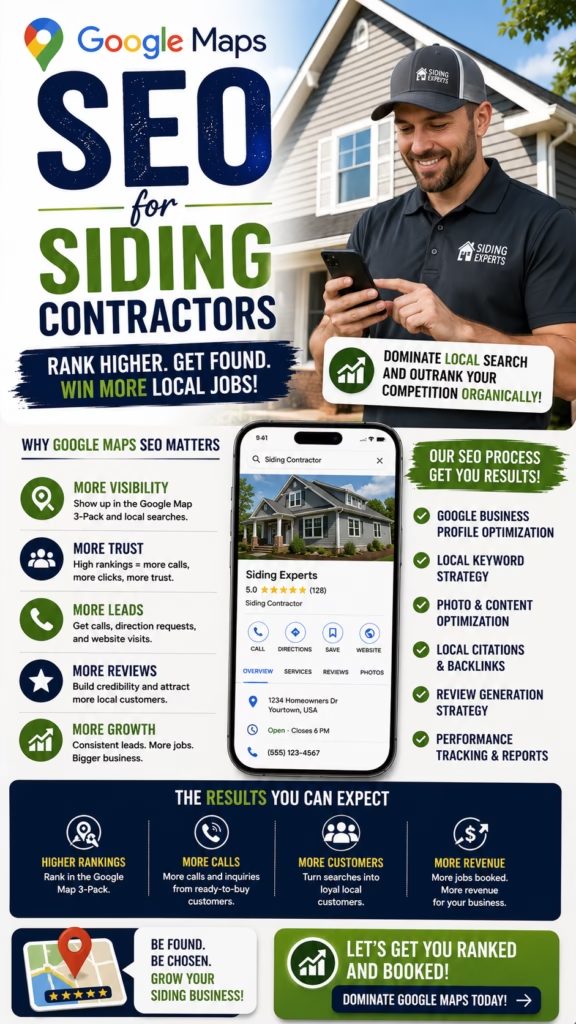
Google Maps SEO for Siding Contractors
Google Maps SEO for siding contractors can help siding companies reach homeowners at the exact moment they are searching for siding installation, siding replacement, siding repair, vinyl siding, fiber cement siding, exterior renovation, and related services. A strong local SEO strategy combines an accurate Google Business Profile, relevant categories, real siding project photos, genuine reviews, strong siding service pages, local landing pages, citations, authoritative links, fast lead response, estimate tracking, and measurable revenue attribution. The goal is not simply to rank higher—it is to turn local visibility into qualified siding leads and profitable projects.
Homeowners rarely replace siding casually. The project can represent a significant investment, which means they often research several local siding contractors before choosing who receives the estimate request.
Google Maps can become one of the first places that comparison happens.
A homeowner might search for “siding contractor near me,” “vinyl siding installer,” “siding replacement company,” “fiber cement siding contractor,” or “siding repair near me.”
They may compare several businesses without initially visiting any contractor website.
They can review ratings, photos, business descriptions, locations, hours, website links, and contact options directly from local search.
This means the Google Business Profile can function as a digital storefront for a siding company.
Contractors with strong local visibility can attract homeowners who already have meaningful project intent.
But rankings alone are not enough.
The profile needs to create trust. The website needs to reinforce expertise. The phone needs to be answered. Estimate requests need follow-up. Completed jobs should be tracked back to their original marketing source.
The Siding Contractor Google Maps Formula
Strong Business Profile + Siding Relevance + Genuine Reviews + Project Photos + Local Service Pages + Citations + Local Authority + Fast Response + Estimate Follow-Up + Sales Tracking = Stronger Local Siding Growth
Why Google Maps Matters for Siding Contractors
High-Intent Searches
Someone searching for a siding contractor is often much closer to a buying decision than someone casually browsing home-improvement content.
Local Comparison
Homeowners can quickly compare contractors, reviews, photos, and locations.
Direct Calls
Strong Maps visibility can create calls without requiring multiple website clicks.
Website Traffic
Searchers can visit service pages, project galleries, and financing or estimate information.
Trust Signals
Reviews and project photos can help a homeowner evaluate credibility.
Measurable Projects
Calls and form leads can be connected to estimates, signed jobs, and revenue.
Understand Siding Search Intent
Siding Contractor Searches
Broad searches indicate the homeowner needs a local professional but may not know which siding system they want.
Siding Replacement Searches
These can indicate a homeowner already believes their existing siding needs to be replaced.
Siding Installation Searches
These may come from homeowners planning additions, new construction, exterior upgrades, or complete re-siding.
Siding Repair Searches
Damage from weather, moisture, age, impact, or detached panels can create urgent local intent.
Material-Specific Searches
Searches for vinyl siding, fiber cement siding, engineered wood siding, or other materials may indicate a more educated buyer.
Brand-Specific Searches
When a siding contractor genuinely installs specific brands, brand-focused website content may attract advanced shoppers.
Understand the Fundamentals Behind Local Siding Visibility
Relevance
Google needs enough accurate information to understand that the company is a siding contractor and which services it genuinely provides.
Distance
Searcher proximity can influence local results. A contractor may appear differently across neighborhoods inside the same metro area.
Prominence
Reviews, links, citations, website authority, brand recognition, project mentions, and broader reputation can support prominence.
Optimize the Factors You Can Influence
You cannot move every homeowner closer to your business, but you can improve relevance, reputation, website quality, local authority, customer experience, and conversion.
Optimize the Google Business Profile for Siding Services
Accurate Business Name
Use the genuine business name instead of stuffing extra siding keywords into the profile name.
Working Phone Number
Calls should reach someone who can respond to homeowner questions.
Correct Website
Send visitors to a strong website that clearly explains siding services.
Accurate Location or Service Area
Represent the actual business structure and geographic coverage.
Current Hours
Keep normal and holiday hours accurate.
Service Information
List genuine siding services supported by the business.
Project Photos
Use current images showing real siding work.
Choose Google Business Profile Categories Carefully
Categories help search engines and customers understand the business.
Choose the Closest Primary Category
Select the available category that most accurately represents the core business.
Add Relevant Secondary Categories
Additional categories should represent genuine major services rather than unrelated opportunities.
Review Categories Periodically
Available categories can change, so periodic review is useful.
Optimize Siding Services Inside the Business Profile
- Siding installation
- Siding replacement
- Siding repair
- Vinyl siding
- Fiber cement siding
- Engineered wood siding
- Exterior siding upgrades
- Storm-damaged siding work
- Commercial siding when genuinely offered
Only add services that the company genuinely offers.
Write a Strong Siding Contractor Business Description
Explain the Core Service
Make it clear that the company provides siding work.
Explain the Primary Materials
Mention genuine material specialties such as vinyl or fiber cement when relevant.
Explain the Customer Type
Residential and commercial work should be described accurately.
Explain the Service Area
Mention major legitimate geographic markets naturally.
Explain Real Differentiators
Years of experience, specialties, certifications, workmanship processes, or material expertise can be useful when accurate.
Use Real Siding Project Photos to Build Local Trust
Siding is visual, which gives contractors a strong opportunity to demonstrate work quality.
Completed Exterior Photos
Show finished siding projects clearly.
Material Detail Photos
Show textures, profiles, trim, corners, soffit transitions, and finishing details.
Crew Photos
Professional jobsite images can help customers understand the real company behind the profile.
Home Style Variety
Show projects across ranch homes, two-story homes, traditional homes, modern exteriors, and other genuine examples.
Keep Photos Current
Add recent completed projects as the business grows.
Use Before-and-After Siding Photos Strategically
Few marketing assets demonstrate siding value as clearly as a legitimate before-and-after comparison.
Show the Original Condition
Document faded, damaged, dated, or deteriorated siding accurately.
Show the Completed Transformation
Match the final angle when possible so homeowners can compare.
Explain the Material
Identify the genuine siding product or material used.
Add Geographic Context on the Website
Real project pages can explain which market the work occurred in without exposing private customer information.
Build Genuine Reviews From Completed Siding Customers
Siding is a high-consideration purchase. Homeowners often want evidence that previous customers trusted the contractor and were satisfied with the outcome.
Ask After Successful Completion
A natural time to request feedback is after the homeowner has seen the completed project.
Make the Review Process Easy
Provide a straightforward review path.
Build Reviews Consistently
A steady stream of authentic customer feedback can be more credible than sudden artificial spikes.
Never Purchase Fake Reviews
Fake reviews can create major trust and platform problems.
Turn Completed Projects Into Reputation Assets
Every successful siding installation can create more than revenue. It can generate a review, project photos, referral opportunities, and additional local proof.
Respond to Siding Contractor Reviews Professionally
Positive Reviews
Thank the customer naturally and acknowledge the project without overloading the response with keywords.
Negative Reviews
Respond calmly and try to move detailed resolution offline.
Protect Customer Privacy
Avoid publicly sharing private project, payment, or personal information.
Use Feedback Operationally
Recurring complaints can reveal issues with scheduling, communication, cleanup, installation expectations, or sales handoffs.
Strengthen the Website Behind the Siding Contractor Profile
The Google Business Profile and website should reinforce one another.
Clear Siding Services
Homeowners should immediately understand what siding work is offered.
Strong Project Galleries
Use real completed work.
Trust Information
Include legitimate credentials, service areas, experience, warranties where applicable, and customer reviews.
Easy Contact Options
Phone and estimate forms should be obvious.
Mobile-Friendly Design
Local homeowners often browse contractors on phones.
Build a Dedicated Siding Replacement Service Page
Siding replacement can represent one of the highest-value service searches for a siding contractor.
Explain Replacement Warning Signs
Cracking, warping, fading, moisture damage, rot, loose panels, repeated repairs, and age may all justify an evaluation depending on the material.
Explain the Replacement Process
Help homeowners understand inspection, material selection, preparation, installation, cleanup, and final review.
Show Completed Projects
Add real replacement examples.
Answer Pricing Questions Carefully
Explain that pricing depends on home size, siding type, removal needs, trim, condition, complexity, labor, and other legitimate variables.
Build a Siding Installation Page Around High-Intent Searches
Explain Material Options
Help homeowners compare genuine product categories the business installs.
Explain Installation Quality
Discuss preparation, fastening, moisture management, trim integration, and other relevant workmanship topics.
Show Relevant Projects
Add examples by material and architectural style.
Create a Clear Estimate CTA
Make it easy for homeowners to request an inspection or estimate.
Build Siding Repair Content for Urgent Local Searches
Storm Damage
Wind and impact can damage panels, corners, trim, and attachment points.
Loose or Missing Siding
Explain when localized repair may be possible.
Moisture or Rot
Explain that hidden damage may require inspection before repair scope can be determined.
Color-Matching Challenges
Older siding may be difficult to match exactly, which can affect repair options.
Optimize for Vinyl Siding Searches
Vinyl siding remains a common search topic in many residential markets.
Create a Dedicated Vinyl Siding Page
Explain genuine installation options, styles, colors, maintenance, and limitations.
Use Real Project Photos
Show completed vinyl siding jobs.
Answer Common Questions
Address durability, maintenance, replacement, insulation options where applicable, and color selection.
Optimize for Fiber Cement Siding Searches
Explain the Material
Help homeowners understand why they may consider fiber cement.
Explain Installation Requirements
Highlight the importance of proper installation without making unsupported claims.
Show Relevant Projects
Real examples can help buyers evaluate appearance.
Cover Maintenance and Finish
Explain realistic long-term care considerations.
Cover Other Siding Materials the Business Genuinely Installs
- Engineered wood siding
- Wood siding
- Metal siding
- Composite siding
- Board-and-batten styles
- Shake-style siding
- Commercial exterior cladding where applicable
Separate pages should only target materials the contractor genuinely offers.
Build Useful Local Landing Pages for Siding Service Areas
Location pages can strengthen geographic relevance when they contain actual value.
Explain Services in That Area
Describe siding installation, repair, replacement, and material options genuinely available there.
Add Local Projects
Real project examples create strong geographic context.
Add Local FAQs
Weather, housing styles, HOA considerations, and common siding materials may vary by market.
Avoid Thin Duplicate City Pages
Changing only the city name does not create strong local content.
Build Accurate Local Citations for the Siding Company
Major Business Directories
Keep information accurate on reputable platforms.
Contractor Directories
Use relevant industry platforms where appropriate.
Local Associations
Chambers, builder groups, and community organizations can provide legitimate local references.
Supplier Relationships
Manufacturer or distributor directories may be useful when the contractor legitimately qualifies for inclusion.
Earn Legitimate Local Links for Better Siding SEO
Local Partnerships
Builders, roofers, window companies, real estate organizations, and other genuine partners may create natural local links.
Associations
Relevant contractor organizations can reinforce business legitimacy.
Community Sponsorships
Genuine local participation can produce mentions and brand visibility.
Project Features
Unique exterior renovations may earn coverage from local publications or design-oriented websites.
Avoid Link Schemes
Low-quality bulk links can create more risk than value.
Create Local Siding Content Around Real Homeowner Questions
- When should siding be replaced?
- Vinyl siding vs fiber cement siding
- How siding replacement works
- Signs of siding moisture damage
- Can damaged siding be repaired?
- How long does siding installation take?
- What affects siding replacement cost?
- Popular siding colors for local homes
- Board-and-batten siding considerations
- How siding affects exterior maintenance
Useful informational content can support topical authority and help future customers before they are ready to request an estimate.
Publish Local Siding Project Pages
Real projects can become some of the strongest local SEO content a siding contractor owns.
Describe the Starting Condition
Explain why the homeowner needed siding work.
Describe the Material
Explain what was genuinely installed.
Describe the Scope
Full replacement, repair, trim work, soffit work, or other relevant details.
Add Photos
Before, during, and after images can demonstrate the work.
Add Local Context
Mention the city or general market without exposing customer privacy.
Strengthen Siding Service-Area Relevance
Use Genuine Markets
Focus on cities and towns the siding company truly serves.
Create Helpful Geographic Content
Use project examples, local pages, testimonials, and service descriptions.
Build Reviews Across the Territory
Authentic customers in multiple markets can naturally strengthen geographic proof.
Avoid Fake Offices
Do not create deceptive addresses to try to expand map coverage.
Improve Mobile Experience for Siding Leads
Make the Phone Number Clickable
Homeowners should be able to call instantly.
Keep Estimate Forms Short
Ask only for information needed to begin the conversation.
Use Fast-Loading Project Images
Compress large siding galleries so mobile pages remain usable.
Keep Calls to Action Visible
Estimate and consultation options should be easy to find.
Turn Google Maps Visibility Into More Siding Calls
A high-intent siding search can become a direct phone call in seconds.
Answer Quickly
Homeowners may contact several companies.
Know the Service Area
Quickly confirm whether the property is inside the company's territory.
Know the Core Services
Intake staff should understand whether the company handles replacement, repair, vinyl, fiber cement, or other project types.
Create the Next Step
Qualified homeowners should move toward an inspection, consultation, or estimate.
Turn Google Maps Website Traffic Into Siding Estimate Requests
Use Clear Estimate Forms
Make the requested action obvious.
Ask for Location
ZIP code or city can help determine service eligibility.
Ask for Project Type
Replacement, repair, new installation, or material preference can help route the lead.
Allow Photo Uploads When Helpful
Photos can sometimes provide useful early context.
Respond Quickly
Form leads may be comparing multiple contractors.
Improve Lead Response to Convert More Google Maps Opportunities
Better rankings do not create revenue if leads are ignored.
Respond to Calls
Missed calls can represent homeowners with immediate project intent.
Respond to Forms
New estimate requests should enter a clear response workflow.
Schedule Promptly
Move qualified leads toward inspection or consultation.
Use Follow-Up
Some homeowners need several touches before booking.
SEO Creates the Opportunity—Sales Process Captures the Value
A siding contractor can rank well and still lose projects because of slow response, weak follow-up, poor scheduling, or inconsistent estimate handling.
Qualify Siding Leads Efficiently
Property Location
Confirm that the property is inside the service area.
Project Type
Replacement, repair, new construction, insurance-related work, or another genuine need.
Material Interest
Vinyl, fiber cement, engineered wood, or undecided.
Project Timing
Immediate, upcoming, or early research.
Property Type
Single-family, multi-family, commercial, or other relevant classification.
Decision-Maker Availability
When appropriate, confirm who needs to participate in the estimate process.
Connect Google Maps Siding Leads With CRM
- Homeowner name
- Phone number
- Email when provided
- Property city or ZIP code
- Siding service requested
- Material preference
- Project timing
- Appointment status
- Estimate amount
- Sales status
- Signed project value
- Lead source
Suggested Pipeline
- New Google Maps lead
- Contacted
- Qualified
- Inspection scheduled
- Estimate completed
- Proposal sent
- Follow-up
- Project won
- Project lost
- Future opportunity
Track Google Maps SEO Performance for the Siding Company
Visibility Metrics
- Local search visibility
- Google Business Profile interactions
- Website visits
- Calls
- Direction or location actions where relevant
Lead Metrics
- Qualified siding leads
- Inspection appointments
- Estimate requests
- Response time
- Estimate completion rate
Sales Metrics
- Signed siding projects
- Close rate
- Average project value
- Gross profit
- Customer acquisition cost
Measure Google Maps SEO ROI for Siding Contractors
Qualified Lead Rate
Qualified Lead Rate = Qualified Siding Leads ÷ Total Valid Google Maps Leads × 100
Inspection Booking Rate
Inspection Booking Rate = Scheduled Inspections ÷ Qualified Siding Leads × 100
Estimate-to-Sale Rate
Estimate Close Rate = Signed Siding Projects ÷ Completed Estimates × 100
Customer Acquisition Cost
Organic Siding CAC = Total Local SEO Cost ÷ New Customers Attributed to Organic Local Search
Google Maps SEO ROI
ROI = (Gross Profit From Google Maps Customers − Local SEO Cost) ÷ Local SEO Cost × 100
| Metric | What It Shows |
|---|---|
| Local visibility | Whether the siding company is reaching more nearby homeowners |
| Qualified calls | Whether visibility creates realistic siding opportunities |
| Inspections | Whether leads progress toward on-site evaluation |
| Estimates | Whether opportunities enter the sales process |
| Signed projects | Whether SEO produces actual siding customers |
| Gross profit and ROI | Whether local SEO contributes profitable growth |
Common Google Maps SEO Mistakes Siding Contractors Should Avoid
Keyword Stuffing the Business Name
Use the real business name.
Using Fake Locations
Represent legitimate offices and service areas.
Buying Fake Reviews
Build authentic customer feedback instead.
Ignoring Project Photos
Siding is visual, so contractors should document completed work.
Using Thin City Pages
Local pages should contain useful market-specific content.
Ignoring Material-Specific Services
Vinyl, fiber cement, repair, and replacement can represent different search intent.
Failing to Answer Calls
High rankings cannot compensate for poor lead response.
Weak Estimate Follow-Up
Many homeowners compare several proposals.
Tracking Rankings Instead of Projects
The most important outcome is profitable signed work.
A 30-Day Google Maps SEO Plan for Siding Contractors
Week 1: Audit the Local SEO Foundation
- Verify Google Business Profile ownership
- Review business name accuracy
- Review categories
- Verify phone number
- Verify website
- Verify service areas
- Review hours
- Audit reviews
- Audit major citations
- Document current local visibility
Week 2: Improve Siding Relevance
- Improve Business Profile services
- Add current siding project photos
- Improve siding replacement page
- Improve siding installation page
- Improve siding repair page
- Create or improve vinyl siding content
- Create or improve fiber cement siding content
- Improve website internal links
Week 3: Build Local Authority
- Create review-request workflow
- Respond to existing reviews
- Correct citation inconsistencies
- Create local project pages
- Improve priority city pages
- Seek legitimate contractor links
- Seek local partnerships
- Improve project galleries
Week 4: Improve Lead Conversion
- Track Google Maps calls
- Track estimate forms
- Measure response time
- Track inspections
- Track completed estimates
- Track signed siding projects
- Track average project value
- Calculate customer acquisition cost
- Calculate organic local SEO ROI
End-of-Month Outcome
After 30 days, the siding company should have a stronger Business Profile, clearer siding service relevance, better project photography, improved review workflows, stronger website pages, cleaner citations, better geographic targeting, faster lead handling, and stronger visibility into which local SEO activities produce real siding projects.
Final Takeaway: Google Maps SEO Should Produce Siding Projects, Not Just Rankings
Effective Google Maps SEO for siding contractors should connect local visibility with the entire customer journey.
The first step is accurate business information.
Google needs to understand what the company does, where it operates, and how customers can contact it.
Categories should reinforce siding relevance.
Services should explain genuine capabilities such as siding replacement, installation, repair, vinyl siding, fiber cement siding, and other materials the business actually offers.
Project photos should demonstrate real work.
Reviews should come from genuine homeowners.
Citations should keep business information accurate across reputable sources.
The website should support the profile with detailed siding pages, project examples, local service information, and clear estimate calls to action.
Location pages should contain real value rather than becoming duplicate pages with city names replaced.
Local authority should be built through legitimate relationships, links, associations, project mentions, and community presence.
But ranking is only one part of the system.
A homeowner who calls needs an answer.
A homeowner who submits an estimate form needs a response.
Qualified leads should move toward inspections, consultations, and estimates.
Estimates should receive organized follow-up.
Signed projects should be attributed to the original marketing source.
That is how a siding contractor determines whether Google Maps SEO is actually creating profitable growth.
Useful KPIs include qualified lead rate, inspection booking rate, estimate close rate, average project value, customer acquisition cost, gross profit, and ROI.
The ultimate goal is not simply to appear higher on Google Maps.
The goal is to become easier for the right homeowners to discover, easier to trust, easier to contact, and easier to hire.
When Google Business Profile optimization, reviews, project photography, service pages, local content, citations, backlinks, lead response, estimate follow-up, CRM tracking, and revenue attribution all work together, Google Maps can become a measurable local growth engine for siding contractors.
Frequently Asked Questions
1. What is Google Maps SEO for siding contractors?
It is the process of improving a siding company's organic local visibility through Google Business Profile optimization, reviews, project photos, service pages, citations, backlinks, and local website SEO.
2. Can siding contractors generate leads from Google Maps?
Yes. Homeowners can discover siding companies through local searches and contact them for inspections, consultations, and estimates.
3. Why is Google Business Profile important for siding companies?
It gives homeowners quick access to business information, reviews, photos, phone numbers, website links, hours, and services.
4. What categories should a siding contractor use?
Use the most accurate available primary and secondary categories that genuinely represent the company.
5. Do Google reviews help siding contractors?
Genuine reviews can improve homeowner confidence and contribute to local prominence.
6. Should siding companies respond to Google reviews?
Yes. Professional responses can reinforce trust and show customer engagement.
7. Do siding project photos help Google Maps marketing?
Yes. Real siding project photos can show workmanship, materials, and exterior transformations.
8. Should siding contractors post before-and-after photos?
Yes when the photos accurately represent real completed work.
9. Does a siding contractor need a website for Google Maps SEO?
A strong website can reinforce siding relevance, geographic coverage, project experience, and conversion.
10. Should siding contractors create separate service pages?
Yes. Dedicated pages for genuine major services can strengthen relevance and help homeowners make decisions.
11. Should siding contractors create city pages?
Yes when those pages contain useful, unique local information and represent genuine service areas.
12. Do citations help siding contractor SEO?
Accurate listings across reputable local and industry sources can support local consistency.
13. What is NAP consistency for siding contractors?
NAP refers to business name, address, and phone number. Core information should remain accurate across important sources.
14. Do backlinks help siding contractors rank locally?
Legitimate links from reputable local and industry sources can support website authority and local prominence.
15. Can siding contractors rank in multiple cities?
Contractors can strengthen visibility across genuine service areas through local content, project proof, reviews, authority, and website optimization.
16. Should siding companies create fake office locations?
No. Use only legitimate locations and service-area information.
17. Can Google Maps generate siding replacement leads?
Yes. Homeowners searching for siding replacement can discover local contractors through Maps.
18. Can Google Maps generate siding installation leads?
Yes. Local installation searches can create phone calls, website visits, appointments, and estimates.
19. Can siding contractors target vinyl siding searches?
Yes when vinyl siding is a genuine service offered by the contractor.
20. Can siding contractors target fiber cement siding searches?
Yes. Detailed fiber cement siding service content can support relevant local searches when the contractor genuinely offers the service.
21. Can siding contractors target siding repair searches?
Yes when repair is a genuine service offered by the company.
22. Should siding contractors track Google Maps calls?
Yes. Call-source tracking can help reveal which local SEO activities produce real opportunities.
23. Should Google Maps leads go into a CRM?
Yes. CRM tracking helps organize contacts, project types, appointments, estimates, follow-up, signed jobs, and revenue.
24. How quickly should siding contractors respond to leads?
As promptly as practical because homeowners may contact multiple contractors.
25. Can AI help siding contractors handle Google Maps leads?
AI can support approved intake, qualification, scheduling, routing, and follow-up.
26. Can Google Maps SEO guarantee siding leads?
No. Results depend on search demand, rankings, competition, geography, reviews, website quality, and sales execution.
27. Can Google Maps rankings be guaranteed for siding contractors?
No. Local rankings depend on many factors and can vary geographically.
28. How long does siding contractor local SEO take?
Timing varies by market, competition, profile history, reviews, website authority, local content, and other factors.
29. What is the biggest Google Maps SEO mistake siding contractors make?
Focusing only on rankings while ignoring reviews, photos, service pages, lead response, estimates, follow-up, and revenue attribution.
30. What is the goal of Google Maps SEO for siding contractors?
The goal is to turn local visibility into qualified homeowner calls, inspections, siding estimates, signed projects, and measurable revenue.
30 Additional SEO Keywords
Use these supporting phrases naturally across siding service pages, local SEO content, Google Business Profile resources, FAQs, project pages, case studies, and internal links.
Turn Google Maps Visibility Into Qualified Siding Leads and Signed Projects
MarketWiz.ai helps siding contractors strengthen Google Business Profile optimization, improve local service relevance, build review workflows, organize siding service and location content, strengthen citations, improve local website SEO, track calls and estimate requests, connect CRM workflows, improve lead response, and measure signed projects, customer acquisition cost, gross profit, and return on investment.
This article provides general Google Maps SEO, Google Business Profile, siding contractor marketing, local-search, website, reputation-management, lead-generation, CRM, and business information and does not provide legal, financial, tax, privacy, advertising, consumer-protection, intellectual-property, construction, licensing, building-code, platform, or regulatory advice. Google Business Profile features, categories, eligibility, verification requirements, policies, interfaces, and local ranking systems can change. Contractors should provide accurate business information and follow current Google requirements, local licensing rules, advertising laws, and applicable construction regulations. Google Maps rankings, impressions, calls, website visits, estimates, signed projects, revenue, and SEO results cannot be guaranteed and depend on relevance, distance, prominence, competition, reviews, website strength, local authority, customer behavior, pricing, service quality, lead response, estimating, sales execution, and Google's systems.













