
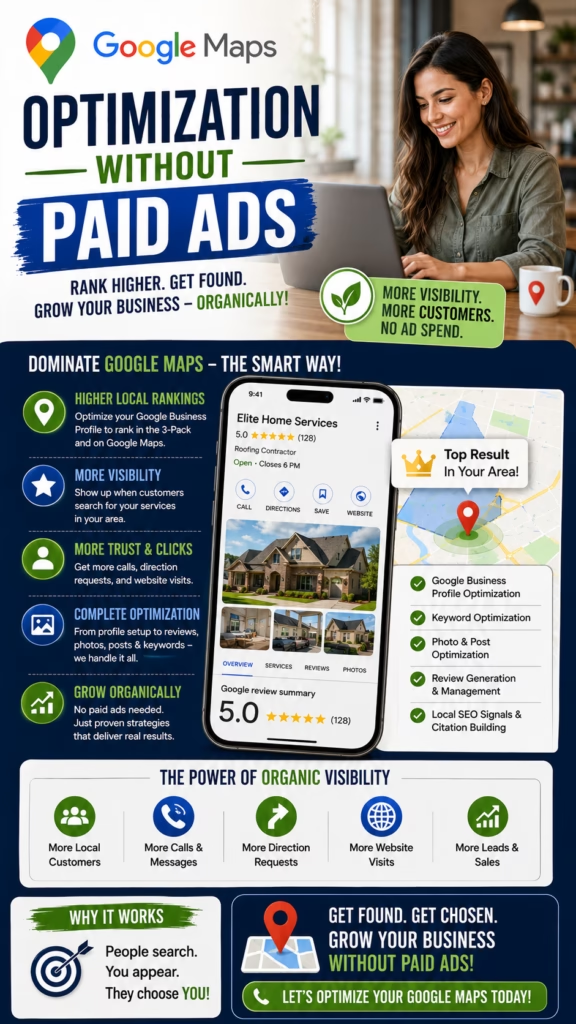
Google Maps Optimization Without Paid Ads
Google Maps optimization without paid ads gives local businesses a way to build visibility around organic local search instead of making every new lead dependent on advertising spend. A strong strategy combines an accurate Google Business Profile, appropriate business categories, complete service information, genuine reviews, strong photos, consistent local citations, useful local website content, authoritative links, fast lead response, and measurable conversion tracking. The goal is not simply to appear on a map. The goal is to turn stronger organic local visibility into phone calls, website visits, appointments, qualified customers, revenue, and long-term business growth.
Local businesses do not necessarily have to purchase every click, phone call, or website visit in order to generate customers from Google.
Google Maps and local organic search can create another acquisition path.
A homeowner searching for a plumber may open Google Maps.
A customer looking for a mattress store may search for nearby retailers.
Someone needing an electrician may search on a phone and compare the businesses displayed near the top of the local results.
A homeowner looking for a painter, roofer, flooring store, HVAC contractor, dentist, med spa, towing company, appliance retailer, or another local business may use Maps before visiting any individual website.
This makes Google Business Profile one of the most important digital assets for many local companies.
The profile can display business information, phone numbers, hours, reviews, photos, services, website links, directions, and other information that helps customers decide what to do next.
Paid Google Ads can provide additional exposure, but organic Maps visibility does not require a business to purchase every impression.
Organic visibility is earned over time through relevance, accurate information, local prominence, customer reputation, website quality, citations, authority, and ongoing optimization.
The strongest strategy connects all of these signals instead of searching for one ranking trick.
The Organic Google Maps Growth Formula
Accurate Google Business Profile + Relevant Categories + Strong Website SEO + Genuine Reviews + Local Citations + Local Authority + Useful Content + Fast Lead Response + Conversion Tracking = Sustainable Google Maps Growth Without Depending Entirely on Paid Ads
What Google Maps Optimization Without Paid Ads Really Means
Organic Google Maps optimization focuses on improving unpaid local visibility.
Improve Relevance
Make it clear what the business does and which customers it serves.
Improve Local Trust
Build a strong presence through accurate information, reviews, citations, and customer experience.
Strengthen the Website
Support the profile with useful service, location, and local content.
Build Prominence
Earn legitimate mentions, citations, reviews, and links.
Convert Searchers
Turn visibility into calls, forms, appointments, visits, and customers.
Track Revenue
Measure whether organic local visibility creates profitable business outcomes.
Google Maps SEO vs Paid Google Ads
Paid Advertising
Google Ads allows businesses to pay for advertising visibility and target searches, audiences, locations, devices, and campaign goals.
Organic Maps Optimization
Organic local optimization focuses on improving how strongly the business appears in unpaid local results.
Different Economics
Paid campaigns generally require continued media spend for ongoing advertising exposure.
Organic optimization requires investment in profile management, website SEO, content, reviews, citations, local authority, and operational consistency, but each organic click or profile view is not purchased through an advertising auction.
They Can Work Together
Businesses can use organic Maps optimization and paid search at the same time.
The Strategic Advantage of Organic Maps Visibility
A stronger organic local presence can diversify customer acquisition so the business is not dependent on advertising spend alone.
Understand the Core Fundamentals of Google Maps Visibility
Local visibility is influenced by multiple signals rather than one single optimization.
Relevance
How closely the business matches what the customer appears to be searching for.
Distance
How close the business is to the searcher or geographic area relevant to the query.
Prominence
The business's broader reputation and authority can include reviews, website strength, links, citations, brand recognition, and other signals.
Businesses can strongly influence relevance and prominence, but they cannot control every searcher's physical distance.
Optimize the Google Business Profile Completely
An incomplete or inaccurate profile creates unnecessary weakness.
Business Name
Use the genuine business name according to Google's requirements.
Business Category
Select the most accurate primary category and relevant secondary categories.
Address or Service Area
Represent the real business model accurately.
Phone Number
Use a working number that customers can reach.
Website
Link to the strongest relevant website destination.
Hours
Keep regular and holiday hours current.
Services or Products
Add legitimate offerings where supported.
Photos
Use current business, team, location, product, and project images where appropriate.
Use Accurate Business Information Instead of Keyword Stuffing
Businesses sometimes try to force additional keywords into the business name or other profile fields.
That can create unnecessary risk if the information does not reflect the real business.
Use the Real Business Name
The profile should accurately represent the company.
Use Categories for Relevance
Categories provide a legitimate way to explain what the business does.
Use Services for Detail
Service fields can add additional context.
Use the Website for Deeper Optimization
Service pages and local content can target detailed search topics naturally.
Choose Google Business Profile Categories Carefully
Categories are one of the clearest ways to communicate business relevance.
Primary Category
Choose the category that most accurately describes the core business.
Secondary Categories
Add relevant categories that genuinely represent additional major offerings.
Avoid Irrelevant Categories
Adding unrelated categories can create confusion.
Review Categories Periodically
Google's available category options can change over time.
Optimize Products and Services for Better Local Relevance
List Core Services
Include the major services customers actually purchase.
Use Clear Names
Describe services in language customers can understand.
Add Helpful Descriptions
Explain what the service includes without making unsupported claims.
Keep Offerings Current
Remove discontinued services and add new ones where appropriate.
Write a Strong Google Business Profile Description
The profile description should help customers understand the business.
Explain What You Do
State the primary services or products clearly.
Explain Who You Serve
Residential, commercial, retail, specialty, or other relevant customer types can be mentioned accurately.
Explain Geographic Coverage
Mention legitimate markets where appropriate.
Explain Differentiators
Years in business, specialization, product selection, scheduling capabilities, or other real distinctions can add context.
Keep Business Hours Accurate
Regular Hours
Make sure customers know when the business is open.
Holiday Hours
Update special dates so customers do not arrive at a closed location.
Service Availability
Emergency, appointment-only, delivery, or other special operations should be represented accurately where appropriate.
Website Consistency
Keep hours reasonably consistent across important business sources.
Use Strong Photos to Improve Customer Confidence
Photos can help customers understand what kind of business they are considering.
Exterior Photos
Help customers recognize a physical location.
Interior Photos
Show showroom, office, retail, or customer areas.
Team Photos
Introduce the people behind the business.
Project Photos
Contractors and home-service businesses can show real completed work.
Product Photos
Retailers can highlight genuine inventory and product categories.
Regular Updates
Current photos help keep the profile representative of the business.
Build Genuine Google Reviews Without Manipulation
Reviews can influence both reputation and local-search prominence.
Ask Real Customers
Invite satisfied customers to provide genuine feedback.
Make the Process Simple
Provide a straightforward review path where appropriate.
Ask Consistently
Ongoing review generation is usually stronger than occasional large bursts.
Do Not Buy Fake Reviews
Manufactured reviews create platform, reputation, and legal risks.
Quality Over Manipulation
The strongest review strategy is a consistently good customer experience followed by a simple invitation for authentic feedback.
Respond to Google Reviews Professionally
Positive Reviews
Thank customers naturally without copying the same response every time.
Negative Reviews
Respond calmly and avoid arguing publicly.
Provide Context Carefully
Do not expose private customer information.
Use Feedback Operationally
Repeated complaints may reveal areas the business can improve.
Build Accurate Local Citations
Citations are business mentions across relevant directories, industry websites, chambers, local organizations, and other sources.
Major Business Directories
Maintain accurate business profiles on reputable platforms relevant to the business.
Industry Directories
Trade-specific listings can reinforce industry relevance.
Local Organizations
Chambers, associations, local sponsorships, and community organizations may create useful local references.
Quality Over Quantity
Thousands of low-quality directory submissions are not automatically better than a smaller group of credible sources.
Improve Business Information Consistency Across the Web
Core business information should remain accurate wherever customers are likely to find it.
Name
Use the legitimate business identity.
Address
Keep physical-location information accurate where publicly listed.
Phone
Avoid outdated disconnected numbers.
Website
Point citations toward the correct business website.
Hours
Major local sources should not contradict one another unnecessarily.
Strengthen the Website Behind the Google Business Profile
Google Business Profile should not exist in isolation.
A strong website can reinforce service relevance and local authority.
Clear Service Information
Explain every core service or product category.
Clear Geographic Information
Explain where the business genuinely operates.
Strong Contact Information
Phone, forms, booking, and location details should be easy to find.
Useful Content
Answer the questions customers ask before contacting the business.
Conversion Optimization
Make it easy for visitors to call, request a quote, visit, or schedule.
Create Dedicated Pages for Core Services
A single generic homepage may not provide enough depth for every important service.
One Major Topic Per Page
Give each core service enough detail to stand on its own.
Explain the Customer Problem
Describe what the service solves.
Explain the Process
Help customers understand what happens next.
Use Supporting FAQs
Answer important service-specific questions.
Add Local Context Naturally
Mention service geography when genuinely relevant.
Build Useful Local Landing Pages Instead of Thin City Pages
Location pages can support local relevance when they contain genuine value.
Explain Service Availability
Clarify which services are available in the area.
Add Local Examples
Real projects, customers, neighborhoods, or service patterns can make the page more useful.
Add Unique FAQs
Questions may differ by location.
Avoid Copying the Same Page Hundreds of Times
Thin location pages with only city names changed provide limited value to users.
Create Local Content That Supports Organic Google Maps Visibility
Service Guides
Explain important customer decisions.
Local Cost Guides
Discuss price factors without making misleading promises.
Comparison Content
Help customers understand product or service options.
Project Content
Show real work and local expertise.
Customer Questions
Build articles around questions customers repeatedly ask.
Earn Legitimate Local Backlinks and Mentions
Local Partnerships
Businesses can earn links through genuine relationships.
Industry Associations
Relevant professional organizations may provide credible references.
Community Sponsorships
Genuine community involvement may produce local mentions.
Useful Resources
High-quality guides can naturally earn references.
Avoid Manipulative Link Schemes
Low-quality purchased links can create unnecessary SEO risk.
Use Structured Data to Support Website Clarity
Structured data can help search engines understand certain website entities and content.
Local Business Information
Use appropriate structured data when technically valid.
Breadcrumbs
Help define site hierarchy.
Articles
Mark up relevant editorial content appropriately.
Do Not Mark Up False Information
Structured data should reflect visible, accurate website content.
Improve Mobile Experience for Local Searchers
Many local searches happen on phones.
Clickable Phone Numbers
Make calling simple.
Easy Forms
Avoid unnecessarily long forms.
Readable Text
Pages should be comfortable to use on smaller screens.
Clear Navigation
Customers should quickly find services, location, hours, and contact options.
Improve Website Speed and Technical Performance
Compress Images
Large project galleries can slow websites.
Reduce Unnecessary Scripts
Bloated plugins and scripts can create poor user experience.
Use Reliable Hosting
Server performance matters.
Monitor Mobile Performance
A page that feels fast on desktop may still perform poorly on mobile connections.
Optimize Service Areas Accurately
Service-area businesses should represent real geographic coverage.
Use Genuine Markets
Focus on areas the business truly serves.
Support Major Markets With Website Content
Useful service-location pages can reinforce geographic relevance.
Document Local Work
Real projects and testimonials can provide natural geographic context.
Avoid Fake Offices
Do not create deceptive locations simply to attempt to rank in more cities.
Understand the Role of Proximity in Google Maps
Local search differs from traditional organic SEO because the searcher's location can strongly influence results.
You Cannot Control Every Searcher's Location
A business may rank differently across neighborhoods in the same metro area.
Optimize What You Can Control
Relevance, reputation, website quality, citations, reviews, and customer experience are much more actionable.
Measure Rankings Geographically
A single ranking check does not tell the whole story.
Compete in Crowded Google Maps Markets Without Paid Ads
Competitive markets require stronger execution across many signals.
Build More Complete Service Relevance
Improve categories, services, website pages, and content.
Build Better Reputation
Earn genuine reviews consistently.
Build Better Local Authority
Strengthen citations, links, partnerships, and local mentions.
Build Better Conversion
Better rankings do not help if calls go unanswered.
Keep Improving
Competitors can change their SEO, reputation, websites, and profiles over time.
Turn Google Maps Visibility Into More Qualified Calls
Use a Working Phone Number
Make sure the profile sends customers to someone who can help.
Answer Quickly
High-intent searchers may call several nearby businesses.
Track Call Source
Use appropriate analytics and call tracking where it can be implemented without damaging business-information consistency.
Qualify the Lead
Determine service need, location, urgency, budget where relevant, and next step.
Turn Google Maps Traffic Into Website Leads
Many customers will click the website before calling.
Match the Search Intent
The landing page should make it obvious that the business offers the requested service or product.
Show Trust
Reviews, project examples, credentials, product information, and genuine business details can reduce uncertainty.
Use Clear Calls to Action
Phone, quote, booking, consultation, or store-visit options should be easy to find.
Track Conversions
Record forms, calls, bookings, and sales.
Improve Lead Response to Get More Value From Google Maps SEO
Organic visibility can be wasted by weak lead handling.
Answer Calls
Missed calls can represent high-intent customers.
Respond to Forms Quickly
Local shoppers can easily continue searching.
Use Appointment Scheduling
Move qualified customers toward a concrete next step.
Use AI Carefully
AI can help with approved intake, qualification, scheduling, and routing when connected to accurate business information.
Local SEO Does Not End at the Ranking
The ranking creates the opportunity. Response speed and sales execution determine how much business value the opportunity creates.
Connect Google Maps Leads With CRM
Capture the Lead Source
Distinguish Google Maps or organic local-search leads from other channels where possible.
Capture Lead Details
- Customer name
- Phone number
- Email when appropriate
- Service requested
- Location
- Urgency
- Appointment status
- Quote status
- Sales outcome
- Revenue
Use Clear Pipeline Stages
- New Google Maps lead
- Contacted
- Qualified
- Appointment scheduled
- Estimate or consultation completed
- Decision pending
- Customer acquired
- Completed
- Lost
- Future follow-up
Track Google Maps Optimization With Meaningful Metrics
Visibility Metrics
- Organic local impressions
- Profile views
- Website clicks
- Calls
- Direction or location interactions where relevant
- Search visibility across priority geographic areas
Lead Metrics
- Valid organic local leads
- Qualified lead rate
- Response time
- Appointments
- Quotes
Sales Metrics
- Customers acquired
- Close rate
- Average customer value
- Gross profit
- Repeat revenue
Measure Google Maps Optimization ROI Without Paid Ads
Qualified Lead Rate
Qualified Lead Rate = Qualified Organic Local Leads ÷ Total Valid Organic Local Leads × 100
Appointment Rate
Appointment Rate = Organic Local Appointments ÷ Qualified Organic Local Leads × 100
Customer Conversion Rate
Customer Conversion Rate = Organic Local Customers ÷ Qualified Organic Local Leads × 100
Organic Local Customer Acquisition Cost
Organic Local CAC = Total Google Maps SEO and Local Marketing Cost ÷ New Organic Local Customers
Google Maps SEO ROI
ROI = (Gross Profit From Organic Local Customers − Google Maps SEO Cost) ÷ Google Maps SEO Cost × 100
| Metric | What It Shows |
|---|---|
| Local visibility | Whether the business is reaching more relevant searchers |
| Calls and website visits | Whether visibility creates customer actions |
| Qualified leads | Whether local search is attracting realistic customers |
| Appointments or quotes | Whether leads progress through the sales process |
| Customers | Whether local SEO creates real business |
| Gross profit and ROI | Whether organic Maps optimization creates profitable growth |
Common Google Maps Optimization Mistakes to Avoid
Keyword Stuffing the Business Name
Use accurate business information rather than trying to manipulate rankings.
Choosing Irrelevant Categories
Categories should genuinely describe the business.
Using Fake Locations
Businesses should represent legitimate locations and service areas.
Buying Fake Reviews
Manufactured reviews create significant platform and reputation risk.
Ignoring Negative Reviews
Reputation management is part of local marketing.
Using Thin City Pages
Hundreds of nearly identical location pages do not automatically create strong local authority.
Ignoring the Website
Google Business Profile should be supported by a strong website.
Ignoring Citations
Major business information should remain accurate across relevant sources.
Ignoring Calls
Better rankings do not help when prospects cannot reach the business.
Tracking Rankings Instead of Revenue
Ranking improvements matter most when they generate qualified customers and profitable business.
A 30-Day Google Maps Optimization Plan Without Paid Ads
Week 1: Audit the Local Search Foundation
- Verify Google Business Profile ownership
- Review business name accuracy
- Review primary category
- Review secondary categories
- Verify phone number
- Verify website URL
- Verify address or service area
- Verify business hours
- Audit major citations
- Document current local visibility
Week 2: Improve Profile Relevance
- Improve service information
- Update product information where applicable
- Improve profile description
- Add current business photos
- Add project or product photos
- Update holiday hours
- Review profile attributes
- Correct inaccurate information
Week 3: Strengthen Local Authority
- Build a genuine review-request workflow
- Respond to existing reviews
- Correct major citation inconsistencies
- Create or improve service pages
- Create useful location content
- Improve internal linking
- Pursue legitimate local links
- Improve mobile website experience
Week 4: Improve Conversion and Tracking
- Track calls
- Track website forms
- Track appointments
- Track qualified lead rate
- Track response speed
- Track sales by source
- Track average customer value
- Calculate organic local CAC
- Calculate Google Maps SEO ROI
End-of-Month Outcome
After 30 days, the business should have a more complete Google Business Profile, stronger local relevance, better reputation management, improved website support, cleaner citations, stronger customer-conversion tracking, and a clearer understanding of which organic Google Maps activities create qualified leads and revenue.
Final Takeaway: Google Maps Growth Does Not Have to Depend Entirely on Paid Ads
Effective Google Maps optimization without paid ads is not built around one trick, one keyword, or one profile update.
Organic local visibility is created through a collection of signals.
The Google Business Profile should accurately represent the company.
Categories should explain what the business does.
Services and products should add useful context.
Business hours should be current.
Photos should show the real business, work, location, team, or inventory.
Reviews should come from real customers.
Review responses should reinforce professionalism.
Citations should provide accurate business information across reputable sources.
The website should support the profile with strong service pages, useful local content, mobile performance, contact options, and local relevance.
Legitimate links and local mentions can strengthen broader authority.
All of these elements help build the organic foundation.
But visibility is only the first half of the system.
The second half is conversion.
Customers who call should receive an answer.
Website inquiries should receive fast follow-up.
Qualified leads should move toward appointments, estimates, consultations, store visits, or purchases.
CRM tracking should connect organic Maps visibility with actual customers whenever possible.
Businesses can then evaluate Google Maps based on business outcomes rather than only rankings.
Qualified lead rate, appointment rate, close rate, average customer value, customer acquisition cost, gross profit, and ROI provide a much stronger picture of success.
Paid advertising can still play an important role in a complete marketing strategy.
But a business with strong organic Google Maps visibility gains another acquisition channel.
It can attract customers who find the company through local search without requiring every interaction to begin with a paid click.
That diversification can create a more durable marketing system.
When profile optimization, reviews, citations, website SEO, local content, authority, lead response, CRM tracking, and revenue attribution all work together, Google Maps can become a measurable organic growth engine for local businesses.
Frequently Asked Questions
1. What is Google Maps optimization without paid ads?
It focuses on improving organic local visibility through Google Business Profile optimization, reviews, website SEO, citations, local authority, accurate information, and ongoing optimization.
2. Can a business rank on Google Maps without paying for ads?
Yes. Businesses can earn organic local visibility, although results depend on relevance, distance, prominence, competition, website strength, reviews, and other factors.
3. Is Google Business Profile free?
A Google Business Profile can be managed without paying for Google Ads, subject to Google's eligibility and verification requirements.
4. What is the difference between Google Maps SEO and Google Ads?
Maps SEO focuses on organic local visibility while Google Ads purchases advertising exposure.
5. What information should a Google Business Profile include?
Accurate business name, category, location or service-area information, phone, website, hours, services, photos, and other relevant available fields.
6. Do Google Business Profile categories matter?
Yes. Accurate categories help communicate what the business does.
7. Should businesses add services to their Google Business Profile?
Yes when those services genuinely represent the business and the profile supports them.
8. Do reviews help Google Maps visibility?
Genuine reviews can contribute to local prominence and influence potential customers.
9. Should businesses buy Google reviews?
No. Businesses should focus on genuine customer feedback rather than fake or purchased reviews.
10. Should businesses respond to Google reviews?
Yes. Professional review responses can demonstrate customer engagement.
11. Do photos help Google Business Profiles?
Yes. Accurate photos can help customers understand the business, team, products, services, location, and work.
12. Should businesses update Google Business Profile photos regularly?
Current relevant photos can help keep the profile useful and representative.
13. Do local citations matter for Google Maps SEO?
Accurate business information on reputable local and industry sources can support broader local-search trust.
14. What is NAP consistency?
NAP generally means name, address, and phone number. These should remain accurate across important business sources.
15. Does a website help Google Maps rankings?
A strong website can support service relevance, geographic context, authority, and customer conversion.
16. Should businesses create local service pages?
Useful service and location pages can support local relevance when they provide genuine information.
17. Can blog content help local SEO?
Useful content can answer customer questions and strengthen topical and local relevance.
18. Do backlinks help Google Maps optimization?
Relevant reputable links can support broader organic authority and local prominence.
19. Can service-area businesses rank in Google Maps?
Eligible service-area businesses can appear in local results when configured according to Google's requirements.
20. Should businesses create fake locations to rank in more cities?
No. Businesses should use legitimate locations and service areas that comply with Google requirements.
21. How important is proximity for Google Maps rankings?
Proximity can significantly influence local results and is not fully controllable by the business.
22. Can Google Maps optimization generate phone calls?
Yes. Organic local visibility can create high-intent customer calls.
23. Can Google Maps optimization generate website leads?
Yes. Searchers can move from Maps to the website and then call, submit forms, book appointments, or request quotes.
24. Should Google Maps leads be tracked?
Yes. Track calls, forms, appointments, qualified leads, customers, revenue, and other meaningful outcomes.
25. Can businesses track organic Google Maps ROI?
Yes. Compare local SEO costs with leads, customers, revenue, and gross profit attributable to organic local search.
26. Can Google Maps rankings be guaranteed?
No. Rankings depend on many factors and can vary by location, competition, search intent, and Google's systems.
27. How long does Google Maps optimization take?
Timing varies based on competition, profile history, website quality, reviews, citations, location, and other factors.
28. Should businesses optimize Google Maps continuously?
Yes. Reviews, photos, competitors, services, business information, website content, and customer behavior change over time.
29. What is the biggest Google Maps optimization mistake?
Trying to manipulate rankings while ignoring accurate business information, customer experience, reviews, website quality, local authority, and conversion tracking.
30. What is the goal of Google Maps optimization without paid ads?
The goal is to turn stronger organic local visibility into qualified calls, website visits, appointments, customers, revenue, and measurable growth without making every lead dependent on paid advertising.
30 Additional SEO Keywords
Use these supporting phrases naturally across Google Maps SEO guides, Google Business Profile pages, local SEO resources, service pages, FAQs, case studies, and internal links.
Turn Organic Google Maps Visibility Into Qualified Calls, Customers, and Measurable Growth
MarketWiz.ai helps local businesses organize Google Maps SEO, optimize Google Business Profiles, strengthen local service and location relevance, improve review generation workflows, clean up citation consistency, strengthen local website content, track calls and leads, connect CRM workflows, measure organic customer acquisition, and evaluate revenue, gross profit, customer acquisition cost, and return on investment without making every new lead dependent on paid advertising.
This article provides general Google Maps SEO, Google Business Profile, local-search, website, reputation-management, lead-generation, CRM, and business information and does not provide legal, tax, financial, privacy, advertising, intellectual-property, consumer-protection, or regulatory advice. Google Business Profile features, eligibility, verification requirements, categories, interfaces, ranking systems, policies, and local-search behavior can change. Businesses should follow current Google Business Profile and Search requirements and provide accurate business information. Google Maps rankings, impressions, calls, website visits, appointments, leads, customers, revenue, and SEO results cannot be guaranteed and depend on relevance, distance, prominence, competition, location, reviews, website quality, business reputation, citations, links, customer behavior, lead response, sales execution, and Google's systems.