
The Future of AI Marketing for Local Businesses
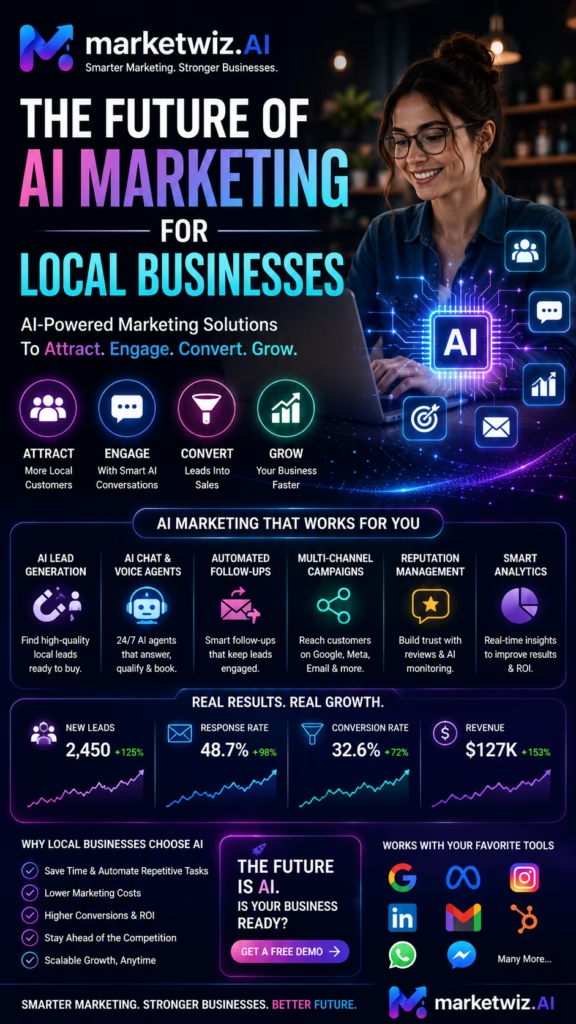
The future of AI marketing for local businesses will be built around faster customer response, smarter local visibility, personalized communication, AI-powered voice and chat, automated marketplace activity, connected customer data, stronger follow-up, and clearer measurement of which marketing efforts produce appointments, customers, revenue, and long-term growth.
Local marketing is moving from isolated campaigns toward connected systems that can recognize customer intent, respond immediately, personalize the next step, and track the result from the first interaction to the final sale.
For years, local businesses depended on a combination of websites, Google Maps, paid advertisements, social media, classified platforms, phone calls, email, text messages, referrals, and manual follow-up.
Those channels will remain important, but artificial intelligence is changing how they work together. AI can help determine which customer needs which message, which lead should be prioritized, which location should receive the inquiry, and which next step is most likely to move the customer forward.
The future will not belong only to the businesses with the largest advertising budgets. Local companies that use accurate data, strong customer experiences, disciplined automation, and fast human follow-up may compete more effectively than larger but slower organizations.
AI marketing will become less about generating endless content and more about building intelligent customer journeys that connect discovery, communication, scheduling, service, reviews, repeat business, and revenue.
The Future Local Marketing Formula
Trusted Local Information + AI Visibility + Immediate Response + Personalized Customer Journeys + Human Expertise + Connected Data + Revenue Measurement = Future-Ready Local Growth
Why AI Will Reshape Local Business Marketing
Customers Expect Faster Answers
People increasingly expect immediate information about availability, pricing, service areas, appointments, products, and next steps.
Search Is Becoming Conversational
Customers are asking complete questions instead of entering only short keywords.
Local Marketing Is Fragmented
AI can connect website leads, maps, social messages, marketplace inquiries, calls, appointments, and CRM records.
Personalization Is Becoming Expected
Customers respond better when messages reflect their location, service need, previous interaction, and buying stage.
Small Teams Need Greater Capacity
AI can reduce repetitive work while helping employees manage more inquiries and customer relationships.
Marketing Must Prove Revenue
Businesses increasingly need to know which channels produce appointments, sales, gross profit, and repeat customers.
Customer Expectations Will Continue to Change
Immediate Response Will Become Normal
A customer who asks a question through a website, marketplace, social platform, or phone system may expect an acknowledgment within moments rather than hours.
Customers Will Expect Channel Flexibility
Some customers prefer phone calls, while others want chat, email, text messaging, social communication, or online appointment booking.
Customers Will Expect Businesses to Remember Context
A customer should not have to repeat the same project, appointment, product, or complaint details across several employees and platforms.
Convenience Will Influence Local Buying Decisions
Easy scheduling, clear directions, fast answers, accurate inventory, transparent expectations, and responsive follow-up can influence which local provider a customer chooses.
The Rise of AI Search and Answer Engines
Discovery Will Extend Beyond Traditional Rankings
Customers may discover businesses through search results, map listings, AI-generated answers, recommendation systems, social search, marketplace search, and voice assistants.
Clear Business Information Will Become Essential
- Services
- Products
- Locations
- Service areas
- Hours
- Pricing context
- Appointment process
- Customer qualifications
Authority Will Require More Than Content Volume
Useful expertise, accurate local information, real customer proof, consistent business details, original examples, and trusted reviews may matter more than publishing large amounts of generic text.
Question-Based Content Will Grow in Value
Businesses should answer the questions customers actually ask before scheduling, visiting, purchasing, or requesting an estimate.
The Future of Local SEO
Location Pages Must Become More Useful
Future-ready location pages should include real services, neighborhoods, employee details, local examples, customer questions, photos, reviews, directions, hours, and appointment information.
Service Pages Must Match Customer Intent
A page should explain who the service is for, which problem it solves, where it is available, what the process looks like, and how to take the next step.
Structured Information Will Improve Understanding
Clear headings, FAQs, service categories, location information, contact details, and appropriate structured data can help systems understand the business.
Thin Mass-Produced Pages Will Become Less Valuable
Replacing only a city name across dozens of nearly identical pages provides little value to customers and weak local differentiation.
The Future of Google Maps Marketing
Profiles Will Become More Dynamic
Customers will continue to evaluate hours, services, reviews, photos, products, posts, questions, directions, and appointment options directly from local profiles.
AI Will Support Profile Management
- Drafting local updates
- Organizing service descriptions
- Monitoring profile changes
- Identifying unanswered questions
- Summarizing review themes
- Planning original photo content
- Tracking customer actions
- Comparing location performance
Reviews Will Influence More Than Reputation
Review language can reveal what customers value, which services are frequently mentioned, and where operational improvements are needed.
Maps Activity Must Connect to Revenue
Businesses should track calls, website visits, direction requests, messages, appointments, transactions, and repeat customers.
Accurate Local Business Data Will Matter More
Create One Reliable Source of Truth
- Business name
- Address
- Phone number
- Service area
- Hours
- Holiday hours
- Services
- Products
- Appointment calendar
- Lead-routing owner
Update Information Across Every Channel
Websites, map profiles, social platforms, directories, marketplaces, advertisements, chat systems, voice systems, and CRM records should use consistent data.
Incorrect Data Will Create Automation Errors
AI can quickly distribute outdated hours, incorrect pricing, unavailable services, or the wrong phone number if the original data is not maintained.
Data Quality Will Become a Competitive Advantage
Businesses with clean, current, connected information can respond more accurately and automate more safely.
The Future of Local Content Marketing
AI Will Increase Content Production
More businesses will use AI to create articles, service pages, emails, social captions, advertisements, video scripts, product descriptions, and customer guides.
Original Local Proof Will Become More Important
- Real customer questions
- Real projects
- Original photos
- Employee expertise
- Community involvement
- Local case studies
- Customer testimonials
- Operational experience
Content Will Become More Modular
One strong resource can be transformed into articles, short videos, social posts, email sequences, FAQ answers, chat responses, and sales materials.
Human Editing Will Protect Quality
Local facts, prices, statistics, customer examples, dates, services, and business claims should be verified before publication.
Voice and Conversational Search Will Expand
Customers Will Ask Complete Questions
- Who offers emergency service near me?
- Which local store has this product available?
- Who can provide an estimate this week?
- Which business has the best reviews nearby?
- Where can I schedule an appointment today?
Businesses Need Direct Answers
Content should clearly explain services, locations, timing, availability, requirements, and next steps.
Conversational Content Must Still Be Accurate
Businesses should avoid publishing invented questions, misleading answers, or unsupported local claims simply to target voice search.
Voice Discovery and Voice Response Will Connect
A customer may discover a business through a spoken question and immediately interact with an AI-powered phone system.
AI Voice Agents Will Transform Local Lead Response
Future Voice Agent Capabilities
- Answering inbound calls
- Responding after hours
- Collecting lead details
- Confirming service areas
- Providing approved answers
- Scheduling appointments
- Routing urgent calls
- Updating CRM records
Voice Agents Will Use More Customer Context
Connected systems may recognize whether the caller is a new lead, scheduled customer, previous buyer, open estimate, or active support case.
Human Transfer Will Remain Essential
Complaints, emergencies, negotiations, legal issues, sensitive data, and complex technical needs require qualified employees.
Call Quality Must Be Monitored
Businesses should review incorrect answers, failed transfers, scheduling mistakes, customer frustration, and unresolved calls.
AI Website Chat Will Become More Action-Oriented
Chat Will Move Beyond Simple FAQs
Future systems will increasingly identify customer needs, recommend services, confirm locations, collect project details, schedule appointments, and create CRM records.
Chat Will Use Page Context
A visitor on a product, service, location, pricing, or financing page should receive relevant answers and next steps.
Chat Will Coordinate With Employees
High-intent or complex inquiries can trigger immediate internal alerts with a conversation summary.
Customers Must Know When a Person Is Needed
The system should not pretend to resolve complaints, contracts, pricing disputes, or unusual needs beyond its approved role.
The Future of Local Lead Generation
Lead Sources Will Become More Connected
- Search engines
- Google Maps
- AI answer systems
- Paid advertisements
- Social media
- Facebook Marketplace
- Craigslist
- Website chat
- Phone calls
- Customer referrals
AI Will Improve Lead Qualification
Systems can confirm location, service need, timeline, product interest, project size, appointment availability, and customer type before routing the lead.
Lead Quality Will Matter More Than Lead Volume
Businesses will increasingly optimize campaigns for appointments, estimates, purchases, and profit rather than raw inquiry counts.
Routing Will Become More Intelligent
Leads can be assigned based on territory, employee availability, service expertise, language, urgency, account ownership, or customer value.
Local Personalization Will Scale With AI
Useful Personalization Signals
- Customer location
- Service interest
- Product viewed
- Previous conversation
- Appointment status
- Purchase history
- Known objection
- Customer lifecycle stage
Offers Will Become More Contextual
Customers may receive different information based on service area, product availability, appointment capacity, season, or previous engagement.
Personalization Must Be Accurate
AI should not invent customer needs, budgets, company details, preferences, or previous interactions.
Privacy Must Remain Central
Businesses should use only appropriate, secure, and relevant customer information.
Automated Appointment Booking Will Become Standard
Customers Will Expect Real-Time Availability
AI can connect with calendars and offer valid times based on service, location, employee, appointment duration, and capacity.
Scheduling Will Become More Intelligent
- Travel time
- Service duration
- Employee expertise
- Customer location
- Emergency priority
- Equipment availability
- Language preference
- Existing customer status
Reminders Will Be Personalized
Customers can receive location details, preparation instructions, employee information, arrival updates, and rescheduling options.
No-Shows Will Trigger Recovery Workflows
AI can offer new appointment times, update the CRM, and notify the assigned employee.
Customer Follow-Up Will Become More Predictive
AI Will Identify the Best Next Action
The system may recommend a reminder, appointment offer, salesperson call, educational resource, estimate follow-up, or reactivation message.
Follow-Up Will Use Customer Behavior
- Website return visit
- Pricing-page engagement
- Proposal view
- Email reply
- Appointment request
- Missed call
- Product inquiry
- Previous purchase timing
Sequences Will Become More Adaptive
Messages can change when the customer replies, schedules, purchases, opts out, requests help, or moves to another stage.
Human Salespeople Will Receive Better Alerts
High-intent activity can trigger immediate follow-up with complete customer context.
The Future of Local Business Email Marketing
Email Will Become More Segmented
Customers can be grouped by location, service, purchase history, appointment status, engagement, customer value, and lifecycle stage.
AI Will Support Message Creation
- Subject-line variations
- Personalized openings
- Customer education
- Appointment follow-up
- Seasonal reminders
- Estimate nurturing
- Reactivation campaigns
- Retention communication
Email Will Coordinate With Other Channels
Campaigns should consider whether the customer already received a text message, phone call, chat response, or salesperson follow-up.
Revenue Will Matter More Than Open Rates
Businesses should measure replies, appointments, sales, repeat purchases, and revenue.
The Future of Local SMS Marketing
SMS Will Focus on Useful Moments
- Lead acknowledgment
- Missed-call response
- Appointment confirmation
- Appointment reminder
- Arrival update
- Requested information
- Estimate follow-up
- Service reminder
Messages Will Become More Context-Aware
AI can reference the correct appointment, service, product, location, employee, or customer request.
Frequency Controls Will Become More Important
Businesses should avoid duplicate or excessive messages from multiple systems.
Consent and Opt-Out Handling Remain Essential
Automation should support clear identification, appropriate permissions, message limits, and customer preferences.
Marketplace Marketing Will Become More Automated
AI Can Support Listing Operations
- Organizing inventory
- Creating listing titles
- Drafting descriptions
- Managing location details
- Scheduling eligible posts
- Refreshing availability
- Responding to inquiries
- Routing leads
Marketplace Leads Will Connect With CRM Systems
Customer messages can become records, tasks, appointments, and sales opportunities instead of remaining trapped inside platform inboxes.
Response Speed Will Drive Results
Buyers often contact several sellers. Immediate acknowledgment and accurate product or service information can improve conversion.
Platform Compliance Will Remain Necessary
Businesses should follow current listing, category, duplication, prohibited-content, and messaging rules.
The Future of AI-Powered Paid Advertising
Creative Testing Will Accelerate
AI can produce multiple headline, description, image-concept, and offer variations for structured testing.
Audience Segmentation Will Improve
Businesses can organize campaigns by location, service, customer type, urgency, interest, and previous engagement.
Landing Pages Will Become More Dynamic
Visitors may see different content based on advertisement, location, service, customer stage, or device.
Profitability Will Become the Main Optimization Goal
Strong systems will evaluate qualified leads, appointments, transactions, revenue, gross profit, and customer lifetime value.
AI Review Management Will Become More Strategic
Review Requests Will Be Triggered Automatically
Completed appointments, successful services, purchases, deliveries, and positive customer interactions can initiate review requests.
AI Will Analyze Review Themes
- Response time
- Employee behavior
- Service quality
- Communication
- Price
- Scheduling
- Cleanliness
- Product availability
Review Insights Will Improve Operations
Repeated praise and complaints can guide training, staffing, service changes, and customer communication.
Serious Reviews Require Human Oversight
Legal threats, safety claims, discrimination concerns, refunds, injuries, and fraud allegations should be escalated.
Connected CRM Intelligence Will Power Local Growth
AI Will Organize Customer Records
- Lead source
- Contact details
- Customer location
- Service interest
- Conversation history
- Appointment status
- Estimate status
- Purchase history
AI Will Summarize Conversations
Employees can receive concise notes from calls, chat, email, SMS, marketplace messages, and forms.
CRM Systems Will Recommend Next Actions
The system may suggest a callback, appointment reminder, estimate follow-up, reactivation, review request, or retention message.
Duplicate and Incomplete Data Must Be Controlled
Connected systems require rules for customer identity, lead ownership, source attribution, and lifecycle stages.
AI Will Make Customer Retention More Proactive
Future Retention Workflows
- Maintenance reminders
- Membership renewals
- Reorder prompts
- Customer check-ins
- Warranty communication
- Loyalty offers
- Referral requests
- Win-back campaigns
AI Will Identify At-Risk Customers
Declining visits, missed renewals, poor feedback, unresolved complaints, and inactivity may trigger employee follow-up.
Communication Will Become More Relevant
Follow-up can reflect the customer's purchase, service timing, preferences, location, and relationship history.
Customer Lifetime Value Will Guide Marketing
Businesses may invest differently in acquisition, service, retention, and loyalty based on long-term customer value.
Marketing and Local Business Operations Will Merge
Marketing Promises Must Match Capacity
Advertising availability, appointment timing, inventory, service areas, and offers should reflect current operational conditions.
AI Can Adjust Workflows Based on Capacity
Campaigns, appointment slots, lead routing, and customer messages can respond to staffing, inventory, location, or schedule changes.
Customer Feedback Will Influence Operations Faster
Review themes, call summaries, cancellations, and support issues can be organized into operational alerts.
Real-Time Reporting Will Improve Decisions
Owners can monitor leads, appointments, sales, customer issues, inventory concerns, and team follow-up from connected dashboards.
The Human Role Will Become More Important, Not Less
Humans Provide Local Knowledge
Employees understand neighborhoods, customer expectations, local competition, seasonality, community relationships, and practical service conditions.
Humans Build Trust
High-value sales, complex services, sensitive issues, complaints, and long-term relationships require empathy and judgment.
Humans Protect Accuracy
Employees should review pricing, claims, offers, dates, customer data, legal language, and important decisions.
Humans Set Strategy
AI can analyze and recommend, but business owners and managers remain responsible for goals, positioning, customer experience, investment, and accountability.
The Best Future Is Human-Led and AI-Supported
Local businesses should use AI to increase speed, consistency, and capacity while preserving authentic relationships and human responsibility.
Privacy, Security, and Trust Will Define AI Adoption
Businesses Must Protect Customer Information
- Use secure systems
- Limit employee access
- Approve integrations
- Use strong authentication
- Maintain retention policies
- Remove former employee access
- Monitor account activity
- Document incident procedures
Collect Only Necessary Data
Avoid collecting sensitive information when it is not needed for the customer request or business purpose.
Automation Must Respect Communication Preferences
Email, SMS, phone, and remarketing workflows should include appropriate identification, permissions, frequency controls, and opt-out handling.
Customers Need Transparent Experiences
Businesses should avoid misleading customers about who or what is communicating with them.
Future Local Marketing Metrics Will Focus on Business Outcomes
Visibility Metrics
- Search visibility
- Map profile views
- Website visits
- Listing views
- Social reach
- Video engagement
Lead Metrics
- Total inquiries
- Valid lead rate
- Qualified lead rate
- Response time
- Contact rate
- Lead-source quality
Appointment and Sales Metrics
- Appointment rate
- Show rate
- Estimate rate
- Proposal rate
- Sales conversion
- Average transaction value
Customer and Profit Metrics
- Customer acquisition cost
- Gross profit
- Repeat purchase rate
- Customer retention
- Referral rate
- Customer lifetime value
Measure the Future ROI of AI Marketing
Qualified Lead Rate
Qualified Lead Rate = Qualified Local Leads ÷ Total Valid Inquiries × 100
Appointment Conversion Rate
Appointment Rate = Scheduled Appointments ÷ Qualified Leads × 100
Customer Conversion Rate
Customer Conversion Rate = New Customers ÷ Qualified Sales Opportunities × 100
Customer Acquisition Cost
Customer Acquisition Cost = Total Marketing and Sales Cost ÷ New Customers
Customer Lifetime Value
Customer Lifetime Value = Average Gross Profit per Purchase × Purchase Frequency × Customer Lifespan
AI Marketing ROI
AI Marketing ROI = (Gross Profit and Cost Savings Attributed to AI − Total AI Marketing Cost) ÷ Total AI Marketing Cost × 100
Future AI Marketing Mistakes Local Businesses Must Avoid
Publishing Large Amounts of Generic Content
More content does not automatically create trust, visibility, or customers.
Automating Incorrect Business Information
AI can rapidly spread outdated hours, pricing, services, offers, and contact details.
Sending Too Many Messages
Excessive email, SMS, call, and social follow-up can damage trust and increase opt-outs.
Ignoring Local Authenticity
Generic content cannot replace real employees, local projects, customer stories, original photos, and community relationships.
Using Too Many Disconnected Tools
Separate AI platforms can create duplicate data, conflicting messages, security risks, and higher costs.
Failing to Train Employees
Teams need to understand the workflow, their responsibilities, and when human intervention is required.
Trusting Every AI Recommendation
AI output may be incomplete, inaccurate, biased, outdated, or unsuitable for a specific customer.
Automating Complaints and Sensitive Issues
Serious customer concerns require empathy, judgment, investigation, and management involvement.
Measuring Activity Instead of Profit
Content volume, messages, clicks, and leads matter only when they improve customer acquisition, service, retention, revenue, or efficiency.
Trying to Transform Everything at Once
Begin with one valuable workflow, prove the result, and expand gradually.
A 30-Day Plan to Prepare for the Future of AI Marketing
Week 1: Audit the Current Marketing System
- List every lead source
- Review business information
- Review Google Maps profiles
- Review website conversion
- Measure response speed
- Review missed calls
- Review customer follow-up
- Identify the largest bottleneck
Week 2: Clean Data and Document Workflows
- Correct location information
- Clean customer records
- Remove duplicates
- Define lead stages
- Define employee ownership
- Define customer messages
- Define human escalation
- Review privacy requirements
Week 3: Launch One High-Value Automation
- Connect website forms
- Configure missed-call response
- Connect appointment calendars
- Connect email or SMS
- Connect the CRM
- Create employee alerts
- Test customer scenarios
- Review message accuracy
Week 4: Measure and Improve
- Measure time saved
- Measure response time
- Measure qualified leads
- Measure appointments
- Measure sales conversion
- Review customer feedback
- Correct workflow problems
- Calculate revenue and ROI
End-of-Month Outcome
After 30 days, the business should have cleaner local data, a clearer customer journey, one connected AI workflow, better employee ownership, faster response, stronger reporting, and a practical foundation for expanding AI marketing.
Final Takeaway: The Future of Local Marketing Is Connected, Intelligent, and Human-Led
The future of AI marketing for local businesses will not be defined by one chatbot, one advertisement, or one content-generation tool.
It will be defined by connected systems that help customers discover the business, receive accurate information, communicate through their preferred channel, schedule easily, receive timely follow-up, and move smoothly from interest to purchase.
AI will support local SEO, Google Maps, conversational search, website chat, voice calls, lead qualification, appointment booking, email, SMS, marketplace posting, paid advertising, social media, review management, CRM updates, retention, and reporting.
Human employees will remain essential for local expertise, relationships, creative judgment, pricing, negotiation, service delivery, complaints, strategy, and accountability.
The businesses that succeed will not simply automate more. They will automate carefully, maintain accurate information, protect customer trust, train employees, and measure real business outcomes.
Performance should be measured through qualified leads, response time, appointments, show rates, sales conversion, acquisition cost, gross profit, repeat purchases, customer retention, lifetime value, time savings, and return on investment.
When the complete system works together, a local search can become a conversation, qualified lead, scheduled appointment, completed sale, positive review, repeat customer, referral, and measurable long-term business growth.
Frequently Asked Questions
1. What is the future of AI marketing for local businesses?
It includes faster lead response, AI search visibility, voice agents, personalization, marketplace automation, connected CRM workflows, customer retention, and revenue attribution.
2. Will AI become essential for local business marketing?
AI will become increasingly important for response speed, consistency, personalization, data organization, and customer follow-up.
3. Will AI replace local marketing employees?
AI can automate repetitive tasks, but people remain essential for strategy, relationships, local knowledge, service, and quality control.
4. How will AI change local lead generation?
AI will improve audience selection, personalization, response, qualification, routing, appointment booking, and revenue tracking.
5. How will AI affect Google Maps marketing?
AI can support profile updates, review workflows, local content, customer questions, performance analysis, and lead tracking.
6. Will AI change local SEO?
Yes. Accurate information, useful location pages, customer reviews, local proof, structured content, and clear answers will become more important.
7. What is AI search optimization for local businesses?
It helps search and answer systems understand a business's services, locations, expertise, customer questions, and local relevance.
8. Will voice search become more important?
Voice and conversational search will remain important as customers ask complete questions and expect direct local answers.
9. How will AI voice agents help local businesses?
They can answer calls, collect details, schedule appointments, route customers, provide approved answers, and notify employees.
10. Will AI automate customer follow-up?
AI can automate acknowledgment, reminders, estimate follow-up, proposal nurturing, review requests, reactivation, and retention.
11. How will AI personalize local marketing?
AI can personalize messages using location, service interest, previous questions, appointment status, purchase history, and engagement.
12. Will AI improve appointment booking?
AI can offer real times, collect customer details, send reminders, handle rescheduling, and notify employees.
13. How will AI change local advertising?
AI will support creative testing, audience segmentation, landing-page alignment, lead routing, and profit-based reporting.
14. Will AI help with Facebook Marketplace marketing?
AI may help manage eligible listings, descriptions, schedules, inquiry response, qualification, routing, and results tracking.
15. Will AI help with Craigslist marketing?
AI can help create local ads, organize schedules, respond to inquiries, qualify leads, and measure results while following platform rules.
16. How will AI affect local content marketing?
AI will help create drafts, FAQs, videos, service pages, social posts, email content, and customer guides faster.
17. Will local businesses still need original content?
Yes. Original projects, photos, employees, customer stories, local expertise, and community involvement will remain highly valuable.
18. How will AI affect online reviews?
AI can automate requests, monitor feedback, identify themes, draft responses, alert managers, and connect reviews with operations.
19. Will AI connect local marketing channels?
AI will increasingly connect websites, maps, social media, marketplaces, ads, email, SMS, phone, calendars, reviews, and CRM records.
20. How will AI improve CRM workflows?
AI can create records, assign owners, summarize conversations, update stages, create tasks, schedule follow-up, and report outcomes.
21. Will AI help local businesses retain customers?
AI can support reminders, renewals, reorders, loyalty offers, review requests, referrals, and win-back campaigns.
22. Can AI predict which leads will convert?
AI can estimate conversion likelihood using fit, intent, timing, location, service interest, engagement, and historical results.
23. Will AI reduce local marketing costs?
AI may reduce repetitive labor and missed opportunities, but software, data, advertising, and oversight costs still require measurement.
24. What should local businesses automate first?
Start with missed-call response, new-lead follow-up, appointment reminders, review requests, marketplace replies, or CRM updates.
25. What risks come with AI marketing?
Risks include inaccurate content, excessive messaging, poor security, weak handoff, unsupported claims, generic customer experiences, and biased decisions.
26. Does AI marketing require human oversight?
Yes. People should review strategy, pricing, complaints, contracts, sensitive information, unusual situations, and high-value opportunities.
27. How should local businesses protect customer data?
Use secure systems, limited access, approved integrations, data minimization, permissions, retention policies, and regular reviews.
28. How should local businesses measure AI marketing?
Track response time, qualified leads, appointments, sales, acquisition cost, revenue, gross profit, retention, time savings, and ROI.
29. How can local businesses prepare for the future of AI marketing?
Clean data, document workflows, improve local information, connect systems, train employees, define escalation, and measure results.
30. What is the main opportunity in the future of AI marketing for local businesses?
The opportunity is to combine automation, local visibility, personalization, faster response, human service, connected data, and measurable growth.
30 Additional SEO Keywords
Use these supporting phrases naturally across AI-marketing pages, local-business automation pages, service pages, future-trends articles, location pages, case studies, FAQs, and internal links.
Prepare Your Local Business for the Future of AI Marketing
MarketWiz.ai helps local businesses improve Google Maps visibility, automate marketplace posting, respond to leads faster, use AI voice and chat, schedule appointments, connect CRM workflows, strengthen customer follow-up, reactivate older opportunities, improve retention, and measure revenue, gross profit, time savings, and return on investment.
This article provides general marketing, automation, operational, and business information and does not provide legal, financial, tax, privacy, telecommunications, employment, cybersecurity, consumer-protection, platform-compliance, or regulatory advice. Businesses should review current email, SMS, telephone, advertising, privacy, data-use, consent, opt-out, call-recording, artificial-intelligence, marketplace, search-platform, employment, and industry-specific requirements before collecting customer data, recording communications, using automated outreach, or implementing AI-supported marketing, lead scoring, scheduling, review, reporting, and customer follow-up systems. AI-generated content, business data, customer responses, summaries, recommendations, classifications, and decisions should receive appropriate human review for accuracy, security, fairness, relevance, and quality.











AI Will Reshape Local Social Media Marketing
Content Production Will Accelerate
AI can generate ideas, captions, scripts, variations, hooks, summaries, and publishing calendars.
Local Authenticity Will Become More Valuable
Social Messages Will Become Lead Workflows
AI can answer common questions, collect customer details, route leads, schedule appointments, and create CRM tasks.
Human Review Will Protect the Brand
Sensitive comments, complaints, unusual questions, and public disputes require thoughtful human responses.