
AI Marketing for Lead Conversion Optimization
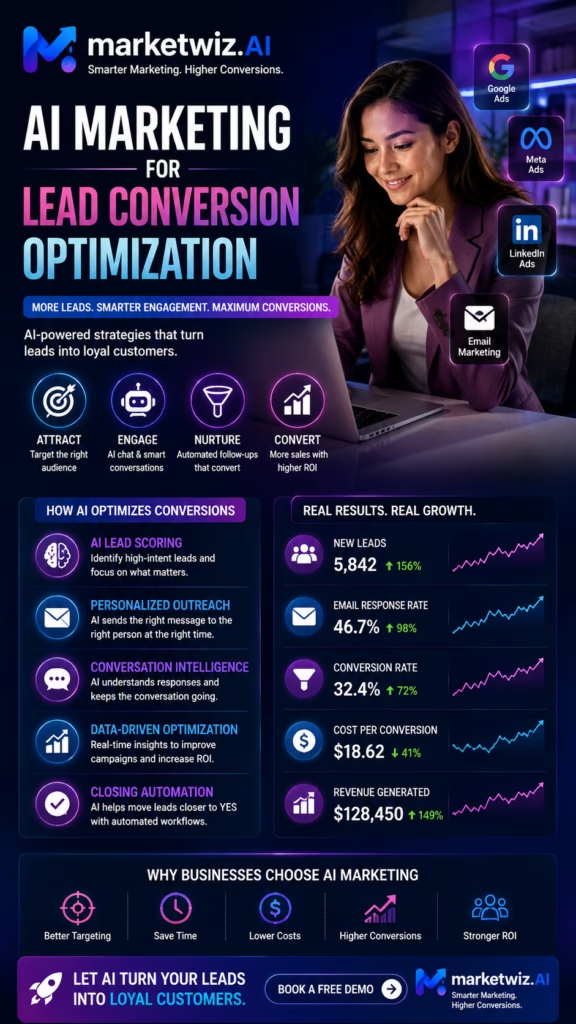
AI marketing for lead conversion optimization helps businesses improve every stage between the first click and the final sale. It can strengthen targeting, personalize campaigns, respond to inquiries faster, qualify leads, schedule appointments, automate follow-up, improve sales handoff, organize CRM data, and connect marketing activity to measurable revenue.
Generating leads is only the beginning. The real value appears when qualified prospects take meaningful actions such as replying, scheduling, visiting, requesting an estimate, reviewing a proposal, purchasing, or signing an agreement.
Many businesses focus heavily on traffic, impressions, clicks, and form submissions while giving less attention to what happens after the lead arrives. A campaign may look successful inside an advertising dashboard while producing few customers.
Conversion problems often appear because targeting is too broad, the offer is unclear, landing pages create friction, responses are slow, follow-up is inconsistent, or salespeople lack useful context.
Artificial intelligence can help identify these weak points and create more organized workflows. AI can analyze lead behavior, personalize messages, answer inquiries, qualify prospects, assign priorities, book appointments, trigger follow-up, and update CRM records.
However, AI does not replace the fundamentals of a strong offer, trusted brand, responsive team, useful service, competitive positioning, and disciplined sales process.
The AI Conversion Optimization Formula
Right Audience + Strong Offer + Relevant Message + Friction-Free Experience + Fast Response + Consistent Follow-Up + Strong Sales Execution = Higher Conversion
Why Lead Conversion Optimization Matters
More Revenue From Existing Traffic
Improving conversion can produce more customers without requiring the business to increase traffic at the same rate.
Lower Customer Acquisition Cost
When more qualified leads become customers, the average cost required to acquire each customer may decrease.
Better Sales Productivity
Stronger qualification and routing help salespeople focus on opportunities with better fit and intent.
Fewer Missed Opportunities
Faster response and consistent follow-up reduce the number of valuable leads that disappear.
Improved Customer Experience
Clear messages, easy scheduling, helpful answers, and relevant follow-up make buying easier.
More Accurate Marketing Decisions
Conversion tracking shows which campaigns create real revenue, not simply clicks or inquiries.
Why Use AI Marketing for Conversion Optimization
AI Can Analyze More Customer Signals
AI can help organize information from website activity, forms, chat, calls, email engagement, CRM records, appointments, proposals, and completed sales.
AI Can Respond Faster
New leads can receive immediate acknowledgment, answers to common questions, and appointment options even when the team is busy.
AI Can Personalize at Scale
Communication can reflect location, industry, product interest, service request, buyer role, timeline, previous questions, and customer stage.
AI Can Improve Consistency
Follow-up, reminders, CRM updates, and task creation do not depend entirely on employee memory.
AI Can Reveal Conversion Gaps
Reporting can show whether leads fail during page visits, forms, qualification, scheduling, appointments, proposals, or sales follow-up.
Map the Complete Lead Conversion Funnel
Awareness Stage
The prospect discovers the business through search, maps, social media, marketplaces, paid advertising, content, referrals, or direct outreach.
Interest Stage
The prospect visits a page, reviews a listing, watches a video, opens an email, reads reviews, or asks a question.
Inquiry Stage
The prospect submits a form, sends a message, calls, starts a chat, requests pricing, or asks for availability.
Qualification Stage
The business confirms service fit, location, timing, project size, buyer authority, product compatibility, or budget range.
Conversion Stage
The prospect schedules, visits, approves an estimate, requests a proposal, purchases, or signs.
Retention Stage
The customer receives onboarding, support, reminders, review requests, repeat offers, renewals, and referral opportunities.
Define the Ideal Customer Profile
Business-to-Business Criteria
- Industry
- Company size
- Location
- Buyer role
- Operational challenge
- Purchase authority
- Technology or service fit
- Implementation timeline
Local Customer Criteria
- Service address
- Requested service
- Project size
- Property type
- Urgency
- Budget range
- Appointment availability
- Decision-making status
Create Exclusion Rules
Exclude unsupported locations, unavailable products, unsuitable project sizes, duplicate records, invalid contacts, and customers who have opted out.
Use Closed-Customer Data
Study which customers close faster, produce stronger margins, stay longer, purchase again, and refer other customers.
Improve Lead Quality Before Increasing Volume
Align Targeting With the Offer
Advertising should reach people who can realistically use, purchase, schedule, or approve the promoted service.
Use Clear Pricing Context
When appropriate, explain starting prices, project ranges, minimums, financing availability, or factors that influence cost.
Set Accurate Expectations
Explain location limits, appointment timing, project requirements, service availability, and the next step.
Track Disqualification Reasons
Common reasons may include location, budget, project type, timeline, product availability, authority, or duplicate requests.
Strengthen the Marketing Offer
Communicate the Outcome
Explain how the service helps the customer save time, generate revenue, solve a problem, improve convenience, reduce risk, or achieve a desired result.
Create a Clear Next Step
- Schedule a consultation
- Request an estimate
- View available inventory
- Book a service call
- Visit a showroom
- Request pricing
- Start a product demonstration
- Speak with a specialist
Reduce Perceived Risk
Use clear processes, real reviews, accurate examples, useful demonstrations, transparent expectations, and responsive support.
Avoid Unsupported Promises
Do not guarantee rankings, sales, revenue, approvals, savings, or conversion outcomes that depend on external conditions.
Optimize Landing Pages for Better Conversion
Match the Advertisement
The landing-page headline, location, offer, service, imagery, and call to action should match the advertisement that brought the visitor.
Explain the Value Quickly
Visitors should understand what the business provides, who it helps, what result it creates, and what action to take.
Reduce Form Friction
Ask only for information necessary to respond, qualify, or schedule. Additional questions can be collected later.
Add Trust Elements
- Customer reviews
- Relevant experience
- Real project examples
- Professional business information
- Clear process
- Service-area details
- Useful FAQs
- Accurate contact information
Create Conversion-Focused Marketing Messages
Use a Clear Structure
- Relevant customer problem
- Clear outcome or benefit
- Simple explanation of the solution
- Credibility or proof
- Easy next step
Use Customer Language
Explain the problem the way the customer experiences it rather than relying only on internal terminology.
Keep the Message Focused
Avoid forcing every service, feature, credential, promotion, and company detail into one advertisement or message.
Test Different Angles
- Speed
- Convenience
- Revenue
- Cost reduction
- Reliability
- Customer experience
- Local availability
- Reduced workload
Use AI Personalization Without Sounding Robotic
Useful Personalization Fields
- Customer name
- Company or household
- Location
- Requested service
- Industry
- Previous question
- Appointment status
- Known objection
Personalize the Benefit
A contractor may care about estimate appointments, while a retailer may care about product inquiries, foot traffic, and local inventory sales.
Personalize the Next Step
Offer a callback, estimate, appointment, demonstration, showroom visit, product link, or consultation based on the buyer stage.
Avoid Invented Details
AI should never fabricate previous conversations, company events, customer needs, budgets, hiring plans, or purchase history.
Optimize Traffic Sources for Conversion
| Traffic Source | Conversion Opportunity | Main Requirement |
|---|---|---|
| Google Search | High-intent service, product, and local searches | Relevant page and fast response |
| Google Maps | Calls, directions, local visits, appointments | Accurate profile and strong reviews |
| Paid Search | Immediate demand and commercial intent | Keyword-to-page alignment |
| Social Advertising | Awareness, retargeting, lead forms | Strong creative and audience fit |
| Marketplaces | Product and local service inquiries | Accurate listings and fast replies |
| Nurturing, reactivation, proposals | Relevance and controlled frequency |
Improve Lead Response Speed
Acknowledge the Lead Immediately
Thank you for contacting us. We received your request and can help with the next step. Could you confirm your location and what you need?
Answer the Main Question
Do not require a customer to complete a long qualification process before receiving basic information the business can safely provide.
Collect Essential Details
- Name
- Phone number
- Location
- Requested service or product
- Timeline
- Preferred appointment time
Offer the Next Step
Provide specific appointment options, a callback window, an estimate process, or a product link.
Use AI Website Chat to Increase Conversion
Chat Functions
- Answer common questions
- Identify customer needs
- Confirm location
- Collect contact information
- Recommend relevant services
- Schedule appointments
- Notify employees
Use Page Context
A visitor on a pricing page, product page, service page, or location page should receive a conversation relevant to that page.
Keep Qualification Short
Ask only enough questions to create a useful next step.
Escalate Complex Issues
Pricing disputes, contracts, complaints, technical issues, and sensitive information should be routed to qualified employees.
Use AI Voice Automation to Convert More Calls
AI Voice Applications
- Answering missed calls
- After-hours lead capture
- Basic qualification
- Appointment scheduling
- Frequently asked questions
- Call routing
- Follow-up messages
- Sales-team notifications
Keep Calls Natural
Use short questions, clear explanations, accurate information, and easy access to a person.
Transfer High-Intent Calls
Pricing requests, purchase decisions, urgent service needs, and qualified opportunities may require immediate human follow-up.
Review Call Outcomes
Track appointments, transfers, abandoned calls, unresolved questions, errors, and customer feedback.
Improve Email Conversion With AI
Email Conversion Elements
- Recognizable sender
- Relevant subject line
- Short opening
- Clear customer benefit
- Accurate personalization
- One main call to action
- Professional signature
Create Follow-Up Sequences
Use reminders, case studies, answers, comparisons, appointment options, and useful resources.
Segment the Audience
Separate contacts by customer type, service, location, buyer stage, appointment status, and previous engagement.
Measure Qualified Outcomes
Replies, appointments, opportunities, and sales matter more than opens alone.
Improve SMS Conversion With AI
Useful SMS Workflows
- Lead acknowledgment
- Qualification question
- Appointment confirmation
- Appointment reminder
- Requested information
- Estimate follow-up
- Reactivation
- Salesperson introduction
Keep Messages Clear
Identify the business, explain why the message was sent, and provide one next step.
Coordinate Message Timing
Avoid repeated text, email, and call activity from several systems at the same time.
Honor Customer Preferences
Use appropriate permission, identification, opt-out handling, and frequency controls.
Use AI Lead Scoring to Prioritize Opportunities
Fit Signals
- Location
- Industry
- Buyer role
- Company or project size
- Service compatibility
- Budget range
Intent Signals
- Pricing-page visit
- Appointment request
- Estimate request
- Repeated website visits
- Proposal engagement
- Urgent timeline
Engagement Signals
- Email response
- Chat conversation
- Call completion
- Content download
- Video view
- Event registration
Keep Human Judgment
Scores should help prioritize activity, not automatically reject every prospect who does not match the model.
Qualify Leads Without Creating Excessive Friction
Core Qualification Areas
- Need
- Location
- Timeline
- Project or purchase size
- Authority
- Budget fit
- Technical compatibility
Use Progressive Qualification
Collect a few important details first, then gather deeper information as the customer becomes more engaged.
Prioritize Immediate Need
Customers seeking urgent service, product availability, a quote, or an appointment may require faster routing.
Record Disqualification Reasons
Use this information to improve targeting, forms, messaging, and campaign quality.
Book More Appointments With AI
Offer Specific Times
We have availability Tuesday at 11:00 a.m. or Wednesday at 2:30 p.m. Which time works better for you?
Collect Required Details
- Name
- Phone
- Meeting purpose
- Requested service
- Location
- Time zone
- Attendees
Send Confirmation
Include the date, time, time zone, meeting location or link, representative, agenda, and rescheduling option.
Send Useful Reminders
Reminders should improve attendance without overwhelming the customer.
Improve the Marketing-to-Sales Handoff
Handoff Information
- Lead source
- Contact information
- Requested service
- Qualification answers
- Conversation summary
- Customer questions
- Known objections
- Appointment details
- Recommended next step
Route by Expertise
Assign leads by location, product, service, account size, territory, language, or technical need.
Set Response Targets
Define how quickly salespeople should respond to qualified and appointment-ready leads.
Avoid Repetitive Questions
Salespeople should review the lead summary before contacting the prospect.
Automate Follow-Up That Supports Conversion
Follow-Up Stages
- Initial response
- Qualification follow-up
- Appointment reminder
- Post-meeting recap
- Estimate follow-up
- Proposal follow-up
- Decision-stage follow-up
- Long-term nurture
Use Previous Context
Mention the service, question, proposal, appointment, or objection already discussed.
Add New Value
Provide a useful answer, example, comparison, resource, or appointment option.
Stop When Appropriate
Honor opt-outs, clear disinterest, invalid contacts, closed opportunities, and customer requests.
Nurture Longer Sales Cycles With AI
Nurture Content
- Buyer guides
- Case studies
- Product education
- Pricing explanations
- Frequently asked questions
- Implementation guides
- Customer stories
- Industry insights
Match the Buyer Stage
Early-stage prospects need education, while later-stage prospects may need pricing, proof, technical details, and risk reduction.
Monitor Engagement
Repeated visits, pricing engagement, proposal views, and appointment requests may indicate increased intent.
Alert Sales at the Right Time
Engagement signals can trigger a personalized human follow-up.
Reactivate Older Leads With AI
Reactivation Segments
- Unresponsive inquiries
- No-show appointments
- Old estimates
- Expired proposals
- Former customers
- Seasonal buyers
- Leads waiting on budget
- Leads waiting on timing
Use a Relevant Reason
New availability, a service update, seasonal need, useful content, revised pricing, or an appointment opportunity may justify contact.
Reference Earlier Interest Accurately
Mention the previous service, product, estimate, or conversation without pretending it was more recent than it was.
Review Contact Permissions
Check customer history, opt-out status, consent, and channel rules.
Connect AI Conversion Marketing With the CRM
CRM Automation Tasks
- Create lead records
- Assign sales ownership
- Record lead source
- Store qualification details
- Summarize conversations
- Create follow-up tasks
- Schedule appointments
- Update sales stages
- Record outcomes
- Trigger reporting
Standardize Pipeline Stages
- New lead
- Contacted
- Qualified
- Appointment scheduled
- Discovery completed
- Estimate or proposal sent
- Decision pending
- Closed won
- Closed lost
Protect CRM Quality
Prevent duplicates, incorrect owners, missing source data, inconsistent stages, and outdated contact records.
Create Conversion Dashboards
Show lead volume, qualification, appointments, pipeline value, conversion, revenue, source performance, and response time.
Increase Customer Trust to Improve Conversion
Trust Signals
- Accurate business information
- Clear expectations
- Professional website
- Real customer reviews
- Relevant case studies
- Responsive communication
- Clear policies
- Experienced team
Keep Information Consistent
Website pages, advertisements, chat, email, SMS, social profiles, and salespeople should not provide conflicting information.
Avoid False Urgency
Do not use fake deadlines, invented scarcity, or misleading guarantees.
Explain the Next Step
Customers are more likely to act when they know what will happen during the appointment, estimate, consultation, or demonstration.
Use AI-Supported Conversion Testing
Test One Major Variable at a Time
- Headline
- Offer
- Call to action
- Form length
- Hero image
- Pricing presentation
- Trust element
- Appointment process
Use Enough Traffic
Small samples can create misleading conclusions. Longer tests may be necessary for low-volume campaigns.
Measure Down-Funnel Results
A variation may generate more forms but fewer qualified leads or customers.
Document Every Test
Record the hypothesis, variable, audience, dates, result, sales quality, and next action.
Track Lead Conversion Performance
Traffic Metrics
- Visitors
- Traffic source
- Landing-page views
- Engagement
- Call clicks
- Form starts
Lead Metrics
- Total leads
- Valid contact rate
- Qualified lead rate
- Response time
- Contact rate
- Disqualification reasons
Appointment Metrics
- Appointment rate
- Show rate
- No-show rate
- Reschedule rate
- Time to appointment
- Appointment-to-opportunity rate
Sales Metrics
- Proposal rate
- Opportunity value
- Close rate
- Average sale value
- Sales-cycle length
- Gross profit
Measure Revenue and AI Conversion ROI
Landing-Page Conversion Rate
Landing-Page Conversion Rate = Completed Lead Actions ÷ Unique Landing-Page Visitors × 100
Qualified Lead Rate
Qualified Lead Rate = Qualified Leads ÷ Total Valid Leads × 100
Appointment Rate
Appointment Rate = Scheduled Appointments ÷ Qualified Leads × 100
Sales Conversion Rate
Sales Conversion Rate = New Customers ÷ Qualified Sales Opportunities × 100
Customer Acquisition Cost
Customer Acquisition Cost = Total Sales and Marketing Cost ÷ New Customers
AI Conversion Optimization ROI
ROI = (Gross Profit From AI-Assisted Customers − Total AI Marketing Cost) ÷ Total AI Marketing Cost × 100
Common AI Lead Conversion Mistakes
Optimizing for Lead Volume Alone
A campaign can generate many low-quality inquiries while producing few customers.
Targeting Too Broadly
Broad targeting reduces relevance and creates unnecessary qualification work.
Using Weak Landing Pages
A confusing page, long form, vague offer, or mismatched message can destroy conversion.
Responding Too Slowly
High-intent prospects may select a competitor that responds first.
Using Generic Messaging
Messages that ignore the prospect's need, location, or stage feel less relevant.
Asking Too Many Questions
Excessive qualification can prevent legitimate prospects from taking the next step.
Failing to Transfer Context
Customers become frustrated when they must repeat the same information.
Automating Sensitive Conversations
Complaints, negotiation, contracts, and complex decisions require human involvement.
Following Up Without Value
Repetitive reminders without useful information do not strengthen the buying decision.
Ignoring Revenue Attribution
Leads and appointments matter, but revenue and gross profit determine whether the system works.
A 30-Day AI Conversion Optimization Action Plan
Week 1: Audit the Funnel
- Define the primary conversion
- Map traffic sources
- Review landing pages
- Review form completion
- Measure response speed
- Review qualification
- Review appointment conversion
- Identify drop-off points
Week 2: Improve Targeting and Messaging
- Define the ideal customer
- Create exclusion rules
- Strengthen the offer
- Rewrite headlines
- Improve landing-page copy
- Shorten forms
- Create qualification questions
- Review compliance requirements
Week 3: Launch AI Workflows
- Connect website forms
- Configure AI chat
- Configure voice response
- Connect email and SMS
- Connect appointment calendars
- Connect the CRM
- Create lead-scoring rules
- Test sales handoff
Week 4: Measure and Optimize
- Measure landing-page conversion
- Measure qualified lead rate
- Measure appointment rate
- Measure show rate
- Review sales feedback
- Launch one conversion test
- Improve follow-up sequences
- Calculate revenue and ROI
End-of-Month Outcome
After 30 days, the business should have clearer targeting, stronger offers, improved landing pages, faster response, working qualification and appointment workflows, connected CRM records, better sales handoff, and measurable insight into which marketing efforts produce customers.
Final Takeaway: Optimize the Entire Journey, Not Just the Advertisement
Effective AI marketing for lead conversion optimization requires more than generating traffic or publishing automated content.
The business must begin with the right audience, a strong offer, relevant messaging, a clear landing page, useful qualification, fast response, simple scheduling, strong sales ownership, and consistent follow-up.
AI can then support targeting, content variations, landing-page ideas, website chat, voice response, email, SMS, lead scoring, appointment booking, sales handoff, nurturing, reactivation, CRM updates, testing, and reporting.
Human salespeople remain essential for discovery, trust, technical questions, pricing, negotiation, strategy, contracts, and closing.
Performance should be measured through landing-page conversion, response speed, qualified lead rate, appointment rate, show rate, opportunity rate, close rate, customer acquisition cost, revenue, gross profit, and return on investment.
AI conversion optimization becomes even more effective when connected with SEO, Google Maps, paid advertising, social media, Facebook Marketplace, Craigslist, email, SMS, voice, referrals, reviews, calendars, and disciplined CRM follow-up.
When the complete system works together, a visitor can become an inquiry, qualified lead, scheduled appointment, trusted opportunity, profitable customer, repeat buyer, referral, and measurable business-growth result.
Frequently Asked Questions
1. What is AI marketing for lead conversion optimization?
It uses AI to improve targeting, response speed, qualification, personalization, appointment booking, follow-up, sales handoff, and conversion measurement.
2. How does AI improve lead conversion?
AI can help businesses respond faster, prioritize stronger prospects, personalize messages, reduce friction, and maintain consistent follow-up.
3. Can AI improve lead quality?
Yes, when the business uses accurate targeting, clear customer profiles, meaningful exclusions, qualification criteria, and sales feedback.
4. Can AI optimize landing pages?
AI can support headlines, benefit statements, calls to action, FAQs, audience variations, and conversion-test ideas.
5. Can AI replace a sales team?
AI can automate repetitive work, but salespeople remain essential for discovery, trust, negotiation, technical questions, and closing.
6. What information does an AI conversion system need?
It needs target audiences, offers, qualification rules, approved messaging, sales stages, routing instructions, follow-up timing, and goals.
7. Can AI qualify inbound leads?
AI can collect details, confirm fit, identify urgency, schedule appointments, and route qualified inquiries.
8. Can AI score leads?
AI can help score leads using fit, intent, engagement, location, role, service interest, and timeline.
9. Can AI personalize marketing messages?
AI can personalize messages using accurate information about industry, location, service interest, previous questions, and buyer stage.
10. Can AI book appointments automatically?
AI can offer times, collect information, schedule appointments, update calendars, send reminders, and notify representatives.
11. How quickly should businesses respond to leads?
Businesses should respond promptly because high-intent prospects may contact several providers.
12. Can AI improve email conversion?
AI can support segmentation, subject lines, personalized drafts, nurture sequences, reactivation, and conversion analysis.
13. Can AI improve SMS conversion?
AI can support permitted SMS for acknowledgment, qualification, reminders, follow-up, and reactivation.
14. Can AI voice systems improve conversion?
AI voice systems can answer calls, collect details, qualify basic needs, schedule appointments, and route callers.
15. Can website chat increase lead conversion?
Website chat can answer questions, reduce delays, collect information, recommend services, and schedule next steps.
16. How does AI improve lead nurturing?
AI can maintain sequences, recommend content, track engagement, summarize interactions, and alert salespeople.
17. Can AI reactivate old leads?
AI can reconnect with permitted leads using new availability, relevant information, seasonal timing, or appointment opportunities.
18. How does AI connect with a CRM?
AI can create records, assign owners, summarize conversations, update stages, schedule tasks, and track outcomes.
19. What metrics should businesses track?
Track valid leads, response time, qualification, appointments, opportunities, close rate, acquisition cost, revenue, profit, and ROI.
20. How can businesses improve AI conversion performance?
Use focused targeting, accurate data, stronger offers, fast response, clear qualification, ownership, and conversion-based reporting.
21. Can AI write conversion-focused marketing copy?
AI can draft copy, but accuracy, claims, relevance, tone, brand consistency, and compliance require review.
22. Should conversion marketing be fully automated?
Automation should depend on customer expectations, message risk, sales complexity, data quality, and channel rules.
23. Can AI reduce customer acquisition cost?
AI may reduce delays, missed follow-up, repetitive work, and scheduling effort, but total costs must be measured.
24. What causes low lead conversion rates?
Common causes include poor targeting, weak offers, slow response, generic messaging, page friction, weak handoff, and limited trust.
25. How long does conversion optimization take?
Timing depends on traffic, sales cycle, offer quality, lead sources, campaign volume, pricing, and sales execution.
26. Does AI conversion optimization require human oversight?
Yes. Human oversight supports strategy, quality, compliance, pricing, negotiation, technical questions, and closing.
27. How should customer data be protected?
Use secure systems, limited access, approved integrations, data minimization, retention policies, and consent procedures.
28. Can AI help local businesses improve lead conversion?
AI can confirm service areas, qualify projects, schedule estimates, automate follow-up, request reviews, and track booked jobs.
29. Should AI conversion optimization connect with other marketing channels?
Yes. Connect it with SEO, Google Maps, paid ads, marketplaces, social media, email, SMS, voice, referrals, and CRM.
30. What is the main goal of AI marketing for lead conversion optimization?
The goal is to create qualified conversations, reduce friction, schedule opportunities, improve sales execution, and generate profitable revenue.
30 Additional SEO Keywords
Use these supporting phrases naturally across conversion pages, AI-marketing pages, lead-generation content, sales-automation pages, case studies, FAQs, service pages, and internal links.
Turn More Marketing Leads Into Appointments, Customers, and Revenue
MarketWiz.ai helps businesses attract stronger prospects, improve response speed, optimize lead qualification, personalize outreach, automate appointment booking, connect CRM workflows, strengthen follow-up, reactivate older opportunities, and measure conversion, revenue, gross profit, and return on investment.
This article provides general marketing, sales, automation, and business information and does not provide legal, privacy, telecommunications, financial, employment, consumer-protection, platform-compliance, or regulatory advice. Businesses should review current email, SMS, telephone, privacy, advertising, data-use, consent, opt-out, call-recording, artificial-intelligence, platform, and industry-specific requirements before collecting customer data, contacting prospects, recording communications, or implementing automated targeting, lead scoring, qualification, scheduling, follow-up, testing, and conversion systems. AI-generated content, scores, summaries, recommendations, and customer classifications should receive appropriate human review for accuracy, fairness, relevance, security, and quality.













