
How Google Maps Listings Attract Local Customers
How Google Maps Listings Attract Local Customers explains how local businesses can use optimized Google Maps listings, reviews, photos, services, local SEO, and clear calls to action to turn nearby searches into calls, visits, bookings, quote requests, and customers.
Introduction
How Google Maps Listings Attract Local Customers is one of the most important local marketing topics for businesses that depend on nearby buyers, homeowners, patients, diners, shoppers, clients, or service customers. Google Maps is often the first place people go when they need a local solution quickly.
A customer may search for a plumber, painter, HVAC company, mattress store, restaurant, dentist, landscaper, mechanic, contractor, cleaning company, agency, or local shop. When they see Google Maps results, they compare reviews, photos, distance, services, hours, and contact options before deciding who to call or visit.
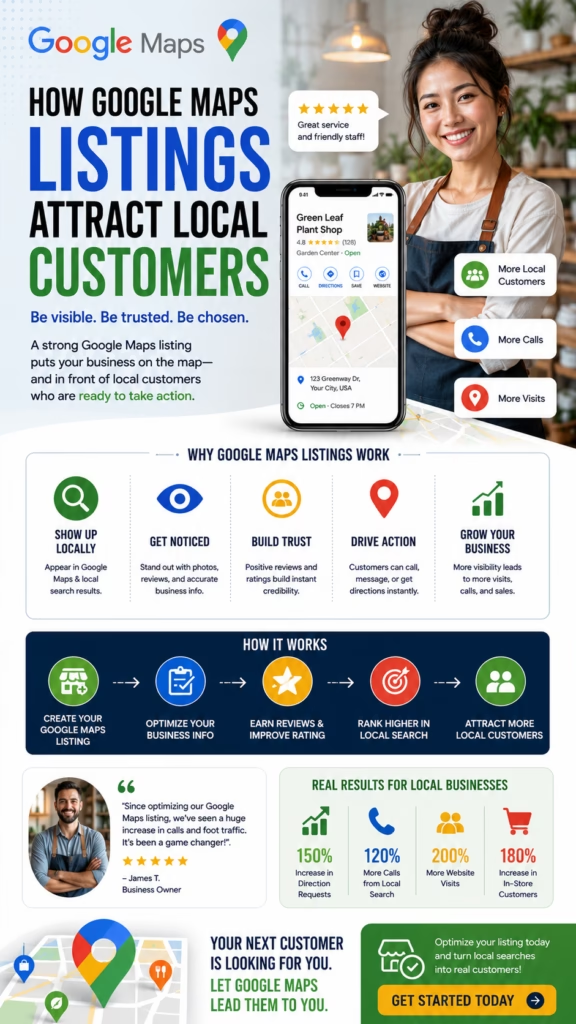
Google Maps listings attract local customers by helping nearby searchers find, trust, compare, and contact businesses at the exact moment they need help.
A strong Google Maps listing does more than show a business name. It gives customers the information they need to feel confident. It shows real reviews, accurate hours, helpful photos, clear services, directions, website links, and contact buttons. Each detail can influence whether a customer chooses that business or keeps scrolling.
Businesses that treat Google Maps as a local customer acquisition tool can generate more calls, website clicks, direction requests, messages, appointments, quote requests, and store visits. The key is to optimize the listing, keep it active, build trust, and respond quickly to customer actions.
Main idea: How Google Maps Listings Attract Local Customers comes down to visibility, trust, relevance, proof, and easy next steps.
Table of Contents
- 1) Why Google Maps listings matter
- 2) How local customers use Google Maps
- 3) Google Business Profile optimization
- 4) Categories, services, and relevance
- 5) Reviews and customer trust
- 6) Photos and visual proof
- 7) Local keywords and search intent
- 8) Website SEO that supports Maps listings
- 9) Citations and business information consistency
- 10) Posts, offers, and active updates
- 11) Customer actions that create leads
- 12) Tracking calls, clicks, and visits
- 13) Follow-up systems after customer inquiries
- 14) Common mistakes that reduce local customers
- 15) Final thoughts
- 16) FAQs
- 17) Extra keywords
1) Why Google Maps Listings Matter
Google Maps listings matter because they are often the first local impression a customer sees. Before visiting a website or calling a business, many customers look at the map listing to judge whether the company looks real, active, trusted, and relevant.
A complete listing can help customers quickly understand who the business serves, what it offers, where it is located, when it is open, and how to contact it. An incomplete listing can create doubt and send customers to competitors.
Google Maps listings can help attract:
- Nearby shoppers
- Service customers
- Homeowners
- Walk-in visitors
- Appointment seekers
- Emergency service leads
- Quote requests
- Direction requests
- Website visitors
- Repeat customers
Google Maps listings attract local customers because they appear when people are actively looking nearby.
2) How Local Customers Use Google Maps
Local customers use Google Maps to find nearby businesses, compare options, read reviews, view photos, check hours, request directions, call, visit websites, or book appointments. The process is usually fast, especially on mobile devices.
A customer may look at only a few listings before deciding. That means the business profile needs to communicate trust quickly.
Customer searches for a local solution
Google Maps shows nearby listings
Customer compares reviews, photos, distance, services, and hours
Customer chooses a trusted business
Customer calls, visits, books, clicks, or requests directions
A strong Google Maps listing helps customers move from search to action with less hesitation.
3) Google Business Profile Optimization
The Google Business Profile powers the Google Maps listing. Optimizing this profile is one of the most important steps for attracting local customers. The profile should be complete, accurate, active, and built around customer action.
Businesses should keep all details up to date, including the business name, phone number, website, address or service area, hours, categories, services, products, description, photos, reviews, and posts.
A customer-attracting Google Maps listing should include:
- Accurate business name
- Correct phone number
- Website link
- Updated business hours
- Address or service area
- Primary category
- Relevant secondary categories
- Detailed services
- Business description
- Photos and videos
- Review responses
- Booking or quote options
How Google Maps Listings Attract Local Customers starts with a complete and optimized Google Business Profile.
4) Categories, Services, and Relevance
Categories and services help Google and customers understand what the business does. A clear primary category can help the business appear for relevant searches. Secondary categories can support additional real services.
Service details also help customers decide whether the business is the right fit. A customer should not have to guess what the company offers.
Example:
Primary category: Painting company
Services: Interior painting, exterior painting, cabinet painting, drywall repair
Local relevance: Serving nearby homeowners and businesses
CTA: Call or request an estimate
Relevant categories and services help Google Maps listings attract the right local customers.
5) Reviews and Customer Trust
Reviews are one of the strongest reasons customers choose one local business over another. Customers use reviews to judge quality, reliability, responsiveness, pricing, professionalism, and overall experience.
Businesses should request honest reviews from satisfied customers and respond to feedback. Professional responses show that the business is active and cares about customers.
Review signals that attract local customers:
- High star rating
- Recent reviews
- Detailed customer feedback
- Service-specific comments
- Location-specific comments
- Owner responses
- Customer photos
- Consistent review growth
Reviews help Google Maps listings attract local customers by creating trust before the first call.
6) Photos and Visual Proof
Photos help local customers understand what the business looks like, what it offers, and what kind of experience they can expect. Visual proof is especially important for service businesses, stores, restaurants, clinics, contractors, and product-based businesses.
Real photos make the listing feel more active and credible. Businesses should add photos of completed work, team members, storefronts, products, service vehicles, equipment, interiors, before-and-after results, and customer-facing experiences.
Photos that attract local customers:
- Storefront photos
- Interior photos
- Team photos
- Service vehicle photos
- Before-and-after photos
- Completed project photos
- Product photos
- Equipment photos
- Short videos
Photos help customers feel more confident before calling, visiting, booking, or requesting a quote.
7) Local Keywords and Search Intent
Local keywords help connect the listing to what customers are searching for. These keywords should appear naturally in the business description, service names, posts, website pages, FAQs, and local content.
Customers may search by service, product, location, neighborhood, urgency, problem, or “near me” phrase. The listing and website should make those connections clear.
Local keyword examples:
How Google Maps Listings Attract Local Customers
Google Maps listings
Google Maps SEO
Google Business Profile optimization
Plumber near me
HVAC repair in Rochester NY
House painter in Fort Worth
Local SEO for service businesses
Google Maps listings attract more local customers when the profile and website match real search intent.
8) Website SEO That Supports Maps Listings
The business website supports Google Maps listings by giving customers more information after they click. A strong website reinforces services, locations, credibility, photos, reviews, and calls to action.
Google Maps and the website should work together. The same phone number, service areas, business name, hours, services, and brand message should be consistent across both.
Website elements that support Google Maps listings:
- Service pages
- City or service area pages
- Consistent phone number
- Clear contact forms
- Click-to-call buttons
- Customer reviews
- Project photos
- FAQ sections
- Fast mobile performance
- Local business schema
A strong website helps turn Google Maps listing visitors into real customer inquiries.
9) Citations and Business Information Consistency
Citations are mentions of a business’s name, address, phone number, and website across directories, social profiles, review sites, local listings, and industry platforms. Consistency helps build trust.
If business information is inconsistent online, customers may hesitate. Search engines may also have less confidence in the listing details. Businesses should keep contact details accurate wherever they appear.
Consistent information helps Google Maps listings attract customers by reducing confusion and building credibility.
10) Posts, Offers, and Active Updates
Google Business Profile posts and active updates can help a listing feel current. Businesses can share promotions, seasonal reminders, service updates, product highlights, events, appointment availability, and important announcements.
Posts give customers more reasons to act. They also show that the business is active and engaged.
Profile post structure:
Headline: Clear update or offer
Body: Explain the value
Local relevance: Mention service area if useful
Proof: Add photo, review, or benefit
CTA: Call, book, message, or request a quote
Active updates help Google Maps listings stay fresh, useful, and action-focused.
11) Customer Actions That Create Leads
A Google Maps listing attracts customers when it creates action. Customers may call, click the website, request directions, send a message, book an appointment, request a quote, submit a form, or visit the business.
The listing should make these actions simple. Contact buttons, updated hours, clear services, and trust signals all help customers take the next step.
Important Google Maps customer actions:
- Phone calls
- Website clicks
- Messages
- Direction requests
- Appointment bookings
- Quote requests
- Form submissions
- Store visits
- Review engagement
- Photo views
Google Maps listings attract local customers best when every customer action is easy and clear.
12) Tracking Calls, Clicks, and Visits
Tracking helps businesses understand whether their Google Maps listing is producing results. Visibility is helpful, but the goal is customer action and revenue.
Businesses should track phone calls, website clicks, direction requests, messages, bookings, quote requests, visits, and closed customers. Tracking helps show which improvements are working.
Important metrics to track:
- Profile views
- Search appearances
- Phone calls
- Website clicks
- Direction requests
- Messages
- Bookings
- Quote requests
- Store visits
- Revenue from Maps leads
Tracking turns Google Maps listing performance into a measurable local customer growth system.
13) Follow-Up Systems After Customer Inquiries
Attracting customers is only the first step. Businesses also need to respond quickly and follow up with every inquiry. A missed call or slow reply can send the customer to a competitor.
Follow-up systems can include missed call text-back, lead alerts, appointment reminders, quote follow-up, CRM notes, SMS updates, email replies, and review requests after service.
Follow-up workflow:
Customer calls, messages, or submits form
Business responds quickly
Lead details are saved
Appointment or quote is offered
Follow-up reminders are sent
Customer is booked, nurtured, or closed
Google Maps listings attract more value when businesses respond quickly and follow up consistently.
14) Common Mistakes That Reduce Local Customers
Many businesses lose local customers because their Google Maps listings are incomplete, outdated, or poorly managed. Even if a business appears in search results, weak trust signals can stop customers from calling or visiting.
- Incomplete Google Business Profile
- Wrong primary category
- Missing service list
- Outdated hours
- Incorrect phone number
- Weak or old reviews
- No review responses
- Low-quality photos
- No website support
- No clear call to action
- No tracking system
- Slow follow-up
- Missed calls
Big mistake: treating a Google Maps listing like a basic directory entry instead of a local customer acquisition asset.
15) Final Thoughts
How Google Maps Listings Attract Local Customers comes down to helping nearby people find, trust, compare, and contact a business. A listing should not only exist. It should answer customer questions, show proof, build confidence, and make the next step easy.
Businesses that optimize their Google Maps listings with accurate information, strong reviews, real photos, clear services, website support, local keywords, updates, tracking, and follow-up can turn local searches into real customer growth.
Final takeaway: Google Maps listings attract local customers when visibility, trust, relevance, proof, tracking, and follow-up all work together.
16) FAQs
1) How do Google Maps listings attract local customers?
They attract local customers by helping nearby searchers discover the business, compare reviews and photos, check services, call, request directions, visit the website, or book appointments.
2) Why are Google Maps listings important?
They are important because local customers often use Google Maps when they are ready to choose a nearby business.
3) Can Google Maps listings generate leads?
Yes. They can generate calls, messages, website clicks, direction requests, bookings, quote requests, and store visits.
4) What is Google Business Profile optimization?
It is the process of improving a business listing with accurate information, categories, services, photos, reviews, posts, and contact options.
5) Do reviews help attract local customers?
Yes. Reviews build trust and help customers feel more confident choosing the business.
6) Do photos help Google Maps listings?
Yes. Photos provide visual proof and make the business feel more real and trustworthy.
7) Why are categories important?
Categories help Google understand what the business does and match it with relevant local searches.
8) Should businesses list services?
Yes. Service listings help customers understand what the business offers and whether it fits their needs.
9) Does website SEO support Google Maps listings?
Yes. Website SEO supports listings by reinforcing services, locations, trust, and customer conversion paths.
10) What are local keywords?
Local keywords are phrases based on services, products, cities, neighborhoods, problems, urgency, and “near me” searches.
11) What customer actions come from Google Maps?
Customer actions include calls, website clicks, messages, direction requests, bookings, quote requests, and visits.
12) Why is tracking important?
Tracking helps businesses understand which Google Maps actions turn into leads, visits, customers, and revenue.
13) Should businesses respond to reviews?
Yes. Review responses show professionalism, customer care, and active profile management.
14) Do profile posts help?
Posts can help by sharing offers, updates, seasonal reminders, events, and calls to action.
15) What is the biggest Google Maps listing mistake?
The biggest mistake is leaving the listing incomplete, outdated, inactive, or unsupported by reviews and photos.
16) Can service businesses use Google Maps listings?
Yes. Service businesses can attract calls, quote requests, appointments, and local customers through Google Maps.
17) Can storefront businesses use Google Maps listings?
Yes. Storefronts can attract direction requests, phone calls, website visits, and walk-in customers.
18) How often should listings be updated?
Listings should be updated whenever hours, services, photos, offers, or important details change.
19) What makes a listing convert better?
Strong reviews, clear services, accurate information, real photos, easy contact options, and fast follow-up can improve conversion.
20) Do citations matter?
Yes. Consistent citations help support trust and business information accuracy across the web.
21) What should businesses track?
Businesses should track profile views, calls, website clicks, direction requests, messages, bookings, quote requests, and revenue.
22) Can automation help with Google Maps leads?
Yes. Automation can help with missed call text-back, lead alerts, appointment reminders, quote follow-up, and review requests.
23) How fast should businesses respond?
Businesses should respond as quickly as possible because local customers may contact multiple competitors.
24) Is Google Maps listing optimization a one-time task?
No. It works best with ongoing updates, reviews, photos, website improvements, tracking, and follow-up.
25) What is the main goal of a Google Maps listing?
The main goal is to turn local searches into calls, visits, bookings, quote requests, and customers.
17) Extra Keywords
- How Google Maps Listings Attract Local Customers
- Google Maps listings
- Google Maps SEO
- Google Business Profile optimization
- local customers
- local SEO
- Google Maps marketing
- local lead generation
- Google Maps business listing
- Google Maps customer calls
- Google Business Profile leads
- local search visibility
- Google Maps profile optimization
- business listing optimization
- Google reviews strategy
- local customer acquisition
- near me search optimization
- Google Maps direction requests
- Google Maps website clicks
- service business Google Maps SEO
- storefront Google Maps marketing
- local map pack SEO
- Google Maps conversion tracking
- Google Maps customer inquiries
- local business growth