

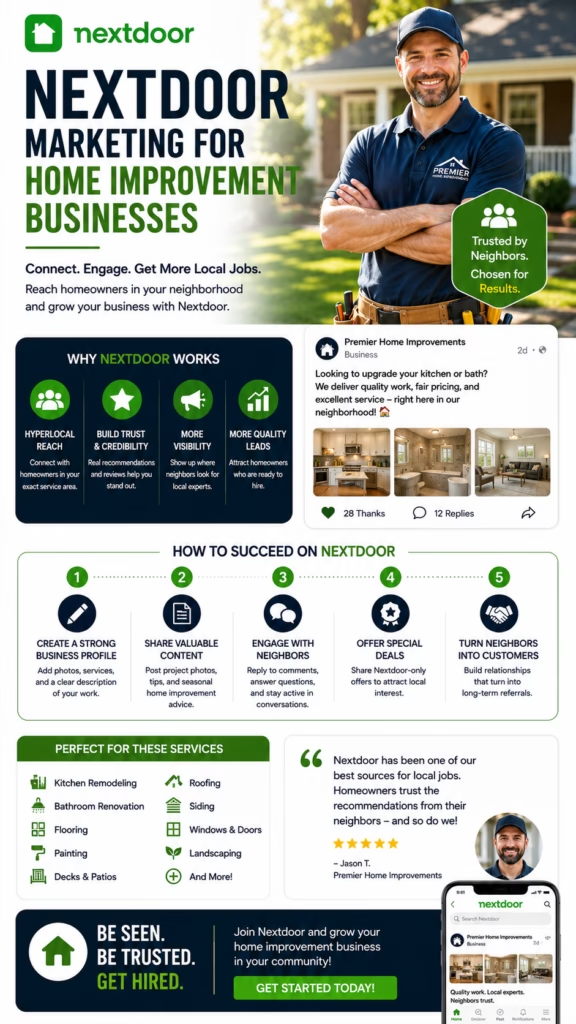
Nextdoor Marketing for Home Improvement Businesses
Nextdoor Marketing for Home Improvement Businesses explains how remodelers, painters, roofers, flooring companies, landscapers, deck builders, fence companies, and other home improvement providers can build neighborhood trust, earn recommendations, and generate more local project leads.
Introduction
Nextdoor Marketing for Home Improvement Businesses is one of the most valuable local marketing strategies for companies that depend on homeowners, property owners, landlords, and neighborhood referrals. Home improvement projects require trust. People want to hire businesses that feel local, proven, recommended, and capable of doing quality work inside or around their home.
Nextdoor is especially useful for home improvement companies because it is built around neighborhoods. Homeowners use it to ask for recommendations, discuss local projects, compare providers, share experiences, and find businesses nearby. A company that is visible, helpful, and recommended on Nextdoor can become the trusted option before a homeowner even starts searching elsewhere.
Nextdoor marketing helps home improvement businesses turn neighborhood visibility into trust, quote requests, consultations, and booked projects.
For businesses such as remodelers, painters, roofers, flooring installers, landscapers, cabinet refinishers, deck builders, fence companies, window companies, and exterior improvement contractors, Nextdoor can create a steady stream of local awareness and customer conversations.
The best strategy is not to post random ads. The best strategy is to build a complete local presence with a strong business page, clear service descriptions, real project photos, before-and-after proof, customer recommendations, neighborhood-specific posts, simple offers, fast responses, and consistent follow-up.
Main idea: Nextdoor Marketing for Home Improvement Businesses works when companies combine local trust, project proof, helpful content, and fast lead response.
Table of Contents
- 1) Why Nextdoor matters for home improvement companies
- 2) How homeowners use Nextdoor before hiring
- 3) Building a strong Nextdoor business page
- 4) Recommendations and neighborhood trust
- 5) Project photos and before-and-after proof
- 6) Local posts that attract home improvement leads
- 7) Offers and promotions for project inquiries
- 8) Service descriptions that convert homeowners
- 9) Targeting neighborhoods and service areas
- 10) Fast response and appointment setting
- 11) Combining Nextdoor with Google Maps SEO
- 12) Tracking Nextdoor leads and project value
- 13) Follow-up systems for estimates and quotes
- 14) Common mistakes that reduce leads
- 15) Final thoughts
- 16) FAQs
- 17) Extra keywords
1) Why Nextdoor Matters for Home Improvement Companies
Nextdoor matters for home improvement companies because homeowners often want trusted local opinions before starting a project. A kitchen update, exterior paint job, roof repair, flooring installation, deck build, landscaping project, or bathroom remodel can be a meaningful investment. Homeowners want to feel confident before contacting a company.
On Nextdoor, local trust matters. A business that appears in neighborhood conversations, has customer recommendations, and shows real project results can feel more familiar than a company the homeowner has never seen before. That familiarity can lead to more messages, calls, estimate requests, and consultations.
Nextdoor can help home improvement businesses generate:
- Local project inquiries
- Quote requests
- Estimate appointments
- Homeowner messages
- Neighborhood referrals
- Seasonal project leads
- Before-and-after engagement
- Repeat customer interest
- Local brand awareness
- Community trust
Nextdoor Marketing for Home Improvement Businesses is powerful because homeowners often trust nearby recommendations before hiring.
2) How Homeowners Use Nextdoor Before Hiring
Homeowners use Nextdoor to ask questions, request recommendations, compare experiences, and find contractors who have worked in nearby neighborhoods. They may ask for a painter, remodeler, roofer, landscaper, flooring installer, fence company, or deck builder.
They may also search for previous conversations, view business pages, look at project photos, message companies, or respond to local offers. This makes Nextdoor a useful place to show proof and become part of the decision process early.
Homeowner plans a project
Homeowner asks neighbors or searches Nextdoor
Recommended companies appear
Homeowner checks photos, services, offers, and recommendations
Homeowner messages, calls, or requests an estimate
Homeowners often use Nextdoor to reduce risk before choosing a home improvement business.
3) Building a Strong Nextdoor Business Page
A strong Nextdoor business page helps homeowners quickly understand what the business does and why it can be trusted. The page should not feel incomplete or vague. It should clearly communicate services, service areas, contact details, project proof, and customer value.
Home improvement businesses should include accurate business information, website link, phone number, service categories, project photos, customer recommendations, and a clear call to action. The page should make it easy to request an estimate or ask a question.
A strong Nextdoor business page should include:
- Business name
- Primary home improvement category
- Phone number
- Website link
- Service area
- Clear business description
- Detailed services
- Project photos
- Customer recommendations
- Simple quote request CTA
Nextdoor Marketing for Home Improvement Businesses starts with a business page that looks complete, local, and project-ready.
4) Recommendations and Neighborhood Trust
Recommendations are one of the strongest trust signals on Nextdoor. For home improvement businesses, this matters because homeowners want proof that other people nearby had a good experience. A neighbor’s recommendation can feel more credible than a regular advertisement.
Businesses should encourage happy customers to recommend them when appropriate. A recommendation can support future leads by showing reliability, work quality, communication, professionalism, and local experience.
Recommendations help prove:
- Quality of work
- Reliability
- Local experience
- Professionalism
- Communication quality
- Project satisfaction
- Timeliness
- Trust inside the neighborhood
Neighborhood recommendations can make a home improvement business feel safer and more familiar before the estimate.
5) Project Photos and Before-and-After Proof
Project photos are essential for home improvement marketing. Homeowners want to see results before they contact a company. Before-and-after photos are especially powerful because they show transformation and make the value easier to understand.
A painter can show exterior transformations. A remodeler can show kitchens and bathrooms. A landscaper can show yard improvements. A flooring company can show finished rooms. A deck builder can show completed outdoor spaces. These visuals help homeowners imagine what is possible for their own property.
Useful project photos include:
- Before-and-after photos
- Completed project photos
- Work-in-progress photos
- Team photos
- Material or product photos
- Exterior transformations
- Interior improvement photos
- Customer-approved project examples
Visual proof helps turn Nextdoor attention into real home improvement leads.
6) Local Posts That Attract Home Improvement Leads
Local posts can help home improvement businesses stay visible in neighborhoods where they want more projects. The best posts are specific, helpful, and visually interesting. They should not feel like generic ads copied across every platform.
Examples include seasonal maintenance reminders, project spotlights, before-and-after posts, design tips, limited estimate openings, storm damage checks, exterior refresh ideas, curb appeal tips, and neighborhood-specific offers.
Nextdoor post formula:
Local hook: Helping homeowners nearby
Project type: What service or improvement is offered
Proof: Before-and-after photo or recommendation
Offer: Free estimate, consultation, or availability
CTA: Message, call, or request a quote
Home improvement posts work best when they combine local relevance, project proof, and a simple next step.
7) Offers and Promotions for Project Inquiries
Simple offers can help encourage homeowners to take the next step. A good offer should be believable, relevant, and easy to understand. It should make the homeowner feel like now is a good time to ask questions or request an estimate.
Offers may include free estimates, seasonal project consultations, neighborhood discounts, limited appointment windows, exterior refresh specials, maintenance checks, design consultations, or bundled services.
Offer ideas for home improvement businesses:
- Free project estimate
- Seasonal inspection
- Neighborhood discount
- Limited consultation slots
- Exterior refresh offer
- Interior upgrade consultation
- Storm damage check
- Project planning call
Clear offers help turn Nextdoor visibility into estimate requests and project conversations.
8) Service Descriptions That Convert Homeowners
Service descriptions should be specific and homeowner-focused. Instead of saying “home improvement services,” a business should list exact services such as kitchen remodeling, bathroom remodeling, interior painting, exterior painting, cabinet painting, roof repair, flooring installation, deck building, fence installation, or landscaping.
Specific descriptions help homeowners quickly decide whether the business can help. They also attract more qualified inquiries because customers understand the scope of work before reaching out.
Service description structure:
What project type you handle
What problem or upgrade it solves
Where you provide the service
Why homeowners trust you
How to request an estimate
Clear service descriptions help homeowners move from browsing to requesting a quote.
9) Targeting Neighborhoods and Service Areas
Nextdoor marketing works better when home improvement businesses focus on neighborhoods that are likely to need their services. Different neighborhoods have different home ages, property values, renovation demand, outdoor project needs, and homeowner budgets.
A business may focus on older homes, high-value neighborhoods, new developments, HOA communities, growing suburbs, or areas where it has already completed projects. Local relevance makes posts and offers more effective.
Neighborhood targeting should consider:
- Home age
- Average project value
- Distance from the business
- Neighborhood demand
- Seasonal project needs
- Competition level
- Referral potential
- Previous project locations
Nextdoor Marketing for Home Improvement Businesses becomes stronger when the business targets neighborhoods most likely to produce quality projects.
10) Fast Response and Appointment Setting
Fast response matters because homeowners may contact multiple companies at once. The business that replies quickly and clearly has a better chance of booking the estimate. Slow responses can lose leads even when the homeowner was interested.
A good response should confirm the service, ask for project details, request photos if helpful, explain the next step, and offer appointment availability. The goal is to move the conversation toward a quote, consultation, or estimate.
Response example:
Thanks for reaching out. Yes, we help with that type of project in your area.
Can you send a few photos or details about the space?
We can review it and share the next available estimate window.
Fast, helpful responses turn Nextdoor messages into estimate appointments.
11) Combining Nextdoor With Google Maps SEO
Nextdoor becomes even stronger when combined with Google Maps SEO. Nextdoor helps build neighborhood trust and recommendations. Google Maps captures high-intent searches from homeowners looking for services nearby. The website supports both channels with service pages, photos, reviews, and contact options.
Home improvement businesses should keep messaging consistent across Nextdoor, Google Business Profile, website pages, social media, and review platforms. Consistency helps customers trust the business wherever they find it.
Connected local marketing system:
- Nextdoor for neighborhood trust
- Google Maps for local search visibility
- Website SEO for service pages
- Reviews for credibility
- Photos for project proof
- CRM for lead tracking
- Follow-up system for estimates
Nextdoor and Google Maps together can help home improvement businesses get found, trusted, and contacted.
12) Tracking Nextdoor Leads and Project Value
Tracking is important because home improvement businesses need to know whether Nextdoor is creating real value. A post may get attention, but the business needs to measure messages, estimate requests, consultations, booked projects, and closed revenue.
Tracking can be done with CRM tags, lead source fields, call tracking, booking forms, message records, spreadsheets, or intake questions. Each lead should be connected to the platform and neighborhood when possible.
Nextdoor metrics to track:
- Messages received
- Calls generated
- Quote requests
- Estimate appointments
- Neighborhood source
- Post engagement
- Offer responses
- Booked projects
- Average project value
- Closed revenue
Tracking helps turn Nextdoor from random posting into a measurable home improvement lead channel.
13) Follow-Up Systems for Estimates and Quotes
Many home improvement leads need follow-up. A homeowner may be comparing companies, waiting for a spouse or partner, collecting quotes, checking budget, or deciding timing. A good follow-up system helps keep the business in the conversation.
Follow-up can include estimate reminders, quote follow-up messages, project planning emails, SMS updates, photo requests, appointment confirmations, and review requests after completion.
Follow-up workflow:
Homeowner sends inquiry
Business responds quickly
Estimate appointment is scheduled
Quote is sent
Follow-up reminder is created
Project is booked or nurtured for later
Consistent follow-up helps home improvement businesses turn inquiries into booked projects.
14) Common Mistakes That Reduce Leads
Many home improvement businesses struggle on Nextdoor because they post without a clear strategy. They may use generic sales copy, skip project photos, respond slowly, fail to ask for recommendations, or never track which neighborhoods produce leads.
- Posting only generic sales messages
- No before-and-after photos
- Weak business page
- No customer recommendations
- Slow responses
- No clear service list
- No neighborhood targeting
- No offer or CTA
- No lead tracking
- No follow-up process
- Ignoring project value by area
- Not connecting Nextdoor with Google Maps and website SEO
Big mistake: treating Nextdoor like a basic ad board instead of a neighborhood trust and project lead generation platform.
15) Final Thoughts
Nextdoor Marketing for Home Improvement Businesses is about becoming visible, trusted, and easy to contact in the neighborhoods where homeowners need help. Home improvement decisions involve trust, proof, timing, and confidence. Nextdoor can support all of those when used correctly.
A strong strategy includes a complete business page, recommendations, project photos, local posts, clear services, simple offers, quick responses, tracking, and follow-up. When these pieces work together, home improvement businesses can generate more quote requests, consultations, and booked projects.
Final takeaway: Nextdoor marketing helps home improvement businesses turn neighborhood trust into project inquiries, estimates, booked work, and long-term customer growth.
16) FAQs
1) What is Nextdoor marketing for home improvement businesses?
Nextdoor marketing for home improvement businesses is the process of using Nextdoor pages, posts, recommendations, project photos, offers, and neighborhood visibility to generate local project leads.
2) Why is Nextdoor useful for home improvement companies?
Nextdoor is useful because homeowners often ask neighbors for trusted recommendations before hiring home improvement providers.
3) Can home improvement businesses get leads from Nextdoor?
Yes. They can generate messages, calls, estimate requests, consultations, referrals, and booked projects.
4) What home improvement businesses can use Nextdoor?
Painters, remodelers, roofers, flooring companies, landscapers, deck builders, fence companies, cabinet refinishers, and window companies can use Nextdoor.
5) What should a Nextdoor business page include?
It should include services, contact details, service areas, project photos, recommendations, business description, and a clear quote request CTA.
6) Do recommendations matter on Nextdoor?
Yes. Recommendations help build neighborhood trust and make homeowners more confident contacting the business.
7) Should home improvement businesses use before-and-after photos?
Yes. Before-and-after photos are one of the strongest ways to show project quality and transformation.
8) What should home improvement companies post?
They should post project photos, seasonal reminders, design tips, local offers, before-and-after examples, and estimate availability.
9) Should businesses use offers on Nextdoor?
Yes. Offers such as free estimates, consultations, seasonal inspections, or neighborhood discounts can increase inquiries.
10) How fast should businesses respond?
Businesses should respond as quickly as possible because homeowners may contact multiple companies.
11) Can Nextdoor help remodelers?
Yes. Remodelers can use Nextdoor to show completed kitchens, bathrooms, additions, and renovation projects.
12) Can painters use Nextdoor?
Yes. Painters can use before-and-after photos, local posts, recommendations, and estimate offers to generate leads.
13) Can landscapers use Nextdoor?
Yes. Landscapers can post yard transformations, seasonal cleanup offers, lawn care tips, and local availability.
14) Can roofers use Nextdoor?
Yes. Roofers can share storm damage tips, inspection offers, repair photos, and neighborhood project examples.
15) Should Nextdoor be combined with Google Maps SEO?
Yes. Nextdoor builds neighborhood trust while Google Maps captures high-intent local searches.
16) How should leads be tracked?
Leads can be tracked by platform, neighborhood, service requested, appointment status, quote sent, booked project, and revenue.
17) What metrics matter most?
Important metrics include messages, calls, estimate requests, consultations, booked projects, average project value, and closed revenue.
18) What is the biggest Nextdoor mistake?
The biggest mistake is posting generic sales messages without project proof, recommendations, targeting, tracking, or follow-up.
19) How often should businesses post?
Businesses should post consistently with useful local content, project examples, seasonal reminders, and offers.
20) What makes a post effective?
An effective post is local, visual, helpful, specific, trustworthy, and includes a simple next step.
21) Can Nextdoor help with referrals?
Yes. Neighborhood conversations and recommendations can generate referral-based project leads.
22) Should businesses ask for recommendations?
Yes. Happy customers can help strengthen local trust by recommending the business.
23) Can Nextdoor help seasonal home improvement services?
Yes. Seasonal services can use Nextdoor to promote timely projects, inspections, maintenance, and availability.
24) What is the goal of Nextdoor marketing?
The goal is to turn neighborhood visibility into homeowner trust, project inquiries, estimates, and booked work.
25) Is Nextdoor marketing a one-time task?
No. It works best with consistent posting, recommendations, project proof, tracking, fast responses, and follow-up.
17) Extra Keywords
- Nextdoor Marketing for Home Improvement Businesses
- Nextdoor marketing
- home improvement leads
- home improvement marketing
- Nextdoor for contractors
- Nextdoor for remodelers
- Nextdoor for painters
- Nextdoor for roofers
- Nextdoor for landscapers
- contractor lead generation
- local contractor marketing
- homeowner lead generation
- neighborhood marketing
- Nextdoor recommendations
- Nextdoor business page
- local project leads
- home improvement SEO
- Google Maps and Nextdoor marketing
- before and after project marketing
- remodeling lead generation
- painting lead generation
- roofing lead generation
- landscaping lead generation
- home services marketing
- local customer acquisition













