

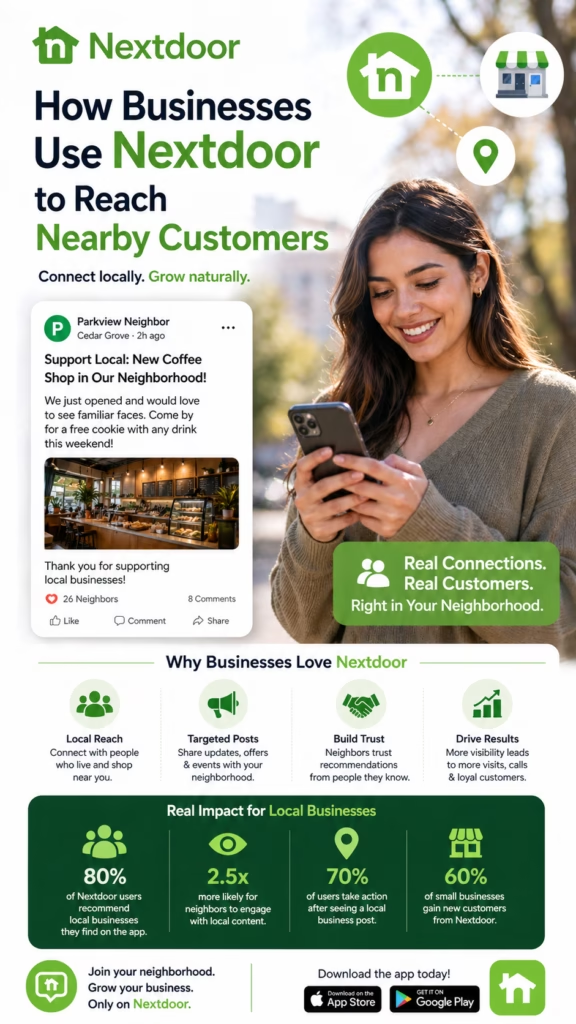
How Businesses Use Nextdoor to Reach Nearby Customers
How Businesses Use Nextdoor to Reach Nearby Customers explains how local companies can build neighborhood trust, increase visibility, generate recommendations, promote services, and connect with people nearby who are more likely to become real customers.
Introduction
How Businesses Use Nextdoor to Reach Nearby Customers is one of the most important local marketing topics for businesses that rely on neighborhood visibility, referrals, repeat customers, word-of-mouth, and nearby service demand. Unlike broad social media platforms where businesses compete for attention across huge audiences, Nextdoor is built around local communities, neighborhoods, and nearby conversations.
That local focus makes Nextdoor valuable for businesses that want to reach customers close to them. A homeowner looking for a painter, a family searching for a local mattress store, a renter asking for a cleaner, or a neighbor recommending a contractor may all create opportunities for local businesses to become visible. When a business shows up in these neighborhood moments, it can build trust faster than it might through cold advertising alone.
Nextdoor helps businesses reach nearby customers by connecting local visibility with neighborhood trust.
For many local businesses, the biggest challenge is not just getting attention. It is getting attention from the right people in the right location. Nextdoor helps solve that because its audience is organized around neighborhoods. This makes the platform especially useful for service businesses, home improvement companies, local retailers, restaurants, real estate professionals, wellness businesses, pet services, and any company that depends on local customers.
The best results come from using Nextdoor as more than a place to post ads. Businesses should use it as a local trust-building system. That means creating a strong business profile, sharing helpful updates, encouraging recommendations, responding professionally, promoting relevant offers, and staying active in a way that feels useful to the neighborhood.
Main idea: Businesses use Nextdoor to reach nearby customers by building local trust, increasing neighborhood visibility, earning recommendations, sharing useful updates, and turning local interest into calls, visits, bookings, and leads.
Table of Contents
- 1) Why Nextdoor matters for local businesses
- 2) How neighborhood intent creates customer opportunities
- 3) Why local trust is powerful on Nextdoor
- 4) How a strong business profile supports visibility
- 5) Recommendations and word-of-mouth
- 6) Local posts and community updates
- 7) Offers, promotions, and service announcements
- 8) How service businesses can use Nextdoor
- 9) How retailers and storefronts can use Nextdoor
- 10) Why Nextdoor and local SEO work well together
- 11) Common mistakes businesses make on Nextdoor
- 12) A practical workflow for reaching nearby customers
- 13) Tracking results from Nextdoor activity
- 14) Why consistency matters
- 15) Final thoughts
- 16) FAQs
- 17) Extra keywords
1) Why Nextdoor Matters for Local Businesses
Nextdoor matters for local businesses because it gives companies a way to reach people in nearby neighborhoods where local buying decisions often begin. Many customers do not immediately search national directories or large marketplaces when they need help. They ask neighbors, look for recommendations, scan local posts, or pay attention to businesses mentioned in their area.
This makes Nextdoor especially useful for businesses that depend on trust. A homeowner may feel more comfortable hiring a contractor recommended by someone nearby. A parent may prefer a local service provider that other neighbors recognize. A customer may choose a nearby store because they saw it mentioned in a local discussion. Nextdoor helps businesses become part of those neighborhood-level decisions.
Nextdoor can help businesses increase:
- Neighborhood visibility
- Local recommendations
- Customer trust
- Service inquiries
- Phone calls
- Website visits
- Store visits
- Repeat local awareness
Businesses use Nextdoor to reach nearby customers because the platform connects local demand with neighborhood trust.
2) How Neighborhood Intent Creates Customer Opportunities
Neighborhood intent is one of the biggest reasons Nextdoor can be powerful for local marketing. People often use neighborhood platforms when they need something close to home. They may ask for a plumber, search for a landscaper, look for a pet sitter, compare local shops, ask about moving services, or recommend a restaurant. These moments often show practical buying intent.
Unlike general social media scrolling, neighborhood intent is usually connected to real-life needs. A person may need service this week, a repair soon, a quote today, or a place to visit nearby. When businesses are visible during these moments, they can turn local attention into customer action.
Nearby customer has a need
Customer checks neighborhood conversations
Business appears through profile, post, offer, or recommendation
Customer reviews trust signals
Call, visit, message, booking, or inquiry happens
Nextdoor works best when businesses show up where nearby customers are already asking local questions or comparing trusted options.
3) Why Local Trust Is Powerful on Nextdoor
Trust is one of the strongest advantages of Nextdoor marketing. People often trust recommendations from neighbors more than generic ads. When a business is mentioned positively by nearby residents, it can feel more credible, familiar, and safe. That trust can shorten the decision-making process.
For local companies, this matters because customers are often cautious. They want someone reliable, responsive, professional, and close enough to serve them well. A business that earns neighborhood trust can stand out from larger competitors or unknown providers.
Local trust helps businesses turn Nextdoor visibility into real customer opportunities because people are more likely to contact businesses that feel known and recommended.
4) How a Strong Business Profile Supports Visibility
A strong business profile is the foundation of using Nextdoor effectively. If a nearby customer sees a post, recommendation, or offer, they may click into the business profile before taking action. The profile should clearly explain what the business does, where it serves, how to contact it, and why it is worth choosing.
A weak profile creates friction. If the business name is unclear, services are missing, contact information is incomplete, or the page looks inactive, customers may move on. A complete profile makes the business easier to understand and easier to contact.
A strong Nextdoor business profile should include:
- Clear business name
- Accurate service area
- Complete contact information
- Business category
- Professional description
- Photos or visuals
- Website link
- Strong service details
- Customer recommendations when available
A strong profile helps convert Nextdoor visibility into customer action by making the business look credible, local, and easy to contact.
5) Recommendations and Word-of-Mouth
Recommendations are one of the most valuable parts of Nextdoor. When neighbors recommend a business, that recommendation can carry more weight than a normal promotional post. People want to know who others nearby have used, trusted, and liked. This gives businesses a strong reason to build a customer recommendation process.
A business should encourage happy customers to recommend it in a natural and ethical way. The goal is not to spam neighborhoods or force fake engagement. The goal is to turn real customer satisfaction into visible local proof. Over time, this can create a strong word-of-mouth presence.
Recommendations help businesses reach nearby customers because they transform customer satisfaction into neighborhood-visible trust.
6) Local Posts and Community Updates
Local posts can help businesses stay visible without sounding overly promotional. A useful post might explain a seasonal tip, announce a local service window, share a helpful checklist, highlight a neighborhood-relevant offer, or remind residents about a common problem. The best posts feel useful, timely, and local.
For example, an HVAC company might post about preparing systems before summer heat. A painter might share exterior painting timing tips. A mattress store might announce same-day delivery in nearby neighborhoods. A landscaper might discuss spring cleanup. These posts keep the business visible while providing value.
Helpful local post
Relevant neighborhood topic
Clear service connection
Simple call to action
Nearby customer responds or saves business
Businesses use Nextdoor posts best when they combine helpful local information with a clear path for nearby customers to contact them.
7) Offers, Promotions, and Service Announcements
Offers and promotions can work well on Nextdoor when they are specific, local, and easy to understand. Nearby customers may respond to limited-time service discounts, seasonal specials, free estimates, new customer offers, delivery promotions, or neighborhood-only deals. The offer should feel relevant to the local audience.
However, businesses should avoid sounding desperate or overly aggressive. Nextdoor users often respond better to clear, helpful, neighborhood-friendly language. The offer should explain who it is for, what problem it solves, where it is available, and what action the customer should take next.
Good Nextdoor offers give nearby customers a simple reason to act while keeping the tone local, helpful, and trustworthy.
8) How Service Businesses Can Use Nextdoor
Service businesses are a strong fit for Nextdoor because many neighborhood conversations are service-driven. Residents frequently need home repairs, cleaning, landscaping, painting, roofing, HVAC, plumbing, pest control, moving help, handyman work, pet care, and similar local services. These needs are often urgent or practical.
A service business can use Nextdoor to show availability, share helpful advice, promote estimates, highlight completed work, collect recommendations, and stay visible in target neighborhoods. The more local and specific the messaging, the stronger the results can be.
Service businesses can post about:
- Free estimate availability
- Seasonal maintenance reminders
- Before-and-after project examples
- Neighborhood service areas
- Emergency or same-week availability
- Helpful homeowner tips
- Customer success stories
Nextdoor helps service businesses reach nearby customers by placing their expertise in front of residents who need local help.
9) How Retailers and Storefronts Can Use Nextdoor
Retailers and storefront businesses can use Nextdoor to increase local awareness, promote in-store events, announce product arrivals, share specials, and remind nearby residents why shopping local matters. For storefronts, visibility can lead to direction requests, calls, website visits, and in-person traffic.
A local mattress store, furniture shop, restaurant, boutique, wellness clinic, pet store, or home goods retailer can benefit from neighborhood-level updates. These businesses can use Nextdoor to stay top-of-mind with people who live close enough to visit.
Storefront businesses use Nextdoor to reach nearby customers by turning neighborhood awareness into calls, visits, and local shopping activity.
10) Why Nextdoor and Local SEO Work Well Together
Nextdoor and local SEO work well together because both support local discovery and trust. Local SEO helps businesses appear in search engines and maps. Nextdoor helps businesses become visible inside neighborhood conversations. When used together, they create more ways for nearby customers to find and validate the business.
A customer may first hear about a business on Nextdoor, then search for it on Google. Another customer may find the business on Google Maps, then recognize it later from a neighborhood recommendation. These platforms reinforce each other when the business has consistent branding, service details, photos, reviews, and messaging.
Nextdoor visibility builds neighborhood awareness
Google Maps visibility supports search discovery
Website SEO explains services deeply
Reviews and recommendations build trust
Customer contacts the business
The best local marketing systems often combine Nextdoor, Google Maps, website SEO, reviews, and automated follow-up.
11) Common Mistakes Businesses Make on Nextdoor
Many businesses fail on Nextdoor because they treat it like a generic ad platform. They post the same sales message repeatedly, ignore local tone, fail to complete their profile, or do not respond to customer interest quickly. These mistakes reduce trust and limit results.
Nextdoor is local and community-based. Businesses should communicate in a way that feels neighborhood-friendly. That means being helpful, specific, honest, and responsive. Aggressive posting without value can make a business look disconnected from the community.
- Posting only sales messages
- Using generic, non-local copy
- Ignoring comments or messages
- Failing to ask happy customers for recommendations
- Leaving the profile incomplete
- Using poor-quality images
- Not tracking calls or leads
- Posting inconsistently
- Not connecting Nextdoor activity to a website or booking process
Big mistake: using Nextdoor like a billboard instead of a neighborhood trust platform.
12) A Practical Workflow for Reaching Nearby Customers
If a business wants to apply How Businesses Use Nextdoor to Reach Nearby Customers in a practical way, it should follow a simple workflow that improves visibility, trust, engagement, and response speed.
Step 1: Create or claim the business presence
Step 2: Complete the business profile
Step 3: Add accurate service areas and contact information
Step 4: Upload professional photos or brand visuals
Step 5: Write a clear neighborhood-focused business description
Step 6: Ask satisfied customers for recommendations
Step 7: Post helpful local updates consistently
Step 8: Promote relevant offers or service availability
Step 9: Respond quickly to comments and inquiries
Step 10: Track calls, messages, website clicks, and leads
This workflow works because it treats Nextdoor as both a visibility platform and a trust-building tool. The business becomes easier to find, easier to understand, and easier to contact.
Businesses reach nearby customers on Nextdoor most effectively when they combine profile strength, helpful content, recommendations, and fast follow-up.
13) Tracking Results From Nextdoor Activity
Tracking is important because businesses need to know whether Nextdoor is producing meaningful results. It is not enough to post and hope. Businesses should track calls, messages, website clicks, form submissions, bookings, store visits, and customer conversations that originate from Nextdoor.
Tracking can be simple. A business can use a dedicated phone number, unique landing page, campaign-specific form, CRM tag, or manual lead source question. The point is to understand which posts, offers, neighborhoods, and messages are creating customer activity.
Important Nextdoor metrics include:
- Profile views
- Post engagement
- Comments and replies
- Direct messages
- Phone calls
- Website clicks
- Offer responses
- Recommendations
- Booked appointments
- Closed customers
Nextdoor results should be measured by real local customer actions, not just post visibility.
14) Why Consistency Matters
Consistency matters because local trust builds over time. A single post may create a lead, but repeated helpful visibility creates familiarity. When nearby customers see a business name multiple times, notice recommendations, and recognize helpful posts, the business becomes more memorable.
This does not mean posting nonstop. It means showing up regularly with useful, local, relevant messages. A steady rhythm of posts, offers, reminders, customer proof, and service updates can keep the business visible without overwhelming the neighborhood.
Businesses use Nextdoor successfully when they treat it as an ongoing local visibility system, not a one-time post.
15) Final Thoughts
How Businesses Use Nextdoor to Reach Nearby Customers comes down to a simple but powerful idea: local customers often trust local conversations. Nextdoor gives businesses a way to become visible inside those conversations, build neighborhood credibility, share useful updates, promote services, and turn nearby attention into real customer action.
The businesses that benefit most are the ones that combine visibility with trust. They do not only post promotions. They complete their profiles, earn recommendations, share helpful local content, respond quickly, and make it easy for customers to call, visit, book, or request a quote.
Final takeaway: Nextdoor helps businesses reach nearby customers by combining neighborhood visibility, local trust, recommendations, service relevance, and consistent customer-focused communication.
16) FAQs
1) How do businesses use Nextdoor to reach nearby customers?
Businesses use Nextdoor by creating a strong local profile, posting helpful neighborhood updates, promoting services, earning recommendations, and responding to nearby customer interest.
2) Why is Nextdoor important for local businesses?
It helps businesses connect with people in nearby neighborhoods who may need local services, products, recommendations, or offers.
3) Can Nextdoor generate leads?
Yes. Nextdoor can generate leads when businesses use it consistently to build trust, share relevant offers, and make it easy for nearby customers to respond.
4) What businesses should use Nextdoor?
Contractors, cleaners, landscapers, painters, HVAC companies, plumbers, roofers, retailers, restaurants, wellness providers, real estate professionals, and other local businesses can benefit.
5) What makes Nextdoor different from other social platforms?
Nextdoor is neighborhood-based, which means businesses can focus on nearby customers instead of broad, less-targeted audiences.
6) Do recommendations matter on Nextdoor?
Yes. Recommendations are powerful because people often trust feedback from neighbors and local residents.
7) Should businesses post offers on Nextdoor?
Yes, but offers should be clear, local, helpful, and relevant to nearby customers.
8) What should a Nextdoor business profile include?
It should include contact information, service areas, business category, website link, photos, description, and clear service details.
9) How often should businesses post on Nextdoor?
Businesses should post consistently, but not spam. Helpful weekly or seasonal updates can work well for many local businesses.
10) Can service businesses use Nextdoor?
Yes. Service businesses are a strong fit because residents often ask neighbors for home services and local help.
11) Can storefront businesses use Nextdoor?
Yes. Storefronts can promote local specials, events, new products, delivery options, and neighborhood offers.
12) What is the biggest mistake on Nextdoor?
The biggest mistake is posting only aggressive ads instead of building neighborhood trust with helpful, local content.
13) How can businesses get more recommendations?
They can ask satisfied customers to recommend them naturally and make the process easy after a positive experience.
14) Should Nextdoor connect to a website?
Yes. A website helps customers learn more, request quotes, book appointments, and verify the business.
15) Can Nextdoor support local SEO?
Yes. Nextdoor can support local awareness while local SEO and Google Maps help customers find the business in search.
16) What should businesses post about?
They can post tips, seasonal reminders, service availability, offers, project examples, community updates, and helpful local information.
17) Should businesses use photos on Nextdoor?
Yes. Photos can make posts and profiles feel more real, professional, and trustworthy.
18) Can Nextdoor help with word-of-mouth?
Yes. Nextdoor can amplify word-of-mouth because neighbors can recommend and discuss local businesses.
19) Is Nextdoor good for new businesses?
Yes. New businesses can use Nextdoor to build early neighborhood awareness and collect local recommendations.
20) How should businesses track Nextdoor results?
They can track calls, messages, website clicks, form submissions, bookings, and customers who mention Nextdoor.
21) Can Nextdoor drive phone calls?
Yes. Strong posts, offers, and recommendations can encourage nearby customers to call directly.
22) Can Nextdoor increase store visits?
Yes. Storefronts can use Nextdoor to promote local deals, events, and reasons for nearby residents to visit.
23) Should businesses reply to comments?
Yes. Quick, professional replies help build trust and turn interest into customer action.
24) Is Nextdoor marketing a one-time task?
No. It works best when businesses stay visible consistently with useful updates and ongoing trust-building.
25) What is the core principle behind using Nextdoor to reach nearby customers?
The core principle is that neighborhood visibility plus local trust can turn nearby residents into real customers.
17) Extra Keywords
- How Businesses Use Nextdoor to Reach Nearby Customers
- Nextdoor marketing
- Nextdoor for business
- local business marketing
- neighborhood marketing
- nearby customers
- local customer outreach
- Nextdoor lead generation
- Nextdoor local advertising
- Nextdoor business profile
- Nextdoor recommendations
- local service business marketing
- community-based marketing
- neighborhood customer acquisition
- local trust marketing
- small business Nextdoor strategy
- Nextdoor posts for business
- Nextdoor offers for businesses
- local referrals
- word-of-mouth marketing
- nearby service leads
- local visibility strategy
- home service marketing
- local storefront marketing
- Nextdoor customer traffic













