

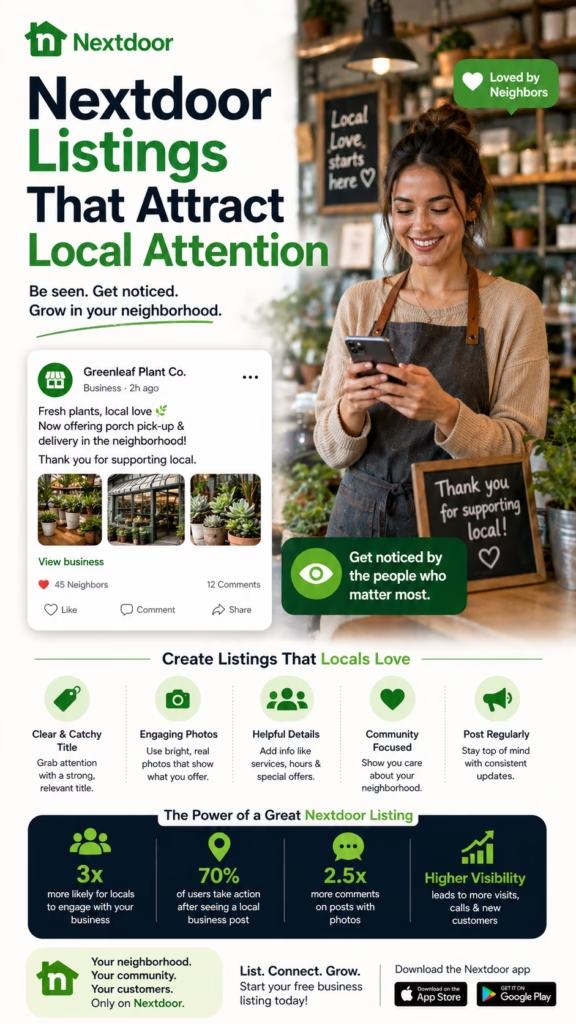
Nextdoor Listings That Attract Local Attention
Nextdoor Listings That Attract Local Attention explains how local businesses can create stronger neighborhood-facing listings that build trust, increase visibility, generate recommendations, and help nearby customers take action.
Introduction
Nextdoor Listings That Attract Local Attention are important because local customers often make decisions based on visibility, trust, convenience, and neighborhood familiarity. When someone needs a painter, plumber, mattress store, landscaper, cleaner, HVAC company, restaurant, real estate agent, or local service provider, they often want a business that feels nearby, reliable, and recommended.
That is where a strong Nextdoor listing can make a major difference. A Nextdoor listing is not just a business profile. It can become a local trust asset. It helps residents understand who the business is, what it offers, where it serves, why it is credible, and how to contact it. When the listing is complete, professional, and locally relevant, it can attract more attention from nearby customers.
Nextdoor listings attract local attention when they combine clear service information, neighborhood relevance, trust signals, photos, recommendations, and a simple call to action.
Many businesses create listings but do not optimize them. They add a name, a short description, and maybe a phone number, then stop. That approach usually does not create strong results. Customers need clarity. They need confidence. They need to quickly understand what the business does and why it is worth contacting.
The best Nextdoor listings are built like local conversion pages. They explain the business clearly, speak to nearby customer needs, show proof, highlight service areas, use friendly language, and make the next step easy. A listing should help a person move from curiosity to action.
Main idea: Nextdoor listings that attract local attention are complete, trustworthy, locally focused, easy to understand, and designed to turn nearby visibility into calls, visits, messages, leads, and bookings.
Table of Contents
- 1) Why Nextdoor listings matter
- 2) What makes a listing attract attention
- 3) The role of neighborhood trust
- 4) How to write a strong business description
- 5) Photos and visuals that improve listing performance
- 6) Service areas and location clarity
- 7) Recommendations and social proof
- 8) Offers that get noticed
- 9) How service businesses can optimize listings
- 10) How storefronts can optimize listings
- 11) Why Nextdoor listings and local SEO work together
- 12) Common listing mistakes
- 13) A practical optimization workflow
- 14) Tracking listing performance
- 15) Final thoughts
- 16) FAQs
- 17) Extra keywords
1) Why Nextdoor Listings Matter
Nextdoor listings matter because they give local businesses a way to show up where nearby customers are already paying attention. Unlike broad social platforms, Nextdoor is built around neighborhoods. That makes it useful for businesses that depend on local demand, local trust, and local visibility.
A strong listing can help a business appear more credible when residents are searching, browsing, comparing, asking for recommendations, or checking nearby service options. The listing becomes a digital front door for the neighborhood.
A strong Nextdoor listing can help increase:
- Neighborhood visibility
- Local brand awareness
- Customer trust
- Phone calls
- Website visits
- Direct messages
- Store visits
- Service requests
- Recommendations
- Booked appointments
Nextdoor listings matter because they help businesses become visible to nearby customers who are more likely to care about local services, local offers, and local reputation.
2) What Makes a Listing Attract Attention
A Nextdoor listing attracts attention when it quickly answers the questions nearby customers already have. What does this business do? Is it local? Does it serve my neighborhood? Can I trust it? What makes it different? How do I contact it?
If a listing answers those questions clearly, it becomes more useful. If it is vague, incomplete, or generic, customers may ignore it. Attention is created through clarity, relevance, and trust.
Strong listing formula:
Clear business name
Specific services
Local service area
Trust signals
Professional photos
Customer recommendations
Simple call to action
Fast contact options
The best Nextdoor listings do not just describe a business. They help nearby customers feel confident enough to take the next step.
3) The Role of Neighborhood Trust
Neighborhood trust is one of the biggest reasons Nextdoor can be powerful for local businesses. People often trust recommendations and local visibility more when they feel connected to the community. A listing that looks active, complete, and recommended can feel more trustworthy than a random ad.
Trust is especially important for home services, healthcare-adjacent services, family services, pet services, contractors, repair companies, and businesses that enter homes or solve urgent problems. Customers want confidence before they call.
Nextdoor listings attract more local attention when they feel credible, neighborhood-friendly, and backed by real customer confidence.
4) How to Write a Strong Business Description
The business description is one of the most important parts of a Nextdoor listing. It should be clear, direct, and locally relevant. A weak description says only what the business is. A strong description explains who the business helps, what problem it solves, where it serves, and why customers should choose it.
The description should avoid vague phrases like “best service in town” without proof. Instead, it should focus on real value: fast response, local service areas, years of experience, family-owned service, same-day availability, free estimates, financing, delivery, emergency help, or specific specialties.
A strong description should include:
- What the business does
- Who it serves
- Which neighborhoods or cities it covers
- Top services or products
- Trust-building details
- What makes the business different
- A simple call to action
Example structure: We help local homeowners in [city/neighborhood] with [main service]. Our team offers [benefit], [benefit], and [benefit]. Call or message us today for [next step].
5) Photos and Visuals That Improve Listing Performance
Photos can make a Nextdoor listing feel more real and trustworthy. A listing with no visuals may look unfinished. A listing with strong visuals can create confidence quickly. Customers often want to see real work, real products, real staff, real storefronts, or real results.
For service businesses, before-and-after photos can be powerful. For retailers, product displays and store photos can help. For restaurants, food images and interior photos matter. For professional services, branded graphics, team photos, and clean office visuals can support credibility.
Useful listing visuals include:
- Before-and-after project photos
- Team photos
- Storefront images
- Product photos
- Service vehicles
- Local project examples
- Customer-friendly branded graphics
- Simple promotional images
Photos help Nextdoor listings attract local attention because they make the business feel visible, active, and real.
6) Service Areas and Location Clarity
Local customers need to know whether a business serves them. A listing should clearly communicate service areas, nearby neighborhoods, cities, ZIP codes, or local regions. This reduces confusion and helps customers decide faster.
For example, a business should not only say “we serve the area.” It should mention specific towns, neighborhoods, or nearby communities. Local detail makes the listing feel more relevant and helps customers recognize that the business is close enough to help.
Location clarity helps convert attention into action because customers are more likely to contact a business when they know it serves their exact area.
7) Recommendations and Social Proof
Recommendations are one of the strongest trust signals on Nextdoor. A listing with recommendations feels more credible because nearby residents can see that others have had positive experiences. Social proof reduces uncertainty and makes a business easier to choose.
Businesses should build a simple process for asking happy customers to recommend them. This should be done naturally and ethically. The goal is to turn real customer satisfaction into visible neighborhood proof.
After a positive job or purchase:
Thank the customer
Ask if they would recommend the business
Send a simple reminder
Make the process easy
Continue delivering great service
Recommendations help Nextdoor listings attract local attention because they turn customer satisfaction into neighborhood-visible trust.
8) Offers That Get Noticed
Offers can make a Nextdoor listing more attractive when they are clear and locally relevant. Nearby customers may respond to free estimates, same-week availability, seasonal specials, new customer discounts, delivery offers, or limited-time local promotions.
The best offers are simple. Customers should immediately understand what the offer is, who it is for, where it applies, and how to claim it. A confusing offer creates friction. A clear offer creates action.
Examples of strong local offers:
- Free local estimate this week
- Same-day delivery available nearby
- Neighborhood-only spring cleanup special
- New customer service discount
- Limited appointment openings this month
- Free consultation for local homeowners
A strong offer gives nearby customers a reason to act now without making the listing feel pushy or spammy.
9) How Service Businesses Can Optimize Listings
Service businesses can benefit heavily from optimized Nextdoor listings because many residents use neighborhood platforms to find trusted local help. Homeowners and renters often ask for recommendations for repair, cleaning, maintenance, landscaping, painting, HVAC, plumbing, roofing, pest control, moving, and other services.
A service business listing should clearly explain the services offered, show proof of work, mention service areas, include contact details, and encourage recommendations. It should also make availability easy to understand.
Service business listing elements:
- Specific service categories
- Free estimate or consultation details
- Before-and-after photos
- Emergency or same-week availability
- Neighborhood service areas
- Customer recommendations
- Clear phone number or message CTA
Service businesses attract more local attention when their listings clearly show what they do, where they work, and why nearby customers can trust them.
10) How Storefronts Can Optimize Listings
Storefront businesses can use Nextdoor listings to increase local traffic, product awareness, and repeat visits. A strong storefront listing should show location, hours, product categories, photos, local specials, delivery options, and reasons for nearby residents to visit.
For example, a mattress store can highlight same-day delivery, financing, top brands, local service, and showroom availability. A restaurant can highlight specials, menu items, events, and neighborhood favorites. A boutique can highlight new arrivals and gift ideas.
Storefront listings attract local attention when they give nearby residents a clear reason to visit, call, browse, or stop in.
11) Why Nextdoor Listings and Local SEO Work Together
Nextdoor listings and local SEO work well together because both support local discovery. Local SEO helps businesses show up on Google, Google Maps, and search engines. Nextdoor helps businesses show up inside neighborhood conversations and local browsing behavior.
When customers see a business on Nextdoor, they may search for it on Google. When they find a business on Google, they may recognize it from Nextdoor. This creates repeated exposure, which can increase trust.
Nextdoor listing builds neighborhood visibility
Google Maps supports local search discovery
Website explains services in detail
Reviews and recommendations build trust
Customer calls, visits, books, or messages
The strongest local marketing systems combine Nextdoor listings, Google Maps, website SEO, reviews, recommendations, and fast follow-up.
12) Common Listing Mistakes
Many businesses do not get strong results from Nextdoor because their listings are incomplete, vague, inactive, or too generic. A listing should not feel like an afterthought. It should feel like a professional local presence.
- Using a weak or incomplete business description
- Leaving contact information missing
- Not adding service areas
- Using no photos
- Posting only aggressive promotions
- Ignoring recommendations
- Not responding to messages
- Using generic non-local copy
- Not connecting the listing to a website
- Failing to track leads
Big mistake: treating a Nextdoor listing like a basic directory profile instead of a local trust and lead-generation asset.
13) A Practical Optimization Workflow
If a business wants to create Nextdoor Listings That Attract Local Attention, it should follow a simple optimization workflow. This helps improve clarity, trust, and conversion potential.
Step 1: Claim or create the business listing
Step 2: Add complete business contact information
Step 3: Write a clear local business description
Step 4: Add service areas and neighborhoods served
Step 5: Upload strong photos or visuals
Step 6: List core services or products
Step 7: Add website and booking links
Step 8: Encourage real customer recommendations
Step 9: Share helpful neighborhood updates
Step 10: Track calls, messages, visits, and leads
This workflow works because it makes the listing easier to find, easier to trust, and easier to act on.
A Nextdoor listing performs better when it is complete, local, trustworthy, visual, and connected to a clear customer action.
14) Tracking Listing Performance
Tracking matters because businesses need to know whether their Nextdoor listing is producing real value. A listing may get views, but the real goal is action. Businesses should track calls, messages, website clicks, quote requests, store visits, bookings, and customers who mention Nextdoor.
Simple tracking systems can make a major difference. A business can use a dedicated phone number, unique website landing page, contact form source field, CRM tag, or manual question such as “How did you hear about us?”
Important listing metrics include:
- Profile views
- Phone calls
- Direct messages
- Website clicks
- Recommendation growth
- Offer responses
- Appointment requests
- Store visits
- Booked jobs
- Closed customers
Nextdoor listing success should be measured by real local customer actions, not just visibility.
15) Final Thoughts
Nextdoor Listings That Attract Local Attention are built with clarity, trust, local relevance, and action in mind. A strong listing helps nearby customers understand what the business does, where it serves, why it is credible, and how to contact it.
The businesses that win local attention are usually the ones that make everything easy for the customer. They use clear descriptions, strong photos, service details, recommendations, offers, and fast response systems. They do not just create a listing. They build a local visibility asset.
Final takeaway: Nextdoor listings attract local attention when they combine a complete profile, neighborhood-focused messaging, professional visuals, recommendations, clear offers, and simple ways for nearby customers to take action.
16) FAQs
1) What are Nextdoor listings that attract local attention?
They are complete, clear, and locally focused business listings designed to help nearby customers understand, trust, and contact a business.
2) Why are Nextdoor listings important for local businesses?
They help businesses become visible to nearby residents who may need local services, products, recommendations, or offers.
3) Can a Nextdoor listing generate leads?
Yes. A strong listing can generate calls, messages, visits, quote requests, and bookings when it is optimized properly.
4) What should a Nextdoor listing include?
It should include business information, services, location, service areas, photos, recommendations, contact options, and a clear call to action.
5) How do photos help a Nextdoor listing?
Photos make the listing feel more real, active, professional, and trustworthy.
6) Are recommendations important on Nextdoor?
Yes. Recommendations are powerful because nearby residents often trust other neighbors’ experiences.
7) What is the biggest mistake with Nextdoor listings?
The biggest mistake is leaving the listing incomplete, generic, or inactive.
8) Should businesses add service areas?
Yes. Clear service areas help nearby customers know whether the business serves their location.
9) Should a Nextdoor listing link to a website?
Yes. A website gives customers more information and helps them request quotes, book appointments, or learn more.
10) What kind of businesses benefit from Nextdoor listings?
Home service companies, retailers, restaurants, wellness providers, real estate professionals, pet services, contractors, and local shops can benefit.
11) Can service businesses use Nextdoor listings?
Yes. Service businesses are a strong fit because many residents look for trusted local help.
12) Can storefront businesses use Nextdoor listings?
Yes. Storefronts can use listings to promote location, hours, specials, products, and reasons to visit.
13) How often should businesses update their listing?
Businesses should update their listing whenever services, hours, photos, offers, or service areas change.
14) Should businesses post offers on Nextdoor?
Yes. Clear local offers can attract attention and encourage nearby customers to act.
15) What makes a listing trustworthy?
Complete information, strong photos, recommendations, clear service details, professional language, and fast response options help build trust.
16) Can Nextdoor listings support local SEO?
Yes. They can support local visibility alongside Google Maps, website SEO, reviews, and other local marketing channels.
17) Should businesses use local keywords in their listing?
Yes. Mentioning services, cities, neighborhoods, and local customer needs can make the listing more relevant.
18) How can businesses get more recommendations?
They can ask happy customers naturally after a positive experience and make the process simple.
19) Should listings sound promotional?
They should be persuasive but not spammy. Helpful, clear, neighborhood-friendly language usually works best.
20) Can Nextdoor listings drive phone calls?
Yes. A strong listing with contact information and clear services can encourage nearby customers to call.
21) Can Nextdoor listings increase store visits?
Yes. Storefront businesses can use listings to promote products, specials, location, and reasons to visit.
22) How should businesses track listing results?
They can track calls, messages, website clicks, form submissions, store visits, and customers who mention Nextdoor.
23) What tone works best for Nextdoor listings?
A friendly, professional, local, and helpful tone works best.
24) Is a Nextdoor listing enough by itself?
It helps, but stronger results usually come from combining the listing with posts, recommendations, offers, local SEO, and fast follow-up.
25) What is the main goal of a Nextdoor listing?
The main goal is to turn nearby local attention into trust, contact, visits, leads, and customers.
17) Extra Keywords
- Nextdoor Listings That Attract Local Attention
- Nextdoor listings
- Nextdoor business listing
- Nextdoor marketing
- Nextdoor for business
- local business listings
- neighborhood marketing
- local customer attention
- Nextdoor lead generation
- Nextdoor local advertising
- Nextdoor recommendations
- local business visibility
- small business Nextdoor strategy
- local service marketing
- home service marketing
- local storefront marketing
- nearby customer leads
- community-based marketing
- local trust marketing
- local profile optimization
- Nextdoor profile optimization
- neighborhood customer acquisition
- local offers for businesses
- word-of-mouth marketing
- local attention strategy













