

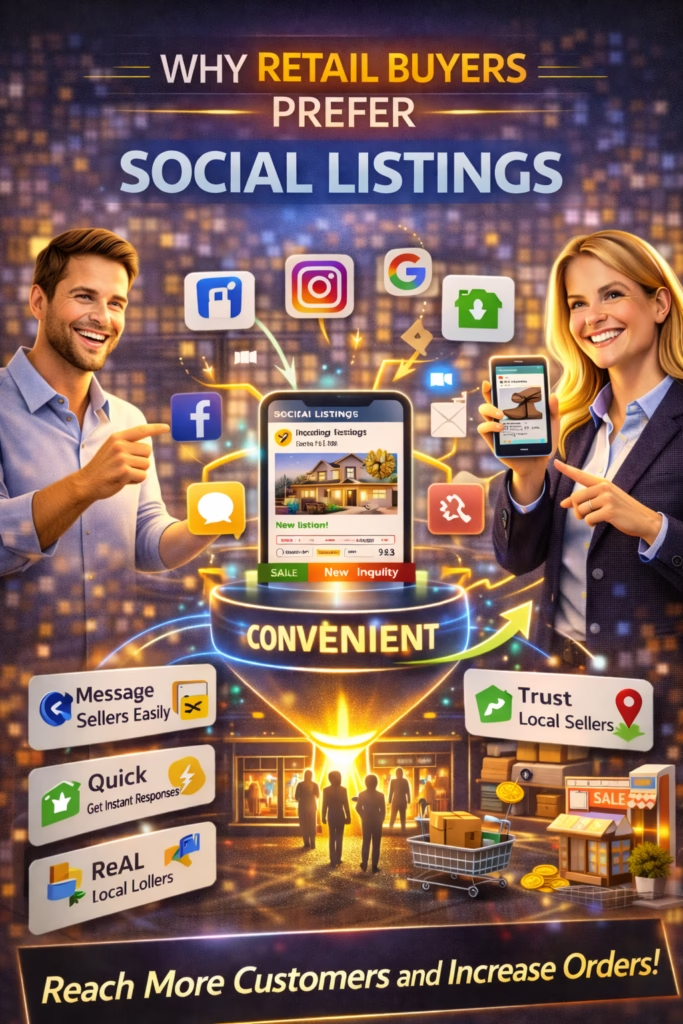
Why Retail Buyers Prefer Social Listings
Why Retail Buyers Prefer Social Listings explains the modern buyer’s path: they browse in a feed, trust what looks real, message for clarity, and decide fast—often before they ever visit a website.
Note: This is general guidance. Follow platform rules, keep claims truthful, and avoid spam/duplicate patterns.
Introduction
Why Retail Buyers Prefer Social Listings is not a theory. It’s the way people shop now.
Buyers don’t start with “Where should I buy?” They start with “What’s available near me right now?”
Social listings—Facebook Marketplace, OfferUp, and similar channels—fit the modern buyer’s behavior perfectly:
- They want fast browsing.
- They want proof that feels real.
- They want instant answers without calling a store.
- They want local pickup/delivery and a clear next step.
When retailers publish consistent, accurate social listings and respond quickly, they create a new funnel: social discovery → messages → calls → store visits → sales.
Big idea: Social listings feel like “shopping with certainty,” not “shopping with risk.”
Expanded Table of Contents
- 1) What social listings really are
- 2) The buyer psychology behind social shopping
- 3) Trust: why “real” beats “perfect”
- 4) Messaging-first shopping: the new checkout
- 5) Local convenience: speed wins
- 6) Price anchoring and value perception
- 7) Feed discovery: why social listings get seen
- 8) Why websites feel slow to buyers
- 9) The anatomy of a high-performing social listing
- 10) Offers that convert: pickup, delivery, options
- 11) Response speed: the difference between browsing and buying
- 12) The social-to-store traffic system
- 13) KPIs that prove social listings are working
- 14) 30–60–90 day rollout plan
- 15) 25 Frequently Asked Questions
- 16) 25 Extra Keywords
1) What social listings really are
Social listings are product posts inside social platforms where discovery happens organically in feeds and local search. They are not “ads” in the traditional sense.
Key differences vs traditional retail marketing
| Traditional marketing | Social listings | Buyer behavior |
|---|---|---|
| Push message | Buyer-driven discovery | “I’m already searching/browsing” |
| Brand-first | Item-first | “Show me the product now” |
| Click to website | Message inside platform | “Answer me fast” |
In plain terms: social listings are where intent shows up without the buyer needing to “commit” yet.
2) The buyer psychology behind social shopping
Buyers prefer social listings because it matches how they make decisions: fast scanning, proof, and quick clarity.
What buyers are trying to avoid
- Calling multiple stores
- Driving to “check” if something is available
- Filling out forms and waiting
- Feeling pressured by sales scripts
What buyers want instead
- A quick browse of options
- Real photos and real details
- One message to confirm price/availability
- A clear next step (pickup, delivery, appointment)
Rule: Buyers don’t want “sales.” They want certainty.
3) Trust: why “real” beats “perfect”
In retail, perfection can feel fake. Social listings perform because they look like real inventory from a real place.
Trust signals buyers notice instantly
Real photos
Even if lighting isn’t perfect, authenticity builds confidence.
Clear details
Condition, size, what’s included, and availability reduce uncertainty.
Responsive seller
Fast replies signal reliability and reduce buyer risk.
Local fulfillment
Pickup/delivery options turn browsing into action.
Pro move: “Real photos + clear details” is one of the strongest conversion hooks in social commerce.
4) Messaging-first shopping: the new checkout
Social listings win because messaging reduces friction. It’s the fastest path to clarity.
What messaging replaces
- Multiple tabs of websites
- Phone calls during business hours
- Waiting for email replies
- Form submissions that get ignored
What buyers want to message about
- “Is it available?”
- “What’s the best price?”
- “Can you deliver to my zip?”
- “Can I come today?”
Rule: The easier you make messaging, the more traffic converts into store visits.
5) Local convenience: speed wins
Retail buyers prefer social listings because they optimize for local convenience:
- Nearby pickup
- Same-day delivery options
- Immediate answers
- Short decision timelines
Local buyers are on a clock: “If I can solve this today, I will.” Social listings match that urgency without “sales pressure.”
6) Price anchoring and value perception
Social listings create a natural comparison environment. Buyers see options side-by-side, which changes how price is perceived.
What buyers compare
- Price vs condition
- Quality vs convenience
- Availability vs distance
- Trust vs risk
How to win without being “cheapest”
| Buyer objection | What to highlight | Example line |
|---|---|---|
| “Too expensive” | Value and clarity | “Real photos + clear details—no surprises.” |
| “Not sure it’s available” | Availability confirmation | “Available now—message your zip for fastest options.” |
| “I’m comparing stores” | Convenience | “Pickup today or delivery quote by zip.” |
Rule: Buyers pay more for certainty and convenience.
7) Feed discovery: why social listings get seen
Social platforms are designed for discovery. That means a great listing can be shown to buyers even if they didn’t search your store by name.
What drives discovery
- Freshness (recent activity)
- Clicks and saves
- Messages and replies
- Strong first photo (CTR)
- Clear title keywords
Pro move: Optimize for messages, not impressions. Messages are high-intent signals.
8) Why websites feel slow to buyers
Websites are still important for trust and SEO, but buyers often prefer social listings first because websites can feel like “work.”
Common website friction points
- Inventory pages are outdated
- Product photos don’t match what’s in-store
- Forms feel like a black hole
- No instant answers
- Too many clicks to see price/availability
Rule: Social listings reduce cognitive load. That’s why they win the first click.
9) The anatomy of a high-performing social listing
If you want traffic from social listings, structure matters more than most retailers realize.
High-performing listing structure
Title: [What it is] — [Primary Benefit] + [Option]
Line 1: Real photos + clear details ✅
Bullets: Condition • Size • What’s included • Pickup/Delivery
Offer: Delivery available (ask zip) • Options available
CTA: What city/zip are you in and are you looking for today or this week?
Pro move: The first 2 lines should sell trust and speed—not features.
10) Offers that convert: pickup, delivery, options
Social buyers move when the next step is obvious. The offer block turns browsing into action.
Offer blocks that work
- Pickup today: “Available now—message your zip to schedule pickup.”
- Delivery quote: “Delivery available—send your zip for fastest options.”
- Options: “Multiple styles/sizes available—tell me what you prefer.”
- Bundles: “Bundle options available—ask what fits your budget.”
Rule: Offers reduce decision friction.
11) Response speed: the difference between browsing and buying
Social listings generate multiple inquiries. Buyers message more than one seller. Speed wins.
Instant reply template
Yes — it’s available ✅
What city/zip are you in, and are you looking for today or this week?
Visit-scheduling reply
Perfect ✅
Want to stop in today, or do you want a delivery quote for your zip?
Pro move: Your replies should move toward time + location (visit, pickup, delivery).
12) The social-to-store traffic system
The best retailers treat social listings as a daily lead flow—not occasional posting.
Simple system
Post consistently with variety so buyers always see “what’s available now.”
Fast replies + one-question CTA turn messages into scheduled next steps.
Confirm availability and provide a clear path to purchase.
Avoid: Posting without a response workflow. Traffic without conversion is wasted attention.
13) KPIs that prove social listings are working
| KPI | What it measures | Target direction |
|---|---|---|
| Messages/day | Buyer demand | Up |
| Calls/day | High intent | Up |
| Booked visits | Foot traffic momentum | Up |
| Median response time | Lead leakage | Down |
| Messages per listing | Listing quality | Up |
| Flags/removals | Compliance risk | Down |
Rule: Track booked visits—not just engagement.
14) 30–60–90 day rollout plan
Days 1–30 (Build trust and cadence)
- Standardize listing structure
- Post consistently with real photos
- Deploy instant replies + one-question CTA
- Track messages/day and response time
- Create 3–5 listing angles (value, speed, trust, premium, options)
Days 31–60 (Increase conversion)
- Improve thumbnails and titles for CTR
- Use offer blocks (pickup/delivery/options)
- Measure booked visits weekly
- Retire weak listings and replace with better angles
Days 61–90 (Systemize and scale)
- Document SOPs for posting and responses
- Automate lead routing by zip/city
- Run weekly A/B tests (photo + hook)
- Double down on winners by category
Rule: Social listings win when trust is high, response is fast, and the next step is clear.
15) 25 Frequently Asked Questions
1) What are social listings in retail?
Product posts on social commerce platforms where buyers discover items and message sellers directly.
2) Why do retail buyers prefer social listings?
They feel more real, faster, and easier to shop—especially for local pickup and quick answers.
3) Do social listings increase store traffic?
Yes—consistent listings with fast replies convert social browsing into calls and visits.
4) Are social listings the same as paid ads?
No—social listings are often organic discovery inside feeds and local search.
5) Why do buyers trust social listings?
Real photos and conversational messaging feel more authentic than polished marketing.
6) Do real photos matter more than perfect photos?
Usually yes—real images build trust and reduce uncertainty.
7) What do buyers message about most?
Availability, price, delivery options, and timing.
8) What is “messaging-first shopping”?
Buyers use messages to confirm details before committing to a visit or purchase.
9) How fast should I respond?
Under 5 minutes is strong; under 1 minute is ideal.
10) Why does response speed matter?
Buyers message multiple sellers; slow replies lose the sale.
11) What’s the best CTA question?
“What city/zip are you in and are you looking for today or this week?”
12) How do I turn messages into visits?
Ask location + timing, then offer a simple schedule window.
13) Do buyers prefer pickup or delivery?
Both—offer both when possible and ask for zip to quote delivery.
14) Why do websites feel slower to buyers?
Forms, outdated inventory, and lack of instant answers create friction.
15) Should I still have a website?
Yes—websites build trust and SEO, but social listings often win first discovery.
16) How do social listings help with price anchoring?
Buyers compare options side-by-side, making value clearer.
17) Do I need to be the cheapest to win?
No—certainty, availability, and convenience can justify higher price.
18) What listing elements matter most?
First photo, title clarity, first 1–2 lines, and offer block.
19) What should my first line say?
“Real photos + clear details ✅” or a similar trust-first hook.
20) How often should retailers post social listings?
Steady daily or near-daily cadence is best if you can sustain it.
21) Can posting too much hurt?
Yes—spam/duplicate patterns can reduce reach and cause removals.
22) How do I avoid duplicate listing issues?
Rotate photos, angles, hooks, and posting windows while keeping details truthful.
23) How long until social listings start driving traffic?
Often within 1–2 weeks, with compounding gains over 30–90 days.
24) What KPIs should I track?
Messages/day, calls/day, booked visits, and response time.
25) What’s the biggest retailer mistake on social listings?
Inconsistent posting and slow response times.
16) 25 Extra Keywords
- Why Retail Buyers Prefer Social Listings
- retail buyers social listings
- why buyers use Facebook Marketplace
- OfferUp retail buyer behavior
- social commerce retail strategy
- marketplace listings drive store traffic
- local retail social listings
- real photos build buyer trust
- messaging-first shopping
- social listings conversion system
- how to get more marketplace messages
- retail lead flow without paid ads
- fast response increases conversions
- pickup and delivery offer blocks
- best CTA question marketplace
- listing structure for retail
- how to increase store visits
- social discovery retail funnel
- local buying intent signals
- price anchoring social commerce
- trust signals in marketplace listings
- how retailers win on Marketplace
- 2026 social retail marketing
- brick-and-mortar social listings
- organic local retail traffic













