Why Nextdoor Still Works for Small Businesses
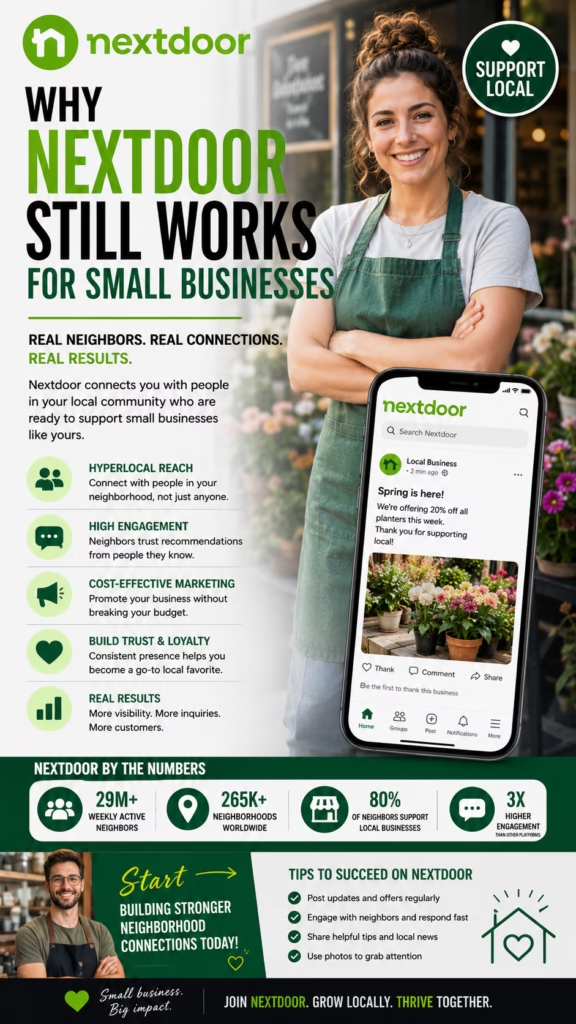
Why Nextdoor Still Works for Small Businesses explains how local companies can use neighborhood trust, helpful posts, reviews, referrals, and fast follow-up to generate more nearby customers.
Introduction
Why Nextdoor Still Works for Small Businesses starts with one simple reason: local customers still trust local recommendations. When people need a plumber, landscaper, mover, pest control company, cleaner, roofer, retailer, restaurant, contractor, auto service provider, or home improvement professional, they often want someone nearby who feels familiar and reliable.
Nextdoor remains valuable because it is built around neighborhoods. It gives small businesses a way to appear in front of people who live close enough to call, visit, book, buy, recommend, or ask for more information. That local context is powerful because many small business decisions happen within a few miles of home.
Nextdoor still works for small businesses because it combines local visibility, neighborhood trust, community recommendations, and direct customer response.
The key is using Nextdoor correctly. Generic ads, random posts, and hard-selling messages usually do not perform as well as helpful neighborhood content, specific offers, seasonal reminders, customer reviews, local service updates, and fast follow-up.
Main idea: Why Nextdoor Still Works for Small Businesses is about turning neighborhood attention into trust, conversations, leads, appointments, store visits, referrals, and revenue.
Table of Contents
- 1) Why Nextdoor still matters for local marketing
- 2) Why neighborhood trust is different from regular advertising
- 3) How small businesses can use Nextdoor for visibility
- 4) What local customers look for before responding
- 5) Writing posts that feel helpful instead of salesy
- 6) Using reviews and recommendations
- 7) Local keywords for Nextdoor posts
- 8) Business types that can benefit from Nextdoor
- 9) Nextdoor for home service businesses
- 10) Nextdoor for contractors
- 11) Nextdoor for retail stores
- 12) Nextdoor for restaurants and local shops
- 13) Offer language that gets better response
- 14) Seasonal Nextdoor post ideas
- 15) Reducing low-quality inquiries
- 16) Follow-up scripts for Nextdoor leads
- 17) Posting consistency and neighborhood rotation
- 18) Tracking Nextdoor performance
- 19) Common Nextdoor mistakes small businesses make
- 20) Final thoughts
- 21) FAQs
- 22) Extra keywords
1) Why Nextdoor Still Matters for Local Marketing
Nextdoor still matters for local marketing because most small businesses depend on nearby customers. A national audience may look impressive, but a local service company usually needs homeowners in its service area. A retail store needs shoppers close enough to visit. A restaurant needs nearby diners. A contractor needs project leads within driving distance.
Nextdoor gives small businesses a local-first channel. Instead of competing for broad attention, businesses can focus on neighborhoods, communities, and local conversations where buying decisions are already happening.
Nextdoor can help small businesses generate:
- Local service inquiries
- Neighborhood referrals
- Store visit interest
- Appointment requests
- Review-driven leads
- Seasonal service demand
- Product inquiries
- Event attendance
- Repeat customer awareness
- Community brand recognition
Nextdoor matters because small businesses win when local people remember and trust them.
2) Why Neighborhood Trust Is Different From Regular Advertising
Neighborhood trust is different because it is personal. People often trust recommendations from neighbors more than generic ads. When a local customer sees a business mentioned, reviewed, or recommended in a community setting, the message can feel more believable.
This is especially important for businesses that enter homes, handle property, provide estimates, deliver services, or depend on reputation. Trust can make the difference between a scroll and a message.
Neighborhood trust is built through:
Helpful posts
Consistent visibility
Real customer reviews
Local recommendations
Clear service-area wording
Friendly replies
Community involvement
Transparent offers
Fast follow-up
Professional communication
Nextdoor works when a small business becomes familiar before the customer needs it.
3) How Small Businesses Can Use Nextdoor for Visibility
Small businesses can use Nextdoor for visibility by posting helpful, local, specific content. The goal is to show up regularly with useful messages that match what nearby residents care about.
A strong visibility strategy includes service posts, product posts, seasonal reminders, community updates, local tips, review highlights, special offers, event announcements, and educational content.
Nextdoor visibility post types:
- Service availability posts
- Seasonal reminders
- Customer review highlights
- Before-and-after posts
- Local offer posts
- Product arrival posts
- Event announcements
- Helpful how-to tips
- Community appreciation posts
- Appointment opening posts
Visibility works best when the business appears useful, not pushy.
4) What Local Customers Look for Before Responding
Local customers want to know whether the business is real, nearby, trusted, responsive, and relevant to their need. They look for clarity before they message, call, visit, or book.
A strong Nextdoor post should answer the obvious questions quickly: what is offered, who it helps, where it is available, why it is trustworthy, and what the next step is.
Local customers usually look for:
Business name
Local service area
Specific offer
Clear photos if relevant
Reviews or recommendations
Pricing or estimate guidance
Availability
Friendly tone
Fast response
Simple next step
Customers respond when the post feels local, clear, and safe to act on.
5) Writing Posts That Feel Helpful Instead of Salesy
Nextdoor users often respond better to helpful content than aggressive sales language. A post that educates, reminds, explains, or solves a seasonal problem can feel more natural than a hard pitch.
The best posts usually name a real local problem and offer a simple solution. Keep the tone friendly, direct, and neighborhood-aware.
Weak post:
Best Company Around Call Now

Better post:
If your gutters are overflowing after recent rain, we are helping local homeowners with gutter cleaning and small exterior maintenance this week.

Weak post:
Huge Sale Today

Better post:
New weekend arrivals are in. Stop by this week for local deals on home goods, gifts, and customer favorites.

Weak post:
Book Our Service Now

Better post:
Planning a move this month? Message us with your pickup city, drop-off city, move date, and approximate room count for a quick quote.
Helpful posts usually create stronger response than generic sales posts.
6) Using Reviews and Recommendations
Reviews and recommendations are one of the biggest reasons Nextdoor still works for small businesses. Local customers want proof. They want to know that other people nearby had a good experience.
Businesses should use real review language, customer appreciation posts, recommendation reminders, and local proof. Reviews should never be invented or exaggerated. Real trust is stronger than fake hype.
Review-based post ideas:
- Thank a customer for a recommendation
- Share a recent project success
- Highlight a customer favorite product
- Mention a neighborhood served
- Show before-and-after results
- Ask happy customers to recommend the business
- Share a common customer question
- Promote a review-backed service
- Celebrate a local milestone
- Feature repeat customer support
Reviews help turn neighborhood visibility into customer confidence.
7) Local Keywords for Nextdoor Posts
Local keywords help residents understand that the business serves their area. These keywords should be natural, not spammy. Use city, neighborhood, county, service-area, pickup, delivery, and appointment language where it fits.
The purpose of local keywords is not just search visibility. They also help customers recognize that the business is close enough to help.
Useful local keyword phrases:
- serving nearby homeowners
- local service available this week
- available in your neighborhood
- serving local customers
- nearby appointments available
- local pickup available
- delivery available nearby
- serving residents in the area
- local estimates available
- neighborhood business serving nearby areas
Local keywords should make the business feel close, relevant, and easy to contact.
8) Business Types That Can Benefit From Nextdoor
Many small businesses can benefit from Nextdoor because the platform is local and trust-based. It can work for companies that serve homes, sell products, provide local appointments, host events, or depend on neighborhood reputation.
The key is to post content that matches the buying behavior of local residents.
Business types that can benefit:
Home service companies
Contractors
Retail stores
Restaurants
Moving companies
Pest control businesses
Cleaning companies
Landscapers
Tree service companies
Car dealers
Real estate professionals
Local repair businesses
Pet services
Fitness studios
Event-based businesses
Nextdoor works best for businesses that depend on local trust and nearby customer action.
9) Nextdoor for Home Service Businesses
Home service businesses can use Nextdoor to reach homeowners when they need practical help. Cleaning, pest control, moving, junk removal, landscaping, tree service, roofing, HVAC, plumbing, painting, and handyman businesses can all benefit from neighborhood visibility.
Home service posts should be specific. Instead of saying “home services available,” focus on one clear problem.
Home service post ideas:
- Move-out cleaning help
- Junk removal openings
- Seasonal pest prevention
- Pressure washing reminders
- Tree trimming estimates
- Interior painting availability
- Handyman repair openings
- Moving labor help
- Landscaping cleanup
- Gutter cleaning reminders
Home service posts work when they solve a clear homeowner problem.
10) Nextdoor for Contractors
Contractors can use Nextdoor to build trust before homeowners request estimates. Remodeling, flooring, roofing, fencing, painting, drywall, decks, concrete, and garage builders can use posts to show project examples and explain services.
Project photos, before-and-after results, service-area wording, and clear estimate instructions can help contractors get stronger leads.
Contractor post angles:
Kitchen remodeling
Bathroom updates
Flooring installation
Interior painting
Fence repair
Deck staining
Drywall repair
Garage building
Concrete work
Basement finishing
Contractors get better response when posts are visual, specific, and estimate-focused.
11) Nextdoor for Retail Stores
Retail stores can use Nextdoor to attract nearby shoppers with product arrivals, local offers, seasonal gift ideas, customer favorites, store events, and neighborhood updates.
The best retail posts give shoppers a reason to visit soon. Clear product photos, store hours, pickup options, delivery options, and offer details can improve response.
Retail post ideas:
- New arrivals
- Weekend specials
- Gift ideas
- Customer favorites
- Store events
- Clearance items
- Local pickup offers
- Seasonal products
- Small Business Saturday
- Community shopping days
Retail posts work when they give nearby shoppers a clear reason to stop by.
12) Nextdoor for Restaurants and Local Shops
Restaurants and local shops can use Nextdoor to stay visible in the daily lives of nearby residents. Specials, menu updates, new products, events, community involvement, catering, holiday ordering, and customer appreciation posts can all perform well.
Local shops should focus on convenience, community, freshness, and reasons to visit.
Restaurant and local shop post angles:
Today’s special
Weekend menu feature
New product arrival
Local event reminder
Catering availability
Holiday ordering
Customer favorite item
Community appreciation post
Gift card reminder
Family-friendly offer
Restaurants and local shops benefit when posts feel timely, warm, and neighborhood-focused.
13) Offer Language That Gets Better Response
Offer language should be clear, honest, and easy to act on. Customers want to know what is available, when it is available, where it applies, and what to do next.
Vague claims usually do not perform as well as specific, useful language.
Useful Nextdoor offer phrases:
- Local appointments available this week
- Message with your neighborhood and project details
- Ask about current availability
- Free estimates available if offered
- Local pickup available
- Delivery available nearby
- Same-week openings when available
- Seasonal service available now
- Stop by during store hours
- Message for current options
Clear offer language creates better response than vague hype.
14) Seasonal Nextdoor Post Ideas
Seasonal posts work well because local needs change throughout the year. Businesses can match their message to what people are already thinking about.
Spring may bring cleaning, landscaping, pest control, moving, home improvement, and outdoor projects. Summer may bring events, travel, outdoor services, retail promotions, and home maintenance. Fall and winter may bring heating, storm prep, holiday shopping, indoor repairs, and year-end offers.
Seasonal Nextdoor post ideas:
Spring cleaning reminders
Summer outdoor service offers
Back-to-school promotions
Fall home maintenance
Winter weather preparation
Holiday gift ideas
Small Business Saturday posts
Storm cleanup availability
New Year home refresh
Seasonal customer appreciation
Seasonal posts work because they match real neighborhood timing.
15) Reducing Low-Quality Inquiries
Low-quality inquiries happen when posts are too vague. If customers do not know what information to send, they may only ask broad questions that are hard to answer.
Improve inquiry quality by asking for a few useful details inside the post or first reply.
Ask Nextdoor leads to send:
- Neighborhood or city
- Service or product needed
- Timeline
- Photos if helpful
- Project size if relevant
- Pickup or delivery preference
- Budget range if useful
- Preferred appointment time
- Best contact method
- Any special details
Better questions create better local conversations.
16) Follow-Up Scripts for Nextdoor Leads
Fast follow-up matters because local customers often contact multiple businesses. A quick, helpful reply can turn interest into an appointment, quote, store visit, or sale.
General Nextdoor lead reply:
Thanks for reaching out. Happy to help. What neighborhood are you in, what do you need help with, and what timeline are you hoping for?
Service business reply:
Thanks for the message. Send your location, a quick description of the project, and any photos if available. We can help guide the next step from there.
Retail or local shop reply:
Thanks for reaching out. What item or product type are you looking for? I can check current availability and help with pickup, delivery, or store visit details.
The best follow-up feels helpful, local, and easy to continue.
17) Posting Consistency and Neighborhood Rotation
Nextdoor works best when small businesses post consistently without sounding repetitive. A business should rotate helpful topics, service offers, reviews, seasonal posts, community updates, and customer reminders.
Neighborhood rotation can also help businesses stay visible across multiple service areas while keeping each message relevant.
Nextdoor posting rotation:
Helpful tip post
Customer review post
Seasonal service reminder
Local offer post
Before-and-after post
Product arrival post
Event announcement
Appointment availability post
Community appreciation post
FAQ answer post
Consistent posting helps residents remember the business before they need it.
18) Tracking Nextdoor Performance
Tracking helps small businesses understand which posts create real results. Reactions and comments are helpful, but the main goal is qualified inquiries, appointments, store visits, sales, referrals, and revenue.
Track every post by topic, service, neighborhood, message volume, lead quality, booked appointments, sales, and revenue.
Track these Nextdoor metrics:
Post topic
Service or product promoted
Neighborhood or service area
Date posted
Messages
Comments
Qualified leads
Appointments
Store visits
Sales
Referrals
Revenue
Best-performing post angle
Tracking turns Nextdoor from random posting into a measurable local marketing channel.
19) Common Nextdoor Mistakes Small Businesses Make
Many small businesses underperform on Nextdoor because their posts are too generic, too promotional, or not local enough. Residents usually respond better to posts that feel helpful, specific, timely, and community-aware.
Other mistakes include no reviews, unclear offers, weak follow-up, no service-area wording, no posting consistency, and no performance tracking.
Common mistakes include:
- Posting generic ads
- Sounding too sales-heavy
- No neighborhood relevance
- No trust signals
- No reviews or recommendations
- No clear offer
- No call to action
- Slow message response
- No posting rotation
- No performance tracking
Most Nextdoor mistakes come from treating it like a billboard instead of a neighborhood trust channel.
20) Final Thoughts
Why Nextdoor Still Works for Small Businesses comes down to local trust. Small businesses need customers nearby, and Nextdoor gives them a way to stay visible in neighborhood conversations where recommendations, local needs, and buying decisions happen.
The strongest strategy includes helpful posts, local keywords, real reviews, clear offers, seasonal reminders, trust signals, quick replies, posting consistency, and performance tracking.
Final takeaway: Nextdoor still works for small businesses because local customers still want nearby companies they can recognize, trust, contact, and recommend.
21) FAQs
1) Why does Nextdoor still work for small businesses?
Nextdoor still works because it helps small businesses reach nearby residents through neighborhood visibility, local trust, reviews, recommendations, and direct customer conversations.
2) Is Nextdoor good for local lead generation?
Yes. Nextdoor can generate local leads when businesses post helpful, specific, trust-focused content and respond quickly.
3) What businesses can benefit from Nextdoor?
Home services, contractors, retail stores, restaurants, movers, pest control companies, cleaners, landscapers, tree services, car dealers, and local shops can benefit.
4) What makes a good Nextdoor post?
A good post is local, helpful, specific, easy to understand, trust-building, and includes a clear next step.
5) Should small businesses post reviews on Nextdoor?
Yes. Real reviews and recommendations can help build trust and improve response.
6) Should posts be seasonal?
Yes. Seasonal posts often perform well because they match current local needs.
7) How often should small businesses post on Nextdoor?
Businesses should post consistently and rotate topics such as offers, tips, reviews, seasonal reminders, and service updates.
8) Should businesses use local keywords?
Yes. Local keywords help residents understand where the business works or serves.
9) What is the biggest mistake businesses make on Nextdoor?
The biggest mistake is posting generic sales messages that do not feel local, helpful, or trustworthy.
10) Can Nextdoor help home service businesses?
Yes. Home service businesses can use Nextdoor to generate leads for cleaning, repairs, pest control, moving, tree service, landscaping, painting, and more.
11) Can Nextdoor help contractors?
Yes. Contractors can use project photos, local posts, estimate offers, and reviews to attract remodeling, flooring, painting, roofing, and repair leads.
12) Can Nextdoor help retail stores?
Yes. Retail stores can promote new arrivals, sales, gift ideas, events, customer favorites, and local pickup options.
13) Can Nextdoor help restaurants?
Yes. Restaurants can post specials, menu updates, events, catering options, gift cards, and community updates.
14) Should businesses sound casual or professional?
Businesses should sound professional but neighbor-friendly. Helpful, clear, and human posts usually work best.
15) How fast should businesses reply to Nextdoor leads?
As fast as possible. Quick replies can improve the chance of turning interest into a booked job or sale.
16) What should the first reply ask?
The first reply should ask for location, service or product needed, timeline, and any details needed to help.
17) Can Nextdoor replace paid ads?
Nextdoor can replace part of paid ad spend for some businesses and can also work alongside SEO, Google Business Profile, Facebook, Instagram, and referral marketing.
18) Should businesses track Nextdoor results?
Yes. Tracking helps businesses understand which posts generate leads, appointments, store visits, sales, referrals, and revenue.
19) What should businesses track?
Track post topic, neighborhood, messages, comments, qualified leads, appointments, sales, referrals, and revenue.
20) Do reviews matter on Nextdoor?
Yes. Reviews and recommendations are one of the strongest trust signals for local businesses.
21) Should businesses post only promotions?
No. Businesses should mix promotions with helpful tips, seasonal reminders, reviews, local updates, and community-friendly content.
22) How can businesses reduce low-quality inquiries?
They can ask for location, service needed, timeline, photos if useful, budget range if relevant, and best contact method.
23) Is Nextdoor better for local or national businesses?
Nextdoor is usually strongest for local businesses because it is neighborhood-focused.
24) How does Nextdoor fit into small business marketing?
Nextdoor should support a larger system that includes Google Business Profile, local SEO, reviews, website forms, social media, and follow-up automation.
25) What is the main goal of Nextdoor for small businesses?
The main goal is to turn neighborhood visibility into trust, conversations, leads, appointments, sales, referrals, and repeat customers.
22) Extra Keywords
- Why Nextdoor Still Works for Small Businesses
- Nextdoor marketing
- Nextdoor small business leads
- local business marketing
- neighborhood advertising
- Nextdoor lead generation
- small business advertising
- Nextdoor local marketing
- Nextdoor business posting
- Nextdoor customer response
- Nextdoor reviews
- Nextdoor recommendations
- local lead generation
- neighborhood marketing strategy
- small business lead generation
- Nextdoor service leads
- Nextdoor retail marketing
- Nextdoor contractor leads
- Nextdoor home service leads
- local customer referrals
- community business marketing
- Nextdoor follow-up strategy
- Nextdoor lead tracking
- local trust marketing
- small business growth strategy