

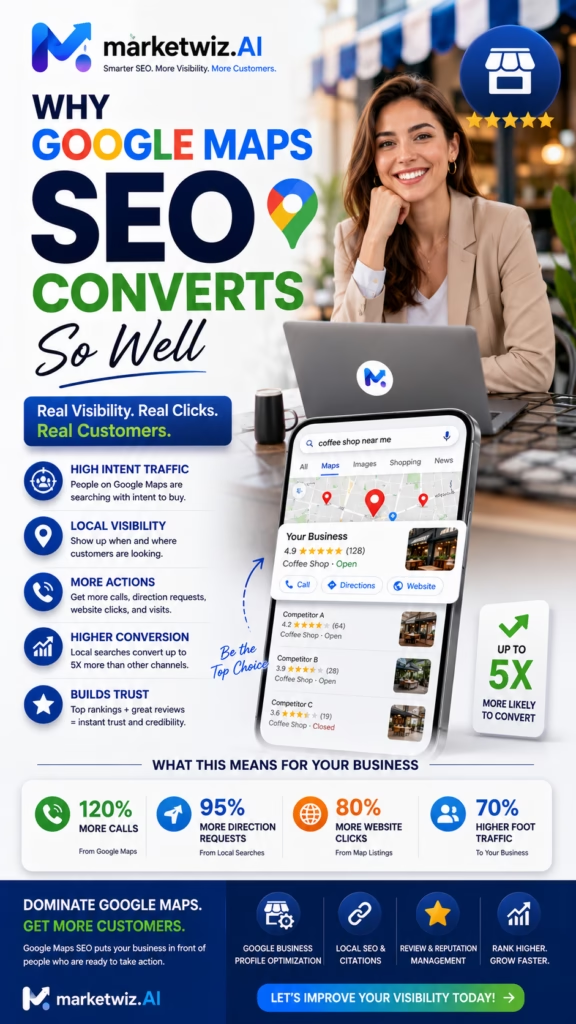
Why Google Maps SEO Converts So Well
Understanding why Google Maps SEO converts so well reveals one of the biggest advantages in local marketing: businesses can reach nearby customers at the exact moment they are searching, comparing options, checking reviews, and deciding who to call, visit, book, or hire.
Why does Google Maps SEO convert so well? The answer begins with customer intent. People using Google Maps are often not casually browsing. They are looking for a nearby solution and may be ready to call, visit, schedule, request an estimate, compare inventory, or make a purchase.
A person searching for a painter, roofer, dentist, appliance store, furniture showroom, restaurant, attorney, HVAC company, plumber, auto dealer, property manager, or home improvement contractor usually has a specific local need.
Google Maps places the most important decision-making information in one place. Customers can see the business name, category, location, hours, phone number, website, photos, reviews, services, products, and available customer actions.
This reduces the number of steps between search and contact. The customer can move from discovery to comparison to action in a matter of minutes.
That combination of high intent, convenience, trust, proximity, and low friction is the reason Google Maps SEO can become one of the strongest lead-generation channels for local businesses.
The Google Maps Conversion Formula
High Local Intent + Relevant Business + Visible Trust + Easy Action + Fast Response = Stronger Conversion Potential
What Does Google Maps Conversion Mean?
A Google Maps conversion occurs when a local searcher takes a meaningful action after discovering or evaluating a business.
Common Google Maps Conversions
- Phone calls
- Website visits
- Message inquiries
- Appointment bookings
- Estimate requests
- Direction requests
- Showroom visits
- Store visits
- Product inquiries
- Orders
- Consultation requests
- Financing questions
Not Every Action Has Equal Value
A profile view is useful, but a qualified call is more valuable. A website visit is useful, but a completed booking may be more important. Businesses should track the entire path from search to revenue.
Google Maps Reaches Customers With High Local Intent
Local search intent means the customer wants a solution connected to a real location, service area, store, office, showroom, restaurant, dealership, or nearby provider.
Examples of High-Intent Searches
- HVAC repair near me
- Kitchen remodeler in my city
- Furniture store open now
- Roofing contractor near my neighborhood
- Emergency plumber nearby
- Mattress showroom near me
- Appliance store with delivery
- Dentist accepting appointments
These searches are closer to action than broad educational searches. The customer has already identified the category of solution needed.
Intent Creates Conversion Power
The closer a search is to a real purchase, visit, booking, or service need, the stronger its conversion potential becomes.
Google Maps Reaches Customers at the Right Time
Timing is one of the biggest reasons Google Maps SEO performs well. The customer often searches when the need is active.
Immediate-Need Examples
- An air conditioner stops cooling
- A roof begins leaking
- A customer needs furniture for a new home
- A vehicle needs repair
- A homeowner wants an estimate
- A family wants a nearby restaurant
- A customer needs an appliance delivered
- A buyer wants to visit a dealership
Marketing that reaches customers before they have a need must create interest. Google Maps often captures interest that already exists.
Proximity Makes the Business Feel More Convenient
Customers frequently prefer businesses that appear nearby, service their city, deliver to their ZIP code, or can schedule quickly.
Why Nearby Businesses Feel Safer
- Faster response expectations
- Shorter travel distance
- Local market familiarity
- Easier showroom visits
- More relevant customer reviews
- Greater community credibility
Proximity does not guarantee a sale, but it removes an important objection: whether the business can conveniently serve the customer.
Google Maps Shortens the Buying Journey
Discover
The customer finds relevant local businesses in map and local search results.
Compare
The customer compares ratings, categories, photos, locations, services, and hours.
Verify
The customer reads reviews, visits the website, and confirms the business appears legitimate.
Contact
The customer calls, messages, books, requests directions, or submits a form.
Customers do not need to search through several unrelated platforms to complete these steps. Google Maps puts the major decision points into one connected experience.
Google Maps Displays Trust Signals Before Contact
Visible Trust Elements
- Review rating
- Customer review content
- Business photos
- Operating hours
- Business category
- Physical location or service area
- Website
- Phone number
- Products and services
- Business history and updates
These signals reduce uncertainty. The customer can evaluate whether the business appears established, active, relevant, and trustworthy before making contact.
Reviews Reduce Risk and Increase Confidence
Local customers often want reassurance that other people had a positive experience before they call, visit, or book.
Reviews Help Customers Evaluate
- Service quality
- Communication
- Professionalism
- Delivery speed
- Workmanship
- Product quality
- Responsiveness
- Problem resolution
Review Details Matter
A detailed review describing a real service, project, product, or customer experience can answer questions that a star rating alone cannot.
Business Responses Add Another Trust Layer
Professional responses show that the company pays attention, appreciates customers, and addresses concerns responsibly.
Original Photos Help Customers Visualize the Experience
Photos Can Show
- Products
- Inventory
- Completed projects
- Before-and-after results
- Store interiors
- Showrooms
- Team members
- Vehicles and equipment
- Food and menu items
- Customer service areas
Customers can see what they may receive before calling. This makes the business feel more tangible and reduces uncertainty.
Photos Convert Expectations Into Confidence
Strong photos show the customer what the business looks like, what it offers, and what quality level they may expect.
Complete Business Information Removes Customer Questions
Important Conversion Information
- Business name
- Phone number
- Website
- Business hours
- Location
- Service area
- Categories
- Services
- Products
- Booking options
Every missing detail creates another question the customer must answer before taking action. Complete information reduces that friction.
Accurate Categories Improve Customer Matching
Categories tell customers what type of business they are viewing. A clear match between the search and the business category helps the customer feel confident that the company is relevant.
Good Category Matching Helps Customers Answer
- Does this business provide what I need?
- Is this the right type of provider?
- Should I call this company?
- Is this location relevant to my search?
Irrelevant categories may create impressions without creating qualified inquiries.
Specific Services Increase Conversion Relevance
Customers are more likely to contact a business when they can clearly confirm that it offers the exact solution they need.
Broad vs Specific Service Information
| Broad Information | Specific Information | Conversion Benefit |
|---|---|---|
| Home services | Interior painting and drywall repair | Confirms the exact project type |
| Auto services | Brake repair and vehicle diagnostics | Reduces uncertainty |
| Furniture | Bedroom sets with local delivery | Matches product and convenience |
| Legal services | Real estate contract consultations | Shows relevant expertise |
Mobile Actions Remove Conversion Friction
Google Maps is especially powerful on mobile devices because customers can move from search to action without changing devices.
Mobile Conversion Actions
- Tap to call
- Tap for directions
- Visit the website
- Send a message
- Book an appointment
- View photos
- Read reviews
- Save the business
Every step that becomes easier increases the chance that a motivated customer will continue.
Phone Calls Can Convert Local Intent Quickly
A phone call lets the customer receive immediate answers and lets the business move directly toward qualification, scheduling, or a purchase.
Customers May Call to Confirm
- Availability
- Service area
- Appointment times
- Product inventory
- Delivery options
- Pricing information
- Estimate availability
- Business hours
Call Handling Determines the Final Conversion
Strong Google Maps visibility cannot compensate for unanswered phones, poor greetings, long hold times, or employees who do not know how to schedule the next step.
Direction Requests Indicate Strong Visit Intent
Direction requests can be especially valuable for retailers, restaurants, dealerships, showrooms, medical offices, professional offices, entertainment venues, and other location-based businesses.
Businesses That Benefit From Direction Requests
- Furniture stores
- Mattress showrooms
- Appliance retailers
- Auto dealerships
- Restaurants
- Dental offices
- Medical practices
- Retail stores
- Professional offices
A Strong Website Completes the Conversion Journey
Some customers need more information than a Google Business Profile can provide. The website becomes the next conversion layer.
The Website Should Answer
- What does the business offer?
- Who does it serve?
- Where does it operate?
- What does the process involve?
- What proof is available?
- How does the customer take the next step?
Important Website Conversion Elements
- Click-to-call phone number
- Short contact forms
- Appointment scheduling
- Estimate requests
- Project galleries
- Testimonials
- Product pages
- Financing information
- Clear service areas
Relevant Landing Pages Improve Conversion Quality
The website page connected to the customer journey should match the reason the customer searched.
Landing Page Examples
- Roofing searches to a roof estimate page
- Furniture searches to a showroom or product page
- HVAC searches to an AC repair page
- Remodeling searches to a renovation consultation page
- Dental searches to an appointment page
Sending every customer to a generic homepage may force them to search again for the information they already requested.
Google Business Profile Posts Can Create Urgency
Conversion-Focused Post Topics
- Appointment availability
- Seasonal services
- New inventory
- Completed projects
- Delivery updates
- Events
- Service reminders
- Educational information
Posts can give customers a reason to act now rather than delaying the decision.
Product Information Helps Customers Make Faster Decisions
Useful Product Details
- Product name
- Category
- Image
- Description
- Price or price range
- Availability
- Delivery information
- Financing information
Product details help retail customers decide whether the business is worth calling or visiting.
Local Proof Makes the Business Feel More Credible
Examples of Local Proof
- Reviews from nearby customers
- Projects completed in local communities
- Local team photos
- Local partnerships
- Community involvement
- Location-specific website pages
- Local business citations
- Local news mentions
Local proof reassures customers that the company understands the area and genuinely serves the community.
Fast Lead Response Turns Intent Into Revenue
High-intent customers may contact several businesses in a short period. The business that responds first often has the best chance to answer questions and schedule the next step.
Improve Response Speed With
- Call answering procedures
- Missed-call notifications
- Immediate acknowledgment messages
- Lead routing
- Shared calendars
- CRM alerts
- After-hours workflows
Visibility Without Response Is Wasted Demand
The business may earn the searcher's attention and still lose the customer if nobody answers, responds, or follows up.
Lead Qualification Improves Conversion Efficiency
Core Qualification Questions
- What service or product do you need?
- What city or ZIP code are you in?
- When do you need help?
- What outcome are you trying to achieve?
- Would you like an appointment or estimate?
- Are you the decision-maker?
Qualification helps the business focus on customers who match its service area, product availability, schedule, pricing, and capabilities.
Consistent Follow-Up Improves Close Rates
Not every local lead is ready to buy during the first call. Some customers need time to compare, review an estimate, speak with another decision-maker, or confirm financing.
Useful Follow-Up Stages
- Initial acknowledgment
- Appointment confirmation
- Reminder message
- Estimate follow-up
- Product availability update
- Decision follow-up
- Review request
- Repeat customer outreach
AI and Automation Can Protect High-Intent Leads
Automation May Support
- Missed-call text responses
- Immediate lead acknowledgment
- Qualification questions
- Appointment scheduling
- CRM record creation
- Lead routing
- Reminder messages
- Estimate follow-up
- Review requests
- Performance reporting
Keep Human Oversight
Employees should manage complex pricing, complaints, technical questions, contracts, sensitive information, and unusual customer situations.
Track Google Maps Conversion From Search to Sale
Visibility Metrics
- Profile views
- Search appearances
- Local keyword visibility
- Photo views
Engagement Metrics
- Calls
- Website visits
- Messages
- Bookings
- Direction requests
Sales Metrics
- Qualified leads
- Appointments
- Estimate requests
- Close rate
- Average sale value
- Total revenue
- Gross profit
- Customer acquisition cost
- Return on investment
Cost per Qualified Lead Formula
Cost per Qualified Lead = Total Google Maps SEO Investment ÷ Qualified Leads
If a business invests $3,000 in profile management, website improvements, local content, reviews, tracking, software, and staff time and generates 120 qualified leads, the estimated cost per qualified lead is $25.
Google Maps SEO ROI Formula
ROI = (Gross Profit From Google Maps Customers − Total Investment) ÷ Total Investment × 100
Industries Where Google Maps SEO Can Convert Especially Well
- Home improvement companies
- HVAC contractors
- Roofing contractors
- Painting companies
- Plumbers
- Electricians
- Furniture stores
- Mattress retailers
- Appliance stores
- Auto dealers
- Restaurants
- Dental offices
- Medical practices
- Attorneys
- Property managers
- Real estate professionals
These industries benefit because location, availability, trust, proximity, and fast customer action are central to the buying decision.
Google Maps SEO Compared With Other Marketing Channels
| Channel | Typical Customer State | Conversion Characteristic |
|---|---|---|
| Google Maps SEO | Actively searching locally | High intent and immediate actions |
| Social media | Browsing content | Often requires interest creation |
| Display advertising | Viewing another page | Interruptive awareness |
| Email marketing | Existing or known audience | Strong for follow-up and retention |
| Referrals | Recommended by a trusted source | High trust but less predictable volume |
Google Maps does not replace every channel. It becomes more valuable when connected with social media, email, advertising, referrals, marketplaces, video, and CRM follow-up.
Common Problems That Reduce Google Maps Conversions
Incomplete Business Information
Missing hours, services, phone numbers, websites, photos, or categories creates uncertainty.
Poor Reviews
Unresolved complaints, weak service patterns, and no professional responses can reduce customer confidence.
Weak Photos
Dark, outdated, blurry, copied, or irrelevant photos provide little proof.
Slow Website Performance
A slow or confusing mobile website may cause motivated customers to leave.
Unanswered Calls
The business can earn the click and still lose the customer when nobody answers.
Long Forms
Asking for too much information before the first conversation can reduce submissions.
Slow Follow-Up
Local customers may choose another provider while waiting.
No Conversion Tracking
Businesses cannot improve what they do not measure.
A 30-Day Plan to Improve Google Maps Conversions
Week 1: Improve Profile Clarity
- Confirm profile ownership
- Review business information
- Update categories
- Add complete services
- Update hours
- Review website links
- Improve the business description
- Check contact options
Week 2: Strengthen Trust
- Add original photos
- Add product or project images
- Create a legitimate review process
- Respond to existing reviews
- Publish a useful profile post
- Update website testimonials
- Add team information
- Improve local proof
Week 3: Improve Conversion Paths
- Improve mobile website speed
- Add click-to-call buttons
- Shorten forms
- Create relevant landing pages
- Add booking options
- Clarify service areas
- Answer common questions
- Improve appointment instructions
Week 4: Improve Lead Handling
- Track calls and forms
- Create lead statuses
- Improve response speed
- Add qualification questions
- Create appointment reminders
- Build follow-up sequences
- Track sales and gross profit
- Calculate conversion rate and ROI
End-of-Month Outcome
After 30 days, the business should have a clearer local profile, stronger trust signals, faster conversion paths, better lead handling, and more accurate insight into which Google Maps actions become customers and revenue.
Final Takeaway: Google Maps Connects Intent With Immediate Action
The reason Google Maps SEO converts so well is that it reaches customers when local intent, urgency, relevance, and action are already aligned.
The customer knows what they need. Google Maps helps them find nearby options. Categories and services confirm relevance. Reviews reduce risk. Photos build confidence. Business information answers practical questions. Mobile actions make calling, visiting, messaging, booking, and requesting directions simple.
A strong website then provides deeper information and converts interest into forms, appointments, estimates, product inquiries, and purchases.
The final conversion depends on business operations. Calls must be answered. Leads must be qualified. Appointments must be scheduled. Estimates must be followed up. Customer outcomes must be tracked.
Businesses should measure profile views, calls, website visits, messages, direction requests, bookings, qualified leads, appointments, sales, revenue, gross profit, acquisition cost, reviews, repeat customers, and referrals.
Google Maps becomes even more valuable when connected with local SEO, social media, video, email, SMS, Facebook Marketplace, Craigslist, OfferUp, paid advertising, referrals, CRM systems, AI-assisted communication, and automated follow-up.
When the entire system works together, a local search can become a call, appointment, sale, review, repeat customer, and referral.
Frequently Asked Questions
1. Why does Google Maps SEO convert so well?
It reaches nearby customers with active needs and gives them immediate access to calls, websites, directions, reviews, photos, and booking options.
2. What makes Google Maps traffic high intent?
Users are often searching for a specific nearby product, service, business, or provider and are close to taking action.
3. Does proximity improve conversions?
Proximity can increase convenience and confidence because customers often prefer nearby or quickly available businesses.
4. Do Google reviews increase conversions?
Legitimate reviews reduce uncertainty and help customers feel more confident contacting the business.
5. Do photos improve conversion rates?
Original photos help customers evaluate products, services, projects, facilities, staff, and business quality.
6. Why are phone calls valuable?
Calls allow customers to confirm availability, pricing, service areas, inventory, and appointment options quickly.
7. Do direction requests count as conversions?
Direction requests may show that a customer intends to visit a store, office, showroom, dealership, or restaurant.
8. Does a complete profile convert better?
A complete profile gives customers more information and fewer reasons to delay or abandon contact.
9. Why do accurate hours matter?
Accurate hours help customers know when they can call, visit, book, order, or request service.
10. Do categories affect conversion?
Accurate categories help customers quickly confirm that the business matches their need.
11. Do service listings improve conversions?
Detailed services show customers that the business provides the exact solution they are searching for.
12. Does the business description help?
A strong description explains what the company does, who it serves, where it operates, and why customers should contact it.
13. Does mobile search increase conversion potential?
Mobile users can call, request directions, visit the website, message, and book from the same device.
14. Does a strong website improve conversions?
A fast and trustworthy website can turn profile visitors into bookings, forms, estimates, and purchases.
15. Which website pages improve local conversions?
Service pages, product pages, location pages, galleries, testimonials, FAQs, and booking pages may improve conversion.
16. Why does local intent matter?
Local intent shows that the customer wants a nearby or serviceable solution rather than general information.
17. Can Google Maps shorten the buying journey?
Yes. Customers can discover, compare, verify, and contact a business in one connected experience.
18. Do profile posts help conversions?
Posts may create urgency by highlighting availability, products, services, projects, events, and next steps.
19. Does product information improve conversions?
Product images, descriptions, pricing, categories, and availability help customers decide whether to call or visit.
20. Why does fast response matter?
Local customers often contact multiple businesses, so faster responses can protect the opportunity.
21. How should local leads be qualified?
Ask about service or product needs, location, timing, scope, availability, and the desired next step.
22. Can AI improve conversion?
AI may support acknowledgment, qualification, scheduling, reminders, CRM updates, and follow-up.
23. How should conversions be tracked?
Track calls, website visits, messages, bookings, qualified leads, appointments, sales, revenue, profit, and ROI.
24. What makes a Google Maps lead qualified?
A qualified lead needs a relevant solution, is within the service area, has realistic timing, and can take the next step.
25. Do local citations help conversion?
Accurate citations reinforce legitimacy and reduce confusion when customers verify the business online.
26. Do local backlinks improve trust?
Relevant mentions from legitimate organizations and industry sources may strengthen authority.
27. What lowers Google Maps conversion rates?
Incomplete profiles, poor reviews, weak photos, incorrect hours, slow websites, missed calls, and delayed follow-up.
28. Can service-area businesses convert Maps leads?
Eligible service-area businesses can generate qualified calls, estimate requests, messages, and appointments.
29. Should Google Maps be the only lead source?
No. Combine it with local SEO, a professional website, social media, referrals, email, advertising, and CRM follow-up.
30. What is the main reason Google Maps SEO converts well?
It connects high-intent local customers with trusted businesses and immediate actions at the moment they need help.
30 Additional SEO Keywords
Use these supporting phrases naturally across service pages, location pages, blog articles, internal links, image alt text, website headings, FAQs, and local conversion campaigns.
Turn High-Intent Google Maps Searches Into Qualified Customers
MarketWiz.ai helps local businesses improve Google Maps visibility, strengthen local SEO, build customer trust, generate qualified inquiries, schedule appointments, automate follow-up, organize CRM activity, and measure real sales performance.
This article provides general marketing and local lead-generation information and does not provide legal, financial, tax, privacy, advertising, licensing, consumer-protection, platform-compliance, or search-engine ranking advice. Businesses should review current Google Business Profile requirements, review policies, advertising rules, communication-consent requirements, applicable industry regulations, and local, state, and federal laws before implementing marketing, tracking, automated communication, or review-generation systems.













