

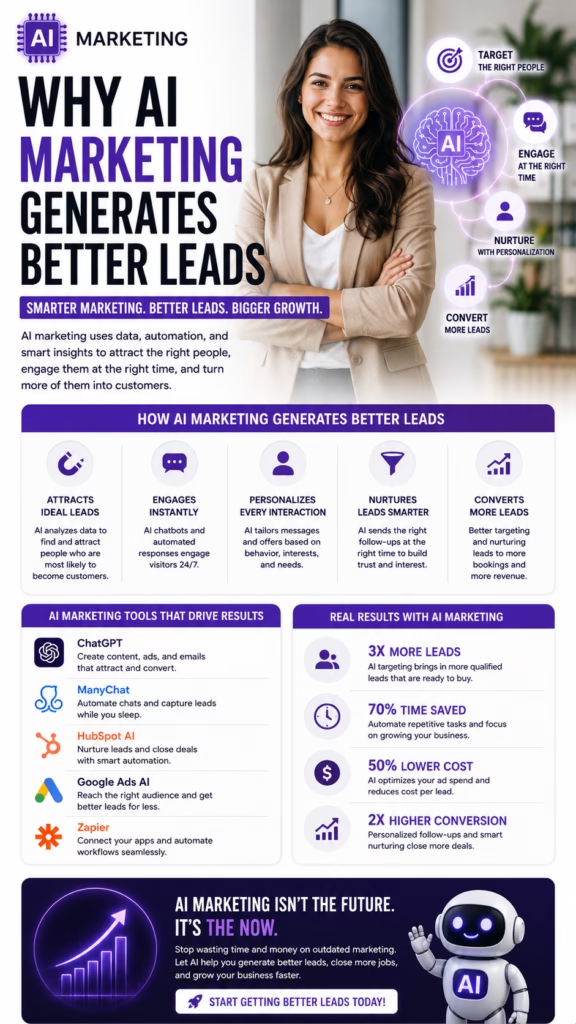
Why AI Marketing Generates Better Leads
Why AI Marketing Generates Better Leads explains how businesses can improve lead quality with faster response times, smarter targeting, automated qualification, personalized follow-up, CRM workflows, review systems, retargeting, and data-driven sales processes.
Introduction
Why AI Marketing Generates Better Leads starts with one major difference between old marketing and modern marketing: speed. A lead is most valuable when the person is still interested, still comparing options, and still ready to take action. AI marketing helps businesses respond faster, qualify better, follow up consistently, and avoid letting interested buyers go cold.
Traditional marketing often creates leads but does not always manage them well. A business may run ads, post on social media, send traffic to a website, or get form submissions, but if the response is slow or inconsistent, many opportunities disappear. AI marketing improves the entire lead journey from first click to booked call, quote request, appointment, purchase, or follow-up.
AI marketing generates better leads because it combines smarter targeting with faster response, better qualification, and more consistent follow-up.
For local businesses, this matters even more. A homeowner looking for a plumber, HVAC company, painter, pressure washer, roofer, landscaper, mattress store, mobile home dealer, contractor, or repair service may contact multiple businesses in minutes. The company that responds quickly and clearly often has the advantage.
AI marketing does not only create more messages. The real goal is better leads: people who understand the offer, fit the service area, have real intent, and are more likely to become customers. AI helps businesses filter, organize, and guide those leads toward the right next step.
Main idea: Why AI Marketing Generates Better Leads comes down to speed, relevance, personalization, automation, qualification, and better sales follow-up.
Table of Contents
- 1) What AI marketing means
- 2) Why better leads matter more than more leads
- 3) How AI improves targeting
- 4) How AI speeds up lead response
- 5) AI lead qualification
- 6) Personalized follow-up at scale
- 7) Missed-call and message automation
- 8) AI chatbots and website lead capture
- 9) CRM automation and lead tracking
- 10) Lead scoring and priority routing
- 11) AI retargeting and remarketing
- 12) AI content and ad testing
- 13) AI for local business leads
- 14) AI for service businesses
- 15) AI for product businesses
- 16) Review and reputation automation
- 17) Customer reactivation campaigns
- 18) Common AI marketing mistakes
- 19) Final thoughts
- 20) FAQs
- 21) Extra keywords
1) What AI Marketing Means
AI marketing means using artificial intelligence tools, automation workflows, data, customer behavior, chat systems, CRM triggers, ad optimization, personalization, and follow-up systems to improve marketing performance. It helps businesses reach better prospects, respond faster, and guide leads through the sales process more efficiently.
AI marketing can include automated text replies, AI chatbots, email follow-up, lead scoring, smart ad targeting, retargeting audiences, automated appointment reminders, review requests, content generation, call summaries, and customer reactivation campaigns.
AI marketing can help with:
- Lead capture
- Instant response
- Lead qualification
- Personalized follow-up
- CRM organization
- Ad testing
- Audience segmentation
- Retargeting
- Review requests
- Customer reactivation
AI marketing is not just about automation. It is about creating a smarter, faster, and more organized lead system.
2) Why Better Leads Matter More Than More Leads
More leads are not always better. A business can receive dozens of weak inquiries and still close very few customers. Better leads are different. Better leads are more qualified, more relevant, more responsive, and more likely to take the next step.
AI marketing helps improve lead quality by filtering out poor-fit inquiries, asking qualifying questions, tracking behavior, and moving serious prospects to the right follow-up path.
Better lead signals:
Fits the service area
Has a real need
Understands the offer
Shares useful details
Responds to follow-up
Asks about pricing or scheduling
Books a call or appointment
Requests a quote
Shows repeat interest
Moves toward a decision
AI marketing generates better leads by helping businesses focus on people who are more likely to become customers.
3) How AI Improves Targeting
AI can improve targeting by identifying patterns in customer behavior, search intent, ad engagement, website activity, and lead quality. Instead of treating every audience the same, AI can help businesses understand which people are most likely to respond, book, buy, or request a quote.
Better targeting means fewer wasted impressions and stronger lead intent. A business can create campaigns based on service type, location, customer need, buying stage, seasonality, or previous engagement.
AI targeting can improve:
- Audience segmentation
- Local targeting
- Service-specific campaigns
- Retargeting audiences
- Lookalike audiences
- Buyer intent analysis
- Ad placement decisions
- Budget allocation
- Seasonal targeting
- Customer behavior tracking
Smarter targeting helps AI marketing attract leads that are more relevant from the start.
4) How AI Speeds Up Lead Response
Speed is one of the biggest advantages of AI marketing. When a lead submits a form, sends a message, calls after hours, or clicks an ad, AI can respond immediately. This keeps the business in the conversation while the prospect is still interested.
Fast response is especially important for local services. A lead looking for AC repair, plumbing help, towing, pressure washing, painting, remodeling, or a local product may contact several companies. The first clear response often wins attention.
AI can respond instantly to:
Website forms
Facebook messages
Google messages
Missed calls
Text inquiries
Chatbot questions
Marketplace leads
Email replies
Appointment requests
Quote requests
AI marketing improves lead quality by engaging prospects before they lose interest or contact a competitor.
5) AI Lead Qualification
AI lead qualification helps determine whether a lead is a good fit. Instead of asking every question manually, AI can collect important details automatically. This helps the sales team, business owner, or office staff prioritize serious opportunities.
For service businesses, AI can ask for location, service needed, timeline, photos, budget range, property type, and best contact method. For product businesses, it can ask about size, model, delivery needs, financing, availability, or purchase timeline.
AI qualification questions can collect:
- Name
- Phone number
- Location
- Service or product interest
- Timeline
- Budget range when appropriate
- Photos or project details
- Preferred appointment time
- Best next step
AI qualification helps businesses separate serious leads from casual interest.
6) Personalized Follow-Up at Scale
Personalized follow-up is one of the main reasons AI marketing generates better leads. Many businesses follow up once and stop. AI can continue the conversation with relevant messages based on what the lead asked about.
A lead interested in roof cleaning should receive different follow-up than a lead interested in driveway cleaning. A mattress buyer asking about delivery should receive different follow-up than someone asking about financing. AI can help personalize that communication at scale.
Personalized follow-up examples:
Service-specific reminders
Product-specific messages
Appointment confirmation
Quote follow-up
Financing follow-up
Delivery follow-up
Abandoned form reminder
Missed-call recovery
Review request
Repeat customer offer
Personalization makes leads feel understood instead of pushed through a generic sales sequence.
7) Missed-Call and Message Automation
Missed calls are lost opportunities. AI marketing can automatically text a lead when a call is missed, ask what they need, and notify the business. This is especially valuable for small businesses where the owner is often busy working, driving, selling, or helping customers.
Message automation can also respond to Facebook, website chat, Google Business Profile, marketplace inquiries, and text requests.
Example missed-call text:
“Hi, thanks for reaching out. Sorry we missed your call. What service or product are you looking for today? Send your city and a few details, and we can help with the next step.”
Missed-call automation turns silence into a second chance to capture the lead.
8) AI Chatbots and Website Lead Capture
AI chatbots can help websites capture leads 24/7. A visitor may have a question after hours or while the team is unavailable. AI chat can answer common questions, collect contact details, qualify the lead, and send the information to the business.
The best chatbots do not pretend to know everything. They help guide the visitor toward the right next step, such as a quote, call, appointment, demo, or product inquiry.
AI chatbot lead capture:
Answers common questions
Collects contact details
Asks qualifying questions
Routes urgent leads
Captures after-hours visitors
Schedules calls or appointments
Sends lead details to CRM
Triggers follow-up messages
Supports sales team
Improves website conversion
AI chatbots help websites convert more visitors into qualified conversations.
9) CRM Automation and Lead Tracking
CRM automation helps businesses organize leads from multiple sources. Instead of losing leads in email, text messages, spreadsheets, voicemail, and social media inboxes, CRM workflows can track every prospect in one place.
AI can move leads through stages automatically, assign follow-ups, remind the team, and show which campaigns create the best customers.
A simple AI-powered CRM pipeline:
- New lead
- Contacted
- Qualified
- Quote requested
- Quote sent
- Follow-up needed
- Appointment booked
- Won
- Review requested
- Reactivation campaign
CRM automation improves lead quality by making sure no serious opportunity gets forgotten.
10) Lead Scoring and Priority Routing
Lead scoring helps businesses decide which leads should be handled first. A lead with strong intent, a nearby location, clear budget, and urgent timeline may be scored higher than a vague inquiry with no details.
AI can help score leads based on behavior, answers, source, urgency, and fit. The best leads can be routed immediately to sales, while lower-intent leads can enter nurturing sequences.
Lead scoring factors:
Location fit
Service fit
Budget fit
Timeline
Message detail
Website behavior
Ad engagement
Lead source
Repeat interaction
Appointment readiness
Lead scoring helps teams spend more time on high-value opportunities.
11) AI Retargeting and Remarketing
Many leads do not buy the first time they see a business. AI retargeting helps bring interested people back. If someone visited a landing page, clicked an ad, watched a video, opened an email, or started a form, retargeting can remind them about the offer.
Retargeting can improve lead quality because the audience has already shown some interest. These people may be warmer than cold traffic.
Retargeting audiences can include:
- Website visitors
- Landing page visitors
- Video viewers
- Form starters
- Email clickers
- Past customers
- Quote request visitors
- Shopping cart abandoners
- Social media engagers
- CRM lead lists
AI retargeting improves lead quality by focusing attention on people who already showed interest.
12) AI Content and Ad Testing
AI can help create and test more ad variations, landing page copy, headlines, social posts, email subject lines, and calls-to-action. Better testing helps businesses discover which message attracts the strongest leads.
Instead of guessing, businesses can test different angles such as urgency, trust, price, convenience, speed, quality, local proof, financing, delivery, or free estimates.
AI can help test:
Ad headlines
Landing page copy
Social media captions
Email subject lines
Offer language
Call-to-action buttons
Audience angles
Follow-up messages
FAQ content
Retargeting copy
AI marketing creates better leads by helping businesses identify the messages that attract serious buyers.
13) AI for Local Business Leads
Local businesses benefit from AI marketing because local leads often require fast response and clear qualification. A lead may ask for service area, appointment time, delivery, pricing, availability, or a quote. AI can answer quickly and gather the details needed for the next step.
Local businesses can use AI across Google Business Profile, websites, Facebook, marketplace listings, email, SMS, and CRM systems.
Local businesses that can use AI marketing:
- Plumbers
- HVAC companies
- Painters
- Pressure washing companies
- Roofers
- Contractors
- Landscapers
- Mattress stores
- Mobile home sellers
- Local retailers
AI helps local businesses convert more nearby interest into booked calls, quotes, visits, and jobs.
14) AI for Service Businesses
Service businesses often lose leads because they are busy on job sites. AI can help respond while the team is working. It can collect job details, request photos, confirm locations, send reminders, and follow up after estimates.
This is useful for contractors, cleaners, movers, repair companies, towing companies, home service providers, and appointment-based businesses.
AI service business workflows:
Missed-call text back
Estimate request intake
Photo collection
Appointment reminder
Quote follow-up
Job completion follow-up
Review request
Repeat service reminder
Seasonal campaign
Referral request
AI marketing helps service businesses turn more inquiries into scheduled work.
15) AI for Product Businesses
Product businesses can use AI marketing to qualify buyers, answer product questions, recommend options, follow up on abandoned interest, promote delivery, explain financing, and track inventory-related leads.
Retailers, dealers, furniture stores, mattress stores, equipment sellers, and local inventory businesses can benefit from faster and more organized buyer communication.
AI product business workflows:
- Product availability replies
- Delivery questions
- Financing follow-up
- Inventory recommendations
- Appointment scheduling
- Store visit reminders
- Abandoned interest follow-up
- Post-purchase review requests
- Repeat buyer campaigns
- Seasonal promotions
AI helps product businesses turn browsing interest into buyer conversations and sales opportunities.
16) Review and Reputation Automation
Reviews help improve trust, especially for local businesses. AI marketing can automatically request reviews after a job, sale, delivery, or appointment. It can also help draft professional review responses.
Better reviews can improve conversion because prospects often compare businesses before contacting them. A business with stronger reviews may generate better leads because customers arrive with more trust.
Review automation can include:
Post-job review request
Post-purchase review request
Review reminder
Review response draft
Customer feedback request
Negative feedback routing
Google review link
Testimonial collection
Reputation tracking
Referral request
AI review automation helps businesses turn happy customers into stronger trust signals.
17) Customer Reactivation Campaigns
Past customers are often easier to convert than cold prospects. AI marketing can reactivate old customers with service reminders, seasonal promotions, repeat purchase offers, maintenance reminders, and loyalty messages.
This can generate better leads because past customers already know the business. They may need another service, product, appointment, delivery, upgrade, or referral opportunity.
Customer reactivation examples:
- Seasonal service reminder
- Annual maintenance offer
- Repeat purchase reminder
- Warranty follow-up
- Upgrade offer
- Referral request
- Review request
- Inactive lead follow-up
- Past quote reminder
- Customer appreciation message
AI reactivation campaigns generate better leads by starting with people who already have a relationship with the business.
18) Common AI Marketing Mistakes
AI marketing works best when it supports a real sales process. Common mistakes include sending too many automated messages, using robotic language, failing to qualify leads, not tracking results, ignoring human handoff, and treating automation like a replacement for service quality.
The goal is not to remove the human side. The goal is to make the business faster, more organized, and more consistent.
Common mistakes:
Too many messages
Robotic tone
No qualification questions
No CRM tracking
No human handoff
No lead scoring
No follow-up after quotes
No review request system
No performance tracking
No clear next step
AI marketing fails when automation creates noise instead of helping leads move toward action.
19) Final Thoughts
Why AI Marketing Generates Better Leads comes down to how well AI improves the full customer journey. Better targeting attracts more relevant prospects. Instant response keeps leads engaged. Qualification filters the right opportunities. Personalized follow-up builds trust. CRM automation keeps everything organized.
AI marketing is not magic, but it can make a business more responsive, more consistent, and more strategic. When used correctly, it helps businesses focus on the leads most likely to become customers.
Final takeaway: AI marketing generates better leads because it responds faster, qualifies smarter, follows up consistently, and turns customer interest into organized sales opportunities.
20) FAQs
1) Why does AI marketing generate better leads?
AI marketing generates better leads by improving targeting, response speed, lead qualification, follow-up consistency, personalization, and CRM tracking.
2) What is AI marketing?
AI marketing uses artificial intelligence, automation, data, and workflows to improve lead capture, communication, targeting, and sales follow-up.
3) Does AI marketing only generate more leads?
No. The best AI marketing systems focus on better leads, not just more leads.
4) What makes a lead better?
A better lead fits the business, has real intent, shares useful details, responds to follow-up, and is more likely to become a customer.
5) How does AI improve lead response?
AI can respond instantly to forms, messages, missed calls, chat inquiries, and quote requests.
6) What is AI lead qualification?
AI lead qualification uses automated questions to collect important details such as location, need, timeline, budget, and contact information.
7) Can AI help with missed calls?
Yes. Missed-call text back can automatically respond when a business misses a call.
8) Can AI chatbots generate leads?
Yes. AI chatbots can capture website visitors, answer questions, collect contact details, and route leads to the right next step.
9) Can AI personalize follow-up?
Yes. AI can help customize follow-up based on service interest, product interest, location, behavior, and lead stage.
10) Can AI help local businesses?
Yes. AI can help local businesses respond faster, qualify inquiries, schedule appointments, request reviews, and reactivate old customers.
11) Can AI help service businesses?
Yes. AI is useful for service businesses that need quote requests, appointment reminders, photo collection, missed-call recovery, and estimate follow-up.
12) Can AI help product businesses?
Yes. AI can answer product questions, qualify buyers, follow up on availability, promote delivery, and support sales conversations.
13) What is lead scoring?
Lead scoring ranks leads based on fit, intent, urgency, behavior, and likelihood to convert.
14) What is AI retargeting?
AI retargeting helps businesses reconnect with people who previously visited a website, clicked an ad, watched a video, or engaged with content.
15) Does AI replace salespeople?
No. AI supports sales teams by handling repetitive tasks, organizing leads, and improving follow-up.
16) Can AI request reviews?
Yes. AI can automatically send review requests after jobs, purchases, appointments, or completed services.
17) Can AI reactivate old customers?
Yes. AI can send seasonal reminders, repeat purchase offers, maintenance prompts, and referral requests.
18) What is CRM automation?
CRM automation organizes leads into stages, triggers follow-ups, tracks activity, and helps prevent opportunities from being forgotten.
19) What is the biggest AI marketing mistake?
The biggest mistake is using automation without a clear sales process, human handoff, or lead tracking.
20) How does AI improve ad campaigns?
AI can help test audiences, headlines, offers, creative angles, and follow-up sequences to find stronger-performing combinations.
21) Can AI improve lead quality from Facebook?
Yes. AI can respond to Facebook leads quickly, qualify them, and move serious prospects into a CRM.
22) Can AI improve website conversions?
Yes. AI chat, forms, personalization, and instant follow-up can help convert more website visitors into leads.
23) Does AI marketing work for small businesses?
Yes. Small businesses can benefit because AI helps save missed calls, organize leads, and follow up without hiring more staff.
24) How should AI marketing success be measured?
Measure response time, qualified leads, appointments, quotes, sales, booked jobs, review growth, and revenue.
25) What is the main goal of AI marketing?
The main goal is to turn interest into qualified leads, better conversations, booked appointments, sales opportunities, and customers.
21) Extra Keywords
- Why AI Marketing Generates Better Leads
- AI marketing leads
- AI lead generation
- better leads with AI
- AI marketing automation
- AI follow up
- AI sales automation
- AI lead qualification
- AI lead scoring
- AI CRM automation
- AI missed call text back
- AI chatbot lead generation
- AI retargeting
- AI customer reactivation
- AI review automation
- AI marketing for local businesses
- AI marketing for service businesses
- AI marketing for small businesses
- AI personalized marketing
- AI appointment booking
- AI quote follow up
- AI lead nurturing
- AI marketing system
- AI automation for lead generation
- AI tools for better leads













