
OfferUp Marketing for Retail and Service Companies
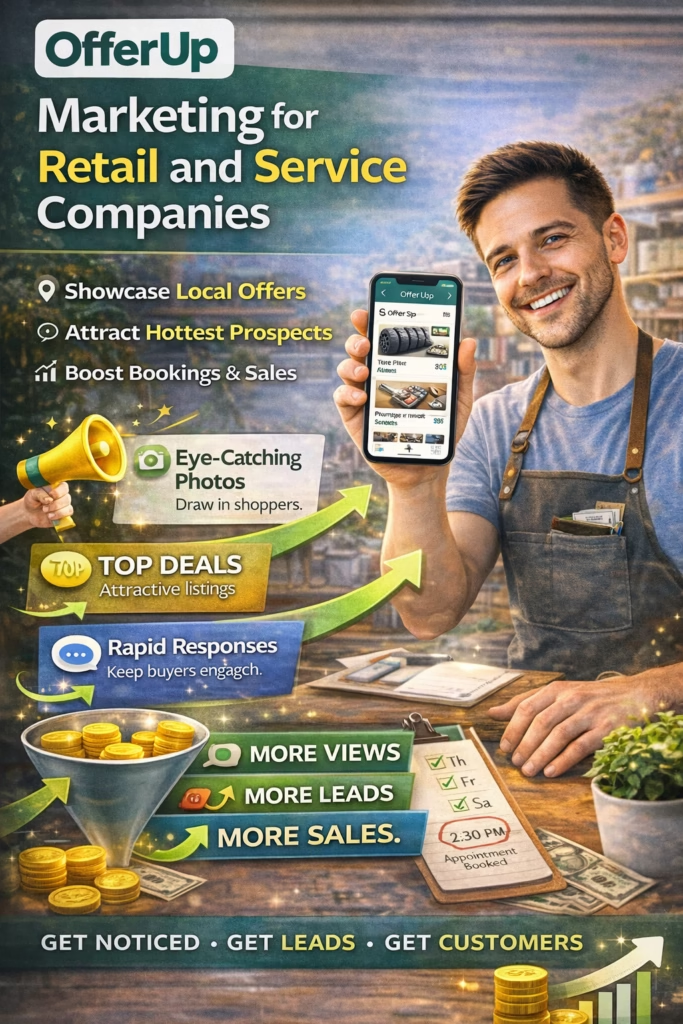
OfferUp Marketing for Retail and Service Companies explains how both product-based businesses and service providers use OfferUp to increase local visibility, attract more inquiries, build trust quickly, and turn marketplace traffic into real sales opportunities.
Introduction
OfferUp Marketing for Retail and Service Companies has become a practical topic for businesses that want more local visibility without depending only on traditional advertising channels. Many companies still think of OfferUp as a platform used mainly for casual peer-to-peer selling. In reality, it can also function as a local marketing channel for businesses that know how to position their listings, communicate trust, and respond quickly to interest.
Retail businesses and service companies can both benefit from OfferUp, but they often use it in different ways. Retail companies usually use OfferUp to showcase products, generate buyer messages, move inventory, and drive local pickup or delivery activity. Service businesses tend to use OfferUp to present service offers, create local awareness, start conversations, and generate quote or booking inquiries. In both cases, the main goal is the same: turn nearby attention into real action.
OfferUp marketing works when the business makes the offer feel local, trustworthy, clear, and easy to respond to.
This matters because local businesses need more than impressions. They need a practical path from visibility to inquiry to sale. OfferUp can help create that path when listings are written well, visuals are strong, pricing or offer structure makes sense, and the business is ready to reply fast when a prospect reaches out.
For mattress stores, furniture retailers, appliance businesses, wellness brands, electronics shops, home goods stores, painters, contractors, cleaning companies, movers, repair services, and many other local companies, OfferUp can become a meaningful part of the local lead flow. But the businesses that get the best results usually do not rely on random posting. They use real marketplace strategy.
Main idea: OfferUp marketing helps retail and service companies generate local demand when they use stronger listings, clearer offers, better trust signals, and faster response handling.
Table of Contents
- 1) What OfferUp marketing means for modern local businesses
- 2) Why retail and service companies can both benefit from OfferUp
- 3) The difference between product marketing and service marketing on OfferUp
- 4) Titles that improve local marketing performance
- 5) Photos and visuals that increase inquiry flow
- 6) Descriptions that help retail and service listings perform better
- 7) Pricing, offer structure, and perceived value
- 8) Trust signals that make OfferUp marketing work
- 9) Local intent and why nearby visibility matters
- 10) Calls to action that increase messages and leads
- 11) Fast response and turning OfferUp attention into opportunity
- 12) Follow-up and extracting more value from existing inquiries
- 13) Common mistakes businesses make on OfferUp
- 14) A practical OfferUp marketing workflow
- 15) Final thoughts
- 16) FAQs
- 17) Extra keywords
1) What OfferUp Marketing Means for Modern Local Businesses
OfferUp marketing is the process of using the platform intentionally to create visibility, trust, inquiry flow, and local sales opportunities. It is not just about uploading listings. It is about shaping how the business appears to nearby buyers or prospects and making it easy for them to take action.
For retail businesses, this often means turning products into attention-grabbing local offers. For service companies, it often means turning services into simple, clear, response-friendly listings that feel useful and trustworthy. In both cases, OfferUp becomes more than a posting platform. It becomes a local marketing channel.
OfferUp marketing works best when listings are treated like local sales assets, not random posts.
That mindset shift is what separates businesses that get scattered results from businesses that build more repeatable marketplace performance.
2) Why Retail and Service Companies Can Both Benefit From OfferUp
Retail companies and service businesses may operate differently, but both benefit from local visibility and local response. OfferUp puts businesses in front of nearby people who are already in browsing mode. That matters because buyers and prospects are often most responsive when they are already comparing options and looking for something useful.
Retail businesses often use OfferUp to:
- Show products to nearby buyers
- Move inventory faster
- Create more daily buyer messages
- Promote local pickup or delivery
- Increase product visibility in the area
Service companies often use OfferUp to:
- Generate local leads
- Create quote inquiries
- Build awareness in nearby cities
- Present offers in a simple format
- Start more conversations with prospects
That is why OfferUp marketing is not limited to one type of business. It works whenever the offer fits local buyer or customer behavior.
3) The Difference Between Product Marketing and Service Marketing on OfferUp
Retail and service companies use OfferUp differently because the buyer journey is different. Product listings usually focus on item appeal, availability, condition, price, and convenience. Service listings usually focus on credibility, problem-solving, local coverage, and making the next step easy.
Retail listings often succeed by helping buyers imagine ownership. Service listings often succeed by helping prospects imagine relief, improvement, or convenience. The strategy changes, but the underlying structure stays similar: attract attention, build trust, clarify the value, and invite a message.
Retail OfferUp marketing:
Product + photos + price + convenience + response

Service OfferUp marketing:
Problem + trust + local relevance + clear offer + response
Both types of businesses succeed on OfferUp when the listing matches the way local people think and act.
4) Titles That Improve Local Marketing Performance
The title is one of the first things that determines whether a listing gets ignored or opened. Strong titles help retail businesses communicate what the product is and why it matters. Strong service titles help local prospects understand the service and why they should care.
Retail title examples:
- Queen Mattress Set – Local Delivery Available
- Sectional Sofa – Great Condition and Ready This Week
- Dining Table Set – Solid Wood and Seats Six
Service title examples:
- Interior Painting Services – Local and Reliable
- House Cleaning Service – Weekly or One-Time
- Junk Removal – Fast Local Pickup Available
These titles work because they combine clarity with local usefulness. They help the viewer understand the offer quickly and feel that it may apply to them now.
Weak titles reduce OfferUp marketing performance because they fail at the first job: getting the right local person to click.
5) Photos and Visuals That Increase Inquiry Flow
Visual presentation matters for both retail and service companies. Retail businesses rely on product photos to create appeal and trust. Service companies often rely on visuals to make the business feel more legitimate, more professional, and more local. In both cases, better visuals create more confidence and more messages.
Retail photos should show the actual item clearly, honestly, and attractively. Service visuals should communicate credibility, results, professionalism, or the type of work being offered. The goal is not just to look good. The goal is to reduce hesitation.
OfferUp marketing becomes more effective when the visuals make the business feel real, current, and worth contacting.
This is why strong visuals often improve performance faster than businesses expect.
6) Descriptions That Help Retail and Service Listings Perform Better
A good description supports the listing by making the offer easier to understand. For retail companies, descriptions help explain the item, condition, size, features, and logistics. For service businesses, descriptions help explain what the company does, who it helps, what areas it serves, and how the customer can get started.
A strong retail description usually includes:
- What the item is
- Condition and key features
- Availability details
- Pickup or delivery information
- A direct call to action
A strong service description usually includes:
- The service offered
- The type of customer served
- Local service area
- The main value or benefit
- An invitation to message for a quote or scheduling
Descriptions improve OfferUp marketing when they reduce confusion and make the next step easy.
7) Pricing, Offer Structure, and Perceived Value
Pricing and offer structure play a major role in how buyers and prospects interpret the listing. Retail buyers usually evaluate the relationship between price, condition, convenience, and value. Service leads often evaluate the offer based on clarity, professionalism, and whether the company feels worth contacting for more details.
For retail, pricing should make sense in the context of the item and the local market. For service companies, the offer should be framed clearly enough that the prospect understands what kind of help is being presented. In both cases, confusion weakens response.
OfferUp marketing performs better when the offer feels understandable, realistic, and worth asking about.
This is one reason clarity often outperforms gimmicks in local marketplace environments.
8) Trust Signals That Make OfferUp Marketing Work
Trust is one of the biggest conversion drivers on OfferUp. Buyers and prospects both want to feel like they are dealing with a real business that communicates clearly and can follow through. That trust is built through multiple small signals inside the listing.
Strong trust signals include:
- Clear wording
- Real visuals
- Useful details
- Consistent pricing or offer structure
- Local relevance
- Professional communication tone
Retail businesses use these signals to reduce buyer hesitation. Service businesses use them to reduce prospect skepticism. In both cases, stronger trust means better response rates.
Trust makes OfferUp marketing work because it lowers the emotional risk of sending the first message.
9) Local Intent and Why Nearby Visibility Matters
OfferUp is a local platform, so the businesses that perform best usually make their offer feel local and accessible. Buyers want nearby pickup, delivery, or convenient transactions. Service leads want nearby providers who clearly serve their area. That local intent is one of the biggest reasons OfferUp can be effective.
Listings that feel grounded in the local market tend to perform better because they help people imagine a real next step. That may mean local city references, service area mentions, delivery information, availability timing, or clear local positioning.
Nearby visibility matters because local people respond more when the business feels practical and within reach.
That is why generic listings often underperform while locally framed listings create more action.
10) Calls to Action That Increase Messages and Leads
A strong call to action helps the viewer move from passive interest to real action. Retail companies may want buyer messages about availability, pickup, or delivery. Service companies may want quote requests, scheduling questions, or general inquiries. A clear call to action increases the chance that the person will actually respond.
Examples:
Message now for availability.
Reach out for local pickup or delivery details.
Send a message today for pricing or scheduling info.
Contact us for a fast local quote.
These work because they remove uncertainty. The viewer knows what kind of response is welcome and what happens next.
OfferUp marketing loses momentum when listings do not tell the prospect or buyer how to move forward.
11) Fast Response and Turning OfferUp Attention Into Opportunity
Speed of response matters because OfferUp users often compare multiple options in a short window. A retail buyer may be asking several sellers about the same type of item. A service lead may message more than one company. A fast reply keeps the opportunity alive while interest is still strong.
Thanks for reaching out.
Yes, this is available.
Would you like pickup details, delivery info, or more specifics?

Thanks for your message.
Yes, we service your area.
Would you like a quick quote or scheduling information?
These responses work because they are simple, helpful, and easy to continue. They turn attention into real conversation instead of letting the lead go cold.
Fast response is one of the most important parts of successful OfferUp marketing.
12) Follow-Up and Extracting More Value From Existing Inquiries
Not every inquiry closes immediately. Some buyers hesitate. Some service leads get distracted. Some people compare options and circle back later. That is why follow-up matters. It helps the business extract more value from the inquiries it already generated.
Follow-up can help:
- Recover warm leads
- Restart paused conversations
- Clarify questions
- Increase close rates from existing traffic
For both retail and service companies, this is important because the cost of losing warm intent is often much higher than the effort needed to send one more clear message.
OfferUp marketing becomes more profitable when businesses capture more value from the inquiries they already earned.
13) Common Mistakes Businesses Make on OfferUp
Many businesses get weak results from OfferUp because they use weak listing practices. The title is generic. The photos do not help. The description is too vague. The offer is unclear. The trust signals are thin. The replies are slow. These problems make the platform look ineffective when the real issue is execution.
Common mistakes include:
- Posting without a real strategy
- Using titles that do not attract the right local attention
- Relying on poor visuals
- Writing descriptions that do not clarify the offer
- Using unclear or weak calls to action
- Responding too slowly
- Ignoring follow-up opportunities
Fixing these issues usually improves results faster than simply increasing posting volume.
Big mistake: assuming OfferUp does not work when the real problem is weak marketplace execution.
14) A Practical OfferUp Marketing Workflow
If a business wants to apply OfferUp Marketing for Retail and Service Companies in a practical way, it helps to follow a repeatable workflow.
Step 1: Define the product or service offer clearly
Step 2: Write titles that attract the right local audience
Step 3: Use visuals that build trust fast
Step 4: Create a clear and easy-to-scan description
Step 5: Position pricing or offer structure clearly
Step 6: Add a direct call to action
Step 7: Reply quickly to all serious inquiries
Step 8: Follow up with warm leads that pause
This workflow works because it covers the full path from first impression to inquiry to next step. It gives the business a more reliable local marketing process instead of leaving results to chance.
Retail and service companies get better OfferUp results when they improve the full response path, not just the listing itself.
15) Final Thoughts
OfferUp Marketing for Retail and Service Companies is ultimately about making local offers easier to notice, easier to trust, and easier to act on. Retail businesses can use the platform to create more product visibility and buyer conversations. Service companies can use it to generate more quote requests and local inquiries. Both benefit when the listing is clear, the presentation is strong, and the response is fast.
The businesses that win on OfferUp usually do the same few things well. They use stronger titles. They show better visuals. They explain the offer clearly. They build trust quickly. They create a direct path to response. Then they protect that opportunity with fast reply speed and simple follow-up. That is what turns OfferUp from a casual listing platform into a useful local marketing channel.
Final takeaway: OfferUp marketing works for retail and service companies when the business combines clear local offers, strong trust signals, and fast response into one simple marketplace system.
16) FAQs
1) What is OfferUp marketing for retail and service companies?
It is the use of OfferUp listings and response systems to generate local visibility, inquiries, and sales opportunities.
2) Can retail businesses really use OfferUp for marketing?
Yes. Retail businesses can use OfferUp to showcase products, attract nearby buyers, and increase local message flow.
3) Can service companies use OfferUp too?
Yes. Service companies can use OfferUp to generate local leads, quote requests, and scheduling inquiries.
4) Why does OfferUp work for both types of companies?
Because both retail and service businesses benefit from local visibility and local response from people already browsing for options.
5) What is the biggest mistake businesses make?
One of the biggest mistakes is posting weak listings without a clear marketing strategy.
6) Do titles really matter that much?
Yes. Titles strongly affect attention, click-through, and the relevance of incoming inquiries.
7) Why are visuals important?
Because visuals help establish trust, quality, and legitimacy very quickly.
8) Does the description change between retail and service listings?
Yes. Retail descriptions usually focus on product details, while service descriptions focus on credibility, service area, and benefits.
9) How does pricing affect OfferUp marketing?
Pricing affects value perception and trust. Clear, believable pricing or offer framing usually improves response.
10) What are trust signals on OfferUp?
Trust signals include clear wording, real visuals, useful details, local relevance, and a professional tone.
11) Why does local relevance matter?
Because OfferUp users usually want nearby options they can act on easily.
12) What should a call to action do?
It should tell the viewer exactly what to do next, such as message for availability, a quote, or scheduling.
13) Does fast response really change results?
Yes. Fast replies help keep interest alive and turn more inquiries into real opportunities.
14) Why is follow-up important?
Because many warm leads do not close immediately, and follow-up can recover them.
15) Is OfferUp only for selling used products?
No. Businesses also use it for local product marketing, service promotion, and lead generation.
16) What types of retail businesses do well on OfferUp?
Furniture, mattress, appliance, electronics, home goods, and other local product sellers often do well.
17) What types of service companies can benefit?
Painters, cleaners, movers, contractors, repair providers, and many other local service businesses can benefit.
18) Should every business use the same type of listing?
No. The structure can stay strong, but the messaging should fit the business model and local audience.
19) What should businesses track on OfferUp?
They should track views, messages, reply speed, inquiry quality, follow-up outcomes, and sales results.
20) Is more posting always the answer?
No. Better listing quality and better inquiry handling often matter more than raw posting volume.
21) Can stronger visuals alone help performance?
Yes. Better visuals can improve trust and response quickly.
22) Why do some listings get attention but no real leads?
Usually because they do not create enough trust, clarity, or urgency for the person to respond.
23) What is the main purpose of OfferUp marketing?
The main purpose is to turn local marketplace attention into real business opportunities.
24) Is OfferUp marketing more about traffic or conversion?
It is about both, but conversion usually determines how much real value the traffic creates.
25) What is the core principle behind successful OfferUp marketing?
The core principle is that better local offers, stronger trust, and faster response create better results.
17) Extra Keywords
- OfferUp Marketing for Retail and Service Companies
- OfferUp marketing
- OfferUp for retail businesses
- OfferUp for service companies
- OfferUp local marketing
- OfferUp lead generation
- OfferUp local sales
- OfferUp product marketing
- OfferUp service leads
- OfferUp local buyers
- OfferUp local customers
- OfferUp listing strategy
- OfferUp listing optimization
- OfferUp marketplace leads
- OfferUp retail leads
- OfferUp service marketing
- OfferUp buyer inquiries
- OfferUp quote requests
- OfferUp local visibility
- OfferUp response strategy
- OfferUp trust signals
- OfferUp local demand
- OfferUp sales opportunities
- OfferUp small business marketing
- OfferUp local lead flow