
OfferUp Lead Generation for Solar Companies
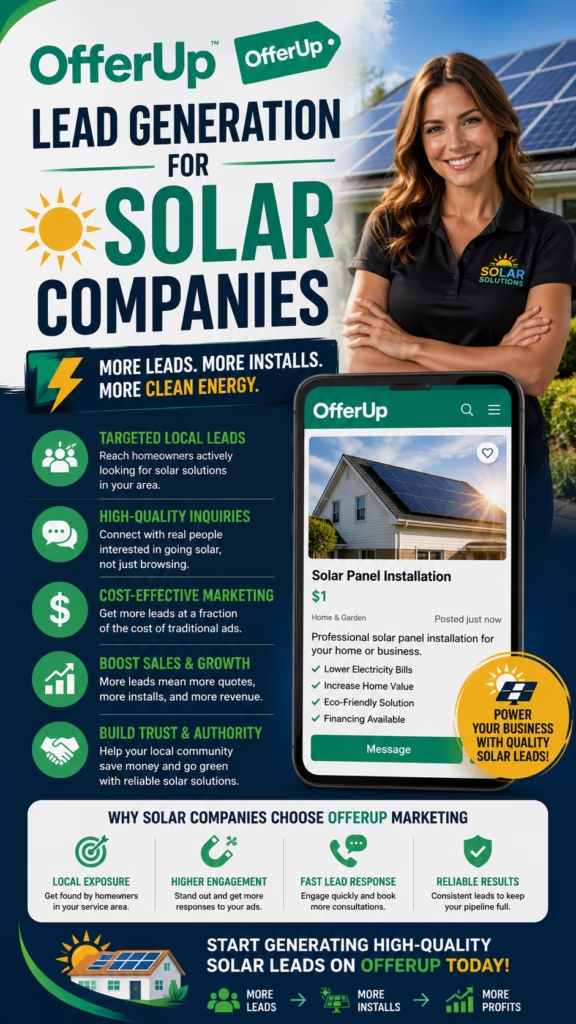
OfferUp Lead Generation for Solar Companies helps solar installers and energy businesses reach local homeowners, build trust, qualify residential solar opportunities, and turn OfferUp visibility into consultation requests and sales conversations.
Introduction
OfferUp Lead Generation for Solar Companies gives solar businesses another way to create local homeowner conversations outside traditional pay-per-click advertising, purchased lead programs, door-to-door prospecting, and broad social media campaigns. OfferUp is commonly associated with local products, but its location-based marketplace structure can also help service businesses introduce relevant offers to nearby consumers.
Solar companies face a unique lead-generation challenge. The service is valuable, but the decision is more complex than buying a household item. Homeowners may need to understand roof suitability, electric usage, financing, ownership, utility rules, permitting, installation timelines, warranties, equipment options, and whether solar makes sense for their property.
That means a solar listing should not rely on hype. It should create enough curiosity for the homeowner to request a consultation while remaining honest about eligibility, savings, incentives, production, and pricing. The goal is to begin a qualified conversation, not promise an outcome before the property has been reviewed.
OfferUp lead generation works best for solar companies when each listing builds trust, targets a real homeowner concern, and moves the prospect toward a property-specific consultation.
Solar installers can create listings around residential solar consultations, battery storage, backup power, roof-and-solar coordination, energy-cost reviews, solar panel system evaluations, electric vehicle charging, existing system upgrades, and related services they genuinely provide.
The strongest strategy combines local targeting, real installation photos, educational descriptions, accurate qualification language, consultation-focused calls to action, rapid follow-up, and organized lead tracking. Solar companies should also keep all claims accurate and consistent with applicable advertising, financing, utility, consumer-protection, and platform requirements.
Main idea: OfferUp Lead Generation for Solar Companies works when listings attract the right local homeowner, explain the opportunity clearly, and make requesting a personalized review easy.
Table of Contents
- 1) Why OfferUp can create solar leads
- 2) How homeowners evaluate solar offers
- 3) Building a trustworthy solar profile
- 4) Choosing the right OfferUp listing angles
- 5) Writing solar listing titles that attract interest
- 6) Using solar installation photos effectively
- 7) Writing descriptions that generate consultations
- 8) Using local solar keywords naturally
- 9) Explaining pricing, savings, and incentives carefully
- 10) Creating residential solar consultation listings
- 11) Creating battery storage listings
- 12) Creating solar-plus-roofing listings
- 13) Creating EV charging and electrification listings
- 14) Creating solar system upgrade listings
- 15) Creating educational solar posts
- 16) Writing stronger solar calls to action
- 17) Qualifying homeowners for solar
- 18) Following up with OfferUp solar leads
- 19) Building a consistent posting system
- 20) Tracking OfferUp solar lead performance
- 21) Common OfferUp mistakes for solar companies
- 22) Compliance and trust reminders
- 23) Final thoughts
- 24) FAQs
- 25) Extra keywords
1) Why OfferUp Can Create Solar Leads
OfferUp can create solar leads because it is built around local discovery and direct communication. Homeowners browsing local offers may also be interested in home improvement, energy upgrades, backup power, roof improvements, electric vehicle charging, and ways to manage household expenses.
A solar company can use focused listings to introduce these services without immediately asking the homeowner to make a major commitment. The listing can offer a consultation, energy review, roof-and-solar discussion, or battery evaluation based on the property and household needs.
OfferUp can help solar companies generate:
- Residential solar consultation requests
- Homeowner energy-review inquiries
- Battery storage leads
- Backup power conversations
- Solar-plus-roofing inquiries
- Existing system upgrade leads
- Solar panel replacement questions
- EV charger installation leads
- Local homeowner appointments
- Qualified solar sales conversations
OfferUp should not replace every marketing channel. It can support a broader system that includes Google Maps, local SEO, referrals, social media, email follow-up, partnerships, and direct response advertising.
The platform becomes useful when solar companies treat it as a local consultation channel instead of a place for exaggerated promotional claims.
2) How Homeowners Evaluate Solar Offers
Homeowners usually evaluate solar offers based on trust, clarity, property fit, monthly costs, projected production, warranties, equipment, installation quality, financing, and the reputation of the installer. They may also compare several companies before scheduling an appointment.
Homeowners commonly ask:
Does solar make sense for my property?
Is my roof suitable?
How much electricity do I use?
What would the system cost?
What financing options may be available?
Are there incentives I may qualify for?
How long does installation take?
What equipment would be used?
What warranties are included?
Who handles permits and utility coordination?
A good OfferUp listing does not need to answer every technical question. It should explain that these factors are reviewed during a personalized consultation.
Solar companies should avoid implying that every home qualifies, every homeowner will save a specific amount, or every project receives the same pricing. Property orientation, shading, roof condition, utility rates, usage, financing terms, incentives, equipment, and local rules can all affect the outcome.
The strongest solar listing creates interest while making it clear that recommendations depend on a property-specific review.
3) Building a Trustworthy Solar Profile
Trust is especially important in solar because the project can involve a long-term financial commitment and changes to the home. Homeowners may review the seller profile before responding.
Solar profile trust checklist:
- Clear business or representative identity
- Accurate local service area
- Professional profile photo or company branding
- Consistent business name
- Real installation photos
- Professional communication style
- Accurate service descriptions
- Clear consultation process
- Fast and respectful responses
- No exaggerated savings claims
Solar companies should make it clear whether the person responding is an installer, dealer, sales representative, consultant, or marketing partner. The homeowner should understand who they are speaking with and what company may provide the service.
Claims about licensing, certification, insurance, warranties, equipment partnerships, installation capabilities, and financing should be accurate. Do not imply credentials that do not apply.
A trustworthy solar profile lowers the homeowner’s uncertainty before the first consultation is scheduled.
4) Choosing the Right OfferUp Listing Angles
Solar companies should create listings around specific homeowner interests instead of publishing one broad advertisement. Each listing should have one clear purpose and one clear next step.
Solar listing angles:
Residential solar consultation
Home energy-cost review
Battery backup consultation
Solar and roof planning
Existing solar system review
Solar panel upgrade options
EV charger installation
Home electrification planning
New construction solar consultation
Solar options for high-usage homes
Different listing angles attract different homeowner needs. A battery listing may appeal to homeowners concerned about outages. An EV charger listing may attract electric vehicle owners. A roof-and-solar post may appeal to homeowners planning a roof replacement.
Solar companies can also rotate educational angles, such as explaining how roof shading, electric usage, home ownership, and utility rules affect solar eligibility.
Focused solar listings generate stronger leads because homeowners can quickly identify the topic that applies to them.
5) Writing Solar Listing Titles That Attract Interest
The title should be clear, local, and centered on a homeowner benefit or question. Avoid hype, guaranteed savings language, and misleading “free solar” claims.
Weak title:
FREE SOLAR NOW

Better title:
Local Residential Solar Consultation Available

Weak title:
Cut Your Bill to Zero

Better title:
Review Solar Options for Your Home and Energy Usage

Weak title:
Best Solar Deal

Better title:
Home Solar and Battery Consultation Appointments

Weak title:
Government Pays for Solar

Better title:
Ask About Current Solar Incentives and Eligibility

Weak title:
Solar Panels Cheap

Better title:
Personalized Solar System Review for Local Homeowners
Strong titles can mention residential solar, battery backup, roof compatibility, energy usage, local appointments, or consultations. They should accurately represent what the homeowner receives after responding.
Avoid guaranteed savings, zero-cost claims, guaranteed approval, or incentive claims that are not clearly explained and supportable.
6) Using Solar Installation Photos Effectively
Real photos help solar companies prove that they operate locally and understand residential installation. Homeowners want to see completed systems, equipment, workmanship, and professional crews.
Solar photo ideas:
- Completed rooftop solar installations
- Ground-mounted solar systems
- Battery storage equipment
- Inverter installations
- Electrical panel upgrades
- EV charger installations
- Professional installation crews
- Service vehicles
- Roof-and-solar project photos
- Clean equipment close-ups
Use photos the company owns or has permission to use. Customer addresses, license plates, identifying documents, and private information should not be displayed without authorization.
Photos should be bright, clean, and easy to understand. Avoid generic images that look unrelated to the company’s real work. Stock images may be useful for supporting graphics, but real local installation photos create stronger proof.
Solar installation photos help homeowners see evidence of real workmanship before scheduling a consultation.
7) Writing Descriptions That Generate Consultations
A solar listing description should educate the homeowner enough to create trust while keeping the next step simple. It should not attempt to provide a final system design or savings estimate without reviewing the property.
Solar listing description structure:
Opening homeowner benefit
Solar service offered
Who the consultation is for
Factors reviewed
Local service area
Consultation process
Eligibility disclaimer
Trust signal
Qualification questions
Clear CTA
For example, the description can explain that the company reviews recent electric usage, roof condition, shading, ownership status, utility provider, household goals, battery interest, and available equipment options.
The post can also explain that pricing, production, incentives, financing, and potential savings vary by property and homeowner circumstances. This helps set accurate expectations.
A strong solar description makes the homeowner feel informed enough to request a personalized review without promising a result too early.
8) Using Local Solar Keywords Naturally
Local keywords help homeowners understand where the company provides consultations and installations. Use cities, counties, regions, and service-area phrases naturally.
Natural local solar phrases:
- Residential solar consultations available locally
- Serving homeowners in nearby communities
- Message with your city for service availability
- Local solar and battery appointments
- Solar consultations for area homeowners
- Serving surrounding cities and counties
- Local roof and solar planning
- Home energy reviews available in your area
Solar companies serving multiple markets can create different listings for separate service areas. Each listing should contain useful local information instead of repeating the same text with only the city name changed.
Local relevance can also come from mentioning utility considerations, common roof types, regional weather, local installation experience, and service availability when accurate.
Use location terms to clarify coverage, not to overload the post with repetitive keywords.
9) Explaining Pricing, Savings, and Incentives Carefully
Solar pricing and savings depend on many variables. OfferUp listings should avoid giving the impression that one price or savings amount applies to every homeowner.
Careful solar pricing language:
System pricing depends on energy usage, property conditions, equipment, and design.
Potential savings vary by home, utility rates, system production, financing, and usage.
Current incentives may depend on eligibility and applicable rules.
Financing options may be available for qualified customers.
A property and electric-usage review is required for personalized estimates.
Battery pricing depends on equipment, capacity, backup goals, and installation needs.
When discussing tax credits or incentives, solar companies should avoid presenting general information as personalized tax advice. Homeowners may need to consult a qualified tax professional regarding eligibility and individual circumstances.
If financing is offered, disclose that approval and terms depend on the provider and applicant qualifications. Avoid presenting financing as guaranteed or implying that financed solar is automatically free.
Accurate financial language protects trust and produces better-qualified solar consultations.
10) Creating Residential Solar Consultation Listings
Residential solar consultation listings should focus on helping homeowners understand whether solar may fit their property, budget, and energy goals.
Residential solar listing example:
Considering solar for your home? We are scheduling local residential solar consultations to review roof suitability, recent electric usage, equipment options, battery interest, and installation goals. Message with your city, utility provider, approximate monthly electric cost, and whether you own the home.
Useful residential solar lead details:
- Property city
- Homeownership status
- Utility provider
- Approximate electric usage or bill
- Roof age
- Roof type
- Known shading concerns
- Battery interest
- Project timeline
- Preferred consultation time
The listing should explain that the consultation is used to review eligibility and options. It should not imply that the homeowner is approved or guaranteed to receive a particular system, price, incentive, or savings amount.
Residential solar listings work best when they invite homeowners into a clear evaluation process.
11) Creating Battery Storage Listings
Battery storage can be marketed around backup goals, energy management, solar integration, outage concerns, and home resilience. The listing should explain that battery performance and backup duration depend on equipment, loads, system design, and homeowner usage.
Battery storage listing example:
Interested in home battery backup? We are scheduling local battery consultations for homeowners who want to review backup priorities, solar integration, equipment options, electrical requirements, and installation considerations.
Battery lead qualification details:
- Property city
- Existing solar system status
- Current inverter type if known
- Backup priorities
- Critical household loads
- Electrical panel information
- Outage concerns
- Installation timeline
Avoid claiming that one battery can power an entire home for a guaranteed period. Backup duration varies based on battery capacity, household demand, solar production, weather, system settings, and equipment.
Battery listings generate stronger leads when they focus on backup goals and personalized system design.
12) Creating Solar-Plus-Roofing Listings
Homeowners with older roofs may need to coordinate roofing and solar planning. A focused listing can attract people who know they need roof work before or during a solar project.
Solar and roofing listing example:
Planning a roof replacement and considering solar? We help local homeowners review roof timing, solar layout, installation coordination, equipment options, and project scheduling. Message with your city, roof age, roof type, and solar goals.
Solar companies should clearly explain whether roofing is performed in-house, by a partner, or through a separate contractor. Do not imply that roofing services are included if they are not.
Solar-and-roof lead details:
- Roof age
- Roof material
- Known damage or leaks
- Solar interest
- Battery interest
- Property location
- Project timeline
- Insurance involvement if applicable
Coordinated roof-and-solar listings can attract homeowners who want to plan both projects correctly from the beginning.
13) Creating EV Charging and Electrification Listings
Solar companies that provide EV charger installation, panel upgrades, or home electrification services can create focused listings for those services.
EV charger listing example:
Need a home EV charger installed? We are scheduling local consultations to review charger type, electrical panel capacity, installation location, cable routing, permitting requirements, and solar integration options.
EV charger lead details:
- Vehicle make and model
- Charger type
- Parking location
- Electrical panel location
- Panel capacity if known
- Distance from panel to charger
- Solar system status
- Property city
Listings should avoid providing a final installation price without enough information. Electrical upgrades, trenching, distance, equipment, permitting, and panel capacity can affect project scope.
EV charging listings can introduce solar companies to homeowners who are already investing in household electrification.
14) Creating Solar System Upgrade Listings
Some homeowners already have solar but need system evaluation, battery integration, monitoring help, panel replacement, inverter review, expansion, removal and reinstallation, or related services.
Existing solar system listing example:
Already have solar and considering an upgrade? We review battery additions, monitoring concerns, equipment compatibility, system expansion, panel replacement, and other available options based on the existing installation.
Solar companies should only advertise services they are qualified and equipped to perform. Some systems may have warranty restrictions, proprietary equipment, interconnection limitations, or installer-specific requirements.
Existing system lead details:
- Property city
- Original installation year
- System size if known
- Panel brand
- Inverter type
- Monitoring status
- Current concern
- Battery interest
- Original installer status
- Photos of equipment
Upgrade listings can create high-intent leads because the homeowner already understands solar and has a specific system need.
15) Creating Educational Solar Posts
Educational posts can help solar companies build trust before asking for an appointment. Homeowners may respond more positively to useful information than to an aggressive sales pitch.
Educational listing ideas:
- How roof age affects solar planning
- What electric usage means for system design
- Questions to ask before choosing solar
- How shading can affect production
- Solar panel versus battery storage
- What happens during a solar consultation
- How utility interconnection works
- Why equipment warranties matter
- Solar planning for EV owners
- What information is needed for an estimate
Educational posts should remain concise and connected to a consultation offer. The goal is to help the homeowner understand the next step, not overwhelm them with technical information.
Businesses should avoid presenting estimates, incentive information, or generalized savings examples as guaranteed personal results.
Educational solar content builds authority by helping homeowners make a more informed decision.
16) Writing Stronger Solar Calls to Action
A strong call to action tells the homeowner what information to send and what happens after they respond. It should be specific, simple, and consultation-focused.
Solar CTA examples:
- Message with your city and utility provider for service availability.
- Send your approximate monthly electric cost for a consultation.
- Tell us whether you own the home and how old the roof is.
- Ask about solar and battery consultation openings.
- Message with your roof type and project timeline.
- Send a recent electric bill with personal information removed.
- Ask about home battery backup options.
- Message with your EV model for charger installation availability.
Do not ask homeowners to post sensitive personal data publicly. If a utility bill is needed, explain how to provide it securely and advise them to remove account numbers or unrelated private information.
The best solar CTA begins the qualification process while keeping the homeowner’s first step easy.
17) Qualifying Homeowners for Solar
Solar lead qualification helps the company determine whether the property, location, ownership, usage, roof, timeline, and homeowner goals may fit the services offered.
Useful solar qualification questions:
- What city is the property in?
- Do you own the home?
- Who is the utility provider?
- What is the approximate monthly electric usage or cost?
- How old is the roof?
- What type of roof is installed?
- Are there large trees or shading concerns?
- Are you interested in battery storage?
- What is the desired project timeline?
- What is the preferred consultation time?
Qualification should be respectful and efficient. Do not ask every question in the first message. Start with the most important details and gather additional information as the homeowner remains engaged.
Some properties may not be suitable for rooftop solar. A professional response should explain that other options may be discussed when available, without pressuring the homeowner.
Better qualification helps solar companies spend more time with homeowners who are ready for a realistic property review.
18) Following Up With OfferUp Solar Leads
Fast follow-up is essential because homeowners may contact several solar companies. The first response should acknowledge the inquiry, answer the immediate question, and move toward qualification or scheduling.
Simple solar follow-up:
Thanks for reaching out. What city is the property in, do you own the home, and who is your electric utility provider? If you know the approximate monthly electric cost and roof age, that will help us identify the best next step.
Solar follow-up best practices:
- Reply quickly
- Use the homeowner’s name when available
- Confirm the property location
- Ask only the next useful questions
- Explain the consultation process
- Avoid unsupported promises
- Offer clear scheduling options
- Record the lead in a CRM
- Follow up respectfully
- Document consent and communication preferences
After qualification, move the prospect toward the appropriate next step. This may be a phone consultation, virtual review, property visit, design appointment, roof inspection, or energy analysis.
The listing creates attention, but organized solar follow-up turns attention into a qualified appointment.
19) Building a Consistent Posting System
Solar companies should use a consistent posting system instead of publishing random promotions. A structured calendar creates multiple entry points for different homeowner interests.
Solar posting rotation:
Residential solar consultation
Battery backup consultation
Solar and roof planning
EV charger installation
Existing system upgrade
Home energy education
Project spotlight
Local installation photo
Frequently asked question
Consultation availability
Each listing should remain unique. Rotate titles, photos, service areas, homeowner concerns, project types, educational topics, and calls to action.
Listings should be updated when service areas, financing providers, equipment options, incentive information, consultation availability, or company capabilities change.
Assign clear responsibility for posting, message response, qualification, appointment scheduling, CRM entry, and follow-up. A strong system prevents leads from getting lost.
Consistent OfferUp posting becomes valuable when it is supported by accurate content and reliable lead handling.
20) Tracking OfferUp Solar Lead Performance
Tracking helps solar companies understand which listings produce real consultations and installations. Views and messages matter, but qualified appointments and completed projects matter more.
Solar lead metrics to track:
- Listing views
- Homeowner messages
- Qualified homeowner leads
- Homeownership confirmation rate
- Service-area qualification rate
- Average response time
- Consultations scheduled
- Consultations completed
- Site visits scheduled
- Proposals delivered
- Contracts signed
- Installations completed
Track performance by listing topic, title, photo, city, service type, CTA, and response script. A battery listing may produce fewer leads but stronger homeowner intent. An educational listing may create more early-stage inquiries that require longer follow-up.
Measure lead quality, not only message volume. A smaller number of homeowners who own qualifying properties may be more valuable than a large number of unqualified inquiries.
The best OfferUp solar strategy is built around qualified appointments and profitable projects, not vanity metrics.
21) Common OfferUp Mistakes for Solar Companies
Solar companies can damage trust when listings use exaggerated claims, unclear identities, misleading pricing, or aggressive language. A weak follow-up process can also waste strong leads.
Common mistakes include:
- Promising guaranteed savings
- Advertising solar as universally free
- Claiming guaranteed approval
- Using unclear incentive language
- Using stock photos only
- Not identifying the company
- No service-area information
- No qualification process
- No clear consultation CTA
- Slow responses
- No CRM tracking
- No compliance review
Another mistake is trying to close the entire sale inside the listing. Solar is usually a consultative purchase. The listing should create a trustworthy first step rather than forcing a decision before the homeowner has enough information.
Businesses should also avoid posting identical listings repeatedly. Use distinct educational topics, services, project photos, service areas, and homeowner benefits.
OfferUp lead generation fails when solar listings create more suspicion than clarity.
22) Compliance and Trust Reminders
Solar advertising may involve consumer-protection rules, financing disclosures, incentive explanations, utility requirements, contractor licensing, telemarketing consent, privacy obligations, and platform policies. Requirements can vary by location and offer.
Solar trust and compliance reminders:
- Use accurate company identification
- Explain that savings vary
- Avoid guaranteed production claims
- Avoid universal “free solar” language
- Explain that incentives depend on eligibility
- Use accurate financing disclosures
- Do not present general tax information as personal advice
- Protect homeowner utility and financial data
- Follow consent requirements for calls and texts
- Follow applicable licensing and platform rules
Solar companies should have advertising content reviewed by the appropriate internal compliance, legal, financing, or regulatory professionals when needed. This is especially important for claims involving tax credits, incentives, savings, financing, equipment performance, and utility programs.
Clear, accurate solar marketing creates stronger long-term trust than aggressive claims that may generate short-term attention.
23) Final Thoughts
OfferUp Lead Generation for Solar Companies can help installers and energy businesses create additional local homeowner conversations when listings are focused, educational, trustworthy, and easy to respond to.
The strongest strategy uses separate listings for residential solar consultations, battery storage, roof-and-solar planning, EV charging, existing system upgrades, and homeowner education. Each listing should have a specific purpose and a clear consultation-focused next step.
Solar companies should use real project photos, natural local keywords, accurate financial language, careful incentive explanations, qualification questions, fast follow-up, CRM tracking, and consistent posting.
OfferUp should be treated as part of a broader local marketing system. It can support Google Maps SEO, referrals, organic social media, website lead generation, email nurturing, partnerships, and other acquisition channels.
Most importantly, solar marketing should help homeowners make informed decisions. Strong listings explain that property conditions, energy usage, equipment, utility rules, financing, incentives, and homeowner goals all affect the final recommendation.
Final takeaway: OfferUp becomes a useful solar lead channel when each listing turns a relevant homeowner question into a clear, accurate, and personalized consultation.
24) FAQs
1) What is OfferUp Lead Generation for Solar Companies?
It is a strategy for using local OfferUp listings to attract homeowners, promote solar-related consultations, qualify leads, and schedule sales conversations.
2) Can solar companies advertise on OfferUp?
Solar companies may be able to use OfferUp for local visibility depending on the service, listing type, account, category, market, and current platform rules.
3) What solar services can be promoted?
Possible topics include residential solar consultations, battery storage, backup power, roof-and-solar planning, EV charging, system upgrades, and related services the company genuinely provides.
4) What makes a strong solar OfferUp listing?
A strong listing includes a clear title, real photos, local service information, accurate claims, qualification questions, and a consultation-focused CTA.
5) Should solar companies promise savings?
No specific savings should be guaranteed without a property-specific analysis. Savings can vary based on usage, utility rates, production, financing, equipment, and other factors.
6) Should listings say solar is free?
Solar companies should avoid universal “free solar” claims. Any program, financing structure, incentive, or offer should be explained accurately.
7) Can solar companies mention tax credits?
They can provide accurate general information, but eligibility depends on individual circumstances and applicable rules. Homeowners may need advice from a qualified tax professional.
8) What photos should solar companies use?
Use real rooftop systems, batteries, inverters, electrical work, EV chargers, crews, vehicles, and completed installations when permission is available.
9) What is a good solar listing title?
A good title clearly describes the consultation, such as “Local Residential Solar Consultation Available” or “Home Solar and Battery Review.”
10) What is a good solar CTA?
Ask homeowners to send their city, utility provider, ownership status, approximate energy usage, roof age, and consultation availability.
11) How should solar companies qualify leads?
Ask about location, homeownership, utility provider, electric usage, roof condition, shading, battery interest, and project timeline.
12) How quickly should solar companies reply?
They should reply as quickly as possible because homeowners may contact multiple installers or energy companies.
13) Can battery storage be advertised?
Yes, when the company provides battery services and uses accurate language about equipment, backup goals, system design, and performance.
14) Can solar companies advertise roof coordination?
Yes, but the listing should clearly explain whether roofing is provided directly, by a partner, or through a separate contractor.
15) Can EV charger installation generate leads?
Yes. EV charger listings can attract homeowners interested in electrical upgrades, home charging, solar integration, and electrification.
16) Can existing solar system owners be targeted?
Yes. Listings can address battery additions, monitoring concerns, compatible upgrades, system expansion, and other supported services.
17) Should every solar listing be unique?
Yes. Use different services, homeowner concerns, photos, educational topics, service areas, and calls to action.
18) Why do solar listings get messages but no appointments?
The inquiries may be unqualified, the listing may be unclear, or the follow-up process may not move homeowners toward a scheduled consultation.
19) What should solar companies track?
Track views, messages, qualified leads, service-area fit, response time, consultations, site visits, proposals, contracts, and installations.
20) Can OfferUp reduce solar lead costs?
It may create additional organic local opportunities, but results depend on the market, offer, listing quality, compliance, and follow-up process.
21) What homeowner information is needed?
Useful information includes property city, ownership status, utility provider, energy usage, roof age, roof type, shading, battery interest, and timeline.
22) Should homeowners send utility bills?
A recent bill can help with analysis, but homeowners should use a secure process and remove account numbers or unrelated private information.
23) What should solar companies avoid?
Avoid guaranteed savings, guaranteed approvals, misleading incentive claims, unclear company identity, unsupported performance promises, and slow follow-up.
24) What is the biggest OfferUp mistake for solar companies?
The biggest mistake is using aggressive claims without enough trust, qualification, local relevance, or explanation of the consultation process.
25) What is the best OfferUp solar lead generation tip?
Create focused educational listings and move qualified homeowners toward a personalized property and energy review.
25) Extra Keywords
- OfferUp Lead Generation for Solar Companies
- OfferUp solar leads
- solar company lead generation
- OfferUp marketing for solar companies
- local solar leads
- residential solar marketing
- solar consultation leads
- OfferUp solar advertising
- solar installer leads
- homeowner solar leads
- solar panel consultation leads
- battery storage leads
- solar battery marketing
- roof and solar leads
- EV charger installation leads
- solar system upgrade leads
- local solar marketing
- solar appointment generation
- solar sales consultations
- residential energy leads
- solar company local marketing
- OfferUp homeowner leads
- solar lead qualification
- solar installer marketing strategy
- solar business growth