

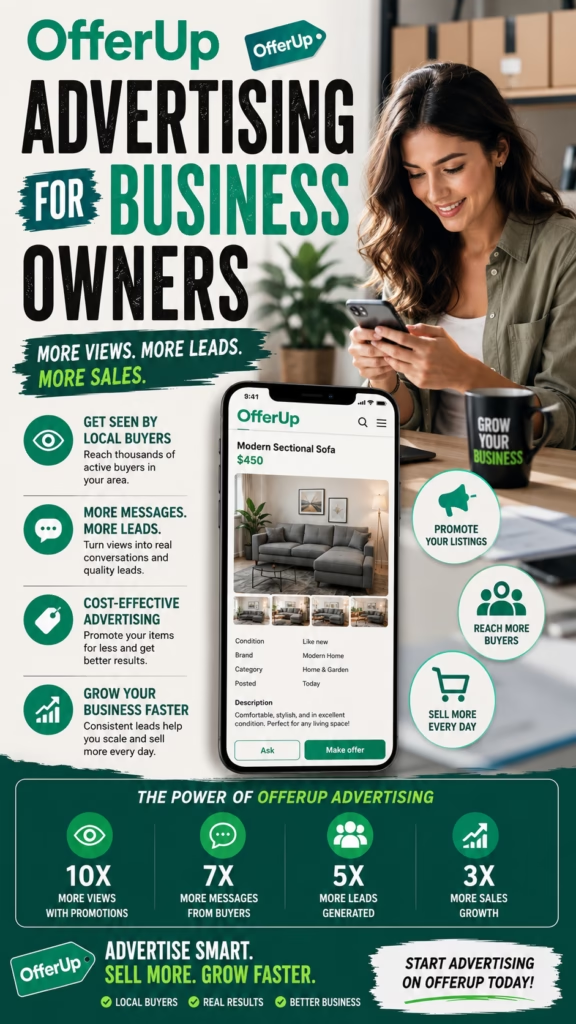
OfferUp Advertising for Business Owners
OfferUp Advertising for Business Owners helps local companies create stronger listings, reach nearby prospects, generate qualified inquiries, improve follow-up, and turn OfferUp visibility into appointments, store visits, estimates, deliveries, and sales.
Introduction
OfferUp Advertising for Business Owners begins with understanding that OfferUp can be more than a place for individuals to sell unwanted items. For many local businesses, it can become an additional channel for product visibility, inventory promotion, lead generation, appointment requests, service inquiries, delivery opportunities, and customer acquisition.
Business owners can use OfferUp to place relevant products and services in front of people who are already browsing local categories. These prospects may be comparing furniture, mattresses, appliances, equipment, sheds, home improvement services, rentals, commercial products, or other locally available solutions.
The opportunity comes from intent. A person browsing OfferUp is often doing more than passively consuming content. They may be checking prices, looking for immediate availability, comparing local sellers, reviewing product condition, planning a project, or preparing to make a purchase.
However, simply publishing listings does not guarantee results. Business owners need focused offers, accurate titles, strong images, clear descriptions, transparent pricing, local relevance, specific calls to action, fast responses, qualification questions, and organized follow-up.
OfferUp advertising works best when every listing is treated like a focused local sales page instead of a generic product announcement.
A furniture retailer might promote sectional sofas, dining sets, bedroom packages, and delivery options through separate listings. A contractor might create project-specific listings for painting, flooring, fencing, kitchen remodeling, or repairs. A shed dealer might advertise different sizes, styles, configurations, and delivery areas.
Each focused listing gives the business another opportunity to connect with a specific customer need. The title identifies the offer, the images create interest, the description builds understanding, and the call to action begins the sales conversation.
Main idea: OfferUp Advertising for Business Owners succeeds when local visibility is connected to a clear offer, a fast response process, and a measurable path toward revenue.
Table of Contents
- 1) Why OfferUp can work for businesses
- 2) Define the business goal
- 3) Understand the local audience
- 4) Build a trustworthy business profile
- 5) Create focused OfferUp listings
- 6) Write stronger listing titles
- 7) Use business-quality photos
- 8) Write descriptions that generate inquiries
- 9) Turn features into customer benefits
- 10) Explain pricing clearly
- 11) Strengthen local targeting
- 12) Use OfferUp keywords naturally
- 13) Add stronger trust signals
- 14) Write calls to action that convert
- 15) Qualify OfferUp leads
- 16) Respond to new inquiries
- 17) Build a follow-up system
- 18) OfferUp strategies by industry
- 19) Build a consistent posting calendar
- 20) Test different listing versions
- 21) Track OfferUp performance
- 22) Scale OfferUp advertising
- 23) Final thoughts
- 24) Frequently asked questions
- 25) Extra SEO keywords
1) Why OfferUp Can Work for Business Owners
OfferUp can work for business owners because it connects local buyers and sellers inside a visual, category-driven environment. Many users are already looking for a practical solution and may be ready to contact a seller directly.
Businesses can use this local intent to promote products, services, delivery options, project estimates, store inventory, clearance items, equipment, rentals, and appointment availability.
OfferUp can help businesses generate:
- Product inquiries
- Qualified buyer messages
- Store visits
- Pickup requests
- Delivery opportunities
- Service appointments
- Project estimate requests
- Rental inquiries
- Commercial product leads
- Completed local sales
The platform can be particularly useful for businesses selling products that benefit from photos and local availability. Furniture, mattresses, appliances, sheds, equipment, tools, home improvement materials, and vehicles are examples of visually driven products.
Service businesses can also use OfferUp by showcasing project results. Contractors, landscapers, painters, flooring companies, remodelers, cleaning businesses, moving companies, and repair providers can use real project photos to attract local homeowners.
OfferUp combines visual discovery, local intent, direct messaging, and practical purchasing decisions in one customer journey.
2) Define the Goal of OfferUp Advertising
Every OfferUp listing should support a specific business goal. Without a clear goal, the title, photos, description, pricing, and call to action may point in different directions.
Possible business goals include:
- Sell one specific product
- Promote a category of inventory
- Increase local store traffic
- Generate delivery requests
- Book project estimates
- Schedule service appointments
- Promote clearance inventory
- Introduce a new product line
- Generate rental inquiries
- Build a list of qualified local leads
The goal affects the structure of the listing. A listing designed to sell one refrigerator should focus on model, condition, dimensions, price, and delivery. A listing designed to generate furniture-store visits may focus on available styles, categories, local showroom access, and appointment options.
Weak goal:
Get more attention.

Stronger goal:
Generate local messages from buyers who need a queen mattress with delivery.

Weak goal:
Promote our services.

Stronger goal:
Generate estimate requests from homeowners who need interior painting.

Weak goal:
Sell equipment.

Stronger goal:
Attract qualified local businesses looking for a specific commercial machine.
A clear business goal makes every part of the OfferUp listing easier to write and measure.
3) Understand the Local OfferUp Audience
Business owners should identify who is most likely to respond to each offer. A listing written for everyone often becomes too broad to be persuasive.
A mattress retailer may target people replacing an old mattress, furnishing a guest room, moving into an apartment, or preparing a rental property. A shed dealer may target homeowners needing storage, workshops, garden buildings, or backyard offices.
Audience planning questions:

Who needs this product or service?
What problem are they trying to solve?
What features matter most?
What local areas can the business serve?
What price questions will they have?
What objections may delay the decision?
What photos will build trust?
What information qualifies the lead?
What next step should the buyer take?
Product Buyers
These users compare price, condition, model, features, dimensions, pickup, delivery, and availability.
Service Prospects
These users compare experience, project proof, service area, availability, estimate process, and professionalism.
Commercial Buyers
These prospects may care about capacity, specifications, inventory, delivery, timing, and business-use requirements.
Rental Prospects
These users evaluate location, availability, monthly cost, requirements, features, and showing procedures.
Effective OfferUp advertising begins by matching one clear offer with one defined local audience.
4) Build a Trustworthy Business Profile
Prospects may review the seller profile before sending a message. A business profile should feel professional, consistent, and connected to the listings.
OfferUp business profile trust checklist:
- Clear business or seller identity
- Professional profile image
- Accurate local location
- Consistent product categories
- Real product or project photos
- Professional listing language
- Accurate availability
- Clear pickup or delivery details
- Fast and respectful responses
- Honest pricing and condition information
A business should avoid using an unclear identity, unrelated listing history, misleading photos, or inconsistent locations. Buyers often compare the listing, profile, pricing, and response before deciding whether to continue.
Businesses should also avoid unsupported claims involving warranties, guarantees, licensing, financing, certification, insurance, or product performance.
A trustworthy profile supports every listing and reduces buyer uncertainty before the first message.
5) Create Focused OfferUp Listings
Focused listings usually generate stronger inquiries than broad advertisements. Instead of placing every product or service in one post, create separate listings around specific categories, models, sizes, problems, or customer needs.
Broad retail listing:
Furniture, mattresses, appliances, and more.

Focused listings:
Queen Mattress Sets With Local Delivery
Modern Sectional Sofas Available
Stainless Steel Refrigerators
Washer and Dryer Sets
Dining Room Furniture Packages

Broad service listing:
All home improvement services.

Focused listings:
Interior Painting Estimate Openings
Fence Repair and Replacement
Kitchen Cabinet Installation
Bathroom Remodeling Consultations
Vinyl Plank Flooring Installation
Ways to focus a business listing:
- One exact product
- One product category
- One size or model
- One style or material
- One customer problem
- One project type
- One service area
- One delivery option
- One seasonal need
- One appointment opportunity
Focused listings also improve reporting. Business owners can identify which products, services, locations, and offers generate the strongest leads.
One focused OfferUp listing should answer one clear customer need and lead to one clear next step.
6) Write Stronger OfferUp Listing Titles
The title should identify the offer quickly and accurately. Business owners should lead with the primary product or service and add the most useful qualifier.
Weak title:
Great Deal

Stronger title:
Queen Pillow-Top Mattress With Local Delivery

Weak title:
Nice Sofa

Stronger title:
Modern Gray Sectional Sofa With Reversible Chaise

Weak title:
Appliance Available

Stronger title:
Stainless Steel French-Door Refrigerator

Weak title:
Contractor for Hire

Stronger title:
Interior Painting Estimates Available This Week

Weak title:
Storage Building

Stronger title:
12x20 Backyard Storage Shed With Double Doors
Useful title elements:
- Product or service category
- Brand
- Model
- Size
- Color
- Material
- Condition
- Location
- Delivery option
- Primary customer benefit
Avoid excessive capitalization, unnecessary punctuation, repeated keywords, and vague promotional claims. Clear titles usually attract more qualified clicks because the buyer understands the offer before opening the listing.
The best OfferUp title is not the loudest title. It is the title that identifies the right offer fastest.
7) Use Business-Quality OfferUp Photos
Photos can determine whether a buyer stops scrolling, opens the listing, trusts the seller, and sends a message. Businesses should use images that clearly represent the actual offer.
Product Photo Guidelines
- Use bright lighting
- Show the full product
- Remove unnecessary clutter
- Include different angles
- Show condition accurately
- Use images of the actual item
Service Photo Guidelines
- Use real completed work
- Show before-and-after results
- Include wide finished views
- Show craftsmanship details
- Use customer-approved photos
- Match the service described
The first image should show the primary offer immediately. Additional images should answer questions about size, condition, features, included items, materials, workmanship, installation, or configuration.
Recommended product photo order:

1. Full product image
2. Second angle
3. Feature close-up
4. Condition detail
5. Brand or model label
6. Included accessories
7. Dimensions or scale
8. Pickup, delivery, or use example
Service businesses should use real project photos whenever possible. Stock images may communicate an idea, but they are weaker as proof of completed work.
Misleading photos can create clicks while reducing trust, lead quality, and conversion.
8) Write OfferUp Descriptions That Generate Inquiries
A strong OfferUp description should explain what is available, why it matters, where it is available, what the price means, and what the prospect should do next.
Business listing description structure:

Opening buyer benefit
Specific product or service
Important features
Practical benefits
Condition or service scope
Pricing clarification
Local availability
Pickup, delivery, installation, or appointment details
Trust signal
Qualification questions
Clear call to action
Product Description Details
- Brand
- Model
- Dimensions
- Color
- Material
- Condition
- Included items
- Pickup or delivery
Service Description Details
- Specific service
- Typical project types
- Service area
- Estimate process
- Appointment availability
- Project information needed
- Material options
- Next step
Descriptions should be easy to scan on a mobile device. Use short paragraphs and bullet points. Place the most important details near the beginning.
Example:

Queen Mattress Set With Local Delivery

Need a comfortable queen mattress at a practical price?

This queen mattress option works well for master bedrooms, guest rooms, apartments, rental properties, and new homes.

Available options may include:
• Multiple comfort levels
• Mattress-only or complete set
• Foundations
• Additional sizes
• Local delivery

The displayed price applies to the listed configuration. Additional options may change the final amount.

Message with your ZIP code, preferred comfort level, and whether you need delivery.
A strong OfferUp description works like a compact local landing page inside the listing.
9) Turn Product Features Into Customer Benefits
Features explain what the product or service includes. Benefits explain why those features matter to the customer.
Feature:
Reversible sectional chaise.

Benefit:
Allows the buyer to adjust the layout for different living-room arrangements.

Feature:
High-capacity washer.

Benefit:
Handles larger loads and may reduce weekly laundry cycles.

Feature:
Double shed doors.

Benefit:
Makes it easier to move equipment and larger storage items.

Feature:
Local delivery.

Benefit:
Reduces the difficulty of transporting a large product.

Feature:
Project estimate appointments.

Benefit:
Gives homeowners a clear next step for planning the work.
Common business offer benefits:
- Greater convenience
- More comfort
- Better storage
- Faster availability
- Local delivery
- Easier maintenance
- Flexible configuration
- Updated appearance
- Improved organization
- Simpler purchasing process
Benefits should remain accurate. Businesses should avoid unsupported claims about savings, performance, health, safety, durability, or guaranteed results.
Features explain the offer. Benefits create the customer’s reason to respond.
10) Explain OfferUp Pricing Clearly
Transparent pricing improves trust and lead quality. The displayed amount should accurately represent the offer or be clearly explained.
Exact product price:
The displayed price applies to the exact item shown.

Starting price:
Starting price applies to the base model. Size, upgrades, and delivery may change the final amount.

Service pricing:
Final pricing depends on project size, materials, condition, access, and scope.

Package pricing:
The displayed price includes the sofa only. Matching pieces are available separately.

Delivery pricing:
Delivery is quoted separately based on ZIP code, distance, and access requirements.
Pricing details business owners should clarify:
- What the price includes
- Base model or configuration
- Starting price
- Optional upgrades
- Delivery charges
- Installation charges
- Taxes or additional fees
- Estimate requirements
- Package limitations
- Financing conditions when applicable
A misleading low price may create more messages, but those messages may come from buyers expecting a different offer. Honest pricing can reduce total inquiry volume while improving the percentage of serious prospects.
Pricing clarity helps business owners spend less time correcting expectations and more time serving qualified buyers.
11) Strengthen Local OfferUp Targeting
OfferUp is especially valuable for businesses that depend on local pickup, delivery, service areas, store visits, consultations, or project estimates.
Local product wording:
Available for pickup in Rochester, New York.
Local delivery may be available based on ZIP code.
Message with your city to confirm delivery options.

Local service wording:
Serving homeowners throughout the surrounding area.
Message with your city and project type for estimate availability.
Travel fees may apply outside the primary service area.

Local retail wording:
Visit our local showroom to view current inventory.
Message first to confirm availability and store hours.
Useful local details include:
- Primary city
- Neighborhood
- Nearby communities
- Pickup location
- Delivery radius
- Service territory
- ZIP code requirements
- Store hours
- Appointment area
- Travel or delivery fees
Businesses serving several locations can create local versions of their offers. Each listing should contain real local differences rather than simply changing the city name.
Local clarity helps OfferUp listings attract prospects the business can realistically serve.
12) Use OfferUp Keywords Naturally
Keywords help users find and understand the listing. Businesses should use exact phrases that describe the product, service, size, model, material, condition, or local need.
Primary phrase:
Queen mattress set

Related terms:
Queen-size mattress
Mattress and foundation
Bedroom mattress
Local mattress delivery
Medium-firm mattress

Primary phrase:
Kitchen remodeling

Related terms:
Kitchen renovation
Cabinet installation
Countertop replacement
Kitchen flooring
Local remodeling estimate
Use the primary phrase in the title and early in the description. Related phrases can appear naturally where they provide useful context.
Natural:
This queen mattress set is available for local pickup or delivery. Additional sizes and comfort options may also be available.

Unnatural:
Queen mattress queen mattress near me cheap queen mattress local mattress queen bed mattress sale.
Excessive repetition reduces readability and makes the listing appear less professional.
Keywords should improve clarity and relevance, not turn the listing into a repetitive phrase list.
13) Add Stronger Business Trust Signals
Trust becomes especially important when buyers compare several local sellers. Business owners should include specific and supportable trust signals.
OfferUp business trust signals may include:
- Real product or project photos
- Accurate condition descriptions
- Clear business identity
- Specific local information
- Transparent pricing
- Professional communication
- Clear pickup or delivery process
- Supported warranty details
- Consistent service information
- Accurate availability
Weak trust statement:
We are the best business in town.

Stronger trust statement:
The photos show the actual item available. Message to confirm current inventory before visiting.

Weak trust statement:
Guaranteed lowest price.

Stronger trust statement:
The displayed price applies to the exact configuration described in this listing.
Trust is created when the title, photos, description, price, location, profile, and response all remain consistent.
Specific proof and accurate information create more trust than unsupported promotional language.
14) Write OfferUp Calls to Action That Convert
A strong call to action tells the prospect what to send and what will happen next.
Product Calls to Action
- Message with your ZIP code for delivery availability.
- Send the size and color you need.
- Ask whether this exact model is available.
- Tell us whether you need pickup or delivery.
- Send your room dimensions.
Service Calls to Action
- Send your city and project photos.
- Tell us the approximate project size.
- Ask about estimate openings.
- Send your preferred timeline.
- Explain whether you need repair or replacement.
Weak CTA:
Contact us today.

Stronger CTA:
Message with your ZIP code, preferred size, and whether you need delivery.

Weak CTA:
Call for an estimate.

Stronger CTA:
Send your city, project type, approximate size, and a few photos for estimate availability.
Do not ask for too much information in the first step. The CTA should begin the qualification process without making the prospect complete a complicated form.
A specific CTA improves both message volume and message usefulness.
15) Qualify OfferUp Business Leads
OfferUp can generate inquiries with different levels of intent. Qualification helps business owners identify which prospects fit the product, service, location, schedule, and sales process.
Product Lead Questions
- Which product are you interested in?
- What size or model do you need?
- What color or style do you prefer?
- Do you need delivery?
- What is your ZIP code?
- When do you want to purchase?
Service Lead Questions
- Where is the property located?
- What service do you need?
- Can you provide photos?
- What is the approximate size?
- What is your timeline?
- Do you need an estimate or appointment?
Simple qualification block:

Interested? Message with:
• Your city or ZIP code
• The product or service you need
• Preferred size, model, or project type
• Pickup, delivery, or appointment preference
• Desired timeline
Qualification should feel helpful rather than restrictive. Ask enough questions to determine the next step, then continue the conversation naturally.
Better qualification helps business owners focus sales effort on realistic opportunities.
16) Respond Quickly to New OfferUp Inquiries
Prospects may contact several sellers during one browsing session. A fast, relevant response can keep the conversation active.
Product response:

Thanks for reaching out. This item may still be available. What ZIP code are you located in, and do you need pickup or delivery?

Service response:

Thanks for contacting us. We may be able to help with that project. What city is the property in, and can you send a few photos?

Store response:

Thanks for your message. Which product category are you interested in, and what day would you like to visit?
Strong response practices:
- Reply promptly
- Reference the exact listing
- Answer the prospect’s question
- Ask one useful next question
- Confirm location
- Clarify availability
- Explain pickup, delivery, or appointment options
- Avoid unsupported promises
- Record important lead details
- Move toward a clear next step
Even when using templates, customize the reply to the actual product, service, and question. Generic responses can feel disconnected and reduce trust.
The listing generates attention, but the response converts that attention into a sales opportunity.
17) Build an OfferUp Follow-Up System
Many prospects do not convert during the first conversation. They may be comparing options, waiting for another decision-maker, checking measurements, arranging transportation, or planning a future project.
Product follow-up:

Hi, I wanted to check whether you still need this item. I can confirm current availability and delivery options if you send your ZIP code.

Service follow-up:

Hi, I wanted to follow up about your project. If you are still planning it, send a few photos and your city, and we can explain the next step.

Appointment follow-up:

Hi, I wanted to see whether you would still like to schedule an appointment. We can confirm current openings based on your preferred day.
Useful reasons to follow up:
- Confirm inventory
- Provide additional photos
- Share appointment openings
- Clarify delivery
- Answer a pricing question
- Suggest an alternative product
- Confirm estimate availability
- Schedule pickup
- Restart a project conversation
- Provide a simpler next step
Follow-up should remain respectful and useful. Repeated pressure or generic sales messages can reduce trust.
Good follow-up adds value and continues the original conversation instead of restarting it.
18) OfferUp Advertising Strategies by Industry
Furniture Stores
Furniture retailers can create separate listings for sectionals, sofas, dining sets, bedroom packages, recliners, mattresses, and clearance inventory. Include dimensions, color, material, condition, delivery, and available matching pieces.
Furniture CTA:
Message with your ZIP code, preferred color, and whether you need delivery.
Mattress Retailers
Mattress listings can focus on sizes, comfort levels, foundations, adjustable bases, bedroom packages, delivery, and current inventory.
Mattress CTA:
Send your preferred mattress size, comfort level, and ZIP code for current options.
Appliance Dealers
Appliance listings should include brand, model, dimensions, condition, features, pickup, delivery, installation information, and warranty details when applicable.
Appliance CTA:
Send the opening dimensions in your kitchen or laundry area and your ZIP code for current inventory.
Contractors and Home-Service Businesses
Contractors should create project-specific listings instead of general “we do everything” advertisements. Use real project photos, explain the service area, and request location, project details, measurements, and photos.
Contractor CTA:
Send your city, project type, approximate size, preferred timeline, and a few photos.
Shed and Portable Building Dealers
Shed listings can include size, style, door options, windows, lofts, colors, base pricing, delivery area, site requirements, and available customization.
Shed CTA:
Message with your ZIP code, preferred building size, intended use, and site-access details.
Equipment Sellers
Equipment listings should include model, year, operating hours, capacity, condition, attachments, inspection options, delivery, and financing information when applicable.
Equipment CTA:
Send your location, intended use, timeline, and whether you need delivery or an inspection.
Rental and Real Estate Businesses
Rental listings should include accurate location, monthly cost, availability, bedrooms, bathrooms, parking, pet information, utilities, showing procedures, and application requirements.
Rental CTA:
Message with your desired move-in date, number of occupants, and preferred showing time.
Each industry requires different details, but every strong OfferUp strategy depends on specificity, proof, local relevance, and a clear next step.
19) Build a Consistent OfferUp Posting Calendar
Business owners should avoid relying on one listing or posting only when sales slow down. A consistent rotation creates multiple entry points for local prospects.
Retail posting rotation:

Featured product
New inventory
Delivery-focused offer
Size-specific product
Clearance listing
Customer problem solution
Product comparison
Seasonal offer
Store-visit invitation
Frequently asked question

Service posting rotation:

Project-specific service
Before-and-after project
Estimate availability
Seasonal service
Repair-focused listing
Installation-focused listing
Service-area listing
Customer question
Small-project offer
Consultation opening
Each listing should remain accurate and distinct. Use different products, photos, customer needs, benefits, locations, and calls to action.
Update or remove listings when inventory, pricing, service areas, condition, delivery, or appointment availability changes.
A consistent calendar helps businesses maintain local visibility without depending on one listing or one short campaign.
20) Test Different OfferUp Listing Versions
Testing helps business owners improve performance based on real buyer behavior instead of assumptions.
OfferUp elements to test:
- Product-focused title versus benefit-focused title
- Product-only photo versus lifestyle photo
- Short description versus detailed description
- Exact price versus explained starting price
- Pickup-focused CTA versus delivery-focused CTA
- One product versus multiple available options
- City-specific wording versus regional wording
- Feature-based copy versus benefit-based copy
- Appointment CTA versus estimate CTA
- Before-and-after image versus completed-project image
Title test:

Version A:
Queen Mattress Set With Local Delivery

Version B:
Comfortable Queen Mattress for Apartments and Guest Rooms

CTA test:

Version A:
Message for availability.

Version B:
Send your ZIP code and preferred comfort level for current options.
Change one major element at a time when possible. This makes it easier to identify which adjustment improved performance.
Testing helps businesses build repeatable OfferUp advertising formulas instead of relying on guesswork.
21) Track OfferUp Business Performance
Tracking allows business owners to understand which listings, products, services, locations, and team members generate real results.
OfferUp business metrics:
- Listings published
- Listing views
- Messages received
- Qualified leads
- Average response time
- Pickup requests
- Delivery requests
- Appointments scheduled
- Store visits
- Estimates completed
- Sales completed
- Revenue generated
- Lead-to-sale rate
- Revenue by listing category
- Performance by location
Example OfferUp performance:

1,000 listing views
90 messages
40 qualified leads
18 appointments, pickups, or deliveries
7 completed sales

Message rate:
90 ÷ 1,000 = 9%

Qualification rate:
40 ÷ 90 = 44.4%

Action rate:
18 ÷ 40 = 45%

Qualified lead-to-sale rate:
7 ÷ 40 = 17.5%
A listing with many views but few messages may need stronger photos, pricing, descriptions, or calls to action. A listing with many messages but few qualified leads may need clearer local, condition, or pricing information.
The most important OfferUp metric is the number of profitable customer actions created—not simply total views.
22) Scale OfferUp Advertising Across the Business
Scaling does not mean repeating identical listings. It means building an organized process for products, services, locations, responses, follow-up, and reporting.
OfferUp scaling components:
- Listing templates by category
- Unique titles and descriptions
- Organized photo libraries
- Local-market variations
- Response templates
- Qualification questions
- Lead tracking
- Follow-up reminders
- Performance reporting
- Sales-team accountability
Businesses with several locations can create localized campaigns based on real inventory, service coverage, delivery areas, and local customer needs.
A furniture company can promote different inventory by store location. A contractor can create service-area listings for different project types. A shed company can advertise different building sizes based on delivery territory.
Automation may assist with organization, lead routing, follow-up reminders, and reporting. However, all listings and responses should remain accurate, relevant, and professionally supervised.
Build a More Organized OfferUp Advertising System
Market Wiz AI helps businesses improve local ad posting, listing consistency, lead response, follow-up organization, campaign management, and performance tracking.
Schedule a Market Wiz AI DemoScaling OfferUp advertising requires systems, local relevance, accurate listings, fast response, and measurable sales follow-through.
23) Final Thoughts
OfferUp Advertising for Business Owners works when businesses approach the platform as a structured local marketing channel rather than a place to publish random products.
The process begins with a clear business goal. Decide whether the listing should generate product inquiries, store visits, deliveries, appointments, estimates, rental leads, or completed sales.
Select one focused offer. Write a title that identifies the product or service immediately. Use real photos that show condition, quality, inventory, project results, or useful features.
Write descriptions that explain the customer benefit, product details, service scope, local availability, pricing, pickup, delivery, installation, appointment options, and next step.
Build trust inside the listing. Use accurate images, clear condition information, transparent pricing, professional language, local details, and supported business claims.
Finish with a specific call to action. Ask the prospect to send one or two useful details, such as ZIP code, preferred size, delivery needs, project photos, location, dimensions, or timeline.
Once messages arrive, respond quickly. Answer the question directly, ask one useful qualification question, explain the next step, and follow up appropriately.
Track results by product, service, market, location, and listing type. Measure qualified leads, appointments, store visits, estimates, deliveries, sales, and revenue.
OfferUp can support local visibility and customer acquisition for retailers, contractors, equipment sellers, property businesses, and many service providers. The strongest results come from combining clear listings with an organized business process.
Final takeaway: The best OfferUp advertising strategy for business owners connects one specific local need with one clear offer, one trustworthy listing, and one easy next action.
24) Frequently Asked Questions
1) What is OfferUp Advertising for Business Owners?
OfferUp Advertising for Business Owners is the process of using local OfferUp listings, images, descriptions, pricing, direct messaging, qualification, and follow-up to generate business opportunities.
2) Can businesses advertise on OfferUp?
Business owners can use OfferUp to promote relevant local products, inventory, services, appointments, estimates, deliveries, rentals, and other offers through accurate listings.
3) What types of businesses can use OfferUp?
Furniture stores, mattress retailers, appliance dealers, contractors, shed companies, equipment sellers, rental companies, real estate businesses, and many local service providers can use OfferUp.
4) What makes an OfferUp business listing effective?
An effective listing includes a specific title, real photos, useful details, transparent pricing, local information, trust signals, and a clear CTA.
5) Should every product have a separate OfferUp listing?
Separate listings are useful when products have different models, sizes, prices, conditions, styles, buyer needs, or delivery options.
6) What should an OfferUp title include?
The title should include the exact product or service and may also include the brand, model, size, material, condition, location, delivery option, or main benefit.
7) How important are OfferUp photos?
Photos are extremely important because they influence whether users stop scrolling, open the listing, understand the offer, and trust the business.
8) Should service businesses use before-and-after photos?
Yes. Before-and-after photos can demonstrate real project results and help prospects understand the company’s work.
9) What should an OfferUp description include?
Include the product or service, features, benefits, condition, scope, pricing, location, pickup or delivery details, trust information, and CTA.
10) How long should an OfferUp description be?
The description should be long enough to answer important questions but organized into short paragraphs and lists for mobile readers.
11) Should OfferUp listings include prices?
Pricing should be accurate or clearly explained. Starting prices, base configurations, additional options, and fees should be identified.
12) Can a low price generate more OfferUp messages?
A low price may create more clicks, but a misleading amount can reduce trust and attract poorly qualified inquiries.
13) How should businesses describe product condition?
State whether the item is new, used, open-box, refurbished, floor model, scratch-and-dent, or sold as-is, and disclose known defects.
14) Should businesses include delivery information?
Yes. Explain whether delivery is available, included, quoted separately, or limited by ZIP code, distance, or access requirements.
15) How should local targeting be handled?
Include accurate city, neighborhood, ZIP code, pickup, delivery, service-area, store, and appointment information.
16) What keywords should businesses use on OfferUp?
Use exact product, service, brand, model, size, condition, material, project, and local phrases that accurately describe the offer.
17) What trust signals work on OfferUp?
Real photos, accurate condition details, transparent pricing, clear business identity, local information, professional responses, and supported warranty details can build trust.
18) What is the best OfferUp call to action?
The best CTA asks the prospect to send one or two useful details such as ZIP code, preferred size, delivery needs, project photos, location, or timeline.
19) How should OfferUp leads be qualified?
Ask about location, product or service needed, size, model, project scope, delivery, photos, measurements, timing, and preferred next step.
20) How quickly should businesses respond?
Businesses should respond as quickly as reasonably possible because prospects may contact several sellers during one browsing session.
21) Should businesses follow up with OfferUp leads?
Yes. Respectful follow-up can recover prospects who were comparing options, checking details, or waiting to make a decision.
22) What OfferUp metrics should businesses track?
Track listings, views, messages, qualified leads, response time, appointments, pickups, deliveries, estimates, store visits, sales, revenue, and conversion rates.
23) Can OfferUp advertising be scaled?
Yes. Businesses can scale through templates, unique local listings, organized photos, response systems, lead tracking, follow-up reminders, and performance reporting.
24) What is the biggest OfferUp advertising mistake?
One of the biggest mistakes is posting vague, repetitive listings without accurate pricing, local details, trust signals, qualification, or a clear next step.
25) What is the best OfferUp advertising tip for business owners?
Create one focused listing for one local customer need and connect it to fast response, lead qualification, follow-up, and sales tracking.
25) Extra SEO Keywords
- OfferUp Advertising for Business Owners
- OfferUp business advertising
- OfferUp marketing strategy
- OfferUp lead generation
- local business advertising
- OfferUp selling tips
- OfferUp listings for businesses
- OfferUp business leads
- OfferUp ad optimization
- OfferUp local marketing
- OfferUp business strategy
- OfferUp product advertising
- OfferUp service advertising
- OfferUp listing tips
- OfferUp business growth
- OfferUp customer acquisition
- OfferUp sales leads
- OfferUp local business leads
- OfferUp advertising tips
- OfferUp conversion strategy
- OfferUp response strategy
- OfferUp lead follow-up
- OfferUp listing titles
- OfferUp listing descriptions
- OfferUp performance tracking













