

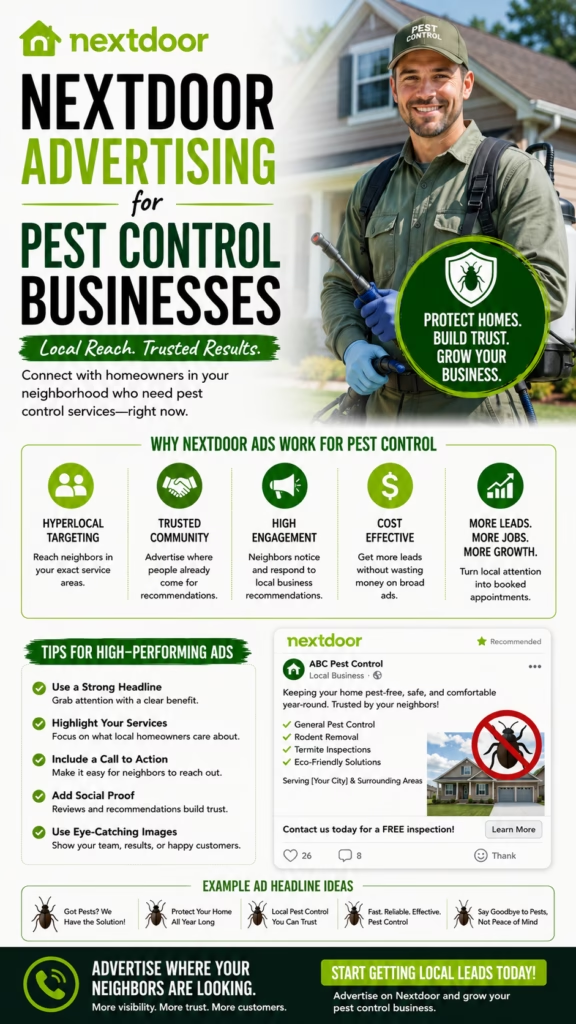
Nextdoor Advertising for Pest Control Businesses
Nextdoor Advertising for Pest Control Businesses explains how pest control companies can use neighborhood visibility, local trust, seasonal pest messaging, and fast follow-up to generate more service leads.
Introduction
Nextdoor Advertising for Pest Control Businesses starts with one major advantage: pest control is local, urgent, and trust-based. When homeowners see ants in the kitchen, roaches in the garage, wasps near the porch, rodents in the attic, termites around the property, or mosquitoes taking over the yard, they usually want help from a nearby company they can trust quickly.
Nextdoor is built around neighborhoods, local recommendations, community conversations, and nearby service providers. That makes it a strong platform for pest control businesses that want to reach homeowners, renters, landlords, property managers, and local residents who are already discussing home problems in their area.
Nextdoor advertising can help pest control businesses generate leads when posts are local, helpful, seasonal, trustworthy, and focused on real neighborhood pest problems.
The best strategy is not just to post generic ads. Pest control businesses should create neighborhood-specific content, seasonal service reminders, educational pest tips, review-driven posts, limited-time offers, and clear calls to action that make it easy for residents to request service.
Main idea: Nextdoor Advertising for Pest Control Businesses is about turning neighborhood awareness into qualified pest control inquiries, inspections, appointments, and recurring service customers.
Table of Contents
- 1) Why Nextdoor can work for pest control businesses
- 2) What pest control customers look for before booking
- 3) Building a Nextdoor advertising strategy
- 4) Writing pest control posts that get attention
- 5) Using local trust signals
- 6) Seasonal pest control advertising ideas
- 7) Local keywords for pest control businesses
- 8) Services to promote on Nextdoor
- 9) Nextdoor advertising for ants and roaches
- 10) Nextdoor advertising for rodents
- 11) Nextdoor advertising for mosquitoes and ticks
- 12) Nextdoor advertising for termites
- 13) Pricing and offer language
- 14) Building credibility with reviews
- 15) Reducing low-quality inquiries
- 16) Follow-up scripts for pest control leads
- 17) Posting consistency and neighborhood rotation
- 18) Tracking Nextdoor pest control performance
- 19) Common Nextdoor advertising mistakes
- 20) Final thoughts
- 21) FAQs
- 22) Extra keywords
1) Why Nextdoor Can Work for Pest Control Businesses
Nextdoor can work for pest control businesses because pest problems are often neighborhood-driven. If one homeowner is seeing ants, mosquitoes, rodents, wasps, or termites, nearby residents may be dealing with similar issues. Local visibility matters because customers want fast service from a provider who understands their area.
Pest control also depends heavily on trust. Homeowners need to feel comfortable allowing a technician onto their property or into their home. A neighborhood-based platform can help build that trust through local recommendations, reviews, helpful posts, and community visibility.
Nextdoor can help pest control businesses generate:
- Residential pest control leads
- Ant control inquiries
- Roach treatment requests
- Rodent control leads
- Termite inspection requests
- Mosquito treatment leads
- Tick control inquiries
- Wasp and hornet nest calls
- Recurring pest plan customers
- Neighborhood referrals
Nextdoor works best when pest control businesses sound like trusted local experts, not generic advertisers.
2) What Pest Control Customers Look for Before Booking
Pest control customers are often anxious, frustrated, or dealing with a problem they want solved quickly. They want to know whether your company handles their pest issue, serves their neighborhood, responds quickly, uses a clear process, and has enough trust signals to feel safe.
A strong Nextdoor post should answer those questions before the customer has to ask. It should explain the service, location, timing, inspection process, and next step.
Pest control customers usually look for:
Fast response
Local service area
Specific pest treatment
Inspection process
Safe treatment explanation
Reviews and recommendations
Licensed or insured status if accurate
Clear pricing or estimate language
Recurring service options
Easy scheduling
Pest control leads respond better when the message feels calm, clear, local, and trustworthy.
3) Building a Nextdoor Advertising Strategy
A strong Nextdoor advertising strategy should focus on specific pest problems and local neighborhoods. One broad post that says “pest control available” is weaker than posts focused on ants, roaches, rodents, termites, mosquitoes, ticks, wasps, spiders, and seasonal prevention.
Each service should have its own angle. A termite inspection post should feel different from a mosquito treatment post. A rodent control post should feel different from a general exterior barrier treatment post.
Nextdoor pest control strategy elements:
- Neighborhood-focused posts
- Seasonal pest reminders
- Specific pest service offers
- Review-based trust posts
- Helpful prevention tips
- Clear inspection process
- Recurring service promotion
- Fast-response messaging
- Local service-area wording
- Lead tracking and follow-up
Focused pest control posts usually create better leads than broad company ads.
4) Writing Pest Control Posts That Get Attention
Nextdoor posts should feel helpful and neighborhood-aware. Pest control advertising should speak directly to the problem the resident may be seeing right now.
Strong posts use simple language, seasonal timing, local relevance, and clear next steps. Avoid fear-heavy messaging or exaggerated claims. Customers want confidence, not panic.
Weak post:
Best Pest Control Company Call Now

Better post:
Seeing ants in the kitchen or around entry points? We are helping local homeowners with ant treatments and exterior prevention this week.

Weak post:
Rodents Removed Fast

Better post:
Hearing scratching in the attic or walls? We offer local rodent inspections, entry-point checks, and treatment options.

Weak post:
Mosquito Service Available

Better post:
Mosquitoes taking over the yard? Ask about local mosquito treatments for patios, lawns, and outdoor living spaces.
A strong Nextdoor pest control post should name the pest problem and offer a simple local solution.
5) Using Local Trust Signals
Trust signals are critical for pest control businesses because customers are hiring someone to solve a sensitive home problem. Nextdoor users often care about local reputation, neighbor recommendations, reviews, and community presence.
Trust signals should be real and specific. Mention local experience, service areas, reviews, licensed or insured status if accurate, technician professionalism, safe treatment explanations, and clear scheduling.
Trust signals for Nextdoor pest control posts:
- Local business name
- Neighborhoods served
- Years of experience
- Customer reviews
- Neighbor recommendations
- Licensed and insured if accurate
- Clear inspection process
- Friendly technicians
- Recurring treatment options
- Fast local response
Local trust signals make pest control ads feel safer and more credible.
6) Seasonal Pest Control Advertising Ideas
Pest control is highly seasonal. The best Nextdoor advertising often matches what residents are likely experiencing at that time of year. Seasonal posts feel timely and relevant.
Spring may bring ants, termites, ticks, and mosquitoes. Summer may bring wasps, roaches, fleas, mosquitoes, and outdoor pests. Fall and winter may bring rodents, spiders, and indoor pest activity.
Seasonal pest control angles:
Spring ant prevention
Termite inspection season
Mosquito yard treatments
Tick and flea control
Summer wasp and hornet control
Roach treatment reminders
Fall rodent prevention
Winter attic inspections
Holiday guest-ready pest checks
Year-round pest protection plans
Seasonal pest posts work because they match what homeowners are already noticing.
7) Local Keywords for Pest Control Businesses
Local keywords help residents understand that your pest control company serves their area. They also make your posts feel more relevant to the neighborhood.
Use city, county, neighborhood, and service-area language naturally. Avoid long blocks of repeated city names. A clean sentence about your service area is usually stronger.
Useful local keyword phrases:
- pest control in
- serving homeowners near
- local pest inspection available
- ant control near
- rodent control in
- termite inspection around
- mosquito treatment near
- neighborhood pest control service
- local exterminator near
- residential pest control available nearby
Local pest control keywords should help residents feel like the service is nearby and relevant.
8) Services to Promote on Nextdoor
Pest control businesses should promote specific services on Nextdoor. Each pest problem has a different level of urgency, timing, and customer concern.
Separate service-focused posts can help attract better leads because residents can immediately identify the problem they need solved.
Pest control services to promote:
General pest control
Ant treatment
Roach control
Rodent control
Termite inspections
Mosquito treatments
Tick control
Flea treatments
Spider control
Wasp and hornet removal
Exterior barrier treatments
Recurring pest plans
Move-in pest inspections
Rental property pest service
Commercial pest control
Specific pest service posts usually outperform broad pest control ads.
9) Nextdoor Advertising for Ants and Roaches
Ants and roaches are common household pest issues that often create fast lead opportunities. Customers may notice activity in kitchens, bathrooms, garages, basements, or around entry points.
Nextdoor posts for ants and roaches should focus on identification, treatment, prevention, and fast scheduling. The tone should be reassuring and helpful.
Ant and roach post angles:
- Ants showing up in the kitchen
- Roach activity near appliances
- Exterior entry-point prevention
- Apartment and rental pest service
- Garage pest treatments
- Recurring pest control plans
- Seasonal ant prevention
- Fast local pest inspections
Ant and roach posts should focus on quick relief, prevention, and a clear treatment process.
10) Nextdoor Advertising for Rodents
Rodent control is a high-concern service because homeowners may hear scratching, find droppings, notice attic activity, or worry about entry points. These leads often need fast and professional help.
Rodent posts should mention inspection, entry-point checks, treatment options, attic or crawlspace concerns, and prevention.
Rodent advertising angles:
Scratching sounds in walls
Attic rodent inspection
Garage rodent activity
Entry-point checks
Mouse control service
Rat control service
Crawlspace concerns
Winter rodent prevention
Droppings found indoors
Local rodent treatment options
Rodent control posts should feel calm, professional, and solution-focused.
11) Nextdoor Advertising for Mosquitoes and Ticks
Mosquito and tick services are strong seasonal offers because they connect directly to outdoor comfort. Homeowners want to enjoy patios, lawns, pools, decks, and backyard spaces without constant biting pests.
Nextdoor posts for mosquitoes and ticks should focus on outdoor living, family comfort, pets, yard treatments, and seasonal protection.
Mosquito and tick post angles:
- Backyard mosquito treatments
- Patio and deck comfort
- Tick control for yards
- Outdoor event preparation
- Pet-friendly yard concerns
- Summer mosquito protection
- Seasonal treatment plans
- Neighborhood mosquito service
Mosquito and tick posts should sell comfort, prevention, and better outdoor living.
12) Nextdoor Advertising for Termites
Termite advertising needs a careful, trustworthy tone. Homeowners may be worried about property damage, signs of activity, inspection needs, or prevention. The post should educate and encourage an inspection without sounding overly dramatic.
Termite posts can focus on inspections, warning signs, seasonal swarmers, moisture concerns, wood damage, and preventative treatments.
Termite advertising angles:
Termite inspection available
Swarmers around windows
Wood damage concerns
Mud tube warning signs
Spring termite season
Pre-sale termite inspections
Home protection plans
Local termite treatment options
Moisture and wood contact concerns
Property value protection
Termite posts should build urgency while staying professional and trustworthy.
13) Pricing and Offer Language
Pricing for pest control depends on pest type, property size, infestation level, treatment method, service frequency, and inspection needs. Instead of using misleading low prices, pest control businesses should use clear offer language.
Good offer language helps residents understand what to do next and what information is needed for accurate pricing.
Useful pest control offer phrases:
- Local pest inspection available
- Ask about seasonal pest treatments
- Pricing depends on pest type and property size
- Recurring pest plans available
- Same-week appointments when available
- Message with your pest issue and neighborhood
- Interior and exterior treatment options
- Ask about first-time customer specials
- Residential service available nearby
- Preventative pest control plans available
Clear offer language creates better leads than confusing discount claims.
14) Building Credibility With Reviews
Reviews are especially powerful on Nextdoor because residents often trust local recommendations. Pest control businesses should use review-driven posts, customer satisfaction highlights, and neighborhood proof where appropriate.
When using reviews, keep them realistic and compliant. Do not invent claims. A short review-style mention can help the business feel more credible.
Review-based post ideas:
Thank a local customer for a recommendation
Share a recent service success
Mention neighborhoods served
Highlight fast response
Mention friendly technician feedback
Promote recurring customer satisfaction
Show before-and-after prevention results
Ask happy customers to recommend the business
Feature common customer questions
Promote a review-backed seasonal service
Reviews help turn neighborhood attention into trust.
15) Reducing Low-Quality Inquiries
Low-quality pest control inquiries often happen when posts are too vague. If residents do not know what information to send, they may simply ask “how much?” without explaining the pest, property, or urgency.
Improve lead quality by asking simple qualifying questions in the post or first reply.
Ask pest control leads to send:
- Neighborhood or city
- Type of pest seen
- Where activity is happening
- How long the issue has been noticed
- Interior or exterior problem
- Property type
- Preferred timeline
- Photos if helpful
- Recurring service interest
- Best contact method
Better pest control questions create faster quotes, inspections, and appointments.
16) Follow-Up Scripts for Pest Control Leads
Fast follow-up is critical for pest control because many issues feel urgent. The first reply should be calm, helpful, and specific. It should gather enough information to schedule an inspection or recommend the next step.
General pest control reply:
“Thanks for reaching out. We can help with that. What pest are you seeing, what neighborhood are you in, and is the activity inside, outside, or both? Photos help if you have them.”
Rodent lead reply:
“Happy to help. Are you hearing activity in the attic, walls, garage, or crawlspace? Send your neighborhood and when you first noticed it, and we can help with the next step.”
Termite lead reply:
“Thanks for the message. Are you seeing swarmers, mud tubes, wood damage, or just looking for an inspection? Send your location and any photos, and we can help guide the next step.”
The best follow-up makes residents feel heard, calm, and ready to schedule.
17) Posting Consistency and Neighborhood Rotation
Nextdoor advertising works best when pest control businesses post consistently and rotate neighborhood-relevant topics. The same generic post repeated too often can feel stale. Better consistency means rotating seasonal issues, pest types, reviews, tips, offers, and service reminders.
Neighborhood rotation can help the business stay visible across service areas while keeping messaging relevant.
Nextdoor pest control post rotation:
Ant prevention tip
Rodent inspection reminder
Mosquito treatment offer
Termite inspection reminder
Wasp nest removal post
Customer review highlight
Neighborhood service reminder
Seasonal pest checklist
Recurring plan promotion
Fast-response appointment post
Consistent posting keeps your pest control company visible when residents suddenly need help.
18) Tracking Nextdoor Pest Control Performance
Tracking helps pest control companies understand which posts generate real leads and booked services. Views and reactions are helpful, but the real goal is appointments, inspections, recurring customers, and revenue.
Track each post by pest type, neighborhood, offer, message volume, qualified leads, scheduled appointments, and completed services.
Track these Nextdoor pest control metrics:
Post topic
Pest type promoted
Neighborhood or service area
Date posted
Messages
Qualified leads
Inspection requests
Appointments booked
Service type
Recurring plan interest
Closed jobs
Revenue generated
Best-performing post angle
Tracking turns Nextdoor advertising into a measurable pest control lead system.
19) Common Nextdoor Advertising Mistakes
Many pest control businesses underperform on Nextdoor because their posts feel too generic, too sales-heavy, or not local enough. Residents respond better to posts that feel helpful, timely, and neighborhood-aware.
Other mistakes include ignoring reviews, failing to mention service areas, not responding quickly, not using seasonal topics, and not tracking lead quality.
Common mistakes include:
- Posting generic pest control ads
- Not mentioning neighborhoods served
- Ignoring seasonal pest problems
- No trust signals
- No reviews or recommendations
- Using fear-heavy language
- No clear call to action
- No lead qualification questions
- Slow message response
- No performance tracking
Most Nextdoor pest control mistakes come from sounding too generic instead of local and helpful.
20) Final Thoughts
Nextdoor Advertising for Pest Control Businesses is about using neighborhood trust, local timing, seasonal pest awareness, and helpful messaging to generate more service leads. Pest control companies can stand out by posting specific pest solutions, using local keywords, sharing trust signals, promoting inspections, and responding quickly.
The strongest strategy includes neighborhood-focused posts, seasonal pest reminders, review-driven content, clear offer language, helpful CTAs, lead qualification questions, consistent posting, and performance tracking.
Final takeaway: Pest control businesses can use Nextdoor advertising to turn local neighborhood visibility into inspections, appointments, recurring plans, and booked services.
21) FAQs
1) What is Nextdoor Advertising for Pest Control Businesses?
Nextdoor Advertising for Pest Control Businesses is the use of Nextdoor posts and local visibility to attract homeowners who need pest inspections, treatments, and recurring pest control services.
2) Can pest control companies get leads from Nextdoor?
Yes. Pest control companies can generate leads from Nextdoor by posting helpful, local, seasonal, and trust-focused pest control content.
3) What pest control services work well on Nextdoor?
Ant control, roach treatment, rodent control, termite inspections, mosquito treatments, tick control, wasp removal, spider control, and recurring pest plans can work well.
4) What makes a good Nextdoor pest control post?
A good post names a specific pest issue, mentions the local service area, builds trust, explains the next step, and invites residents to message for help.
5) Should pest control posts be seasonal?
Yes. Seasonal posts often perform well because pest problems change throughout the year.
6) Should pest control businesses mention neighborhoods?
Yes. Neighborhood and service-area wording helps posts feel relevant to local residents.
7) Are reviews important on Nextdoor?
Yes. Reviews and neighbor recommendations can help build trust and improve response rates.
8) What should pest control businesses post in spring?
Spring posts can focus on ants, termites, ticks, mosquitoes, exterior prevention, and seasonal inspections.
9) What should pest control businesses post in summer?
Summer posts can focus on mosquitoes, wasps, roaches, fleas, ticks, spiders, and outdoor pest control.
10) What should pest control businesses post in fall or winter?
Fall and winter posts can focus on rodents, attic activity, entry-point checks, spiders, and indoor pest prevention.
11) Should pest control ads use fear-based language?
No. Clear and calm messaging usually works better than exaggerated fear-based advertising.
12) How fast should pest control companies reply?
As fast as possible. Pest control leads often feel urgent and may contact multiple companies.
13) What should the first reply ask?
The first reply should ask what pest they are seeing, where the activity is happening, their neighborhood, timeline, and whether they have photos.
14) Can Nextdoor help with termite leads?
Yes. Termite inspection posts can attract homeowners who are seeing warning signs or want preventative inspections.
15) Can Nextdoor help with rodent control leads?
Yes. Rodent posts can attract homeowners hearing scratching, seeing droppings, or noticing attic, garage, or crawlspace activity.
16) Can Nextdoor help with mosquito treatment leads?
Yes. Mosquito posts can attract homeowners who want more comfortable patios, yards, pools, and outdoor spaces.
17) What trust signals should pest control businesses include?
Trust signals include local experience, reviews, neighborhood recommendations, licensed or insured status if accurate, clear process, and fast response.
18) Should pest control businesses offer recurring plans?
Yes. Recurring pest plans can be promoted as ongoing prevention for homeowners who want year-round protection.
19) How can pest control businesses reduce bad leads?
Ask leads to send pest type, location, where activity is happening, timeline, property type, and best contact method.
20) What is the biggest Nextdoor mistake pest control companies make?
The biggest mistake is posting generic ads that do not feel local, helpful, seasonal, or trust-focused.
21) Should businesses track Nextdoor leads?
Yes. Tracking helps identify which posts generate inspections, appointments, recurring customers, and revenue.
22) What should pest control companies track?
Track post topic, pest type, neighborhood, messages, qualified leads, inspections, appointments, closed jobs, and revenue.
23) Can Nextdoor replace paid ads?
Nextdoor can replace part of paid ad spend for some pest control businesses and can also work alongside Google, Facebook, SEO, and referral marketing.
24) How does Nextdoor fit into pest control marketing?
Nextdoor should support a larger system that includes Google Business Profile, local SEO, reviews, website forms, social media, and follow-up automation.
25) What is the main goal of Nextdoor advertising for pest control businesses?
The main goal is to turn neighborhood visibility into qualified pest control inquiries, inspections, appointments, recurring plans, and booked services.
22) Extra Keywords
- Nextdoor Advertising for Pest Control Businesses
- Nextdoor pest control leads
- pest control advertising
- pest control lead generation
- local pest control marketing
- neighborhood pest control ads
- pest control business growth
- Nextdoor ads for exterminators
- Nextdoor exterminator leads
- pest control company marketing
- residential pest control leads
- termite inspection leads
- rodent control leads
- mosquito treatment leads
- ant control advertising
- roach control marketing
- local exterminator advertising
- pest control service leads
- Nextdoor local service ads
- pest control neighborhood marketing
- seasonal pest control advertising
- pest control review marketing
- pest control follow-up strategy
- pest control lead tracking
- pest control appointment generation













