
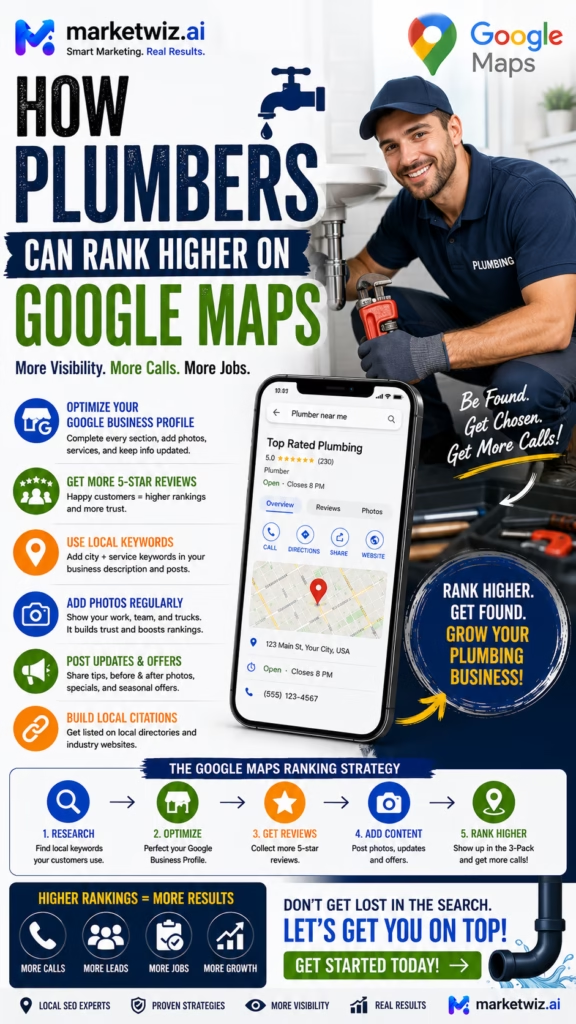
How Plumbers Can Rank Higher on Google Maps
How plumbers can rank higher on Google Maps comes down to building stronger local relevance, trust, prominence, and customer experience across the entire search journey. Plumbing companies compete for some of the highest-intent local searches in home services, including emergency plumber, drain cleaning, water heater repair, leak repair, sewer service, fixture installation, repiping, and commercial plumbing. A strong local strategy combines an accurate Google Business Profile, real customer reviews, original project photos, service-specific website content, local landing pages, citations, backlinks, fast call response, appointment scheduling, CRM tracking, and measurable booked revenue.
Plumbing is one of the highest-intent categories in local search because many customers are not browsing casually—they have a real problem that needs to be solved.
A homeowner with water spreading under a sink, a backed-up drain, a leaking water heater, a burst pipe, low water pressure, a broken toilet, or a sewer problem often reaches for a phone immediately.
That customer may search for phrases such as plumber near me, emergency plumber, drain cleaning, water heater repair, sewer line repair, leak detection, toilet repair, or plumbing company.
Google Maps can become one of the first places the customer compares nearby companies.
They may look at reviews, business hours, photos, distance, responsiveness, website quality, service descriptions, and overall trust before making a call.
For a plumbing company, this means Google Maps optimization should not be treated as a simple ranking exercise.
It should be treated as a full customer-acquisition system.
The Plumbing Google Maps Growth Formula
Local Visibility + Plumbing Relevance + Genuine Reviews + Original Project Photos + Local Website SEO + Fast Call Response + Appointment Scheduling + Technician Follow-Up + CRM Tracking + Revenue Attribution = Sustainable Plumbing Growth
Why Google Maps Matters So Much for Plumbing Companies
Urgent Customer Intent
Plumbing problems can become expensive quickly, which often creates immediate search and call behavior.
Strong Local Dependence
Customers usually need a plumber who can actually reach the property within a practical timeframe.
High Call Conversion
Many plumbing customers prefer calling directly rather than researching for days.
Repeat Service Potential
One good plumbing experience can lead to future maintenance, repairs, water-heater work, fixture upgrades, and referrals.
Multiple Revenue Categories
Drain cleaning, water heaters, sewer work, repiping, fixtures, emergency service, and commercial work can all produce demand.
Trackable Business Outcomes
Maps leads can be tracked from call to appointment, invoice, repeat service, and final revenue.
Understand the Different Types of Plumbing Search Intent
Emergency Plumbing Intent
Burst pipes, major leaks, overflowing fixtures, active flooding, sewer backups, and loss of water service can create immediate demand.
Repair Intent
Customers may need faucets repaired, toilets fixed, leaks located, drains cleared, disposals replaced, valves repaired, or water pressure problems diagnosed.
Installation Intent
Customers may search for water heater installation, fixture installation, sink replacement, toilet installation, dishwasher plumbing, garbage disposals, or upgraded plumbing components.
Major Project Intent
Sewer replacements, repiping, slab-leak work, remodeling, and commercial projects may require a longer sales and estimate cycle.
Commercial Plumbing Intent
Property managers, restaurants, offices, apartments, facility managers, and building owners may search for recurring service, emergency repair, maintenance, and larger plumbing projects.
Understand the Foundations of Google Maps Rankings for Plumbers
Relevance
Google needs to understand that the business genuinely performs the plumbing service being searched.
Distance
The geographic relationship between the customer and the business can influence local search results.
Prominence
Reviews, citations, backlinks, website authority, local mentions, business history, and overall reputation can contribute to prominence.
Higher Rankings Usually Require More Than One Fix
Strong plumbing visibility typically comes from improving the profile, website, review system, local authority, service-area relevance, and lead handling together.
Fully Optimize the Plumbing Google Business Profile
Use the Real Business Name
The profile should use the real-world plumbing company name rather than adding extra city names or keywords simply for ranking.
Use the Correct Phone Number
Calls should reach a person or system capable of handling plumbing leads quickly.
Keep Business Hours Accurate
If the company offers extended or emergency availability, the profile should accurately reflect how customers can actually receive service.
Use the Correct Website URL
Send customers to a fast mobile page that clearly explains plumbing services and makes calling or scheduling easy.
Complete Relevant Fields
Categories, services, business description, photos, attributes, and service-area information should be kept current.
Choose Accurate Google Business Profile Categories for Plumbers
Category selection is one of the clearest ways to help search systems understand what the business actually does.
Primary Category
The main category should represent the company's primary real-world plumbing activity.
Secondary Categories
Additional categories should only be used when they accurately reflect genuine services.
Avoid Category Stuffing
Adding unrelated home-service categories can make the profile less clear and create unnecessary risk.
Support Categories With Website Content
Important plumbing services should also appear clearly on the website.
Add Plumbing Services Customers Actually Search For
- Emergency plumbing
- Leak repair
- Drain cleaning
- Clogged drain service
- Water heater repair
- Water heater installation
- Tankless water heaters
- Toilet repair
- Faucet repair
- Garbage disposal repair
- Sewer line repair
- Sewer replacement
- Repiping
- Leak detection
- Fixture installation
- Commercial plumbing
Keep service names clear and understandable. Customers should not have to decode technical language to know whether the company can help.
Configure Plumbing Service Areas Correctly
Use Real Operating Territory
Include markets where the company can realistically dispatch a technician and provide reliable service.
Consider Travel Time
Long travel times can reduce emergency response quality and hurt route efficiency.
Consider Technician Density
If the company has stronger technician coverage in certain cities, those areas may deserve more marketing attention.
Avoid Fake Offices
Creating artificial locations just to rank in more cities can create serious profile problems.
Write a Plumbing Business Description That Builds Trust
[Plumbing Company] helps homeowners, property managers, and businesses throughout [Primary Market] with drain cleaning, leak repair, water heater service, fixture repair, sewer work, repiping, and other plumbing needs. Our team focuses on clear communication, professional workmanship, and dependable service. Contact us to discuss your plumbing issue or schedule the next available appointment.
Explain What You Do
Customers should understand your primary plumbing services quickly.
Explain Who You Serve
Mention homeowners, property managers, businesses, or other customer groups when accurate.
Keep the Language Natural
Avoid stuffing the description with repeated cities and service phrases.
Use Original Plumbing Photos to Strengthen Local Trust
Water Heater Projects
Show clean, professional installations and replacements.
Drain and Sewer Equipment
Customers may gain confidence from seeing professional tools and real crews at work.
Fixture Installations
Show faucets, sinks, toilets, showers, valves, and related work.
Repiping Projects
Real before-and-after or work-in-progress images can demonstrate capability.
Commercial Work
Show restaurants, facilities, multifamily properties, offices, or other commercial environments when relevant.
Trucks and Team
Branded vehicles and professional staff can reinforce legitimacy.
Build a Consistent Google Review System for Plumbing Customers
Plumbing is a trust-heavy service because technicians often enter homes during stressful situations.
Ask After Successful Service
Customers may be most willing to leave feedback after a leak is fixed, a drain is cleared, or hot water is restored.
Make Review Requests Easy
Use a direct review process that does not require unnecessary customer effort.
Keep Reviews Genuine
Do not purchase reviews or fabricate customer experiences.
Build Reviews Consistently
A steady stream of recent real reviews can be more useful than a short burst followed by long inactivity.
Respond to Plumbing Reviews Professionally
Positive Reviews
Thank customers and acknowledge the type of service when appropriate.
Negative Reviews
Stay calm, factual, and professional.
Pricing Complaints
Avoid long public arguments over invoice details. Invite private follow-up when appropriate.
Operational Lessons
Repeated complaints about lateness, communication, dispatch, cleanliness, billing, or follow-up can reveal business problems that affect both reviews and conversion.
Build a Plumbing Website That Supports Google Maps Rankings
Explain Core Services Clearly
Drain cleaning, water heater service, emergency plumbing, sewer work, leaks, fixtures, repiping, and commercial plumbing should be easy to find.
Show Service Areas
Explain where the company genuinely works.
Show Real Projects
Photos and case studies can demonstrate experience.
Answer Customer Questions
FAQ content can help customers understand service availability, likely causes, repair options, appointment expectations, and project processes.
Make Calling Easy
The phone number should be prominent on mobile devices.
Target Plumbing Keywords With Real Customer Intent
Plumber + City
Useful for broad high-intent local searches.
Emergency Plumber + City
Useful when emergency service is genuinely available.
Drain Cleaning + City
Useful for blocked sinks, showers, tubs, toilets, and main lines.
Water Heater Repair + City
Useful for customers dealing with no hot water, leaks, or equipment failure.
Sewer Repair + City
Useful for customers facing backups, damaged lines, or major sewer issues.
Commercial Plumber + City
Useful for property managers and business customers.
Build Emergency Plumbing SEO Around Urgent Customer Needs
Explain What Counts as an Emergency
- Burst pipes
- Major active leaks
- Overflowing fixtures
- Sewer backups
- No usable water service
- Significant water-heater leaks
- Flooding related to plumbing failures
Explain Immediate Customer Steps
Useful emergency pages can explain basic safety-oriented actions, such as locating a shutoff valve when appropriate and avoiding hazardous conditions.
Keep Availability Accurate
Do not claim 24/7 response if the company cannot actually support that level of service.
Emergency Search Intent Is Extremely Time Sensitive
If a customer has active water damage, a slow callback can mean losing the job before the dispatcher ever speaks with the customer.
Build Strong Drain Cleaning SEO Pages
Explain Common Drain Problems
- Slow sinks
- Blocked tubs and showers
- Repeated toilet clogs
- Kitchen drain backups
- Main-line blockages
- Recurring drain problems
- Sewer odors
Explain the Diagnostic Process
Customers should understand that the correct repair depends on the location and cause of the blockage.
Explain When Bigger Problems May Exist
Recurring backups can sometimes point to more serious drain or sewer issues requiring additional evaluation.
Build Water Heater SEO Around Repair and Replacement Intent
No Hot Water
One of the highest-intent water-heater searches comes from customers who suddenly lose hot water.
Leaking Water Heater
Leaks can create both urgent service demand and property-damage concerns.
Traditional Tank Replacement
Customers may compare capacity, equipment, efficiency, and installation options.
Tankless Water Heaters
Dedicated tankless content can address installation, replacement, sizing, maintenance, and customer expectations.
Explain Pricing Factors
Equipment type, capacity, venting, fuel source, location, code requirements, labor, and site conditions can all affect cost.
Build Sewer, Leak Detection, and Repiping SEO
Sewer Line Problems
Backups, damaged lines, root intrusion, collapsed piping, and recurring clogs may create high-value project opportunities.
Leak Detection
Hidden leaks can produce water damage, high utility bills, moisture problems, and customer urgency.
Repiping
Older plumbing systems, repeated leaks, corrosion, and poor pressure can lead homeowners to investigate larger repiping projects.
Create Dedicated Pages
Higher-value plumbing services deserve more than a sentence on a generic service page.
Optimize Google Maps for Commercial Plumbing Leads
Property Managers
Multifamily and commercial property managers may need recurring repairs, tenant service, drain work, and emergency response.
Restaurants
Drain, grease, fixture, restroom, and water-heater issues can become operational emergencies.
Facility Managers
Larger buildings may need maintenance programs, repair history, vendor coordination, and scheduled service.
Contractors and Builders
Plumbing companies may also pursue renovation, tenant-improvement, and construction-related work.
Create Useful Plumbing Location Pages
Use Genuine Local Information
Different cities may contain older housing stock, newer subdivisions, commercial corridors, multifamily properties, or unique plumbing infrastructure.
Show Real Local Work
Add legitimate project examples or service experience from the market when available.
Answer Local Customer Questions
Water quality, older pipes, slab foundations, freezing weather, sewer systems, and property age can create different plumbing concerns.
Avoid Thin Duplicate Pages
Changing only the city name across dozens of pages adds little customer value.
Build Accurate Plumbing Business Citations
Use Reputable Directories
Maintain consistent business information on trustworthy platforms.
Use Relevant Contractor and Local Sources
Industry associations, chambers, local organizations, and business directories can support local consistency where legitimate.
Correct Old Business Data
Outdated phone numbers, addresses, business names, or websites can confuse both customers and search systems.
Prioritize Accuracy Over Volume
Quality citation consistency is more valuable than mass submission to irrelevant directories.
Build Plumbing Authority Through Local Links and Mentions
Property Management Relationships
Legitimate vendor partnerships may create referrals and local brand mentions.
Builders and Remodelers
Related contractors can create natural partnership opportunities.
Local Business Organizations
Chambers, associations, charities, and community involvement can create local authority.
Local Media
Freeze prevention, water conservation, emergency plumbing tips, and community initiatives can create relevant content opportunities.
Optimize the Plumbing Website for Mobile Search
Keep Pages Fast
A customer with water on the floor will not wait for a slow site.
Make Calling Obvious
A mobile visitor should immediately see how to call.
Use Short Service Forms
Ask only for the information needed to begin the conversation.
Make Emergency Information Easy to Find
If urgent service is available, explain how customers should request help.
Show Reviews and Trust Signals
Licensing, experience, reviews, warranties where applicable, and professional branding can support conversion.
Turn Google Maps Visibility Into Qualified Plumbing Leads
Answer Calls Consistently
Missed calls can become missed revenue.
Respond to Forms Quickly
Customers may contact several plumbers at once.
Make the Next Step Clear
Move the customer toward a service appointment, estimate, emergency dispatch, or appropriate consultation.
Track Source
The business should know whether a customer came from Google Maps, organic search, a local service page, paid search, or another channel.
Improve Plumbing Speed to Lead
Plumbing customer intent can disappear quickly because another company may answer first.
Simple Plumbing Lead Response Workflow
Confirm the customer's city or address, ask what plumbing problem they are experiencing, determine whether there is active leaking or flooding, collect the best callback information, and move the customer toward the appropriate appointment or emergency response.
Prioritize Active Water Damage
Flooding and active leaks may require a different response path from routine fixture replacement.
Recover Missed Calls
Use a callback system or missed-call response process so interested customers are not abandoned.
Qualify Plumbing Leads Before Dispatch
Confirm Property Location
Make sure the property is within the service area.
Confirm the Plumbing Problem
Drain issue, leak, fixture problem, water heater, sewer line, repiping, commercial service, or emergency?
Confirm Severity
Determine whether there is active water damage, no water, no hot water, backup, or another time-sensitive condition.
Confirm Property Type
Residential, multifamily, restaurant, retail, office, and industrial work may require different routing.
Request Photos When Useful
Photos of visible leaks, fixtures, water heaters, or accessible plumbing components may help with initial triage.
Turn Google Maps Plumbing Leads Into Service Appointments
Offer Clear Scheduling Windows
Reduce uncertainty for the customer.
Confirm Address and Contact Information
Dispatch needs accurate information.
Confirm the Main Issue
The technician should know the reported problem before arrival.
Send Appointment Reminders
Reminders can reduce missed appointments.
Track Job Outcomes
Record whether the appointment becomes a repair, replacement, estimate, follow-up, larger project, or no-sale.
Use AI and Automation to Improve Plumbing Lead Handling
AI Chat Applications
- Answer approved plumbing FAQs
- Collect customer location
- Identify the reported plumbing problem
- Ask whether there is active leaking
- Request photos when appropriate
- Collect property type
- Schedule service appointments
- Create CRM records
AI Voice Applications
AI voice can support missed-call recovery, after-hours intake, appointment scheduling, and basic plumbing triage.
Use Human Escalation
Safety issues, complex pricing, sewer emergencies, gas-related concerns, contracts, complaints, and technical situations should be routed appropriately.
Connect Google Maps Plumbing Leads With CRM
Capture Customer Information
- Name
- Phone number
- Email when appropriate
- Property address
- Plumbing issue
- Property type
- Emergency status
- Appointment date
- Estimate status
- Expected job value
Use Clear Pipeline Stages
- New plumbing inquiry
- Contacted
- Qualified
- Appointment scheduled
- Technician dispatched
- Estimate provided
- Job approved
- Job completed
- Follow-up
- Lost
Track Google Maps Plumbing Performance
Visibility Metrics
- Local plumbing keyword movement
- Google Business Profile visibility
- Website traffic from local search
- Calls from local search
Lead Metrics
- Total valid plumbing inquiries
- Qualified plumbing leads
- Average response time
- Emergency leads
- Appointments scheduled
- Commercial plumbing inquiries
Revenue Metrics
- Jobs completed
- Average invoice value
- Replacement and installation revenue
- Commercial service revenue
- Repeat customer revenue
- Gross profit
Measure Google Maps ROI for Plumbing Companies
Qualified Lead Rate
Qualified Lead Rate = Qualified Google Maps Plumbing Leads ÷ Total Valid Google Maps Plumbing Inquiries × 100
Appointment Rate
Appointment Rate = Plumbing Appointments Scheduled ÷ Qualified Google Maps Plumbing Leads × 100
Close Rate
Close Rate = Booked Plumbing Jobs ÷ Qualified Plumbing Opportunities × 100
Average Customer Value
Average Customer Value = Plumbing Revenue ÷ Completed Plumbing Customers
Customer Acquisition Cost
Customer Acquisition Cost = Total Local Plumbing Marketing and Sales Cost ÷ New Google Maps Plumbing Customers
Plumbing Google Maps ROI
ROI = (Gross Profit From Google Maps Plumbing Customers − Local SEO Cost) ÷ Local SEO Cost × 100
| Metric | What It Measures |
|---|---|
| Local plumbing visibility | Whether the company is becoming easier to discover in target markets |
| Qualified plumbing leads | Whether local search attracts customers the company can realistically serve |
| Appointment rate | Whether qualified inquiries move into scheduled service |
| Close rate | Whether plumbing opportunities become paying customers |
| Average customer value | The financial value of customers acquired from local search |
| Gross profit and ROI | Whether Google Maps optimization contributes to profitable growth |
Common Google Maps Mistakes Plumbers Should Avoid
Keyword-Stuffing the Business Name
Use the real plumbing company name.
Creating Fake Offices
Artificial local locations can create suspension risk.
Ignoring Reviews
Plumbing customers often use reviews to decide who they trust inside their property.
Using Only Stock Photos
Real technicians, trucks, equipment, and projects usually build more trust.
Creating Duplicate Location Pages
Local pages should contain useful market-specific information.
Ignoring Emergency Search Demand
Plumbing companies with urgent service capabilities should have clear emergency content.
Responding Too Slowly
High-intent plumbing customers may hire the first qualified company that answers.
Failing to Track Call Outcomes
Calls are not the final business metric.
Measuring Rankings Instead of Revenue
The ultimate objective is profitable plumbing growth.
A 30-Day Google Maps SEO Plan for Plumbers
Week 1: Fix the Plumbing Local SEO Foundation
- Audit the Google Business Profile
- Verify the real business name
- Verify the primary plumbing category
- Review secondary categories
- Verify phone number
- Verify website URL
- Review service areas
- Document current local rankings
Week 2: Improve Plumbing Relevance
- Add accurate plumbing services
- Improve the business description
- Add original plumbing photos
- Improve emergency plumbing pages
- Improve drain-cleaning pages
- Improve water-heater pages
- Create sewer and repiping pages
- Improve local location pages
Week 3: Build Reputation and Authority
- Create a review request process
- Respond to existing reviews
- Correct citation inconsistencies
- Build local business partnerships
- Seek legitimate plumbing backlinks
- Publish useful plumbing content
- Create missed-call recovery
- Connect CRM source tracking
Week 4: Improve Conversion and Measurement
- Measure qualified plumbing leads
- Measure response time
- Measure appointment rate
- Measure close rate
- Measure average invoice value
- Track completed plumbing revenue
- Track repeat customer revenue
- Calculate customer acquisition cost and ROI
End-of-Month Outcome
After 30 days, the plumbing company should have a cleaner Google Business Profile, stronger service relevance, more useful emergency and plumbing content, better project imagery, a more consistent review process, faster lead response, improved appointment tracking, and clearer visibility into which Google Maps activity produces real booked plumbing work and revenue.
Final Takeaway: Ranking Higher Should Lead to More Booked Plumbing Work
Understanding how plumbers can rank higher on Google Maps begins with recognizing that ranking is only one part of the customer-acquisition process.
A higher Maps position can increase visibility.
But visibility alone does not repair a leak, schedule a technician, close a water-heater replacement, or generate revenue.
The plumbing company needs a complete system.
The Google Business Profile should accurately describe the business, services, hours, service area, and contact information.
Original photos should show real technicians, water heaters, drain equipment, fixtures, repiping, sewer work, trucks, and commercial projects.
Genuine reviews should give customers confidence that the company communicates clearly, arrives professionally, solves problems, and stands behind its work.
The website should reinforce the profile with useful service pages for emergency plumbing, drains, water heaters, leaks, sewer work, repiping, fixtures, and commercial plumbing.
Location pages should explain real local relevance rather than repeating the same generic page with different city names.
Citations, backlinks, partnerships, and local mentions can strengthen broader authority.
Once a customer calls, response speed becomes critical.
Dispatchers should quickly identify the location, problem, severity, property type, and best next step.
Emergency issues should receive appropriate priority. Routine service should move efficiently into appointments. Larger projects should enter estimate and follow-up workflows.
AI chat, AI voice, missed-call recovery, appointment scheduling, CRM integration, and automated follow-up can help plumbing companies handle more local leads without losing high-intent opportunities.
Finally, Google Maps performance should be measured using business outcomes.
Qualified lead rate, appointment rate, close rate, average customer value, completed revenue, repeat customer revenue, gross profit, customer acquisition cost, and ROI provide a much stronger picture than ranking position alone.
When local visibility, plumbing relevance, reputation, rapid response, scheduling, technician execution, follow-up, and revenue tracking all work together, Google Maps can become a durable customer-acquisition channel for plumbing companies.
Frequently Asked Questions
1. How can plumbers rank higher on Google Maps?
Improve Google Business Profile accuracy, categories, services, reviews, photos, website content, citations, backlinks, local relevance, and customer experience.
2. Why is Google Maps important for plumbers?
Plumbing customers often search locally when they have an active repair, drain, water-heater, sewer, or emergency need.
3. Can Google Maps generate plumbing leads?
Yes. Maps visibility can generate calls, forms, appointments, estimates, and emergency service inquiries.
4. What Google Business Profile category should a plumber use?
Use the category that most accurately represents the plumbing company's primary real-world activity.
5. Do plumbing reviews help Google Maps rankings?
Genuine reviews can strengthen trust, reputation, prominence, and customer conversion.
6. How can plumbers get more Google reviews?
Ask real customers for honest feedback after successful plumbing service and make the review process simple.
7. Should plumbers respond to negative reviews?
Yes. Respond professionally and move sensitive discussions private when appropriate.
8. Do plumbing project photos help local SEO?
Yes. Real photos can demonstrate credibility, equipment, workmanship, crews, and actual service capabilities.
9. Should plumbers publish emergency plumbing content?
Yes, when emergency service is genuinely offered and the content accurately explains availability and customer next steps.
10. Does a plumber need a website for Google Maps SEO?
A strong website can reinforce services, local relevance, expertise, trust, and lead conversion.
11. What keywords should plumbers target?
Useful themes include plumber, emergency plumber, drain cleaning, water-heater repair, sewer repair, leak repair, repiping, and legitimate local combinations.
12. Should plumbers create city pages?
Yes, when each page provides unique and useful information about a real service area.
13. Do citations help plumbing companies rank locally?
Accurate citations can reinforce business consistency and local credibility.
14. Do backlinks help plumber local SEO?
Relevant local and industry backlinks can strengthen website authority.
15. Can service-area plumbers rank in nearby cities?
Yes. Real service-area relevance can be strengthened through content, reviews, citations, projects, and authority.
16. Should plumbing companies create multiple Google Business Profiles?
Only legitimate eligible locations that meet current Google requirements should have separate profiles.
17. Can fake plumbing offices hurt rankings?
Yes. Misleading or ineligible locations can create suspension and visibility risks.
18. How important is mobile optimization for plumbers?
Very important because many plumbing customers search from phones during urgent problems.
19. Should plumbing companies use call tracking?
Call tracking can help measure qualified calls, appointments, booked jobs, and revenue by source.
20. Should plumbing leads go into a CRM?
Yes. CRM tracking helps organize customer details, service needs, appointments, estimates, follow-up, and revenue.
21. Can AI help plumbers handle Google Maps leads?
AI can support intake, qualification, missed-call recovery, appointment scheduling, and CRM entry.
22. What Google Maps metrics should plumbers track?
Track visibility, calls, qualified leads, appointments, booked jobs, close rate, average ticket, revenue, and ROI.
23. How should plumbers measure lead quality?
Measure fit based on location, plumbing issue, urgency, property type, timing, and company capabilities.
24. How long does Google Maps SEO take for plumbers?
Timelines vary based on market competition, reviews, profile strength, website quality, location, and authority.
25. Can Google Maps rankings for plumbers be guaranteed?
No. Rankings depend on multiple changing local-search factors.
26. Should plumbers combine Google Maps with paid advertising?
Yes. Local SEO can complement paid search, Local Services Ads where available, referrals, social media, and other channels.
27. Should plumbers publish service-specific content?
Yes. Useful drain, water-heater, leak, sewer, repiping, fixture, emergency, and commercial plumbing content can support relevance.
28. Can Google Maps SEO help commercial plumbers?
Yes. Commercial local search can reach property managers, facility managers, building owners, restaurants, and other businesses.
29. What is the biggest Google Maps mistake plumbers make?
Focusing only on rankings while ignoring reviews, response speed, call handling, appointments, close rate, and revenue.
30. What is the goal of Google Maps SEO for plumbers?
The goal is to turn stronger local visibility into qualified calls, appointments, booked jobs, repeat customers, referrals, revenue, and measurable growth.
30 Additional SEO Keywords
Use these supporting phrases naturally across plumbing service pages, local landing pages, Google Maps guides, FAQs, case studies, emergency plumbing content, and internal links.
Turn Google Maps Plumbing Visibility Into More Calls, Appointments, and Booked Jobs
MarketWiz.ai helps plumbing companies strengthen Google Maps visibility, improve Google Business Profile optimization, expand local plumbing keyword coverage, organize review growth, improve service and location pages, recover missed calls, connect AI voice and CRM systems, schedule plumbing appointments, track jobs, and measure customers, completed revenue, gross profit, customer acquisition cost, and return on investment.
This article provides general Google Maps marketing, local SEO, plumbing lead-generation, automation, and business information and does not provide legal, plumbing, engineering, building-code, licensing, safety, insurance, tax, financial, privacy, telecommunications, consumer-protection, or regulatory advice. Google Business Profile features, categories, eligibility requirements, interfaces, ranking systems, and policies may change. Plumbing companies should review current Google requirements and all applicable contractor licensing, plumbing-code, advertising, emergency-service, privacy, calling, messaging, warranty, consumer-protection, and local business requirements before implementing marketing systems. Plumbing diagnosis, repair needs, pricing, system condition, water damage, sewer condition, equipment lifespan, and project outcomes depend on property conditions, inspection findings, materials, workmanship, local codes, and other factors. Rankings, calls, appointments, customers, revenue, and marketing results cannot be guaranteed and depend on competition, location, profile quality, reviews, website authority, service capacity, pricing, response speed, reputation, and sales execution.