

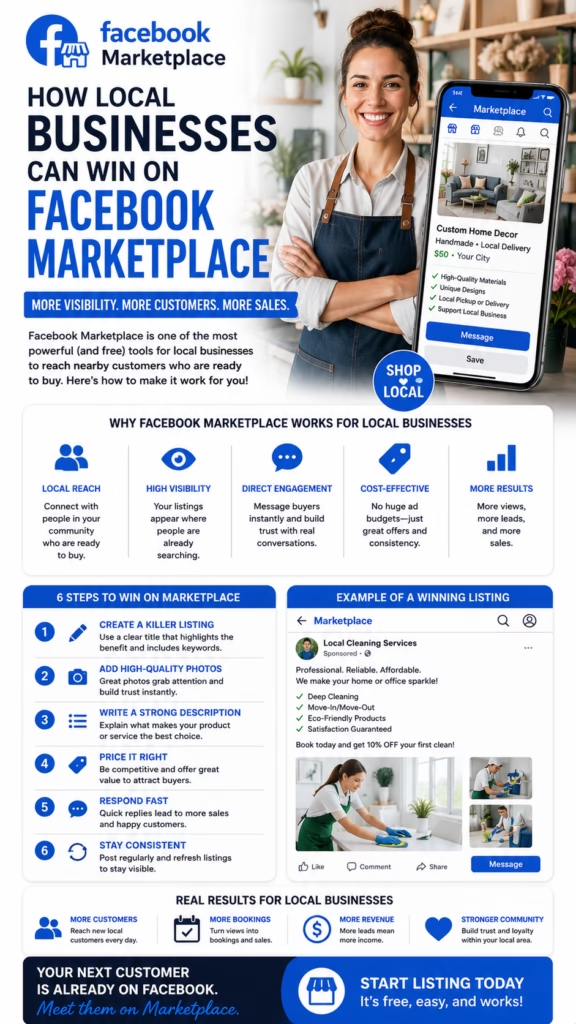
How Local Businesses Can Win on Facebook Marketplace
How Local Businesses Can Win on Facebook Marketplace shows local companies how to use Marketplace listings, strong photos, clear titles, local keywords, trust signals, smart offers, posting rotation, and fast response systems to generate more messages, calls, appointments, and sales.
Introduction
How Local Businesses Can Win on Facebook Marketplace starts with one simple truth: local buyers already use Facebook Marketplace to browse products, services, deals, delivery options, local inventory, home improvement offers, vehicles, furniture, mattresses, appliances, and nearby buying opportunities.
For local businesses, Marketplace can become more than a casual listing tool. It can become a direct-response lead channel when the business uses the right title, photos, description, offer, trust signals, and follow-up process.
Local businesses win on Facebook Marketplace when their listings look real, local, trustworthy, useful, and easy to message.
Many businesses lose Marketplace leads because their listings look too generic. They use blurry photos, vague titles, missing location details, weak descriptions, no clear offer, and slow replies. A better strategy turns each Marketplace listing into a small local sales page.
Main idea: Facebook Marketplace works best when every listing is built to attract the right buyer, answer key questions, and move the conversation toward a sale, appointment, delivery, quote, or store visit.
Table of Contents
- 1) Why Facebook Marketplace matters for local businesses
- 2) What local businesses can promote
- 3) How buyers compare Marketplace listings
- 4) Writing stronger Marketplace titles
- 5) Creating descriptions that generate messages
- 6) Using local keywords naturally
- 7) Adding photos that stop the scroll
- 8) Building trust with every listing
- 9) Creating offers buyers respond to
- 10) Marketplace strategy for product businesses
- 11) Marketplace strategy for service businesses
- 12) Posting rotation for better visibility
- 13) Tracking Marketplace leads
- 14) Turning messages into customers
- 15) Common mistakes
- 16) Final thoughts
- 17) FAQs
- 18) Extra keywords
1) Why Facebook Marketplace Matters for Local Businesses
Facebook Marketplace matters because it captures local browsing intent. People open Marketplace when they are looking for something nearby. That could be a product, a service, a deal, a delivery option, or a local provider they can message quickly.
Facebook Marketplace can help local businesses generate:
- Buyer messages
- Phone call requests
- Product availability questions
- Delivery inquiries
- Appointment requests
- Quote requests
- Store visit interest
- Service-area leads
- Financing questions
- Sales conversations
Marketplace is powerful because it connects local offers with buyers already browsing in their area.
2) What Local Businesses Can Promote
Local businesses can promote products, services, inventory, appointments, delivery, pickup, estimates, seasonal specials, financing, clearance items, and local availability. The best listings focus on one clear offer at a time.
Marketplace offer examples:
Mattress sets with local delivery
Furniture inventory available now
Home service estimates
Appliance repair appointments
Mobile detailing packages
Roof repair inspections
Siding replacement estimates
HVAC tune-up scheduling
Local pickup products
Financing options available
One clear Marketplace offer usually performs better than a confusing listing that tries to promote everything.
3) How Buyers Compare Marketplace Listings
Marketplace buyers compare listings quickly. They look at the photo, title, price, distance, seller credibility, description, and response speed. If the listing feels unclear or risky, they keep scrolling. If it feels helpful and legitimate, they message.
Buyer decision flow:
Sees main photo
Reads title
Checks price or offer
Checks location
Opens listing
Scans description
Looks for trust signals
Sends message
Business replies quickly
Lead becomes sale or appointment
A strong listing makes the buyer feel comfortable starting a conversation.
4) Writing Stronger Marketplace Titles
The title should be specific and searchable. A vague title gets ignored. A clear title tells the buyer what is offered and why they should click.
Weak title:
Great Deal Available

Stronger title:
Queen Mattress Set - Local Delivery Available

Weak title:
Home Service Help

Stronger title:
Interior Painting Estimate - Same-Week Scheduling

Weak title:
Furniture For Sale

Stronger title:
Modern Sofa Set - Pickup or Delivery Options
Specific titles attract more qualified buyers because they match real search intent.
5) Creating Descriptions That Generate Messages
The description should answer the buyer’s first questions. What is being offered? Where is it available? Can it be delivered? Is financing available? How does the buyer book, buy, or request more information?
A strong Marketplace description includes:
- Product or service details
- Local area
- Price or estimate language
- Availability
- Pickup or delivery options
- Financing details when relevant
- Trust signals
- Business name
- Phone or message CTA
- Simple next step
Descriptions generate better messages when they reduce confusion before the buyer contacts you.
6) Using Local Keywords Naturally
Local keywords help listings feel relevant to nearby buyers. Use city names, neighborhoods, product categories, service categories, delivery terms, pickup terms, financing terms, and appointment language naturally.
Local keyword examples:
local delivery available
pickup in Rochester
furniture delivery near Buffalo
HVAC service in Dallas
roof repair estimate in Fort Worth
mattress store near me
mobile detailing appointment
local contractor availability
same-week scheduling
financing options available
Use local keywords naturally. Do not stuff the listing with repeated city names.
7) Adding Photos That Stop the Scroll
Photos are one of the biggest reasons people click Marketplace listings. Product businesses should use clean product images. Service businesses should use before-and-after photos, project photos, team photos, vehicles, or branded graphics.
Photo ideas for Marketplace listings:
- Clean product photos
- Multiple product angles
- Inventory display
- Before-and-after results
- Finished project photos
- Delivery vehicle photos
- Showroom images
- Team photos
- Service result images
- Simple branded offer graphics
Better photos can increase clicks, improve trust, and reduce weak questions.
8) Building Trust With Every Listing
Trust is critical on Facebook Marketplace. Buyers want to know that the business is real, local, responsive, and safe to contact.
Trust signals that help listings convert:
- Business name
- Local phone number
- Website mention
- Facebook Business Page
- Real photos
- Google review mention
- Years in business
- Store or service area
- Delivery details
- Professional replies
Trust signals help turn browsing into serious messages.
9) Creating Offers Buyers Respond To
The offer gives the buyer a reason to message now. Strong offers can include delivery, financing, local pickup, free estimates, same-week scheduling, limited inventory, package pricing, or current specials.
Marketplace offer examples:
Same-day delivery available
Local pickup available
Financing options available
Free estimate this week
Message for current inventory
Bundle pricing available
Limited quantity available
Same-week scheduling
Ask about current specials
Call or message for availability
A strong offer makes the next step feel simple and worthwhile.
10) Marketplace Strategy for Product Businesses
Product businesses can use Marketplace to promote inventory, pricing, delivery, pickup, financing, and availability. This is especially useful for furniture stores, mattress stores, appliance sellers, equipment dealers, mobile home dealers, and local retailers.
Product listings should include:
- Product name
- Brand or model
- Size or specifications
- Condition details
- Price or starting price
- Pickup options
- Delivery details
- Financing options
- Availability notes
- Message prompt
Product businesses win when listings make buying easy to understand.
11) Marketplace Strategy for Service Businesses
Service businesses can use Marketplace to promote estimates, inspections, appointments, seasonal services, repairs, installations, and local availability. The listing should explain the problem solved and the next step.
Service business listing angles:
Free local estimate
Same-week appointment availability
Repair service available
Seasonal tune-up
Before-and-after project
Inspection availability
Emergency service inquiry
Installation estimate
Maintenance package
Local service-area post
Service businesses win when listings turn homeowner problems into simple appointment requests.
12) Posting Rotation for Better Visibility
Posting rotation helps local businesses test different offers. Instead of repeating the same listing, rotate product categories, service types, delivery angles, financing offers, city angles, and seasonal promotions.
Posting rotation ideas:
Price angle
Delivery angle
Financing angle
Product category angle
Service category angle
City angle
Seasonal offer
Limited inventory
Problem-solution post
Review or proof post
Posting rotation helps businesses learn what local buyers respond to best.
13) Tracking Marketplace Leads
Tracking helps local businesses understand which listings generate messages, calls, appointments, delivery requests, store visits, and sales.
Track these Marketplace metrics:
- Listing title
- Category
- Product or service angle
- City or location
- Date posted
- Buyer messages
- Phone calls
- Appointments booked
- Delivery requests
- Closed sales
Tracking turns Facebook Marketplace from random posting into a measurable local lead channel.
14) Turning Messages Into Customers
Marketplace success depends on fast response. Many buyers message multiple sellers. A business that replies quickly, answers clearly, and offers a next step has a better chance of winning the lead.
Message-to-customer workflow:
Reply quickly
Confirm the buyer's interest
Answer the main question
Ask one helpful follow-up
Confirm location or availability
Offer the next step
Move to call, appointment, visit, or delivery
Follow up if the buyer goes quiet
Track the outcome
Improve future listings
Fast, organized replies turn Marketplace messages into real business opportunities.
15) Common Mistakes
Many local businesses lose Marketplace leads because they use poor photos, vague titles, weak descriptions, no trust signals, unclear pricing, no follow-up system, or duplicate listings.
Common mistakes include:
- Blurry or generic photos
- Vague titles
- No local keywords
- No delivery or pickup details
- No service area
- No trust signals
- No clear offer
- No response process
- Posting duplicate listings
- Slow replies
Marketplace marketing fails when listings create confusion instead of confidence.
16) Final Thoughts
How Local Businesses Can Win on Facebook Marketplace is about creating listings that are clear, local, visual, trustworthy, and easy to respond to.
The strongest strategy includes strong titles, quality photos, helpful descriptions, local keywords, trust signals, clear offers, posting rotation, lead tracking, and fast follow-up.
Final takeaway: To win on Facebook Marketplace, make every listing easier to understand, easier to trust, and easier to message than the competition.
17) FAQs
1) How can local businesses win on Facebook Marketplace?
They can win by using strong photos, specific titles, local keywords, clear descriptions, trust signals, good offers, posting rotation, lead tracking, and fast replies.
2) Does Facebook Marketplace work for local businesses?
Yes. Marketplace can generate local messages, calls, appointments, delivery requests, store visits, and sales when listings are well built.
3) What businesses can use Facebook Marketplace?
Furniture stores, mattress stores, appliance sellers, contractors, repair companies, mobile home dealers, service providers, and local retailers can use Marketplace.
4) What should a Marketplace title include?
A title should include the product or service, key detail, local benefit, delivery option, availability, or reason to message.
5) Do photos matter on Marketplace?
Yes. Photos are often the first thing buyers notice and can strongly influence clicks and messages.
6) What photos should businesses use?
Use real product photos, multiple angles, project photos, before-and-after images, showroom photos, delivery photos, and branded graphics.
7) Should Marketplace listings include pricing?
When appropriate, yes. Pricing or price context can help qualify buyers and reduce weak messages.
8) Should listings mention delivery?
Yes, if delivery is available. Delivery can be a strong reason for buyers to message.
9) Should listings mention financing?
Yes, if financing is available. Financing can help buyers understand their options before contacting the business.
10) What are local keywords?
Local keywords include city names, neighborhoods, product categories, service areas, delivery terms, and appointment phrases.
11) Can service businesses use Marketplace?
Yes. Service businesses can promote estimates, repairs, appointments, maintenance, and local availability.
12) Can product businesses use Marketplace?
Yes. Product businesses can promote inventory, pickup, delivery, pricing, financing, and availability.
13) What are trust signals?
Trust signals include business name, phone number, website, reviews, real photos, service area, Facebook Page, and professional responses.
14) How fast should businesses respond?
As fast as possible. Many Marketplace buyers message multiple sellers.
15) What is posting rotation?
Posting rotation means testing different listing angles, offers, products, services, cities, and seasonal messages.
16) Should businesses repeat the same listing?
It is better to create meaningful variations instead of repeating the same listing without changes.
17) How do businesses track Marketplace leads?
Track listing title, category, city, messages, calls, appointments, delivery requests, store visits, and closed sales.
18) Why are Marketplace listings not getting leads?
Listings may have poor photos, vague titles, weak descriptions, missing trust signals, unclear offers, or slow replies.
19) Can Marketplace drive store visits?
Yes. Retailers and showrooms can use Marketplace to promote inventory, location, pickup, and local availability.
20) Can Marketplace generate appointments?
Yes. Service businesses can turn Marketplace messages into appointments when listings and replies are clear.
21) Should businesses include phone numbers?
Yes, when appropriate. Phone numbers help serious buyers move faster.
22) Can Marketplace work with Google Maps?
Yes. Marketplace can create conversations while Google Maps builds search visibility and review-based trust.
23) What is the biggest Marketplace mistake?
The biggest mistake is posting unclear listings without strong photos, trust signals, local context, or fast follow-up.
24) What makes a Marketplace listing convert?
A listing converts when it has a clear title, strong photo, helpful description, local relevance, trust signals, clear offer, and simple CTA.
25) What is the main goal of Facebook Marketplace marketing?
The main goal is to turn local Marketplace visibility into messages, calls, appointments, delivery requests, store visits, and sales.
18) Extra Keywords
- How Local Businesses Can Win on Facebook Marketplace
- Facebook Marketplace marketing
- Facebook Marketplace local business leads
- Facebook Marketplace lead generation
- Marketplace ads for local businesses
- Facebook Marketplace business listings
- local Marketplace marketing
- Facebook Marketplace buyer messages
- Marketplace sales strategy
- Facebook Marketplace posting strategy
- Facebook Marketplace product leads
- Facebook Marketplace service leads
- Marketplace listing optimization
- Marketplace local advertising
- Facebook Marketplace delivery leads
- Facebook Marketplace appointment leads
- Facebook Marketplace store visit leads
- Facebook Marketplace response strategy
- Facebook Marketplace lead tracking
- Facebook Marketplace trust signals
- Facebook Marketplace local keywords
- Facebook Marketplace small business marketing
- Marketplace business growth
- Facebook Marketplace customer generation
- Facebook Marketplace marketing system













