Google Maps SEO for HVAC Companies
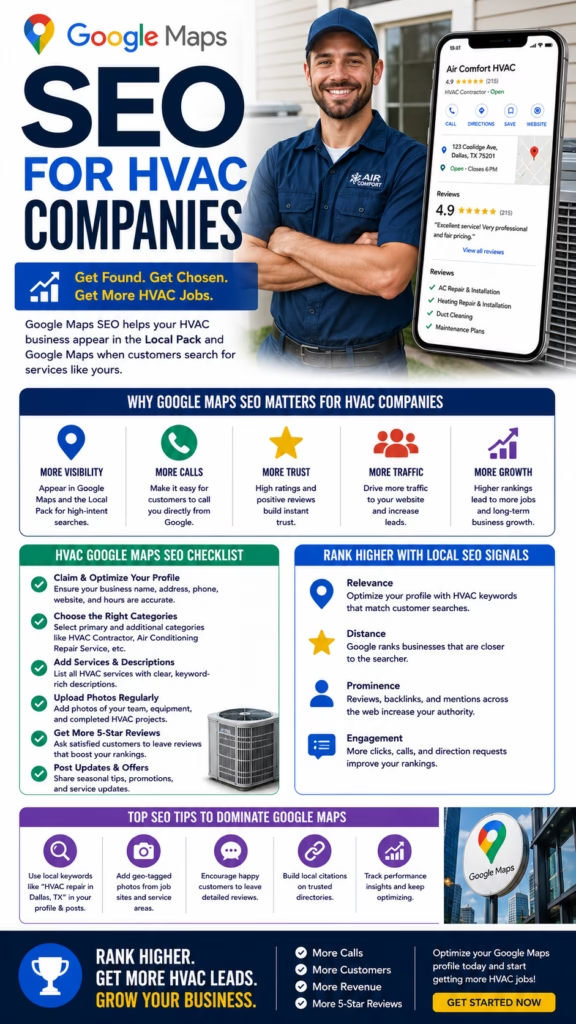
Google Maps SEO for HVAC Companies explains how heating and cooling contractors can improve local visibility, optimize Google Business Profile, rank for AC repair and furnace service searches, build stronger reviews, publish service updates, and turn Google Maps searches into more HVAC leads.
Introduction
Google Maps SEO for HVAC Companies is one of the most important marketing strategies for contractors that depend on local service calls. When a homeowner searches for AC repair, furnace repair, heat pump service, HVAC maintenance, emergency cooling help, or indoor air quality solutions, Google Maps often becomes one of the first places they compare local companies.
For HVAC companies, local visibility can directly affect call volume. A strong Google Maps presence can help a contractor appear when nearby customers need urgent heating or cooling service. A weak or incomplete profile can cause the company to lose calls to competitors, even if the business provides better service.
Google Maps SEO for HVAC Companies works best when the business profile, website, reviews, photos, service areas, and local content all support the same heating and cooling search intent.
HVAC searches are often high intent. Someone searching for “AC repair near me” may need help today. Someone searching for “furnace repair in my area” may be comparing providers before booking. Someone searching for “HVAC maintenance near me” may be ready to schedule a tune-up. Google Maps SEO helps an HVAC business show up in those moments.
This guide explains how HVAC companies can improve Google Maps visibility using Google Business Profile optimization, categories, services, reviews, photos, posts, service-area pages, citations, website signals, lead tracking, and customer follow-up.
Main idea: Google Maps SEO for HVAC Companies is about becoming more relevant, trusted, visible, and easy to contact when local homeowners search for HVAC help.
Table of Contents
- 1) Why Google Maps SEO matters for HVAC companies
- 2) How Google Maps rankings work
- 3) Google Business Profile optimization for HVAC
- 4) Choosing the right HVAC categories
- 5) Adding HVAC services correctly
- 6) AC repair keywords for Google Maps
- 7) Heating and furnace keywords for Google Maps
- 8) Service areas for HVAC companies
- 9) Reviews and reputation for HVAC rankings
- 10) Photos and videos for HVAC trust
- 11) Google Posts for HVAC companies
- 12) Website signals that support Google Maps
- 13) HVAC location pages and service pages
- 14) Citations and local HVAC mentions
- 15) Emergency HVAC SEO strategy
- 16) Seasonal HVAC SEO strategy
- 17) Tracking Google Maps HVAC leads
- 18) Common Google Maps SEO mistakes
- 19) Final thoughts
- 20) FAQs
- 21) Extra keywords
1) Why Google Maps SEO Matters for HVAC Companies
Google Maps SEO matters for HVAC companies because homeowners often search locally when they need fast help. Heating and cooling problems are urgent, seasonal, and location-specific. A homeowner with a broken AC unit in summer or a failed furnace in winter usually wants a nearby company that can respond quickly.
When an HVAC business appears prominently in Google Maps, it can receive more calls, website clicks, direction requests, appointment inquiries, and service bookings. Google Maps visibility can be especially valuable because the customer is often searching with immediate intent.
Google Maps SEO can help HVAC companies generate:
- AC repair calls
- Furnace repair leads
- Heat pump service requests
- HVAC maintenance appointments
- Emergency HVAC calls
- Indoor air quality inquiries
- Thermostat installation leads
- Ductwork service requests
- Seasonal tune-up appointments
- Replacement estimate requests
For HVAC companies, strong Google Maps visibility can turn local search demand into real service calls.
2) How Google Maps Rankings Work
Google Maps rankings are influenced by how well a business matches the search, how close it is to the searcher or searched location, and how prominent or trusted the business appears. For HVAC companies, this means the profile must clearly show heating and cooling services, accurate service areas, strong reviews, and consistent business information.
Google does not rank HVAC companies based on one single factor. A complete Google Business Profile, a strong website, consistent citations, positive reviews, relevant service content, and real customer engagement can all work together.
Important Google Maps SEO factors:
Relevance to HVAC searches
Distance from searcher or searched city
Prominence and reputation
Google Business Profile completeness
Correct HVAC categories
Detailed services
Review count and quality
Website authority
Local citations
Customer engagement
HVAC companies should optimize for relevance, distance clarity, and prominence instead of relying on one ranking trick.
3) Google Business Profile Optimization for HVAC
Google Business Profile is the foundation of Google Maps SEO for HVAC companies. The profile tells Google and customers what the company does, where it operates, when it is open, how to contact it, and what customers think about it.
An HVAC profile should be complete and accurate. The business name should match the real company name. The phone number should be correct. The website should be linked. The hours should be updated. The services should reflect real HVAC work. The profile should include photos, posts, reviews, and service areas.
HVAC Google Business Profile checklist:
- Correct business name
- Accurate phone number
- Website link
- Updated business hours
- Emergency hours if applicable
- Primary HVAC category
- Secondary service categories
- Full service list
- Service areas
- Photos, posts, reviews, and Q&A
A complete Google Business Profile gives Google and homeowners clearer reasons to trust and contact the HVAC company.
4) Choosing the Right HVAC Categories
Categories help Google understand what type of business the company is. For HVAC companies, the primary category should match the core service. Secondary categories can support related services when they are accurate and relevant.
Choosing unrelated categories can confuse Google and attract poor-fit leads. The categories should reflect the real services offered by the company, such as HVAC contractor, air conditioning repair service, furnace repair service, heating contractor, or air conditioning contractor when available and appropriate.
Category optimization tips:
Choose the most accurate primary category
Add relevant secondary categories
Avoid unrelated categories
Match categories to real services
Review competitor category patterns
Keep categories aligned with website content
Update categories when services change
Do not keyword-stuff the business name
Use services for more detail
Keep the profile honest and accurate
The right categories help Google connect the HVAC company with the right heating and cooling searches.
5) Adding HVAC Services Correctly
Services help Google and customers understand what the HVAC company offers. A profile that only says “HVAC contractor” may be less specific than one that lists AC repair, AC installation, furnace repair, heat pump service, ductwork, thermostat installation, maintenance plans, and indoor air quality services.
Each service should be clear, accurate, and connected to real work the company performs. Service descriptions can help homeowners understand the problem solved and the next step to schedule help.
HVAC services to consider adding:
- AC repair
- AC installation
- Furnace repair
- Heating installation
- Heat pump repair
- HVAC maintenance
- Emergency HVAC service
- Thermostat installation
- Ductwork service
- Indoor air quality solutions
Detailed service listings help turn a generic HVAC profile into a more relevant local search asset.
6) AC Repair Keywords for Google Maps
AC repair keywords are critical for HVAC companies in warm months and hot climates. Many homeowners search urgently when their air conditioner stops cooling, blows warm air, leaks water, freezes up, or makes unusual noises.
The Google Business Profile, website, service pages, reviews, and posts should all support AC repair relevance naturally. This does not mean stuffing keywords. It means clearly explaining the AC problems the company solves.
AC repair keyword ideas:
AC repair near me
Air conditioning repair
AC not cooling
AC blowing warm air
Emergency AC repair
Same-day AC service
AC tune-up
Air conditioner maintenance
AC installation
Central air repair
Residential AC repair
Local AC contractor
AC repair SEO works best when the HVAC company clearly explains urgent cooling problems and how customers can schedule service.
7) Heating and Furnace Keywords for Google Maps
Heating and furnace keywords become especially important during colder months. Homeowners may search for furnace repair, heating repair, heat pump service, emergency heating, or no-heat service. The HVAC company should make these services visible across the profile and website.
Seasonal relevance matters. A company that publishes winter heating content, gathers heating-related reviews, and lists furnace services clearly may look more relevant for cold-weather searches.
Heating keyword ideas:
- Furnace repair near me
- Heating repair service
- Emergency furnace repair
- No heat service
- Heat pump repair
- Furnace maintenance
- Heating installation
- Boiler service if applicable
- Thermostat repair
- Winter HVAC tune-up
Heating keywords help HVAC companies capture urgent winter searches and seasonal service demand.
8) Service Areas for HVAC Companies
Service areas help customers understand where the HVAC company operates. For service-area businesses, accurate service areas are important because HVAC companies often travel to homes instead of only serving customers at a storefront.
Service areas should be realistic. Adding every city in a state does not automatically create rankings in every city. The website, reviews, local mentions, and customer activity should support the areas the business wants to target.
Service-area optimization ideas:
List real service cities
Add nearby towns honestly
Create service-area pages on the website
Use consistent NAP details
Mention local neighborhoods when relevant
Track calls by city
Collect reviews from different service areas
Publish city-specific project examples
Avoid unrealistic service-area stuffing
Keep business information accurate
Service-area optimization works best when the HVAC company supports each target city with real service history, website content, reviews, and local relevance.
9) Reviews and Reputation for HVAC Rankings
Reviews are extremely important for HVAC companies because customers often compare providers before calling. A strong review profile can improve trust, support prominence, and increase the chance that a searcher chooses the business.
HVAC reviews are most helpful when they mention specific services such as AC repair, furnace repair, maintenance, installation, emergency service, technician professionalism, speed, pricing clarity, and customer satisfaction.
HVAC review signals to build:
- Review count
- Review rating
- Review freshness
- Service-specific review details
- City mentions in reviews
- Technician name mentions
- Emergency service mentions
- Review response quality
- Consistent review growth
- Customer trust signals
HVAC companies should treat reviews as both a ranking asset and a conversion asset.
10) Photos and Videos for HVAC Trust
Photos and videos help HVAC companies prove they are real, active, and professional. Homeowners want to see technicians, vehicles, equipment, installs, maintenance work, before-and-after examples, and branded proof that the company operates locally.
Photos can also support customer confidence. A profile with no real images may look less trustworthy than a competitor with team photos, service vehicles, completed installs, and clean jobsite examples.
HVAC photo ideas:
Service vehicle photos
Technician team photos
AC installation photos
Furnace installation photos
Thermostat installation photos
Maintenance visit photos
Before-and-after equipment photos
Indoor air quality product photos
Office or storefront photos
Branded seasonal service graphics
Photos and videos help homeowners feel more confident before calling an HVAC company.
11) Google Posts for HVAC Companies
Google Posts allow HVAC companies to publish updates, offers, announcements, seasonal reminders, and service highlights directly on the profile. These posts can keep the profile active and help customers understand what services are currently available.
HVAC companies can use posts for AC tune-ups before summer, furnace inspections before winter, maintenance plan reminders, indoor air quality education, thermostat upgrades, emergency service availability, and special offers.
Google Post ideas for HVAC companies:
- AC tune-up reminders
- Furnace inspection reminders
- Seasonal maintenance offers
- Emergency HVAC availability
- Indoor air quality tips
- Heat pump service highlights
- Thermostat upgrade posts
- Recent installation highlights
- Customer review spotlights
- Holiday hour updates
Google Posts help HVAC companies keep their profile fresh, useful, and connected to seasonal customer needs.
12) Website Signals That Support Google Maps
The HVAC website connected to the Google Business Profile should support the same services, locations, and trust signals shown on the profile. A weak website can limit conversions, even if the profile gets views. A strong website can reinforce Google Maps SEO by providing more detail about services, cities, reviews, projects, and booking options.
The website should load fast, work well on mobile, and make it easy to call or request service. HVAC searches are often urgent, so the website should not make customers hunt for the phone number.
HVAC website signals:
Service pages
City pages
Consistent phone number
Clear contact forms
Click-to-call buttons
Review/testimonial sections
Project photos
Emergency service page
Maintenance plan page
Fast mobile performance
Local schema markup
Strong internal linking
A strong HVAC website supports Google Maps SEO by reinforcing relevance, trust, and service-area authority.
13) HVAC Location Pages and Service Pages
Location pages and service pages help HVAC companies explain what they do and where they do it. A service page can focus on AC repair, furnace repair, heat pump service, or maintenance. A location page can focus on a specific city or service area.
These pages should be useful, unique, and customer-focused. They should not be thin copies with only the city name changed. Strong pages include service details, local context, FAQs, photos, reviews, and clear calls-to-action.
Useful HVAC pages include:
- AC repair page
- AC installation page
- Furnace repair page
- Heating installation page
- Heat pump service page
- HVAC maintenance page
- Emergency HVAC page
- Indoor air quality page
- City-specific service pages
- Maintenance plan page
Service and location pages help Google and customers understand the HVAC company’s specialties and service areas.
14) Citations and Local HVAC Mentions
Citations are online mentions of the HVAC company’s business name, address, phone number, and website. Local mentions can come from directories, trade associations, chamber of commerce pages, supplier websites, sponsorships, local news, and community organizations.
Consistent citations help reinforce that the business is real and established. Incorrect phone numbers, old addresses, duplicate listings, and inconsistent business names can create confusion.
HVAC citation sources:
Google Business Profile
Bing Places
Apple Business Connect
Yelp
Angi
HomeAdvisor
BBB if applicable
Chamber of commerce
Local directories
HVAC trade directories
Supplier partner pages
Community sponsorship pages
Clean citations and local mentions support HVAC prominence and help customers find accurate business information.
15) Emergency HVAC SEO Strategy
Emergency HVAC searches are some of the highest-intent searches in the industry. A customer with no cooling during summer or no heat during winter may be ready to call immediately. HVAC companies should create clear emergency service signals across the profile and website if they truly offer emergency service.
Emergency HVAC SEO should be honest. If the company does not offer 24/7 service, it should not claim that it does. But if same-day or emergency appointments are available, the business should make that clear.
Emergency HVAC SEO elements:
- Emergency HVAC service page
- Same-day service language when accurate
- Updated hours
- Emergency phone CTA
- No-cooling service content
- No-heat service content
- Review mentions of fast response
- Google Posts about urgent availability
- Clear service areas
- Fast call handling process
Emergency HVAC SEO works best when urgent search visibility is paired with fast real-world response.
16) Seasonal HVAC SEO Strategy
HVAC demand changes by season. In warmer months, AC repair, AC tune-ups, and cooling installation searches increase. In colder months, furnace repair, heating maintenance, and no-heat calls become more important. Seasonal SEO helps HVAC companies prepare content before demand spikes.
HVAC companies should update posts, website content, photos, offers, and service pages before peak seasons. Waiting until the season starts can put the business behind competitors.
Seasonal HVAC SEO plan:
Spring AC tune-up posts
Summer emergency AC repair content
Fall furnace inspection posts
Winter no-heat service content
Indoor air quality content year-round
Maintenance plan reminders
Seasonal review requests
Seasonal Google Posts
City-specific service updates
Performance tracking by season
Seasonal HVAC SEO helps contractors appear before customers urgently need heating or cooling service.
17) Tracking Google Maps HVAC Leads
Tracking helps HVAC companies understand whether Google Maps SEO is producing real leads. Rankings are important, but the final goal is calls, bookings, appointments, estimates, and closed jobs.
HVAC companies should track calls from Google Business Profile, website clicks, direction requests, form submissions, booked service calls, job types, service areas, and revenue when possible.
Track these HVAC Google Maps metrics:
- Profile views
- Map views
- Search views
- Phone calls
- Website clicks
- Direction requests
- Messages
- Booked service calls
- AC repair leads
- Furnace repair leads
- Closed jobs
- Revenue by lead source
The best HVAC SEO strategy measures both visibility and booked revenue.
18) Common Google Maps SEO Mistakes
Many HVAC companies lose local visibility because their profiles are incomplete, outdated, or inconsistent. Common mistakes include weak categories, missing services, no review strategy, few photos, outdated hours, thin website pages, duplicate profiles, and poor response to reviews.
These issues can weaken trust and reduce the chance that homeowners call. A regular Google Maps SEO audit can help find and fix problems before competitors gain the advantage.
Common HVAC Google Maps SEO mistakes:
Wrong primary category
Missing HVAC services
No service-area strategy
Weak review profile
No review responses
Few photos
Outdated hours
No emergency service clarity
Thin website content
Duplicate profiles
Inconsistent citations
No call tracking
No seasonal updates
Google Maps SEO fails when the HVAC company treats the profile like a one-time setup instead of an active lead generation asset.
19) Final Thoughts
Google Maps SEO for HVAC Companies is about building a stronger local presence where customers are already searching. HVAC companies can improve visibility by optimizing Google Business Profile, selecting accurate categories, adding detailed services, building reviews, posting updates, using strong photos, improving website content, and tracking leads.
The HVAC businesses that win in Google Maps are usually the ones that look relevant, trusted, active, local, and easy to contact. A complete profile alone is not enough. The profile, website, reviews, service pages, citations, and customer experience should all work together.
Final takeaway: Google Maps SEO for HVAC Companies helps contractors turn local heating and cooling searches into real calls, appointments, estimates, and booked jobs.
20) FAQs
1) What is Google Maps SEO for HVAC companies?
Google Maps SEO for HVAC companies is the process of improving Google Business Profile, website signals, reviews, service areas, and local relevance so the company appears more often for heating and cooling searches.
2) Why does Google Maps SEO matter for HVAC contractors?
It matters because many HVAC customers search locally when they need urgent AC repair, furnace repair, maintenance, or replacement estimates.
3) What are the main Google Maps ranking factors?
The main local ranking factors are relevance, distance, and prominence.
4) How can an HVAC company improve relevance?
An HVAC company can improve relevance by using accurate categories, adding detailed services, writing clear service content, and keeping the website aligned with the profile.
5) How does distance affect HVAC rankings?
Distance affects how close the business is to the searcher or searched city. Accurate service areas and local pages can help clarify where the company operates.
6) What does prominence mean for HVAC SEO?
Prominence refers to how trusted, reviewed, established, and recognized the HVAC company appears online and locally.
7) What category should an HVAC company use on Google Business Profile?
The company should choose the most accurate primary HVAC-related category available and add relevant secondary categories that match real services.
8) Should HVAC companies list every service on GBP?
Yes, they should list real services such as AC repair, furnace repair, heat pump service, maintenance, thermostat installation, and emergency HVAC service.
9) Do reviews help HVAC companies rank on Google Maps?
Reviews can support trust, prominence, and customer decision-making. Review count, quality, freshness, and responses all matter.
10) Should HVAC companies respond to reviews?
Yes. Review responses show professionalism and help customers see that the business is active and engaged.
11) What photos should HVAC companies upload?
HVAC companies should upload team photos, service vehicles, AC installations, furnace installations, jobsite photos, maintenance photos, and branded seasonal graphics.
12) Do Google Posts help HVAC companies?
Google Posts can help keep the profile active and promote seasonal services, maintenance reminders, emergency availability, and special offers.
13) Should HVAC companies create city pages?
Yes, when done properly. City pages should be unique, useful, and supported by real service-area relevance.
14) What HVAC keywords should be targeted?
Important keywords include AC repair, furnace repair, HVAC maintenance, heat pump repair, emergency HVAC service, thermostat installation, and HVAC contractor near me.
15) How can HVAC companies rank for AC repair?
They should create strong AC repair service content, add AC repair to GBP services, collect AC-related reviews, and publish seasonal cooling updates.
16) How can HVAC companies rank for furnace repair?
They should optimize heating service pages, add furnace services, collect heating-related reviews, and publish winter service updates.
17) Should emergency HVAC service be promoted?
Yes, if the company truly offers emergency or same-day service. The profile and website should clearly explain urgent availability.
18) Do citations matter for HVAC SEO?
Yes. Accurate citations help reinforce business information and local prominence.
19) What is NAP consistency?
NAP consistency means the business name, address, and phone number are accurate and consistent across Google, the website, and directories.
20) Can a website improve Google Maps rankings?
Yes. A strong website can reinforce service relevance, service areas, trust, content depth, and conversion opportunities.
21) How often should HVAC companies update GBP?
They should update it whenever hours, services, photos, offers, service areas, or seasonal promotions change.
22) How should HVAC companies track Google Maps leads?
They should track calls, website clicks, messages, bookings, service requests, job types, and revenue from Google Business Profile activity.
23) What is the biggest Google Maps SEO mistake for HVAC companies?
The biggest mistake is treating the profile as a static listing instead of an active local SEO and lead generation asset.
24) How long does Google Maps SEO take for HVAC companies?
Results vary based on competition, profile strength, website quality, reviews, service areas, and consistency. Local SEO usually improves over time.
25) What is the main goal of Google Maps SEO for HVAC companies?
The main goal is to turn local heating and cooling searches into qualified calls, appointments, estimates, and booked HVAC jobs.
21) Extra Keywords
- Google Maps SEO for HVAC Companies
- HVAC Google Maps SEO
- HVAC local SEO
- Google Business Profile for HVAC
- HVAC Google Business Profile optimization
- AC repair SEO
- furnace repair SEO
- heating repair SEO
- air conditioning SEO
- HVAC contractor SEO
- Google Maps ranking for HVAC
- HVAC lead generation
- local HVAC leads
- emergency HVAC SEO
- HVAC service area SEO
- HVAC review strategy
- HVAC Google reviews
- HVAC local pack rankings
- HVAC Maps optimization
- AC contractor Google Maps SEO
- heating contractor Google Maps SEO
- HVAC citation building
- HVAC location pages
- HVAC service pages
- HVAC SEO checklist