
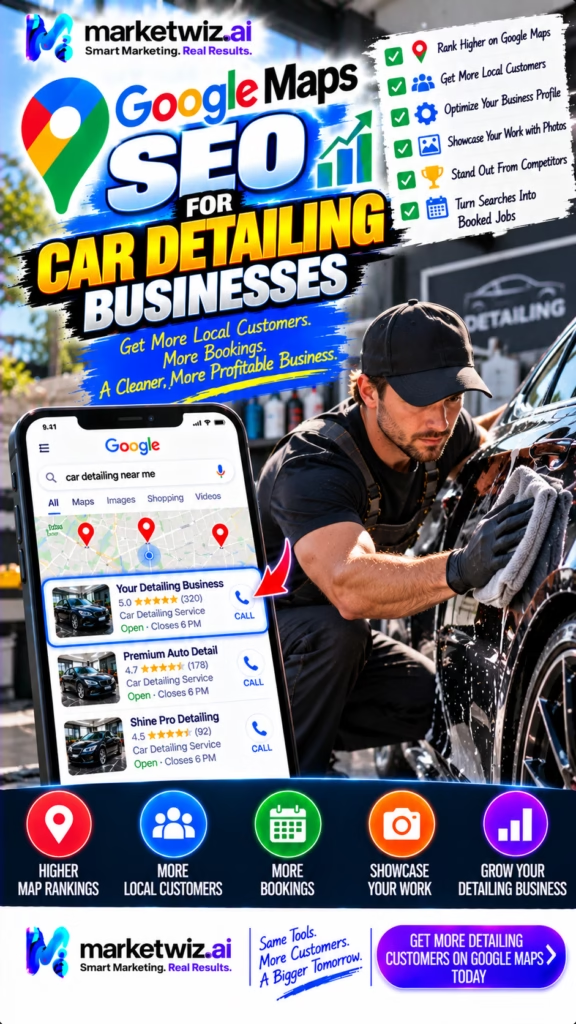
Google Maps SEO for Car Detailing Businesses
When drivers search for car detailing near me, mobile auto detailing, ceramic coating, interior cleaning, or paint correction, they are often looking for a local business they can trust with their vehicle. Discover how car detailing companies can strengthen Google Maps visibility, improve local SEO, showcase impressive detailing transformations, build authentic customer reviews, attract qualified vehicle owners, and convert local searches into profitable appointments through Google Business Profile optimization, AI-assisted marketing, and organized customer acquisition.
Updated October 20261. Understand the Google Maps Opportunity for Car Detailing Businesses
Car detailing is a local business category built around convenience, trust, visible workmanship, and the customer's desire to maintain or improve the appearance of a vehicle.
When someone searches for a nearby auto detailer, they may want an interior cleaning appointment, exterior detailing, paint correction, ceramic coating, or a mobile detailing provider who can visit their home or workplace.
These searches can represent customers who have already identified a need and are evaluating providers.
Google Maps offers an important discovery channel because it presents local businesses alongside information such as location, operating hours, customer reviews, photographs, website links, and contact options.
For a car detailing business, the opportunity is not limited to generating more profile views.
The larger objective is to help qualified customers discover the company, understand its detailing capabilities, evaluate the quality of its work, and book an appropriate appointment.
Google Maps visibility should connect directly to bookings. A strong detailing marketing strategy measures not only how many people find the business, but how many become qualified inquiries, scheduled appointments, completed jobs, repeat customers, and profitable revenue.
This approach helps detailers evaluate their marketing as a customer acquisition system rather than an isolated search ranking project.
2. Understand How Vehicle Owners Search for Auto Detailing
Customers use different search terms depending on the type of detailing they want, their vehicle's condition, their location, and the level of convenience they expect.
Someone searching for a quick interior refresh may use different language than a vehicle enthusiast researching professional paint correction and a multi-step coating application.
Common detailing search themes include:
- Car detailing near me
- Auto detailing near me
- Mobile car detailing
- Mobile auto detailer
- Interior car detailing
- Exterior car detailing
- Full car detailing
- Professional car detailing
- Ceramic coating near me
- Paint correction near me
- Car interior cleaning
- Carpet and upholstery cleaning
- Vehicle odor removal
- Car detailing packages
- Car detailing appointments
Not every business offers every treatment. A company specializing in mobile interior detailing should not market itself as a professional paint correction or ceramic coating specialist unless it genuinely performs that work.
Build SEO Around Actual Customer Needs
Match website content and business information to the services customers can really purchase. Accurate, specific pages help vehicle owners understand whether the company is appropriate for their vehicle and desired outcome.
3. Build a Complete Google Business Profile for Auto Detailing
Google Business Profile provides the foundation for a car detailing company's presence across Google Search and Google Maps.
A complete profile helps customers evaluate the business before calling or booking.
Important profile elements include:
- Accurate business name
- Appropriate primary category
- Relevant secondary categories
- Correct business phone number
- Working website link
- Current operating hours
- Accurate address or service-area configuration
- Professional business description
- Authentic detailing photographs
- Customer reviews
- Eligible profile attributes
- Accurate booking information where available
The business should represent its actual operations. A mobile detailing company, a fixed-location detailing shop, and a hybrid detailing business may require different profile configurations.
Avoid adding promotional keywords to the business name unless those words are part of the company's genuine real-world name.
Do not create fake locations or use addresses that do not meet Google's eligibility requirements.
4. Choose Accurate Google Business Profile Categories
Business categories describe the type of company represented by the Google Business Profile.
For auto detailers, category selection should reflect the actual primary business rather than an attempt to target every automotive keyword.
A business focused on professional vehicle detailing may have different category needs than an automotive repair shop, car wash, vehicle protection specialist, or business offering several related operations.
Category decisions should consider:
- The company's primary offering
- The work performed most frequently
- Its actual business specialization
- Relevant categories currently available
- Whether additional categories accurately apply
Adding unrelated categories can confuse customers and weaken the accuracy of the profile.
Choose categories for accuracy, not keyword volume. A detailer can target interior detailing, exterior detailing, ceramic coating, and paint correction through useful website content without selecting irrelevant business categories.
5. Configure Mobile, Shop-Based, and Hybrid Detailing Businesses Correctly
One of the most important distinctions in car detailing SEO is the company's operating model.
Some detailers operate from a commercial location where customers bring their vehicles.
Others travel to customer homes, offices, or other permitted locations.
Some businesses legitimately operate using both models.
Fixed-location detailing shops
A qualifying shop that receives customers at its business location should accurately represent that location and its operating hours.
Mobile detailing companies
A mobile detailer that visits customers and does not receive them at its business address should follow Google's service-area business requirements, including hiding the address when required.
Hybrid detailing businesses
A business that both receives customers at an eligible, staffed location and travels to customer properties should configure its profile to reflect those real operations.
The goal is to provide accurate information without creating artificial addresses, duplicate profiles, or misleading storefront claims.
6. Define Profitable Car Detailing Service Areas
Mobile detailers often have a wider potential operating territory than fixed-location shops.
However, every additional mile can affect travel time, appointment scheduling, labor utilization, fuel expenses, and overall profitability.
A detailing business should not automatically target every surrounding city equally.
Evaluate local markets using:
- Vehicle owner demand
- Travel distance
- Appointment density
- Average detailing ticket value
- Premium detailing demand
- Customer scheduling preferences
- Historical booking volume
- Local competition
- Repeat-customer opportunities
- Profitability by area
For a mobile detailer, clustering appointments within nearby communities may improve daily scheduling efficiency.
For a fixed-location shop, geographic strategy may focus on communities whose customers are willing to travel for the company's specific detailing capabilities.
Prioritize the Right Customers, Not Just the Largest Territory
A smaller operating area with strong demand, efficient scheduling, and profitable appointment types may be more valuable than a large territory that creates excessive travel and inconsistent bookings.
7. Organize Auto Detailing SEO Around Real Service Categories
Car detailing businesses often offer several different appointment types.
A well-structured website can help customers understand the difference between those offerings.
Interior Detailing
Explain the actual interior cleaning process, available treatments, vehicle preparation, and appointment expectations.
Exterior Detailing
Describe exterior washing, surface cleaning, and finishing work included in the company's specific detailing packages.
Ceramic Coating
Present coating options, preparation requirements, product-specific limitations, and relevant completed work.
Paint Correction
Explain the company's real correction capabilities, inspection process, treatment limitations, and customer expectations.
Additional pages may be appropriate for mobile detailing, fleet detailing, specialized vehicle care, or other offerings the company actually performs.
8. Optimize for Interior Car Detailing Searches
Interior detailing can attract customers who want help improving the cleanliness, appearance, and condition of a vehicle's cabin.
Customer needs vary widely. Some vehicles require routine cleaning. Others may need more intensive attention to upholstery, carpets, interior surfaces, or persistent odors.
Useful interior detailing content may cover:
- Interior car detailing packages
- Vehicle vacuuming
- Carpet cleaning
- Upholstery cleaning
- Leather cleaning where offered
- Interior surface cleaning
- Interior stain treatment
- Pet hair removal where offered
- Interior odor treatment
- Appointment preparation
- Vehicle size considerations
- Real interior transformation photos
Describe the company's actual cleaning methods and avoid promising complete removal of every stain, odor, or material defect.
Results can depend on material type, vehicle condition, contamination, and the treatments performed.
9. Build Local SEO Around Exterior Auto Detailing
Exterior detailing customers may be looking for professional cleaning, appearance enhancement, or preparation for additional paint treatments.
A dedicated exterior detailing page can explain the company's process and help customers understand what is included in an appointment.
Potential exterior detailing topics include:
- Exterior car detailing
- Professional vehicle washing
- Wheel cleaning
- Tire cleaning and dressing where offered
- Exterior trim care
- Surface decontamination where offered
- Paint protection options
- Exterior detailing packages
- Before-and-after examples
- Vehicle condition considerations
Avoid presenting every exterior package as equivalent to paint correction or ceramic coating.
These treatments may involve different processes, equipment, products, and customer expectations.
10. Create Dedicated SEO Content for Ceramic Coating
Ceramic coating is a specialized category that can attract customers researching vehicle appearance protection and long-term maintenance options.
A company offering ceramic coatings should create accurate content that explains the actual products, preparation process, and application approach.
Useful ceramic coating content includes:
- Ceramic coating appointments
- Vehicle preparation
- Paint inspection
- Surface preparation
- Coating application
- Product-specific maintenance requirements
- Coating limitations
- Available packages
- Vehicle size considerations
- Completed coating project galleries
Do not describe coatings as making vehicles scratch-proof, maintenance-free, or permanently protected.
Performance, durability, maintenance, and warranty conditions depend on the specific product, application, environment, and vehicle care.
Premium detailing SEO requires accurate expectations. Clear descriptions of ceramic coating benefits, limitations, and maintenance needs can help attract customers who understand the treatment and are better prepared for the appointment.
11. Optimize Google Maps Marketing for Paint Correction
Paint correction is another specialized automotive appearance category.
Customers may be researching visible paint defects, swirl marks, surface appearance, or preparation for protective coatings.
The marketing content should explain the company's actual correction process without promising unrealistic outcomes.
A useful paint correction page may include:
- What paint correction involves
- Vehicle inspection
- Surface condition considerations
- Available correction packages
- Potential treatment limitations
- Before-and-after examples
- Maintenance recommendations
- Appointment duration considerations
- Related coating options
Not every defect can be safely or completely corrected.
Paint condition, clear-coat thickness, previous repairs, and other factors can affect the appropriate treatment.
The business should avoid making unverified technical or performance claims.
12. Build a Dedicated Mobile Car Detailing SEO Strategy
Mobile detailing customers often prioritize convenience and appointment availability.
They may want a professional detailer to visit their home, workplace, or another eligible location.
A dedicated mobile detailing page should explain how the business operates.
Useful mobile detailing information includes:
- Actual operating territory
- Available mobile detailing packages
- Appointment scheduling
- Location requirements
- Vehicle access considerations
- Water or power requirements where applicable
- Weather-related scheduling considerations
- Vehicle size limitations
- Travel charges where applicable
- Contact and booking options
A mobile detailer should not claim to serve an area it cannot reasonably reach.
Accurate geographic targeting improves the likelihood that inquiries match the company's operational capacity.
Connect Mobile SEO to Route Efficiency
Track appointment locations and travel time. Over time, identify neighborhoods and communities where the company can schedule multiple profitable appointments efficiently.
13. Create Useful Local Landing Pages for Detailing Markets
Car detailing businesses serving multiple communities may benefit from dedicated local landing pages.
These pages should represent real operating areas and provide useful information for local customers.
A strong detailing city page may include:
- The community served
- Available detailing packages
- Mobile or shop-based appointment options
- Relevant customer questions
- Authentic local project examples when available
- Operating area information
- Travel considerations where relevant
- Links to detailing package pages
- Accurate booking information
Avoid publishing large numbers of nearly identical city pages with only location names changed.
The content should help customers understand the business's actual availability in that area.
14. Build a Car Detailing Website That Converts Local Traffic
Google Maps may introduce customers to the detailing business, but the website often provides additional information needed before someone books an appointment.
A professional detailing website should make it easy to understand the available packages, the company's operating model, and the booking process.
Important website elements include:
- Clear business positioning
- Interior detailing information
- Exterior detailing information
- Mobile detailing pages where applicable
- Ceramic coating pages where offered
- Paint correction pages where offered
- Authentic project galleries
- Accurate operating areas
- Transparent package descriptions
- Relevant pricing information where appropriate
- Customer reviews
- Frequently asked questions
- Mobile-friendly navigation
- Working booking options
- Clear contact information
The website should reduce uncertainty.
Customers should not have to guess whether the business performs the treatment they want or how to request an appointment.
15. Improve Technical SEO and Mobile Website Performance
Many vehicle owners research detailing companies on smartphones.
A website that loads slowly, displays poorly on mobile, or has broken booking forms can lose customers before they contact the business.
Technical SEO priorities include:
- Mobile responsiveness
- Fast page loading
- HTTPS
- Clear navigation
- Descriptive page titles
- Useful meta descriptions
- Logical heading structure
- Compressed project photos
- Descriptive image alternative text
- Internal links
- Working contact forms
- Accessible booking controls
- Indexable pages
- Appropriate structured data
- Duplicate-content management
Detailing websites often contain large galleries of high-resolution vehicle photographs.
These images should be optimized without sacrificing the ability to evaluate the workmanship.
16. Build a Consistent Google Review Strategy for Detailers
Customer reviews can help vehicle owners evaluate a detailing company's quality, reliability, communication, and professionalism.
Because customers may be trusting a business with an expensive vehicle, reputation can be an important part of the purchasing decision.
Deliver a Professional Detailing Experience
Set accurate expectations, communicate clearly, respect the vehicle, and complete the agreed work professionally.
Invite Honest Feedback
Give legitimate customers an appropriate opportunity to review their experience after completed appointments.
Monitor Customer Comments
Look for recurring feedback about workmanship, appointment reliability, package clarity, and communication.
Respond Professionally
Thank customers appropriately and address legitimate concerns without exposing private customer information.
Review requests should follow Google's applicable policies.
Avoid fake reviews, prohibited incentives, and selective requests designed to suppress negative feedback.
17. Use Authentic Reviews to Strengthen Detailing Reputation
A detailing company's reputation should reflect genuine customer experiences.
Marketing can organize the review process, but it cannot replace reliable work and professional customer care.
A healthy reputation process emphasizes:
- Accurate package descriptions
- Clear appointment expectations
- Professional vehicle handling
- Reliable communication
- Real completed appointments
- Honest customer feedback
- Professional review responses
- Continuous operational improvement
Businesses should not tell customers what rating to leave.
They should not manufacture reviews for appointments that never occurred.
They should not offer prohibited rewards in exchange for ratings.
Authentic reputation is a long-term business asset. The goal is to build confidence through real workmanship, consistent customer care, and trustworthy feedback.
18. Showcase Before-and-After Car Detailing Photography
Car detailing is highly visual.
Customers often want to see the quality of completed work before booking an appointment.
Authentic before-and-after photographs can help demonstrate the company's capabilities and attention to detail.
Useful detailing photo categories include:
- Interior transformations
- Exterior detailing results
- Seat cleaning results
- Carpet cleaning results
- Wheel cleaning
- Vehicle trim detailing
- Paint correction examples
- Ceramic coating projects
- Luxury vehicle detailing
- Truck and SUV detailing
- Mobile detailing setups
- Completed vehicle galleries
Photos should accurately represent real completed work.
Obtain appropriate customer permission before publishing identifiable vehicles, license plates, private property, or other potentially sensitive details.
AI-generated images should not be presented as actual customer detailing results.
Build a Consistent Detailing Photo Workflow
Capture comparable before-and-after angles when practical. Organize images by appointment type, vehicle category, and treatment performed. Use authentic photographs to support the website, Google Business Profile, and approved social media content.
19. Turn Completed Detailing Appointments Into SEO Content
Completed detailing jobs can provide useful marketing material when the customer has approved the necessary photography and project information.
A portfolio entry can help future customers understand the type of work performed.
A useful detailing project entry may include:
- Vehicle category
- Requested detailing package
- Initial vehicle condition
- Treatments performed
- Relevant limitations
- Before-and-after photography
- General project location where appropriate
- Related detailing pages
An interior detailing example can support the interior detailing page.
A ceramic coating project can support the coating page.
A paint correction example can help explain that specialized process.
Over time, the business can develop a useful portfolio based on real completed appointments.
20. Strengthen Local Relevance for Auto Detailing Searches
Local relevance should reflect the company's actual operating territory, business model, and detailing capabilities.
Repeating city names throughout a website is not a substitute for meaningful local information.
Useful local relevance signals include:
- Accurate Google Business Profile details
- Legitimate operating areas
- Relevant detailing service pages
- Authentic customer reviews
- Real completed project examples
- Consistent business information
- Useful city-specific content
- Relevant local business mentions
- Clear contact and booking options
The objective is to create a coherent connection between the detailing business, its actual offerings, and the customers it can serve.
21. Maintain Accurate Car Detailing Business Citations
Auto detailing companies may appear across business directories, mapping platforms, automotive listings, and social profiles.
Important listings should present accurate and consistent information.
Review details such as:
- Business name
- Phone number
- Website URL
- Eligible business address information
- Actual operating territory
- Business description
- Relevant categories
- Hours
Prioritize relevant, legitimate business listings rather than creating large numbers of low-quality directory profiles.
Accurate information helps customers recognize the same business across different platforms.
22. Publish Helpful Car Detailing Educational Content
Vehicle owners often research detailing treatments before deciding which package to purchase.
Educational content can answer common questions and support relevant organic search visibility.
Potential detailing article topics include:
- Interior versus exterior detailing
- What a full detail includes
- How to prepare for a detailing appointment
- Mobile detailing versus shop detailing
- What ceramic coating does
- Ceramic coating maintenance
- Understanding paint correction
- Interior upholstery care
- Vehicle odor treatment limitations
- How vehicle size affects detailing packages
- How vehicle condition affects appointment scope
- Detailing maintenance schedules
- Questions to ask an auto detailer
- Choosing a detailing package
Content should be accurate and should distinguish between the company's actual offerings and general automotive care information.
Avoid unsupported claims about chemical products, surface compatibility, coating performance, or guaranteed results.
23. Use AI to Support Car Detailing Local SEO
Detailing businesses often manage appointments, customer inquiries, marketing content, scheduling, and follow-up with small teams.
AI can help organize repetitive marketing and administrative tasks.
AI-assisted workflows may include:
- Keyword organization
- Content planning
- Detailing package page drafts
- City page outlines
- Project description drafts
- Photo caption preparation
- Frequently asked question drafts
- Review-response drafts
- Social media content repurposing
- Inquiry summaries
- Booking follow-up organization
- CRM notes
- Monthly marketing reports
Human review remains essential.
AI should not invent completed appointments, customer testimonials, coating warranties, pricing, certifications, or detailing capabilities.
Use AI to improve marketing consistency. The strongest content remains grounded in the business's actual packages, real detailing results, verified operating areas, and authentic customer experiences.
24. Connect Google Maps Visibility to Qualified Detailing Leads
A profile view is not the same as a booked appointment.
A phone call is not automatically a qualified detailing opportunity.
A strong customer acquisition process helps identify inquiries that fit the company's services, territory, availability, and pricing structure.
Useful lead information may include:
- Customer name
- Phone number
- Email address
- Customer location
- Vehicle type
- Requested detailing package
- Vehicle condition
- Preferred appointment date
- Mobile or shop appointment preference
- Budget considerations where appropriate
- Lead source
- Next action
Qualification should remain efficient.
Customers should be able to understand the booking process without answering unnecessary questions.
25. Track Car Detailing Inquiries and Appointments in a CRM
An organized CRM or booking system can help detailing businesses manage inquiries and understand which marketing activities produce actual customers.
The workflow may be relatively short for routine detailing appointments and more involved for specialized paint correction or coating work.
Useful pipeline stages include:
- New inquiry
- Contact attempted
- Contact established
- Qualified inquiry
- Package selected
- Quote provided where applicable
- Appointment requested
- Appointment confirmed
- Appointment completed
- Payment completed
- Follow-up scheduled
- Repeat booking opportunity
- Lost opportunity
The business can use this information to identify missed appointments, booking friction, popular detailing packages, and repeat-customer opportunities.
26. Turn Google Maps Inquiries Into Booked Detailing Appointments
Local SEO performance becomes more meaningful when customer inquiries turn into completed appointments.
A customer may discover the business on Google Maps, read reviews, view before-and-after photos, visit the website, compare packages, and request an appointment.
| Customer Stage | What the Business Should Evaluate |
|---|---|
| Discovery | Is the company visible for relevant local detailing searches? |
| Engagement | Are customers reviewing packages, photographs, and reputation? |
| Inquiry | Does the customer request detailing work the business performs? |
| Qualification | Does the vehicle, location, package, and schedule fit the business? |
| Booking | Can the customer schedule an appropriate appointment easily? |
| Completion | Does the appointment result in completed, paid work? |
| Retention | Does the customer return for future detailing when appropriate? |
Monitoring the complete customer journey helps reveal whether the business needs stronger search visibility, clearer package information, faster responses, or better appointment management.
27. Build Repeat Business Through Better Detailing Follow-Up
Some detailing customers book one-time appointments.
Others may benefit from periodic maintenance detailing, vehicle appearance care, or additional treatments.
The business should build follow-up processes around real customer preferences and appropriate consent.
Useful retention strategies include:
- Clear post-appointment care information
- Accurate maintenance recommendations
- Customer satisfaction follow-up
- Appointment history tracking
- Optional future booking reminders
- Relevant package recommendations
- Repeat-customer scheduling
- Referral opportunities
- Customer preference tracking
Follow-up communications should respect applicable consent and marketing rules.
The objective is to make future appointments convenient, not overwhelm customers with unnecessary messages.
Measure Customer Value Beyond the First Detail
A customer who returns for appropriate maintenance appointments may provide additional long-term value. Track repeat bookings and profitability alongside first-time customer acquisition.
28. Combine Google Maps With Multi-Channel Detailing Marketing
Google Maps can help capture local search demand, but car detailing businesses can also benefit from visual and relationship-driven marketing channels.
Complementary channels may include:
- Google Maps optimization
- Organic local SEO
- Before-and-after project galleries
- Facebook business pages
- Instagram detailing content
- TikTok transformation videos
- YouTube Shorts
- Customer referrals
- Local community marketing
- Email follow-up
- Appointment reminders
- AI-assisted content workflows
- Paid advertising where appropriate
A completed detailing appointment can provide material for multiple channels when customer permission is obtained.
The project gallery supports the website.
Approved transformation photos support social content.
A project description can help explain the detailing process.
Authentic feedback can support the company's reputation.
The CRM tracks the resulting customer acquisition and retention.
29. Measure Google Maps SEO Performance for Auto Detailing
Rankings can help diagnose local search visibility, but they do not tell the complete business story.
A detailing company may receive many inquiries without converting enough of them into profitable bookings.
Another market may produce fewer inquiries but stronger premium detailing opportunities.
| Metric | Business Meaning |
|---|---|
| Local Search Visibility | Whether customers can discover the business for relevant searches. |
| Website Visits | How much search interest reaches the website. |
| Calls and Inquiries | How many prospective customers contact the business. |
| Qualified Leads | How many inquiries match the company's packages and operating area. |
| Booked Appointments | How many inquiries become scheduled detailing jobs. |
| Completed Appointments | How many scheduled jobs result in completed work. |
| Average Ticket Value | The average revenue generated per completed appointment. |
| Customer Acquisition Cost | The marketing and sales cost associated with acquiring customers. |
| Repeat Bookings | How frequently customers return for additional appointments. |
| Revenue and Profitability | The financial contribution of completed detailing work. |
Tracking package profitability is particularly useful.
Interior detailing, routine exterior detailing, paint correction, and ceramic coating may involve different labor, materials, scheduling, and equipment requirements.
The company should evaluate which appointment categories produce the strongest business outcomes.
30. Follow a 90-Day Google Maps SEO Growth Plan for Car Detailers
A structured 90-day plan can help detailing companies improve local marketing without relying on shortcuts or unsupported ranking promises.
Days 1–30: Establish the Foundation
- Audit the Google Business Profile.
- Verify the business name and phone number.
- Review business categories.
- Confirm the correct operating model.
- Review eligible address and service-area settings.
- Check business hours.
- Test website and booking links.
- Review existing customer feedback.
- Establish an honest review-request process.
- Audit detailing photographs.
- Review website mobile performance.
- Identify missing package pages.
- Establish inquiry tracking.
Days 31–60: Strengthen Local Relevance
- Improve the main detailing page.
- Develop interior detailing content.
- Develop exterior detailing content.
- Improve mobile detailing content where relevant.
- Create ceramic coating pages where offered.
- Create paint correction pages where offered.
- Build useful location pages.
- Add authentic transformation galleries.
- Improve image optimization.
- Strengthen internal linking.
- Publish helpful educational content.
- Continue honest customer review requests.
- Improve booking workflows.
Days 61–90: Optimize for Revenue
- Compare local markets.
- Compare detailing packages.
- Review qualified lead volume.
- Measure booking conversion.
- Track completed appointments.
- Evaluate average ticket value.
- Review customer acquisition cost.
- Measure repeat booking opportunities.
- Identify weak conversion stages.
- Improve content using real customer questions.
- Use AI for repetitive marketing tasks.
- Expand successful local content.
- Continue reputation development.
- Evaluate revenue and profitability.
The Car Detailing Google Maps Growth Formula
Accurate Google Business Profile + correct business configuration + authentic customer reviews + compelling detailing photography + package-specific website pages + legitimate local content + technical SEO + efficient booking workflows + CRM tracking + AI-assisted marketing + repeat-customer development + profitable appointment growth.
Turn Google Maps Into a Long-Term Car Detailing Customer Acquisition Channel
Google Maps SEO for car detailing businesses is about more than appearing in local search results.
It is about creating a reliable connection between vehicle owners looking for professional detailing and businesses capable of meeting their needs.
The customer journey may begin with a simple search.
Car detailing near me.
Mobile auto detailing.
Interior car cleaning.
Exterior detailing.
Ceramic coating.
Paint correction.
Or a location-specific variation of one of these searches.
The customer may already know which appointment they want to schedule.
They may be comparing several nearby detailers.
They may be researching the difference between basic cleaning and professional detailing.
They may be interested in a premium coating or specialized paint treatment.
They may need a mobile detailer who can visit their home or workplace.
They may simply want a trustworthy company that communicates clearly and treats their vehicle with appropriate care.
A strong Google Maps presence helps introduce the business during this research process.
The Google Business Profile should accurately describe the company.
The business name should be correct.
The phone number should work.
The website should load.
The business categories should be relevant.
The hours should be current.
The operating areas should reflect reality.
The business location should be represented according to the actual operating model.
For mobile detailers, this distinction is important.
A company that visits customers may operate differently from a shop that receives vehicles at a commercial location.
Some companies perform both types of appointments.
The Google Business Profile should reflect the real business configuration rather than an invented or misleading address.
Once the foundation is accurate, the company can focus on building trust.
Vehicle owners often want reassurance before booking.
They may want to know whether the detailer has experience with their vehicle category.
They may want to see examples of interior cleaning results.
They may want to evaluate paint correction workmanship.
They may want to understand what a ceramic coating package includes.
They may want to compare mobile detailing convenience with shop-based appointments.
Authentic photographs can help answer some of these questions.
A well-organized gallery can show real completed work.
Interior detailing photographs can demonstrate cleaning results.
Exterior photographs can showcase vehicle appearance.
Paint correction examples can help explain specialized treatment outcomes.
Ceramic coating project galleries can illustrate the type of vehicles and preparation work the business handles.
These images should be real.
Customers should not be misled by artificial transformations presented as actual completed appointments.
Photography should also respect customer privacy.
Vehicle license plates, private property details, and other identifiable information should be handled appropriately.
The next important element is reputation.
Authentic reviews can help customers understand how the company treats vehicle owners.
They can provide perspective on professionalism.
Communication.
Appointment reliability.
Workmanship.
And the overall customer experience.
A review strategy should begin with delivering reliable work.
The business should set accurate expectations.
Explain packages clearly.
Communicate appointment details.
Handle vehicles professionally.
And complete the agreed work to an appropriate standard.
After the appointment, customers can be invited to provide honest feedback.
The company should not attempt to control the customer's rating.
It should not manufacture customer experiences.
It should not use prohibited review incentives.
A trustworthy reputation is more valuable than artificial ratings.
The website should reinforce the trust established through Google Maps.
A customer researching interior detailing should find a page that explains the company's actual interior treatments.
A customer researching exterior detailing should understand what the exterior package includes.
Someone interested in ceramic coating should find accurate information about the company's products, preparation process, maintenance requirements, and treatment limitations.
Someone researching paint correction should understand the company's real correction capabilities.
The business should not promise that every paint defect can be removed.
It should not claim that every ceramic coating provides permanent protection.
It should not describe routine exterior detailing as equivalent to specialized paint correction.
Clear descriptions help customers choose appropriate appointments.
This can reduce confusion during the booking process.
It can also help the business qualify incoming inquiries.
A well-organized website should provide clear navigation.
It should load comfortably on mobile devices.
It should present authentic photographs.
It should explain the available packages.
It should identify the actual operating areas.
It should provide working contact options.
And it should make booking straightforward.
Local pages can support this structure when the company genuinely serves multiple communities.
A mobile detailer may operate across several nearby towns.
A fixed-location shop may attract customers from surrounding suburbs.
Some areas may generate higher demand for routine interior detailing.
Others may produce more premium coating or correction inquiries.
The company should use real customer data to understand these differences.
A location page should provide meaningful information for customers in that community.
It should not exist solely to repeat a city name.
It should explain what the business offers.
It should describe how appointments work.
It should clarify the operating territory.
And it should connect customers to the relevant detailing package information.
For mobile detailing, geographic profitability deserves special attention.
Travel time can affect daily appointment capacity.
Fuel costs can affect job profitability.
Long distances can create scheduling challenges.
Weather can affect some mobile appointments.
Location requirements can affect where certain treatments can be performed.
A company should evaluate these operational realities before expanding its target territory.
The largest service area is not automatically the best service area.
The most valuable markets may be those that combine strong customer demand with efficient scheduling and appropriate appointment economics.
This is why tracking matters.
Google Maps visibility should connect to an organized booking process.
The company should know where inquiries originate.
It should understand which packages customers request.
It should track appointment locations.
It should know how many inquiries become bookings.
It should measure how many appointments are completed.
It should evaluate average ticket value.
It should understand which appointment types are profitable.
And it should monitor repeat-customer opportunities.
Without organized tracking, the business may see more calls and website visits without understanding whether marketing is producing better financial outcomes.
A CRM or booking system can help organize these details.
New inquiries can be recorded.
Customer preferences can be documented.
Appointments can be scheduled.
Booking confirmations can be tracked.
Completed work can be recorded.
Appropriate follow-up can be organized.
And repeat bookings can be measured.
The system should respect customer consent and relevant communication rules.
The goal is to improve the customer experience, not create unnecessary marketing pressure.
AI can assist with repetitive marketing tasks.
It can help organize keyword themes.
It can prepare content outlines.
It can draft package descriptions.
It can help organize location-page information.
It can prepare project captions.
It can draft review responses.
It can summarize customer inquiries.
It can help maintain CRM notes.
It can support monthly reporting.
It can help repurpose approved detailing content for social media.
But AI should operate from verified information.
It should not invent customer appointments.
It should not invent before-and-after results.
It should not invent reviews.
It should not invent coating warranties.
It should not invent certifications.
It should not invent pricing.
It should not promise treatment results the business cannot support.
Authenticity should remain central to the marketing strategy.
Car detailing companies can also strengthen their online presence through multiple channels.
Google Maps can support high-intent local discovery.
Organic SEO can help customers research detailing treatments.
Project galleries can showcase workmanship.
Instagram can highlight vehicle transformations.
TikTok can present short detailing videos.
YouTube Shorts can explain specific treatments.
Facebook can help build local awareness.
Customer referrals can create additional trust-based opportunities.
Email follow-up can support appropriate repeat bookings.
AI-assisted workflows can help connect the marketing process.
The company does not need to use every platform at once.
It should prioritize the channels that fit its operating capacity, customer audience, and business objectives.
A completed detailing job can become a useful marketing asset.
The photographs can support the website.
The project description can support relevant package content.
Approved images can support social posts.
Authentic customer feedback can support reputation.
And the booking record can help measure customer acquisition.
This creates a connected marketing workflow instead of disconnected promotional activities.
Market Wiz AI focuses on helping local businesses connect online visibility, AI-assisted marketing, local SEO, and customer acquisition.
For car detailing companies, the objective should be to make the business easier to discover, easier to evaluate, and easier to book.
That begins with accurate business information.
It continues with useful package descriptions.
Authentic project photography.
Honest customer reviews.
Relevant local pages.
A professional mobile website.
And organized booking workflows.
The business should then measure real outcomes.
Qualified inquiries.
Booked appointments.
Completed detailing jobs.
Average ticket value.
Repeat customers.
Customer acquisition cost.
Revenue.
And profitability.
These measurements provide a stronger foundation for marketing decisions than rankings alone.
A company that receives many inquiries but few bookings may need to improve package clarity or response workflows.
A company that books many appointments but struggles with profitability may need to review pricing, labor requirements, travel costs, or package mix.
A company that attracts premium detailing inquiries but fails to close them may need to improve customer education or consultation processes.
A company that produces strong first-time appointments but limited repeat business may benefit from appropriate retention workflows.
These are business questions, not merely SEO questions.
Google Maps optimization should support the answers.
A car detailing company can begin with its strongest local markets.
Its most profitable packages.
Its best authentic completed-work photographs.
Its most relevant website pages.
And a reliable process for responding to qualified inquiries.
From there, the company can expand systematically.
More completed appointments can create additional portfolio material.
More genuine customer experiences can create opportunities for honest reviews.
More booking data can reveal valuable local markets.
More repeat customers can strengthen long-term business value.
And more accurate revenue measurement can improve future marketing decisions.
Google Maps SEO for car detailing businesses is most valuable when it becomes part of this continuous improvement process.
The result is a more organized local marketing system designed to help vehicle owners discover a trustworthy detailing business, understand its capabilities, book appropriate appointments, and become satisfied customers.
Frequently Asked Questions About Google Maps SEO for Car Detailing Businesses
1. What is Google Maps SEO for car detailing businesses?
Google Maps SEO for car detailing businesses involves improving local visibility through an accurate Google Business Profile, relevant business categories, authentic reviews, detailing photographs, local website content, and consistent business information.
2. Why is Google Maps important for auto detailers?
Google Maps helps vehicle owners discover local detailing businesses when searching for interior detailing, exterior detailing, mobile detailing, ceramic coating, paint correction, and other automotive appearance services.
3. Can Google Maps generate car detailing leads?
Yes. Google Maps can contribute to phone calls, website visits, booking inquiries, and other customer actions from people researching nearby car detailing providers.
4. How should a detailing company optimize its Google Business Profile?
Maintain accurate business information, select appropriate categories, configure the real operating model, publish authentic detailing photos, maintain current hours, and request honest customer reviews.
5. What Google Business Profile category should an auto detailer use?
An auto detailer should select the most accurate available category for its primary business and use relevant secondary categories only when they truthfully describe additional operations.
6. Can mobile detailing businesses appear on Google Maps?
Eligible mobile detailing businesses can establish Google Business Profiles using the appropriate service-area business configuration and Google's current eligibility and representation rules.
7. Should mobile detailers show their home address?
A mobile detailing business that does not receive customers at its business address should follow Google's service-area business requirements, including hiding the address when required.
8. Do Google reviews help car detailing businesses?
Authentic customer reviews help prospective clients evaluate detailing quality, professionalism, communication, scheduling, and customer experience.
9. How can auto detailers get more Google reviews?
Detailers can invite real customers to share honest feedback after completed appointments without offering prohibited incentives or selectively soliciting positive reviews.
10. Should detailing businesses respond to reviews?
Yes. Professional review responses demonstrate attention to customer feedback and help future customers evaluate how the business communicates.
11. Do before-and-after detailing photos help local marketing?
Authentic before-and-after photos can help customers understand the business's workmanship, detailing capabilities, and the visible results of completed appointments.
12. Can ceramic coating specialists benefit from local SEO?
Yes. Ceramic coating providers can create accurate pages explaining their coating offerings, preparation process, maintenance considerations, and completed customer projects.
13. Should paint correction businesses have dedicated SEO pages?
Dedicated paint correction pages can be useful when the business genuinely performs that work and explains the process, limitations, project examples, and customer expectations.
14. What keywords should car detailing companies target?
Relevant keywords may include car detailing, auto detailing near me, mobile car detailing, interior car detailing, exterior detailing, ceramic coating, paint correction, and accurate location-based variations.
15. Should detailers create separate pages for interior and exterior detailing?
Separate pages can be useful when interior and exterior detailing are meaningful offerings with distinct processes, customer questions, and project examples.
16. Should car detailing companies create city pages?
Useful city pages can support local SEO when they represent real operating areas and provide meaningful local information rather than duplicated text with only city names changed.
17. Can a mobile detailer rank in nearby cities?
A mobile detailer can build relevant local content for genuine operating areas, but Google Maps visibility varies by searcher location, competition, relevance, and other factors.
18. Does adding more service areas guarantee better rankings?
No. Listing additional service areas does not guarantee rankings in those locations. The areas should reflect the business's actual operating territory.
19. How important is a car detailing website for SEO?
A professional website can explain detailing packages, operating areas, pricing considerations, completed work, booking options, and other information that supports local customer decisions.
20. Does website speed matter for auto detailing SEO?
Website speed and mobile usability improve customer experience and support a technically sound SEO foundation, particularly when vehicle owners research detailers on smartphones.
21. Can AI help car detailing companies with Google Maps marketing?
AI can assist with content planning, keyword organization, review-response drafts, photo descriptions, customer inquiry summaries, follow-up workflows, and marketing reports when information is verified.
22. How should car detailing businesses track Google Maps leads?
Detailers can track lead source, requested detailing package, customer location, vehicle type, appointment status, booking value, completed work, repeat business, and revenue.
23. What Google Maps metrics should auto detailers monitor?
Useful metrics include local visibility, calls, website visits, booking requests, qualified inquiries, completed appointments, average ticket value, customer acquisition cost, repeat bookings, and revenue.
24. How long does Google Maps SEO take for car detailing businesses?
There is no guaranteed timeline. Results depend on competition, business location, profile quality, website condition, reputation, existing visibility, and ongoing marketing work.
25. Should car detailers target ceramic coating keywords?
Businesses that genuinely offer ceramic coating should consider relevant coating keywords and create accurate content describing their actual products and application processes.
26. Can Google Maps SEO help mobile detailing bookings?
Yes. An accurate mobile detailing presence can help customers discover the business and understand its operating areas, available appointment options, and detailing capabilities.
27. Should detailers combine Google Maps with social media?
Yes. Social media can showcase authentic detailing transformations, explain packages, build brand recognition, and reinforce the trust developed through Google search.
28. What are common Google Maps SEO mistakes for detailers?
Common mistakes include inaccurate profiles, misleading locations, poor detailing photos, neglected reviews, irrelevant categories, thin location pages, weak mobile websites, and failure to track bookings.
29. Should detailing companies measure rankings or booked appointments?
Rankings help diagnose visibility, but qualified inquiries, booked appointments, completed detailing jobs, repeat customers, profitability, and revenue provide stronger business performance measures.
30. What is the best Google Maps SEO strategy for car detailing businesses?
A strong strategy combines an accurate Google Business Profile, authentic reviews, compelling detailing photography, relevant service pages, legitimate local content, technical SEO, organized booking workflows, and revenue-focused measurement.
30 Additional SEO Keywords
These supporting keyword themes expand topical relevance around Google Maps SEO, auto detailing local search, mobile detailing, ceramic coating, paint correction, customer reviews, appointment generation, and AI-assisted detailing marketing.
Turn Local Car Detailing Searches Into More Booked Appointments
Market Wiz AI helps car detailing businesses strengthen Google Maps visibility, local SEO, AI-assisted marketing, detailing-focused content, lead tracking, and multi-channel customer acquisition so more qualified vehicle owners can discover their business and request appointments.
Call MarketWiz.ai: (910) 601-2938